• Mark Winne is a writer, gardener, and resident of Santa Fe, New Mexico. His latest book is Food Rebels, Guerrilla Gardeners, and Smart-Cookin’ Mamas: Fighting Back in an Age of Industrial Agriculture.

    Ralph-waldo-emerson It’s pretty well known by now that I lean on Ralph Waldo Emerson the way a drunk leans on a lamppost. When my frustration with politics, society, or even the weather surpasses all understanding, I go running for the shelter of my Emerson-only bookshelf, a privileged nook that no other literary form is permitted to occupy. Like a sweaty boy seeking relief from a hot summer day, I plunge into his cool mountain pond of essays.

    “Self-Reliance” gets me out of my funk over society’s impulse to commit mass suicide via mass conformity. Recent readings of “The Fugitive Slave Law” and “Letter to President Van Buren” (concerning the forced re-location of Native American tribes from the Southeast to the Oklahoma Territory) have steeled my resolve to fight today’s injustices. But where I found surprising relief from more personal and seasonal matters came from a lovely piece simply titled “Farming.”

    You see, it’s springtime in northern New Mexico, which I’ve come to learn over the course of my seven year probationary term here means absolutely nothing. As a transplanted New England gardener I’ve yet to fully adjust to the unpredictable path our Santa Fe de primavera takes before it settles into a reliable pattern of warm, relatively wind-free days. Forget the lack of water; I learned early on that unless you “bring your own” in the form of a decent irrigation system you might as well find another hobby, or even worse, consign yourself to buying everything at the supermarket. No, I’m talking about those bewitching, blue sky days of May that are savagely followed by 25 degree nights and winds so strong you have to scrape the cat off the barn door.

    Seduced by air so sweet, the kind that makes it a “luxury to draw the breath of life,” I fling myself at my garden to poke seeds and plant seedlings in beds that were diligently prepared only a week before. But as soon as the sun sets beneath the Jemez Mountains to the West, a cold blanket of air slips down from the snow-covered Sangre de Christos Mountains to the East. The soil – so friable and warm during the day – turns crusty and unforgiving at night. The coup de grace is administered by 50-mile per hour wind gusts that rise up from the plains to the South and scour the ground into submission. The seeds retreat into dormancy and the plants are found the morning after splayed across the drip tape.

    Book cover for Food Rebels, Guerrilla Gardeners and Smart-Cookin' MamasExperience is supposed to be a buffer to surprise. The impact of so-called unpredictable events should be reduced to a manageable level through a reasonable application of probability. The prudent gardener slowly accumulates a number of actuarial tables in his head that check the urge to act only because the calendar tells him to. But when the gardener’s original experience base is New England and his actuarial tables were compiled on the banks of the Connecticut River, he may find himself proceeding before his own biological systems have fully adapted to the new place. And maybe more importantly, what if his circuitry had always been wired for action over contemplation and patience had always been regarded as the weak sister to initiative?

    The farmer, “bends to the order of the seasons, the weather, the soils and crops, as the sails of a ship bend to the wind,” writes Emerson. Most farmers I’ve known, particularly the smaller ones whose methods are sustainable and markets local, move slowly and deliberately. They know when a field is ready to plant; they sense when an animal is sick; they intuit when it is time to speed up or slow down. The farmer learns “patience with the delays of wind and sun, delays of the seasons, bad weather, excess or lack of water and times himself to Nature, and acquires that livelong patience which belongs to her.”

    In my rush to plant my garden, had I become like the consumer who must have tomatoes year-round and strawberries on demand, or like the industrial farmer who works outside the normal limitations of the seasons and seeks to out-smart nature at every turn?  You would have found me in my garden this May cussing out the peas that never germinated or waving my angry fists at the New Mexico gales that had reduced my tomato plants to shriveled, burned-out matchsticks. Staring down at the once beautiful asparagus tips whose life had been cut short by the heartless frost I swore vengeance on the gods who had wrought such devastation.

    But a sweeter notion is now pulsing through my veins. The slow drip of Emerson is taking effect; my heartbeat slows to a more natural pace; I’m learning to tack with the wind instead of forcing my way through it. I take a deep breath, stand still and quiet so as to better hear, see, and smell nature’s signals. “Nature never hurries: atom by atom, little by little, she achieves her work.” And I will too.


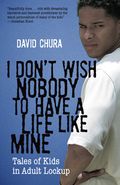
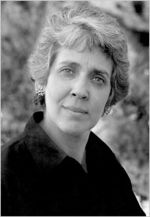
  • David Chura is the author of I Don’t Wish Nobody to Have a Life Like Mine: Tales of Kids in Adult Lockup. He has worked with at-risk teenagers for the past 40 years. For 26 of those years, he taught English and creative writing in community based alternative schools and in a county penitentiary. His writings have appeared in the New York Times as well as other scholarly and literary journals. He blogs at http://kidsinthesystem.wordpress.com/.

    DAVID_CHURA-by_Ellen_AugartenIt was a busman’s holiday. 30 people in a room, all teachers in high school and GED programs in various prisons from across New York State, listening to me talk about teaching locked up kids. The conference was in Saratoga Springs with lots of other things to do. Yet there they were, nodding their heads in recognition of the stories I told, laughing in all the right places with that dark sense of humor we jailhouse teachers develop from years of working with society’s throwaways in some of the toughest schools going.

    In interviews or talks I’m frequently asked why I wrote I Don’t Wish Nobody to Have a Life Like Mine: Tales of Kids in Adult Lockup. I often explain that I want people to see the kind of living conditions to which young offenders are consigned in adult facilities and to show that each incarcerated kid is a real person, one who most likely grew up in a home crippled by poverty, by poor health, by addiction as well as physical and sexual abuse. It’s a picture not conveyed by the crime numbers we read in the newspapers.

    But looking out over that audience of incarcerated education teachers, I knew there was another reason why I wrote these stories: to describe what it’s like to be a teacher working under some of the harshest conditions going. In this time of “education reform” and its concomitant teacher bashing, I wanted to praise the people who are committed to teaching every day, no matter what’s going on around them, around their classroom and their students.

    And in jail a lot goes around. Most classrooms are right in the correctional facility, and so the closed, foul smells of overcrowded and under-washed bodies, the ubiquitous roaches, the dirt and grime of poorly ventilated buildings and the chaotic noises of slamming gates and shouting voices easily seep under a classroom door.

    ChuraOne of the rooms in which I taught at a county lockup was a cramped, dark space right off a major hallway going to the blocks. Students sat elbow to elbow at a long table. Getting up for a book or some paper was tricky business. Personal space in jail is as valuable a commodity as a dealer’s street corner. I never knew when a fight, or at least a face-off, might erupt. Likewise, it didn’t make it any easier for my students or me to settle down knowing that any minute one of the kids might be pulled out of class for a random search, a lawyer’s visit, or taken down to booking in handcuffs. And nobody could tell when a fight might break out and a code called with the emergency response team in full riot gear running down the hallway screaming threats and commands.

    Try teaching the difference between a simple and a complex sentence, or the definition of irony, with that kind of disruption. Sometimes I felt downright silly going on about adjectives in the face of such chaos. Sometimes I’d think, “Why bother?” Nevertheless, I kept at it. I taught every day and my students learned. I want to repeat that, because so many people don’t believe it’s possible: every day I taught and my students learned.  I had high standards and expectations. We had skills to acquire and to hone. We had tests to prepare for. We had tools to fashion so that when they left jail they could repair and change their lives and, I hoped, not come back to prison.

    Looking out at that conference room full of intent faces, I could see that every teacher understood what I was talking about. They knew the damaged lives their students brought into prison and in turn, into their classrooms, and they recognized their own oppressive working conditions.

    I realized something else that day in Saratoga. My jailhouse colleagues were not much different from the many other educators in this country who work in similarly harsh environments in the inner city in schools that are underfunded and undersupplied, in unsafe and unhealthy buildings, and in dangerous neighborhoods. The media reports that schools fail because teachers don’t teach. All they want to do is protect their cushy, tenure-assured jobs. Don’t believe it. Teachers—especially those in the toughest places—teach because they believe that every kid can succeed and deserves a chance. If we teachers are greedy, it’s for those small triumphs that every day make a difference in our students’ lives. 

    Author photo by Ellen Augarten.


  • Stephen Burt is the author Close Calls With Nonsense: Reading New Poetry, as well as several other books of poetry and criticism. He writes about poetry, contemporary literature, graphic novels, and science fiction for The New York Times, London Review of Books, Times Literary Supplement, The Nation and The Believer, among others. He is Professor of English at Harvard University, where he teaches a very popular course on science fiction. 

    Joanna Russ in an undated photographWhen science fiction changed, Joanna Russ—as much as any writer— changed it; and when society changed— becoming less sexist, more open to women's ambitions, more open to women who love women, though there is still so very far to go—Russ's work played no small part. Russ, who died last month at age 74, began publishing sf fifty years ago. She made a name among science fiction fans for her unconventional, violent heroine Alyx and for more than two decades of strong short stories, among them the often reprinted "When It Changed" and the perfectly wrought medieval tale "Souls." Russ had a long career as an academic, at Cornell University, the University of Washington and elsewhere; she earned prominence, too, as a feminist critic, taking on topics within and outside genre fiction, most notably in How to Suppress Women's Writing (1983) a classic statement to set beside the only slightly earlier feminist prose of Kate Millett, Sandra Gilbert, Dorothy Dinnerstein, Adrienne Rich.

    But Russ will long and rightly be identified with her third novel, The Female Man. Completed in 1971, not published till 1975, and recognized immediately as coruscating feminist polemic, it's also a rapid, compelling work of sf, an intricate metafiction, and a good read. In that book, "Joanna," identified with the author, meets three versions of herself, brought together by interdimensional time travel. Jeannine Dadier hails from an alternate America where the Great Depression continues to the present day (i.e. 1969); opportunities for women there (at least, for women like Jeannine) seem even more circumscribed, sex roles more hypocritical and constricting, than in the real United States. Janet Evason (the "son" means "daughter") visits them both from a far future culture called Whileaway, an efficient, appealing single-sex society whose philosophy and biotech Janet describes. She introduces herself with a sentence that identified the book as science fiction at the time: "My mother's name was Eva, my other mother's name Alicia; I am Janet Evason." She continues: "When I was thirteen I stalked and killed a wolf alone, on North Continent above the forty-eighth parallel, using only a rifle."

    Book cover for The Female Man by Joanna Russ Whileaway is hardly the first single-sex feminist utopia, but it's crisply described, with little sentimentality, wry summary ("They work too much. They are incredibly tidy"), and vivid set scenes. Janet's remembered adventures back on Whileaway make a neat contrast with the bitter satire, self-referential devices, bleakly essayistic fragments, and inset playlets (drawn from Eric Berne's Games People Play) that show up the sexist effects, not only of malign individuals, but of American habits, assumptions, and institutions, in 1969, 1975, and still today. The narrator tells us that she has become a man (thus the title) in the spirit of Simone de Beauvoir's "One is not born a woman, but becomes one": to assume a position of power, to speak for oneself, to create new worlds, Joanna must therefore become something else.

    Science fiction delivers a promise and a warning. It also delivers hope: depicting imagined futures, events and characters not possible here and now, sf says that things can and will be otherwise—that what we have seen already is not all there is. That's what Janet said, with uncommon force, in 1975: not just that women can hunt and fight duels and explore the Arctic and be the government, but also that women can love other women, raise children with other women, and experience sexual pleasure without men. While in Joanna's time, Janet falls hard for Laura, a disaffected teenager who likes to imagine that she's Genghis Khan, enjoys mathematics, and needs to be saved from false consciousness: "I'm a victim of penis envy (said Laura) so I can't ever be happy or lead a normal life." While Laura, slowly, awakens, Jeannine flounders, caught between two wrong-choice guys. Jeannine, like Joanna, could benefit from a loud, strong, well-organized feminist movement (not that Jeannine's world is likely to see one), but she could also benefit from a "Whileawayan communications device": "'I found it on Janet's bed,' said Jeannine, still whispering… 'I can't figure out what it is. You hold it by the handle and if you move this switch it buzzes on one end, though I don't see why, and another switch makes this piece move up and down.'"

    The Female Man is funny, terse, eclectic, self-conscious and thoughtful, as well as angry– it has a lot to be angry about. "Mothers have to sacrifice themselves to their children, both male and female," one of Russ's narrators explains, "so that the children will be happy when they grow up; though the mothers themselves were once children and were sacrified to in order that they might grow up and sacrifice… and when their daughters grow up, they will be mothers and they will have to sacrifice, so that you begin to wonder whether the whole thing isn't a plot to make the world safe for (male) children. But motherhood is sacred and mustn't be talked about." Russ stood out, and still stands out today, as a fiction writer willing to own her anger, brusquely or at length, directly or sarcastically; a talented prose stylist willing to stand for (without confining herself to) a cause. She later resolved, in a letter her critics quote, "I will not trust anyone who isn't angry": it's a distrust that The Female Man recommends.

    But to praise The Female Man (as political work and as writing) this way is to make the book sound too much like an essay: it's also a novel, with a brisk plot and a moral conundrum near the end. I said that Joanna has three alter egos, but for most of the book we see just two. The last one shows up more than halfway through: Jael Reasoner, "a specialist in disguises," comes from a world where Manlanders and Womanlanders have long been at war. She also has retractable claws, like the superhero Wolverine. Jael's world and life, though intermittently thrilling, turn out to be as grotesque and appalling as Janet and Whileaway are appealing; are the two worlds secretly interdependent? Does Jael need Janet's help—and does Whileaway require Jael's? What should Joanna do? The Female Man finally goes beyond pastel, peaceable single-sex utopias, beyond the hopeful prescriptions of liberal feminism, into a far harsher place. "Rape is one of the Christian mysteries," one of her narrators (but which one?) decides; in consequence, she has to commit a murder—"with every truthful reflection in the eyes of a dying man I get back a little of my soul." It may be that the replacement of a patriarchal culture, a rape culture, by something more friendly to women requires some sort of Fanonian, empowering, retributive time of violence.

    Or it may not be. "I don't like didactic nightmares," one of Russ's narrators also admits. The Female Man almost becomes a didactic nightmare, just as it almost becomes a programmatic utopia; but it is neither—it's a taut and memorable invention that the future is going to continue to read, not just as a document (though it is one) of 1970s radical feminism, a fiction of lesbian liberation, a milestone in sf, but as a successful experiment in narration, a forceful political novel that (like all the best political novels) holds questions that won't go away.

  • Michael Bronski is the author of A Queer History of the United States, and is senior lecturer in Women's and Gender Studies and in Jewish Studies at Dartmouth College. He has written extensively on LGBT issues for four decades, in both mainstream and queer publications.

    Book cover for A Queer History of the United States by Michael BronskiAt the same time we celebrate the seventh anniversary of Commonwealth of Massachusetts granting same-sex couples the right to marry in Massachusetts, we must renew our commitment to struggle against state control of our personal lives and our bodies. The Supreme Judicial Court’s decision – the first in the nation, with four other states and the District of Columbia quickly following suit – was a great, and important moment for Massachusetts and the United States. The quest for equality under the law moved one step further to the ideal of the promises of the Constitution.

    Equality under the law is one of the traditions in a long history of the struggle for freedom, but it is not the only one, or even the most important, and for GLBT people it is, indeed, the most recently articulated.

    American women and men have demanded, not equality under the law, but rather the freedom to make decisions about all aspects of their personal behavior – including, or perhaps especially, their sexual behavior. The ability to make these choices – and to resist state sponsored control of their personal lives –  was, for many, understood to be the bedrock of both individual and collective freedom.

    This tradition is embedded in, and drove, the earliest incarnation of the LGBT movement: the Mattachine Society and the Daughters of Bilitis, both founded in the 1950s. But this insistence on the ethical imperative that all humans should have the ability to make decisions about their sexual partners and activities has deep roots in American cultural and political traditions. For LGBT people these traditions are vitally important because they were the first manifestations of resistance to dangerous and often deadly attitudes that permeated American culture.  

    We see this resistance in the works of Walt Whitman and his celebration of all sexuality  – including same-sex love and activity – at the root of American democracy. We see it in the life and speeches of Victoria Woodhull – the first woman to run for President on a national ticket in 1872 (before she or any other woman in America could vote, of course). She insisted on the doctrine of “free love” and the constitutional right of every American to keep their sexual partners for as long or a short as time as they choose. It is in Emma Goldman’s turn of the century speeches, calling for an end to laws that criminalized homosexual behavior. And we see it in the writings of Alexander Berkman, who wrote movingly of his own homosexual experiences in prison. Harry Hay, the founder of the homophile movement in America in the 1950s, was most concerned that women and men were arrested and jailed for simply having sexual contact with members of their own gender.  

    Each of these writers and activists – and many other defenders of personal sexual liberty – saw their liberation as part of a larger political movement for the freedom of all people to live their lives without government or social interference. The larger vision of liberation and the connection to a broader freedom agenda has been lost to some degree as the contemporary LGBT movement focused more narrowly on the rights and needs of LGBT people. 

    Attaining the right to marry is an important step to making sure that LGBT Americans have equality under the law. The right effects few people – those who are able to and choose to get married, as well as their children. As we celebrate this anniversary of same-sex marriage in the Commonwealth – an important step towards equal legal rights before the state – we should also consider how far we have to go until LGBT people are truly liberated from the state and social controls that surround us.

  • It was seven years ago today that the first legal same-sex marriages began in Massachusetts. We asked three of our authors how they think things have changed in seven years, and what challenges still lie ahead. 

    We are also celebrating the anniversary on our Facebook page, where you can see an album of photos from Courting Equality: A Documentary History of America’s First Legal Same-Sex Marriages.

    Book Cover for She Looks Just Like You: A Memoir of Nonbiological Lesbian Motherhood Book cover for Beyond Straight and Gay Marriage by Nancy Polikoff Book Cover for Courting Equality: A Documentary History of America's First Legal Same-Sex Marriages


    Amie Klempnauer Miller is the author of She Looks Just Like You: A Memoir of (Nonbiological Lesbian) Motherhood. She is a frequent speaker about gay and lesbian families, and her writing has appeared on Salon, in Brain, Child and Greater Good magazines, and elsewhere. Miller works as a development consultant to the public media industry and lives with her partner and daughter in St. Paul, Minnesota.

    Amie_Miller-by_Terry_Gydesen

    Massachusetts legalized same-sex marriage seven years ago and what has changed? Well, let me point out that the marriage rate nationwide has declined – a-ha! –  perhaps same-sex marriage does undermine heterosexual marriage after all. But the divorce rate nationwide has also declined – so maybe same-sex marriage actually strengthens heterosexual unions. Or, here’s a thought, maybe it does neither.

    Meanwhile, here in the heartland, we’re having none of it. Six years and 49 weeks after Massachusetts’ action, some Minnesota legislators introduced a bill to define marriage as between one man and one woman in the state Constitution. The bill has been moving quickly through legislative committees and, despite the fact that Minnesota already denies marriage to same-sex couples, it will likely go to the popular vote in the 2012 election. The bill’s advocates are positioning it in the usual ways, of course:  giving “the people” the chance for a “dialogue”; protecting children; upholding the will of God. What is clear is that the “dialogue,” when it happens, is likely to play out heavily in the media, to cost millions of dollars, to pit different communities against each other, and to take up a whole lot of time and energy that could be put into other things like – oh, I don’t know – solving the budget deficit, planting gardens, playing with our kids.

    Meanwhile, the real dialogue continues, mostly quietly, in communities across our state and the nation.  Since Massachusetts (and Connecticut, New Hampshire, Vermont, Iowa and Washington, DC) legalized same-sex marriage, more gay and lesbian couples across the nation have become willing to be honest about who they are. In Massachusetts – but also in places like Alabama, Mississippi and Kentucky –same-sex couples are increasingly admitting that they are, in fact, not just roommates.

    Maybe this is what the supporters of the Minnesota amendment fear most: that people across the country will increasingly discover that gay men and lesbians really are pretty much like everyone else. And there’s a reason for their fear. Three national polls have now shown that more than half of Americans think that gay men and lesbians should have equal marriage rights. This shift is not occurring only among the young and the liberal, but across religious and demographic groups (though, admittedly, more slowly in some places than others). The primary driver is familiarity. As more people have realized that they are related to, live near, work and volunteer with gay men and lesbians, they have also realized that gay men and lesbians are really just people who deserve to be treated fairly.

    That, more than anything, is what has changed since the decision in Massachusetts.  

    Author photo by Terry Gydesen.


    Nancy D. Polikoff is the author of Beyond (Straight and Gay) Marriage: Valuing All Families under the Law. She is professor of law at American University. You can read her blog at http://beyondstraightandgaymarriage.blogspot.com/.

    Nancy_polikoff-Lauren R

    I won’t lie. I never imagined when the weddings began in Massachusetts seven years ago that in 2011 we would have 5 states and the District of Columbia permitting same-sex marriage, at least two other states recognizing marriages performed where allowed, and 8 more allowing (or about to allow) civil unions or comprehensive domestic partnership (the two most recent civil union statutes, Hawaii and Delaware, go into effect January 1, 2012). Nor could I have imagined that one of the lawyers most responsible for the travesty that resulted in the Supreme Court “selecting” George Bush to be President in 2000 would become a leading advocate of marriage equality.

    What’s less surprising, however, is the downside of obtaining access to state recognition.  Although the fight for marriage equality has been framed as obtaining the choice to marry, the predictable consequence of having that choice is that the state feels justified in maintaining and even solidifying the bright line between those who marry and everyone else.  The choice to marry isn’t much a choice if marriage is the only way to protect a family’s financial and emotional well being.

    I’m particularly disturbed about this bright line when it comes to raising children. Right now a child born to a lesbian couple in Massachusetts has two mothers if the couple is married and one mother if the couple is not. Although second parent adoption is available, that is an expensive and time consuming process. For more than 40 years it’s been a basic tenet of family law that a child should not suffer because her parents did not marry.  Yet that is precisely what happens in Massachusetts. A child can lose access to financial support and to the love and care of a nonbiological mother, solely because her parents did not marry.

    At this point the solution needs to come from the legislature. Here in the District of Columbia we have a statute that says when two people plan for a child together and intend to parent together, and when conception takes place through donor insemination, then they are both parents. The law is gender neutral and marital status neutral. The names of the two intended parents appear on the child’s birth certificate. Although same-sex couples can marry in the District of Columbia, they do not have to marry to give their child two legal parents from birth.

    I hope Massachusetts follows our lead.

    Author photo by Lauren R. Taylor.


    Karen Kahn is co-author, with Pat Gozemba, of Courting Equality: A Documentary History of America’s First Legal Same-Sex Marriages. The former editor of Sojourner: The Women’s Forum, she also edited Frontline Feminism: Essays from Sojourner’s First Twenty Years. Kahn and Patricia Gozemba got married in September 2005; they live in Salem, Massachusetts.

    Karen Kahn and Pat Gozemba
    Karen Kahn (l) with Pat Gozemba.

    Is marriage equality subject to the seven-year itch? Are we losing interest in it? From all the evidence, it looks to me that, in Massachusetts at least, our commitment to marriage equality remains strong. In fact, in our home state, marriage of same-sex couples has become so ordinary that when you hear that someone is about to tie the knot, you can make no assumptions about the gender of the bride/groom to be.

    About the only conflict there seems to be around same-sex couples marrying in Massachusetts is what to call your same-sex spouse. Though men have become quite comfortable with “husband,” two professors at Salem State University find that women are still working out the linguistic issues. For many old-time feminists, “wife” just carries too much baggage, “partner” doesn’t infer marriage, and “spouse” sounds a bit legalistic. But give us another seven years, and I’m sure we’ll find the right vocabulary!

    Of course, same-sex couples in Massachusetts still face discrimination, which is why GLAD attorney Mary Bonauto and the Massachusetts Attorney General Martha Coakley are challenging the federal Defense of Marriage Act (DOMA). Those suits, which argue that DOMA is unconstitutional because it forces states to treat same-sex couples differently than heterosexual couples, got a big boost this spring when the Obama administration announced that it would not defend DOMA in court. 

    This was great news for same-sex families who currently are denied thousands of federal marriage benefits, including Social Security survivor benefits, the right to file joint tax returns, and the right to sponsor citizenship for foreign same-sex partners. It affirmed the administration’s commitment to supporting LGBT equality, and put into sharp relief the country’s shift in attitude since 1996, when then-President Bill Clinton signed DOMA into law. Though there remains strong opposition in many parts of the country, the latest national Washington Post-ABC poll shows a majority of Americans (53 percent) now support gay marriage. That’s up from 36 percent just five years ago.

    That shift in public opinion is in no small part due to the “reality TV show” now playing in four New England states (Connecticut, Massachusetts, New Hampshire, and Vermont), Iowa, and the District of Columbia, all of which grant marriage licenses to same-sex couples. As thousands of same-sex couples have married, none of the dire predictions by the National Organization for Marriage and other right-wing evangelicals such as Pat Robertson and Chuck Colson have come true. Though some want to blame Katrina, the Great Recession, the Japanese quake/tsunami, and this year’s tornado season on the acceptance of same-sex families, most Americans find that treating people equally aligns with their most cherished values.

    Of course that doesn’t mean that the road to marriage equality has been without obstacles. There were the painful setbacks in California (2008) and Maine (2009), when these states passed ballot measures that blocked previous decisions to grant same-sex couples marriage licenses. Proposition 8 in California was especially disheartening since it took away rights granted by the state’s high court, and ended a flood of same-sex marriages that had begun the previous spring. In November 2010, the anti-marriage equality movement focused on Iowa, where they convinced voters to oust three Supreme Court justices who had ruled in favor of marriage equality the previous year. New York, Rhode Island, and Maryland have all come close to passing marriage equality legislation but all have fallen short.

    Nonetheless, as Massachusetts abolitionist Theodore Parker said, “the arc of the moral universe bends toward justice.” In the latest round of victories, Hawaii, Illinois, and Delaware have all passed civil union bills in their current legislative sessions. Though these laws fall short of full marriage equality, they offer same-sex couples and their children significant social and economic benefits. Additionally, in a show of bipartisan support, New York marriage equality activists have raised millions of dollars from Wall Street Republicans, enlisting their support, along with that of Mayor Bloomberg, to pressure the state’s Republican-led Senate to stop blocking marriage equality legislation. Finally, just this week, Freedom to Marry announced that Caroline Kennedy had become the 100,000 signer of a petition asking President Obama to explicitly state his support for marriage equality. 

    Indeed one hardly needs a poll to know that we are experiencing a seismic shift in attitudes toward LGBT people. In 2004, when same-sex couples first married in Massachusetts, Vermont was the only other state where equal rights and benefits were available to same-sex couples (through civil unions). Today, 13 states and the District of Columbia–or more than one-quarter of the United States of America—recognize same-sex couples and their families. That is astounding progress in a nation that is deeply divided on a great many social and political issues. In fact, the movement for marriage equality offers hope that our nation will find its way back to a vision of the future that truly values equality and justice for all.  

    Author photo by Marilyn Humphries.

  • Laurie Essig teaches at Middlebury College and is the author of American Plastic: Boob Jobs, Credit Cards and Our Quest for Perfection. Essig writes for the Chronicle of Higher Education's Brainstorm Blog, where this post originally appeared.

    Photo of Judgment Day van by Scott Beale at Laughing Squid
    photo by Scott Beale / Laughing Squid

    Like many people walking around Wall Street this weekend, I received a pamphlet telling me that Jesus is coming to wrap up this project known as the children of God. According the the pamphlet, on May 21st, 2011 there will be a deadly earthquake. There will be dead bodies in October of this year. The saved will rise up with Christ. The rest of us will suffer damnation here on earth. The people who gave me this pamphlet are part of Project Caravan, whose slogan is:

    “Have you heard the awesome news? The end of the world is almost here!”

    It’s awesome because it’s the Rapture, when the Righteous rise up to Heaven but everyone else is left to live out the End Days.

    If you didn’t receive a pamphlet, perhaps you saw the subway or bus shelter placards warning of the End Days? These were bought with the retirment savings of Robert Fitzpatrick, a retired MTA employee and a Staten Island resident who is so convinced of the timing of the Apocalypse that he saw no need to save for his dotage. He is not alone.

    The knowledge that May 21st will mark the beginning of the end was provided to us by Harold Camping, 89, who is president of the Christian Family Radio Network. Technically, Camping said that was the day there’s be a huge earthquake and Christ would come back down to earth, but the actual end wouldn’t happen till October. There are now thousands of believers roaming the earth to warn us even though technically Camping did predict the end of the world  in 1994 and he seems to have been wrong about that (unless the world did end and the actual torment is having to watch US politics devolve to the point where the Donald was actually a viable presidential candidate for more than two seconds?).

    EssigI just searched “help me be part of the Rapture” and didn’t find much useful advice. It seems I’m supposed to accept Jesus Christ as my personal savior and follow certain Evangelical Christian beliefs- like I’m morally superior to the rest of you sinners AND I get to control what you do with your bodies in the name of God- but the specifics of it are kinda unclear. If I truly believe that the End Days are here, can I spend all my savings on massages, really good champagne, and quit work? Is that going to hurt my chances of rising up and leaving you behind?  Can I rack up credit card debt even though technically I won’t be able to pay it back- – or is that  theft and is theft a big enough sin to actually keep me here in eternal torment AND having to pay back huge credit card balances? More importantly, can I do whatever I want until Thursday and then repent, accept Jesus Christ, live a homo and abortion free life for say 24 hours and then rise up?

    As important as these questions are it is also worth asking what the possible lesson of the movement for End Days is about?  The Evangelical Christians most likely to spread the word about the Rapture are probably also those who have been hurt hardest by the current economic collapse– people without high levels of education who work in industries that have mostly been outsourced elsewhere.  They are also, like the rest of us, probably struggling to understand how the stock market can be “robust” and the Wall St. execs getting record bonuses even as unemployment, homelessness, and chronic hunger continue to rise.

    In this sense, the appearance of Rapture-ites on Wall St. makes total sense since the workings of global capital are a great and unknowable mystery. Like all divinity stories, there is this sacred land, Wall Street, where magical and yet incomprehensible rituals and words fly about, like leverage and trading derivatives, all of which is then symbolized by numbers and signs.

    And so the numbers of a thriving Dow intermingle with the equally inscrutable terms in Numerology to form a coherent set of meanings about “unrest in the Middle East,” “Osama’s death,” and, of course, the weather. Although I doubt Camping is any more accurate than the Mayans (who predict 2012 will be the end), I do think this sort of terror and desire to be set free from suffering without reason and seeing without comprehending is a universal human desire to escape. Not unlike my champagne and massage plan. Because if the world is ending this Friday, I want to make sure I have as good a chance at coming out ahead as anyone.

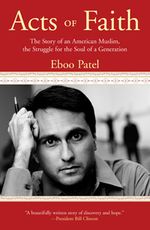
  • Eboo Patel is the author of Acts of Faith: The Story of an American Muslim, the Struggle for the Soul of a Generation. He is founder and Executive Director of the Interfaith Youth Core, an international nonprofit building the interfaith youth movement. He was appointed by President Obama to the Advisory Council of the White House Office of Faith Based and Neighborhood Partnerships and serves on the Religious Advisory Committee of the Council on Foreign Relations. This post originally appeared on his blog: the Faith Divide, at the Washington Post.

    photo of Eboo PatelNewt Gingrich, the former House speaker and high-profile conservative intellectual, announced today that he is officially in the running for the Republican nomination for president. Along the way he’s been playing the politics of religion.

    In the speeches and media appearances he did in preparation for his run, he has emphasized two things. The first is the importance of God and morality in the public square, referencing his own conversion to Catholicism to give him credibility. The second is to rail against the dangers of Islam in America.

    This two-pronged approach underscores just how far we have come in America on issues of religious tolerance, and also how far we have to go.

    Just a half-century ago, John F. Kennedy’s Catholic faith was widely viewed as a significant liability to his presidential aspirations. Kennedy had to do the opposite of what Gingrich appears to be doing: effectively de-emphasize his faith, and say that it would play no role whatsoever in informing his public acts. “I am not the Catholic candidate for president,” he told the American Association of Newspaper Editors in April 1960. “I am the Democratic party’s candidate for president who happens to be Catholic. I do not speak for the Catholic Church on issues of public policy, and no one in that church speaks for me.”

    The irony, of course, is that many of the same slanders leveled at the Catholic Church are now leveled at Islam in America. Catholicism was considered incompatible with liberty, democracy and pluralism. Any inroads made by Catholics into the corridors of power was considered a threat to the American way of life. Catholics were considered loyal to the autocratic Pope, not the American flag. Catholic politicians would enact policies to advantage their Church and hurt American values, everything from appointing an Ambassador to the Vatican to sending public funds to parochial schools.

    Book cover for Acts of Faith by Eboo Patel The ‘No Popery’ signs of previous eras feel remarkably like the ‘No Sharia’ signs of today. The view of the Catholic faith as inherently incompatible with American values mimics today’s view of Islam. And the hysteria about the effects of increasing Catholic influence on American culture sound precisely like today’s fears about Muslims. Norman Vincent Peale, a powerful Protestant minister and a leading anti-Catholic anti-Kennedy voice, put the matter of Kennedy’s possible election in stark terms to a Who’s Who group of conservative Protestant leaders: “Our American culture is at stake.”

    The same is said, frequently, about Islam in America. And one of the leading voices in raising such fears is none other than Gingrich. He compared the Muslim group seeking to start an interfaith center near Ground Zero to Nazis putting a plaque near a Holocaust memorial. His film ‘America at Risk’ raises fears of Muslim domination. In some of his statements, it feels as if Gingrich is channeling Peale: “America is experiencing an Islamist cultural-political offensive designed to undermine and destroy our civilization.”

    The historian Arthur Schlesinger Sr. wrote that anti-Catholicism was the “deepest bias in the history of the American people.” The fact that Gingrich can proudly advertise his conversion to Catholicism as a personal and presidential asset is a sign of how much progress we’ve made. But it is profoundly un-American to replace one bias with another, and even more troubling that a man whose Catholic forbears experienced discrimination because of their religion should turn around and peddle such prejudice himself.

    The forces of inclusiveness in America always turn back the forces of intolerance – we’ve seen it in the defeat of anti-Semitism, anti-Catholicism and segregation. Gingrich, who has a PhD in history, is well aware of this. Which makes it all the more surprising that he is willing to risk being remembered on the wrong side of that divide.

  • Today's post is from Nick Krieger, author of Nina Here Nor There: My Journey Beyond Gender. This post also appeared on his personal blog at ninaherenorthere.com.

    KRIEGER-NinaHereNorThereI really wanted Chaz Bono to be a transgender hero. By sharing his transition in his film, “Becoming Chaz,” and in his memoir, Transition: The Story of How I Became a Man, he is offering gender-questioning people an intimate entry into his personal experience. With his fame, he is raising much-needed awareness about a marginalized population. But as I, a writer releasing my own transmasculine memoir on the same day as Bono, follow the coverage of his story, I feel like I’m watching a slow-motion media train wreck.

    The New York Times article, “The Reluctant Transgender Role Model,” by Cintra Wilson, is the latest troubling piece. Wilson, in what must be an attempt at humor, investigates Bono’s motivations with questions about celebrity damage, gender-bent Oedipal revenge, and reclaiming childhood attention. I imagine Wilson aims to connect with skeptical mainstream readers, but those types of questions push well past curious and cynical to downright ridiculous.

    In a cultural climate that forces transgender people to explain themselves at every turn, I cannot be too surprised that Bono plays into another story of overcoming pain and suffering, of transition as the last resort of the suicidal. As a transgender person, I find this narrative exhausting and self-victimizing. Why do we, as trans people, need to keep proving how awful our lives are in order for people to accept us? What if we modified our bodies, not “amputated” parts of them as Wilson so crudely states, because we thought our lives were so beautiful that we wanted to experience them in a vehicle that allowed us our deepest comfort and truest self-expression?

    Bono reiterates the standard transgender narrative of identifying as a male since childhood, using as evidence gender stereotypes like “playing sports” to reinforce his case. Once again, it’s hard to blame Bono. The criteria for Gender Identity Disorder (GID) in the current Diagnostic and Statistical Manual of Mental Disorders refers to gender stereotypes in its diagnosis. Although the article claims GID was only classified as a mental disorder until 1999, this is incorrect. (eds note: The article was corrected online after publication.) A diagnosis of GID is still required for many trans people seeking gender reassignment surgery, and reinforcing gender stereotypes is the necessary proof. While I cannot question Bono’s experience, I can challenge his facts and make it absolutely clear that his experience isn’t shared by all of us.

    Nick_Krieger_IMG_4670-Melinda Bagatelos Bono says, “There’s a gender in your brain and a gender in your body. For 99 percent of people, those things are in alignment. For transgender people, they’re mismatched. That’s all it is. It’s not complicated, it’s not a neurosis. It’s a mix-up. It’s a birth defect, like a cleft palate.”

    First I’d like to know where Bono confirmed the gender in your brain and gender in your body theory. Sure, researchers are looking for hard proof of transsexualism, but they are having about as much success as they are in finding a definitive “gay gene” or “gay brain” structure in homosexuals. The nature vs. nurture debate will continue in gay and lesbian research circles just like the essentialist vs. cultural construction debate will continue in gender research circles. To fall completely to one pole as Bono does with essentialism is to ignore the very complicated topic of gender presentations, expressions, embodiments, roles, and identities as lived in our culture. To Bono’s claim of mismatched alignment for transgender people, this is a gross misrepresentation of all of us.

    “Transgender,” in its most common usage, is as an all-encompassing term and self-defined identity available to anyone who doesn’t fit into the man or woman boxes. Transsexuals (female-to-male/FTM like Bono; or male-to female/MTF) are the most well-known group under the transgender umbrella. But there are many trans people who live and identify outside of the stifling constraints of the gender binary. Some pursue hormones without surgery; some pursue surgery without hormones; some choose only to adopt a new name; some use the gender-neutral pronouns “ze” and “hir”; some use self-identifying words that encompass both man and woman, like genderqueer or gender fluid.

    Therefore, the conclusion of Wilson’s article relating to diversity is correct, except that Bono actually reiterates the black and white of gender identification by wedding himself completely to the notion of a woman becoming a man. He may offer an alternative understanding of black and white, but as for ushering in a complete wheel of gender (not sexuality as Wilson mistakenly writes) into the mainstream, Technicolor Bono is not.

    It’s time for an understanding of transgender experiences and identities to reach mainstream audiences. Bono is, with his celebrity bullhorn, an ideal candidate to be a transgender role model, but after I read that he once had a tolerance for women that he no longer has, he cannot be my hero. I do hope that his story is the starting point, an impetus to expand the conversation beyond sensationalism, gender stereotypes, and the Fashion & Style pages. But this poorly fact-checked article by Cinta Wilson makes me nervous that many will now claim to know about transgender people, and about me, because they read or saw something about Cher’s kid.

    ***

    For another perspective that I think is excellent, check out Oliver Bendorf’s commentary on Autostraddle.

    Author photo by Melinda Bagatelos.

    Watch the trailer for Nina Here Nor There.

  • "In the age of Twitter and reductive history, we need a complex, fully realized, radical reassessment of history-and A Queer History of the United Statesis exactly that. Along the way, there are enough revelations and reassessments to fuel dozens of arguments about how we got to where we are today. I don't know when I have enjoyed a history so much."-Dorothy Allison, author of Bastard Out of Carolina

    One of Lambda Literary's Highly Anticipated Books of 2011

    Book cover for A Queer History of the United StatesIn the 1620s, Thomas Morton broke from Plymouth Colony and founded Merrymount, which celebrated same-sex desire, atheism, and interracial marriage. Transgender evangelist Jemima Wilkinson, in the early 1800s, changed her name to "Publick Universal Friend," refused to use pronouns, fought for gender equality, and led her own congregation in upstate New York. In the mid-nineteenth century, internationally famous Shakespearean actor Charlotte Cushman led an openly lesbian life, including a well-publicized "female marriage." And in the late 1920s, Augustus Granville Dill was fired by W. E. B. Du Bois from the NAACP's magazine the Crisis after being arrested for a homosexual encounter. These are just a few moments of queer history that Michael Bronski highlights in this groundbreaking book.

    Intellectually dynamic and endlessly provocative, A Queer History of the United States is more than a "who's who" of queer history: it is a book that radically challenges how we understand American history. Drawing upon primary documents, literature, and cultural histories, noted scholar and activist Michael Bronski charts the breadth of lesbian, gay, bisexual, and transgender history, from 1492 to the 1990s, and has written a testament to how the LGBT experience has profoundly shaped our country, culture, and history.

    A Queer History of the United States abounds with startling examples of unknown or often ignored aspects of American history-the ineffectiveness of sodomy laws in the colonies, the prevalence of cross-dressing women soldiers in the Civil War, the impact of new technologies on LGBT life in the nineteenth century, and how rock music and popular culture were, in large part, responsible for the devastating backlash against gay rights in the late 1970s. Most striking, Bronski documents how, over centuries, various incarnations of social purity movements have consistently attempted to regulate all sexuality, including fantasies, masturbation, and queer sex. Resisting these efforts, same-sex desire flourished and helped make America what it is today.

    At heart, A Queer History of the United States is simply about American history. It is a book that will matter both to LGBT people and heterosexuals. This engrossing and revelatory history will make readers appreciate just how queer America really is.

    Bronski Michael Bronski has been a gay activist, writer, and cultural critic since 1969. An original founding member of Fag Rag (1970) and Boston Gay Review (1975), he was also the principal arts writer for the Gay Community News (the first national LGBT weekly) from 1975-1995.

    Along with winning two Lambda Literary Awards, he is the recipient of the 1999 The Martin Duberman Fellowship for scholarly research in GLBT studies, awarded by the Center for Lesbian and Gay Studies, City University of New York, and the prestigious 1999 Stonewall Award, presented by the Anderson Prize Foundation. Bronski has won community recognition awards from Boston’s AIDS Action committee and the Cambridge Lavender Alliance, and the 2004 Leadership Award from the D-GALA (Dartmouth Gay and Lesbian Alumni Association and the 2008 Distinguished Lecturer Award form Dartmouth College. He is Senior Lecturer in Women’s and Gender Studies and Jewish Studies at Dartmouth College.

    Read an excerpt from A Queer History of the United States

    // <![CDATA[
    (function() { var scribd = document.createElement("script"); scribd.type = "text/javascript"; scribd.async = true; scribd.src = "http://www.scribd.com/javascripts/embed_code/inject.js&quot;; var s = document.getElementsByTagName("script")[0]; s.parentNode.insertBefore(scribd, s); })();
    // ]]>

  • The death or defeat of an enemy brings on a difficult moral conundrum: how to resolve our baser instincts or feelings of having achieved “justice” for a wrong with the principles of our religious and ethical traditions. Beacon Broadside asked several of our authors for their responses to the death of Osama bin Laden, and what they feel is required of them by their respective faiths. Yesterday, we posted the answers of Eboo Patel, Susan Campbell, and Dan McKanan. Today, we share the responses of Jay Michaelson, Rev. Marilyn Sewell, and Christopher Stedman.

    Book cover for God vs. Gay by Jay MichaelsonBook cover for Breaking Free by Marilyn Sewell Portrait of Christopher Stedman


    Jay Michaelson is the author of the forthcoming book God vs. Gay? The Religious Case for Equality. He is the founding director of Nehirim, the leading national provider of community programming for LGBT Jews and their allies. In 2009, Michaelson was included on the “Forward 50” list of the fifty most influential Jewish leaders in America.

    Jay Michaelson photo credit Sebastian Collett

    The Jewish tradition is crystal clear that one is never to celebrate the downfall of one’s enemies, even though the human tendency is to do so.  We see this pattern again and again. 

    For example, Proverbs 24:17 reads, “If your enemy falls, do not exult; If he trips, let your heart not rejoice.” Note that Proverbs 11:10 says that, “When the wicked perish, there are shouts of joy,” but that does not mean there should be such shouts. The two verses together suggest that while it is human nature to rejoice when our enemy suffers, we are called upon to do better.

    Another example is at the drowning of the Egyptians in the Red Sea. At the time, the Children of Israel sang the famous Song of the Sea, whose lyrics explicitly rejoice in the death of the Egyptians (Exodus 15:4). But in The Talmud (Megilla 10b, Sanhedrin 39b), a story is told that God rebukes the angels for singing along. “My creatures are drowning in the sea and you want to sing,” God says. Once again: it is human nature to rejoice, but we are called upon to do better.

    Jews around the world recently concluded the Passover Seder. This entire ritual celebrates the Exodus from Egypt, and part of that story is indeed the demise of the Egyptians. Yet when the ten plagues are recounted, the tradition is to spill a drop of wine for each one. Our joy is incomplete when others suffer.

    Yes, it is human to fist-pump in the air when a murderer like Osama Bin Ladin is killed. But such vulgar displays of our basest emotions is precisely what religion is meant to curb.

    Author photo by Sebastian Collett.


    The Rev. Dr. Marilyn Sewell is Minister Emerita of the First Unitarian Church of Portland, Oregon, and is the subject of the documentary film, “Raw Faith.” She is the author of several books, and edited four volumes for Beacon Press, including Breaking Free: Women of Spirit at Midlife and Beyond.  

    Portrait of Marilyn Sewell I find myself deeply disturbed by the death and collective responses to the death of Osama bin Laden. When I say “disturbed,” I don’t mean merely intellectually, but psychologically, spiritually, and even physically. I have found myself drained of energy, withdrawn. And I’ve had to ask myself why. Shouldn’t I be happy, gratified that a monster of evil is now gone from the face of the earth? I note the celebrating crowds on television, in New York and Washington, DC, and understand their very human response, but I’m not there.

    I think my disturbance comes from having to contend with conflicting values that all have their measure of truth–and yet none has the whole truth. And so I’m trying to reconcile these disparate values.

    With the rest of the nation, I have witnessed the overwhelming grief of the families of the 9/11 victims. I have seen the pictures of the dead, read their stories.  I have heard the goodbye messages of spouses, the children left without a father, the way victims jumped to their deaths, some holding the hand of a friend. I understand why the survivors want justice, and whatever closure they can find, and so they welcome the news of bin Laden’s death.

    I also understand the significance for our nation, in bin Laden’s death. He has been not only the perpetrator of much suffering and death, but he had become the symbol of our impotence in failing to rid the world of terrorism. He has been thumbing his nose at us for ten years, making us fear what might happen next. The President’s main job is to protect his people, and so Obama had to pursue Osama bin Laden and kill him.

    Which brings me to the next point. I have little doubt that the Seals were ordered to kill Bin Laden, whether or not he was armed, whether or not he surrendered. Taking bin Laden prisoner would have invited an international media circus for a trial that might have lasted years–and further provoked all kinds of national and international conflict. We weren’t going to let that happen. He was going to be killed and then buried at sea. He was shot first in the chest, I would guess, as would be the normative first shot, and then shot in the head, to assure the death. I also understand the necessity of this decision, and if in fact I am correct, I do not fault Obama for proceeding in this way. 

    On the other hand, I am a minister and a wife and a mother. I abhor violence.  In particular, gun violence disturbs me, for I have personally lost family members to gun violence, as have so many others in our gun-crazy country.  

    And then I imagine the scene in the compound that night. I imagine the fear that everyone in that compound must have felt as the Seals attacked. I expect Osama bin Laden knew he was going to die. One of his wives watched him shot to death, another identified the body. A number of his children were present in compound.  What did the wives and children experience?

    Still another dimension to this whole scene is that of the warriors. The Seals carried out what appears to have been an almost flawless plan in dangerous circumstances: their courage and skill are admired by all. And yet the man who killed bin Laden and whoever killed the three others will have to live with the memory of that night: the fear in the eyes of those who were killed or wounded, the gaping wounds, the blood pouring out–all this, and the knowledge that they they took a human life. This is what we ask of our warriors. To do these horrific deeds for us. We don’t want to see the pictures. Obama spared us from that.

    So what it comes down to, for me, is this: the terrible grayness of morality. The evil that we’re all drawn into. The violence that is a part of our lives. The fallenness of us all. There are no good guys and bad guys, except in relative terms. We can only try to see as clearly as we can and act with as much integrity as we can. The Kingdom of God is not as yet at hand. Heaven help us. 

    This post also appeared on Rev. Sewell’s blog.


    Christopher Stedman is the Interfaith and Community Service Fellow for the Humanist Chaplaincy at Harvard University and the Managing Director of State of Formation at the Journal of Inter-Religious Dialogue. He is at work on a memoir to be published by Beacon Press.

    IMG_5452 Last Sunday night, I was preparing to go to bed early for the first time in months when I made the mistake of checking Twitter. I’m no longer a Christian so I do not begin and end each day in prayer like I once did, and it’s probably fair to say that Twitter has become a replacement ritual.

    And there it was: Osama bin Laden had been located. Osama bin Laden had been captured. Osama bin Laden had been killed.

    My twitter feed erupted with emotions. Cheers, jeers; even tears. But mostly cheers.

    I understand the impulse to celebrate such news, but the tenor of some of what I’ve heard and seen troubles me in the same way I was bothered by those burning American flags in the Middle East nearly ten years ago. As a Humanist, I struggle to understand the “eye for an eye” mentality. In the words of Ralph Waldo Emerson, a forefather of modern Humanism: “That which dominates our imaginations and our thoughts will determine our lives and character. Therefore, it behooves us to be careful what we worship, for what we are worshiping we are becoming.” Today I worry about what America is becoming.

    In times of trouble, I often reflect on the unifying words of the Rev. Martin Luther King, Jr. “Darkness cannot drive out darkness: only light can do that.” he wrote. “Hate cannot drive out hate: only love can do that. Hate multiplies hate, violence multiplies violence, and toughness multiplies toughness in a descending spiral of destruction.”

    I am concerned when I see people celebrating death; when I hear word that thousands of my fellow Bostonians flocked to Boston Commons Sunday night for what was essentially a pep rally. Again, I understand the desire to mark this occasion, but I wish we could muster the same enthusiasm to celebrate the importance of life – to unite in the face of domestic intolerance, not just that which lurks in evil lairs overseas.

    This was adapted from Chris Stedman’s post on the Washington Post’s OnFaith blog.