• The death or defeat of an enemy brings on a difficult moral conundrum: how to resolve our baser instincts or feelings of having achieved "justice" for a wrong with the principles of our religious and ethical traditions. Beacon Broadside asked several of our authors for their responses to the death of Osama bin Laden, and what they feel is required of them by their respective faiths. Today, we have the answers of Eboo Patel, Susan Campbell, and Dan McKanan. Tomorrow, we will post responses from Rev. Marilyn Sewell, Christopher Stedman, and Jay Michaelson. (UPDATE: read part 2 here.)

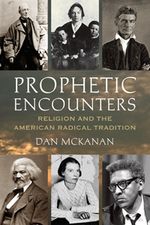
    Book cover for Acts of Faith by Eboo Patel Book cover for Dating Jesus by Susan Campbell Book Cover for Prophetic Encounters by Daniel McKanan


    Eboo Patel is the author of Acts of Faith: The Story of an American Muslim, the Struggle for the Soul of a Generation. He is founder and Executive Director of the Interfaith Youth Core, an international nonprofit building the interfaith youth movement. He was appointed by President Obama to the Advisory Council of the White House Office of Faith Based and Neighborhood Partnerships and serves on the Religious Advisory Committee of the Council on Foreign Relations. Read his blog, the Faith Divide, at the Washington Post.

    photo of Eboo PatelI read about the assassination of Osama bin Laden as a Muslim with a strong Niebhurian streak. This is to say: we have to be clear-eyed in the recognition of evil, we have to put a stop to it if we have the ability and we have to seek peace in multiple creative ways. Niebhur believed this with regards to America's battle against Nazism, the Prophet did this with regards to the Quraysh tribe of Mecca, who were intent on destroying the fledgling Muslim community.

    As has been said about Bonhoeffer, the Christian pacifist who plotted to assassinate Hitler: when you see a crazy man driving a car into a group of children, you have to stop the man.

    America did that when it came to Hitler, Milosovic, and now bin Laden. In this case, it happened with targeted precision such that very few others perished in the actual operation. There is little doubt there will be more life (meaning, literally, fewer people being killed) in the future as result of this death.

    Read Eboo Patel's post After bin Laden’s Death, a Fist, a Heart and a Guitar.


    Susan Campbell is the author of Dating Jesus: A Story of Fundamentalism, Feminism, and the American Girl. Her writing has been recognized by the American Association of Sunday and Features Editors; National Women's Political Caucus; the Sunday Magazine Editors Association, and the Connecticut chapter of Society of Professional Journalists. She was also a member of the Hartford Courant's 1999 Pulitzer Prize-winning team for breaking news. Read her blog at courant.com.

    Campbell author photo, credit to Marc Yves Regis I love my country, I love my flag, and I find absolutely nothing in the teachings of Jesus that supports the assassination of the terrorist Osama bin Laden.

    Bin Laden had, by all accounts, moved to the periphery, and we've been mesmerized by the developments in our Arab spring, where countless citizens were taking to the streets in Tunisia, in Egypt, in Syria, in Yemen, to say that bin Laden was precisely the kind of leader they don't want.

    And then we shot him.

    Jesus talked about vengeance when He tweaked the notion of taking an eye for an eye. He told followers to match their enemies' evil with prayer and love. The most unthinkable evil (bin Laden) calls us to love.

    And that's immeasurably hard, according respect to someone we just don't respect, giving fairness and decency to someone who's responsible for the death of so many.

    But that, nevertheless, is the rule. I think those crowds celebrating bin Laden's death outside the White House that night were clinging to the idea that his death would somehow balance the scales. It hasn't and it won't. Killing — and burying him at sea — stole our opportunity to bring him to trial, and let him defend himself — with complete transparency in our judicial system, not a military tribunal. It robbed from us an opportunity to reaffirm that these are our values — and to remind the world that we are bigger than a terrorist act. By treating bin Laden far better than he ever thought to treat those he killed on 9/11, we could have told the world that even our most despised enemy can expect fairness and decency. We could have told everyone that we are bigger than that.

    Or, rather, I wish we were.

    Author photo by Marc Yves Regis.


    Dan McKanan is the author of Prophetic Encounters: Religion and the American Radical Tradition. He is the Ralph Waldo Emerson Unitarian Universalist Association Senior Lecturer at Harvard Divinity School.
    Professor Dan McKanan The tenets of Unitarian Universalism do not require me to respond in any specific way to the death of an enemy. Instead, Unitarian Universalism—as would be the case for most other faiths—offers me a rich array of resources for developing an authentic individual response. These resources include the Unitarian Universalist Principles—which are commonly affirmed by Unitarian Universalist congregations but not doctrinally binding on individual Unitarian Universalists—as well as the collective stories of those who have preceded us in the faith.

    Two of the Principles shape my own response to the death of Osama bin Laden, as well as the deaths of enemies in general. The first principle, which affirms “the inherent worth and dignity of every person,” suggests that my response to the killing of an enemy should be one of prophetic protest. “Not in my name!” I say to all those who celebrate bin Laden’s death as retribution for the murders he perpetrated on September 11. If all people, those who kill and those who are killed, have inherent dignity, then mourning and reconciliation are better responses to violence than retaliation.

    The question, of course, is not specifically about the killing of enemies but more broadly about the death of enemies. What would my response be if bin Laden had died of natural causes at the end of a long life? In that case, I think, the appropriate response would be simple mourning. Indeed, in one sense the death of an enemy is more an occasion for lamentation than the death of a beloved grandparent. My thinking here is shaped by the seventh Unitarian Universalist principle, “respect for the interdependent web of existence.” If all life is interwoven, then every enmity is a rip in the shared web—and the death of an enemy means we have lost our best opportunity to weave the broken threads back together. We often use the phrase “celebration of life” to describe the funerals of our friends, and when those friends have lived full lives those funerals often have a truly celebratory feel. That is as it should be. But even if bin Laden had lived to be a hundred, his death would have been an occasion for sackcloth and ashes if he had remained unrepentant, and thus unreconciled with all those he harmed.

    In reaching beyond the UU principles toward the shared stories of faith, I turn especially toward the story of Jesus, because I identify as a UU Christian, just as other Unitarian Universalists may claim Jewish, Buddhist, pagan, or humanist identities. Like other Christians, I find in Jesus’ story reason to hope that death does not have the last word. Some would express this hope in dogmatic claims about resurrection and eternal life; I prefer to speak more tentatively about the experiences of Jesus and his friends. In the face of the death-dealing powers of empire, Jesus lived a full, rich life. Even after the empire killed him, his friends experienced him as still alive in their circle. When they gathered to break bread and tell stories, they felt he was there with them. Curiously, Christians have seldom reflected on what this experience might teach us about the death of our enemies.

    I have no way of knowing for sure, but I suspect that some of Osama bin Laden’s disciples and admirers are currently having an experience not unlike that of Jesus’ disciples between Easter and Pentecost. In the midst of their mourning, they may have felt bin Laden’s spirit still moving among them, still inspiring fervent love for their faith and fervent hate for those of us they regard as enemies. Many of us may regard this analogy between bin Laden and Jesus as monstrous. But perhaps what remains alive of bin Laden’s spirit is not so much his hate as his fervent faith. In his own life, that fervor was terribly twisted; as it is carried by his followers, it still has the potential to be untwisted. If death does not have the last word, our mourning of bin Laden’s death should lead us to redoubled efforts to reconcile with his friends.

    The people of the United States, of course, have ample opportunities to pursue such reconciliation. Many of bin Laden’s most devoted followers remain imprisoned at Guantanamo Bay. (Many who never had much to do with him are also held there, but here I want to focus on those who are truly enemies—those who committed horrible violence out of twisted love for bin Laden or for Islam.) For ten years we have treated these traumatized and idealistic young people as if they were not part of the interdependent web, as if their suffering could not hurt us, as if they had no gifts to share with the world. Bin Laden’s death can be a time for us to open our ears to their voices and our hearts to their truth. I am not suggesting that we “forgive” them without talking to them, but simply that we start treating them as human beings rather than enemy combatants. Some of them may be more than ready for reconciliation. Others may not—but even for those, a bit of kindness may open up a long path toward repentance.

    As I write these words, I am conscious that many of us may feel more visceral enmity toward those who have harmed us personally, or even toward our political rivals, than we do toward bin Laden. It is easy for me to preach about what the U.S. should do in Guantanamo; much harder to pursue genuine reconciliation with my own most intimate enemies. When I mourn bin Laden’s death, I mourn those enmities as well. And, since all life is interwoven, it is likely that reconciliation with those intimate enemies will create more chances for reconciliation with bin Laden and his friends.


  • David L. Hudson, Jr. is the author of Let the Students Speak!: A History of the Fight For Free Expression in American Schools. Hudson is a First Amendment Scholar with the First Amendment Center at Vanderbilt University. He teaches at Vanderbilt University Law School and Nashville School of Law.

    This week, the Supreme Court declined to hear Doe v. Silsbee Independent School District, a case in which a cheerleader was kicked off her squad when she refused to cheer for the boy she said raped her. Hudson wrote this piece for the First Amendment Center blog when the case was making its way through the courts. 

    Book cover for Let the Students Speak by David L. Hudson, Jr. Can a silent cheerleader disrupt school activities? Is there a legitimate educational reason to punish a student for refusing to cheer for her alleged attacker?

    These questions formed the basis for an appeal to the full 5th U.S. Circuit Court of Appeals filed on behalf of a former Texas cheerleader (known as H.S. in court papers), who was kicked off the Silsbee High School squad after she didn’t cheer for a basketball player who allegedly sexually assaulted her after a football game. The individual played on both the football and basketball teams.

    Last September, a three-judge panel of the 5th Circuit rejected H.S.’s First Amendment, due-process and equal-protection claims in Doe v. Silsbee Independent School Dist. With respect to the First Amendment claims, the panel upheld a lower court’s dismissal in part because, it said, the cheerleader’s silence was disruptive. According to the panel, the lack of cheering “constituted substantial interference with the work of the school because, as a cheerleader, H.S. was at the basketball game for the purpose of cheering, a position she undertook voluntarily.”

    The panel also reasoned: “Insofar as the First Amendment does not require schools to promote particular student speech, [the school] had no duty to promote H.S.’s message by allowing her to cheer or not cheer, as she saw fit.”

    The panel cited two seminal student First Amendment decisions in its decision — Tinker v. Des Moines Independent Community School Dist. (1969) and Hazelwood School District v. Kuhlmeier (1988). In Tinker, the Court ruled that public school officials can censor student speech only if they reasonably forecast that the speech will cause substantial disruption of school activities. Under Hazelwood, school officials have more control over school-sponsored speech if their reason for censorship is reasonably related to a legitimate educational concern.

    There is no way that a single cheerleader not cheering for a player at the free-throw line is disruptive. The crowd probably focused on the game, not on a single cheerleader. If the cheerleader, say, had walked to the foul line and confronted the player, that would have been disruptive. But being silent for a few moments disrupts nothing.

    The full 5th Circuit reasonably could say that the student speech should be evaluated under the more deferential Hazelwood standard, in that cheerleading is a school-sponsored activity. But even the Hazelwood standard requires fundamental reasonableness. What is the legitimate educational reason in forcing a student-cheerleader to cheer for her attacker? (The player later pleaded guilty to misdemeanor assault.)

    In the petition for full panel review, Larry Watts, the cheerleader’s attorney, wrote: “She cheered the entire game except for a two brief times when the accused rapist went to the free-throw line. There was no pedagogical purpose ever articulated by defendants as to why a rape victim should in addition to cheering for the team be required to cheer for the accused rapist also.”

    It is not only unreasonable to force a cheerleader to cheer for her assailant, it is ridiculous. As Selena Roberts of Sports Illustrated wrote in her Nov. 8 column, “lessons remain to be learned — by the educators.”


  • ELLIOTT-WhiteCoatBlackHat Beacon Press author Carl Elliott has been under attack in a scenario best described by one of his many defenders as “Orwellian.” In order to defend academic freedom, his university argues, they must prevent him from speaking.

    Please read some of these posts to learn more about this important (and disturbing) story. — Helene Atwan, Beacon Press Director

    Pharmalot Blog: A Seroquel Clinical Trial And Academic Freedom

    Health Care Renewal Blog: Who Is Really "Bullying?" – Academic Leaders and the Stifling of Critics of Conflicts of Interests

    Hastings Center Bioethics Forum: Freedom's Just Another Word For… Restriction?

    Leiter Reports: The University of Minnesota "Clinical Trials" Fiasco–and the Apparent Attempt to Silence Faculty Critics

    UPDATE 5/5/2011 more links…

    Law.com: No Advice, Please: Minnesota University GC Embroiled in Research Dispute

  • Named by US News & World Report as one of America’s Best Leaders of 2009, Eboo Patel is the founder and Executive Director of Interfaith Youth Core (IFYC), a Chicago-based institution building the global interfaith youth movement. Author of the award-winning book Acts of Faith: The Story of an American Muslim, the Struggle for the Soul of a Generation, Eboo is also a regular contributor to the Washington Post, National Public Radio and CNN. He is a member of President Obama’s Advisory Council of the White House Office of Faith Based and Neighborhood Partnerships, and holds a doctorate in the sociology of religion from Oxford University, where he studied on a Rhodes scholarship. This post originally appeared on his blog The Faith Divide at the Washington Post.

    PatelAs I listened to President Obama explain the chain of events that led to the killing of Osama bin Laden, I couldn’t help but think of my friend Eric Greitens. Eric’s doctorate at Oxford was on the effects of war on children. Imagine my surprise when he told me that he was training to be a Navy Seal.

    “But you know how terrible war is, you have been with the orphaned children,” I sputtered. “How can you participate in it?”

    “It is guys with guns that end wars, Eboo,” he told me.

    Eric deployed four times over the last ten years, earning a bronze star and a purple heart. One of his missions was to command a Navy Seal cell that targeted al Qaeda. It was likely some of Eric’s buddies – guys he trained with, maybe guys he trained – that got bin Laden.

    Eric titled his book, The Heart and the Fist, for a reason. He knows as well as anyone that you may well need the fist to crush evil but you need the heart to radiate good. The fist is fine for defeating enemies, but the heart is what builds societies.

    That’s what I liked about Obama’s speech yesterday. He was very clearly our commander in chief – recounting how he told C.I.A. Director Leon Panetta to make the capture or killing of Osama bin Laden his top priority, getting frequent briefings on the relevant intelligence and giving the final order that authorized the fatal mission. His demeanor was focused and serious. ‘I did what had to be done,’ he seemed to be saying.

    Vanquishing evil is necessary but insufficient.

    Obama seemed most human to me, most American, most presidential, when he spoke of life, not death. He recalled America in the immediate aftermath of 9/11, a nation shocked and grieving, a country focused more on community than revenge:

    “On September 11, 2001, in our time of grief, the American people came together. We offered our neighbors a hand, and we offered the wounded our blood. We reaffirmed our ties to each other, and our love of community and country. On that day, no matter where we came from, what God we prayed to, or what race or ethnicity we were, we were united as one American family.”

    That line brought to mind two key moments. The first involves George Bush. A lot of Americans think of the fist when they think of the post-9/11 George Bush. But I think at least as defining as his roar at Ground Zero and his boasting of “Wanted: Dead or Alive” posters was his visit to an Islamic Center six days after 9/11. There, he spoke movingly not only of Islam being a peaceful faith but about how Muslim women with headscarves ought to feel safe in this country:

    “I’ve been told that some fear to leave; some don’t want to go shopping for their families; some don’t want to go about their ordinary daily routines because, by wearing cover, they’re afraid they’ll be intimidated. That should not and that will not stand in America.”

    He went on to make it clear whose side he was on, which America he hoped to build.

    “Those who feel like they can intimidate our fellow citizens to take out their anger don’t represent the best of America, they represent the worst of humankind, and they should be ashamed of that kind of behavior.”

    The second moment took place nearly a year later, on September 25, 2002 – Bruce Springsteen at the United Center. During the climax of “The Rising,” as Springsteen was singing – Sky of longing and emptiness (a dream of life), Sky of fullness, sky of blessed life (a dream of life) – I saw out of the corner of my eye a young woman in a Muslim headscarf, eyes closed, hands raised.

    Woody Guthrie had a message scrawled on his guitar: “This machine kills fascists.”

    Sometimes you need the aid of guns in that mission. But when we think of who we want to be, not just what we need to destroy, American guns are second to American guitars.

  • Amy Alexander is the author of the forthcoming book Uncovering Race: A Black Journalist's Story of Reporting and Reinvention. The 2008 Alfred Knobler Fellow at The Nation Institute, she has been a staff writer at the San Francisco Examiner, Fresno Bee, and Miami Herald, and has been a contributing writer at the Nation, Boston Globe, and Washington Post. She was media columnist at Africana (later, AOL's BlackVoices) and has written for the Village Voice, Chicago Tribune, Black Issues Book Review, MSNBC.com, Salon, and The Root, among other publications. Alexander has also been a regular commentator on National Public Radio and was associate producer of NPR's Tell Me More, with Michel Martin. She is co-author, with Alvin F. Pouissant, of Lay My Burden Down: Suicide and the Mental Health Crisis Among African-Americans.

    ALEXANDER-UncoveringRace Earlier this week, on April 25, the Committee to Protect Journalists reported that 80 attacks had been made on members of the press in Libya since political unrest began there during March. The attacks that led to the deaths of photojournalists Chris Hondros and Tim Hetherington were among that figure. News of the two photojournalists’ deaths rocked the media industry, spurring coverage that was more somber than anything in recent memory, including reports of the attacks on high-profile cable network news personalities that took place earlier in the spring in Egypt.

    The deaths of Hondros, a veteran photojournalist for an international news agency, and Hetherington, a photojournalist and filmmaker, also brought to me memories of domestic unrest that I covered nineteen years ago. At that time – Los Angeles, April 29, 1992 – no journalists were killed in the line of duty. But there were many close calls. In hindsight, I now see clearly a through-line from that two decade-old conflagration that runs directly to our contemporary political reality. And it highlights the inherent tension that exists in the concept of democracy.

    American journalists have long been the shock troops in the centuries-old battle between democracy and monarchy. But how to square the contextual realities of 18th Century America, when our democracy was first forged, with the realities of today? Can American journalists still expect that their role as Watchdogs of Democracy is secure? What happens when citizens no longer need journalistic shock troops to capture, project and validate citizens’ struggle for democracy? Apart from any early ideological reluctance that sometimes led political or corporate leaders to try to stop journalists from recording civil unrest – see the Democratic National Convention in Chicago, 1968 – what happens to journalism’s role as the watchdogs of democracy when citizens stop trusting the Fourth Estate? And what will conflict journalism look like now that citizens have acquired the tools to record their own stories of protest against affronts to democracy?

    The core definition of democracy, as Aristotle saw it, is this: "In a democracy the poor will have more power than the rich, because there are more of them, and the will of the majority is supreme."

    In Los Angeles, on April 29, 1992, “poor people” took to the streets to protest what they viewed as the unfair acquittal of four white police officers who had been captured on videotape beating a black male motorist a year earlier. So it was that on April 29, 1992, I was dispatched by the Fresno Bee to the streets of LA within hours after the four white LA city police officers were acquitted.

    Call it a riot, an uprising or civil unrest. What I experienced over the next four days was chaotic, frightening– but also exhilarating, at least for someone who takes seriously the role of recording the various manifestations of democracy in action. Messy, loud, and dangerous though they sometimes may be, the efforts of “poor people” to defend and preserve their role in a democratic society have to be recorded. But, as we saw from the tragic deaths of Hondros and Hetherington in Libya recently, recording those efforts in their most volatile expression can exact a major toll on those who undertake the task.

    In LA of 1992, for example, I personally saw journalists harassed and beaten by protestors. On the first night of the upheaval, at a corner not far from Florence and Normandie avenues in the South Central district of LA, I watched hundreds of residents (Latino, African-American, white and other ethnicities) take to the streets breaking windows at corner markets, furniture stores, eateries and other businesses.

    As I lived it, the members of the press who came up for direct confrontation were broadcast journalists. I wrote about one such incident that I witnessed in an online journal of African American news and opinion, Africana.com. (Read Amy Alexander's posts from Africana.com (pdfs):  Part 1|  Part 2 |  Part 3) I began by describing how I and two other journalists– a photographer, Russell Yip, and a senior reporter, Marji Lambert– had jumped into a company car within an hour of the verdict and raced three hours south of the San Joaquin Valley into South Central Los Angeles. After we arrived at a section of South Central that was already ablaze, we parked, and walked into the neighborhood not far from Florence and Normandie avenues; along a commercial strip, thousands of residents gathered, chanting, yelling, smashing windows and taunting police officers who stood near their cruisers along the side-streets:

    As I took in the scene, a white television cameraman came lurching up the street. Looking over his shoulder, he moved quickly, a heavy video camera swinging from his hand at his side rather than from atop his shoulder as it should have been. Two young black men followed closely behind him, yelling as they closed in. One reached out and pushed the cameraman.

    The cameraman stumbled, his face red and stunned. He kept walking, though, and the tense procession moved down the block, out of sight. I met the eyes of the Fresno Bee photographer. We exchanged an "oh, s—t” look and kept silent.

    Uniformed police officers, their black and white cruisers idling nearby, stood at the end of the block. I veered over to speak with them, walking deliberately near the engines in the street. I stopped to speak with a white officer (I didn't see any black cops). I wanted to know the police department's direction – would they arrest looters or fire starters? How many arrests had they made thus far? Did he know of any officer-involved shootings? Leaning against the grill of his car, the officer smiled at my questions. He couldn't comment, he said, because he wasn't a department spokesman.

    I looked over his dark blue uniform, its steel handcuffs, gun and wood baton clanking slightly when he adjusted his weight. A white helmet obscured all but a crescent of his face, and his eyes were light. He seemed interested in the activity, but was firmly planted well away from it. The radio at his waist began squawking. Turning his back to me, he reached for the handset that dangled from a cord strung over his shoulder. I walked away.

    The lack of interaction between law enforcement officials and the protestors during the earliest hours of the Los Angeles riots in 1992 was evident – and quite unsettling. Ironic, to say the least. The actions of police officers who had beaten the black male motorist, Rodney King, had lit the match that ultimately led to the rioting; the cops were the focus of the anger that residents now poured onto the streets of LA. I understood that anger, yet I also knew that the protesting could spiral out of control if the officers on scene did not step in, during that first night. But they did not: somewhere along their chain of command, a decision had been made that the officers would not engage in battle with the “protestors.” And as the night wore on, and protesting steadily morphed into flat-out looting and destruction of private property throughout downtown LA and surrounding neighborhoods, we journalists worried about our own safety as we reported amidst the fracas.

    Ultimately, we three Bee journalists spent a week in Los Angeles, delivering as many as four stories daily to McClatchy Newspapers and to subscribers of the McClatchy News Service. The Associated Press gave us and other out of town teams work space at its offices at Second Street and Figueroa Boulevard in downtown LA. And because we had arrived so soon after the riots began, we had secured hotel rooms not far out of the city, at the northern edge of Hollywood, for ourselves and for other McClatchy reporters and photographers who eventually joined us.

    These conditions were far from the combat-like experiences that Chris Hondros, Tim Hetherington and other journalists experience in Iraq, Afghanistan, Libya and other “hotspots” in 2011.

    Here is another important distinction between the challenges contemporary journalists covering conflicts now face, and what I experienced in LA twenty years ago: I also felt, acutely, that as a black woman, I enjoyed an advantage over many of my reporter colleagues in Los Angeles during the unrest.

    More than once, I was approached by black or Latino residents who were on the streets, and asked which news organization I worked for. I managed to talk these residents down but I felt instinctively that they might had reacted differently were I white. When I watched the March 2011 footage of CNN anchor Anderson Cooper being jostled and knocked around as he tried to report on the unrest that took place in Cairo, Egypt, I couldn’t help but wonder if his pale skin and white/gray hair was somehow impeding his ability to gather news under those circumstances.

    Yet while two decades and many thousands of miles separate my experiences covering the LA riots from the current events in North Africa and the Mid-East, the mechanics of news-gathering in such conditions, and the goal of those who enter such circumstances willingly, remain the same: Tell the story of what is happening on the ground. Avoid judging those who seek to guard or exercise democracy with action that you may find frightening or, yes, dangerous. I cannot answer the question of whether engaging in this work is “worth dying for,” I only know that in 1992, I felt utterly compelled to be in Los Angeles, recording the events of that week.

    Read Amy Alexander's posts from Africana.com (pdfs):
    Part 1|  Part 2 |  Part 3

  • WinslowToday's post is the latest in a Beacon Broadside series: Observation Post by journalist and foreign correspondent Philip C. Winslow. Over a career that has spanned more than twenty-five years, Winslow has reported on world events for the Christian Science Monitor, the Toronto Star, Maclean's magazine, ABC radio news, CTV News, and CBC radio. He also served in two United Nations peacekeeping missions and worked for the UN in the West Bank for nearly three years. He is the author of Victory For Us Is to See You Suffer: In the West Bank with the Palestinians and the Israelis and Sowing the Dragon's Teeth: Land Mines and the Global Legacy of War.

    Juliano_mer_khamis Juliano Mer-Khamis was assassinated in the Jenin refugee camp on April 4, 2011.

    The 52-year-old radical filmmaker, actor and director was shot five times by a masked gunman outside The Freedom Theatre, in the West Bank town once better known for its suicide bombers than for theater. In the refugee camp, Mer-Khamis's murder triggered two things: quiet outrage and just plain quiet. His drama productions and classes provide an oxygen-rich outlet for many children in the traumatized camp, but have badly upset conservative elements.

    Mer-Khamis, who was half-Arab and half-Jewish by birth, was a provocateur and challenger, and knew the risks. Practically foretelling his own murder he once remarked that after all his work it would be a shame to die from a Palestinian bullet. He told Israel's Army Radio in 2009 that he was "one hundred percent Palestinian and one hundred percent Jewish". The comment reflected the tightrope nature of his bold cross-cultural ventures: To be one-hundred percent anything in Israel or occupied Palestine invites criticism or opprobrium; to boast a two-hundred percent identity is confrontational.

    Yet confrontational, in the sense of demanding unfettered thought and expression, is what Mer-Khamis was all about. Plays such as Animal Farm and The Lieutenant of Inishmore may have opened young minds in Jenin but they also brought arson, broken windows, death threats and schedule postponements.

    Juliano's mother, Arna Mer, laid the foundations. A Zionist who fought in the Palmach and later married a Palestinian Christian, Arna was as tough and colorful as Jerusalem stone, and devoted her later years to working for the rights of Palestinians under occupation. I wrote about Arna and her original drama group, and reactionary undercurrents in Jenin in April 2009.

    The original theater was destroyed by Israeli forces in 2002, perhaps the most violent year of the second intifada. Juliano later made the documentary Arna's Children. You can read more about Arna and her life here.

    Book Cover for Victory for Us is to See You Suffer by Philip C. Winslow Was Juliano too provocative? The answer can depend on the audience. Animal Farm, where children play the role of pigs, certainly was too much for some in a long-isolated town where drama and music schools are regarded as suspicious and subversive. Having children wear pig masks, and implying criticism of leaders – men, whose worldview is tightly bound with the concept of honor – is asking for trouble head-on.

    What else? Adnan Hindi, the head of the camp's Popular Committee, has taken a hard line in the past about music performances. The Guardian reported Hindi's reaction to the murder and about a leaflet that circulated in the camp justifying it, as intolerant and backward-looking as the language was.

    A couple days after the murder, Palestinian Authority (PA) police arrested a suspect. That news immediately degenerated into a Palestinian slanging match over whether the then-suspect was a member of Hamas (the ruling party in Gaza) or had connections to Fatah (the predominant party in the West Bank). The suspect apparently was later released.

    Palestinian president Mahmoud Abbas (of Fatah) then took an unusual step to set things right and paper over the political chasm, by announcing that both Mer-Khamis and Vittorio Arrigoni, the Italian peace activist who was abducted and killed in Gaza by a Salafist group in mid-April, would be awarded the Medal of Jerusalem.

    "The assassination of the two activists does not reflect the traditions, habits and morals of the Palestinian people and all humans," Abbas said. I won't quibble with the president over whether assassination is a human tradition: The award was a small step reflecting Abbas's opposition to violence and another attempt to heal the destructive Hamas-Fatah quarrel.

    I asked some friends about Mer-Khamis, and about what the theater means for Jenin.

    "I know we have some crazy people among us who do not think right," a longtime Palestinian friend in Jenin told me.

    "What I am sure of is this [murder] did not happen in our name as Palestinians and did not happen in the name of Islam. What Juliano did for Jenin camp was great, what he did for the children was great, and when he was killed [it] was a sad day for everyone who knew him. . . . Whoever killed Juliano and the Italian should be punished, and anyone behind them should be stopped . . . they are not working to the benefit of Palestine; on the contrary they . . . help the Israeli occupation, to make our picture darker in front of the world."

    Juliano's plan to stage a controversial German play about teenage sexuality may have been the last straw in a society where dancing, or even the appearance of girls and boys on the same stage, is likely to be condemned as prurient.

    Reconciliation attempts sometimes forge unexpected alliances. Zakaria Zubeidi, a close friend of Mer-Khamis and co-founder of The Freedom Theatre, is a former member of the Al-Aqsa Martyrs Brigades and was long on Israel's most-wanted list. Depressingly, Zubeidi was quoted as saying that "there will be no forgiveness" for Juliano's killers. Despite Zubeidi's current peace credentials, "no forgiveness" sounds rather fatwa-like. Hopefully the pronouncement will not be part of the cycle of retribution. (In a sidebar to the murder of Arrigoni in Gaza, Hamas exacted punishment on the Italian's killers in distinctive fashion.)

    An old friend who knows Jenin well and has more than twenty years experience as an observer in the Middle East said that Juliano could have been more accommodating to Jenin cultural and religious customs. "Children in the camp certainly benefited from the theater," he said. "But Jenin was slowly, slowly recovering from the total disaster of 2002, and Juliano had served in the IDF [the Israel Defense Forces], and was a Jew and an Israeli. As the wound [of the intifada] was slowly healing, it might not have been the best time and place to implement such extreme things. I can understand that it created a lot of tension in people's minds."

    This friend, a skilled negotiator, is habitually cautious and patient about trying to shift people's positions. "[The traditional Muslim view] is the fact on the ground, and if you want to change things you have to get people's trust, and then when the time is right you can introduce Western thinking and modern ideas. And you have to earn the trust of the whole society – not just the children, but the parents and the elders".

    Someone else remarked that it was a shame that Mer-Khamis, who was passionately of both communities, was never fully accepted by either. His mother, equally passionate for justice and freedom, would have understood. When Arna died in 1995, some Israelis vehemently opposed her burial in Israel, and she was at last laid to rest at the Ramot Menashe kibbutz. Some photos of her son's funeral, in the same kibbutz, are here, and there are numerous tributes on Facebook.

    Finally, I asked an Israeli friend, a former army officer and a conciliation expert, to assess Juliano's work. "He was a very unusual bird – for us and [for] them. I believe he came up too early. But this is the only way changes can be done, and someone pays the bill [for all] of us."

    What happens to the theater without Juliano? The theater coordinator, Rawand Arkavi, told the Guardian: "We were cautious before but now we don't care if they shoot all of us. We will keep the theatre going". My Palestinian friend echoed the determination: "The time of fear is gone".

  • Book cover for Nancy Gertner's In Defense of Women Beacon Press director Helene Atwan talked with Judge Nancy Gertner about her new book, In Defense of Women: Memoirs of an Unrepentant Advocate. Watch to hear about her life as a defense lawyer, what it meant to her to defend women, and the different paths Gertner and Justice Sotomayor took to becoming judges.

  • "Nancy Gertner's book should be required reading at every law school in the country where women-and men-are learning these days that they have to choose between a successful legal career and their deepest convictions about justice. She is living proof that you don't have to sacrifice one for the other. You can have it all. Indeed, she has done it all." -Ellen Goodman, author of Paper Trail

    Book cover for Nancy Gertner's In Defense of Women

    From a "Human Rights Hero," a memoir of her illustrious career litigating groundbreaking cases

    Today Judge Nancy Gertner dons a long black robe while presiding over court cases for the U.S. District Court for the District of Massachusetts. But in the 1970s, when she was one of few women in a stubbornly male profession, she sported bright red suits that reflected her fearless choice of cases and her daring litigation tactics. Defending clients in some of the most prominent criminal and civil rights cases of the time, Gertner drove home the point that women lawyers belonged in our courtrooms.

    In 1975, Nancy Gertner launched her legal career by defending antiwar activist Susan Saxe, who was on trial for her role in a robbery that resulted in the murder of a police officer. It was a high-profile, complex, and highly charged case. What followed for Gertner was a career of other groundbreaking firsts, as she fought her way through the boys' club climate of the time, throwing herself into criminal and civil cases focused on women's rights and civil liberties.

    Looking back on her storied career, Gertner writes about her struggle to succeed personally and professionally while working on benchmark cases. Among her clients were a woman suing the psychiatrist who had repeatedly molested her; another on trial for murdering her abusive husband; Teresa Contardo, suing Merrill Lynch for discrimination; and Clare Dalton, suing Harvard Law School for the same offense. In her signature red suit, Nancy Gertner was always the unrepentant advocate in defense of women. But over the years she also represented a student accused of rape; Ted Anzalone, on trial for extortion; and Matthew Stuart, implicated in his brother Charles's infamous murder of his pregnant wife.

    In Defense of Women is the one-of-a-kind memoir of an exceptional, self-proclaimed "outsider lawyer."

    Available from: Beacon Press | Independent Bookstore | Amazon | Barnes & Noble | Powell's

    Watch Nancy Gertner talk with Emily Rooney on Greater Boston. 

    Read an excerpt from In Defense of Women by Nancy Gertner, here or on Scribd

  • Morning Haiku cover

     $14.00 Paperback
    $13.00 Ebook
    $22.00 Hardcover

    Available from:

    Independent Bookstore
    Beacon Press
    Amazon
    Kindle
    Barnes and Noble
    Nook
    Borders
    Powell’s

    In honor of Poetry Month, Beacon Press will give away five posters featuring a poem from Sonia Sanchez's Morning Haiku, now available in paperback. Enter once a day before noon EST Friday, April 29. The poster features the poem:

    4 haiku
        (for Nubia)

    1.

    Telephone wires sang
    her voice over
    soft sister laughter

    2.

    you held us
    with summer stained
    smiles of hope

    3.

    i hold your
    breath today…you sail home
    across the ocean

    4.

    i see you Nubia
    walking your Mississippi walk
    God in your hands.


    To find out more and enter our drawing, visit the Sonia Sanchez website.

  • In honor of Earth Day, we asked a handful of our environmental writers two questions: 1. What is today’s most pressing environmental issue? and 2. What’s one small thing people can do to make a big difference? Here are their answers.

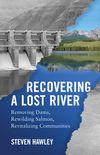
    Blue Revolution by Cynthia Barnett book coverRecovering A Lost River by Steven Hawley book cover The Coming Population Crash by Fred Pearce book cover Finding Higher Ground by Amy Seidl book cover

    Cynthia Barnett

    CYNTHIA BARNETT

    Author of the forthcoming Blue Revolution: Unmaking America's Water Crisis

    1. What is today’s most pressing environmental issue?
    The global freshwater crisis – because it’s life-threatening to people and children right now. A billion people on our planet still do not have safe, clean drinking water. More than 2.2 million people die each year from diseases associated with that lack of access.

    2. What’s one small thing people can do to make a big difference?
    My book Blue Revolution deals with freshwater woes in America, which are not comparable to the global crisis that kills thousands of children a day. But its call for a water ethic is pivotal locally, nationally and globally: Learn about freshwater resources and teach a young person – or a classroom full – about water and the consequences of over-extraction and pollution, both in their own community and elsewhere in the world. Inspiring such an ethic in the next generation – something lacking in our own – could give water the sense of urgency it deserves.


    Steven Hawley STEVEN HAWLEY

    Author of Recovering A Lost River: Removing Dams, Rewilding Salmon, Revitalizing Communities

    1. What is today’s most pressing environmental issue?
    Fixing our broken political system. Every worthy environmental cause– from local and regional issues like access to healthy food and clean water, to pressing global concerns like climate change– is running up against a government that's simply not working for its people anymore.

    To crib from an old bluegrass tune, government may not be broke, but it's badly bent. The federal government claims to be spending better than a billion dollars a year to restore endangered salmon. What they're doing instead, with the help of Senators, Congressmen, lobbyists, bureaucrats and an army of sycophants is maintaining fat subsidies for industry while holding meaningful salmon recovery at bay.  

    The environmental movement in forty years has had some amazing successes. But most of the ecological indicators by which we gage the health of the planet tell us we're in deep trouble. A few battles were won, but we're losing the war. The best move for environmentalists would be to begin the work of forming broad coalitions with other "civil society" advocates of every stripe, and begin the work of returning us to the idea that government of, for and by the people should be central to solutions, and possibly our most effective means to averting a host of impending disasters.

    2. What’s one small thing people can do to make a big difference?
    Become engaged in politics in some way beyond just voting. Mark Twain said if voting made any real difference they wouldn't let us do it. So raise hell in church committees, school boards, and state houses. It's likely our last best hope. 


    Fred Pearce FRED PEARCE

    Author of With Speed and Violence, When The Rivers Run Dry, Confessions of an Eco Sinner, and The Coming Population Crash

    1. What is today’s most pressing environmental issue?
    Humanity’s assault on our planet's life support systems. That's the carbon cycle, which we disrupting by burning carbon that has been stored underground by nature over millions of years in fossil fuels. By releasing this carbon into the atmosphere as carbon dioxide we are triggering both global warming and other big effects down the track like acidifying and deoxygenating the oceans. And the nitrogen cycle. We are fixing nitrogen from the atmosphere to make chemical fertilizers that eventually wash into rivers and oceans, causing more deoxygenation and dead zones. These are major changes to the basic chemistry of our planet. We still have very little idea where they will lead. Climate change may just be the start. A dead ocean may be the ultimate ecological horror. It would kill the planet.

    2. What’s one small thing people can do to make a big difference?
    Slow down. Take your foot off the gas. Take time and care. Think. Smile. Grow old gracefully.


    Amy Seidl AMY SEIDL

    Author of Early Spring: An Ecologist and Her Children Wake to a Warming World and Finding Higher Ground: Adaptation in the Age of Warming

    1. What is today’s most pressing environmental issue?
    It is difficult to choose a single pressing issue; there are many that compete for the top spot. But all are linked by what I see as a crux in environmental problem-solving: a reliance on linear versus systemic thinking.

    We live in an increasingly complex world, one that is experiencing the effects of global climate change, population growth, fisheries depletion and ocean acidification, and peak oil (among others) at the same time. When considered individually they appear monumental but it is actually their simultaneity that poses the greatest threat. This is why we must address environmental problems from a systems perspective. Each of these problems is influenced by and influences others; therefore they should be seen as part of a whole, complex system. When we try to solve one issue at a time, we miss the relationships among them, and the ability to optimize our efforts.

    2. What’s one small thing people can do to make a big difference?
    Small and big are relative terms. That said, plant a garden and spend more time in wild nature.