• Laurie Essig teaches at Middlebury College and is the author of American Plastic: Boob Jobs, Credit Cards and Our Quest for Perfection. Essig writes for the Chronicle of Higher Education‘s Brainstorm Blog.

    EssigThe average federal tax rebate this year is around $3000. By now we all understand that there is no point investing that money in the national casino known as Wall Street. You could be fiscally responsible adults and take that money to pay off some debt, but that would counter the brilliant economic recovery policy first coined by George Dubbya after the 9/11 attacks: go shopping.

    But shopping for what? How about taking the $3000 to spruce up the kitchen or go on a nice vacation? Not a bad idea. But perhaps an even better one is to invest in the most important thing of all: a new, more perfect you. In other words, maybe you should spend that tax rebate on some cosmetic surgery or at least some Botox?

    As Joan Kron, a senior editor at Allure magazine told me when I was researching my book, American Plastic: Boob Jobs, Credit Cards and Our Quest for Perfection

    No one says you shouldn’t go to college because you don’t want to improve your intelligence. What’s the difference between a facelift and college? People know they’ll keep their jobs if they make themselves look better.

    Of course, $3000 doesn’t go very far in the world of plastic beauty. According to the American Society of Plastic Surgeons, breast implants, the most popular procedure for women, will cost you about $6500. A tummy tuck $8722. And a facelift a whopping $11,471.

    Now you could do what many Americans already do and use that tax rebate to travel somewhere cheaper, warmer, and more willing to give you some lipo for a few thousand bucks. I’ve interviewed cosmetic surgeons from the Dominican Republic and Mexico who say their cosmetic surgery tourism business is busiest right after tax rebates arrive in the U.S. But there are obvious dangers to traveling outside the country for major surgery, like having complications later on that no US surgeon is willing to treat for fear of liability. Also, in terms of the Dubbyean economic policy of saving the US economy through consumption, it only works if we consume within our borders.

    Probably the best answer is to do what nearly 85% of cosmetic surgery patients do: put your plastic surgery on plastic money. That’s right. Charge it. With $3000 down, you probably qualify through one of the medical credit loan sharks, uh, I mean companies, for the “low” rate of about 14%. Of course if you don’t want to put that $3000 down, expect to pay about 30% interest. Plus any fees and fines if you miss a payment.

    In other words, cosmetic surgery is the subprime mortgage industry of the body. Banks, having learned long ago that the best way to make money is by charging high interest rates and fees (a process known by as “financialization”) figured out that they could lend Americans money for a more perfect body, charge them an arm and a leg, and make some serious profit. Care Credit, a division of General Electric, is the largest medical credit company. According to Barron’s, GE’s health care division has the opportunity for double-digit earnings growth.

    Care Credit is happy to lend money for cosmetic surgery, not to the rich and famous, but to average Americans. That’s why over 70% of those getting cosmetic surgery earn less than $60,000 a year. It’s also why Care Credit is under investigation in the state of New York for “predatory lending practices.”

    Of course if there’s one thing we now understand, it is that debt will make us poorer even as the corporations that lend us money much wealthier. And although we would all look more “perfect” with those new boobs, we won’t be able to do anything but work to try to keep up with the interest payments. So perhaps the real answer of what to do with our tax rebates is to invest in the seemingly recession-proof industry of plastic beauty and the American search for bodily perfection. After all, if we can’t look perfect, we can at least exploit the desire to do so for our own gain. And in this way make the roulette wheel that is Big Finance and Big Beauty go round.  

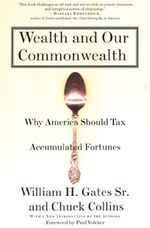
  • Today's post is by Chuck Collins, co-founder of Wealth for the Common Good, a network of business leaders and high net worth individuals that support progressive taxation and shared prosperity. He is co-author, with Bill Gates Sr., of Wealth and Our Commonwealth: Why America Should Tax Accumulated Fortunes.

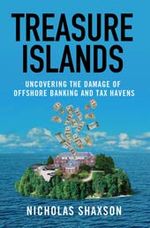
    Treasure islands As you file your taxes this year, consider the global corporations like General Electric that will pay less than you. 

    And if you want to delve deep into the topic, my unqualified recommendation this tax season is Nicholas Shaxson’s Treasure Islands: Uncovering the Damage of Offshore Banking and Tax Havens.  

    Shaxson, a veteran journalist, slices through the technical jargon to reveal the devastating impact of what he calls “the offshore system” on economic health, global poverty, and our state and federal budget deficits.  

    Tax havens, or more accurately “secrecy jurisdictions,” are the mechanisms through which wealthy individuals and multinational corporations move money around the planet to avoid taxation and regulation.  These same mechanisms facilitate criminal activity, from drug money laundering to terrorist financing networks.

    According to Shaxson, there are about 60 “secrecy jurisdictions” around the world, countries with loose incorporation rules, bank reporting and financial transparency requirements.  Those of us in the U.S. are most familiar with some of the Caribbean tax havens such the Cayman Islands, Bermuda, and the Bahamas. But technology and pharmacy companies often create subsidiaries in countries like Ireland and the Netherlands to hold patents and intellectual property to reduce US taxes.

    The offshore system has spawned a huge tax avoidance industry, with teams of lawyers and accountants who add nothing to the efficiency of markets or products.  Recent stories about General Electric’s storied tax dodging dramatize the ways that modern multinationals view their tax accounting departments as profit centers.

    At a time when federal and state lawmakers are grappling with huge budget deficits, the impact of corporate tax dodging is getting new attention. The cost of tax havens is estimated to be over $100 billion of lost revenue each year. And a coalition of over 20 U.S. companies have launched their “WinAmerica” campaign to lobby a “tax holiday” on $1.2 trillion in overseas profits they want to bring back to the U.S.   Opposing these measures is a whole grassroots movement, US UNCUT, that has emerged to argue: “No Budget Cuts Until Tax Dodgers Pay Up.” 

    Shaxson argues that almost every major economic story and crisis can trace its roots back to the offshore system.  The financial practices of the “shadow banking system” that triggered the 2008 global economic meltdown were facilitated through an opaque and unaccountable finance sector built around layers of off shore tax havens.  The two biggest recipients of taxpayer bailout funds are, by no coincidence, huge users of the offshore system. Citigroup has 427 subsidies in tax havens and Bank of America has 115.

    At the heart of the global system of off shore tax havens is the transfer of wealth –away from communities and the global south and into the bank accounts of the planet’s wealthiest and most powerful citizens and corporations.  For those who care about global poverty and trade, the offshore system is how wealthy elites move their money out of the nations of the global south –and why resource rich nations are unable to effectively tax the corporations that extract their natural wealth.  Shaxson cites reports that estimate trillions of dollars of illicit financial flows out of African countries over the last two decades.

    Shaxson, who lives in Switzerland, is in the U.S. this week to promote the book and did a press conference with U.S. Senator Carl Levin, champion of legislation to stop tax haven abuses.  Congress has been slow to tackle the off shore problem, but the tide is turning.

    Treasure Islands was released in the UK in January and quickly became a best selling non-fiction book.   It has become the bible of the UK Uncut movement, a grassroots effort to stop budget cuts and make corporate tax dodgers pay.  The U.S. Uncut movement, inspired by efforts from across the Atlantic, has over 80 protests planned for the coming tax day weekend.  On Friday 4/15, author Shaxson be joining US UNCUT to do a creative “book signing” at the offices of a prominent tax dodger in Washington DC.

  • image from www.stlcardinalbaseball.com

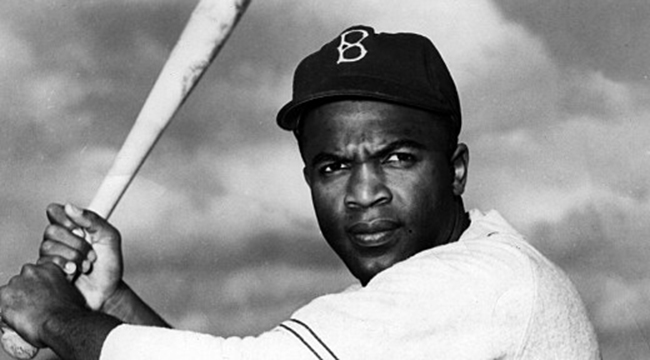
    On April 15, 1947, Brooklyn Dodgers rookie Jackie Robinson stepped to the plate as a Major League ballplayer for first time. But Robinson had already played on year in the first MLB affiliate team to be break the color barrier, the Montreal Royals (the Brooklyn Dodgers' International League team), and the effect of integration on the Negro Leagues had begun to be felt. In this excerpt from Raceball: How the Major Leagues Colonized the Black and Latin Game, author Rob Ruck looks at the beginning of the end for the Negro Leagues.

    – – – – – – – – –
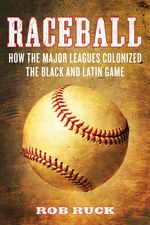
    RUCK-Raceball As the 1946 season began, the degree to which integration would savage the Negro Leagues was not yet apparent. Robinson's appeal, however, was. More than fifty-one thousand tickets were sold for his minor league debut in Jersey City, twice the number that could squeeze into the ballpark. After Robinson homered in his second at-bat, Wendell Smith wrote: "Our hearts beat just a little faster and the thrill ran through us like champagne bubbles." For his colleague Joe Bostic, the game meant that baseball had taken up "the cudgel for Democracy."

    Negro League attendance held its own in 1946, but that would be black baseball's last decent season. After an abrupt but short postwar downturn, the consumer demand that had been pent up because of enforced wartime saving launched the U.S. economy on a skyward trajectory. The major leagues took terrific advantage of the economic bounce and sold a record 18.5 million tickets that season. A few black clubs, particularly the Newark Eagles and the Kansas City Monarchs, also drew well thanks to the strong economy. In May, Branch Rickey signed another black player, Roy Partlow. Because the pitcher had actually signed a contract with his Negro League team, the Philadelphia Stars, Rickey paid the team $1,000. Partlow's signing represented the first time that a major league club compensated a Negro League team for a player. Still, there were cautionary signs; black teams that played within the International League's footprint found that swarms of their fans were traveling to Newark, Jersey City, and Baltimore to watch Jackie Robinson play whenever the Montreal Royals came to one of these towns.

    Owners on both sides of the color line fretted as Major League Baseball's large-scale integration became more and more likely. While black owners saw impending financial doom, white ones had a more amorphous set of fears. Never known for their foresight, major league executives formed a committee that reported back to the owners in the summer of 1946 on a series of problems, including what they called the "race question." The internal document, whose existence several owners later denied, drew a dire portrait. Its authors complained that their game was besieged by "political and social-minded drum beaters" with an agenda that would damage both MLB and the Negro Leagues. While allowing that every boy "should have a fair chance in baseball" regardless of his race, the report concluded that no African Americans were ready for the majors. Furthermore, it argued that integration would jeopardize a $2-million-a-year black business that employed thousands and would cost major league teams rental and concession fees. Most noxiously, the report expressed the concern that large crowds of black fans at major league games in New York and Chicago, where four of the sixteen major league teams played, could "threaten the value" of these clubs by scaring off white fans.

    The next year began badly for black baseball. Josh Gibson, perhaps its best player ever, died in January 1947 at the age of thirty-five; the cause of his death would never be definitively determined. Misfortune continued that spring when bad weather forced many games to be canceled, sinking struggling teams deeper into the red. But it was Jackie Robinson's debut with the Brooklyn Dodgers on April 15 that sounded black baseball's death knell. Black fans went gaga over Robinson, taking Jackie Robinson Special trains to see him play. The Dodgers' attendance rose by over three hundred thousand on the road, black attendance at Ebbets Field quadrupled, and all but one National League club set a single-game attendance record that summer when playing Brooklyn. "Jackie's nimble, Jackie's quick, Jackie makes the turnstiles click," the Courier's Wendell Smith wrote. But Negro League baseball hemorrhaged as a result. "After Jackie," Buck Leonard sighed, "we couldn't draw flies."

    In July, Cleveland Indians owner Bill Veeck signed Newark Eagles outfielder Larry Doby to a contract with his team, and Robinson was no longer the sole African American in the majors. Three other Negro Leaguers—outfielders Hank Thompson and Willard Brown, and pitcher Dan Bankhead—arrived later that season. In each case, the player's Negro League team was compensated. The sale of players to major league organizations recouped some of the losses that the Negro League clubs were facing, but without formal affiliation with Major League Baseball, their long-term prospects were bleak.

    Those prospects became even bleaker after the season ended. In December 1947, with their options narrowing, the Negro Leagues applied for membership in the National Association of Professional Baseball Leagues. Their request to become a minor league was denied on the pretext that Negro League territories overlapped with preexisting territorial rights of current members. The handwriting was on the wall; black clubs would not be accepted into white baseball's fraternity.

    Negro League attendance continued to plummet in 1948, as radio and limited television broadcasts of Dodgers games further siphoned away crowds. It didn't help that coverage of Robinson and a handful of other black major leaguers in the black press overshadowed that of the Negro Leagues as a whole. The Newark Eagles, who had drawn 120,000 fans in 1946, attracted only 35,000 in 1948. Negro League games at Yankee Stadium pulled in a third as many fans as they had in 1946, and the Eagles and the Homestead Grays lost money for a second consecutive season. The Eagles, Grays, and the New York Black Yankees left the NNL following the 1948 season; the three remaining NNL clubs joined the NAL, but that league wasn't viable either. The storied Homestead Grays barnstormed for a few more years, then shut down for good.

    Interestingly, segregation offered some protection for black teams in the South, where minor league baseball remained all white. The Kansas City Monarchs, located outside major league territory, also remained profitable, in part due to player sales. But the number of players who could be sold to major league teams was dwindling and by selling their best or most promising players, black baseball was mortgaging its future. At the same time, more black prospects were entering organized baseball directly from high school, sandlot, or college ball, bypassing the Negro Leagues altogether. Nor could black teams continue to make up for diminished crowds at league contests by playing what had often been lucrative games with white independent clubs. Even white independent baseball was withering under the onslaught of television and suburbanization.

    For many African Americans, the erosion of segregation in baseball, if not its total disappearance, had weakened the Negro Leagues' reason for being. Separate black institutions were now perceived as less worthy, even backward, at a time when African Americans were moving forward into white institutions. Moreover, integration had freed the relatively captive audience that the Negro Leagues and other black businesses had relied upon for lifeblood.

    Most major league teams, despite Brooklyn's success, were in no rush to follow suit. Although Jackie Robinson first took the field as a Dodger on April 15, 1947, only six of sixteen clubs had fielded black players by 1952. All of them, however, would integrate their minor league systems by August 1953. Former Negro Leaguers Roy Campanella, Willie Mays, Ernie Banks, Henry Aaron, Monte Irvin, Ray Dandridge, and Satchel Paige were now the property of major league organizations. In July 1959, the Boston Red Sox reluctantly became the final team to integrate when, amid a wave of political pressure, they called up infielder Pumpsie Green from the minor leagues.

    By then, the Negro National League had been history for a decade, disbanding after the 1948 season. The league's inability to defend itself against Jorge Pasquel and the Mexican League in 1940 had foreshadowed its helplessness to withstand a much more powerful predator less than a decade later. Little was said about its disbandment. The black press, with its attention newly riveted on MLB, had all but dropped the Negro Leagues. After the Homestead Grays beat the Birmingham Black Barons to win the 1948 Negro League World Series—the last ever played—the Pittsburgh Courier devoted just two paragraphs to the victory, which was buried by coverage of black major leaguers.

    Amid mounting financial losses, black teams were unable to reconstruct themselves in ways that would return them to profitability or persuade the major leagues to accept them as affiliates—not that the latter ever seriously considered that outcome. The Negro American League limped along during the 1950s with an ever-changing roster of teams. Clubs barnstormed, clowned, cut rosters, instituted salary caps, and promised to elevate their standards of organization. But none of these efforts stopped the bleeding of talent, fans, and dollars to the major leagues. Black baseball became a pallid shadow of its former self, soon to become a thing of the past. Few seemed to mind: everybody was watching Jackie Robinson anyway.

    http://www.youtube.com/p/28B1D68293B52C2E?hl=en_US&fs=1

  • At the end of January, Mary Oliver gave a reading at Emory University. For those among us who had the great joy of seeing her, and for the rest of us who were unable to be there, here is a video of her reading three poems at that event: "Tom Dance's Gift of a White Bark Pinecone," "Wild Geese," and "Peonies."

    In honor of National Poetry Month, Beacon Press will give away five signed copies of Mary Oliver's Swan: Poems and Prose Poems. 

    For details and to read a poem from the book, visit MaryOliver.Beacon.org. You can enter once a day between now and Friday, April 15, at noon EST.

  • Shelina Zahra Janmohamed is the author of Love in a Headscarf. She is a leading commentator on British Islam, a columnist for EMEL magazine, a regular contributor to the Guardian and the BBC, and author of the award-winning blog, Spirit21. This post originally appeared on The National.

    France_burqa France has gone all burqa-phobic again. As of Monday, it is illegal in France for anyone to cover their face in public. The ban has been on the horizon for some time, so nothing much new here, but the wider context has intensified.

    The leader of the far-right Front National, Marine le Pen, is campaigning hard against Muslims and immigration, and her popularity is increasing. She has compared crowds of Muslims praying in the streets outside mosques to the Nazi occupation.

    Not to be outdone, the president, Nicolas Sarkozy, this week organized a debate on secularism and the role of religion. His prime minister, François Fillon, refused to attend, saying that it would further stigmatise Muslims. Abderrahmane Dahmane, who was fired from his post as Sarkozy’s adviser on integration for criticising the debate, called on Muslims to wear a green star in protest against the discussion. It is aimed to echo the yellow star that Jews in Europe were forced to wear during the Nazi era.

    With such emotive references on both sides to the Nazi era, it’s clear that France still needs to come to terms with its own history in dealing with minorities.

    Book cover for Love in a Headscarf by Shelina Zahra Janmohamed Despite arguing that the ban and the debate are in defence of secularism, Sarkozy has had no qualms in simultaneously praising the “Christian heritage” of the country.

    And even though a 1905 law separated church and state, churches and synagogues still receive indirect subsidies from the state. If mosques were included in this it might help put an end to the lack of space in them that forces worshippers to overflow onto the streets.

    It is easy to understand the motivation behind the ill-conceived debate on secularism held this week, as it is the political context for the ban on face veils in public.

    However, this would fail to illuminate the bigger picture. By pandering to the far-right to gain votes, Sarkozy is giving anti-Muslim sentiment legitimacy and a national platform that it does not deserve and that could have long-term and dangerous consequences.  

    He is not the only leader guilty of this. Germany’s Angela Merkel was keen to score cheap political points last year when she stated that the “multikulti” project had failed, and pointed her finger at Muslims. Merkel would do well to remember that Germany’s earlier mono-culture project in the 1930s and 1940s did not work out so well.

    Following hot on her heels was the UK’s prime minister, who repeated the same vacuous mantra in February this year at a conference in Munich. He told world leaders that state multiculturalism had failed in the UK and pledged to cut funding for Muslim groups that failed to respect basic British values such as freedom of speech and democracy. Strange words from a government that harped on about “stability” when the protesters of Tahrir Square were demonstrating for democracy.

    Europe must be more principled in its approach to dealing with its Muslim populations. Countries such as the UK and France are taking bold actions in Libya to support the movement towards freedom and democracy. At the same time, domestically they wish to suppress Muslim self-expression.

    You can’t have it both ways. Freedom, self-expression and democracy need to be accompanied by one more value to be meaningful: a consistent standard for all.

    Photo by siobh.ie on Flickr, used under Creative Commons. 

  • In honor of National Poetry Month, we share this essay by Mary Oliver, which was included in the CD Many Miles: Mary Oliver reads Mary Oliver. 

    Beacon Press is giving away five signed copies of Mary Oliver’s Swan: Poems and Prose Poems. 

    For details and to read a poem from the book, visit MaryOliver.Beacon.org. You can enter once a day between now and Friday, April 15, at noon EST.

    Manymiles All our lives, at least seasonally, the redbird sings, and the oriole and the wren, and in April the ponds are reliably loud with the singing of frogs, and on long winter afternoons the snow-heavy wind whistles in the pines. But our own voices, the particular voices of those who are dear or important to us– or both– vanish utterly at the end of the season of life. And how thoroughly also are the sounds of a certain place gone when we visit it no more, though visual joys, sometimes with great clarity, may remain in the mind.

    In Rajastan, in India, a man, a woman, and a child were singing outside a restaurant; I can still see them in their vibrant gypsy clothes, the man holding a stringed instrument somewhat like a guitar, but smaller and shaped differently, rather like a gourd. But I cannot hear anymore their loud brisk, joyful singing, a strange and powerful performance. How can this be, that the eyes can keep so many pictures, and the ears have no such reliable and comforting memory? It was perhaps the most exciting music I had ever heard; I think I might have followed it anywhere; but we drove on to the next town, and now in my ears there is nothing.

    Of course, the ears are not always quite so empty as I describe them in this story. One can remember voices and almost hear them again a little, especially the intonation of a familiar voice at some pitch of emotion, angry, or frightened, or tender. But for me, at least, it’s a few syllables thrust into the air, and they are hard to hold onto.

    Many years ago a friend and I used to go to the Old Met in New York, two or three nights a week sometimes. We would stand in the lobby and wait, and sure enough some svelte couple would come dashing out at the end of Act One, to a dinner or a party perhaps, and we– poor but audacious– would ask them to give us their ticket stubs. We were never refused, and invariably they were good seats: first floor, down front. Tebaldi, Tucker, Warren, De los Angeles! And then Tebaldi and the others sang at the Met no more, sang no more anywhere.

    Well, the truth is that I wish I could live those years again, and enter into the presence of those live performances that meant so much to me. But I do not need to suffer the absence of their voices: technology, while it has invented some horrendous things, can claim much good magic also. So I can hear Tebaldi again. I can hear Dylan Thomas telling in his wondrous voice about a long-ago Christmas day. I can hear Dr. Martin Luther King Jr. proclaiming that he had seen the promised land. What if that voice had vanished irretrievably– I think we would feel by that much less the long struggle up the mountain. As in history, as in art, so in life. Oh, what if one had no kept record of the voice of someone loved and now gone? What an extra dish of sorrow that would be.

    For there is something heard in the actual voice that cannot be accrued from the printed page, though we read with care and excitement, even with a real falling-into-it passion. There is simply no “connect” as there is between listener and speaker. That, at its best, is almost touch. Nuances unfelt on the page hang in the air. So. Though I am an old-fashioned sort of person, who knows only the kind of blackberries that grow on bushes (for which my friends berate me), I can’t deny my own joy and appreciation at the salvation of voices otherwise vanished into the unknowable darkness.

    Therefore, this second CD. I join the world. And ponder this fantasy sometimes– that one day technology will find a place in the dark air and bring back to us the voices of Keats, Shelley, Whitman, Emerson, Li Po, Rumi, Homer– anyone anyone wants to hear. Who knows. . .

    Listen to Mary Oliver read “Many Miles.”

  • Swan_150px In honor of National Poetry Month, Beacon Press will give away five signed copies of Mary Oliver's Swan: Poems and Prose Poems. 

    For details and to read a poem from the book, visit MaryOliver.Beacon.org. You can enter once a day between now and Friday, April 15, at noon EST. 

    For updates on Mary Oliver's appearances, new publications, and media, Like Mary Oliver on Facebook. 

  • Today's post is by Chuck Collins, Alison Goldberg, Scott Klinger, and Sam Pizzigati at the Insitute for Policy Studies. Collins is co-founder of Wealth for the Common Good, a network of business leaders and high net worth individuals that support progressive taxation and shared prosperity. He is co-author, with Bill Gates Sr., of Wealth and Our Commonwealth: Why America Should Tax Accumulated Fortunes.

    Gates_collinsWASHINGTON – "We're broke."

    Or so claim governors and lawmakers all over the country. Our states and our nation can no longer afford, their plaint goes, the programs and services that Americans expect government to provide. We must do with less. We need "austerity."

    But we're not broke. Not even close. The United States of America is awash in wealth. Our corporations are holding record trillions in cash. And overall individual wealth in the United States, the Credit Suisse Research Institute reported this past fall, has risen 23 percent since the year 2000, to $236,213 per American adult.

    We have, these indicators of overall wealth suggest, survived the Great Recession quite nicely. So how can average families — and the national, state, and local governments that exist to serve them — be doing so poorly? Why do "deficits" dominate our political discourse? What explains the red-ink hurricane now pounding government budgets at every level?

    This Tax Day report (pdf) identifies two prime drivers behind our current budget "squeeze."

    One, we have indeed become wealthier than ever. But our wealth has become incredibly more concentrated at our economic summit. U.S. income is cascading disproportionately to the top.

    Two, we are taxing the dollars that go to our ever-richer rich — and the corporations they own — at levels far below the tax rates that America levied just a few decades ago. We have, in effect, shifted our tax burden off the shoulders of those most able to bear it and away from those who disproportionately benefit from government investments the most.

    These two factors — more dollars at the top, significantly lower taxes on these dollars — have unleashed a fiscal nightmare. Can we wake up in time to avoid the crippling austerity that so many of our political leaders insist we must accept?

    This report offers both an analysis of our current predicament and a series of proposals that can help open our eyes to a far more equitable — and brighter — future.

    Key Tax Facts

    • 15,753: The number of households in 1961 with $1 million in taxable income (adjusted for inflation).
    • 361,000: The number of households in 2011 estimated to have $1 million in taxable income.
    • 43.1: Percent of total reported income that Americans earning $1 million paid in taxes in 1961 (adjusted for 2011 dollars)
    • 23.1: Percent of total reported income that Americans earning $1 million are likely to pay in taxes in 2011, estimated from latest IRS data.
    • 47.4: Percent of profits corporations paid in taxes in 1961.
    • 11.1: Percent of profits corporations paid in taxes in 2011.


  • Today's post is from Alexis Rizzuto, an editor at Beacon Press.

    TD by Joel Rogers -  Marfa Spring 2009We at Beacon would like to commemorate the passing of one of our environmental authors, Theodore Michael Dracos (Ted in his by-line, Theo to friends). His book, Biocidal: Confronting the Poisonous Legacy of PCBs, first came to us in 2008 but went to another press. Nonetheless, I kept the manuscript and used it frequently as a reference to better understand the workings of toxic chemicals in our ecosystems and in our bodies. I also kept in touch with Theo. When the book came back on the market, I was glad to be able to bring it on to Beacon's list.

    Theo was passionate about getting the word out about PCBs, these synthetic chemicals that can now be found in everything from fish to frogs, eels to eagles, orcas to Inuits. They have been found in every human ever tested, in our blood and even in breast milk, threatening us at our most vulnerable stages of development. One of the most fascinating scientific pieces he wrote was a clear explanation of epigenetics—the study of how toxins can cause changes on a genetic level, changes that actually become inheritable.

    Biocidal Keenly aware of the destruction wreaked by the largely unregulated release of industrial chemicals into our biosphere, Theo could easily have become hopeless. Indeed, in our correspondence we'd often share the latest news on the role of chemicals in such abominations as the collapse of bee colonies, the spread of a communicable cancer in Tasmanian devils, the ongoing decimation of America's bat population, a rash of beak deformities in Alaska's birds. It was after that last blow that I shared with him a quote from Aldo Leopold: "One of the penalties of an ecological education is living alone in a world of wounds." To that, Theo added, "and a world of beauty."

    I agreed, though I told him that I sometimes find it hard to see past the wounds. His response is one I return to whenever the latest environmental degradation leaves me dispirited:

    "That's not good about the wounds getting in the way of the beauty. Jung said, 'Life is brutal and beautiful.' It seems to me that the only way to counteract the brutality and suffering is to concentrate on the beauty at every chance."

    And he did, sending me photos of the bluebells on his rural West Texas property, and telling me of the family of mountain lions that had taken up residence nearby.

    The fight against PCBs and other toxic chemicals goes on, as does their destructive work. But when I get overwhelmed by the wounds, I think of Theo's ability to appreciate the glories that remain. Thanks, friend.

    Photo of Theo Dracos by Joel Rodgers.

  • Today's post is from Carole Joffe, author of Dispatches from the Abortion Wars: The Costs of Fanaticism to Doctors, Patients, and the Rest of Us. Joffe is a professor in the Bixby Center for Global Reproductive Health at the University of California, San Francisco. She blogs at RHRealityCheck, where this post originally appeared.

    9.pm. In bed at hotel. Landline rings. 'Hello"? "Dr. Benton ?" "Yes. Who is this?" "How many babies did you kill today?"

    I hung up. Heart started pounding. Someone who doesn't like me at all at all knows exactly where I am. I disconnect the landline.

    Immediately cell phone rings. Blocked number. "Hello?" Same voice. I didn't say anything but listened as he spoke…Heart pounding. Someone who doesn't like me…knows my cell phone number and knows other things about me. …I hang up.

    Immediately he called again. I didn't answer. He left a message on my voicemail, saying, "this isn't—-(east coast state where Dr. Benton lives)—this is————(southern state where she traveled periodically to perform abortions)."

    I didn't sleep much that night.

    The above is an excerpt from an e-mail I received from Dr. Felicia Benton (not her real name). I had recently concluded a phone interview with Dr. Benton about her experience as an abortion provider who travels from her home state several times a month to provide abortions in underserved areas. The matter of these disturbing phone calls did not arise until we continued our conversation via e-mail. Dr. Benton also mentioned that the caller knew in which city she lived, and had even left abusive messages on her elderly mother's answering machine.

    JOFFE-DispatchesFromAbortionWars The media's coverage of abortion these past few months have focused, understandably, on the seemingly endless assaults on the procedure by Congress and by individual state legislatures , who have passed measures ever more extreme and bizarre: e.g., the House bill that allows hospitals to refuse abortions even if a woman's life is at stake, the recently passed South Dakota law that compels women seeking abortion to first go for "counseling" to a religiously based, anti-abortion Crisis Pregnancy Center and then wait three days before they can legally obtain an abortion, and so on. But Dr. Benton's experience—which is hardly unique– reminds us that there is, simultaneously, another war on abortion occurring, this one waged directly on abortion providers.

    This war on providers has been going on so long that it has become essentially "the new normal," with significant public attention coming only when a member of the abortion providing community is murdered. There have been eight such murders thus far, the most recent being that of Dr. George Tiller of Kansas, in May 2009. Dr. Tiller's murder, and the upsurge of aggressive incidents reported at clinics immediately following this tragedy, continues a pattern of the worst antiabortion violence occurring during the administrations of Democratic presidents. (The seven murders preceding that of Dr. Tiller came during Bill Clinton's presidency).

    Apart from these murders, how much antiabortion violence and harassment are there, and at what point can these acts legitimately be called "terrorism?" Certainly, noisy picketing outside a clinic can be annoying to both providers and patients, but such picketing is of a different order than a doctor in a hotel room receiving a threatening call on her unlisted cell phone number, which in turn is different from the firebombing of a facility, which in turn is different than attempted murders, which in turn are different from successfully executed murders.

    The Guttmacher Institute, the National Abortion Federation, and the Feminist Majority Foundation are the organizations that have done the most to track violence against abortion providers and each make useful contributions to understanding a complex, and depressing, picture. From the Guttmacher Institute's latest figures, we learn that 88 percent of abortion clinics experienced at least one form of harassment in 2008, most commonly picketing, but—notably—42 percent reported picketing that also involved patient blocking. Nearly one fifth of clinics reported vandalism. Harassment was especially acute at larger abortion facilities: nearly all providers that provided 1000 or more abortions per year reported picketing (with a higher incidence of patient blocking) and nearly one in five of these reported a bomb threat.

    The Feminist Majority Foundation's periodic surveys of clinic violence contains the category of "severe violence," referring to blockades, invasions, arson, chemical attacks, stalking, physical violence, gunfire, bomb threats, death threats, and arson threats. The worrisome finding from the 2010 survey is that 23.5 percent of all clinics reported incidents of such severe violence, up from 18.4 percent in 2005. Stalking was the most common event in this category.

    The National Abortion Federation has tabulated incidents of violence and disruption against its member facilities since 1977. Here are some of the totals in various categories: besides the 8 murders, there have been 17 attempted murders, 175 incidents of arson, 41 bombings, 1429 incidents of vandalism, 2057 cases of trespassing, 661 anthrax threats, 526 cases of stalking, and 416 death threats. 

    While this level of violence would be unacceptable—indeed unthinkable– in any other branch of American medicine, in the case of abortion this violence is seen as acceptable fodder for politicians' wisecracks. For example, at a recent mayoral candidate forum in Jacksonville, one of the contenders, according to a local paper, said "the only thing he wouldn't do was bomb an abortion clinic, then….added, with a laugh, 'but it may cross my mind.'" Even more alarmingly, several states have recently introduced legislation permitting "justifiable homicide" in the defense of a fetus, which many feel would lead to open season on abortion providers.

    To be sure, the federal government has tried to respond to the attacks on abortion providers. Most notably, in 1994, President Clinton signed the FACE (Freedom of Access to Clinic Entrances) Act, which made it a federal crime to impede patients' entry to an abortion entry. The FACE Act has been credited with significantly lowering the number of full-scale blockades of clinics that were commonplace in the late 1980s and early 1990s. And there is every reason to believe that President Obama's Justice Department takes seriously threats of extreme violence against providers. Nevertheless, the depth of local law enforcement's commitment to protect providers varies from place to place. The provider community is still haunted by the fact that Scott Roeder, Dr. Tiller's assassin, was seen the day before the murder, vandalizing another clinic, and though his license plate was reported to local authorities, there was no action taken.

    And how, finally, should we understand the frightening calls that Dr. Benton received? Should they be seen merely as "harassment" or, as I believe—given the totality of the record of violence against providers since the 1970s– as one element of a larger campaign of genuine terrorism? Though the three organizations mentioned above have done an excellent job of tabulating incidents on the spectrum of abortion violence, the more qualitative question of the impact of such incidents remains unanswered. In Dr. Benton's case, though admittedly shaken by the calls, she remains resolved to continue abortion work. For unrelated reasons, she no longer works at the southern clinic, but still travels to other facilities. What is unknown is how many providers have stopped such work—or never started it– as a result of similar intimidation.