In essays dealing with the purpose and promise of Progressive Education, how students learn best, making schools better places for students, educational policy, and parenting, Kohn calls on parents and educators to rethink our priorities and reconsider our practices.
Kohn repeatedly invites us to think more deeply about the conventional wisdom. Is self-discipline always desirable? he asks, citing surprising evidence to the contrary. Does academic cheating necessarily indicate a moral failing? Might inspirational posters commonly found on school walls ("Reach for the stars!") reflect disturbing assumptions about children? Could the use of rubrics for evaluating student learning prove counterproductive?
Subjecting young children to homework, grades, or standardized tests-merely because these things will be required of them later-reminds Kohn of Monty Python's "getting hit on the head lessons." And, with tongue firmly in cheek, he declares that we should immediately begin teaching twenty-second-century skills.
Union members and allies are taking part in more than 1,000 events around the nation on and around April 4 in solidarity with working people in Wisconsin and dozens of other states where politicians are attempting to take away the rights of workers.
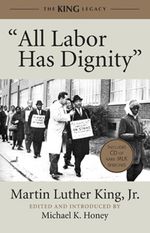
In the middle of a violent thunderstorm, with tornadoes and lightning touching down in the surrounding area, King arrived at Bishop Charles Mason Temple without a script, with a sore throat, and slightly ill. Violent weather prevented many people from coming, but nearly all thirteen hundred of Local 1733's members came, as did some of their strongest strike supporters. To this humble gathering, King poured out his last testament. He looked back through all of human history to this particular moment in time and called on people to appreciate their opportunity to once again change history.
The speech he gave inspired the workers in the hall that night and still resonate today. Here is an excerpt of the speech. (You can listen to the speech in full in two parts here and here.)
You can read the entire speech, along with commentary by Michael Honey, in All Labor Has Dignity. You can read an excerpt of one of King's other speeches in the book, one he gave to union workers in Chicago in 1967, here or on Scribd. You can purchase this book for 20% off from Beacon.org using code APRIL4 from now until April 30, 2011.
Thomas Norman DeWolf is the author of Inheriting the Trade: A Northern Family Confronts Its Legacy as the Largest Slave-Trading Dynasty in U.S. History. DeWolf was born in California and educated at the University of Oregon. He served as city councilor, county commissioner, and for nine years on the Oregon Arts Commission. His years of public service focused on literacy, children's issues, and restorative justice. A member of the Pacific Northwest Writers Association, he lives with his wife in Oregon. He is currently at work on a new book, Gather at the Table, with Sharon Morgan.
Today, April 4, 2011, is the 43rd anniversary of the assassination of Dr. Martin Luther King, Jr. in Memphis, Tennessee. Two years ago I attended the White Privilege Conference in Memphis. My conference roommate Michael and I, along with two students at the college where he works, drove downtown to the Lorraine Motel, now home to the National Civil Rights Museum.
After Dr. King's death the Lorraine Motel plunged into an understandable downward spiral. Much like Memphis, I suspect, the motel would understandably never be the same. Eventually, a group of Memphis citizens formed the Martin Luther King Memorial Foundation and began the work that resulted in the 1991 opening of the museum and the 1999 purchase of the properties across the street from which the shot was fired that killed Dr. King.
The tour begins with a showing of the 2009 Academy Award nominated documentary short film The Witness: From the Balcony of Room 306, the story of Reverend Samuel "Billy" Kyles, the man who stood next to Dr. King on the balcony when he was shot.
One of the most powerful experiences for me during the tour was stepping onto a bus inside the museum and seeing the cast figure of Rosa Parks sitting resolute, knowing that three other black folks in her row had left their seats so a white person could have a seat with no black people in the same row. Mrs. Parks' refusal to give up her seat was a defining moment, a turning point, in the civil rights movement.
Soon, standing behind the glass partition that has been erected between rooms 306 and 307 just a few feet from where Dr. King was shot took that horrible event from forty-one years ago and brought it powerfully into my present.
We then walked across the street to the building from which the fatal shot was fired. Looking back across the street toward the Lorraine I'm reminded of the feeling I've had at other significant historical sites.
It is all so small.
Plymouth Rock, Ford's Theater, Dealey Plaza, the Lorraine Motel; the scale is all so very human. The choice to perpetrate either harm or healing is always such a small, human one.
Another feeling I've had is that Dr. King has become an icon for racial harmony and reconciliation. "I have a dream today…"
People who, when I was a child, considered King a radical threat to national security now enjoy the day off for the MLK holiday. Most major cities now have streets named after him; even those where he once spoke against segregation and oppression against black people. Everyone loves Martin and use his name as they promote peace and racial justice (whether they believe in it or work for it or not).
Hey, I'm the first to shout from the mountain top that race relations are better now than when I was in junior high school during the Watts Race Riots. But I wonder what King would think if he were alive today. It seems to me that we have reduced the "I have a dream" man to an acceptable "pablum" symbol for pretty much everybody; particularly white people. We ignore his serious critique of the system of white supremacy in America. We ignore all that was radical about him in favor of our Kumbaya image of him. What we sacrifice as a result is the challenge of viewing ourselves in the stark mirror he held before us.
If King were alive today, I believe he would hold that mirror high and it would be quite an uncomfortable image for Americans to behold. King once said,
"A true revolution of values will soon cause us to question the fairness and justice of many of our past and present policies. On the one hand, we are called to play the Good Samaritan on life's roadside, but that will be only an initial act. One day we must come to see that the whole Jericho Road must be transformed so that men and women will not be constantly beaten and robbed as they make their journey on life's highway. True compassion is more than flinging a coin to a beggar. It comes to see that an edifice which produces beggars needs restructuring."
In 1967, King warned us against the "glaring contrast of poverty and wealth" that has only grown grossly wider today. So many people are being forced into poverty. Our environment is being destroyed. I suspect, no, believe, that King would be leading marches in resistance.
Today we have military troops in many countries around the world. We have initiated wars in Iraq, Afghanistan, and Libya. In 1967, King said the United States was "the greatest purveyor of violence in the world." What is different today? I have no doubt that Dr. King would oppose such oppression.
Lots of folks feel comfortable believing in King's dream of a wonderful world where the color of our skin matters less than the content of our character. Fewer are comfortable discussing King's proposition that our country was on "the wrong side of a world revolution" of oppressed peoples.
I encourage you to ponder how we can continue to blind ourselves to Dr. King's radical beliefs and still pretend to honor him. On the anniversary of his death, we honor how his life changed America.
The colliding histories of black and Latin ballplayers in the major leagues have traditionally been told as a story of their shameful segregation and redemptive integration. Jackie Robinson jumped baseball's color line to much fanfare, but integration was painful as well as triumphal. It gutted the once-vibrant Negro Leagues and often subjected Latin players to Jim Crow racism. Today, Major League Baseball tightens its grasp around the Caribbean's burgeoning baseball academies, while at home it embraces, and exploits, the legacy of the Negro Leagues.
After peaking at 27 percent of all major leaguers in 1975, African Americans now make up less than one-tenth-a decline unimaginable in other men's pro sports. The number of Latin Americans, by contrast, has exploded to over a quarter of all major leaguers and roughly half of those playing in the minors. Award-winning historian Rob Ruck not only explains the catalyst for this sea change; he also breaks down the consequences that cut across society. Integration cost black and Caribbean societies control over their own sporting lives, changing the meaning of the sport, but not always for the better. While it channeled black and Latino athletes into major league baseball, integration did little for the communities they left behind.
By looking at this history from the vantage point of black America and the Caribbean, a more complex story comes into focus, one largely missing from traditional narratives of baseball's history. Raceball unveils a fresh and stunning truth: baseball has never been stronger as a business, never weaker as a game.
Helping the people of interested countries in meeting their need for trained men and women.
Helping promote a better understanding of Americans on the part of the peoples served.
Helping promote a better understanding of other peoples on the part of Americans.
In the process of meeting these goals, Peace Corps volunteers have helped to bring the spirit of democracy to many nations where the ideals we treasure were once very foreign. In this video, Stanley Meisler, author of When the World Calls: The Inside Story of the Peace Corps and Its First Fifty Years, talks about how Peace Corps volunteers in Ethiopia contributed to the overthrow of an emperor.
The 1911 Triangle Waist Factory fire elicited an outpouring of sympathy and helped humanize eastern European immigrant industrial workers in the eyes of affluent white Americans, but reforms aimed at bakeries demonized the workers who the country's single most important food. In today's post, Aaron Bobrow-Strain, chair of the Department of Politics at Whitman College and author of White Bread: A Social History of the Store-Bought Loaf, looks at how reforms in food safety did little to help the workers in that industry, and how fear continues to adversely affect workers in today's food chain.
Last weekend, thousands of people attended events commemorating the one-hundred-year anniversary of Triangle Waist factory fire, which killed 146 young immigrant garment workers just off New York's Washington Square Park. The centennial commemorations, coming at a moment when worker organizing is vilified and under attack across the country, were a chance to remind Americans of the suffering and struggle it took to win basic workplace protections that we take for granted (at least for now).
Child labor laws, workplace safety regulations, sprinkler systems in office buildings, and limits on the length of the work week can all be traced back, at least in part, to the outpouring of anger and sympathy that followed the Triangle fire. As David von Drehle notes in his classic account of the fire and its aftermath, key provisions of the New Deal can even be traced to the tragedy of March 11, 1911. Union workers and non-union workers alike, we all owe a debt to the women who died in the Triangle fire and the labor reformers who took up their cause.
But there is also a lesson in the Triangle fire for millions of Americans who care about working to make a better food system. And, sadly, it is not so inspiring.
After the fire, 400,000 people—almost one in ten New Yorkers—took to the streets, joining a funeral procession for the fallen workers. In the weeks and months that followed, union and upper class social reformers demanded action. Pressure built on the government and businesses to do something to prevent similar tragedies. Charges were filed, blame circulated, and blue ribbon investigatory committees were appointed. Of all the inquiries, the most far-reaching was conducted by the newly created New York Factory Investigating Committee.
Garment factories figured prominently in the Committee's investigations, of course, but the Committee extended its mandate to include other industries—particularly small neighborhood bakeries. This focus might sound a little strange today, when we associate small local bakeries with community, pleasure, and authentic eating. But the reality then was a bit different.
Poorly capitalized and facing cutthroat competition, small immigrant bakeries slashed any cost possible. They stretched and whitened cheap flour with plaster of Paris, borax, ground bones, pipe clay, chalk, alum, and other nefarious compounds. They sold underweight loaves, and they worked laborers as hard as they could. Immigrant bakery employees typically worked 14+ hours a day during the week and 24 hours on Saturday. And they worked underground in damp, super-heated and unventilated cellar bake rooms. As the lyrics of an 1884 union anthem from St. Helen, Oregon, asked, "Full eighteen hours under the ground, Toiling and making bread! Shut off from air and light and sound, Are we alive or dead?"
Beginning in the 1870s, labor organizations were able to bring these abuses to light and raise public outcry about "Slavery in the Baker Shops." Sensational descriptions of unventilated and pestilent cellar bakeries filled local newspapers and echoed through the city's lecture halls. Sanitary inspectors painted pictures of dark, vermin-infested caves with raw sewage dripping from pipes into dough mixing troughs, street dust and horse manure blown onto dough, bread cooling on dirt floors, and whole families sleeping on rag piles in bakeries, alongside their chickens. In the worst cases, bakers worked ankle-deep in water and sewage when storms backed up city drains.
But the outcry was not what unions had hoped for. Rather than rousing sympathy for exploited workers, unions and their allies succeeded in focusing the country's outrage on dirty bread and the dirty hands that made it. By the time of the Triangle fire, small local bakeries were terrifying symbols of physical and social contagion in the minds of middle and upper class consumers.
Thus, although social reformers like Frances Perkins hoped that the tragedy's aftermath would spur changes for immigrant food workers, the Committee had other ideas.
When it came to garment factories and other industrial workplaces, the Committee worked to protect workers. When it came to bakeries, the Committee worked to protect consumers—often at the expense of bakery workers who were consistently reviled as the cause of New York's bread problem, rather than its biggest victims.
With a few exceptions, committee members darted around witnesses' appeals for workplace safety regulations, restating the bakery problem as a question of how best to control immigrant workers. One public health doctor who testified before the committee observed that nearly 100 percent of New York immigrant bakery workers showed signs of tuberculosis, bronchitis, and other lung infections. But the Factory Inspection Committee took this as evidence of bakers' poor hygiene, not unsafe working conditions. As city Health Commissioner Ernst Lederle argued, "cellar bakeries themselves were not the problem," the problem was that "the people were dirty and careless."
Anxiety about small bakeries was a gift to the country's growing number of large industrial bread manufacturers, and they fanned the flames of fear, running advertising about the risk of catching typhus and tuberculosis from immigrant bakery bread. But were small local bakeries really that unsafe for consumers?
Probably not—and this is what makes it interesting. Reading pages of testimony and the reports of sanitary inspectors one thing comes clear: while many other pieces of the American food supply—like milk and meat—were, in fact, threatened by germs, bread was fairly sanitary. Sensationalist reports of contaminated bread were just that: sensationalist.
Affluent New Yorkers were not really anxious about bread, they were anxious about unfamiliar immigrants touching food. The bread coming out of small local bakeries wasn't really a public health threat—at least not a threat to consumers.
But, as Frances Perkins argued at the Factory Investigating Committee hearings, bakeries were a threat to the health of bakery workers. Fixated on a potent combination of fear of germs and fear of immigrants (two things that often go together in America), social reformers had a hard time seeing this, however, even amidst the upwelling of sympathy following the Triangle fire.
While young female immigrant garment workers could be portrayed as helpless innocents (despite their active involvement in strikes and struggles to win rights), "swarthy" male bakery workers could not be allowed to touch the nation's food.
In the end, prompted by the Factory Investigating Committee, New York and jurisdictions around the country passed laws regulating sanitary conditions in small bakeries. The laws, designed to ease consumer anxieties, in some cases made life harder for immigrant bakery workers. For example, many cities passed sanitation regulations making it illegal for workers to sleep in bakeries, but didn't address the 14-18 hour workdays that prompted bakers to grab whatever sleep they could, wherever they could.
What lessons can we draw from this story today? As hard as it's been for American workers to win work place safety protections, it's been harder for food chain workers. It shouldn't be that difficult to see that improving conditions for food workers can only increase the safety of food for consumers, but racialized fears of immigrant hands touching the nation's sustenance often get in the way.
Stanley Meisler is the author of When the World Calls: The Inside Story of the Peace Corps and Its First Fifty Years. Meisler was a foreign and diplomatic correspondent for the Los Angeles Times for three decades. He was also deputy director of the Peace Corps’s Office of Evaluation and Research in the mid-1960s. Meisler, who lives in Washington, D.C., has written for Foreign Affairs, Foreign Policy, the Atlantic, the Nation, and Smithsonian, and periodically posts news commentaries on his Web site.
In a sense, the half year of celebration parallels the gestation of the Peace Corps 50 years ago. President John F. Kennedy signed the executive order creating the Peace Corps on March 1, 1961. But the Peace Corps was no more than an idea and a hope then. The President gave his brother-in-law, Sargent Shriver, the enormous and complex assignment of molding a new agency out of an exciting but cloudy idea.
A madcap six months followed. Shriver hired a staff (preferring those who broke the bureaucratic mold like mountain climbers and sea captains), and the team sifted thousands of applications, selected potential Volunteers, rushed them to universities for high-speed training, and dispatched them overseas. The crucial job of persuading foreign presidents and prime ministers and royalty to invite the Volunteers, of cajoling Congress to approve and fund the new agency, and of sustaining the American public’s enthusiasm fell on the charming, irrepressible, idealistic Shriver.
On August 30, the first contingent of Volunteers landed in Ghana in West Africa. On September 21, Congress passed the Peace Corps Act by overwhelming votes. President Kennedy signed it into law the next day.
There are now more than 200,000 former Peace Corps Volunteers (who prefer to call themselves “returned Volunteers”), and many belong to associations based on where they now live like Boston Area Returned Peace Corps Volunteers or where they once served like Friends of Cameroon. These associations are sponsoring celebrations throughout the 50th anniversary year. Some like the early Ghana and Philippines Volunteers have published books about their experiences during the first year of the Peace Corps.
In mid-summer, the Smithsonian Folklife Festival, which celebrates different ethnic cultures for a couple of weeks every year, will honor the Peace Corps this year by featuring crafts, foods, music and drama from groups helped by the Volunteers overseas.
The National Peace Corps Association, the main organization of former Volunteers, usually sponsors a national celebration in September every five years. There was one exception: The 40th anniversary events had to be postponed for a year because of the shock over the terrorism of 9/11 in 2001.
Aside from the official activities sponsored by the National Peace Corps Association, there are a host of other events including separate reunions of Volunteers from many of the Peace Corps countries, a luncheon at the Library of Congress honoring Peace Corps authors, and pre-game ceremonies at the baseball park of the Washington Nationals.
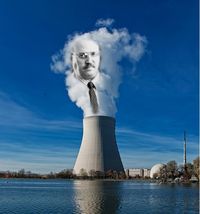
When I was in grad school, in my first incarnation as a Russian Studies type, I made money all summer by working as a tour guide and interpreter. Not a bad gig. Sometimes I could make $5,000 for a few weeks and spend the rest of the summer on research. One summer I was asked to lead a group of nuclear scientists from Chernobyl and Three Mile Island around the TMI plant for a trans-national exchange about the two worst nuclear disasters in history. The money was good, the timing was right, and off to Harrisburg, Pennsylvania I went.
Needless to say, no amount of money could have made that experience worth it. The nuclear scientists from both sides of the Cold War were an unruly lot. They drank themselves sick every night and tried to push themselves into my hotel room or just stood outside calling my name, demanding that I let them in. During the day they were worse. They forced me to translate more misogynist and homophobic jokes in those few weeks than I had heard in my entire life previously. They mocked my ridiculous “nuclear phobia” as irrational and uninformed. This got much worse after a TMI exec handed me a pretty orange jumpsuit and told me to put it on since they were going into the contaminated area and needed me to translate. He was so shocked when I refused (seriously, radiation exposure was not in my contract) that he insisted I translate to everyone why I wouldn’t do it and then listen to their “rational” explanations as to why I was being “hysterical” and an “idiotic girl.”
I bring up this time of interpreting nuclear disaster because like everyone else I am glued to my screen, watching the disaster take place in Japan and wishing there were something, anything, I could do. This sense of being utterly useless is made more poignant by the fact that I am an academic, a status synonomous with superflous, isolated, and in no way, shape, or form relevant.
As I feel the weight of the Japanese disaster and my isolation in the Ivory Tower this week, I am simultaneously spending an inordinate time at work—my useless, unimportant, irrelevant work—helping to run a conference on feminism. Ah the irony. At the moment of feeling most academic, I am engaged in the seemingly most academic of projects: epistemology and knowledge production through feminist theory.
And yet, I am struck by how feminist theory might have changed both TMI and Chernobyl and how it might still save the United States from a similar nuclear disaster. In both America and in Japan, there has been a willingness to ignore the many groups warning of nuclear catastrophe. For instance, in both countries states and industry have decided to leave spent fuel rods near the reactors and this turns out to be creating a much larger disaster in Japan than had to happen. It might, in the future, happen here. In both the U.S. and Japan, a certain sort of voice was heard saying “don’t worry,” “stop being hysterical,” and “nuclear power is rational.” For instance, over at Slate, William Saletan calls us “nuclear overreactors” and says that fear of nuclear power is not based in fact, but feeling. According to Saletan, the rational thing to do is study what went wrong and fix it since
If Japan, the United States, or Europe retreats from nuclear power in the face of the current panic, the most likely alternative energy source is fossil fuel. And by any measure, fossil fuel is more dangerous. The sole fatal nuclear power accident of the last 40 years, Chernobyl, directly killed 31 people. By comparison, Switzerland’s Paul Scherrer Institute calculates that from 1969 to 2000, more than 20,000 people died in severe accidents in the oil supply chain. More than 15,000 people died in severe accidents in the coal supply chain—11,000 in China alone. The rate of direct fatalities per unit of energy production is 18 times worse for oil than it is for nuclear power.
As rational as that seems and as much as we’d all like to have the voice of authority explain to us how to interpret the nuclear disaster happening in Japan, I think feminism might have more important answers to give us.
First and foremost, feminism is a situated knowledge. By that I mean that feminism doesn’t pretend to have a view from above, looking down at the world imagining that some sort of scientific method removes it from power. Indeed, power is everywhere—what we write, how we write it, what we claim to know, and what we claim not to know. What would have happened differently at TMI, at Chernobyl, and in Japan if scientists understood that their knowledge was not perfectly objective, but perfectly human? What would happen if feminist nuclear scientists had insisted that their particular form of knowledge also stopped them from considering nuclear power from other forms of expertise and therefore limited how they imagined everything from how the plants were built to whether building them was a good idea in the first place.
The hubris that is “rational science” is built on those forms of knowledge that claim to be outside the bodies producing that knowledge. This hubris is rooted in gendered (and raced and classed) power. They are “objective” and the rest of us are “biased.” If only nuclear physicists were required—as any feminist theorist is—to consider the limits of knowledge, the very human messiness of its production, and the deadly consequences of dismissing your critics as hysterical.
(A&A illustration derived from photos by Flickr users bagalute and Will Hart)
Highland Hills is one of those down-and-nearly-out communities that’s allowed a glimpse of prosperity but never gets to taste it. The Dallas skyline looms large and shining across the hazy north Texas horizon and is linked to this poverty-plagued neighborhood by a seven-mile ribbon of light-rail steel. Ledbetter Avenue crosses the train line passing by vacant buildings, vast stretches of empty parking lots, and a dizzying array of “For Sale,” “For Lease” and “For Jesus” signs. Named for the renowned guitar picker Lead Belly who did time in these parts – both in and out of prison – the Avenue speaks little in the way of promise, but wails the blues of poverty loud and clear.
Like cockroaches in a post-nuclear winter, the neighborhood’s only commercial survivors appear to be pawn shops, Dollar stores, and fast-food joints. One supermarket, a Minyard whose cinder-blocked and windowless façade is about as inviting as the entrance to Stalag 13, is the only retail food source in the several surrounding miles of food desert. But a lifeline from an unlikely source has been tossed Highland Hills’s way by a group of innovative academics. Paul Quinn College, a historically black college that sits just off Interstate 45 at the neighborhood’s eastern edge, is committed to lifting its neighboring community’s physical and economic health with a combination of food, farming, and servant leadership.
There’s no little irony in this partnership. To drive by the Paul Quinn campus is to, well, keep on driving. There are no signature ivy-clad buildings or tree-shaded quads to invite college-shopping families for a leisurely tour. In fact, the first roadside buildings you see are in various states of demolition, reflecting, in part, the plunge in student enrollment from 600 to 100 (it’s now climbed back to 200) and the school’s loss of accreditation (it’s been able recently to earn back probationary status). At first glance anyway, and like the adjoining neighborhood it wants to help, Paul Quinn appears to be hanging on to life by no more than a pea tendril.
But first glances are deceiving, and pea tendrils are stronger than they look. And when your back's to the wall and nobody, even your own government, will help you, you fight like hell, you do the unexpected, and you take risks.
In Paul Quinn’s case, not only did the college take risks, it committed a grievous sin, at least by Texas standards – they terminated their football program and turned their field into an organic farm. Yes, in the shadow of the Super Bowl, with the specter of Tom Landry looking down, and the holy glare of Friday night lights forever dimmed, Paul Quinn ripped up its sacred turf where football cleats once tread, and planted – goalpost to goalpost – peas, lettuce, carrots, strawberries, and more, lots more.
While the roar from the football stands may have subsided, it doesn’t mean that the field has fallen silent. When Andrea Bithell, the farm manager, announced to student and staff volunteers that the kohlrabi had gone in last week, everyone cheered. Showing a group of farm visitors where the corn would be planted later this spring evoked a round of applause from several students who proclaimed their love of its sweet kernels. Indeed the competitive spirit and enthusiasm so much a part of college athletics is hardly lacking at “Food for Good Farm,” the name chosen to denote it’s larger mission of education, community service, and healthy food for all. Sounding more like a coach than a farmer, Andrea uses words like hustle to describe her student crew’s hectic effort to plant and seed the two-acre field. When the volunteers complained about working in the cold and the rain, they were reminded that football games are played in all kinds of weather. Even the plants are forced to compete in a set of 12 trial beds located in the field’s south end zone. Here students will test different growing methods and evaluate their potential financial rate of return.
Elizabeth Wattley, Paul Quinn’s Director of Service Learning, proclaimed with pride that the farm’s tomatoes were better than anything she’d ever bought in a grocery store (she confessed that until her introduction to the farm during its first spring in 2010 she had been afraid of dirt). One student, biology major Symphonie Dawson, giggled when she described the farm’s mascot emblazoned on their t-shirts. “It’s the ‘Fighting Okra,’ an image of the vegetable wearing boxing gloves. We chose it because last year’s okra crop seemed to go on forever.” The “Rah-rah, Go Team, Go!” energy previously reserved for football games has been channeled into the end-zone to end-zone planting of 1,500 strawberry plants, 6,600 onions, a new asparagus bed, and dozens of varieties of vegetables. “The farm is the light of the college,” is the assertive way Elizabeth put it.
For a school that was on the ropes, Paul Quinn has gained a reprieve by discovering the multiple benefits of farming while also turning its attention outward to the community. One prominent need that the farm is already addressing is healthy living and eating, no small concern on today’s college campuses, especially one that is surrounded by a food desert. “Before their work on the farm, students wouldn’t eat carrots unless they were smothered in Ranch dressing,” noted Andrea. But by getting their hands in the dirt – a task that usually took two or three visits to the farm to get past the “yuck” declaration – students started eating carrots right out of the ground, dirt and all. “They actually taste,” said Elizabeth, pausing for a moment to find the right adjective, “carrot-tee.”
By engaging students enrolled in the school’s biology and social entrepreneurship courses, the farm gives scores of people in their late teens and early twenties a chance to get hands-on laboratory experience at the same time they get their hands in the dirt. Even the students who don’t care to venture into the world of bugs and compost get a taste of the farm’s output. Paul Quinn’s cafeteria now offers a monthly feature designed to showcase the farm’s harvest and introduce students to food that is healthy, tasty, and oh-so local. But Jasmine Wynn, a freshman legal study major, may have summed up the farm’s health benefits best. “I’m a city girl from Dallas, and for me the farm was something new. I liked being out there. I also started getting serious about my diet last year and decided that organic food is better for you. It’s just part of a healthier lifestyle, and I want to stick around for a long time.”
The lack of farming experience or a farm background has not been a deterrent to anyone’s participation, including Paul Quinn’s President Michael J. Sorrell. With public policy and law degrees from Duke University, his stellar resume indicates he has represented American Airlines and Morgan Stanley, served on numerous prestigious commissions including an assignment at the White House, and was selected in 2009 as one of the 10 Best Historically Black College and University presidents. Notably lacking from Dr. Sorrell’s career synopsis, however, are any agricultural credentials, and ironically, his business achievements include representing top-flight athletes like Utah Jazz All-Star Deron Williams. So why did he eliminate the football program and then have the audacity to convert the field to a farm?
A big part of the answer no doubt lies in his personal commitment to the concept of servant leadership, which, like the farm, he brought to Paul Quinn. With such simple but difficult to live by ideas like putting others before self, leaving the world a better place than you found it, and maintaining a spiritual faithfulness, Dr. Sorrell not only preaches what he practices (he personally teaches a freshman course in servant leadership), he practices what he preaches. And the farm is at the center of that practice.
Isaiah 58: 9-12 gets prominent mention on the College’s website which also touts the school’s Christian underpinnings. The scripture admonishes us (some would say “teaches us”) “to pour yourself out for the hungry…then shall your light rise in the darkness…and you shall be like a watered garden.” Holding aside the self-interest in doing good (and why not?), The Food for Good Farm has its heart and mind set on serving the hardscrabble community that surrounds it. Though a share of the harvest goes to the school’s cafeteria, 10 percent goes to a local food pantry, a sizeable share is also sold on a weekly basis to the community from the field’s former hot dog stand, and just to preserve some historical symmetry, the Dallas Cowboys buy a small share of the farm’s organic veggies, which, if sustained over time, will no doubt catapult “America’s Team” into a Super Bowl.
The school’s initial attempt to solve the community’s food access problem was to offer free land to any supermarket that wanted to build a store there. But there were no takers in a marketplace where nearly 40 percent of the residents lived in poverty. So like in days of old when the nearest general store was 100 miles away, and your only choice was to shoot or grow your dinner, Paul Quinn took to farming. The “adaptive re-use” of the football area has been impressive under Andrea’s and Elizabeth’s leadership. Not only are the hash stripes gone but so are the top four inches of sod and dirt that were replaced by dump truck loads of pure organic matter. Reflecting the program’s absolute commitment to organic farming, there was simply too much distrust of the chemical residues from years of maintaining a perfectly green gridiron. The goalposts remain as do the blocking sled, scoreboard and the entire set of bleachers running the length of both sides of the field. But the former press box is about to be turned into a chicken coop and Elizabeth retains some hope that the bleachers can be retrofitted as a greenhouse. Acres of adjoining and nearly vacant land are already being eyed for farm expansion, especially if a recently applied for federal grant comes through. On the day this reporter visited, a local apiarist was scouting out locations for nearly a dozen beehives. And according to Symphonie, the campus’s coolest guy, a very sharp dresser from Brooklyn, NY, wants to join the “bee program.”
None of this extraordinary progress has come cheaply. Elizabeth estimates that well over $100,000 in capital expenditures have been required to accomplish this conversion, and the on-going operating costs –Andrea is on the payroll half-time as is a variety of students who receive some compensation, especially during the summer season – are only marginally offset by farm sales. An upcoming April fundraiser featuring urban farming rock star Will Allen will hopefully swell the coffers sufficiently to enable the farm to buy its own tractor (it now pays for contract equipment services).
But the rapid development of the farm and the rising fortunes of Paul Quinn College have come with a price – small or large depending on your perspective. The Good Food Farm is the result of a fifty/fifty partnership between the college and PepsiCo’s Food for Good Initiative. The college makes it clear that this is an equal partnership and that PepsiCo has not placed any strings on their giving. While Elizabeth acknowledges some inherent contradictions – yes, Pepsi and other soda manufacturers have contributed more than their fair share of calories to America’s obesity crisis – she feels their support has been entirely above board. Other than cleaning up its tarnished image, one cannot detect either covert or overt sinister motives in PepsiCo’s support. Yet, with 11 teaspoons of sugar in each 12 ounce can of Pepsi-Cola and their ferocious attempt over the years to hook children with their iconic brand, one can’t help but confront the ethical contradictions: where does the greater good lie, and when does one begin to slide down the slippery slope? Though the Bible offers little in the way of guidance when dealing with the PR strategies of modern corporations (obesity, for instance, having not appeared on the world stage for another 2000 years), the college might choose to at least make the topic grist for future classroom discussions.
In the meantime, it’s hard to argue with the outcome of the Paul Quinn/PepsiCo partnership. Texas has one less football field and one more organic farm, clearly a net gain for humanity. Students from the captain of the basketball team to entering freshman are eating better, getting over their aversion to bugs, and getting their hands in the dirt (Symphonie noted that her nails look much healthier now that she regularly jams them into the soil). And the Highland Hills neighborhood is enjoying the health and aesthetic benefits of living adjacent to Dallas’s closest farm.
Under Dr. Sorrell’s able leadership Paul Quinn is rising from the ashes, or should we say compost pile. Elizabeth and Andrea are guiding the growth of what would be considered an ambitious venture at a major university let alone a college as small as Paul Quinn. And the Fighting Okra, well, they just might be on their way to a national championship.
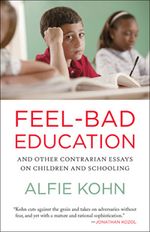 Out this week, Feel-Bad Education: And Other Contrarian Essays on Children and Schooling, a new book from one of the most outspoken and incisive thinkers in education, Alfie Kohn.