• Dropkick Murphys collaborate with Michael Patrick MacDonald to bring the story of Cornelius Larkin to life

    Win signed copies of Dropkick Murphys’ latest CD Going Out in Style and Michael Patrick MacDonald’s All Souls! See Beacon.org for details.

    Cover of Dropkick Murphys album Going Out in StyleOn March 1, 2011, Dropkick Muphys released their seventh full-length studio album, Going Out In Style. The songs take the band’s own personal experiences and family folklore and roll them into the story of one fictional character, Cornelius Larkin. Fueled by fiery riffs and unforgettable choruses, Going Out In Style traces Larkin’s journey, whether it’s the Irish immigrant’s first person account of his own wake or the band’s in depth interpretation of his life and lineage throughout the album’s lyrics. Ken Casey (lead vocals and bass guitar) reveals, “Cornelius has passed on to the other side, and the album becomes a retrospective of his life. He’s one of those guys who immigrated to America at 16, got drafted into the Korean War, married young, had lots of kids, worked hard, and lived a full life rife with different characters, ups and downs, and trials and tribulations. Some of the stories are fictional, but most are odes to our grandparents, friends, and loved ones.”

    The Dropkicks felt that there was no way to tell a man’s whole story in just thirteen songs. In order to round the story out, the band called on their friend, best-selling author Michael Patrick MacDonald (All Souls, Easter Rising). MacDonald wrote an eloquent obituary for Cornelius Larkin in the album’s liner notes, along with the beginnings of a more extensive narrative about the album’s main character for listeners to delve into. MacDonald became immensely engrossed in the character’s development, particularly as Cornelius began to take on elements of MacDonald’s own family history. At that point, the story grew into a much longer saga that is available on the band’s and MacDonald’s websites in conjunction with the album release.

    “Collaborating with the Dropkick Murphys is, for me, a family affair,” says MacDonald. “Cornelius Larkin represents all that we come from. And this story is about embracing the good, the bad, the ugly and beautiful that we all come from; ultimately learning to work with all of it. Past is truly prelude.”

    Casey elaborates, “I wrote an outline which began leading to songs. At the same time, I wanted the obituary to have that author’s flair, a little more description, a more detailed narrative, and a deeper story. Michael listened to the songs we’d written, and he fleshed out the story and really put a name and a face on the character. It’s a new approach and a unique partnership, especially in this day and age. The songs inspire the story, and the story inspires the songs. It’s a deep record, and it celebrates a life.”

    Read “The Resurrection of Cornelius Larkin.” And enter to win signed copies of Dropkick Murphys’ latest CD Going Out in Style and Michael Patrick MacDonald’s All Souls! See Beacon.org for details.

  • By Suzanne Kamata

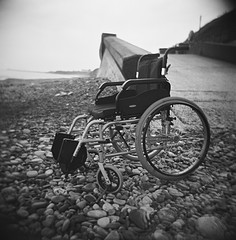
    Wheelchair_rachelcreative Whenever I case a new location, look at friends' vacation photos, or watch travelogues, I wonder about wheelchair accessibility. I wondered the same thing on Friday afternoon, watching disaster coverage on TV with my eleven-year-old daughter in Japan.

    An hour earlier, when I went to pick her and her wheelchair up from school – the school for the deaf, which is housed in an aging four-story building with no elevator – her principal rushed out to my car to tell me to hurry home. He told me that a tsunami warning had been issued for Tokushima Prefecture. Although we live around 500 miles from Miyagi Prefecture, the scene of the greatest devastation, the deaf school is right next to an tributary of the Yoshino River, not far from the inland sea, and our home is just on the other side of the levee. It seemed like a good idea to get away from water.

    As I listened to the sirens coming from across the road, warning people to leave the riverside, my daughter and I watched footage of people scrambling up hills as their houses, cars, and livelihoods were washed away. I couldn't help thinking about how hard it would be to get a wheelchair up that hill – and later, seeing photos of the aftermath, of how hard it would be to push through that debris.

    It's not especially easy to get around with a wheelchair at the best of times. There are many restaurants near our house that we can no longer visit as a family because they are accessible only by steps. At the local McDonald's, the Happy Meal display blocks the wheelchair ramp, and the toilet stall is too narrow for my daughter and her wheelchair. Last summer, she and I went by train to a small town an hour west of here for the funeral of one of her teachers. In order to board a "barrier-free" train car in Tokushima City (pop. 264,764), I had to carry her wheelchair up steps to the platform. There was no ramp. And of course there were no wheelchair ramps in the little towns we traveled through, nor at our final destination. I found out later that I could have called for assistance in advance, but it seemed like a lot of trouble. Why not just pour a little concrete?

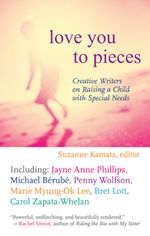
    Loveyoutopieces After living in Japan for 23 years, I've come to understand that along with the capacity for endurance, much vaunted by the foreign press these past several days, and a sense of fatalism encompassed by the oft-repeated phrase "shikata ga nai" (it can't be helped), the Japanese can be characterized by an aversion to meiwaku (being a burden) In other words, no one wants to make trouble. This, I believe, more than a sense of shame, is why people with disabilities are sometimes reluctant to venture out, and why people don't like to complain.

    Last week, I discussed these issues with a nurse that I've been teaching privately for the past couple of years who is writing a dissertation on accessibility. This week, we talked about the earthquake. She told me that she had grown up in Miyagi, where over a thousand bodies were found in the sea, and that her grandmother's house in Fukushima has been irreparably damaged. She told me that as a nurse, training in Chiba, one of the shakier cities in Japan, she learned to wrap patients in a sling made of sheets for easy transport. (It takes too much time to get patients to wheelchairs and gurneys.) She said that she could do this in three minutes flat.

    Japan is arguably the most disaster-ready nation on earth. Earthquake drills are held regularly at my children's schools. Outside my daughter's classroom – and every other classroom – there is a backpack with emergency supplies. My kids – and every other kid in Japan – have padded, fireproof hoods near their desks. This past week, my daughter has been practicing for earthquakes every day. Her teacher tells me that although at first she dawdled, she is getting faster at crawling under her desk. But her classroom is on the first floor of an old building that still bears cracks from the Great Hanshin Earthquake in 1995.

    I am relieved when I see people in wheelchairs among the evacuees on TV. They made it out alive, in spite of their disabilities. Meanwhile, I am reminded of that great law of nature – sometimes only the fittest survive. One woman who escaped the flood confessed that she couldn't save her elderly parents. In order to live, she had to let them go.

    Photo by rachelcreative on Flickr. Used under creative commons.

    About the Author

    Suzanne Kamata was born and raised in Grand Haven, Michigan, and now lives in Tokushima Prefecture, Japan with her husband and two children. She is fiction editor for the popular e-zine Literary Mama, and edits and publishes the literary magazine Yomimono. Her work has been nominated for the Pushcart Prize five times, and received a special mention in 2006. She is also a two-time winner of the All Nippon Airways/​Wingspan Fiction Contest. She is the editor of Love You to Pieces: Creative Writers on Raising a Child with Special Needs.

  • Steven Hawley makes a powerful argument for why dam removal makes good scientific, economic, and environmental sense—and requires our urgent attention.

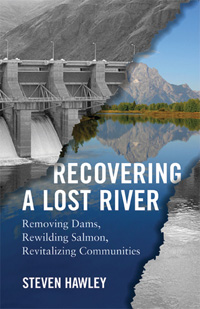
    HawleyIn the Pacific Northwest, the Snake River and its wilderness tributaries were once some of the world's greatest salmon rivers. As recently as a half century ago, they retained some of their historic bounty, with millions of fish returning to spawn. Now, due to four federal dams, the salmon population has dropped close to extinction. Efforts at salmon recovery through fish ladders, hatcheries, and even trucking them over the dams have failed.

    Steven Hawley, journalist and self-proclaimed "river rat," argues that the best hope for the Snake River lies in dam removal, a solution that pits the power authorities and Army Corps of Engineers against a collection of Indian tribes, farmers, fishermen, and river recreationists. The river's health, as he demonstrates, is closely connected to local economies, fresh water rights, energy independence-and even the health of orca whales in Puget Sound.

    The story of the Snake River, its salmon, and its people raises the fundamental questions of who should exercise control over natural resources and which interests should receive highest priority. It also offers surprising counterpoints to the notion of hydropower as a cheap, green, and reliable source of energy, and challenges the wisdom of heavily subsidized water and electricity.

    This regional battle is part of an ambitious river restoration movement that stretches across the country from Maine's Kennebec to California's Klamath, and engages citizens from a broad social spectrum. In one successful project, the salmon of Butte Creek rebounded from a paltry fourteen fish to twenty thousand within just a few years of rewilding their river, showing the incredible resiliency of nature when given the slightest chance.

    Recovering a Lost River depicts the compelling arguments and actions being made on behalf of salmon by a growing army of river warriors. Their message, persistent but disarmingly simple, is that all salmon need is water in their rivers, and a clear way home.

    Listen to an interview with Steven Hawley about attempts to save wild salmon.

    Read an excerpt of Recovering a Lost River here or on Scribd.


    Recovering a Lost River, Excerpt

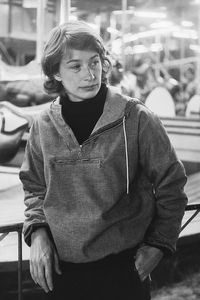
  • 37-MO-from-Our-World Maria Shriver is guest editor of O Magazine's April Issue, a special Poetry Month edition of the magazine, which features a rare interview with Pulitzer Prize-winning poet Mary Oliver. Shriver has long admired Oliver's work, and writes, "I was overjoyed when—after politely declining my invitations for six straight years—Mary finally agreed to read at my annual Women's Conference in California last fall, joining speakers like Michelle Obama and Eve Ensler." 

    In the interview, Oliver talks about writing, reading, the loss of her life partner Molly Malone Cook, and finding the courage to speak about personal trauma. Here's a short excerpt from this revealing and delightful discussion:

    Maria Shriver: One line of yours I often quote is, "What is it you plan to do with your one wild and precious life?"* What do you think you have done with your one wild and precious life? 
    Mary Oliver: I used up a lot of pencils.

    Maria Shriver: [Laughs.] 
    Mary Oliver: What I have done is learn to love and learn to be loved. That didn't come easy. And I learned to consider my life an amazing gift. Those are the things.

    Maria Shriver: You have lived a very unique life, a life really individual and fearless. 
    Mary Oliver: Well, it was never a temptation to be swayed from what I wanted to do and how I wanted to live. Even when Molly got ill, I knew what to do. They wanted to take her off to a nursing home, and I said, "Absolutely not." I took her home. That kind of thing is not easy. I used to go out at night with a flashlight and sit on a little bench right outside the house to scribble poems, because I was too busy taking care of her during the day to walk in the woods. 

    * The poem referenced here is "Wild Geese," which can be found in New and Selected Poems, Volume One. 

    Read the whole interview here. Read more about Mary Oliver and her work at the Mary Oliver website. You can also Like Mary Oliver on Facebook for updates on readings and news. 

    (In a bit of Beacon Press trivia, Maria Shriver is the daughter of Sargent Shriver, founder of the Peace Corps and a prominent figure in When the World Calls: The Inside Story of the Peace Corps and Its First Fifty Years.)

    Summer, 1964. Photo by Molly Malone Cook, from Our World (Beacon Press, 2007).

    Selected Beacon Press titles by Mary Oliver 
     
    A complete list of her books is available on the Mary Oliver website.

    Swan_150px

    Swan

    “Joy is not made to be a crumb,” writes Mary Oliver, and certainly joy abounds in her new book of poetry and prose poems. Swan, her twentieth volume, shows us that, though we may be “made out of the dust of stars,” we are of the world she captures here so vividly: the acorn that hides within it an entire tree; the wings of the swan like the stretching light of the river; the frogs singing in the shallows; the mockingbird dancing in air. Swan is Oliver’s tribute to “the mortal way” of desiring and living in the world, to which the poet is renowned for having always been “totally loyal.”

    Available from: 
    Beacon Press
     
    Amazon
     
    Amazon Kindle
     
    Barnes and Noble
     
    NOOKbook
     
    Independent Bookstore


    Evidence

    Evidence

    Inspired by the familiar lines from William Wordsworth, “To me the meanest flower that blows can give / Thoughts that do often lie too deep for tears,” Evidence is a collection of forty-seven new poems on all of Mary Oliver’s classic themes. She writes perceptively about grief and mortality, love and nature, and the spiritual sustenance she draws from their gifts. Ever grateful for the bounty that is offered to us daily by the natural world, Oliver is attentive to the mysteries it imparts. The arresting beauty she finds in rivers and stones, willows and field corn, the mockingbird’s “embellishments” or the last hours of darkness permeates her poems. Her newest volume is imbued through and through with that power of nature to, in Oliver’s words, “excite the viewers toward sublime thought.”

    Available from:
    Beacon Press
    Amazon
    Amazon Kindle
    Barnes and Noble
    NOOKbook
    Independent Bookstore


    Nsvol1 New and Selected Poems, Volume One

    When New and Selected Poems, Volume One was originally published in 1992, Mary Oliver was awarded the National Book Award. In the years since its initial appearance it has become one of the best-selling volumes of poetry in the country. This collection features thirty poems published for the first time in this volume, as well as selections from the poet’s first eight books.

    Available from:
    Beacon Press
    Amazon
    Barnes and Noble
    Independent Bookstore


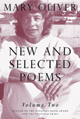
    Nsvol2 New and Selected Poems, Volume Two

    New and Selected Poems, Volume Two, an anthology of forty-two new poems—an entire volume in itself—and sixty-nine poems hand-picked by Mary Oliver from six of her last eight books, is a major addition to a career in poetry that has spanned nearly five decades. Now recognized as an unparalleled poet of the natural world, Mary Oliver writes with unmatched dexterity and a profound appreciation for the divergence and convergence of all living things.

    Available from:
    Beacon Press
    Amazon
    Barnes and Noble
    Independent Bookstore


  • Rabbi Arthur Waskow, Ph. D., founded and directs The Shalom Center, a prophetic voice in Jewish, multireligious, and American life that brings Jewish and other spiritual thought and practice to bear on seeking peace, pursuing justice, healing the earth, and celebrating community. He edits and writes for its weekly on-line Shalom Report. He is author of many books, including Seasons of Our Joy: A Modern Guide to the Jewish Holidays, and co-author of The Tent of Abraham: Stories of Hope and Peace for Jews, Christians, and Muslims.

    The hearings planned by Congressman Peter King to isolate American Muslim communities as hotbeds of terrorism evoke two memories from Jewish life – one from two centuries ago, in America; the other, far more distant, about 35 centuries ago in Egypt:

    "Now there arose a new king over Egypt. And he said to his people, "Behold, the people of Israel are too many and too mighty for us. Come, let us deal shrewdly against them, lest they multiply and, if war breaks out, they join our enemies and fight against us and rise up over the land.. So they made the Children of Israel subservient and embittered their lives." (Exodus 1: 10-13)

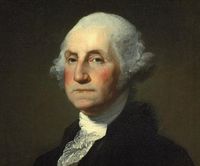
    In the other, it was August 17, 1790. The new Constitution had been in effect barely more than a year, and the Bill of Rights – including the First Amendment's forbidding Congress to invade freedom of religion – had not yet been adopted. But President George Washington had just received a letter from the "Hebrew Congregation of Newport, Rhode Island," asking what the role of Jews and Judaism would be under the new government.

    George-washington-picture Washington was no great writer, no great speaker. Yet he wrote back perhaps the most eloquent and ringing words of his life. Though it is clear that his behavior as a slaveholder was ignoble, yet this letter bespoke nobility:

    "To bigotry, no sanction;
    To persecution, no assistance."

    "May the children of the Stock of Abraham, who dwell in this land, continue to merit and enjoy the good will of the other Inhabitants; while every one shall sit in safety under his own vine and fig tree, and there shall be none to make him afraid…"

    In the minds of Americans in 1790, "the stock of Abraham" meant the Jewish community. Yet two centuries later, millions of American Muslims also look upon themselves as "the stock of Abraham," and for them Washington's promise is in jeopardy.

    Shall American government and society today lean toward Washington's or Pharaoh's vision of society, when it comes to behavior toward American Muslims?

    There have been virulent attacks by radio talk "hosts" with millions of listeners against Islam as a religion. Local governments have tried to use zoning laws to prevent the construction of mosques in neighborhoods where churches were warmly welcomed. And where local governments have supported such efforts (as in New York City and the plans to create a Muslim community center/mosque in Lower Manhattan), political vigilantes have whipped up a storm of fear and rage.

    Tentofabraham Yet the most egregious of these acts of bigotry is the decision by the new chair of the House of Representatives Committee of Homeland Security, Congressman Peter King of Long Island, to hold hearings on American Islam as if it were a hotbed of terrorism.

    Leave aside Congressman King's own hypocrisy: He used to support the Irish Republican Army, twin culprits with the Ulster nationalists in terrorizing Northern Ireland for three decades. Leave aside the real question about homeland security: Why is it taking so long to secure American ports against the clandestine import of high explosives, even nuclear weapons, for use against civilians? Leave aside why the Committee is not looking urgently into the network of incitement against "homeland security" that led to the near murder of Congresswoman Gabrielle Giffords and the actual murder of her staff and supporters and a Federal judge – an event that one might think should occupy the thoughts of another Member of Congress.

    Leave all that aside, and we still must ask ourselves what it means for the Congress to be inciting bigotry and inviting persecution of an entire religious community.

    In two sorts of crises in the past – wars and economic depressions – some Americans have reacted with scapegoating of "the other" and attacks on freedom. These moments include passage of the Alien & Sedition Acts in the 1790s during the half-war with France, the "draft riots" that killed hundreds of Blacks in NYC during the Civil War, the "Red Scare" deportations led by J. Edgar Hoover in 1919, the wave of anti-Semitism during the Great Depression, the imprisonment of tens of thousands of Japanese-Americans during World War II, the hounding of artists and professors and actors and activists by Joe McCarthy and the House Un-American Activities Committee early in the Cold War.

    Afterward, almost all Americans have felt deeply ashamed of these behaviors. But during each episode, some political forces in America benefited from inciting bigotry.

    Now, we are in the midst of both mass disemployment and an endless, unwinnable war. For those modern analogues of Pharaoh who rule and support centers of great undemocratic power and wealth while stripping others of public services and servants – teachers, nurses, social workers – indeed, while some lose jobs, homes, lives, and limbs – it is convenient to make scapegoats, just as Pharaoh did.

    Indeed, as we look around today we notice that the same political forces that are trying to smash unions, to undermine the health of low-income women by defunding Planned Parenthood, to weaken even the mildest milieux of independent public discussion by defunding NPR, to risk global scorching and the pollution of the drinking water of millions of Americans and the imposition of unprecedented droughts in Russia and unprecedented floods in Pakistan – all for the sake of enormous profits – are the same forces trying to scapegoat Hispanics and Muslims, so as to distract those who are suffering in the present economic, political, and cultural crisis in the US and the world.

    This analysis of our situation suggests that addressing bigotry directly is a necessary but not sufficient response to the wave of bigotry. It is crucial to address as well the need to end the endless wars and the economic depression that are exacerbating Americans' sense of insecurity and anxiety that make scapegoating attractive.

    In the present American crisis, there is an even more precise political use for anti-Muslim scapegoating. The second most progressive ethnic voting bloc in the US, second only to African-Americans, is the Jewish community. Efforts to use anti-gay or anti-immigrant or anti-abortion rhetoric to divide various progressive blocs and nullify their progressive instincts have been shrugged off by almost all American Jews.

    But anti-Muslim bigotry, because it evokes fears of Muslim and Arab hostility to the State of Israel, has won more support in parts of the Jewish community than any of these other forms of bigotry. At the same time, still other parts of the Jewish community have responded out of strong memories of the treatment of Jews as outsiders, pariahs, and traitors, from the time of Pharaoh to the time of Henry Ford and Father Coughlin.

    The best of Jewish wisdom, Jewish values, and Jewish historical experience all accord with the best of American wisdom, American values, and American historical experience to teach us that America will "secure the blessings of liberty to ourselves and our posterity," as the Constitution promises, if we choose the path of shalom and tzedek — peace and social justice – and the path of President Washington, not the path of Pharaoh as in our generation it is echoed in Congressman King's diatribes against Islam.

  • A Simmons College / Beacon Press Lecture and Book Series

    In the spring of 2006, Beacon Press and Simmons College inaugurated a lecture and book series that we hope will reinvigorate a crucial national public conversation on race, education, and democracy. Each year, the series will bring to Boston prominent public figures to deliver a series of lectures that will become the basis of a new trade book published by Beacon.

    Frederick Douglass, who famously lectured in Boston around the time Beacon Press was founded, called education the “pathway from slavery to freedom.” This new series aims to reestablish in the public imagination that historically felt connection between public education and the possibility of a robust democracy, against the backdrop of the realities of race today in America. We are delighted to have Beverly Daniel Tatum launch the series. We look forward to publishing many equally important books in the seasons to come.

    This year's lectures will be held March 15-17 at Simmons College. Get details at Beacon.org.

    2011 Lecture Series

    Follow Dr. Morrell on twitter.

    Dr. Ernest Morrell
    Powerful Teaching: Towards a Pedagogy for the Global City

    Dr. Ernest Morrell is associate professor in the Urban Schooling Division of the Graduate School of Education and Information Studies at the University of California at Los Angeles. He was recently appointed Professor of Arts and Humanities and Director of the Institute for Urban and Minority Education at Teachers College/Columbia University, positions he will assume July 2011.

    Drawing on the everyday lives and experiences of urban adolescents, for almost two decades, Dr. Morrell has worked to develop curricula that promote the development of academic literacy and civic engagement. For the past 12 years, working with high school students in Los Angeles, he has served as Director of the Council of Youth Research, a project that involves youth in researching issues in their communities and schools. He has also worked with teachers throughout the country on the infusion of youth media production into standards-based curricula across discipline areas. In an assessment-driven educational climate, Morrell's innovative approach to teaching transforms how teachers reach students as they navigate what it means to be a reader, writer, and engaged citizen in the 21st century.

    Read more about Dr. Morrell at Beacon.org.


  • Regan Margaret Regan, author of The Death of Josseline: Immigration Stories from the Arizona-Mexico Borderlands, will once again appear at the Tucson Festival of Books. Her appearance at the 2010 festival was broadcast on BookTV; you can watch it on YouTube.

    Regan will be a panelist in two different sessions. For “Borderlines,” Regan will join Phil Caputo, a Pulitzer-Prize winning journalist and a novelist (Crossers),and Thomas Cobb, novelist whose Crazy Heart was turned into the Oscar-winning film, for a session on writing about the border. The panel will meet at 11:30 a.m. Saturday, March 12, in the Catalina Room of the UA Student Union.

    Regan will also be speaking at 4 p.m., Saturday, in Gallagher Theater in the UA Student Union, in the session “Dispatches from the Borderlands: Human Rights, Personal Stories.” Moderated by journalism professor Jay Rochlin, the panel also includes authors Sam Quinones (Antonio’s Gun and Delfino’s Dream) and Kathryn Ferguson, Norma Price and Ted Parks (co-authors of Crossing with the Virgin). The session will be broadcast live by CNN’s Book TV.

    In December, Regan’s book was named a winner in the 2010 Southwest Books of the Year Best Reading competition run by the Friends of the Pima County Public Library. Judge Margaret Loghry noted, “All concerned citizens should read this collection to better understand the issues in the borderlands today.” The Unitarian Universalist Church also selected The Death of Josseline as a Common Read, to be read and studied by congregations nationwide.


  • TED posted Courtney E. Martin's engaging talk about her generation's brand of feminism. Martin is the author of Do It Anyway: The New Generation of Activists.

    http://video.ted.com/assets/player/swf/EmbedPlayer.swf

  • Today's post is from Carole Joffe, author of Dispatches from the Abortion Wars: The Costs of Fanaticism to Doctors, Patients, and the Rest of Us. Joffe is a professor in the Bixby Center for Global Reproductive Health at the University of California, San Francisco.

    Interested in reading some good books in honor of International Womens Day? Check out our recommended reading at Beacon.org.

    "(I am proud of) trying to defund Planned Parenthood and make sure they didn’t have any money, not just for abortion, but money for anything."

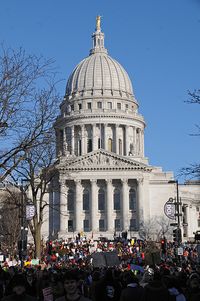
    5463085864_90c7373dc5This is gubernatorial candidate Scott Walker speaking to Wisconsin Right to Life last April, boasting about his record as a state legislator. And for this constituency, now-Governor Walker has come through. His recently released budget proposes to repeal Wisconsin’s “contraceptive equity” law which stipulates that that health insurance plans in the state that cover prescription drugs cover contraception. The budget also eliminates the state’s participation in the Title V Maternal and Child Health program, which provides family planning services as well as other health services for both men and women, including prostate and cervical cancer screenings. Planned Parenthood of Wisconsin argues that such a move would mean the loss of four million dollars (of both state and federal funds) affecting 50 health centers in the state (PP receives about one quarter of Wisconsin’sTitle V funds).

    Scott Walker’s actions in the short time he has been governor (he took office in January) were supposed to serve as a template for the newly energized Republican governors and state legislators who came to power as a result of the November 2010 “shellacking.” That is, please your religious right base by going after birth control services in general and Planned Parenthood in particular, and please economic conservatives by offering generous tax breaks to corporations, massively cutting social programs, and  greatly weakening, if not destroying, public sector unions.

    As a fascinated country has seen for the past several weeks, that part about destroying the unions hasn’t played so well.  Walker’s poll numbers are tanking. The Republican leaning Rasmussen poll recently found that nearly 60% of Wisconsin likely voters now disapprove of Walker, with 48% “strongly disapproving.”  Observing Walker’s situation, a number of other Republican governors have backed off from earlier plans to similarly combat public sector unions in their states.

    Thus far, however, neither Republicans in Congress or in state houses show signs of retreating from the harsh and increasingly bizarre war they are waging on abortion and contraception. In Congress, Republicans (and a handful of Democrats) voted to defund Planned Parenthood and Title X, a program that funds family planning and other basic reproductive health services, and passed legislation that permits hospitals to deny lifesavingabortions. At the state level, several states are considering legislation that has been interpreted as making the killing of abortion providers “justifiable homicide,” Georgia is considering a “prenatal murder” bill that would make miscarriages  suspect  unless a woman could “prove” she did nothing to cause it,  and S. Dakota has decreed that before a woman can receive an abortion she must first go to a blatantly antiabortion “Crisis Pregnancy Center” for counseling—and then wait three days before seeking an abortion.

    JoffeBut there are signs that the American public is noting with alarm these fanatical measures. Just released data from the Pew Research Center for the People and the Press shows a “movement toward a liberal position on abortion.” While much has been made of a 2009 poll that showed the public evenly divided on the question of whether abortion should be legal, Pew reports that “support for legal abortion has recovered” and now stands at 54%, with 39% opposed. Similarly, two recent polls show voter disapproval of the defunding of Planned Parenthood, with particularly strong opposition among women and younger respondents.

    Though both the right and the left have tended to treat economic issues, including the fate of labor unions, and reproductive rights as separate phenomena, with two different constituencies, in the real lives of working people, these issues are very much connected. Hardly surprisingly, in difficult economic times people try to control their childbearing. This was true during the Great Depression of the 1930s, and it is true today. The Guttmacher Institute released a report, at the height of the current recession  that showed that many women did not feel they could afford another child and that they they were committed to using birth control more consistently. Yet the report also showed that one in four respondents put off a visit to a family planning center because they could not afford it.

    It is too soon to know the significance of the poll numbers cited above, or of the nation-wide demonstrations in recent weeks in support of both labor unions and Planned Parenthood. Possibly, though, this political moment may mark a serious pushback against the Right’s extraordinary overreach, since the 2010 election, in its eagerness to abolish both the workplace conditions and health care services needed  by so many.

    Photo by mrbula on Flickr. Used under Creative Commons. 

  • The naturalist and writer John Hay, whom Annie Dillard called, "One of the world's handful of very great nature writers," died February 26 at the age of 95. Beacon Press published three of Hay's books: In the Company of Light, A Beginner's Faith in Things Unseen, and a 40th anniversary edition of his first book, The Run. Hay was the author of eighteen books over a career that spanned half a century. He was co-founder of the Cape Cod Museum of Natural History and spent much of his life in Brewster, MA, where he eventually acquired 50 acres of land which is now under conservation protection. He was also the subject of David Gessner's book The Prophet of Dry Hill. 

    David Gessner is also the author of Soaring with Fidel, Sick of Nature, and The Return of the Osprey. Gessner's next book, My Green Manifesto, will be published by Milkweed Editions this summer. He blogs at Bill and Dave's Cocktail Hour.
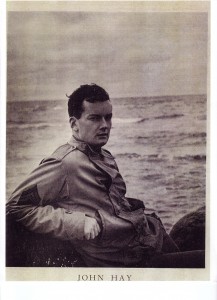
    JohnhayThe great writer, John Hay, died on Saturday in Bremen, Maine. I have not yet had time to organize my thoughts but here are some sentences adapted from my book about John:

    If you were to suggest to the fishermen and carpenters who had lived down the street from John Hay that he was one of the great artists and original thinkers of the latter part of the 20th century you could forgive them if they rolled their eyes. The old guy in the baseball cap, baggy khakis, and flannel shirt who grumbled about traffic and tourists didn’t exactly look the part of environmental prophet. Just another salty Cape Cod crank.

    On the other hand, while he lived on Dry Hill more than a few neighbors penetrated his disguise. I once had a conversation with his gardener, Jess, who off-handedly mentioned John’s work.

    “I didn’t know he was a writer at first, and I’m glad,” Jess said. “If I knew how brilliant he was I wouldn’t have been able to talk to him.”

    Jess’s opinion is more or less in line with that of environmental critics. The editors ofThe Norton Book of Nature Writingcall John Hay “one of the most innovative and daring of contemporary writers in the genre.” James Dickey, the poet and author ofDeliverance, went a little further: “If all of humanity were to read Mr. Hay’s work, it is not unlikely that Darwin and St. Francis of Assisi would come back and join hands.”

    No matter that the octogenarians who frequent the East Dennis post office, where John used to mail his packages, might frown at the sight of those two dead men holding hands, and no matter that not quite all of humanity has read John Hay’s work. The point is that the old man who lived up on Dry Hill had, unbeknownst to most of his neighbors, played a significant role in the development of American environmental thought and literature.

    Another thing the neighbors didn’t know was that John Hay was born a child of privilege in 1915, and grew up roaming the wilds of Manhattan. The names of his predecessors were sprinkled, not just through the society pages, but through the history books. For instance, his grandfather, with whom he shared his name, was an elegant diplomat, and popular poet, who served as Lincoln’s personal secretary during the civil war and, forty years later, as Secretary of State under Teddy Roosevelt. A refined, charming and dapper little man– he stood 5’2″– John Milton Hay had been equally at ease while negotiating for the Panama Canal as when composing a sonnet. Near the end of his life, Hay’s wit and elegance served as subtle counterpoints to Roosevelt’s brash boisterousness.

    The diplomat’s son, Clarence Hay, worked as a curator of archaeology at the American Museum of Natural History in New York. Throughout John’s childhood Clarence was often heading down for archaeological expeditions to the Yucatan, and John grew up fascinated by the Mayan artifacts his father brought home, and by the paintings of birds and the stuffed snowy owl in the hallways of the Hays’ summer home in Lake Sunapee. The Sunapee land had been purchased by his famous grandfather, and it was in the woods around that New Hampshire lake that John first experienced the mystery of nature. He would later write that those days were his earliest glimpse behind the veil at another type of life, a wild life different from the proper one he’d learned in the city. In Sunapee he piloted the lake in the houseboat he made, with his pet goat and airedale as first mates, and he camped along the shore and stared up at the stars, and listened to Indian stories. At night he read J. Fenimore Cooper and heard rumors of wolves, and in this time before television, his love of books grew, rivalling his love of the woods. “We didn’t have radio for a long time and obviously we didn’t have television,” he said once. “So I read a great deal. It was books, books, books.” John was shipped off to prep school as a young man, and later to Harvard. His love of books deepened, especially of poetry, while he almost failed math. He was a dreamy adolescent, nicknamed “Foggy Hay” at school. It would come as a surprise to everyone in the Hay family when John eventually ended up writing about science.

    John would write in the environmental tradition of Henry David Thoreau. Thoreau, of course, was the fountainhead of this tradition, and it would be hyperbolic to suggest that John was as original and germinative as his great predecessor. But John both preserved and expanded Thoreauvian thought. He was both a radical and a traditionalist, going back to old ways, grounded ways, but simultaneously, using empathy to throw himself into new worlds beyond the human world.

    And just as important, to me at least, was that John lived a life that kept time with a different type of clock. A life in tune with more elemental movements and ritual, a life of ceremony. I now live a thousand miles away from Cape Cod, on the edge of a city full of strip malls and Southern accents. But I also still live on the edge of the ocean, a place that, if not my home beach, is a beach nonetheless. It is in the ocean that I see possibilities and can begin to imagine making a life here. Every day I try to get out to the edge of the sea, confident that this will change my life in ways I can’t quite put into words. In spring and fall I watch the migrations, hoping these movements will become part of me, part of my blood. I hope to follow the year’s journey, absorbing its rhythms. I dream of living an elemental life.

    Most often I fail.

    Gesnnerhayherring
    Gessner and Hay at the herring run.

    But I try. And while the concept of learning from elders is hopelessly outdated, I am happy to have had a predecessor, an exemplar, someone who walked out ahead to show me it can be done. Not a perfect character– hardly. But someone who had made a journey out of his time on earth. Someone who had, in his own words, tried to “go farther afield, from one man’s center.”

    * * *

    “People connect to the land as their imaginations allow,” writes William Least Heat Moon. John’s imagination allowed for no less than a lifelong, passionate love affair with the world. When I think of John now, with some distance, I no longer shy away from calling him a “prophet.” Granted prophecy is a big word, a grand archaic word that understandably scares people off. But it is also, I’ve come to believe, the right word. Here is a man who had his vision and then spent his life trying to articulate that vision. Part of that articulation was attempting to convince people that the things they valued were not the things of greatest value, that there was a whole secret life available to them if they only re-ordered their priorities. In this sense John fit all three major definitions of a prophet: he had had his divine vision, he was a leader of a movement, and he presented a vision of the future.

    That vision–of cancerous development and growth, of the disregard for and uprooting of local people, animals, and places–was, like most prophetic visions, somewhat apocalyptic. This is nothing new. Apocalyptic language has always been a tool of the prophets: descriptions of the apocalypse were made in hopes of preventing it. “We create images of doom to avert doom,” wrote Lawrence Buell, “that is the strategy of the jeremiad.” Or, as E.B. White put it: “A seer a day keeps Armageddon away.” Of course foresight– that isvision--is the prophet’s first tool and John began issuing warnings about the world before anyone knew what the hell “ecology” was. This half-blind old man saw clearly both where we had come from and where we were going, and he didn’t like it one bit.

    Like the biblical prophets, John Hay went to his hill to find his vision, and, sure enough, certain universal truths were revealed to him on his mountaintop. And like the prophets he tried to deliver this unwavering vision to an often unbelieving and uninterested public. “In wildness is the preservation of the world,” said Thoreau. John believed that the best human lives are those connected to wildness on an intimate and daily basis, and that this basis affects human lives in ways they can’t understand or explain. Was it any surprise that wild animals had larger brains–and more creative responses to the world–than their domestic cousins?

    John had spent a lifetime fighting to both live inside and preserve that wildness, and it was often a depressing fight. He watched the things he loved about Cape Cod be defiled, and watched the rest of the country head in the same direction. Though people paid lip service to loving nature, they just didn’t seem to take its destructionpersonallyenough. Worse John had been consistently ignored and misunderstood, labelled impractical and airy and snobbish. This hurt, but it didn’t stop him. He had, in fact, become more and more passionate in his belief in the wild.

    Jeremiah, for one, knew the impossibility of trying to deliver a message of cataclysm in an affluent time and, like John, was often greeted with some variant of the question “What’s the fuss?” Trying to describe just what the fuss was was central to John’s life work. Jeremiah himself had been labeled a traitor, and there was no doubt there were some people these days who would label John as un-American for his consistent belief that less was better than more. But even those not inclined to thinking in terms of the apocalypse couldn’t help but see that something close to cataclysmic seemed to be coming: world-wide extinctions, global warming, rampant habitat loss. To change any of that John believed we had to first enact the most rigorous transformation of all: changing our own minds.

    * * *

    Hay-studio1-300x211
    John Hay's studio.

    John’s ideas, I believe now, were–andare–subtly radical. Primary among these ideas, the one imbedded everywhere in his work, is the notion that human beings may not be so central to the world after all. There are human consequences, of course, to seeing the world as more than human-centered. These involve radical shifts in what one values in this life. If what truly matters is respecting the earth and preserving the diversity of ecosystems, then it follows that traditional ways of seeing land for what one can “get” from it are discarded.

    These ideas are of course antithetical to a culture that always keeps half an eye cocked toward the mirror; to a people who spend their time primping and fixing their hair. For fifty years John insisted that we should be looking, not in the mirror, but out and through the window. By focusing always inward and seeing the outer world only through our own inner constructs, the eyes are kept prisoner to the brain. And, as it turns out, the brain is a lonely place. By never making the leap out of self we are left isolated, cold and blind. But ultimately, if we follow our better instincts, we can climb right out the window, and it is there–outside of ourselves–that we will find things that will expand our definitions of ourselves.

    ProphetofdryhillUnlike most of us, John spent his days training himself to look outward. In fact it is this outward focus, this still-active love affair with the world not the self, that most defined John Hay.

    “Strange to have come through the whole century and find that the most interesting thing is the birds,” John said to me during our very first walk together. “Or maybe it’s just the human mind is more interesting when focusing on something other than itself.”

    In this insistence on looking outward John Hay ran entirely against the prevailing culture. He didn’t believe that salvation of the self was to be found within the self. In fact he saw this proposition, one of our culture’s central tenets, as essentially neurotic and crippling. “The answers to life can’t be found by trying to solve things in our brains,” he said, “But by stepping out of our brains entirely.” We can expand ourselves only by looking outward toward the source, toward the mystery, and by joining the ritual of the natural year we can join that mystery. The good news is that the reflections we see of ourselves in our beloved places will be cleaner ones than the ones we see in a mirror. By focusing inward without reference to the world we make islands of ourselves, but by looking outward we re-invent and expand ourselves. I had come to John Hay to write a book about him, not to seek “lessons.” But if there is one thing I took with me from his home on Dry Hill it is this: inwardness only means so much. What we need to learn is to get out of our own way. Yes, inward tunnelling counts for something and something important, but there is so much more outside. If we look for it we will find that there is a whole world waiting for us. And it is in that world that we, not seeking it, will find a sort of salvation.

    Read John Hay's Obituary on Wicked Local.