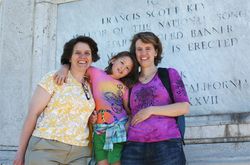
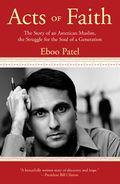
• Eid al Adha began yesterday, marking the end of the annual Hajj, or pilgrimage, to Mecca. In this excerpt from Eboo Patel's acclaimed memoir, Acts of Faith, Patel shares a story of pilgrimage, cultural and religious diversity, and compromise from the life of the Prophet. 
    90443380_6ea3f949b2_m We humans know violence well. It is a part of each of us. It is precisely the reason I was drawn to religion in the first place. Somehow, the religious people I admired overcame the human desire to hurt others. Tibetan Buddhist masters talked about their struggle to love their Chinese tormentors. Mahatma Gandhi spent his time in a South African prison making sandals for his jailer. Pope John Paul II met with the man who tried to assassinate him, and forgave him.

    Dorothy Day once said that she created the Catholic Worker because she wanted a place where people could be better. It was one ofthe key reasons I spent so much time there as a college student. I wanted to overcome those parts of me that would tackle somebody from behind. I wanted to be good.

    It was in Islam that I found the clearest articulation of this inner struggle. The story goes like this: As a victorious Muslim army was celebrating its triumph in battle, the Prophet Muhammad told the men they had won only the “lesser jihad.” Now, he said, they had to mov eon to the “greater jihad”—the jihad al-nafs, the struggle against their lower selves. The first time I read that, I felt as if the Prophet was speaking directly to me, as if he could see the thousands of times in my life that my lower self had won, as if he was personally returning Islam to my consciousness.

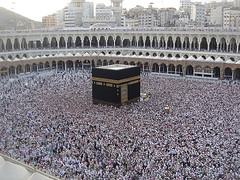
    There is another event in the history of Islam that, for me, defines the religious spirit in the world, and the meaning of lasting victory. It is the signing of the Treaty of Hudaybiyah and the Prophet’s peaceful return to Mecca. After years of defending himself and his fellow Muslims in Medina against aggressive military assaults by the Quraysh, a powerful tribe based in Mecca, Muhammad decided to launch a religious peace offensive. In the year 628, he announced to the Muslim community in Medina that he was going to make a holy pilgrimage to the Ka’aba, the black shrine in Mecca that Abraham built to God. Against the advice of his closest companions, who were convinced that the Quraysh would take this chance to murder him, Muhammad refused to carry arms. He set forth dressed in the simple, white, two-piece outfit still worn by Muslims making the hajj today, uttering the cry “Labbayk Allahuma Labbayk” (Here I am, O God, at Your service). A thousand Muslims accompanied him, many questioning the wisdom of making a religious pilgrimage in the direction of an enemy that wanted war.

    The Quraysh sent a war party of two hundred cavalry to prevent Muhammad from entering the city. The Prophet steered his companions toward Hudaybiyah, at the edge of the Sanctuary, where all fighting was forbidden, sending a message to the Quraysh that he came in peace. He reminded his companions that they were on a religious quest and as such should prepare to repent and ask God’s forgiveness for their sins. No doubt some of them were confused about why Muhammad was making spiritual preparations instead of war preparations. But Muhammad, guided by revelations from God, knew that ultimate victory for Islam did not mean violently defeating the enemy, but peacefully reconciling with them. Achieving this required an act of personal humility and self-effacement that shocked even his closest companions.
    Patel After being convinced that Muhammad was not going to engage them in battle, the Quraysh sent Suhayl, one of their most stridently anti-Muslim leaders, to negotiate a settlement. The two sat togetherfor a long time, finally agreeing to terms that the Muslims felt were deeply unfair but that Muhammad insisted they accept. The Muslims would be allowed to do the holy pilgrimage in peace, but not now. They would have to go back to Medina and wait a whole year before returning. Also, the Muslims would have to repatriate any Meccan who had converted to Islam and immigrated to Medina to be with the Prophet without the permission of his guardian. One source writes that the Prophet’s companions “felt depressed almost to the point of death” when they saw the settlement. Umar, one of the Prophet’s closest associates, said, “Why should we agree to what is demeaning to our religion?” But the greatest shock was still to come.

    When it came time to sign the treaty, Suhayl objected to the statement,“This is what Muhammad, the apostle of God, has agreed with Suhayl ibn Amr.” He said that if he recognized Muhammad as the apostle of God, they would not be in a situation of war to begin with. “Write down your own name and the name of your father,” Suhayl instructed the Prophet. To the utter despair of his companions, Muhammad agreed. He told Ali, his son-in-law who would later become the first Shia Imam, to strike the words “apostle of God” from the treaty. Ali could not bring himself to do it. So the illiterate Prophet asked Ali to point to the words on the paper, took the pen, and struck them himself.

    On the journey home to Medina, with the bitter taste of humiliation still fresh in the mouths of his companions, the Prophet received a revelation that would come to be known as the Victory Sura, chapter 48 in the Holy Qur’an. In it, God told the Prophet, “Surely We have given thee / a manifest victory.” The sura states that God Himself was involved in the situation: “It is He who sent down the sakina/ into the hearts of the believers, that / they might add faith to their faith.” The Arabic term sakina loosely translates as “the peace, tranquillity,and presence of God” and is thought to be related to the Hebrew term shekinah. The sura closes with the following lines: “God has promised / those of them who believe in and do deeds / of righteousness, forgiveness and / a mighty wage.”

    The following year, as promised, Muhammad returned with nearly three thousand pilgrims to perform the pilgrimage. His enemies, holding up their end of the bargain, vacated the city and watched the Muslims do the ritual circumambulations around the Ka’aba and run seven times between the hills of Safa and Marwah. They were shocked to see Bilal, a black Abyssinian who had been a slave in Mecca before being freed by the Muslims, climbing to the top of the Ka’aba several times a day to give the call to prayer, a position of honor in Islam. Muhammad heard that a woman had recently been widowed and offered to marry her, thus taking her into his protection. He invited his Quraysh enemies to the wedding feast. They refused and told him his three days were up. The Muslims left with the same discipline and grace with which they had entered. It was a powerful image that many Quraysh would not soon forget.

    When Muhammad returned to Mecca a year later, those who had taken up arms against him converted to Islam in droves. Muhammad granted a near total amnesty to the Quraysh, despite the fact that many had fought battles against him in the past and regardless of whether they converted to Islam or not. To the surprise of some of his companions, he even gave high office to some of the people who, a short time before, had been his sworn enemies. But Muhammad was not interested in punishment. He was interested in a positive future,and he knew that would be accomplished only by widening the space so that people could enter it.

    During this time, God sent Muhammad a revelation about relations between different communities in a diverse society:

    O mankind, We have created you
    male and female, and appointed you
    races and tribes, that you may know
    one another. Surely the noblest
    among you in the sight of God is
    the most righteous.

    For me, the Treaty of Hudaybiyah and the peaceful return of Muhammad to Mecca are the defining moments of Islam. They exemplify the genius of the Prophet, the generosity of God, and the bright possibility of a common life together. It is an ancient example of how a religiously inspired peace movement can win a victory not by defeating the enemy, but by turning them into friends.

    As I think now of the civil rights marchers in Selma and Birmingham, Alabama, I cannot help but hear the message of “Labbayk AllahumaLabbayk” in their songs. I cannot help but see the Prophet at Hudaybiyah as I reflect on Martin Luther King Jr. staring at his bombed-out home in Montgomery, Alabama, and calming the agitated crowd by saying, “We must meet hate with love.” I cannot help but glimpse the spirit of the Holy Qur’an’s message on pluralism in the lines that King uttered at the end of the Montgomery bus boycott: “We have before us the glorious opportunity to inject a new dimension of love into the veins of our civilization . . . The end is reconciliation,the end is redemption, the end is the creation of the beloved community.” I cannot help but believe that Allah’s sakina is a force that has reappeared across time and place whenever righteous people are overcoming the tribal urges of humanity’s lower self with a message of transcendence.

  • Matt Kailey is the author of Just Add Hormones: An Insider's Guide to the Transsexual Experience, a Lambda Literary Award finalist. He is also a nationally recognized speaker, trainer, and writer dealing with transgender issues. He can be reached through his website and blog at www.tranifesto.com.

    KyeallumsGeorge Washington University women's basketball player Kye Allums was scoreless in his first game since coming out as transgender, but don't worry, Kye – I haven't scored much lately myself.

    I'm not sure what people thought would happen when Allums played basketball as a man, but his playing ability has likely not changed. He has already said that he would not start hormones as long as he is on the team, due to concerns that testosterone might disqualify him from play by giving the team an unfair advantage.

    Of course, I doubt that they have tested the testosterone levels of the women on the team, and, as we discovered when South African athlete Caster Semenya was dragged through the mud simply for being a superior runner, testosterone levels vary tremendously from woman to woman – as they do from man to man.

    But Allums, who made history as the first out transgender person to play NCAA Division I college basketball, just wants to play ball, and he also needs to live in the gender that aligns with his identity. So he has begun his transition – without hormones as long as he is playing sports – and he has been supported by his teammates, coach, and school.

    The subject of trans athletes is nothing new. Renee Richards broke ground in 1977 when the New York Supreme Court ruled that she had the right to play professional tennis as a woman after transitioning from male to female. But the controversy over who can play what sport remains ongoing.

    (more…)

  • Considering a career change? We don't advise "human guinea pig." The CBC's Quirks and Quarks talks to two lab-rats-by-choice and Dr. Carl Elliott, author of White Coat, Black Hat: Adventures on the Dark Side of Medicine.

    Mary Oliver was featured in a selection of poems at the NY Times in honor of the end of Daylight Savings Time.

    On the HuffPo, Anis Shivani rounds up the the best social and political awareness books of 2010, including The Coming Population Crash by Fred Pearce. 

    First online mention for one of our Fall 2011 titles: Remembering the Music by Kate Whouley, author of Cottage for Sale: Must be Moved.

    On Mark Hyman's Youth Sports Parents blog: Lou Gehrig might not have died from Lou Gehrig's disease.

    More magazine takes a look at young feminists, including Courtney E. Martin.

    Nancy Polikoff parses a new study of kids in lesbian families.


  • During the Civil War, the Press of the American Unitarian Association—the fledging publishing house founded in 1854 that grew into Beacon Press—published a tract called A Soldier's Companion.

    This handy booklet, intended to supply Union soldiers with solace and inspiration, included hymns, anthems, poems, and practical instructions. Some 57,000 were distributed, free of charge, during the course of the war.

    Amid songs and hymns about freedom and temperance were allusions linking the American Revolution—the patriotic fight for independence from England—with freedom for all mankind. References to abolition and the dreaded fugitive slave laws were scattered throughout the booklet. The poem “Wipe out, O God! The Nation’s Sin,” for example, warned, “There is no liberty for them / Who make their brethren slave.” Songs like “Arouse, New England Sons” invoked,“Free! While the very homes you’ve made / Beside your fathers’ graves/ Are pillaged, if ye dare to aid / The panting, flying slave?” Luminaries such as Harriet Beecher Stowe altered classics to fit the cause; her lyrics to “America, the Beautiful” included the lines “Let Freedom’s banner wave / Till there be not a slave.” A Soldier’s Companion also contained practical advice to men in the field. Soldiers were warned, for example, to “sleep as much as you can,” avoid “all use of ardent spirits,” and “wear flannel all over in all weathers.” (From A Brief History of Beacon Press by Susan Wilson.)

    In the years since, many Beacon Press books have examined the issues faced by soldiers at war and upon their return home. 


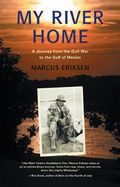
    MyriverhomeMy River Home: A Journey from the Gulf War to the Gulf of Mexico

    by Marcus Eriksen

    During the course of the war in Iraq, many veterans have become increasingly disillusioned, and increasingly vocal. Many began seeing the war as damaging for the country, and especially for the men and women fighting overseas. In My River Home, Marcus Eriksen, a veteran of the Gulf War, charts his personal shift from proud Marine to self-destructive veteran to engaged activist protesting the injustices of the Iraq War with Veterans for Peace. Eriksen made sense of this transition only after a fascinating adventure traveling through the heart of America, down the entire length of the great Mississippi River on a homemade raft.


    Lonelysoldier The Lonely Soldier: The Private War of Women Serving in Iraq
    by Helen Benedict

    More American women have fought and died in Iraq than in any war since World War Two, yet as soldiers they are still painfully alone. In Iraq, only one in ten troops is a woman, and she often serves in a unit with few other women or none at all. This isolation, along with the military's deep-seated hostility toward women, causes problems that many female soldiers find as hard to cope with as war itself: degradation, sexual persecution by their comrades, and loneliness, instead of the camaraderie that every soldier depends on for comfort and survival. As one female soldier said, "I ended up waging my own war against an enemy dressed in the same uniform as mine."

    In The Lonely Soldier, Benedict tells the stories of five women who fought in Iraq between 2003 and 2006. She follows them from their childhoods to their enlistments, then takes them through their training, to war and home again, all the while setting the war's events in context. 


    Raday

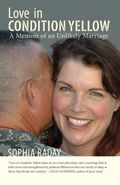
    Love in Condition Yellow: A Memoir of an Unlikely Marriage
    by Sophia Raday 

    Berkeley peace activist Sophia Raday never imagined she would fall in love with an Oakland police officer and major in the Army Reserve, much less marry one. Barrett is loving and loyal, but in his world a threat lies around every corner, and so he asks Sophia to stay in Condition Yellow—always aware that her life may be in danger soon. Sophia's heart-wrenching yet humorous narrative about coming to a new understanding of peace and partnership gives hope for healing the deep divisions in our country, from the front lines of a most unusual union.


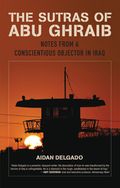
    Sutras The Sutras of Abu Ghraib: Notes from a Conscientious Objector in Iraq
    by Aidan Delgado

    As the planes hit the World Trade Center on September 11, 2001, Aidan Delgado was in the process of enlisting in the U.S. Army Reserve. Two years later, he arrived in Iraq with the 320th Military Police Company. As he witnessed firsthand the brutality of the occupation and the abuse of unarmed Iraqis, Delgado came to believe that war was immoral and ran counter to his Buddhist principles. He turned in his weapon and began the long process of securing conscientious objector status. His book is urgent reading for anyone who cares about American ideals overseas, and for all those who understand why peace is patriotic.


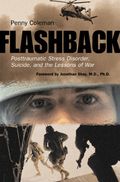
    FlashbackFlashback: Posttraumatic Stress Disorder, Suicide, and the Lessons of War
    by Penny Coleman

    In the early 1970s, Penny Coleman married Daniel, a young Vietnam veteran and fellow photographer. Soon, Daniel became deeply troubled, falling victim to multiple addictions and becoming strangely insecure. He suffered from what we now call posttraumatic stress disorder (PTSD). After Coleman left him, he committed suicide.

    Struggling to understand Daniel's experience, Coleman began investigating the history of PTSD; she found clear cases of the disorder as far back as the Civil War. In Flashback, Coleman deftly weaves psychology and military, political, oral, and cultural history to trace the experience of PTSD in the military up through the Vietnam War. She then focuses on Vietnam to show why this war in particular led to such a high number of PTSD cases, many of which ended tragically in suicide. Like the soldiers listed on the Vietnam Veterans Memorial wall, these men are casualties of war.

    With record numbers of American soldiers returning from the Middle East already suffering from PTSD, Flashback provides a necessary lesson on the real tragedy of battle for soldiers and their families, something that continues long after the war ends.

  • Amid the analysis of last week's election, Marge Baker (in the Huffington Post) reviewed Power in Words: The Stories Behind Barack Obama's Speeches, From the State House to the White House, by Mary Frances Berry and Josh Gottheimer. 

    Focusing on 18 pivotal speeches from the campaign — from then-Illinois State Senator Barack Obama's October 2002 speech against the Iraq war resolution to his November 2008 election night victory speech — Berry and Gottheimer put each speech in the context of Obama's ultimate journey toward the presidency, while also revealing details about the behind-the-scenes thought and preparation that went into each.

    Along the way the authors emphasize two fundamental — and ultimately interconnected — values that have motivated Obama throughout his public career and that we have seen at play during his first term as president.

    The first is his abiding belief that governing is most effective when we transcend the discord and partisanship of "politics as usual" to reach a bipartisan unity of purpose and new way of approaching our nation's challenges. The second is his fundamental belief in the power of government to help us solve problems and meet challenges that we cannot deal with on our own.

    Although, as the authors note, this view of government takes its most expansive form in Obama's "The American Promise" speech accepting the Democratic nomination for president in Denver in August, 2008, you can see the roots of his thinking all the way back to the Knox College commencement address he delivered in June 2005, barely six months after being sworn in as the junior senator from Illinois:

    How does America find our way in this new, global economy? What will our place in history be?

    Baker goes on to look at how the tension between the parties since the election has hampered Obama's vision of America's place int he world.

    Once President, though, he was confronted by a quartet of challenges: (1) a Republican party that decided the path to political victory was to double down on partisanship, (2) a mobilized and well-funded Tea Party chorus preaching limited government (except when it comes to one's own government benefits), (3) the Fox-Beck-Limbaugh echo chamber that not only preached limited government, but labeled government acting to promote the general welfare as un-American, and (4) an effective corporate lobby that was able to turn mainstream, private-sector oriented health insurance reform into government sponsored death panels.

    Faced with this barrage, President Obama and his allies have not been able to sell the American people on the bedrock principle that government is a force for good in our country.

    That sale can be made.

    In Power in Words, Berry and Gottheimer add a rich introduction for each speech that includes political analysis, provides insight and historical context, and features commentary straight from the speechwriters themselves—including Jon Favreau, Obama's chief speechwriter, and several other Obama campaign writers—delivering the behind-the-scenes account of Obama's rhetorical legacy. 

    Follow the jump for videos of some of the speeches and an excerpt from Power in Words.

    (more…)

  • David Bacon is the author of Illegal People: How Globalization Creates Migration and Criminalizes Immigrants. He is a writer and photojournalist based in Oakland and Berkeley, California. 

    In California cities like San Jose, voters this election passed ballot measures to weaken the retirement system for public workers.  These are the same kind of measures that have brought workers into the streets of France for weeks in protest.

    Beyond the ballot initiatives, the election season of 2010 was filled with rhetoric blaming public workers for the economic woes of cities and states.  It's hard to understand, in an era of foreclosures by banks that pay their executives bonuses of millions of dollars, while getting bailouts from the Federal government, why public workers should be held responsible for the current economic crisis.  Who contributes more to the welfare of our communities – a teacher or a hedge fund manager?

    But perhaps the most important thing to remember is what these workers do.  These photographs are meant to inspire some obvious questions.  Can people do this work, if they're then cast adrift once they're too old?  What would happen to all of us if they didn't do these jobs?  

    All photos © David Bacon.

    Dnb09publicworkers008x copy

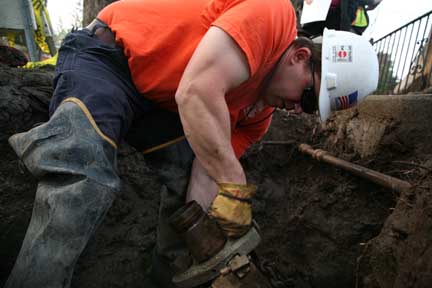
    Sam Johnson, a worker for the City of Burlingame, prepares to tap a water main to provide water service to a home.

    (more…)

  • Regan Margaret Regan's The Death of Josseline: Immigration Stories from the Arizona Borderlands has been praised as, "A keen-eyed perspective of how questionable public policy has resulted in far too much preventable loss of life," (Midwest Book Review) and, "A humane, sensitive, and informative perspective on a current and controversial topic" (Ana Castillo, author of The Guardians). 

    The book has been chosen as this year's Common Read by the Unitarian-Universalist Association, and a reader's guide is available on Beacon.org.  Read an excerpt below or at Scribd and get talking about the human stories behind the contentious issue of undocumented immigration. 

    You can also read these previous posts at Beacon Broadside by author Margaret Regan, or browse all of our posts on immigration.

    A Shallow Grave in the Desert

    Fourth of July in the Borderlands: Praying for Rain

    An Unsolved Murder, A Wave of Hysteria, and Deaths in the Desert

    The Death of Josseline: Immigration Stories from the Arizona Borderlands

  • Courtney E. Martin tells US News How to Change the World Without Going Broke.

    Carlos A. Ball celebrates the recent lifting of a gay adoption ban in Florida, and looks at how far we've come in the decades since the law was enacted.

    The Boston Globe rounds up some Boston history books, including Stephen Puleo's A City So Grand.

    Gail Dines advises Mamapedia readers on the challenges of raising kids in a porn-saturated culture.

    On his blog, Wayne Roberts calls Mark Winne's Food Rebels, Guerrilla Gardeners, and Smart-Cookin' Mamas "a must-read for anyone looking for an organizing manual adapted to American realities."

    Shalina Zahra Janmohamed wonders why we don't approach marriage relationships with a bit more attention to the details.

    The Valley Advocate takes a hard look at our student loan system.

    Favorite non-Beacon related read of the week: My Son is Gay. 

  • WINNE_FoodRebels The struggle between human freedom and authority is eternal and universal. With the advent of industrialism and its widespread application to our food supply (through factory farms, genetic engineering, and reliance on chemicals), that struggle has reached its latest stand-off. Will corporations fear-mongering about the lack of an adequate food supply and their promise of abundance prevail, or will we rise to the challenge of pursuing self-reliance and democratic control of our food system?

    While the framing of Winne’s argument draws from great thinkers like Dostoevsky and Emerson, it also moves from philosophy to action, with the stories of myriad “local doers” leading the charge. Covering everything from urban farming in Cleveland, and buffalo restoration on Native American reservations, to food-education classes in diabetes-prone neighborhoods, Winne shows how people are reclaiming their connection to their food and their health. It’s hope is that these types of efforts, scaled up and adopted more widely, will allow the alternative food system to dethrone the industrial.

    Food Rebels, Guerilla Gardeners, and Smart-Cookin’ Mamas challenges us to go beyond eating local to become part of a larger solution, demanding a system that sustains body and soul.

    For twenty-five years Mark Winne was the executive director of the Hartford Food System in Hartford, Connecticut. He speaks and consults extensively on community food-system topics and is the author of Closing the Food Gap. Winne lives in Santa Fe, New Mexico.

  • Amie Klempnauer Miller is the author of She Looks Just Like You: A Memoir of (Nonbiological Lesbian) Motherhood. She is a frequent speaker about gay and lesbian families, and her writing has appeared on Salon, in Brain, Child and Greater Good magazines, and elsewhere. Miller works as a development consultant to the public media industry and lives with her partner and daughter in St. Paul, Minnesota.

    FEATUREDkidarticle

    This post originally appeared on Goodkin.

    The kids of gay and lesbian parents are, apparently, all right, according to some thirty years of research and one mainstream movie. As the parent of one of these kids, I’m glad to hear it, of course. But what I’m most interested in is what it’s like for Hannah—my daughter—to be seven years old and have two moms. So I asked her.

    I started by asking Hannah if she knows other kids with two moms or two dads. I know she does, but I wanted to see what she’d say. Does she perceive herself as part of a larger group? (There are approximately seven kids at her school with same-sex parents.)

    How many kids go to your school who have two moms or two dads?
    I think about 100 or 200. Like “Zoe”, every time I see her in the hall, she’s really nice. It’s fun to have kids that are like me around.

    How big is your school?
    There’s about 800 kids that go there. It’s an elementary, a middle school and a high school. Sometimes I wish they had a college so I could go to college there.

    Do other people ever ask you questions about having two moms?
    Oh yes. Actually, if someone comes up to me, I kind of know they’re going to ask. I say, ‘OK, let me tell you the story.’ One time in kindergarten, there was one girl and she just had no idea. I had to draw her a picture. She just didn’t understand it and I had to tell her, ‘I just have two moms because I have two moms.’

    Do grownups ever ask about it?
    It’s very rare.

    What kinds of things do kids ask you?
    They ask, ‘Why do you have two moms?’ Because it’s different and they want to have it explained to them. It’s kind of annoying because they come up to me a lot. They usually came up to me in kindergarten. Most kids now know that I have two moms. They ask mostly about how did I get two moms. Some ask how I was born if I didn’t have a dad.

    Kidarticle1 How do you respond?
    I just say my family has a donor. I have a donor. I say I have siblings because they both have two moms and they used the same donor. We’re related because they have some of the same genes as me. And that’s not like the jeans you wear, but the genes that are inside of you.

    What’s a good part about having two moms?
    You’re different. Plus, you get to do more stuff than people with a mom and a dad. Like, you get to go to all these special events. I like going to [Gay] Pride because I get to go up and dance with the Drama Kings and Queens. [Note: She means “drag” kings and queens, but I was fond of the slip.] It’s basically my job. I go almost every year and I dance with them every year and it’s just really fun.

    What’s a not-so-good part about having two moms?
    Sometimes people yell at you. One time I got bullied just because I have two moms and that’s one of the things I don’t like about it.

    What advice would you give to another kid with two moms?
    I would say, be proud because you’re different. Being different is cool. It’s cooler than having a mom and a dad.

    What do you like best about being different?
    I can be independent from other people. I like being independent. I like doing things by myself and figuring it out on my own.

    Do you feel like your teachers are supportive of you and your family? 
    Yes, very. Especially my second grade teacher. She’s a new teacher. She has a little boy and she’s just a very good teacher. She’s supportive because she helps me learn and she treats me like all the other kids. And I’m special in other ways because I’m the only left-handed person in my whole class.

    0469 What do you think about two men or two women getting married?
    I think it’s fine. I’m actually kind of mad because some people think two men or two women shouldn’t get married because it’s not appropriate. But I don’t agree. I think it’s good. I’m rooting for the judge to say yes [to allow] two men or two women to get married.

    Would you like your moms to get married?
    Yes. They already had a wedding, but since they were two women, the government didn’t give them their little slip of paper and say they’re married. So someone could come up and propose to my mom and she could say yes, but I don’t think that will ever happen.