• Today’s post is from Mark Winne, the author of Closing the Food Gap: Resetting the Table in the Land of Plenty. For more information, go to http://www.markwinne.com.
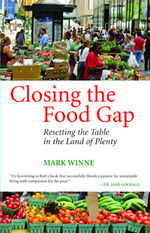
    Book cover for Closing the Food Gap, links to Beacon Press page for book
    November has always been a confusing month for me.  Traditionally, it is the time when we Americans give thanks to a mixed bag of things from the bounty of the autumnal harvest to the blessings of that new flat-screen TV that now adorns the living room wall. It’s also the time of year when the U.S. Department of Agriculture issues its annual hunger count, known officially as the report on “Household Food Security in the United States.” By asking 40,000 of us a series of questions concerning our ability to purchase food, USDA’s researchers can determine with a reasonable degree of statistical certainty how many of us are, in the nomenclature of the Department, either “food secure,” “food insecure,” or, to avoid using the “h” word, have “very low food security.” 

    What did they find for 2007? Well, if you’re a hedge fund operator who bet on growth in food insecurity, you’ll be reaping the rewards of your wager this holiday season. Compared to 2006 when 35.5 million Americans were either food insecure or suffering from very low food security, 36.2 million or 12.1 percent of the population fell into those categories. And with the economy swirling down the toilet, well-honed research skills are hardly necessary to project that 2008 will be far worse.
    (more…)

  • Today's post is from Dr. Juliet Schor, an economist, author, and professor at Boston College. Dr. Schor is the author of Born to Buy: The Commercialized Child and the New Consumer Culture, Sustainable Planet: Solutions for the Twenty-first Century, and Do Americans Shop Too Much? She is co-chair of the New American Dream Board of Directors. This post originally appeared on the New Dream blog.

    Book Cover for Do Americans Shop Too Much? links to Beacon Press page for book
    Spending our way to prosperity? Not this time around.

    As a "New Dream" economist, I am asked all the time: won't consuming less hurt the economy? When there's less spending, people get laid off, their incomes fall and businesses, especially small ones, go bankrupt. This question is especially urgent today, given that the recession is deepening and spreading. George Bush was widely (and rightly) criticized for suggesting shopping as the patriotic response to 9/11. Would Barack Obama be wrong if he suggested the same?

    Short answer: Yes. But with this topic, there's rarely a short answer. So here's the longer one.

    Let's remember, first, that the economic crisis wasn't caused by a decline in consumer spending. It was triggered by the bursting of the housing bubble, Wall Street excesses, and some other factors. Consumers are cutting back now, but the decline in spending is one of a series of falling dominoes—more an effect of recession than a cause.

    (more…)

  • Bill Ayers was interviewed by Terry Gross on Fresh Air earlier this week (the interview was praised by James Fallows of the Atlantic
    here). Also check out his interview with Walter Shapiro at Salon, which has an accompanying video. A talk Ayers gave in Washington was covered by the Washington Post and NPR.

    Fred Pearce appeared on Living on Earth to discuss Confessions of an Eco-Sinner. Citizen Reader suggests using the principles in the book to guide your holiday shopping.

    Amy Alexander discusses the incoming president.

    Don’t know what to do with the abandoned big-box store in your town? Here are a few ideas. (Thanks, Susan Campbell.)

    Nancy Polikoff discusses Thomas and Nancy Beatie’s legal status as parents.

    Recent Posts on Beacon Broadside:

    Home for the Holidays? by Jacqueline Olds, MD, and Richard Schwartz, MD

    Obamanomics for the Missing Class by Victor Tan Chen

    Equality Deferred by Lillian Rubin

    Do You Know Your Genes? By Clare Dunsford

  • Today’s post is from Jacqueline Olds, MD, and Richard S. Schwartz, MD, authors of The Lonely American: Drifting Apart in the Twenty-first Century. Drs. Olds and Schwartz are both psychoanalysts and Associate Clinical Professors of Psychiatry at Harvard Medical School. Dr. Olds teaches child psychiatry and Dr. Schwartz teaches adult psychiatry at the McLean and Massachusetts General Hospitals. Married to each other and with two grown children, they each maintain a private practice in Cambridge, MA. They have written two other books, Overcoming Loneliness in Everyday Life and Marriage in Motion.

    Cover of the Lonely American links to Beacon Press page for book
    On the front page of the Boston Globe, just beneath the story on surging unemployment, is another headline. “Guess who’s not coming to dinner? Amid slump, holiday travel plans stall.” The economic crisis threatens to disrupt one of the few moments when we, as Americans, regularly remember that electronic connections can’t replace a family meal. Thanksgiving has been the time to emerge from our wired (and wireless) solitude to move real bodies through physical space, over clogged highways and through packed airports to be at the table with our families for the holiday. But even before the economic crisis, it was already tempting not to go.

    These days, we can do so much from home – our work, our shopping, our socializing, our game-playing. It’s not only convenient; it’s also high status. It shows that we have access to all the latest technologies of connection. It shows we are freer than neighbors who are still tied to commutes and schedules. Busyness itself has become high status, an upwardly mobile contest to see who can keep more balls in the air. With so much to do, who has time to run to the store? Or to pack up for the holidays?

    (more…)

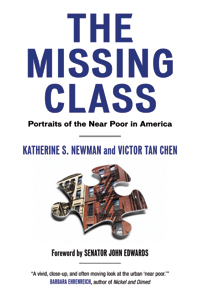
  • Today’s post is from Victor Tan Chen, co-author (with Katherine S. Newman) of The Missing Class: Portraits of the Near Poor in America and the founding editor and president of INTHEFRAY Magazine. His work has appeared in numerous publications, including Newsday and the Minority Law Journal, and in the book Chutes and Ladders. He is a Harvard doctoral candidate in sociology and social policy.

    Book Cover for The Missing Class by Katherine S. Newman and Victor Tan Chen
    Now that Barack Obama has won the presidency, and the Democrats have broadened their majorities in Congress, the picture looks a little less bleak for the country’s poor and near poor families.

    In policies ranging from taxes to health care, from housing to job creation, Obamanomics will likely provide some welcome relief from the status quo of the last eight years, during which the ranks of low-income households grew. In 2000, 29.2 percent of the population, or 81 million Americans, lived on household incomes of less than twice the poverty line. In 2007, 30.5 percent of the country, or 91 million Americans, fell into this bottom category of poor and near poor households.

    In our book The Missing Class, Katherine Newman and I looked at the situation of near poor families at the end of last decade and the beginning of this decade. Rates of poverty and near poverty were steadily falling from their peaks in the early 1990s. Americas economy was roaring. But as we described in our book, even in those boom years near poor families were struggling mightily to find quality health care, housing, and education for their children.

    Now that another downturn is upon us, the economic fortunes of the less well-off look far worse. And having just approved a massive infusion of government money to prop up the country’s floundering banks, the federal government — even with a progressive president at the helm — will find its options even more limited than is usually the case during recession times, as half-a-trillion-dollar budget deficits feed interest rate rises and worsen the market malaise.

    (more…)

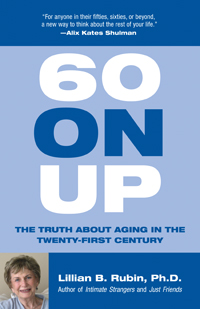
  • Today's post is from Lillian B. Rubin, the author of twelve books, including 60 on Up, The Man with the Beautiful Voice, Tangled Lives, Worlds of Pain, Intimate Strangers, and Just Friends. A sociologist and psychotherapist, Dr. Rubin is a senior researcher at the Institute for the Study of Social Change at the University of California, Berkeley.

    Book Cover for 60 on Up, links to Beacon Press page for book
    On May 16, 2008 the California Supreme Court struck down the state's ban on same-sex marriage. The ink hadn't yet dried on the landmark decision when opponents filed an initiative, Proposition 8, to appear on the November 2008 ballot that would amend the state's constitution to read: "Only marriage between a man and a woman is valid or recognized in California."

    But it didn't dim the celebration because no one seriously thought it would pass. Not here in California; not now in 2008; not our neighbors, our friends, our allies in a hundred political struggles over the years.

    Everyone knew, of course, that there were deeply-held feelings in opposition to same-sex marriage, that forty-seven states prohibit it, that most don't recognize the legitimacy of such marriages that are performed in states that allow it, and that at least one, Wisconsin, whose constitution was amended in 2006 to prohibit same-sex marriage, has a longstanding, little-known law that carries up to a $10,000 fine, nine months in prison, or both for couples who return to the state after marrying legally elsewhere. The law, passed decades ago to prevent teenagers from crossing state lines to marry, could now be used against same-sex couples, the Madison Capitol Times warned recently.

    But that was there. This was here and now: a new time, a new day, a new beginning. Indeed, optimism was so high that UCLA's Williams Institute on Sexual Orientation Law and Public Policy projected that about half of California's roughly 100,000 same-sex couples would marry in the next three years and 68,000 out-of-state couples would travel to California to exchange vows.

    Fast forward to November 4, 2008 – Election Day. By a five-point margin, roughly 52-47, California voters said yes to a constitutional ban on same-sex marriage. Yes, here in California; yes, now in 2008; yes, our neighbors, our friends, our allies in a hundred political struggles over the years.

    (more…)

  • Today's post is from Clare Dunsford, author of Spelling Love with an X: A Mother, A Son, and the Gene that Binds Them. Dunsford is an associate dean in the College of Arts and Sciences at Boston College and has been a contributing writer for Boston College Magazine. She was previously an adjunct lecturer in English at Boston College and Harvard University.

    Book cover for Spelling Love with an X links to Beacon Press page for book
    Maybe you have heard of the HGP, the Human Genome Project. But have you heard about the PGP-10? This daring group of ten genetic pioneers has agreed to post their personal genomes on the Web in an effort to create a database of information that may lead to faster cures for genetic diseases. Very few of us have anything but the vaguest and most anecdotal information about the genes we carry: "I've got Aunt Hilda's hips and Uncle Frank's short temper." Certainly my family and I were not aware of our own genetic inheritance before my son's diagnosis with fragile X syndrome in 1993; the FMR1 gene wasn't even discovered until two years before. Fragile X is the most common inherited cause of mental impairment and the most common known cause of autism.

    When I sat in front of a genetic counselor a couple of years after the initial diagnosis, I saw my family arrayed before me like a poorly designed Tinkertoy—a bunch of squares and circles connected by lines. The genetic counselor informed me that every person carries six to eight genes that are problematic. I just happened to know the name of one of mine. FMR1 this little creature is called. When a section of nucleotides called CGG repeats too many times, a vital protein is not produced, leading to cognitive disability, emotional difficulties and attention deficit.

    In the fifteen years since my family learned of fragile X, the full human genome has been sequenced, much more quickly than anyone predicted, and genetic tests have been developed for over 1500 conditions. Some day (if you don't already) you will know the name of one of your own genes, one of the half dozen that carry the potential to make you ill or change your personality or cause you to bear a child who will never be independent.

    (more…)

  • Bill Ayers appeared on Good Morning America and Democracy Now! this morning. The latter interview, which is longer and more substantive, includes his wife, Bernardine Dohrn.

    Bill McKibben discusses Obama’s Big Climate Challenge.

    Nan Mooney (Not Keeping Up With Our Parents) talks about College Loan Slavery. She was also on Babble this week worrying about whether her son is toy-deprived.

    In the economic downturn, social services programs are losing funding. In Hartford, a program to help kids in the aftermath of sexual assault; in New York, the Ali Forney Center, the only full-time drop-in center for homeless gay youth in the city.

    Kai Wright (Drifting Toward Love) looks into the “Prop 8 Blame Game.”

    Jeremy Adam Smith at Daddy Dialectic talks about how the economy affects stay-at-home parenthood.

    Recent Posts on Beacon Broadside:

    A Graphic Book Adaptation of Geoffrey Canada’s Fist Stick Knife Gun

    Bill Ayers to appear on Good Morning America

    Raped in the Military? You May Have to Pay for Your Own Forensic Exam Kit

    On Gay Marriage and Family Issues, A Change is Gonna Come

    Veterans’ Day: A Soldier—His Prayer

    Barack Obama’s Religious Views and Howard Thurman

  • Today's post is from Jamar Nicholas, a Philadelphia-based cartoonist, illustrator and educator. He is currently working on a graphic adaptation of Geoffrey Canada's bestselling memoir, Fist Stick Knife Gun: A Personal History of Violence in America, a book in which "Canada describes the rituals and codes of violence that governed life for children like him, growing up in the inner city in the 50's and 60's." Nicholas has created several popular comics, most notably web-comic Detective Boogaloo: Hip Hop Cop, and he teaches at Moore College of Art in Philadelphia, Pennsylvania.

    Jamar_blog_portrait
    I was born in Philadelphia, PA, in the early 1970s. It's hard to find a picture of me as a youth where I'm smiling.

    That's not entirely true. I did smile when necessary – I worked up what we called a "Kool-Aid" smile whenever I had been ordered to do so for the camera. I didn't really smile under my own recognizance. The reason being was that I hated childhood.

    You'd think that what should follow is some hard-scrabble story of an anguished upbringing in a troubled home, but it didn't exactly go down like that. Most of my painful memories came from leaving the house every day to go out into the world—to school or, maybe, down the block to the corner store/bodega/mom & pop to get the Sunday paper, walking home, on the bus—just being outside was the worst thing in the world when I was a kid.

    Wait, though—kids LOVE going outside, right? Yes, but… that's where the other kids are. The ones from "around the corner" who you hoped weren't there to harass you when you walked home. The kids on your block who demanded you prove yourself. You couldn't be a "punk" or "soft" in front of these kids. These were the kids you had to fight for your bicycle every month, or fight to keep that brand new Philadelphia '76ers jacket you got for your birthday. I hated the fact that every time I left the house, the real threat of violence in some manner was always just a crooked glance away at all times.

    (more…)

  • Bill Ayers will discuss the reissue of Fugitive Days: Memoirs of an Antiwar Activist with Chris Cuomo on tomorrow's Good Morning America. (UPDATE: link to story)

    Beacon Press had planned to publish a new edition of Fugitive
    Days
    with a new afterword in April 2009 after reverting the paperback rights
    from Penguin books in April of 2008.  Because of the intense interest in
    Bill Ayers generated by the McCain/Palin campaign, Beacon decided to move up
    publication to November.  However, since Mr. Ayers did not want to inject
    himself or his own story any further into the election debate, we agreed to
    hold release of the new edition and media interviews about the book until after
    the elections.

    Ayers posted here last January about the final Bush State of the Union address. We posted a note from Beacon Press about Bill last summer when his name was first brought up in the Democratic Presidential debates. And we've extensively linked to press coverage of Ayers in recent months. Here's a few of the most recent links:

    Bill Ayers Speaks: Washington Post

    Mr. Ayers's Neighborhood: New Yorker Blog

    Ex-Radical Talks of Education and Justice, Not Obama: New York Times

    Cover of Fugitive Days, links to Beacon Press page for bookBook Cover of A Kind and Just Parent links to Beacon Press page for bookCover of Teaching Toward Freedom, links to Beacon Press page for book