• by Allison Trzop

    Several weeks ago, a couple of folks from Beacon — including
    Director Helene Atwan — had the pleasure and the privilege of attending several
    readings and tapings for a miniseries being shot over at Emerson College’s
    Cutler Majestic Theatre
    here in Boston.

    Hosted by Executive Producer Howard Zinn — not only a wildly
    influential historian and one of the most inspirational activists of modern
    times, but also one of the most imminently likable people alive –"The People
    Speak" featured an all-star line-up performing excerpts primarily taken from Zinn’s
    book Voices of
    A People’s History of the United States
    . The four performances, broken
    into segments titled "Class," "Women," "Race," and "War," were the culmination
    of tremendous work by Zinn, Anthony Arnove, and Chris Moore of "Project
    Greenlight," as well as actors Matt Damon and Ben Affleck.

    While every last one of the actors who participated should
    be loudly applauded (yet again!), standout performances included John Legend pouring
    his heart and soul into Nina Simone’s "Mississippi Goddamn"; Marisa Tomei reading the words of Cindy
    Sheehan
    ;
    David Strathairn standing in for a member of the House Committee on Un-American
    Activities, which for those of us who loved Good Night, and Good Luck was hilarious;
    Josh Brolin doing more for Dalton Trumbo’s Johnny
    Got His Gun
    than any high school lit class ever could; and every last time
    Staceyann Chin walked onstage.

    Did you ever expect to hear Viggo Mortensen sing Bob Dylan?

    For those who couldn’t make it into the filled-to-capacity
    Cutler Majestic, you can read more about it over at Alternet,  watch some more clips on YouTube, and, with any luck, the producers will find a home for the miniseries.

    Allison Trzop is an assistant editor at Beacon Press.
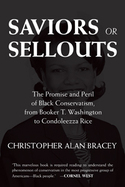
  • Braceysaviorsorsellouts During a recent promotional event for my book, Saviors or Sellouts:
    The Promise and Peril of Black Conservatism, From Booker T. Washington to
    Condoleezza Rice
    , a middle-aged African American woman asked me a question
    that I’ve been hearing a lot these days. Although she agreed with much of what
    conservatives past and present had to say about issues affecting the black
    community, she refused to think of herself as a conservative because, in her
    mind, conservatives (echoing Kanye
    West’s criticism of the Bush Administration’s response to Hurricane Katrina
    )
    “don’t really care about black
    people.”

    The problem, she elaborated, was one of tone. Black
    conservatives, in her mind, were unduly hostile in their criticisms of the
    blacks in general, and poor and urban blacks in particular. She simply couldn’t
    bear to align herself – at least publicly – with these hostile voices. She was,
    in her own mind, a black conservative masquerading as liberal – and suffering
    within a deep political crisis as a consequence.

    As the 2008 Presidential Campaign lurches forward, Americans
    of all stripes will be called upon to contemplate and vote their politics. For
    many African Americans, Barack Obama’s
    pursuit of the Democratic nomination has, in some ways, reanimated a
    conversation that has taken place quietly within the black community over the
    past decade – a conversation about the increasingly conservative nature of
    black politics.

    To be sure, blacks are overwhelmingly registered Democrats. But
    are blacks overwhelmingly liberal? In a season in which the dominant rhetoric
    on both sides of the political aisle is one of “change,” what sort of change is
    needed to best empower the African American community?

    Condoleeza Rice
    Condoleeza Rice

    As I detail in the book, there is a growing perception that
    conservatism within black America is gaining momentum. In 1972, fewer than ten percent
    of blacks identified as conservative. Today, nearly thirty percent, or 11.2
    Million, African Americans do. Fifty-six percent of black voters supported Virginia’s 2006 ban on
    same-sex marriage. Other polling data reveal that the majority of blacks
    support other conservative policies, such as privatization of social security,
    school vouchers.

    Do everyday blacks, who believe a more conservative pathway
    is most attractive, dare to state these views publicly, particularly when the
    Democratic nomination is at stake? More importantly, if, in the spirit of
    public discourse, certain blacks declared themselves to be conservative, what
    exactly does that mean? Is there a black conservative tradition, or multiple
    traditions? And what obligation, if any, do liberals and progressives have to
    engage this conservative tradition in a serious way?

    (more…)

  • Ayersteachingtowardfreedom In his State of the Union address on January 28, President Bush, our self-styled “education president,” urged Congress to re-authorize the No Child Left Behind Act, calling it a “good law” and claiming that because of this legislation student learning is improving and “minority students are closing the achievement gap.”  In reality, student learning is not improving under NCLB, and the so-called racial achievement gap is a fraud.  But through a combination of sleight-of-hand, cooking the numbers, and manipulating the metaphors George Bush could make those claims with a smile. 

    The education revolution that Bush touts is the result of decades of “school reform” spearheaded by business and powered by ideologues.  “Global competitiveness” is the preoccupation, “accountability” and “standards” the watch-words, and all of it results in a ramped-up obsession with standardized testing and an emphasis on minimal competencies along a narrow band of cognition and skills.  The business metaphor dominates the discourse: inputs in relation to outputs, discipline and punishment, incentives and competitiveness.

    It’s worth asking ourselves what makes education in a democracy distinct.  Of course we want children to study hard, to be responsible, to stay away from drugs, and to be prepared for work.  But those are goals we share with totalitarian regimes, monarchies, dictators and kings.  So what is uniquely characteristic of democratic education?

    (more…)

  • SheasundaysinamericaThe
    woman in the post office doesn’t like Hillary, but tells me she’s not about to
    vote for Barack.

    "He’s
    Muslim," she leans in to whisper.

    I
    lean in closer and reply "He’s not."

    Barack Obama is a Christian. But he’s
    also one from a varied cultural and religious family, the specifics of which
    are spawning all sorts of misinformation as the Illinois senator campaigns for
    nomination as the Democratic party’s presidential candidate.

    The facts: Obama had a black African
    father who hailed from a Christian/Muslim family; a white Kansan mother who balked at organized religion but stocked the home bookshelves with the Bible,
    the Koran and the Bhagavad Gita, as well as collections of mythology from the
    world over; a lukewarm Indonesian Muslim stepfather; and non-practicing Baptist
    and Methodist grandparents. By age ten, Obama had attended both a Catholic and
    a Muslim public school in Indonesia, then, upon moving to his grandparents’
    home in his birthplace of Hawaii, was enrolled in a Christian prep school. The
    salad bar of experiences served up appreciation of other faiths but didn’t inspire the self described
    "reluctant skeptic" to quickly pick a favorite, even when affiliation might
    have benefited his early political career.

    Sheatrinityucc
    Seventeen years ago, Obama made his
    choice: the United Church of Christ, created in this country in 1957 via the
    union of the Evangelical and Reformed Churches with most of the Congregational
    Christian Churches. The UCC is known for the independence of its 5,633
    congregations, spiritual home to 1.2 million. It’s also known for the
    non-traditional ways it can present the Protestant experience, including
    through its recent TV ads that show congregants being plucked from the pews of
    an anonymous church due to factors including race and gender, the message being
    that at UCC, all are welcome.

    (more…)

  • Tom Hallock, Beacon's Associate Publisher, spent last weekend in the company of 500 booksellers at the American Booksellers Associations' third Annual Winter Institute in Louisville, Kentucky.

    Independent booksellers, like independent retailers in other industries, have long been under siege by big box and online retailers. In searching for ways to survive, they've found solutions that place them in the vanguard of Americans who are reclaiming their downtown areas, restoring the environment and creating community.

    Amidst the workshops on inventory management, loss control, hand selling, and a hilarious one on consumer behavior led by Len Vlahos, were others on green retailing and presentations linking buy local campaigns to national movements on sustainability and climate change. Bill McKibben, author of Deep Economy: The Wealth of Communities and the Durable Future (Holtzbrinck), spoke about "the special role bookstores and booksellers have to play, as they provide the place "where the community can think about itself". Gary Hirshberg, President and CEO of Stonyfield Farm, author of Stirring It Up: How to Make Money and Save the World (Hyperion), grew his business from a "7 cow start up" to a $300 million dollar a year company by incorporating environmentalism principals and practices. He found it both increased customer loyalty and reduced costs. He encouraged booksellers to think not only about how they lit and heated their stores, but also to examine the supply chain. He mentioned that UPS had saved ten million dollars a year by re-routing their trucks to minimize energy-consuming left turns. He left me thinking about not only our manufacturing practices, but also issues like returns. The ABA has embraced these messages, not only in programming, but by providing conference materials that were so green as to be almost edible. They've also developed a great list of books on community and sustainability [pdf].

    Booksellers have taken the lead in developing independent business associations in their communities, educating their customers about the economic and environmental benefits of shopping locally. ABA COO Oren Teicher, a leading advocate of this approach, spoke about a study of 2007 holiday sales which showed that stores in areas that had independent business alliances averaged sales increases of 2.1%, whereas those in areas that lacked them had declines of .3%. In a business famous for its 2% profit margins, the difference is significant. Booksellers such as Steve Bercu, owner of BookPeople in Austin Texas; Betsy Burton, owner of The King's English Bookshop in Salt Lake City (and author of The King's English: Adventures of an Independent Bookseller); Carla Jimenez, co-owner of Inkwood Books in Tampa FL; and Clark Kepler, president of Kepler's Books in Menlo Park, shared their knowledge about creating these alliances. Beacon author Stacy Mitchell (Big Box Swindle) joined McKibben and Michael Shuman (The Small-Mart Revolution, Berrett-Koehler) in a wide ranging conversation about the transformative power of local economies, a talk that brought us all to our feet and which ABA hopes to broadcast on Book TV.

    (more…)

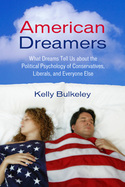
  • Americandreamers Last night the
    students in my "Psychology of Dreaming" course at John F. Kennedy University
    turned in their first assignment of the quarter: a personal sleep history from
    childhood to the present. I like to
    begin my dream classes with a focus on sleep because it’s a great way to jar
    people into taking a fresh look at the nocturnal dimension of their lives. Most people have never reflected on their
    sleep patterns or thought about sleep in relation to their life’s development
    and growth over time. When they’re
    encouraged to do so, the results are often startling. As soon as I opened the discussion in class
    last night, one of the students quickly raised her hand. I called on her, and with no further ado she
    declared:

    "I’m 45 years old,
    and I just realized I’ve been sleep deprived for the last 40 years!"

    Several other
    students followed with their own tales of sleepless woe, just like I’ve found
    every time I give this assignment in a class and just like I found in the
    research for American Dreamers. The
    conclusion is hard to avoid: We are becoming a chronically sleep-deprived
    nation. Problems with sleep afflict a
    surprisingly large number of people in contemporary American society, and we
    don’t really know how widespread these problems are or how they impact people’s
    long term health and well-being.

    (more…)

  • Courting Equality Draft a constitutional amendment that is divisive and
    sweeping in its possibilities for endangering committed and established
    relationships of all Floridians, straight and gay, and call it the "Florida
    Marriage Protection Amendment." Make sure that it’s ambiguous enough to
    ultimately be able to do away with domestic partnerships that are recognized in
    a number of Florida municipalities. Use seemingly transparent language,
    "Inasmuch as marriage is the legal union of only one man and one woman as
    husband and wife, no other legal union that is treated as marriage or the
    substantial equivalent thereof shall be valid or recognized." Consider the
    legal arguments that can be hung on "substantial equivalent."

    Just pretend that the amendment is aimed only at
    preventing the marriage equality of same-sex couples and that it is vitally
    needed. Posture that the 1997 Florida Defense of Marriage Act (DOMA) statute is
    not solid enough to prevent "activist" judges from undoing it. Keep up the
    pretense for four years as you gather the requisite 611,009 signatures to place
    the amendment on the November 2008 ballot. When you get 612,192 signatures by
    late December 2007, weeks before the February 1, 2008 deadline, hold a press
    conference in Orlando and announce it with fanfare.

    Start preparing to host Marriage Sundays and Citizenship
    Sundays in churches throughout 2008 in the run up to the November 4 election.
    Matt Staver, chairman and founder of Liberty Counsel based in Orlando, advises
    church leaders that this is all legal. He also counsels them on where to set up
    tables, what to preach about, how to conduct seminars and conferences to
    support the so-called marriage amendment. He’s available to help in any way.
    Liberty Counsel has been fighting marriage equality nationwide for years.

    Depending on one’s commitment to equality this scenario
    sounds like a Disney fairytale or a tale of terror emanating from Orlando.
    Besides the Liberty Counsel and Disney World, Orlando also happens to be the
    home base for Florida4Marriage and its chair John Stemberger, who is also the
    President and General Counsel of Florida Family Policy Council. Behind
    Stemberger and Staver are the other national stars for inequality, in
    particular Focus on the Family leader James Dobson along with its policy
    analyst Glenn Stanton who is still pushing his skewed research about same-sex
    parenting that is not recognized by any respectable academic or professional
    body
    .

    The fairytale that Florida would become the 28th state to
    constitutionally ban same-sex marriage came up against reality on January 10th.
    Florida Secretary of State Kurt Browning announced that signatures from
    Miami-Dade County had been double counted in a computer error and
    Florida4Marriage needed 22,000 more signatures by the Feb. 1 deadline to get
    their amendment on the ballot.

    (more…)

  • Dewolf
    The snow is falling outside the home several of us have rented in Park City, Utah, to attend the Sundance Film Festival in support of our cousin Katrina Browne’s film Traces of the Trade: A Story from the Deep North. It is 19 degrees outside, which is warmer than it has been. The cold and the white stuff haven’t diminished the size of the audiences in the films I’ve seen so far.

    I’ve not been to this or any other film festival outside my hometown before. I doubt that I ever would have were it not for the high honor of having Sundance select for competition the film that features our family struggling with the legacy of slavery by exposing New England’s—and our own ancestors’—complicity in the slave trade.

    The film premiered here, appropriately enough, on Monday, January 21: Dr. Martin Luther King, Jr. Day. We were honored by the presence of Congressman John Conyers, Jr., Chair of the House Judiciary Committee. On Monday morning, he participated on a panel dedicated to the message and mission of Traces of the Trade, and attended the film’s premiere that night. It was particularly significant to be with the man who introduced the legislation—four days after Dr. King’s assassination—that ultimately resulted in the establishment of the national holiday fifteen years later in 1983. Conyers has introduced legislation (H.R. 40) that would establish a commission to study the legacy of slavery and possible remedieseach session since 1989. It has never had a hearing until last month. As Chair of Judiciary, he is finally in a position to move this important legislation forward that has languished for so long.

    (more…)

  • "We live in a moment of religious conflict around the world, and that's precisely why we need to be proactive about a positive conversation about religion."

    Eboo Patel, author of Acts of Faith and founder and director of the Interfaith Youth Core, appeared with a panel of IFYC fellows on a Good Morning America segment (part one aired this morning, part two will run tomorrow.) In the segment, Eboo explained that interfaith dialogue does not equate to saying that all religions are essentially the same:

    I'm a very proud Muslim, and some of my best friends are people who are very proud Jews, very proud Christians, very proud Hindus, so in the conversations that we have, we try to steer towards how our different faiths lead us to be merciful, to be passionate, to be of service to others.

    But it's the kids who are at the center of the report. Jessica Kent, one of the young people interviewed, sums up the challenges and importance of creating open and honest connections between faiths:

    People say don't talk about politics, don't talk about religion at the table, but how else are we supposed to express who we are, what inspired us, what keeps us going, what motivates us, why we do things?

    UPDATE 1/24/08: Part two of the conversation is now available online.

  • Beacon Author Tom DeWolf (Inheriting the Trade)—who
    blogged here on the 200th anniversary of the abolition of the slave trade in
    the U.S.
    —is at the Sundance Film Festival this week with his cousin Katrina
    Browne, director of Traces of the Trade. The book
    and the film deal with their shared family history as descendants of the most
    successful slave-trading family in our country’s history, and they present an
    opportunity for greater discussion slavery’s legacy in the U.S.

    One of the many salient points
    DeWolf makes in his book is that slavery was not a "Southern
    problem," but an integral part of the economic lives of those north of the
    Mason-Dixon Line as well. This interview from NECN highlights DeWolf’s Rhode
    Island roots and New England’s "hidden history" of slavery. When
    asked by host Chet Curtis why the subject of Northern culpability in the trade
    isn’t explored in the history books, DeWolfe offered this insight:

    The North won the Civil War, and
    the winners get to write the history books. A professor we met with called it
    "constructed amnesia," that we create this mythical story of the
    great abolitionists from the North marching south to straighten out those
    Southerners. When in fact, there were portions of New York that contemplated
    seceding with the South prior to the Civil War.

    (We embed
    the NECN story here—if it doesn’t appear in your reader click here to watch).

    While DeWolfe ducks the paparazzi
    at Sundance, Kai Wright is reading tonight at the Hue-Man Bookstore
    in New York
    . Time Out New York interviewed Kai about his new book, Drifting Toward Love:
    Black, Brown, Gay and Coming of Age on the Streets of New York.
    Kai
    talked about his own feelings of alienation as young, black, gay man living in
    Dupont Circle, a gay neighborhood in Washington, D.C.

    “It started to dawn on me that yes,
    it was a gay neighborhood, but it was a white gay neighborhood, and I
    was a young black man. I didn’t belong. And I didn’t feel any better.” He
    recalls that there was a “layering of race over sexuality, and the feeling that
    there had to be a choice.” (Link)

    On Colorlines, Wright discusses the
    Obama-Clinton campaigns, in the wake of "their racially loaded fight over
    the comparative historical import of Martin Luther King Jr. and Lyndon
    Johnson." He warns both Democrats of avoiding "the diversity
    debate," citing the 2004 race of an example of a "weak-kneed
    dodge" that served neither the Democrats nor the country well:

    The Democratic establishment cried foul when
    Republicans loaded state ballots with divisive initiatives on gay rights.
    Eleven states asked voters to weigh in on same-sex marriage, pumping up the
    conservative vote and, some argue, costing John Kerry a win—he lost nine of the
    states, most infamously Ohio.

    The problem, however, wasn’t the existence of a
    debate about gay rights—that’s inevitable as long as gays refuse to cower in
    the closet—it was national Democrats’ refusal to participate meaningfully in
    it. At the state level, 94 percent of legislators who voted against the 22
    proposed constitutional amendments banning gay marriage won re-election,
    according to the gay rights group Equality Federation. (Link)

    Finally, be sure to Tivo Good
    Morning America
    tomorrow and Thursday. Eboo Patel, author of Acts of Faith: The
    Story of an American Muslim, the Struggle for the Soul of a Generation
    ,
    will be featured in a two-part segment highlighting the Interfaith Youth Core. We’ll post a link to the
    segments when they hit the ABC website.