• By Deborah L. Plummer

    Friends across the racial spectrum

    My husband, Mike, is an engineer—a full-blooded engineer. Not only is it his career choice, but he also lives and thinks like an engineer. Often when we go out with my friends, the occasion is loosely planned and somewhat spontaneous. A phone call made that day inquiring about the evening’s plans usually gets things started. Mike’s friends (fellow engineers), on the other hand, plan events literally months in advance—even if we are just meeting for dinner. Time, place, and confirmed reservations are emailed in a precise manner.

    One Saturday, we met his friends Julie and Steve (both engineers) for dinner. Mike and I arrived at approximately 7:25 p.m. The 7:30 reservation was in Julie and Steve’s name, and the hostess informed us that they had not yet arrived. Knowing their habitual promptness, we decided to go to the table. I began to get nervous after fifteen minutes, since this is equivalent to waiting over an hour for someone in non-engineer land. My husband pulled out his printed email with the confirmed date and place. “Yep,” he said. “We are in the right place. Besides, the reservation is in their name, remember?” We asked the waitress again if anyone else was waiting for a couple. “No,” she assured us. “Your friends are not here.” After a half hour, I was convinced that something was dreadfully wrong. I checked our voicemail. No message. No missed phone call or text. We inquired again with the waitress, who checked with the hostess; she impatiently came back to tell us, “We checked. Your friends are not here.” As she was walking away, I turned to watch her—only to notice the back of Julie’s blond head and the shoulders of Steve, her husband, seated next to her. Not surprisingly, they were being told the same story. Apparently, the restaurant hostess assumed we could not be friends.

    If we cannot even imagine individuals being friends across races in social settings, how can we envision and create a racially diverse and united America? Our natural preference for sorting people into categories of people who look like us, sound like us, and share our same values and beliefs leads us to remain socially segregated.

    Now when I am the first to arrive at a restaurant to meet friends who are white, I openly let the restaurant know that I am waiting for some friends . . . and that they are white. Hostesses and maître d’s always appear a bit taken aback. It might be that they feel my mention of race is unnecessary, or perhaps they are surprised that I have named the elephant and they are grateful. As my husband frequently says, “Assumptions make asses out of you and me.”

    Nobody likes feeling like an ass, so it is time to examine our assumptions about others who are racially different from us. The time for talking about the elephant in our societal living room is long overdue. I am not talking about ugly, evil, racist remarks that most people abhor. I am talking about those thoughts in our heads that would cause us to be a bit embarrassed if people were reading our minds. Like believing that blacks are lazy and Hispanics are dumb. Or wondering what country Asians are really from when they tell you they are American. Or wondering how authentically Native is that professed Native American and how did they come to know they were Native American? Did they use Ancestry.com? Although annoying to those who represent the identity, this kind of thinking is common and interrupts building the capacity to be able to have a meaningful conversation with an acquaintance of a different race without having what we will later explore as an amygdala hijack.

    From kindergarten through third grade, I attended a racially mixed school. From first through third grades I was friends with Kitty, who was white. Our friendship started because I loved her blue rhinestone-trimmed eyeglasses. I was also friends with Maria, who was Filipino. Our friendship was based on the fact that I coveted the windbreaker jackets she possessed in several different colors. I was friends with Carlos, who was Puerto Rican. Our friendship was based on my pure attraction to a cute boy who was also quite popular with everyone in the class.

    By seventh grade my formerly racially mixed school had become predominantly black, as the inner-city neighborhood surrounding St. Thomas Aquinas Elementary School in Cleveland, Ohio, became subject to white flight, the large-scale migration of middle-class whites from racially mixed urban cities to the suburbs. My best friends, Gayle, Zoe, and Debbie, were black. Judy, one of the few remaining white kids, sometimes hung around with us. We would often take the bus from the East Side to downtown Cleveland, where we could walk around and window-shop, peering at the trendy, pricey outfits on the mannequins and talking about our dreams of one day being able to buy clothes like that. We each had about fifty cents for lunch, which in the 1960s meant you could get a full meal at McDonald’s, consisting of a hamburger, a shake, and fries. Going to McDonald’s for lunch was a special part of these Saturday outings, but on one particular day, Judy said there was a better place we could go for lunch. She suggested the cozy corner diner where she and her mom ate when they shopped downtown. On our trips without Judy, we had passed that diner often, always peering in the window and assuming we could never afford to eat there. Judy assured us that the food wouldn’t cost us much more than McDonald’s and would be even better, a claim I found hard to believe. Thinking that the worst thing that could happen would be that we would have to share an order of fries, we agreed to go.

    Debbie, Gayle, and Zoe quickly claimed five empty stools along the counter, and motioned for Judy and me to hurry up and sit down before other patrons claimed the seats. The waitress was a tall white woman with a hairstyle like the actress Lucille Ball, who held special fascination for me because she was married to Desi Arnaz, a Cuban who often butchered the English language like my immigrant Spanish-speaking parents. I assumed that because she looked like Lucy she would be friendly, but her expression was one of annoyance. Still standing at the entry with Judy, I started to giggle, thinking about how quickly my friends had gotten themselves into trouble, as there was barely a minute between when Gayle, Zoe, and Debbie sat down and Judy and I entered the diner. While I assumed that my friends must have done something unimaginable to cause Lucy-look-alike to be so upset, Judy had quickly assessed the situation and knew what the argument was about between the waitress and three black teens. They were being asked to leave.

    Judy loudly announced, making sure the others in the diner could hear her, “If my friends are not allowed to eat here, then I won’t either. We are taking our business elsewhere.”

    She dramatically motioned for us to leave. We were all stunned that what we’d witnessed on television happening to black people in the South was actually happening to us—good Catholic school girls, dressed appropriately and with enough money to pay for lunch, albeit maybe without French fries.

    What I learned from the diner experience was that there were individuals who happened to be white who were racist and there were individuals who were white that you could call friends. White friends like Judy would challenge those racist structures and support you in the struggle for equality. I haven’t seen Judy since those school days and have no idea whether as an adult her views remain the same, yet throughout my adult years I frequently recall her advocacy against racist practices on behalf of her friends of a different race.

    As a seventh grader hanging around Gayle, Zoe, and Debbie, attending what became a predominantly black school and living in a black neighborhood, I didn’t fully experience racism. I heard many stories of my parents’ experiences with racism and knew the impact of racism witnessed by their lowered expectations for financial prosperity despite their hard work and their limited career mobility despite their talent. As a young person, hanging around with Judy forced me to think about how the world treated us differently because of our race and how we developed differently as a result. This developmental process involves cognitive, emotional, and behavioral components and continues throughout all our life stages. As an adult, after an exchange with my close friend Yvonne, I became intensely curious as to why so many of my black friends, who were raised in similar circumstances and had the same values as I, did not have friends across racial lines, and why for so many of my white friends I was their only friend of color.

    My curiosity persisted and I began examining friendships across racial lines as a major component of my research agenda. Over the course of my three-plus decades as a clinical psychologist, as an academic whose research has explored cross-racial relationships of all kinds, and in my more recent work as a chief diversity and inclusion officer, I have seen that one of the most effective ways to bring about the change in understanding our need to improve race relations is by forming friendships across racial groups. Yet a racial divide exists in cross-racial friendships, most notably between blacks and whites.

    Positing cross-racial friendship as an answer to our deep racial divide may seem naive and even ignorant to those more directly affected by the divide, and miseducated to those who have studied history. It is a rosy answer that comes with hard, coarse thorns. Not every cross-racial friendship has the capacity to move the mountains of racism, but all give witness to the goal of racial equity. Advancing race relations in the broader society cannot be achieved just by changes to our national conversation, for sometimes that conversation feels like a shouting match, with neither side listening, rather than a true dialogue. Black Lives Matter conversations are met with All Lives Matter and Blue Lives Matter rebuttals. Racially charged deaths of black men and police officers ignite animated yet stagnant conversations about race. Political rhetoric about what constitutes a racist remark and what makes someone a racist or a bigot doesn’t change the narrative on race. Americans don’t need more conversations about race. Americans need more friends of different races with whom to engage in conversation about social change and bridging the racial divide.


    About the Author 

    Deborah L. Plummer, PhD, is a practicing psychologist, university professor, chief diversity officer, and speaker on topics central to racial equality, inclusion, and mutual respect. She currently serves as vice chancellor and chief diversity officer at UMass Medical School and UMass Memorial Health Care, and she has written for Diversity Executive and the Boston Globe Magazine. Her books include Handbook of Diversity Management, Racing Across the Lines: Changing Race Relations Through Friendships, and Some of My Friends Are. . .: The Daunting Challenges and Untapped Benefits of Cross-Racial Friendships. Follow her on Twitter at @DebbiePlummer and visit her website.
  • By Lisa Page

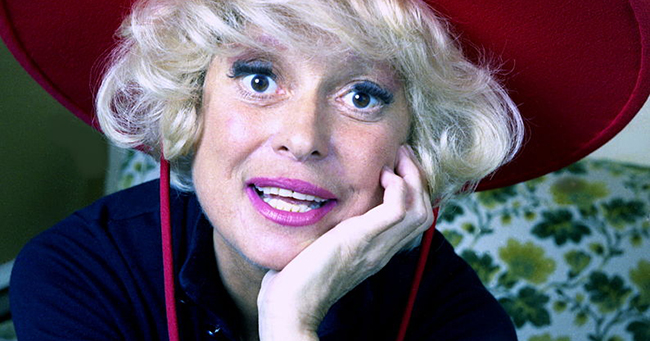
    Carol Channing

    Photo credit: Allan Warren

    As a kid, I heard that Carol Channing was Black (the word back then was negro). She was one of many celebrities rumored to pass, in Hollywood—a list that included Angie Dickenson, Dinah Shore, and others. These women had large brown eyes, full lips, and bleached blond hair. Looking white—being light-skinned—allowed many Americans to cross the color line into the mainstream, back in a time when that meant serious opportunity. But rumors are rumors.

    Then Channing dropped a bomb and published a book where she admitted she had been passing since she was sixteen years old.

    According to her 2002 memoir, Just Lucky I Guess: A Memoir of Sorts, Channing learned of her Black ancestry in 1937. She was on her way to Bennington College, to major in drama and dance, when her mother told her the story.

    “I’m only telling you this because the Darwinian law shows that you could easily have a Black baby,” Channing said, quoting her mother. Her father, George Channing, was born in Augusta, Georgia, and his original name was Stucker. Census records from 1890 listed him as ‘colored.’ In a CNN interview with Larry King, Channing said those records were destroyed in a fire and couldn’t be verified. His mother moved him to Rhode Island for a better life.

    George Channing became a newspaper editor and Christian Scientist, based in San Francisco who, in photographs, looks white. From all indications, his story rivals Anatole Broyard’s, who famously passed for white at the New York Times for many years. George Channing died in 1957, twenty years after his daughter learned he was Black.

    “He wasn’t Black,” Channing exclaimed. “He was this color!” She pinched her own cheeks. Jet Magazine described him as a light-skinned man who used two different accents: one for the white world and a different one, at home, where he sang gospel music to his daughter.  

    When the story broke, Channing was in her eighties. Had she revealed the story earlier, she would never have had the career she had. No Black woman would have been cast as Lorelei Lee in Gentlemen Prefer Blondes in the 1940s, let alone the role of Dolly Levi in Hello, Dolly! She wouldn’t have worn those Bob Mackie dresses on the Great White Way or been the subject of Al Hirschfeld cartoons, or made all those guest appearances on Password and I’ve Got A Secret and What’s My Line. Black celebrities, back then, were marginalized, at best.

    But then, weirdly, Channing walked the story back.

    “My mother and father had many disagreements,” she told talk show host Wendy Williams in 2010. Her mother may have decided “she would get even” with her father, by inventing the story. I remember how annoyed I was by this news. It was as if Channing chickened out.

    “You look light-skinned,” Williams responded.  “You have a thicker lip.” Williams went on to call her Soul Sister Number One.

    “I don’t know if it’s true, but I hope it’s true,” said Channing. “I can sing and dance better than any white woman anywhere.”

    The real passing story, here, is her father’s. Yet Channing is important. She’s the show business metaphor for racial ambiguity. Channing could “sing and dance better than any white woman anywhere” at a time when most of America thought she was white. She’s about our national obsession with the one drop rule.

    Americans like stories like hers, because racial and ethnic passing is ubiquitous inside a culture known for self-invention.

    But being Black is about more than biology, one drop rule be damned. Being Black is not just about singing and dancing, and shucking and jiving. Being Black goes beyond complexion—it’s a cultural thing. Think of Elizabeth Warren’s recent Indian ancestry revelation, for context. Her DNA backed up her story. But her cultural upbringing was never Native American. Without the culture, it’s just data. 

    “My grandfather was Nordic German and my grandmother was in the dark,” Channing told Larry King. “I got the greatest genes in show business.” She was always good with the punch line. I admire her for that.


    About the Author 

    Lisa Page is co-editor of We Wear the Mask: 15 True Stories of Passing in America. She teaches at George Washington University where she directs creative writing and is interim director of Africana Studies.

  • By Lori L. Tharps

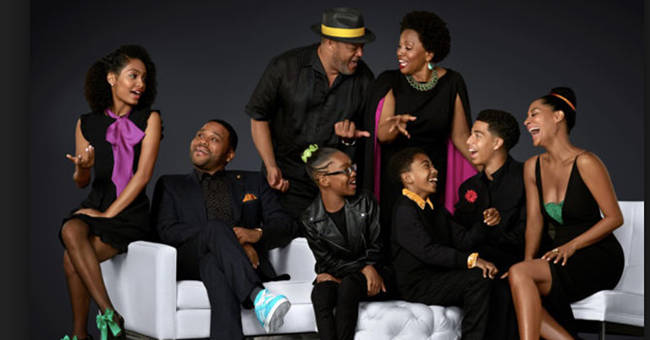
    Black-ish

    This blog post appeared originally on My American MeltingPot.

    I’m not mad. Not mad at all that executive producer, Peter Saji, covered the same ground regarding colorism and family dynamics in a twenty-two-minute Black-ish episode that I covered in my 200-page heavily researched 2016 book, Same Family, Different Colors: Confronting Colorism in America’s Diverse Families.

    I’m not upset that the basic premise of last week’s show, that originally aired on Tuesday January 15, literally could have been scripted from the pages of my book, where I collected the lived experiences of people who lived in families where folks were the same race, but different colors. On Black-ish, Diane, the youngest daughter in the fictional Johnson household, is rendered nearly invisible in her class picture because of poor lighting on her dark(er) complected skin. This is the inciting incident to a volatile family reckoning about colorism in the Johnson family and in the wider world. Lines are drawn between the lighter-hued family members (Bo and Junior) and the more melanin-rich (Andre and Ruby).

    Colorism 101

    In fact, when I sat down to watch the episode, I was ready with my pencil and pen to take note of all the things the show’s creators missed or overlooked when trying to make a sitcom episode about colorism. I mean, how could they cover all the things in twenty-two minutes? But they kind of did. They covered everything from the fictitious Willie Lynch letter, to the very real facts about lighter-skinned Black people receiving shorter prison sentences than their darker-hued brothers and sisters.

    They also interrogated the idea of light-skin privilege, instead of just presenting it as fact that light skin Black people lead “easier lives and don’t have to deal with discrimination.” Light-skinned Black people suffer from colorism too, but it looks different than the way darker complected Black people experience it. In my book, I talk about things like light-skin isolation and how lighter-skinned Black people often have to “defend” their Blackness. I wrote an entire chapter about this, but Bo and Junior pretty much summed up what it feels like being “not Black enough” in their moving monologues on the show.

    Colorism Doesn’t Discriminate

    Which brings me to my next point. I just knew that in a twenty-two-minute Black-ish episode about colorism, Saji and his crew weren’t going to have time to explain that colorism is a global phenomenom, and not just a “Black thing.” In Same Family, Different Colors, I spend equal time discussing colorism in the Asian American, Latino and Mixed Race communities as I do talking about colorism in the African American community, because colorism doesn’t discriminate. I wanted that to be very clear. Obviously, Saji feels the same way, because even with only twenty-two minutes to work with, he managed to insert a Schoolhouse Rock!-inspired cartoon break that explained global colorism in all of its insidious glory.

    By the time the episode was almost over, I stopped “taking notes” and sat back to simply enjoy the show. And I’m glad I did, because the ending was truly satisfying. Even though there was no neat and easy resolution to the family strife, and a solution to global colorism wasn’t discovered, the final message delivered in a voice over by family patriarch, Andre, put a smile on my face. He said,

    “Colorism is our secret shame, and the pain it causes keeps growing because we rarely talk about it. But as I looked at my multicolored black family, I realized that because we talked about it, our wounds could finally start to heal as we learn to love ourselves out in the open. Because nothing gets better in the shadows.”

    Colorism Out of the Shadows

    Basically, Dre took the words right out of my mouth . . . or rather, right out of my book. But I’m not mad. Not mad at all. I’m happy that colorism is getting talked about out in the open and out of the shadows, so as a community, as a culture and as individuals, we can all begin to heal.


    About the Author 

    Lori L. Tharps is an associate professor of journalism at Temple University and the coauthor of Hair Story: Untangling the Roots of Black Hair in America, Kinky Gazpacho: Life, Love & Spain, and Same Family, Different Colors: Confronting Colorism in America’s Diverse Families. Her writing has also appeared in the New York Times, Washington Post, and Glamour and Essence magazines. She lives in Philadelphia with her family. Follow her on Twitter at @LoriTharps and visit her website.
  • By Helene Atwan

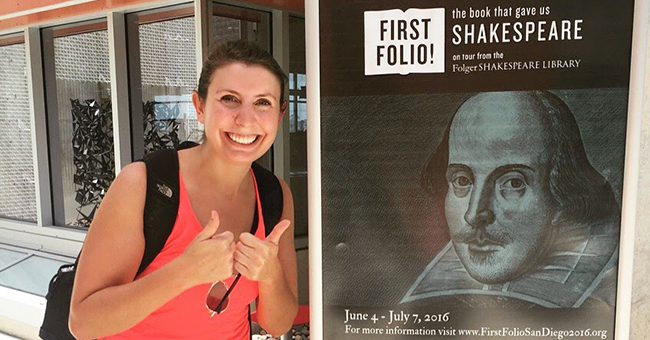
    Picture of Helene and Mary surrounded by books

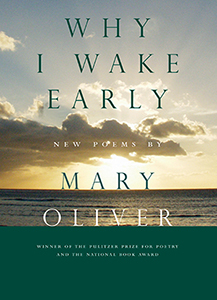
    In 2003, having miraculously convinced Mary Oliver and her tough-minded agent and partner, Molly Malone Cook, to return to Beacon as a publishing home, Mary, Molly and I hit something of a brick wall.  Our shared vision was to publish a second volume of New and Selected Poems (Beacon had published the first volume in 1997, and it had won the National Book Award).  The book was all ready to go, but one of her interim publishers refused to grant permission for the poems from two books.  I drove out to Provincetown—the first of dozens of visits—to sit and stew.  What really irked me was that the poems Mary had written for the “New” section were just so good. Mary and I took their dog Benjamin for a walk on the beach (there were two dogs then, though the big dog, Bear, was failing and stayed behind with Molly) and came back determined to publish the new poems in a stand-alone volume.  That book, Why I Wake Early, remains one of my favorites, although the book that followed Molly’s death just two years later, Thirst, I still believe is her best single volume.

    At Molly’s funeral, I sat next to Mary while we listened to her friends speak about her. She’d never actually been tough-minded, in fact, as I discovered in the few short years I knew her. Quite the opposite. John Waters opened by addressing the urn on the altar:  “Oh no, Molly, we’re in a church!”  Sometime later, Mary, her dear friend Bishop Thomas Shaw (who Molly had always called “The Bish”), and I took that urn out onto the waters (and yes, we knew this wasn’t exactly legal) and scattered Molly’s ashes, along with many hands-full of leaves and flower petals.  We had to huddle on the bottom of the too-small boat for warmth and stability, but somehow, despite our mission or possibly because of it, it was a joyous moment.

    And after that, sitting in the Provincetown home where a chair lift had been installed to allow Molly to get upstairs to their impossibly sunny bedroom, and Molly’s oxygen tank still sat rigid and abandoned, Mary and I decided to do a book of Molly’s photographs.  It was the very definition of a labor of love.   I sat with her on the floor of that upstairs room for hour upon hour going through a file cabinet crammed with prints and negatives.  We were looking for very special photos—notably the ones of Molly’s former love, Lorraine Hansberry.  And then, of course, there were a couple, somewhere, of Eleanor Roosevelt. If only we could dig them out.  The artists they had known were so impressive (and they slept under an enormous canvas by Robert Motherwell, a gift from the artist).  And Norman Mailer!  Mary and Molly had both worked for Mailer when he lived down the street in Ptown.  Mary had typed several of his manuscripts and Molly was his personal assistant for some years.  Mary pulled out old cassette tapes and played messages from Norman to Molly (she’d had to record them because otherwise she might forget an important detail).  We laughed at his audacity.  (He once insisted Molly go out in a terrible snow storm to see if his kids were stuck on the road….).  But we unearthed treasures, and along with them came stories of their life together, some (but by no means all) of which she wrote in her loving essay for the book, which became Our World.

    Over those years, especially after Mary adopted her beloved little dog Percy, I came often to visit, and we walked on the beach, or sometimes in the woods.  We picked and ate mushrooms (though I admit to having some trepidation about this, knowing nothing about them; Mary sautéed them up jauntily and I figured, after all, this wouldn’t be such a bad way to die). I should have trusted her, she knew the woods intimately.   She planted pencil nubs here and there in the tree limbs, and always had scraps of paper in her pockets, in case an image or a line came to her in her solitary treks.  They often did.

    Once when I had arrived on a very cold day, with bread and cheese from Cardullo’s, we sat down at her stereotypically rickety wooden table to look through the poems she had written for the new poems section of the revived New and Selected Poems, Volume Two, and I noticed some pages tucked into a pocket at the back of the binder.  They were rejects, she told me, but of course I insisted on seeing them.  There was one, in fact, that was magical.  I had to talk her into it, and she insisted on changing the pronoun in the title (not wanting anyone to read the poem autobiographically) but “The Poet with His Head in His Hands” was not lost to us.  I was able to take a couple of poems out of that back-pocket vortex for Thirst as well.  But I suspect, since I had also known her to tear up poems and dump them unceremoniously in the trash, that she might have planted them, waiting for me to pry them out.

    I went to most of her readings, of course, and I came to feel sorry for anyone who didn’t have the chance to hear her read.  We didn’t do audiobooks at the time, but I proposed recording one to her.  She was typically reluctant, but came around.  We settled on the idea of doing a unique audiobook, drawn from her Beacon books, with the addition of some others; forty poems in all.  Then we found a studio on the Cape.  I drove down to bring her to the studio, got to listen to her record, came back and collected her for some revisions.  She wrote a brief “performance note” which we added to the elegant package that we named At Blackwater Pond, which came out in 2006.  She was quite pleased, in the end, and I easily convinced her to do a second one, Many Miles, just a few years later. 

    Coming to work in the mornings for a decade was always brightened by the hope that I would find a new poem by Mary sitting waiting on the fax machine (one of the few machines she owned, she didn’t use a computer until 2010, even then rarely. I brought my laptop to help her key prose, including the preface to Best American Essays, which she worked on with my husband, who had also become a friend of hers by then).

    We took trips together as well, to Nashville (which neither of us could actually abide, but Vanderbilt was lovely), to Philadelphia, to New York.  I dragged her to the gift shop at the Metropolitan.  In all the years I knew her, I never saw her buy anything.  She’d keep some loose bills in her pants pocket, but she just wasn’t interested in things.  (I bought a pair of earrings for my daughter, and she used it in a poem, which she later signed for Emily, and which hangs in her living room now.)

    She had never been to museums, which at first shocked me, then made sense; why see what humans create when nature is full of such riches.  But she did want to see van Gogh’s flowers (we used his “Irises” on the cover of Blue Iris) and so on one trip, where she stayed with me for a change, I took her to the Museum of Fine Arts Boston.  She had read a story in the news about the rediscovery of an Egyptian statue (a cat or a lion….an animal in any case) and she insisted that we find its “mate” in the museum and formally addressed the ancient stone work to deliver the good news.  Though I have managed to forget the details (and Google failed me here), I never can forget her pride and sly delight in making this speech. She had what Bostonians might call a “wicked” sense of humor, which shows up constantly in her work.  Note the poem she titled “There Are a Lot of Mockingbirds in This Book,” from Evidence, or “The Poet is Told to Fill Up More Pages” from Swan,  and of course the much-loved Percy poems, scattered through her books (she numbered them from the first, knowing there would be many).

    My favorite road trip, though, was one to Syracuse, when we stopped impulsively on the way to visit Edna St. Vincent Millay’s house, where Mary had lived for a time. I took photos and wrote a short piece about it.  Those 6 or 7 hours were probably the best I ever spent in Mary’s company, when she really opened up about her youth, about meeting Molly, about discovering poetry.  But every hour spent with Mary was precious.


    About the Author

    Helene Atwan has been the director of Beacon Press since 1995.

  • A Q&A with Stephen Puleo

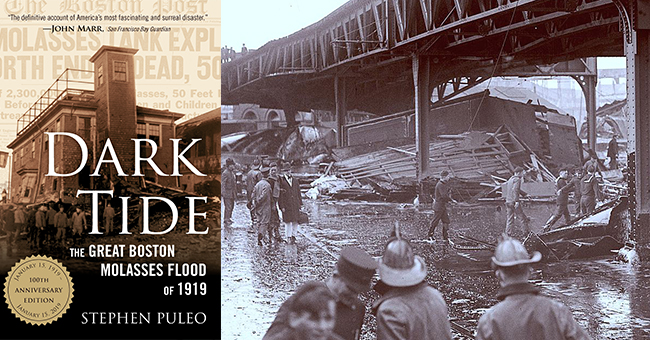
    Dark Tide_Wreckage from the Boston Molasses Flood  1919

    Wreckage from the Boston Molasses Flood, 1919

    Don’t giggle and or give that look of disbelief, because this really happened. On this day, 2.3 million gallons of molasses—you read that correctly, the sweet stuff—flooded the streets in Boston’s North End in 1919, killing twenty-one people and injuring about 150. You’d think it would be water, but no, it was a fifteen-foot tide of brown treacle from an exploded steel tank that tore through the neighborhood. One hundred years later, we’re looking back at this surreal and tragic accident from Boston’s past. What better place to look than the authoritative book on the topic, Stephen Puleo’s Dark Tide: The Great Boston Molasses Flood of 1919. Beacon Broadside editor Christian Coleman caught up with Puleo to ask him about the anniversary edition of the book and what the hundredth anniversary of the disaster means to him.

    Christian Coleman: Is Dark Tide still the only adult book ever written about the Great Boston Molasses Flood?  

    Stephen Puleo: I’m proud to say that Dark Tide is still the only adult non-fiction book about the Great Boston Molasses Flood. The book has been out for fifteen years and is still the definitive account of the flood—and I hope always will be.

    CC: Did you come across any information or findings that took you by surprise when you were researching the flood? 

    SP: I was surprised by a couple of things. First, the flood received extensive coverage in all seven Boston newspapers of the day. It was on the front pages for a whole week, knocking off the front-page topics, like the impending Prohibition amendment and the Versailles peace talks to end WWI. Plus, there were many pages of coverage inside. Second, I was surprised, but pleased, that virtually every major subject America was dealing with in the early twentieth century—World War I and munitions, anarchists, immigration, and the relationship between the public and Big Business—quite literally touched this story in some way. All those themes weave their way through Dark Tide, because they all literally come into play as part of the story itself.

    CC: You’ve toured across the country with the book. What are some of your favorite experiences from talking to audiences about this surreal and tragic part of Boston’s history? 

    SP: I have a huge list of great experiences, and it’s hard to pick just a few. I guess I’m just constantly amazed at the way this story has captured the imagination of readers. They embrace the story, the characters, the event itself. I’ve spoken to so many different groups about different aspects of the story: engineers about the tank’s construction; teachers about the big-history aspects of the flood; lawyers and judges about the massive court case that followed; book clubs that have made Dark Tide their choice; and community organizations (twenty-three cities and towns have selected Dark Tide as their community-wide read). Students across the country—from middle school to grad school—have contacted me for projects, papers, and presentations about the flood. I’ve run into people reading Dark Tide on the beach, on the subway, and on airplanes. I’m honored and humbled every time it happens.

    CC: Many attendees at your author appearances ask if Dark Tide will be made into a movie. Which would you prefer: a Ken Burns-style documentary or full-length feature film?

    SP: Full-length film, definitely. The History Channel and others have done the documentaries. This story is dramatic and compelling enough, with sympathetic real-life characters, and even a real-life villain, to warrant something bigger. The book has been optioned, so we’ll see. I’m keeping my fingers crossed.

    CC: Dark Tide was originally published in 2003. What does the hundredth anniversary of the disaster and the special edition of the book mean to you? 

    SP: I’m thrilled that fifteen years after publication, Dark Tide continues to resonate. I still get scores of emails from readers, many requests for presentations, and a variety of press inquiries about the book and the story. People from around the country see it in bookstores of all sizes. Also, many people have told me that they hadn’t read nonfiction for years before they picked up Dark Tide, and they loved the book. That means the most to me—that people decided to take a chance on history and were glad they did.


    About Stephen Puleo 

    Stephen Puleo is an author, historian, teacher, public speaker, and communications professional. He has written six narrative nonfiction books and has a seventh on the way. His published works include A City So Grand, The Boston Italians, and Dark Tide. A former award-winning newspaper reporter and contributor of articles and book reviews to publications and organizations that include American History magazine, Politico, the Boston Globe, and the Bill of Rights Institute.,Puleo has taught history at Suffolk University in Boston, and also has developed and taught numerous writing workshops for high school and college students, as well as for adults who aspire to be writers. Follow him on Twitter at @spuleoauthor and visit his website.

  • Emily Powers

    In these times when readers are responding to our books “more than ever,” when our authors—including Cornel West, Anita Hill, Robin DiAngelo, Charlene Carruthers, Howard Bryant, and Christopher Emdin—are appearing in the media, their ideas going viral on social media, their voices being heard on so many platforms, we thought it might be good to take a break to focus on some of the staff who work hard to find, shape, edit, produce, and promote those works. Our blog series “Beacon Behind the Books” introduces to you a member of our staff and gives you a behind-the-scenes look, department by department, at what goes on at our office.

    To kick off 2019, we introduce you to our associate marketing manager, Emily Powers!  

    What drew you to publishing, Emily? How did you find your way to Beacon?

    I’ve always wanted to work in book publishing once I realized it was a possible career. I interned at a few different publishers in college and loved it. I knew it was a super competitive field, and someone at my college’s career office even told me it was too competitive for me and that I shouldn’t really bother trying to break in, but I knew what I wanted to do, so I worked really really hard to make it happen. My first job was at Cornell University Press in the acquisitions department, which was great, but I really enjoyed the marketing aspects of my job the most and wanted to move back to Boston, so that’s how I ended up here! My official title is associate marketing manager and I do lots of different things: academic marketing, conferences, advertising, creating promotional materials like postcards or bookmarks, drafting marketing plans, and managing our internship program.

    What are some of the challenges of being an associate marketing manager? What do you find most rewarding?

    Creating relationships with our authors is probably the most rewarding part of my job. I work on academic and library marketing, which means I get to go to conferences where authors might be giving keynote addresses or doing book signings. Watching a room full of people get super excited about an author’s story or message never gets old. I also know they’ve worked so hard to get their book to the publication stage, so I try to honor that by always trying to do my best work on their behalf. Sometimes, it is a bit challenging to try to stay on top of everything that’s happening in the world and online. Twitter never sleeps, and we do need to see where the conversations are going in order to promote our books successfully. But I think I’ve figured out sort of a middle ground where I don’t refresh Twitter every five minutes but still manage to stay updated about the most relevant things.

    What is one book on our list that has influenced your thinking on a particular issue?

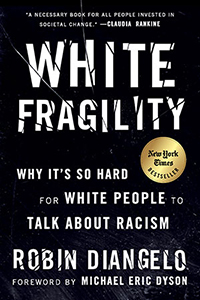
    White Fragility. It’s definitely one of the most important books I’ve read in the last decade, and I’ve told pretty much everyone I know to read it.

    How much of what you learned in college have you found vital to your work?

    Lots! I was a double Communications and English major at Le Moyne College, a small liberal arts school (GO DOLPHINS!), and took some really intensive writing and grammar classes, which are vital to every part of my job, whether it’s drafting a tweet or editing the marketing copy for a book. I also took SO many literature courses, which have been really helpful in my life generally, but definitely great for working in the literary world (so I know what people are talking about when they talk about the Chekhov’s gun concept, or having a room of one’s own, or what it means to be a total braggadocio and where name that came from). Being an English major is also very helpful for watching Jeopardy!

    What upcoming projects are you excited about?

    I’m SO excited about Mona Eltahawy’s book called The Seven Necessary Sins for Women and Girls. It’s a bold and uncompromising feminist manifesto that shows women and girls how to harness their power through what she calls the “seven necessary sins” that women and girls are not supposed to do or be: angry, ambitious, profane, violent, attention-seeking, lustful, and powerful. For a lot of my life, I grew up thinking that constant politeness and trying to please everyone and being pleasant all the time was nonnegotiable as a woman. I no longer feel that way at ALL and I think it’s been a really important shift in my life. So, I’m thrilled to get to work on this book and spread the message to other women and girls who may have grown up believing similar things.

    In an alternate universe, what career would you have?

    A dog trainer or a greeting card creator! I would also LOVE to be a chef/recipe developer but I’m still working on my knife skills. Luckily, all these things are pretty fun just to do as hobbies on the side, too.

    What’s the next queued song on your music player?

    Right now, I’m listening to lots of Maggie Rogers, Lizzo, and Amos Lee. Also, the Hamilton soundtrack. Still.

    Hobbies outside of work?

    Anything trivia or Jeopardy related, dogs, trying new ways to cook things, collecting greeting cards, memorizing lyrics to Broadway songs, board games, trying any drink with mezcal, and learning about highland cattle, otters, and the stories of powerful women.

    Favorite podcasts?

    For laughing: How Did this Get Made (comedians review terrible movies)

    For learning: Freakonomics (explores the hidden side of everything with episodes like “Should America be Run by Trader Joe’s?” or a personal favorite “How to Win Games and Beat People”)

    For learning AND laughing: Call Your Girlfriend (two long distance feminist BFFs discuss politics, pop culture, and everything in between)

    Name three non-office items on your desk and their significance to you. 

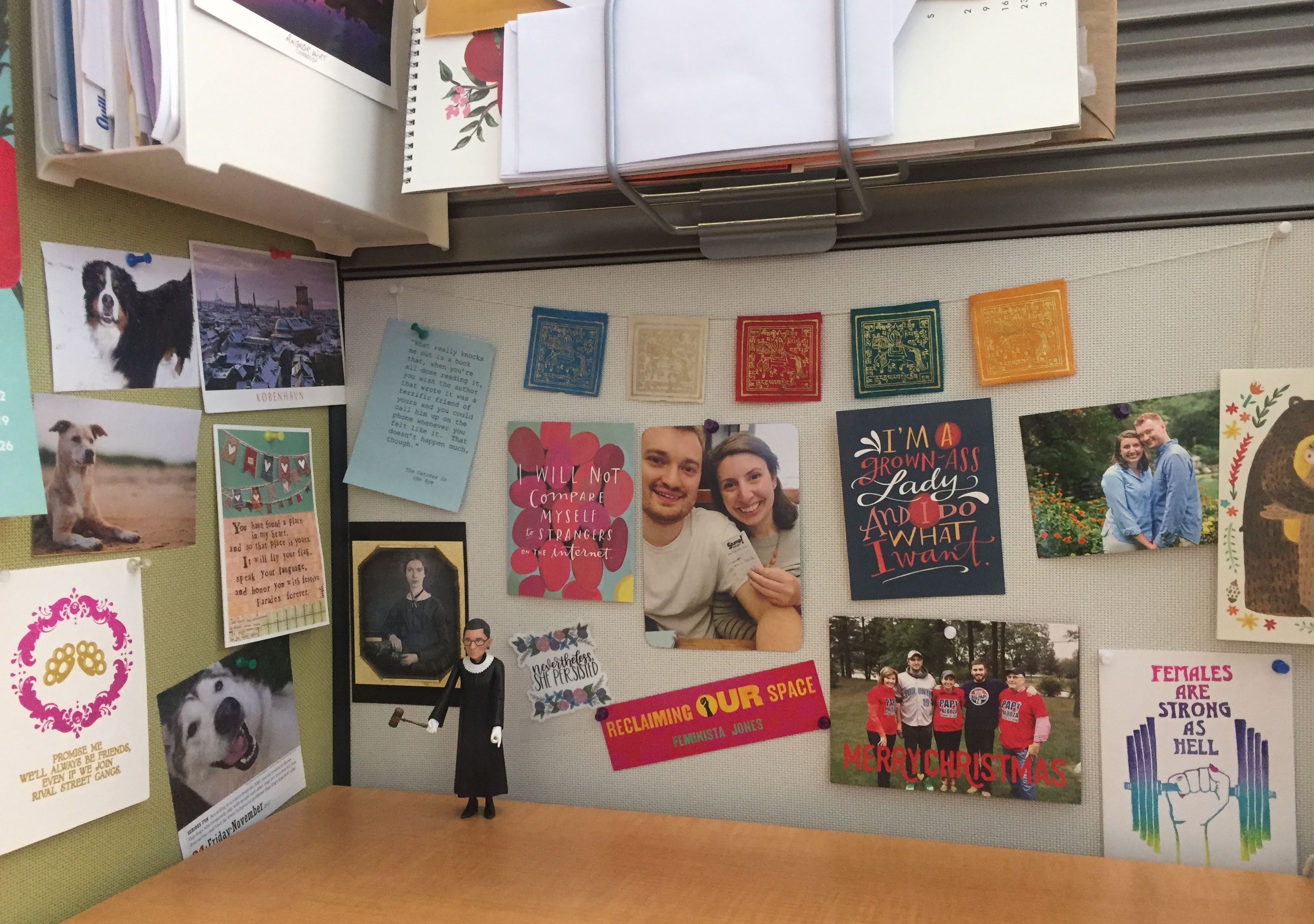
    Emily Power's office desk

    I curate the things on my desk VERY seriously! I have lots of dog pictures and photos of the people I love most in the world, and favorite quotes and best greeting cards I’ve received, and an action figure of Ruth Bader Ginsburg. I also always have a big calendar, which is very important because I have monthly calendar ceremonies with friends in the office on the first day of the month where we all flip our calendars to the next month (we never ever look at what’s coming up next, so the design is always a surprise). It sounds kind of small when I write it out, but it’s one of the little rituals I love most in the office. 


    About Emily Powers 

    Emily Powers joined Beacon in 2016 after three years at Cornell University Press. Previously, she worked as an intern at the UN Refugee Agency and Harvard Common Press. She is a graduate of Le Moyne College. Follow her on Twitter at @emilykpowers.

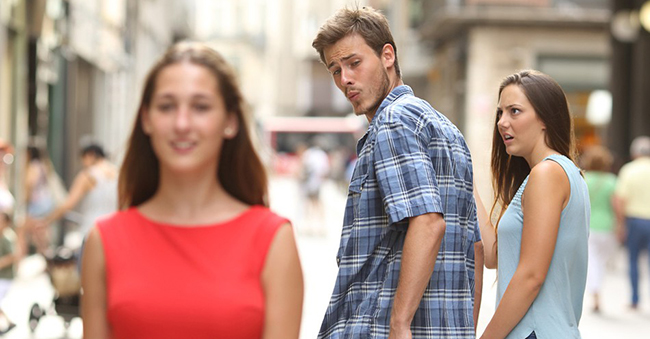
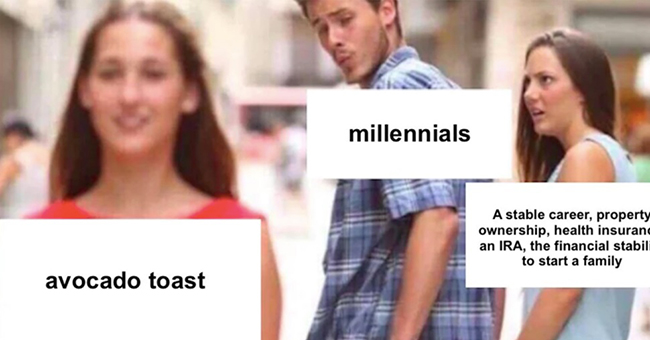
  • Distracted Boyfriend Meme

    The protean meme of never-ending remixes: The Distracted Boyfriend

    They are today’s indisputable shrine to our cuddly overlord, the cat. Meow! You embed them in your text messages, your tweets, your Facebook posts, your Instagram stories. A shorthand for our daily feels, they’re also unifying symbols and rallying cries for a common cause. We’re talking about internet memes. They’re everywhere, on- and offline. And they’re shaping and reflecting our pop culture and politics in real time.

    In her book Memes to Movements: How the World’s Most Viral Media Is Changing Social Protest and Power, technologist, writer, and artist An Xiao Mina defines them as “a piece of online media that is shared and remixed over time within a community.” How do they work? How do they get shared and remixed? Mina goes on further to say:

    Think of a funny picture of a cat being held up by its front legs, so it stretches out and looks quite long. (This is a real meme called Longcat, who is indeed long.) Now imagine if someone else does the same thing with their cat. And someone else does too. And they share it with each other, and then someone else stitches them all together in Photoshop to create a team of three long cats. This is meme culture. Memes can be silly they can be harmless, they can be destructive, they can be extremely serious, and they can be all these things at the same time. A meme is an invitation: “You can do this too.” And in both Ferguson and Hong Kong, during the inauguration and during the Women’s March, memes spread across borders and territories to involve much larger groups of people acting in solidarity than might previously have been possible.

    The term “meme” comes from Richard Dawkins, who coined the term in his 1976 book, The Selfish Gene. A meme is a unit of culture that’s spread like biological genes. A human cultural practice, such as “tying one’s hair in a ponytail versus tying it in intricate braids, wearing watches versus wearing extensive bangles, or holding racist views,” is passed down again and again, from generation to generation. Internet memes are the digital variety.

    For better and for worse, memes can be anything we want them to be. There are several kinds we can make, share, and remix to our heart’s content. How do we know which one we’re using? Here’s Mina’s breakdown of each type from her book, with an example. You’ve probably seen all, if not most of them.

    ***


    Image Memes and Image Macros

    Image Meme

    When someone shares a picture of a llama photoshopped onto a car, they are sharing an image meme. Many internet platforms encourage photo embeds, because human beings are visual creatures, and so image memes tend to do particularly well. Image memes can have text on them, and in those cases they’re called image macro memes. The popular meme format in the West, of creating an image and adding text above and below it to make a statement, is a good example of an image macro.


    Text Memes 

    Text meme

    They are, technologically, the easiest to create, and they’re most familiar in the Western context as hashtag memes, like #BlackLivesMatter and #MakeAmericaGreatAgain. 


    Video Memes

    Video memes are the most technologically and creatively demanding to create, but often also the most virally popular. Length doesn’t matter so much—some video memes can be quite long, while others can last just a second or two. 

    via GIPHY

    GIF memes can be considered a subgenre of video memes. GIFs operate effectively under lower bandwidth conditions and, through repetition, often reinforce a message or make a humorous statement.


    Physical Memes

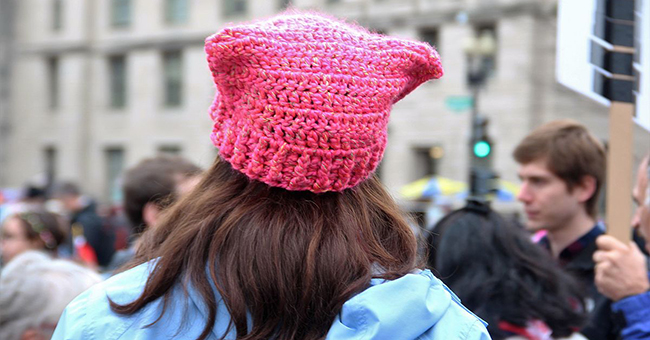
    Woman with pussyhat at the Women's March 2018

    The pussyhat started offline and became a physical meme through online sharing. Woman with pussyhat at the Women’s March on Washington, 2018

    [To evade censorship, activists in China critiqued their government with grass mud horse pictures online.] When the grass mud horse leapt from the screen and into phone stickers and plush toys, it went from a purely digital meme to a physical one. Not all these toys were actual grass mud horses; indeed, many people just repurposed existing plush dolls of llamas to make a statement. Regardless, the ability to remix or make a physical object to produce a memetic statement is quite common. Thanks to smartphone cameras, anything done in the physical world can quickly enter the digital world, and thanks to rapid production cycles, anything made popular on the internet can quickly become a physical product disseminated through online stores.


    Performative Memes

    Planking meme

    Remember when the planking meme was a thing? And then it wasn’t? That was a flash in the pan!

    In 2011, the Chinese artist Ai Weiwei posted a photo of himself jumping naked while holding a grass mud horse to cover his crotch. When he did, he was participating in a performative meme, using his body to generate a version of the meme circulating on the Chinese web at the time. The joke was once again a pun, this time with an even more explicit political message: “The grass mud horse covers the center”—caonima dang zhongyang (草泥马挡中央)—sounds a lot like “fuck your mother, Central Party Committee.” This performative meme took aim at one of the most powerful institutions in China, and it asked citizens to embody their political stance through performance.


    Selfie Memes 

    Selfie meme

    Selfie meme from Mike Dugan’s Twitter account @MikeDuganDC, showing his participation in #TakeAKnee.

    Selfie memes are a common subgenre of performative memes that deserve special mention. When people post photos of themselves cuddling a grass mud horse, they are posting selfie memes. Thanks to the advent of both front-facing cameras on smartphones and social networks like Instagram and WeChat that encourage photo sharing, selfies have swept the digital world. As with “Coca-Cola” and “taxi,” “selfie” is a word that rarely requires translation in other languages.

    Distracted Boyfriend Meme remix

  • By Linda McQuaig and Neil Brooks

    Franklins

    It would be one of the boldest moves in progressive taxation we’d see in the twenty-first century. Congresswoman Alexandria Ocasio-Cortez suggested raising the tax rate on the wealthy to seventy percent. The proceeds would back the goals of the Green New Deal Ocasio-Cortez and other Democrats have proposed. Garnering praise and skepticism, her radical tax plan has brought our attention back to how our country has and has not taxed the One Percent. In their book Billionaires’ Ball: Gluttony and Hubris in an Age of Epic Inequality, Linda McQuaig and Neil Brooks explain how billionaires and Wall Street earned a bad reputation and fierce criticism, and why the rest of the country is eager for them, as Ocasio-Cortez put it, “to pay their fair share in taxes.”

    ***

    After years of basking in the glow of a flattering limelight, by the fall of 2011 the very rich were experiencing something new and altogether jarring: the glare of a harsh spotlight trained directly on them. The temptation to bark orders like: “Dim that light, or else!” was natural enough, but perhaps unwise. After all, those shining the spotlight were not their employees and were swarming in large numbers through the streets of lower Manhattan, behaving like the sort of unruly mob one finds in faraway places where the ways of the free world are insufficiently appreciated.

    All of a sudden, right here in America, being wondrously, fulsomely, voluptuously rich was no longer a badge of honor, something to announce gleefully to the world by squealing the tires of one’s Lamborghini at pedestrians who were in the way. Wall Street—the nexus of ambition, brains, greed, glamour, the very g-spot of the American Dream—was no longer something to be glorified, but rather occupied.

    Where would it end? Could the trappings of wealth become a source of embarrassment? Could the day come when a yacht became like a fur coat—one of life’s small pleasures ruined by the prospect that wearing it (or docking it) might attract a crowd of protestors? Imagine a protestor so mean-spirited that she would object to the sight of a banker lounging on a pleasure craft massively larger than the house she had once owned but that now belonged to . . . a bank.

    Of course, it could be worse. Luckily for the bankers, the occupiers were a little fuzzy in their targeting, going broadly after the top 1 percent, apparently unaware that the real red meat was much higher up the food chain—the top .01 percent, the top .001 percent, or all the way up to the dizzying heights occupied (in this case appropriately so) by billionaires.

    Anyway, help was on the way. Already, the lobbying industry was swinging into action. By late November 2011, one of the leading Washington lobby firms—Clark, Lytle, Geduldig & Cranford—had prepared a memo for the American Bankers Association (leaked to the press by some mean-spirited soul), which laid out a media strategy for countering the Occupy Wall Street juggernaut.

    The lobbyists insisted that the answer lay in a carefully prepared counter-campaign aimed at slinging mud at the motives of the occupiers: “If we can show they have the same cynical motivation as a political opponent, it will undermine their credibility in a profound way.” (It’s tough to imagine what cynical motivation might lead people to live in water-soaked tents for weeks on end.)

    The danger was that the anti–Wall Street message, if unchallenged, could turn the big Wall Street banks into fodder for the Democratic political machine—and worse. As the memo noted: “The bigger concern should be that Republicans will no longer defend Wall Street companies—and might start running against them too.”

    The lobbyists even raised the prospect of the Tea Party crowd joining in some kind of a Right-Left populist free-for-all of bank-bashing: “The combination has the potential to be explosive later in the year when media reports cover the next round of bonuses and contrast it with stories of millions of Americans making do with less this holiday season.” (It’s gratifying to see that, even when they’re plotting the destruction of a democratic movement, lobbyists now use inclusive language about the “holiday season.”)

    All this looming victimization was no doubt baffling to members of the financial elite, who still had trouble grasping the notion that they were somehow supposed to feel culpable for the 2008 financial crash.

    That bewilderment had been evident as early as January 2009, only months after the crash, at the elite gathering in the Swiss town of Davos, where bankers, business leaders, political shakers, and other big thinkers come together every year to celebrate the globalized world of liberated financial markets, shrunken government, and reinvigorated capitalism. Of course, some bewilderment was inevitable in Davos that year, with even questions popping up about why markets had done such a poor job of policing themselves. The headline on a dispatch that appeared on the website Slate captured the mood: “Davos Man, Confused.” Written by journalist Daniel Gross, the piece explained that, despite the confusion, there was a broad consensus at Davos that “[s]uccess is the work of Great Men and Women, while failure can be pinned on the system.” Or, as another journalist, Julian Glover noted in the UK’s Guardian: “The shock is real, the grief has hardly begun, but no one in Davos seems to think [this] means they should be less important or less rich.”

    That would have involved a change of mindset, which was not what these economic overlords seemed inclined toward. After all, a key concept behind the economic order of the past few decades has been the central importance of individual talent—and the need to nurture it with abundant financial rewards. That way, so the idea goes, the brilliant in our midst would be lured to the top jobs that run the world. Ensuring the active participation of these giants among us was clearly understood to be worth a lot, and pay scales were adjusted accordingly, going through the roof at the upper end. Just because the global economy was now in a free fall hardly seemed like grounds to beat up the very people who’d played key roles in designing it.

    So, in Manhattan, then-CEO of Merrill Lynch John Thain apparently saw no irony as he explained why he’d felt it necessary to pay $4 billion in executive bonuses to keep the “best” people on staff—right after those same overachievers had steered the company to a staggering net loss of $27 billion and, in the process, helped trigger the global economic meltdown. The decision of the Wall Street crowd to collectively pay themselves a record $140 billion in 2009—outstripping even their 2007 record—may have seemed odd under the circumstances, but then no one ever accused Wall Street bankers of being unduly modest, unassuming, or prone to self-doubt.

    Away from the rarified air of Davos and Manhattan, doubts were beginning to appear. Some less-gifted types were now clamoring for change, even suggesting that cutting executive pay might induce the hypertalented to seek more socially useful employment in areas like teaching or health care. But a letter to the New York Times clarified the danger of this approach, making a compelling case for maintaining extravagant pay, even huge executive bonuses: “Without them, Wall Streeters will all look for other jobs. Do we really want these greedy, incompetent clowns building our houses, teaching our children or driving our cabs?”

    ~~~

    As a result of the dramatic increase in the concentration of income and wealth at the top during the last few decades, the United States has become an extremely unequal society.

    Before going any farther, we should point out that we are not against all inequality. On the contrary, some reasonable degree of inequality is not only acceptable and inevitable but even desirable because it allows for different rewards for different levels of individual effort and contribution. But what exists today in the United States—and to a lesser extent in Britain and Canada—is a level of inequality that is extreme compared to the rest of the advanced, industrialized world. Indeed, the level of inequality in the United States today is actually more considerably extreme than what exists in many developing countries, including India, Cambodia, and Nigeria, and even in many Middle Eastern countries, such as Egypt and Tunisia, where excessive inequality is widely believed to have played a role in sparking the Arab spring uprisings of 2009–2010.

    Over the past three decades, virtually all the growth in American incomes has gone to the top 10 percent, with particularly large gains going to the top 1 percent and spectacularly large gains going to the top .01 percent. Between 1980 and 2008, the incomes of the bottom 90 percent of the population grew by a meager 1 percent, or an average of just $303. Meanwhile, over those same years, the incomes of the top .01 percent of Americans grew by 403 percent, or an average of a massive $21.9 million. The richest 300,000 Americans now enjoy almost as much income as the bottom 150 million. These high rollers make up an enormously rich and powerful class that can best be described as a plutocracy—not unlike the plutocracy of financial interests that dominated America back in the 1920s, when the opulence of the wealthy and their disproportionate influence over the political process was particularly blatant.

    America’s return to plutocracy is all the more notable because, between the periods of extreme inequality of the 1920s and the extreme inequality of today, something very significant happened. During the intervening years—particularly the early postwar period, from the end of World War II until 1980—the United States achieved, as did many other industrialized nations, a degree of equality and egalitarian distribution of income rarely seen in any period of Western history. Certainly, it is striking to compare the fate of ordinary Americans in recent decades with the fate of ordinary Americans in the early decades after World War II. As mentioned in the last paragraph, the incomes of the bottom 90 percent of Americans grew by only 1 percent in the past three decades. But, in the 1950–1980 period, the bottom 90 percent did dramatically better, experiencing income growth of 75 percent, or an average of $13,222. Since the 1980s, however, the revival of plutocracy has had sweeping effects, profoundly changing the nature of American society and the lives of Americans. Yet, even as this remarkable transformation took place, the issue of inequality and its negative consequences largely disappeared from public debate—until the Occupy Wall Street movement boldly pushed the subject back into the limelight in the fall of 2011.


    About the Authors 

    Linda McQuaig has developed a reputation for taking on the establishment. Author of seven Canadian best sellers and winner of a National Newspaper Award, she has been a national reporter for the Globe and Mail, a senior writer for Maclean's magazine, and a political columnist for the Toronto Star. Follow her on Twitter at @LindaMcQuaig and visit her website.
    Author of three books, Neil Brooks is director of the Graduate Program in Taxation at Osgoode Hall Law School in Toronto. He has participated in building projects relating to income tax in Lithuania (through the Harvard Institute for International Development), Vietnam (Swedish International Development Agency), Japan (Asian Development Bank), China (AUSAid), and Mongolia (AUSAid).

  • 2018

    You’ll notice a major recurring theme in the top read blog posts from the Broadside in 2018. Should it be any surprise? This year, readers were more than ready to come to terms with our country’s complex notions around racial identity and, most of all, white fragility. And we have Robin DiAngelo’s book White Fragility to thank! Dina Gilio-Whitaker extended the conversation of white fragility to address how settler colonialism manifests as settler privilege and settler fragility today. Her series on settler privilege went viral. Whatever the topic, we at Beacon Press can always turn to our authors for the critical lens we need to understand today’s most pressing social issues. Take a look at our other highlights of the Broadside.
    Here’s looking to another year of insightful blog posts! And Happy New Year!


    Rachel Dolezal
    Lisa Page’s “Passing or Transracial?: Authority, Race, and Sex in the Rachel Dolezal Documentary”

    “But there is more to this story than a white woman passing for black. This story is full of secrets and scandal tied to Dolezal’s complicated childhood . . . . This is a story that should’ve made the news, not just the sensationalistic story of a woman passing for black. It speaks to our short attention span and our flat-out disinterest in anything complicated. It also speaks to the complications of authority, race, and sex.”
     

    Robin DiAngelo

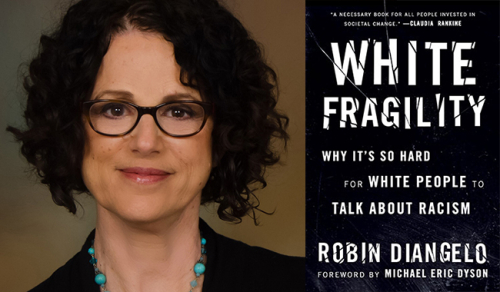
    Robin DiAngelo’s “Examining White Identity Is the Antidote to White Fragility”

    “I am white and am addressing a common white dynamic. I am mainly writing to a white audience; when I use the terms us and we, I am referring to the white collective. This usage may be jarring to white readers because we are so rarely asked to think about ourselves or fellow whites in racial terms. But rather than retreat in the face of that discomfort, we can practice building our stamina for the critical examination of white identity—a necessary antidote to white fragility.”


    College students

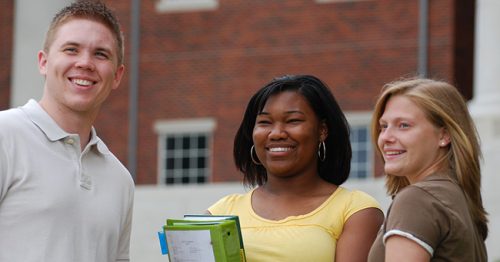
    Ayla Zuraw-Friedland’s “45 Telltale Signs Your College Roommate Has White Fragility”

    “White fragility comes in many shapes and sizes, but all are toxic. Much of [Robin DiAngelo’s] advice is geared toward recognizing and treating these symptoms in the workplace, so I’ve taken the liberty of imagining some ways in which they might manifest in your dorm room. I imagine these as possibilities, because they are, in part, taken from my own experience of being the roommate with white fragility and saying some cringeworthy things that revealed what DiAngelo refers to as ‘racial stupidity.’”


    A_popular_history_of_the_United_States_-_from_the_first_discovery_of_the_western_hemisphere_by_the_Northmen _to_the_end_of_the_first_century_of_the_union_of_the_states;_preceded_by_a_sketch_of_the_(14597125217)

    Dina Gilio-Whitaker’s “Unpacking the Invisible Knapsack of Settler Privilege”

    “All of today’s settlers and immigrants are in one way or another beneficiaries of genocide and land theft, even if they are simultaneously themselves victims of other forms of discrimination (with the possible exception of migratory Indigenous peoples of “Meso-America”). I realize this may be difficult for people of color to hear. But this is what it means to center settler colonialism as a framework for understanding the foundation of the US beyond an analysis of race, since the origins of the US are rooted in foreign invasion, not racism.”


    French trading with Native Americans in Quebec

    Dina Gilio-Whitaker’s “Settler Fragility: Why Settler Privilege Is So Hard to Talk About”

    “Like white fragility, settler fragility is the inability to talk about unearned privilege—in this case, the privilege of living on lands that were taken in the name of democracy through profound violence and injustice. Like white privilege, white supremacy is also at the root of settler fragility. The difference is that foreign invasion, dispossession of Indigenous lands, and genocide were based on (white) European religious and cultural supremacy as encoded in the doctrine of discovery, not racial supremacy.”


    President Barack Obama

    Mary Frances Berry and Josh Gottheimer’s “The Story Behind Obama’s Keynote Address at the 2004 Democratic National Convention”

    “Barack Obama began working on his speech in early July . . . Without missing a beat, Obama turned to his aides and delivered a clear message: he would write this speech. According to Gibbs, ‘He wanted to write this speech . . . in a way that was personal.” Axelrod later commented, ‘Almost immediately he said to me, ‘I know what I want to do. I want to talk about my story as part of the American story.’” (Posted originally in July 2016)


    MLK 1964
    “Martin Luther King, Jr.’s ‘A Christmas Sermon on Peace’ Still Prophetic 50 Years Later”

    “If we are to have peace on earth, our loyalties must become ecumenical rather than sectional. Our loyalties must transcend our race, our tribe, our class, and our nation; and this means we must develop a world perspective. No individual can live alone; no nation can live alone, and as long as we try, the more we are going to have war in this world.” (Posted originally in December 2017)


    Lisa Schwartz

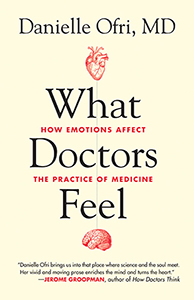
    Danielle Ofri’s “Dr. Lisa Schwartz, We Will Miss You”

    “But it was my supreme good fortune to have Lisa Schwartz at the helm as I struggled to find my way on the 16-North medical ward. Lisa defined for me what it was to be a doctor at Bellevue—committed, brilliant, easy-going, and of course, endowed with a suitably dry sense of humor . . . . She not only taught us students the ins and outs of medicine; she taught us how to be a doctor—in the fullest sense of the word. They say you never forget your ‘first,’ and Lisa Schwartz was my first. We’ll miss you!”


    2018

  • Beacon's Bestsellers of 2018

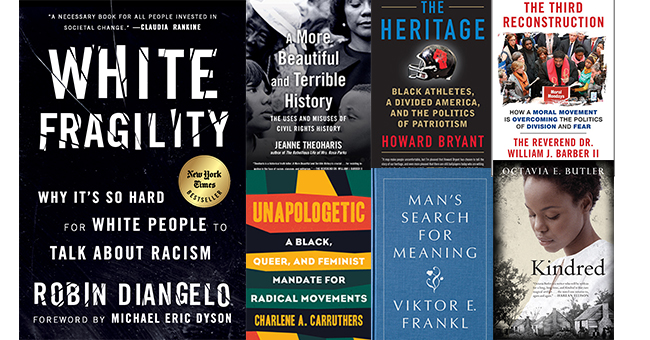
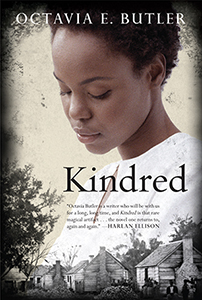
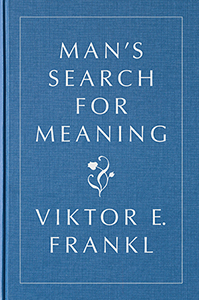
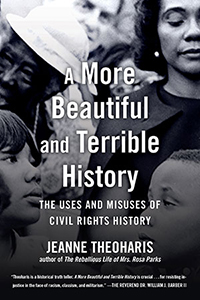
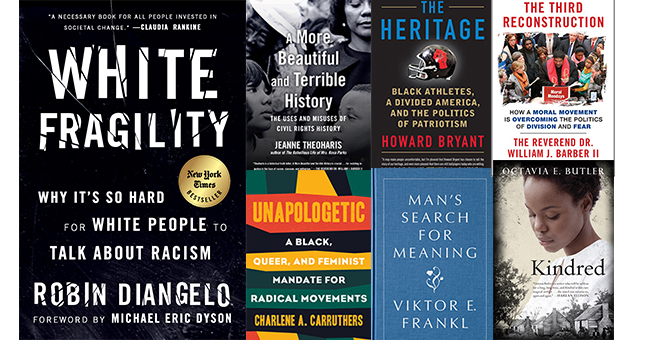
    With a book on the New York Times bestsellers list, it’s been an amazing year for Beacon. Robin DiAngelo’s White Fragility has been on the list for twenty-four weeks in a row! This may be a record for us. It just goes to show you how the need for Robin’s critical analysis of whiteness and white supremacy isn’t fading any time soon. But White Fragility wasn’t our only bestseller this year. We’ve got such classics as Viktor Frankl’s Man’s Search for Meaning and Octavia E. Butler’s Kindred as well as recent books, like Jeanne Theoharis’s A More Beautiful and Terrible History and Charlene A. Carruthers’s Unapologetic, keeping Robin’s book company in this roundup. Check out all our bestsellers!

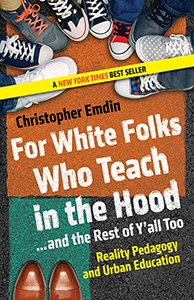
    EMDIN-For White Folks Who Teach in the Hood

    For White Folks Who Teach in the Hood . . . and the Rest of Y’all Too: Reality Pedagogy and Urban Education
    Christopher Emdin

    “Filled with exceptional intellectual sophistication and necessary wisdom for the future of education.”
    —Imani Perry, author of Looking for Lorraine: The Radiant and Radical Life of Lorraine Hansberry 

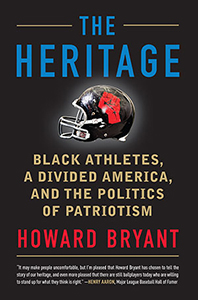
    BRYANT-The Heritage

    The Heritage: Black Athletes, a Divided America, and the Politics of Patriotism
    Howard Bryant

    “It may make people uncomfortable, but I’m pleased that Howard Bryant has chosen to tell the story of our heritage.”
    —Henry Aaron, Major League Baseball Hall of Famer

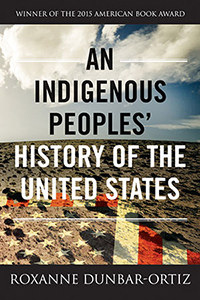
    DUNBAR-ORTIZ-An Indigenous Peoples' History of the United States

    An Indigenous Peoples’ History of the United States
    Roxanne Dunbar-Ortiz

    “A must-read for anyone interested in the truth behind this nation’s founding.” 
    —Veronica E. Velarde Tiller, PhD, Jicarilla Apache author, historian, and publisher of Tiller’s Guide to Indian Country

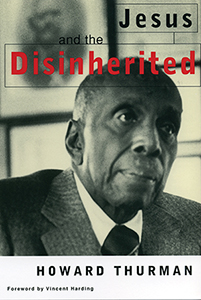
    THURMAN-Jesus and the Disinherited

    Jesus and the Disinherited
    Howard Thurman

    “[Jesus and the Disinherited] is the centerpiece of the Black prophet-mystic’s lifelong attempt to bring the harrowing beauty of the African-American experience into deep engagement with what he called ‘the religion of Jesus.’”
    —Vincent Harding, from the Foreword

    BUTLER-Kindred

    Kindred
    Octavia E. Butler

    “Octavia Butler is a writer who will be with us for a long, long time, and Kindred is that rare magical artifact . . . the novel one returns to, again and again.”
    —Harlan Ellison 

    FRANKL-Man's Search for Meaning

    Man’s Search for Meaning
    Viktor E. Frankl

    “An enduring work of survival literature.”
    —New York Times 

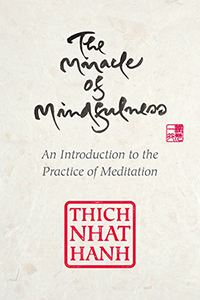
    NHAT HANH-The Miracle of Mindfulness

    The Miracle of Mindfulness: An Introduction to the Practice of Meditation
    Thich Nhat Hanh

    “Thich Nhat Hanh writes with the voice of the Buddha.”
    —Sogyal Rinpoche 

    THEOHARIS-A More Beautiful and Terrible History

    A More Beautiful and Terrible History: The Uses and Misuses of Civil Rights History
    Jeanne Theoharis

    “An important book that sheds new light on our recent past and yields a fresh understanding of our tumultuous present.”
    —Bryan Stevenson, author of Just Mercy: A Story of Justice and Redemption 

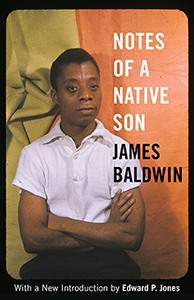
    BALDWIN-Notes of a Native Son

    Notes of a Native Son
    James Baldwin

    “A straight-from-the-shoulder writer, writing about the troubled problems of this troubled earth with an illuminating intensity.”
    —Langston Hughes

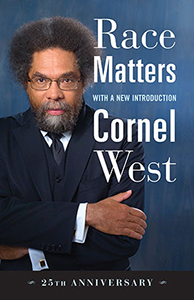
    WEST-Race Matters

    Race Matters, 25th Anniversary Edition
    Cornel West

    “Cornel West is one of the most authentic, brilliant, prophetic, and healing voices in America today. We ignore his truth in Race Matters at our personal and national peril.”
    —Marian Wright Edelman 

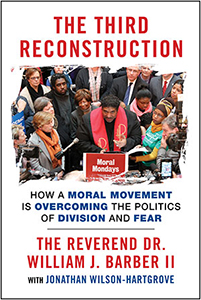
    BARBER-The Third Reconstruction

    The Third Reconstruction: How a Moral Movement Is Overcoming the Politics of Division and Fear
    The Rev. Dr. William J. Barber II with Jonathan Wilson-Hartgrove

    “A remarkable story about a great justice movement, led by an American prophet. Everyone interested in justice should read this book.”
    —James H. Cone, Charles Augustus Briggs Distinguished Professor of Systematic Theology, Union Theological Seminary 

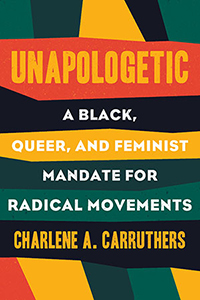
    CARRUTHERS-Unapologetic

    Unapologetic: A Black, Queer, and Feminist Mandate for Radical Movements
    Charlene A. Carruthers

    “She offers us a guide to getting free with incisive prose, years of grassroots organizing experience, and a deeply intersectional lens.”
    —Janet Mock, author of Redefining Realness and Surpassing Certainty 

    OFRI-What Doctors Feel

    What Doctors Feel: How Emotions Affect the Practice of Medicine
    Danielle Ofri

    “A fascinating journey into the heart and mind of a physician struggling to do the best for her patients while navigating an imperfect health care system.”
    —Boston Globe 

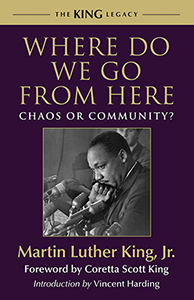
    KING-Where Do We Go from Here

    Where Do We Go from Here: Chaos or Community?
    Martin Luther King, Jr.

    “In this book—his last grand expression of his vision—he put forward his most prophetic challenge to powers that be and his most progressive program for the wretched of the earth.”
    —Cornel West

    DIANGELO-White Fragility

    White Fragility: Why It’s So Hard for White People to Talk About Racism
    Robin DiAngelo

    “The value in White Fragility lies in its methodical, irrefutable exposure of racism in thought and action, and its call for humility and vigilance.”
    —The New Yorker 

    OLIVER-Why I Wake Early

    Why I Wake Early
    Mary Oliver

    “The gift of Oliver’s poetry is that she communicates the beauty she finds in the world and makes it unforgettable”
    —Miami Herald


    Beacon's Bestsellers of 2018