• With an introduction by Bettye Collier-Thomas

    Langston Hughes

    Langston Hughes. Photo credit: Delano/Library of Congress

    “One Christmas Eve” was published in Opportunity in December 1933. The editor noted, “Langston Hughes, just returned from a lengthy stay in Russia, turns his hand to the short story and shows a growing mastery of that medium.” Prior to going to the Soviet Union in 1932, Hughes, at the insistence of the noted educator Mary McLeod Bethune, travelled throughout the South reading to mainly black audiences. Listening to the stories of black Southerners, and personally experiencing segregation and discrimination at every turn, Hughes became inspired to write this story.

    In 1930, the majority of African American women were employed as domestics. In many small Southern towns, such as the one described here by Hughes, educated and uneducated African American women and men had few economic opportunities. As late as 1990, the majority of black women, many without formal education, were employed mostly in service positions and agriculture. Teaching and preaching were the primary professional employments open to educated blacks. Arcie, the central character of this story, personifies the plight of some black servants and of many African American women who worked to support their families as domestics. A single woman with a young child, Arcie works long hours for meager wages, which barely support her basic needs. Yet, with all her problems, she yearns to provide her child with a “normal” Christmas.

    Hughes demonstrates Arcie’s efforts to make Christmas a happy occasion for Joe, her four-year-old son, and employs the Christmas theme to illustrate the vast economic gap between whites and blacks, and the lack of concern evidenced by some whites about the lives of their servants. Hughes examines the meaning of Santa Claus for black children, especially boys.

    Hughes’s Santa Claus does not see Joe simply as a child who, like all children, idolizes Santa and believes in his goodness. For Santa Claus, Joe is just a Negro, a reviled figure to be made fun of, an animal without humanity, and a beast of burden to be used. Like all children who gravitate toward Santa Claus, Joe sees no reason why he should not enter the lobby of a segregated movie theatre where Santa is dispensing gifts and good cheer.

    Because of the particular vulnerability of black males to lynching and other racial attacks, Hughes used black boys to demonstrate the problem black parents faced in trying to provide a “normal” childhood for their children, while at the same time educating them about what it meant to be black in America. The dilemma that African American parents, particularly Southern blacks, confronted each December was how to celebrate and embrace America’s definition of Christmas and Santa Claus, and at the same time protect their children from the dangers posed by racism, inherent in every aspect of United States culture—even Christmas.

    —Bettye Collier-Thomas, from A Treasury of African-American Christmas Stories

    ***

    Standing over the hot stove cooking supper, the colored maid, Arcie, was very tired. Between meals today, she had cleaned the whole house for the white family she worked for, getting ready for Christmas tomorrow. Now her back ached and her head felt faint from sheer fatigue. Well, she would be off in a little while, if only the Missus and her children would come on home to dinner. They were out shopping for more things for the tree which stood all ready, tinsel-hung and lovely in the living room, waiting for its candles to be lighted.

    Arcie wished she could afford a tree for Joe. He’d never had one yet, and it’s nice to have such things when you’re little. Joe was five, going on six. Arcie, looking at the roast in the white folks’ oven, wondered how much she could afford to spend tonight on toys for Joe. She only got seven dollars a week, and four of that went for her room and the landlady’s daily looking after Joe while Arcie was at work.

    “Lord, it’s more’n a notion raisin’ a child,” she thought.

    She looked at the clock on the kitchen table. After seven. What made white folks so inconsiderate, she wondered. Why didn’t they come on home here to supper? They knew she wanted to get off before all the stores closed. She wouldn’t have time to buy Joe nothin’ if they didn’t hurry. And her landlady probably wanting to go out and shop, too, and not be bothered with little Joe.

    “Doggone it!” Arcie said to herself. “If I just had my money, I might leave the supper on the stove for ’em. I just got to get to the stores fo’ they close.” But she hadn’t been paid for the week yet. The Missus had promised to pay her Christmas Eve, a day or so ahead of time.

    Arcie heard a door slam and talking and laughter in the front of the house. She went in and saw the Missus and her kids shaking snow off their coats.

    “Umm-m! It’s swell for Christmas Eve,” one of the kids said to Arcie. “It’s snowin’ like the deuce, and mother came near driving through a stop light. Can’t hardly see for the snow. It’s swell!”

    “Supper’s ready,” Arcie said. She was thinking how her shoes weren’t very good for walking in snow.

    It seemed like the white folks took as long as they could to eat that evening. While Arcie was washing dishes, the Missus came out with her money.

    “Arcie,” the Missus said, “I’m so sorry, but would you mind if I just gave you five dollars tonight? The children have made me run short of change, buying presents and all.”

    “I’d like to have seven,” Arcie said. “I needs it.”

    “Well, I just haven’t got seven,” the Missus said. “I didn’t know you’d want all your money before the end of the week, anyhow. I just haven’t got it to spare.”

    Arcie took five. Coming out of the hot kitchen, she wrapped up as well as she could and hurried by the house where she roomed to get little Joe. At least he could look at the Christmas trees in the windows downtown.

    The landlady, a big light yellow woman, was in a bad humor. She said to Arcie, “I thought you was comin’ home early and get this child. I guess you know I want to go out, too, once in a while.”

    Arcie didn’t say anything, for if she had, she knew the landlady would probably throw it up to her that she wasn’t getting paid to look after a child both night and day.

    “Come on, Joe,” Arcie said to her son, “Let’s us go in the street.”

    “I hears they got a Santa Claus down town,” Joe said, wriggling into his worn little coat. “I want to see him.”

    “Don’t know ’bout that,” his mother said, “But hurry up and get your rubbers on. Stores’ll be closed directly.”

    It was six or eight blocks downtown. They trudged along through the falling snow, both of them a little cold. But the snow was pretty!

    The main street was hung with bright red and blue lights. In front of the City Hall there was a Christmas tree—but it didn’t have no presents on it, only lights. In the store windows there were lots of toys—for sale.

    Joe kept on saying, “Mama, I want. . . .”

    But mama kept walking ahead. It was nearly ten, when the stores were due to close, and Arcie wanted to get Joe some cheap gloves and something to keep him warm, as well as a toy or two. She thought she might come across a rummage sale where they had children’s clothes. And in the ten-cent store, she could get some toys.

    “O-oo! Lookee. . . . ,” little Joe kept saying, and pointing at things in the windows. How warm and pretty the lights were, and the shops, and the electric signs through the snow.

    It took Arcie more than a dollar to get Joe’s mittens and things he needed. In the A&P Arcie bought a big box of hard candies for 49 cents. And then she guided Joe through the crowd on the street until they came to the dime store. Near the ten-cent store they passed a moving picture theatre. Joe said he wanted to go in and see the movies.

    Arcie said, “Ump-un! No, child. This ain’t Baltimore where they have shows for colored, too. In these here small towns, they don’t let colored folks in. We can’t go in there.”

    “Oh,” said little Joe.

    In the ten-cent store, there was an awful crowd. Arcie told Joe to stand outside and wait for her. Keeping hold of him in the crowded store would be a job. Besides she didn’t want him to see what toys she was buying. They were to be a surprise from Santa Claus tomorrow.

    Little Joe stood outside the ten-cent store in the light, and the snow, and people passing. Gee, Christmas was pretty. All tinsel and stars and cotton. And Santa Claus a-coming from somewhere, dropping things in stockings. And all the people in the streets were carrying things, and the kids looked happy.

    But Joe soon got tired of just standing and thinking and waiting in front of the ten-cent store. There were so many things to look at in the other windows. He moved along up the block a little, and then a little more, walking and looking. In fact, he moved until he came to the picture show.

    In the lobby of the moving picture show, behind the plate glass doors, it was all warm and glowing and awful pretty. Joe stood looking in, and as he looked his eyes began to make out, in there blazing beneath holly and colored streamers and the electric stars of the lobby, a marvelous Christmas tree. A group of children and grownups, white, of course, were standing around a big man in red beside the tree. Or was it a man? Little Joe’s eyes opened wide. No, it was not a man at all. It was Santa Claus!

    Little Joe pushed open one of the glass doors and ran into the lobby of the white moving picture show. Little Joe went right through the crowd and up to where he could get a good look at Santa Claus. And Santa Claus was giving away gifts, little presents for children, little boxes of animal crackers and stick-candy canes. And behind him on the tree was a big sign, (which little Joe didn’t know how to read). It said, to those who understood, Merry Christmas from Santa Claus to our young patrons. Around the lobby, other signs said, When you come out of the show stop with your children and see our Santa Claus. And another announced, Gem Theatre makes its customers happy—see our Santa.

    And there was Santa Claus in a red suit and a white beard all sprinkled with tinsel snow. Around him were rattles and drums and rocking horses which he was not giving away. But the signs on them said (could little Joe have read) that they would be presented from the stage on Christmas Day to the holders of lucky numbers. Tonight, Santa Claus was only giving away candy, and stick-candy canes, and animal crackers to the kids.

    Joe would have liked terribly to have a stick-candy cane. He came a little closer to Santa Claus. He was right in the front of the crowd. And then Santa Claus saw Joe.

    Why is it that lots of white people always grin when they see a Negro child? Santa Claus grinned. Everybody else grinned, too, looking at little black Joe—who had no business in the lobby of a white theatre. Then Santa Claus stooped down and slyly picked up one of his lucky number rattles, a great big loud tin-pan rattle like they use in cabarets. And he shook it fiercely right at Joe. That was funny. The white people laughed, kids and all. But little Joe didn’t laugh. He was scared. To the shaking of the big rattle, he turned and fled out of the warm lobby of the theatre, out into the street where the snow was and the people. Frightened by laughter, he had begun to cry. He went looking for his mama. In his heart he never thought Santa Claus shook great rattles at children like that—and then laughed.

    In the crowd on the street he went the wrong way. He couldn’t find the ten-cent store or his mother. There were too many people, all white people, moving like white shadows in the snow, a world of white people.

    It seemed to Joe an awfully long time till he suddenly saw Arcie, dark and worried-looking, cut across the side-walk through the passing crowd and grab him. Although her arms were full of packages, she still managed with one free hand to shake him until his teeth rattled.

    “Why didn’t you stand there where I left you?” Arcie demanded loudly. “Tired as I am, I got to run all over the streets in the night lookin’ for you. I’m a great mind to wear you out.”

    When little Joe got his breath back, on the way home, he told his mama he had been in the moving picture show.

    “But Santa Claus didn’t give me nothin’,” Joe said tearfully. “He made a big noise at me and I runned out.”

    “Serves you right,” said Arcie, trudging through the snow. “You had no business in there. I told you to stay where I left you.”

    “But I seed Santa Claus in there,” little Joe said, “so I went in.”

    “Huh! That wasn’t no Santa Claus,” Arcie explained. “If it was, he wouldn’t a-treated you like that. That’s a theatre for white folks— I told you once—and he’s just a old white man.”

    “Oh. . . . ,” said little Joe.


    About Bettye Collier-Thomas 

    Bettye Collier-Thomas is professor of American history at Temple University. Her scholarship includes American social and cultural history, African American women’s history, religion, civil rights, and electoral politics. Dr. Collier-Thomas is the author of numerous award-winning books. Her most recent, Jesus, Jobs, and Justice: African American Women and Religion, was reviewed and cited in the New York Times as an Editor’s Choice, won a National Women’s Political Caucus’s EMMA award for excellence in elevating the civil discourse on issues affecting women, and received awards from the Organization of American Historians and the Association of Black Women Historians. Her previous award-winning books include Sisters in the Struggle: African American Women in the Civil Rights–Black Power Movement (as coeditor) and Daughters of Thunder: Black Women Preachers and Their Sermons. She has received multiple fellowships and grants from the Lilly Endowment, Rockefeller and Ford Foundations, National Endowment for the Humanities, National Humanities Center, and Woodrow Wilson International Center for Scholars.


  • By Mary Frances Berry

    Polling placeTwo years ago, we didn’t want to talk about it. But it’s happened again in North Carolina. We’re talking about electoral fraud. This time around, veteran political operative Leslie McCrae Dowless, Jr. is facing allegations of illegally collecting absentee ballots from voters. Electoral fraud takes other forms, including vote buying. And it doesn’t just happen in North Carolina. Democrats and Republicans alike participate in these illegal practices. More importantly, none of this is breaking news. Historian and activist Mary Frances Berry had already written about the effects of electoral fraud and what should be done about it in Five Dollars and a Pork Chop Sandwich: Vote Buying and the Corruption of Democracy. Let’s take a gander at this passage from her book . . . and pay attention.

    ***

    What [former director of Louisiana’s Vote Fraud Division] Greg Malveaux told me about electoral fraud in Louisiana was disturbing. He explained how campaign operatives paid the poor small amounts of money for their votes while making policy contrary to their needs. He talked about the family fiefdoms that perpetuated their power illegally. He described how election officials cavalierly accepted payments to let buyers view the ballots to make sure the bought stayed bought. He related how poor voters didn’t mind saying they got paid small amounts of money and treats for their votes, perhaps a pork chop sandwich and a cold drink.

    Greg had been a deputy sheriff for twelve years in Orleans Parish. He was not naïve. But he soon realized that his new job of punishing election fraud was very complicated. The manipulation and vote buying seemed accepted by the public as just a routine part of the process. Politics is a game and parties do whatever it takes to win.

    Malveaux focused on his job as an enforcer of the fraud law. But after thorough investigations he found he couldn’t get help from local officials. Elected local prosecutors and judges recoiled from the very idea of prosecuting the people who voted for them. Party principle and solidarity also play a role. Elected officials have important connections and relationships with each other and the candidates for other offices. Jobs, contracts, and other matters of patronage are at risk. Put simply, judges and other officials aren’t eager to upset the system, because they benefit from it.

    Greg had some successes but it was hard, often demoralizing, work. His boss, Suzanne Haik Terrell, had campaigned on an “end the fraud” platform. Ending fraud is certainly great rhetoric and a good campaign slogan. Greg believed Terrell wanted him to succeed, hoping success would propel her to higher office. Success seemed to mean convicting a few low-level brokers and haulers and not the donors or candidates themselves. Basically, the law was hard to enforce because hardly anyone who could enforce it wanted it to be enforced.

    The extraordinary effort it took for Malveaux to win his biggest case attests to the difficulty. To penetrate the Martin-Champagne-Thibodeaux network in St. Martinville, he had to overcome intimidation and deliberate undermining by fellow staff members. He did have the helping hand of a few courageous ordinary citizens. He also found an occasional reporter willing to stand up to his or her editors in pursuit of the story. But only when he was able to persuade federal officials to respond did he have some measure of success.

    The research his experience inspired shows that electoral fraud, consisting mainly of vote buying and abuse of absentee ballots, does indeed exist in state and local elections. Such fraud is routine in some locales. Family dynasties that perpetuate their own power seem tempted to buy votes with money or influence as a rite of passage. The Martin-Champagne-Thibodeauxes in Louisiana, the Shulers in Florida, the Daleys in Chicago, and others are examples. At the national level we have also seen the good and bad effects of politics as the family business. The role Jeb Bush played in the manipulation of the Florida election in 2000 for his brother George is one recent example of such influence. While in the twenty-first century working to end voter suppression through identification laws and other mechanisms is necessary and a priority, the influence of often hidden or just plain ignored fraud harms the same group of vulnerable citizens. In fact, the very existence of their democratic participation tempts abuse of the election process.

    Yet the inclination, no matter how small, to blame the most vulnerable citizens for fraud is misdirected. The prosecution of poor people who get a few dollars for their votes is like making an arrest for selling single cigarettes. In 1904, Indiana tried punishing voter fraud by giving rewards to buyers who would persuade someone to sell them a vote. They soon recognized that all they did was to entrap the needy along with the greedy.

    Any outrage over fraud should be reserved for the candidates who buy their votes, neglect the issues that concern the poor, and studiously refuse to implement policies that could help them. Good examples of the latter include the refusal to adequately fund the schools their children attend, fund the medical facilities they utilize, or promote more racially equitable policing.

    Candidates who engage in electoral fraud should suffer prosecution, even though it’s challenging. Looking for legal ways to give citizens practical incentives to vote may be a way to reduce the attractiveness of vote selling, while increasing turnout. But incentives must be combined with appealing issues and candidates, and organizing needs to assist the marginalized to achieve beneficial policy objectives. Otherwise the increased election totals will serve only to validate the system.

    Taking care of voters and potential voters in poor and working-class neighborhoods such as those manipulated by Nashville’s Little Evil and Good Jelly, and Chicago’s mayors and aldermen, motivates turnout and loyalty to candidates. Street money or walk-around money, designed to increase turnout among people who see no reason to vote, also acts as a short-term jobs program for the unemployed or low-wage workers needing additional income. There are stipends for putting up yard signs, distributing literature, and circulating petitions. There are payments for hauling voters back and forth to the polls. There are expenses for feeding election judges and other officials and campaign workers. There are also media buys for ethnic and black radio stations and ad consultants. Campaign operatives and the community dependent on the short-term jobs hope for competitive primaries and run-off elections to increase the money flow. Turnout may increase, but whether it is increased legally or though illegal vote buying, the same structural problems of unemployment and inequity remain in the targeted communities once the election is done.

    Federal enforcement would be the most certain way to provide more effective oversight, the adjudication of violations, and control of the relationship between money and politics in state and local elections. But unless there are federal candidates on the same ballot, or a federal discrimination issue is raised as in Pam Thibodeaux’s case, this is the most unlikely approach. Unlikely, because under the Constitution, the framers deliberately did not include control of state and local elections among the powers delegated to the national government. Therefore, the power is left to the states. The only way to change this responsibility is to adopt a constitutional amendment. The amendment would need to make voting and election protection a federal responsibility instead of a primary responsibility of the states. In 2001, stirred by investigations of irregularities in the 2000 presidential election in Florida, including from the US Civil Rights Commission, Illinois congressman Jesse Jackson Jr. introduced such a Right to Vote Amendment in the Congress. The bill, reintroduced in successive Congresses, would place voting under the direct control of Congress, which would have the power to administer standards and enforce election protection in both state and federal elections. Since Jackson’s resignation from Congress, Wisconsin Democratic congressman Mark Pocan and Minnesota Democratic congressman Keith Ellison have pushed the amendment. It has not yet made it out of committee.


    About the Author 

    Mary Frances Berry is the Geraldine R. Segal Professor of American Social Thought and professor of History and Africana Studies at the University of Pennsylvania. She is the former chairwoman of the US Commission on Civil Rights, a Distinguished Fellow of the American Society for Legal History, the author of twelve books, and the recipient of thirty-five honorary degrees. Dr. Berry has appeared on Real Time with Bill Maher, The Daily Show, Tavis Smiley, PBS NewsHour, CBS Evening News, Al Jazeera America News, and various MSNBC and CNN shows. She is the author of History Teaches Us to Resist: How Progressive Movements Have Succeeded in Challenging Times. Follow her on Twitter at @DrMFBerry and visit her website.

  • Holiday sale header

    Are you ready for the holiday season and on the hunt for gifts to inspire someone in your life? Our holiday sale is back! Save 30% on everything at beacon.org through December 31 using code HOLIDAY30.

    This year, Beacon Press is also donating 10% of our web sales in December to Unitarian Universalist Assocation Disaster Relief Fund to the help the communities in California recover from the wildfires.

    Here are our holiday picks for the year. Drum roll, please:

    White Fragility

    White Fragility: Why It’s So Hard for White People to Talk About Racism
    Robin DiAngelo

    “An indispensable volume for understanding one of the most important (and yet rarely appreciated) barriers to achieving racial justice.”
    —Tim Wise, author of White Like Me: Reflections on Race from a Privileged Son 

    A New York Times Best Seller! 

    The Heritage

    The Heritage: Black Athletes, a Divided America, and the Politics of Patriotism
    Howard Bryant

    “This is the book for explaining our times, whether you give a damn about sports or not.”
    —Dave Zinn, sports editor, The Nation, and author of Jim Brown: Last Man Standing 

    A Library Journal Best Book of 2018, a Boston Globe Best of 2018 pick, and longlisted for the PEN America Literary Award in literary sports writing! 

    Looking for Lorraine

    Looking for Lorraine: The Radiant and Radical Life of Lorraine Hansberry
    Imani Perry

    “I didn’t know how hungry I was for this intimate portrait until now.”
    —Jacqueline Woodson, National Ambassador for Young People’s Literature and National Book Award Winner for Brown Girl Dreaming

    Longlisted for the PEN America Literary Award in biography! 

    The Trials of Nina McCallThe Trials of Nina McCall: Sex, Surveillance, and the Decades-Long Government Plan to Imprison “Promiscuous” Women
    Scott W. Stern

    “In our own era, when harassment is a great national topic, this book could not be more timely.”
    —Mary Pipher, author of Reviving Ophelia and Women Rowing North

    A Boston Globe Best of 2018 pick! 

    When I Spoke in Tongues

    When I Spoke in Tongues: A Story of Faith and Its Loss
    Jessica Wilbanks

    “Jessica Wilbanks’s memoir of faith’s loss and her efforts to comprehend its significance is no less than an illuminating exploration of how to live meaningfully.”
    —Claire Messud, author of The Burning Girl  

    Unapologetic

    Unapologetic: A Black, Queer, and Feminist Mandate for Radical Movements
    Charlene A. Carruthers

    “Charlene gives us not just a manual but a prayer, an intention, a critical path forward, and a deep analysis on where we’ve been.”
    —Patrisse Khan Cullors, coauthor of When They Call You a Terrorist: A Black Lives Matter Memoir  

    The Miracle of Mindfulness

    The Miracle of Mindfulness: An Introduction to the Practice of Meditation
    Thich Nhat Hanh

    “Thich Nhat Hanh’s ideas for peace, if applied, would build a monument to ecumenism, to world brotherhood, to humanity.”
    —Martin Luther King Jr.

    How to Be Less Stupid About Race

    How to Be Less Stupid About Race: On Racism, White Supremacy, and the Racial Divide
    Crystal M. Fleming

    “This book will leave you thinking, offended, and transformed.”
    —Nina Turner, former Ohio state senator

    New and Selected Poems Volume One

    New and Selected Poems, Volume One
    Mary Oliver

    “Her special gift is to connect us with our sources in the natural world, its beauties and terrors and mysteries and consolations.”
    —Stanley Kunitz

    Man's Search for Meaning

    Man’s Search for Meaning
    Viktor E. Frankl

    “One of the great books of our time.”—Harold S. Kushner, author of When Bad Things Happen to Good People  

    Kindred

    Kindred
    Octavia E. Butler

    “In Kindred, Octavia Butler creates a road for the impossible and a balm for the unbearable.”
    —Walter Mosley 

    An African American and Latinx History of the United States

    An African American and Latinx History of the United States
    Paul Ortiz

    “An African American and Latinx History of the United States is a gift.”
    —Ibram X. Kendi, National Book Award–winning author of Stamped from the Beginning: The Definitive History of Racist Ideas in America 

    The End of Animal Farming

    The End of Animal Farming: How Scientists, Entrepreneurs, and Activists Are Building an Animal-Free Food System
    Jacy Reese

    “Places the issue of factory farming in the context of human progress and presents compelling arguments on how we should deal with it today.”
    —Steven Pinker, Johnstone Professor of Psychology, Harvard University, and author of The Better Angels of Our Nature and Enlightenment Now  

    Notes of a Native Son

    Notes of a Native Son
    James Baldwin

    “He named for me the things you feel but couldn’t utter . . . articulated for the first time to white America what it meant to be American and a black American at the same time.”
    —Henry Louis Gates Jr.

    A Treasury of African-American Christmas Stories

    A Treasury of African-American Christmas Stories
    Ed. Bettye Collier-Thomas

    “A Treasury of African American Christmas Stories gives us all the gift of engaging our hearts and minds in the true stories of Christmas.”
    —Nikki Giovanni


    If you’re tracking down a specific kind of book, poke around in our categories. For those concerned about the lives of immigrants and the policies that affect them, browse our titles in Immigration Reform. For those eager to see what’s really at stake with regard to reproductive justice and abortion laws, look at our titles in Women’s Lives. And for those looking to up their game on discussing issues of race and systemic oppression, check out our books in Race and Ethnicity in America. You can always browse our website to see all the others and search our whole catalog!

    Oh, and our staff members are here to help you out, too! Check out what some of them are recommending. They’re also suggesting their favorite things to gift for the holidays.

    Emily Powers holiday picks
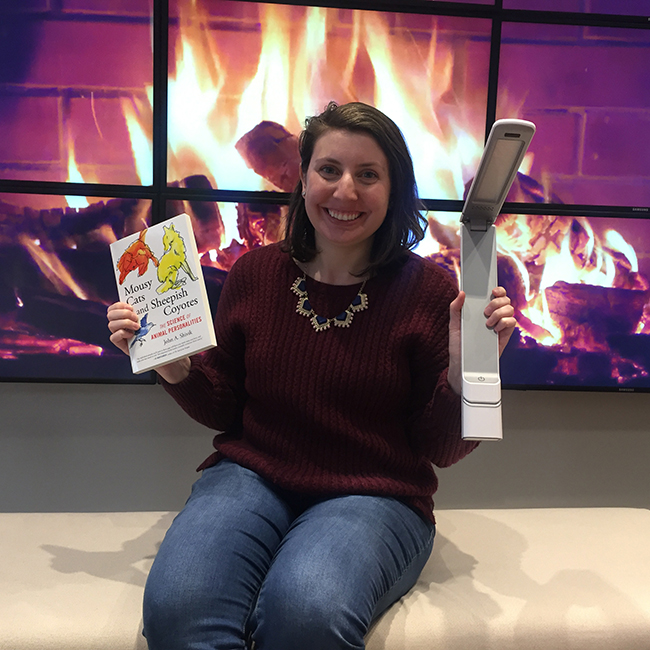
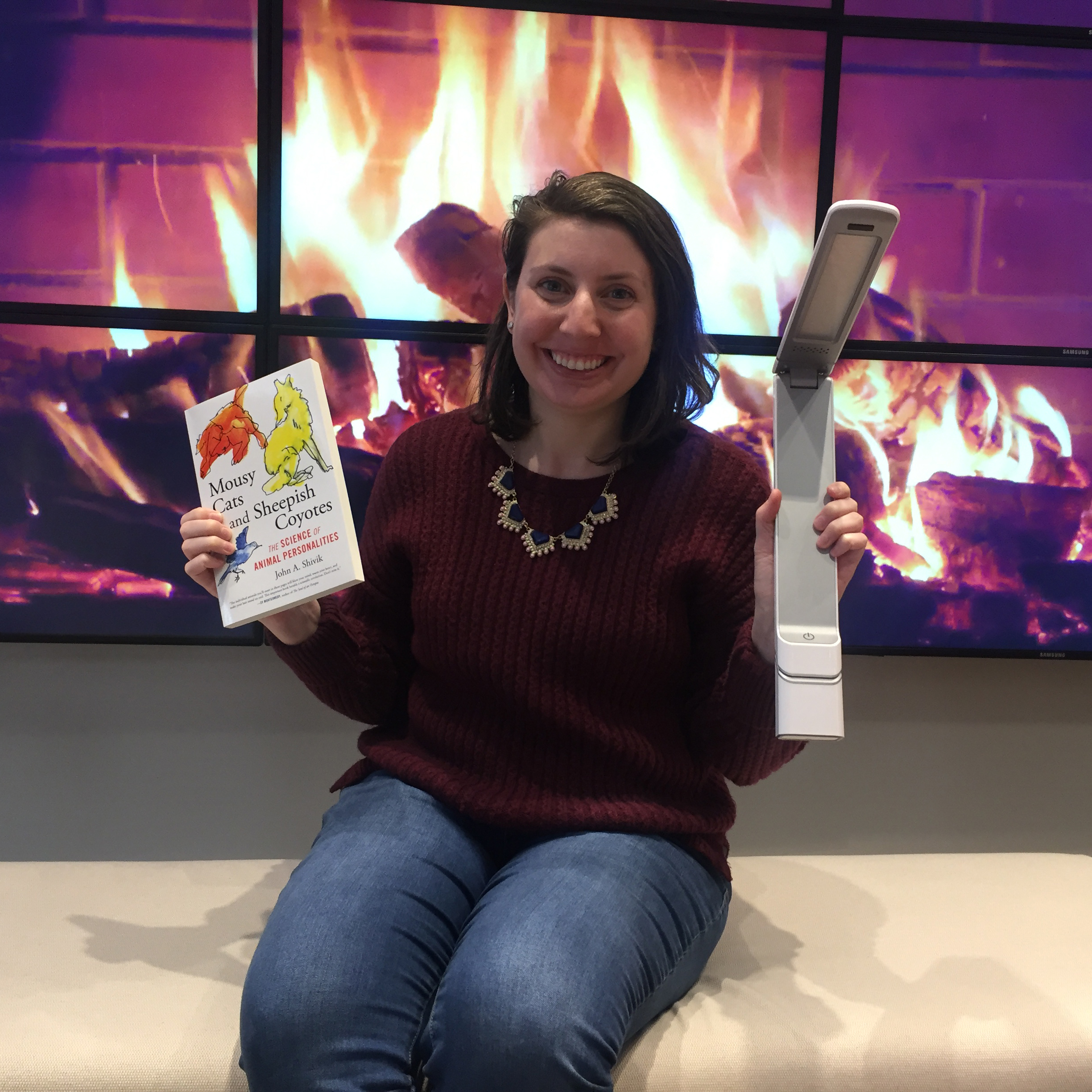
    “Anyone who knows me even a little bit knows that I am obsessed with all things animal (particularly dogs, but cows and goats and pretty much everything else too). Mousy Cats and Sheepish Coyotes dives deep into the science behind animal personalities and John Shivik’s own experiences as a pet-owner and wildlife expert. It also has one of the best first lines I’ve ever read: ‘My cat, for all practical purposes, is an asshole.’

    Another thing I’m loving this season is all kinds of lights! I hate the constant darkness of winter and this is my new sun lamp at my desk that I use every single morning. I also recently got an alarm clock that mimics the sunrise, so instead of being jolted awake in the pitch dark, you wake up gradually with light. It’s AMAZING.”
    —Emily Powers, associate marketing manager

    Marcy Barnes holiday picks

    “My favorite Beacon book is The Art of Misdiagnosis, which I recommend to anyone who has used the gifts of art, creativity, and storytelling to process complicated family and personal situations. My favorite ‘thing(s)’ to gift at the holidays are prints, cards, totes, and all sorts from local artisan fairs. I recently fell in love with the work of talented local artist Amanda Williams Galvin (a.k.a REVEL REVEL) and purchased many of her New England–themed delights to send to friends near and far. And, ’tis the season to treat oneself too, right? I bought this delightful Somerville, MA, print as a gift to me.”
    —Marcy Barnes, production director

    Louis Roe holiday picks

    “With the recent uptick in discussion about immigrant detention centers, Margaret Regan’s Detained and Deported is a crucial read for anyone who wants to dig deeper into our country’s history of separating and incarcerating migrant families. The stories and statistics are heart-wrenching, but they really helped me get a better understanding of this issue when it took over US headlines back in September. On a lighter note, this is Tyra, the design department’s pet crocodile. I’m not sure what brand she is, but she’s one of those toys that starts out small and grows in a bowl of water. A great holiday gift for anyone in your life who may need some companionship this winter.”
    —Louis Roe, designer 

    Holiday gifts

  • By Danielle Ofri

    Lisa Schwartz
    Dr. Lisa Schwartz

    There’s nothing quite like the sucker-punch feeling of turning the page of the newspaper with your morning coffee and suddenly seeing an obituary of someone you know. But that’s what happened last week when I turned page A27 to see a photo and obituary for Dr. Lisa Schwartz, who died at the age of fifty-five of cancer.

    When I was a medical student and did my very first rotation on the medical wards of Bellevue Hospital, Lisa was my resident. To say that I was green would be an understatement. Every medical student is green when they start on the wards, but I had stepped away from the traditional path for four years in a lab, so the coursework of the first two years of medical school was hardly a flickering shadow in my hippocampus.

    But it was my supreme good fortune to have Lisa Schwartz at the helm as I struggled to find my way on the 16-North medical ward. Lisa defined for me what it was to be a doctor at Bellevue—committed, brilliant, easy-going, and of course, endowed with a suitably dry sense of humor. Back in those days, we wrote our progress notes on paper, which in Bellevue was bright pink for some inexplicable reason. I still have a perfect image of her impeccable admission notes, which set the standard for how to think about a patient’s illness and capture all the clinical nuances. No matter how busy a night we had, the next morning every new patient had a neatly printed and intensely thorough Senior Resident Admitting Note. It has remained my standard to this day.

    When I wrote my first book about becoming a doctor, the very first chapter took place on that ward in that month. I had been confused about how to work with a patient who seemed only to want to jabber on about all the nonmedical trivialities of the day. But Lisa relayed to me how she once stayed up late with a patient singing songs with him, because that was what he connected with and what brought him comfort. “So it was okay just to spend time with your patients,” I later wrote. “It was okay to do things besides record your patients’ vital signs. My resident said so!”

    Because your resident said so. At Bellevue, what your resident said was as good as gold. Whether it was about how to aspirate ascites fluid from the abdomen of a cirrhotic patient, how to diagnose Wegener's granulomatosis, how to wrangle a CT scan from an obdurate radiologist, how to handle a hallucinating patient who spoke only Igbo, how to interpret an EKG when you couldn’t get a stable baseline, how to run a code, or where to get a cheese Danish once the coffee shop closed—your resident was the authoritative voice. Lisa skillfully guided all of us newbies as we struggled to find our footing. She loved to teach and always exuded joy about being with patients.

    It was no surprise to anyone who knew Lisa that she went on to do groundbreaking and creative work that has benefited so many patients. She wasn’t afraid to question how and why we make diagnoses and helped expose the harms from overdiagnosis. She wasn’t shy about challenging the FDA on how to make labelling of medications more understandable to patients. She relentlessly questioned so many assumptions in medicine that most doctors take for granted.

    Lisa came back to Bellevue two years ago to give a Grand Rounds lecture. None of us had any idea that she had already been sick for five years by then. But she gave an inspiring lecture on how we can improve medicine on a grand scale, and what that means on an individual level for patients. Many of the younger doctors in the audience hadn’t known her before, but we communally swelled with pride that she had cut her chops on our home turf.

    It’s devastating to lose someone who has been an inspiration both globally and personally. I will always remember the comfort she gave me during one particularly upsetting situation in that first month of doctoring. But most importantly, she not only taught us students the ins and outs of medicine; she taught us how to be a doctor—in the fullest sense of the word. They say you never forget your “first,” and Lisa Schwartz was my first. We’ll miss you!


    Dr. Lisa Schwartz has a cameo in the first chapter, “Drawing Blood,” in Danielle Ofri’s Singular Intimacies. Click here to read the PDF.


    About the Author 

    Danielle Ofri, MD, PhD is an associate professor of medicine at New York University School of Medicine and has cared for patients at New York's Bellevue Hospital for more than two decades. She is the author of Singular Intimacies: Becoming a Doctor at Bellevue, Incidental Findings: Lessons from My Patients in the Art of Medicine, and Medicine in Translation: Journeys with My Patients. Dr. Ofri is a regular contributor to the New York Times' Well blog as well as the Times' "Science Times" section and the New England Journal of Medicine. Her writings have appeared in Best American Essays and Best American Science Writing. She is the editor in chief of the Bellevue Literary Review. Dr. Ofri lives in New York City with her husband, three children, and their loyal lab mutt. Follow her on Twitter at @danielleofri. Check out her website and Facebook fan page.

  • At the US Mexico Border
    At the US-Mexico border. Photo credit: BBC World Service

    This year’s Human Rights Day marks the seventieth anniversary of the Universal Declaration of Human Rights—the perfect day to reflect on the US’s treatment of the immigrant community. And let me tell you: It’s going to be a stark reckoning. Just look at some of this year’s headlines. Many migrant families are still separated. Border patrol agents fired tear gas at migrant families at the US-Mexico border to disperse them. This is inhumane treatment. The Universal Declaration of Human Rights proclaims the “inalienable rights which everyone is inherently entitled to as a human being—regardless of race, color, religion, sex, language, political or other opinion, national or social origin, property, birth or other status.” That’s not what we’re seeing. Where are the inalienable rights for this community?

    Outraged by the headlines, many took to Twitter and posted, “This is not America.” But if you check your history, you’ll find that, yes, this is and has been America. That’s why we’ve put together this reading list. To put a mirror up to our country’s history of anti-immigrant sentiment. And it’s our hope that these books from our catalog always remind us never to lose sight of anyone’s humanity, regardless of their national or social origin.


    Considering Hate: Violence, Goodness, and Justice in American Culture and Politics
    By Kay Whitlock and Michael Bronski

    Our society’s reliance on the framework of hate to explain hate crimes and violence is wrongheaded, misleading, and harmful. It’s led to intensified government-based policing, increased surveillance, and harsher punishments that have never worked and don’t work now. Longtime activists and political theorists Kay Whitlock and Michael Bronski wrote Considering Hate so we can radically reimagine the meaning and structures of justice within a new framework of community wholeness, collective responsibility, and civic goodness.


    Detained and Deported: Stories of Immigrant Families Under Fire
    By Margaret Regan

    The stories in Margaret Regan’s Detained and Deported are just as harrowing and heart-wrenching as the headlines we’ve been reading this year. Increasingly draconian detention centers and deportation policies have broadened police powers while enriching a private prison industry whose profits feed on human suffering. The worst of it is how families are separated, again and again. Regan also documents the rise of resistance, profiling activists and young immigrant Dreamers who are fighting for the rights of the undocumented.


    How Does It Feel to Be Unwanted?: Stories of Resistance and Resilience from Mexicans Living in the United States
    By Eileen Truax

    Journalist Eileen Truax knew that the election of Donald Trump didn’t signify the beginning of hardship of Mexican immigrants, but the continuation of a decades-long assault. She also knew that resistance to this assault had been building, and it was time for the countless stories of strength, perseverance, and activism to be shared. Through the thirteen stories in How Does It Feel to Be Unwanted?, Truax connects us with the Mexican population already living and participating in their communities as well as those who still seek asylum.


    How to Love a Country
    By Richard Blanco

    This new collection from renowned inaugural poet Richard Blanco explores immigration, gun violence, racism, LGBTQ issues, and more in these accessible and emotive verses. Unifying the wide variety of subject matter in these poems is one fundamental and overwhelming question: How to love this country? Blanco seeks the answers by digging deep into the marrow of our nation with poems that interrogate our past and present, grieve our injustices, and note our flaws yet remember to celebrate our ideals and cling to our hopes. Forthcoming in March 2019.


    Hunting Season: Immigration and Murder in an All-American Town
    By Mirta Ojito

    Ten years ago, thirty-seven-year-old undocumented Ecuadorean immigrant Marcelo Lucero was attacked and murdered by a group of teenagers in the Long Island village of Patchogue. An unassuming worker at a dry cleaner’s, Lucero became yet another victim of anti-immigration fever and a symbol of everything that was wrong with our broken immigration system. Journalist Mirta Ojito crafted an unflinching portrait of this case in Hunting Season.


    “They Take Our Jobs!”: And 20 Other Myths About Immigration
    By Aviva Chomsky

    “We need to protect our borders to prevent criminals and terrorists from entering the country.” Does this sound familiar? Three years into our current administration, we’re still hearing egregious myths and misinformed claims about immigrants and immigration that promote aggressive anti-immigrant policies. This calls for Aviva Chomsky’s revised and updated myth-busting book “They Take Our Jobs!” And 20 Other Myths About Immigration. Crucial for our politically fraught times, this expanded edition contains fresh material addressing what’s been happening in immigration policy for the last ten years. It also helps us understand the underlying assumptions behind the myths.


    Water Tossing Boulders: How a Family of Chinese Immigrants Led the First Fight to Desegregate Schools in the Jim Crow South
    By Adrienne Berard

    We can look as far back as the 1920s to see how our country excluded immigrants from the right to an equal education. The Lums were a Chinese American family whose daughters were barred from attending middle school in Rosedale, Mississippi, because they were considered to be “colored.” The school was for whites. The Lum family fought for the right to educate Chinese Americans in the white schools of the Jim Crow South in what would become the first US Supreme Court case to challenge the constitutionality of racial segregation in Southern public schools.


    When I Walk Through That Door, I Am
    By Jimmy Santiago Baca

    Poet-activist Jimmy Santiago Baca makes the immigration crisis painfully personal in this new interpretation of the Epic Poem. In these verses, he imagines the experiences of Sophia, an El Salvadorian mother searching for a better life. Her journey takes us through the obstacles and tragedies of immigration, family separation, ICE raids on the Southern border, and her husband’s murder. When I Walk Through That Door, I Am is a call for our attention, for our compassion, for our energy in pursuit of democracy and of justice. Forthcoming in February 2019.

  • Claire Desroches
    Claire Desroches with her niece in Maine.

    In these times when readers are responding to our books “more than ever,” when our authors—including Cornel West, Anita Hill, Robin DiAngelo, Charlene Carruthers, Howard Bryant, and Christopher Emdin—are appearing in the media, their ideas going viral on social media, their voices being heard on so many platforms, we thought it might be good to take a break to focus on some of the staff who work hard to find, shape, edit, produce, and promote those works. Our blog series “Beacon Behind the Books” introduces to you a member of our staff and gives you a behind-the-scenes look, department by department, at what goes on at our office.

    For the month of December and to close 2018, we introduce you to our business operations assistant, Claire Desroches!  

    What drew you to publishing, Claire? How did you find your way to Beacon?

    I studied English and Religious Studies in college but didn’t know what I wanted for my career. I fell into hospitality management for several years after graduating. I loved working for the boutique hotel I managed but was ready for a change. Despite my best efforts to avoid any and all math courses in school, I realized while working that I enjoyed and wanted to expand on the accounting and business administration skills I had acquired. Working in the business department for Beacon Press felt tailor-made to my interests.

    What other departments does your department collaborate with? And how?

    A lot of my responsibilities sit at the intersections of the business, production, and sales departments, but one of the things I love about being at Beacon is that it’s a small, collaborative team. As a person who is new to publishing, it’s great to be exposed to every department. I’m trying to soak up as much as I can.

    What helps you focus when you’re at work?

    I can’t operate without my daily to-do list. The last thing I do every day at work is write out my list for the next day. It’s how I get back on track after a distraction, and it helps me prioritize my time.

    What’s your advice to someone interested in entering the publishing field?

    Do it! It took me a while to land here, and I’ve only been here for a short while, but working for Beacon has been very rewarding.

    Favorite podcast?

    I have so many favorite podcasts. I like everything from Gimlet Media, namely Heayweight and Reply All. Personal Best by CBC is guaranteed to brighten your day. Swindled is a great podcast about white collar crime. My Brother, My Brother and Me is perfect if you, like me, enjoy laughing uncontrollably in public.

    Best vacation destination?

    My favorite place to go is my parents’ house on Lake Arrowhead in Waterboro, Maine. Maine is so beautiful, and we spend as much time up there together in the summer as we can. It also helps that I get to stay for free.

    Favorite thing about Boston?

    The Boston Public Library. I worked in Copley Square since I was in college, and I miss being so close to it every day. I am working on finding a new favorite place in the Seaport!


    About Claire Desroches 

    Claire Desroches joined Beacon Press in 2018 after several years of managing a small boutique hotel. She graduated from Northeastern University, where she earned a dual major in English and Religious Studies.

  • By The Reverend Dr. Liz Theoharis

    Rev. Dr. Liz Theoharis
    A National Call for Moral Revival, 2017. Liz Theoharis (center) at the US Capitol. Photo credit: Becker1999

    The New Testament documents a moral movement of the poor and rejected. It portrays the survival struggles of the marginalized, the solidarity and mutuality among different communities, and the critique of a social, political, and economic system that oppresses the vast majority of people. Given his leadership in that movement, it is not surprising that the main theme of many of Jesus’s teachings and his ministry in general is bringing good news to the poor and marginalized, standing up for righteousness, and ending all forms of discrimination and oppression. Nor is it surprising that Jesus was recognized by Rome as a threat to the status quo and crucified, the punishment reserved for revolutionaries and those deemed insurrectionists.

    Jim Wallis, an evangelical leader and the founder of Sojourners magazine, has written that one in every four stories in the Bible is about poverty, making it far and away the most common theme. Certainly, stories about poverty are much more numerous and prominent than those that pertain to issues such as marriage or sexuality or prayer in schools. At the very beginning of his ministry, in Luke 4, Jesus reads from the scroll of the prophet Isaiah and announces that he has come to fulfill the mission laid out in it—to proclaim release to the captives and bring good news to those who have been made poor by systems of oppression. In passages such as Matthew 25, Jesus reminds us that what we do to the least of these, we do unto him. The Apostle Paul, following his revelation of Jesus, started a collection for the poor of Jerusalem.

    Jesus’s teachings and actions around poverty, wealth, and power create a picture of him as a leader of a social, political, economic, and spiritual movement calling for a world without poverty, want, or oppression. The Sermon on the Mount, the parables, and his other lessons show him to be a “New Moses”: a liberator and freedom fighter who brings instruction about how to treat the poor, the stranger, the widow, and the marginalized. Jesus was a teacher too. Contemporary and historical stories, prophetic instruction, and moral guidance were central to his revolutionary work. His was a ministry in which he educated while he organized, taught as he fought, walked as he talked, learned as he led. He admonished his followers and other movement leaders to morally resist the authorities as they built an order of justice and equality in the here and now. The purpose of his education and leadership-development practices was to reveal the lies enshrined in the status quo and to wake people up to the possibility of another way—what he named the Kingdom or empire of God.

    This revolutionary Jesus and the instruction left for his followers, as summarized by the books of the New Testament, follow the prophetic teachings of the Hebrew scriptures. The revolutionary teaching of the early Jesus movement is found not only in the sermons and parables, but also in the lives and community practices of Jesus’s followers. The many references to material poverty and simplicity, especially that of Jesus and the disciples, have an important relationship to the lived experience of the poor, who made up the base of that movement during the Roman empire. The asceticism of the Jesus movement followers, given the economic and debt practices of the empire, can be seen as both a necessary response to the reality of their poverty and resistance to the established order. Rather than romanticizing a simple life, one should read passages such as “Do not worry about your life, what you will eat” (Matthew 6, Luke 12) as comfort for people who are facing serious chronic financial difficulty. These passages tell the poor and rejected that they matter to God, that they can lead a powerful movement even if they own nothing themselves, and that by seeking God’s justice together they can build a world without want. In that context, it is possible to interpret Jesus’s instructions on how to be disciples—going out with no staff or money or bread, asking for meals to be provided—as a necessity of their economic situation, rather than as a voluntary decision to be poor. In this way, Jesus’s teachings can be seen as a declaration of justice over charity and the conviction that poor and oppressed people are agents of change who do not have to wait for religious leaders or those with more resources to fix society’s problems. Having heroes and leaders from the ranks of the poor and among those who have been rejected and marginalized for who they are is important for any moral movement. Jesus’s own poverty and homelessness (beginning with his humble birth) and Paul’s emphasis on his own personal struggles show that the early church was made up of people who did not have much and required a commitment to prosperity through community survival rather than individual accumulation and greed.

    In Jesus’s time, like our own, the leisure of the wealthy and powerful was held in high esteem. The common sense of those societies said that to work was to be low, dirty, and marginalized. But the people of the Jesus movement, drawing on a tradition stretching back to the Hebrew prophets, challenged that common sense and instead emphasized the value and dignity of labor. They announced that God’s desire is for people to benefit from the fruits of their labor. The examples of Jesus, James, Paul, and other leaders of the Jesus movement working for a living—as carpenters, tent-makers, and fishers—affirm the dignity and worth of people who have to work in order to survive. It affirms that the intention in the Kingdom of God is to have community flourishing and prosperity for all, from the bottom up. Living wages are an important theme throughout the Bible for this very reason.

    In addition to the reality of poverty and oppression among the leaders of the early Jesus movement, there are examples throughout the New Testament of communal practices of economic redistribution, antipoverty measures, and support for a social, spiritual, economic, and political movement opposed to Rome. Paul’s concept of the collection is a central example. He suggested that the best way to spread the Jesus movement throughout the Roman world, to Jews and Greeks, was through this act of solidarity in which the poor of many diverse nations could support the lives and actions of the poor in Jerusalem (rather than the imperial center in Rome). This ancient act of solidarity and protest against the Roman empire is also a survival strategy of sharing resources. It makes it possible for poor people not just to feed, house, and clothe themselves, but also to develop a movement with other poor people who want to build a different world. Today, we do not hear much mention of the collection for the poor. When we do hear about it, it is in reference to Christian giving (to the church and through charity). The collection, however, is not about giving to the church, nor is it a big Christian charity program (like the Salvation Army). It is about forging relationships of mutuality among diverse poor people to meet their needs. The collection for the poor is an example of the kind of practice called for in Acts 2:44–47 (New Revised Standard Version): “All who believed were together and had all things in common; they would sell their possessions and goods and distribute the proceeds to all, as any had need.” In Paul’s epistles, we hear that the resolution to disputes about who could be counted as part of the Christian community is participation in the collection for the poor; that one can demonstrate allegiance to the Jesus movement by offering material resources in support of its mission. And through these practices of the poor, a community where everyone prospers is possible.

    There are other economic practices present throughout the New Testament that emphasize justice over charity and abundant life for all over riches for a very few. References to exodus, Deuteronomy, Leviticus, Jeremiah, Hosea, Isaiah, and other Hebrew scriptures emphasize the ideas of liberation, forgiveness of debts, and economic justice. While the early Christians could have chosen any parts of the Old Testament for their New Testament references, the texts related to the elimination of poverty, the exodus from slavery, and the critique of the domination of power and empire resonated most closely with the lived experience of the early Christians. Freedom and liberation and the end of bondage and debt are mentioned throughout the New Testament. Indeed, the New Testament reappropriates liberatory themes from Hebrew scriptures, and this reappropriation is focused on poverty, love, and justice issues in particular.

    Although we do not know extensively about the communities that documented the stories of Jesus, we know that they were communities of poor people and prophetic leaders who stood up for justice and peace. We know that they developed communal practices to survive, to spread their movement, and to challenge the theology, ideology, and practices of the empire. The Gospel of John was written by an ostracized and oppressed community. Mark was written by a community of followers from shortly after the destruction of the Temple, facing escalating imperial taxes and debts. Paul points out to the Galatians that they welcomed him, shared what they had with him, and healed him when he first arrived, rather than killing him as an outsider. It’s important to see how all of these Jesus followers and communities, especially those from the bottom of society, created communal strategies for sharing and living cooperatively. Several of the New Testament stories, from the feeding of the five thousand to the messages of many of the parables to the community of goods in Acts 2 and 4, fit into this type of collective survival through mutual support and organization.

    The New Testament contains numerous critiques of the disparity between the rich and the poor, and the way that systemic greed gets in the way of loving and honoring God and the neighbor. The other side of these critiques is the call to move from hierarchy to mutuality. Some of the passages that are most explicit include the teaching that one cannot worship God and Mammon, James’s condemnation of the oppression of the poor by the rich (especially using the courts), and the parable of the rich young man who is told by Jesus that to have eternal life he must give what he has to the poor.

    Many New Testament books explicitly critique the wealthy. This includes passages such as “It is easier for a camel to go through the eye of a needle than for someone who is rich to enter the kingdom of God” (Matthew 19); “The first shall be last, and the last first” (Mark 10); “Command [those who are rich] to do good, to be rich in good deeds” (1 Timothy 6); the story of the rich man and Lazarus (Luke 16); and the critique of slavery and the selling of bodies and souls like commodities on the market (Revelation 18). In addition to the more implicit discussions of poverty throughout the gospels and the rest of the New Testament, the existence of these more explicit critiques of wealth make it harder to dismiss the other themes and concepts mentioned above as merely allegorical. These critiques show that poverty is a main concern of the New Testament and that it is a Christian duty to end poverty.

    The Greek word for “Kingdom of God” or “empire of God,” basilea, has much to do with the economic order that Jesus advocated. Few would disagree that the Kingdom of God is central to the teachings of Jesus and the New Testament. However, many understand this kingdom as otherworldly and immaterial. But if we look at both the prevalence of the concept and the specific references to it in the New Testament, we can see that God’s kingdom is a real, material order, with a moral agenda different from and opposed to the reigning order of the day. The basilea is particularly present in the parables that describe how the reign of God functions differently from the Roman empire: in God’s kingdom, there is no poverty or fear, and mutuality exists among all. Throughout the New Testament, Jesus’s parables and stories paint a picture of a reign in which the poor and marginalized are lifted up and their needs are met, rather than being despised or ignored by those in control. There are many references to basilea—particularly where this kingdom is associated with the poor and marginalized, children, and other vulnerable people. From these passages and others, we can see that the Kingdom of God is not ruled by force and coercion; that on earth, God’s followers are asked to model a community of mutuality and solidarity; that the poor and oppressed are held up and cared for in the Kingdom of God and that there is no room for oppressors and oppression.

    The New Testament is one of the few forms of mass media that has anything good to say about poor and marginalized people. Centuries of interpretation have attempted to spiritualize or minimize this good news for the poor, hiding the reality that the Bible is a book by, about, and for poor and marginalized people. It not only says that God blesses and loves the poor, but also that the poor are God’s agents and leaders in rejecting and dismantling kingdoms built upon oppression and inequality. In the place of the old injustice they build the Kingdom of God, a kingdom without poverty. It is the vision of society the early Christians sought to create on earth, and that we who follow Jesus today are commanded to strive for as well.


    About the Author 

    The Rev. Dr. Liz Theoharis is founder and codirector of the Kairos Center for Religions, Rights, and Social Justice and coordinator of the Poverty Initiative at Union Theological Seminary. An ordained minister in the Presbyterian Church, Theoharis is a popular speaker, teacher, and activist, and has published numerous books and articles including Always With Us?: What Jesus Really Said About the Poor. She is also the coauthor of Revive Us Again: Vision and Action in Moral Organizing. Follow her on Twitter at @liztheo and visit her website.

  • By Mary Frances Berry

    George H. W. Bush campaigning in Melbourne, FL
    George H. W. Bush campaigning in Melbourne, FL, 1980. Photo credit: Donald Gregory “Donn” Dughi

    Today, on National Day of Mourning, many gathered at Washington National Cathedral—and in front of their flatscreens—to attend the state funeral of former President George H. W. Bush. As important as it is to honor his legacy, it’s equally important to point out that his presidency didn’t benefit everyone. (After all, we’re seeing a replay of threats to our civil liberties play out during our current administration.) Historian and activist Mary Frances Berry does so in History Teaches Us to Resist: How Progressive Movements Have Succeeded in Challenging Times. This passage highlights some of the regressive policies his administration enforced, and more significantly, the resistance movements that took them on full force.

    ***

    Protest movements began to shift tactics in the late 1980s. Unlike earlier movements, which had identifiable leaders who demanded specific policy changes, political protests increasingly relied on creative expression to influence the public and public policy. Using storytelling, graffiti, alternative music, street theater, puppetry, and new media technologies, protests sought to change popular culture and mobilize support for progressive change. The medium became the message, as Marshall McLuhan had recommended decades earlier. Now there was rap music, zap actions by the Guerrilla Girls, and Critical Mass, which brings hundreds of people together for bicycle riding in the streets, and which San Francisco Mayor Willie Brown was finally forced to accept. Disruption remained the aim of these gatherings; however, it would be misleading to draw sharp distinctions between protest styles of the 1960s and 1990s. The “Don’t Buy Krugerrands” campaign and the movement against sweatshop apparel all disrupted business as usual and helped persuade politicians to respond favorably.

    Protesters against George H. W. Bush’s policies used some cultural forms, but they mainly used the “inside/outside” strategy typical of other movements. These included lobbying and marches, statements from public figures, and ads. At the start, Bush experienced what happens to every president-elect: at least one objection to a cabinet appointment. Bush’s choice of Louis Sullivan, president of Morehouse Medical School in Atlanta, who would be the only black cabinet member as secretary of Health and Human Services drew the ire of antiabortion advocates. They cited remarks he made in a news interview indicating his support for a woman’s right to choose abortion. Bush, avoiding questions about the protests, canceled a news conference at which he had been expected to name additional cabinet choices. Sullivan said he supported the right to choose but without the use of federal funds to no avail. Bush deflected the protests by having Sullivan say he agreed with Bush’s policies and would accept only people “knowledgeable” on abortion issues and recommended by antiabortion groups as his key subordinates. When Bush followed through on appointments, the issue mostly died and Sullivan was confirmed.

    AIDS activists used street theater and other tactics in their protests. ACT UP had held its first action on Wall Street during the Reagan administration, in March 1987, to protest the profiteering of pharmaceutical companies such as Burroughs Wellcome, manufacturer of AZT, the first drug approved to fight AIDS. In April 1989, ACT UP members went to Burroughs Wellcome’s headquarters and chained themselves to office furniture to protest the high cost of AZT. On September 14, 1989, ACT UP members chained themselves to the VIP balcony at the New York Stock Exchange, closing trading. Four days later, Burroughs Wellcome reduced the price of AZT by 20 percent, effective immediately, reducing the price to wholesale distributors from $1.50 to $1.20 per capsule. Secretary Sullivan said he was pleased and that the price cut, combined with recent findings that lower dosages could be effective, would reduce the cost of AZT treatment. Peter Staley, an ACT UP activist, said the 20 percent reduction was too little, only a “step in the right direction, but a very small step.”

    Protests on the AIDS crisis continued throughout Bush’s four years and during his reelection campaign as so many people died from the disease. Thousands of AIDS activists, organized by ACT UP, stretched a red ribbon around the White House after a debate between presidential candidates Bush, Bill Clinton, and independent Ross Perot in October 1992. The ribbon was in support of AIDS sufferers. Protesters liked Clinton’s proposal for an AIDS czar and even Perot’s call for speedier drug approval, but dismissed Bush’s talk as only being about his supporting more research.

    From April 15 to June 4, 1989, there were also successful protests, mainly on the West Coast and in Washington and New York, as part of the international backlash against China in response to its suppression of the popular national democracy movement. The Chinese government used the military to kill many demonstrators and clear out Tiananmen Square, where they had been protesting. Bay Area congressional representatives quickly sought recourse for Chinese students. Bush issued an executive order to give permanent residence to protesters and those at risk of repression. The Chinese Student Protection Act of 1992 established permanent residence for Chinese nationals, targeted toward students. Chinese students who were in the United States during the time of the protests participated in TV interviews, demonstrations, and rallies, and were featured in newspaper articles. Chinese nationals were eligible to apply for permanent residency, even with expired passports. Over the years, the act granted green cards to an estimated fifty-four thousand Chinese nationals.

    Unlike the Chinese student protests, Bush’s perpetuation of a no-entry policy toward Haitian refugees did not result in policy improvements. I first met Bush after I went to Rome during the last years of the Reagan administration, along with a small group organized by Jesse Jackson. It was part of our protest against Haitian refugee detention and deportation. We met with Pope John Paul II to discuss what the church might do to help the refugees incarcerated in Florida until they could be returned to Haiti, since they were mostly Catholic. The Catholic bishops responded by trying to alleviate the material deficiencies of their detention. When we returned, we met with then vice president Bush to give the briefing Americans are expected to do when they meet with foreign leaders on matters of US policy and to ask the government to relent. We found him affable, sounding very agreeable but stuck on the policy of returning the Haitians immediately or incarcerating them until they could be returned.

    Bush’s engagement in the almost seven-months-long (August 1990 to February 1991) Persian Gulf War stimulated some protests. In October 1990, antiwar protesters across the country demanded an end to the deployment of US military in the war, proposing instead a diplomatic solution. Protesters, in these first coordinated protests, objected to sending two hundred thousand troops to the Persian Gulf as protection for Saudi Arabia’s oil after Iraq’s invasion of Kuwait. In New York City, a large crowd, variously estimated at four to fifteen thousand people, gathered at Columbus Circle and marched to Times Square, chanting, “Hell no, we won’t go; we won’t fight for Texaco!” In Washington, DC, picketing of the White House and a sit-down on Pennsylvania Avenue closed the streets for two hours. Protests also took place in San Francisco, Los Angeles, Atlanta, Boston, Chicago, and other cities.

    Activism against Bush’s return of Haitian refugees continued throughout his administration and accelerated after a coup in Haiti on September 30, 1991. The military ousted Jean-Bertrand Aristide, the island nation’s first democratically elected president. Aristide came to the United States, and an increased fl ow of refugees left on creaky boats for the United States. US policy became a demand for negotiations to bring him back to power, despite qualms among some US officials concerning his militant leftist politics. “It’s an election year, and people don’t want poor black folks coming here,” said Democratic congressman Charles Rangel in a televised interview. “If these people came from a country that had oil or if they had some wealth, there would be adjustments made.”

    The House and its committees took several actions during 1992 to protest the Bush administration’s policy of returning Haitian refugees. But none of those measures became law. In September 1992, TransAfrica, the NAACP, and other groups organized a protest at the White House. Coretta King, tennis champion Arthur Ashe, and others joined us in marching and getting arrested along with ninety or so others. Arthur was physically very weak from illness, and this was the last time he could come with us to demonstrate on human rights issues. He was hospitalized soon thereafter and died of complications from AIDS, which he contracted from a blood transfusion, on February 6, 1993. The policy of no entry to Haitian refugees was inherited and retained continuously by presidential administrations, except for a brief period after one of the hurricanes.

    For civil rights advocates, domestic civil rights challenges in addition to AIDS sparked resistance. An insider strategic lobbying strategy was crucial, but targeted grassroots activism made a difference at key points in successful legislative campaigns. Bush vetoed the family and medical leave bills twice, even though women’s groups took the lead on mobilizing bipartisan support in Congress. The terrain remained particularly difficult on race issues. Just as blacks who undermined civil rights were appointed in the Reagan years, they continued to spring up all over the Bush administration, in Congress, and at the Supreme Court with the confirmation of Clarence Thomas as an associate justice. The Reaganite color-blind society theatrics had taught that black or female appointees were just as likely as the white men they served to spout anti–civil rights rhetoric and take retrograde actions accordingly.

    But at first an “era of good feelings” prevailed, based on Bush’s history and the hope that he would be “kinder and gentler” than Reagan. He and his appointees were generally more low key than the Reagan group. Attorney General Richard Thornburgh, a former Pennsylvania governor, and low-profile John Dunne, assistant attorney general for civil rights, went along as the White House denounced “racial quotas” repeatedly and deliberately invoked this catchphrase to imply unfairness to whites in favor of unqualified blacks in employment. The administration’s goal was to undermine the passage of a new job discrimination bill, which was urgently needed. In the states, the Steel Belt rusted as a recession and unemployment grew, with black unemployment twice as high as that of whites. Reagan’s deficit and tax cuts exacerbated class and racial tensions. Klansman David Duke ran a nearly successful race for governor of Louisiana against Edwin Edwards, who would later uphold the state’s tradition of governors being jailed for corruption. Duke’s popularity with voters in and out of the Pelican State underscored the visibility of white supremacy in American politics.

    Bush’s soothing calls for a “kinder and gentler America,” with a “thousand points of light,” perversely brought more victims of injustice seeking justice. Individuals filed more complaints of discrimination against employers, police officers, rental agents, schools, and real estate brokers than they had since the beginning of the Reagan administration. In 1990, the Department of Justice received 9,800 civil rights complaints, well over the 7,500 received in 1986.

    ***

    During the years of the Bush administration, activists’ legislative responses to Supreme Court cases were effective, well targeted, and well timed. The AIDS protesters, under the mantle of ACT UP, used guerrilla tactics and gained a reduction in price of AZT and accelerated an FDA drug-safety review. The Civil Rights Act protests did not become a movement, and the technical nature of the decisions inhibited understanding. The Thomas embarrassment, combined with protests over his opposition to the Family and Medical Leave Act, as well as attacks from leaders such as Vernon Jordan and criticism from the media, eroded Bush’s popularity and helped lead to the passage of the Civil Rights Act of 1991. The course of events and the Supreme Court opinions imply that the massive prochoice marches influenced the court not to overturn Roe v. Wade.

    Bush lost the 1992 election to Clinton because he seemed bored at times, and there didn’t seem to be a rationale, beyond experience, for his reelection. Additionally, his violation of his promise to not raise taxes turned off some in the Republican base. Bush also seemed not to have a policy to deal with the ongoing economic recession, while Clinton’s deployment of the slogan coined by James Carville, “It’s the economy, stupid,” was successful. Ross Perot’s candidacy also contributed to Bush’s defeat. Perot took almost 20 percent of the popular vote, making Clinton a minority president.


    About the Author 

    Mary Frances Berry is the Geraldine R. Segal Professor of American Social Thought and professor of History and Africana Studies at the University of Pennsylvania. She is the former chairwoman of the US Commission on Civil Rights, a Distinguished Fellow of the American Society for Legal History, the author of twelve books, and the recipient of thirty-five honorary degrees. Dr. Berry has appeared on Real Time with Bill Maher, The Daily Show, Tavis Smiley, PBS NewsHour, CBS Evening News, Al Jazeera America News, and various MSNBC and CNN shows. She is the author of History Teaches Us to Resist: How Progressive Movements Have Succeeded in Challenging Times. Follow her on Twitter at @DrMFBerry and visit her website.

  • By Linda Schlossberg

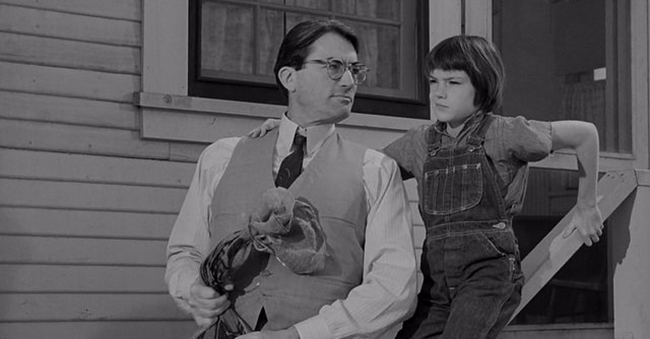
    Gregory Peck and Mary Badham in To Kill a Mockingbird

    Gregory Peck and Mary Badham in To Kill a Mockingbird (1962)

    Like many white Americans, I read To Kill a Mockingbird in junior high and loved it. Published in 1960, Harper Lee’s Pulitzer-Prize winning novel is told from the point of view of young Scout, whose father, the lawyer Atticus Finch, defends a black man falsely accused of rape. Scout’s innocent and appealing voice is an accessible vehicle for discussing race relations, and the novel has become a staple of school curricula. Gregory Peck won the Academy Award for his portrayal of Atticus in the 1962 film. The novel’s previously unpublished and controversial sequel, Go Set A Watchman, hit bestseller lists a few years ago. And Aaron Sorkin’s highly-anticipated Broadway adaptation, produced by Scott Rudin and starring Jeff Daniels, is certain to sell out. It’s no wonder that Mockingbird, published almost sixty years ago, emerged the winner of PBS’s The Great American Read television series, where viewers could vote, American Idol style, for their favorite novel.

    But there’s a reason Mockingbird is assigned to thirteen-year-olds. The moral message of the novel is a simplistic one: Racism is bad. Very, very bad.  Also, bad people are racists. Good people, the reader is assured, are not racists.

    The novel tells us very clearly which side we’re on. As readers, we are aligned with Scout and by extension Atticus, who embodies rational, educated “racial tolerance,” in sharp contrast to the novel’s depiction of an angry, ignorant, racist mob. Everything in the reading experience of the novel—our easy alliance with Scout, our comfortable sense of right and wrong—confirms a white reader’s sense of herself as open-minded, tolerant, woke. “If I lived in 1930s Alabama, I would never do that,” the white reader thinks. “I am one of the good white people.”

    The results of the The Great American Read series is certain to put Mockingbird back on bestseller lists across the nation, where it will sit in uneasy proximity to sociologist Robin DiAngelo’s White Fragility: Why It's So Hard for White People to Talk About Racism. White Fragility—currently holding the #5 spot on the New York Times paperback nonfiction bestseller list—is not directed at the angry, ignorant mob. It is directed instead at white, educated PBS-watching liberals. 

    DiAngelo (herself white) argues that progressive white Americans, confident in their stated ideals of racial tolerance and equality, can’t bear to acknowledge the material, social, and emotional benefits they derive from living in a culture based on systemic racism. To protect themselves from that painful truth, they expend enormous energy performing their tolerance. As she writes, “I believe that white progressives cause the most daily damage to people of color. I define a white progressive as any white person who thinks he or she is not racist, or is less racist, or in the ‘choir,’ or already ‘gets it.’ White progressives can be the most difficult for people of color because, to the degree that we think we have arrived, we will put our energy into making sure that others see us as having arrived.” People of color are left to negotiate and dance around the fragile egos of progressive whites, who must always be protected from the divisive charge of racism and of protecting racial inequality.

    Which brings us back to Mockingbird. White people are brought up to see their lives reflected in dominant cultural narratives and to see their stories of internal struggle and moral awakening—like the journey undergone by Scout—as universal and timeless. To suggest otherwise—to point out that racism is a daily lived reality for many people and not just part of a lesson plan—is to suggest that white people’s experiences are not universal, but specific. Worse, it implies that in loving a novel like Mockingbird, the reader herself is racist—an unbearable accusation. The book, like so many stories of white heroism, must be defended at all costs.

    Somehow, being named “racist” has, for white people, become less tolerable, more of an affront, than the practice of racism itself.

    A culture is made up of the stories it tells itself about itself. The selection of Mockingbird as “America’s best-loved novel” reminds us that as a nation we have a long way to go in telling the story of American racism and American whiteness.


    About the Author 

    Linda Schlossberg serves as Assistant Director of the Women, Gender, and Sexuality Studies Program at Harvard University, where she teaches courses in literature and creative writing. She is the author of the novel Life in Miniature and the co-editor of Passing: Identity and Interpretation in Sexuality, Race, and Religion, and her work has appeared in a variety of publications, including McSweeney’s, Conduit, and Post Road. Schlossberg was the recipient of the 2016 Emerging Writer Fellowship from the Writer's Center and is currently completing a feminist dystopian novel.

  • By Philip WarburgNuclear power plant reactor

    This article appeared originally in WBUR’s Cognoscenti.

    Faced with the Intergovernmental Panel on Climate Change’s latest report, some environmental leaders are all too ready to toss a lifeline to aging, uneconomic nuclear power plants. The Union of Concerned Scientists (UCS), long venerated as America’s most rigorous nuclear watchdog group, joined this chorus in early November.

    The UCS report, “The Nuclear Dilemma,” proposes that we single out “safe” but financially ailing nuclear plants and subsidize their operations, so that they might remain open—thus avoiding additional carbon emissions from coal or natural gas plants that might replace them. America gets about 20 percent of its electricity from nuclear power, but only 17 of the 99 reactors that generate this power are unprofitable, according to UCS. Those reactors account for just 3 percent of overall US power generation, though UCS says the share of unprofitable nuclear plants could grow in future years if the price of natural gas drops or the costs of maintaining older nuclear facilities rise.

    What do we gain by breathing some extra life into these plants? Proponents say “zero-carbon emissions.” That's if we choose to ignore the emissions associated with mining and processing uranium, building nuclear power stations, managing nuclear waste, and—on those rare but horrific occasions—dealing with the consequences of a major nuclear disaster.

    Bailing out old, financially shaky nuclear plants is a short-sighted response to a huge challenge that requires much bigger, much more transformative thinking. Instead, we ought to invest big in our leading zero-carbon alternatives—solar and wind—which offer far cheaper electricity and, unlike nuclear, have life-cycle costs that have steadily dropped over the past several years.

    Setting aside the questionable economics of boosting the bottom lines of unprofitable power plants, how would we determine if a nuclear plant is “safe”?

    The UCS recommends that we rely upon the Nuclear Regulatory Commission’s five-tier performance matrix, and offer financial support only to plants that have earned the NRC’s highest rating. In 2002, the Davis Besse Nuclear Power Station in Ottawa County, Ohio, enjoyed that rating, but in March of that year, its reactor vessel—which contains the nuclear reactor coolant and shrouded reactor core—was found to be a fraction of an inch away from a potentially catastrophic rupture. Years of undetected corrosion had worn a football-sized hole in the vessel wall.

    If the vessel had ruptured, the plant’s backup water pump (which was known to be impaired) would not have been able to re-flood the reactor vessel, an essential step in stabilizing the reactor core. In a recent interview, UCS scientist Dave Lochbaum, a seasoned reactor engineer, told me he remembers telling residents near Davis Besse: “You can stop buying lottery tickets. Your luck has been used up.”

    Hundreds of thousands of people in Central Europe and Japan didn’t fare so well in the nuclear safety lottery.

    Following the Chernobyl disaster in 1986, some 350,000 people were evacuated from parts of Ukraine and Belarus, and to this day 1,000 square miles of territory remain off-bounds to human habitation. In Japan, some 100,000 people had still not returned home five years after the March 2011 meltdown at the Fukushima Daiichi plant. Utterly different circumstances precipitated these two nuclear disasters, as well as the earlier meltdown at Three Mile Island, but all three proved the statistician’s axiom that rare events do happen.

    And then there’s the question of security at nuclear plants.

    Shortly after the 9/11 attacks on the World Trade Center and the Pentagon, word got out that unnamed nuclear plants were on al-Qaida’s list of potential terror targets. This was particularly alarming to people living near the Pilgrim power station in Plymouth, Massachusetts, situated on the flight path of the hijacked planes departing from Logan Airport.

    Suicide air attacks were one concern post-9/11; saboteurs carrying rocket-propelled grenades and other portable weapons were another. To help plant operators prepare for potential threats, the NRC increased the frequency of “force-on-force” mock confrontations with plant infiltrators. It also required plant personnel to be trained in the use of portable pumps, generators and other devices that could fill in for safety equipment knocked out by sabotage.

    Yet, at Pilgrim, this added training didn’t engender lasting vigilance.

    Diane Turco, executive director of the volunteer watchdog group Cape Downwinders, brought attention to gaping holes in Pilgrim’s plant security when she and another activist visited the plant unannounced in 2014. She explained to me how they walked by an empty guardhouse, down the plant’s interior roadway, and into the access control building, where they observed employees punching in their security codes. No one stopped them, questioned them or searched for weapons. In 2012, a member of the same group, Paul Rifkin, circled Pilgrim in a friend’s helicopter and took detailed aerial photos of the plant.  He encountered no response from plant security, the FAA or the U.S. armed forces.

    To be sure, Pilgrim is not on the NRC’s list of star performers. Burdened by a backlog of operational problems, it will be shutting down next spring. That said, the security deficits plaguing this plant are, to some degree, a warning about the broader vulnerability of nuclear plants.

    We need to cut carbon emissions drastically if we are to have any hope of avoiding the very worst of climate change. Were there no better low-carbon electricity choices, groups like UCS might be on the right track in calling for a bailout of financially strapped nuclear plants. But we do have safer, more economically viable options.

    The National Renewable Energy Laboratory projects that renewable energy, combined with a more flexible electric system, would be “more than adequate to supply 80 percent of total US electricity generation in 2050, while meeting demand on an hourly basis in every region of the country.” Keeping our least-profitable nuclear plants online is a distraction from meeting—or exceeding—this goal.


    About the Author 

    Philip Warburg is a lawyer and writer who lives in Newton. He is the author of Harvest the Wind and Harness the Sun, both published by Beacon Press. Follow him on Twitter at @pwarburg.