• A Q&A with Jacy Reese Anthis
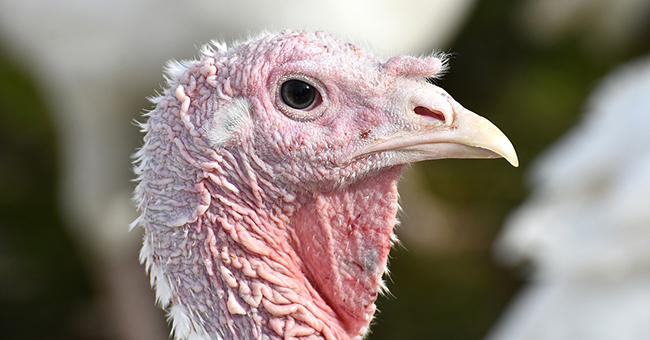
    “You know what tastes better than a scrawny, industrial slab of turkey on your plate? Field Roast, Tofurky, and Gardein! But don’t take my word for it. *wink, wink* Get chomping, hoomans!”

    “You know what tastes better than a scrawny, industrial slab of turkey on your plate? Field Roast, Tofurky, and Gardein! But don’t take my word for it. *wink, wink* Get chomping, hoomans!”

    Animal farming as we know it may go the way of the dinosaurs by 2100. That’s what Sentience Institute cofounder Jacy Reese Anthis forecasts in his new book The End of Animal Farming: How Scientists, Entrepreneurs, and Activists Are Building an Animal-Free Food System. With the developments of innovative food technologies such as cultured meats and plant-based protein, we can put slaughterhouses and industry farming out to pasture so that our clucking, oinking, and mooing friends can graze peacefully in wide-open pastures. But what does this mean for Thanksgiving, America’s most food-centric holiday? What options will we have as our food tradition evolves? And will they be just as tasty? Jacy has the answers to our questions.

    Beacon Press: What are some of the major issues that consumers should be concerned about when it comes to factory farming, especially as it pertains to poultry farms?

    Jacy Reese Anthis: First is the scale and ubiquity of suffering on factory farms. Over 100 billion animals are in the food system, and over 90% live on factory farms. That figure is over 99% in the US, based on USDA farm size data and the EPA’s definition of a Concentrated Animal Feeding Operation. The animals on these farms are confined in dreadfully tight spaces; even on a cage-free egg farm, there is usually less than a square foot of space per bird. Chickens and turkeys grow so much meat so quickly that they often topple under their own weight and die from heart attacks or organ failure. Many have their beaks tips cut off without anesthetic. They are usually bled out while still conscious, and some make it all the way into scalding hot defeathering water before dying.

    Second are the wide range of human health and environmental harms. 80% of US antibiotics are fed to farmed animals, leading to so-called “superbugs.” Animal agriculture is responsible for 14% to 20% of greenhouse gas emissions, more than the entire transportation sector. Factory farms pollute local land, water, and air, leading to increased rates of asthma and cancer, not to mention the stench and other nuisances that drive down local property values. The health and safety of workers is especially at risk, and these local workforces and communities are disproportionately people of color and undocumented immigrants.

    Finally, all animal farming is just incredibly inefficient, wasting taxpayer and consumer dollars as well as natural resources. It takes around ten calories of plant-based food to produce one calorie of animal-based food. Animals aren’t meat machines; they have hair, skin, brains, and metabolic functions that all require large amounts of energy. One entrepreneur I interviewed for my new book, Alex Lorestani at Geltor, said he was motivated to address animal agriculture because, as a scientist, he felt “technical outrage” (as opposed to “moral outrage”) at the fact that humans still use animals this way. In his words, factory farming is “the dumbest way to make the things that we need and love,” given we can make meat, dairy, and eggs without animals.

    BP: In your book you write about a future where meat is no longer the centerpiece of the American diet. What changes do you see coming for holidays like Thanksgiving that focus so predominantly around food, in a food culture that still relies so heavily on animal products?

    JRA: The biggest reason for optimism about the end of animal farming is that it doesn't have to be the end of meat. We can have a turkey on the table. In fact, we can have any animal product and the food culture that goes along with it, without raising and killing animals. This can either be done with plants—blend together the right proteins and fats to get the same taste, look, and texture of a holiday roast—or with cells—scientists are now able to take a small sample of cells from an animal and grow meat directly, in a big cultivator that looks like one of the tanks at a beer brewery. This process cuts out the middleman, cuts out the inefficiency, and provides consumers with “clean meat,” named in an homage to “clean energy” for the ethical and food safety benefits.

    Of course, adopting a new technology isn’t that simple. So, a lot of the book goes into the technical research being done, the regulation of these products by governments, and the psychology and sociology of consumer acceptance. But the prognosis is optimistic; I think we’re on track to end animal farming by 2100.

    BP: What are some companies currently working in the area of plant-based meat substitutes that consumers can turn to this holiday for alternatives to turkey, butter, milk, and any other staples they might want to substitute?

    JRA: Usually what consumers want most during the holiday season is a big protein-and-fat-rich meat product in the center of the table, like turkey or ham. Fortunately, there are several holiday roasts available today. My favorites are Field Roast, Tofurky, and Gardein. I think at least one of those can be found in most US supermarkets if they aren’t already sold out. If you’re feeling more adventurous in the kitchen, consider looking up “vegan roast recipe” on Google. Most versions are nut-based or wheat-based, but they do require you to follow the recipe pretty closely to get the taste and texture right.

    For side dishes, I would also steer people towards Google for recipes. The most important rule here is that making vegan food takes more than just cutting out the animal products. If you take cow’s milk out of a recipe, remember to add a plant-based milk or butter product, ideally high in fat content. If you take out egg, remember that different plant-based products can fill the same culinary niche: flax or chia seeds are best for precise baking, but in more casual applications, you can use fruits like bananas or avocados. Finally, if you want scrambled eggs for your holiday breakfast, rejoice with the latest plant-based product to wow vegans and omnivores alike: Just Egg.


    About Jacy Reese Anthis

    Jacy Reese Anthis is the research director and cofounder of Sentience Institute, a nonprofit think tank researching the most effective strategies for expanding humanity’s moral circle. He previously served as board chair and a researcher at Animal Charity Evaluators. Reese’s writing has appeared in Vox, Salon, and the Huffington Post, and he has presented his research to academic and nonprofit audiences in fifteen countries. Follow him on Twitter at @jacyreese and visit his website.
  • By Gayatri Patnaik

    ReVisioning American History Series

    University Press Week runs each year in November and was first established in 1978 by President Jimmy Carter to recognize “the impact, both here and abroad, of American university presses on culture and scholarship.” This year’s theme is #TurnItUP, which celebrates the dedication of University Presses to amplify knowledge. As a member of the Association of University Presses, Beacon Press is proud to participate in this year’s blog tour. In our contribution, we look at how our ReVisioning American History series challenges how so many of us have been taught to think about US history by offering a variety of US history books written from the perspectives of marginalized and underrepresented communities.

    ***

    A little over ten years ago, I found myself mulling over what kind of history books Beacon Press could successfully publish. With the incredible history titles published every year by both university and trade presses, what could Beacon do to distinguish our list in this competitive space? Certainly, the books would need to reflect Beacon’s progressive vision of social justice and also the inherently “cross-over” nature of our list. Cross-over in two senses—both in terms of the intellectually grounded but accessible writing, as well as our ability to find multiple audiences—trade, academic, and activist—for our titles.  

    Professors at history conferences had been sharing with me that students weren’t reading longer history books, and so I was already thinking of books around 300 pages (which are short considering the length of some history titles.) Then, during a one day “editorial retreat” with colleagues, the idea for this cross-over series—ReVisioning American History—was born. The goal is that each title tells US history from the vantage point of an underrepresented community, and that the series fundamentally challenges how so many of us have been taught to think about US history.

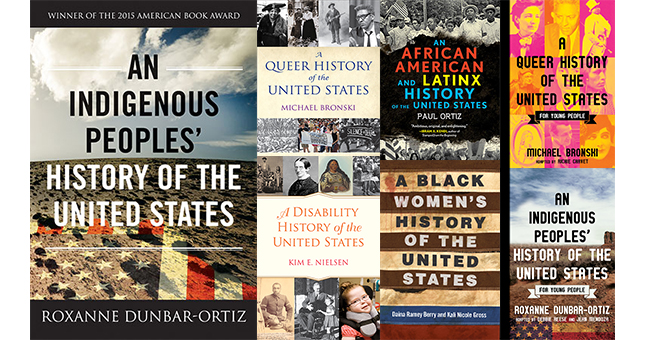
    The first title in the series, A Queer History of the United States, was published in 2011 by veteran LGBT activist and scholar Michael Bronski. A Disability History of the United States by prominent disability historian Kim Nielsen was next in 2012. Radical activist and scholar Roxanne Dunbar-Ortiz’s An Indigenous History of the United States was published in 2014, won the 2015 American Book Award and has sold over 100,000 copies. In 2018, historian and activist Paul Ortiz’s An African American and Latino History of the United States was published to a strong reception in both trade and academic markets.   

    In fall 2019 we are excited to publish A Black Women’s History of the United States by distinguished historians Daina R. Berry and Kali Gross. Other forthcoming titles include A Black Power History of the United States by former Harvard University W. E. B. Du Bois Institute Fellow Rhonda Y. Williams; A Mexican History of the United States by journalist historian Lorena Oropeza; and An Asian American History of the United States by award-winning historian Catherine Choy.

    Soon after publishing the initial books in this series, we began receiving feedback from middle and high school teachers searching for material to help make their US history curriculum more inclusive. When the FAIR Education Act was passed in California in 2011—a state law that requires the inclusion of LGBT people and people with disabilities in textbooks and social studies curricula—our books were used as blueprints for developing lesson plans. Authors in the series began receiving invites from high school educators and public-school curriculum developers.

    In response to the growing demand from school teachers, Joanna Green, a senior editor who edited a couple of the titles in the series, began working with educators and young adult authors to adapt books in the series for middle-grade and young-adult readers, as well as for professional teacher development. A Queer History of the United States for Young People will be published in June 2019, coinciding with the fiftieth anniversary of the Stonewall uprising, and An Indigenous Peoples’ History of the United States for Young People will be published in July 2019 ahead of the academic year. The potential impact of these YA editions could be wide reaching. As one teacher commented, “having accessible editions of these texts impacts not only the way I teach today, but the way I teach for decades to come.”

    The influence of the young readers series will reach beyond the classroom. We see these books going into the home as parents gift them to their children. They will give families a way to talk about complex issues and concepts around topics like race, gender, sexuality, and colonialism. Young people will learn their own and their families’ histories. Or they will learn about other communities they are not a part of, giving them resources early on to think about their contributions to systemic injustice and actions they can take toward dismantling it.

    Here’s what our authors have to say about the importance of telling these histories:

    “When I began writing the book, it struck me that the more research I did, that while this project was well-intentioned, it was rather unnecessary. That in fact gay, lesbian, bisexual, transgender people, African-American people, Latino people, women have always been in American history. So the very process of separating people out in order to put them back in seemed to me to be shortsighted. So the purpose of the book as I began writing it became clearer and clearer–it was simply to identify and find the LGBT people that are in American history already. The more I did this, what I discovered was that there were so many people, so many events, people's lives, people's personalities were so intertwined with what we think of as American history that there was no separation at all.”
    —Michael Bronski

    “Disability Studies courses enable students to better deal with the vagaries of life. All of us either are or know people who live with disability. Knowing that disability is not tragedy, and that disability is simply part of the human experience, enables all of us to better savor the human experience.”
    —Kim E. Nielsen

    “I think it’s a very important time to have a Native voice really making clear what’s going to happen, but also the means of survival. One thing Native people have really been about for the last 500 years is surviving an onslaught of continual genocide, warfare, suppression, near extinction of languages, of cultures, of sacred items. Survival is an active word. It’s not just passively surviving. That takes an enormous amount of resistance and cultural continuity, and that has allowed for the survival. Everyone’s going to have to learn how to survive because we’re already to the point that there’s going to be dire consequences even if we very quickly did a whole lot of things to slow it down. Things are already happening. In a way, everyone on earth has become the Indian from these five centuries of destruction of the earth through industrial, corporate profits to get more and more things out of the earth and devastate it. I think Native people have a lot to teach, and people will start listening.”
    —Roxanne Dunbar-Ortiz

    ***

    Head on over to these other university press blogs to read their contributions: Harvard University Press, University of Nebraska Press, University of Alabama Press, Rutgers University Press, University Press of Kansas, University of Georgia Press, University of Toronto Press, University of California Press, University of Rochester Press, and Wilfrid Laurier University Press. Visit the AUP website for a list of contributions from the rest of the week.

  • By Dina Gilio-Whitaker

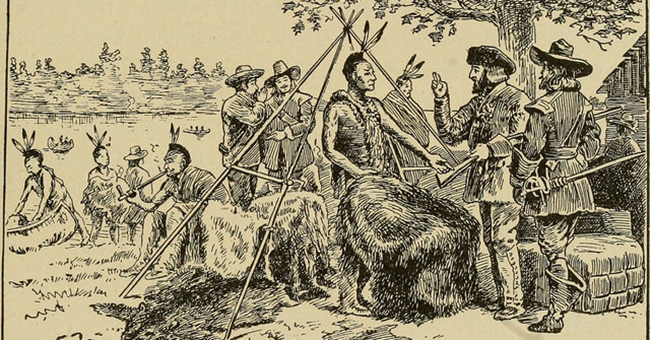
    From “Our colonial history from the discovery of America to the close of the revolution,” 1915. French trading with Native Americans.

    From “Our colonial history from the discovery of America to the close of the revolution,” 1915. French trading with Native Americans.

    Robin DiAngelo’s brilliant 2018 manifesto on white fragility was a much-needed truth bomb at a time when it’s more clear than ever that we are light years away from the “post-racial state.” Perhaps most important about the book was its clarity that racism is systemic and structural, that no white people are immune from it, and that their fragility about it is based on a belief that they are being judged as bad people (the good-bad binary). In this second part of a two-part series (see part one here), I take on the similar but very different concept we in Indian country call settler privilege and its companion, settler fragility.

    Settler fragility stems from settler privilege, which is similar to white privilege in that it is systemic, structural, and based on white supremacy, making it difficult to identify. Only in some ways, settler privilege is far more covert and cunning. The reason is because of the ubiquitous ways the US is normalized; that is, the US settler state is the “water we swim in.” US citizens of all races and ethnic groups have been indoctrinated their entire lives with messages designed to foster a sense of national pride and belonging in the making of what has been called an “imagined community,” which always occurs on Indigenous lands. Their citizenship and their very identity are taken for granted without critical consciousness about the US’s contradictory foundational structures and narratives. 

    Settler colonialism is said to be a structure, not an historic event, whose endgame is always the elimination of the Natives in order to acquire their land, which it does in countless seen and unseen ways. These techniques are woven throughout the US’s national discourse at all levels of society. Manifest Destiny—that is, the US’s divinely sanctioned inevitability—is like a computer program always operating unnoticeably in the background. In this program, genocide and land dispossession are continually both justified and denied.

    Like white fragility, settler fragility is the inability to talk about unearned privilege—in this case, the privilege of living on lands that were taken in the name of democracy through profound violence and injustice. Like white privilege, white supremacy is also at the root of settler fragility. The difference is that foreign invasion, dispossession of Indigenous lands, and genocide were based on (white) European religious and cultural supremacy as encoded in the doctrine of discovery, not racial supremacy. And, unlike for other people of color who have made significant legal gains in the US legal system, the nearly two-centuries-old doctrine of discovery is at the foundation of the legal system that still paternalistically determines Native lives and lands.

    Settler privilege thus simultaneously implicates and is beyond racism, which is one reason why, paradoxically, even non-Native people of color can experience a type of privilege and fragility. Fragility stems from the need to distance oneself from complicity in settler colonialism, in what some scholars have called “settler moves to innocence.” The good-bad binary is part of this distancing impulse, because like racism, nobody wants to be associated with genocide and injustice, especially in a country that touts its democracy and equality, and especially for people who have been oppressed by it in other ways. But compared to white privilege, this is what makes settler privilege so much more beguiling and difficult: it cuts to the core of American identity in all its iterations, subtly calling into question the legitimacy of the US and the sense of belonging on the land.

    Here are some of the ways settler fragility can be seen in all ranges of the political spectrum. On the liberal end we see:

    1. “I love Indians and Indian culture. I believe I have Native ancestry somewhere in my family tree” (I have been oppressed, too, even though I’m white).
    2. “Even though the Indians didn’t deserve what we did to them, the damage is done and there is nothing we can do to right the wrongs that have been done to them” (We should all move on and forget the past, and Indians should get beyond their victimization).
    3. “We are all one people now” (The settler state and all its attendant privileges must prevail).
    4. “I am a person of color and am subject to racism, so I don’t have settler privilege” (I have no reason to be accountable to settler colonialism since I am oppressed, too).  
    5. “Since I am poor and don’t own any land, I don’t have settler privilege.”

    In the middle we see:

    1. “Neither I or my ancestors killed anyone to be here” (my people are not to blame).
    2. “We can’t apply the standards of today to the behavior of our (European) ancestors” (evasion of accountability).
    3. “Most Native American people have white ancestry” (that means they are complicit in settler colonialism, too; if everyone is to blame, then no one is to blame).

    On the right end of the spectrum:

    1. “Indians were all killing each other anyway when Europeans got here” (they were uncivilized savages anyway).
    2. “I’m a ‘native’ American because I was born here” (American Indian history is irrelevant, and the settler state prevails).

    It’s important to emphasize that like white privilege, settler privilege is systemic, so just denying that one doesn’t possess it doesn’t mean one isn’t complicit in it. This is about deeply questioning all the assumptions we have been raised with in a society built on imperialism, private property (which includes slavery), and capitalism. Even for Native people who don’t live in their ancestral homelands, the questions need to be asked: who are the original people of the place where I live, and what are my responsibilities to them?

    Here’s how some of these ideas apply in my own life, which are vexing and uneven but do not relieve me from accountability. I am of mixed European and Native ancestry. A phenomenon I have been exposed to throughout my life is the minimization of my Nativeness by others in order to emphasize my Europeanness (“you’re not a real Indian”). However, my non-Native ancestry does not cancel out the ways my Indigenous ancestors were victimized by the genocidal policies of the US, nor has it shielded me from inheriting the negative impacts of that history.  

    At the same time, I was born and raised outside my Native community due to the policies of forced assimilation my mother and her ancestors were subjected to; I live in the Native American diaspora. This means that as long as I don’t live in my ancestral lands, even though I am Native, I am still a guest in someone else’s homelands (currently the lands of the Acjachemen Nation in Southern California). Based on the way I look I have a degree of skin privilege, so I rarely experience overt racism. On the other hand, as a mixed-blood Native person, due to colonial processes of erasure and prevailing stereotypes, I cannot be seen by dominant society for who I am as an “authentic” member of my group.

    This is extremely complex terrain, and there are many shades of grey depending on a person’s own ancestral origins. But the most important point is that this is a structural, societal issue to which we each have an individual relationship. The central question is: what is our relationship to place, and what processes have granted and/or denied us privilege in it? To unsettle settler privilege, we need to accept that we have responsibilities not only to the land we live upon, but to the Native community of that place in order to be good relatives, accomplices, and tenants.


    About the Author 

    Dina Gilio-Whitaker (Colville Confederated Tribes) is a lecturer of American Indian Studies at California State University San Marcos, and a consultant and educator in environmental justice policy planning. Her research interests focus on Indigenous nationalism, self-determination, environmental justice, and education. She also works within the field of critical sports studies, examining the intersections of indigeneity and the sport of surfing. She is co-author with Roxanne Dunbar-Ortiz of Beacon Press’s “All the Real Indians Died Off” and 20 Other Myths About Native Americans, and her forthcoming book, As Long as Grass Grows: The Indigenous Fight for Environmental Justice from Colonization to Standing Rock, is scheduled for release by Beacon Press in April 2019. Follow her on Twitter at @DinaGWhit and visit her website.

  • By Mirta Ojito

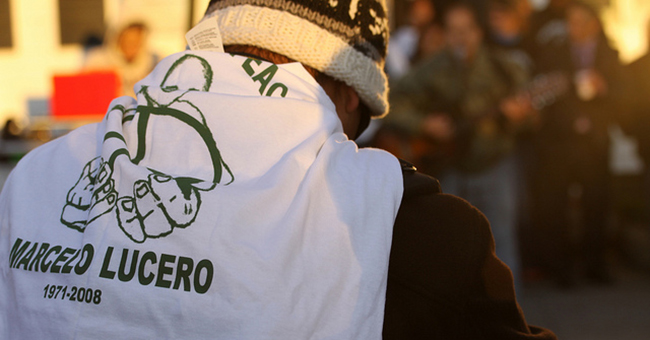
    “Wall of Hope”: 2010 Vigil for Marcelo Lucero

    “Wall of Hope”: 2010 Vigil for Marcelo Lucero. Photo credit: longislandwins

    Where are we, socially, as a country, ten years to the day after the murder of undocumented Ecuadorian immigrant Marcelo Lucero? Sadly, in the exact same place. The environment of angst toward the growing presence of immigrants in 2008 Patchogue, New York, where Lucero lived, looks too much like today’s administration that continues to spout hate-laced rhetoric and policies toward the immigrant community. Except this time, it’s cranked up to fever pitch. Look at the migrant families being separated at the southern border. Listen to the comments about “caravans.” This is reminiscent of the hotbed of hate that led to Lucero’s murder. Mirta Ojito wrote about it in Hunting Season: Immigration and Murder in an All-American Town. So, in honor of Lucero’s memory, we’re sharing an excerpt of it. Because we still have so much to learn about the war on immigration.

    ***

    On November 8, 2008, having had a few beers and an early dinner, Marcelo Lucero, an undocumented Ecuadorian immigrant, took a late-night stroll with his childhood friend Angel Loja near the train tracks in Patchogue, a seaside village of twelve thousand people in Suffolk County, New York, a county that only three years earlier had been touted by Forbes magazine as one of the safest and wealthiest in the United States. It is also one of the most segregated counties.

    Before the mild moonlit night was over, Lucero was stabbed and killed by a gaggle of teenagers from neighboring towns, who had gone out hunting for “beaners,” the slur that, as some of them later told police, they used for Latinos. Earlier that night, they had harassed and beaten another Hispanic man—a naturalized US citizen from Colombia named Héctor Sierra. The teenagers also confessed to attacking Hispanics at least once a week.

    Lucero was not the first immigrant killed by an enraged mob in the United States, and he most certainly will not be the last. At least two other immigrants were killed in the Northeast in 2008, but Lucero’s case is especially poignant because he was killed by a high school star athlete in an all-American town where people of mostly Italian and Irish descent proudly display US flags on the Fourth of July and every year attend a Christmas parade on Main Street. If it happened here, it can happen anywhere.

    Patchogue, in central Long Island, is only about sixty miles from Manhattan—far enough to escape the city’s noise, dirt, and angst, but close enough to feel splashes of its excitement, pluck, and glamour. Lucero, who probably didn’t know about the Forbes ranking of the village as an idyllic place to live and raise children, had come from Ecuador to Patchogue in 1993 on the heels of others from his hometown who for thirty years now have been slowly and quietly making their way to this pocket of lush land named by the Indians who once inhabited it.

    In Ecuador, too, Lucero had lived in a small village called Gualaceo. The town has lost so many of its people to Patchogue that those who remain call it Little Patchogue, a way to honor the dollars flowing there from Long Island. Month by month, remittances from New York have helped Gualaceños prosper despite a profound and long-lasting national economic crisis that forced the government to toss its national currency and adopt the US dollar more than a decade ago.

    The day before he was killed, Lucero, thirty-seven, had been talking about going home. Over the years he had sent his family about $100,000—money earned working low-paying jobs—to buy land and build a three-story house he planned to share with his mother, his sister, and his nephew. He was eager to join them. The sister, Rosario, had asked him to be a father figure for her son. It’s time to go, Lucero told his younger brother, Joselo, who also lived in Patchogue.

    “He was tired,” Joselo recalled. “He had done enough.”

    Lucero was planning to leave before Christmas, an early present for their ailing mother. I’ll take you to the airport, Joselo promised. He never got the chance.

    ~~~

    The killing did not surprise experts who track hate crimes and who knew that attacks against Hispanic immigrants had increased 40 percent between 2003 and 2007. According to the FBI, in 2008, crimes against Hispanics represented 64 percent of all ethnically motivated attacks.

    In the two years that followed Lucero’s death, hate crime reports in Suffolk County increased 30 percent, a ratio closely aligned with national trends. It is unclear whether more attacks have taken place or if more victims, emboldened by the Lucero case, have come forward with their own tales of abuse.

    Lucero’s murder, as well as the growing number of attacks against other immigrants, illustrates the angst that grips the country regarding immigration, raising delicate and serious questions that most people would prefer to ignore. What makes us Americans? What binds us together as a nation? How do we protect what we know, what we own? How can young men still in high school feel so protective of their turf and so angry toward newcomers that they can commit the ultimate act of violence, taking a life that, to them, was worthless because it was foreign?

    ~~~

    Lucero’s death has left a mark on Patchogue, and placed the village in the eye of the political storm that immigration has become. On the night of November 8, 2008, a Saturday, everyone went to sleep in a town that was almost totally anonymous and awoke the next morning to find satellite trucks in their front yards. Mayor of Patchogue Paul Pontieri found out about the attack as he sipped coffee and read the Sunday paper in his backyard. Diana Berthold, a local artist, heard the story on TV. In desperation, and out of habit, she began to quilt. Jean Kaleda, a local librarian, was coming back from a short vacation when a friend told her about it; her stomach lurched at the news.

    Film and television crews descended on the town. A half-hour documentary was promptly filmed and released, PBS taped a show, and a local theater group staged a well-received play about the murder. In addition, college students wrote essays about Lucero and hate crimes to win scholarship money. Later a separate scholarship fund was established by the Lucero family to help seniors from the local high school—the same school where the attackers had been students—pay for college. (At the end of 2012, four students had received scholarships ranging from $250 to $500.) A group of about twenty women worked for more than a year on a three-part quilt that has been used in a local anti-hate campaign. Soccer tournaments that include Latino teams have become yearly events spearheaded by Eddington, the former legislator, and a group of Ecuadorians, under the banner of the Lucero Foundation, has met regularly to discuss issues that affect their community. (At a meeting in November 2011, the discussion wavered between two issues: whether to give toys or candy to children at a Christmas gathering, and how to react to a man who disrupted a town parade because Latinos had been included.)

    But beyond the headlines, sound bites, and community meetings, and after the satellite trucks left, what remains is daily life in this seemingly sleepy and charming village. It is here, in the mundane details of personal stories and relationships, where my book dwells. This two-way process of assimilation and adaptation—a drama unfolding every day, in every small and not-so-small town across the United States—is how stereotypes are shaped and cemented, opinions are molded, and political decisions are made. When the process works well, as it usually does, America is at its best: welcoming and gracious, showering newcomers with handouts and opportunities like no other country on earth. When it doesn’t, as has been increasingly the case, America is at its worst: parochial, protective, and dismissive of the other. (Arizona and Alabama, with their punitive anti-immigration laws, are relevant examples.)

    In Patchogue, Marcelo Lucero thought he had found a home, albeit a temporary one, but to the town he was always a stranger, a foreigner, an invisible other. Pontieri is still upset when he recalls that a few days after Lucero’s death a local Hispanic man approached him to talk about his fears. Pontieri asked him where he lived. Over there, the man said, pointing to a small, white, wood-framed home two doors from the house where Pontieri grew up, the house he visits every day to check on his mother. “How is it that I never saw him?” Pontieri asked me rhetorically. “He’s been living here for years and I never saw him before, and I know everybody in this town.” Four years later, wanting to meet that man, I asked Pontieri what his name was. He had forgotten—or never learned it.

    Of course, Pontieri does not know everybody in his village. He didn’t know Lucero either, just like most people in Patchogue. Only in death did they learn his name. Only in death were they forced to see him.


    About the Author 

    Mirta Ojito, a Pulitzer Prize-winning reporter, has worked for the Miami Herald, El Nuevo Herald, and the New York Times, where she covered immigration for the Metro desk. She is the author of Finding Mañana: A Memoir of a Cuban Exodus and Hunting Season: Immigration and Murder in an All-American Town. Follow her on Twitter at @MirtaOjito.

  • By Dina Gilio-Whitaker

    Samoset comes "boldly" into Plymouth settlement. Woodcut designed by A.R. Waud and engraved by J.P. Davis (1876).

    Samoset comes "boldly" into Plymouth settlement. Woodcut designed by A.R. Waud and engraved by J.P. Davis (1876).

    November is Native American Heritage Month, when we as American Indian people get to have the mic for a little while. So, I’d like to take my turn at the virtual mic to talk about settler privilege, something you likely have never thought of, or have never even heard of. What you have undoubtedly heard of, however, is white privilege.

    Peggy McIntosh first popularized the concept of white privilege in her now-classic 1989 essay “White Privilege: Unpacking the Invisible Knapsack.” The impact of her essay was due at least in part to its clarity and readability; it broke down into a list of easy to understand ideas why white people have unearned advantages in society based on their skin color. Not that it was necessarily easy for white people to accept that they are in fact “more equal” than others, but the essay opened up a conversation that has gained serious traction in our social discourse, especially now when racism is on full, unobstructed display in this Trumpian moment.    

    White privilege centers the concept of race, describing racism as systemic and hierarchical, often in binary terms of black and white, which has its limitations for other people of color. Racism is certainly not limited to African Americans; American Indian people have for centuries been targeted in countless ways that are fundamentally genocidal in nature. The single, irreducible element of the racism American Indians have been subject to is the acquisition of our lands, and this is what makes racism against American Indians different than all other forms of racism and discrimination. This is the core of a system we call settler colonialism.

    People who do not have ancestral connections to Native communities are all either settlers or immigrants. People with ambiguous “Native ancestry,” like Elizabeth Warren, are so disconnected from whatever Native roots they may have had that they can no longer be considered Native. Settlers are people whose ancestors who came to acquire recently dispossessed Indian lands, such as recipients of the homesteads of the nineteenth century and earlier land speculators. Immigrants are people who came later to cash in on the benefits of American citizenship that didn’t necessarily include land (but might have if they came with enough money to invest in American land). Most are settlers (also “colonizers”) or immigrants by choice, with the exception of Blacks who are descended from slaves who were settled here without their consent.

    All of today’s settlers and immigrants are in one way or another beneficiaries of genocide and land theft, even if they are simultaneously themselves victims of other forms of discrimination (with the possible exception of migratory Indigenous peoples of “Meso-America”). I realize this may be difficult for people of color to hear. But this is what it means to center settler colonialism as a framework for understanding the foundation of the US beyond an analysis of race, since the origins of the US are rooted in foreign invasion, not racism.   

    To this end, I would like to propose an invisible knapsack with colonialism as its starting point for recognizing how everybody not of American Indian heritage benefits from unearned settler privilege (or complicity). You have some degree of unearned settler privilege or complicity in settler colonialism if any of these statements apply to you:

    1. I can live anywhere in the US without being disturbed that people of my race or ethnic group were not systematically killed or displaced so that I could live there.
    2. I don’t have to worry that images, symbols, or names of people of my ethnicity will be used as sports mascots, Halloween costumes, or marketing logos, and that I will be told that when they are that I am being honored, even when I say I don’t feel honored.
    3. I am not burdened that people not of my ethnicity will appropriate the spirituality and religion specific to my community and justify it with arguments that everybody has a constitutional right to practice whatever religion they choose.
    4. I am not concerned about my group’s history being accurately represented in my children’s education, or represented at all.
    5. I don’t have to worry that I will be perceived as an authentic member of my ethnic group based on a sufficient amount of “blood,” as verified by a government-issued document.
    6. I can see myself and my ethnic group represented in a wide variety of media and popular culture that aren’t predominantly stereotypes.
    7. I am usually represented in statistical findings in studies and reports.
    8. I am never confronted with comments that express surprise that my group is still existent.
    9. I am never confronted with comments that imply that my group deserved to be wiped out because they were all killing each other already anyway before being invaded by outsiders.
    10. I don’t have to hear references about my group described as a “plight.”
    11. I never have to defend against the desecration or digging up of burials of my ancestors for capitalist development.
    12. I can be assured that the American legal system will defend my ability to practice my religion in its original setting, and respect that it is based on a different set of assumptions about the world than other religions.
    13. I am not subject to a legal system that is based on a concept of cultural and religious inferiority of my group.
    14. I don’t see myself spoken of as a “savage” or other derisive term in any of the US’s founding documents.
    15. I never have to worry that my legal existence or that of my group can be terminated at any time by the US government without my consent.
    16. I have no ancestors who were considered “wards of the state” even though they committed no crime.
    17. I have no ancestors that were hunted for bounties paid for by any governmental agency.

    Discussions about unearned racial privilege often results in defensiveness by people who don’t believe they are being fairly portrayed, and have evolved into what Robin DiAngelo has famously called white fragility. In part two of this series, I will discuss settler fragility and what it looks like in popular American discourse.


    About the Author 

    Dina Gilio-Whitaker (Colville Confederated Tribes) is a lecturer of American Indian Studies at California State University San Marcos, and a consultant and educator in environmental justice policy planning. Her research interests focus on Indigenous nationalism, self-determination, environmental justice, and education. She also works within the field of critical sports studies, examining the intersections of indigeneity and the sport of surfing. She is co-author with Roxanne Dunbar-Ortiz of Beacon Press’s “All the Real Indians Died Off” and 20 Other Myths About Native Americans, and her forthcoming book, As Long as Grass Grows: The Indigenous Fight for Environmental Justice from Colonization to Standing Rock, is scheduled for release by Beacon Press in April 2019. Follow her on Twitter at @DinaGWhit and visit her website.

  • By Jacy Reese

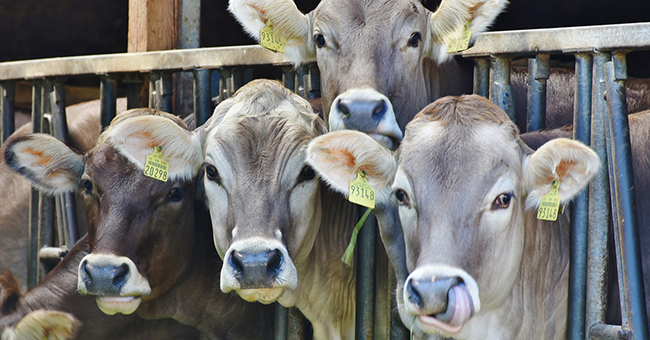
    Cows

    Few buzzwords are more important in food marketing than “natural.” It’s been applied to everything from Cheetos to Minute Maid with high fructose corn syrup. Yet despite its meaninglessness, fifty-nine percent of shoppers say they regularly check for the label.

    When it comes to meat, the situation is pretty crappy—in one experiment, 100 percent of ground beef samples tested positive for fecal bacteria. Virtually all meat today comes from animals who have been artificially bred for decades to grow in extremely unnatural ways. Chickens grow more than four times as large today as they did in the 1950s on the same diet. Over ninety-nine percent of US farmed animals and over ninety percent globally are raised on factory farms where they are tightly confined with other animals, leading to misery and disease.

    I say all of this because the state of the food system is dire. We have a desperate need for solutions to halt the urgent catastrophe of animal and human suffering. This is why scientists and chefs have been working on so-called clean meat, real animal meat made without animal slaughter.

    The process is fairly simple. Scientists take a sample of cells from a living animal, such as with the feather of a chicken. The cells are mixed with nutrients, sugar, and growth factors, which makes the cells grow into muscle, fat, and connective tissue—the constituents of meat.

    This is actually the same process that happens inside of an animal’s body, just without the hair, feathers, hooves, nervous system, immune system, and other caloric needs of sentient animals. Scientists can also produce acellular products like milk and egg whites using microorganisms, the same process that has been used for decades to make other products like insulin for diabetics.

    Obviously, this process can seem quite unnatural. But how does it really stack up against meat from animal farming?

    A lot depends on exactly how we define the term. This isn’t an easy task, but the most common use of the term is something like, “the way things would be without human intervention.” However, virtually nothing we eat today is natural by this definition. Have you ever seen bananas before human intervention? They have more seeds than flesh, and they don’t taste very good at all. We took nature’s block of marble and sculpted it into exactly what humans desired: nutrients, color, tiny seeds, and lots of sugar.

    If we look at cultured meat, the process itself is actually entirely natural—it’s just growing meat the same way it’s been grown inside animals. Of course, this technology changes the environment in which this happens, from in vivo (in a living organism) to ex vivo.

    But it’s clear that something being natural doesn’t necessarily mean it’s good. Philosophers have even coined a term for this common logical fallacy, the appeal to nature. Plenty of bad things are natural, like murder and malaria. Plenty of good things are unnatural like plumbing and modern medicine.

    But what matters for consumer adoption is simply the perception, not rational analysis. When people think of naturalness, they aren’t just thinking of a black-and-white question of human intervention. People often want natural food simply because marketers have shone a light on the term, and more rationally, consumers are also trying to approximate what really does matter about food: food safety, sustainability, animal welfare, and food tradition.

    Naturalness can be a decent approximation for food safety when used as a precautionary principle. If we think of the spectrum of naturalness as ranging from “safely consumed for all human history” to “invented in 2018,” then it’s probably true that older foods are less likely to have food safety issues, simply due to their track record.

    Cultured meat lacks this track record, but when it comes to direct estimates of the ethical and health issues—conventional meat is in a distant second place.

    Cultured meat simply bypasses the foodborne illness that inevitably comes with animal agriculture. There’s no fecal contamination, because there’s no digestive system. Around eighty percent of US antibiotics are fed to farmed animals, which is a huge risk factor for superbugs—but there’s no need for the mass distribution of antibiotics in animal feed if there are no animals in the process.

    In terms of sustainability, animals are woefully inefficient. For every ten calories of plant-based food fed to a farmed animal, we get around one calorie of animal-based food. For every ten grams of plant-based protein, we get around two grams of animal-based protein. This is because of extraneous processes, like digestion, that are completely irrelevant for cultured meat.

    When we use sentient beings as mere property—as raw materials and labor to produce meat, dairy, and eggs—we inevitably see cruelty, because animal welfare will never perfectly align with animal efficiency.

    Naturalness is also closely tied to people’s sense of food tradition. In Texas where I grew up, barbecue and meat-centric cooking were a crucial part of celebrations like birthdays and graduations. But this isn’t something we need to give up with cultured meat; we can still have our turkey for Thanksgiving. People eat meat in spite of how it’s produced, not because of it.

    There’s good news for consumers eventually recognizing cultured meat as natural in all the ways that matter. Unlike with other food technologies like GMOs, public discussion of cultured meat has been centered on the ethical problems it will solve rather than the profits it will generate. And surveys have found that when people are told the details of growing meat without animals, as well as the argument that basically all human foods are unnatural, consumers are significantly more interested in trying it.

    It would be tragic, if in 2050, we had climate catastrophe, superbugs, and mass animal cruelty because consumers were a little weirded out by a new food technology. Fortunately, the moral demand for cultured meat seems poised to overtake the initial hesitation.


    About the Author 

    Jacy Reese is the research director and cofounder of Sentience Institute, a nonprofit think tank researching the most effective strategies for expanding humanity’s moral circle. He previously served as board chair and a researcher at Animal Charity Evaluators. Reese’s writing has appeared in Vox, Salon, and the Huffington Post, and he has presented his research to academic and nonprofit audiences in fifteen countries. Follow him on Twitter at @jacyreese and visit his website.
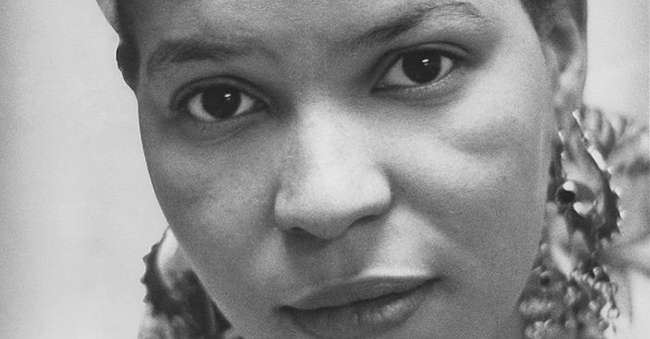
  • Ntozake Shange, Reid Lecture, Women Issues Luncheon, Women's Center, November 1978.

    Ntozake Shange, Reid Lecture, Women Issues Luncheon, Women's Center, November 1978. Photo credit: Barnard College

    As so many cultural leaders note in the tribute obituaries we’ve linked to below, Ntozake Shange was a completely original, breathtaking artist. From the time she embraced the name gifted to her by Ndikko and Nomusa Zaba, a name which meant “she who comes with her own things/who walks like a lion,” Ntozake Shange launched headlong into her program to electrify dance, poetry, and theatre. Even when her own movement became limited, she kept her focus and worked whenever she could. We were working with her on a book to be called Dance We Do: A Poet Explores Black Dance. She was filled with ideas and ambitions, more choreographers and dancers she wanted to interview and include, some art we should commission to go in the book, some photos she would be sending. And the writing was, as she describes herself at one point, ebullient. Both Maya Fernandez and I had spoken with Zake last week; Maya was completing work on the new edition of her wonderful book If I Can Cook You Know God Can, and I wanted to check in on those photos, to begin work on the cover of the new book. All of us at Beacon were shocked and far more than saddened. But I know we all feel lucky to have shared a little bit of time with Zake, on her much too brief visit to our small planet.
    —Helene Atwan, Director 

    “Working with Ntozake was a privilege. I am so thankful to for the opportunity to experience her light and greatness. Like many Black women, her words held such power in my understanding of what it means to exist in this world. I am forever grateful for her. Rest easy, Ms. Shange.”
    —Maya Fernandez, Editorial Assistant 

    “Zake was a woman of extravagance and flourish, and she left quickly without suffering. It’s a huge loss for the world. I don’t think there’s a day on the planet when there’s not a young woman who discovers herself through the words of my sister.”
    —Ifa Bayeza, Shange’s sister, quoted in Star Tribune 

    “For those of us who arrived at her words, whether as young girls or fully grown women, we found an altar erected in tribute to our stories, our traumas, and our particular way of being in the world. . . . If there is comfort to be had in her passing, it’s in knowing that she left this world having done what she intended to do: she empowered generations of girls and women—and hopefully, many more to come—with the voice to ‘sing a black girl’s song; to bring her out, to know herself.’

    Thank you, Ntozake.”
    —Maiysha Kai, The Glow Up on The Root  

    “In her work, Ms. Shange was a champion of black women and girls, and in her trailblazing, she expanded the sense of what was possible for other black female artists.”
    —Laura Collins-Hughes, Washington Post 

    “I see her work as just so vivid and sensual and powerful and empowering not only for women but for all people. And I think that she’s a national treasure. . . . all of her work basically has been about uplifting us. And I think that it’s the time that we revisit her work again.”
    —Tony Medina, professor of creative writing at Howard University, interviewed on NPR Morning Edition

  • By Alexandra Minna Stern

    Residents of Squirrel Hill, Pittsburgh, gathered together during the past few days to mourn the loss of those shot at Tree of Life.

    Residents of Squirrel Hill, Pittsburgh, gathered together during the past few days to mourn the loss of those shot at Tree of Life. Photo credit: Mark Dixon

    It’s been widely reported that Robert Bowers, the man who gunned down eleven congregants at the Tree of Life synagogue in Pittsburgh on October 27, 2018, was active on the platform Gab. Although it went offline after the massacre, Gab has consolidated itself as the Wild West alternative to Twitter, where anything goes. Its message boards are awash in a constraint stream of obscene, demeaning, and dehumanizing memes and messages about Jews, women, people of color, and LGBTQ people. 

    The acronyms and shorthand on Gab, like ZOG—Zionist Occupation Government—or “cucks”—describing emasculated men and mainstream conservatives—are deciphered with a wink and a nod by white nationalists. And the participation of Bowers, whose handle was “OneDingo,” in the vitriol of Gab was typical—just another day in the life of this “free speech” platform. 

    It is important to recognize the role of Gab in inciting violence. However, it represents the most gruesome tip of a much larger anti-Semitic iceberg. 

    Indeed, the memes and messages swirling around Gab have meaning for white nationalists, because they tap into both a much longer history of anti-Semitism in the West and, importantly, into core ideas and narratives of twenty-first-century refashioned white nationalism. 

    Over the past twenty years, white nationalists have produced a body of faux-scholarly literature, calibrating stories of the evils of Zionism and the inordinate cultural influence of Jews for twenty-first-century America. This alt-right literati, some of whom hold PhDs, knows that constructing a persuasive narrative requires accessible prose, argumentation, consistent framing. 

    Foremost among these white nationalist authors is Kevin MacDonald, a retired psychology professor who runs the blog The Occidental Observer and wrote a trilogy of books that explore what he calls “Jewish in-group preference.” According to him, Jews’ high intelligence has resulted in their successful manipulation of resources and capital to control Western societies. His most well-known monograph, The Culture of Critique, is the age-old conspiracy theory of Jewish dominance masked in an academic façade.1

    From the alt-right perspective, Jews are the primary motor behind interracial unions and partnerships, the entrenchment of feminism, and the growing acceptance of LGBTQ communities. Most dramatically, Jews are solely responsible for America’s unfolding demographic transition. 

    White nationalists pinpoint the origins of this Jewish takeover back to 1965, proposing that Jews single-handedly engineered the Hart-Celler Act, an immigration law that replaced racial quotas with family reunification. As MacDonald has written, “The organized Jewish community was the most important force in enacting the 1965 law which changed the ethnic balance of the country.”2

    Put simply, American Jews have caused “white genocide.” From the alt-right perspective, their actions are leading directly to the extinction of the white race as the clock ticks towards 2050, when, according to census projections, this country will have racial plurality, not a white majority.

    There are two aspects of these arguments that are particularly dangerous. One, provocatively, repackages Zionist conspiracy as man-made—or Jew-made—genocide. As Greg Johnson said in a podcast with David Duke a few weeks ago promoting his new book, The White Nationalist Manifesto, this genocide is not an accident: “It is intentional.” Second, the Holocaust is demoted from one of the most tragic global events to a minor incident. Both MacDonald and Johnson, for example, spell the word with a lower case h. MacDonald recommends, for instance, that the holocaust be “stepped over,” because it is not pertinent to whites today and serves as a distraction.3

    Providing strategies for this disavowal, Johnson, in his book New Right Versus Old Right, describes the Holocaust as an unavoidable topic, a big interruption in history’s march forward that must be tackled in some form, namely, by underplaying its importance to the contemporary moment.4 Johnson does not engage in Holocaust denial, but instead wants to mold history to enable white nationalist consciousness: “because mere historical facts—no matter what they are—should never deter us.”5

    In our post-truth era, their arguments about the Holocaust are gaining more currency. As the memories of World War II fade, as the last regenerations pass on, it is more important than ever to remember that genocide was defined by the United Nations in 1948 in direct response to Nazi atrocities, to provide parameters so that would never happen again. It is the most perverse and perilous of ironies that the alt-right have seized the term as a cri de coeur for white victimhood.

    The Tree of Life temple, which works with Pittsburgh’s Jewish Refugee and Immigrant Services and was performing a bris for the child of a lesbian couple on the morning of the massacre, is the white nationalist’s worst nightmare. It represents how American Judaism propels forward white dispossession at a breakneck speed. 

    It is imperative to deconstruct alt-right narratives of history, which provide the underlying meaning for bigoted and hateful memes like the plethora of bearded orthodox Jewish men with craggy notes, hunkered over and enfeebled, that proliferate cartoonishly on Gab and other forums. In the white nationalist mindset, Jews are the biggest obstacle to making American great again. 


    Notes 

    1. Kevin MacDonald, The Culture of Critique: An Evolutionary Analysis of Jewish Involvement in Twentieth-Century Intellectual and Political Movements (Westport: Praeger, 1998), Kindle edition.
    2. Ibid.
    3. See preface authored by Kevin MacDonald in Greg Johnson, New Right Versus Old Right (San Francisco: Counter-Currents Publishing, 2013), Kindle edition.
    4. MacDonald preface, New Right Versus Old Right.
    5. Ibid.


    About the Author 

    Alexandra Minna Stern is the author of the award-winning Eugenic Nation: Faults and Frontiers of Better Breeding in Modern America (2d. ed., 2015) and Telling Genes: The Story of Genetic Counseling in America (2012). In addition to dozens of scholarly essays, she regularly contributes to the popular media through opinion pieces, blog posts, and interviews. She leads the Sterilization and Social Justice Lab at the University of Michigan whose work on eugenic sterilization in California has been featured in The Atlantic, The New York Times, and NPR, and many other media venues. Stern is Professor of American Culture, History, Women's Studies, and Obstetrics & Gynecology at the University of Michigan. Her forthcoming book from Beacon Press, Proud Boys and the White Ethnostate: How the Alt-Right Is Warping the American Imagination, will be released in July 2019. 

  • A Q&A with Dominique Christina

    Illustration of Dr. J. Marion Sims with “Anarcha,” from the series “A History of Medicine in Pictures,” by Robert Thom, 1961. Courtesy of the Pearson Museum, with permission from the Southern Illinois University School of Medicine.

    Illustration of Dr. J. Marion Sims with “Anarcha,” from the series “A History of Medicine in Pictures,” by Robert Thom, 1961. Courtesy of the Pearson Museum, with permission from the Southern Illinois University School of Medicine.

    Enslaved Black women suffered and endured the painful medical experimentations of Dr. J. Marion Sims, commonly known as the father of modern gynecology. They were ultimately relegated to the footnotes of his life and medical history. Not any longer. Award-winning poet and artist Dominique Christina gives voice to one of Dr. Sims’s victims in her poetry collection Anarcha Speaks: A History in Poems. Selected as a National Poetry Series winner by Pulitzer Prize-winning poet Tyehimba Jess, Anarcha Speaks reimagines the life of a woman facing the brutalities of medical racism, the legacy of which we still see playing out today. Our blog editor Christian Coleman caught up with Christina to chat with her about her collection.

    Christian Coleman: Tell us a little bit about your background. How did you get into poetry and poetry slams?

    Dominique Christina: Those are two very different answers. I started writing when I was a senior in undergrad. I whimsically elected to take a creative writing course solely because the man who taught the course was a professor I would see on campus walking around in tye-dyed shirts and Birkenstock sandals with uncommercial hair. He was profane and funny, and I thought I would enjoy being in a classroom with him. What I did not know was that his course would change the trajectory of my life. He refused to let me hide in the writing which I fully intended to do. He insisted on authenticity and transparency and confession, and I found myself, for the first time really, having permission to say things I thought I would die with.

    Slam was different. I didn’t want to participate in it at all. But I was pressured by individuals I knew well who were competing in Slam. They knew I was a writer and were frustrated by my reticence to read anything out loud. I gave in. I subsequently won a lot of national competitions. The rest is kind of history. 

    CC: What was your reaction when you found out Anarcha Speaks was selected by Tyehimba Jess as a National Poetry Series winner?

    DC: I wept. Hard. And in total transparency, I scarcely remembered entering the competition. I do that. I force myself to submit work to various competitions once a year and then I forget about it. I don’t want to ever get complacent, but I also do not want to focus too much on receiving accolades. That’s not why I write. Still. It is an incredibly high honor. One I am doubled over in gratitude for. 

    CC: What was the inspiration for telling Anarcha’s story in poems?

    DC: Oh, she needed a reckoning. She deserved one, really. She, like so many others, cry out from the grave. I chose to listen. I found Anarcha by accident. In looking for the etymology of the word “anarchy,” her name appeared with an asterisk by it. When I searched her, the results led me to a conversation about J. Marion Sims, the doctor who experimented on her. I was not content to let Anarcha exist as mere footnote—a means to discuss the doctor. That wouldn’t do. She deserves to stand in the center and announce herself. 

    CC: What kind of research went into writing this collection?

    DC: I had to exhume her. Using the census bureau’s records facilitated a good amount of insight. And drilling down into the history available to me about the doctor’s work on enslaved women between 1845-1849 was also very useful and important. Finding Anarcha’s humanity amidst Sims’ clinically distant reporting was key. There are a number of important books on medical experimentation during chattel slavery. Many of them were also useful in providing me with a breadcrumb trail to follow to better understand the time and the realities of individuals who lived during that time. 

    CC: How did you decide to write poems from the perspectives of both Anarcha and Dr. J. Marion Sims, and what was it like getting into their head spaces?

    I didn’t want to include the doctor at all actually. That wasn’t my original intent. However, my mother, a professor of African American Studies, suggested that I allow for a more even-handed exchange between Anarcha and Dr. Sims. The juxtaposition between the two, in my opinion, amplifies Anarcha’s experience and reveals who J. Marion Sims really was—not a conquering hero but an opportunistic exploitation artist. 

    CC: Your bio on your website says that your work is greatly influenced by your family’s legacy in the Civil Rights Movement and by the idea that words make worlds. How is Anarcha Speaks influenced by these two? And tell us a little about what you mean by words make worlds.

    DC: My family participated in the social experiment of desegregation in Little Rock, Arkansas. They are change agents and way-makers. They also are people who have done seismic things and bled for it, but they choose not to bleed out loud. My creative side always seems to require exposing the blood and the bruising. It is no small way, part and parcel of growing up in a family that worked hard to not reveal those things. I am compelled to illuminate that which my family of origin tucked away. I’m sure there’s some psychology to that.

    And in terms of the idea that words make worlds, it means simply that language is a culture keeper and a culture creator. It reveals the individual and the group or groups to which they belong. Language can be a noose or a tourniquet. The language we employ to describe ourselves, our world, our people is therefore critical to the reality we acquiesce to. I am interested in closing the wounds, not widening them, so my language has to line up with that intent. And I hope it does. 

    CC: And lastly, what’s your take on New York City removing the statue of J. Marion Sims from Central Park in April this year? Many Black women activists were successful in leading the long campaign to have it removed.

    DC: Simple. About damn time. Dr. Sims does not deserve to be lionized. The women he tortured, however, do.


    About Dominique Christina 

    Dominique Christina was a classroom teacher at the secondary and post-secondary level for ten years. She was the National Poetry Champion in 2011 and Women of the World Slam Champion in 2012 and 2014. She is the author of The Bones, The Breaking, The Balm; They Are All Me; and This Is Woman’s Work. She has been a featured speaker at hundreds of colleges and universities nationally and internationally. Follow her on Twitter at @nyarloka and visit her website.

  • By Mary Collins

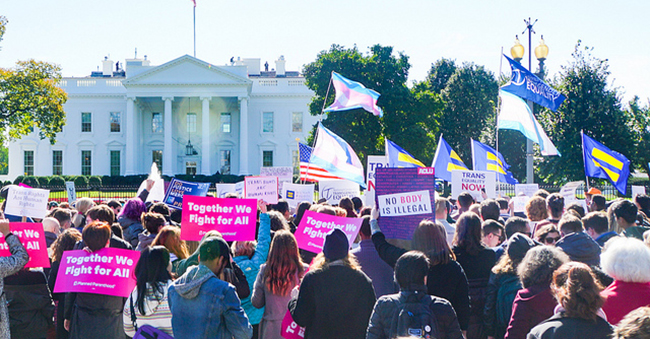
    We Won't Be Erased - Rally for Trans Rights, Washington, DC USA

    We Won’t Be Erased—Rally for Trans Rights, Washington, DC, October 22, 2018. Photo credit: Ted Eytan

    I have a transgender son, Donald Collins.

    Let’s start by erasing the D and make that onald Collins just to show how distorted this sentence becomes with that one edit, with that one irrational erasure.

    Let us now move on and erase onald and only use Collins, because the Trump administration wants to define gender solely on the basis of genitalia at birth.

    Male or female.

    Penis or vagina.

    By using only Collins, just the surname, I get rid of any gender identifying markers, but there’s no room for no gender designation under this proposed new ruling, so I guess I better get rid of Collins as well.

    Which is to say, if our society allows this sort of complete erasure of my trans son—a vibrant, honest, intelligent, hard-working individual who was born biologically female but identifies as male—then we’re no better than the Saudi suspects that allegedly chopped up the journalist Jamal Khashoggi and tried to erase any evidence of their brutal crime.

    According to other allegations around Khashoggi’s murder, they edited videotape. They wiped up blood and repainted walls. They even had one of the men complicit in the murder put on Khashoggi’s clothes and exit the Turkish consulate to make it look like Khashoggi had indeed come and gone unharmed.

    Only the ruse was so lousy, they erased that from the tapes as well.

    The irony: the Saudis hoped to quiet a soft-spoken critic of Prince Mohammed bin Salman who occasionally published columns in the Washington Post, but their botched murder has instead led to renewed focus on everything the country has its hands in, from Yemen to oil.

    The Trump administration’s office of Health and Human Services, which concocted the memo about essentially erasing “transgender” as an identity for about 1.4 million Americans, should learn from the Saudis’ misstep.

    HHS, you’re upset by the modest gains our transgender citizens have made in the last five years? Well, try to negate that and you will feel the righteous wrath of millions of citizens who will push for way more, not less, who will suddenly care way more deeply about something they only had a glancing interest in. You will raise armies with your misstep. 

    If the administration tries to edit transgender citizens out of the national landscape, who will be next? There’s a long tradition in America of editing groups out of public spaces in particular.

    No Irish Need Apply.

    Whites Only Fountain.

    No Jews Allowed.

    No such thing as transgender individuals.

    Well, I am the proud parent of a transgender son, so erase that line out of the national conversation.


    About the Author 

    Mary Collins is the co-author, with her son Donald Collins, of At the Broken Places: A Mother and Trans Son Pick Up the Pieces.