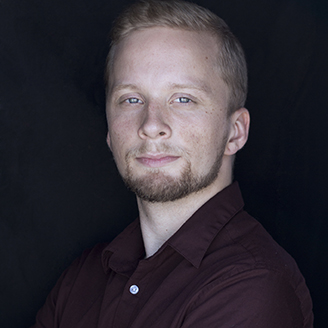
• Rashod Ollison

    Photo credit: Hyunsoo Léo Kim

    We are shocked and heartbroken. We learned of the sad news that our author, Rashod Ollison, passed away on October 17 from non-Hodgkins lymphoma. He was forty-one.

    He graced our catalog with his coming-of-age memoir Soul Serenade: Rhythm, Blues, and Coming of Age Through Vinyl. In his singular, flavorful writing voice, he brought to life his story of growing up Black and gay in central Arkansas during the eighties and the nineties. Back when we asked him if he had an audience in mind for his memoir, he said he didn’t think anyone would want to read it. “Nothing about the book fits the stereotypical narrative arc of so many memoirs written by Black men,” he wrote in my Q&A with him. “I wasn’t beaten, molested or addicted to drugs. I have never been to jail or prison. I’ve never had any racial self-loathing issues. I was never confused about being homosexual. But I still wanted to read a book about the kind of boy I was and what life was like among gloriously funky Black folks in central Arkansas in the 80s. So, in essence, I wrote the book I wanted to read.” By doing so, he wrote a book that connected with a diverse range of readers who saw their own humanity reflected in his life story, a story now cut prematurely short. We’re so privileged to have published it.

    Rashod was also pop music critic and culture journalist at the Virginian-Pilot. Toward the end of his career, he wrote many tribute pieces for music legends we lost, one after the other: Prince, George Michael, Aretha Franklin. I never thought we’d be in the position to have to write a farewell tribute piece for him.

    We’ll never forget Rashod’s soulful relationship with music. Whether it was Chaka Khan, Aretha Franklin, Michael Jackson, Millie Jackson, Stevie Wonder, he wrote about their albums from a place of deep passion. He lived in the rhythms and harmonies of their songs, because they gave him solace as he grew up during the rough times of his childhood. Music was his nourishment. Although we’re heartbroken, we have the music of his prose to comfort us and to remember him. It’s so sad, however, to see his life and talent come to an end so soon. And we’ll miss his electric personality. Rest in power, Rashod! And thank you for all your astute and beautiful writing.
    —Christian Coleman, Associate Digital Marketing Manager


    Like many of you, I was deeply saddened to learn of Rashod Ollison’s passing. I had the privilege of working with Rashod on his memoir, Soul Serenade: Rhythm, Blues & Coming of Age Through Vinyl. As anyone who’s edited Rashod can attest, he was an editor’s dream. He was a natural writer—evocative, eloquent, and always true—and I marveled at the effortlessness of his prose. At his ability to make you hear the music of his youth, smell the mouth-watering Southern cooking, and to feel his pain and triumphs.

    I remember Rashod once responded to a question about how he was celebrating the publication of his memoir. He responded that he worked on the book for a decade, that he couldn’t write any book until Soul Serenade was “out of his system.” He shared that writing the memoir was painful but also an exorcism of grief and sorrow. After its publication, his tour was a celebration—of his book but really his life—with family, cherished friends, and strangers, many of whom knew his excellent writing from the Virginian-Pilot.  

    Rashod’s tour took him to cities on the East Coast, the Mid Atlantic, and the South, and he said the tour was better than anything he could have imagined. He also shared, “Nothing about my past says I should be doing any of this.”

    I want Rashod to have the final say here and will conclude with his own words. He writes below of the various celebration in/around/about Soul Serenade.

    “The celebration for me is that I honestly, elegantly and lovingly distilled a place, time and people that the mainstream overlooks or ignores altogether. The celebration is that I did something for ‘Dusty,’ that little boy I was, a gifted, sensitive child who always felt so alone in the world. I told that boy’s story. The celebration is that my mother, aunts and sisters—fiercely strong, deeply flawed and richly nuanced black women—come to life on the pages without ever veering into stereotypes. The celebration is that this book assumes the centrality of my gloriously funky and dysfunctional Southern upbringing with no apologies or self-loathing edits for the ‘white gaze.’ It simply is what it is: a human story of resilience. And I can share that with anyone who chooses to open the book and surrender to the text. That is as good a reason as any to celebrate.”
    —Gayatri Patnaik, Editorial Director


    Rashod was loved by everyone who knew him, even briefly. I’ll never forget his visit to our offices, his spirit and delight. His wonderful book is a lasting gift, I’m so pleased that we have that important piece of his legacy. He broke a lot of ground in his too brief life, and made a lasting mark. I feel very lucky to have had him in my life, even so briefly.
    —Helene Atwan, Director


    I was shocked and saddened to hear of Rashod Ollison’s passing. I had the pleasure of working as his publicist for his brilliant memoir, Soul Serenade: Rhythm, Blues, and Coming of Age Through Vinyl. 

    Ollison had such a dynamic, colorful presence. I was so glad we were able to put him on tour for the book. He really lit up a room. He was so grateful to tell his story. “Dusty,” as he was known to his family, grew up in rural Arkansas surrounded by family dysfunction and heartache, but rose above it all through his passion of soul music.

    In Emily J. Lordi’s Los Angeles Review of Books review of Soul Serenade, she writes of the book’s title, “it is a serenade to his younger self, the boy who kept the faith and listened.” The book is a tribute to that boy, one who was young, gifted, and black.

    The next time I listen to Nina Simone’s titular song, “To Be Young, Gifted, and Black,” I’ll remember Rashod. And I’ll smile.
    —Nicholas DiSabatino, former Beacon Press Publicist

  • Drought

    The deadline is 2030. By then, if we don’t do everything in our power to curb the causes of global warming, it’ll be too late. The world’s leading climate scientists issued this warning in a report at the latest UN Intergovernmental Panel on Climate Change. Among the worst-case scenarios forecast in the report are inundated coastlines, intensifying droughts, extreme heat, and poverty. It’s harrowing to think about. Will the panic around the report incite us as a species to take a stand for our survival and climate justice for the future? Can we keep global warming at a maximum of 1.5 degrees Celsius? We reached out to some of our authors to find out.

    ***

    Fred Pearce“‘Twelve years to save the planet,’ say the headlines about the latest IPCC report. It is easy to understand the need to set a deadline, and the scientist are probably right that, if we haven’t sharply turned towards lower global emissions of planet-warming gases by 2030, then it will be too late to stop warming at 1.5 degrees Celsius, the ambitious Paris target. The problem is it suggests climate change has an on-off switch. It’s not like that. We are already one degree warmer. Nothing will change overnight in twelve years if we don’t act. If there are tipping points that might accelerate things, we don’t know where they lie. Most likely, the world will just keep getting warmer, and the weather will keep getting wilder and more extreme.   

    Climate change is cumulative. Once in the air, carbon dioxide takes centuries to go away, so every time we add another tonne we are just turning up the planet’s thermostat another notch. We have to stop. Unless we get back to zero emissions, the warming will continue. To three, four, five, seven, ten degrees and beyond. The sooner we stop, the less bad it will be. And if we can find ways to start drawing down carbon dioxide—by reforesting the planet, for instance—then we can put things into reverse. It’s that simple.”
    —Fred Pearce, Fallout: Disasters, Lies, and the Legacy of the Nuclear Age 


    Marcus Eriksen“The recent report from the UN that catastrophic consequences due to climate change are looming ahead for the future of the biosphere come as no surprise too many of us. But for the public, this scenario doesn’t feel actionable. Perhaps it’s just too big, leaving citizens not sure where to start, or it feels too hopeless.

    If anything, it is a wake-up call to a wake-up call, a plea to national leaders to get serious fast. After many years of sounding the alarm, there is only the recourse to ring the bell louder.”
    —Marcus Eriksen, Junk Raft: An Ocean Voyage and a Rising Tide of Activism to Fight Plastic Pollution 


    Jacy Reese“One of the trickiest social psychology questions of the twenty-first century has been how to motivate climate change action. For better or worse, one of the only sufficiently powerful motivators might just be the increased urgency of shrinking timelines. We can bolster this short-sighted self-interest with effective activism strategies that leverage the minority of the population that has a longer time horizon, but the lingering question is whether we can motivate global action on the elephants in the room—like animal agriculture at over 14% of greenhouse gas emissions—before we’ve locked in catastrophe. Fortunately, some powerful technologies are peeking over the horizon, such as so-called ‘clean meat,’ real meat made without animals, that could facilitate dramatic reductions in emissions over the coming years.”
    —Jacy Reese, The End of Animal Farming: How Scientists, Entrepreneurs, and Activists Are Building an Animal-Free Food System 


    Wen Stephenson“In light of the latest climate science, it’s not panic that I worry about but the kind of fatalism that says we’re doomed, that there’s nothing to be done, and that nothing ever could have been done. As I wrote in a recent essay responding to such fatalism, this betrays a fundamental misunderstanding or mischaracterization of the climate crisis. We now face an all but certain climate catastrophe in the coming decades, but it’s not a binary, doomed or not-doomed, situation: just how catastrophic it will be depends on many things, the most important of which are what we do, now, politically. 

    It strikes me that many of the things I wrote in What We’re Fighting for Now Is Each Other which sounded extreme or even defeatist to some ears now sound commonplace, even too mild—such as, ‘it’s time now to fight like there’s nothing left to lose but our humanity.’ I still believe that statement, as long as it’s understood that the ‘fight’ takes many forms, on many fronts, including basic fights for democracy and human rights. Or where I quoted activist Tim DeChristopher, who told me that ‘holding onto our humanity’ in the face of what’s coming will be ‘a never-ending challenge’—and that ‘we need an endless movement and a constant revolution.’ Those words still ring true to me, regardless of how far we still remain from realizing them.”
    —Wen Stephenson, What We’re Fighting for Now Is Each Other: Dispatches from the Front Lines of Climate Justice

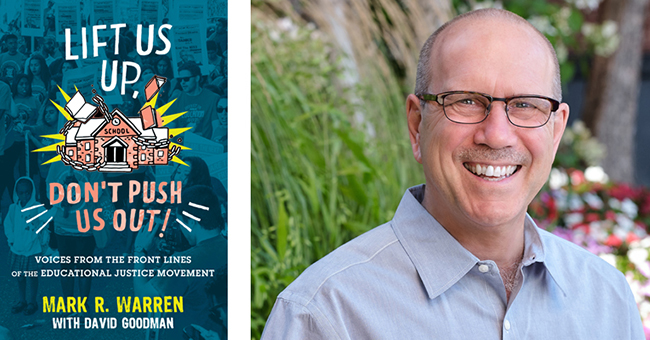
  • A Q&A with Lara Bazelon

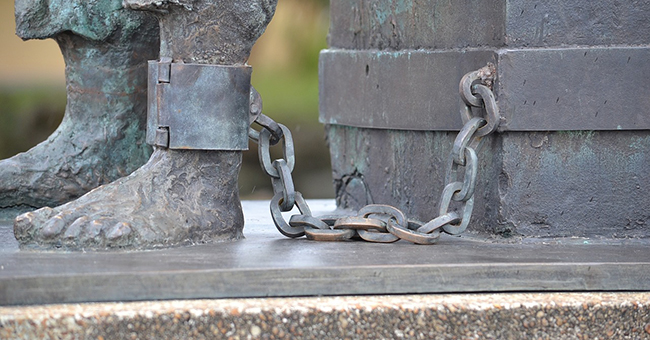
    Chains

    Exoneration doesn’t promise a happily-ever-after ending. Exonerees are devasted by the traumas of incarceration, and victims of the original crimes have to face the realization that they helped send an innocent person to prison. Lara Bazelon, journalist and Director of the Criminal Juvenile Justice and Racial Justice Clinical Programs at the University of San Francisco, has decades of experience of interviewing victims of wrongful conviction. As she writes in her book Rectify: The Power of Restorative Justice After Wrongful Conviction, “the physical shackles are gone, but invisible ones remain firmly in place.” How can they heal from the scars of these invisible shackles? What can be done about the growing problem of wrongful conviction in the US? On any given day, there are as many as 15,300 innocent people serving time in prison. Beacon Broadside editor Christian Coleman caught up with Bazelon to find out.

    Christian Coleman: How widespread is the problem of wrongful conviction and how does it impact communities and individuals?

    Lara Bazelon: Experts believe that the men and women who have been exonerated are only a small fraction of those who deserve to be. Many wrongful convictions remain hidden, or if known, unprovable. According to the National Registry of Exonerations, “By any reasonable accounting, there are tens of thousands of false convictions each year across the country.” A 2015 study by the University of Michigan found that 4.1 percent of those on death row were falsely convicted, and conservative estimates in non-capital cases range from two to five percent. Using these percentages, on any given day, somewhere between 15,300-61,200 innocent people are languishing behind bars.

    The impact on families and communities is profound. Wrongful convictions can steal decades of an exoneree’s life, causing lasting trauma to the individual and his or her family. Exonerees miss out on crucial life experiences, whether it is having a family, having a career, being able to tend to a sick parent or even being allowed to attend a parent’s funeral. Crime victims and their families also suffer. They live for years with the solace that the perpetrator was caught, only to be retraumatized years later when they learn that a terrible mistake has been made. In cases where the victims mistakenly identified the exonerees, their anguish is compounded by guilt.

    CC: What steps are being taken on the state and federal levels to prevent it?

    LB: Some states have adopted reforms designed to target the underlying causes of wrongful convictions by passing laws to do away with faulty identification procedures, examine the premises of some kinds of forensic science that have proved unreliable or completely without foundation, and increase access to DNA testing. In 2016, California passed a law that makes it a felony for prosecutors to conceal or destroy exculpatory evidence if they act in bad faith. Thirty-two states and the District of Columbia have laws that provide monetary compensation for exonerees. 

    On the federal level, law enforcement officers are now expected to record interviews of suspects in custody and encouraged to do so with other witnesses. There is also a federal wrongful conviction compensation statute, which provides for up to $50,000 for each year of incarceration for wrongfully convicted federal prisoners and up to $100,000 per year for those on death row.  In other areas, however, reform has been slower to come. Under the Obama Administration, a National Commission on Forensic Science was established to determine which forensic sciences were reliable and which were less so. Under the Trump Administration, the Commission has been disbanded.

    CC: How does restorative justice help exonerees heal from their trauma after wrongful conviction?

    LB: Restorative justice is a centuries-old practice of bringing together victims, offenders, and their respective communities to address the harm inflicted by a crime and agree upon a series of measures designed to repair that harm rather than meting out punishment. Now, there is a growing movement to apply restorative justice practices in wrongful conviction cases by bringing together exonerees and the crime victims who may unwittingly have played a role in helping to convict them. Restorative justice connects isolated individuals who might otherwise shy away from one another out of fear or resentment. The kind of suffering experienced by those involved in a wrongful conviction case varies greatly but arises from a shared traumatic experience. This shared suffering means that very differently situated people can come together to heal and make sense of the catastrophe that upended their lives.

    CC: True crime is growing more and more prevalent in pop culture. The hit Netflix documentary series Making a Murderer, for example, is about to start its second season. How do programs like these impact the public’s understanding of wrongful conviction?

    LB: The explosion of interest in wrongful conviction cases, narrated as true crime stories in podcasts, documentaries, and other media, has begun to erode the power of traditional narrative that rewards prosecutors and police for having “a win-at-all-costs” mentality. Forty-five percent of wrongful convictions involve official misconduct. The public is now better informed about the ethical obligations of prosecutors and police and the consequences of violating these obligations. This, in turn, has led to the election of reform-minded candidates who challenge tough-on-crime incumbents by running on progressive platforms, including a commitment to revisiting wrongful conviction cases. The public is now far better educated and informed and more likely to pay attention to these down-ballot races.


    About Lara Bazelon 

    Lara Bazelon is a writer and associate professor at the University of San Francisco School of Law, where she is the director of the Criminal Juvenile Justice and Racial Justice Clinics. A 2016 MacDowell Fellow and a 2017 Mesa Refuge Langeloth Fellow, she is the former director of the Loyola Law School Project for the Innocent. Bazelon is also a nonresident fellow with Brandeis University’s Schuster Institute for Investigative Journalism. Her writing has appeared in the New York Times, Atlantic, Washington Post, Politico, and Slate, where she is a contributing writer and has a long-running series about wrongful conviction cases. Rectify: The Power of Restorative Justice After Wrongful Conviction is her first book. Follow her on Twitter at @larabazelon and visit her website.

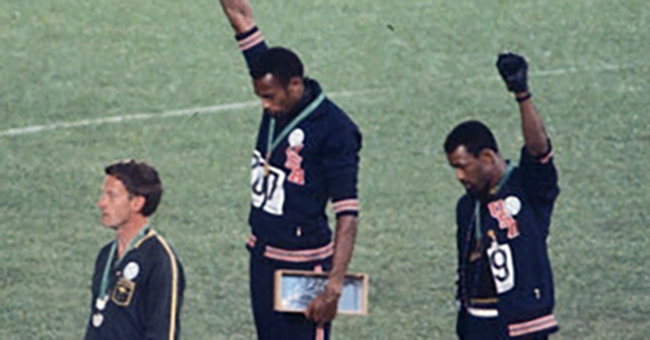
  • John Carlos, Tommie Smith, and Peter Norman at the 1968 Summer Olympics in Mexico City.

    John Carlos, Tommie Smith, and Peter Norman at the 1968 Summer Olympics in Mexico City. Photo credit: Angelo Cozzi

    It’s an iconic moment that’s been seared into sports history and Black history. Fifty years ago, track and field athletes Tommie Smith and John Carlos raised their fists in the Black Power salute during the American national anthem at the 1968 Summer Olympics in Mexico City to protest racial inequality. That day, not only did Smith and Carlos win gold and bronze medals respectively; they also joined the ranks of Jackie Robinson and Paul Robeson in a long legacy of Black athlete-activists. Journalist Howard Bryant covers the trajectory of their sports careers in The Heritage: Black Athletes, a Divided America, and the Politics of Patriotism.

    As it was for Black athletes before them, sports was a point of cultural and political collision for Smith and Carlos. On the track, they could voice their dissent, and their celebrity could amplify their message. For them, race was never inseparable from sports. As Bryant writes in one example:

    The inclusion of South Africa to the Olympics activated athletes, including Lew Alcindor, the best college basketball player in the country. Tommie Smith, Lee Evans, and John Carlos were track and field stars who grew in conscience. “The word of the day was boycott and anyone who was either a black athlete or sympathetic to the cause of black athletes was well-versed in the arguments on both sides,” Carlos said. “And it was clear you couldn’t be a bystander in this struggle. Black, white or brown, we needed to know which side you were on.”

    The white mainstream reaction was confounded, hostile, wounded. On July 15, 1968, Newsweek put Smith on its cover, with the headline “The Angry Black Athlete.”

    Long before President Trump called kneeling NFL players “sons of bitches” and Laura Ingraham admonished Lebron James to “shut up and dribble,” Smith and Carlos bore the brunt of backlash for taking a stand against racial discrimination on the field. Being on the right side of history meant jeopardizing their careers and reputations. Bryant elaborates:

    Before [O. J.] Simpson could truly become the face of sports in the 1970s, however, the establishment first had some unfinished business: it had to punish the Heritage. As the years went by, its charter members were like those one-name rock stars: Smith and Carlos, Ali and Jackie. Even if you didn’t know the whole story, you knew the deeds.

    Smith and Carlos were never stripped of their Olympic medals, though that was a rumor left intentionally uncorrected by the IOC for a specific purpose: to scare off any would-be heroes thinking of further challenging the system. IOC president Avery Brundage said, according to Carlos, that he and Smith had embarrassed him and the Olympic community in Mexico City, and though both were an inspiration to athletes around the world, John Carlos always said Brundage vowed to make them pay. Their opportunities to make a living in sports disintegrated. Smith never raced again. Carlos ran in his final year of eligibility, ran well, and in need of an option, following the steps of the great sprinter turned Dallas Cowboys star receiver Robert “Bullet Bob” Hayes, turned to the NFL. It didn’t last. During a short stint with the Philadelphia Eagles, Carlos tore up his knee, and the avalanche continued. His marriage collapsed. Wrote Carlos:

    By 1969 and into 1970, my life was beg, beg, borrow, and steal. If I had $100, I would leave my family and hightail it to Vegas and hit the crap tables to see if I could score us up some money. I just felt like the hustle was the only way to solve the most immediate problems: food and shelter. The hustle is what I did when I wasn’t working. Whatever jobs I had to take, I wasn’t too proud or too ashamed to do it. I had a job as a security guard at a nightclub, wearing this brownstone ranger uniform. Many people used to come in the club and say, “Hey! Aren’t you John Carlos?” They were shocked that I would be doing work like that. But I did what I had to do. I put out the word that I would take whatever job was necessary to make sure my family was able to eat.

    Tommie Smith’s marriage also ended. The supportive allies weren’t so supportive after all, he found. That included some of his fellow warriors in the struggle. Smith tried the NFL. A famous fallout with Jim Brown was particularly personal. Brown, the icon everyone looked up to, lent Smith money for a tryout with the Los Angeles Rams. When the tryout fell through, Smith, just hanging on financially, was stunned to see the great, rich, and famous Jim Brown demanding his money back. Smith languished on the taxi squad of the Cincinnati Bengals. In his autobiography, he dedicated a chapter to this period, calling it “Paying the Price.”

    After the silent protest, though, there was a never a chance that I would earn anything from track and field. Just as important, I would never know how fast I could have become. I was 24 years old in Mexico City, and I was running at 28 miles an hour then. I would have just turned 28 by the time of the 1972 Olympics in Munich, and everyone has seen what runners like Carl Lewis and Michael Johnson have done as they matured . . . Yet with all the components of the system lined up against me, punishing me for the sin I committed against their values and beliefs, the treatment I received from black folks hurt even worse. I was looking up to them for support, but I found out that there were more blacks than whites who didn’t want anything to do with me.

    To join the Heritage, you had to pay the cost. Jackie, Muhammad, Smith, Carlos, and Flood all risk and lost something. With the exception of Colin Kaepernick, many current players made political negotiations with the leagues, wore T-shirts, and asked permission to protest without direct skin in the game. Yet, being black linked them, in some ways, to the same fights of old, because despite their celebrity, the players were fighting for the same group of people, still on the bottom, still at the mercy of the service revolver.

    Smith and Carlos’s iconic moment from fifty years ago would be consecrated in 2005 by San Jose State, where both men had been students and competed, with a twenty-two-foot statue depicting the event. It’s a moment that reminds us that history didn’t happen that long ago. The racial injustice Smith and Carlos were protesting against is the same injustice Colin Kaepernick protested against by taking a knee. While both men sacrificed their careers and their livelihoods, they inspired other Black athletes like Kaepernick, post-9/11, to speak out against injustice. Their legacy tells of the resilience of the Black athlete-activist and the work that remains for America to do in order to achieve racial equality.

  • By Jonathan Rosenblum

    Amazon warehouse workers

    Amazon warehouse workers. Photo credit: Scott Lewis

    “Power concedes nothing without a demand,” abolitionist leader Frederick Douglass declared 161 years ago.

    Last week saw that truth on broad display as Amazon, facing growing political and organizing pressure, announced it was setting a minimum wage of $15/hour for its US workforce and also raising wages in England.

    The company’s declaration followed months of mounting bad publicity for Amazon. US workers have been speaking out in greater numbers about the punishing pace of work, high injury rates, and a plantation mentality on the warehouse floor. A British journalist went undercover at Amazon and wrote a book describing workers forced to pee in bottles and extraordinarily high rates of depression. (Ironically, Hired: Six Months Undercover in Low-Wage Britain is selling remarkably well on the Amazon site.)

    Amazon workers in Germany, Poland, and Spain struck on Amazon’s Prime Day in June, protesting appalling working conditions.

    Back in the US, Sen. Bernie Sanders (I-VT) went after the company for paying such poor wages that much of its workforce is dependent on public benefits like food stamps, housing subsidies, and Medicaid.

    And Amazon’s wage concession followed continued high-visibility mobilizations by Fight for $15 against McDonald’s and other corporate targets.

    Naturally, Amazon executives sought to pivot talk away from corporate concession and towards business enlightenment. “We listened to our critics, thought hard about what we wanted to do, and decided we want to lead,” said Jeff Bezos, Amazon’s founder and CEO.

    The political establishment lavished kudos on the company, valued at $1 trillion, and CEO Bezos, whose net wealth tops $150 billion, for its generosity to workers. “An outstanding move,” gushed The Seattle Times editorial board in Amazon’s hometown. “Prime Amazon: In praise of the internet giant's $15 hourly wage,” trumpeted the New York Daily News headline.

    Fellow billionaire Nick Hanauer teamed up with union leader David Rolf to heap praise on the company. “Amazon has smartly chosen to lead the way into the real economy, where we solve the problems, build the things, and pay the wages that truly make America great,” Hanauer and Rolf wrote just hours after the company made the announcement.

    Even Sen. Sanders, Amazon’s erstwhile nemesis, felt compelled to pile on, congratulating Bezos personally in a tweet.

    So much for the back-slapping and public optics. The view from the warehouse floor is a little more complicated. For while the raise certainly is a product of sustained pressure on the company, it’s not the game-changing largesse that Amazon’s public relations department would have us believe. In low-wage states like Kentucky and South Carolina, to be sure, the raises may amount to $2 or $3 an hour or more. But many Amazon warehouse workers, particularly on the coasts, already were paid close to $15/hour.

    And while rolling out the new wage rate with great fanfare, Amazon more quietly informed workers the company would be eliminating stock options and performance bonuses. For full-time workers in the company’s warehouses, those compensation add-ons had pushed them above $15/hour. But no more. Many full-time workers will see minimal raises—or even net declines. Facing sharp backlash, Amazon this week conceded they’d give additional pay raises to the full-timers to make up for the lost bonuses. How this latest twist plays out for the full-time workers remains to be seen. But suffice it to say, the raises won’t drain company coffers.

    Indeed, setting a $15 minimum wage for 350,000 Amazon workers likely will cost the company less than one tenth of one percent of its net worth: A pittance.

    Oct. 2 was the big announcement day. When a New Jersey fulfillment center manager excitedly announced the raise to a gathering of night-shift Amazon workers, the room remained silent, reported one of the workers. It was only when human resources staff started clapping aggressively that others gamely joined in, he said.

    His colleagues will accept the raise since they have bills to pay, but because of the punishing pace, “Workers hate the company. People feel they’re treated like they are slaves,” he explained.

    Workers at an Amazon warehouse outside Seattle, Washington, attributed the raise to Sen. Sanders’ advocacy and “people speaking up in an organized way,” according to a part-time distribution center worker. But the issues for Amazon’s workers go far beyond low wages, he said. The constant push for impossible levels of productivity, a lack of respect from supervisors, rampant workplace injuries, and continual burnout and workforce churn are what angers workers the most.

    Those issues share a common root: A business model that implacably demands that workers submit to inhumane levels of exploitation. Unlike in Europe, where many Amazon workers have organized into unions, struck, and won modest gains, US workers aren’t yet unified in sufficient numbers to make big demands on the corporate giant.

    Will the splashy wage announcement head off incipient worker organizing? Quite to the contrary, asserted the Seattle worker. It will build confidence in organizing because it shows workers that the company will respond to pressure, he said.

    It will take a lot more escalation to win meaningful change. The Amazon workers I’ve talked to over the last year agree that the company won’t fix the appalling conditions until it is forced to do so. That will happen when workers build union organization and, united with consumers and allies, prove they can disrupt Amazon’s operations and hit the company’s bottom line.

    That may sound like a pipe-dream. But consider that 100 years ago the titans of the emerging production economy—think basic steel, auto, and electrical industries—seemed omnipotent and untouchable. It took years of struggle, including many tough battles and devastating losses, before the wave of 1930s plant occupations and strikes led by socialists and radicals of various stripes forged new industrial unions. In doing so, they boosted not just working conditions in the production sector, but propelled a broader social movement that organized and won public works jobs, Social Security, labor rights, minimum wages, and other gains of the New Deal era.

    Significantly, too, the same factors that shaped the meteoric growth of basic industry 100 years ago—the tremendous economies of scale achievable in mass production, the deployment of cutting-edge technologies, and the application of precise scientific management of production and distribution, including a just-in-time employment model—are core elements of Amazon’s business model today.

    The challenge, then as now, is for workers to recognize that as with the industrial monopolies of the last century, Amazon’s extraordinary sweep of power also is its Achilles heel—provided that workers organize. Alone, the Amazon warehouse worker is among the weakest of laborers in America; together in large numbers, they have the power not just to transform what it means to be a warehouse worker, but to help drive a new social movement in our country.

    It’s worth recalling that in November 2012, much of the political punditocracy was aghast when a relatively small coterie of New York City fast-food workers first hoisted picket signs demanding $15 and a union. Such an unrealistic demand! Now, six years later, more than nineteen million low-wage US workers have won raises through legislation and workplace organizing as a result, directly or indirectly, of the Fight for $15 movement.

    And yet, even with these gains, workers aren’t making it. Nearly eighty percent of full-time American workers say they live paycheck-to-paycheck, seventy-one percent are in debt, and most workers are unable to build up savings to get through a medical, employment, or housing crisis. America is, today, a nation of spectacular wealth enjoyed by the gilded one percent while tens of millions daily teeter on the brink of financial ruin and destitution.

    Many of those desperate workers, indeed, already are paid $15 an hour. It’s just not nearly enough to live on.

    Over the last six years, we’ve seen corporations like Target, Walmart, and Costco make economic concessions in an effort to forestall demands for something more valuable and radical—real worker power. Now, Amazon has fallen in line with its corporate siblings.

    The pundits’ praise for Bezos is utterly misplaced. Praise should go to the workers, who endure brutal conditions, who have just achieved a modest yet remarkable concession from Amazon, and who, step by step, are struggling and learning to build worker power inside the behemoth. We must support them, because their success in this years-long battle will lift us all.

    So, let’s be clear: $15 is not nearly enough. It’s time to raise a new banner, a much bolder one that demands an end to brutal working conditions and obscene profiteering, and a societal commitment to rights, security, and power for all workers.


    About the Author 

    Jonathan Rosenblum is a writer and union and community organizer based in Seattle, WA. He is the author of Beyond $15: Immigrant Workers, Faith Activists, and the Revival of the Labor Movement (Beacon Press, 2017), and a member of the National Writers Union/UAW 1981. Find him online at https://jonathanrosenblum.org/ or Twitter: @jonathan4212.

  • By Carol Fulp

    Eastern Bank

    Image credit: Mike Mozart

    By 2042, the United States will no longer be majority white, and companies that proactively embrace racial, gender, and class diversity in all areas of operations will be best poised to thrive. That’s what Carol Fulp, president and CEO of The Partnership—a Boston-based multicultural leadership development firm—writes in Success Through Diversity: Why the Most Inclusive Companies Will Win. Her book draws on both her personal and career experiences as well as case studies from a range of companies to examine why investing in a diverse workforce will help make today’s businesses more profitable. Take, for example, Eastern Bank in New England. In the follow passage, Fulp outlines the bank’s path to boardroom diversity—and what other businesses can learn from it.

    ***

    When you think of dynamic, innovative, high-performance organizations, your local community bank doesn’t usually come to mind. But if you live in New England, it might. Founded in 1818, Eastern Bank is the country’s oldest and largest mutual bank, serving communities throughout Massachusetts, New Hampshire, Rhode Island, and beyond. It’s also one of the country’s most progressive banking institutions. Eastern provides fairly priced banking, investment, and insurance products and services for consumers, businesses, and underserved communities. Since 1999, on average Eastern has donated at least 10 percent of its net income—seven times the national average—every year to charity and local organizations working on causes such as advancing women in the workplace, supporting immigrants, and advocating for social justice.

    Doing good has also been part of a winning growth strategy for the bank. Eastern as we know it today took shape through an acquisition strategy that has spanned decades. Beginning in the 1980s, Eastern began acquiring small savings institutions in its local area (including a bank founded by my husband, C. Bernard Fulp, who also was the first African American executive vice president in the new England banking industry). In the 2000s, Eastern continued to expand, and in 2017, it had over 120 locations and crossed $10 billion in assets. Eastern achieved record financial results in 2017, which included an increase of nearly 40 percent in net income.

    Despite its growth, Eastern is small compared to the banking industry’s primary players. In 2016 the top four US banks—JP Morgan Chase, Bank of America, Wells Fargo, and Citigroup—managed a combined $8.1 trillion in assets. Still, $10 billion was enough to make Eastern the 120th largest bank in the country—out of 6,000. And in one respect, Eastern is way ahead of these four massive banking behemoths (and many smaller financial institutions too). I’m talking about diversity. As of 2018, 50 percent of its officers and 33 percent of its management committee—a group comprising the company’s twelve most senior executives—were women, people of color, and/or those considered diverse, such as members of the LGBTQ community. Eastern’s main subsidiary, Eastern Insurance Group, is the largest insurance agency led by a woman in the US. About one-fifth of Eastern’s employees are people of difference. If you brought all of the company’s 1,900 employees together in one place, you would hear a number of sounds that might be unfamiliar. That’s because they speak more than fifty languages and dialects.

    In contrast to most of its industry counterparts, Eastern has an extremely diverse board, with 50 percent composed of women, people of color, and/or others considered diverse. In the banking industry, women occupy only 9 percent of all board seats—despite holding the majority of professional jobs in the country and making the vast majority of all consumer decisions. The boards at the regional Federal Reserve Banks were overwhelmingly populated by white men as well.

    Unlike many publicly traded companies, Eastern spawned three separate governing bodies over the past two centuries. Back in 1818, when a group of wealthy philanthropists founded the bank, they formed a group of corporators to oversee the running of the organization. In fact, the bank’s first customer, Rebecca Sutton, was a woman, a true sign of diversity and inclusion at a time when women were not permitted to have bank accounts. Through the years and given the bank’s many acquisitions, the number of Eastern’s corporators grew greatly. As a result, a group of trustees was chosen from among the corporators to serve as an executive committee. It eventually became apparent that Eastern also needed a group of directors to handle governance matters—individuals who could devote more time and provide specific expertise. A board of directors was formed, typically composed of twelve to fifteen members.

    Fast-forward and since 2003, Eastern has placed great importance on diversity and inclusion among its directors, trustees, and corporators. It has gone from having an overall board that was previously composed of 92 percent white males to having, as of 2018, 50 percent of the 140 members represented by people of color, women, or individuals from the LGBTQ community. In addition, all members of the boards reflect a vast array of professional backgrounds, skills, and expertise.

    Does a connection exist between Eastern’s unique board diversity and its rapid growth? As a member of the Board of Trustees, I believe the answer is an unambiguous “yes.” Board diversity has allowed Eastern to “punch far above its weight” compared to much larger local competitors such as Citizens, TD Bank, Santander, and Bank of America. Specifically, it has helped Eastern improve its strategic decision-making, recruiting, innovation, and connection with the community.

    Eastern’s board diversity didn’t just materialize on its own. It evolved thanks to sustained commitment from senior leadership, in particular the bank’s current chair and CEO, Robert “Bob” Rivers. Upon Rivers’s arrival in 2006 as vice chair and chief banking officer, he saw the opportunity to diversify the bank’s governing boards.

    Given the bank’s roots in Salem, Massachusetts, and long history serving Boston’s North Shore, its board reflected those primarily white communities. In addition, as is typical in corporate board recruitment across industries, board members tended to recommend individuals from their own networks for board posts. Eastern’s board makeup also reflected its history of acquisitions of other banks in which some of the acquired banks’ board members moved onto one of Eastern’s governing bodies. Most often, the acquired bank board members were white men.

    When Rivers joined Eastern, the bank’s board of directors did feature several individuals from traditionally underrepresented backgrounds but not the trustees and corporators, the two other governing boards. The disparity puzzled Rivers. As he recalls, “I tried to reconcile why the make-up of the directors was so different from the trustees’ and corporators’—and not just in terms of diversity but different in every way imaginable, especially in engagement and connectivity to our customers. The resulting diversity of thought elevated board conversations, and innovative ideas and creativity flowed.”

    Building on the existing commitment of immediate past Eastern CEOs Richard Holbrook and Stanley Lukowski to boost diversity among the bank’s customers, employees, leadership team, and board of directors, Rivers made it a priority to add people of many races, genders, sexual orientations, and backgrounds to Eastern’s boards of trustees and corporators, and also to have the bank advocate more aggressively on issues related to inclusion. “We had been pursuing ‘diversity light’ up until then,” he notes. “We had it in our employee policies and we had included people with nontraditional backgrounds on our board of directors. But we had never really injected it into the entire organization and governing bodies. We were conscious of the changing demographics, but it hadn’t fully crystallized for us. I was determined to change that.”

    Born in the Greater Boston area, Rivers is named after former attorney general and US senator Robert F. Kennedy, and he shares Kennedy’s commitment to racial equality and equal opportunity. Yet Rivers also saw the trustees and corporators, the two larger boards, as untapped business assets that could help Eastern in its future growth plans. “For me, it was all about how we could have the most robust collective thinking to address increasingly complex challenges in a more rapidly changing world. The way to do that was to have as many people with different backgrounds and experiences as possible. And that didn’t simply mean putting more people of color or members of the LGBTQ community on the board. It meant diversity across a number of dimensions.” Rivers was excited about the prospect of an entire board that could energize the bank and drive innovation. He also saw board diversity as a way to help spread and embrace difference across the entire organization: “I knew that if we have diversity on the board, it would not only help us increase our cultural competence and understanding, but it would also send a very important signal that we’re serious about it.”

    As directors, trustees, and corporators retired, Rivers considered diversity as a primary factor when considering their replacements. To embrace diversity and the best talent of all kinds, he first looked at building diversity on the nominating committees for new trustees and corporators. Since the bank at the time had few people of color on these governing bodies, Rivers began by recruiting more women to join these committees, believing that women would be eager to have more diverse governing bodies, and for all the right reasons.

    From the outset, Rivers and other leaders at Eastern were adamant that board diversity could never come at the expense of overall excellence and fitness for the post. Says Rivers, “Our mantra in the nominating committee was first and foremost to find the best, brightest, most strategic people we can get to join our board. It was to aim high, considering those that we weren’t sure we could even attract. Our second criterion was to look at anybody as a potential candidate but particularly identifying candidates who are women, people of color, and members of the LGBTQ community.”

    Eastern’s lead director at the time and a longtime board member, African American businessman Wendell Knox, agrees: “We were very strategic in trying to add people who not only were the right gender or the right color but also who brought expertise, knowledge, and connectivity to the community in concrete ways that were consistent with what we were doing. We actually demonstrated that you can achieve diversity and add a ton of value, rather than compromise on your standards.”

    With the goal of more diverse nominating committees for trustees and corporators in place, the bank secured the participation of many more people with underrepresented backgrounds, while also continuing to appoint white males to its governing bodies. By any standard, the quality of these recruits has been impressive. Appointments during Rivers’s tenure have included Dr. Myechia Minter-Jordan, an African American woman who is CEO of the Dimock Center, the leading health and human services provider for Boston’s urban neighborhoods; former US senator William “Mo” Cowan, vice president of legal policy and litigation at General Electric who is also African American; Vanessa Calderon-Rosado, a Hispanic woman who serves as CEO of Inquilinos Boricuas en Accion, a critical Boston-based community-building organization; and Gunner Scott, a Massachusetts-based activist and the first openly transgender individual ever elected to a bank board in the US (the board has had two transgender members as of this writing, including one who transitioned while serving as a sitting corporator). “If you look at the new board members we brought on over the last several years,” remarks Knox, who served as lead director from 2009 to 2017, “there is a very concrete story that can be told about why each one of them represents a value added to the board.” As testament to how the bank has advanced its diversity practices on its board, in 2018 it announced the election of Deborah Jackson as lead director, succeeding Knox and becoming the first woman and second person of color to serve in that position in Eastern two-hundred-year history. Jackson, who is African American, joined Eastern’s board in 2002 and is the president of Cambridge College and former CEO of the American Red Cross of Massachusetts.

    As a result of these various appointments, the atmosphere in the boardroom has become transformed. As Jackson notes, “When you walk into a governance meeting, you immediately notice a change visually. You can see the diversity in the room. There is now a diversified board with more women, African Americans, Asian Americans, and Latinos.”

    Eastern’s advocacy around the issue of inclusion was also quite pronounced and carried through into the community. In 2013, Eastern was the first bank to sign the amicus brief challenging the Defense of Marriage Act. Hundreds of companies nationwide followed suit. The bank also affirmed its stance with a strong presence in the local LGBTQ pride parades, as well as with its naming of transgender board members.

    Such moves and board diversification rankled some old-guard employees and board members. An employee in the finance department, a twenty-year company veteran, left because the bank’s advocacy on behalf of the LGBTQ community clashed with her religious beliefs. At one annual meeting where Rivers spoke about LGBTQ advocacy, an older white man in attendance sat with his arms crossed and shook his head vigorously for all to see. When Eastern named its first transgender board member, another board member called Rivers to complain bitterly and ultimately resigned from the board. In the face of such resistance, Rivers stuck to his commitment to not only appoint people of all backgrounds but also to affirm their inclusion and integration in the organization. “We, in the spirit of inclusion, follow a mandate,” he says. “Your religious beliefs are your own, but the minute your actions and words disadvantage or hurt anyone, our commitment to equal opportunity for all is our guide. They should not impact how people are treated in their jobs, how their work is evaluated, and how we hire. There are some people for whom this is just a step too far, and [if so] this probably isn’t the organization for them.”

    The vast majority of company stakeholders applauded the appearance of new faces around the boardroom as well the bank’s explicit commitment to equality for all. Existing board members approached Rivers to indicate their appreciation, recognizing the benefits of a more diverse and active board as supporting the organization’s mission while also serving the bank’s business interests. Employees loved it too. For ten years running, the bank has appeared in the Boston Globe’s ranking of the area’s top employers. “What’s most important to us,” Rivers notes, “is the level of employee participation in the survey, in addition to the scores. Over 90 percent of our 1,900 employees participate. That’s off the charts and a solid indicator of our employee engagement.”

    Among other sources of employee pride is the company’s “Join us for Good” campaign, launched in March 2017 to celebrate those who are making a difference and rally others to ignite a movement. In a series of inspiring online and television commercials, as well as on billboards flanking the Commonwealth’s major thoroughfares, Eastern presented powerful social justice images of “doing good” in the community, featuring pro-immigration themes or individuals draped in rainbow flags or at same-sex marriage ceremonies. Paul Alexander, the bank’s chief marketing and communications officer, who is African American and also vice chair of the Partnership board, summarizes Eastern’s employee reactions to the campaign: “Many said, ‘that’s my company. that’s why I’m proud to work at Eastern.’”


    About the Author 

    Carol Fulp is president and CEO of The Partnership, Inc., New England’s premier organization dedicated to enhancing competitiveness by attracting, developing, and retaining multicultural professionals. Prior to joining The Partnership, Inc., she held executive roles at John Hancock Financial, WCVB (the ABC-TV Boston affiliate), and the Gillette Company. In 2010, President Obama appointed Fulp as a US representative to the sixty-fifth session of the UN’s General Assembly. She lives with her husband, C. Bernard (“Bernie”) Fulp, in Boston. Follow her on Twitter at @Carol_Fulp and visit her website.

  • Helene Atwan with Keith Richards and Peter Wolf

    Helene Atwan with Keith Richards and Peter Wolf

    In these times when readers are responding to our books “more than ever,” when our authors—including Cornel West, Anita Hill, Robin DiAngelo, Charlene Carruthers, Howard Bryant, and Christopher Emdin—are appearing in the media, their ideas going viral on social media, their voices being heard on so many platforms, we thought it might be good to take a break to focus on some of the staff who work hard to find, shape, edit, produce, and promote those works. Our blog series “Beacon Behind the Books” introduces to you a member of our staff and gives you a behind-the-scenes look, department by department, at what goes on at our office.

    For the month of October, meet our director, Helene Atwan, who is celebrating the twenty-third anniversary of her appointment as director of Beacon Press this month. 

    How did you land at Beacon, Helene?

    I was amazingly lucky. I’d been associate publisher at Farrar, Straus and Giroux when we were distributing Beacon, so I got to “help out” with some of their books, including best-selling books by Marian Wright Edelman and Cornel West. When my predecessor left, the search committee came knocking at my door. I just happened to know one of them, Roger Straus III, so maybe the fix was in. But it was the amazing Kay Montgomery, executive vice president of the Unitarian Universalist Association, who really settled me in and supported me for the next seventeen years. I’ve never recovered from her abandonment (well, yes, she retired after more than twenty-five years at her job . . .).

    Was it different?

    As I like to say, I’d just drunk a cup of coffee at Pocket Books after leaving FSG, so I went from one of the most blatantly commercial, profit-driven houses in the industry (where I oversaw TV ads, a department devoted to building “furniture” like the Starship Enterprise “dump,” aisle violators, and gravity feeders for drugstores, etc.) to one of the oldest and most “venerable” nonprofit, mission-driven publishers in the country. It was culture shock, but every bit of it positive! Needless to say, I’ve never regretted any part of it, including the move from NYC to Boston. And though we may still be venerable, I was thrilled to see a tweet from one of our authors last week calling Beacon “a woke ass publisher!”

    You’ve been with the press for over two decades. What are some of the changes you’ve seen both in publishing and at Beacon?

    Way too many to itemize, but maybe a couple: One of the first, which is one bred in the bones of the press, is the emphasis on the voices of women and historically marginalized peoples, which is an important aspect of our program, dating back to our suffragist and abolitionists roots in the 1850s. I’m happy that we’re moving towards better representation of the population across the entire industry, though we do have a whole heck of a lot more work to do. Early in my tenure, we launched an internship program for people of color. Over the past decade in particular, the press has grown in diversity and in the diversity of writers we publish, and the subjects we cover. It’s a credit to the editorial department, led by Gayatri Patnaik. 

    And then there was the explosion of social media. We responded with this blog! Begun in 2007, it marked part of a sea change in how we promoted our books and authors, but more importantly, how we fulfilled our mission. All of our social media outreach has evolved to be part of the work we do to introduce progressive ideas and voices into the culture. So, yes, the books and authors are first and foremost, but also the blog posts, the tweets, the Facebook posts, even the Grams (right now, I’m getting a big kick out of #BookFaceFridays).

    Can you give us an example of a really special moment, one that stands out over the years?

    One of the proudest moments I shared in with the press was becoming the exclusive trade publisher of the works of the Rev. Dr. Martin Luther King Jr. We launched the King Legacy series in 2009 (see my Broadside Post about it here),  and we’ve done some great work with Dr. King’s writings. One, which also points to a developing direction for us, is A Time to Break Silence: The Essential Works of Martin Luther King, Jr. for Students. That also started us on the road to adapting other books for a student/young adult market, including a young readers edition of our perennial best-seller, Viktor Frankl’s Man’s Search for Meaning, and two coming from our groundbreaking ReVisioning American History series, Michael Bronski’s A Queer History of the United States and Roxanne Dunbar-Ortiz’s An Indigenous Peoples’ History of the United States.

    We hear that you’re an audiofile, true?

    Yes, I’ve jumped into audiobooks with both feet. I just did a scan of my audiobook libraries, and I have at least 335 books, which means I’ve listened to almost fifty books a year since I first got hooked. Most recently, I’ve been listening to some real classics (I promise you Hardy’s Tess holds up). So, it can be no surprise that I wanted to start Beacon Press Audio. Like everyone else in this business, I see audiobooks growing at almost exponential rates. I love listening to narrator auditions with our audiobooks director, Melissa Nasson, and the editors. And it’s been great fun to “reread” some of our books by listening to the audio versions.

    Who were the authors who most influenced you in your work?

    I think almost every author we’ve published has made an impact on my thinking—that’s where the igniting hearts and minds slogan comes from. But there are three women I need to call out for the special guidance they gave me through their own keen intelligence and gifts of understanding and empathy: Lani Guinier, the brilliant legal scholar who I had the joy of working with on The Tyranny of the Meritocracy; Anita Hill, a brilliant legal scholar as well, who first taught me the deep lessons of intersectionality, and whose Reimagining Equality is a gem on our list; and Danielle Ofri, a physician and philosopher of medicine, author of What Doctors Feel, who is still teaching me so much about being an editor as we work together on her sixth book. I feel one of the greatest gifts of my career was working with Gayl Jones on two new novels, The Healing and Mosquito, as well as reissues of her previous work. Her novels before then had been acquired and edited by Toni Morrison, so it was a daunting role, one I sweated, believe me, but one I will always cherish.

    What was the funniest moment in your career at Beacon?

    There have been some pretty good ones. Many involving my good friend and close colleague Tom Hallock, who just retired as associate publisher in June. My favorite was in the early years, when we traveled to Book Expo in Chicago with our own booth in a shipping crate. Those were penny-pinching days. The crates were stored on the roof of the Chicago convention center. Tom and I had packed up, mostly, and taken a break to have dinner with our wonderful author and advisor Bill Ayers (this was back in the days when he was allegedly writing Barack Obama’s books for him). By the time we got back to the convention center, it was pouring rain. We had to drag our already bedraggled booth up to the roof to pack it up for shipping home. The crate was completely flooded. At 1:30 am, Tom and I were hopelessly engaged in trying to mop it out with paper towels purloined from the ladies’ room. It didn’t help. By 2:00 am, we were standing in the puddle at the bottom of the crate, looking at each other with wonderment: how the heck had we ended up looking like drowned rats on a roof in Chicago?

    What has been the best moment of your life at Beacon?

    Right now. We have an important book on the Times list, Robin DiAngelo’s White Fragility; two other incredibly timely books about race just coming out, Crystal Fleming’s How to Be Less Stupid About Race, and Charlene Carruthers’s Unapologetic; two important histories garnering rave reviews, Howard Bryant’s The Heritage, and Scott Stern’s The Trials of Nina McCall; and a landmark biography, Imani Perry’s Looking for Lorraine, poised to break out. Plus, our backlist is selling at record high levels. 

    Most of all, we have an amazing staff, and we’ve welcomed some new staff members recently who are deepening our professionalism, among them Carol Chu, our new creative director, and Sanj Kharbanda, our sales and marketing director. But I’m cutting myself off now . . . I could definitely go on to mention all the other twenty-seven Beaconites.

    OK, but are you going to say anything about your personal life?? What’s on your desk, maybe?

    Alongside a photo Tom Hallock took of me with poet Sonia Sanchez (here’s a post I wrote about her joyous seventy-fifth birthday) and a really fun one of me sitting between Keith Richards and Peter Wolf, just an outrageous number of photos of my two wonderful kids, Greg and Emily, and my three absolutely fabulous grandkids, Irving, Daphne, and Evelyn.  Yes, they are the lights of my life.

  • By Marc Bekoff and Jessica Pierce

    Lionesses

    “We need another and a wiser and perhaps a more mystical concept of animals. Remote from universal nature and living by complicated artifice, man in civilization surveys the creature through the glass of his knowledge and sees thereby a feather magnified and the whole image in distortion. We patronize them for their incompleteness, for their tragic fate for having taken form so far below ourselves. And therein do we err. For the animal shall not be measured by man. In a world older and more complete than ours, they move finished and complete, gifted with the extension of the senses we have lost or never attained, living by voices we shall never hear. They are not brethren, they are not underlings: they are other nations, caught with ourselves in the net of life and time, fellow prisoners of the splendour and travail of the earth.”
    —(Henry Beston, The Outermost House: A Year of Life on the Great Beach of Cape Cod)

    This 90-year old quotation from Henry Beston is one of my all-time favorites. It needs to be read in full and I always wish it could be made into a poster that would go viral globally. It could form the basis for an entire course in animal-human relationships. I go to it constantly because it says so much about who other animals are and about our relationships with them. First, we do indeed view others through our own senses and they don’t sense the world how we do. So our views are, indeed, distorted. We also patronize them for not being like us, for what we perceive as their incompleteness, as if we are complete. This misrepresentation allows some people to place dogs and other animals below us on some mythical evolutionary scale. They’re referred to as “lower” beings, a move that results in rampant mistreatment and egregious abuse. As Beston asserts, “And therein we err,” for we should not be the template against which we measure other animals. I also like how he views other animals as “other nations,” since this asks us to view them as the beings they are, not as what we want them to be. And surely, numerous other animals are caught up in the “travail of the earth,” captive to whatever we want them to do and whoever we want them to be. As we’ve seen, this makes for a good deal of stress in their lives as they try to adapt to a human-dominated world.

    Power is not a license for domination or abuse

    Humans engage in intimate and necessary relations with other animals and in most of these interactions we hold the power. But power is not a license for domination or abuse. Trying to imagine a world without human-animal interaction is both absurd and sad, especially since we evolved together. But can we imagine and perhaps create a world in which our interactions with animals are more respectful of their own needs and interests? We think the answer to this is a resounding yes! However, working toward such a world will require that we stop using science and human-centered arrogance as tools of violence against other animals. We need to move beyond welfarism.

    Animal-welfare science is going strong and has firmly developed into an internationally recognized field of research. But where exactly is it headed? On the one hand, there have been some positive changes on behalf of animals. In March 2016, China released its first set of guidelines for the more humane treatment of laboratory animals, and the United States Congress passed reforms to the Toxic Substances Control Act, one of which requires that the Environmental Protection Agency reduce and replace animal testing for chemical safety where scientifically reliable alternatives are available. The editorial board of the The New York Times called for the Pentagon to put an end to the use of live animals in combat medic training. The Buenos Aires Zoo is closing after 140 years, citing as its reason that keeping wild animals in captivity is degrading, Iran banned the use of wild animals in circuses, and at the time of this writing, 42 airline companies have adopted bans on trophy animal shipments on their carriers. We recognize that these are positive moves; however, the science of animal well-being will require more thoroughgoing changes.

    And as time goes on, we are accumulating more precise data about the wants and needs of animals. Donald Broom and Andrew Fraser, two of the world’s leading welfare researchers, write, “Our knowledge of . . . welfare indicators has improved rapidly over the years as people with backgrounds in zoology, physiology, animal production and veterinary medicine have investigated the effects of difficult conditions on animals.” Welfare concepts have been refined and methods of assessment have been developed, expanded, condensed. We have a good list of things that “challenge” animals: exposure to pathogens, tissue damage, attack or threat of attack, social competition, excessive stimulation, lack of stimulation, absence of key stimuli (e.g., “a teat for a young mammal”), and inability to control one’s environment.

    In addition to the data, the Five Freedoms seem to be evolving conceptually. For example, David Mellor, of the Animal Welfare Science and Bioethics Centre at Massey University in New Zealand, has suggested a shift in terminology to the “Five Domains.” The domains model addresses certain weaknesses of the Five Freedoms and offers, according to Mellor, a more scientifically up-to-date method for assessing harms to animals. One of the key problems with the Five Freedoms is that the language “freedom from” in four of the five statements implies that the elimination of certain experiences (hunger, fear, pain) is possible. In fact, as we all know, these affective experiences are part and parcel of life and serve, biologically, to motivate an animal to engage in behaviors essential to survival. Mellor claims that the goal of welfare science should not be to eliminate these experiences, but rather to balance them against positive affective experiences. 

    None of this amounts to a substantial evolution in the fundamental moral or scientific tenets and tenor of welfare science. Mellor acknowledges that the welfarist paradigm allows for negative welfare states, but he encourages a kind of reweighting of the scales so that the suffering we impose is tempered by tossing animals a few extra “positive welfare state” crumbs. He admits that animals will still experience pain and suffering but wants to give them as much comfort, pleasure, and control as possible and reduce the intensity of negative states to “tolerable” levels, within the context of using them as we wish. We are still caught in the “welfarist vortex,” and are simply accumulating bigger and bigger piles of data about how exactly we are harming animals and what they are experiencing within the various “challenging” situations we impose upon them.

    While some may argue we are being too critical or not paying attention to the number of changes that have been made to improve the lives of other animals, welfare science continues to favor our interests over those of other animals and to patronize animals by acknowledging only their most superficial needs. There are new welfarist data—lots of new data—and this information is filling in what we know about how best to “humanely” slaughter, trap, confine, and constrain. But the value commitments of the welfarist enterprise are so strongly biased in favor of human self-interest that our treatment of animals under this regime will never move beyond exploitation and violence. We may try hard to give animals a better life but a better life is not necessarily a good life.

    The moral commitments (or in our minds, the immoral commitments) of welfarism have remained constant: we are still the purveyors of pain and suffering. In what kind of world do we live when an entire research program is focused on how best to harm animals, and how to salve the conscience of those who might have reservations about the violence?

    Why Good Welfare Is Not and Cannot Ever Be Good Enough

    Hebrew University’s Dr. Yuval Noah Harari, the author of the landmark book Sapiens: A Brief History of Humankind, wrote an opinion essay for the Guardian in 2015 calling industrial farming the greatest crime in history. “The scientific study of animals,” he writes, “has played a dismal role in this tragedy. The scientific community has used its growing knowledge of animals mainly to manipulate their lives more efficiently in the service of human industry.” Harari has captured the essence of why welfare can never be good enough. Animal-welfare science operates in the service of a variety of industries, and while in this role it can and will never do more than reinforce the status quo. It will never challenge the brutal exploitation of animals in farming or in laboratory research, zoos, pet stores, or conservation-research programs. Indeed, as Harari suggests, science hasn’t just been silent about our violent treatment of animals; it has lent its support and expertise to the endeavor.

    Worst of all, welfare science has woven a cloak of objectivity around abusive practices. Broom and Fraser write, for example, that, “the assessment of welfare can be carried out in an objective way that is independent of any moral considerations.” Like Harry Potter’s cloak of invisibility, the objectivity of welfare science is meant to shield those wearing it from moral examination. But the status quo that welfare science perpetuates is a set of value assumptions, including the assumption that the feelings of animals don’t really matter all that much, and even if they do matter a little, their interests can be trumped when doing so serves our interests.

    Science has been put to work to make our manipulations of animals more efficient, more productive, and more profitable. It has been a partner in crime with industries that use and abuse animals, and has been employed to substantiate and scientize and ethically neutralize crimes against animals. But this is not an inevitable role for science. Science has the potential to help animals and to heal our fractured relationship with them. Indeed, as the science of animal cognition and emotion continues to advance, it may well be that the weaknesses of welfarism will become more apparent and the basic inconsistencies will be laid bare. The more we know about the inner lives of animals, the more incongruous animal-welfare science in the service of industry becomes.

    Science, Ethics, and Advocacy

    The basic insights of animal-welfare science are profoundly important. The first of these is that animals have subjective experiences. The second is that animals not only experience negative feelings like pain and fear and frustration, but also experience pleasure, happiness, excitement, and other positive feelings. Following on these, the final insight is that behavior offers a clear window into animal feelings.

    Behavior is, indeed, a good window through which to see and know animals. But it can be a very tiny welfarist window, in a house we design, build, and manage for our own ends. Or, it can be a much bigger window, one through which we can peer but didn’t build, the dimensions of which are unknown. If we looked inside an abattoir or peered into an orca tank at SeaWorld, we would see a vast collection of “welfare” concerns. But the abattoir and the orca tank need to be seen from a much larger vantage point. We shouldn’t be looking in the abattoir and the orca tank and tinkering with the conditions we find, but looking at them, taking full measure of what these places mean for animals. The essence of the ethology of freedom is that behavior is a window onto what animals really want and need—to be free to live their own lives, to be free from the suffering and exploitation to which we subject them—but only if we are looking the right way: straight into the eyes of the animals themselves.

    In contrast to welfare science, the science of well-being uses what we are learning about cognition and emotion to benefit individual animals, continually seeking to enhance their freedom to live their own lives in peace and safety. To the three basic scientific insights of welfare science, the science of well-being adds the essential ethical corollary that the feelings of individual animals matter. In contrast to welfarism, a science of well-being acknowledges up front that science and values are intertwined and that our assessments of what individual animals need are scientific and ethical. Indeed, values come first and inform the kinds of scientific questions we are open to asking and the kinds of answers we are willing to discover. Welfarism is a cage that traps human perception, one that also confines our sense of empathy for other beings. We need to open the doors of the cage.

    There will always be trade-offs in what humans need and what animals need. Humans inevitably interact with and use other animals, and we are not advocating a hands-off approach to animals and nature, although that might not be a bad idea in a human-dominated world. But a great number of things that we currently do to animals are simply wrong and need to stop: the unnecessary slaughter of animals for food and fur, the use of animals in invasive research, the confinement of animals for human entertainment, and our excessive encroachments on wildlife. The threshold for taking away an animal’s freedom or denying any or all of the Five Freedoms is, at present, extraordinarily and offensively low. The bar must be raised.

    As we’ve emphasized throughout this book, the central question motivating animal-welfare science is “What do animals want and need?” This question has remained the focus of welfarism over the past five decades. Do we know enough to answer this question? Absolutely. We know enough, right now, to know that animals want to be free from human exploitation, free from captivity, and free from the sufferings we impose on them. This is not to say that further scientific research into animals’ hearts and minds isn’t important, for it is. The more we know, the more mindfully we can interact with other animals, as long as we can break out of the welfarist cage and focus more objectively on what they want and need.

    What we must do now is to close the knowledge translation gap. We must apply what we know about emotion and cognition, and follow through on the moral implications of the science we currently have at hand. Cognitive ethology, the study of animal minds, needs to take a “practical turn,” putting what we know about animals into the service of animals themselves. Scientists can be tools of industry, or they can be advocates for animals in ways that really serve the animals. We would like to see more scientists move away from being advocates for welfarism and become more positive advocates for the animals themselves. While some scientists claim that scientists should not be advocates, they forget that arguing for the use of animals is advocacy that works against animals. A few years ago, Marc gave a talk in Sydney, Australia, where he argued that it was wrong to kill kangaroos for sport, fun, and food. At the end of this talk, a scientist working for the kangaroo-meat industry criticized Marc for being an advocate. He said that science is supposed to be objective and scientists should not be advocates. Marc responded that he and his critic were both advocates. Marc advocated for the kangaroos, whereas his critic advocated against them. The room got very quiet.

    The best hope for closing the knowledge translation gap lies with future scientists and with all of our children because they have not yet been inoculated against compassion for animals. One can do “good science” and still feel for animals, and indeed, we’ve already seen that compassion and concern for animals can produce better science. Once this knowledge becomes integrated, business as usual will look very different.

    By encouraging schools and parents to include humane education we can hope to raise children who both understand that animals have feelings and, more importantly, translate this into their daily lives and choices. Marc has been writing a lot on the notion of “rewilding education,” retuning our relationship with earth, and getting youngsters off their butts and out into nature. A recent report has shown that prisoners in a maximum-security facility in the United States are guaranteed two hours of outdoor time every day, whereas 50 percent of youngsters worldwide spend less than an hour outside each day. Not only will our children benefit, but so too will future generations as we negotiate the challenging and frustrating path through the Anthropocene.

    What research into animal cognition and emotion continues to demonstrate is just how intertwined we are, evolutionarily. Human exceptionalism, the idea that we are of a different sort altogether, and thus (in our own self-serving logic) have a right to do as we please, is scientifically unsupportable. Writing about the 2015 discovery of fossils from an early human relative called Homo naledi, renowned primatologist Frans de Waal wrote, “We are trying way too hard to deny that we are modified apes. The discovery of these fossils is a major paleontological breakthrough. Why not seize this moment to overcome our anthropocentrism and recognize the fuzziness of the distinctions within our extended family? We are one rich collection of mosaics, not only genetically and anatomically, but also mentally.”

    Fostering Freedoms

    As we were in the early stages of writing this book, Marc received an e-mail from his friend Jennifer Miller, who was working at a reintroduction center for previously captive parrots in Costa Rica. Jennifer told him the story of a great green macaw who had escaped from the center. The fate of the parrot became a source of argument among the center’s staff. Jennifer’s feeling was that they should not try to recapture the animal and should just let him be free. Others strongly disagreed, feeling that it was their obligation to find him and bring him back because he would likely perish on his own in the wild. This story is a wonderful example of how freedom for animals means different things for different people, and how freedom can conflict with other values.

    We decided to ask some colleagues to share their thoughts about what freedom means for animals. Here are some of their responses:

    Michael Tobias (award-winning author and filmmaker): “We have no idea what freedom means. But we can certainly appreciate what the lack of freedom means.”

    Sarah Bexell (Institute for Human-Animal Connection, University of Denver): “Self-determination . . . including the choice of where to roam, fly, swim, choice of friends, choice of activities, choice of food, choice of mates, choice of home/nest, and even poor choices that end their lives, but at least death came in the midst of freedom.”

    Jo-Anne McArthur (director of the video "The Ghosts in Our Machine" and author of We Animals): “To be free from bodily and psychological exploitation by humans . . . to be respected by humans and not objectified.”

    George Schaller (world-renowned conservation biologist): “An intriguing question. I just returned yesterday from eastern Tibet in search of nonhuman animals. An animal in the wild is free to spend much of its time in search of food or starve, competing for status and mates, and remaining alert to avoid becoming prey. A captive animal is fed well, its social life, if any, confined to cellmates, and, secure from danger, its existence is blunted and banal, its evolutionary force spent, placing it among the living dead.”

    Hope Ferdowsian (physician and bioethicist): “The same as for humans. Freedom to meet our basic physical needs, whatever those might be by species and individual—including freedom of movement (bodily liberty); safe and secure from harm from humans (bodily integrity—and this should include freedom from harm to the mind); freedom to love and bond with whom we wish; respect for our choices, and freedom from humiliation and intentional shaming.”

    This is a sampling of what freedom means to people who have worked in diverse sectors of the human-animal interface. But the story of the macaw reminds us that we need also, and especially, to think about what freedom means to animals. What did freedom mean to the escaped bird? To be free to fly but possibly not survive long, or to delay freedom of flight until better equipped to survive longer? Maybe he gave us his answer by escaping.

    Transitioning from Welfare to Well-Being: The Adjacent Possible

    A recent issue of the Atlantic featured as its Big Question, “Which contemporary habits will be most unthinkable 100 years from now?” One of the responses was, “Eating animals for their protein.” It is indeed possible to imagine a future in which people will look back at how animals were treated in the early twenty-first century and shudder with horror. “They were barbarians,” they may well say about us. “How could they possibly ignore animal sentience and suffering?” They might say this about all of the venues of animal use about which we have written.

    Steven Johnson, who has studied and written about the history of innovation, explores the notion of what he calls the adjacent possible. The adjacent possible, writes Johnson, “is a kind of shadow future, hovering on the edges of the present state of things, a map of all the ways in which the present can reinvent itself.” The past and present prepare us for any number of futures. Depending on what groundwork has been laid and what ideas are floating around, certain new thoughts become thinkable. As Johnson suggests, “The strange and beautiful truth about the adjacent possible is that its boundaries grow as you explore them. Each new combination opens up the possibility of other new combinations.”

    The pieces are here right now for a major paradigm shift in how we think about and interact with other animals. Indeed, they have been here for quite a while, but few are bold enough to say “enough is enough.” A future is possible in which humans and other animals coexist peacefully, where nonviolence is the norm rather than the exception, and where exploiting animals will be viewed as morally offensive. Welfarism raises the ante by acknowledging that animals have feelings and that these feelings matter. But in continuing to favor human interests above the interests of individual animals, it doesn’t go nearly far enough.

    Enhancing the freedoms and well-being of individual animals, and championing the peaceful coexistence and harmony of animals and people, opens the door to a new “adjacent possible.” The Anthropocene—the Age of Humanity—may well evolve into the Compassionocene. Building on the momentum of increased global concern for the well-being of individual animals, we must work toward a future of greater compassion, freedom, and justice for all. This is the right thing to do.


    About the Authors 

    Marc Bekoff has published thirty books, including The Emotional Lives of Animals, and is coauthor of The Animals’ Agenda: Freedom, Compassion, and Coexistence in the Human Age. He is professor emeritus of ecology and evolutionary biology at the University of Colorado, Boulder, and a former Guggenheim fellow. He lives in Boulder, Colorado. Follow him on Twitter at @MarcBekoff and visit his website. 

    Jessica Pierce, author of Run, Spot, Run: The Ethics of Keeping Pets, and coauthor of The Animals’ Agenda: Freedom, Compassion, and Coexistence in the Human Age, is faculty affiliate at the University of Colorado Center for Bioethics and Humanities. She lives in Lyons, Colorado, with her husband, daughter, two dogs, and a cat. Visit her website. 

  • By Mark Warren

    Mark Warren - Lift Us Up Don't Push Us Out

    This essay appeared original on Powells.com.

    I am a college professor, but started off as a college dropout. And the story of my rocky road through the academy helps explain why I wrote a book on educational justice movements.

    I grew up in a segregated community in the ’50s and ’60s—an all-white segregated community, that is. It was a blue-collar community called Hungry Hill in Springfield, Massachusetts. My father was an unusual white working-class man for his time, maybe still would be. He was a warehouseman and a Teamster Union activist, but had a broad, progressive vision. He supported the civil rights movement and taught me to oppose racism. He also taught me that working people had to organize and stand up for themselves if they wanted a decent life—and that working people of all races needed to support each other. His vision of a world where all people would be free has inspired me throughout my life.

    I was the only boy in my neighborhood to go to college—and I went to Harvard on just about a full scholarship. I got radicalized during my first year, but also became isolated and depressed as a small-town, blue-collar kid in the big and elite world of Harvard. I knew I wasn’t doing my best work and I was miserable. So I dropped out to do something important: work as a community and labor organizer. It broke my father’s heart. He liked my commitment to helping people, but his dream was for his son to do what he never could: graduate from college—and from Harvard on a full scholarship to boot!

    I worked for seven years in a variety of organizing positions. I learned to respect organizers and community and labor leaders as “organic intellectuals,” that is, people interested in analyzing the social and political world around them and debating theories and strategies for change. They may not have had academic degrees, but they had a lot to contribute to social and political understanding. I enjoyed community organizing, but it’s tough, hard work. After seven years, I decided it was a good time to return to college. Harvard took me back. And, thankfully, Harvard gave me another generous financial aid package.

    Having found myself and gained confidence through organizing, this time I couldn’t care less about Harvard’s elite culture and students. In fact, I discovered that I loved the academic world. Eventually, I ended up in a PhD program, again at Harvard.

    I brought my deep experience in organizing and a commitment to building social justice movements with me to graduate school and decided to write a dissertation on successful models of community organizing. I studied the Southwest Industrial Areas Foundation, led by Ernesto Cortes, which was doing pioneering work organizing parents in low-income communities of color to improve their schools and fight for educational justice. I wrote my first book, Dry Bones Rattling: Community Building to Revitalize American Democracy, to document the critical role that community organizing played in fighting for quality and equity in public education.

    I started to call myself a community-engaged scholar or an activist scholar because I didn’t want to study people and communities “from afar” in the traditional, detached scholarly way. I wanted to work with people, to help lift up their voices, so that my research could contribute to the kind of transformational change we needed in schools and communities.

    I got my first faculty job at Fordham University in New York, but left after six years to take a position at Harvard once again, this time in the Graduate School of Education, where I focused on educational justice organizing.

    I knew that working people and people of color had many issues to fight, but I cared about educational justice for some personal reasons. Public education had opened up the world to me, but not to my friends from Hungry Hill. They were supposed to get well-paying factory jobs like their fathers, without a college degree. But deindustrialization hit Springfield with a vengeance. While I went back and forth to Harvard, my friends struggled to find jobs.

    By this time, my oldest daughter had entered an urban middle school in Cambridge, Massachusetts, and the racist treatment of children of color became personal to me. I had married a black British woman and we had two beautiful black, biracial daughters. Her middle school adopted the same kind of zero-tolerance discipline practices I had witnessed across the country and began suspending black students—the beginnings of the school-to-prison pipeline. 

    By this time, I had just finished a book called A Match on Dry Grass with a faculty colleague at Harvard, Karen Mapp, and fifteen doctoral students, documenting community organizing efforts in six localities across the country. These were very important efforts to build the leadership of parents and students and to create real change in schools and education policy at the local level. 

    But something was changing by the time the book came out: a new movement was rising that knit together all of these local groups. I set out across the country to study how parents and students were organizing to build a movement to combat the school-to-prison pipeline. It was a powerful experience to meet parents, students, and organizers who were fighting a racist system. It was also traumatic to hear story after story of racial discrimination, bullying, and even violence. 

    For example, when I was in the Richmond, Virginia, area, I attended a meeting at a school where an African American mother was challenging a security guard’s treatment of her son. Her son had an IEP (Individualized Education Plan) that allowed him to go out and cool off on the school grounds when he needed to. When he took a break that day, however, a security officer followed him outside, handcuffed him, and dragged him along the ground. He arrived home with his clothes full of mud from the assault all the way down into his underwear. 

    No one from the school or district seemed to care that the child had been abused. No one apologized or offered to do anything to help. In the end, the mother felt she had to accept a district offer of $100 to replace her son’s damaged clothes in exchange for agreeing not to pursue any further claims.

    I heard countless stories like this as I traveled across the country. In Chicago, I saw metal detectors and armed security guards everywhere; many schools had police stations located in the building. Meanwhile, most schools in the city lack art, music, and physical education classes, and for decades there was no recess for children. In Los Angeles, I learned that schools were so militarized that the district’s police department owned a military tank and semi-automatic weapons.

    The movement for black lives has exposed police brutality and killings on the streets, but black and brown children are brutalized in schools and their parents are bullied and demeaned. We need a social movement to address this kind of deep-seated and systemic racism in our public school system and in our broader society. 

    While I witnessed racist treatment, I also had the privilege to meet parents, students, organizers, educators, and other movement builders who were standing up to demand a voice, oppose these dehumanizing practices, and call for a quality and humane education for all children. Their organizing led to many successes—policy changes to end zero-tolerance school discipline practices and implement alternatives like restorative justice or positive behavior intervention and supports, for example. But their stories were not being told.

    I wanted to produce a book that would highlight these struggles, lift up campaigns and successes, and address the tough issues facing American public education. I wanted to give voice to those activists who are actually building the movement today. So I reached out to the organizers, educators, and leaders whom I met and worked with across the country. Rather than write about them, I helped them write their own essays, assisted by David Goodman.

    The educational justice movement is about demanding a voice and a seat at the table. So, this book provides an opportunity for parents, young people, organizers, educators, and other movement builders to have a voice—to present their powerful stories, lift up their organizing successes, and offer their analysis and reflections on movement building. I hope you will take the opportunity to read the passionate and insightful essays written by these parents, young people, organizers, and educators and learn, as I have, from their deep and powerful reflections on their experiences becoming changemakers in their schools and communities.


    About the Author 

    Mark R. Warren is professor of public policy and public affairs at the University of Massachusetts, Boston, and the founder and cochair of the Urban Research-Based Action Network. The author of three books, including “Lift Us Up, Don’t Push Us Out!”: Voices from the Front Lines of the Educational Justice Movement and A Match on Dry Grass: Community Organizing as a Catalyst for School Reform, Warren studies and works with community and youth organizing groups seeking to promote equity and justice in education. Follow him on Twitter at @mark_r_warren.

  • Robin DiAngelo - White Fragility

    Number 3 and twelve weeks on the New York Times best sellers list . . . and still going strong! The success of White Fragility: Why It’s So Hard for White People to Talk About Racism continues to prove that Robin DiAngelo is dropping the truth bombs white people need to realize how they’re sustaining racism without realizing it. It’s an uncomfortable reckoning, but sorely needed nonetheless.

    In a time when we see numerous incidents of Living While Black reported on the news, DiAngelo offers the hard-hitting insight as to how white people uphold systemic racism. Remember the calls to the police and 911 on the black child who mowed part of the wrong yard? On the black woman using the private pool in her gated community? On the trio of black filmmakers staying in an Airbnb? “These incidents have always happened,” DiAngelo said in Vox’s piece about the criminalization of blackness, “but white people do not always believe it because it doesn’t happen to us. The only real difference we have now is that we are able to record it in a way that makes it undeniable.” But when the white people present at these incidents were asked about what happened, they got defensive and denied that race played a role in the encounter. They didn’t want to see that what they’d done was racist. It’s an example of what DiAngelo calls the “good-bad binary,” the idea that racism is an intentional act done exclusively by bad people. “It exempts virtually all white people from the system that we’re in,” she said. “As long as we think nice people can’t be racist, we’re going to protect the system.”

    What further fuels the “good-bad binary” is the fact that white people are still raised to be racially illiterate, meaning that they do not learn what it means to be white. Racial illiteracy reinforces a simplistic definition of a racist as a bad person and exempts white progressives from such behavior. As DiAngelo wrote in her NBC News THINK op-ed, “the mainstream definition of a racist set me up beautifully to not only deny any impact of racial socialization, but to receive any suggestion of racially problematic behavior as a personal blow—a questioning of my very moral character . . . this is what I term white fragility.” DiAngelo’s book, thankfully, lays out the steps to take to become racially literate. And as fellow Beacon author Lori Tharps wrote, “If we want to make progress in dismantling [white supremacy], we all need to understand how it all fits together. Reading White Fragility will help us in that fight.”

    DiAngelo has been busy exposing the many sides of white fragility and unpacking its long-term effects. Check out her Q&A with Slate about why white liberals are unwilling to recognize their own racism. She discusses why white women are terrified of being called racist in her Q&A with Elle Magazine. In her interview on NPR Weekend Edition, she explains why white people being nice doesn’t address the issue of system racism. She had a book event at King’s Books in Tacoma, WA, and you can watch it here. And here’s her interview with Michel Martin on Amanpour & Co.

    White Fragility has even caught the eyes of a few celebrities! Actor and comedian John Roberts, famous for his role as Linda Belcher on the animated series Bob’s Burgers, included it on his summer reading list. Actor Matt McGorry, known for his roles in Orange Is the New Black and How to Get Away with Murder, shared with his followers on Instagram that he was reading the book. And comedian and actor DL Hughley regrammed a post featuring the book.

    So take a cue from John, Matt, and DL: If you haven’t read White Fragility yet, get to a bookstore now and grab a copy! And if you haven’t taken our white fragility quiz yet, now’s the time!