• Tom HallockIn these times when readers are responding to our books “more than ever,” when our authors—such as Cornel West, Anita Hill, and Christopher Emdin—are appearing in the media, their ideas going viral on social media, their voices being heard on so many platforms, we thought it might be good to take a break to focus on some of the staff who work hard to find, shape, edit, produce, and promote those works. Our blog series “Beacon Behind the Books” introduces to you a member of our staff and gives you a behind-the-scenes look, department by department, at what goes on at our office.

    This June, meet our associate publisher, Tom Hallock!  

    What drew you to publishing, Tom? How did you find your way to Beacon?

    My career in books started in the spring of 1976 when I was working at a Volkswagen dealership in Nashua, NH, doing state inspections, lube and oils, and washing the boss’s Porsche. I was not well suited to the work, and noticed I felt most at home in the nearby Paperback Booksmith, where I went on breaks. I walked in one evening after work and begged the manager, Jim Fudge, for a job. Not sure what to make of me, he offered me a shift on the register at $3.00 an hour, but only on Wednesday nights. I was thrilled. Being paid to work in a space full of books and records instead of lug wrenches or snow tires seemed like a good move. Forty-two years later, I can say that it was.

    My path from the Paperback Booksmith to Beacon Press ran through Brookline Booksmith, Waldenbooks, Brick House Publishing Company, Prentice Hall Press, the Chinese University of Geosciences, Aperture, and Farrar Strauss & Giroux, where I was vice president of Sales and Marketing. Beacon was one of its distribution clients, and when its new director, Helene Atwan, called saying she was looking for someone “like me” who might want to be her Sales and Marketing Director, I called her bluff, and she gave me the job. FSG President and founder Roger Straus was not pleased and responded by immediately raising our distribution fees.

    When I decided to take the job, I remember thinking, “This is not just going to be an interesting job. It’s going to be an interesting life.” And, so it has.

    What is one book on our list that has influenced your thinking on a particular issue?

    Our authors have been my teachers, beginning with Leslie Feinberg’s Transgender Warriors, which was on the first list after my arrival at Beacon. I learned much from Leslie about the trans experience, and from Michael Bronski about LGBT history, from Nancy Mairs about disability, from Teresa Perry, Bob Moses, Geoff Canada, Cornel West, and so many others about race. Most recently, Robin DiAngelo’s White Fragility has taught me about whiteness and helped me see racism in myself, and not just as something “out there” in the world.

    What are some of the challenges of being an associate publisher? What do you find most rewarding?

    I’ve loved being Associate Publisher because of the room it gave me to be involved in so many areas of the publishing process, and to work so closely with authors, booksellers, reps, and our talented staff.  I’ve been involved with acquiring our books, developing sales and marketing plans, selecting titles and covers, setting print runs and prices, presenting them to our reps at sales conference and to booksellers at trade shows. I’ve loved the way a book takes shapes through this beautiful, gnarly, collaborative process.

    I’ve taken particular pleasure in launching an author’s first book, books such as Michael MacDonald’s All Souls, Meredith Hall’s Without a Map, Marty Moran’s The Tricky Part, or Daisy Hernández’s A Cup of Water Under My Bed. I loved the feeling of being one of the first readers and knowing it would be our job to introduce an important book and writer into the world. It was immensely gratifying when the first review from Kirkus called All Souls “luminous reading;” The Tricky Part was a B&N Discover New Writers Pick, and Without a Map hit the New York Times extended bestseller list.

    I had a similar feeling when editor Will Myers gave me the manuscript for Rev. William Barber’s The Third Reconstruction as I was leaving for the fiftieth anniversary of the March in Selma, where I would meet him. I was riveted, and by the time I landed, had finished the book, scribbled many notes, and had a new vision of how a social movement could form. We knew Rev. Barber would become an important voice, something that was borne out over the following year as he rocked the Democratic National Convention and launched his Poor People’s Campaign.

    Taking notes in The Third Reconstruction

    Tom's note-taking in "The Third Reconstruction"

    Another highlight of my career was my involvement in the acquisition of the publishing rights to the work of Dr. Martin Luther King, Jr. The agent who represented the King Estate also represented Beacon on domestic rights, and I had worked with her for several years. We’d been asked to revert rights to Where Do We Go from Here to the corporate publisher who then controlled the publishing rights to MLK’s work. I noticed that the book, nonetheless, remained out of print. I started trying to persuade the agent to grant us the rights for that title, then realized it was the whole body of work that was not being well published. It became clear to me that MLK’s work was a better fit with a smaller, mission-driven house than one of the New York conglomerates, and I proposed she negotiate an agreement with Beacon for those rights. With the door thus open, Helene and the Estate came to terms, and Beacon Press became the official publisher of the Estate of Dr. King and started to publish the King Legacy, which now includes more than a dozen titles, including much that had never been published in book form before.

    As Associate Publisher, I also had the latitude to discover projects the house eventually acquired, such as Chris Finan’s book on free speech, Chuck Collins’s on the estate tax, and Kate Whouley’s on her mother’s Alzheimer’s disease. 

    As a longtime member of the Beacon publishing team, what has changed and what has stayed the same?

    When I started at Beacon, Amazon was an upstart account in Seattle that was still handled by a commission rep, Borders was a key player and there were over 7,000 independent bookstores, including a network of over 200 feminist bookstores. There was no Bookscan, no eBooks or digital download audio, metadata was unheard of, and the industry was overwhelmingly white. The industry remains very white but has begun the work around race that is so essential to our culture. Still, though much has changed, the essential work of finding books that are worth publishing and connecting writers and readers remains the same. Publishers also have important work to do when so much misinformation about critical national issues is being promulgated by social media, partisan media outlets, the current President and his party.

    Name three non-office items on your desk and their significance to you.

    Non-office items on Tom Hallock's desk

    • A Muhammad Ali coaster acquired at the Muhammad Ali Center in Louisville;
    • A picture of my wife Beth, to whom I was introduced by Beacon editor Deanne Urmy shortly after I arrived, and my stepdaughters Sarah and Maya;
    • A calendar given me every year by Virginia Moore Bradley, a former leader of the ALA Social Responsibilities Round Table and retired librarian from the Prince Georges County Memorial Library System.  

    What’s your commute like?

    In the winter, I commute by T, and on Mondays or Tuesdays am usually reading a proposal. Other days I listen to The Daily, Pod Save America, or read the Times. The rest of the year, I commute by bike and mostly try to keep an eye out for potholes and car doors.

    You’re planning to retire from Beacon at the end of June. What are your plans?

    My main focus is going to be on the midterm elections and the House of Representatives. As Thomas Friedman says in the New York Times, “it’s a choice between letting Trump retain control of all the key levers of political power for two more years, or not.”

    I also have a writing project that has been calling to me for about twenty-five years. After my mother died, I discovered extensive notes that she had taken when she worked as a social worker in a Westinghouse factory during World War II. I’d like to delve into the stories of the women in the factories, and the person who recorded them.

    Lastly, my tennis team is off to a good start this summer and I’m hoping we can make it to the district championships.


    About Tom Hallock 

    Tom Hallock joined Beacon in 1996 after holding executive positions in sales and marketing at Farrar Straus and Giroux, Simon and Schuster and Aperture. He is a former independent bookseller and was the manager and buyer for the Brookline Booksmith in Brookline, MA. Follow him on Twitter at @TomHallock.

  • By Lori L. Tharps

    Starbucks

    Photo credit: Darien Law

    This blog post appeared originally on My American MeltingPot.

    On April 12, two Black men were arrested at a Starbucks in Philadelphia for sitting at a table and waiting for their business associate to arrive. Initially, the police said the two men, Rashon Nelson and Donte Robinson, were arrested because they were trespassing since they hadn’t ordered anything, but after a thorough investigation, it was discovered that Nelson and Robinson had only been at the chain coffee shop for two minutes before police were called. In other words, the two men were arrested for “sitting while Black.” To break it down another way, the white manager of the Starbucks, who has been identified as Holly Hylton, picked up the phone and called in her white privilege to destroy the lives of two innocent Black men.

    And then, for reasons I cannot understand, the police arrived and instead of assessing the situation—that two men were waiting for their friend to arrive, which is what people do in coffee shops—and realizing that Hylton should have been arrested for wasting their time, they arrested Nelson and Robinson instead. I blame Hylton for this mess. I blame the police officers on duty that day for this mess. But the CEO of Starbucks, Kevin Johnson, was quick to take the blame on himself. He also decided it was his responsibility to “fix” the problem. Johnson’s proposed solution is to close 8,000 US based Starbucks locations on May 29, 2018, for implicit bias training for the entire staff.

    I admire the initiative Johnson and his team have taken. And I think it’s great they’re making the phrase “implicit bias” a household phrase, but I don’t have any illusions that an afternoon of training is going to fix anything. I mean, we’ve been working for nearly 400 years cultivating our racism to be hearty and strong. It’s not just going to shrivel up and die because Kevin Johnson wants it to. And Starbucks can’t cure our whole broken society anyway, but I think the company can make a difference.

    If Starbucks really wants to change the culture inside of its coffee shops, management has to do more than hold a workshop on a single afternoon. And lucky for Kevin Johnson, I have taken it upon myself to come up with five simple changes they can implement that will really send a strong message that all people are welcome at Starbucks. And as an added bonus, if Starbucks follows my plan, it will also help their bottom line.

    1. Implement a Zero Tolerance Policy for Racial Profiling: This is how you put your money where your mouth is. If any manager or staff person pulls a “Holly Hylton,” they will be immediately fired. Put it in the contract, on the walls of the cafe, on the bathroom mirror next to the “Please wash your hands” signs. Make the policy clear. Make it public and enforce it without fear.

    2. Give Back and Give Black: In order to show the Black community that you are truly remorseful for what happened on April 12 and to make that day meaningful in a positive instead of a negative way, reclaim April 12. From now on, April 12 should officially be known as Free Black Coffee Day, a day when Black people can get a free cup of coffee from Starbucks.

    3. Racists Need Not Apply: Just as most major companies make applicants take a drug test, Starbucks should now make all potential applicants take the implicit bias test. If they score too high, meaning they show super racist tendencies, they will not be allowed to work at Starbucks. The test already exists, so it’s just a matter of including it in the application process.

    3.5: Following the drug test analogy, Starbucks should periodically make employees take random implicit bias tests just in case. Managers should have a sense of just how strong the biases are amongst their employees and then be equipped to do something about it, anything from firing people to holding staff workshops.

    4. Diversify Your Staff: It kind of goes without saying that more people of color in management positions helps reduce the amount of bias incidents like the one that just occurred. Diversity works. It’s not just for show.

    5. Let Us Help You Help Us: What goes better together than books and coffee? Nothing! Starbucks has already started selling a few books in some of their shops, so this isn’t a big ask, but it could make a big difference. Starbucks should start stocking a curated collection of books by Black authors about Black life and culture that will help white people understand and appreciate Blackness on a higher level, and will help Black people feel like they are in a space that honors their identity. Some titles to consider: Black Cool: One Thousand Streams of Blackness by Rebecca Walker; Hair Story: Untangling the Roots of Black Hair in America (duh, you knew I was going to say that); How to Be Black by Baratunde Thurston; When They Call You a Terrorist: A Black Lives Matter Memoir by Patrisse Khan-Cullors and asha bandele. This is just a start, but you get the idea. For many White people who don’t have any Black friends, Starbucks might be the only place where they would encounter a book about a Black person. Come on, Starbucks. This is your chance to do more than just serve overpriced coffee. (And this is the part that helps your bottom line too).

    And there you have it. While I know I should be paid the big bucks for helping Mr. Johnson “fix” his ginormous problem, I’d just be happy to see these changes adopted. 


    About the Author 

    Lori L. TharpsLori L. Tharps is an associate professor of journalism at Temple University and the coauthor of Hair Story: Untangling the Roots of Black Hair in America, Kinky Gazpacho: Life, Love & Spain, and Same Family, Different Colors: Confronting Colorism in America’s Diverse Families. Her writing has also appeared in the New York Times, Washington Post, and Glamour and Essence magazines. She lives in Philadelphia with her family. Follow her on Twitter at @LoriTharps and visit her website.

  • GraduationGraduates across the country are heading off to new adventures and new stages of their education or careers. If you’re looking for the perfect book this season for the graduate in your life, check out our graduation gift guide with recommendations from our catalog. Remember that you can always browse our website for more inspirational titles.

    For Graduates Going to Med School

    Singular IntimaciesSingular Intimacies: Becoming a Doctor at Bellevue
    Danielle Ofri

    “Danielle Ofri is a finely gifted writer, a born storyteller as well as a born physician, and through these fifteen brilliantly written episodes covering the years from studenthood to the end of her medical residency, we get not only a deep sense of the high drama of life and death, which must face anyone working in a great hospital, but also a feeling for the making of a physician’s mind and soul.”
    —Oliver Sacks, MD, author of The Man Who Mistook His Wife for a Hat 


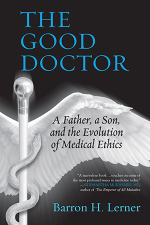
    The Good DoctorThe Good Doctor: A Father, a Son, and the Evolution of Medical Ethics
    Barron H. Lerner

    “This is one of the most thoughtful and provocative books that I have read in a long time, and I suspect that generations of doctors and patients will find it just as thought provoking.”
    —Siddhartha Mukherjee, author of The Emperor of All Maladies


    For Graduates Heading to Law School

    Becoming GentlemenBecoming Gentlemen: Women, Law School, and Institutional Change
    Lani Guinier

    “Hugely persuasive . . . An important and startling work by a provocative national figure.”
    —Kirkus Reviews 


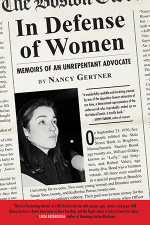
    In Defense of WomenIn Defense of Women: Memoirs of an Unrepentant Advocate
    Nancy Gertner

    “This is a fascinating memoir of a life lived in the law with passion, guts, humor, and great skill.”
    —Linda Greenhouse, author of Becoming Justice Blackmun


    For Graduates Heading into Teaching 

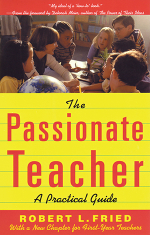
    The Passionate TeacherThe Passionate Teacher: A Practical Guide
    Robert L. Fried

    “A deeply felt meditation on the vital role of passion in good teaching . . . stuffed with . . . samples, stories, interviews with good teachers, lists of things to try.”
    —Anthony Rotundo, The Washington Post 


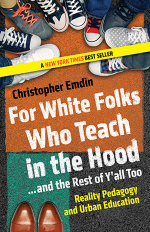
    For White Folks pbFor White Folks Who Teach in the Hood . . . and the Rest of Y’all Too
    Christopher Emdin

    “If you’re looking for the revolutionary meaning, and imaginative transformation, of teaching for the real America, you’re holding it in your hands! Christopher Emdin is Jonathan Kozol with swag!”
    —Michael Eric Dyson, author of The Black Presidency: Barack Obama and the Politics of Race in America 


    For Women in Science

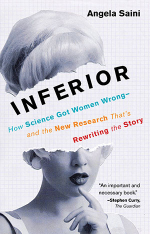
    InferiorInferior: How Science Got Women Wrong—and the New Research That’s Rewriting the Story 
    Angela Saini

    “This is an important book that I hope will be widely read.”
    —Sarah Blaffer Hrdy, author of The Woman That Never Evolved 


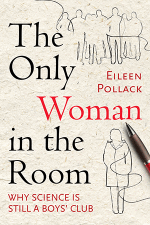
    The Only Woman in the RoomThe Only Woman in the Room: Why Science Is Still a Boys’ Club
    Eileen Pollack

    “In Eileen Pollack’s vivid description of the issues facing women in science, I immediately saw the truth of what I have lived.”
    —Carol Greider, winner of the Nobel Prize in Physiology or Medicine


    For the Environmentalist

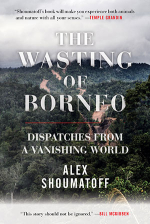
    The Wasting of BorneoThe Wasting of Borneo: Dispatches from a Vanishing World
    Alex Shoumatoff

    “As often in his long and valuable career, Alex Shoumatoff has made visible a part of the world that too few of us pay attention to.”
    —Bill McKibben, author of Eaarth: Making a Life on a Tough New Planet 


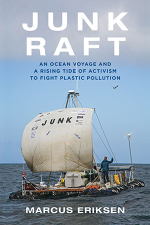
    Junk RaftJunk Raft: An Ocean Voyage and a Rising Tide of Activism to Fight Plastic Pollution
    Marcus Eriksen

    Junk Raft serves as a reflection of the choices and journeys that each of us makes and helps us understand how plastic in the oceans is deeply intertwined with the future of human life. Eriksen gets at the heart of what it means to respond to environmental catastrophe on our imperiled planet.”
    —Céline Cousteau, documentary filmmaker, artist, and environmental activist

    For Graduates Entering Public Service

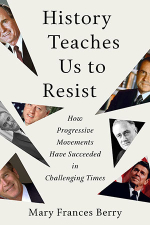
    History Teaches Us to ResistHistory Teaches Us to Resist: How Progressive Movements Have Succeeded in Challenging Times
    Mary Frances Berry

    “History Teaches Us to Resist is an encouraging reminder that, with strategic discipline, progressives have always found creative ways to advance the work of justice and equality—even in the worst of times.”
    —Sherrilyn Ifill, president and director-counsel, NAACP Legal Defense Fund 


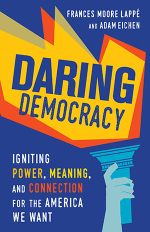
    Daring DemocracyDaring Democracy: Igniting Power, Meaning, and Connection for the America We Want
    Frances Moore Lappé and Adam Eichen

    “As someone who has been on the opposite side of anti-democracy forces, I can say firsthand that Lappé and Eichen speak to the problems plaguing our elections, while also offering compelling solutions.”
    —Zephyr Teachout, Associate Professor of Law at Fordham University


    For Graduates Committed to Understanding “Bottom-Up” History

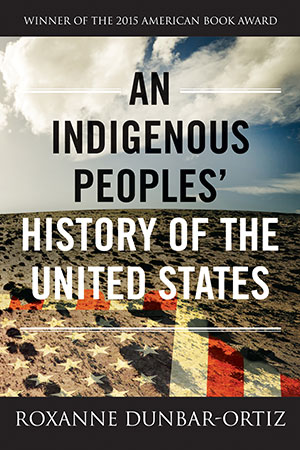
    An Indigenous Peoples' History of the United StatesAn Indigenous Peoples’ History of the United States
    Roxanne Dunbar-Ortiz

    “This may well be the most important US history book you will read in your lifetime. . . . Dunbar-Ortiz radically reframes US history, destroying all foundation myths to reveal a brutal settler-colonial structure and ideology designed to cover its bloody tracks.”
    —Robin D. G. Kelley, author of Freedom Dreams 


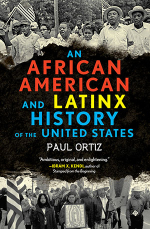
    An African American and Latinx History of the United StatesAn African American and Latinx History of the United States
    Paul Ortiz

    “An African American and Latinx History of the United States is a gift.”
    —Ibram X. Kendi, National Book Award–winning author of Stamped from the Beginning: The Definitive History of Racist Ideas in America

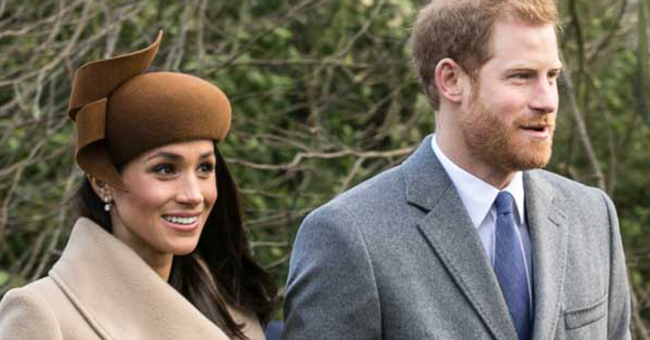
  • Prince Harry and Meghan Markle

    Prince Harry and Meghan Markle. Photo credit: Mark Jones

    Millions tuned in on Saturday, May 19, to watch the royal wedding ceremony of Britain’s Prince Harry and African American actress Meghan Markle. Bishop Michael Bruce Curry of the American Episcopal Church delivered a stirring and dynamic sermon for the occasion. At the get-go, he quoted none other than Dr. Martin Luther King, Jr.:

    The late Dr Martin Luther King Jr once said, and I quote: "We must discover the power of love, the redemptive power of love. And when we do that, we will make of this old world a new world, for love is the only way."

    There's power in love. Don't underestimate it. Don't even over-sentimentalize it. There's power, power in love.

    The quote comes from Dr. King’s sermon “Loving Your Enemies.” Delivered at Dexter Baptist Church in Montgomery, Alabama, on November 17, 1957, “Loving Your Enemies” was one of Dr. King’s favorites. In it, he insists that loving one’s enemies could bring about conversation. Moreover, it’s the only way to become a better human being. Here’s an excerpt of it to give context of the redemptive power of love Dr. King spoke about:

    ***

    Now there is a final reason I think that Jesus says, “Love your enemies.” It is this: that love has within it a redemptive power. And there is a power there that eventually transforms individuals. That’s why Jesus says, “Love your enemies.” Because if you hate your enemies, you have no way to redeem and to transform your enemies. But if you love your enemies, you will discover that at the very root of love is the power of redemption. You just keep loving people and keep loving them, even though they’re mistreating you. Here’s the person who is a neighbor, and this person is doing something wrong to you and all of that. Just keep being friendly to that person. Keep loving them. Don’t do anything to embarrass them. Just keep loving them, and they can’t stand it too long. Oh, they react in many ways in the beginning. They react with bitterness because they’re mad because you love them like that. They react with guilt feelings, and sometimes they’ll hate you a little more at that transition period, but just keep loving them. And by the power of your love they will break down under the load. That’s love, you see. It is redemptive, and this is why Jesus says love. There’s something about love that builds up and is creative. There is something about hate that tears down and is destructive. So love your enemies.

    ~~~

    There is a power in love that our world has not discovered yet. Jesus discovered it centuries ago. Mahatma Gandhi of India discovered it a few years ago, but most men and most women never discover it. For they believe in hitting for hitting; they believe in an eye for an eye and a tooth for a tooth; they believe in hating for hating; but Jesus comes to us and says, “This isn’t the way.”

    And oh this morning, as I think of the fact that our world is in transition now, our whole world is facing a revolution. Our nation is facing a revolution, our nation. One of the things that concerns me most is that in the midst of the revolution of the world and the midst of the revolution of this nation, that we will discover the meaning of Jesus’ words.

    History unfortunately leaves some people oppressed and some people oppressors. And there are three ways that individuals who are oppressed can deal with their oppression. One of them is to rise up against their oppressors with physical violence and corroding hatred. But oh, this isn’t the way. For the danger and the weakness of this method is its futility. Violence creates many more social problems than it solves. And I’ve said, in so many instances, that as the Negro, in particular, and colored peoples all over the world struggle for freedom, if they succumb to the temptation of using violence in their struggle, unborn generations will be the recipients of a long and desolate night of bitterness, and our chief legacy to the future will be an endless reign of meaningless chaos. Violence isn’t the way.

    Another way is to acquiesce and to give in, to resign yourself to the oppression. Some people do that. They discover the difficulties of the wilderness moving into the promised land, and they would rather go back to the despots of Egypt because it’s difficult to get in the promised land. And so they resign themselves to the fate of oppression; they somehow acquiesce to this thing. But that too isn’t the way because noncooperation with evil is as much a moral obligation as is cooperation with good.

    But there is another way. And that is to organize mass nonviolent resistance based on the principle of love. It seems to me that this is the only way as our eyes look to the future. As we look out across the years and across the generations, let us develop and move right here. We must discover the power of love, the power, the redemptive power of love. And when we discover that, we will be able to make of this old world a new world. We will be able to make men better. Love is the only way. Jesus discovered that.”

    From A TIME TO BREAK SILENCE. All material copyright © Martin Luther King, Jr., and the Estate of Martin Luther King, Jr.; all material copyright renewed © Coretta Scott King and the Estate of Martin Luther King, Jr.

    ***

    In our time of ongoing and heightened racial strife, the marriage of Prince Harry and Meghan Markle sends a powerful message of bridging the racial divide. Seeing the cultural significance of their wedding, our author Sheryll Cashin took to Twitter that day.

    Cashin tweet 1 Cashin tweet 2
    As Cashin writes in her book Loving, cultural dexterity is important for fostering interracial understanding, because it’s “an enhanced capacity for intimate connections with people outside one’s own tribe, for seeing and accepting difference rather than demanding assimilation to an unspoken norm of whiteness.”

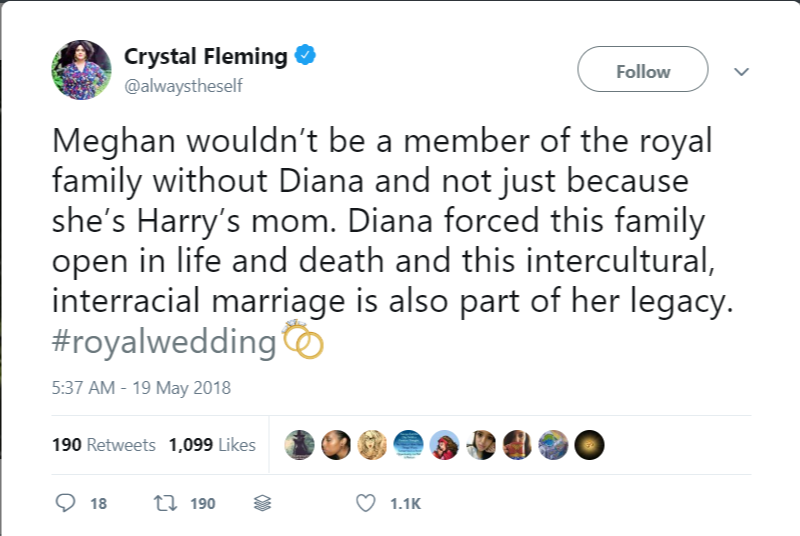
    Our other author, Crystal Fleming, took to Twitter, too. She wrote about her obsession with the royal wedding in her forthcoming book How to Be Less Stupid About Race. With regard to the royal family’s white supremacist and colonialist history and Markle’s mixed-race ancestry, the royal wedding is sure to give us plenty to discuss in our “national conversation about race.”

    Fleming tweet 1 Fleming tweet 2
    Indeed, the royal wedding will be a cultural touchstone for the ages. It will stand out as an example of redemptive power of love can be an act of nonviolent resistance of oppression and “make of this old world a new world.”

  • A Q&A with Fred Pearce

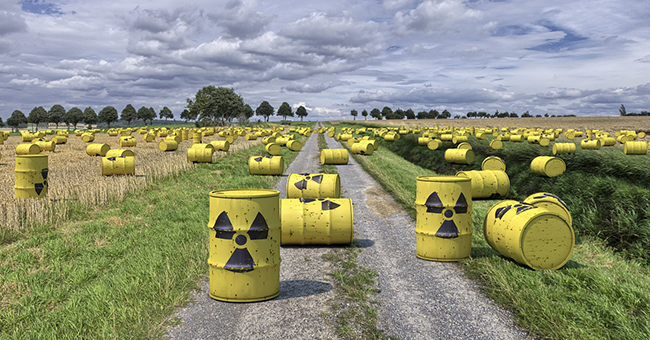
    Nuclear waste

    It’s the sort of relationship that keeps bringing out the worst in us. From the atomic bombings of Hiroshima and Nagasaki to the Chernobyl nuclear accident, our eight-decade-long relationship with nuclear technology has been marked by our tendencies to secrecy, coverups, and disasters. What promised to be a cutting-edge source of power has laid waste to the environment as much as it has to the human psyche. Distinguished environmental journalist Fred Pearce gives us a global tour of our nuclear legacy—from Nevada and Japan to the UK and secret sites of the old Soviet Union—in his latest book Fallout: Disasters, Lies, and the Legacy of the Nuclear Age. Our blog editor Christian Coleman caught up with Pearce to ask him about the book and what we should take from it now that President Donald Trump has withdrawn the United States from the Iran nuclear deal.

    Christian Coleman: Tell us what inspired you to write a book on our nuclear legacy.

    Fred Pearce: Nuclear scandals and disasters have been a recurring theme of my life as an environment journalist for several decades. But they seemed to have fallen off the radar. Old news, but definitely not fake news. Then I was commissioned to visit the heart of Britain’s nuclear industry, both military and civil, at a remote spot on the northwest coast of England called Sellafield. I was profoundly shocked at what I found, from the mile-after-mile of coastal mud that qualifies as radioactive waste to the world’s largest stockpile of plutonium, sitting inside a warehouse and wide open to terrorist attack. I set out to explore the world’s hidden legacy of nuclear fallout and debris, and this book is the result.  

    CC: Whether nuclear technology is being developed for weapons of war or as an alternative energy source, there’s always what you call the “culture of secrecy” surrounding it. Why is that?

    FP: The culture began because the nuclear industry started as a secret military project during the Second World War. And it has never gone away, partly because the links between civil and military nuclear technology have never gone away—the plutonium coming out of the back of a power reactor is potentially the raw material for bombs—and partly because the industry has remained crippled by public opposition and the legacy of accidents from Three Mile Island to Chernobyl and Fukushima. Nuclear proponents and engineers are as paranoid as some of their opponents! That’s why one of my main conclusions is that we as a society are simply incapable being rational about nuclear stuff. So, even leaving aside the bombs, we’d best call the whole thing off.

    CC: Later in the book, you bring up radiophobia, the societal fears brought on by government secrecy, nuclear fallout, contamination, and long-lasting health risks of radiation. Why was it important to address the psychological impact of nuclear technology in the book?

    FP: Because it is a real impact. A lot of people in the nuclear industry dismiss their critics as suffering from radiophobia. It is true that probably the biggest health impacts of Chernobyl and Fukushima have been the psychological suffering—because of the dislocation of evacuations, the fear of lingering radiation and so on. Many of those fears are, I concluded, excessive in the extreme. (Anti-nuclear people can be as anti-scientific as the worst climate-change deniers.) But these fears are real effects of the industry, for which the industry must take responsibility. Psychological impacts are as real as radiological impacts. Also, this is far from being all on one side. The psychological ill-effects of nuclear technology extend deep into the industry itself and its supporters. Radiophobia is matched by a kind of rabid enthusiasm for nuclear technology that results in an inability to think through the things that might go wrong and their consequences. Most of the accidents have happened because of this. 

    CC: In your travels around the world, you’ve seen how atomic waste has been disastrously mishandled. What are some environmentally-sound methods of storing it?

    FP: We need to find permanent disposal sites. We can’t visit this stuff on future generations by keeping it in store. For the long-lasting stuff—mainly containing plutonium, which has a half-life of thousands of years—we have to bury it safely out of harm’s way for that length of time, while it decays. Deep underground in the safest geology we can find. I hate to say it to the people of Nevada, but Yucca Mountain is about as good as it gets. It’s not perfect, but we can’t wish this stuff away. The danger is that if everyone says “not in my backyard” the end result is this stuff stays in everyone’s backyard. Most states in the US have supposedly interim stores of this highly dangerous stuff, and as of now, we have nowhere to put it.

    CC: You mention several movies touched by the popularity of the nuclear age, such as Dr. Strangelove and Godzilla. You also mention atomic-themed design trends, nuclear themed beauty pageants, high-school football teams named “The Atoms.” Why has the nuclear age had such a cultural impact?

    FP: Because it was a new and alien technology that captivated some and terrified many more. For some, it would generate electricity “too cheap to meter”; for others, it would blow up the world, or turn us all into mutants. Once it was so all-the-rage that when they tested the first A-bombs at the Bikini atoll, French costumiers named their latest two-piece swimsuit after it. How weird is that? Long before climate change, it was the great global threat. We talk now about the Anthropocene, the age when humans are in charge of our planet’s destiny. When we dropped the bomb on Hiroshima, that was the start.

    CC: What would you like readers to take away from your book about our nuclear legacy, especially in light of President Donald Trump announcing that he’s withdrawing the US from the Iran nuclear deal?

    FP: Treating nuclear weapons as just another weapon for macho posturing is crazy. Trump is the real rocket man. The bottom line is we have to get rid of these weapons for the safety of the world. We forget that America signed up with most of the world to the Nuclear Non-Proliferation Treaty in 1970, under which nuclear powers committed to phasing out their nuclear weapons in return for non-nuclear powers committing not to develop their own weapons. Yet we demand that countries like Iran and North Korea stick to their side of the bargain when we don’t stick to ours.  

    The status quo is dangerous. Withdrawing from the Iran deal—which the Iranians were sticking to—is  dangerous folly and undermines the chances of getting a deal with North Korea to disarm. Why would they trust America? The trouble is we have kind of got used to having nuclear weapons around. That is maybe the most dangerous thing of all. We need to rediscover fear about our own weapons. When researching my book, I travelled through Colorado looking at the weapons silos in fenced off corners of corn fields. It was almost like they were an accepted part of the landscape. That was truly scary. I have a poster on my wall showing how the Russians have 7,300 nuclear warheads; America has 7,000; and the rest of the world has just over 1,000 altogether. The Iranians have none. Get real, America. Get disarming.


    About Fred Pearce 

    Fred Pearce has reported on environmental, science, and development issues from eighty-five countries over the past twenty years. Environment consultant at New Scientist from 1992 to 2018, he also writes regularly for the Guardian newspaper and Yale University’s prestigious e360 website. His many books include The New Wild, When the Rivers Run Dry, With Speed and Violence, Confessions of an Eco-Sinner, The Coming Population Crash, and The Land Grabbers.

  • By Philip C. Winslow

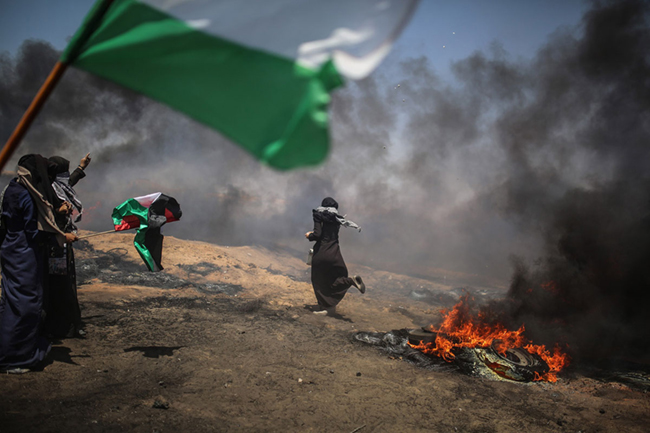
    A Palestinian throws a rock in response to Israel's intervention during a protest, organized to mark 70th anniversary of Nakba - Jordi Bernabeu Farrus - Flikr

    A Palestinian throws a rock in response to Israel's intervention during a protest, organized to mark 70th anniversary of Nakba. Photo by Jordi Bernabeu Farrus (Creative Commons License: https://creativecommons.org/licenses/by/2.0/r)

    Last Monday’s opening of the American Embassy in Jerusalem was another set piece in the inflammatory go-it-alone pageantry of Donald Trump. While Israel Defense Forces fired live rounds and tear gas into Palestinian protestors at the Gaza border, curlicues of disconnected fantasies bloomed in the old American Consulate building, on the 1949 Green Line in Jerusalem’s Arnona neighborhood. Considering what was happening at the Gaza fence, fifty miles away, some of the fantasies were almost grotesque:

    • Treasury Secretary Steven Mnuchin’s beatific smile as he unveiled the stone wall tablet with a great flourish.
    • Trump son-in-law Jared Kushner’s unctuous praise for Trump and Israel, blame for the Palestinians, and the meaningless suggestion that peace can still be achieved.
    • Trump daughter Ivanka, beaming but slightly vacant, as she dedicated the Jerusalem stone plaque bearing her father’s name in large letters. Maybe she was nervous. After all, she was awfully close to Arab East Jerusalem. Great falafel shop over in Abu Dis, I could have told her.
    • Trump’s tweet: “A great day for Israel!”
    • His video message: “We extend a hand in friendship to Israel, the Palestinians and to all of their neighbors. May there be peace.”
    • Prime Minister Benjamin Netanyahu’s gushing about Trump’s “courage” and the righteousness of historical corrections. Well, no hypocrisy there; Netanyahu got everything he wanted, and was beside himself with glee.

    And what of the tens of thousands of Palestinians, egged on by Hamas, massed along the Gaza fence as some tried to cut the wire amid clouds of tear gas and smoke from burning tires, on their Nakba day, the catastrophe seventy years ago when their parents or grandparents lost everything? Palestinians? Oh, them. “A gruesome and unfortunate propaganda attempt,” White House spokesman Raj Shah sniffed. I guess it depends on one’s perspective; with dozens shot dead at the fence, the gala in Jerusalem seemed gruesome and unfortunate to me.

    With this diplomatic provocation, the Trump administration seemed confident that it has done the right thing for Israel and her security. It has not. And the only American hand extended to the Palestinians proffered a raised middle finger. It was the most blatant—yet in a way the most honest—American gesture to the Palestinians since Israel’s occupation began in 1967.

    I lived and worked in the West Bank through the Second Intifada, from 2001 through 2004, as an operations support officer with the United Nations Relief and Works Agency for Palestine Refugees (UNRWA), driving six hundred miles a week the length and breadth of the West Bank, and I can tell you a few things about the Palestinians. Hardly any harbor ill feelings for Jews—and please note my distinction here—but they do have bad feelings for Israel, and what they want is the Israeli government and the security forces off their necks so that they can breathe basic human freedoms such as work and unrestricted movement.

    The Palestinians I know, remember and remain friends with fourteen years after that intifada are families full of architects, engineers, doctors, nurses, lawyers, students, actors, musicians, warehouse workers, ambulance drivers and people desperate for a job of any kind so they can feed their kids.

    The old Israeli tropes—Palestinian terrorism, and “we have no partner for peace”—once true but no longer, are still deployed to sidestep the two-state solution, which Benjamin Netanyahu’s government has no intention of midwifing. It’s true that Palestinian President Mahmoud Abbas is ineffective and needs to go. But without much effort I can think of several Palestinians who would make excellent partners for peace. The United States, however, is no longer a peace broker, honest or otherwise; America is done.

    Granted, too, the sight of Gazans in checkered keffiyehs, hurling stones amid flaming tires, is not pastoral. But here’s something else about the Palestinians. Despite the hot rhetoric, they have no intention of trying to enforce what they call the right of return to their old homes in Israel, except symbolically. If Israel lifted the blockade of Gaza and restrictions on West Bankers, Palestinians would, as one woman once plaintively said to me, just get on and “live our simple lives”.

    And if they didn’t? If Palestinians, again given access to move freely and work in Israel, resorted to old ways of terrorism? I once put that question to a retired senior Israeli military man. “We would know exactly what to do,” he told me. He didn’t need to elaborate.

    Israel’s blockade of Gaza is not about to be eased, especially after Trump’s embassy move and the violence. Peace talks are out of the question for the foreseeable future.

    So, what is to be done with the nearly five million Palestinians in Gaza and the West Bank? The most pessimistic fear is that Israel will keep doing what it’s doing until every last Palestinian is squeezed out of the West Bank. The hardline vision of Israel “from the river to the sea” is not an idle daydream. If you doubt that the squeeze is well underway, look at the UN or Peace Now maps showing the growth of Israeli settlements over the years; Vox has a selection of them here, although it’s not up to date. Israelis in general, even those on the left or center-left, don’t want to know about the Palestinians. Penned in behind the barrier or working in Germany, it’s all the same. They don’t want to see them.

    The day of the Embassy opening I found myself having to stifle an unaccustomed outrage at this finger in the eye to the Palestinians, while for the second time in two weeks America stood alone against our European allies. I emailed a Canadian friend, a journalist who has a strong social conscience and is well-versed in international affairs. He wrote back saying that for many Westerners the Palestinians are as off the radar as they are for Israelis. “When I raise it with well-informed people there are blank looks,” he wrote. “It’s as if they have all decided nothing will change and even the worst will be a repeat of past worsts, and Israel will always end up winning and Palestinians will always end up being deserted by Arab neighbors.” He agreed on the moral importance of the issue, but added that many in Canada, the U.S. and Europe are feeling beaten down by what he called news-event fatigue, “the sheer suffocating volume of crises.”

    My outrage was not stilled. I hate to hear that well-informed people’s eyes glaze over and they say, oh well, age-old hatreds will never change. That’s a willfully-ignorant cop-out. Do we just forget about justice and human rights? I guess so, in this view. Yes, let’s not forget the political hand-washing of the Arab neighbors. But mainly let’s not forget international humanitarian law, the Geneva Conventions, and activities in territories occupied during war.

    How can observers counter the numbing effects of “news-event fatigue,” to help end fifty-one years of occupation? It’s hard work and requires a determination that can exceed the bounds of the possible. A few tools of engagement exist.

    Soccer, at least metaphorically. An incident occurred in 2002, at the peak of the intifada, when an IDF squad burst into the house of some friends of mine in Jenin, in the northern West Bank. Here’s how I wrote it up later:

    “There were about thirty of them, and they were all in combat gear and flak jackets, and they were very aggressive,” Hidaya [my friend] said. It was the third or fourth search that year, and she calmly gathered the children around the television as a distraction. When the soldiers had finished, four of them flopped down in chairs next to Yazan [their son, who was ten at the time; he, like his father, is now a doctor]. It was the World Cup quarter final that day, England and Brazil, a nail biter.

    “What’s the score?” one asked. Yazan told him.

    “Who are you for?” the soldier asked.

    “Brazil,” Yazan said.

    “Me too,” said the soldier.

    Hidaya laughed as she looked back on the incident. “They were sweating all over my chairs and the floor in their dirty uniforms. But for five minutes they had a normal conversation”.

    Nice story, but how significant? Maybe just an illustration that common ground exists, that enemies can be got together. Even if for five minutes. Next time maybe it’ll be an hour.

    The Boycott, Divestment, and Sanctions (BDS) movement is another tool, albeit fiercely controversial. I question both the effectiveness and the morality of broad economic sanctions, when different industries, the arts, and academic institutions of both parties are linked—and which can demonize an entire people for the actions of its government. BDS shuts down dialogue and creates ill will for dubious effect. I won’t buy products identified as coming from the West Bank settlements, but otherwise I favor strenuous engagement.

    Breaking the Silence, the organization of Israeli combat veterans, offers an inside look from men and women who’ve been on the sharp end. Their courage in truth-telling, in a society where the military once was venerated, can and will bring about change. I’ve met and written about them, and strongly support them.

    The Palestine Red Crescent Society is another group I like to plug. These are the first responders who never flinch to save the wounded and gather the dead. Supporting the PRCS replenishes supplies and helps morale among these dedicated medics.

    UNRWA, my old employer, provides vital humanitarian aid to Palestinians in East Jerusalem, the West Bank, Gaza, Syria, Lebanon and Jordan. Israel fulminates against UNRWA and pressures the U.S. to shut down funding, claiming that it’s a terror-supporting organization. It isn’t. Push the U.S. Congress to keep the funds flowing.

    These are sticking bandages on a wound that requires political solutions. Israelis need to face the long and destructive injustice, and to break the rightwing settler hold on government. American voters need to talk to our own politicians, who are largely responsible for funding the occupation. And we need to pay attention, whether or not we feel connected to this story.

    Despite the passage of years, the needs are urgent. A self-absorbed and dangerously ignorant American president has just written off five million people and increased the risks of a widening regional war.

    *****

    As I wrote the beginning of this piece, the death toll at Gaza had reached sixty, with about twenty-two hundred Palestinians wounded. Messages that trickled in from Palestinian friends were agonizing to read. “It’s a black day for us,” one wrote, ending with a broken-heart emoji. To this old friend, I replied that my heart was black with shame and embarrassment. I didn’t mention, because she knows better than I do, what may come next, as the story fades from the headlines.

    About the Author

    Philip C. WinslowPhilip C. Winslow has been a reporter and foreign correspondent for more than thirty years. He worked for the Christian Science Monitor, the Toronto Star, Maclean’s magazine, CBC radio, CTV News, and ABC radio news, in Europe, the Middle East, Africa, and parts of Southeast Asia. He also served in United Nations peacekeeping missions in the former Yugoslavia and in Sierra Leone, and from 2001 through 2004 was a field operations officer with the United Nations Relief and Works Agency (UNRWA) in the West Bank. He is the author of Sowing the Dragon’s Teeth: Landmines and the Global Legacy of War and Victory for Us is to See You Suffer: in the West Bank with the Palestinians and the Israelis.

  • By Ayla Zuraw-Friedland

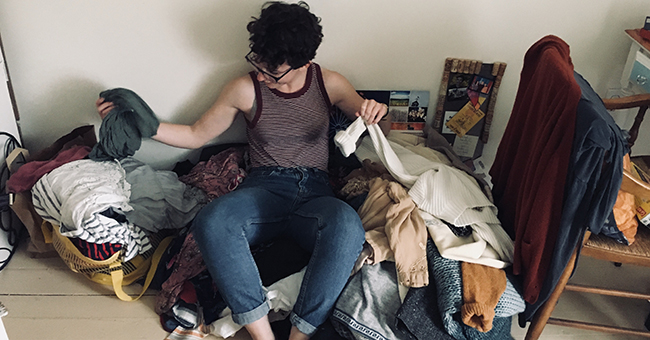
    Ayla Zuraw-Friedland sorting her clothes piles

    Ayla Zuraw-Friedland sorting her clothes piles

    I didn’t mean to start my spring cleaning at 10:30pm on a Tuesday. I had just gotten home from having a drink with a friend, and it was warm enough in my attic room to open a window. I was optimistic in the way that only a cheap cider and a text confirming that your order of pad thai will arrive in thirty minutes or less can make a person. Tonight, I announced to my roommate’s cat, would be the night I finally switched my summer and winter clothes. I dragged the boxes from the attic, and began what would be a three-hour process.

    It was a lot more than I bargained for.

    The thing about my clothes is that I have a lot of them. I love clothing. I like experimenting with how colors, patterns, and cuts fit together. I like that styles of dress (or undress) are, in their own ways, incredibly political when executed in certain contexts. At various points in my life, clothes have helped me say things about myself that I couldn’t articulate in words. Getting dressed is sometimes my best litmus test for gauging the distance between how I’m actually feeling and how I’d like to feel. In the process of matching mood to garment, I accumulate what can only be considered an excessive amount of clothing.

    With each place I’ve lived, my closets have needed to yawn wider to accommodate everything I try to put in them. Between my mother’s enviable talents as a seamstress and her well-earned reputation as world champion of thrift shopping, something newly made, adapted, or fished from a Salvation Army rack appears weekly in the closet: a bright purple sleeping-bag length winter parka bought at Goodwill in July that is very slightly different than the knee-length purple parka bought in May, a pair of almost-new Doc Martens, a men’s button up shirt and tie transformed into a dress.

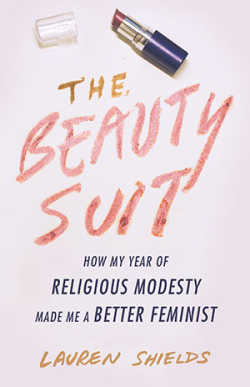
    Over time, my closet began to divide itself into “Clothes I Wear” and those that comprise what author Lauren Shields might call “The Beauty Suit,” or: “a costume [a woman wears] when she leaves the house, one partly based on satisfying the male gaze . . . that takes our bodies as they naturally exist and adds enormous amounts of money, time, and effort in quantities men are never expected to approach.” It is a uniform she describes in her book The Beauty Suit: How My Year of Religious Modesty Made Me a Better Feminist as “clothing that hugs our bodies and exposes our arms, legs, and sometimes stomachs and backs; shoes that are agonizing to wear and expensive to own but practically mandatory.”

    The Beauty Suit

    The longer a piece of clothing lives in my closet, the more I feel I owe an unspoken debt to it for making it stick around so long. It’s like all those dry-clean only (shudder) sweaters and empire waist dresses are waiting for me to suddenly develop the ingenuity or sense of style required to understand their purpose in being there, or for me to rediscover the person I was when they felt right. The thought of getting rid of a nice Brooks Brothers skirt I got at Goodwill for $6 that I used to love but now nips so tightly at my waist that I can’t sit down, or a blazer practically made of static electricity, feels akin to throwing away a toolbox full of birdsong cassettes or a first-aid kit with only toe-splints—not strictly useful to me and taking up more space than what they’re worth but maybe, just maybe, indispensable if I decide to become a covert bird enthusiast or late-life ballerina, or should I ever want to option to don the Beauty Suit again.

    My spatial reasoning skills have never been great or even okay, but it was immediately clear that there was no way the winter clothing bursting from the closet would fit in the two, mid-sized Tupperware bins waiting for them. I had tried to get rid of clothing before, but my sense of abiding duty and nostalgia always won out.

    But, in the past year, something had shifted. I felt an increasing sense of disconnect from the Beauty Suit. Putting them on felt like dressing a paper doll—stiff, uncomfortable, and a bit silly. My sense of style had evolved from something intentionally feminine to something that emphasized a central tenet of “elastic waistbands or bust” (no pun intended.) I no longer felt as willing to wear things that caused me even a moment of discomfort—not out of anti-patriarchal resistance or smugness toward other women who are, in fact, comfortable in those clothes, but out of a sense of foreignness. By definition, it meant I looked different, was perceived differently, and took up space in the world in a different way. It also meant that a good many of my belongings no longer . . . belonged.

    Shields’s book challenged me, especially as someone who doesn’t come from a religious background. The concept of dressing modestly rarely came up in my life for a number of reasons, several of which are more indicative of my relative privilege than they are of anything else. As an acceptably thin, white, straight, cis-woman, the way my body carries clothes is the subject of a good deal less consternation and regulation than it might be for others (though to be sure, is an area of concern and attention for many men). Modesty to me just meant making sure that whatever dress I wore to school was longer than my fingertips, and I often forgot to check.

    I, of course, respect anyone who chooses to dress modestly for religious reasons or otherwise. So long as they don’t use the mandates that are important to them to shame other women who choose not to live by those rules, it’s great and makes a powerful statement against the male gaze. Understanding that individual women, even women who ostensibly belong to the same institutions, organizations, or ethnic groups find empowerment in different places and styles of dress is essential to truly intersectional feminism—at least as important as recognizing the ways in which our perceptions of ourselves and the world are shaped by the whole toxic mess of patriarchy and capitalism.

    But, in the end, the greatest takeaway from this book was not how to feel good wearing a floor length skirt or covering my hair. Rather, it was Shields’ interpretations of the Biblical importance of modesty as a way of understanding life. To her estimation, the idea of living simply, or without prioritizing the accumulation of money or the stuff you buy, is far more important than rules about fabric weave or hat specifications.

    In a trance-like state, I began tossing things to the floor without pause. The piles on my floor grew, first to the height of my desk chair, and then peeking over my mattress, and then toppling over with the addition of shoes. I kept some things I wasn’t sure about, but what had once seemed like a monumental life-or-death task now felt like part of an ongoing process that would continue as my understandings of work, gender, and comfort transformed. I fell asleep sore and satisfied.

    When my partner came to help me bring everything to the consignment shop the next day, he joked, “It feels like I’m putting you in trash-bags.” In any previous moment, it might have been enough to undo me, to confirm a simmering panic that this was a big mistake, and when the nuclear holocaust came I would have nothing to wear. But it didn’t. And I don’t. I was still shoving fifteen unworn sweaters into bags, and I didn’t feel as though I was losing anything.

    The best lesson of my early twenties, one that The Beauty Suit has helped confirm, is that getting rid of stuff I no longer find useful does not mean I have failed. I am not beholden to my things, and my relationships to them are bound to change in healthy ways. A dress is not a sentient thing until someone is wearing it, much the way a book isn’t a book until someone is reading it. My love of clothing and sense of self is not muted by my sudden retreat from “typical” femininity. Instead of dreading a stage of reinvention, I can be excited that my closet has room for it.


    About the Author 

    Ayla Zuraw-FriedlandAyla Zuraw-Friedland joined Beacon Press in 2015 as editorial assistant to senior editors Joanna Green, Rakia Clark, and Jill Petty. She is a graduate of the Literatures in English program at Connecticut College, and spends the better part of her time haunting the indie coffee shops and bookstores along the Orange Line.  

  • By Scott W. Stern

    US soldiers returning to America after World War I

    US soldiers returning to America after World War I

    As the United States prepared to enter World War I in the spring of 1917, and as millions of young men gathered in dozens of military training camps across the country, federal officials were worried: these young men might get sick. They might contract pneumonia, tuberculosis, the flu, or, most terrifying of all, syphilis or gonorrhea.

    Sexually transmitted infections (STIs), fretted the Army’s chief medical officer in 1917, were “the greatest cause of disability in the army.” And he had a point: in 1917, STIs landed more enlisted men in the infirmary than any other infection. This was, after all, decades before the creation of antibiotics and sulfa drugs, back when injections of mercury were among the most common treatment for STIs.

    So the brass hastily began trying to prevent soldiers from contracting these dreaded infections. Military higher-ups took to giving the young recruits “scare talks” about the dangers posed by prostitutes and promiscuous women, who were thought to disproportionately spread STIs. “A German Bullet Is Cleaner Than A Whore,” read one Army poster. Soldiers who defied the rules and slept with prostitutes could avoid punishment if they admitted to superiors what they’d done and reported for what was, at the time, a modern STI treatment—a series of painful injections directly into the penis.

    Meanwhile, federal authorities urged local officials to detain any and every woman whom they “reasonably suspected” of having an STI, forcibly examine her, and then imprison the infected ones for mandatory treatment. In one revealing letter, a federal agent named Allison T. French—who’d impressed his bosses by writing threatening letters to judges in San Francisco until they agreed to impose harsher sentences of women convicted of prostitution—called this program “waging war on the women.” As I detail in my book, The Trials of Nina McCall: Sex, Surveillance, and the Decades-Long Government Plan to Imprison “Promiscuous” Women, officials detained, examined, and incarcerated tens of thousands of women during these years, usually without due process, all in the name of wiping out STIs.

    Yet there was an additional way the military tried to wipe out STIs, one no historian has ever discussed at any length. From 1917 to 1918, dozens of military camps across the country banned soldiers from talking to, or even walking next to, black women.

    I first came across this racist practice in a memo I found at the massive National Archives center in College Park, Maryland. A memo written by the aforementioned Lieutenant French on December 29, 1917, surveyed reports of military police from twenty-eight military training camps. The “[g]eneral practice” across these twenty-eight camps, French recorded, included “Prohibit[ing] enlisted men visiting sections of town populated by negroes” and even “Arrest[ing] enlisted men talking to, or in company with, negro women.”

    This memo gave me pause. I had spent years researching the World War I-era incarceration of women. I knew that, in their system of arrests and examinations, federal and local officials had disproportionately harassed black women. They justified this by making astoundingly racist claims such as, “the female of this race are unmoral” and “negro women exercise little or no care in protecting themselves or in caring for themselves in the matter of gonorrhea.” I knew that, once detained, black women were far more likely to be locked in less desirable institutions—filthy jails and crowded stockades, rather than utopian reformatories. Yet I had never read that military officers nationwide arrested enlisted men who were found talking to, or even physically near, black women. I knew that the military was internally segregated at this time, but I had never heard of this outward-facing bigotry, dictating whom soldiers were even allowed to talk to.

    I set out to find out more about this. In the end, I didn’t find much. A few extant records affirmed Lieutenant French’s memo. In Columbia, South Carolina, for example, at the urging of federal agents, the commanding general “issued an order prohibiting soldiers from talking to or walking with negro women.” An observer from the Army’s Sanitary Corps noted, “The enforcement of this order has gone towards solving the negro prostitute problem at that camp.” Yet the details of how this prohibition worked—how assiduously it was enforced, how black women reacted to it—were nowhere to be found.

    I found a somewhat more contextualized reference to this prohibition in a May 29, 1918, memo written by Bascom Johnson, a lawyer, investigator, former US Olympian, and high-ranking federal official, entitled, “Venereal Disease Among Colored Troops and Colored Civilian Population.” In it, Johnson lamented the fact that in many military communities, “beyond declaring certain colored districts out of bounds to troops and forbidding white soldiers to converse with colored women, the problem has been ignored.” There could be no progress, Johnson warned his readers, until military and civilian authorities adopted “drastic measures to suppress colored prostitutes, clandestine and professional.” Obviously, he continued, white soldiers should be kept out of black districts, but that could only help “in a small degree,” since it could not “keep the colored women in.” It was not “feasible,” Johnson lamented, “to keep colored troops out of colored districts generally.”

    Thus, apparently, black men were not always banned from speaking with black women, as white men were. Yet Johnson’s memo exemplifies the racist stereotypes that shaped the government’s treatment of black men as well. Many government officials viewed black men, like black women, as sexually insatiable, and thus promiscuous, and thus dangerous. Local officials in one Texas community, for instance, refused federal demands to close a district notorious for prostitution because they feared that doing so would lead the black soldiers stationed nearby to commit rape. At many military camps, all black soldiers (but not all white soldiers) had to take the painful penile injections every time they returned from leave, since officials believed the black soldiers surely had sex every time they set foot off camp.

    Many historians have done important work to document the military’s racist past, and how this past is connected to the present. Yet Lieutenant French’s memo convinces me, for one, that there is so much work yet to be done. That the US military banned soldiers across the country from so much as talking to, or even walking near, black women, is one of many forgotten parts of this racist past that must be examined far more closely.


    About the Author 

    Scott W. SternScott W. Stern is the author of The Trials of Nina McCall: Sex, Surveillance, and the Decades-Long Government Plan to Imprison “Promiscuous” Women. Follow him on Twitter at @ScottWStern. 

  • By Christian Coleman

    The Heritage

    Image credit: Bob Kosturko

    For Black athletes, sports and politics have always been intertwined. Their very presence on the field is a political act. Some athletes have used their status and influence to speak out against racial injustice; others have remained silent. From legends like Paul Robeson and Jackie Robinson to current icons like Colin Kaepernick and LeBron James, the heritage of Black activism within sports is deep and complex. Journalist Howard Bryant details it in full in The Heritage: Black Athletes, a Divided America, and the Politics of Patriotism.

    As Bryant guides us through this history, he illustrates the ways earlier Black athletes have dedicated themselves to political activism. Renaissance man and football player Paul Robeson advocated for Pan-Africanism and anti-capitalistic economic systems. The House of Un-American Activities Committee suspected him of Communism and even revoked his passport. Bryant quotes Robeson at his appearance before the committee in 1956 to request the re-issue of his passport:

    “The reason I am here today, you know, from the mouth of the State Department itself is: I should not be allowed to travel because I have struggled for years for the independence of the colonial peoples of Africa,” he told the committee. “I stand here struggling for the rights of my people to be full citizens in this country, and they are not. They are not in Mississippi. And they are not in Montgomery, Alabama. And they are not in Washington. They are nowhere, and that is why I am here today.”

    The committee did not re-issue his passport. Thus, Robeson would become one of the first casualties of the Heritage—the Black athlete’s fight for Black people at the expense of his career.

    Jackie Robinson, Muhammad Ali, and other members of the old guard continued the tradition. But starting in the 1970s, other athletes would undermine it. This is because of what Bryant calls the “greenwashing” of Black athletes like O. J. Simpson, Michael Jordan, Charles Barkley, and Tiger Woods. As Bryant points out:

    Instead of athletes using their celebrity to advocate for black people, as the old guard had, elite black players now opted for big salaries to sell sports and products, to help white America believe that all the messy history—and the nagging realities of the present—was gone. It was high fantasy.

    A key moment that showed the Heritage was dead happened in 1991. The video of LAPD police officers beating Rodney King went public. Chicago Bulls player Craig Hodges, who embodied the tradition of the Black political athlete, felt that the Lakers and Bulls should stage a boycott. Black athletes couldn’t be silent on the attack on King, he believed, as they too had personal experience with this. What better way, Hodges thought, to speak out against police brutality than with the most visible and big-time athletes like Jordan? But as Bryant writes,

    “There was just one major roadblock: Michael Jordan, king of the world, on his way to a dynasty, wanted nothing to do with it. Magic Johnson, king of Los Angeles, was silent. NBA bad boy Charles Barkley, silent. All the stars, quiet.

    After the September 11 attacks, the political landscape for Black athletes was changed. Post-9/11, military pageantry at sports events pushed the idea of healing and unity. At the same time, it promoted the notion of conformity, unquestioning patriotism, and the dangerous conflation of the heroic military and the police. It was hard to ignore the increased symbols of patriotism on the field: military flags; flyovers; police, fire, military, and sometimes emergency services being celebrated as heroes. At the same time these displays were happening, police departments around the country were under fire for the unarmed killing of Black people. “You cannot separate 9/11 from what's happening with the black athlete today,” Bryant said in an interview on NPR’s Weekend Edition with Scott Simon, “because the white athletes and anybody else who tried to challenge what was taking place after the towers fell, they felt the wrath. It's not necessarily a racial issue only. This is a question of patriotism, of weaponizing patriotism, of weaponizing jingoism, and of weaponizing the flag and of being able to speak.”

    Current athletes active in the era of #BlackLivesMatter have breathed new life into the Heritage, responding vocally to accounts of police brutality that continue that make headlines. But their protests still come against opposition from those who don’t think Black athletes should express any form of dissent. The media has played a major role in trying to crush Kaepernick and other Black players’ protest. This is especially prevalent during the Trump administration. LeBron James, for example, voiced his critiques of Trump and his policies in a video on his multimedia website Uninterrupted. Fox News host Laura Ingraham struck back by telling him to “shut up and dribble.”

    When James confronted Trumpism . . . Ingraham responded with an old weapon: an attempt to deny his voice—'Must they run their mouths like that?’—and, indeed, his citizenship. James and others shot back with I will not shut up and dribble, and Ingraham ultimately outed herself as a fraud, inviting James to appear on her show in a weak attempt to spin her condescending, racist attack into chummy celebrity banter. She failed, naturally, but her attitudes succeeded in reminding players, despite their millions and after all these years, why the Heritage endures: Even when African Americans think they’ve made it, they haven’t.

    The Heritage is a book that speaks to today’s political climate and shows us through the lens of activism in sports the work that remains to be done in order to bring an end to racial injustice. Bryant has done us a tremendous service documenting this history of now. As sports editor of The Nation Dave Zinn says, “This is the book for explaining our times, whether you give a damn about sports or not.”


    To find out more about Howard Bryant’s The Heritage, check out his other interviews on TSL Sports Talk/The Shadow League, Make It Plain with Mark Thompson/SiriusXM Progress, and Murph and Mac Show/KNBR Radio AM 680. Read other select excerpts on ESPN The Magazine, Salon, and Literary Hub.


    About the Author

    Christian Coleman is the associate digital marketing manager at Beacon Press and editor of Beacon Broadside. Before joining Beacon in 2015, he worked in writing, copy editing, and marketing positions at Sustainable Silicon Valley and Trikone. He graduated from Boston College and the Clarion Science Fiction & Fantasy Writers’ Workshop. Follow him on Twitter at @coleman_II.

  • By Lisa Page

    Rachel Dolezal

    Photo credit: YouTube/Dr. Phil

    For some of us, racial identity is elastic. We can pass. For white, for black, for Middle Eastern. For Latinx. I am one of those people. I know what it is to assimilate to a group you identify with, because I did it myself, against my white mother’s wishes. She hated me calling myself black.

    For this reason, my response to The Rachel Divide, Laura Brownson’s new documentary about Rachel Dolezal, is complicated. Dolezal famously passed for black, for years, before her white parents outed her in 2015. I feel two ways about this. I completely get the outrage that followed the reveal. But I also have sympathy for Dolezal. I know what it’s like to turn your back on the white side of your family.

    The film opens with clips of Dolezal’s activism, as president of the Spokane NAACP, which came to a screeching halt once she was revealed to be a white woman who darkened her complexion and wore a weave.

    Dolezal doesn’t call that passing.

    “Who’s the gatekeeper for blackness?” she asks, near the beginning of the film. “Do we have the right to live exactly how we feel?”

    Dolezal feels black. She has black sons. She has a black ex-husband, a black ex-boyfriend and black adopted siblings. She supports herself, doing hair, specifically weaves for black women. Box braids. Twists. Dye jobs. She calls herself “transracial” and argues that if Caitlyn Jenner can live her truth then so should she.

    The documentary shows the very real damage done to the Spokane chapter of the NAACP, once Dolezal was exposed as a fraud. Her claims of receiving racist hate mail came under scrutiny, and set the organization back. 

    “She created the destruction and hurt the people who needed to be advocated for,” one NAACP member argues.

    Her thirteen-year-old son, Franklin, can’t even go to the barbershop without witnessing his mother’s harassment. Like so many others, he wants her to admit she was born white instead of calling herself transracial.

    “I wish this would’ve happened when I was older,” he says. Her older son, Izaiah, wants to go to Howard University, but when the family goes for a college visit, they are run off campus. The tweets that follow are horrific. Dolezal’s notoriety hurts her sons, too.

    But there is more to this story than a white woman passing for black. This story is full of secrets and scandal tied to Dolezal’s complicated childhood. Her white parents were Christian fundamentalists in Montana who had two biological children and then adopted four more, all them black, because the mother felt called by God. According to Dolezal’s adopted sister, Ester, they were abused terribly, with baboon whips and glue guns. Ester also claimed her white brother sexually abused her, beginning when she was five. Rachel supported her sister with her own story of being sexually abused by the brother. The case was about to go to trial when the parents shifted the narrative. By discrediting their white daughter to the press, their white son was temporarily exonerated. The trail remains on hold.

    For me, this is a story that should’ve made the news, not just the sensationalistic story of a woman passing for black. It speaks to our short attention span and our flat-out disinterest in anything complicated. It also speaks to the complications of authority, race, and sex.

    “People love to say that women lie,” injects Rachel.

    “She is being treated the way black people are treated when we raise issues,” says Spokane journalist, Sandra Williams.    

    Dolezal writes a book, explaining her views, but it only sells 596 copies. No-one is interested in her challenging the system and being transracial.

    In the end, she legally changes her name to Nketchi Amare Diallo and looks hopeful.

    That’s her latest approach to finding work and moving forward. But will her plan work?

    Racial identity can be elastic for some of us. Dolezal is far from the only person to pass for another race. But again, she isn’t passing. In her own mind, she’s living her truth. One can only hope her sons can live their theirs.


    About the Author 

    Lisa PageLisa Page directs the creative writing program at George Washington University where she is assistant professor of English. Her work has appeared in the Virginia Quarterly Review, American Short Fiction, the Crisis, Playboy, and the Washington Post Book World. She is co-editor of We Wear The Mask: 15 True Stories of Passing in America.