• PoetryNational Poetry Month celebrates the power of the word in verse. Condensing language to its most vivid and lyrical effect, poetry speaks straight to the heart, and in verse, poets unveil to us the unseen beauties and terrors of our world. There is so much out there to enjoy, but where to start? We reached out to some of our beloved poets to ask them about their favorite poets and collections.

    ***

    Dominique Christina“The chapbook Mammoth by Rachel McKibbens, a short but dense collection of poems in tribute to McKibbens’ niece who died of cancer when she was a toddler, is one of my favorite poetry collections. That book, with its quaking sorrow, its conjure, its unflinching consideration of the body and its fragility, gives me permission to grieve, to elegy, to remember, to howl, to rage, and to accept.” 

    —Dominique Christina, Anarcha Speaks (forthcoming this October!)


    Jay Parini“I’ve been thinking about the poets who have influenced me, and it’s obvious, as I reflect, that poetry is a tissue of allusions. I suspect I’ve never written a line without, somewhere in the background, I could—at least in the inner ear of the imagination—hear lines by Wordsworth or Blake, Hopkins, Eliot, Stevens, or more contemporary poets like Mary Oliver, Charles Wright, or Seamus Heaney. Only last week, I returned to a poem by Wallace Stevens, ‘Men Made Out of Words.’ Here he suggests that life or the life of the mind, ‘this human / Reverie,’ consists of ‘propositions about life.’ I do think that, ultimately, we’re all composed of words, and that we use language as an organ of perception. And to be is the be perceived, in that no object lives except when caught and sung in the human voice. This is the work of poetry, of course. And the work is without end.”

    —Jay Parini, New and Collected Poems: 1975-2015 


    Sasha Pimentel“Brooklyn Antediluvian by Patrick Rosal (Persea Books, 2016), winner of the Academy of American Poets 2017 Lenore Marshall Poetry Prize.

    Sink into a poem in here and as each line rolls out its heaving song, your hair will float up, your palms will gape their surrender, and what you clasp most deeply within you will break, sharply, open: you’ll recognize again how profound poetry can be when so steeped in music, not just any music, but this music—which multiplies and never yields, shutters you from the cold, braves fervent course, and comes singing to you with that grave and flush tender voice as if from your old neighbor’s philco radio: singing your block’s Cee-lo players, singing the small ridges of the spine in a carried body, singing children in a typhoon bobbing their bodies roped together to wait out the deluge, singing history while crying grief, singing laughter when singing names, singing kundimans with despedidas as a body dancing sorrow and joy as two songs, singing wind, singing pennies, and singing bells!—and this book will unplug in you all that you have so tightly held, because this is a music that can hold everything, anything, even you, holds its loves gently above the water as it courses its holy flood.”

    —Sasha Pimentel, For Want of Water  


    Melissa RangeOne of my favorite contemporary poetry collections and biggest influences is Natasha Trethewey's Native Guard. This book has been a primer for me on how to write about neglected histories and personal and historical geographies (especially ones with which we have conflicted relationships), all in a dazzling array of forms that I love to write in myself, like sonnets, villanelles, and ghazals. This book opened a door for me, teaching me how to combine the personal with the regional and the historical in ways that are elegant, beautiful, accessible, and honest. I seriously think about this book nearly every single day since I read it ten years ago.”

    —Melissa Range, Scriptorium  


    Poetry

  • By Scott W. Stern

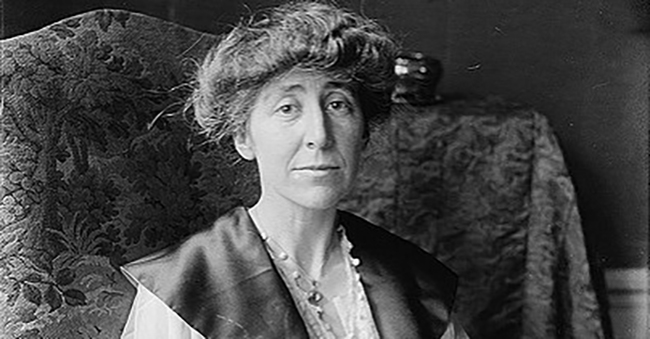
    Jeannette Rankin

    Photo courtesy of the George Grantham Bain Collection (Library of Congress)

    Silence was not common in the contentious chambers of the House of Representatives, but the wee hours of Friday, April 6, 1917, were different. This was an epic moment: exactly 101 years ago today, the representatives were voting on war. Beginning at 2:45 am, as the clerk of the House called each member’s name, one after the other, scarcely a sound broke the tense stillness, except representatives calling “Aye” or “Nay.” Their votes echoed hollowly through the House’s grand galleries, filled with curious onlookers, many still finely attired from evening parties hours earlier.

    With an angry nor’easter raging outside the Capitol, the chamber inside was oddly calm. The single exception to the hush occurred when the clerk called the name of Jeanette Rankin, the first-term Republican from Montana, and Congress’s first and only female member. The first time the clerk called her name, Rankin, sitting with her head bowed near the rear of the Chamber, simply did not respond. When the clerk called her name during the second roll call, however, and Rankin still did not speak, he tried again. “Miss Rankin,” he called insistently. Rankin, visibly nervous and blushing, rose tentatively to her feet. “I want to stand by my country, but I cannot vote for war,” she said in her distinctive Western accent. This simple sentence was her first ever speech on the floor of the House. “Vote, vote,” some members started calling. In a voice so low and ragged with emotion that few heard it, Rankin whispered, “No,” and almost immediately exited the chamber.

    It had taken more than sixteen hours of debate in the House to reach this moment. The speeches had started at 10:00 am the previous morning, with some representatives hoping in vain to limit debate so they could adjourn before Good Friday the following day. Some representatives expressed mild dissent in early speeches, but it was not until about 3:00 pm, when Democratic floor leader Claude Kitchin rose to speak, that the debate truly began. In a trembling voice, Kitchin started, “It does not take great courage to vote for other men to go out and fight.” As he continued, his voice grew stronger. Kitchin conceded that Germany had indeed attacked American civilians, but so had Mexico, and the country had avoided all-out war in that conflict. He could not vote for war. Other representatives rose afterward to voice their agreement. Senator Robert La Follette, the famous Progressive, could be seen nodding in the back of the hall.

    Jeannette Rankin, the daughter of an immigrant carpenter and a schoolteacher, had only been elected to Congress weeks earlier, the first woman ever elected. A champion of women’s suffrage and a former social worker, Rankin was a fledgling pacifist—but on the vote for war, she was torn. Her heroes in the suffrage movement were divided; several suffragist leaders told her a “no” vote would hurt their cause; friends and family had been putting enormous pressure on her to vote for war; her brother and close confidant, Wellington, urged her to vote a “man’s vote,” so as not to hurt her future career. Yet Rankin felt that World War I was a “commercial war.” She suspected what future historians would prove—that the arms industry, which had lent billions to England and her allies, was exerting enormous pressure on Woodrow Wilson’s government to enter the war. This would be a war for profit, not one for democracy.

    In all, representatives made more than one hundred speeches during the meeting that stretched from April 5 to April 6. At one point, when one member challenged a more hawkish colleague to enlist himself, and the two men almost came to blows, the sergeant-at-arms, mace drawn, had to intercede. In the end, however, all the argument was for naught. The House voted overwhelming—373 to 50—for war. The Senate, which had met days earlier, saw only six dissenting votes. Applause greeted the final vote in the House. The people wanted war.

    Yet Jeannette Rankin did not. Walking home during the dark early morning hours after the vote, she told herself, “You know you’re not going to be reelected.” Then she told herself, “I’m not interested in that.”

    The newspapers focused far more on Rankin’s “no” vote than on the “no” votes of dozens of her male colleagues. Many accounts claimed she cried as she cast her vote; she had not. In the end, Rankin did lose her seat in Congress (after Montana’s congressional districts were redrawn). She remained a passionate advocate for suffrage and became a lobbyist for peace. She traveled to India and studied with disciples of Gandhi. In 1940, she defeated a virulent anti-Semite to win a second term in the House of Representatives. Almost two years later, in the hours after the attack on Pearl Harbor, Rankin became the only member in either house of Congress to vote against entering World War II. Her political career was over.

    Jeanette Rankin’s votes against both world wars—whether you agree or disagree with her ideology—took extraordinary courage. Such acts of courage are not mere trivia. As President Trump moves our country dangerously toward conflicts with friends and foes alike, the courage of individual members of Congress may be all that stands between our country and terrible chaos. Rankin’s example is certainly worth remembering.


    About the Author 

    Scott W. Stern is the author of the forthcoming book The Trials of Nina McCall: Sex, Surveillance, and the Decades-Long Government Plan to Imprison “Promiscuous” Women. Follow him on Twitter at @ScottWStern. 

  • By Jonathan Rosenblum

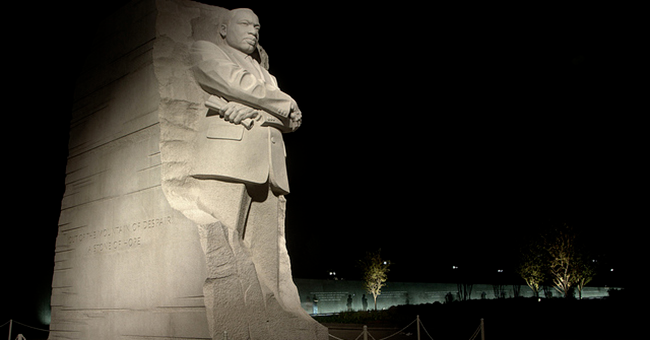
    Martin Luther King, Jr. Memorial at night, National Mall, Washington, DC

    Martin Luther King, Jr. Memorial at night, National Mall, Washington, DC. Photo credit: Scott Ableman

    The revolutionary Dr. Martin Luther King, Jr. has been slain twice: First, by an assassin’s bullet fifty years ago, and a second time, by the political, economic, and cultural elites of our time. They have reduced his radical teachings to gauzy notions of justice and equality, seeking to soothe their guilty consciences and hope the rest of us don’t look too closely.

    The sanitized King. You gaze up at the granite walls of the King monument in our nation’s Capitol, reading all sixteen stirring King quotations selected by the monument-builders, and you will not encounter the word “racism.” Not one single time.

    Jeanne Theoharis has thoroughly documented this appropriation and distortion of King’s life and words in her new book, A More Beautiful and Terrible History: The Uses and Misuses of Civil Rights History.

    It’s time to reclaim the legacy of Dr. King, in all its complexities, with all of the contradictions of this amazing, bold, visionary, evolving—and flawed—modern-day prophet.

    No, not the feel-good King of “I Have a Dream” fame standing at the Lincoln Memorial. Rather, the King who called out the hypocritical clergy for claiming to support the movement while criticizing the impatience of civil rights activists. The King who defiantly called America a sick nation. The King who was unafraid to name the racism of the north, as well as the south. The King who spoke about the intertwined triplets of evil—racism, economic oppression, and militarism.

    And even more so: The King—the dangerous King, the deeply unpopular King—who at the end of his life recognized that we needed revolution, not mere reform. Eleven months before he was shot down, he said:

    “We have moved from the era of civil rights to the era of human rights, . . . an era where we are called upon to raise certain basic questions about the whole society . . .We have been in a reform movement… (But) after Selma and the voting rights bill, we moved into a new era, which must be the era of revolution . . .We must recognize that we can’t solve our problem now until there is a radical redistribution of economic and political power . . . This means a revolution of values and other things . . . We must see now that the evils of racism, economic exploitation and militarism are all tied together. And you really can’t get rid of one without getting rid of the others . . . The whole structure of American life must be changed . . .” 

    The words of King the revolutionary were true fifty years ago, and they are even more compelling in today’s dangerous and unstable world. That is the King legacy we must uphold and preserve—through our words, and even more importantly, through our actions.


    About the Author 

    Jonathan Rosenblum has been a labor organizer for more than thirty years, playing key roles including SeaTac Airport campaign director. His writing has been featured in Tikkun, In These Times, and Yes! Magazine. He is the author of Beyond $15: Immigrant Workers, Faith Activists, and the Revival of the Labor Movement. He lives in Seattle, WA. Follow him on Twitter at @jonathan4212 and visit his website.

  • A Q&A with Mary Frances Berry and Jeanne Theoharis

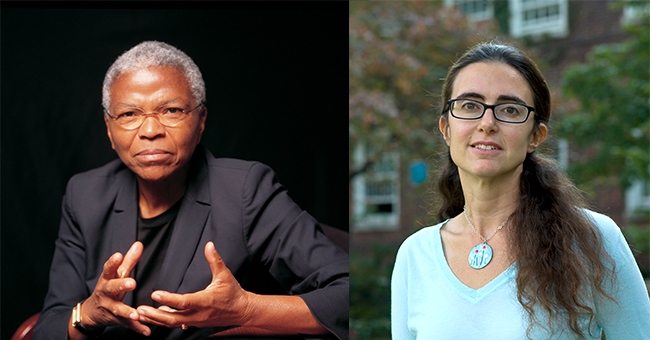
    Mary Frances Berry and Jeanne Theoharis

    Mary Frances Berry (left) and Jeanne Theoharis (right)

    Conversations in Black Freedom Studies is a monthly discussion series held at the Schomburg Center for Research in Black Culture. Curated by Jeanne Theoharis and Komozi Woodard, the Series was established as a space to discuss the latest scholarship in Black freedom studies, bringing the campus and community together as scholars and activists challenge the older geography, leadership, ideology, culture, and chronology of Civil Rights historiography.

    In anticipation of the April discussion, 50 Years After the Assassination of Martin Luther King, Erik Wallenberg asked guests Mary Frances Berry, Thomas Jackson, David Stein, and Jeanne Theoharis to talk with us about their new, old, and forthcoming books, their research on King, and what lessons we might take from this history. What follows is an excerpted and condensed version of his Q&A, highlighting Dr. Berry and Theoharis. You can read it in full here.

    Erik Wallenberg: As we approach our discussion marking fifty years since the assassination of Martin Luther King, can you tell us more specifically what your book project is about and how it relates? 

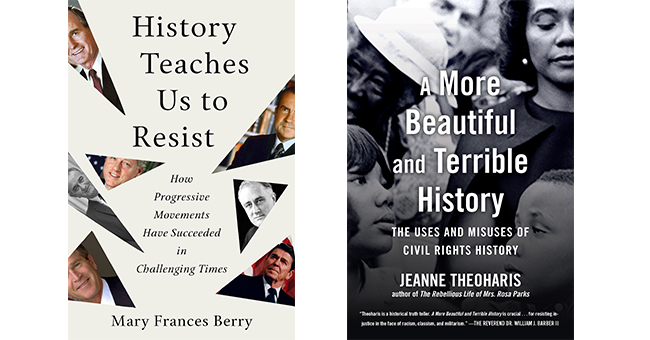
    Mary Frances Berry: I wrote this book, History Teaches Us to Resist: How Progressive Movements Have Succeeded in Challenging Times, because my editor, reinforced by friends and colleagues after Trump’s election, argued that the public needed reminding of how and why resistance has succeeded and or failed in the past. And I felt I could provide that based on my experience in several movements and through my historical research. Though history does not repeat itself exactly, perhaps we can learn something from history or at least be encouraged. 

    The book uses examples and stories about specific social movements that teach us the importance of protest as an essential ingredient of politics. The March on Washington Movement (MOW) was the only march to which a federal policy change could be directly attributed. A. Philip Randolph and the other women and men who organized it took lessons they learned from other protests and applied them to the future. The anti-Vietnam War movement succeeded in influencing the end of the war, although at the time we thought we failed because the war continued so long. In the Reagan era, the Free South Africa Movement (FSAM) was a major cause in obtaining sanctions, helping to free political prisoners including Mandela, and in overthrowing the apartheid regime. Civil Rights laws overthrowing Reagan’s attempts to turn back the clock and fighting his refusal to address the AIDS crisis, opposing Clinton’s “Don’t Ask, Don’t Tell” and globalization policies, and Bush’s Iraq War were all the subject of major protests. The lessons learned, then, are about persistence. The FSAM campaign took a year of arrests, guerilla theatre, and marches, before Reagan vetoed the sanctions, and then continuing pressure before the legislation was passed over his veto.

    The importance of doing something is central. I think of the disabled little girl who leaned out of her wheelchair and crawled up the stairs of the capital to push the Americans With Disabilities Act to final passage.

    Jeanne Theoharis: I wrote this book, A More Beautiful and Terrible History: The Uses and Misuses of Civil Rights History, because I was increasingly dismayed at seeing the ways a national fable of the civil rights movement had become central to how the United States defined itself in the present. The book begins by examining the fable’s contemporary national uses, in particular putting the problem of racism and the struggle for Black freedom in the past and making the story of the movement one of American exceptionalism and the power of American democracy (almost as it we were destined to have a great civil rights movement). Exposing this became even more urgent, as this fable has been weaponized against contemporary protest movements like Black Lives Matter, which has been accused of being extreme and reckless and not going about it the right way like the civil rights movement did (when many of the criticisms of BLM are ones that were launched on the civil rights movement itself). The heart of the book looks at nine gaps and omissions in the fable and what a fuller history shows us: the movement in the North as well as the South; the role of ‘polite’ racism in maintaining racial injustice; how unpopular the civil rights movement was; how expansive its goals were (criminal justice, global justice, economic justice); and the variety of its leaders, particularly the roles of high school students and women. 

    History Teaches Us to Resist and A More Beautiful and Terrible HistoryEW: You write about organizing for change, be it political, social, or economic. You tell histories previously unwritten as well as history reconsidered. Can you share with us the story of a King-related campaign that our readers might not be familiar with?  

    MFB: Much of the importance of Martin Luther King lies in the work done in his name, by Coretta, after his assassination. The King Holiday and the Humphrey-Hawkins Act are some often overlooked examples. When Clinton embraced “Don’t Ask, Don’t Tell,” LGBT groups asked Coretta to publicly denounce the idea. She and I talked, as we did at such times, and asked each other the usual two questions: What would Martin do (because she didn’t want to besmirch his memory in any way), and what would Martin say to keep the protest tradition alive and moving forward? She understood as well as he did, and sometimes better, what was necessary for human rights. Though the “men who had been with Martin” (except Joseph Lowery) said she shouldn’t get involved because it wasn’t Martin’s issue, she knew better. I went to Atlanta to stand with her as she announced her opposition to “Don’t Ask, Don’t Tell” and her support for gays in the military.

    JT: How lucky I am to be part of the conversation! Because I, too, have been thinking about what it means to center Coretta Scott King in this fiftieth anniversary year of King’s assassination. Coretta Scott King was arguably more political than Martin when they met and influenced his politics over the course of their marriage—particularly his decision to come out publicly against the Vietnam War in 1967. She had been publicly against it for years and, upon his receiving the Nobel Prize in 1964, believed he now had a different responsibility to the world, and begun urging him to come out against US involvement in the war. When she gave a speech against the war in late 1965, a reporter questioned her husband whether he educated her, and King said very pointedly, “No, she educated me.” Coretta Scott King is typically remembered for the ways she maintained and guarded his legacy—but perhaps the most important way she did that was making it a living legacy—extending the work on economic justice and global justice. In fact, the FBI extended its surveillance of her for years after his assassination, fearing the ways she was tying the civil rights movement to the antiwar movement.  

    But perhaps one of her most courageous moments comes much earlier on. In January 1956, five weeks into the bus boycott, their house is bombed, with Coretta and baby Yolanda in it. This was an attempt to destabilize King and the movement. And both Coretta’s dad and Martin’s dad come down to Montgomery to insist, at the very least, that she and the baby leave. She refuses and continues on. The trajectory of the bus boycott and the emerging civil rights movement might have been very different if Coretta Scott King had flinched in that moment.

    EW: Given the continuing struggles for racial and economic justice today, how does this history help us understand or act in our current moment? 

    MFB: The work of ending racial injustice remains complicated. There’s the unfinished legacy of the Poor People’s Campaign and the not yet successful efforts at ending police violence and reforming the criminal justice system and protecting the right to vote and ending unequal education. The history tells us that voting and running for office is good and necessary, but having elected officials is not enough. The lessons we have learned include that we must organize around policy issues, not just individuals. It is not about celebrity or fame. Social media doesn’t make it really any easier to win in the end. It’s easier to get in touch, but it’s also easier to be under opposition and government surveillance and to spread misinformation. To make change, we must keep it simple. Be persistent and willing to sacrifice and stand by principle. A movement must have moral authority. Now, as then, the media won’t cover you if you don’t do something. Also, marches by themselves are insufficient. The Poor People’s Campaign was not just a march but an encampment. The Free South Africa Movement and antiwar protests were marches and more. Someone must be willing to be confrontational, to go through the fire. Resistance works to raise consciousness about issues even when change does not immediately follow.

    JT: The title of my book comes from James Baldwin: “American history is longer, larger, more various, more beautiful and more terrible than anything anyone has ever said about it.” This history is far more sobering than we knew but also more beautiful—giving us more for how we struggle today. When we move from iconizing movements, like the Montgomery bus boycott, to actually studying and learning about them, we can see the importance of anger and disruption, of building long-term grassroots networks, of multiple tactics encompassing legal strategies, economic strategies, and grassroots organization, and of the power of collectivities in action in terms of expanding what seems possible. And in seeing and learning all these things, we can see how to do it again. It shows us the way forward in important ways.


    About Mary Frances Berry 

    Mary Frances BerryMary Frances Berry is the Geraldine R. Segal Professor of American Social Thought and professor of History and Africana Studies at the University of Pennsylvania. She is the former chairwoman of the US Commission on Civil Rights, a Distinguished Fellow of the American Society for Legal History, the author of twelve books, and the recipient of thirty-five honorary degrees. Dr. Berry has appeared on Real Time with Bill Maher, The Daily Show, Tavis Smiley, PBS NewsHour, CBS Evening News, Al Jazeera America News, and various MSNBC and CNN shows. She is the author of History Teaches Us to Resist: How Progressive Movements Have Succeeded in Challenging Times. Follow her on Twitter at @DrMFBerry and visit her website.


    About Jeanne Theoharis 

    Jeanne TheoharisJeanne Theoharis is Distinguished Professor of Political Science at Brooklyn College of CUNY and the author of The Rebellious Life of Mrs. Rosa Parks and A More Beautiful and Terrible History: The Uses and Misuses of Civil Rights History. Follow her on Twitter at @JeanneTheoharis and visit the Rosa Parks biography website.


    About Erik Wallenberg 

    Erik Wallenberg is a PhD candidate in history at CUNY Graduate Center. He teaches global and environmental history at Brooklyn College.

  • A Q&A with Joseph Rosenblum

    Martin Luther King, Jr.

    Photo courtesy of the Withers Family Trust

    This Q&A appeared originally in the Smithsonian subscription e-newsletter.

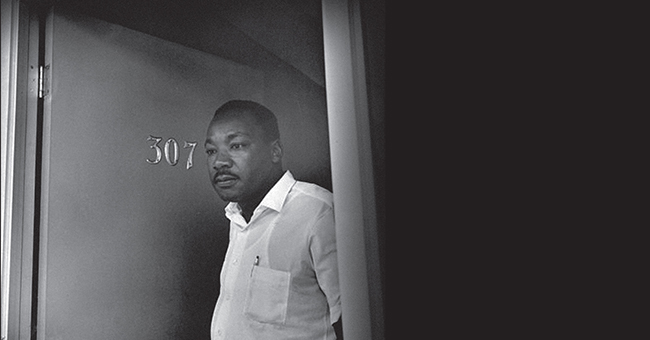
    In the summer of 1968, when the city of Memphis was still reeling from the horror of Martin Luther King, Jr.’s assassination, Joseph Rosenbloom was interning as a young reporter at the Commercial Appeal. He vowed to one day write the story of the last hours leading up to Dr. King’s death. He returned to Memphis between 2006 and 2014 to interview two dozen people connected to the events of the fateful Fourth of April. The interviews became the basis of Redemption: Martin Luther King, Jr.’s Last 31 Hours. What follows is a Q&A conducted by the Smithsonian with Rosenbloom about his book, his interviews, and what readers should take away from it.

    ***

    Smithsonian: You set out to write a tight narrative about MLK’s last thirty-one hours. What new details differentiate your book from other accounts that have been published?

    Joseph Rosenbloom: What urgent mission brought MLK to Memphis in 1968 even as he was on the verge of launching his Poor People’s Campaign in Washington, DC? What happened in Memphis before King was fatally shot there on April 4? Redemption answers the questions more vividly and completely than any other published account.

    Drawing on dozens of interviews with people close to the events of 1968, it casts in bold relief the story of King’s last thirty-one hours and twenty-eight minutes, between the time he returns to Memphis on the morning of April 3, 1968, and his murder on the evening of the next day. It evaluates his reasons for coming to Memphis. It explores the predicament that traps him in Memphis when a march he was leading to support striking garbage workers turns into a riot. It examines his intensive efforts to organize a peaceful follow-up march as he rushed to redeem his reputation as the leader of a nonviolent movement.

    Informed by fresh material from recently opened archives, the book explores how King’s costly detour to Memphis was diverting him and his aides from the task of recruiting thousands of poor people for massive protest in the nation’s capital. It shows the extraordinary pressures that King was facing as he struggled to recruit volunteers and funds for waging the Poor People’s Campaign.   

    With an unmatched depth of detail, Redemption profiles key figures in the Memphis events. Among them are: the city’s mayor, Henry Loeb; King’s legendary local lawyer, Lucius Burch; and King’s romantic partner Georgia Davis, who was present in Memphis with him.

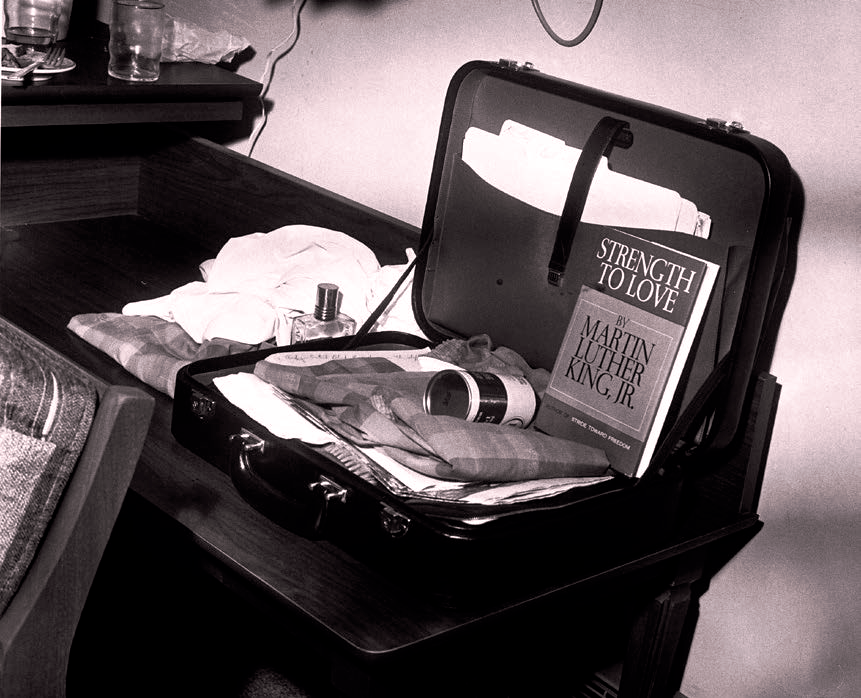
    The book discloses a previously unreported lapse in Memphis police security for King. It parses the chain of lucky breaks that enables James Earl Ray to shoot him in the early evening of April 4. With the benefit of thorough research into untapped documents, including the April 1968 contents of King’s briefcase, it offers new insights into King’s priorities and state of mind at the time of his death.

    King’s suitcase

    King’s suitcase

    S: You interviewed lots of people who were close to King at the time of the event. What was it like interviewing them, and what were some of the most interesting stories you heard?

    JR: Hearing their stories was like having a front row seat, albeit many years later, on a tragic, historic American drama. The interviews took place during a span of eight years, starting in 2006 and concluding in 2014. I was fortunate to conduct the interviews when I did. At least eight of my interviewees have died since they sat down with me.  

    Many of the stories they told were interesting, not just because they provided depth to my understanding of King in the last phase of his life, but because of the feelings they expressed in recollecting their part in the events of 1968.

    Memphis police officer Ed Redditt told of having been part of an African American security detail that guarded King tightly during a visit to the city in 1966. Then he and other African American officers were all but glued to King while he was in Memphis. In 1968, however, Redditt was assigned to a surveillance team monitoring King covertly from a distance, not security for him. Years later, Redditt was still anguished by the thought that, had he been guarding him in 1968, he might have protected his from harm.  

    Then there was the insider’s story told by the Reverend Frank McRae about Mayor Henry Loeb. McRae, a friend and confidant of Loeb, had the ear of the mayor as the garbage workers’ strike assumed the dimensions of a bitter racial clash. McRae pleaded with the mayor to find a way to settle the strike. But Loeb adamantly refused to negotiate with the workers until they returned to their jobs. In looking back, McRae still felt distress at not having been able to dislodge the mayor from his hardline stand.

    Andrew Young, a top lieutenant at King’s Southern Christian Leadership Conference, told of urging King not to accept the invitation to go to Memphis. Young feared that even one speech by King in Memphis would draw him into the garbage workers’ dispute and bog him down in Memphis, distracting him from the Poor People’s Campaign. That is exactly what happened, culminating in King’s assassination in Tennessee. But Young said it was not frustration he felt when King was killed there. He had only wished that he, too, had been killed because he could not imagine the civil rights movement moving forward without King’s leadership.

    S: If King hadn’t been assassinated, what do you think he would have been able to accomplish in the rest of his life, especially regarding his antipoverty work?

    JR: I doubt that he would have gained much legislatively with the Poor People’s Campaign in the spring and summer of 1968. There was little time for King to pressure lawmakers into enacting antipoverty legislation. It was an election year, and Congress was to adjourn by mid-summer. King was vowing to besiege the nation’s capital with massive civil disobedience. The marches and sit-ins he was planning might well have spun out of King’s control into violence, as had happened during the march under his banner in Memphis. That would have further damaged his image as a restrained, nonviolent leader and even sapped public support for the Poor People’s Campaign.

    The federal budget was under growing strain from the cost of waging the Vietnam War. President Lyndon Johnson had already scaled back the antipoverty program that he had introduced as part of his “Great Society” program. The prospects were dim that Congress would add more antipoverty money to the budget. By the spring of 1968, Johnson and powerful members of Congress were preparing to thwart the Poor People’s Campaign with tough law enforcement. King’s civil disobedience likely would have landed him in federal prison for years.

    By and by, though, I think he would have emerged from prison as a re-energized leader and an important moral force behind a new political movement with an anthem of social and economic justice for the poor and other disadvantaged Americans. It might have emerged as a third-party alternative to the Democrats and Republicans. With his oratorical power and iconic civil rights legacy, King could have elevated the cause of economic justice to a higher priority on the nation’s agenda.

    S: What do you want people to walk away from your book thinking about?

    JR: I hope that the book imparts to readers the full meaning and resonant emotion of King’s last hours in Memphis. He was then embarking on a new and ambitious crusade to end poverty in America. That subject is a central theme of Redemption. I hope the book spotlights the subject of poverty in a way that inspires readers to look at it through King’s eyes. I hope that readers will come to understand King in a more complete and nuanced light. It shows him as he pivots ideologically and tactically in a direction that was displeasing many of his most ardent supporters. The book shows a man under crushing pressure from many sides. It shows a nonviolent man fearful, even certain, that he would die a violent death, yet a man who was pushing forward, viewing his death as a redemptive sacrifice for a noble cause.


    About Joseph Rosenblum 

    Joseph RosenblumJoseph Rosenbloom is an award-winning investigative journalist. He has been a staff reporter and editorial writer for The Boston Globe; an investigative reporter for Frontline; and a senior editor and features writer for Inc. magazine. He’s written for magazines and newspapers, including The Boston Globe Magazine, International Herald-Tribune, The Wall Street Journal, The New York Times, The American Lawyer and The American Prospect. Rosenbloom has a B.A. in history from Stanford University and a J.D. from Columbia University Law School. He lives in West Newton, MA. He is the author of Redemption: Martin Luther King, Jr.’s Last 31 Hours. Follow him on Twitter at @joerosenbloom and visit his website.

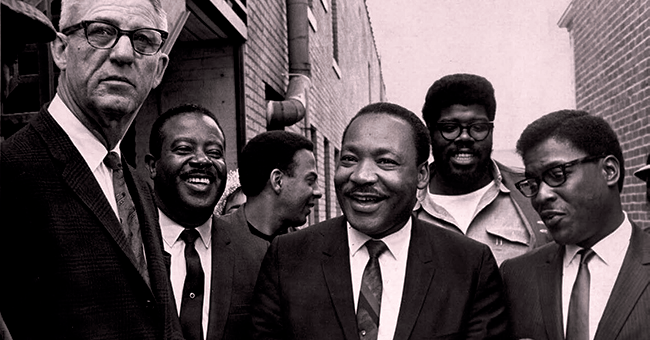
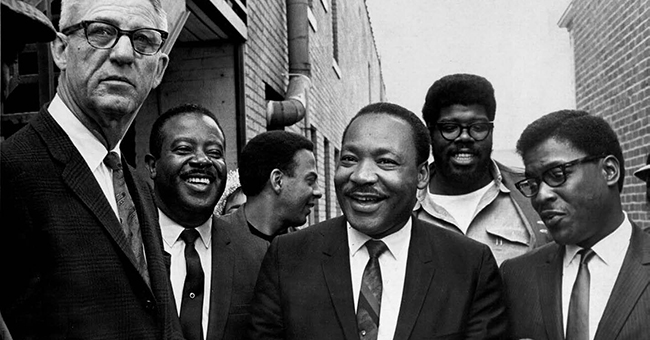
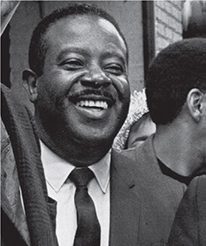
  • As US Marshal Cato Ellis serves an injunction on MLK, King and his aides (l to r), Ralph Abernathy, Andrew Young, James Orange and Bernard Lee, share a laugh to lighten the mood.

    As US Marshal Cato Ellis serves an injunction on MLK, King and his aides (l to r), Ralph Abernathy, Andrew Young, James Orange and Bernard Lee, share a laugh to lighten the mood.

    Today, on the fiftieth anniversary of Dr. Martin Luther King, Jr.’s assassination, we honor his legacy. We reached out to some of our authors and staff members to reflect on the impact of his global vision for social justice and his tireless work in the civil rights movement. We share their commemorative responses with you below.

    ***

    Helene Atwan“Although I was only fourteen at the time, and an immigrant kid at that, I will never forget, can never forget, the day Dr. King was assassinated. As we sat in shock around the TV, watching footage of his speeches and rallies, we felt certain that the entire world would honor and celebrate his memory, though we also knew some Americans would work violently to destroy his legacy. Even though I never heard him speak in person, I feel lucky over the years to have heard his speeches from time to time on audio and video, and most especially for the gift of his profoundest thoughts in his writings. Seeing Beacon become the curator of his works in print has been the greatest privilege of my career in publishing.”

    —Helene Atwan, Beacon Press, Director  


    Mary Frances Berry“On the day of his assassination, Martin Luther King, Jr. was widely ‘buked’ and scorned by the mainstream media and even other activists for his insistence that the civil rights and human rights agenda was unfinished. Much of the importance of Martin Luther King, Jr. lies in the work Coretta did to uphold his legacy after his assassination. The Martin Luther King National Holiday and the Humphrey-Hawkins bill are some often overlooked examples. Another example is her support of LGBT concerns. She also did everything she could in the Poor People’s Campaign, Martin’s goal of eroding economic inequality that still eludes us. Martin and Coretta left us the ingredients for success in movements: be persistent, willing to sacrifice, and stand by principle. A movement must have moral authority. Now, as then, the media won’t cover you if you don’t do keep on doing something. Someone has to go through the fire each time to make progressive change.”

    —Mary Frances Berry, History Teaches Us to Resist: How Progressive Movements Have Succeeded in Challenging Times  


    “The assassination of Dr. King was an attempt to kill the righteous movement for Black freedom. He was a beacon among many leaders, and his legacy lives through the mass work of everyday people in today’s movement for Black lives fighting for racial, economic, and gender justice.”

    —Charlene Carruthers, Unapologetic: A Black, Queer, and Feminist Mandate for Radical Movements  


    Thomas Norman DeWolf“Rev. King’s words in his ‘I Have a Dream’ speech, “. . . that one day on the red hills of Georgia the sons of former slaves and the sons of former slave owners will be able to sit down together at the table of brotherhood,” inspired the founding of Coming to the Table and its Vision for the United States “. . . of a just and truthful society that acknowledges and seeks to heal from the racial wounds of the past—from slavery and the many forms of racism it spawned.” CTTT brings together the descendants of people who were enslaved and the descendants of people who were enslavers who wish to acknowledge and heal the traumatic, historic, unhealed wounds from racism that are rooted in the history of slavery in the US. Those of us who regularly come together at the Table are exceedingly grateful for the life and legacy of Rev. Dr. Martin Luther King, Jr. May we continue to work together to realize his Dream.”

    —Thomas Norman DeWolf, Gather at the Table: The Healing Journey of a Daughter of Slavery and a Son of the Slave Trade 


    Sharon Leslie Morgan“As the child of a time when African Americans were relegated to the ‘back of the bus’ on all social and economic indicators, Rev. King was a guiding light toward the ‘promised land.’ His exemplary leadership of nonviolent civil disobedience resonates profoundly today as America falls headlong into an abyss of moral decline. In commemorating his assassination, we need to remember that social equality requires courage to obtain and vigilance to sustain. Rev. King gave wings to our dreams. Let us not forget to fly!”

    —Sharon Leslie Morgan, Gather at the Table: The Healing Journey of a Daughter of Slavery and a Son of the Slave Trade 


    Eboo Patel“Martin Luther King Jr was so many things—a civil rights leader, an African American hero, a paragon of nonviolence, and perhaps the most important American figure of the twentieth century. To these, I would like to add another title: Interfaith leader. King learned from and partnered with people of a variety of faith traditions. He spoke of Gandhi’s influence on him as second only to that of Jesus. He marched arm and arm with Rabbi Herschel in Selma. He was turned against the Vietnam War by a Buddhist monk, Thich Nhat Hanh. He quoted from different religious sources in his essays, public talks, and religious sermons. Recovering the part of King that built Interfaith bridges is essential inspiration and guidance for our era of religious conflict, tension, and polarization.” 

    —Eboo Patel, Acts of Faith  


    Gayatri Patnaik“The first time I heard Dr. King’s voice was when I was seven or eight years old, and new to the US, and I somehow selected a record to play which included his famous ‘I Have a Dream’ speech. I had never heard a voice like that and was transfixed, never imagining that decades later I’d have the great privilege to work on a series of books, The King Legacy, which featured his writings, lectures, and sermons.

    King’s legacy means multiple things to me, but one of the most crucial lessons I’ve learned from him is that in life you have to be your own beacon, regardless of public opinion. It is now becoming more widely known that towards the end of his life, King was struggling—and that public opinion had, in many ways, turned against him. White Americans and a number of people in the civil rights movement were critical of his stance against the Vietnam War. But in spite of being out of favor, in spite of mind-numbing pressure and ill health, Dr. King persisted. King’s legacy is showing us, through his life, exactly what commitment looks like in action. In the new book, Redemption, Joseph Rosenbloom writes that after King’s death at age thirty-nine, Coretta Scott King spoke of the covenant King had made with himself: “that, by sacrificing himself, dying if necessary, for a cause that was ‘right and just,’ his life would end in the most redemptive way possible.” This is why, for me and many others, King’s legacy will always be something to be inspired by and to aspire to.”  

    —Gayatri Patnaik, Beacon Press, Editorial Director 


    Joseph Rosenbloom“What does the legacy of Martin Luther King, Jr. mean to me? Candidly, I would say that his dramatic life as an agent of virtuous social change inspired me to write a book about him. That’s a way that his legacy has influenced me directly.

    But I would add that his example has influenced me profoundly in another way. His is a legacy that affirms the potential for one individual to shape the course of history by means of the power of his words, courage, and principled commitment to a great cause. That legacy has sustained my faith in American democracy and guided me as a lodestar in my own desire to lead a life of social value.” 

    —Joseph Rosenbloom, Redemption: Martin Luther King, Jr.’s Last 31 Hours 


    Jonathan Rosenblum“It’s time to reclaim the legacy of Dr. King, in all its complexities, with all of the contradictions of this amazing, bold, visionary, evolving—and flawed—modern-day prophet.

    No, not the feel-good King of ‘I Have a Dream’ fame standing at the Lincoln Memorial. Rather, the King who called out the hypocritical clergy for claiming to support the movement while criticizing the impatience of civil rights activists. The King who defiantly called America a sick nation. The King who was unafraid to name the racism of the north, as well as of the south. The King who spoke about the intertwined triplets of evil—racism, economic oppression, and militarism.”

    —Jonathan Rosenblum, Beyond $15: Immigrant Workers, Faith Activists, and the Revival of the Labor Movement 


    Jeanne Theoharis“The more I read and research Dr. King, the more I am humbled by how expansive his vision was and how much I have yet to learn about him. To me, one way to honor him on April 4 is to sit in his actual writings—not in pithy statements or short quotations, but in his books and full essays so that we might encounter the reach of his thinking.”

    —Jeanne Theoharis, A More Beautiful and Terrible History


    US Marshall Cato Ellis serves an injunction on MLK

  • By Martin Luther King, Jr.

    Martin Luther King, Jr. delivers his “To the Mountaintop” speech at Bishop Charles Mason Temple on the evening of April 3, 1968.

    Martin Luther King, Jr. delivers his “To the Mountaintop” speech at Bishop Charles Mason Temple on the evening of April 3, 1968.

    Fifty years ago today—April 3, 1968—on what turned out to be the eve of his assassination, Martin Luther King. Jr. delivered one of his most prophetic and lasting sermons to an overflowing crowd at Bishop Charles Mason Temple, Church of God in Christ, Memphis, Tennessee. In it, he sought to restore nonviolence back to the civil rights movement after a recent march he’d led erupted in violence and was immediately called off. Unlike his previous speeches, this one took a personal turn, in which he openly voiced his despair and pondered over his death. To honor the anniversary of his speech, we share selections of it with you here. You can read it in full in The Radical King.

    ***

    As you know, if I were standing at the beginning of time, with the possibility of taking a kind of general and panoramic view of the whole human history up to now, and the Almighty said to me, “Martin Luther King, which age would you like to live in?” I would take my mental flight by Egypt through, or rather across the Red Sea, through the wilderness on toward the promised land. And in spite of its magnificence, I wouldn’t stop there. I would move on by Greece, and take my mind to Mount Olympus. And I would see Plato, Aristotle, Socrates, Euripides and Aristophanes assembled around the Parthenon as they discussed the great and eternal issues of reality.

    But I wouldn’t stop there. I would go on, even to the great hey-day of the Roman Empire. And I would see developments around there, through various emperors and leaders. But I wouldn’t stop there. I would even come up to the day of the Renaissance, and get a quick picture of all that the Renaissance did for the cultural and esthetic life of man. But I wouldn’t stop there. I would even go by the way that the man for whom I’m named had his habitat. And I would watch Martin Luther as he tacked his ninety-five theses on the door at the church in Wittenberg.

    But I wouldn’t stop there. I would come on up even to 1863, and watch a vacillating president by the name of Abraham Lincoln finally come to the conclusion that he had to sign the Emancipation Proclamation. But I wouldn’t stop there, I would even come up to the early thirties, and see a man grappling with the problems of the bankruptcy of his nation. And come with an eloquent cry that we have nothing to fear but fear itself.

    But I wouldn’t stop there. Strangely enough, I would turn to the Almighty, and say, “If you allow me to live just a few years in the second half of the twentieth century, I will be happy.” Now that’s a strange statement to make, because the world is all messed up. The nation is sick. Trouble is in the land. Confusion all around. That’s a strange statement. But I know, somehow, that only when it is dark enough, can you see the stars. And I see God working in this period of the twentieth century in a way that men, in some strange way, are responding—something is happening in our world. The masses of people are rising up. And wherever they are assembled today, whether they are in Johannesburg, South Africa; Nairobi, Kenya; Accra, Ghana; New York City; Atlanta, Georgia; Jackson, Mississippi; or Memphis, Tennessee—the cry is always the same—“We want to be free.”

    And another reason that I’m happy to live in this period is that we have been forced to a point where we’re going to have to grapple with the problems that men have been trying to grapple with through history, but the demands didn’t force them to do it. Survival demands that we grapple with them. Men, for years now, have been talking about war and peace. But now, no longer can they just talk about it. It is no longer a choice between violence and nonviolence in this world; it’s nonviolence or nonexistence.

    That is where we are today. And also in the human rights revolution, if something isn’t done, and in a hurry, to bring the colored peoples of the world out of their long years of poverty, their long years of hurt and neglect, the whole world is doomed. Now, I’m just happy that God has allowed me to live in this period, to see what is unfolding. And I’m happy that he’s allowed me to be in Memphis.

    ~~~

    Now we’re going to march again, and we’ve got to march again, in order to put the issue where it is supposed to be. And force everybody to see that there are thirteen hundred of God’s children here suffering; sometimes going hungry, going through dark and dreary nights wondering how this thing is going to come out. That’s the issue. And we’ve got to say to the nation: we know it’s coming out. For when people get caught up with that which is right and they are willing to sacrifice for it, there is no stopping point short of victory.

    We aren’t going to let any mace stop us. We are masters in our nonviolent movement in disarming police forces; they don’t know what to do. I’ve seen them so often. I remember in Birmingham, Alabama, when we were in that majestic struggle there we would move out of the 16th Street Baptist Church day after day; by the hundreds we would move out. And Bull Connor would tell them to send the dogs forth and they did come; but we just went before the dogs singing, “Ain’t gonna let nobody turn me round.” Bull Connor next would say, “Turn the fire hoses on.” And as I said to you the other night, Bull Connor didn’t know history. He knew a kind of physics that somehow didn’t relate to the transphysics that we knew about. And that was the fact that there was a certain kind of fire that no water could put out. And we went before the fire hoses; we had known water. If we were Baptist or some other denomination, we had been immersed. If we were Methodist, and some others, we had been sprinkled, but we knew water.

    That couldn’t stop us. And we just went on before the dogs and we would look at them; and we’d go on before the water hoses and we would look at it, and we’d just go on singing “Over my head I see freedom in the air.” And then we would be thrown in the paddy wagons, and sometimes we were stacked in there like sardines in a can. And they would throw us in, and old Bull would say, “Take them off,” and they did; and we would just go in the paddy wagon singing, “We Shall Overcome.” And every now and then we’d get in the jail, and we’d see the jailers looking through the windows being moved by our prayers, and being moved by our words and our songs. And there was a power there which Bull Connor couldn’t adjust to; and so we ended up transforming Bull into a steer, and we won our struggle in Birmingham.

    Now we’ve got to go on to Memphis just like that. I call upon you to be with us Monday. Now about injunctions: We have an injunction and we’re going into court tomorrow morning to fight this illegal, unconstitutional injunction. All we say to America is, “Be true to what you said on paper.” If I lived in China or even Russia, or any totalitarian country, maybe I could understand the denial of certain basic First Amendment privileges, because they hadn’t committed themselves to that over there. But somewhere I read of the freedom of assembly. Somewhere I read of the freedom of speech. Somewhere I read of the freedom of the press. Somewhere I read that the greatness of America is the right to protest for right. And so just as I say, we aren’t going to let any injunction turn us around. We are going on.

    ~~~

    You know, several years ago, I was in New York City autographing the first book that I had written. And while sitting there autographing books, a demented black woman came up. The only question I heard from her was, “Are you Martin Luther King?”

    And I was looking down writing, and I said yes. And the next minute I felt something beating on my chest. Before I knew it I had been stabbed by this demented woman. I was rushed to Harlem Hospital. It was a dark Saturday afternoon. And that blade had gone through, and the X-rays revealed that the tip of the blade was on the edge of my aorta, the main artery. And once that’s punctured, you drown in your own blood—that’s the end of you.

    It came out in the New York Times the next morning, that if I had sneezed, I would have died. Well, about four days later, they allowed me, after the operation, after my chest had been opened, and the blade had been taken out, to move around in the wheel chair in the hospital. They allowed me to read some of the mail that came in, and from all over the states, and the world, kind letters came in. I read a few, but one of them I will never forget. I had received one from the President and the Vice-President. I’ve forgotten what those telegrams said. I’d received a visit and a letter from the Governor of New York, but I’ve forgotten what the letter said. But there was another letter that came from a little girl, a young girl who was a student at the White Plains High School. And I looked at that letter, and I’ll never forget it. It said simply, “Dear Dr. King: I am a ninth-grade student at the White Plains High School.” She said, “While it should not matter, I would like to mention that I am a white girl. I read in the paper of your misfortune, and of your suffering. And I read that if you had sneezed, you would have died. And I’m simply writing you to say that I’m so happy that you didn’t sneeze.”

    And I want to say tonight, I want to say that I am happy that I didn’t sneeze. Because if I had sneezed, I wouldn’t have been around here in 1960, when students all over the South started sitting-in at lunch counters. And I knew that as they were sitting in, they were really standing up for the best in the American dream. And taking the whole nation back to those great wells of democracy which were dug deep by the Founding Fathers in the Declaration of Independence and the Constitution. If I had sneezed, I wouldn’t have been around in 1962, when Negroes in Albany, Georgia, decided to straighten their backs up. And whenever men and women straighten their backs up, they are going somewhere, because a man can’t ride your back unless it is bent. If I had sneezed, I wouldn’t have been here in 1963, when the black people of Birmingham, Alabama, aroused the conscience of this nation, and brought into being the Civil Rights Bill. If I had sneezed, I wouldn’t have had a chance later that year, in August, to try to tell America about a dream that I had had. If I had sneezed, I wouldn’t have been down in Selma, Alabama, to see the great movement there. If I had sneezed, I wouldn’t have been in Memphis to see the community rally around those brothers and sisters who are suffering. I’m so happy that I didn’t sneeze.

    ~~~

    Well, I don’t know what will happen now. We’ve got some difficult days ahead. But it doesn’t matter with me now. Because I’ve been to the mountaintop. And I don’t mind. Like anybody, I would like to live a long life. Longevity has its place. But I’m not concerned about that now. I just want to do God’s will. And He’s allowed me to go up to the mountain. And I’ve looked over. And I’ve seen the promised land. I may not get there with you. But I want you to know tonight, that we, as a people, will get to the promised land. And I’m happy, tonight. I’m not worried about anything. I’m not fearing any man. Mine eyes have seen the glory of the coming of the Lord.

    Excerpted from The Radical King, published by Beacon Press, 2015. All material copyright © Martin Luther King, Jr., and the Estate of Martin Luther King, Jr.; all material copyright renewed © Coretta Scott King and the Estate of Martin Luther King, Jr. Introductions © 2015 Cornel West.


    About the Author 
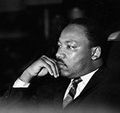
    Dr. Martin Luther King, Jr.Dr. Martin Luther King, Jr. (1929–1968), Nobel Peace Prize laureate and architect of the nonviolent civil rights movement, was among the twentieth century’s most influential figures. One of the greatest orators in US history, King also authored several books, including Stride Toward Freedom: The Montgomery Story, Where Do We Go from Here: Chaos or Community?, and Why We Can’t Wait. His speeches, sermons, and writings are inspirational and timeless. King was assassinated in Memphis, Tennessee, on April 4, 1968. 

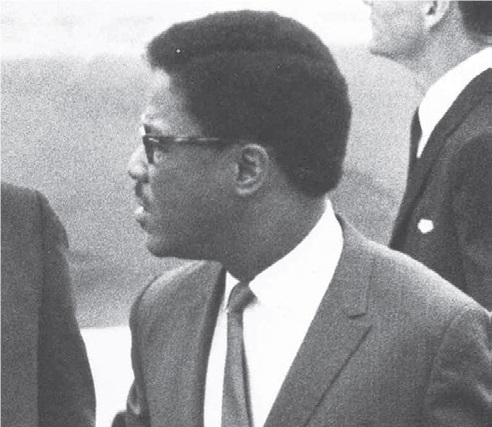
  • Martin Luther King, Jr. arrives at the Memphis airport with aides (l to r) Andrew Young, Ralph Abernathy, and Bernard Lee.

    Martin Luther King, Jr. arrives at the Memphis airport with aides (l to r) Andrew Young, Ralph Abernathy, and Bernard Lee.

    In the thirty-one hours leading up to his assassination on April 4, 1968, Martin Luther King, Jr. was under extraordinary pressure. He was trying to redeem his reputation as a nonviolent leader of the civil rights movement after a march he’d led days earlier turned into a riot. At the same time, he was just launching his Poor People’s Campaign in Memphis, TN. Former investigative reporter Joseph Rosenbloom vividly recreates his final hours in Redemption: Martin Luther King, Jr.’s Last 31 Hours. While revealing the physical and emotional toll the movement was taking on King, Rosenbloom introduces us to the cast of characters surrounding him. Meet the people who played key roles in the fateful hours of our nation’s foremost civil rights leader.  


    Cast of characters_MLKReverend Dr. Martin Luther King Jr.:  Rev. Dr. Martin Luther King Jr. was a Baptist minister and social activist who led the Civil Rights movement in the United States from the mid-1950s through to his death by assassination on April 4, 1968. During his life, King founded the Southern Christian Leadership Conference along with Robert Abernathy in order help organize and power black churches during desegregation. King's participation in the organization gave him a base of operation throughout the South, as well as a national platform on the basis of non-violent protesting. At the time of his death, King was pursuing an ambitious undertaking which strayed from racial segregation and discrimination campaigns. He sought to end poverty in American by mobilizing the Poor People’s Campaign and suffered great national criticism.


    Robert Byrd: Robert Byrd was the junior senator of West Virginia from 1959 to 1985. Byrd is known for his anti-civil rights, anti-black, anti-Catholic Southern roots. Byrd denounced Martin Luther King Jr.’s as a “self-seeking rabble rouser”, and he worked in opposition of the Civil Rights Act in 1964. He died in 2010.


    Cast of characters_Henry LoebHenry Loeb: Henry Loeb was a business man, who was Mayor during the Garbage Workers' Strike that drew King to Memphis, Tennessee. Loeb argued that the strike was “illegal under state law” and refused to negotiate with the strikers or to recognize their union, the American Federation of State, County, and Municipal Employees—AFSCME. King traveled to Memphis to take part in rallies and marches staged by the strikers.


    Dorothy Cotton: Dorothy Cotton was the Education Director for the Southern Christian Leadership Conference. In that capacity, she worked closely with Martin Luther King, Jr. and other civil rights leaders and directed the Citizenship Education Program, which helped teach nonviolent organizing strategies to local people whom members of the organization had identified as potential leaders. Cotton was a close advisor to King.


    Cast of characters_Ralph AbernathyRalph D. Abernathy: Ralph D. Abernathy was a Baptist minister who co-founded the Southern Christian Leadership Conference and was a close adviser to Martin Luther King Jr. Abernathy was King’s mentor and later closest confidant for 12 years, joining in King’s sit-ins, protests and ultimately in Memphis where King was assassinated. Abernathy worked to keep King's spirit alive and became president of the SCLC. He also took on the Poor People's Campaign, which included a march on Washington that led to the creation of the Federal Food Stamps Program.


    Cast of characters_Bernard LeeBernard Lee: Rev. Bernard Lee was a civil rights advocate who was an associate of the Martin Luther King Jr. He served as vice president of the Southern Christian Leadership Conference and was a founding member of the Student Nonviolent Coordinating Committee.  Lee was a longtime friend of King’s and served on his advisory team. 


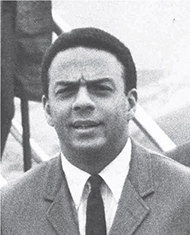
    Cast of characters_Andrew YoungAndrew Young: Andrew Young was the executive vice president of the Southern Christian Leadership Conference and worked alongside Martin Luther King Jr. and Ralph Abernathy. Young assisted in organizing workshops for the Citizenship Education Program called “citizenship schools” along with Dorothy Cotton. Young would continue to help disenfranchised communities, register thousands of voters throughout the South and was largely responsible for the civil rights movement's democratic and diplomatic values. Andrew Young went on to a distinguished political career as mayor of Atlanta, a congressman and ambassador to the United Nations under Jimmy Carter.


    Cast of characters_Jesse JacksonJesse Jackson: Jesse Jackson is an American civil rights leader, Baptist minister and politician. Jackson was in Memphis, Tennessee with King during his final hours. Jackson worked at the Southern Christian Leadership Conference and was appointed director of economic arm of the SCLC called Operation Breadbasket. After King’s assassination Jackson resigned his position, citing, differences with the organization. Today, Jesse Jackson continues to push for African American rights and against racial inequality, spearheading the Rainbow/PUSH organization in Chicago, Illinois and unsuccessfully running for the Democratic candidacy for president.


    Georgia Davis: Georgia Davis was the first African-American and woman elected to the Kentucky State Senate. She was an influential member of the Civil Rights Movement, and a confidante of Dr. Martin Luther King, Jr. with whom she had an affair during his final years. Upon King’s request, Davis was in Memphis, Tennessee at the time of his assassination. Davis was a committed leader for equal rights and fought for causes to prohibit discrimination in schools, workplaces, and housing on the basis of race, sex, and age.


    Cast of characters_James OrangeJames Orange: James Orange was a pastor, civil rights campaigner and one of Martin Luther King Jr's most trusted allies. Orange played a crucial role in the emergence of the Civil Rights movement, particularly in the southern states. Orange joined King in Memphis, Tennessee to support the Sanitation Workers' Strike where he was charged with reaching out to small faction groups from and stopping them from committing violent disturbances during the SCLC’s organizing of non-violent protests. He was present when King was murdered.


    Cast of characters_Coretta Scott KingCoretta Scott King:
    Coretta Scott King was the wife of Martin Luther King Jr. With her own astonishing career in civil rights activism, Scott King joined her husband in the Montgomery bus boycott of 1955 and in efforts to pass the Civil Rights Act in 1964. After King’s death, Scott King founded the Martin Luther King, Jr., Center for Nonviolent Social Change.  


    James Earl Ray: James Earl Ray was a virulent racist and small-time criminal who plotted and sought out the assassination of revered civil rights leader Martin Luther King Jr. He shot and killed King in Memphis, Tennessee on April 4, 1968, confessing to the crime the following March. Ray died in prison on April 23, 1998.


  • By Donald Collins

    Sylvia Rivera

    Sylvia Rivera. Photo credit: New York Public Library, Digital Collections

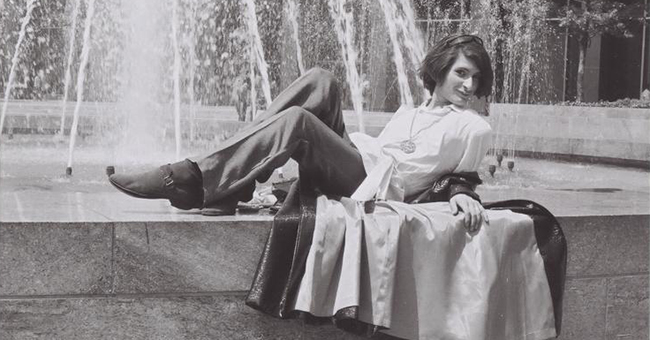
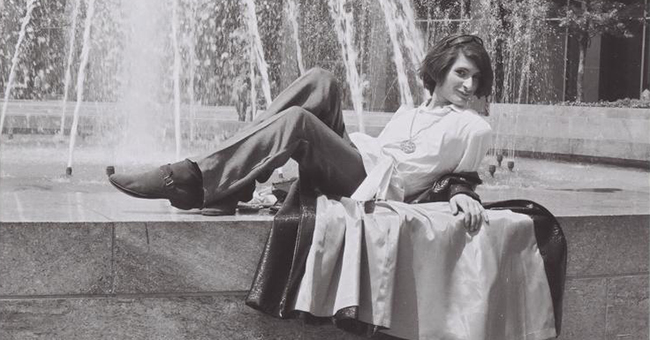
    One of my favorite photos of all time is a bewitching 1970 image of a young queer person reclining on the edge of a fountain. Her large coat is pulled down to her forearms, splayed dramatically beneath her. She’s wearing flared slacks, boots, a white tunic-like shirt, and a medallion. Her dark hair is short and boxy; she’s giving photographer Kay Tobin a familiar, clever smile. You can probably see the photo on this page, but it feels almost more meaningful to describe it. I also have a history-crush on her.

    The iconic subject of Tobin’s photo, Sylvia Rivera, was an orphan, Latina trans person, self-described drag queen, sex worker, and tireless advocate for homeless and queer youth. Today, we would probably just call her a “trans woman,” but based on many of her interviews, Sylvia didn’t like labels all that much.

    Alongside her friend Martha P. Johnson, Sylvia founded STAR (Street Transvestite Action Revolutionaries), and battled for trans-inclusion on the frontlines of LGBT activism. She struggled with homelessness and addiction, and eventually died of liver cancer at age fifty. If alive today, she would be sixty-seven.

    March 31, Trans Day of Visibility (TDV), began in 2009 as a way for trans communities and organizations to celebrate trans humanity, and demand its recognition. This is not to be confused with November 20, Trans Day of Remembrance, founded ten years prior, which calls upon us to mourn and honor the trans folks murdered each year. Bookending the traditional winter season, these holidays are like the big stone lions outside the New York Public Library; between them an infinite depository of past and present, always ready for the next contribution, the next visitor.

    I’ve visited this amorphous trans library a lot, reading books and articles, watching documentaries, and gazing at photographs. More recently, I’ve tried harder to conceive of how I might make my own small addition to it.

    The past year has been a total education for me. Not only have I been actively visible for my most prolonged period since college, but I’ve been visible as both a trans individual and a trans son.

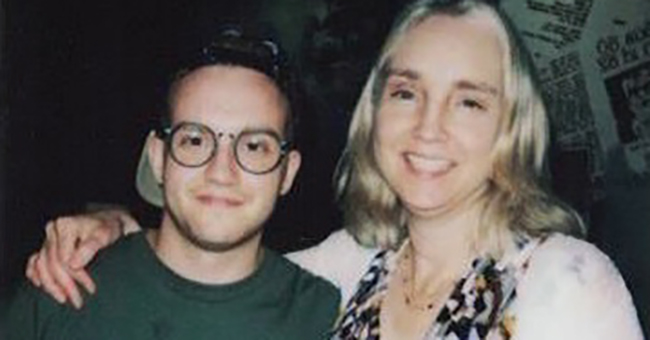
    When I came out to my mom in 2011, we embarked on an intense, years-long conflict that nearly ended in estrangement. In 2015, we began slowly collaborating on a book incorporating both our perspectives, At the Broken Places: A Mother and Trans Son Pick Up the Pieces. Though there is still much we disagree on, my mom and I hoped the project would help heal our family, and be a resource to others (especially parents and guardians) who couldn’t see a way forward. My mom was remarkably willing to be a visible parent, to open herself up to outside criticism by revealing her periods of grief, disapproval, and confliction.

    Donald Collins with his mother, Mary

    Donald Collins with his mother, Mary

    Our travels to events, readings, and conferences put us in direct contact with the professionals and families we wanted to reach. Rather than my previous audiences of progressive college students, these new crowds were filled with everyone from college counselors and psychologists to young trans people and their conflicted parents or guardians. Oftentimes, I was asked questions that seriously challenged me as a trans boy and a son. People wept as they spoke about the daughter they haven’t seen in years, the gender-creative foster child they were trying to understand better, or a kindergartener in their class with a parent unable to accept a new name preference.

    Nearly all trans people have a complicated relationship with visibility; it can be emotionally exhausting, unsafe, and simply make you feel one-note or objectified. As LAMBDA Legal Trans Rights Project Director Dru Levasseur states in our book’s appendix of interviews, “taking care of yourself and staying alive is doing enough for the community.”

    For me, like many others, TDV is about double-checking my gratitude towards pioneers like Sylvia Rivera, and taking stock of my self-care and the advocacy it may or may not involve. In one of my first published pieces of writing for Next Magazine, I interviewed a mentor of mine, Tony Ferraiolo. Tony is a trans man who’s worked for years with trans and gender-variant youth, and spoken extensively across the country (he’s the subject of the 2014 documentary A Self-Made Man). In our discussion, he expressed hope that the new generation of trans youth and allies will remember those who paved the way for them, “as I will never forget who paved the way for me.”

    So while Trans Day of Remembrance demands we recognize trans lives lost to aggression and hate, Trans Day of Visibility elevates our collective history (including said deaths), and calls us to consciously partake in movements to address physical, emotional, cultural, and political violence towards trans folks.

    I sometimes regret being as moderately visible as I’ve become. I have body issues. I don’t like seeing or hearing myself on TV. I use hats as an aesthetic crutch. I choose to be visible in educational environments because it leads to interesting, difficult, and—hopefully—productive conversations. I choose to be visible because it’s a privilege to have that choice, and because I wouldn’t be here without the people who paved the way for me. I’d be happy to be a penny in the fountain behind Sylvia Rivera.

    To co-opt and bastardize the final line of Angels in America, the Great Work continues.

    PS: Trans Student Education Resources has a great simple list for ways to get involved and educated on TDOV.

    Sylvia Rivera


    About the Author 

    Donald Collins is a trans advocate, writer, and recent cum laude graduate of Emerson College. His culture and commentary writing has appeared in PopMatters, Salon, and Next Magazine, among others. Visit his website. 

  • A Q&A with Jay Parini

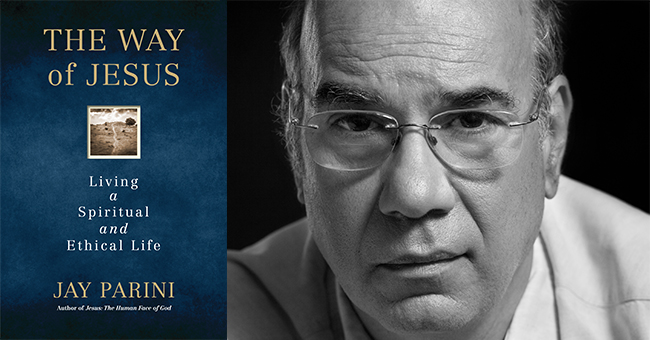
    Jay Parini and The Way of JesusWhat does it mean, or what should it mean, to follow in the path of Jesus? It’s a question celebrated poet and biographer Jay Parini has pondered over. Despite having a profound love for God, Parini found himself always questioning, sometimes wavering, as he struggled to find a more philosophical understanding of faith. In his latest book, The Way of Jesus: Living a Spiritual and Ethical Life, he gets at the answers to this question by writing a deeply personal guide to living a progressive Christian life. Part spiritual autobiography and part intellectual exploration, the heart of The Way of Jesus is his attempt to understand what Jesus really meant. We caught up with Parini to ask what inspired him to write the book, his relationship with faith and Scripture, and more.

    Beacon Press: Why did you decide to write The Way of Jesus?

    Jay Parini: I felt that I had not quite gone far enough into the details of my own Christian practice in Jesus: The Human Face of God. I wanted to dig deeper into the actual world of Christian worship and Christian thinking. I also wanted to organize my own thoughts on Christianity in ways that could prove helpful to others who are struggling with issues of faith. It’s also a teaching book. My own students know so little about Christian practice. I thought this book could introduce many to key ideas.

    BP: How do you reconcile your skeptical nature with your love of faith and Scripture?

    JP: Since reading in Paul Tillich in college that doubt was an essential part of faith, I’ve been attracted to exploring this idea. I don’t think my skeptical nature damages my faith but enhances it. I never imagined that God wished for us to use less of our intelligence. The more we know, the stronger our faith, especially if we don’t define faith as “belief” in any epistemological way. I’m not interested in a religion that insists I check certain belief boxes. That’s not faith. That’s the army.

    BP: You write about overlap in the various faith traditions. How have those connections enhanced your faith practice?

    JP: I could not be a Christian without a fairly basic understanding of Hindu and Buddhist ideas. The Hindu worldview underpins the Christian worldview. And so many Buddhist ideas help us to interpret Christian concepts, such as the idea in the Sermon on the Mount that what we keep is what we sow. This is a fundamental aspect of the notion of karma. Not the whole thing, but part of it.

    BP: Your book is reminiscent of the long tradition of Christian intellectual writers. Which authors and philosophers have most contributed to your understanding of Christianity?

    JP: My heroes as Christian intellectuals are Auden and C.S. Lewis. But I also love Graham Greene as a novelist, and knew him personally, as I knew Auden. My favorite academic philosopher is now Charles Taylor, in his mid-eighties, a Canadian Roman Catholic thinker. I’m also much taken with the work of Rowan Williams, former Archbishop of Canterbury.

    BP: Is there a way that secular people and atheists can or should incorporate Christian values into their daily lives?

    JP: Christian ideas help to inform daily life, and they don’t mean one has to “subscribe” to them wholesale or join anything. I think having a basic interest in and sympathy for Christianity can open up the mind and enhance daily life for anyone, including an atheist. This is a secular age, and I don’t imagine that this situation will change in the near future.


    About Jay Parini 

    Jay PariniJay Parini is a poet, novelist, biographer, and critic. His five books of poetry include Anthracite Country and House of Days. He has written eight novels, including Benjamin’s Crossing, The Apprentice Lover, The Passages of H.M., and The Last Station—the last was made into an Academy Award-nominated film starring Helen Mirren and Christopher Plummer. Parini has written biographies of John Steinbeck, Robert Frost, William Faulkner, and, most recently, Gore Vidal. His nonfiction works include Jesus: The Human Face of God, Why Poetry Matters, and Promised Land: Thirteen Books That Changed America. Visit his website.