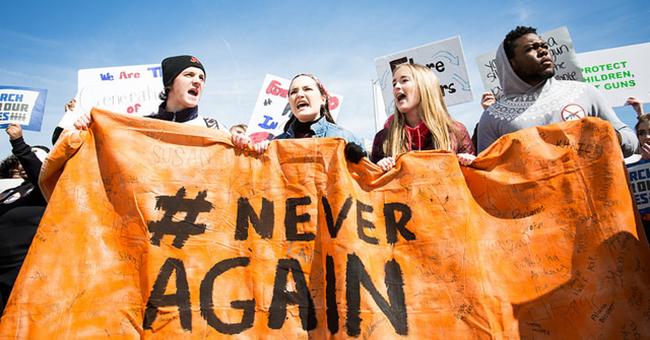
• Gun reform advocates across the Commonwealth, in sync with sister marches across the country, marched from Martin Luther King Jr. Middle School to the Captial today in Richmond in honor of the lives lost and hope for change.

    Gun reform advocates across the Commonwealth, in sync with sister marches across the country, marched from Martin Luther King Jr. Middle School to the Captial today in Richmond in honor of the lives lost and hope for change. Photo credit: Erin Edgerton

    In the wake of the nationwide “March For Our Lives” events across the country this Saturday, Beacon Press is pleased to announce that all profits from this year’s print and ebook sales of two of our titles, “Guns Don’t Kill People, People Kill People” And Other Myths about Guns and Gun Control and Bullets into Bells: Poets and Citizens Respond to Gun Violence, will be donated to both the Brady Campaign to Prevent Gun Violence and the Peace Center of Connecticut, Inc.

    "Guns Don't Kill People, People Kill People" and Bullets into Bells

    In light of the recent devastating attacks on children and their teachers, Beacon Press takes its fight for social change a step further in the form of these donations. “I’m happy that Beacon has these resources to offer,” says director Helene Atwan. Beacon Press is a mission-driven publisher that seeks to promote justice, equity, and compassion in human relations through the books it produces. As the debate surrounding gun control intensifies, Beacon finds it more important than ever before to highlight these titles that speak truth to those with the power to influence gun legislation for the safety of all communities.

    “When I signed Dennis Henigan’s “Guns Don’t Kill People, People Kill People” And Other Myths about Guns and Gun Control, I knew it would provide much needed information for those fighting for sane measures of gun control, as well as reasoned counter-arguments to the many myths perpetuated by the gun lobby in America,” says Atwan. “Not long after, when novelist Colum McCann approached me about publishing an anthology of poetry about gun violence, Bullets into Bells: Poets & Citizens Respond to Gun Violence, I eagerly embraced the book for its potential to move readers, both through the power of the poems and by the clarity and emotion of the responses.”

    “We’ve seen events where the poems are read—including one reading on the floor of the House of Representatives—and articles where the facts from Denny’s book are cited,” says Atwan. “We’ve also decided to suspend any business we do with FedEx until they are willing to rethink their support of the NRA by offering their members special discounts. These are small things in the face of the power of the gun lobby and its allies, but if it helps fuel the movement started by the Parkland students and spreading across the nation, I’m grateful.”

    The authors and organizations involved have graciously agreed to partner with Beacon Press on this initiative:

    “Beacon's support for the Peace Center of Connecticut is an extension of the press’s mission and a perfect embodiment of the goal of Bullets into Bells to be a real-world tool for reducing gun violence. Our country suffers from many different kinds of gun violence, and improving our gun control laws will certainly reduce many of those kinds of gun violence. But we can also work to improve education, communication, compassion, and peace-work in and among communities; that work, also, will reduce gun violence, and that is the work that the Peace Center was founded to do. The editors of Bullets into Bells are proud to support that mission.”
    —Brian Clements, Editor, Bullets into Bells: Poets & Citizens Respond to Gun Violence 

    “With so many myths and half-truths available, Dennis Henigan’s book is so important in making sure that people know the truth about gun violence. The Brady Campaign is so honored by Beacon’s support and commitment to this issue, particularly given the tremendous energy and dedication we are seeing following the March for Our Lives. We stand with Dennis and Beacon to say that we have had #ENOUGH, and we look forward to working with them to counter gun violence in our communities.”
    —Avery Gardiner, Co-President, Brady Campaign to Prevent Gun Violence 

    “I am thrilled that Beacon Press will be donating profits from my book to the Brady Center and its lifesaving work. The book is informed by my two decades of work at Brady, taking on the NRA, and is dedicated to the memory of Jim and Sarah Brady. Beacon’s gracious gesture comes at a pivotal time on the gun issue, as the courage of the Parkland students has energized a generation to demand action to stop the shooting. Because of Beacon and Brady, I now know that my book will save lives.”
    —Dennis A. Henigan, “Guns Don’t Kill People, People Kill People” And Other Myths About Guns and Gun Control 

    “Beacon’s incredibly generous gift is a testament to their desire to see our communities become more peaceful. The Peace Center of Connecticut strives to establish connection throughout Connecticut, provide education for our youth, learn the best practices for communities to be more peaceful, provide a platform for differences to be respected and for the celebration of those who are committed to Peace. Gun violence has gripped us as a nation. It is our responsibility to tighten our grip even more around the people in our community/country to ensure they are safe, healthy, and thriving together. We stand with the editors of Bullets into Bells in their mission to reduce gun violence. PERIOD!”
    —Iran Nazario, President/CEO, Peace Center of Connecticut, Inc. 

    Beacon Press is an independent publisher of serious non-fiction. Our books often change the way readers think about fundamental issues; they promote such values as freedom of speech and thought; diversity, religious pluralism, and anti-racism; and respect for diversity in all areas of life.

  • By Larissa Pienkowski

    Lise Meitner with students (Sue Jones Swisher, Rosalie Hoyt and Danna Pearson McDonough) on the steps of the chemistry building at Bryn Mawr College. Courtesy of Bryn Mawr College. (April 1959)

    Lise Meitner with students (Sue Jones Swisher, Rosalie Hoyt and Danna Pearson McDonough) on the steps of the chemistry building at Bryn Mawr College. Courtesy of Bryn Mawr College. (April 1959)

    As the recent Women’s March(es), #MeToo movement, and countless global strikes and walkouts have made clear, women all over the world are responding to a globally fraught climate loudly and fearlessly. Some of these women take action through grassroots organizing and direct-action tactics, and some define survivorship for themselves through the arts—and still others resist by dedicating their careers and lives to fields that have been traditionally dominated by men.

    As Angela Saini points out in her book, Inferior: How Science Got Women Wrong—and the New Research That’s Rewriting the Story, famous activists and suffragettes aren’t the only women we should celebrate this Women’s History Month. Let’s also take a moment to celebrate some of the women whose contributions to science have changed the way the world spins on its axis.

    Helen Hamilton Gardener

    Photo credit: Wellcome Images

    Alice Chenoweth Day, pen name Helen Hamilton Gardener,
    Neurologist, teacher, writer, and public speaker 

    Helen Hamilton Gardener (as she was better known as at that time) refused to accept male neurologists’ claims that “women’s brains were lighter than men’s, and that by extension, they must also be less intelligent.” After fourteen months of working with anatomists and doctors all across New York, she published a letter in Popular Science Monthly that not only refuted the idea that male and female brains differed at birth, but that “the weight of a person’s brain couldn’t be a measure of intelligence, anyway. It was the ratio of body weight to brain weight or body size to brain size that was important.”

    Male scientists practically took up arms against Gardener, even going so far as to say things like, “It must take many centuries for heredity to produce the missing five ounces of the female brain,” in reference to the average disparity in brain weight between the sexes. In response, Gardener (who clearly had a sense of humor) left her brain to science, and while it did actually weigh “around five ounces less than the average male brain,” she was later vindicated when the correlation between brain size and body size was established.

    Rosalind FranklinRosalind Franklin,
    Chemist

    If her name sounds familiar, it’s probably because you had a high school biology teacher who did their homework. As Saini writes in Inferior, her “enormous part in decoding the structure of DNA was all but ignored when James Watson, Francis Crick, and Maurice Wilkins shared the Nobel after her death in 1962.” A should’ve-been-could’ve-been household name (if it weren’t for sexism), Franklin’s contributions didn’t just change science; they literally changed our fundamental understanding of human life.


    Emmy NoetherEmmy Noether,
    Mathematician 

    Women were discriminated against in higher education well into the twentieth century, and unfortunately, Emmy Noether was no exception. During World War I, she was offered a faculty position at the University of Göttingen, which immediately prompted sexist complaints from other professors, such as, “What will our soldiers think when they return to the university and find that they are required to learn at the feet of a woman?”

    Fortunately, that didn’t stop Noether from teaching, though not without repercussion. She spent the next four years lecturing “unofficially,” “under a male colleague’s name,” and with zero compensation. This is a sobering reminder of the pay gaps that still exist across gender and race despite aptitude—a fact made obvious later on, when Albert Einstein described Noether as “the most significant creative mathematical genius thus far produced since the higher education of women began.”

    Lise Meitner

    Photo credit: Smithsonian Institute

    Lise Meitner,
    Nuclear scientist 

    Meitner was only a teenager when she first rebelled against societal norms and pursued physics through private tutoring, since at the time, girls’ educations were cut short at fourteen years old. Brilliant and persistent, she landed a research position at the University of Berlin, only to receive “a small basement room and no salary,” echoing Emmy Noether’s experience above. As if that wasn’t bad enough, she also “wasn’t allowed to climb the stairs to the levels where the male scientists worked.”

    Unfortunately, the sexism didn’t stop there. Lise Meitner is the unsung hero of nuclear fission, having played an essential role in its discovery—a fact we would all be better aware of if she hadn’t failed to win the Nobel Prize that was rightfully hers.

    Women of the Nanadukan Agta community,
    Hunters and gatherers 

    I couldn’t just limit this blog post to just five women. What can I say? As recently as forty years ago, the Nanadukan Agta women in the Filipino island of Luzon were the complete antithesis of what comes to mind when we talk about hunter-gatherer communities. Not only were most of the women enthusiastic hunters by choice, they often carried their babies and children with them on hunting trips and split tasks like childcare, cooking, and building with men.

    The women of the Nanadukan Agta community are undeniable proof that women can do it all, and that, as Saini concludes, “There’s no biological commandment that says women are natural homemakers and unnatural hunters or that hands-on fathers are breaking some eternal code of the sexes.”


    About the Author

    Larissa Pienkowski is Beacon Press’ Spring 2018 publicity intern. She works full-time as an editor and is a graduate student in Emerson’s Publishing and Writing program. 

  • By Ben Mattlin

    Stephen Hawking at Gonville & Caius College, Cambridge.

    Stephen Hawking at Gonville & Caius College, Cambridge. Photo credit: Lwp Kommunikáció

    When I heard that Professor Stephen Hawking had died, at seventy-six (March 14), my first question was, What of?

    The media and general public seemed to assume that his disability had finally caught up with him. Perhaps it had, but I wanted to make sure. I have a similar disability. Mine is spinal muscular atrophy type 2, a progressive neuromuscular weakness that’s practically indistinguishable from Hawking’s "motor neurone [sic.] disease," as the UK’s Guardian newspaper put it (most other sources dubbed his a form of amyotrophic lateral sclerosis, or ALS).

    To my surprise, I could find no cause of death in any of the obits I read. Yes, I saw over and over that he had surpassed his doctors’ original prognoses by more than fifty years. So maybe it was reasonable to assume that his demise was at least related to his disability, if not caused by it. But I’m not completely sold. I know how easy it is to blame everything on a disability.

    Worse still, for me, were the maudlin comments and cartoon drawings on the Internet that hinted he was better off dead—that now his spirit was free of the shackles of his wheelchair. Puh-lease! Don’t we know by now that a wheelchair is not a prison but a liberating vehicle?

    In the Wall Street Journal, op-ed contributor Melissa Blake wrote, “The idea that wheelchairs hold people back is such an outdated misconception; in fact, they do just the opposite. They’re not a hindrance. They’re incredible tools that give people with disabilities new freedom and power—a chance to thrive in an able-bodied world. To see them as anything less is insulting to those who depend on them every day."

    At the same time, fellow disability-rights activist Mike Ervin opined in The Progressive: “Rolling through life in a wheelchair like Hawking is not a life of perpetual Hell. But it is Hell when my wheelchair breaks down. Because then I’m stranded. My wheelchair is what makes it possible for me to get around and enjoy life. My wheelchair makes me free.”

    I sounded a similar note back in 2005 on NPR: “Are there no wheelchairs in heaven? … For me, if there is a heaven, it’s not a place where I’ll be able to walk. It’s a place where it doesn’t matter if you can’t."

    Clearly, it didn’t matter much to Hawking. He lived a full (and highly visible) life from his wheelchair. Many people, including those of us in wheelchairs, were awed by his many accomplishments. He traveled around the world, gave lectures to large crowds using his computerized voice-output gizmo, wrote books, and made scientific discoveries I’ll never understand.

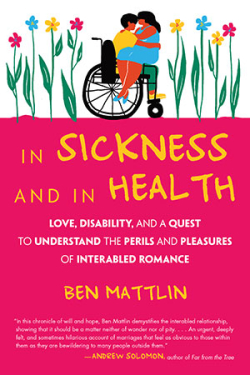
    In Sickness and In HealthIn middle age, he left his wife of many years, just like many other middle-aged guys do! (Sorry, those of you who loved the romantic biopic, The Theory of Everything. It gave some viewers the false impression of a happily-ever-after ending.) Then Hawking married a second time, to one of his nurses. That didn’t last either, as I found out when researching my book on interabled relationships, In Sickness and In Health.

    I had wanted to include Dr. and Mrs. Hawking in my collection of couples who were successfully living with one member’s disability. When I finally got a hold of an assistant for Professor Hawking, she told me flatly, “There is no current Mrs. Hawking.” I still tried to get a comment from him, but she said he was not interested.

    Those of you who’ve read my previous essays know that I’ve often been mistaken for Stephen Hawking—or as some strangers have put it, “that science guy.” I don’t actually look like him at all, but as I said before, I have a similar disability to his. My posture is not unlike his. My wheelchair is fairly high-tech, too. I drive it with my mouth. And I wear glasses, which he did. But other than that, I don’t see the resemblance.

    Nonetheless, like many of us wheelchair-users, I couldn’t help feeling a deep personal affinity with the professor. I’m not sure if, given the chance to chat, we would’ve had a single thing in common. But I imagine we shared a number of experiences. And I admire the way he didn’t just hide in his laboratory or think-tank. He got out there!

    I’ve often wondered, Would Hawking have become so famous if he didn’t have such a highly visible disability? Sure, he became known because of his groundbreaking ideas about black holes, but he stayed a megastar because his disability became emblematic. It boosted his persona. It helped him get noticed and listened to. It made him cool, intriguing.

    And now, who will replace him in the disability iconography? I suppose the most famous living disabled person is Peter Dinklage, that dashingly handsome and charismatic short-statured actor who stars as Tyrion Lannister in Game of Thrones. Or doesn’t dwarfism count?


    About the Author 

    Ben MattlinBen Mattlin is the author of Miracle Boy Grows Up and In Sickness and In Health: Love, Disability, and a Quest to Understand the Perils and Pleasures of Interabled Romance, and a frequent contributor to Financial Advisor magazine. His work has appeared in the New York Times, Los Angeles Times, Washington Post, Chicago Tribune, USA Today, and Vox, and on NPR. He lives in Los Angeles, California. Follow him on Twitter at @benmattlin and visit his website.

  • By David Bacon

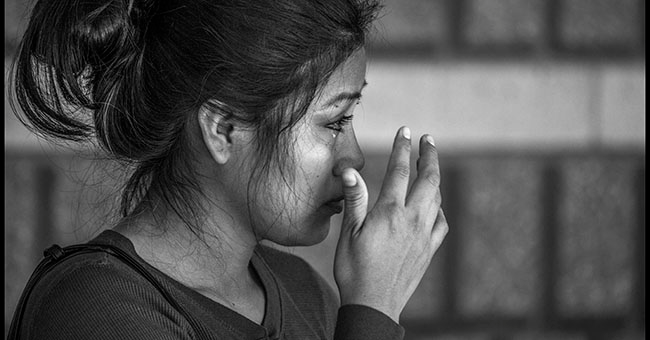
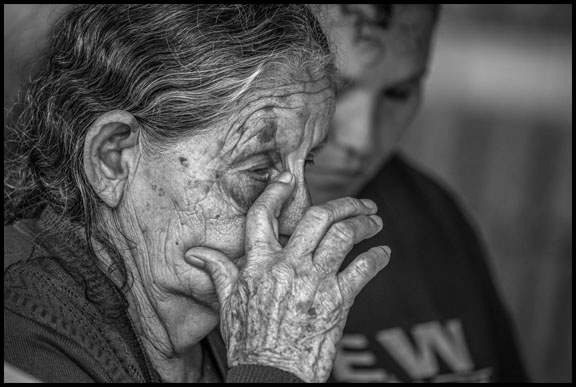
    Paola, after the phone call

    Paola, after the phone call. All photo credits: David Bacon

    This photoessay appeared originally on Capital & Main.

    Paola was standing outside the West County Detention Facility, a prison in Richmond, California for 150 to 300 people awaiting deportation, when she got the phone call.  She’d been fearing it for days.  Florencio, her husband, was in another detention center in Arizona, calling to tell her that la migra (immigration agents) had caught him in the desert, walking north with a dozen others.

    Paola (not her real name) hadn’t spoken to Florencio for several weeks, not since the day before he crawled into the luggage compartment of a bus in Puebla in southern Mexico.  The bus, he hoped, would take him close to the US border.

    It had already been a harrowing journey for himself and Paola’s brother Lorenzo. “After we left Guatemala and crossed the river into Mexico, we wound up in a kind of camp in Chiapas,” Florencio recalls. “There were hundreds of people there.” When the day to leave on the long trip north finally arrived, the coyotes running the camp organized a kind of shape up. It was not that different from the stories told by an earlier generation of migrants, the braceros (contract farm laborers), who remember being herded together at Mexican way stations, inspected and shipped to the border between 1942 and 1964.
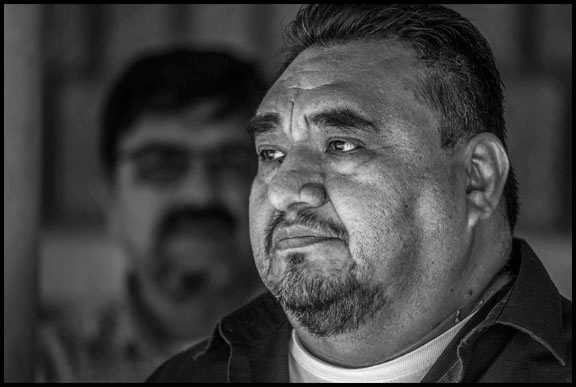
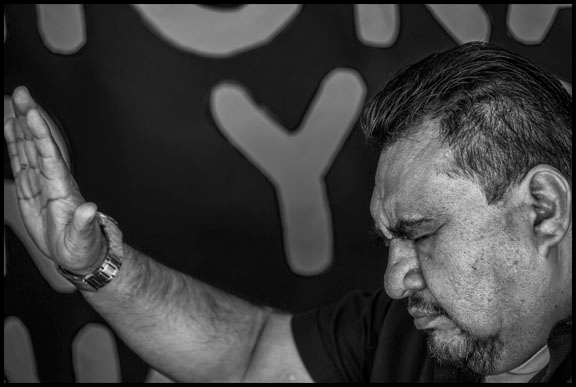
    Vigil participant

    Vigil participant

    “Different coyotes called us by numbers, separating us into groups,” Florencio says. “Then they put eighty or ninety of us into the back of a truck. There was so little space we had to stand pushed up against each other like sardines. It was a bumpy ride, and soon people began to get sick and faint, especially the pregnant women. They stopped the truck and gave us pills and lemons, but people were already throwing up and the smell was terrible.”

    The ride resumed, but after twelve hours the people inside began to bang on the walls. Hearing the noise, the driver pulled over. “He let us out and told us to run around a little,” Florencio says. “Then we got back in, and it was another twelve hours.” When the truck got to Puebla, Florencio called Paola to tell her he was coming.

    During the vigil organized by Mujeres Unidas y Activas

    During the vigil organized by Mujeres Unidas y Activas

    He got through the next stage from Puebla hidden in the luggage compartment of a bus. That took him to Sonora. There, in a house near the border, the group faced another obstacle. “The mafia guys came and told us they controlled this territory, and we had to pay another $1,000 to get to the line to cross,” Florencio says. “Some of us knew this would happen, and we’d already paid the coyote. I don’t know what happened to the others. Soldiers came, but they didn’t see any problems, and let us keep moving.”

    Not having money to pay at this stage could have been fatal. In the last decade, mass graves of migrants have been discovered across the desert of Mexico’s northern states. Many guess that these were migrants too broke to pay the toll. Perhaps others were robbed and then killed.

    For Florencio’s group, actually crossing the line wasn’t the big problem. It was getting to a place north of it, where they could get picked up by a van to take them to Phoenix. To get to the meeting place, they had to walk three days in the heat through rocks, sand and sagebrush.  “On the third day, one boy from my hometown got pains in his stomach, and began fainting,” Florencio says. “At first, I said we had to stay with him, but the coyote said we had to leave him and that the Border Patrol would find him. If we stayed we’d all be caught.”

    Paola and Teresa

    Paola and Teresa

    In the end, that’s what happened anyway. The group passed across a freeway, but then Florencio began hearing helicopters. They all ran. He tried hiding under a bush, but an agent on a motorcycle found him. He was taken to a detention center close by. When he called Paola, it was the day of the monthly vigil in front of the West County Detention Facility in Richmond, nearly 900 miles north.

    “I was there with people from the church who were helping us,” Paola remembers. “We’d been praying for people they knew who were inside, and we began singing. Then my cell phone rang. I was so afraid of getting that call, but I knew what it would be. Then they were praying for me.”  She collapsed into the arms of a church member next to her, both of them weeping.
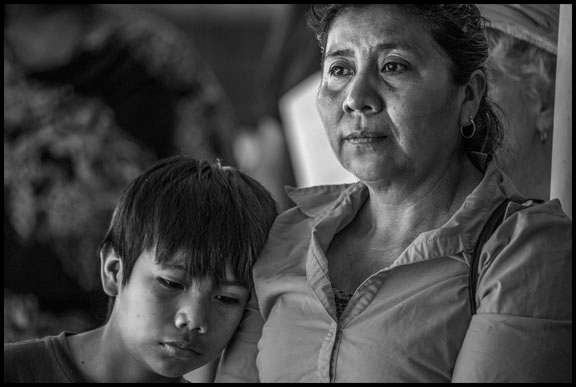
    Teresa

    Teresa

    At the end of the detention center vigil, the people assembled there clap, shout and make enough noise that the detainees inside can hear them. “We want them to know we’re here, that someone knows they’re inside, and that our community cares what happens to them,” explains Reverend Deborah Lee, director of the Interfaith Movement for Human Integrity (IM4HI). “When we started in 2011, our idea was to put out a call to people of faith and conscience concerned about what was happening to immigrants, to bear witness and provide a way for them to act on that concern.”

    As the years have gone by, the vigils have changed. At first, they were made up mostly of congregations from progressive, middle-class churches. Then some of those churches went from hosting vigils to providing sanctuary to migrant families threatened with deportation. Churches have raised funds for bonds and emergency support, found housing and rides for released detainees, and accompanied newcomer families. “Accompaniment,” a term used by faith and solidarity activists, came out of efforts to protect activists in El Salvador from the death squads in the 80s. People show their solidarity with those who are in danger by accompanying them, physically or by helping them survive. Today, it’s applied to migrants as well—activists support a family by giving them sanctuary, helping them find food and shelter, getting them legal help.

    As sanctuary congregations have multiplied to thirty-two throughout the Bay Area, migrants themselves have increasingly participated in the vigils. “We always include testimony from directly impacted families as well as a call to action,” Lee adds. “We started very small–fifteen to twenty–and now it’s averaging 100 people.”
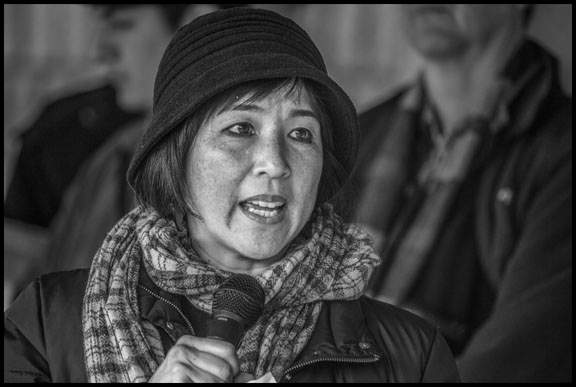
    Rev. Deborah Lee

    Rev. Deborah Lee

    Berkeley’s St. John’s Presbyterian Church helped Paola and her mother, who fled violence in Guatemala in 2014, gain refugee status. The family then came to the vigil at the West County Detention Facility to speak out. “Because these families are with us, they provide a first-hand account of why they were forced to leave home,” Lee said at the vigil, urging other congregations to get involved. “We hear the pain of the separation of their families in their voices and see it in their eyes.”

    St. John’s was one of the first churches to give sanctuary to immigrants. “In the early 1980s, we saw people fleeing the wars in El Salvador and Nicaragua, and felt we had to do something to help them,” says Fred Goff, a member of the congregation who brought Teresa and Paola to the vigil.

    The vigils have grown to involve more than people of faith. Some have been organized by immigrant community organizations, like Mujeres Unidas y Activas, which organizes immigrant working women in San Francisco and the East Bay. Local high schools and colleges have organized others, and a Jewish congregation, Kehilla Community Synagogue, has started its own vigil on second Sundays. When workers at a local foundry were fired for not having immigration papers, Lee and the East Bay Interfaith Immigration Coalition began meeting with them in the Lutheran Church near the University of California, Berkeley campus, working with a labor/community coalition called the East Bay Alliance for a Sustainable Economy (EBASE). A few workers came to a vigil, and people of faith helped organize a community march and hunger strike to protest anti-immigrant firings.

    During the vigil organized by Mujeres Unidas y Activas

    During the vigil organized by Mujeres Unidas y Activas

    After hearing from people like Teresa and Paola, Rev. Lee and IM4HI began holding meetings throughout the Bay Area to talk about the reasons for forced displacement and migration, and for the growth of the detention and deportation industry. For two years, she’s organized delegations to Central America together with La Fundación SHARE, to support social justice movements there, and to give congregations in California a first-hand experience of the reasons why people leave home.

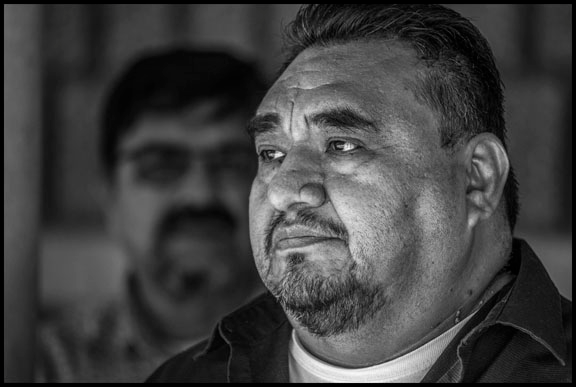
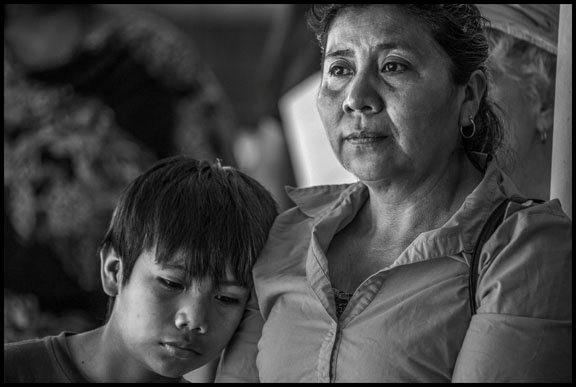
    Over many Saturdays, the vigils have provided a way for activists to reach out to people inside the center as well. On a recent Saturday, Lourdes Barraza and her daughters Sofia, Isabel, and Anna, waited to hear news of Fernando, her husband and the girls’ father. The following Tuesday would be Fernando’s birthday, and he’d already spent three months inside, staring at the concrete walls of his cell.

    Reverend Pablo Morataya gathered members of his congregation at the First Hispanic Presbyterian Church in east Oakland, a sanctuary congregation, as well as other pastors and lay ministers serving immigrant congregations throughout the Bay Area. They went to the detention center to hold a vigil for Fernando. “There are risks,” Pastor Morataya says, “but for us it is a calling of our faith.”
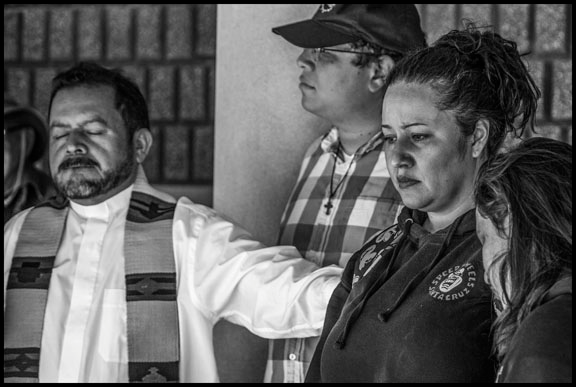
    Rev. Pablo Morataya comforts Lourdes Barraza

    Rev. Pablo Morataya comforts Lourdes Barraza

    At the vigil for Fernando, one of Lourdes’ daughters had written birthday greetings on a large card, and placed it on an overturned milk crate covered with a cloth. First one boy stepped forward and signed it. Then two older congregants did the same. Finally a line stretched out of people adding their names and greetings.

    Despite the support and greetings for Lourdes and her daughters, it was still an awful experience to think of Fernando inside. They’d tried to arrange bail for him so that he would be able to come home. “But they told me he didn’t qualify because he’d already been deported once,” Lourdes explained. “He’s been living in this country for many years. He is not a threat to society. All he does is work, and all I do is work, too. I don’t know how we’ll survive without him. I need my husband and the girls need their father.”

    She broke down and began crying.

    Lourdes Barraza speaks out in front of the detention center

    Lourdes Barraza speaks out in front of the detention center

    In October, Fernando was dropping off the youngest of their three daughters at her daycare center in San Jose. As he pulled away from the curb, he saw he was being followed by the vehicles that figure in the nightmares of millions of immigrants–the green cars of la migra.

    He must have wondered whether he could run for it, and what that might mean for his family. He decided instead to pull into a shopping mall parking lot. The ICE agents jumped out of their cars, put him in cuffs, and took him to a detention center. When he was finally able to call his home, all he could do was leave a message: “Don’t worry. I am not going to get deported right away; just stay calm.”
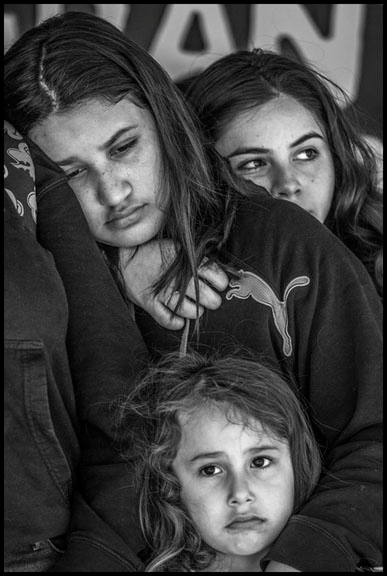
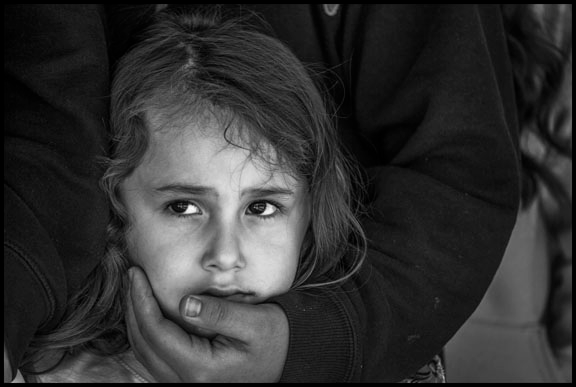
    Children of a detainee

    Children of a detainee

    Quick deportation was indeed a big danger. Fernando had been deported in 2012, Lourdes recalled. He was picked up on a Friday and in Tijuana by the following Sunday. But he came back because she was here. His family, his life—all were in San Jose, not Tijuana. Like Paola and Florencio, the bonds of love and life would not and could not be denied.

    To ICE, however, being deported once before makes you a criminal subject to jail and to their euphemism for deportation–“removal.” Since October, Fernando has been imprisoned in the West County Detention Facility, nearly 60 miles from San Jose. When he appealed to be released on bail, ICE field director David Jennings refused.

    “I could not believe it was all happening again,” Lourdes told Cindy Knoebell, a volunteer for Community Initiatives for Visiting Immigrants in Confinement (CIVIC). “I told our daughters that their father had been detained and they completely broke down sobbing. My oldest is now on an independent study program because she can barely get out of bed in the morning. It is tough because I am alone now and have to take care of my daughters’ needs without any help. I am completely consumed by fear and anxiety. I worry constantly about how long I’ll be able to keep a roof over our heads.”

    A daughter thinking about her father

    A daughter thinking about her father

    Knoebell reports that Lourdes debated for a long time whether to come to the vigil and speak. She’d heard about many other families facing the same disaster. “But we have nothing to be ashamed of,” she said.

    Inside the detention center, the monthly noise has not only let Fernando know there are supporters outside. It has also encouraged detainees to begin protesting what they say are terrible conditions.

    The West County Detention Facility is housed in a much larger jail, one of four Contra Costa County lockups. Its official capacity is 1,096 people, of whom 150 to 300 are detainees in the facility run by ICE, which pays $6 million a year to the county for using it. Some immigration detainees are held because ICE says they’re in the country illegally. Others are asylum seekers who are detained immediately on arrival in the US or legal residents with past offenses (often very minor ones) that makes them deportable.

    So they await a hearing before an immigration judge. That hearing, however, is not the normal courtroom procedure one might imagine. The judge sits in a room in the ICE building on Sansome Street in San Francisco. The immigrant sits in a room at the detention center in Richmond. The hearing takes place over the Internet. If immigrants have a lawyer, their chances of staying in the US are better, but odds are not good even then.
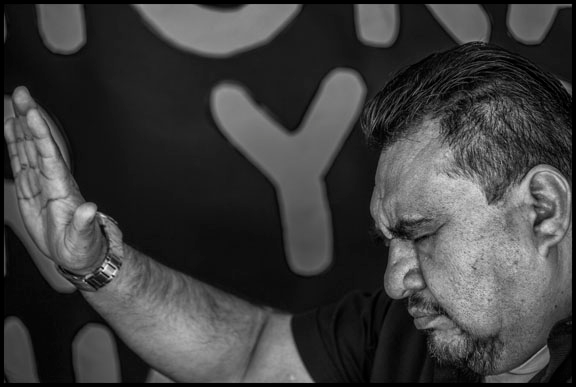
    A vigil participant shows support for the people inside

    A vigil participant shows support for the people inside

    People like Fernando wait, while weeks stretch into months and even years.

    ***

    In October, the immigration detainees went public about what that waiting is like. In a letter written to CIVIC by one of the prisoners, Nancy Meyer, and signed by twenty-seven others, women described being held in cells for twenty-three hours a day. While regular inmates in the county jail section of the facility get classes and other resources, the immigration detainees don’t.

    The cells are grouped in pods, with a bathroom that is supposed to serve them all. There are no toilets in the cells. If the cell door is locked, a prisoner has to ask to be let out in order to go to the bathroom. While Contra Costa County Sheriff David Livingston says doors are normally open, the women signing the letter denied this. Instead, they charged, they’re told to “hold it” and have to urinate or defecate into plastic bags.
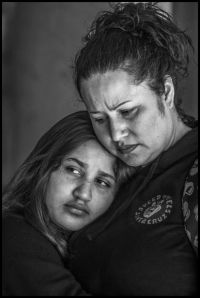
    Lourdes Barraza

    Lourdes Barraza

    One detainee told immigration Judge Joseph Park in October that she that she preferred being deported to staying in the jail. In a phone interview with San Francisco Chronicle reporter Otis R. Taylor, Dianny Patricia Menendez said detainees put the plastic bags over a trash can in order to go to the bathroom. Their one hour of free time to make calls to family or take a shower is often canceled, she added.

    ICE did not respond to the allegations of bad conditions. However, Taylor wrote that the detainees who spoke with him were later punished by being denied soap, shampoo and the chance to brush their teeth.


    Immigrant women supporting each other

    Immigrant women supporting each other

    Senator Dianne Feinstein was one of several elected officials to protest. She wrote acting ICE director Thomas Homan in December, saying, “It has been reported that the conditions are so deplorable that detainees are requesting deportation over pursuing claims in immigration court.”  Criticism also came from U.S. Rep. Mark DeSaulnier (D-Richmond), State Senator Nancy Skinner (D-Berkeley), Assemblyman Tony Thurmond (D-Richmond), Contra Costa County Supervisor John Gioia and Richmond Mayor Tom Butt.

    Outside the West County jail, a few minutes after Paola got the call from Florencio saying he’d been caught, she got a second one that frightened her even more. Her brother Lorenzo was hiding in a small community between Tucson and the border. He’d been traveling with Florencio, but the coyotes separated them in northern Sonora.
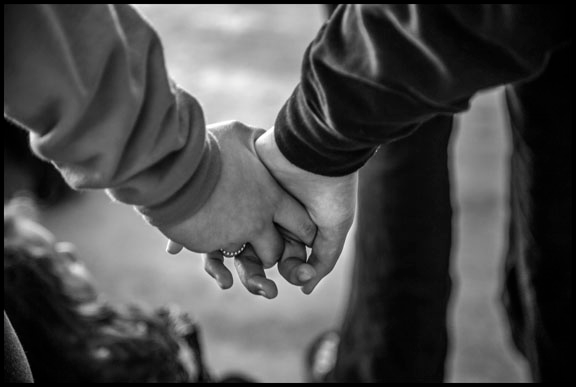
    Holding hands is part of the vigil ritual

    Holding hands is part of the vigil ritual

    Once across the border, Lorenzo lost his own group, and a friendly resident gave him temporary refuge in a garage. Terrified that the Border Patrol, which was constantly circulating in the area, would find him, he called Teresa. At the vigil, church members began making calls to Arizona, trying to find help. Finally a person was contacted who drove down from Tucson and rescued him.

    It was only a temporary respite, however. Not long afterwards Lorenzo was picked up and deported. When he calls Teresa and Paola these days, it’s from Guatemala once again.

    Paola is comforted after getting the call

    Paola is comforted after getting the call

    Since Florencio had tried to cross the border twice before and had been caught, he wasn’t deported immediately when he was picked up in Arizona.  Instead, he was charged in the special court for immigrants in Tucson, Operation Streamline. Afterwards he spent seven months in an Arizona prison before finally being released on bail while he appeals his deportation order.

    To Rev. Lee, the stories of Florencio, Lorenzo and Fernando, with their repeated attempts to cross the border to reunite with their families, are a natural human response to separation. She cited another example in an opinion piece she cowrote with Bob Lane, a faith leader at EBASE, for the San Jose Mercury News. “Consider the story of Alfonso Martinez Sanchez, a thirty-nine-year-old father of five US citizen children and his family’s main breadwinner, she wrote. “Five years ago, a trip to a store to buy milk led to a senseless deportation. Alfonso repeatedly tried to come home to his family. Wouldn’t you? The Border Patrol arrested Alfonso several times, but he never gave up on his family. He died of heatstroke in the desert trying to reunite.”
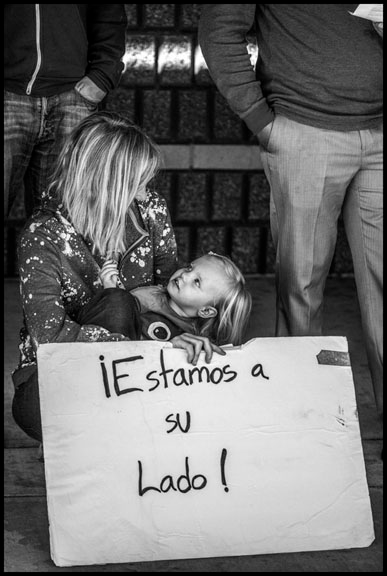
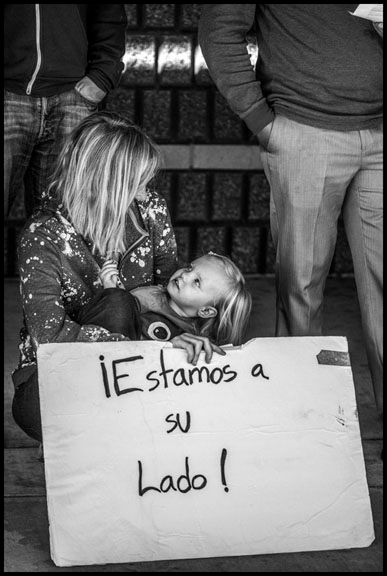
    "We are at your side!"

    "We are at your side!"

    When Rev. Lee thinks about what’s happened to Paola and Teresa, to Florencio and Lorenzo, to Lourdes and her three children, to Fernando, it’s clear to her that for them to survive people have to act. “We can’t just watch the immigration policy of this country play itself out and do nothing, while ICE and the Border Patrol hunt people down and tear their families apart,” she said at a recent vigil. “The administration talks about our efforts to protect people and fight this detention system as though this was just a state or a city passing a law to defy their enforcement efforts. What they don’t understand is that these laws exist because our community is making a moral commitment and acting on it, and our representatives are responding to that. Sanctuary isn’t just a law. It’s our community defending people in danger.”

    Sanctuary is a vigil in front of the detention center.
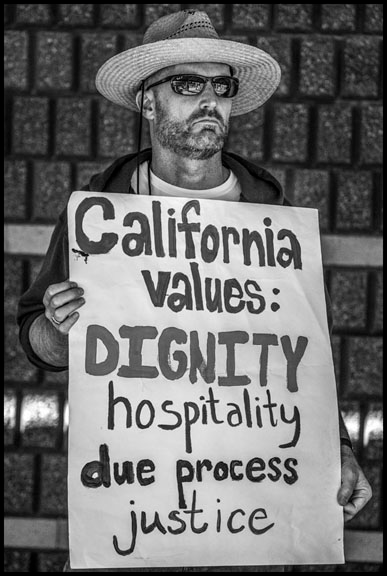
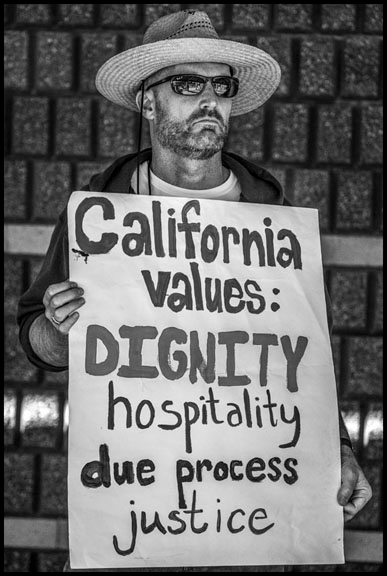
    California values

    California values


    About the Author 

    David BaconAward-winning photojournalist, author, and immigrant rights activist David Bacon spent over twenty years as a labor organizer and is the author most recently of The Right to Stay Home: How US Policy Drives Mexican Migration. Bacon’s previous books include The Children of NAFTA, Communities without Borders, and Illegal People (Beacon, 2008). He is an associate editor at Pacific News Service and writes for the Nation, American Prospect, Progressive, and San Francisco Chronicle, among other publications. Follow him on Twitter at @photos4justice.


  • By Philip C. Winslow

    AR-15

    AR-15. Photo credit: deeREK

    On a hot summer morning in 1954, when I was eleven years old, I saw my first human death by gunshot. The victim was a boy about my age. He had been playing with a .22 caliber rifle thought not to be loaded, I was told. The gun discharged, the bullet passed through his neck, rupturing the left carotid artery, and he bled out. I saw him only afterward. I never knew his name, the circumstances, nor anything about him or his family. But sixty-four years later, I clearly recall the stillness in death, his ashen face, the color of his hair, and the small entry wound in the left side of his neck. The death was ruled accidental, or, as they say these days, unintentional. Shaken, that night I had a long discussion with my mother about the unfairness of death, and about the consequences of the negligent handling of firearms.

    The easy lethality of guns was not a complete surprise. I was already a fairly accomplished hunter (of birds such as ruffed grouse and pheasant, and with shotguns, not rifles), and would get good at knocking down clay pigeons on the skeet range. I still have a photo, taken around that time, of me with a 20-gauge pump shotgun on one shoulder, and holding two dead pheasants. I was continually drilled in the safe use of guns, and I observed the rules. But apart from a lot of birds I killed and ate, I was not yet connecting the lines between guns and human death. That would come soon enough.

    Coincidentally, 1954, the year the boy died, was a mile marker in the development of small arms, when the US Air Force needed a rifle for bomber aircraft survival kits. ArmaLite, then a division of the Fairchild Engine and Airplane Corporation, came up with the AR-5, a compact, lightweight rifle chambered for the .22 Hornet cartridge, which packed far greater velocity and energy than the .22 bullet whose results I had seen for myself. The AR-5 (AR stands for ArmaLite Rifle) was the first step to replacing the World War II M1 Garand, and one of many over the next decade that led to the military AR-15 (renamed the M-16), and back again to today’s civilian-version, semiautomatic AR-15. The development also marked America’s progress in the international small arms race, coming just a few years after the AK-47, the Avtomát Kaláshnikova, became the official rifle of the Soviet Armed Forces.

    In my early years, guns fell loosely into three spheres: military, criminal, and sport. I had little knowledge of the first two, but related to sport, in which target practice and hunting were enjoyable outdoor activities and involved some skill. In my mid-teens, I gradually became familiar with the criminal use of firearms. A grandfather was a coroner’s physician, and several of my older friends were police officers and homicide detectives. But for me, “guns” and “schools” never occupied the same train of thought. In one high school I attended, a few hoods—tough guys in duck’s ass hairdos—were rumored to carry zip guns, homemade .22 pistols fashioned from rubber tubing and wood, but I never saw one.

    Guns in other venues I came to understand. With aspirations to a medical career, I found volunteer work as an ambulance attendant and salaried work as a hospital orderly, which frequently put me in emergency rooms, operating theaters and the morgue. Before I was out of my teens, I was well familiar with the complex nature of gunshot wounds. With that awareness came exposure to a vast sea of suffering and grief. It has stayed with me. In hospitals and on the streets, I routinely witnessed or played a minor role in attending the aftermath of gunfire. I stopped hunting, not out of revulsion but because it had lost its lure. Eventually, as an adult, I gave away or sold my shotguns—the original .410, the 20-gauge, and my excellent Browning 12-gauge over-and-under. But back then, even after I stopped shooting, guns and rifles owned by friends or professional colleagues remained a normal part of American life.

    I didn’t make it into medicine, but as a reporter covered parts of a world that seemed threaded together—“torn  apart” often seemed the better phrase—by gun violence, most visibly by the ubiquitous AK-47 and its variants. The assault rifle was a simple and rugged means to an end for regular and irregular armed forces, for child soldiers, mercenaries, terrorists, and assorted bandits. In more than thirty years of travel and postings across Europe, the Middle East, and Africa, the Kalashnikov and other rifles, and their trail of havoc, were common sights.

    But elevation of the gun to national icon had been left to the United States, and the near worship began when the nation was a few years old.

    Rifles

    In 1970, historian Richard Hofstadter popularized the term “gun culture” in writing about how Americans’ resolute possession of firearms dated back to colonial days, when farmer-settlers lived on a wild frontier, and the founders feared a standing army as an instrument of government tyranny. Political beliefs, he wrote, held that “The American answer to civic and military decadence, real or imagined, was the armed yeoman”, in the militia system. But, Hofstadter asked, two hundred years on and with the frontier long gone, why

    is the gun still so prevalent in a culture in which only about 4 per cent of the country’s workers now make their living from farming . . . Why did the United States alone among industrial societies cling to the idea that a substantially unregulated supply of guns among its city populations is a safe and acceptable thing?

    Twenty years after his essays, gun violence was at sustained, frightening levels. A February 1989 Time magazine cover featured a US map stylized as a skull above the “crossbones” of two assault rifles. “ARMED AMERICA”, the headline blared, “More guns, more shootings, more massacres”. It followed the murder by Patrick Purdy of five elementary school children—refugees from Southeast Asia—in Stockton, California; thirty-two others were wounded. The New York Times reported that

    “Mr. Purdy, who has a long criminal record, bought the assault rifle for $349.95 last Aug. 3 in a gun store in Sandy, Ore. He used a false name and lied on the Federal form required for the purchase, the police said.”

    Five months later, Time ran another issue: “DEATH BY GUN. America’s toll in one typical week: 464”. On the cover was a smiling seventeen-year-old Oklahoma girl who had been shot dead by her cousin as she sat in her mother’s living room. The issue had a twenty-eight-page portfolio of gun-death stories.

    In 1989, there were more than 34,000 deaths by firearm, a rate of fourteen deaths per 100,000 population; more than 14,000 were homicides; the rest were suicides and accidental shootings. In March, the American Medical Association’s Council on Scientific Affairs published a report titled “Firearms injuries and deaths: A critical public health issue.” One line read: “There is unquestionably the need to treat this public health matter with as much urgency as any dread disease.”

    The epidemic kept chalking up lost lives for the next twenty-seven years. In 2016, there were 38,658 deaths by gun, nearly 12 per 100,000. Of those, 14,415 were murders, about the same as in 1989.

    Policy makers treated the crisis with political expediency. That meant toeing the line of the National Rifle Association. Congress curtailed government-funded medical research into gun violence, heeding the NRA fear that science was a precursor to restricting guns. In 1996, the House passed an appropriations bill with an amendment stipulating that “none of the funds made available for injury prevention and control at the Centers for Disease Control and Prevention [CDC] may be used to advocate or promote gun control.” The bill stripped $2.6 million from the CDC’s budget—the amount the agency had spent on research the year before. (Many years later, the amendment’s author, Rep. Jay Dickey, R-Ark., said he regretted it. “I wish I had not been so reactionary,” he said.) The amendment has not been repealed, and research is still blocked.

    The treatment of gunshot wounds has grown to a complexity scarcely imaginable to anyone except a seasoned combat surgeon. Due to the number of cases and to the grievous wounds caused by high-velocity ammunition, emergency department and inpatient costs by 2014 were running to $2.8 billion a year nationwide, according to a 2017 study by researchers at Johns Hopkins University School of Medicine. That broke down to about $5,200 per victim treated in an ER, ballooning to nearly $96,000 for some admissions.

    Meanwhile, the firearms business has been good. America continues to manufacture record numbers of rifles, pistols and shotguns—more than 11 million in 2016, according to the Bureau of Alcohol, Tobacco, Firearms and Explosives. Retail sales rise and fall, following a quirky barometer of presidential politics: sales surged under President Obama; they’ve fallen under President Trump.

    The industry, gun dealers, and the NRA traditionally experience a boost following a mass shooting. People who fear government confiscation rush to buy more guns, and manufacturers’ stock prices go up. But one theory runs somewhat contrary to the one of a malign, jack-booted government. Washington Post columnist Elizabeth Bruenig wrote:

    Mass murders, especially those that take place in US schoolhouses, appear to advance the much-beloved conservative claim that the state cannot or will not help you; that our government is disorderly, shambolic and derelict by its very nature; that you are in danger, very grave danger, and the only person you can really trust to protect you is yourself.

    Gun

    Photo credit: Tatiana T

    When I moved to Johannesburg, in 1993, to report on Southern Africa, my neighbors immediately counseled me to buy a handgun to defend myself against the frequent carjackings and home invasions, and helpfully suggested types. The Glock 9 mm with laser sight was a hot item. I declined: first, because I was a reporter, and second, because I’ve never had much faith in the doctrine of self-protection by firearm. I had already heard of too many unintended consequences when the good-guy-with-a-gun stratagem ended badly. In South Africa, people who kept guns in their cars or homes frequently had them stolen, which beefed up the bad guys’ arsenals. And gun-toting civilians, however skilled, do not undergo the relentless weapons and situation training that soldiers, Marines, and police do. Near my home, I got a vivid illustration.

    As I worked at the desk one afternoon, I heard repeated bursts of automatic rifle fire interspersed with individual shots. I got in my car and followed the racket to a small shopping mall a few blocks away. The gunfire had stopped, and so had the wail of departing ambulances. Two bodies lay near the entrance to a bank, which two men with AK-47s had tried to rob. The bank’s glass doors were shot out, broken glass from bullet-riddled cars crunched under foot, and blood stained the pavement. It looked like way too much damage for a bank robbery. I started talking to witnesses, who had emerged from behind parked cars. When the armed robbers attempted their getaway, they apparently hadn’t counted on lunchtime businessmen with handguns stuck in their waistbands. Everybody started blasting away at everybody else, and in the adrenaline-stoked chaos numerous bystanders or participants were wounded, and at least two people were killed.

    It can be hard for a non-gun owner to grasp the enduring notion that we must be allowed to keep weapons because the government may turn to suppression of our rights. Sensible owners, target shooters, hunters, collectors, and maybe even some people who think they need guns might suspect this is farfetched. It is. No government is going to launch a nationwide gun grab, and no Congress is ever likely to repeal the Second Amendment. A future Congress, if ever unchained from the NRA, might legislate some restrictions on gun types and sales. It should, considering the unending human toll.

    Library shelves are packed with academic volumes and court cases related to the Second Amendment, which was adopted in 1791 and whose exact intent is still being debated. A case sure to be revisited is District of Columbia v. Heller, the Supreme Court’s landmark 2008 decision which protects an individual’s right to possess a firearm. But along with that protection, Heller holds a caution: “Like most rights, the Second Amendment right is not unlimited. It is not a right to keep and carry any weapon whatsoever in any manner whatsoever and for whatever purpose: …” Heller would seem to leave the door ajar for future challenges.

    The American Medical Association, the American Public Health Association, the American Academy of Pediatrics, the American Nurses Association, the American Psychiatric Association, and a variety of NGOs and citizen groups continue to demand action to stem the casualties. Joining them are individual Marine and army combat veterans, men and women who know weapons intimately and who write unequivocally that the assault rifle has no place in civilian life.

    In 1970, an exasperated Hofstadter wrote that American legislators

    have been inordinately responsive to the tremendous lobby maintained by the National Rifle Association, in tandem with gunmakers and importers, military sympathizers, and far-right organizations. A nation that could not devise a system of gun control after its experiences of the 1960s, and at a moment of profound popular revulsion against guns, is not likely to get such a system in the calculable future. One must wonder how grave a domestic gun catastrophe would have to be in order to persuade us. How far must things go?

    After Parkland, there were signs that things had gone far enough. Some gun retailers announced they will no longer sell assault rifles nor sell ammunition to anyone under twenty-one. A number of airlines, banks, and outdoor stores said they will sever marketing ties with the NRA.

    Is Never Again really the start of a movement, able eventually to turn the tide?

    The survivors of school shootings and the families of the dead see beginnings. But within days of the Parkland murders, the Stoneman Douglas High School students saw something else, and it was perfectly familiar: politicians may have been rattled, but they were not about to be lectured by teenagers, no matter how traumatized, and they have not budged. President Trump vowed to raise the minimum age to purchase rifles; then he met with NRA officials in the Oval Office and quickly backed off. Within a month, earnest-sounding proposals, small as they were, had been abandoned. As students mobilize across the country this month, they know what they’re up against: elected officials beholden to a gun lobby that remains, as Hofstadter wrote nearly half a century ago, “as powerful as it is indifferent to the public safety.”


    About the Author 

    Philip C. WinslowPhilip C. Winslow has been a journalist and foreign correspondent for more than thirty years; he has worked for the Christian Science Monitor, the Toronto Star, Maclean's magazine, ABC radio news, CTV News, and CBC radio. He also served in two United Nations peacekeeping missions and spent nearly three years living in the West Bank. He is the author of Victory For Us Is to See You Suffer and Sowing the Dragon’s Teeth.

  • By Martin Luther King, Jr.

    Martin Luther King, Jr. speaking in Chicago, Ted Bell Collection

    Martin Luther King, Jr. speaking in Chicago, Ted Bell Collection

    Fifty years ago—on March 18, 1968—Martin Luther King, Jr. delivered his speech “All Labor Has Dignity” at Bishop Charles Mason Temple of the Church of God in Christ in Memphis, Tennessee. The church was overflowing with sanitation workers on strike and their supporters. In his speech, Dr. King connected their strike to the plight of all workers, especially those in the service economy. Thousands of the Memphis sanitation workers had walked off the job on February 12, 1968 to bring attention to years of poor pay and dangerous working conditions. At that time, Dr. King was on road garnering support for his Poor People’s Campaign. The Memphis sanitation strike would become a major part of the campaign. To commemorate the anniversary of his speech, we share selections of it with you here. You can read it in full in “All Labor Has Dignity” and The Radical King.

    ***

    As I came in tonight, I turned around and said to Ralph Abernathy, “They really have a great movement here in Memphis.” You are demonstrating something here that needs to be demonstrated all over our country. You are demonstrating that we can stick together and you are demonstrating that we are all tied in a single garment of destiny, and that if one black person suffers, if one black person is down, we are all down. I’ve always said that if we are to solve the tremendous problems that we face we are going to have to unite beyond the religious line, and I’m so happy to know that you have done that in this movement in a supportive role. We have Baptists, Methodists, Presbyterians, Episcopalians, members of the Church of God in Christ, and members of the Church of Christ in God, we are all together, and all of the other denominations and religious bodies that I have not mentioned.

    But there is another great need, and that is to unite beyond class lines. The Negro “haves” must join hands with the Negro “have-nots.” And armed with compassionate traveler checks, they must journey into that other country of their brother’s denial and hurt and exploitation. This is what you have done. You’ve revealed here that you recognize that the no D is as significant as the PhD, and the man who has been to no-house is as significant as the man who has been to Morehouse. And I just want to commend you.

    It’s been a long time since I’ve been in a situation like this and this lets me know that we are ready for action. So I come to commend you and I come also to say to you that in this struggle you have the absolute support, and that means financial support also, of the Southern Christian Leadership Conference.

    You are doing many things here in this struggle. You are demanding that this city will respect the dignity of labor. So often we overlook the work and the significance of those who are not in professional jobs, of those who are not in the so-called big jobs. But let me say to you tonight, that whenever you are engaged in work that serves humanity and is for the building of humanity, it has dignity, and it has worth. One day our society must come to see this. One day our society will come to respect the sanitation worker if it is to survive, for the person who picks up our garbage, in the final analysis, is as significant as the physician, for if he doesn’t do his job, diseases are rampant. All labor has dignity.

    But you are doing another thing. You are reminding, not only Memphis, but you are reminding the nation that it is a crime for people to live in this rich nation and receive starvation wages. And I need not remind you that this is our plight as a people all over America. The vast majority of Negroes in our country are still perishing on a lonely island of poverty in the midst of a vast ocean of material prosperity. My friends, we are living as a people in a literal depression. Now you know when there is mass unemployment and underemployment in the black community they call it a social problem. When there is mass unemployment and underemployment in the white community they call it a depression. But we find ourselves living in a literal depression, all over this country as a people.

    Now the problem is not only unemployment. Do you know that most of the poor people in our country are working every day? And they are making wages so low that they cannot begin to function in the mainstream of the economic life of our nation. These are facts which must be seen, and it is criminal to have people working on a full-time basis and a full-time job getting part-time income. You are here tonight to demand that Memphis will do something about the conditions that our brothers face as they work day in and day out for the well-being of the total community. You are here to demand that Memphis will see the poor.

    ~~~

    And I come by here to say that America, too, is going to hell if she doesn’t use her wealth. If America does not use her vast resources of wealth to end poverty and make it possible for all of God’s children to have the basic necessities of life, she, too, will go to hell. And I will hear America through her historians, years and generations to come, saying, “We built gigantic buildings to kiss the skies. We built gargantuan bridges to span the seas. Through our spaceships we were able to carve highways through the stratosphere. Through our airplanes we are able to dwarf distance and place time in chains. Through our submarines we were able to penetrate oceanic depths.”

    It seems that I can hear the God of the universe saying, “Even though you have done all of that, I was hungry and you fed me not, I was naked and you clothed me not. The children of my sons and daughters were in need of economic security and you didn’t provide it for them. And so you cannot enter the kingdom of greatness.” This may well be the indictment on America. And that same voice says in Memphis to the mayor, to the power structure, “If you do it unto the least of these of my children you do it unto me.”

    ~~~

    With Selma and the voting rights bill one era of our struggle came to a close and a new era came into being. Now our struggle is for genuine equality, which means economic equality. For we know now that it isn’t enough to integrate lunch counters. What does it profit a man to be able to eat at an integrated lunch counter if he doesn’t earn enough money to buy a hamburger and a cup of coffee? What does it profit a man to be able to eat at the swankiest integrated restaurant when he doesn’t earn enough money to take his wife out to dine? What does it profit one to have access to the hotels of our city and the motels of our highway when we don’t earn enough money to take our family on a vacation? What does it profit one to be able to attend an integrated school when he doesn’t earn enough money to buy his children school clothes?

    And so we assemble here tonight, and you have assembled for more than thirty days now to say, “We are tired. We are tired of being at the bottom. We are tired of being trampled over by the iron feet of oppression. We are tired of our children having to attend overcrowded, inferior, quality-less schools. We are tired of having to live in dilapidated substandard housing conditions where we don’t have wall-to-wall carpets but so often we end up with wall-to-wall rats and roaches. We are tired of smothering in an airtight cage of poverty in the midst of an affluent society. We are tired of walking the streets in search for jobs that do not exist. We are tired of working our hands off and laboring every day and not even making a wage adequate to get the basic necessities of life. We are tired of our men being emasculated so that our wives and our daughters have to go out and work in the white lady’s kitchen, leaving us unable to be with our children and give them the time and the attention that they need. We are tired.”

    And so in Memphis we have begun. We are saying, “Now is the time.” Get the word across to everybody in power in this time in this town that now is the time to make real the promises of democracy. Now is the time to make an adequate income a reality for all of God’s children. Now is the time for city hall to take a position for that which is just and honest. Now is the time for justice to roll down like water and righteousness like a mighty stream. Now is the time.

    Now let me say a word to those of you who are on strike. You have been out now for a number of days, but don’t despair. Nothing worthwhile is gained without sacrifice. The thing for you to do is stay together, and say to everybody in this community that you are going to stick it out to the end until every demand is met, and that you are gonna say, “We ain’t gonna let nobody turn us around.” Let it be known everywhere that along with wages and all of the other securities that you are struggling for, you are also struggling for the right to organize and be recognized.

    ~~~

    Now the other thing is that nothing is gained without pressure. Don’t let anybody tell you to go back on the job and paternalistically say, “Now, you are my men and I’m going to do the right thing for you. Just come on back on the job.” Don’t go back on the job until the demands are met. Never forget that freedom is not something that is voluntarily given by the oppressor. It is something that must be demanded by the oppressed. Freedom is not some lavish dish that the power structure and the white forces in policy-making positions will voluntarily hand out on a silver platter while the Negro merely furnishes the appetite. If we are going to get equality, if we are going to get adequate wages, we are going to have to struggle for it.

    Excerpted from The Radical King, published by Beacon Press, 2015. All material copyright © Martin Luther King, Jr., and the Estate of Martin Luther King, Jr.; all material copyright renewed © Coretta Scott King and the Estate of Martin Luther King, Jr. Introductions © 2015 Cornel West.


    About the Author

    Dr. Martin Luther King, Jr. (1929–1968), Nobel Peace Prize laureate and architect of the nonviolent civil rights movement, was among the twentieth century’s most influential figures. One of the greatest orators in US history, King also authored several books, including Stride Toward Freedom: The Montgomery Story, Where Do We Go from Here: Chaos or Community?, and Why We Can’t Wait. His speeches, sermons, and writings are inspirational and timeless. King was assassinated in Memphis, Tennessee, on April 4, 1968. 

  • By Lyn Mikel Brown

    Parkland blog image FB

    On the one-month anniversary of the Marjory Stoneman Douglas High School shootings in Parkland, Florida, students all across the country walked out of class. They stood in silence for 17 minutes in honor of the 17 students and faculty who died in what should be unimaginable circumstances. Some had the support of their teachers and administrators; others risked disciplinary action, even school suspension. In my small Maine town, the superintendent stood before the School Board and clearly invoked students’ right to free speech, while just an hour away a school principal threatened 10-day suspensions.

    This was an awakening. All those carefully designed plans, the drills, the directions to lay low, play dead were just adults grasping at straws. No one can prepare for the sound of bullets, the sudden chaos, immobilizing fear, the impulse to flee, the sight of dying classmates, friends, teachers. Students could not have been prepared, but they can refuse to accept that the solution is more drills, more guns, more loss.

    This is a protest about gun violence. It’s also a repudiation of the barrage of toxicity young people face in the form of environmental threats, justified fear of a childish president with his finger on the button, a steady stream of sexual assault stories, a dramatic increase in racial harassment, threats of deportation, a battle waged on the poor, and regular reminders that no place is safe—not clinics, not neighborhood streets, not schools.

    Bodies close, arms linked, faces determined, tens of thousands of students walked out of their school buildings, physically experiencing strength in numbers. This is an awakening. Bodies carry memory. For many, this was their first foray into activism, their first close up view of democracy in action, an introduction to their collective power to reimagine and reshape this country.

    In Maine, students trudged through a foot of new snow with the passion, perceptiveness, and justified outrage of a generation realizing just how profoundly inept and corrupt this country has become. They are fighting back by building community, listening to one another, sharing stories of loss and finding moments of joy. Their refusal to give in to hate and disillusionment is an act of healing. Their organized resistance to compliance and complicity is an act of defiance and courage. Their Twitter feeds are communions, calls for support and solidarity. In this war, love wins.

    "People tend to underestimate us and our intelligence," said 16-year-old Parkland student Melanie Webber the day after the shootings. Never again will we underestimate the power of a well-organized group of very loving, very pissed off adolescents. This is our awakening, too. We cannot turn away from their disappointment and sense of betrayal or deny their righteous anger. We no longer get to say we care and not be called to task when we fail to do better. Our loyalty is being tested.

    Youth are organizing because so many of us have failed them; they are organized because so many of us have served them well. We have taught their civics and history classes, advised Gay Straight Alliances, Civil Rights Teams, Environmental Groups, Feminist Clubs; we have created nonprofits with their critical consciousness and empowerment in mind. They know how to do this work because we have been doing a version of this work together in our families, schools, and communities. This is their moment to rage at the machine, to rise from the ashes; this is our time to listen, to support, to have faith.

    This is an awakening.

    Our power lies in controlling how we are defined.

    Coalition is our best chance for change.

    Community is the secret to sustainability.

    Love is a battlefield.

    Loyalty is showing up.

    About the Author

    Lyn Mikel Brown_1
    Lyn Mikel Brown is professor of education at Colby College, founder of SPARK Movement, and author of Powered By Girl: A Field Guide For Supporting Youth Activists. Follow her on Twitter at @LynMikel and visit her website.

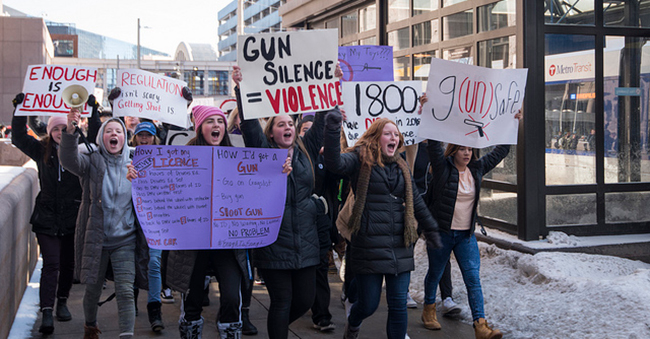
  • High school students protest for gun law reform, Minneapolis, MN, February 21, 2018

    High school students protest for gun law reform, Minneapolis, MN, February 21, 2018. Photo credit: Fibonacci Blue

    In honor of the seventeen people who died in the devastating mass shooting in Parkland, Florida, thousands of students and teachers are taking part today in the #Enough! National School Walkout. The walkout is also meant to raise awareness about school safety and our country’s ongoing nightmare of gun violence. Organized by Women’s March Youth Empower, the nationwide march starts at ten in the morning and will last for seventeen minutes. We reached out to some of our education authors to join us in showing our support and amplifying the work of these brave students. We share their responses with you below.

    ***

    Bill Ayers“The students at Marjory Stoneman Douglas High School in Parkland, Florida, are standing up, and youth across the country are linking hands to oppose the madness. #neveragain @beaconpressbks #followtheyouth. Yes, solidarity, and never forget that #BlackLivesMatter has led a sustained campaign against gun violence for years. The NRA is a reactionary and racist outfit to be sure, but target, as well, the greedy capitalist gun manufactures who profit off a militarized state, an occupying police force, and a fearful citizenry cowed into thinking a gun is the only answer. This can be a turning point only if we dig deep, organize, and build an irresistible mass movement.”

    —William Ayers, “You Can’t Fire the Bad Ones!” And 18 Other Myths about Teachers, Teachers’ Unions, and Public Education


    Emily Gasoi“Dear lawmakers,

    At last your otherwise ineffectual ‘thoughts and prayers’ have made a difference: they have awakened the passion and ire of a mighty force. Our nation’s youth are speaking with one voice, and they will not be silenced. As Parkland HS survivor, Delaney Tarr, warned in a press briefing, ‘No longer can you [lawmakers] take money from the NRA. No longer can you fly under the radar doing whatever it is that you want to do. Because we are coming after every single one of you and demanding that you take action.’”

    —Emily Gasoi, These Schools Belong to You and Me 


    Raynard Sanders“It is unexplainable, indefensible and criminal for policy makers not have passed Common Sense Gun Control laws years ago. It is as if we will sacrifice anything for open access for everyone to firearms regardless of its potential danger to innocent children.”

    —Raynard Sanders, Twenty-First-Century Jim Crow Schools 


    “In their mourning, the students of Parkland, Florida, have decided to become the responsible adults that this country needs. In proclaiming the supremacy of life over money, these students have taken a courageous moral stance that will prove to be the saving grace of a nation that might otherwise self-consume. While only time will reveal how far this movement will go, it seems as though fear will neither silence them nor highjack their commonsense.

    In an advanced republic like ours, educators ought to be the shepherds of social improvement. As the future of the United States belongs to the youth, educators must arm students with an understanding of the world and cultivate their agency in shaping it—even in the face of politicians who routinely meet civic action with hostility.”

    —Patrick Sylvain

  • By Gayatri Patnaik

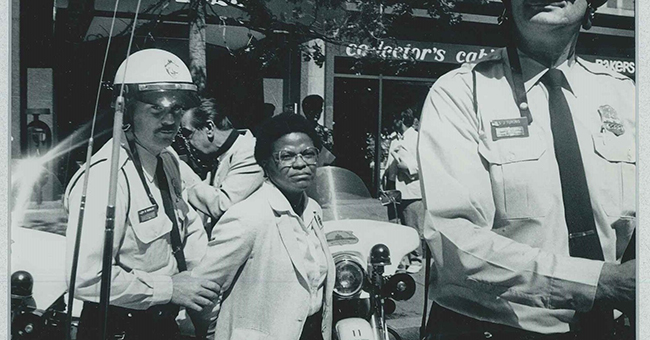
    Mary Frances Berry under arrest for civil disobedience at the South African Embassy, Shell protests

    Mary Frances Berry under arrest for civil disobedience at the South African Embassy, Shell protests

    I had the very good fortune to meet Dr. Mary Frances Berry (MFB) when I was twenty-one years old and working at the University of Pennsylvania. Having recently graduated from college with one major and an excessive number of minors (three!), I was undecided about what to pursue in graduate school. I ended up in Philly, working in Penn’s history department, where, in addition to supporting the professors administratively, I was allowed to sit in on classes and lectures.

    Penn had an incredible history department and, at the time, included Michael Katz, Drew Faust, Carroll Smith-Rosenberg, and many other brilliant scholars. From where I sat, I often overheard their conversations and remember noting with interest when several senior historians said they intended to attend some of MFB’s courses themselves. I never heard that said of any other professor.

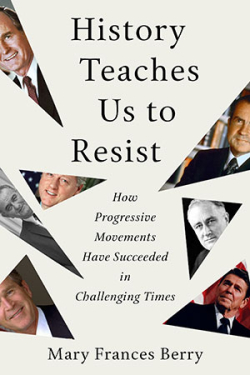
    History Teaches Us to ResistI was continually surprised that, though busy, MFB always had time for me and my questions, and she got to know me well enough that she agreed to write a recommendation for graduate school. (Penn accepted me into its PhD anthropology program, but I chose, not surprisingly for anyone who knows me!, the left-leaning New School for Social Research in NYC.)

    One of the lovely qualities that MFB has is a profound commitment to her students, and we have remained in touch through the years. She has modeled to me, and to countless generations of students, what showing up looks like.

    It has been a joy to have published Mary Frances Berry at Beacon Press two previous times, and her new book, History Teaches Us to Resist: How Progressive Movements Have Succeeded in Challenging Times, is out today. This book emerges from an idea I came up with just a few hours after the 2016 election when, like many of us, I couldn’t sleep. I was plagued by the questions: How have progressive movements historically fared in the US during conservative times, and is there hope? By the time I got up the next morning, I knew the person to ask was Dr. Mary Frances Berry. Not only had she worked in four or five presidential administrations, but her decades of activism in multiple movements and her knowledge/skills as both a historian and legal scholar made her uniquely qualified.

    MFB’s response to my questions may be found in History Teaches Us to Resist.

    I learned a great deal from editing it and found it eye-opening and, also, heartening. I hope many people will read and share it. History Teaches Us to Resist is indeed a book for our times.


    About the Author 

    Gayatri PatnaikPreviously an editor at both Palgrave Macmillan and Routledge, editorial director Gayatri Patnaik has been at Beacon Press nearly fifteen years and has published authors including Cornel West, Kate Bornstein, Marcus Rediker and Mary Frances Berry. She acquires in US History, with a focus on African American History and race/ethnicity/immigration, and began Beacon’s “ReVisioning American History” series. Gayatri occasionally signs memoir, began Beacon’s LGBTQ series, “Queer Action/Queer Ideas,” (edited with Michael Bronski) and developed books in “The King Legacy,” with Joanna Green, in a series about Dr. Martin Luther King, Jr. Follow her on Twitter at @gpatnaik1.

  • Women's History MonthWomen’s History Month not only celebrates the social, economic, cultural, and political accomplishments of women. It reminds us that history is in the making, at this very moment, as the fight for intersectional gender equity continues. We must engage with the struggle to make the just society we want a reality. To that end, we offer the following list of recommended reading from our catalog for your perusal.


    Activist Voices

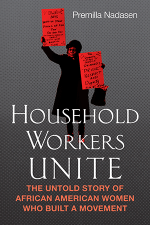
    Household Workers UniteHousehold Workers Unite: The Untold Story of African American Women Who Built a Movement
    Premilla Nadasen

    “Here at last is the story that finally positions black domestic workers at the center of mid-twentieth-century civil rights and anti-racist movement history.”
    —Angela Davis, Distinguished Professor Emerita, History of Consciousness and Feminist Studies, University of California, Santa Cruz


    Powered by GirlPowered By Girl: A Field Guild for Supporting Youth Activists
    Lyn Mikel Brown

    “If you’re committed to working with girls—and I mean really working with them in every respect, through all the messy beauty of their activism—Powered by Girl is an essential read.”
    —Loretta Ross, Co-founder of SisterSong


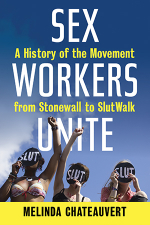
    Sex Workers UniteSex Workers Unite: A History of the Movement from Stonewall to SlutWalk
    Mindy Chateauvert

    “This is an important book—not only for understanding the history of the movement but also for debunking myths about sex workers.”
    —Dr. Joycelyn Elders, former US surgeon general


    We Are All Fast Food Workers Now“We Are All Fast-Food Workers Now”: The Global Uprising Against Poverty Wages
    Annelise Orleck

    “Crafted with corazón, this book is a crisply paced, panoramic labor history of the here and now.”
    —Vicki L. Ruiz, author of From Out of the Shadows: Mexican Women in Twentieth-Century America


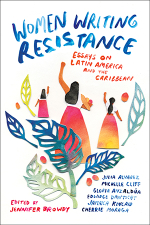
    BROWDY-WomenWritingResistanceWomen Writing Resistance: Essays on Latin America and the Caribbean
    Ed. Jennifer Browdy

    “May this book travel near and far and inspire others to resist.”
    —Sandra Cisneros, author of The House on Mango Street


    Extraordinary Lives of Courageous Women

    Caged EyesCaged Eyes: An Air Force Cadet’s Story of Rape and Resilience
    Lynn Hall

    “This is a spectacular book about finding one’s voice and speaking out about injustice.”
    —Helen Thorpe, author ofSoldier Girls: The Battles of Three Women at Home and at War


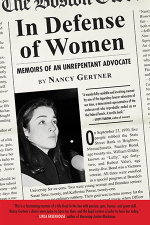
    In Defense of WomenIn Defense of Women: Memoirs of an Unrepentant Advocate
    Nancy Gertner

    “This is a fascinating memoir of a life lived in the law with passion, guts, humor, and great skill.”
    —Linda Greenhouse, author of Becoming Justice Blackmun


    Looking for Lorraine


    Looking for Lorraine: The Radiant and Radical Life of Lorraine Hansberry
    Imani Perry

    “Looking for Lorraine reclaims for all of us the Lorraine Hansberry we should have had all along.”
    —Edwidge Danticat, author of Brother, I'm Dying


    The Only Woman in the Room

    The Only Woman in the Room: Why Science Is Still a Boys’ Club
    Eileen Pollack

    “In Eileen Pollack’s vivid description of the issues facing women in science, I immediately saw the truth of what I have lived.”
    —Carol Greider, winner of the Nobel Prize in Physiology or Medicine


    The Upstairs Wife


    The Upstairs Wife: An Intimate History of Pakistan
    Rafia Zakaria

    “The Upstairs Wife is a revelation.”
    —Katha Pollitt, poet, essayist, and columnist for The Nation


    Calling Out the Need for Change

    Her Body Our LawsHer Body, Our Laws: On the Front Lines of the Abortion War from El Salvador to Oklahoma
    Michelle Oberman

    “Oberman gives a penetrating analysis of both the power and limitations of laws governing abortion.”
    —Carole Joffe, author of Dispatches from the Abortion Wars


    InferiorInferior: How Science Got Women Wrong—and the New Research That’s Rewriting the Story
    Angela Saini

    “This is an important book that I hope will be widely read.”
    —Sarah Blaffer Hrdy, author of The Woman That Never Evolved


    InvisibleInvisible: How Young Women with Serious Health Issues Navigate Work, Relationships, and the Pressure to Seem Just Fine
    Michele Lent Hirsch

    “Thank you, Michele, for freeing us from the burden of being fine and shining a light on all the hidden pain women have been working so hard to conceal.”
    —Nora McInerny, podcast host for Terrible, Thanks for Asking


    The Trials of Nina McCallThe Trials of Nina McCall: Sex, Surveillance, and Decades-Long Government Plan to Imprison “Promiscuous” Women
    Scott W. Stern

    “In our own era, when harassment is a great national topic, this book could not be more timely.”
    —Mary Pipher, author of Reviving Ophelia


    Trust WomenTrust Women: A Progressive Christian Argument for Reproductive Justice
    Rebecca Todd Peters

    “An important book for physicians, clergy, legislators, justice advocates, and those who seek to understand critical debates about life!”
    —Rev. Dr. Cari Jackson, Religious Coalition for Reproductive Choice


    You're In the Wrong Bathroom“You’re in the Wrong Bathroom” And 20 Other Myths and Misconceptions About Transgender and Gender Nonconforming People
    Laura Erickson-Schroth and Laura A. Jacobs

    “Everyone from therapists and teachers to parents and young people will find the book invaluable.”
    —Carol Bernstein, former president of the American Psychiatric Association