• By Martin Luther King, Jr.

    Martin Luther King, Jr. delivers his “The Other America” speech at Stanford University, April, 14, 1967

    Martin Luther King, Jr. delivers his “The Other America” speech at Stanford University, April, 14, 1967

    Fifty years ago today—on March 10, 1968—the Rev. Dr. Martin Luther King gave his “The Other America” speech to supporters participating in a celebratory “Salute to Freedom,” organized by the Local 1199 in New York City. The Local 1199 was a union consisting largely of African Americans, Puerto Ricans, and other people of color. In his speech, Dr. King made a call to action to mobilize a multiracial movement of America’s poor. New York City was one of many stops in his travels across the country to seek possible allies for his Poor People’s Campaign. We’re sharing excerpts of his speech with you here. You can read it in full in The Radical King.

    ***

    There are times, and I must confess it very honestly as many of us have to confess it as we look at contemporary developments, that I’m often disenchanted with some segments of the power structure of the labor movement. But in these moments of disenchantment, I begin to think of unions like Local 1199 and it gives me renewed courage and vigor to carry on . . . and the feeling that there are some unions left that will always maintain the radiant and vibrant idealism that brought the labor movement into being. And I would suggest that if all of labor would emulate what you have been doing over the years, our nation would be closer to victory in the fight to eliminate poverty and injustice.

    ~~~

    I’m going to really try to be brief, and say a few things about what is happening in our nation and try to say some things about our campaign, our Poor People’s Campaign, our campaign for jobs or income which will take place in a few weeks . . . and I want to deal with all of this by using as my subject tonight “The Other America.”

    And I use this subject because there are literally two Americas. One America is flowing with the milk of prosperity and the honey of equality. That America is the habitat of millions of people who have food and material necessities for their bodies, culture and education for their minds, freedom and human dignity for their spirits. That America is made up of millions of young people who grow up in the sunlight of opportunity.

    But as we assemble here tonight, I’m sure that each of us is painfully aware of the fact that there is another America, and that other America has a daily ugliness about it that transforms the buoyancy of hope into the fatigue of despair. In that other America, millions of people find themselves forced to live in inadequate, substandard, and often dilapidated housing conditions. In these conditions they don’t have wall-to-wall carpets, but all too often they find themselves living with wall-to-wall rats and roaches. In this other America, thousands, yea, even millions, of young people are forced to attend inadequate, substandard, inferior, quality-less schools, and year after year thousands of young people in this other America finish our high schools reading at an eighth- and a ninth-grade level sometimes. Not because they are dumb, not because they don’t have innate intelligence, but because the schools are so inadequate, so overcrowded, so devoid of quality, so segregated, if you will, that the best in these minds can never come out.

    And probably the most critical problem in the other America is the economic problem. By the millions, people in the other America find themselves perishing on a lonely island of poverty in the midst of a vast ocean of material prosperity. We only need look at the facts, and they tell us something tragic. . . . The fact is that the black man in the United States of America is facing a literal depression. Now you know they don’t call it that. When there is massive unemployment in the black community, it’s called a social problem. But when there is massive unemployment in the white community, it’s called a depression. With the black man, it’s “welfare,” with the whites it’s “subsidies.” This country has socialism for the rich, rugged individualism for the poor.

    ~~~

    Somewhere in life, people of justice and goodwill come to see the dignity of labor. . . . Somewhere they will come to see that person working in the hospital—even if he happens to be a janitor in the hospital—he is in the final analysis as significant as the physician, because if he doesn’t do his job, germs can develop, which can be as injurious to the patient as anybody else.

    We look around and we see thousands and millions of people making inadequate wages every day. Not only do they work in our hospitals, they work in our hotels, they work in our laundries, they work in domestic service, and they find themselves underemployed. You see, no labor is really menial unless you’re not getting adequate wages. People are always talking about menial labor. But if you’re getting a good wage . . . that isn’t menial labor. What makes it menial is the income, the wages.

    Now, what we’ve got to do . . . is to attack the problem of poverty and really mobilize the forces of our country to have an all-out war against poverty, because what we have now is not even a good skirmish against poverty. I need not remind you that poverty, the gaps in our society, the gulfs between inordinate superfluous wealth and abject deadening poverty have brought about a great deal of despair, a great deal of tension, a great deal of bitterness. We’ve seen this bitterness expressed over the last few summers in the violent explosions in our cities.

    And the great tragedy is that the nation continues in its national policy to ignore the conditions that brought the riots or the rebellions into being. For in the final analysis, the riot is the language of the unheard. And what is it that America’s failed to hear? It’s failed to hear that the plight of the Negro poor has worsened over the last few years. It has failed to hear that the promises of justice and freedom have not been met. It has failed to hear that large segments of white society are more concerned about tranquility and the status quo than about justice, humanity, and equality, and it is still true. It is still true that these things are being ignored.

    ~~~

    The problem with a riot is that it can always be halted by superior force, so I couldn’t advise that. On the other hand, I couldn’t advise following a path of Martin Luther King just sitting around signing statements, and writing articles condemning the rioters, or engaging in a process of timid supplications for justice. The fact is that freedom is never voluntarily given by the oppressor. It must be demanded by the oppressed—that’s the long, sometimes tragic and turbulent story of history. And if people who are enslaved sit around and feel that freedom is some kind of lavish dish that will be passed out on a silver platter by the federal government or by the white man while the Negro merely furnishes the appetite, he will never get his freedom.

    So, I had to sit down with my friends and my associates and think about the people with whom I live and work all over the ghettos of our nation, and I had to try to think up an alternative to riots on the one hand, and to timid supplications for justice on the other hand. And I have come to see that it must be a massive movement organizing poor people in this country, to demand their rights at the seat of government in Washington, DC.

    Now, I said poor people, too, and by that I mean all poor people. When we go to Washington, we’re going to have black people because black people are poor, but we’re going to also have Puerto Ricans because Puerto Ricans are poor in the United States of America. We’re going to have Mexican Americans because they are mistreated. We’re going to have Indian Americans because they are mistreated. And for those who will not allow their prejudice to cause them to blindly support their oppressor, we’re going to have Appalachian whites with us in Washington.

    We’re going there to engage in powerful nonviolent direct action to demand, to bring into being an attention-getting dramatic movement, which will make it impossible for the nation to overlook these demands. Now, they may not do anything about it. People ask me, “Suppose you go to Washington and you don’t get anything?” You ask people and you mobilize and you organize, and you don’t get anything. You’ve been an absolute failure. My only answer is that when you stand up for justice, you can never fail.

    The forces that have the power to make a concession to the forces of justice and truth and right, but who refuse to do it and they follow the path of darkness still, are the forces that fail. We, as poor people, going to struggle for justice, can’t fail. If there is no response from the federal government, from the Congress, that’s the failure, not those who are struggling for justice.

    ~~~

    And I close by saying that let all of us assembled here continue to struggle for peace and justice. And, you know, they go together. I know there are those who still think they can be separated. They mention to me all the time, there are those who sincerely feel that. But I answered a man the other day who told me I should stick to civil rights, and not deal with the war thing and the war question in Vietnam. I told him that I had been fighting too long and too hard now against segregated public accommodations to end up segregating my moral concerns. And the fact is that justice is indivisible; injustice anywhere is a threat to justice everywhere.

    And the other thing is we’ve got to come to see that however much we’re misunderstood or criticized for taking a stand for justice or for peace, we must do it anyway. The arc of the moral universe is long, but it bends toward justice. . . .

    And I say that if we will stand and work together, we will bring into being that day when justice will roll down like waters and righteousness like a mighty stream. We will bring into being that day when America will no longer be two nations, but when it will be one nation, indivisible, with liberty and justice for all. Thank you.

    Excerpted from The Radical King, published by Beacon Press, 2015. All material copyright © Martin Luther King, Jr., and the Estate of Martin Luther King, Jr.; all material copyright renewed © Coretta Scott King and the Estate of Martin Luther King, Jr. Introductions © 2015 Cornel West.


    Watch comedian Wanda Sykes perform an excerpt of Dr. King’s “The Other America.”


    Dr. Martin Luther King, Jr. (1929–1968), Nobel Peace Prize laureate and architect of the nonviolent civil rights movement, was among the twentieth century’s most influential figures. One of the greatest orators in US history, King also authored several books, including Stride Toward Freedom: The Montgomery Story, Where Do We Go from Here: Chaos or Community?, and Why We Can’t Wait. His speeches, sermons, and writings are inspirational and timeless. King was assassinated in Memphis, Tennessee, on April 4, 1968.
  • A Q&A with Annelise Orleck and Liz Cooke

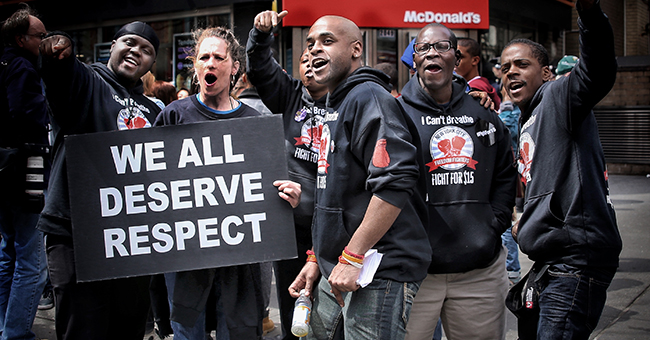
    Brooklyn fast-food workers rally for respect, April 15, 2015

    Brooklyn fast-food workers rally for respect, April 15, 2015. All photo credits: Liz Cooke

    A new labor movement is awakening worldwide. Facing rampant wage theft, dangerous working conditions, sexual harassment, and other forms of discrimination, global low-wage workers are rising up for respect and a living wage. Historian Annelise Orleck interviewed over 140 of them abroad (in Bangladesh, South Africa, Cambodia, the Philippines, and Mexico) and in the US (Los Angeles, Providence, Tampa, New York, Las Vegas, Boston, and more) to tell their stories in “We Are All Fast-Food Workers Now”: The Global Uprising Against Poverty Wages. The book features twenty original black-and-white photos of several of the workers and movements by photographer Liz Cooke, who accompanied Orleck on her travels. Beacon Broadside editor Christian Coleman caught up with Orleck and Cooke to ask about the inspiration for the book and what its message means for us during our politically fraught times. 

    Christian Coleman: Tell us about the inspiration behind writing this book.

    Annelise Orleck: On March 25, 2011, I stood in the Great Hall of the People in New York’s Cooper Union, where I had helped to organize the hundredth anniversary commemorations of the Triangle Shirtwaist Factory Fire, the disaster that killed 146 young workers and changed for a long time the way that US government agencies related to issues of workplace safety. We wanted to be sure that those who attended that day understood that while Triangle changed much for the better in the US for a long time, now workplace conditions had started to erode again, that there were still millions worldwide who worked in jobs that threatened their safety and even their lives. That day, Bangladeshi garment union activist Kalpona Akter walked up onto the stage where, 100 years earlier, young immigrant women garment workers had started the largest strike by women to that time. And Akter said: “In Bangladesh it’s not 2011. It’s 1911.” That night, we also heard from catfish workers, coal miners, taxi drivers, and others who labor in dangerous conditions. That got me thinking that I wanted to learn more about the twenty-first-century world of work. And one thing I began to find as Liz and I started researching this book was that it was not just 1911 in Bangladesh; everywhere around the world, worker rights, safety, and wages had fallen back a century.

    The second spark for the book came in 2014, when I began to see Internet videos and news articles about a global walkout of fast-food workers that took place in forty countries on six continents. When I saw videos of young Filipina fast-food workers singing and dancing as a way of pulling other workers out on strike, I began to realize, as one of them later told me, that “this was not your grandmother’s revolution.” I wanted to learn more.

    The third electrifying moment came on March 25, 2015. I was speaking in the Tampa Bay area, and I met with a group of living-wage activists at Teresita’s Cuban Café in West Tampa. Among them were fast-food workers, home health care workers (who I had to speak to over Skype because they work so many hours), graduate students, and adjunct college professors. I was surprised. I said that this was not your average working-class solidarity. And one of the graduate students, Keegan Shephard, uttered the words that became the title of the book. He said, and I’m paraphrasing here, that colleges and universities try to fool workers with advanced degrees into believing that if they are just quiet and compliant they will end up with good, secure jobs. But, he said, that is just a lie. “The truth is we are all fast-food workers now.”

    Those were the moments out of which this book arose.

    CC: Why do you call this book an urgent history of now?

    AO: This is an urgent history of now because, over the past forty years, neoliberal capitalism—the idea that pursuit of profit in and of itself is the highest form of virtue, that capitalism and democracy are inextricable, that maximizing shareholder value is the single most important human endeavor—has devastated our world. It has made us all contract workers instead of employees—doing an end run around labor and environmental laws that workers fought for and won 100 years ago. It has sparked vast land grabs that have created a global refugee crisis the likes of which we have not seen since World War II. Without question, many of the hundreds of millions on the road today in search of better lives are fleeing war. But millions and millions are fleeing land grabs, the destruction of our soils, air and water, and the murderous private and official militaries who follow global capital.  

    And then, in 2012, low-wage workers world over started to rise up and demand that this change. And they have been doing so ever since. This book is not just the story of the damages wrought since the 1970s by neoliberal capitalism. It is as much or more the story of the very poor workers in hotels, on farms, in garment shops, in restaurants, who are organizing globally to bring back safer jobs, a living wage, and even the most basic kinds of worker rights. It is also the story of their experiments in creating economic and social alternatives: worker cooperatives, consciousness-raising groups, arts collectives, new kinds of union formations. This is a story of creativity, resilience, courage, and hope.

    CC: Why did you decide to include photographs in this book?

    AO: Having worked with Liz before, I knew that she has an uncanny ability to put people at their ease, and the result is a candor and intimacy in her photographs that I knew would make the text and the people whose stories the book tells so much more immediate and powerful. And that is, I believe what has happened.

    Liz Cooke: People expect photographs to convey fact. This is changing of course, as more photographs are manipulated and filtered, but even with this knowledge, we tend to take the reality of a photo on face value—it shows what it is supposed to show. Photos are powerful tools when it comes to showing all sides of human experience—the familiar, the exotic, the ordinary, the extraordinary. Photos freeze the moment and allow the viewer to take time and ponder, and this can lead to a more humane or enlightened understanding of the struggles of another as well as our complicity in perpetuating these struggles. If you need an example, consider how Jacob Riis’s photos changed the culture on child labor. Those children were easy to ignore until he went into factories and meatpacking plants and said, “This is where your clothes are made. This is who is cutting your meat.” After his exposé became widely distributed, Congress passed the Keating-Owens Act that established child labor standards. One thing I always say about the images in “We Are All Fast-Food Workers Now” is, “I didn’t make this up. These people exist. Their stories are real.” I want people to connect with the faces, because in the lines and folds are generations of struggle.

    CC: What was it like working together and conducting the interviews together?

    LC: This is our second collaboration. The first was for an oral history of our childhood neighborhood of Brighton Beach, Brooklyn. In 1980, we received an NEH grant to document the changes in Brighton as it moved from being a neighborhood of first-wave Eastern-European immigrants to an enclave for Soviet Jews. It was a fascinating time, and I think we did good work. Annelise and I have been friends since seventh grade, so we always have fun and work well together.

    AO: We play off each other very well. I am very intent and ask a million questions and listen very closely. Liz charms people and makes them laugh and puts them at their ease. As she explains, we’ve known each other for a very long time. We had our moments, of course, but overall, I think we make a smooth team and complement each other in ways that benefit the work.

    Garment workers in Phnom Penh, Cambodia

    Garment workers in Phnom Penh, Cambodia

    CC: Tell us a little about what it was like traveling to all the locations and meeting the activist-workers.

    LC: It was an incredible privilege to be allowed into peoples’ homes and lives. Some of the stories we heard were so heartbreaking, but most of the time we left the interviews feeling like we were seeing change happen in real time.

    AO: We went to many places we had never been before, saw ways of living that sometimes were quite heart-rending, as in the slums of Manila. We also saw very familiar places, like our home town of New York City, in new and electrifying ways.

    As I say in the author’s note, it was a remarkable ride: we traveled by plane, train, car, open-air tuk tuk, even on the back of our Phnom Penh translator’s motorcycle. We did interviews on the streets, in restaurants and cafes, in union halls, and faded colonial hotels, in people’s homes.

    The courage of the activists, their hope, were so deeply impressive. I agree with Liz that I felt privileged to be there when they opened up and told their stories.

    CC: You began this book before Donald Trump was elected president. What would you like readers to take from the book and the photographs now that we’re a year into his administration?

    LC: Solidarity matters. Don’t leave the fight to someone else. Do whatever you can, whenever you can. And don’t give up hope.

    AO: As activists around the world have learned from the US-based Fight for $15 movement, I would say that US activists have much to learn from the brave workers of South Africa, Mexico, Cambodia, Bangladesh, and the Philippines about solidarity, creativity, and the refusal to back down. They taught me that our inward-looking grief after the election of Donald Trump was a sign of our privilege, that we have to keep on fighting no matter what. If they can keep fighting in the era of Duterte and Hun Sen, Zuma and Sheikh Hasina, we can keep fighting in the era of Trump. Black and Latinx activists in the US taught me that, too. As twenty-one-year-old Stretch Sanders of Las Vegas explained to me, and again I’m paraphrasing, his brothers and sisters were already being shot down in the streets before Trump. His immigrant coworkers were already experiencing detentions and deportations. The work began before Donald Trump and it will outlast him. In that struggle, as Liz put it, solidarity matters.


    About Annelise Orleck and Liz Cooke

    Annelise Orleck is professor of history at Dartmouth College and the author of five books on the history of US women, politics, immigration, and activism, including Storming Caesars Palace: How Black Mothers Fought Their Own War on Poverty. She lives in Thetford Center, Vermont. Follow her on Twitter at @AnneliseOrleck1.

    Liz Cooke is a photographer and founder of Abandoned Hudson Valley. She is now a psychotherapist in private practice in Rhinebeck, NY. See more of her work at photos.lizcooke.com or follow her on Instagram at lizcnyc1. 

  • By David L. Hudson, Jr.

    Thoughts and Prayers Don't Save Lives, student lie-in at the White House to protest gun laws

    Thoughts and Prayers Don't Save Lives, student lie-in at the White House to protest gun laws. Photo credit: Lorie Shaull

    Student activists engaged over the battle for civil rights and war protests changed the course of American history. Today, this feeling of student activism seems to be returning—its latest iteration inspired by the horrors of mass school shootings. 

    To have their voices heard, students exercise their First Amendment freedoms of expression to speak out against a failure to change gun laws, petition government officials to amend laws, and assemble together peaceably to amplify their voices and concerns. 

    This is not a new phenomenon. In March 1961, nearly 200 young people marched down the streets of Columbia, South Carolina, to protest segregation laws, voting discrimination, and other civil rights abuses. They carried signs bearing messages such as “Down with Segregation” and chanted religious hymns.    

    While many of these student-protestors were from Allen University and Benedict College, some were high school students. They knew they would face arrest from local law enforcement—and indeed they did. Ultimately, the US Supreme Court vindicated their free-expression rights.

    “The circumstances in this case reflect an exercise of these constitutional rights in their most pristine and classic form,” wrote Justice Potter Stewart for the Court in Edwards v. South Carolina (1963). “The Fourteenth Amendment does not permit a State to make criminal the peaceful expression of unpopular views.”

    Those high school students who participated in that historic rally from Zion Baptist Church to the state courthouse presumably skipped school to participate. They took a risk, made their voices heard, and changed history.

    Today, many high school students are motivated to have their voices heard. In an age of mass school (and other public) shootings, students petition for a change to the nation’s gun laws. Student walkouts have and will occur in the future. Previously, students have engaged in walkouts to protest change in immigration policies, seizures of student cell phones, overly harsh school disciplinary policies, and other events. 

    But, while the First Amendment protects their right to be free from criminal charges of disorderly conduct or breach of the peace, does the First Amendment protect their right to engage in a school walkout? 

    Students certainly possess First Amendment rights at school. The US Supreme Court famously told us so in Tinker v. Des Moines Independent Community School District (1969), stating that students “don’t shed their constitutional rights to freedom of speech or expression at the schoolhouse gate.” But, those rights are tempered by the reality that they must be considered “in light of the special characteristics of the school environment.”

    Lower courts have held that student walkouts disrupt classes and distract the students who remain in school. The Ninth Circuit had held that a school can enforce a content-neutral anti-truancy rule against those students who skip school to protest. 

    While the government can’t “make criminal the peaceful expression of political views,” they can enforce policies and rules designed to ensure an orderly educational process.

    But, while schools may be able to punish students for engaging in walkouts, should they? As my Newseum Institute colleagues Gene Policinski and Lata Nott explain, school officials should engage students and “turn the event into a teachable moment.” 

    After all, the primary purpose of education is to help students become fully functioning citizens in this constitutional democracy. Students participating in peaceful protests on important social issues are engaged members of society.  

    Isn’t that what the First Amendment is all about? 


    About the Author 

    David L. Hudson, Jr. is a First Amendment Scholar with the First Amendment Center at Vanderbilt University. He teaches at Vanderbilt University Law School and Nashville School of Law. He is the author of Let the Students Speak!: A History of the Fight For Free Expression in American Schools.

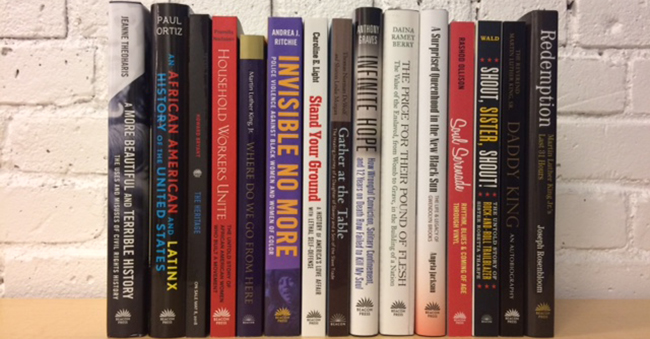
  • BHM1Black History Month is the time that connections need to be made between the ancestors of Black heritage and the living inheritors. As educator Christopher Emdin wrote on our blog, the stories of past battles should never be told as if they are over or conquered. The stories are alive and playing out today. Seeing the connections between the past and the present gives us the context that enriches our history. In the spirit of Emdin’s observations, we’re offering the following list of recommending reading.


    Black Resistance

    An African American and Latinx History of the United States
    Paul Ortiz

    Drawing on rich narratives and primary source documents, historian Paul Ortiz gives us this bottom-up history told from the interconnected vantage points of Latinx and African Americans fighting for universal civil rights.

    The Heritage: Black Athletes, a Divided America, and the Politics of Patriotism
    Howard Bryant

    Sports journalist Howard Bryant traces the rise, fall, and fervent return of the Black athlete-activist, spanning from Paul Robeson, Jackie Robinson, and Muhammad Ali to LeBron James, Colin Kaepernick, and Carmelo Anthony.

    Household Workers Unite: The Untold Story of African American Women Who Built a Movement
    Premilla Nadasen

    Telling the stories of African American domestic workers, scholar and activist Premilla Nadasen resurrects the little-known history of domestic worker activism in the 1960s and 1970s, offering new perspectives on race, labor, feminism, and organizing.

    A More Beautiful and Terrible History: The Uses and Misuses of Civil Rights History
    Jeanne Theoharis

    NAACP Image Award-winning historian Jeanne Theoharis dissects the national myth-making around the civil rights movement, revealing its complex reality, the power of its organizing, and the beauty and scope of its vision.

    Where Do We Go from Here: Chaos or Community?
    Martin Luther King, Jr.

    In his final book, Martin Luther King, Jr. lays out his thoughts, plans, and dreams for America’s future. He demands an end to global suffering, asserting that humankind—for the first time—has the resources and technology to eradicate poverty.


    Confronting Injustice and Difficult Histories

    Gather at the Table: The Healing Journey of a Daughter of Slavery and a Son of the Slave Trade
    Thomas Norman DeWolf and Sharon Leslie Morgan

    Sharon Leslie Morgan, a Black woman from Chicago’s South Side, and Thomas Norman DeWolf, a white man from rural Oregon, embark on a three-year journey of racial reconciliation by confronting the unhealed wounds of slavery.

    Infinite Hope: How Wrongful Conviction, Solitary Confinement and 12 Years on Death Row Failed to Kill My Soul
    Anthony Graves

    In his powerful memoir about fighting for—and winning—exoneration, Anthony Graves gives us the moving account of his ultimate fight for freedom as a wrongfully convicted man from inside a prison cell.

    Invisible No More: Police Violence Against Black Women and Women of Color
    Andrea Ritchie

    Police-misconduct attorney Andrea Ritchie documents the evolution of movements centering women’s experiences of racial profiling and police brutality and demands a radical rethinking of our visions of safety—and the means we devote to achieving it.

    The Price for Their Pound of Flesh: The Value of the Enslaved from Womb to Grave in the Building of a Nation
    Daina Berry

    Historian Daina Berry has written the first book to explore the economic value of enslaved people through every phase of their lives—including preconception, infancy, childhood, adolescence, adulthood, the senior years, and death—in the early American domestic slave trade.

    Stand Your Ground: A History of America’s Love Affair with Lethal Self-Defense
    Caroline Light

    Scholar Caroline Light exposes a hidden history, showing how America’s racialized, violent self-defense has been legalized for the most privileged and used as a weapon against the most vulnerable.


    Black Lives in Focus

    Daddy King: An Autobiography
    Martin Luther King, Sr.

    The Reverend Martin Luther King, Sr. candidly reveals his life inside the civil rights movement and illustrates the profound influence he had on his son, Martin Luther King, Jr., in his memoir.

    Redemption: Martin Luther King, Jr.’s Last 31 Hours
    Joseph Rosenbloom

    Award-winning journalist Joseph Rosenbloom gives us an intimate look at the last thirty-one hours of Martin Luther King, Jr.’s life as he seeks to revive the nonviolent civil rights movement and push to end poverty in America.

    Shout, Sister, Shout!: The Untold Story of Rock-and-Roll Trailblazer Sister Rosetta Tharpe
    Gayle F. Wald

    Professor Gayle F. Wald tells the untold story of the flamboyant musical prodigy and 2018 Rock-and-Roll Hall of Fame inductee Sister Rosetta Tharpe, America’s first rock guitar diva who paved the path for Elvis Presley, Little Richard, Eric Clapton, and Etta James.

    Soul Serenade: Rhythm, Blues & Coming of Age Through Vinyl
    Rashod Ollison

    In his coming-of-age memoir, pop music critic and culture journalist Rashod Ollison tells his story of growing up Black and gay in central Arkansas while searching for himself and his distant father through soul music.

    A Surprised Queenhood in the New Black Sun: The Life & Legacy of Gwendolyn Brooks
    Angela Jackson

    Award-winning writer Angela Jackson delves deep into the cultural and political force of Pulitzer Prize-winning poet Gwendolyn Brooks, in celebration of her hundredth birthday.

  • By Ginny Gilder

    Adam Rippon, Men's Single Skating Free Skating, PyeongChang 2018 Olympic Winter Games, 12 February, 2018

    Adam Rippon, Men's Single Skating Free Skating, PyeongChang 2018 Olympic Winter Games, 12 February, 2018. Photo credit: Andy Miah

    Oh, ye Olympians, how do I love thee? Let me count the ways:

    I love thy exuberance, thy unalloyed passion, and unabashed desire to excel. I love thy seizing of the moment and the spotlight to showcase thy best. I love thy allowing, nay, inviting me to glimpse the size of your hearts, to cherish your boldness, and to embrace the offering of your humanity, its unique expression and exercise. I love that you somehow make my expression and pursuit of my own humanity, albeit far removed from the venue of sport, snow or ice, and likely with less superior skill and less relentless determination, seem possible and worthy of pursuit.

    Simply, I love your ability to dazzle, amaze, and inspire.

    How do you do it, offer up your bid for perfection, so brazen, a daring acknowledgement of such a common human longing, and yet so humble, reaching so high, intimately aware of the odds’ steeps? Your expression of raw desire hangs out for all to witness. No hiding yourself or your outsized dreams here, win or lose, whether you smash a record or break a bone.

    That’s what it takes—all of you, to bring it—your best, to your performance. When there’s nothing to hide, that allows you to focus 100% on the challenge before you, the mental and the physical, to quiet your mind and enter the zone of serene performance without succumbing to the unique and exquisite pressure-cooker of the Olympic Games.

    To contemplate the wide diversity of your group, whose members share such naked dreams of greatness without regard for nationality, ethnicity, religion, gender, sexuality, is to witness your making of a world that is so broadly relatable as to weave a web of connection around and throughout the much larger and more complex, more disheartened and suffering world beyond. No matter what each one of us in the privacy of our own selves may fear about that external world’s harsh judgment, the Olympic Games give us hope that we, too, can rise and shine, surprise and delight, contribute to the ongoing story of what it means to be human.

    You showcase what’s possible, what unrelenting determination, that never-say-die, je ne sais quoi that most of us can only marvel at, can bring to life. In spite of how untouchably prepared you are, your dream somehow becomes mine.

    Of all the Olympians, I confess, there is a tiny handful, that has a special place in my heart. That’s you, openly gay athletes, a total of fifteen, more than double Sochi’s seven, out of the 2,952 athletes projected to compete in ’18: Australians Barbara Jezersek and Belle Brockhoff; Austrian Daniela Iraschko-Stolz; Belgians Jorik Hendrickx, Kim Meylemans, and Sophie Vercruyssen; Canadian Eric Radford; Czech Sarka Pancochova; Dutch Cheryl Maas and Irene Wust; Swedish Emilia Andersson Ramboldt; Swiss Simona Meiler; Americans Brittany Bowe, Gus Kenworthy and Adam Rippon. For your courage to perform, to bring your best and challenge yourself in such a shiny and hot, almost burning, spotlight, is only exceeded by your generosity in sharing the fullness of yourself, including those aspects that one may argue have nothing to do with your athleticism, but everything to do with your unique composition of humanity. I love how high you hold your heads, your calm, frank acknowledgement of your sexuality.

    You force the world’s continued reckoning of what it means to be human. We need that. We need to challenge the energy wasted on judging ourselves and each other—not just a distraction, but a derailment. What matters is the contribution each of us can make, based on our unique combination of talents and passions.

    To all the young people who see you not only perform with grace, but live that way, well, it’s no exaggeration to state you give them life. You bring sunshine to dark fears, light the way to living in a world habituated to hiding.

    Oh, the freedom to be yourself, to express yourself, to pursue your dreams. Even if you don’t exactly hit the mark, what a gift you give us all, Barbara, Belle, Daniela, Jorik, Kim, Sophie, Eric, Sarka, Cheryl, Irene, Emilia, Simona, Brittany, Gus, and Adam. You show a way forward for many you will never know: first, because you are Olympians; additionally, because you have not shied away from embracing yourselves, instead defying and challenging the naysayers and the critics, who sometimes seem to rule the world with a demoralizing ruthlessness. Whether you make it to the podium or not, you are stars, like the ones up above, pointing the way.

    Does it matter to be out about your sexuality? Yes. Does this topic belong at the Olympics? For sure. For possibility shrinks in the face of nay-saying shrieking—not just an individual’s, but the world’s. All of the grandness of human progress, our best collective moments and eras, starts with the efforts of individuals. Crush them, you crush the future.

    But you are uncrushable when you stake out your space to be yourself, when you choose to live a life defined by doing what you love and loving who you love. That’s where the impossible loses its first syllable; not just for you, but for all of us who see you. When we see ourselves in you—and we do—we see that this kind of life is available to all of us, regardless of nationality, religion, gender, and, yes, sexuality. And if that’s not inspirational, I don’t know what is.


    About the Author 

    Ginny Gilder is an Olympic silver medalist in rowing, founder and CEO of an investment business, and co-owner of the Seattle Storm, and author of Course Correction: A Story of Rowing and Resilience in the Wake of Title IX. The mother of three children and stepmother of two, Gilder lives with her wife, Lynn, and their two poodles in Seattle, Washington. Follow her on Twitter at @ginnygilder and visit her website.

  • By Carole Joffe and David S. Cohen

    Planned Parenthood in Houston, Texas

    Planned Parenthood in Houston, Texas

    This article appeared originally in Huffington Post.

    Abortion is many things in America. Divisive. Politicized. A fact of life. It is also, in the world of health care, unique.

    Part of what makes abortion provision unique is that it happens amid relentless efforts to create as many obstacles to it as possible. The preternatural determination of abortion providers overcomes most of these obstacles, but for too many women, there’s something else that makes their abortion possible: volunteers.

    As researchers studying barriers to abortion, we are deeply moved by the stories we have heard of the many volunteers who donate time, money, and space to make abortion a reality for so many patients who otherwise would be denied necessary health care. Our research, which involved almost seventy interviews with abortion providers and allies in all fifty states, shows that volunteers are playing a role in almost every aspect of abortion care.

    We question whether this deep dependence on volunteer efforts is the optimal and just way for a health care service to operate.  

    Forty-five years after Roe v. Wade legalized abortion nationwide, abortion care is extremely challenging for patients to obtain and for providers to deliver. Increased state restrictions and an uptick in aggressive incidents at clinics have put safe legal abortions out of reach for many women. Compounding the problem, the majority of current abortion patients are poor: Nearly fifty percent have incomes below the official poverty line, and another twenty-five percent are classified as low-income. For many of these women who seek abortions, volunteer assistance often makes the difference between ending an unwanted pregnancy and remaining pregnant against one’s will.

    One of the most prevalent barriers to abortion is the cost of the procedure. First-trimester procedures, which account for over ninety percent of abortions in the United States, average about $550; later abortions can cost several thousand dollars. Many patients who seek abortions live in poverty, and Medicaid doesn’t cover abortion in most places in this country. In response, advocates of equitable abortion access have established abortion funds, which provide grants and loans to help patients pay for the procedure. Several of these funds have paid staff, but most of them are run by volunteers who hold fundraisers, connect patients to clinics and arrange payments.  

    Even when women can pay for the procedure itself, they often need help getting to the clinic. As clinics have closed, the distance to the clinic can be an insurmountable hurdle. This is especially true for women in rural areas who live in states with only one or two clinics that are located in the most populous area of the state. In states without public transportation, many patients, especially those who don’t have cars or companions to drive them, rely on networks of motivated volunteers to get them to the care they need―an abortion equivalent of Uber/Lyft, but with volunteer drivers and no cost to the patient.

    One of the most inspiring stories we heard in our research was from Diana, who belongs to a network of volunteers in a southern state who transport patients on short notice. Several years ago, just before Christmas, Diana volunteered to transport Kim, a patient who lived about an hour away from the only remaining clinic in the state. Diana drove to Kim’s home and then to the clinic, expecting to bring her home after the procedure. However, once there, Kim was told that she had medical issues that the local clinic was unable to address.

    The closest clinic that could care for Kim and her condition was in Washington, DC, many hours away by car. Diana, committed to helping Kim, drove her to DC, where the two of them spent the night in a motel. Kim expected to have her abortion the following morning.

    The DC clinic was not able to treat Kim, either, so the odyssey continued. Diana drove Kim another four hours to New York City, where a clinic was finally able to perform Kim’s abortion safely. The pair then embarked on the twelve-hour ride home, Diana driving almost nonstop through fierce storms, all so she could keep her promise to get Kim home in time to spend Christmas with her two children. Diana and Kim’s story is extraordinary, and it is emblematic of the lengths to which volunteers go to help patients access abortion.

    Once they have found a way to get to the clinic, many abortion patients need help securing overnight accommodations. Some abortion procedures take place over two days, and for women who may have driven many hours to get to a clinic, it is not practical to drive back home after the first day of care. Some women may need housing assistance because of state-imposed waiting periods between the first visit to a clinic and the procedure itself. Twenty states require women to wait twenty-four hours, and seven require them to wait between forty-eight and seventy-two hours. Spending more than one day to get an abortion means multiple days of lost wages and covering the cost of lodging and child care (about sixty percent of abortion patients are already parents).

    Several providers told us that they’ve seen patients spend the night in their cars in the clinic parking lot because they couldn’t afford a hotel room. Because no person should have to resort to that for any reason, especially the night before a medical procedure, abortion volunteers have stepped up to take patients into their own homes for one or more nights. 

    Volunteers also play a vital role in helping clinics deal with protesters. Almost every woman who goes to a clinic will have to endure harassment from protesters. Sometimes the protesters are relatively subdued, but often they are aggressive, screeching through bullhorns that women are “murdering” their “babies.” Sometimes, this harassment has a racial component, with almost exclusively white protesters telling African-American patients that they “may be killing the next Barack Obama” or that “black babies’ lives matter.”

    Volunteer clinic escorts help patients get through this mess at the front door, accompanying them as they walk the gauntlet of protesters and into the clinic for their appointment. Often, they shield women with coats or even tarps as patients are forced to walk through shouting protesters. These escorts literally put their bodies on the line to get women in to see their doctors.

    Again, we are most impressed by the generosity and tenacity of these abortion volunteers. Even in an ideal world, where abortion care is a normalized part of health care―when abortion is destigmatized, not targeted by lawmakers, and available in a broad range of medical offices, not just clinics―there’s a place for volunteers. After all, there are plenty of volunteers in general hospitals. However, in no other area of medicine would we accept such a heavy reliance on the altruism of volunteers. 

    Only if abortion is routinized as a normal part of women’s reproductive health care will abortion providers and patients not have to depend on the kindness of strangers.


    About the Authors 

    image from www.beaconbroadside.comCarole Joffe is a professor in the Advancing New Standards in Reproductive Health (ANSIRH) Department of Obstetrics, Gynecology & Reproductive Sciences at the University of California-San Francisco and a professor emerita of sociology at the University of California-Davis. She is the author of several other books, including Doctors of Conscience and Dispatches from the Abortion Wars. Follow her on Twitter at @carolejoffe.

    David S. Cohen is a professor of law at Drexel University’s Thomas R. Kline School of Law.

  • By Caroline Light

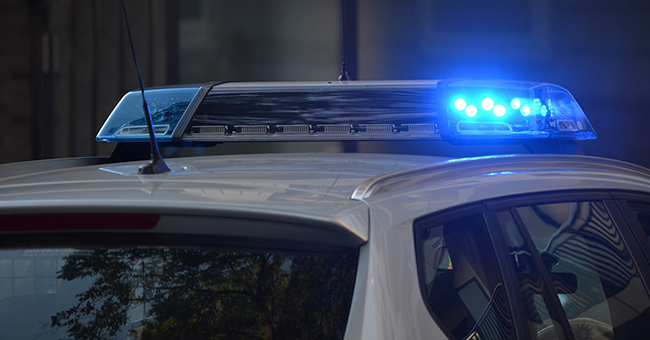
    Police car roofFirst passed in 2005 in Florida, “Stand Your Ground” laws provide criminal and civil immunity to people who use lethal violence to defend themselves when they are reasonably afraid for their own or another’s safety. Since their passage in over half the states, the laws have been shown to exacerbate our nation’s already unjust practices of adjudicating self-defense. The laws amplify the impact of existing racial and gender biases, by making it easier, for example, for white (or white-appearing) people to kill non-whites without legal repercussions. In spite of proponents’ arguments that SYG laws protect women from “abusers,” they rarely provide immunity for women who defend themselves from their greatest statistical threat, their own intimate partners and exes. In other words, SYG laws tend to provide legal immunity for socially dominant actors who claim self-defense, while amplifying the danger to those who are most likely to be perceived as criminal threats. 

    It is not surprising that states with SYG laws have experienced a significant increase in incidents of homicide. The laws effectively deputize part of the citizenry, encouraging civilians with guns to “shoot first, and ask questions later” whenever they feel threatened. As we witnessed in the shooting death of seventeen-year-old Trayvon Martin in 2012, the laws confer exculpatory power on armed citizens even when their targets are unarmed and not participating in any criminal activity. Identity politics matter in determining what counts as a “reasonable threat”; George Zimmerman’s jury found it “reasonable” for him to have been afraid of an unarmed Black teenager carrying candy and a can of iced tea.

    Given the already concerning trend of SYG laws to enable a more lethally empowered citizenry, it is perhaps not surprising that police officers have invoked it to escape prosecution when they are accused of using excessive violence against civilians. Jermaine McBean’s 2013 death at the hands of Broward County, FL police provides a tragic example. McBean, a thirty-three-year-old Black computer programmer, was shot while walking down a street with a Winchester air pellet gun slung over his shoulder. Listening to music through earbuds, McBean failed to respond when police commanded him to halt and put his hands up. He was shot three times by Deputy Peter Peraza, who claimed that he was in fear for his life when he fired the fatal shots. A judge dismissed Peraza’s manslaughter charge. 

    Peraza’s was likely the first case in which law enforcement invoked SYG in order to escape criminal prosecution, but since then, other SYG claims by police have followed. In 2015, Nouman Raja, an off-duty police officer, shot and killed thirty-one-year-old Corey Jones, a Black motorist who had pulled to the side of the road in Palm Beach Gardens. Raja was immediately fired, charged with manslaughter, and placed on house arrest to await trial. However, Raja’s lawyers have since filed a claim under SYG, arguing that Raja was in fear for his life when he fatally shot Jones.

    Law enforcement professionals already enjoy robust legal immunities, especially when they claim to have used force in response to fears of imminent bodily harm. Granting police SYG immunity would spare them a trial by jury in cases where they claim to have killed in self-defense, even when the deceased was not participating in criminal activity. We should maintain high expectations for professionals whose work involves protecting the citizenry. Granting police SYG legal immunity would undermine the high standards of professionalism and vigilance expected of law enforcement. The law’s application to police would also challenge efforts to curtail the use of unnecessary force against civilians, while naturalizing the belief that one’s perception of threat is a viable excuse for killing. Perhaps most perniciously, SYG law’s dependence on “reasonable” perceptions of threat places non-dominant social actors, particularly those whose race and gender identity regularly subject them to criminalization, in a position of increased danger. Not only are they excluded from the protective logic of SYG immunity; they are treated as reasonable targets of police and civilian violence. In a world where many police and “armed citizens” fear Black masculinity itself, our unchecked perceptions of threat will only become increasingly lethal.


    About the Author 

    Caroline Light is director of undergraduate studies in the Program in Women, Gender, and Sexuality Studies at Harvard University. She is the author of That Pride of Race and Character: The Roots of Jewish Benevolence in the Jim Crow South and Stand Your Ground: A History of America’s Love Affair with Lethal Self-Defense.

  • By Lori L. Tharps

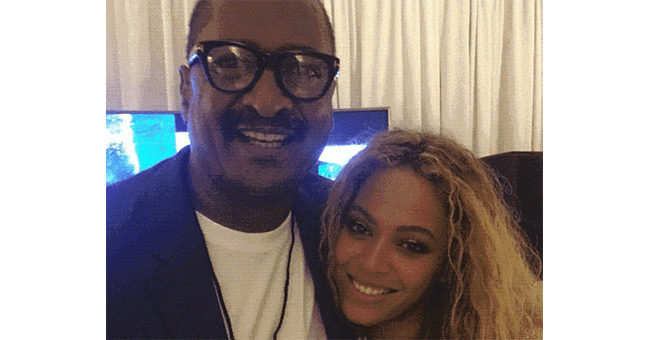
    Beyoncé with her father Mathew Knowles

    Beyoncé with her father Mathew Knowles. Photo credit: Digital Majority

    The Internet went crazy when, in a revealing interview with Ebony magazine, Beyoncé's daddy, Mathew Knowles, admitted he was attracted to his wife, Tina Knowles, because she was so light-skinned he thought she was White. While this may turn the stomachs of many a Black woman, it should not be surprising. Why? Because racism. Because White supremacy. Because colorism, people. Did you think that all things related to Queen B were somehow protected from the same 400 years of oppressive brainwashing that made people of color believe they were inferior because of the abundant levels of protective melanin in their skin? Sorry, Beyoncé’s powers don’t work like that.

    The fact is, colorism—the preference for lighter skin over darker skin—has infected just about every single man, woman, and child on the planet. Some folks have been lucky enough to find the antidote and live happily and free in whatever shade the good Lord made them in, but too many people are still suffering from the disease of color bias. 

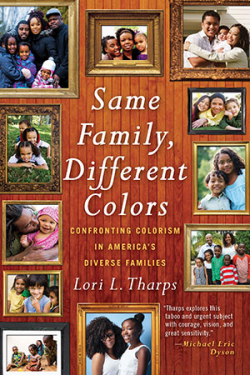
    Same Family Different ColorsI wrote the book, Same Family, Different Colors: Confronting Colorism in America’s Diverse Families to address the issue of colorism across cultures here in the United States, particularly in the nuclear family. I wanted to highlight how colorism often starts in the home and then spreads from there. In my research for the book, I spoke to far too many men and women—of African-American, Latino, and Asian-American heritage—who told me how it was their mother or father who taught them to hate the shade of their skin, or to feel ashamed or proud of their particular dose of melanin. It was heartbreaking to hear many of their stories, and yet by the time I finished writing Same Family, Different Colors, I was convinced that colorism could be extinguished in the home. Parents who refused to engage in colorist conversations and those who were able to normalize skin tone differences were successful in raising healthy children who neither fetishized nor fretted over their skin color.

    As a writer who has been knee-deep in colorism conversations for the last few years, particularly in the family unit, I’ve wondered about the Knowles clan. I had some questions and actually wished that I could have interviewed them for my book. The fact that Mathew Knowles has brought this topic out into the open makes me think I wasn’t wrong to wonder. Even Beyoncé has flirted with the topic of colorism in some of her music—whether intentionally or not, I’ll never know. But I often wondered if Beyoncé and Solange ever compared skin tones or hair textures behind closed doors? Did Daddy Knowles favor Bey over her little sister because of the subtle shade differences in their skin? What was Mama Tina’s role in raising color-conscious daughters? Now knowing how much Mathew Knowles appreciated light skin, one has to wonder what messages he passed down to his children.

    At the end of the day, Mathew Knowles’s admission of his color preferences really shouldn’t surprise anyone. On the other hand, he should be commended for bringing this often-taboo topic out into the open so that the conversation can continue and hopefully lead to the end of colorist thinking and behavior. Because I’m a bit of a cynic, I think Mr. Knowles knows that colorism is a topic that commands headlines and he’s trying to drum up attention for his new book. So if attention is what he wanted, that’s what he’s gotten. I don’t know if anyone is rushing out to buy his book, but hopefully they are talking about colorism, because change always begins with a conversation.


    About the Author 

    Lori L. TharpsLori L. Tharps is an associate professor of journalism at Temple University and the coauthor of Hair Story: Untangling the Roots of Black Hair in America and Kinky Gazpacho: Life, Love & Spain. Her writing has also appeared in the New York Times, Washington Post, and Glamour and Essence magazines. She lives in Philadelphia with her family. Follow her on Twitter at @LoriTharps and visit her website.