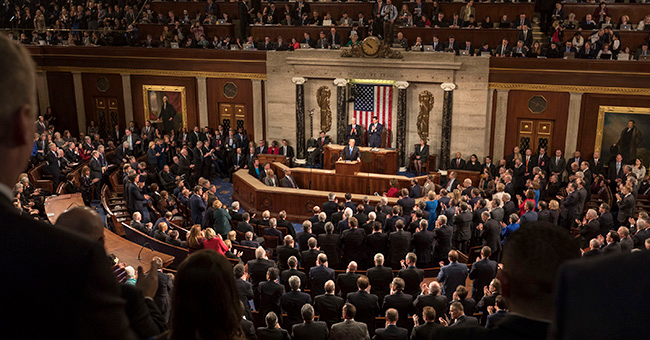
• 2018 State of the Union

    2018 State of the Union. Photo credit: Official White House Photo by D. Myles Cullen

    Last year on Inauguration Day, our authors voiced to Donald Trump what they wanted him to know, understand, and beware of as commander-in-chief. Since then, the myriad doubts, concerns, and fears about what he and his administration would do during his term have persisted and/or increased. Some of our authors have returned with follow-up responses for him in the wake of his State of the Union address. We share them with you below.

    ***

    Aviva Chomsky“I actually have something to say to the Democrats, rather than to Trump. If you want to remain relevant in this country, you need to offer a real alternative. Many people voted for Trump because they were sick of generations of corporate-friendly Democrats who presided over the privatization of the public sector, mass incarceration, and profits for the few at the expense of the many. There is a reason Bernie Sanders is the most popular politician in America.”
    —Aviva Chomsky, “They Take Our Jobs!” And 20 Other Myths About Immigration 


    Steve Early“On Tuesday night, January 30, President Trump told us he was ‘building a safe…America’ and, at the same time, eliminating ‘more regulations than any other administration in history.’ That does not compute well in oil refinery towns like Richmond or Torrance, California, where refinery neighbors know that more, not less, government regulation is needed for safer jobs, a healthier community, and a less polluted planet. If we can’t rely on federal enforcement under the Trump Administration, more cities, counties, and states will have to take their own initiatives to reduce harm to oil industry workers and ‘front-line community’ residents.”
    —Steve Early, Refinery Town: Big Oil, Big Money, and the Remaking of an American City 


    Michael Honey“Trump’s threats to fire federal employees who don’t toe his line, kill undocumented immigrants considered to be gang members, build an American Berlin Wall, and to create more weaponized nuclear warheads tell us that worse is yet to come. As during the 1930s, we need to put aside liberal-left differences to fight fascism in the ‘USA, USA, USA!’”
    —Michael Honey, editor, Martin Luther King, Jr.’s “All Labor Has Dignity”  


    Sharon Leslie Morgan“I remain appalled at your ineptitude and total lack of comprehension, compassion, and respect for human values, moral principles, and social/political civility. You are digging a grave for American democracy, and I live in fear that you will not be stopped in your tracks before the damage is too great to overcome. I could not bring myself to watch your State of the Union address, because the true state of the union is that a vulgarian is in charge, who is leading us down a slippery slope into the maws of anarchy.”
    —Sharon Leslie Morgan, Gather at the Table: The Healing Journey of a Daughter of Slavery and a Son of the Slave Trade  


    Danielle Ofri“This past year has cranked up the anxiety on my patients. They worry about losing health insurance. They worry about financial calamity that could ensue if a family member gets a serious illness. They worry about friends or family (or themselves) being deported. They worry about the increased bigotry their children are experiencing. This anxiety has permeated into their lives and often crowds out other medical issues. I can see it taking a toll on their health.

    All Americans deserve excellent medical care and security that illness will not bankrupt them. Our tax dollars are paying for superb health plans for the president and Congress. I’d like my patients to get the same quality care. My NYC public hospital is only thirty blocks from Trump Tower. The inhabitants of both these buildings deserve the very best of American medicine.”
    —Danielle Ofri, MD, PhD, What Patients Say, What Doctors Hear 


    Annelise Orleck“The attacks on immigrants in 2018 State of the Union were reprehensible. As in so many of his speeches since 2015, Trump intentionally misrepresented immigrants’ involvement in crime, which is far less common than among citizens, inaccurately insisted that the diversity visa system has made Americans less safe, and dismissed immigrants’ contributions to the American economy, without which our food would cost far more. (And by the way, undocumented immigrants contribute billions to US tax coffers annually, unlike the President.) Trump also misrepresented the family reunification provisions of American immigration law, that have for more than fifty years functioned as the most humane aspect of our immigration system, premised on a genuine belief in “family values,” as opposed to the current administration’s obsession with ripping families apart on the pretense of strengthening American borders.

    Perhaps the most frightening and damaging piece of the SOTU as far as the future of US democratic institutions is concerned was Trump’s call on Congress to give him the power to dismiss federal officials who refuse to obey the President. This call was couched in terms of punishing those who let the American people down. But make no mistake about it: this was an attempt to dramatically expand executive power in ways that would permanently undermine our system of checks and balances. The speech may have been boring but it was also terrifying—in its heartlessness, its mendacity, and its naked affection for autocracy.”
    —Annelise Orleck, “We Are All Fast-Food Workers Now”: The Global Uprising Against Poverty Wages  


    Eileen Truax“The United States is built on the idea that everyone deserves an opportunity to achieve their Dream. So yes, Americans are Dreamers, but Dreamers are Americans, too. 

    These 1.8 million young men and women are part of our communities and want to stay here because they love this country. Every day—every day—they hear, “We don’t want you. We are going after you. You don’t belong here. Go back!” And yet, every day they go to college, enroll in the Army, and work hard, because they want to give something back to the United States, the only country they know.

    No matter how many doors they find closed, they still love this country and work for it.

    Mr. Trump: Is there anything more American than that?”
    —Eileen Truax, Dreamers: An Immigration Generation’s Fight for Their American Dream

  • By Michelle Oberman

    Cytotec pills containing 200 mcg misoprostol (Manufacturer: Searle)

    Cytotec pills containing 200 mcg misoprostol (Manufacturer: Searle). Photo credit: Guineapigmom

    This commentary piece appeared originally in Women’s eNews.

    Americans have spent the past forty-five years fighting over whether abortion should be legal. I spent the past ten years trying to figure out how it matters.

    I traveled to Chile and El Salvador to see what happens when abortion is banned. I learned that, even when abortion is illegal, it remains commonplace and the law against it is rarely enforced. My journey also helped me understand how misguided our battle over abortion has become.

    What happens when abortion is illegal? In 2008, Chile had the world’s strictest law against abortion: it was a crime in all cases, without exception. Knowing what happened in the United States before abortion was legalized, I expected to find hospitals overflowing with women dying from having tried to induce an abortion on their own.  Once there, nothing looked as I’d expected. As one of the doctors I met explained, “Abortion is a non-issue in Chile. You can buy abortion drugs on the street any time you like.”

    The most widely available abortion drug, misoprostol or cytotec, is used in treating a range of other ailments, and can be found throughout the world. Although it’s only part of the formulation of the more effective abortion drug used in the US, taken alone in the first trimester misoprostol causes a miscarriage in ninety percent of cases. Unless the bleeding is severe, there’s no need to see a doctor. It’s safe; fewer Chilean women die from illegal abortions now than they did fifty years ago, before the abortion ban.

    Type “cytotec” and “Santiago” into Google and you’ll see how easy it is to buy. In Brazil, where abortion is illegal in all but the most extreme cases, there are between 500,000 and one million illegal abortions each year. Approximately half of them are induced using abortion drugs.

    Because of its clandestine nature, it is hard to enforce abortion laws. Abortion drugs have increased the challenge: unless they confess, there’s no easy way to tell whether a woman has had a naturally occurring miscarriage—which happens in approximately twenty-five percent of all pregnancies—or a drug-induced one.

    Still, it surprised me to learn that, since banning abortion in 1989, Chile has never had more than a handful of abortion prosecutions a year. Partly, the low numbers reflect Chile’s tendency to prosecute doctors rather than women, a practice consistent with many countries. Women who seek abortion typically face challenging life circumstances, leading pro-life advocates to call women abortion’s “second victims.” But for the overwhelming number of abortions that take place within the first twelve weeks of pregnancy, abortion drugs make doctors irrelevant.

    Even in El Salvador, which does accuse women, prosecutions are rare. In spite of its aggressive campaign, it averages no more than ten cases a year, the majority of which involve desperately poor women charged with abortion after losing a late-term pregnancy due to a premature delivery at home.

    These realities enable us to predict what would happen in the US if abortion became illegal. There is good reason to expect that abortion would remain commonplace and prosecutions rare. Those prosecuted will be disproportionately poor women of color whose marginal status led their doctors to report them to police. Indeed, we’re already seeing such prosecutions against women accused of self-abortion.

    For decades, Americans have been locked in debate over whether abortion should be legal. We have reduced abortion’s moral complexity to one-word slogans: ‘choice’ and ‘life.’ Then we’ve grafted the slogans onto policy positions whether for or against legalized abortion.

    The debate over legalized abortion is not serving us well. It’s distracting us from the better question of what won’t change if abortion is illegal. And it’s distracting us from the plight of those most affected by our abortion laws: those for whom there are so few options when facing an unplanned pregnancy that abortion feels more like a necessity than a choice.

    The truth for too many women is that another child will thrust them deeper into poverty, but an abortion does little to lift them out of it. The war over abortion law draws our gaze away from these women and children, relieving us of the obligation to notice, if not to reset the odds against them.

    What would it look like to design a policy around the idea that no one should have to choose abortion because she is too poor to have a child? It might cost millions of dollars. Yet, we routinely spend such sums on the war over abortion’s legality. Might it be time to try something different?


    About the Author 

    Michelle Oberman is the Katharine and George Alexander Professor of Law at Santa Clara University School of Law and an internationally recognized scholar on the legal and ethical issues surrounding adolescence, pregnancy, and motherhood. She works at the intersection of public health and criminal law, focusing on domestic and international issues affecting women’s reproductive health. Her book When Mothers Kill (2008) won the Outstanding Book Award from the Academy of Criminal Justice Sciences. She is also the author of Her Body, Our Laws: On the Front Lines of the Abortion War, from El Salvador to Oklahoma.

  • By Anthony Graves

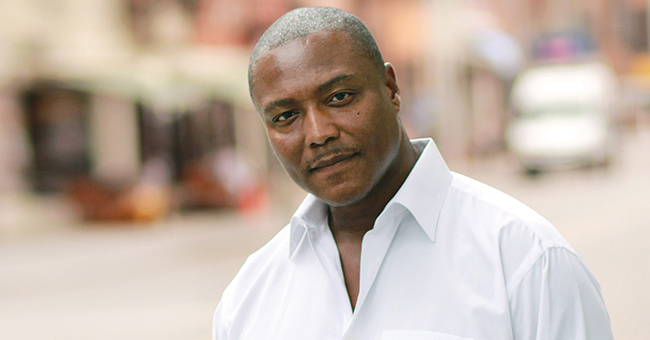
    Anthony Graves

    Photo credit: Gerald Seroy

    This essay appeared originally on Powells.com.

    On August 17, 1992, I was twenty-six years old, a son to my mother, a father to three sons, a brother to four siblings, and a friend to many in my small Texas community. I was an athlete who loved playing sports. And if anyone back then had to describe me, they would probably say I always had a smile on my face.

    Like most people, I had never thought much about the death penalty. I thought bad things like that were for other people. I remember watching the news and sometimes hearing about cases where men were falsely accused and wrongfully convicted, but I never thought in a million years that could one day be me. 

    Then a police officer came knocking on my door and changed my life forever. A young criminal, terrified about his fate after murdering a family of six, falsely accused me of being his accomplice. Hours after he uttered my name, I was sitting in the back of a police cruiser heading to jail. I had no idea I was about to spend the next eighteen and a half years behind bars, including twelve years on death row, trying to prove my innocence.

    My innocence is the very thing I relied on after my arrest. I cooperated with law enforcement 110%, so sure was I that the whole thing was some crazy mistake. I did everything they asked of me—but quickly came to understand that what the officers wanted more than anything was an indictment, then a conviction. I witnessed the nearly unchecked power of the district attorney’s office and the direct impact it has on mass incarceration. It has the ability to wreak havoc and totally change the lives of ordinary people. I witnessed how law enforcement officials can get tunnel vision once they have a murder suspect in custody—and nearly any suspect will suffice once an arrest has been made. Cutting corners to make their case wasn’t a big deal, so long as they got their conviction. I witnessed the role of the media in shaping opinions around cases before trial. In my case, I was found guilty in the court of public opinion long before I ever saw a jury of my peers. I also witnessed how judges seem to give wide leeway to prosecutors, instead of heeding the actual facts. All of these things eventually led to my wrongful conviction. Perhaps this is inevitable for poor black men in Texas, once the yoke of an arrest for murder is tightly fitted around our necks. I learned this the hard way.

    In November 1994, two and a half years after my arrest, I was sentenced to death by the state of Texas for a crime I did not commit. The criminal justice system had stolen my freedom, and now Texas wanted to take my life. Enter: death row.

    Over the next fourteen years, 500 men were put on death row in the state of Texas, each controlled by a system built to torture them for the rest of their lives. There were men, young and old, living in cages like animals for twenty-three to twenty-four hours a day, locked into tiny spaces arranged like dog kennels, without access to family save for two hours per week through the transparent divider—and with zero access to human contact at all times. Men were just existing behind steel doors. I couldn’t believe what I was witnessing with my own eyes and experiencing firsthand as a member of this rare and unenviable group. My world felt and smelled like death and inhumanity, with men trying to live under the worst conditions, short of slavery. I witnessed men being driven out of their minds, and some even attempting suicide as a better alternative. These men had been cut off from the outside world, and now they were all facing execution. I had become one of them. I was isolated, alone, and afraid.

    Infinite HopeOver time, I began to understand that death row is designed to break a man’s will to live, and I started witnessing it all around me. I knew that if I gave in, I too would become a product of an environment that wanted to destroy the very essence of my being. I wanted to live, and I had to figure out how to do it under these circumstances.

    Meanwhile, I witnessed an onslaught of executions: men who were mentally ill, men who were innocent, men who were guilty, men whose cases should have been a lesser offense. But largely because of the poor environment from which most of us had come, we were all meeting the same fate. The state was executing everyone. I thought about my own mortality constantly.

    I have never shaken the memories of the faces I used to see on the other side of the plexiglass during visitations: parents, siblings, and children came to see their sons, brothers, and fathers. My own family started coming to visit, and Mama would bring my three boys to see me. They eventually grew into young men right before my eyes, albeit from the harsh distance of prison captivity. I watched as my mother’s hair started turning gray, and soon I no longer heard much from the rest of my family. I realized that life was beginning to pass me by.

    Having the courage to cling to hope is not always easy in situations like this. Oftentimes I would question God, but in truth, hope was all I had. I couldn’t afford to give it up.

    I remember getting my first execution date, one of two literal dates with death. It was an out-of-body experience. By that point, I had seen many men taken from their cells to be executed. Some were happy to leave this hell on earth. But when I was given my dates, my first thought was to tell myself that I had the power to live until I died. That brought me an immediate sense of peace. I was no longer afraid of death or death row. I knew then that, of the things I could control, I wasn’t going to give the most important one to the state of Texas.

    From that day on, I started reaching out in earnest to pen pals in Europe, family and friends, to anyone who would listen to me share my story, in the hope that someone would help save my life. As importantly, I wanted the world to know that Texas was trying to execute an innocent man. I didn’t know if I was going to come home standing or lying in a pine box, but I knew the world should know my story.

    I was fully exonerated in 2010. The prosecutor on my case was disbarred.

    Since my release, I have traveled the world sharing my story about living on death row as an innocent man, and what I’ve learned from it. I have become a criminal justice activist, author, highly sought-after public speaker, a grandfather five times over, and once again, a free man. My experience birthed within me a purpose I never knew I had. I take seriously my responsibility to speak for the men and women on death row today fighting to prove their innocence, the same way I had to. I know I’m one of the lucky ones.


    About the Author 

    Anthony Graves was wrongfully convicted of multiple homicides in 1992 and spent nearly two decades behind bars, including twelve years on Texas’s death row. While still in prison, he cofounded Join Hands for Justice, a France-based activist group that led global efforts to prove his innocence. Graves’s conviction and death sentence were overturned in 2006, and after four years of legal wrangling, he was fully exonerated and released in 2010. Since then, he has become a full-time advocate for criminal justice reform, testifying to the US Senate about the harms of solitary confinement, serving on the board of directors for the Houston Forensic Science Center, and working with the ACLU’s Campaign for Smart Justice. Graves speaks widely and runs the Anthony Graves Foundation, which works to draw attention to problems within the American criminal justice system. He lives in Houston. Follow him on Twitter at @AnthonyCGraves and visit his website.

  • By Martin Luther King, Jr.

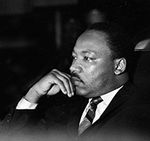
    Martin Luther King Jr.Fifty years ago—on February 4, 1968—the Rev. Dr. Martin Luther King, Jr. delivered his “The Drum Major Instinct” sermon at Ebenezer Baptist Church at Atlanta, Georgia. In this sermon, he acknowledges the fact that many people desire recognition; they desire to be the first. He calls this desire the “drum major instinct.” But he proposes an alternative kind of ambition one can achieve through a life of service: “I just want to leave a committed life behind.” Rather prophetically, Dr. King discusses in the conclusion what he would like to be said about him at his own funeral. Selections of this sermon were then played two months later, after his assassination, at his funeral service. To commemorate its anniversary, we share passages of it with you here.

    ***

    We all want to be important, to surpass others, to achieve distinction, to lead the parade. Alfred Adler, the great psychoanalyst, contends that this is the dominant impulse. Sigmund Freud used to contend that sex was the dominant impulse, and Adler came with a new argument saying that this quest for recognition, this desire for attention, this desire for distinction is the basic impulse, the basic drive of human life, this drum major instinct.

    And you know, we begin early to ask life to put us first. Our first cry as a baby was a bid for attention. And all through childhood the drum major impulse or instinct is a major obsession. Children ask life to grant them first place. They are a little bundle of ego. And they have innately the drum major impulse or the drum major instinct.

    Now, in adult life, we still have it, and we really never get by it. We like to do something good. And you know, we like to be praised for it. Now if you don’t believe that, you just go on living life, and you will discover very soon that you like to be praised. Everybody likes it, as a matter of fact. And somehow this warm glow we feel when we are praised or when our name is in print is something of the vitamin A to our ego. Nobody is unhappy when they are praised, even if they know they don’t deserve it and even if they don’t believe it. The only unhappy people about praise is when that praise is going too much toward somebody else. But everybody likes to be praised because of this real drum major instinct.

    Now the presence of the drum major instinct is why so many people are “joiners.” You know, there are some people who just join everything. And it’s really a quest for attention and recognition and importance. And they get names that give them that impression. So you get your groups, and they become the “Grand Patron,” and the little fellow who is henpecked at home needs a chance to be the “Most Worthy of the Most Worthy” of something. It is the drum major impulse and longing that runs the gamut of human life. And so we see it everywhere, this quest for recognition. And we join things, overjoin really, that we think that we will find that recognition in.

    ~~~

    There comes a time that the drum major instinct can become destructive. And that’s where I want to move now. I want to move to the point of saying that if this instinct is not harnessed, it becomes a very dangerous, pernicious instinct. For instance, if it isn’t harnessed, it causes one’s personality to become distorted. I guess that’s the most damaging aspect of it: what it does to the personality. If it isn’t harnessed, you will end up day in and day out trying to deal with your ego problem by boasting. Have you ever heard people that—you know, and I’m sure you’ve met them—that really become sickening because they just sit up all the time talking about themselves? And they just boast and boast and boast, and that’s the person who has not harnessed the drum major instinct.

    ~~~

    Now the other thing is, that it leads to tragic—and we’ve seen it happen so often—tragic race prejudice. Many who have written about this problem—Lillian Smith used to say it beautifully in some of her books. And she would say it to the point of getting men and women to see the source of the problem. Do you know that a lot of the race problem grows out of the drum major instinct? A need that some people have to feel superior. A need that some people have to feel that they are first, and to feel that their white skin ordained them to be first. And they have said over and over again in ways that we see with our own eyes. In fact, not too long ago, a man down in Mississippi said that God was a charter member of the White Citizens Council. And so God being the charter member means that everybody who’s in that has a kind of divinity, a kind of superiority. And think of what has happened in history as a result of this perverted use of the drum major instinct. It has led to the most tragic prejudice, the most tragic expressions of man’s inhumanity to man.

    ~~~

    And not only does this thing go into the racial struggle, it goes into the struggle between nations. And I would submit to you this morning that what is wrong in the world today is that the nations of the world are engaged in a bitter, colossal contest for supremacy. And if something doesn’t happen to stop this trend, I’m sorely afraid that we won’t be here to talk about Jesus Christ and about God and about brotherhood too many more years. If somebody doesn’t bring an end to this suicidal thrust that we see in the world today, none of us are going to be around, because somebody’s going to make the mistake through our senseless blunderings of dropping a nuclear bomb somewhere. And then another one is going to drop. And don’t let anybody fool you, this can happen within a matter of seconds. They have twenty-megaton bombs in Russia right now that can destroy a city as big as New York in three seconds, with everybody wiped away, and every building. And we can do the same thing to Russia and China.

    But this is why we are drifting. And we are drifting there because nations are caught up with the drum major instinct. “I must be first.” “I must be supreme.” “Our nation must rule the world.” And I am sad to say that the nation in which we live is the supreme culprit. And I’m going to continue to say it to America, because I love this country too much to see the drift that it has taken.

    God didn’t call America to do what she’s doing in the world now. God didn’t call America to engage in a senseless, unjust war as the war in Vietnam. And we are criminals in that war. We’ve committed more war crimes almost than any nation in the world, and I’m going to continue to say it. And we won’t stop it because of our pride and our arrogance as a nation.

    ~~~

    If any of you are around when I have to meet my day, I don’t want a long funeral. And if you get somebody to deliver the eulogy, tell them not to talk too long. And every now and then I wonder what I want them to say. Tell them not to mention that I have a Nobel Peace Prize— that isn’t important. Tell them not to mention that I have three or four hundred other awards—that’s not important. Tell them not to mention where I went to school.

    I’d like somebody to mention that day that Martin Luther King, Jr., tried to give his life serving others.

    I’d like for somebody to say that day that Martin Luther King, Jr., tried to love somebody.

    I want you to say that day that I tried to be right on the war question.

    I want you to be able to say that day that I did try to feed the hungry.

    And I want you to be able to say that day that I did try in my life to clothe those who were naked.

    I want you to say on that day that I did try in my life to visit those who were in prison.

    I want you to say that I tried to love and serve humanity.

    Yes, if you want to say that I was a drum major, say that I was a drum major for justice. Say that I was a drum major for peace. I was a drum major for righteousness. And all of the other shallow things will not matter. I won’t have any money to leave behind. I won’t have the fine and luxurious things of life to leave behind. But I just want to leave a committed life behind. And that’s all I want to say.

    Excerpted from The Radical King, published by Beacon Press, 2015. All material copyright © Martin Luther King, Jr., and the Estate of Martin Luther King, Jr.; all material copyright renewed © Coretta Scott King and the Estate of Martin Luther King, Jr. Introductions © 2015 Cornel West.


    Read Dr. King’s “The Drum Major Instinct” sermon in A Gift of Love, A Time to Break Silence, and The Radical King from the King Legacy Series.


    Martin Luther King, Jr.Dr. Martin Luther King, Jr. (1929–1968), Nobel Peace Prize laureate and architect of the nonviolent civil rights movement, was among the twentieth century’s most influential figures. One of the greatest orators in US history, King also authored several books, including Stride Toward Freedom: The Montgomery Story, Where Do We Go from Here: Chaos or Community?, and Why We Can’t Wait. His speeches, sermons, and writings are inspirational and timeless. King was assassinated in Memphis, Tennessee, on April 4, 1968.

  • By Paul Ortiz

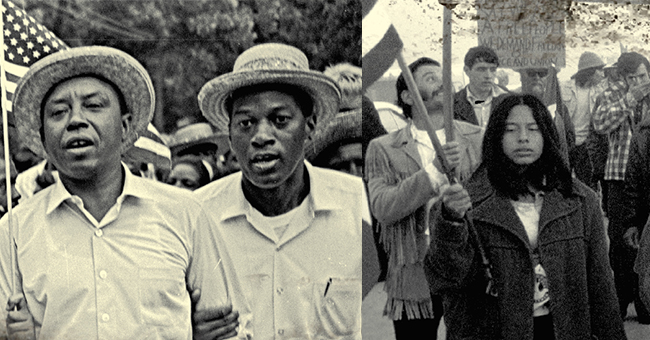
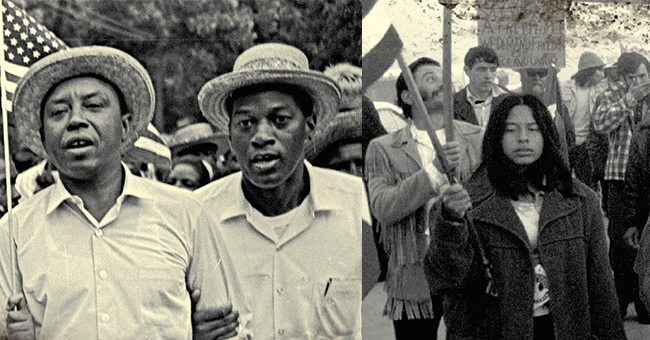
    Photos courtesy of the Department of Special Collections, Stanford University Libraries

    Photos courtesy of the Department of Special Collections, Stanford University Libraries

    We live in a time where a president makes barefaced remarks in speeches that African Americans and Latinx people are prone to violence and corruption. His statements, obviously, pay no respect to the centuries-long history of African Americans and Latinx people organizing together against slavery, oppression, and imperialism to fight for civil rights and human dignity. Not just in the United States, but also worldwide. Luckily, history professor Paul Ortiz provides us with the history we need in his book An African American and Latinx History of the United States. He reminds us, too, that history isn’t done with us. The struggles he writes about continue today in the twenty-first century.

    There are five key terms in his book to understand how the intersectional Black and Latinx social justice movements have come together, then and now. Ortiz defines them here with examples.

    *** 

    Racial Capitalism

    Racial capitalism is an economic system first theorized by Cedric Robinson building upon the work of the radical sociologist Oliver Cromwell Cox. As historian Robin D. G. Kelley noted, Robinson argued that capitalism in its earliest and subsequent iterations was dependent upon and entwined with “slavery, violence, imperialism, and genocide.” Through the twenty-first century, capital continues to generate “racial differences” between sectors of the working class in order to better exploit workers. For example, Mexican American mine workers in Arizona in the twentieth century were paid less wages per hour to do the same work as their white counterparts. In turn, these differences made it more difficult for the working class in the United States to defend its interests against large employers. In An African American and Latinx History of the United States, I use the concept of white business supremacy to denote a system of political power which implements racial capitalism. In chapter six:

    “The triumph of white business supremacy relegated African American and Latina/o workers to the bottom of occupational ladders and it meant they had to work for less than their white counterparts. Mario Barrera found that Chicana/o workers in the southwest were subjected to dual (lower) wages in agriculture mining, railroad, transportation, construction, and other industries in the first half of the twentieth century. Likewise, African Americans were shunted into the most menial jobs and were paid less for their work. In 1930, there was not a single African American railroad conductor or banker in Memphis, Tennessee. Black women were often paid 50% less than their white male counterparts in Virginia’s major industries on the eve of the Great Depression. Voter suppression and the weaponized labor relations that transformed the Sunbelt into a haven for cheap labor was one of racial capitalism’s grimmest achievements.”

    Emancipatory Internationalism

    African Americans developed the idea of emancipatory internationalism in the wake of the American Revolution to emphasize the linkage between freedom struggles in the United States and those in Latin America, the Caribbean, Africa, Europe and elsewhere. This explains why abolitionist Reverend Henry Highland Garnet and others opposed the disbanding of the anti-slavery movement at the Civil War. After all, slavery still existed in countries like Cuba and Brazil. In chapter four:

    “African Americans were creating an idea of citizenship that linked national civil rights and international human rights while judging one insufficient without the other. These Fifteenth Amendment commemorations open a window into a new theory and practice of American freedom. Black speakers and their audiences articulated the idea that their individual rights were intimately connected with the rights of oppressed people in Latin America, the Caribbean and other parts of the world. This was an ideology based on the harsh experience of seeing slavery and racial capitalism extinguishing liberty everywhere it went. African Americans understood that the United States had torn itself apart due to its allegiance to a theory of profit-based individualism shrouded in slavery. The nation must never again define freedom in such a way as to place property rights above human rights. Furthermore, Americans could not preserve their liberty at home while crushing it abroad as slavery’s imperial advocates had demanded.”

    Global South

    In this book, the Global South refers primarily to the nations located in Latin America, the Caribbean and Africa—although scholars generally use this term to encompass much of Asia and the Middle East as well. During the post-World War II era, it was common to refer to much of this region as “The Third World.” In this book however, the term Global South takes on a broader, philosophical meaning. The book argues that ideas about freedom, anti-imperialism, and autonomy in the Global South had a decisive impact on US American politics. In chapter five:

    “Like José Martí a generation earlier, Bernardo Ruiz Suarez left his native Cuba to write about the United States. Suarez observed, ‘The white race is haughty and domineering everywhere. In those countries where religion, education and other influences have softened the hearts of men, the sentiment of brotherhood tends to level the inequalities and barriers of race and to give reality to that form of society which in Political Science is called Democracy.’ Suarez warned that the United States lacked the ‘sentiment of brotherhood’ altogether: ‘But the race which colonized and still forms the majority of the people of the United States, with its historical antecedents and its degrading record of bloodshed, cannot be classified, in the opinion of an impartial observer, as a democratic race.’

    Black and Brown anti-imperialism flourished in the early twentieth century. The refusal of people in Haiti, Nicaragua, Mexico and other nations to submit quietly to US hegemony inspired African Americans trying to ward off racial capitalism’s blows in the United States. Veterans of the war on the government of American banks would have taken exception to a later generation of scholars who characterized the United States as ‘isolationist’ or democratic. The insurgent citizenry of the Americas who faced the ‘colossus of the North’ would have scoffed at the idea that the United States was not an empire. The opponents of the US military invasions of the early twentieth century demanded that the United States be held accountable for its overseas depredations. Instead historians shrouded the country’s history in a veil of innocence and exceptionalism which has undermined the nation’s ability to reform itself to this day. It cannot be said that scholars lacked sources that could have guided them to the truth. Bernardo Suarez, whose nation had dealt with US power for decades, spoke for many in the Global South in 1922 when he concluded, ‘No matter what is said to the contrary, and there is much truth that may be said, the United States of America have by no means lived up to their professed abhorrence of autocracy and aggressive imperialism in their international affairs.’”

    International Solidarity

    Like all great ideas, international solidarity was an idea that came out of the mass insurgencies and social movements against slavery, and later, Jim Crow. African Americans came to understand that the battles that citizens of Mexico and other nations in the Global South bore a resemblance—and a real connection—to the struggle against white business supremacy in the United States.” In chapter five:

    “Just as the general strike against slavery prepared the way for the expansive thinking that produced the Cuban solidarity movement of the 1870s, Black resistance to Jim Crow generated creative possibilities of a revived anti-imperialism in the early twentieth century. African American communities launched sustained boycotts of segregated streetcars and transit in the South, took up arms to defend their communities against lynching, and agitated for a return of the ballot. Community organizers built vital new institutions such as the Universal Negro Improvement Association (UNIA) as well as the NAACP which launched national campaigns against debt peonage and voter suppression. Of course, these campaigns took place on a profoundly unequal terrain that placed Black citizens in direct conflict with federal and state authorities as well as corporations that drew their life blood from disenfranchised labor. Indeed, this insider knowledge of actually-existing capitalism was what gave Black critiques of US economic imperialism their special force. William Jones mounted an attack on US State Department interference with land reforms in Mexico by observing that, ‘Those who have studied the Mexican problem will be inclined to believe that the whole sudden outburst on the part of the State Department was inspired by that group of capitalists in this country who have been for some time displeased with recently passed Mexican agrarian laws.” Jones accused the US of falsely claiming that American citizens’ lives were endangered in Mexico in order to abrogate revolutionary land reform measures:

    They were so framed as to make it possible for actual toilers on the soil to compel foreign owners to dispose of their holdings. Americans call this confiscation when practiced in Mexico, but patriotism when exacted as California did against the Japs. But some human beings will always seek a way to keep other human beings toiling for them. You wonder why, with so much untilled land in this country, with our farmers begging for capital, and industry lagging, we have so much money to invest in Mexican farms.”

    Hemispheric Liberation Movement

    The idea of a hemispheric liberation movement was expressed by generations of revolutionaries in Haiti, Mexico, the United States and other countries in the early nineteenth century and manifests itself in key events such as the Mexican War of Independence when José María Morelos and other Mexican revolutionaries reached out to the United States for support against European colonialism. We also see evidence of ideas of a hemispheric-wide liberation movement expressed by enslaved African Americans who strike for their liberty in Gabriel’s Rebellion and other slave revolts with the idea of linking up with revolutionaries in Haiti and the Caribbean. In chapter two:

    “Mexicans, African Americans and their abolitionist allies expressed very different views of the Mexican War of Independence than those held by John Quincy Adams. Those people who embraced emancipatory internationalism conceived of a hemispheric liberation movement that would not be tied to nationality or constrained by boundaries. They also knew that slavery’s relentless cycle of growth would destroy democracy. If ‘additional territory had been denied to the slavery of the old slave States,’ The National Era noted, ‘it would have been at least in process of abolition. But it was allowed to propagate itself, and, in so doing, it gathered new life. Not only were the new States, formed out of the territory originally possessed by the Union, given up to its ravages, but Florida, and the immense territory of Louisiana, were opened to it.’ The abolitionist paper grieved, ‘Why deceive ourselves? The establishment of slavery in California, in New Mexico, or a part of it, and throughout Texas, will invest the slave-holding class with a power, from which there can be no escape.’

    Early African American newspapers like the Colored American united Black struggles with anti-colonial movements in the Global South. The newspaper’s editors broadened the scope and scale of the anti-slavery movement. These types of analyses emphasized that the question of liberty or death was not a question of Black vs. white. The roles of Africans, Indigenous people, and mixed-race people in hemispheric-wide resistance movements were re-imagined….”

    In the twentieth century, the Haitian and Mexican delegations at the Inter-American Conference on Problems of War and Peace held in Chapultepec Mexico, re-introduce the idea of a hemispheric conception of freedom by arguing that post-war peace in the Americas will depend on not only equality between nations of the Americas but also equality within the nations as well, thus re-joining the struggle against racial oppression to national liberation. In chapter seven:

    “The Final Act of Chapultepec now carried with it the force of law in the United States. Texas socialist Harold Preece, a frequent contributor for African American newspapers, was jubilant. ‘I’m not going overboard when I agree with leading diplomats in Mexico City interpreting the Chapultepec declaration for inter-American cooperation and defense as ‘the greatest joint document of democratic principles and hemispheric unity ever signed by the American nation.’ Preece stated that Chapultepec ‘means that Negroid nations like Haiti, the Dominican Republic, Cuba and Brazil, stand on the same plane with predominantly white nations like the United States and Chile.’ Most importantly, Harold Preece asserted, the Act of Chapultepec slammed the legal brakes on US military intervention in Latin America, and threatened the power of government of American banks to control the people of the Global South:

    This time, the big stick is going to be wielded by the peoples of the America against all those who would disturb the peace and prosperity of the Americas. It’s going to hit Argentina, excluded from a seat in the conference, unless Argentina stops acting like Alabama and starts acting like folks you can invite to sit down at your table.”

    Those who tried to live the ideals of anti-imperialism as a way of life have much to teach us. While many of today’s politicians want to build barrier walls to divide nations, the individuals and social movements we have studied struggled to build democratic movements to bring the hemisphere’s people together. The United States continues to deny citizenship to many of this nation’s hardest workers. In contrast, the advocates of emancipatory internationalism envisioned a new kind of citizenship which spanned the entire Americas. While “the government of American banks” pushed the US to become the police officer of the Global South, African Americans from Baltimore to San Francisco opted for international solidarity.

    This nation’s history beautifully echoes Elizabeth Martinez’s insight: “We can choose to believe the destiny of the United States is still manifest: global domination. Or we can see a transformative vision that carries us forward, not backward. We can seek an origin narrative that lays the groundwork for a multicultural identity centered on the goals of social equity and democracy. We do have choices.”


    About the Author 

    Paul Ortiz is an associate professor of history and the director of the Samuel Proctor Oral History Program at the University of Florida. He is the author of Emancipation Betrayed: The Hidden History of Black Organizing and White Violence from Reconstruction to the Bloody Election of 1920 and coeditor of the oral history Remembering Jim Crow: African Americans Tell About Life in the Segregated South. He lives in Gainesville, Florida.

  • A Q&A with Roxanne Dunbar-Ortiz

    Roxanne Dunbar-Ortiz

    Photo credit: Barrie Karp

    We were absolutely thrilled to hear the news that Roxanne Dunbar-Ortiz was awarded the 2017 Lannan Cultural Freedom Prize! With this prize, the Lannan Foundation has honored her activism with global indigenous people’s movement for national sovereignty, international recognition, environmental rights, social movements for women’s equality, and the rights of oppressed nations in Central America. It’s been a privilege for us to publish her American Book Award-winning An Indigenous Peoples’ History of the United States as well as “All the Real Indians Died Off” And 20 Other Myths About Native Americans, co-authored with journalist and scholar Dina Gilio-Whitaker. We caught up with Dunbar-Ortiz to ask about the prize and what it means to her.

    Christian Coleman: Congratulations on winning the prize! Tell us what winning the prize means to you.

    Roxanne Dunbar-Ortiz: The Lannan Lifetime Achievement Prize for Cultural Freedom is a prestigious award that I never imagined being bestowed upon me. Only eight other individuals have received it since it was initiated in 1999 to honor the great Uruguayan writer Eduardo Galeano. Subsequently, Arundnati Roy and Cornel West were among the awardees. I personally know and know of dozens of cultural freedom warriors whom I feel are more deserving than I am, so I am humbled as well as overjoyed.

    CC: How did you find out you’d won?

    RDO: I had been invited to speak in the Navajo/Diné nation at Diné College and was being driven there from the Flagstaff airport when the call came, Patrick Lannan himself on the line. When I woke the next morning, I didn’t believe it had happened.

    CC: The Lannan Foundation awarded you the prize for your lifetime of tireless commitment to national and international social justice issues. What are some highlights from your work you can tell us about?

    RDO: I was involved in the 1960s movements against the Vietnam War and US imperialism and was one of the founders of the Women’s Liberation Movement in the late 1960s. After receiving the doctorate in history, I devoted by teaching career to the development of Ethnic Studies as an activist/academic field. In the wake of the Lakota resistance at Wounded Knee in 1973, I began working with the American Indian Movement in defense of those wrongly charged with crimes; this led to my bringing the testimonies in the trials together in an oral history of the Great Sioux Nation treaty and struggle for sovereignty, and these testimonies were collected in the first published book of its kind in 1977. While continuing teaching Native American Studies, I researched and worked for Indigenous land and resource rights and political self-determination, and helped build the international Indigenous movement. During the 1980s, I was also involved with refugee rights issues related to the US interventions in Central America, monitoring refugee camps in Honduras in cooperation with the UN High Commission on Refugees and filing reports and complaints to the United Nations’ Human Rights Commission.

    CC: The Lannan Foundation also recognizes how you’ve helped to develop and explain the theory of settler-colonialism, perhaps more than any other scholar. It’s a prominent theme in An Indigenous Peoples’ History of the United States. Why is it important for us to understand the effects of settler-colonialism in our current troubled times?

    RDO: I think it’s more important than ever to understand the effects of settler-colonialism now, with the current backlash of white nationalism. As well, it’s necessary to understand settler-colonialism to comprehend the US settler descendants’ resentment of immigrants, criminalization of Black men, and a renewed surge to privatize public lands, which means eradicate the remaining Native American nations’ land bases. In the original thirteen British colonies and inscribed in the original US constitution, only Europeans were allowed to enter, and only white men who owned property (land or enslaved Africans) could be citizens of the United States. White nationalists are “originalists,” as is the majority of the justices of the Supreme Court—that is, advocating the original provisions and meaning of the Constitution as legitimate. White nationalism is original settler nationalism. But, the fact is that the content of US consensus nationalism that is woven into the fabric of the culture and institutions is based in celebrating the triumph of settler-colonialism, so the issue is far more serious than the current vocal domination of white nationalism.

    CC: Now that you’ve won the prize, what comes next? You also have a new book out on the racist origins of the second amendment. Do you have any other books or projects planned that you can tell us about?

    RDO: Yes, my book Loaded: A Disarming History of the Second Amendment was published in January 2018 by City Lights Books Open Media Series and is being well received. I’m presently working on another book for Beacon Press on the question of the United States being “a nation of immigrants.” In this work, I again focus on the nature of settler-colonialism in relation to immigration with special attention to the instable Mexican border and the human rights of Mexicans entering the United States, given that the US invaded, occupied, and annexed half of Mexico.


    About Roxanne Dunbar-Ortiz 

    Roxanne Dunbar-Ortiz grew up in rural Oklahoma, the daughter of a tenant farmer and part-Indian mother. She has been active in the international Indigenous movement for more than four decades and is known for her lifelong commitment to national and international social justice issues. After receiving her PhD in history at the University of California at Los Angeles, she taught in the newly established Native American Studies Program at California State University, Hayward, and helped found the Departments of Ethnic Studies and Women’s Studies. Her 1977 book The Great Sioux Nation was the fundamental document at the first international conference on Indigenous peoples of the Americas, held at the United Nations’ headquarters in Geneva. Dunbar-Ortiz is the author or editor of seven other books, including Roots of Resistance: A History of Land Tenure in New Mexico. She lives in San Francisco. Follow her on Twitter at @rdunbaro and visit her website.

  • By Ben Mattlin

    In Sickness and In Health

    Image credit: Louis Roe

    Back in 2012, I had the good fortune of publishing a book. That book. You know, the one able-bodied people are always telling crips to do because they’re sure it would be “so inspirational!”—in short, a memoir about growing up with a severe disability and somehow prospering.

    Indeed, being unable to walk or even scratch my nose hadn’t prevented me from going to Harvard. I was one of the first quadriplegics to matriculate, if not the first (bragging rights not yet fully established). It hadn’t prevented me from marrying (and staying married for twenty-six years now, and counting), having two delightful children, and forging a career as a freelance journalist. But of course, you already know all that, if you’ve read my first book.

    Miracle Boy Grows Up introduced people to spinal muscular atrophy, the neuromuscular incapacity with which I was born. I have no muscles but full sensation (more about that later). I learned to live with it just as the world was learning to live with people with disabilities as a political force, a civil rights movement. But what to do for a follow-up? I’m not Mary Karr! My life only has one book in it.

    Some readers were insistent. A number of them suggested I delve deeper into my marriage, expose the secret spats and salacious highlights. But I didn’t want to turn myself and my wife, Mary Lois (who does not have a disability of her own, poor thing), into gossip fodder, thank you very much.

    Yet the nugget of an idea began to form.

    ***

    Surely, we can’t be the only “interabled” couple, for lack of a better term. Quick research showed that, although the statistics are unreliable, there are many marriages between people with and people without disabilities. And as the population ages and medical and technological advances enable people to survive illnesses and injuries in greater numbers than ever before, more and more folks are finding themselves in more or less our situation.

    To the media and general public, though, this kind of amatory partnering is often treated as an odd phenomenon. Not long ago, the cover of People magazine flaunted the marriage of Gabby Giffords—the brain-injured former congresswoman—and her husband, astronaut Mark Kelly, as a “special but unconventional love affair.” Is that supposed to be flattering? This treacly hooey could give you diabetes!

    I also keep hearing and reading about the aging population, this wave of debility and decay that’s creating a “caregiving crisis” (New York Times, February 26, 2014, among others). To me, this trend dovetails with the worrisome news of veterans who are returning from Iraq and Afghanistan with disabling injuries—the wounded warriors with young spouses who don’t know how to cope with their disabilities.

    I know strangers frequently regard M.L. and me as either tragic or noble. (We’re neither.) At the root of all this wonder and puzzlement, I think, is simple curiosity: How do they get by? Will they be all right? To put it another way, what people really ponder is: What kinds of pressures does disability put on a marriage? (The former activist in me protests: These quandaries are predicated on outmoded, unflattering presumptions that people with disabilities are nothing but burdens and liabilities! Certainly we bring more to our marriages than our bodily limitations!)

    In an age when interracial and interfaith marriages are common, it seems odd that romances like ours still leave people perplexed and awestruck. Many times I’ve heard M.L. calmly explain to the inquisitive, “I simply fell in love with a guy who happened to be in a wheelchair. Nothing noble or self-sacrificing about it.” (In funny moments, she’s added, “It’s not like he was a Republican or something!”)

    While this is certainly true, it’d be foolish to deny the challenges inherent in interabled conjugality. Financial challenges, emotional challenges, and—yes—physical challenges. No doubt it was a tad bold and naïve of us to trust that love would overcome all differences—if, indeed, differences need overcoming. Now that we’re past fifty, M.L. and I can concede that some reflection about how exactly we’ve managed might prove fruitful. I myself sometimes wonder: Why did she want to tie up her life with mine? And what gave me—a man who depends on round-the-clock personal-care assistance—the chutzpah to imagine, even expect, he could marry and live a normal life like anyone else?

    On the other hand, M.L. and I enjoy an undeniable degree of closeness, a give-and-take that other couples might envy. We finish each other’s sentences, not always correctly but usually close enough. More than that, we can anticipate each other’s moods or reactions to stimuli. She can get me comfortable in my chair when I can’t even figure out how to ask or what to ask her for. As for me, well, I can never understand why, in movies, men don’t know their wives are pregnant until the wives divulge it like a big secret. Weren’t they keeping track of their wives’ menstrual cycles? Don’t all guys do that, or am I the anomaly? (Probably something in between “all guys” and “only me,” but still.)

    Is our brand of symbiotic intimacy unique to our in-sync personalities, or could it be a function of our complementary differences, of interabled couplehood in general? Is this, in short, a benefit? (And if so, somebody had better tell those couples who are newly facing disability, before panic and anxiety destroy them!) Did we arrive at it naturally or is it something we’ve developed and honed over time? And perhaps most crucial of all, can it last?

    To shed light on these and other related mysteries, to gain a stronger self-knowledge and advocate for others who may be facing similar questions and judgments, I embark on a quest in my book In Sickness and In Health to zero in on the glue that binds M.L. and me, to study what sticks interabled couples together and perhaps simultaneously give hope to those who are struggling with the mating game. I’ll endeavor to accomplish all this through frank conversations with a variety of twosomes at different stages of their romantic lives and from different backgrounds. By coaxing them to share their journeys, I hope to unearth a rich vein of compelling and instructive group-wisdom. My mission, I realize, may reveal something I don’t want to see. Like picking at a scab, I might expose lingering insecurities that remain raw and unresolvable. Yet I hope to come out on the other end with not only a better understanding of my own marital bond but also insights into why certain interabled marriages fail while others survive despite—or perhaps because of?—incredible strains.


    About the Author 

    Ben Mattlin is the author of Miracle Boy Grows Up and In Sickness and In Health: Love, Disability, and a Quest to Understand the Perils and Pleasures of Interabled Romance, and a frequent contributor to Financial Advisor magazine. His work has appeared in the New York Times, Los Angeles Times, Washington Post, Chicago Tribune, USA Today, and Vox, and on NPR. He lives in Los Angeles, California. Follow him on Twitter at @benmattlin and visit his website.

  • By Philip Warburg

    These solar panels, installed at Exelon City Solar in Chicago, were manufactured by SunPower, an American company that does most of its manufacturing outside the US.

    These solar panels, installed at Exelon City Solar in Chicago, were manufactured by SunPower, an American company that does most of its manufacturing outside the US. Photo courtesy of Turner Construction

    Donald Trump’s much-touted tariff on imported solar panels and cells couldn’t be a worse fit for America’s energy needs. Instead of accelerating our use of solar power, it will discourage the development of this clean energy resource and rein in the growth of solar jobs. For a president who—in his rhetoric at least—is hell-bent on creating US jobs and putting America First, does this move make any sense?

    As disparaging about renewable energy as he is enthused about coal, gas, and oil, perhaps it’s fitting that the president is brandishing a tariff that, at best, may keep a few failing solar manufacturers in business while undermining the industry as a whole. Trump’s executive order has its origins in a complaint that two ailing solar panel manufacturers filed before the US International Trade Commission (ITC) last spring. Suniva, headquartered in Atlanta, initiated the complaint, and SolarWorld America, with its factory operations in Hillsboro, Oregon, joined a short time later. These two companies have been struggling for years now, despite tariffs and anti-dumping penalties that were put in place by the Obama administration in 2012 and 2014, primarily targeting China’s solar exports. Suniva filed for bankruptcy in April 2017, just days before initiating its ITC complaint, and SolarWorld America is now up for sale, in the hope of helping its bankrupt German parent company return to solvency. These companies’ woes are echoed by the US solar panel manufacturing sector as a whole, borne out by the fact that nine out of ten solar panel purchases today come from abroad. 

    Trump’s tariff has a broader geographical reach than Obama’s, covering all imports of crystalline silicon solar panels and cells regardless of country of origin, but will it be any more effective in stimulating US investment in solar manufacturing? Lasting only four years, Trump’s measure starts as a thirty percent tariff and then drops to twenty-five percent in year two, twenty percent in year three, and fifteen percent in its final year. Within the tariff’s four-year timeframe, US solar companies will barely have had time to plan, finance, and build new capacity before the trade protection lapses. At that point, they will be exposed once again to the full force of lower-priced products coming from places like Malaysia, Korea, and China.  Bottom line: If they survive at all, American solar cell and panel manufacturers will most likely remain small players in a hotly competitive global market.

    Companies like Suniva and SolarWorld, having cut back production and staffing, may be able to revive idle plant capacity in relatively short order if demand for their products warrants it. SolarWorld, which laid off 360 of the 800 workers at its Oregon plant last summer, claims that the new tariff could help it restore 300 of those jobs. Suniva had only thirty-five employees in April 2017, having earlier laid off 230 of its workers. Whether this bankrupt company will be able to return to its peak employment level of 265 people remains to be seen. 

    Even if there is some reactivation of idle plant capacity, the employment gains are likely to be modest in absolute numbers. Solar manufacturing accounts for less than fifteen percent of the total solar work force of 260,000 people; the rest work as installers, sales reps, project developers, and in other non-manufacturing functions. Even within manufacturing, many are employed by companies that produce equipment other than the panels themselves: roof racks and ground mounting systems for solar installations, electricity inverters, and the like. None of these qualify for the Trump tariff.

    While it may trigger a slight uptick in US solar cell and panel manufacturing jobs, the tariff will very likely cause much greater harm than good. According to the Solar Energy Industries Association, the overall price of solar systems will rise substantially, triggering a slump in utility-scale projects as well as smaller commercial and residential installations. An estimated 23,000 jobs may be lost—roughly nine percent of the solar work force. America’s 137,000 solar installers will be hit the hardest, but the losses will be felt across the industry. 

    A further downside, of course, is the toll on our transition to a more sustainable energy economy. Though installed solar capacity has grown at an average rate of sixty-eight percent annually over the past decade, we still get less than two percent of our electricity from the sun. That’s a small first step toward a future in which renewable fuels like solar and wind will have to supply most of our power needs. Bringing our global climate into balance demands no less. Protectionism will only stifle this growth.


    About the Author 

    Philip WarburgPhilip Warburg, a lawyer, is a Non-Resident Senior Fellow at Boston University’s Institute for Sustainable Energy.  He has written two books on renewable energy, Harness the Sun and Harvest the Wind, both published by Beacon Press. Follow him on Twitter at @pwarburg and visit his website.

  • Marcy Barnes at a Judy Blume book signing at Brookline Booksmith

    Marcy Barnes at a Judy Blume book signing at Brookline Booksmith

    In these times when readers are responding to our books “more than ever,” when our authors—such as Cornel West, Anita Hill, and Christopher Emdin—are appearing in the media, their ideas going viral on social media, their voices being heard on so many platforms, we thought it might be good to take a break to focus on some of the staff who work hard to find, shape, edit, produce, and promote those works. Our blog series “Beacon Behind the Books” introduces to you a member of our staff and gives you a behind-the-scenes look, department by department, at what goes on at our office.

    To kick off the New Year, meet our production director, Marcy Barnes!  

    What drew you to publishing, Marcy?

    I’m sure my answer is true of 99.9% of us in this business: I am a life-long reader and lover of books! I can’t remember not reading. Every trip to the library or bookstore was magic and memorable for me. I looked forward to English class in school like none of my other subjects. I was an English and sociology major, and then did my graduate degree in library science. I knew I would be involved with books somehow. I worked in educational publishing for the first fifteen years of my career. I was always most drawn to the projects that felt they were directly serving the greater good, so when the position opened up at Beacon, I was thrilled at the opportunity to spend my days working with two of my greatest passions: books and social justice.

    What’s a typical day in the life of a production person?

    Production is the behind-the-scenes, soup-to-nuts (or manuscript-to-printed book) side of publishing. We take a manuscript from its acquired and line-edited state to the final project, so we’re responsible for hiring vendors and freelancers to typeset, proofread, index, and finally print our texts and covers. It takes an unusual set of skills in that we need to know writing style and grammar and also design and manufacturing. I work closely with almost everyone in the company, which is really my favorite part of the job. Production is very deadline driven, so I often tell people who ask what I do for a living that I’m a “professional prodder.” There’s a lot of problem solving in bookmaking, and it really keeps us on our toes! I still never tire of the thrill of opening a box of books to see the final product in all its glory; that the years of work by the editor and author and the many, many pieces of the puzzle that the rest of us coordinate all come together to make this piece of concrete literature still blows my mind.

    There are also non-product related parts of the job. I am specifically quite excited that a year of laying the groundwork for our new title and content management system, Biblio, is about to come to fruition. Go live is in mere weeks!

    What keeps you focused at work?

    Having my production schedules and to-do lists in front of my face at all times is probably the key to keeping the trains running. Aside from that, knowing I have the author’s “baby” in my hands is very grounding. What else? I have lots of fun and personal cards and images from friends and colleagues pinned to my cubicle; and I keep a picture of my son over my computer for times when it looks like the trains are derailing. Sometimes just looking up at these mementos brings me back into the zone. Other than that? Podcasts. Lots of podcasts!

    What’s your favorite book and what are you excited about upcoming?

    I can’t narrow it down to one! I’m a bit of an Albaphile (def.: “A person who is fond of Scottish culture.”), so I will always mention Irvine Welsh, Ali Smith, Alan Warner, A. L. Kennedy, Duncan MacLean, Janice Galloway—so many (and none of them Tartan Noir, I may add). Janice Galloway’s The Trick Is to Keep Breathing is glorious, so I guess my fave of the Scots! But in 2017, I read a lot of memoirs and essays and they were all fantastic: W. Kamau Bell, Samantha Irby, Lindy West, Roxane Gay, Patti Smith, Sherman Alexie. It is incredible the poetic form and roaring humor that can bubble up through even the most painful recollections in these artists’ writing. Speaking of which, my favorite Beacon book of the year has been Gayle Brandeis’s memoir, The Art of Misdiagnosis. It so brilliantly captures the turmoil, tragedy, and perseverance of surviving a parent’s mental illness and suicide. The writing style and the layout of the book are just beautiful and a testament to the author’s special talent.

    The upcoming books that I’m especially excited about are the brilliant Jeanne Theoharis’s exhaustively researched—and eye opening—A More Beautiful and Terrible History, which tackles long-held fables/misnomers of the civil rights movement, and journalist Joe Rosenbloom’s gripping account—Redemption—of the last thirty-one hours of Dr. Martin Luther King Jr.’s life.


    About Marcy Barnes 

    Prior to joining Beacon in 2011, Marcy Barnes held posts at Harvard Education Publishing Group, Harvard Business School Publishing, Elsevier Science, and Addison-Wesley Professional. She has an MA in Information and Library Science from Manchester Metropolitan University (UK) and a BA in English and Sociology from the University of Leeds (UK).

  • A Q&A with Mary Frances Berry

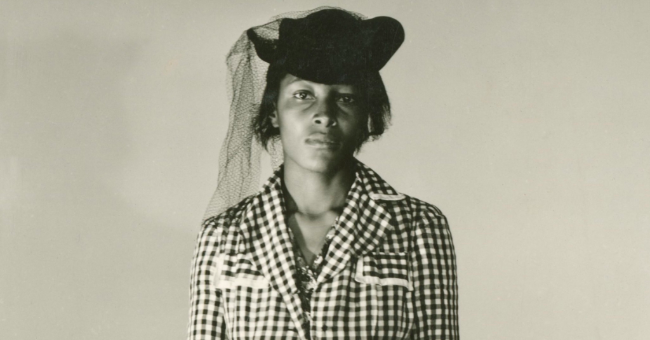
    Mrs. Recy Taylor, 1944

    Mrs. Recy Taylor, 1944

    Long before civil rights activist Tarana Burke began the #MeToo movement, a young black woman publicly testified and identified the group of white men who, in 1944, kidnapped and gang-raped her. She was Recy Taylor, and she spoke out against the crime committed against her, even when the men threatened to kill her for doing so. None of the men were indicted. It would take the state of Alabama sixty years to offer her a formal apology. She died on December 28, 2017.

    Taylor’s bravery in the hostile environment of the Jim Crow South will not be forgotten. Oprah Winfrey honored Taylor in her 2018 Golden Globes speech, saying:

    “She lived as we all have lived, too many years in a culture broken by brutally powerful men. For too long, women have not been heard or believed if they dare speak the truth to the power of those men. But their time is up….I just hope that Recy Taylor died knowing that her truth, like the truth of so many other women who were tormented in those years, and even now tormented, goes marching on.”

    What can we learn from Taylor’s story in this moment where more and more women are coming forward to tell their stories of surviving sexual harassment and assault? Beacon Broadside editor Christian Coleman asked Dr. Mary Frances Berry, author of the forthcoming book History Teaches Us to Resist, to find out.

    Christian Coleman: Recy Taylor testified about her rape decades before the #MeToo movement. What other examples in history are there of women speaking out against assault and harassment?

    Mary Frances Berry: Black women going public about rape is not new. Harriet Jacobs, in her 1861 autobiography, denounced her rape by her master. Ida B. Wells, in 1892, denounced the rape of Black women and girls by white men in her newspaper along with the lynching of Black men for false accusations of raping white females. Other Black women, including Anna Julia Cooper and Fannie Barrier Williams, also sounded the alarm. The files of the Justice Department and the NAACP contain complaints of the rape of Black women throughout the Jim Crow Era. Recy Taylor, like Harriet Jacobs, went public and spoke out about her own rape by six white men.

    CC: What can we learn from this history as the #MeToo movement continues?

    MFB: As egregious as the rape of Recy Taylor and others was, perpetrators escaped punishment. Conviction for rape has always been difficult to achieve. The most often used strategy for the defense is to tarnish the reputation of any woman who complains. Even with rape kits and identification evidence prosecution is still difficult, especially when rape kits are backlogged at police agencies and sometimes inexplicably lost.

    Punishing perpetrators by job loss is one corrective. But as long as sexual attraction and unwanted sex is about power, and punishment remains elusive, we are likely to see rape and other non-consensual sex continue. In a sense, these issues are like race, generally—the United States’ original sin, the world’s original sin.

    Also, having victims speak out is absolutely empowering, but we have to distinguish between rape and other non-consensual touching, between coercion and verbal harassment. Feminist lawyers should seriously consider due process questions and the relationship between workplace protections generally and sexual harassment issues. Otherwise, the movement will lose traction and the opportunity to make more permanent change in the employment opportunities of women

    CC: What do you think about Oprah Winfrey honoring Recy Taylor in her Golden Globes speech?

    MFB: Oprah Winfrey’s acknowledgement of Recy Taylor was important, because it gives historical and racial context to the movement by a person and a forum that got real attention.

    CC: Why do you think it’s important for us to pay attention to Recy Taylor’s story now, especially in our current political climate?

    MFB: It also expands the discussion from celebrities and movie stars to ordinary women. Ordinary women in low-wage jobs—whether in restaurants or household work or factories—and in poor communities are most at risk from coercion and unwanted sexual attention.


    About Mary Frances Berry

    Mary Frances Berry is the Geraldine R. Segal Professor of American Social Thought and professor of History and Africana Studies at the University of Pennsylvania. She is the former chairwoman of the US Commission on Civil Rights, a Distinguished Fellow of the American Society for Legal History, the author of twelve books, and the recipient of thirty-five honorary degrees. Dr. Berry has appeared on Real Time with Bill Maher, The Daily Show, Tavis Smiley, PBS NewsHour, CBS Evening News, Al Jazeera America News, and various MSNBC and CNN shows. Her forthcoming book, History Teaches Us to Resist: How Progressive Movements Have Succeeded in Challenging Times, will be released in March 2018. Follow her on Twitter at @DrMFBerry.