• By Michelle Oberman

    Pregnancy

    Photo credit: David Salafia

    In El Salvador, one of the few countries to ban abortion without exception, doctors and lawyers collaborate in order to identify and prosecute those suspected of abortion-related crimes. With its stories of selective enforcement, mistaken diagnoses, wrongful convictions and a thriving black market in abortion drugs, we witness one country’s practical experiences with criminalizing abortion. This month, for example, Amnesty International reported on a woman who has been unfairly jailed for the past ten years after suffering a stillbirth. Similar stories of criminalized abortion appear in legal scholar Michelle Oberman’s forthcoming book, Her Body, Our Laws: On the Front Lines of the Abortion War, from El Salvador to Oklahoma. Oberman gives us an up-close look in the following excerpt of what happens when a woman in El Salvador is caught in the legal tangle of abortion laws.

    ***

    We visited Christina at her grandmother’s home in El Transito, a village two hours outside San Salvador. She began her story at the point when she was seventeen and expecting her second child. Several months into her pregnancy, she and her three-year-old son left El Transito and moved to San Salvador, living in the second bedroom of her mother and stepfather’s apartment so that Christina would be close to the public hospital when her baby came.

    It was Saturday, October 23, 2004. Earlier that week, Christina and her mother had shopped for new linens and baby clothes, having decided to spend money on the baby rather than on a baby shower. As her mother prepared to leave for work, Christina mentioned that she’d had diarrhea earlier that morning. Neither she nor her mother was alarmed, though. Christina had had stomach problems regularly since her appendix burst, about a year before, and her baby wasn’t due for another month or so.

    After dinner, when her mother returned from her shift at the tortilla factory, Christina mentioned that her stomach was upset. She lay down on the bed she shared with her three-year-old son. She felt sick, but it didn’t feel as if she was having contractions; she knew because she remembered how they’d felt.

    Several hours later, she got out of bed and told her mother she couldn’t sleep. Her mother made her some tea with sugar.

    In the middle of the night, Christina awakened with an urge to go to the bathroom. She sat up in bed and felt a sudden, tremendous pain. The apartment was small, so she managed to get to the bathroom by dragging herself, one hand on each wall. The pain was so intense that she felt she was suffocating. The last thing she remembers is struggling to push open the metal bathroom door.

    She woke up in a hospital bed where a woman stood over her demanding, “Y el bebé?” (“And the baby?”). As she emerged from the fog of anesthesia, three guards stood at her bedside, asking, “What’s your name? Where do you live? How many months pregnant were you?” She kept falling asleep, and they kept shaking her awake, saying, “You have to answer us.”

    Over the course of long hours of interrogation, she learned that her baby had died. After getting a call from the doctors, police had searched Christina’s mother’s apartment and found the body in the mess of blood and towels left behind when her mother dragged Christina to the neighbor’s waiting truck so they could drive her to the hospital.

    Christina had experienced what doctors call “precipitous labor and delivery,” in which there is a sudden onset and rapid progression of the birth process. Doctors don’t always know why this happens, but one expert on the subject, Dr. Anne Drapkin Lyerly, a professor and obstetrician at the University of North Carolina, offered several explanations for what might have caused Christina’s miscarriage.

    “My first guess,” she said, “involves infection. The fact that she had ongoing gastrointestinal problems is a common sign of infection. In pregnant women, such infections can spread to the amniotic sac, leading to precipitous delivery and/or miscarriage.”

    Lyerly noted that a quick pathology investigation of the placenta would have revealed the presence or absence of infection. In Christina’s case, no such examination was performed. It’s not clear whether the government would have paid the costs for such testing, given Christina’s impoverished status and her reliance on a public defender. It’s not even clear that doctors or prosecutors bothered to preserve her placenta as forensic evidence. The issue is moot, though, as Christina’s lawyer never made the request.

    Instead, after two or three days at the hospital, Christina was arrested on suspicion of abortion and was transferred, handcuffed and still bleeding, to the police station just outside the women’s prison in the city of Ilopango. After a week of interrogations and after the coroner determined that the fetus was beyond seven months’ gestation, Christina was charged with homicide.

    At her preliminary hearing, the prosecutor argued that Christina must have known she was in labor because she had already had a child. Once a woman experiences labor pains, he claimed, she cannot mistake them for any other sort of pain. Christina killed her child, the state alleged, by not telling someone she was in labor.

    The presiding judge told the prosecutor to respect Christina’s loss. He dismissed the case for lack of proof.

    Fifteen days later, the prosecution claimed it had “new evidence,” although Christina’s defense team never learned what it was, and Christina’s case was reopened. She was assigned a new public defender, whom she didn’t meet until the day of her preliminary hearing. Once again, the state had charged her with homocidio culposo—our version of manslaughter. The crime carried a potential sentence of two to eight years. This time, the judge let the case go to trial.

    At trial, her new lawyer failed to object when the judges decided to convict Christina of a far more serious crime than the one with which she had been charged: homicidio agravado, or aggravated homicide. The judges justified this heightened penalty by referencing the innocence of the victim, and by once more invoking the notion that, as an experienced mother, Christina must have known she was in labor.

    Christina was convicted on the theory that, by failing to get medical help, she caused her baby’s death. Aggravated homicide (homicidio agravado) carries a much higher penalty than manslaughter (homicidio culposo), and Christina was sentenced to thirty years.

    I asked Lyerly what she thought of the state’s claim that Christina must have known she was in labor.

    “There’s no logic to the court’s position,” she said.

    There was no reason why she should have known it was labor, and a lot of reasons why she shouldn’t have—her history of gastrointestinal trouble actually means she was unlikely to know it was different; women deliver precipitously all the time; vaginal birth changes the musculature such that later deliveries tend to be much faster than first-time births. And given that she was a month away from her due date, she was more likely to think she was not in labor.

    Inside Ilopango, the women’s prison, Christina met eight or nine women convicted of abortion-related crimes. Amid the hundreds of women imprisoned in the crowded women’s cells of Ilopango, they stuck together.

    Like all prisons, Ilopango had a social hierarchy. According to Christina, the drug traffickers and mass-murderers were treated the best. The other inmates applauded them. The worst treatment, by contrast, was reserved for those who had killed their children. “Te comiste a tus hijos” (“You ate your children”), they called out in passing to her and to the others incarcerated for abortion-related offenses.

    After almost two years in prison, one of the other abortion inmates introduced Christina to Munoz, who was her lawyer. Munoz quickly spotted the judicial error in Christina’s case. In El Salvador, as in the United States, judges are not permitted to revise the charges against a criminal defendant. Only the prosecutor can determine what crimes to charge.

    Munoz submitted a motion seeking a new trial, arguing the court had overstepped its bounds by convicting her of a crime with which she had not been charged. The state quickly responded, offering to release Christina for time served. Christina was happy to go home to her son and her family, and opted not to seek a new trial and the chance to clear her name.

    For Munoz, Christina’s case was just one among a score of similar cases, one in which justice came relatively easily.


    About the Author 

    Michelle Oberman is the Katharine and George Alexander Professor of Law at Santa Clara University School of Law and an internationally recognized scholar on the legal and ethical issues surrounding adolescence, pregnancy, and motherhood. She works at the intersection of public health and criminal law, focusing on domestic and international issues affecting women’s reproductive health. Her book When Mothers Kill (2008) won the Outstanding Book Award from the Academy of Criminal Justice Sciences. Her new book, Her Body, Our Laws: On the Front Lines of the Abortion War, from El Salvador to Oklahoma, comes out in January 2018.

  • By Dina Gilio-Whitaker

    Metate Arch in Grand Staircase-Escalante National Monument

    Metate Arch in Grand Staircase-Escalante National Monument. Photo credit: John Fowler

    By now it’s obvious that Donald Trump is acting out a twisted vendetta to erase every trace of Barack Obama’s eight-year legacy. The creation of the Bear’s Ears and Grand Staircase-Escalante National Monuments are part of that legacy, which were efforts to protect vast swaths of relatively pristine and undeveloped land in southern Utah in one of his last acts as president. That’s one frame for understanding Trump’s recent reversal of the monument designation for most of that land—approximately fifty percent for Staircase Escalante, and eighty-five percent in the case of Bear’s Ears. Altogether, the national monument designation protected roughly 3.5 million acres of public lands.

    Obama’s 2016 monument designations under the Antiquities Act of 1906 was widely supported by American Indians because of their ancient connection to those places, which are considered sacred sites that must be protected. The history of Native land dispossession in the US has left countless sites of spiritual and religious importance to American Indians out of their control and vulnerable to desecration, a problem that has long plagued these places. With the land out of their direct control, the next best thing is protection afforded by federal law, like a monument designation.

    The language used by Trump and his horseback-riding sidekick Ryan Zinke, Interior Department Secretary who advised the monument demotion, is rooted in classical Republican rhetoric about the evils of big government intrusion into public life, a topic near and dear to the hearts of the conservative, anti-tribal sovereignty Mormon state political leadership like Senator Orrin Hatch, Representative Ron Bishop, and governor Gary Herbert. But it also relied on misleading portrayals and hysteria about how local people will be cut off from their historic uses of the land, such as cattle grazing, hunting, and other recreational activities, which turned out to be untrue.

    What was particularly insidious about the Republican campaign to overturn the monument designation was their co-optation of a relative handful of Navajo residents of the town of Blanding and their conservative San Juan County Commissioner Rebecca Benally, who were conscripted as the Indian voice to further legitimate their cause. The role of Mormonism in the US’s history of forced assimilation cannot be ignored in this story, any more than the racist history of Mormon settlement can be.       

    Make no mistake: the vast majority of American Indians who live near the monuments are vehemently opposed to the shrinkage of the monuments, and their recently-filed lawsuit against the Trump administration, which argues that he doesn’t have the legal right to overturn the monuments, proves it.

    But despite all the smokescreen rhetoric of getting big government out of local politics and pandering to special interests, all you have to do is follow the money to understand that it is precisely special interests who are at the bottom of Trump’s decision. And it represents the very real possibility of a return to one of the ugliest chapters in recent American history for American Indian people in the southwest, especially the Navajo Nation—one that has never actually even ended.

    It’s no secret that releasing massive segments of Bear’s Ears and Staircase from monument designation also releases restrictions on resource extraction. The monuments exist within a geographical region known as the Colorado Plateau, which is known for its rich fossil fuel deposits and uranium. In a recent Washington Post story, it became clear that the uranium industry had everything to do with Trump and Zinke’s decision. This should surprise no one. Energy Resources, Inc., a subsidiary of a Canadian firm, hired a lobbying firm this year to “help them with the matter.” Oh, and the lobbying firm they hired, Faegre Baker Daniels?—wait for it—it’s led by Andrew Wheeler, a coal industry lobbyist who is awaiting Senate confirmation as the EPA’s deputy administrator, second only to EPA Secretary Scott Pruitt. Another fox guarding the henhouse in Trumplandia.

    Uranium mining and processing on the Colorado Plateau has a long, sordid history, and it’s nowhere near over. Uranium is one of the most toxic, cancer-causing substances on the planet. The peak years for uranium production for nuclear weapons were during the Cold War, from the 1940s to the 1980s. According to one study, on the Colorado Plateau—home to the Navajo, Utes, Southern Utes, Zuni, Acoma, Hopi, and others—approximately 4,000 mines were operated.

    On the Navajo reservation alone, over 1,000 mines were operated, predominantly by the Kerr-McGee Corporation. For many years, miners were not given safety equipment, so it was no surprise when, years later, an epidemic of lung cancers and other related deadly illnesses surfaced. The vast majority of those mines remain unremediated, open sores on the land, still exposing residents to uranium that has leeched into the land and groundwater, in what Tracy Voyles has called “wastelanding.” Disproportionate rates of cancer still plague the Navajo Nation. And despite a $1 billion settlement in 2014 with Tronox, Kerr-McGee’s successor company, only about fifty mines will be cleaned up on or near the Navajo Nation.

    Take the history of land theft, the looting of sacred sites, and the history of uranium production in the southwest, put them together and it’s not hard to understand why Native people are so up in arms about Trump’s attempted reversal of the monument designations. Big questions still remain about the legality of this move. What is clear, however, is that this fight is nowhere near over.


    About the Author 

    Dina Gilio-WhitakerDina Gilio-Whitaker (Colville Confederated Tribes) is an award-winning journalist and columnist at Indian Country Today Media Network. A writer and researcher in Indigenous studies, she is currently a research associate and associate scholar at the Center for World Indigenous Studies. She lives in San Clemente, CA. She is the co-author (with Roxanne Dunbar-Ortiz) of “All the Real Indians Died Off” And 20 Other Myths About Native Americans. Follow her on Twitter at @DinaGWhit and visit her website.

  • 2017 holiday saleDecember is here, and it’s time for our holiday sale! All this month, get 30% off every purchase on beacon.org using code HOLIDAY30.

    Are you looking for the perfect gift to inspire someone in your life but don’t know where to start? Check out some of our bestsellers from this year below! If you’ve got a specific kind of book in mind, try browsing our categories. For gifts for budding activists, browse our titles in Activism. For those concerned about decreasing protections for the environment, browse our titles in Environment and Conservation. For those seeking solace in our uncertain times, check out our Books to Find Meaning. These are just a few of the categories we have to offer. Visit our website to view all other categories and search our whole catalog!

    Happy book hunting and Happy Holidays!

    “All the Real Indians Died Off” And 20 Other Myths About Native Americans 
    Roxanne Dunbar-Ortiz and Dina Gilio-Whitaker 

    In this enlightening book, scholars and activists Roxanne Dunbar-Ortiz and Dina Gilio-Whitaker unpack the twenty-one most common myths and misconceptions about Native American culture and history that have misinformed generations.

    For White Folks Who Teach in the Hood…and the Rest of Y’all Too: Reality Pedagogy and Urban Education 
    Christopher Emdin

    Merging real stories with theory, research, and practice, prominent scholar Christopher Emdin offers a new approach to teaching and learning for every stakeholder in urban education. Emdin’s book made it on the New York Times’ bestseller lists of Race & Civil Rights and Education.

    How to Be a Muslim: An American Story
    Haroon Moghul

    A prominent voice for American Muslims, Haroon Moghul tells us his story of coping with the crushing pressure of a world that fears Muslims, struggling with his faith and searching for intellectual forebears, and suffering the onset of bipolar disorder.

    Kindred
    Octavia E. Butler

    With over 850,000 copies sold, Octavia E. Butler’s classic novel about a modern Black woman being summoned through time to the antebellum South continues to tell us a lot about how we teach and talk about texts that contain depictions of bigotry and violence. Her novel was adapted as a graphic novel and released by Abrams ComicArts.

    Notes of a Native Son
    James Baldwin

    Praised as Baldwin’s most influential work, this essay collection probes the complex condition of being Black in America and reveals an intimate portrait of Baldwin’s own search for identity as an artist, as a Black man, and as an American.

    The Price for Their Pound of Flesh: The Value of the Enslaved from Womb to Grave in the Building of a Nation
    Daina Ramey Berry

    The first book of its kind, this groundbreaking historical exploration takes a humanizing look at slaves as commodities through every phase of life, from birth to death and beyond, in the American domestic slave trade.

    The Third Reconstruction: How a Moral Movement Is Overcoming the Politics of Division and Fear
    The Rev. Dr. William J. Barber II with Jonathan Wilson-Hartgrove

    Modern-day civil rights champion Rev. Dr. William J. Barber II tells the stirring story of how he helped start a movement to bridge America’s racial divide. He and the Rev. Liz Theoharis launched the new Poor People’s Campaign, fifty years to day of Martin Luther King, Jr.’s original Poor People’s Campaign.

    Walden
    Henry David Thoreau

    In honor of this year’s bicentennial of Thoreau’s birth, this edition of Walden features an introduction and annotations by renowned environmentalist Bill McKibben.

    What Patients Say, What Doctors Hear
    Danielle Ofri

    Through powerfully resonant human stories, Dr. Ofri reveals how better communication between doctors and their patients can lead to better health for all of us.

    Where Do We Go from Here: Chaos or Community?
    Martin Luther King, Jr.

    In his final and prophetic book, Dr. King demands an end to global suffering, powerfully asserting that humankind—for the first time—has the resources and technology to eradicate poverty.

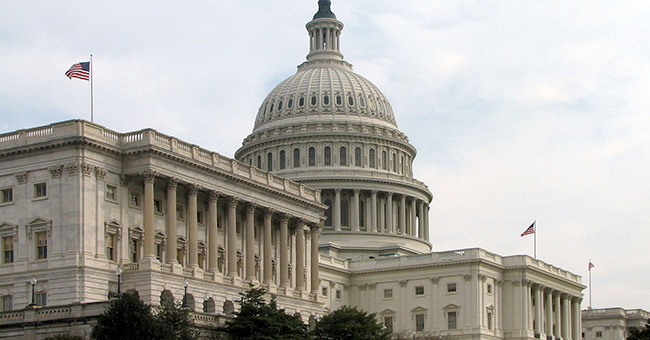
  • The Senate side of the Capitol Building, Washington, DC

    The Senate side of the Capitol Building, Washington, DC

    The combined House and Senate GOP tax bill is going to hurt more than just our economy. In our fraught political climate, anxieties and concerns are running high with regard to the impacts we should brace ourselves for in various sectors of American society. We reached out to a few of our authors to ask what’s at stake now that the House and Senate have struck a deal on the bill and are preparing a final version to deliver to Trump before Christmas.

    ***

    Steven HillSteven Hill: Tax Bills are a Threat to Social Security 

    The separate tax bills that have passed both the US House and Senate are a direct threat to Social Security and Medicare, the very foundations of our retirement system. The nonpartisan Congressional Budget Office estimates that the tax bill will add $1.4 trillion to the deficit, and the Joint Committee on Taxation estimates that even if the Republicans’ overly-optimistic estimates of economic growth were to occur, $1 trillion would still be added to the federal debt. Where is the money to pay for that going to come from? Speaker of the House Paul Ryan has already made it clear: by cutting “entitlements,” which is the Orwellian term that conservatives have attached to this highly popular legacy of Franklin Roosevelt’s New Deal. As if Americans are not deserving of a decent retirement based on deductions from their own wages that they have paid for throughout their working lives.

    As a candidate, President Donald Trump said, “I’m not going to cut Social Security like every other Republican, and I’m not going to cut Medicare or Medicaid.” But now, like with so many other issues in which he constantly flip-flops, he appears to be ready to throw these crucial quality-of-life programs under the bus. Last week he said that entitlement cuts will, “take place right after taxes, very soon, very shortly after taxes."

    This is the absolute wrong direction that this country should be going. Rather than cutting these essential safety net supports, Beltway politicians should be looking to expand Social Security, as I outlined in my book Expand Social Security Now!: How to Ensure Americans Get the Retirement They Deserve. By cutting the many tax loopholes that benefit the wealthy, there is more than enough money in the government treasury to significantly increase the monthly Social Security payout. Other countries have figured out how to do it, why can’t we Americans? It’s all a matter of priorities, and no question the current government has the wrong priorities.

    The irony of it all is that even 70% of Republicans say they do not want Social Security or Medicare to be cut. These are two of the most popular government programs in history, yet they are going to be placed on the chopping block in order to pay for a massive tax cut for wealthy individuals and corporations. So this is a wholesale breakdown of our representative democracy. All Americans, regardless of political orientation, should stand up and say: “Over my dead body, Washington!”


    Carole JoffeCarole Joffe: Of Tax Plans and Fetuses 

    “The tax code is no place to define what constitutes an ‘unborn child.’ What’s next, giving a Social Security number to a zygote?” So exclaimed an exasperated Rep. Diane De Gette of Colorado, co-chair of the Congressional Pro-Choice Caucus. The congresswoman’s remarks were in response to the inclusion, in the House version of the tax bill, language that would allow “unborn children,” at any stage of development, to be named as beneficiaries under the 529 college savings plan that carry tax breaks. This provision was included in the Senate version, until it was removed because a sharp-eyed Wall St. Journal reporter noted that including this provision violated the Senate rule known as the Byrd rule, which stipulates that measures requiring only fifty-one votes under the “reconciliation” process cannot contain extraneous elements. This attempt to add such a provision to the current tax legislation is part of a longstanding effort by the anti-abortion movement to establish legal “personhood” for fetuses, something that has repeatedly failed, when placed before voters. Recently, for example, the Department of Health and Human Services, in releasing a draft of its latest strategic plan, defined life as “beginning at conception.” In short, no matter the subject area, or branch of government, extremist anti-abortion politics are ever-present in the Trump-Pence administration.


  • By Gayle Wald

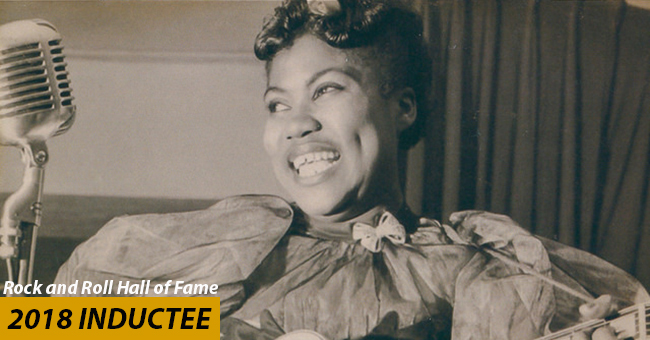
    Sister_Rosetta_TharpeSpeculation is a risky but inevitably necessary business for biographers. When I was working on Shout, Sister, Shout! The Untold Story of Rock-and-Roll Trailblazer Sister Rosetta Tharpe, I made a decision not to stray too far from what I could verify from historical and contemporary sources (even while acknowledging that these, too, are imperfect).

    So when confronting the question of what motivated Tharpe, a musician embedded in the sonic culture of black Pentecostalism, to record secular songs and perform on secular stages beginning in her early twenties, I chose to tread carefully. Maybe this young woman, whose childhood had been defined by pleasing others with her musical gift, craved the love of an even bigger audience. Maybe she wanted to do something so anathema to the godly reputation of her philandering husband, the Rev. Tommy Tharpe, that he would not come looking to drag her back to him. Maybe she really thought she could save souls in nightclubs filled with party people.

    Some readers may have wished for clarity regarding Tharpe’s motivations for performing gospel for the “sinners” as well as the “saints,” or of putting her God-given talent to dubious uses, such as singing for British teenagers wowed by the sight of a woman shredding on an electric guitar. But I chose to honor her mystery.

    But the heady news that Rosetta Tharpe will be inducted into the Rock and Roll Hall of Fame, Class of 2018, makes it feel okay to indulge in a bit of retrospective guesswork. Would Tharpe, who strived to please her church audiences to her dying day, have welcomed the news? How would she have felt about being nominated alongside a British heavy metal band called Judas Priest? 

    She would have loved it.

    In her lifetime, Tharpe was far less concerned with what others chose to call her music than whether it moved them. Her formation in the Church of God in Christ taught her that music had the power to transport audiences, to take them “higher,” emotionally and even spiritually. In the few interviews that survive, Tharpe maintained that it didn’t matter whether “they” called it gospel or blues or rock-and-roll. Music had power no matter what name you gave it.

    There are plenty of historical reasons to induct Tharpe into the Rock Hall—reasons that led me to call her a “rock-and-roll trailblazer” in the subtitle of my book. She was an early pioneer of electric guitar, and developed a dazzling showmanship that involved intricate finger picking and teasing, daredevil sleights of hand. In the 1940s, working with the Sam Price Trio, she made edgy, rollicking songs—including her signature “Strange Things Happening Every Day”—with rock-and-roll charisma. Her craft and larger-than-life personality have imprinted themselves on Who’s Who of late-twentieth-century musical illuminati.

    But inducting Tharpe into the Rock Hall is not just an acknowledgment of her “influence”—a tag that seemingly allows her to enter on the coattails of more familiar names. It is also a recognition of her self-authored musical adventurousness, one that drew from the incomparably rich traditions of African American Christianity. It is a means of symbolically allowing these traditions to “enter” the Rock Hall with her. And it is a means of chipping away at the brittle boundedness of “rock and roll,” a phrase that still relegates women to the sidelines, even when they commanded the whole stage.

    As imperfect as rock institutions can be, it’s nevertheless thrilling to see Rosetta Tharpe honored for her music. I can imagine her saying, with the practiced diction of a proud sister of the church, “Well, I don't care what they call it—gospel, spirituals, rock and roll. But it is about time!”


    About the Author 

    Gayle F. Wald is a professor at George Washington University and the author of Shout, Sister, Shout!: The Untold Story of Rock-and-Roll Trailblazer Sister Rosetta Tharpe and It's Been Beautiful: Soul! and Black Power TV. She was a consultant for the film Godmother of Rock and Roll. Wald lives in Washington, DC. Follow her on Twitter at @gaylewald.  

  • By Jeanne Theoharis

    Rev. Dr. William J. Barber, II

    Rev. Dr. William J. Barber, II. Photo credits: Rev. Liz Theoharis

    This article appeared originally on the National Civil Rights History blog.

    The air was hot and sticky. Surrounded by clergy, Rev. William Barber lambasted the voter suppression that had compromised the 2016 presidential election. “Long before Russia hacked our election, our government was hacked by racism.” Since Barack Obama’s election in 2008 and the Supreme Court’s 2013 stripping of the Voting Rights Act, Barber explained, twenty-two states had passed new laws making it harder for people, particularly people of color, to vote.

    But Barber, who’d helped galvanize North Carolina's Moral Monday movement, wasn’t in Alabama or the Tar Heel state. He was in New York City, standing on the steps of City Hall, flanked by Manhattan borough president Gale Brewer and Reverend Liz Theoharis, co-chair with him of the new Poor People’s Campaign and co-director of the Kairos Center at Union Theological Seminary. Barber was taking the fight to the Big Apple, stressing the links between voter suppression, low minimum wages, lack of Medicaid expansion and high rates of poverty—and emphasizing the ways New York also limited access to voting with no early voting, no same day registration, and no open primaries. Voting rights were not just a southern issue but a national one. From City Hall, they headed to the United Nations to meet with the High Commissioner for Human Rights. They wanted to expose US voter suppression to the world and the racial and economic injustice it furthered.

    Highlighting the unlikely and uncomfortable, Rev. William Barber has long refused the ways people silo political issues, separating voting rights from economic issues from immigration, North from South, black from white from Latino, gay rights from the social safety net. Building an intersectional movement is his driving vision. At a time when political pundits often treat race and class as mutually exclusive political categories, Barber knew they were inseparable.

    Now he was going bigger—joining forces to build a national Poor People’s movement on the fiftieth anniversary of Martin Luther King’s call for a Poor People’s Campaign and assassination. On April 4, 2017, Reverends Barber and Theoharis stood on a balcony at the Lorraine Motel where King had been assassinated forty-nine years earlier to launch this year of action. Demanding we “stop basking in our commemorations,” Barber insisted on action—calling for a “recommitment” to the movement’s unfinished work. A few weeks later, he announced he would be stepping down from the leadership of the North Carolina NAACP to co-chair the new PPC. (“Don’t forget to talk about your sister Liz,” he instructs me, “and how we’re co-chairing it and complement each other—she’s a woman, I’m a man, she’s white, I’m black, she’s in the North, I’m in the South.”) And then on December 4, fifty years after Martin Luther King had called for a Poor People’s Campaign, Reverends Barber and Theoharis formally announced a new PPC from the Capitol, rebuking the current tax cut bill as immoral, unjust and an affront to Christian values.

    The Poor People’s Campaign:

    The idea for a Poor People’s Campaign began with a 1966 visit Martin Luther King made to a Marks, Mississippi Head Start center where he uncharacteristically broke into tears. Four kids eagerly sat there looking forward to a lunch that consisted of nothing more than a quarter of an apple. “I can’t get those children out of my mind,” King told SCLC activist Ralph Abernathy. “I don’t think people really know that little school children are slowly starving in the United States of America.” The idea germinated. The nation had developed ways to ignore and hide the impacts of poverty—and part of their aim would be to force the country to “see the poor” and compel Congress to act.

    In December 1967, King announced the Poor People’s Campaign, zeroing in on the federal government’s “primary responsibility for low minimum wages, for a degrading system of inadequate welfare, for subsidies to the rich and unemployment and underemployment of the poor.” A multi-racial group of poor people from across the nation would descend on the Capitol and stay until their needs were addressed by Congress and the President. Their demands were clear: “$30 billion annual appropriation for a real war on poverty; Congressional passage of full employment and guaranteed income legislation [a guaranteed annual wage]; and Construction of 500,000 low-cost housing units per year.” As King observed, “It didn’t cost the nation one penny to integrate lunch counters, but now we are dealing with issues that cannot be solved without the nation spending billions of dollars and undergoing a radical redistribution of economic power.” The PPC’s first gathering took place in Atlanta in March 1968, bringing over fifty organizations representing poor African Americans, white, Latinos and Native Americans together to build the campaign.

    When King was assassinated in April 1968, the mobilization did not stop. On May 12, 1968, organizers broke ground in DC, setting up a tent city of plywood shanties on the Mall named Resurrection City. Nine caravans of poor people of all races began making their way from across the country to DC. The most visible Black caravan with 100 people and seventeen mule-drawn wagons started out from Marks, Mississippi, the poorest county in the country. Launching a caravan from Memphis, Coretta Scott King declared her own dream “where not some but all of God’s children have food, where not some but all of God’s children have decent housing, where not some but all of God’s children have a guaranteed annual income in keeping with the principles of liberty and grace.” Caravans of Native Americans and Latinos traveled thousands of miles to DC. 

    The highpoint of the campaign came on June 19, Solidarity Day. Some 50,000-100,000 gathered to hear Coretta Scott King, Rosa Parks, and others address the crowd on the need to fight racism, poverty, and war. Key to the PPC’s vision was that people had the right to social assistance—a resounding moral challenge to the prevailing idea that people caused their own poverty. Despite its well-defined demands for full employment, a guaranteed annual income, and the construction of more affordable housing, the Poor People’s Campaign was criticized by many in Congress and the media as ‘unruly’ and needing ‘clarity.’ Resurrection City was torn down by police on June 24, 1968.

    Activists at the Poverty Initiative and Kairos Center at Union Theological Seminary had been building the groundwork for a new Poor People’s Campaign for a number of years—stitching together a coalition of parents from Flint, Fight for $15 workers, young activists in Ferguson, coal miners in West Virginia, farm workers in Immokalee, welfare rights activists and water warriors in Detroit and the Gulf Coast, homeless activists and cultural artists from New York to California, and others committed to transformative social change. With poor people as leaders and organizers, this meant addressing police brutality, restoring the social safety net, attacking environmental racism, paying living wages, fighting for immigrant rights, and making affordable housing, food, and health care available for all. 

    The synergy between what Kairos was doing and Barber’s vision culminated in a Moral Revival tour in fall 2016 and the call for a new PPC. “There is a refusal to see and hear what is really happening to the poor,” Barber observed. “In twenty-six hours of presidential debates there was not one hour on poverty. Not one hour on voting rights. Not even fifteen minutes.” In fall 2017, Barber, Theoharis, and their crew of anti-poverty crusaders began to criss-cross the country from Tempe to Kansas City to Lexington to Los Angeles, making connections with local organizations, holding mass meetings and building movement capacity for forty days of action in the spring. One key difference from 1968 was they were targeting not just Congress but also state legislatures as part of the problem.

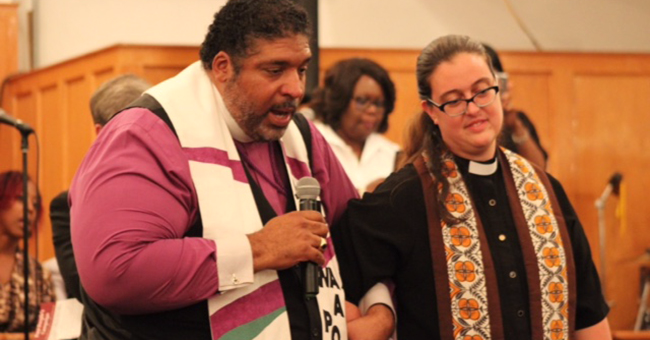
    Rev. Dr. William J. Barber, II and Rev. Liz Theoharis

    Rev. Dr. William J. Barber, II and Rev. Liz Theoharis

    A Life of Struggle 

    Born to political parents who moved back to North Carolina to desegregate the schools, the Reverend Dr. William J. Barber II has pastored Greenleaf Christian Church in Goldsboro, North Carolina for nearly twenty-five years. Shortly after Barber arrived at Greenleaf, he was afflicted with ankylosing spondylitis, a form of arthritis so severe it fused his bones/spine in place. He was told he would never walk again—which after years he did. But he cannot sit on a regular chair—only a tall stool—and the pain is so great he often holds meetings with advisors lying flat on his hotel bed to alleviate some of the discomfort. Like disabled freedom fighter Harriet Tubman (who had fainting spells from a severe childhood injury), Barber’s disability comes with him in everything he does, making it hard to walk, travel, march, stand, sit, and endure long meetings. But like Tubman, Barber is relentless and undeterred, clear that his work is only possible because of the assistance of comrades and family and because he has good health coverage (which he insists must be available for all). Barber talks about the need to “own our brokenness,” as individuals and as a nation. “You can’t fix it when you don’t own it.”

    Harvard University Professor Cornel West has described Barber as “the closest person we have to Martin Luther King Jr. in our midst.” News outlets routinely quote this—but the comparison demands far more than it seems on the face of it: to take seriously the substance of who King actually was, rather than the ever-dreaming caricature he has been turned into. Barber’s prophetic voice, like King’s, weaves together a critique of the “giant triplets of racism, materialism, and militarism”—seeing racism not as a problem of the South but of the nation, intertwined with economic exploitation and war making. Like King, Barber is a scholar and a minister who spends much of his time on the road, weaving together a broader national struggle for racial, economic and social justice, adamant his religious calling necessitates making justice in the world.

    The similarities to King are not always easy ones—exhausting schedules, dizzying travel, death threats, numerous arrests, scores of people sharing devastating oppression that weigh on the spirit, a religious calling which necessitates critiquing allies and fellow Christians for their own roles in maintaining oppression. Like King, Barber understands that the fight for racial and social justice at home is indivisible from the fight for human rights and against US militarism and Islamophobia at home and abroad.

    He worries about the tendency to fetishize individual leaders, describing how they are “building this movement of people of the poor, not with the poor so even if something happens to one of us, it does not undermine the movement.” And he laments our tendencies to “love the tombs of the prophets” but refuse to take up their work.

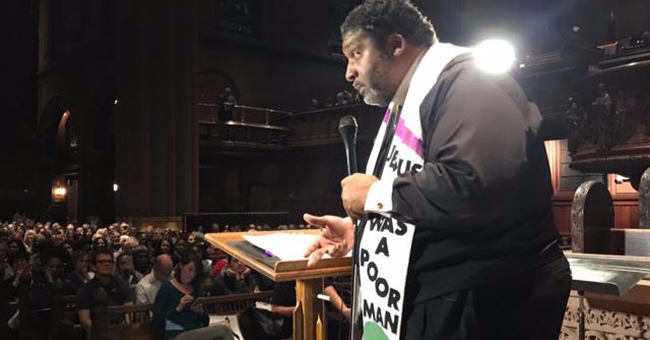
    “Jesus was a Poor Man”

    The night the Senate was trying to pass the ‘skinny repeal,’ Barber was in DC out on the lawn with protesters. They had brought caskets to highlight the deaths the repeal would cause but were told by Capitol police they had to remove them. Proceeding inside to the Senate gallery and wearing a religious stole that read “Jesus was a poor man,” Barber was instructed to take it off if he wanted to enter.

    “This is a fact,” Barber recounted telling the guard. “Jesus was a poor man.” To Barber this was emblematic—“if it’s too graphic or too pointed, the forces that be have given directives that it should not be seen.” And so, just as fifty years ago, “we must see what our society has refused to see.”


    About the Author 

    Jeanne TheoharisJeanne Theoharis is Distinguished Professor of Political Science at Brooklyn College of CUNY and the author of The Rebellious Life of Mrs. Rosa Parks. Her forthcoming book, A More Beautiful and Terrible History: The Uses and Misuses of Civil Rights History, will be released by Beacon Press in January 2018. Follow her on Twitter at @JeanneTheoharis and visit the Rosa Parks biography website.

  • By Linda McQuaig and Neil Brooks

    Charles and David Koch

    Charles (photo credit: Kevin Moloney/Fortune Brainstorm TECH) and David (photo credit: Gage Skidmore) Koch

    Toward the end of November, the Meredith Corporation, owner of Family Circle, Better Homes and Gardens, and AllRecipies, agreed to buy Time Inc. for $3 billion. To help make the all-cash transaction possible, Charles and David Koch contributed $650 million. The billionaire brothers have been known to use their wealth and political connections to promote conservative causes. Meredith, however, stated in its announcement of the deal that they will “have no influence on Meredith’s editorial or managerial operations.” But as Linda McQuaid and Neil Brooks show us in this excerpt from Billionaires’ Ball: Gluttony and Hubris in an Age of Inequality, the brothers have a history of masking their influence to push for their interests. The future of such magazine titles as Time, Sports Illustrated, Essence, and People, now part of Meredith’s portfolio, remains to be seen.

    ***

    Barely a month after Barack Obama had been sworn in as the forty-fourth US president, riding a wave of immense popular support with his “Yes, we can” rallying cry echoing around the country and the world, a voice seemed to appear from nowhere saying, “No, actually you can’t.” Ostensibly, it came first from Rick Santelli, a relatively obscure investment manager-turned-commentator on CNBC, who denounced Obama’s plans to help struggling American homeowners as “promoting bad behavior.” In a wide-ranging rant from the floor of the Chicago Mercantile Exchange on February 19, 2009, Santelli said, “We’re thinking of having a Chicago Tea Party in July. All you capitalists that want to show up to Lake Michigan, I’m gonna start organizing.” Within hours, a protest movement had swung into action on the Internet, talk radio, and cable TV, and rallies were scheduled across the country for the following week.

    To Mark Ames and Yasha Levine, journalists who had written for an expatriate newspaper based in Moscow, there was something fishy about the whole affair. “As veteran Russia reporters, both of us spent years watching the Kremlin use fake grassroots movements to influence and control the political landscape. To us, the uncanny speed and direction the movement took and the players involved in promoting it had a strangely forced quality to it.” Ames and Levine noted that, only hours after Santelli’s rant, a previously inactive website called ChicagoTeaParty.com, which had been registered six months earlier by a right-wing activist, sprung to life, declaring itself the official home of the Chicago Tea Party. Whether or not Santelli was part of deliberate plan to launch the Tea Party—he denies that he was—Ames and Levine quickly pointed out what other journalists have later confirmed: that the apparently spontaneous outburst of disaffected Americans was greatly helped along by an organized and sophisticated campaign ultimately funded by two of America’s richest men, Charles and David Koch.

    In many ways, the emergence of the Tea Party as a potent force in American politics can be seen as the culmination of almost four decades of behind-the-scenes effort on the part of the billionaire brothers. The political views of the Koch brothers have always been on the extreme right, nurtured by their father, Fred Koch, a cofounder of the ultra-right-wing John Birch Society. Since inheriting his massive privately held oil fortune in the late 1960s, the brothers have been pouring untold millions of dollars into promoting libertarian causes. The probing of Ames and Levine, as well as a comprehensive, investigative piece by Jane Mayer in the New Yorker in August 2010, has shown that the brothers established a vast network of ultra-conservative political organizations, advocacy groups, publications, and think tanks. Included in this network is the high-profile Cato Institute, which has aggressively pushed for an end to Social Security, and the Mercatus Center, located at George Washington University, which has been a leading advocate of environmental deregulation and inaction on climate change. (Its scholars have reassured the public that “if a slight warming does occur, historical evidence suggests it is likely to be beneficial, occurring at night, in the winter and at the poles.”)

    The brothers have mostly stayed out of politics directly (apart from David Koch’s stint as the vice presidential candidate for the Libertarian Party in 1980, positioned to the right of Ronald Reagan). Perhaps the Kochs sensed how politically toxic a couple of billionaires could be to a movement whose central aim has been slashing taxes on the rich and dismantling programs, like Social Security, that keep millions of Americans out of poverty.

    Hence they’ve masked their involvement. But their fingerprints are all over groups that have played an essential role in fostering the Tea Party’s rise, particularly Americans for Prosperity, which David Koch started in 2004. In a rare speech to a celebratory AFP gathering in the Washington area in 2009, Koch confirmed his involvement: “Days like today bring to reality the vision of our board of directors when we started this organization five years ago.” Still, with Koch and his kingly lifestyle remaining mostly out of sight, AFP has been able to present Koch-funded political events as populist gatherings of ordinary citizens trying to fight vested interests. Advertisements for a 2010 summit called Texas Defending the American Dream, for instance, proclaimed, “Today, the voices of average Americans are being drowned out by lobbyists and special interests”—without mentioning that the event was being sponsored by two of America’s wealthiest men, whose lobbying and special interest pleading had become so extensive it was dubbed the Kochtopus decades earlier.

    In fact, the Kochs were really just one—although a leading one—of the ultra-rich US families that in the 1970s turned their attention and directed their wealth to the task of pushing American politics sharply to the right and putting in place policies that more clearly favored their own interests.


    About the Authors 


    Linda McQuaig
     has developed a reputation for taking on the establishment. Author of seven Canadian best sellers and winner of a National Newspaper Award, she has been a national reporter for the Globe and Mail, a senior writer for Maclean's magazine, and a political columnist for the Toronto Star. Follow her on Twitter at @LindaMcQuaig and visit her website.

    Author of three books, Neil Brooks is director of the Graduate Program in Taxation at Osgoode Hall Law School in Toronto. He has participated in building projects relating to income tax in Lithuania (through the Harvard Institute for International Development), Vietnam (Swedish International Development Agency), Japan (Asian Development Bank), China (AUSAid), and Mongolia (AUSAid).

  • By Frances Moore Lappé and Adam Eichen

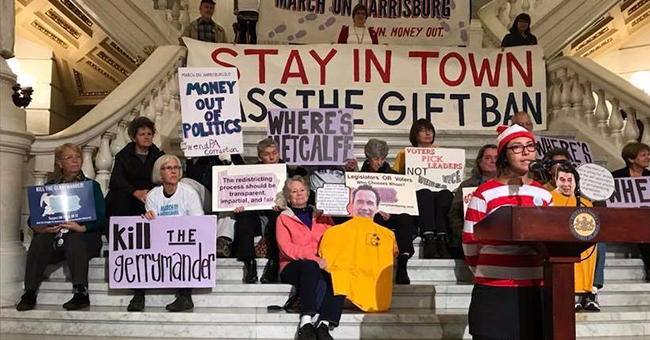
    March on Harrisburg activists rally inside the Pennsylvania state capitol building for a state gift ban and gerrymandering reform on November 17, 2017.

    March on Harrisburg activists rally inside the Pennsylvania state capitol building for a state gift ban and gerrymandering reform on November 17, 2017.

    This article appeared originally on The Huffington Post.

    “The system is rigged!” is now an angry, bipartisan cry, intensifying as Trump bows to big-donor interests and deepens distrust of government.

    But here’s the worst part. Not only has big-donor influence blocked life-saving public actions, from worker safety to climate change, but in recent decades political donors have gotten savvier. They’ve been able not only to bend policy for their own benefit, but, increasingly, to remake the rules of democracy itself to serve their interests.

    Here’s a taste of what we mean.

    Since 2010, when a big-money-empowered Tea Party swept Republicans into Congress and statehouses, twenty-three states have enacted laws making it harder to vote. To solidify gains, they’ve gerrymandered state and congressional districts so thoroughly that in many state and congressional races competition for office—the heart of democracy—is effectively dead.

    Democracy shrinks further as those elected by relying on huge sums from the top one percent form a political class with little need to respond to the real concerns of most Americans.

    Citizens, however, are not sitting idly watching our democracy go under. A citizens movement, what we call the Democracy Movement, is pursuing all angles to fight back and to take our democracy forward.

    In Wisconsin, for example, teacher-turned-lawyer Wendy Sue Johnson and eleven other Wisconsin citizens became plaintiffs in a case now before the Supreme Court that could spell the end of partisan gerrymandering. The practice, said Johnson, allows “elected officials to choose their voters instead of the other way around.” Legal challenges in other states are targeting voter identification laws, proven to lower voter participation in vulnerable communities.

    Increasingly, it’s dawning on Americans that “issues” they once thought of as wonky or dry touch the heart of it all: whose voice can be heard on the biggest questions of our time.

    The Democracy Movement is realizing real success—success that may have been missed by those shaken after Election Day 2016. On that day, unknown to most Americans, fourteen of seventeen state and local pro-democracy ballot initiatives passed, from public financing in South Dakota to ranked-choice voting in Maine. True, some face legal and legislative challenges, but they prove that citizens are stepping up for democracy with new vigor.

    One of the most significant of the Democracy Movement’s legislative advances is automatic voter registration (AVR). Sound wonky? AVR just means that any time citizens interact with specific governmental agencies, like the Department of Motor Vehicles, they get registered. It’s simple, less error-prone, and saves a lot of money.

    And if you think it is just small-potatoes reform, think again. In 2015 Oregon became the first state to adopt automatic voter registration, and in 2016 almost 272,000 Oregonians registered for the first time, two-thirds through the new, automatic process. And, of the newly registered, thirty-three percent voted—an incredible success. In all, between 2012 and 2016, turnout in Oregon grew more than in any other state.

    Now ten states plus the District of Columbia have jumped on board. Moreover, in Nevada, an AVR ballot initiative is underway and in Massachusetts a legislative campaign is gaining momentum.

    The successes of a rising Democracy Movement are happening because more and more Americans get it: No matter what our specific issue passion, we now see that we can’t move it forward without fixing the rules of our democracy itself.

    On this point, Josh Silver, founder of Represent.Us, an organization working to get big money out of politics, once chided us: “You don’t have to abandon your issue in order to work for democracy. You can, you know, love two children at once.” In other words, we can stay loyal to the issue closest to our heart—whether advancing racial justice, defending the environment, or ensuring a livable wage—while also act on the underlying crisis weakening our democracy.

    With this liberating insight, Silver, along with millions of Americans, is part of a bipartisan, multi-generational, and culturally diverse groundswell—the first such broad yet focused citizen movement in living memory.

    The Democracy Movement broke new ground in 2013, when some of the biggest social-cause players in America—from the NAACP, Common Cause, and Sierra Club to the Communications Workers of America and Greenpeace—had their own “two-child” aha-moment. Together, they joined hands and took the leap, forming a unique organization-coalition blend, the Democracy Initiative, committed to a common democracy-reform agenda.

    In uniting such diverse groups, Sierra Club president Mike Brune told us he saw the chance to “create a really powerful coalition and counter-balance all these billions of dollars coming from the Koch brothers and other oil and coal executives.”

    Four short years later, the Democracy Initiative is now a full-blown organization-coalition of more than sixty organizations devoted to a vast array of causes, all pledging to engage also in democracy-reform campaigns. Led by former labor leader Wendy Fields, it now represents thirty million Americans.

    Democracy Initiative creates a network of relationships so that groups know they’ve got each other’s back; confident they can count on each other to rally together in critical moments, regardless of each member’s central focus.

    Two of its newest members highlight Democracy Initiative’s breadth.

    They are New York’s Working Families Party and Corporate Accountability International, a leading watchdog organization that has challenged corporate power for decades. A “lasting victory on issue areas like reining in corporate power, tackling climate change, and advancing racial justice depends on a thriving democracy,” Executive Director Patti Lynn explained. “The cross-movement unity that the Democracy Initiative is building has the power to transform politics as we know it, restore the promise of democracy, and help us all win more, faster.”

    Recently, our own Small Planet Institute joined the Democracy Initiative as well.

    Another significant shift in this growing movement is that veterans in the democracy-reform trenches and newcomers alike are taking solidarity on democracy reforms to a deeper level. Some groups specialize in restoring and protecting voting rights, while others tackle money in politics. But both now increasingly see their unity: that getting big money out of politics means little if the right to vote is not guaranteed, and vice versa.

    In all this ferment, we see the Democracy Movement becoming a true “movement of movements.” Under a common canopy of hope, groups are simultaneously tackling voting rights, money in politics, gerrymandering reform, ballot access, and election security.

    From the April 2016 Democracy Spring and Democracy Awakening mobilizations in which an historic 1,300 were arrested on the Capitol steps to the March on Harrisburg‘s valiant fight for a simple gift ban for Pennsylvania legislators, to countless new organizations such as The Franchise Project and Access Democracy—the momentum builds.

    So in this moment of unprecedented threat to our democracy, a rising Democracy Movement embodies hope in action, rewarding all those jumping in with the thrill of knowing their action is upholding the most noble of American values, democracy itself.


    About the Authors 

    Frances Moore LappéFrances Moore Lappé, author of the multimillion-selling Diet for a Small Planet and seventeen other books, is a recipient of the Right Livelihood Award, the “Alternative Nobel.” Follow her on Twitter at @fmlappe and visit her website. 


    Adam EichenAdam Eichen is a Democracy Fellow at the Small Planet Institute, cofounded by Lappé, and a board member of Democracy Matters, and he served as deputy communications director for Democracy Spring. Lappé and Eichen, separated by generations, are united in the movement for a living democracy and work together in Cambridge, Massachusetts. Follow him on Twitter and @AdamEichen.

  • By Colum McCann

    Pen on paperWe live in an age where gun violence and mass shootings have become commonplace in the US. In response to our country’s continued crisis over gun control, poets Brian Clements, Alexandra Teague, and Dean Rader collaborated to edit Bullets into Bells: Poets & Citizens Respond to Gun Violence. This anthology is framed in a call-and-response format that brings together the voices of poets and citizens most impacted to call for the end of gun violence. As writer Colum McCann reminds us in the introduction of the book, excerpted below, poetry has the power of activism to engage us in communication and empathy to understand the personal dimension of urgent social issues.

    ***

    “If you speak, you die. If you keep quiet, you die. So, speak and die.” Shortly after the Algerian poet and journalist Tahar Djaout wrote these words in the summer of 1993 he was gunned down in the streets of Algiers. Djaout spoke in favor of progress, secularism, decency, a broader world where intellectual and moral narrowness would be defeated. But the bullets did their work: after a week in a coma, Djaout died. His killers, a fundamentalist group, later admitted that they feared him because he wielded the mighty weapon of language.

    The tragedy of it all was that Djaout’s voice was silenced and amplified at the same time. We have no way of knowing what else Djaout would have said or how he might have shaped a different future for his part of the world. Everything at the end of a bullet’s journey becomes conjecture.

    Still, the fact remains that Djaout did speak out during his short life. His death had backspin. Nobody was going to be able to wipe out what he had already said. Having written, he spoke. Having spoken, he endured. Having endured, he now survives.

    What Djaout believed was that a lot of things can be taken away from us—even our lives—but not our stories about those lives. Eventually, no bullet will outlast the speed and velocity of language. This notion might totter on the edge of nostalgia—after all, it seems most likely that it’s better to be alive than not—but Djaout’s words are worth repeating: If you speak, you die. If you keep quiet, you die. So, speak and die.

    Poets have known about the perpetuity of language, stories, and music making since the very first days when rock was scraped against the cave wall. In the beginning was the word. Others might repress it, torture it, burn it, chain it, mangle it, but the proper flesh of language cannot be outright annihilated.

    The hope—and perhaps the enduring belief of literature—is that it will present itself even more inventively than ever before.

    ***

    On December 2015 the New York Times ran an editorial on its front page—the first time the paper had done so since June 1920, when Warren Harding landed the Republican presidential nomination—calling in no uncertain terms for the proper regulation of guns in the aftermath of a spate of shootings. The editorial, titled “The Gun Epidemic,” said that legally purchased weapons designed to kill with brutal speed and efficiency were a “moral outrage and a national disgrace.”

    At the time of the editorial, the murders in San Bernardino had just happened. Multiple shootings in Colorado Springs had left four people dead. The anniversary of Sandy Hook was just days away. All you had to do was whisper the name of a state—Oregon, Virginia, South Carolina—and immediately another tragedy shuddered in the throat.

    The newspaper sparked a heated debate in its commentary boxes, with more than seven thousand people weighing in in a matter of days. We have elected the most cowardly human beings one could find to supposedly represent the people who elected them. Frankly as a gun owner I am appalled! I’d be happy if we could find and recover our national sanity. Kill someone with a gun, then you are shot by a firing squad the day after your conviction, you could even put it on Pay Per View and give the money to the victims [sic] family. We need civic anger. The Amendment is not a blank check to own any type of weapon. Until you outlaw capitolism [sic], there will always be someone willing to sell whatever people want to buy. They [the NRA] have turned into nothing more than a sycophantic lackey of the small arms industry. I’m worried that we’re losing our grip on our representative democracy.

    Newspaper commentary boxes are hardly going to turn into grand symphonic cathedrals, but what was most apparent was the rancor and outright bitterness that bubbled underneath the entries. This was a country at odds with itself. The New York Times’s decision to throw its front-page hat into the ring was brave, but what could have been the beginning of true national soul-searching ended up, ultimately, as an exercise in division and derision and re-division.

    This became especially poignant when, weeks later, President Obama stood at a White House podium and literally shed tears while recalling the first-graders in Newtown and said that all of us need to “demand a Congress brave enough to stand up to the gun lobby’s lies.” What resulted afterward was a sort of embarrassed national silence that slid its way into the echo chamber of the election year. The sight of a president crying on national television was a shock to the soul. He was not shedding tears for the availability of guns, or for gun control, or the paltry legislative efforts of his own colleagues—rather he was shedding tears for twenty children and six adults who had died four years previously. Obama believed that those deaths could have been prevented by proper moral action in the political sphere. He was joining the human with the political and calling on the country to examine what Faulkner would have termed “the human heart in conflict with itself.” Obama’s reaction was one of the bravest moments in recent political history. Still, nothing happened: or as close to nothing as one can get.

    How with this rage shall beauty hold a plea?

    What becomes increasingly apparent when talking about guns or gun awareness is that it seems—at least initially—that there is very little room for embracing lasting nuance. The gauntlet is quickly thrown down. He said, she said. He won’t, we won’t. All or nothing. Subtlety quickly gurgles down the drain hole, even for those with the best of intentions. There is very little chance for the multiple sides to come together to try to even attempt to understand one another, to find any equivalence, or balance, or redress. The scales of rhetoric get tilted immediately. There is so much at stake—not just money or pride or politics, but our actual thumping lives.

    Yet, what is seldom addressed in the debate about guns and gun ownership is that the vast majority of people in this country—except for a small fringe of lunatics, homegrown and foreign both—feel the exact same way about one thing: they abhor violence. This is the common ground on which most proper-thinking people stand, whether they have a gun underneath the pillow or not. Gun control advocates and the pro-gun lobby often want the exact same thing; they just haven’t figured out how they can get it together.

    You can rack up the statistics. Every year in the United States, more than thirty thousand die from gun violence, including suicides, accidents, and assaults. Sixty percent of gun owners say they own the weapons to protect themselves against crime. Between 1968 and 2015, more than 1.5 million people were killed by shootings—more Americans than in all our wars combined. It is said that toddlers mishandling guns kill more people than terrorists do. Depending on whom you talk to, it is estimated that there are one to two guns for every person in the United States.

    But eventually facts and figures begin to cloud the elemental truth. Statistics are mercenary things. They can be used in any territory we want. That 1.5 million dead can be just that, one and a half million, or you can imagine lining up every man, woman, and child in Phoenix and ask them to fall to the ground one after the other, after the other, after the other. Language itself can be a great manipulator of facts: If 60 percent of American gun owners say they possess a firearm to prevent crime, does that mean that 40 percent don’t? What age is a toddler and who might have put this “fact” about terrorists into the forefront of our minds? And what exactly are “all our wars combined”?

    If we are genuinely interested in changing our reality on the ground, what we really need is a deeper understanding and a hope that all our disciplines—law, science, politics, education, and, yes, poetry—can come together to create an accepted, and acceptable, truth that is, in essence, a textural truth, something we know, deep in the heart’s core, happens to be true and good and right.

    ***

    The nobility of poetry, says Wallace Stevens, “is a violence from within that protects us from a violence without. It is the imagination pressing back against the pressure of reality.” Poetry helps us to live our lives. It offers a response to all the available evidence that the world is, in fact, a tar pit of greed and despair.

    What poetry can do is untangle some of the “facts” and reveal the human tissue underneath.

    The aim of this anthology—so ably and passionately put together by the editors Brian Clements, Alexandra Teague, and Dean Rader—is to try to shift the nature of the debate around guns and give voice to the effect of violence in a manner that isn’t always associated with the poetic. The aim, according to Clements, is that “poets, survivors, families and friends of victims, activists, political figures, researchers, and audiences will come together to share and discuss their common ground.” The book is set up in a call-and-response format, a church of the possible. True, the anthology probably does lean toward those of us who might prefer to see guns vanish from our lives, but the real emotional thrust is toward antiviolence. The poems attempt to create a community built not just of grief but of hope, too.

    Many people in this book have suffered publicly, but the point of their poetry is not to whine or moan or even set things aflame but rather to communicate the intricate nuances of that suffering with others. It is a form of public sharing. Take these words. Weigh them up. Listen. Pause a while. Help reality touch justice.

    It would be word-consuming and indeed disingenuous for me to point out any of the individual contributors since each and every one has a voice and a story to tell, and each tells it with rhyme and economy. There are many world-famous poets here, shouldering side-by-side with contributors who are much less known. There is a very good reason for this. It amounts to a solidarity of poetic intent. Poetry calls out for us to be inclusive. This anthology is not meant to be shelved. It is designed to be left on the seats of buses, in doctor’s waiting rooms, on street corners, in order to say that we are in this together. The self-evident truth is that we need to start talking to one another, not with a legion of sound bites or statistics but with human texture and longing to at least lessen, if not eradicate, the violence that afflicts us.

    One of the beauties of poetry is that it is essentially an act of nonviolence. It can make us feel the pain, but we do not necessarily have to suffer it.

    In poetry and storytelling, a ritual transaction occurs between reader and writer: the reader is given an illusion that he or she suffers, or enjoys. It is a life that is not his or her own, but one the reader steps inside for a moment. We become alive in another body, or soul, or time. We are forced, in literature, to make the empathetic leap into the realm of someone else. And the stories we tell one another are our own nonviolent alternative.

    ***

    I am privileged to be the cofounder, along with literary activist Lisa Consiglio, of a nonprofit group called Narrative 4, a global story-exchange organization. The group is fronted by writers and artists, including Terry Tempest Williams, Rob Spillman, Greg Khalil, Assaf Gavron, Ishmael Beah, Lila Azam Zanganeh, Tyler Cabot, and several others, including countless numbers of teachers. Our goal is to bring people together to tell one another’s stories. You step into my shoes, I will step into yours. We see stories and storytelling as the exercise of the ultimate democracy. By dwelling in someone else’s story, we believe we can turn empathy into action and help expand the lungs of the world.

    In December of 2016, Narrative 4 brought together a group of people from across the United States to share stories under the umbrella of “gun awareness.” We gathered police officers, hunters, gun control advocates, victims, gang members, perpetrators, NRA members, and others into the same room in order to see if they might be able to better understand one another.

    The group included Carolyn Tuft, a mother from Utah who lost her daughter in the Trolley Square mall shootings in 2007. She herself was shot at point-blank range and has so much buckshot in her body that she suffers from lead poisoning. On the other end of the group’s spectrum was Todd Underwood, the thirty-seven-year-old owner of United Gun Group, an online gun seller. On his site, Underwood allowed George Zimmerman to auction off the Kel-Tec PF-9 that was used to kill Trayvon Martin. (The pistol went for $250,000, a sum that deserves to be written out—a quarter of a million dollars for a weapon that would normally retail for $250.)

    Underwood and Tuft were matched up to tell each other’s stories. They were about as diametrically opposed in the gun debate as any two people could be: Todd, so deeply for gun ownership, and Carolyn, so personally disturbed by the lack of gun control. When they finally got to tell those stories— “Hi, my name is Carolyn,” said Todd, while Carolyn introduced herself as a man who owned 150 guns—the tension in the room was electric. But they managed to make the quantumemotional leap into each other’s worlds. For a moment, Todd became Carolyn, and Carolyn became Todd. “For” met “against.” Grief met free choice. Shrapnel met flesh. The two began to understand each other differently. They saw with a vision transformed. Something magical occurred in the difficulty of trying to understand a person so completely different. Not so much a chemical reaction as a chimerical one.

    Carolyn said that the world had been shifted for her. Her mind hadn’t changed about the value of gun ownership, but she understood the complexities of the debate in a far deeper way. A further nuance had crept into her heart. She could feel herself embracing contradiction. It wasn’t necessarily comfortable, but it was life altering. Todd too was rocked to the core. He went back to Kansas and immediately began trying to figure out how he could organize story exchanges between Christians and Muslims in his hometown. Most stunning of all is that Todd changed the rules of his online gun website so that visitors to his online message board could no longer use pseudonyms, and purchasers would have to go through an identity check. He and Carolyn became Facebook friends and remain, to this day, in contact with each other.

    All of this from looking someone else in the eye. All of this from the simple art of listening and telling.

    Our stories, our language, our change.

    ***

    The late, great Jim Harrison once said that he would rather wear his heart on his sleeve and give full vent to the world of human disappointments than die a smart-ass.

    The conviction behind this anthology is that we should be in the habit of hoping and speaking out in favor of that hope. It is, in the end, an optimistic book. The poems assert the possibility of language rather than bullets to open up our veins. To some this may be pure nostalgia. But to others amongst us, we recognize that cynicism is far more nostalgic than any embrace of hope. Cynics live in the sentimental cloud of their own limited territory. They are unable to journey outside of themselves. The optimists are, in fact, the tough and muscular ones. They are ready to place themselves in the line of fire.

    What this book can achieve is opening up the grief and the pain to reveal whatever available joy that can be there. This is not a book about the good guys or the bad guys, or even the good guns and the bad guns. It is not a book designed to argue about laws or philosophies or the intricacies of constitutional amendments. Nor is it a book designed by a polemical committee to change your mind.

    We can never forget that the good of poetry is first and foremost in the thing itself: the sound, the rhythm, the life-altering order of words. To communicate such suffering beautifully is one of the great paradoxes of the human soul. But it must be done. How a poem is said is as vital as what it says.

    Still, in certain instances poetry has to stand up and shout too. It must kick down the doors and open the windows. It must believe in itself. It must also know that it exists for a reason. Poetry can indeed shift perception. There is a reason we recite poems at funerals and births and weddings. This is where life is most fully engaged. We need a language to celebrate it.

    It would be delusional to think that every congressman in this country would suddenly have a change of heart after reading this suite of poems, but it would also be delusional for writers of every color and creed to remain silent. The poetic instinct almost invariably sways toward the just. We have to speak up. Otherwise we are doomed. Silence, as Tahir Djaout says, equates to death. An untold poem would indeed be its own form of suffering.

    If you speak, you might just live. So, then, speak and live.


    About the Author 

    Colum McCann is the bestselling author of six novels including the National Book Award-winning Let the Great World Spin, TransAtlantic, and Thirteen Ways of Looking.

  • By Rashod Ollison

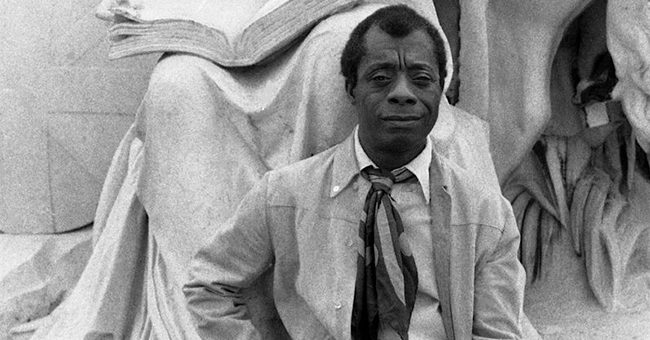
    Portrait of James Baldwin on the Albert Memorial, Kensington Gardens, London

    Portrait of James Baldwin on the Albert Memorial, Kensington Gardens, London. Photo credit: Allan Warren

    When I first read James Baldwin at about age sixteen, I didn’t quite understand everything in Notes of a Native Son. But I knew the powerful prose was important and that I would return to it. Baldwin at that point had been dead for close to a decade. I’d come across a dog-eared paperback of Notes of a Native Son in the public library, where I worked after school. I imagined Baldwin a robust man whose presence was as commanding as his work. When I saw pictures of him as I began to explore more of his writing in college, his pronounced features—his intense globular eyes, his ingratiating gap-toothed grin—clarified something about his work for me. He always saw well beyond the surface unlike any other writer of his generation or any other writer since. He saw well beyond the bullshit of the American Dream and called it out. No matter how stinging the truths he told, his language—reverent and often poetic—was anchored in unflinchingly honest love.

    I love America more than any other country in this world, and, exactly for this reason, I insist on the right to criticize her perpetually.

    In recent years, there’s been something of a Baldwin renaissance, culminating in last year’s I Am Not Your Negro, the Oscar-nominated documentary based on Baldwin’s unfinished manuscript, Remember This House. The house where the legendary author spent his last years, a long dilapidated structure in Saint-Paul-de-Vence, France, has made headlines in the last week. The site will be developed into a luxury apartment complex called Le Jardin des Arts and is slated to open by June 2019. Novelist Shannon Cain organized His Place in Provence, a preservationist group that had raised funds to save Baldwin’s house, where back in the day he hosted the likes of Miles Davis and Ella Fitzgerald. He also wrote one of his best works, If Beale Street Could Talk, in the house nestled in a medieval village. But Cain’s efforts and those of other preservationists have failed. The irony is rich: The home of a man who spoke so perceptively about the deleterious effects of poverty, about the bruises it leaves on the psyche and the soul, will become sleek apartments for the well-to-do.

    Anyone who has ever struggled with poverty knows how extremely expensive it is to be poor.

    The new development where Baldwin’s home used to be is reminiscent of the gentrification that’s taken over historically black sections of several cities in America, including Washington, DC. Sections of Harlem and Brooklyn in New York have seen it, too. And there have been several stories of cultural clashes between the whites moving into those areas and the few black residents still there. Clusters of new high-rise luxury homes with outrageous rents, expensive boutiques and Starbucks have long pushed out indigenous businesses. The changes were inevitable, but that doesn’t mitigate the fact that a rich cultural history by marginalized people in such areas has become lost.

    When I was growing up, I was taught in American history books that Africa had no history and neither did I. That I was a savage about whom the less said the better, who had been saved by Europe and brought to America. And, of course, I believed it….Everyone else seemed to agree. If you walk out of Harlem, ride out of Harlem, downtown, the world agrees. What you see is much bigger, cleaner, whiter, richer, safer. And it would seem then, of course, that it’s an act of God that this is true; that you belong where white people have put you.

    Despite the recent celebrations of Baldwin’s legacy, the loss of his final home, the place where he settled after years of shuffling back and forth between Europe and the United States, is deeply sad. If any international figure of literature deserves such preservation, it’s Baldwin. The walls that saw many lively parties and Baldwin banging out his final masterpieces will soon be gone forever. But we still have his words, and their power will never cease to resonate and enlighten.

    I am what time, circumstance, history, have made of me, certainly, but I am also, much more than that. So are we all.


    About the Author

    Rashod Ollison was an award-winning pop music critic and culture journalist. He was a staff critic and feature writer for the Dallas Morning News, Philadelphia Inquirer, Journal News (Westchester, New York), Baltimore Sun, and Virginian-Pilot. He also wrote a music column for Jet magazine. A native of Little Rock, Arkansas, Ollison lived in Virginia Beach.