• By Abbey Clements and Brian Clements

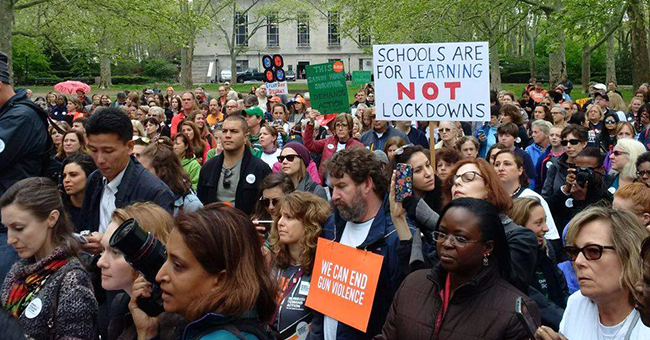
    Abby and Brian Clements at the Moms Demand Action March Across Brooklyn Bridge, Cadman Plaza Park, Brooklyn, NY

    Abbey and Brian Clements (center) at the Moms Demand Action March Across Brooklyn Bridge, Cadman Plaza Park, Brooklyn, NY. Photo credit: Brian Clements

    It’s now November, and we’re approaching the five-year mark of the tragedy that befell Sandy Hook School in Newtown, Connecticut. We know what it’s like to walk through the residual effects of a horrific shooting, wandering through the days at the grocery store, at school, head down, not knowing what to say, trying to move forward, trying to make sense of it, trying to reclaim normalcy for your children, for all the town’s children.

    Our hearts break over and over again when we hear of each mass shooting—now over 300 of them in 2017 alone. This news hits our town so deep. We know the challenging road ahead for families, for survivors, for residents—now for Sutherland Springs, TX, a town so small.

    A headline after the worst mass shooting in modern American history in Las Vegas reads “25 days later, survivors say they can still hear the bullets and the screams.” Those survivors will always hear those sounds. Mass shootings have long-lasting ripple effects. For those who’ve lost loved ones, grief never ends. Survivors endure severe feelings of guilt. Those of us who choose activism as a way to channel grief and guilt are accused of doing so for the sake of political gain. Yet we feel a sense of responsibility for speaking out about this pandemic of violence and want to do anything we can to keep this kind of thing from continuing.

    The vast majority of Americans favor background checks on all gun sales, stronger limits on who can buy weapons, and limits on semi-automatic weapons and high-capacity magazines. Yet Congress does nothing. Since the Sandy Hook shootings five years ago, over 150,000 Americans have died from guns. And Congress does nothing.

    Congress’s inaction is extremely frustrating for those directly affected by gun violence and activists in the gun violence prevention movement. How is it possible, five years after Sandy Hook and Aurora, almost twenty years after Columbine, that we have allowed the Brady Law to lapse? It’s unbelievable that we have elected a President and continue to elect legislators who favor gun industry profits over, as Sandy Hook parent David Wheeler has said, “the right of my son to his life.” It’s unconscionable that after Las Vegas we have a Congress who will do nothing about the lowest hanging fruit—outlawing devices that allow semi-automatic weapons to behave as automatic weapons. What will it take to protect ourselves from these weapons?

    But we will not give up, we cannot give up. We garner strength from the countless survivors and activists we’ve met along the way. We know their stories. A whole community of survivors and activists has risen in this country, a club to which we never wanted to belong, as many say. The list is long. Perhaps you are one of them. We are in this fight for the long haul because we are unable to abandon the honor of those people; we hope that in their dark moments after every new shooting that we might provide some strength to them as well.


    About the Authors 

    Abbey Clements was a teacher at Sandy Hook from 2004 to 2015.

    Brian Clements is co-editor of the forthcoming Bullets into Bells: Poets and Citizens Respond to Gun Violence. Follow him on Twitter at @bri_clements.

  • By Brando Skyhorse and Lisa Page
    We Wear the Mask

    Image credit: Bob Kosturko

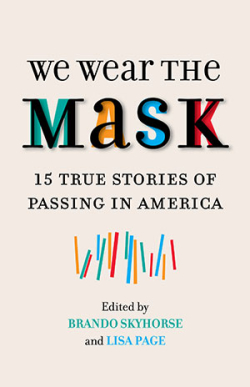
    America has a long and complicated history of passing. We’re familiar with the stories of African Americans who passed as white in the past in order to improve their social mobility. Nowadays, we are hearing a variety of personal experiences about passing that transcends additional modes of identity—class, religion, gender, sexuality, and more. Writers Brando Skyhorse and Lisa Page have brought together some of these stories in their new essay anthology We Wear the Mask: 15 True Stories of Passing in America. As they point out in the introduction of the book, excerpted below, there have always been many ways in which people pass, and many reasons to do so.

    ***

    In June 2015 a surprising number of Americans stopped to gawk at a thirty-seven-year-old “African American” woman named Rachel Dolezal who, after an almost decade-long act, was outed by her parents as a white woman who chose to pass as black. The national response, culminating in a Today show appearance, was extreme. Some were outraged by her deception, while others drew parallels between her right to live her “truth” the same way Caitlyn Jenner embodies hers.

    Rachel—or “#BlackRachel” as she trended online—never once “broke character.”

    Later that month, the Daily Beast reported on Andrea Smith, an Anglo woman and esteemed professor of Native American studies at the University of California, Riverside, who presented as Cherokee for over twenty years. She had a long history of American Indian activism and published articles and books purporting to speak on Indian issues as an American Indian despite not a trace of Indian ancestry being found after two rounds of genealogical research.

    If you’re looking for historical precedent, how about jazz clarinetist Mezz Mezzrow? A middle-class Jewish kid from Chicago, he married a black woman, moved to Harlem, self-identified in the 1940s as a “white Negro” and was listed by his draft board as “Negro.” His understanding of being a black American was an odd brew of sincere cultural musical appreciation and promoting the oversimplified “shuck and jive” stereotypes. Go back further and you’ll find Clarence King, a nineteenth-century blue-eyed white scientist and best-selling author who thrilled in “slumming.” For thirteen years, King passed as a black Pullman porter, complete with a black common-law wife and five mixed-race children.

    American history is filled with innumerable examples like these. Why, then, did “#BlackRachel” fascinate and outrage so many of us? The answer lies in the complex phenomenon of passing.

    “Passing,” as Brando Skyhorse notes in his essay, “is when someone tries to get something tangible to improve their daily quality of life by occupying a space meant for someone else.”

    Many Americans believe—or insist—our country operates on a color-blind system of meritocratic fairness. Others feel they’ve been victimized by a system that belittles or erases them. Passing is problematic because it’s a hack on a racially biased societal construct that shouldn’t exist. People who can pass are racial “one percenters,” who by “cheating” the system win access to the specific life they want, the ultimate form of assimilation, the pure embodiment of the American Dream.

    Why do people pass? The reasons are manifold: opportunity, access, safety, adventure, agency, fear, trauma, shame. Some pass to advance themselves or their loved ones to what they perceive is a better quality of life. Others are passed on by gatekeepers, who see in the person they’re passing some kind of kinship, an element that says, “You’re like me. And now, you belong.”
    We Wear the MaskPassing is an intensely personal issue for both editors of this book. One of us, Brando Skyhorse, is a Mexican American who passed as an American Indian for over twenty-five years. He passed as an Indian because his mother, Maria Teresa, who was afflicted with borderline personality disorder, asked him to. Unlike Rachel and Andrea, who are white, his mother was a Mexican American woman who “reinvented” herself as an American Indian named Running Deer and lived that way for decades. He was her unknowing, and then, when he was old enough to understand the lie, willing accomplice in acting Indian.

    Our other editor, Lisa Page, is a woman whose black great-grandmother passed for white in Mississippi, to get a college education. Lisa’s white mother also passed, as a woman without biracial children. She was ashamed of her interracial marriage and hid her children’s ethnicity during the last years of her life.

    Each of the fifteen writers in this collection had to wrestle with serious questions in their own specific way: Have they passed as someone they were not? What was their agenda? What did they gain and lose from the experience? Were they worried about stoking feelings of resentment toward a specific community? Was it selfish pity by proxy? Were they mining the plight of other marginalized individuals or trying to rescue themselves from their own marginalized groups? How did each of these authors play on stereotypes (or sympathies) to pass? How did they feel about passing when they didn’t intend to? Have they written about passing before and, if so, has their thinking about it evolved over time?

    Our writers have been fearless on these pages in how they explored fluid identities, code switching, and assimilation. They share how passing transcends race, religion, ethnicity, and various kinds of orientation. Patrick Rosal, who writes about being mistaken for the help at the National Book Awards, asked if we had considered disability passing. Ashamed of his hearing impairment, Rosal realized he was pretending his tinnitus didn’t exist and was passing as a man without hearing loss. Once you acknowledge how prevalent passing is, you’re liable to spot variations of it everywhere.

    Since the 2008 economic downturn, class passing is rampant. Gender and sexuality passing continues to evolve. Racial and ethnic passing is far more complicated than the old stories of crossing the color line for a job opportunity. Passing is a part of how many Americans survive, but it also brings inherent risks. One of our favorite lines from this collection is from Gabrielle Bellot: “Passing, like prettiness, is a privilege; passing, like prettiness, can also be a peril, if someone believes we are deceiving them.” What we hope you’ll realize from these essays is that, whether you’ve been conscious of it or not, passing is a privilege all of us have indulged in at some point. People make assumptions about us based on stereotypes, context, environment. When we don’t correct these ideas, either because we genuinely like the assumptions someone’s made about us, or because explaining the truth could humiliate, or infuriate, whoever’s making these assumptions, we “pass.” We misrepresent ourselves in classrooms or at airports, on Facebook and at dinner parties. Maybe we haven’t reached Rachel Dolezal’s level of racial performance, which incorporated hair weaves and skin tanners, but each of us sometimes employs misdirection to let someone jump to a different conclusion about who we are.

    “Passing,” Bellot observes, “is a thing with wings, fins, and ghost-light feet, a thing that follows me everywhere.” When someone asks one of our contributors—and it is a question each one of us has been asked—“What are you?” or “Who are you?”— you’ll see that “Who do you think I am?” isn’t a defiant or glib retort. Read these essays, then ask yourself: How would I answer? 


    About the Authors 

    Brando SkyhorseBrando Skyhorse is the author of Take This Man: A Memoir and a novel, The Madonnas of Echo Park, which received the PEN/Hemingway Award. He is associate professor of English at Indiana University in Bloomington. Follow him on Twitter at @brandoskyhorse and visit his website.


    Lisa PageLisa Page directs the creative writing program at George Washington University where she is assistant professor of English. Her work has appeared in the Virginia Quarterly Review, American Short Fiction, the Crisis, Playboy, and the Washington Post Book World.
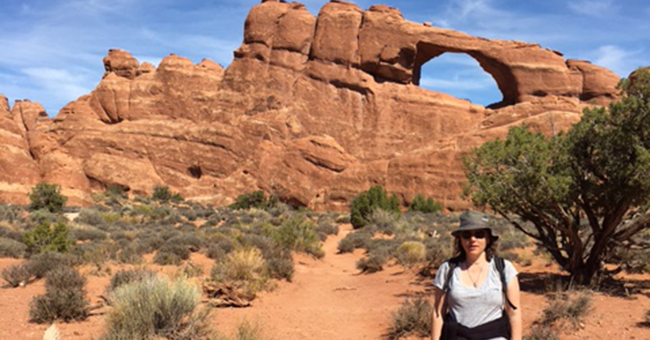
  • Susan Lumenello at Skyline Arch, Arches National Park, Moab, UT

    Susan Lumenello at Skyline Arch, Arches National Park, Moab, UT

    You’ve read our classics, such as Viktor Frankl’s Man’s Search for Meaning, Octavia Butler’s Kindred, the work of Martin Luther King, Jr., and James Baldwin’s Notes of a Native Son; and many of you know our current list, featuring books by Cornel West, Lani Guinier, Anita Hill, and Christopher Emdin—books that speak to the condition of the world, and add to our understanding of urgent social issues. Whether it’s the environment or race, cultural or class dynamics, we publish all our books with a purpose. Now you can meet the people who work at Beacon Press in our blog series “Beacon Behind the Books.” Each month, we’ll introduce to you a member of our staff and give you a behind-the-scenes look at what goes on at our office.

    For the month of November, we introduce you to our managing editor, Susan Lumenello! 

    What’s a typical day in the life of the managing editor, Susan?

    A typical day involves reading and copyediting manuscripts or parts thereof, so editing for style, sense, and grammar, while maintaining the author’s style and intention. When I’m not doing that, I’m corresponding with authors about language and usage (sometimes deadlines), overseeing (that’s the managing part) the work of the wonderful freelancers who also copyedit manuscripts for us, spending quality time with The Chicago Manual of Style, reviewing edits with editorial and production staff. Then I read some more.

    What current/upcoming projects are you excited about?

    I like reading history and politics best. So I’m very excited about copyediting the new Howard Bryant book, The Heritage, about black athletes and politics. I’m an avid sports fan, as well as a political junkie, so it’s a good combo for me (and for others!). And I’ve been reading Scott Stern’s The Trials of Nina McCall, about the American Plan, the devastating but little-known campaign in which women were imprisoned under the pretext of disease prevention. That’s been an eye-opener.

    Best vacation destination?

    I recently traveled to Moab, Utah, to visit Arches and Canyonlands national parks, so that’s my favorite right now. I’m a native New Englander and had never seen anything like it. The place felt otherworldly, not just the strange, monumental rock formations at Arches but the seemingly endless landscape. I loved it.

    Favorite book ever?

    No favorite, but as some at Beacon know, I’m somewhat evangelical about Barbara Pym, who wrote several comic novels in the mid-twentieth century, all set in London or English villages. I love her work so much that I’m a longtime member of the Barbara Pym Society, which does exist. For the uninitiated who want initiation, start with Excellent Women and proceed; be prepared for lots of curates, anthropologists, and angst over serving tea. I also love the work of Georges Simenon, who created Inspector Maigret, the Parisian police detective. Both, I think, are great minimalist writers.

    Hobbies outside of work?

    Outside work, I write (sometimes publish), mostly fiction, some plays. But that’s really an avocation rather than a hobby. My hobby is playing music. I was raised in an extremely musical household and play a few instruments (with very different degrees of competency), so music is a big part of my life. I play a lot of pop stuff, musical theater, a little classical, Great American Songbook, cowboy songs, classic country, bubblegum, bossa nova, hackneyed piano ballads. I also post playlists at 8tracks.com/sonicsalad to satisfy my impulse to play college DJ again.


    About Susan Lumenello 

    Susan Lumenello joined Beacon Press in 2008. She is a graduate of Tufts University and the Bennington Writing Seminars.  

  • By Sasha Pimentel

    Sasha Pimentel

    Photo credit: Jorge Salgado

    I didn’t know that my poetry collection For Want of Water had been selected as winner for the National Poetry Series for a good week or two after Gregory Pardlo had chosen it, but that was my fault. I’d spent the summer with my family in Sonora and had turned my phone off. When we returned to the United States, I was walking through the airport when the caller ID from “Princeton, NJ” flashed on my phone, and I answered it because I was curious what sort of telemarketing came from Princeton. It was Beth Dial from the National Poetry Series.

    I remember plugging my unphoned ear with my finger to hear her through the terminal’s noise. I couldn’t believe it. The National Poetry Series is an award that’s just so big, I’d never conceived of my manuscript as actually having a shot at winning. Winning the National Poetry Series is the poet’s equivalent of winning the lottery (unless you’re Jeffrey Schultz and you win twice because you’re just that good, or you’re Sam Sax and your voice is so recognizably brilliant you go straight from the National Poetry Series to the James Laughlin Award), but me, I’m a Filipina immigrant with a state school education, whose poetry comes from the brown and Southern border. I’ve always told myself that my path would be not a path of access, but a more quiet path of my head down, and work. Just work. And at the time, I was finishing my application for tenure and promotion at the University of Texas at El Paso, for which I’d learned the numbers to explain the harsh nature of trying to publish in poetry. Ours is an industry in which well-regarded presses may now only have one-month-long annual submissions periods (if they have open submissions at all) for poetry, during which presses may receive 1,400-2,000 full-length manuscripts to publish only one or two books. That’s a 0.05%-0.14% acceptance rate.

    Further, it’s historically more difficult for writers of color, particularly writers of color who write about and write from their experiences in non-assimilationist ways, to get published with big presses, as those who’ve canonically been in power have historically been male and white. Publishers Weekly’s 2016 survey of publishers resulted in 88% of respondents self-identifying as white, with many in the industry identifying as “female” and frustrated with the pay gap, though there’s no mention of people who identify outside of “male” or “female.” That is not to say we only choose the work that we identify as our own, but there are very real consequences for writers of color, genderqueer and nonbinary writers when who is looking at their art cannot find in there something recognizable to attach to, because poetry is about sharing, between a reader and the words, something very human, and vulnerable.

    I live in a world in which the art that is commodified more often than not does not look like what I’d call “my own.” This isn’t poetry, but a few months ago, I found myself sobbing and stupefied watching the documentary Don’t Stop Believin’: Every Man’s Journey on Netflix. It was the first time I’d seen, through a mainstream US platform, a face like mine with features like mine in Arnel Pineda’s face, with a dark mouth speaking my Tagalog (the language I still dream in), not as a maid saying something snarky just before she left a room as blurred body, but as a face—a subject upon which the camera focused. I’m not a crier. I’m proud of that, though it’s a result of a physically abusive past where crying just meant getting hit harder.

    But I couldn’t stop weeping looking at Arnel Pineda, because such a mirror clicked so essential a something in me that I hadn’t even known was missing. How could I, a Southeast Asian woman writing from a non-occidental lens (in my second language of English) about the Mexican American border (as I taught, so thought, through my fourth language of Spanish), have ever considered winning the National Poetry Series as truly possible for me?

    For Want of WaterI’d only submitted to the contest because it’s what a working poet with a manuscript does.

    But what I’d been blind to behind the hard numbers were the extraordinary humans at work in the industry too, like Gregory Pardlo, and the people of the National Poetry Series. The other judges for that 2016 competition were Terrance Hayes, Allison Joseph, Ada Limón and David St. John. And the 2017 judges were Tyehimba Jess, Cornelius Eady, Fady Joudah, Louise Glück and Paul Guest. This…slow shifting of the faces, and the cultural experiences they support in others as they themselves write, has everything to do with Daniel Halpern and how he pulled together top-tier publishers for poetry. And in turn, that vision asks those judges to see in those “blind” unnamed manuscripts of strangers’ art, something recognizable and human, a vulnerability they can understand.

    So through the terminal noise, I heard Beth’s voice.

    Then she said “Gregory Pardlo.” As in the lyrical powerhouse. Then she said “Beacon Press.” As in Beacon Press of James Baldwin’s Notes of a Native Son, as in Beacon Press of Martin Luther King Jr.’s papers, as in Beacon Press headed by the indomitable Helene Atwan who has been using her editorship as a practice in social justice for decades. Then I really didn’t believe Beth’s voice.

    It’s easy too for people to be flip about academics in poetry, and to want to disown the academic artistic experience. But another story is this: I turned in my tenure application two days after the National Poetry Series was announced. The National Center for Education Statistics says that in Fall 2015, while 42% of all Associate Professors in all fields in this country were white and male, and 35% were white and female, only 3% were Black males, 3% Black females, 3% Hispanic males, 2% Hispanic females, 7% Asian/Pacific Islander males, 4% Asian/Pacific Islander females, 1% were designated “two or more races,” less than a percent were designated “American Indian/Alaska native,” and the results don’t even mention the faculty who identify with another ethnic or indigenous identity, or faculty who recognize themselves as trans, genderqueer or nonbinary. I strongly suspect those percentages lower drastically for who is tenured in the Arts and Humanities.

    Poetry, Gregory Pardlo, the National Poetry Series, Helene Atwan and Beacon Press gave me that too with For Want of Water: job security. Security to teach and speak freely as a woman of color to first-generation-college students on the border, students with faces brown as my own. Though I don’t carry the private school education nor the status quo’s usual markers of “excellence” that are often demanded from faculty of color in ways that white faculty need not always prove, somehow, because Creative Writing programs are one of the few places in academia where one gains authority through publishing, not necessarily by pedigree, someone like me is employed. How we’ve academized the art of writing can collapse some bit of the distances of race, class, geography, and gendering: look at the faces of faculty at Creative Writing programs emboldened in their English Departments, such as at NYU or University of Southern California. Writers are often the faculty of color, and the faculty who aren’t heteronormative, who can be institutionalized into power, access. I've been publishing for seven years, have been studying poetry seriously for fifteen years, and as I look back at the time, at every critical point in my artistry, someone has risked believing and advocating for me. With institutional power behind me, I can advocate access for others now too.

    Jeffrey and I ended up doing the calculations for the National Poetry Series. Because the contest ends with five books each with a separate press, we were luckier than other poetry contest folk. Our book acceptance rate was less than 0.36% for each of the winners. Jeffrey, Sam and I get to hang with the wonderful Chelsea Dingman and William Brewer. And because of one man’s belief, one great writer’s advocacy—Greg’s, suddenly, shockingly, I get to be a Beacon author.

    Since For Want of Water started shaping into a book from its manuscript, and because Beacon’s publicist Nicholas DiSabatino is amazing, I’ve gotten to write for and publish in such places I could never before have dreamed, like The New York Times Magazine, selected by Terrance Hayes, Poets & Writers, LitHub, the Academy of American Poets (poets.org), Guernica, Hyphen, and somehow too, this Pinay face of mine has recently stared up from the cover of American Poetry Review. And now, just in these last weeks, there’s a book. A book!

    To just say that “this has changed my life” would be a crudeness of language. Sometimes I still think, what if Beth hadn’t kept calling for those one to two weeks? What if they’d just moved down to the next person down the list?


    About the Author 

    Sasha PimentelSasha Pimentel is the author of Insides She Swallowed, winner of the 2011 American Book Award, and For Want of Water. Born in Manila and raised in the United States and Saudi Arabia, she is a professor of poetry and creative nonfiction in the bilingual MFA Program at the University of Texas at El Paso. Follow her on Twitter at @SashaRPimentel and visit her website.

  • By Molly Velazquez-Brown

    Jack-o-lanternFall has always been my favorite season. I love the feeling of a cozy sweater and a cup of warmed mulled cider mixed with ghost stories and the crunch of changing leaves. I am comfortable living my truth of autumn everything. But here’s what I don’t love about the season. The offensive Halloween costumes that come disguised as “spooky” fun. I’m not talking gory bloody “it’s-hard-for-me-to-look-at-how-grotesque-your-costume-is” offensive. I mean the mocking of a culture. The belittling of a race—or more often, several. The reduction of peoples to single stereotypes.

    Growing up Mexican-American, this is a problem I have encountered my entire life. Not a year has gone by when I haven’t been faced with a peer, stranger, or adult dressed in the ever present (ever offensive) fake mustache, oversized sombrero, and rainbow poncho ensemble. Sometimes there are even maracas or a fake gun involved. Occasionally, they even go as far as to dress up their children to be tiny little jumping beans of inherited racism. Seeing white people dressed in these costumes has always given me a knot in my stomach, even long before I had phrases like “white supremacy” and “cultural appropriation” to understand and articulate those feelings of shame and embarrassment. It took me well into high school to be able to put into words why seeing this upset me so deeply because I was always told it was just in good fun. But now I have the words—even a snappy slogan thanks to the Poster Campaign that was started in 2011 by students at Ohio State—to succinctly say what it is I feel about white people trying on my skin for a night: my culture is not a costume.

    I take so much pride in being Mexican and speaking my native language. I treasure the food, clothing, and traditions that come with my heritage, and I love sharing it with those who are interested. But I draw a clear line in the sand when someone uses my culture for their own cheap entertainment. Putting on a stereotype of another culture for one night isn’t funny or cute; it’s hurtful. Those wearing the costumes to “act the part” are misrepresenting these cultures. It’s a fabrication born from American prejudice. There is a stark difference between wanting to dress as a mariachi or Mexican revolutionary—which entails researching the culture to avoid the disrespectful hazard of cultural appropriation—and slapping on some stereotypical Mexican garb from the mall that was probably made by someone in a sweatshop in the global south, faking an accent (and very poorly rolling your r’s), and calling everyone you encounter “hombre” for the night.

    Though I can only speak on how offended I feel seeing my culture mocked on Halloween, I am not the only person of color who takes issue with these costumes and feels their shadow cast over every other day of the year. Mexicans are not alone in being mass produced as cheap costumes; Native Americans, Black people, and various Asian and Middle Eastern cultures are some of the staple offensive costumes you can count on seeing as you try to enjoy the night of October 31.

    For those who don’t fall into any of the categories of cultures that are appropriated for costumes and have never experienced this, humor me and take a moment to imagine this: you are walking down the street on a crisp Halloween night on your way to a party/bar/to go trick-or-treating and find yourself met with a group of teenagers wearing shirts that read, ‘You are a stupid joke and we do not respect you.’ You try to shrug it off—they can’t mean you, can they?—but you can’t. The sentiment echoes in the back of your head as you go on your way: “These costumes are about you! Remember that we are better than you because of how you look, dress, and speak. We wanted to remind you that who you are is a joke that means nothing to us. The things that connect you to your identity are just props we use to mock you and throw away after we are done with our fun. Have a good night. Happy Halloween!” That, in effect, is what these costumes say.

    Costumes are meant to be temporary. You wear it for a few hours and then banish it to the back of your closet for the rest of the year, and don’t think about either the costume itself or the people it represents. I do not. My family does not. My people do not. We wear out heritage on our sleeves every day. We are Latin@s every day. We get told to get out of this country, to speak better English, that we are stupid, worthless, and illegal every day. I wonder if the people putting on these costumes take a moment and realize that when a stranger unwarrantedly yells at me for speaking Spanish on the phone with my mamá in public, it is they who helped perpetuate this hate. They helped make it okay for that stranger to attack who I am by normalizing the dehumanization of my culture.

    The older I have gotten the more I try to confront some of the people I encounter in these offensive costumes to explain why it is so wrong and hurtful to wear them. The most frequent (and completely inadequate) comeback is some sort of defensive comment about why they are not a racist and that it is “just a costume.” But it’s not just a costume to those who are being made the butt of the joke. To pretend to be a racial or ethnic minority when you're not makes light of their vast, at times tragic, and beautiful histories. White people’s whole deal is using (then carelessly discarding) pieces of cultures and the people they've conquered, enslaved, and oppressed for centuries, just because they can. You don’t get to tote your I’m not a racist card, then turn around and do something that not only reinforces the unbalanced racial power dynamic in the United States but is just blatantly offensive simply because you think it will be fun for one night.

    This year, and every year to come, please take a moment and think about your costume choice. Ask yourself if what you’re putting on will offend a people, a culture, or a race. If you’re truly unsure, ask someone of that culture. Trust me: though you may feel uncomfortable asking, your checking in will warrant a much better response than those you will get just going for it and being offensive. And if you’re out and about this Halloween and see a friend/acquaintance/family member in a costume that makes you feel uneasy, that something about it just doesn’t seem okay, say something to them. It doesn’t have to be in that moment when drinks are being thrown back and you’re surrounded by tons of people, but don’t just let it go. You don’t have to be of the culture being mocked to let people know that it is not acceptable to do.


    About the Author 

    Molly Velazquez-Brown joined Beacon in 2017 as an assistant to Editorial Director, Gayatri Patnaik and Executive Editor, Amy Caldwell. Originally from Cambridge, MA, she earned her Bachelors of Arts degree in Writing, Rhetoric, and Communications as well as Psychology from Syracuse University.

  • By Ben Mattlin

    Betsy DeVos

    Betsy DeVos. Photo credit: Gage Skidmore

    In mid-October, disability-rights activists were justifiably outraged and dismayed by Secretary of Education Betsy DeVos’ latest action. According to the Washington Post, the Trump appointee had rescinded seventy-two policy documents related to the rights of students with disabilities.

    So heated were the reactions on social media and elsewhere that, a few days later, the Education Department tried to allay fears by explaining that the intent was merely to eliminate redundancies and outdated language. The changes, a department spokesperson said, would have zero effect on students with disabilities.

    But if they had zero effect, why bother?

    To be sure, the changes might have been reasonable. The administration says it’s on a mission to eliminate inefficiencies. I, for one, would rather it exerted its energies and influences on improving situations—improving outcomes for students with disabilities, say—not on rescinding documents designed to clarify protections. But what do I know?

    I do know enough, however, to be apprehensive. Once upon a time, I was a student with a disability. I still have my disability, but I haven’t been a student in ages. Born with a congenital neuromuscular weakness called spinal muscular atrophy—and, consequently, a lifelong wheelchair user—I’m too old to have benefited directly from the regulations that DeVos slashed. But I remember what life was like before such regulations existed.

    In case you don’t know, the primary rule affecting disabled students in public education is the Individuals with Disabilities Education Act (IDEA). It’s a complex piece of legislation that guarantees equal access to an appropriate public education in what’s termed the “least restrictive environment.” For each student who is covered by the law, an Individualized Education Plan (IEP) is painstakingly composed and periodically updated by the student’s parents or guardians, teachers, and administrators.

    When I started elementary school, in 1968, such a plan was unheard of. It was still legal to discriminate against kids (and adults) like me. Many kids with disabilities stayed home or were sent to live-in institutions. After all, the only alternative was a separate, segregated special-ed school. Some states even had statutes specifically excluding kids who were deaf, blind, or mentally retarded from public schooling.

    Not until 1975 did Congress pass the Education of all Handicapped Children Act, the seed of what was later renamed IDEA. I was already twelve. By then, my parents had managed to get me “mainstreamed” in a private school. They knew separate wasn’t equal.

    The modern form of IDEA, which finally set clear terms for full integration in public schools, didn’t happen until fifteen years later. But by 1990, I was already six years out of college.

    Knowing this background gives me a particular appreciation for the efforts of those who went before me. No wonder no one wants to see accomplishments such as IDEA dismantled!

    The seventy-two documents that were excised consisted of sixty-three from the Office of Special Education Programs (OSEP) and nine from the Rehabilitation Services Administration (RSA). Altogether, they explained and elaborated on how the law is implemented, how federal money can be spent, and the extent of students’ rights.

    Even if these documents were superfluous, as the Department claims, there’s still cause for alarm. DeVos and the Trump administration have chipped away at individual civil rights in the education system before and seem intent on doing so again. In February, for instance, they overturned Obama-era guidance on allowing transgender students to use bathrooms that correspond with their gender identity. In September, they rescinded rules about how sexual-assault allegations should be investigated, seemingly favoring the accused over the alleged victims.

    What’s more, disability rights advocates haven’t forgotten DeVos’ shameful testimony last January during her Senate confirmation hearing. When Sen. Tim Kaine (D-Va) asked if she supported the federal requirement for protections of students with disabilities, DeVos answered that it should be “left to the states.” Sen. Maggie Hassan (D-NH) later asked if she knew that IDEA was a federal law. DeVos acknowledged that she may have “confused it.”

    All right, maybe she was confused. But now the Education Department has reportedly been considering postponing or even overturning a rule designed to prevent overrepresentation of minorities in special-education programs. Under IDEA, states must identify school districts with disproportionately high rates of minority students who are placed under special disciplinary or other restrictive settings. The Obama-era rule was designed to impose a uniform standard nationwide. Why would anyone want to upend that?

    The disability community hasn’t forgotten last summer’s proposed Medicaid cuts. They may have had nothing to do with DeVos, but they had everything to do with the majority party’s attitudes and intentions. Recall that in June, some sixty activists from the group ADAPT—mostly people with disabilities—protested outside Sen. Mitch McConnell’s (R-Ky) DC office in what they called a “die-in.” The idea, ADAPT’s Stephanie Woodward later explained, was to represent “the harm that the bill would do to so many disabled people.”

    So, in a way, no one was really surprised to have DeVos emerge as an apparent opponent of regulations that protect kids with disabilities. How this pans out remains to be seen, but I’m not optimistic. And I’m not the only one. “It seems Betsy DeVos is on a mission to decimate basic protections for students at all levels,” tweeted Sen. Bob Casey (D-Pa) after the story broke.

    Scary? Well, Happy Halloween!


    About the Author 

    Ben MattlinBen Mattlin is the author of Miracle Boy Grows Up and the forthcoming In Sickness and In Health: Love, Disability, and a Quest to Understand the Perils and Pleasures of Interabled Romance, and a frequent contributor to Financial Advisor magazine. His work has appeared in the New York Times, Los Angeles Times, Washington Post, Chicago Tribune, USA Today, and Vox, and on NPR. He lives in Los Angeles, California. Follow him on Twitter at @benmattlin and visit his website.

  • By Christopher M. Finan

    DrinkingThis essay appeared originally in Faces and Voices of Recovery.

    Addiction killed a young friend of mine last fall.

    The circumstances weren’t dramatic. He fell asleep and never woke up. The cops and the EMTs shook their heads. Joe was thirty-four.

    We are getting used to seeing the unconscious victims of drug overdoses pulled from cars or treated where they have fallen in the street. Sometimes their lives are miraculously saved. Other times, we hear the voices of their grieving relatives, usually their parents.

    Americans are alarmed by the surging number of fatal drug overdoses, mostly caused by prescription painkillers, heroin, and fentanyl. There were 52,000 in 2015, and it is estimated that 59,000 people died in 2016.

    What are we doing about it? Not enough.

    Government Is Moving Slowly

    President Donald Trump recently declared the opioid epidemic a national emergency. “We’re going to spend a lot of time, a lot of effort and a lot of money on the opioid crisis,” he promised.

    But the president does not appear to have a clear idea of what is needed, and the commission he appointed to address the problem recently issued recommendations that fail to include a vital part of the solution—recovery support services.

    Our weak response is not surprising. It has taken Americans a long time to understand addiction as a health issue. When a rise in drunkenness first caused widespread concern in the late eighteenth century, most people considered alcoholism as a personal weakness or a moral failing.

    President John Adams renounced his son, who had an alcohol use disorder and died a short time later at the age of thirty.

    Recovery Movements Offer Hope

    Even then, however, there were people who believed that the people with addiction could be saved. Dr. Benjamin Rush, a signer of the Declaration of Independence, called alcoholism a disease that could be treated like other illnesses.

    A few years later, a Native American named Handsome Lake experienced a vision that caused him to quit drinking and lead a religious revival that sobered many in the Iroquois nation.

    In the 1940s, Alcoholics Anonymous (AA) established for the first time that thousands of people with alcoholism could stay sober. Today, millions of people have achieved long-term recovery through AA, Narcotics Anonymous, and other mutual aid programs.

    New medicines are helping people control their cravings for drugs and alcohol.

    The fight against addiction made rapid progress during the Obama administration. For the first time, the government required insurance companies to provide addiction treatment at par with other medical conditions.

    The Affordable Care Act has made it possible for millions of Americans to receive help. Many of them are young people like my friend Joe.

    No less important has been growing recognition that most people with addiction continue to need assistance for years after they have quit using drugs and alcohol. It can take up to five years of sobriety before an individual’s risk of relapse falls below fifteen per cent.

    Grassroots Organizations Assisting Recovery

    Independent, non-profit groups called Recovery Community Organizations (RCO) have started to provide long-term support at the local, regional and state levels.

    RCOs operate recovery community centers, run schools, and offer sober housing. They provide peer recovery support through recovery coaching, telephone recovery support and more.

    In 2013, three community centers run by one RCO, the Connecticut Community for Addiction Recovery (CCAR), recorded 59,000 visits and hosted 1,100 events, including support meetings, and GED and job training classes. The CCAR hot line received more than 1,400 calls.

    However, most RCOs are small and lack resources.

    The federal government is providing very minimal funding for RCOs. President Trump’s Commission on Combating Drug Addiction and the Opioid Crisis did not include recovery support among its initial recommendations. However, New Jersey Governor Chris Christie, the commission chair, has included a significant amount of funding for recovery support services in his state budget.

    Victims Racing the Clock

    Meanwhile, every person impacted by addiction is racing the clock. My friend Joe was trying desperately to get sober. He celebrated his one-year anniversary in AA and then “slipped.” He stopped drinking again and was enrolled in a clinic that was helping him.

    But Joe’s body had been broken by years of abuse. When he slipped again, he ran out of time.

    History shows that people with addiction want to recover. We must give them the chance.


    About the Author 

    Christopher M. Finan is the author of From the Palmer Raids to the Patriot Act: A History of the Fight for Free Speech in America and Alfred E. Smith: The Happy Warrior. He is the executive director of National Coalition Against Censorship and former director of American Booksellers for Free Expression, a program of the American Booksellers Association. He lives in Brooklyn, New York. Follow him on Twitter at @chrisfinan and visit his website.

  • What Is Your Life BlueprintFifty years ago today, Martin Luther King, Jr. delivered his “What Is Your Life’s Blueprint?” speech to students at Barratt Junior High School in Philadelphia. In it, he lays out three important steps to follow in order for the students to reach their full potential, no matter their status life, and calls on them to actively commit to the struggle for freedom and justice. King’s words are inspirational for students of any age, of any era. Especially now during our troubled times. In honor of the speech’s anniversary, we’re looking at the ways the empowering message of his speech resonates and guides us still today.

    “Number one in your life’s blueprint should be a deep belief in your own dignity, your own worth, and your own somebodiness. Don’t allow anybody to make you feel that you are nobody. Always feel that you count. Always feel that you have worth. And always feel that your life has ultimate significance.”

    King emphasizes to the students how imperative it is for them to not be ashamed of themselves, to not be ashamed of being Black. Their lives have value. Nowhere else do we see the embodiment of King’s affirmation of Black worth and dignity today than the Black Lives Matter movement.

    “Secondly, in your life’s blueprint, you must have as a basic principle the determination to achieve excellence in your various fields of endeavor….If it falls to your lot to be a street sweeper, sweep streets like Michelangelo painted pictures. Sweep streets like Beethoven composed music. Sweep streets like Leontyne Price sings before the Metropolitan Opera. And sweep streets like Shakespeare wrote poetry. Sweep streets so well that all the hosts of Heaven and Earth will have to pause and say, ‘Here lived a great street sweeper who swept his job well.’”

    King zeroes in on the street sweeper, a recurring image in his others speeches, to make a crucial point: whatever one’s profession may be, strive to be the absolute best at it. Through dedication, one attains the invaluable reward of self-realization. The street sweeper serves as a source of inspiration that will carry King’s student audience (and all of us) through their lives. King continues his point about doing one’s best within one’s limits as he says:

    “If you can’t be a pine on the top of the hill, be a scrub in the valley. But be the best little scrub on the side of the hill. Be a bush if you can’t be a tree. If you can’t be a highway, just be a trail. If you can’t be the sun, be a star. For it isn’t by size that you win or you fail. Be the best of whatever you are.”

    ~~~

    “And finally, and finally, in your life’s blueprint, must be a commitment to the eternal principles of beauty, love, and justice….However young you are, you have a responsibility to seek to make your nation a better nation in which to live. You have a responsibility to seek to make life better for everybody. And so you must be involved in the struggle of freedom and justice.”

    We need not look further back than the events in Charlottesville, Virginia, to see that the history of intolerance and hate is not distant history. White supremacists and other bigots have felt emboldened by the current administration to take to the streets and act on their prejudice. By the time King delivered his speech, he had already spoken out about the atrocities of the Vietnam War. Active nonviolent resistance, of course, is the method he promoted to fight bigotry and injustice. He encouraged his student audience to commit to nonviolent protest to effect social change, and would advise us to do the same.

    “But I believe as we struggle with these problems, we’ve got to struggle with them with a method that can be militant but at the same time does not destroy life or property. And so our slogan must not be ‘Burn, baby, burn.’ It must be, ‘Build, baby, build.’ ‘Organize, baby, organize.’ Yes, our slogan must be ‘Learn, baby, learn,’ so that we can earn, baby, earn.”

    King gave us the steps to draft the blueprints for a future we’ll have to build, again and again, which each new generation, in order to strive for the just society that we want. This is a world we’re building together, and it won’t become a reality without collaboration, education, and rallying together for change. His words will always be timely, because the struggle for social justice is ongoing. With this blueprint, we can keep moving forward. As he states at the end of his speech, “We must keep going. If you can’t fly, run. If you can’t run, walk. If you can’t walk, crawl. But by all means, keep moving.”

    As Walter Dean Myers said in his introduction to A Time to Break Silence: The Essential Works of Martin Luther King, Jr., for Students, in which this speech is reprinted: 

    “I believe that if Dr. King were alive today, he would enlist an army of young people to help each other and America in the education process. He would trust them to bring their energy and sense of justice to end gang violence and to reverse the feeling of helplessness that hurts so many of our young people. He would keep marching against unjust laws, racism, war, and poverty. Dr. King made America a better place for all people to live during the turbulent years of the civil rights struggle. Using his insights, his courage in tackling difficult problems, and his loyalty to nonviolence both in action and in the language we use with each other, perhaps we can continue building the America he once thought possible. What do you think?”

    Watch the speech online and share it with the young people in your life. Talk with them about how King’s words make them feel. Ask them what their life’s blueprint is.

     Video used by permission of The School District of Philadelphia. All rights reserved.


    About Martin Luther King, Jr.

    Martin Luther King, Jr.Dr. Martin Luther King, Jr. (1929–1968), Nobel Peace Prize laureate and architect of the nonviolent civil rights movement, was among the twentieth century’s most influential figures. One of the greatest orators in US history, King also authored several books, including Stride Toward Freedom: The Montgomery Story, Where Do We Go from Here: Chaos or Community?, and Why We Can’t Wait. His speeches, sermons, and writings are inspirational and timeless. King was assassinated in Memphis, Tennessee, on April 4, 1968. 

  • HandgunIn light of the latest issues concerning gun control, sexual assault, and healthcare in America, we’re offering a list of resources for you to look through.

    The Las Vegas shooting that killed fifty-nine people and injured more than five hundred has us talking about gun control again. Even though, just a couple of weeks later, the media seem to have moved on to other topics, we need to keep the conversation going.

    Every day, there seems to be new cases of individuals from different professions speaking up about their experiences with sexual assault. Allegations against USA gymnastics doctor Larry Nassar, film producer Harvey Weinstein, and others highlight, again, how rape culture is still pervasive in all industries. As more and more women come forward to say, “Me Too,” now is the time for us to say, “I believe you.”

    And access to the healthcare services we need is in a precarious state. The Trump administration has issued a healthcare executive order to dismantle the Affordable Care Act and rolled back the Obama-era birth control mandate. What’s more, the Senate budget bill is proposing cuts to Medicaid and Medicare. So much is especially at stake for vulnerable populations who don’t have healthcare.

    We hope you find these resources helpful.

    Resources

    Gun Control:

    Sexual Assault:

    Healthcare in America:

  • By Philip Warburg

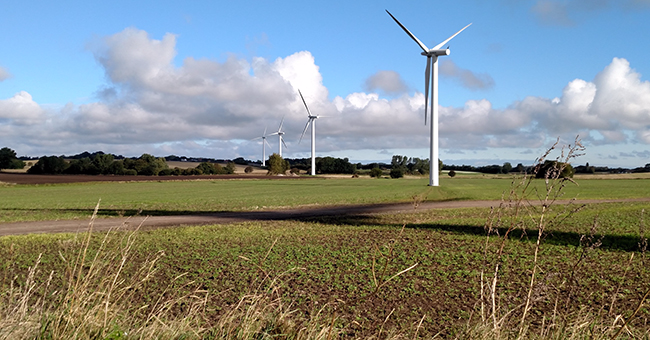
    Wind turbines on the island of Samsø

    Wind turbines on the island of Samsø. Photo credit: Philip Warburg

    At a time when President Trump and his followers in Congress are hell-bent on dismantling the clean energy architecture of the Obama era, many Americans are looking beyond Washington, and even abroad, for solutions to our climate crisis. I recently witnessed one of these transformative gems on a visit to the Danish island of Samsø, which just passed the twenty-year mark in a campaign to supply all of its energy needs from local renewable resources. 

    Home to some 3,700 year-round residents and tens of thousands of summer visitors, Samsø is a micro-scale lab for energy innovation. In 1997, the island won a national competition that set as its goal 100 percent renewable energy reliance within ten years. At the time, the island’s electricity came via undersea cable from Denmark’s grid, with coal supplying most of the power. Oil shipped from the mainland was the primary feedstock for heating Samsø’s homes and businesses, as it was for virtually all transportation on the island. 

    A lot has happened since then to transform the island’s energy economy. Søren Hermansen, son of a Samsø farmer and founder of the Samsø Energy Academy, has been the guiding force behind the island’s shift to renewable energy. Gray-haired and bespectacled, he looked surprisingly youthful in his blue jeans, hoodie, and sneakers when he greeted our group of visitors—a delegation of Washington State policymakers who were exploring sustainable energy infrastructure in Denmark and Sweden. Hailing from Boston, I was the sole East Coast interloper.  

    “Think local—act local” is the expression Søren uses to inspire his fellow islanders’ efforts to achieve their own brand of energy independence. It’s no surprise that wind power is a central feature of this initiative. The wind blows steadily across Samsø’s gentle terrain and the waters of the Kattegat surrounding it. To witness this power source, Søren leads us into an open field where we observe five neatly spaced one-megawatt turbines, modestly-scaled by modern standards. They are Danish-built, like so many of the turbines that have fueled the global wind revolution. 

    At first the rollout of windpower had some island residents worried. Noise was one concern; the visual prominence of turbines was another. Søren recalls the discussions that ensued. Having grown up locally, his Samsø roots helped in persuading farmers to share ownership of their turbines with nearby landowners. “When we started talking as a community,” he says, “we found we could do things that we couldn’t do individually.” With a hint of mischief, he adds: “When you own part of a wind turbine, it sounds better. It looks better.”

    Samsø’s onshore turbines—eleven in all—generate enough electricity to meet the island’s overall electric needs when averaged over the course of a typical year. Though wind is an intermittent energy resource, matching the turbines’ output with local power demand at a given moment isn’t necessary since Samsø retains its connection to the Danish grid. Any shortfall in local electricity is filled by grid-supplied power, and surplus windpower is absorbed by a transmission network that links Denmark to much of Europe. In this sense, Samsø differs from many islands around the world that are cut off from outside power sources and have to find their own local means of balancing electricity supply and demand. 

    This same grid connection makes it easy for Samsø to offset the island’s still-high carbon emissions from the transportation sector. In the village of Tranebjerg (pop. 824), Søren shows us a 120-kilowatt solar carport that charges the Samsø island municipality’s small fleet of electric vehicles. He readily admits, though, that most cars, trucks, and buses on Samsø still rely on gasoline or diesel fuel. Dwarfing the carbon emissions from those vehicles are the diesel-powered ferry boats that regularly ply the waters between tiny Samsø and the Jutland peninsula, to the west, and Denmark’s most populous island, Zealand, to the east. While one boat has been converted to liquid natural gas and there’s some talk of switching others to biogas, these vessels remain the number-one generator of carbon emissions on the island.

    To neutralize its transport-related carbon emissions, Samsø has invested in an array of ten offshore wind turbines whose primary function is to feed clean electrons into the grid. Five of these are owned by the Samsø island municipality; three are privately owned; another two are under cooperative ownership. Taking this infusion of renewable electricity into account, Søren estimates that Samsø residents have a per capita carbon footprint of minus 3.7 metric tons per year. Compare that to the 16.5 tons of carbon emitted annually by the average American, or even the 5.9 tons of carbon a year emitted by the average Dane!

    And what about all those homes and businesses that were heated with oil at the outset of the energy project? Today, most islanders rely on four district heating systems that use local crop waste as their feedstock. We visited one of these plants, in a high-roofed metal shed just outside the village of Ballen, where our ferry landed.

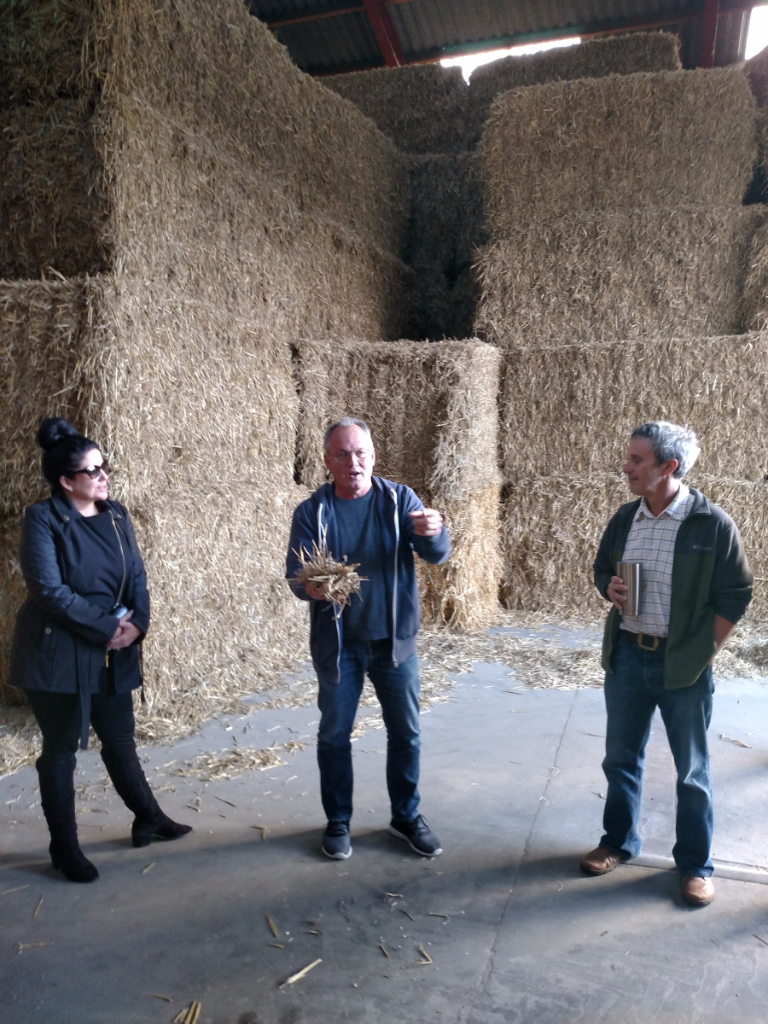
    Søren Hermansen shows American visitors straw – the feedstock for Samsø’s Ballen-Brundby district heating plant.

    Søren Hermansen shows American visitors straw – the feedstock for Samsø’s Ballen-Brundby district heating plant.

    Inside the shed, we stand in the shadow of giant bales of straw stacked six high. Each weighs roughly 1200 pounds. The bales are sent through a mechanical shredder and from there, via conveyor, the straw is fed into a blazing furnace. Wheat straw happens to be used in this particular plant, but barley, oat, and canola straw can also be efficiently burned. Waving a long steel probe in front of us, Søren tells us that the electronic read-out on this wand measures the straw’s moisture content, which mustn’t exceed fifteen to twenty percent.

    One visitor asks: “How much straw can be taken from the fields without depleting the topsoil?” Søren has a ready answer: half of it. “Only so much organic matter can be composted in topsoil,” he tells us. Before Samsø’s district heating plants were built, farmers used to burn the excess straw in their fields—far more polluting than the combustion of straw in the carefully controlled furnaces at district heating plants. Moreover, with a ban on open burning in place, farmers welcome the chance to sell their excess straw to the heating plants. They have no other ready use for it on-island, and shipping straw for sale off-island is far too costly.


    Søren Hermansen shows visitors the straw-fired furnace at Samsø’s Ballen-Brundby district heating plant.

    Søren Hermansen shows visitors the straw-fired furnace at Samsø’s Ballen-Brundby district heating plant.


    Hot water produced by district heating plants travels through a closed loop of steel pipes to homes and businesses that can be as much as a few miles away. Søren estimates that about a quarter of the heat energy is lost en route even though the pipes are buried and insulated. While this is significantly greater than the heat loss from a typical home furnace, Samsø’s district heating plants have vastly reduced the island’s reliance on fuel oil. Only a minority of islanders continues to heat their buildings with oil—those that are too remote to be connected to district heating or those whose owners have simply refused to give up their old oil burners. 

    Two decades have passed since Samsø set its sights on a renewable energy future. To an impressive degree, that future has arrived. To be sure, using surplus windpower to offset the transport sector’s ongoing dependence on fossil fuel masks a missed step in the island’s energy transformation. Might islanders opt for electric passenger vehicles as their next car purchase? With a host of new electric vehicle models flooding the global market, perhaps, but given the recent rightward shift of Denmark’s ruling coalition, major incentives accelerating the adoption of EVs are less than likely, according to policy analysts we met. Could locally produced biofuel serve the needs of farm equipment that can’t be durably operated on electric batteries? Failed past attempts to launch a biofuel industry on Samsø don’t give much ground for hope in this regard either. Yet, even with these flaws, Samsø householders, farmers, and businesses have made their island a model—albeit imperfect—for locally-based renewable energy reliance.


    About the Author 

    Philip WarburgPhilip Warburg is a Non-Resident Senior Fellow at Boston University’s Institute for Sustainable Energy.  His recent books include Harvest the Wind and Harness the Sun, both published by Beacon Press. Formerly he served as president of the Conservation Law Foundation. Follow him on Twitter at @pwarburg and visit his website.