• By Michael Bronski

    Charley Shively
    Charley Shively, one of the pivotal figures in the Gay Liberation Movement, died Friday, October 6, at the Cambridge Rehabilitation and Nursing Home, in Cambridge, Massachusetts. He had been a resident since June of 2011, suffering from Alzheimer’s. He would have been eighty on December 8, 2017.

    At the 1977 Boston Gay Pride march, Shively became infamous for his burning of the Bible—as well as his insurance policy, Harvard diploma, and teaching contract—as a protest against oppressive institutions. This act of incendiary and effective political theater—it nearly caused a riot—later obscured his work as an organizer, scholar, poet, and publisher.

    Born in poverty in Gobbler’s Knob, Ohio in 1937, Shively excelled in high school and entered Harvard College in 1955. After being granted a Masters in History at the University of Wisconsin in 1959, he entered the PhD program in History at Harvard. During this time he worked at Boston State College where he was active in New University Congress, anti-war working groups in the American Historical Association, and other anti-Vietnam war activities. His graduation from Harvard in June of 1969 coincided with the Stonewall Riots; that summer Shively began what was to be his life’s work: Gay Liberation. His vision of Gay Liberation was deeply, and uniquely, inflected by his study of, and belief, in anarchism. After helping form Gay Men’s Liberation in Boston, he worked on the first issue of Lavender Vision, a 1970 co-gendered Gay Liberation newspaper, and a year later helped form the Fag Rag collective, which published the first national post-Stonewall gay political journal.

    In Fag Rag, Shively published a series of twelve essays, beginning with “Cocksucking as an Act of Revolution” that became foundational to post-Stonewall gay male political theorizing. Written in a conversational tone with a mixture of personal confession, everyday anecdote, Karl Marx, Herbert Marcuse, Mikhail Bakunin, Kate Millett and Shulamith Firestone, these influential pieces became canonical. During the next decade, the ever-changing Fag Rag collective was held together by Shively’s presence and persistence. He was also responsible for founding Fag Rag Books, the Good Gay Poets collective and Press (which published noted poets such as John Wieners and Ruth Weiss), and Boston Gay Review, a journal of cultural criticism.

    Along with his political essays, Shively’s academic work included the six volume edited Collected Works of Lysander Spooner (1971)—a nineteenth-century social anarchist—and A History of the Conception of Death in America, 1650-1860, his doctoral dissertation (1987). His groundbreaking research on Walt Whitman resulted in two books—Calamus Lovers: Walt Whitman's Working Class Camerados (1987) and Drum Beats: Walt Whitman's Civil War Boy Lovers (1989)—which he viewed as an expression of political commitment as well as academic research. A lifelong poet—he first published poems in high school—Shively wrote at least one poem a day. His Nuestra Señora de los Dolores: the San Francisco Experience was published in 1975. He was active in the Boston poetry scene, particularly Stone Soup Poets. Shively understood himself primarily as a poet. His poems were spare, imagist, almost religious—a word he would have rejected—and mystical in their intensity. He leaves three finished poetry manuscripts.

    During the 1970s and 1980s, he was involved in numerous LGBT organizations, was a founding member of Gay and Lesbian Advocates and Defenders, and along with Fag Rag, wrote frequently for Gay Community News, Gay Sunshine, The Guide, and poetry journals. Almost always dressed in overalls, and speaking in his slow, southern Ohio drawl—an inflection he often used for ironic effect as he made his arguments—he was a ubiquitous figure at political meetings and rallies. During this time, he taught full time, traveled to Kenya, Ecuador, and Vietnam on three Fulbrights, and was hired as a tenured professor at University of Massachusetts Boston in the American Studies Program, after Boston State closed in 1982.    

    Shively’s partner beginning in 1964, Gordon Copeland, died in 1994, the year Shively was diagnosed with HIV. He retired from University of Massachusetts in 2001, and began exhibiting signs of Alzheimer’s a few years later. During this time he traveled to Paris to do research on homosexuality and the French Revolution. 

    Charley Shively’s legacy is in his writings, and also in the example of his insistent refusal—always with humor—to follow the rules, and often not even to acknowledge them.


    About the Author 

    Michael BronskiMichael Bronski has been involved in gay liberation as a political organizer, writer, and editor for more than four decades. The author of several award-winning books, including A Queer History of the United States, he also coauthored “You Can Tell Just by Looking”: And 20 Other Myths about LGBT Life and People. Bronski is Professor of the Practice in Activism and Media in the Studies of Women, Gender, and Sexuality at Harvard University and lives in Cambridge, Massachusetts.


  • A Q&A with Jennifer Browdy

    Women Writing Resistance

    Image credit: Louis Roe

    Edwidge Dandicat. Julia Alvarez. Jamaica Kincaid. Gloria Anzaldúa. You’ll find the voices of these incredible writers and others in Women Writing Resistance: Essays on Latin America and the Caribbean. Originally published in 2003, Women Writing Resistance highlights the work of sixteen Latin American and Caribbean authors, urgently calling attention to the need to resist against the systemic patriarchal, racist, and exploitative regimes that have ruled their countries. A resource for activists, this timely compilation demonstrates and enacts how women can collaborate across class, race, and nationality, and illustrates the value of this solidarity in the ongoing struggles for human rights and social justice in the Americas. We caught up with editor Jennifer Browdy to ask her about what the new edition of the anthology means to her and for our uncertain times, and what she hopes readers will take away from the book.

    Christian Coleman: Tell us what inspired you to put together this anthology.

    Jennifer Browdy: As a comparatist, I was struck by how the theme of resistance resonated among women writers from different countries and backgrounds in Latin America and the Caribbean, including US Chicanas and Latinx. I wanted to create an anthology that would spark conversations among these women (and among readers) about the issues that so many women face, in the hopes of creating new solidarities of resistance across all the artificial boundaries that too often divide us.

    CC: What was it like to work with these incredible writers?

    JB: I learned so much through working with these writers to put together this anthology. They were so generous with their time and talents, and understood immediately what I was trying to do, and why this was bound to be an important collection. 

    CC: We’re living in such a politically divisive time in history. How do you view writing as an act of resistance?

    JB: Writing is one of the most powerful forms of activism, because it can live on into the future, rippling out in unpredictable ways and inspiring so many others. The writers included in Women Writing Resistance are actively reaching out to communicate their perspectives on a whole host of human rights and social justice issues. For them, writing is an act of resistance to all the mainstream forces that too often have silenced and ignored women’s voices. It’s a way of taking back their agency and insisting on being heard.

    CC: Women Writing Resistance was originally published in 2003 by South End Press. What does it mean to you to have the anthology reprinted in 2017 by Beacon Press?

    JB: When I read through the book again as we prepared the 2017 manuscript, I was impressed by how totally contemporary and compelling these stories, poems, and essays are. In part, this is not good news, because it means that many of the issues these women were writing about in 2003 are unresolved and still need active resistance. For example: the oppression of Indigenous women that Rigoberta Menchú describes is still going on today; the struggle for survival of poor Haitian women described by Edwidge Danticat is still as tough as ever; the murders of young Mexican women in Ciudad Juárez that Marjorie Agosín writes about are still unsolved; the struggle of poor Chicana women to find time and the necessary confidence to write is still going on, as Gloria Anzaldúa describes. In the politically and environmentally cataclysmic year of 2017, we need the clear, strong voices of these Latinx and Caribbean women writers more than ever.

    CC: What would you like readers to take away from these essays in our current political climate?

    JB: Readers of this anthology will come way with a much deeper awareness and appreciation of the extent to which Latinx and Caribbean women have been actively working for positive social change—through writing and through other forms of resistance—for a very long time. The writers collected here represent the strength and resilience of so many more women, all across Latin America and the Caribbean. In general, women tend to be forward-looking; we never give up working for a better world for future generations. I hope this anthology inspires readers to add their own voices to the chorus and “write resistance” as well, in the service of the better world we know is possible.


    About Jennifer Browdy 

    Jennifer Browdy teaches comparative literature and gender studies at Bard College at Simon’s Rock. She is also a co-editor of African Women Writing Resistance and Writing Fire: An Anthology Celebrating the Power of Women’s Words. Follow her on Twitter at @jbrowdy and visit her website.

  • Rachael Marks_2You’ve read our classics, such as Viktor Frankl’s Man’s Search for Meaning, Octavia Butler’s Kindred, the work of Martin Luther King, Jr., and James Baldwin’s Notes of a Native Son; and many of you know our current list, featuring books by Cornel West, Lani Guinier, Anita Hill, and Christopher Emdin—books that speak to the condition of the world, and add to our understanding of urgent social issues. Whether it’s the environment or race, cultural or class dynamics, we publish all our books with a purpose. Now you can meet the people who work at Beacon Press in our blog series “Beacon Behind the Books.” Each month, we’ll introduce to you a member of our staff and give you a behind-the-scenes look at what goes on at our office.

    For the month of October, we introduce you to our editor, Rachael Marks! 

    What drew you to publishing, Rachael? How did you find your way to Beacon?

    I thought I’d continue in academia but realized in grad school that I didn't like teaching, so faced with student debt and with no idea how to channel my love of books and my interest in social justice, I considered a number of different careers before I noticed an opening at Beacon Press. I’d been a longtime fan of Beacon and jumped at the chance to work as an editorial assistant. Needless to say, publishing was the right career path.

    What do you find most rewarding?

    Celebrating a book’s on sale date. We work closely with authors to develop and edit a book, so it’s exciting when a book that you’ve been living with for over a year is out in the world. A big part of that is seeing how happy our authors are.  

    You’ve attended conferences related to your field. Tell us about those experiences and how they add to your work.

    I acquire for our education list, and over the past years I’ve found it profoundly important to attend conferences, lectures, and visit classrooms to learn firsthand what’s happening on the ground. The teachers, students, parents, and organizers that I’ve met help me stay informed about what issues we need to shine a light on.

    What current/upcoming projects are you excited about?

    In light of the relentless attacks on public education and because everything Secretary DeVos says fills me with rage, I’m particularly excited about a few upcoming education books. Deb Meier and Emily Gasoi’s These Schools Belong to You and Me, Linda Nathan’s When Grit Isn’t Enough, and Twenty-First-Century Jim Crow Schools by Raynard Sanders, David Stovall, and Terrenda White all argue that privatization and market-based reforms aren’t a viable solution and that it’s imperative that we fight for our public schools.  

    Another book I’m excited about is White Fragility by antiracist educator Robin DiAngelo. DiAngelo coined the term "white fragility” in 2011 to describe defensive moves that white people make when challenged racially. These include emotions such as anger, fear, and guilt, and behaviors like argumentation and silence. Sound familiar? The recent presidential election exposed deep racial divides in the US, and I’m excited because White Fragility will help people to better understand white supremacy and racism.

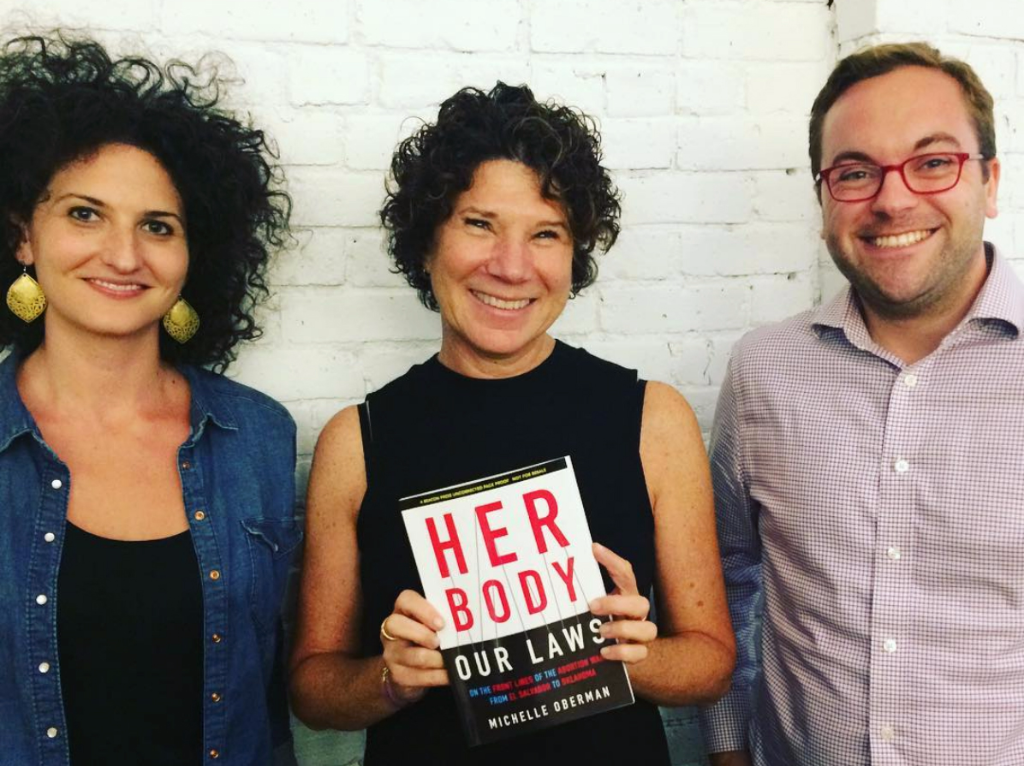
    Finally, one last book I want to mention is Michelle Oberman’s Her Body, Our Laws, which will be out in January. Oberman is a legal scholar who also happens to be a terrific storyteller, and in this book she offers a fresh look at the battle over abortion law.

    In the office with Michelle Oberman

    Rachael Marks with Michelle Oberman (center) and publicist Nicholas DiSabatino (right)

    What are you reading right now?

    I have a few books in rotation now. Elena Ferrante’s Days of Abandonment, Álvaro Enrigue’s Sudden Death, and Sigrid Undset’s Kristen Lavransdatter (translated by Tiina Nunnally). I reread Kristen Lavransdatter each fall/winter and try unsuccessfully to convince others to read it.

    In an alternate universe, what career would you have?

    I’d love to work on a farm, rescue animals, and make cheese.

    Hobbies outside of work?

    Woodworking! I’ve always loved tinkering and building things, and my biggest regret is that I didn’t take shop class in high school. A few years ago I decided I wanted to learn how to whittle. Since then, I’ve expanded my repertoire and bought a small used bandsaw for my apartment; however, my main love is spoon carving. You might be surprised to learn that there is an enthusiastic community of spooncarvers around over the world. In fact, there’s even an annual gathering called “Spoonfest.” It’s like for Lallapoolza for spooncarvers. I haven’t been yet, but I’ll make it out there one day.

    Favorite podcast?

    I tend to listen to comedy and history podcasts. My favorite is Comedy Bang Bang. Especially any episode with Paul F. Tompkins. To say that I’m a super fan is an understatement.

    Name three non-office items on your desk and their significance to you.

    I have a beautiful drawing of my dog, Beowulf, a feisty twelve-year-old Chihuahua, that was gifted to me by a colleague’s wife, Kelley Bennett. I also have a few gifts and trinkets from friends and colleagues, including a picture of Tina from Bob’s Burgers and a fetching Jeff Goldblum lapel pin.

    Beowulf the Chihuahua

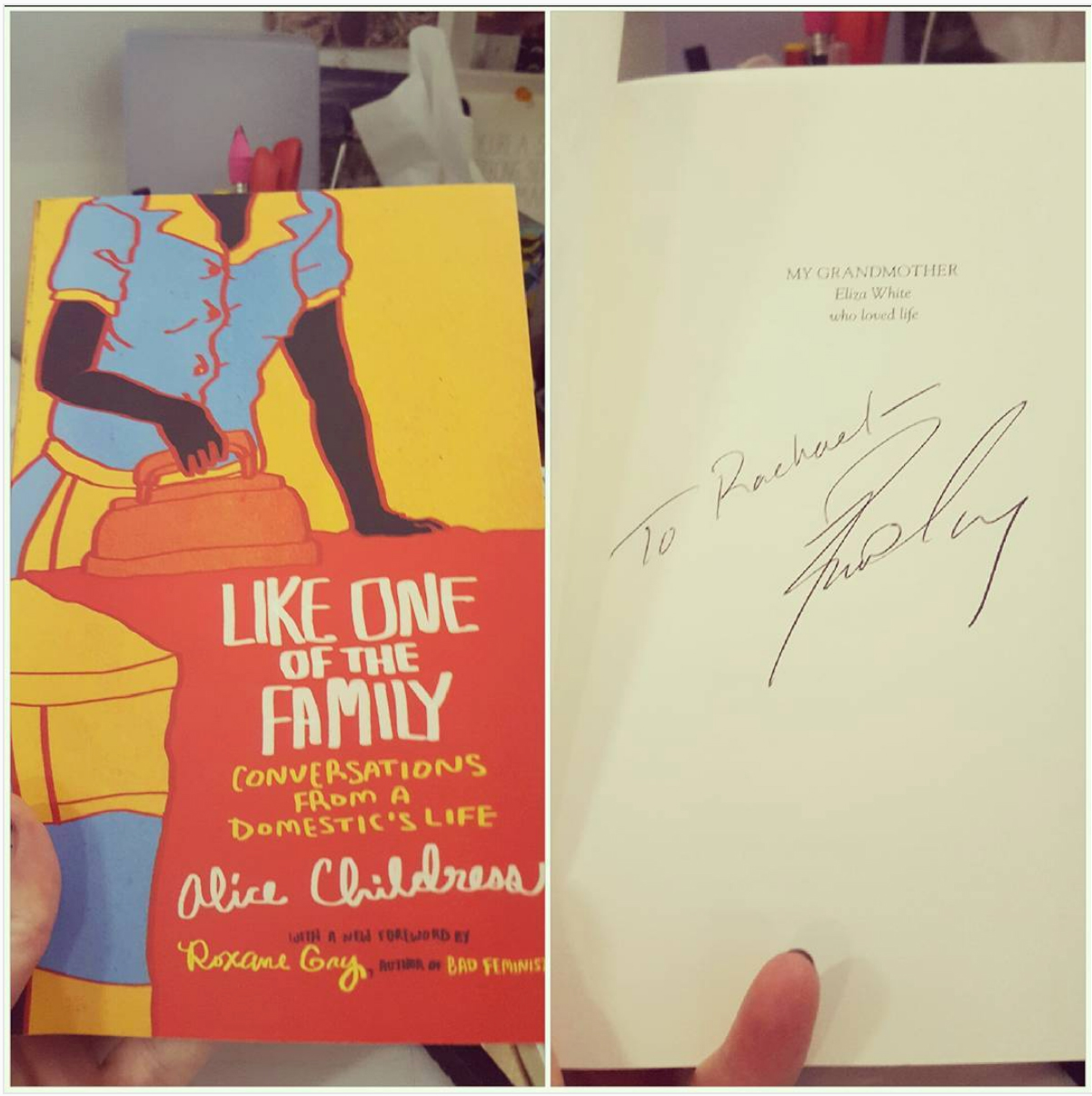
    Last but not least, I have a copy of Alice Childress’s Like One of the Family signed by Roxane Gay. We first published that book in 1986 (it was originally printed in Paul Robeson’s newspaper, Freedom) and reissued it in 2016 with a beautiful new cover by Louis Roe and a powerful foreword from Roxane Gay. That particular reissue remains near and dear to my heart.

    Like One of the Family signed by Roxane Gay


    About Rachael Marks 

    Rachael Marks joined Beacon Press in 2010 and acquires in education, with a special interest in educational equality and democracy; cultural environments of urban, suburban, and rural educational settings; issues of difference, diversity, social justice, and alliance building.

  • A Q&A with Jonathan Rosenblum

    SeaTac/Airport Link Station

    Photo credit: SounderBruce

    This Q&A appeared originally on Rank and File.

    On September 26, Jonathan Rosenblum spoke at two forums in Toronto: “Lessons of the Fight for $15 in the Trump Era” at York University and “The Fight for 15 – What Next?” at Steelworkers Hall. Kevin Brice-Hall at Rank and File held this Q&A with Rosenblum before the forums. What follows is the second part of the Q&A. Read the first part here. 

    Kevin Brice-Hall: One of the strengths of the Fight for $15 in Seattle, and here in Ontario, is the activism of some of the most marginalized sections of the working class (e.g. women, people of colour, and immigrants without Canadian status). In Toronto, at York University, food service workers in Unite Here Local 75 recently had a strike for a $15 starting wage. Their strike brought awareness about how employers use racism and Islamophobia in workplaces to divide workers so that they would not to organize together, and to exploit some workers more than others. As Alia Karim writes at RankandFile.ca about a worker who faced Islamophobia:

    “Not only was she singled out but she noticed that her manager divided workers based on racial bias. “They made groups of us—Indians, Pakistanis, Filipinos, etc.” Management would favour certain groups of workers and pressure others to work harder. Over years, the favouritism of some and discrimination toward others, along with the consistent pressure to work harder and faster, reached a breaking point and culminated with a strike.”

    Considering events surrounding Trump’s election, Charlottesville, and an increase in far-right activity, what role do you see the Fight for $15 playing in combating this racism, white supremacy, and Islamophobia. Are there any particular examples you can share?

    Jonathan Rosenblum: First of all, let’s salute Malka Paracha, all of the other members of Unite Here Local 75, and the students and workers at York University for their successful fight for $15 and a fair contract. It was inspiring to many of us in the US to learn about the strike and the victory against Aramark, which as you know is a global behemoth with operations in twenty-two countries, $14 billion in annual sales, and nearly $300 million in annual profits. You took them on and beat them—congratulations! I think many of us could learn from your struggle and experience.

    Second, regarding Trump, the rise of the far-right, and the role for Fight for $15: Big topic! I was tremendously heartened in the first days of the Trump administration in January to see thousands of people come out to airports around the US to protest the president’s travel ban. People mobilized because of what was at stake. It was not just the status of foreign travellers, but our core values as a society. In the echoing halls of airport terminals from coast to coast, a spirit of resistance and humanity came alive. It was these protests surging into the national news that secured the weekend release of detained travellers and set the Trump administration back on its heels.

    In SeaTac, we had upwards of 6,000 people who descended on the airport on a Saturday night with no advance notice. We blockaded the security lines and disrupted the airport. Many of the protesters were activists and leaders from the SeaTac $15 campaign. That was inspiring!

    I’ve also been tremendously inspired by the Moral Mondays Movement, led by the Rev. William Barber of North Carolina. He has united faith leaders, union members, LGBT activists, and immigrant rights activists in a powerful movement to reclaim democracy and raise the call for a moral economy. They’ve led multiple mass civil disobedience actions, aimed at disrupting business as usual. I write a lot in my book, Beyond $15, about the vital yet undervalued role of faith communities in the new labour movement. The Moral Mondays Movement is a primary example that we need to learn from.

    In many places, Fight for $15 has been uniting with Black Lives Matter activists and fighting white supremacy, and that’s good. But more needs to be done. There’s a tendency by some on the (white) left to see the economic fight as primary and other fights as important but ancillary or distinct. Bernie Sanders was rightfully criticized last year for not drawing a strong enough connection between racial and economic justice.

    But these aren’t separate fights. Racism is a system of oppression that was invented hundreds of years ago to justify and bolster a brutal system of economic exploitation called slavery. It was on that foundation of slavery, plus the mass extermination and deportation of Native Americans, that the economy of the new nation was developed. Racism still occupies the same role today. It’s an essential feature in the architecture of capitalism, perpetuated to divide workers, rationalize oppression, and ensure the hegemony of the boss. You can’t separate racism from capitalism. That’s why fights like yours at York University are so important—because they recognize and act upon the premise that racial and economic justice struggles are the same fight.

    KBL: In 2018, Ontario is going to have a provincial election which risks electing a government who could roll back the gains of our movement. How did the Fight for $15 relate to electoral politics both locally in Seattle, and nationally during the 2016 election?

    JR: The Fight for $15, and more generally, the demand for economic justice, played important roles in the 2016 national elections, coming up frequently in the debates and on the campaign trail.

    But on a much more basic level, the entire election underscored the urgency of our fight. From Bernie Sanders’s remarkable insurgency to Donald Trump’s brutal and ugly win, the presidential campaign laid bare the deep alienation and pain felt by broad swaths of working people. The election represented an outright rejection of neoliberalism and the political duopoly that has driven the agenda over the decades: NAFTA and the destruction of unionized industries, the evisceration of the social safety net, multiple foreign wars, the mass incarceration of Black and brown people, domestic spying, bailing out Wall Street but not Main Street, and so on.

    Beyond $15I think the challenge—and the opportunity—for Fight for $15 activists in the coming years is to engage the political system not as it is, but as we envision making it. We have to take the long-term view as we engage in short-term electoral work. That means building political parties that are independent of the establishment, and running candidates who are accountable to that working class base.

    Where I live, in the same 2013 election in which we won the historic SeaTac $15 initiative, Seattle voters elected Kshama Sawant, a union member and member of Socialist Alternative, to city council. She went on to lead the Seattle street fight for $15. Two years later, we organized to win Kshama’s re-election, and prevailed against the concerted efforts of the business and political establishment. This past year, the Seattle People’s Party formed and put forward Black Lives Matter activist Nikkita Oliver as a mayoral candidate. She came in third out of twenty-one candidates, and her presence helped shift the mayoral debate leftward. This fall, a member of the Democratic Socialists of America is running for another city council seat.

    What’s crucial here and in other cities in the US is that we challenge head-on the notion that “there is no alternative” to Democrats and Republicans. We need to assert that a better world is possible—indeed, necessary—and that new political formations will be necessary to advance our vision. The 2016 election experience lends urgency to our work.

    There’s not a one-size-fits-all strategy to this, as conditions vary from one city and region to another. But my hope is that by the time my daughters are old enough to vote in six to eight years, saying you’re a socialist running for political office will be an unremarkable statement. Perhaps even a boring one!

    KBL: Can you tell us more about the role community support played in the fight at Sea-Tac? What lessons do you think labour activists should take away in terms how to work with community allies and why it is important?

    JR: We learned a lot through the SeaTac struggle on this.

    Too often in campaigns, union organizers view community organizations instrumentally—allies to be brought in to provide moral authority, language or cultural skills, research savvy, or political connections. These are fundamentally transactional relationships, failing to tap the full potential of a true partnership.

    We recognized early on in SeaTac that the airport workers didn’t see any distinction between themselves and the community. My organizing colleague Abdinasir Mohamed noted that from the perspective of East Africans, defining the union solely as a workplace-based organization makes little sense because workers “belong to the community, they have places of worship, they have community centers, and there is no way we can separate the community from working people.”

    Many of the airport workers’ leaders—the people they looked up to, would turn to for advice—were not fellow airport workers, but rather their imams, ministers, job coaches in the community, neighbors. And we needed the leaders in the union drive.

    So we proceeded to build a campaign based on the understanding that the union-building was a community-wide effort. The community was not an ally of the union; it was part of the union. Community activists did the organizing work—registering and talking to voters, engaging workers, and so on. But they also were strategic partners in the campaign, engaged in decision-making, developing actions, and playing leadership roles in public demonstrations. That was new (and even uncomfortable!) for many of us, including some union leaders who felt that because they were writing the checks, they got to call the shots.

    Today, tenant rights organizations, advocates for ending homelessness, worker centers, immigrant rights organizations, parents standing up for public education, groups fighting police brutality and mass incarceration, health-care advocacy organizations, faith institutions—all of these and more, along with workplace unions, are organized expressions of the interests and desires of working people.

    A key takeaway for me from SeaTac is that these groups are essential building blocks of a powerful new labour movement. Unions need to embrace these groups not as allies to be invited in only after strategy has been set, but as unions in the community—part of the core of our labour movement.


    About Jonathan Rosenblum 

    Jonathan RosenblumJonathan Rosenblum has been a labor organizer for more than thirty years, playing key roles including SeaTac Airport campaign director. His writing has been featured in Tikkun, In These Times, and Yes! Magazine. He is the author of Beyond $15: Immigrant Workers, Faith Activists, and the Revival of the Labor Movement. He lives in Seattle, WA. Follow him on Twitter at @jonathan4212 and visit his website.

  • By Dina Gilio-Whitaker

    The DAPL (Dakota Access Pipeline) being installed between farms, as seen from 50th Avenue in New Salem, North Dakota.

    The DAPL (Dakota Access Pipeline) being installed between farms, as seen from 50th Avenue in New Salem, North Dakota. Photo credit: Tony Webster

    Here we are at that time of the year again when Americans pay special attention to American Indians because, well, the foundational national myths of the US occur in autumn. Namely, we are talking about the holiday formerly known in many places as Columbus Day, and its close successor, Thanksgiving. If you are a Beacon Press fan, you will know that Roxanne Dunbar-Ortiz and I wrote a book about some of these myths, and tackle these two most pernicious myths fervently, “All the Real Indians Died Off” and 20 Other Myths About Native Americans.

    The book came out about this time last year, and it was quite well received.  We were fortunate enough to go on a national book tour, visiting bookstores, schools, universities, and giving media interviews from the Southwest to the Midwest, the Pacific Northwest, and the East Coast. We were on the road as the standoff at Standing Rock intensified, and from a hotel room in Minneapolis we watched our Facebook feeds in horror the night militarized police forces brutally attacked demonstrators with water cannons in sub-freezing temperatures. Day after day, we spoke to standing-room-only crowds who were desperate to make sense of the violence being used against unarmed, nonviolent water protectors.  

    Since the days of the #NoDapl encampment, now nine months in the past, dozens of films have been released documenting the event. One of the latest is an offering from award-winning documentarian Brian Malone, titled Beyond Standing Rock. Malone has been touring the film, and I recently had the chance to view it in Los Angeles at the Autry Museum of the American West. What follows is my review of the film.

    The film’s title is a reference to the fact that its subject matter covers more than just the Standing Rock #NoDapl movement. It also showcases the Bear’s Ears National Monument controversy, and digs into energy development of the Southern Ute in Colorado. Sensing that this is a lot of ground to cover in just one film, your first question might be, “What is the common thread that ties these diverse topics together in one film?” And that is the correct question, but one that isn’t necessarily obvious from viewing the film, without outside commentary.

    The commentary was provided at the screening I attended, when Malone was on hand for a post-viewing conversation with a museum staff member.  He explained that the larger point of the film was to show how tribal sovereignty is at the heart of each of the film’s subjects. For Standing Rock, the Dakota Access Pipeline is a violation of the Standing Rock Sioux’s sovereignty, especially in light of the history of blatant treaty abrogation that shapes today’s reservation boundaries.

    All the Real Indians Died OffBear’s Ears raises big questions about the lack of sovereignty tribes like the Navajo, Ute, and pueblo peoples have over sites they occupied for millennia and still consider sacred, having been dispossessed from those lands through processes of colonial domination.

    The Southern Ute, on the other hand, with the fantastic wealth generated from decades of fossil fuel development on their lands, are a model for how the exercise of sovereignty can raise a people made destitute by colonialism into a comfortable modern life.

    The film attempts to accomplish its goal of highlighting tribal sovereignty (or the lack thereof) by digging deep into legal theory, with interviews by well-known experts in federal Indian law like Troy Eid and former head of the Bureau of Indian Affairs Kevin Washburn. He also does his due diligence as a journalist with in-depth coverage of opposing viewpoints in each case. It wasn’t easy to watch some of the interviews with opponents like Rep. Ron Bishop (R-Utah), who is a famous foe of Indian country, or the few conservative Navajos like San Juan County Commissioner Rebecca Benally who oppose the Bear’s Ears monument designation. But it was responsible journalism on Malone’s part, and it is perhaps the film’s greatest strength.

    There are a number of reasons, however, why the film falls short, and they are too many to list here, so I will limit my critique to my biggest issues with it. Malone, a non-Native guy with no apparent expertise in Native history or scholarship outside his filmmaking experience, seems to grasp the complexity and contradictions of federal Indian law. His focus on the finer points of federal Indian law rightly shows how the legal structure fundamentally works to limit tribal sovereignty, but it does so without framing why the legal system is structured this way, as a process of colonialism. His analysis could’ve—should’ve—been so much more deeply informed with perspectives from other kinds of experts, like historians and other Native studies scholars. Instead, it seems to fetishize colonial law without ever questioning it.

    This is admittedly a big conversation. I realize that editorial choices need to be made in filmmaking, but I was left with the feeling that the film bit off more than it could chew. It also left me with the feeling that because of his apparent lack of expertise in Native issues, he was the wrong person to make this film. At the very least, he needed far more advisory expertise.

    In the end, especially with his post-film discussion, Malone comes off as just another white guy presenting himself as an expert on Native issues. As Native people, we’ve had more than enough whitesplaining of our realities. We need our own people telling our stories, and we have the talent to do so. Films like these can do as much harm as good when not adequately framed, and I fear this is the case with Beyond Standing Rock. 


    About the Author 

    Dina Gilio-WhitakerDina Gilio-Whitaker (Colville Confederated Tribes) is an award-winning journalist and columnist at Indian Country Today Media Network. A writer and researcher in Indigenous studies, she is currently a research associate and associate scholar at the Center for World Indigenous Studies. She lives in San Clemente, CA. She is the co-author (with Roxanne Dunbar-Ortiz) of “All the Real Indians Died Off” And 20 Other Myths About Native Americans. Follow her on Twitter at @DinaGWhit and visit her website.

  • A Q&A with Jonathan Rosenblum

    SeaTac/Airport Link Station

    Photo credit: SounderBruce

    This Q&A appeared originally on Rank and File.

    On September 26, Jonathan Rosenblum spoke at two forums in Toronto: “Lessons of the Fight for $15 in the Trump Era” at York University and “The Fight for 15 – What Next?” at Steelworkers Hall. Kevin Brice-Hall at Rank and File held this Q&A with Rosenblum before the forums.

    Kevin Brice-Lall: In Canada, we have won $15/hour proposed minimum wage legislation in Alberta, British Columbia, and Ontario. In Ontario, the implementation is the fastest (an eighteen month phase-in). The $15 and Fairness movement in Ontario has proven strong enough to force the demands out of the ruling Liberal Party. In Alberta and BC where the movements are smaller, some of the demands of the movement were granted from above and made more concessions to the business community, such as a slower implementation in BC.

    What is the sense of coordination and support between regional campaigns today in the US, and abroad? And how has the victory in Seattle been able to give confidence to workers in other Fight for $15 campaigns?

    Jonathan Rosenblum: At the institutional level, particularly within large organizations like the Service Employees International Union, there’s coordination among campaigns in different places. But I think what’s more noteworthy in the long run is how victories in one place inspire and build confidence among workers in other cities, regions, and countries. There’s a synergy in struggle. You’ve experienced it in Canada, as we did in the wake of the historic $15 win in 2013 at SeaTac Airport, outside of Seattle. As I talk to activists throughout North America, and even beyond, they often cite SeaTac as a source of inspiration.

    And SeaTac wasn’t the start of it; indeed, the airport workers who made history drew inspiration from the New York City fast food workers, who were the first to hoist the banner calling for “$15 and a union.” It’s not just a regional phenomenon. Occupy in 2011 drew upon the experience of Tahrir Square in Cairo; and so on.

    So we build confidence from one another’s struggles, and it’s really based on the simple but timeless truism for the working class: When we organize and fight, we can win.

    KBL: In the beginning of your book Beyond $15: Immigrant Workers, Faith Activists, and the Revival of the Labor Movement you give the example of workers’ rights on paper versus workers’ rights in practice. You write, “the balance of power is always in play”, to argue that rights won are in no way guaranteed because rights come from power, and power must be continually contested and built.

    What is the current “balance of power” in Seattle following the Fight for $15 victory, and what has happened to the campaign in the years following? What struggles have been advanced as a result of the victory? 

    JR: The SeaTac Airport $15 ballot initiative win—a straight-up battle against big corporations and their political allies—and the subsequent $15 legislative victory in Seattle—the product of both street-heat and a negotiated deal—certainly shifted the balance of power in our city and region.

    In the last three years, the movement has gone on to win a number of tenants’ rights laws, divested city funds from Wells Fargo Bank, passed a first-ever city income tax, won collective bargaining rights for Uber drivers, passed a secure scheduling law for Seattle workers, and won a statewide campaign for paid leave. And now a very broad coalition is gearing up for a 2018 statewide climate justice ballot initiative that will tax carbon to fund communities, pollution reduction, and renewable energy job development.

    Beyond $15Those are signal achievements, but let’s look beyond the headlines to examine what’s going on in Seattle-area organizing, because it’s instructive for movements everywhere.

    I see three main phenomena. First, the ruling class—big business and the area’s political establishment—made an assessment in 2013 that since they couldn’t crush workers, they instead would try to accommodate and co-opt. In other places the one percent might assess otherwise and try outright to destroy us—think what Scott Walker did to unions in Wisconsin, for example; or Missouri, where the politicians are slashing the minimum wage. But in Seattle the one percent assessed that frontal assault on the working class wasn’t feasible, so rather than take us on outright they’ve tried to hijack our issues and street energy, steering people toward “sensible” solutions and backroom deals, claiming to embrace our ideas but then try to water them down to the point of insignificance.

    A classic example of this: holding real estate developers and speculators accountable for the affordable housing crisis in our region. Nearly half of all Seattle tenants are “rent-burdened,” paying more than thirty percent of their income on rent. Average one-bedroom apartments cost more than $2,000/month. Facing growing popular unrest, the mayor convened a “big table” of developers, community organizations, union leaders, and civic activists and hammered out a requirement that developers commit a certain amount of their projects to affordable housing. But the number developers must meet is pathetically low. It represents a small fraction of what’s needed in our city.

    The second phenomenon is the growth and maturation of the movement. We’ve won tangible victories, and in doing so have shared methods and tactics of struggle among organizations that have very different cultures and approaches to the work: Unions to #BlackLivesMatter to faith communities, immigrant-led organizations, worker centres, climate justice groups, LGBT advocates, and so on. That sharing brings more movement creativity and resilience over the long haul.

    The third phenomenon is the tension around inside versus outside strategy. As we experience success, and as the establishment tries to co-opt the movement, there’s a powerful temptation to overvalue the access and relationships we’ve achieved within halls of political and economic power. People can easily forget how they got here in the first place, and they put too much trust in the inside game. This fall, for instance, a number of unions have endorsed establishment candidates for local office—including one notable incumbent who fought us on $15, for goodness sake!—because they unfortunately think that’s the way to advance our interests.

    On the other side of this tension is the recognition that our power to win has been, and always will be, based upon our numbers and our ability to act collectively in the political and economic arenas; it flows from a clear class analysis. We don’t reject negotiating with the establishment, of course—but we recognize that organizing and movement-building is the source of all the power we have at the bargaining table.

    As we get more successful, this tension shows up more frequently, and we have to wrestle with it.

    KBL: The Liberal’s announcement to advance $15 minimum wage legislation Ontario and make progressive changes to labour legislation via Bill 148, came near the same time as the release of the University of Washington’s now debunked study on the negative effect of the minimum wage in Seattle. Ontario’s business community used this to try and sway public opinion against increasing minimum wage. Following the recent setback in St.Louis where Governor Eric Greitens successfully lowered the minimum wage from to $10.00/hour to $7.70/hour. In Alberta, United Conservative Party candidate Doug Schweitzer has vowed to lower the minimum wage from $15.00/hour to $12.20/hour, should he win the nomination and the upcoming Alberta election.

    What can you tell us about the business backlash in Seattle? How did they fight the movement for a $15 minimum wage? Given the Ontario Liberal Party’s promise of a $15 minimum, what advice do you have for activists currently fighting against business lobby?

    JR: Business, of course, fought us every step of the way, and in early 2014 when they recognized that $15 was going to happen in Seattle, they fought for compromises within the final package. The backroom deal that got cut by a small group of insiders gave us $15 but included a long phase in-period—five-to-seven years for most workers—and “tip penalty.” which allows employers to pay sub-minimum wages to tipped employees.

    That’s a cautionary tale for any movement that is negotiating the terms of a wage victory.

    I think it’s critical for us to recognize what produces concessions in the first place. In my experience bargaining union contracts and negotiating with politicians, I’ve found that it’s easy to overestimate the importance of what happens at the bargaining table. When I’ve led union negotiations, I’ve emphasized to bargaining team members that what we win in the end depends ninety percent on what we do outside of bargaining, and only ten percent on what takes place inside the room.

    There are three related principles that constitute the bedrock of effective movement work in politics. First, a clear recognition that anything and everything we win in the political arena isn’t the product of political enlightenment by the establishment; it’s a concession to our power. Second, a recognition that power—the ability to shape and influence things—is what we get when we band together and take action, whether in the streets, workplace, in halls of parliament, or through political campaigns. Our power is a function of our demonstrated ability to harm, punish, or embarrass our adversaries, to disrupt their agenda. There are no gimmicks or shortcuts to building collective worker power. And third, an understanding that the balance of power is not static, and we have to keep organizing or we’ll lose whatever gains we’ve achieved.

    It’s great that the Ontario Liberals have announced they will advance $15 legislation. It is a concession to the power you’ve built. Now the challenge will be to hold them accountable to that commitment, and to organize to win the strongest possible legal provisions.


    Click here to read part two of this Q&A.


    About Jonathan Rosenblum 

    Jonathan RosenblumJonathan Rosenblum has been a labor organizer for more than thirty years, playing key roles including SeaTac Airport campaign director. His writing has been featured in Tikkun, In These Times, and Yes! Magazine. He is the author of Beyond $15: Immigrant Workers, Faith Activists, and the Revival of the Labor Movement. He lives in Seattle, WA. Follow him on Twitter at @jonathan4212 and visit his website.

  • By Andrea Ritchie

    Protesting

    Photo credit: Tim Dennell

    This post appeared originally on invisiblenomorebook.com.

    According to a 2015 investigation by the Buffalo News, based on over 700 cases documented over a ten year period, on average a police officer is caught in an act of sexual misconduct every five days. And those are just the ones who are caught, representing, by all accounts, just the tip of the iceberg of this pervasive yet invisible form of police violence.

    Two weeks ago, three cases came to light in a period of just two days. First, on September 12, NBC Philadelphia reported on a New Jersey State Trooper who resigned after admitting that he would pull women over to ask them out on dates, go through their phones, sometimes copy pictures and video of them, and demand their phone numbers. He would turn off the microphone on his body camera and later claim it malfunctioned, and then lie about the gender of drivers he pulled over to cover up the numbers of women he targeted. A plea deal entered in a criminal case against him, permanently barring him from working as a public employee—an unusual outcome. More often, officers caught in acts of sexual misconduct simply move on to another department in what researchers call the “officer shuffle.”

    The same day, a Minneapolis police officer was charged with sexually abusing his son’s sixteen-year-old girlfriend in a number of settings, including during “ride-alongs,” a term used to describe when community members, including young people involved in police “Explorer” programs, accompany police officers during their shifts.

    Then on September 13, a Cleveland Police officer pled guilty to pulling over two young women in a baseless traffic stop and sexually assaulting them by rubbing their genitals over their clothing with a sex toy he found in their car. He, too, will lose his law enforcement license.

    Invisible No MoreAnd these are just the cases that happened to pop up on my Twitter feed as I randomly checked it before calling it quits for the day. They are all consistent with patterns of police misconduct identified by research summarized in Invisible No More: traffic stops are frequent sites of police sexual misconduct, and up to a quarter of instances of police sexual violence target minors, often in the context of “Explorer” programs and “ride-alongs.” These patterns—the means the officers used to avoid detection—point us to interventions that could easily be made to prevent police sexual violence, such as tracking, monitoring, and better supervising officers’ traffic stops, and paying close attention to the gender of drivers pulled over and the outcomes of stops targeting women. They also point us to what doesn’t work, such as reliance on body cameras that officers can and do turn off when they are engaged in all kinds of misconduct, including sexual harassment and assault.

    But as research I conducted as a Soros Justice Fellow shows, the vast majority of police departments across the country take no action whatsoever to prevent, detect, or hold officers accountable for police sexual violence. Investigations of the Baltimore and Chicago police departments, as well as earlier probes into police sexual misconduct in Eugene, Oregon and Philadelphia, found police responses to complaints of police sexual violence sorely lacking.

    An In These Times investigation by Ida B. Wells Nation Institute Fellow Adeshina Emmanuel published last week explains in part why this is the case: resistance by police unions to independent investigation and oversight in cases of police sexual violence. Another reason, articulated by the International Association of Chiefs of Police, who issued guidance to police departments on the issue in 2011, is that “we don’t see a groundswell from people who are protesting their police departments for this kind of activity.” It’s long past time to change that.

    Recognizing that Black women, girls, trans, gender non-conforming people and fem(me)s are prime targets of police sexual violence, a policy brief I wrote with Monique Morris of the National Black Women’s Justice Institute that was released by the Ms. Foundation last week calls for concrete action to prevent, detect, and ensure accountability for police sexual violence in the context of campaigns for Expanded Sanctuary and Freedom Cities. The Vision for Black Lives includes a similar goal. And one of the central demands of the September 30 March for Black Women is “to eliminate incarcerations, incidences of rape and “sexual misconduct”, police murder and violence against all Black women, and especially transwomen.”

    These are demands that can and must be integrated and prioritized in the agendas of our movements for police accountability and racial, gender, and reproductive justice.

    See you in the streets on September 30 for our sisters and siblings who are survivors of police sexual violence.


    About the Author

    image from www.beaconbroadside.comAndrea J. Ritchie is a Black lesbian immigrant and police-misconduct attorney, and a 2014 Senior Soros Justice Fellow, with more than two decades of experience advocating against police violence and the criminalization of women and LGBTQ people of color. She is currently Researcher-in-Residence on Race, Gender, Sexuality, and Criminalization at the Barnard Center for Research on Women and the coauthor of Say Her Name: Resisting Police Brutality Against Black Women (AAPF, 2015) and Queer (In)Justice: The Criminalization of LGBT People in the United States (Beacon, 2011). She lives in Brooklyn, New York, and Chicago. Follow her on Twitter at @dreanyc123 and visit her website. 

  • By Frances Moore Lappé and Adam Eichen

    ProtestFrances Moore Lappé and Adam Eichen’s Daring Democracy: Igniting Power, Meaning, and Connection for the America We Want offers the hope and empowerment we need during a divisive and wrenching moment in our history. While many may feel voiceless and powerless in the face of an administration working to dismantle civil liberties and our very notion of democracy, Lappé and Eichen argue that standing up for democracy is necessary—and that it can provide us with a much-needed feeling of power. Together they lay out the history and players in the Anti-Democracy movement, explore the strategies needed to reclaim democracy, and introduce us to the individuals and organizations taking steps to make real change. Here are a few ideas they list at the end of the book to embolden us to join forces and take back our power.

    ***

    1. Celebrate democracy. Invite local musicians to a public park or library event room to share and teach songs related to freedom and democracy. And if you have the clout of an organization behind you, goad them to go for the spectacular. Imagine tens of thousands in a big-city stadium celebrating democracy. Wouldn’t Bruce Springsteen be up for that? We love the idea of audiences honoring Leonard Cohen by chanting and swaying to his powerful “Democracy,” with its refrain “Democracy is coming to the USA.” Concerts with a message have an impressive history. Some will recall the 1980s’ “We Are the World” concerts. And decades ago, singer Harry Chapin created concerts in part devoted to alleviating world hunger. Between sets, Joe Collins and I, Frances, jumped on stage with Harry to share our ideas to help the antihunger movement grow. What about a democracy version?

    2. Become a hub for multiplying power and building community. The Indivisible website became an avenue for a dear friend, Janet Surrey, to participate in one of its 4,500 groups nationwide that sprouted after the 2016 election. In the Boston area, under the banner “Re-creating Democracy,” Jan meets people with a range of issue passions. In monthly meetings she loves hearing their action updates. Members support each other in learning together and are also there to pitch in on each other’s key passion when a big-leverage moment arises—a great example of what we mean by the budding “movement of movements.” Hosts rotate, and once when a host forgot it was her turn, folks arriving for the meeting didn’t just go home disappointed. They met on her porch and had a great time anyway. And, Jan tells us, it was a cold day!

    3. Together, get voices of citizens heard. Submit letters to the editor and op-eds to news outlets. Here, we take inspiration from Citizens Climate Lobby. Through its many local groups networked nationally via monthly conference calls, its members’ total of published letters to the editor rose from thirty-six in 2010 to more than three thousand five years later; and op-eds published went from twenty-nine to 547. Incredible. (And remember, even if you don’t get published, somebody at the news outlet has read what you have to say.)

    4. Become a citizen lobbyist, both by phone and in personal visits. Just about everyone feels tongue-tied the first time. But don’t worry, you can get ideas from “scripts” offered by groups such as Move On and adapt them to your voice and angle. Create your own citizen-lobbying day. Make an appointment with your legislators and bring friends and family. Take photos, write up your experience, and share it.

    Daring Democracy5. If you are an employer, offer your staff paid time to fulfill their roles as citizens. Since politicians’ offices are open only during workdays, offering employees, say, fifteen minutes to call their representatives sends an important signal about community, responsibility, and citizens’ power. Of course, it can be done in a way that no one ever feels judged or coerced.

    6. Organize highly visible citizen deliberations to choose the best long-term strategies, priorities, and immediate actions. Why not host “democracy for dinner” evenings in homes, cafés, or schools, facilitated to encourage curiosity and sharing about solutions? More formally, approach your local high school principal, religious group, or library to volunteer to help organize a debate or “democracy dialogue” on solutions to problems of money in politics and voting rights suppression. For ideas, check out the resources of the National Coalition for Dialogue and Deliberation.

    If you have clout in a local, state, or national civic body, why not encourage something on a bigger scale? Perhaps citizen panels with randomly selected participants, all asking: how do we get money out of politics and our voices in? A website could document which strategies turn out to be most appealing to participants and invite visitors to weigh in.

    7. Create inviting, intimate spaces for sharing stories. In our homes, houses of worship, and community centers, we can create opportunities for people to share concerns and solutions, including stories about being heard or silenced. “[W]e had not known the extent of others’ pain and suffering,” writes the Reverend Dr. William J. Barber II, “until we came together to listen. We did not know how much we had in common until we told our stories of struggle to one another.”

    8. Create new public spaces for community talk, “People’s Corners.” In well-traveled public spaces in towns and cities everywhere, imagine the “democracy buzz” generated by citizens creating a mashup of street theater, London’s Hyde Park Speakers’ Corner, and facilitated exchange, along with opportunities for public commitments to act on behalf of democracy. (I, Frances, remember standing on a soapbox in Rittenhouse Square in Philly, sharing my feelings about the war in Vietnam. The power of that moment stirs me to this day.)

    We can draw from the experience of Brazil’s Theater of the Oppressed, which blurs the line between spectator and actor, encouraging audience members to jump in.  We can embolden participants to seek and propose answers together, even elevating the people’s solutions to policy actions.6 A People’s Corner could stage a debate on our nation’s democracy crisis; or, organizers could pose a question to everyone gathered, then invite folks to turn to a stranger nearest them to take turns responding, then reflecting on their differences.

    9. Make a personal, shared pledge to act. Most of us find the first step the hardest. Here’s an idea that can help: because stating one’s commitment to a specific action, and doing so publicly, can be powerfully motivating, at a People’s Corner or other gatherings, organizers could distribute pledge cards on which each person is invited to write down one commitment to act for democracy. Or cards could be prepared for elected officials, asking them to pledge support for nondiscriminatory policing, automatic voter registration, same-day registration, action on climate change, or public financing of elections.

    ***

    To learn more about the Democracy Movement and how to get involved, visit the websites of these organizations: Small Planet, Democracy Matters, Democracy Spring.


    About the Authors 

    Frances Moore LappéFrances Moore Lappé, author of the multimillion-selling Diet for a Small Planet and seventeen other books, is a recipient of the Right Livelihood Award, the “Alternative Nobel.” Follow her on Twitter at @fmlappe and visit her website.


    image from www.beaconbroadside.comAdam Eichen
     is a Democracy Fellow at the Small Planet Institute, cofounded by Lappé, and a board member of Democracy Matters, and he served as deputy communications director for Democracy Spring. Lappé and Eichen, separated by generations, are united in the movement for a living democracy and work together in Cambridge, Massachusetts. Follow him on Twitter and @AdamEichen.

  • A Q&A with Deborah Meier and Emily Gasoi

    Children from St. Andrews Elementary School

    Photo credit: Joint Base Charleston

    According to MacArthur Award-winning educator Deborah Meier and fellow educator Emily Gasoi, a public school system that explicitly serves democracy provides an education that helps students see themselves as full citizens. Unfortunately, the last two decades of education reform have been characterized by “a disconnect” between the original purpose of education and anything remotely resembling foundational ideas about democracy. And as of this year, the forces of the free-market ideology are threatening to undo our institution of free, universal education. Meier and Gasoi teamed up to get to the heart of the issue in their new book These Schools Belong to You and Me: Why We Can’t Afford to Abandon Our Public Schools. In this Q&A, they chat with us about the inspiration for the book; why public education is so tightly bound with democracy; and our current administration’s stance on public education.

    Christian Coleman: What was the inspiration for writing the book? 

    Deborah Meier: Getting old! It was an opportunity to look back and reflect on my work with colleagues over the last several decades. I was also worrying about the future of democracy and wanted to explore how schools bear some responsibility for its perilous condition, as well as ways schools might strengthen our democracy.

    Emily Gasoi: As I write in the preface of the book, I consider Deborah my mentor, so I was thrilled when she asked me if I wanted to work on this project with her. But for me, the inspiration was knowing that schools like Mission Hill School and other similarly well-establish models of schools that prioritize democratic and humanist values are out there, but get almost no attention. I wanted to write a book based on our experience creating a democratic school from the ground up to show readers what it is possible for schools to be.

    CC: Your book is an intergenerational exchange that analyzes the last several decades of education reform. How did you decide to structure it by writing alternating chapters? 

    DM: It seemed, after several other iterations, to be obvious! Democracy requires discourse/back and forth, and we wanted our book to reflect that kind of exchange.

    EG: We settled on this way to organize the book, not incidentally, after sharing our work and engaging in conversation with colleagues in a few different forums. Something that emerged from these forums was an interest in the potential for an intergenerational discourse around the past, present, and future of public education. As Deb said, once we started playing with that idea, it just seemed to be an obvious marriage of form and function: the alternating chapters allowed us to share our respective experiences while mirroring the kind of exchange we believe is so essential to democratic life.

    CC: One of your central themes is about how universal education is necessary to provide young people with an “apprenticeship for citizenship in a democracy.” Why is public education so tightly bound with democracy?  

    DM: Because we aren’t natural democrats. We have to learn to be citizens. 

    EG: One reason why early advocates pushed to establish a universal, compulsory education system was because, in a democracy, the presumption is that we are all part of the “deciding class,” and therefore need to be educated in order to make informed decisions. And public institutions and spaces, including public schools, are essential in a democracy, because their very existence conveys that we are a society in which we meet together and share common resources. So it’s not just public schools that we argue are essential, but public institutions writ large. Throughout the book, we deliberately use the word commonweal, which means the “welfare of the public.” It’s a word that few people use in conversation, but we make a modest effort to bring it into our communal conscious. 

    At the very least, schools are charged with preparing each subsequent generation to become well-informed and contributing members of society. Since we live in a democracy (even if many of our democratic aspirations are yet to be fulfilled for many citizens), it follows that schools should provide every child with an apprenticeship as democratic citizens.

    At the end of the first chapter, Deb asks two central questions: How can we hope to educate children for democracy if they and the adults in their lives have never really experienced it? And if that education doesn’t happen in our public schools, then where will it happen?

    This reminds me of another quote from developmental psychologist, Lev Vygotsky who wrote, “Children grow into the intellectual life of those around them.” In other words, if the adults in schools don’t model for students what it looks like to be an engaged member of the community, then where do we think children will learn what it means to be a stakeholder and a contributor in our democracy?

    CC: What are some of the successes you’ve had working in democratically governed schools? 

    DM: I think the sense of community was a joy for us all and convinced us it’s a good way to live.

    EG: I agree with Deb. The level of engagement that I experienced working with my Mission Hill School colleagues made was incredibly energizing. Creating a community in which everyone had a voice, including students, families, among others, certainly has its challenges, especially in the daily work of teaching and co-governing a school. But the feeling of being part of something larger than one’s self is actually thrilling. 

    More specific successes:

    • Family engagement: I think we successfully created forums for families that increased their sense of investment in and their engagement with the school.
    • Cultivating intellect: Because they were constantly asked to demonstrate their learning in informal and formal ways, students came to understand that they were expected to develop and explain their ideas.
    • Creating authentic assessments: The Mission Hill School middle school graduation by portfolio process is an intellectually rigorous and authentic assessment of students’ learning. The process itself encapsulates the best practices of progressive and democratic education.

    CC: Many of us are worried about Secretary of Education Betsy DeVos’s 2018 proposed budget, which is projected to cut $10.6 billion from public education by eliminating twenty-two programs, including teacher training and after-school programming, while spending $1.4 billion funding on school choice, plus a national voucher system. What’s your take on the current administration’s stance on public education? 

    DM: They’re not for it! To them, democracy isn’t as important as the free market place. To me, public education is at the heart of a democracy, because it requires a citizenry prepared to fight for it, which requires understanding and valuing it! Not an easy task for schools to take on, but essential, nevertheless.

    EG: Whether they are aware of it or not, it seems as if DeVos and other voucher supporters are looking for ways to address the incredible inequity from which they (the very wealthy) benefit in ways that will allow them to continue to benefit, financially and otherwise. The New York Times Magazine featured a story on how for-profit forces have only deepened educational disparities in DeVos’s home state of Michigan. The fact that this level of deregulated “choice” (i.e. privatization) is her primary policy ambition should frighten anyone who cares about the future of public education.


    About the Deborah Meier and Emily Gasoi


    Deborah Meier
    , author of the acclaimed books The Power of Their Ideas and In Schools We Trust, has spent more than five decades working in public education as a parent, school-board member, teacher, principal, writer, and advocate. Meier ranks among the most acclaimed leaders of the school reform movement in the United States. Among her numerous accomplishments, she helped found the Coalition of Essential Schools in the 1980s, under the leadership of Ted Sizer. In 1987, she received a MacArthur award for her work in public education. Follow her on Twitter at @DebMeier and visit her website.

    Emily Gasoi has been an educator for more than two decades and was a founding teacher at Mission Hill School in Boston. In 2012 she earned a doctorate in Educational Leadership from the University of Pennsylvania. Gasoi currently lives in Washington, DC, where she adjuncts at Georgetown University and is cofounder of Artful Education, an organization focused on helping schools and arts organizations improve practices related to creative teaching and learning. Follow her on Twitter at @emilygasoi.

  • By Carole Joffe

    Hurricane Harvey, Houston, Texas

    Hurricane Harvey, Houston, Texas. Photo credit: J. Daniel Escareño

    This article appeared originally in Rewire.

    “Pregnancy doesn’t stop because of a hurricane,” said Kathy Kleinfeld, the director of Houston Women’s Clinic, the city’s largest abortion clinic.

    In addition to all the other devastating blows Houston-area residents weathered from Hurricane Harvey, those women who had previously scheduled an abortion or who suddenly realized they had an unwanted pregnancy were in particularly difficult straits. Area clinics were closed immediately after the storm, and in any cases, many potential patients had no way of reaching a facility even if one was open.

    Fortunately, due to a quite extraordinary mobilization effort on the part of abortion providers in Houston and elsewhere, the situation for those needing abortions improved considerably and far quicker than one would have had reason to believe.

    Houston Women’s Clinic and the Houston facility of Planned Parenthood of the Gulf Coast both managed to reopen within a week of Harvey’s first landfall. On the first day of reopening, Kleinfeld said her clinic saw fifty-six patients. Given Texas’ abortion law, which requires two visits to a clinic separated by at least twenty-four hours, about twenty procedures were performed that day; the rest were scheduled for later in the week.

    When accessing abortion care, time is of the essence. A delay of even a few days can push a first-trimester procedure into a second-trimester one, which is more costly. And Texas bans abortions after twenty weeks, except under severely limited conditions. Women over such a gestational limit would have to be counseled to travel to New Mexico, the nearest place where they could then receive an abortion.

    There was such a backlog of women whose abortions were delayed while the clinic was closed and who needed to reschedule that the staff at Houston Women’s Clinic—who had no shortage of Harvey-related issues of their own to deal with, such as flooded dwellings—agreed to keep the clinic open over Labor Day.

    But abortion providers beyond Houston rose to the challenge of Harvey. As Fatimah Gifford, vice president of communications of the Whole Woman’s Health (WWH) organization that operates four abortion clinics in Texas and others nationwide, said, “As soon as we learned of the hurricane’s landfall, we knew we had to be there for our sister providers in Houston, and we worried about the women who would need abortions.”

    WWH quickly announced it would provide no-cost abortions for any women who had been affected by the hurricane. This announcement was coupled with a high-profile fundraising effort on the part of WWH, in concert with other Texas pro-choice organizations such as the Lilith Fund, to aid with the cost of travel and lodging.

    Dr. Bhavik Kumar, medical director of the WWH clinics in Texas, made clear how the hurricane had affected the abortion experiences of his patients. He shared the story of a 16-year-old patient from a small town in southeast Texas who came to WWH’s Austin clinic. She, her mother, and several siblings had been holed up in an Austin hotel room since their town had been evacuated. The tension of being cooped up in one room and uncertain what awaited them back home escalated dramatically when the mother realized that the teen was pregnant.

    Kumar ascertained the teen was seventeen weeks pregnant. The visit on the second day, when the young woman would actually have her procedure, became a particularly tense one: People were being allowed back to the patient’s hometown, and the mother was desperately eager to see what had become of their house. Moreover, she was concerned with starting the several hours’ drive home as quickly as possible in order to arrive before an announced curfew. But an abortion at seventeen weeks requires several hours of cervical preparation, and the doctor had to gently but firmly inform the mother that his priority was his patient’s safety, and that the procedure could not be rushed.

    He spoke about another Houston-area evacuee who came to the clinic thinking she wanted a medication abortion. In this regimen, the patient takes the first drug, mifepristone, at the clinic; the second drug, misoprostol, taken later when the patient is home, causes the expulsion of the pregnancy. But this regimen, which also can cause nausea and diarrhea in some patients, necessitates reliable access to a bathroom. This patient, en route back to her home, simply did not know whether she would find a functioning bathroom if necessary. After being educated what the medication abortion regime entailed, she opted for an aspiration surgical abortion.

    This rapid mobilization—and generosity—on the part of Texas abortion providers and advocacy organizations is not unprecedented. When Hurricane Katrina struck in 2005, various abortion providers, including those in Texas, offered no-cost abortions to women fleeing New Orleans. (In yet another similarity with Katrina, fanatical anti-abortion preachers once again attributed the natural disaster to punishment for tolerance of abortion and LGBTQ people.)

    As this hurricane season will apparently wreak havoc far and wide, the provider community will undoubtedly do as it always does and all it can to lessen the burdens of those who need abortions at the worst possible time.


    About the Author 

    Carole JoffeCarole Joffe is a professor in the Advancing New Standards in Reproductive Health (ANSIRH) Department of Obstetrics, Gynecology & Reproductive Sciences at the University of California-San Francisco and a professor emerita of sociology at the University of California-Davis. She is the author of several other books, including Doctors of Conscience and Dispatches from the Abortion Wars. Follow her on Twitter at @carolejoffe.