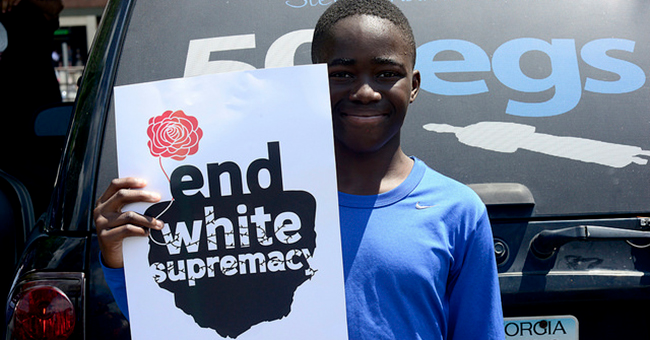
• Congregate Charlottesville Confronts Unite The Right 25

    Congregate Charlottesville Confronts Unite The Right 25, August 12, 2017. Photo credit: Stephen Melkisethian

    The events in Charlottesville, Virginia are a frightening and disheartening reminder of how hate and intolerance in the US resurface when bigots feel empowered to act on their prejudice. Cornel West described the rally that took place on August 12 as “the biggest gathering of a hate-driven right wing in the history of this country in the last thirty to thirty-five years.” Watching the violence unfold left us feeling sorrowful and horrified.

    We at Beacon Press believe in promoting anti-racism, religious pluralism, and respect for diversity in all areas of life. We work to lift up the voices that speak to urgent social issues. In today’s politically fraught climate, we find ourselves face-to-face with these issues, which is why Rev. Dr. William J. Barber, II has rightfully declared that, “now is the time for a Third Reconstruction. We who believe in freedom insist that we are going forward together, not one step back.”

    The level of hate seen at the rallies in Charlottesville has a history and a context that need to be understood. As president of the Unitarian Universalist Association Rev. Susan Frederick-Gray said at the peaceful counter-protests in Charlottesville, “White supremacy is not new in this country, but its renewed boldness is.” To that end, discussions about it need to continue in order for us to work toward inclusiveness and social justice. That’s why we’ve put together a list of resources for your perusal.

    This list includes resources from the Anti-Defamation League, Teaching Tolerance, Political Research Associates, Facing History, and our own authors and staff; it’s by no means exhaustive. We’ll keep adding to it to empower a reimagining of justice and the societal transformation necessary to dismantle white supremacy and structural violence.

    We hope you find these helpful in our uncertain times.


    Resources

    To help understand what happened:

    What Is the “Alt-Right”?
    Teaching Tolerance 

    Trumpvangelicals Are Using Faith to Bring Us to the Brink of Nuclear War
    Rev. Dr. William J. Barber II and Rev. Dr. Liz Theoharis, ThinkProgress

    One Nation, Under Siege: Between the Devil and the Deep Blue Lives Security State
    Kay Whitlock, Beacon Broadside 

    Alt Right: A Primer about the New White Supremacy
    Anti-Defamation League 

    The “Free-Speech” Hypocrisy of Right-Wing Media
    Keeanga-Yamahtta Taylor, The New York Times 

    CTRL-Alt-Delete: The Origins and Ideology of the Alternative Right
    Political Research Associates 

    Contemporary Antisemitism and Youth
    Facing History 

    Charlottesville: Race and Terror
    VICE News Tonight on HBO 

    Trump, Bullying, and the Legacy of White Supremacist Terror: Let’s Call It What It Really Is
    David Stovall, Beacon Broadside 

    There Is No Post-Racial America
    Ta-Nehisi Coates, The Atlantic 

    These Are Donald Trump’s Racist Troops
    Brian Beutler, The New Republic


    To help understand the historical and societal scope of hate in America: 

    The Reconstruction Era and the Fragility of Democracy
    Facing History 

    American Horror Story: 5 Myths about Hate and Violence in America
    Kay Whitlock and Michael Bronski, Beacon Broadside

    Holocaust and Human Behavior
    Facing History 

    Why It Matters When a Town Rallies Against Hate
    Linda K. Wertheimer, The Boston Globe 

    White Supremacy, the Hate Frame, and Disruptive Imagination
    Kay Whitlock and Michael Bronski, Beacon Broadside 

    The History White People Need to Learn
    Mary-Alice Daniel, Salon 

    #CharlottesvilleCurriculum, #CharlottesvilleSyllabus, UC Press Edition
    University of California Press Blog 

    Teachers Share Resources for Addressing Charlottesville Hate Rally in the Classroom
    Education Week Blog


    To propose solutions and individual actions:

    Ten Ways to Fight Hate: A Community Response Guide
    Southern Poverty Law Center 

    The Alt-Right Curriculum
    Linda K. Wertheimer, The Atlantic 

    A Working-Class Strategy for Defeating White Supremacy
    Gabriel Kristal, In These Times

    Fourteen Steps Forward Together for America’s Third Reconstruction
    Rev. Dr. William J. Barber with Jonathan Wilson-Hartgrove, Beacon Broadside


    Books 

    Are We Born Racist?: New Insights from Neuroscience and Positive Psychology
    Edited by Jason Marsh, Rodolfo Mendoza-Denton, Jeremy Adam Smith

    This collection of essays offers a straightforward overview of the new science of prejudice, and showcases the abundant practical, research-based steps that can be taken in all areas of our lives to overcome prejudice.

    Considering Hate: Violence, Goodness, and Justice in American Culture and Politics
    Kay Whitlock and Michael Bronski

    Kay Whitlock and Michael Bronski examine hate and common forms of individual and group violence are excused and normalized in popular culture and political discussion. They challenge readers to radically reimagine the meaning and structure of justice within a new framework of community wholeness, collective responsibility, and civic goodness.

    Defying the Nazis: The Sharps’ War
    Artemis Joukowsky, with a foreword by Ken Burns

    This official companion to the Ken Burns PBS film tells the little-known story of the Sharps, an otherwise ordinary couple whose faith and commitment to social justice inspired them to undertake dangerous rescue and relief missions across war-torn Europe, saving the lives of countless refugees, political dissidents, and Jews on the eve of World War II.

    Faith Ed: Teaching About Religion in an Age of Intolerance
    Linda K. Wertheimer

    In her intimate cross-county look at the debate over religion in the public school system, veteran education journalist Linda K. Wertheimer offers a promising roadmap for raising a generation of religiously literate Americans.

    Gather at the Table: The Healing Journey of a Daughter of a Slave and a Son of a Slave Trade
    Thomas Norman DeWolf and Sharon Leslie Morgan

    Thomas Norman DeWolf and Sharon Leslie Morgan confront the legacy of slavery and racism head-on in their three-year travels to visit plantations, antebellum mansions, cemeteries, and other historic sites.

    A Gift of Love: Sermons from Strength to Love and Other Preachings
    Martin Luther King, Jr., with forewords by Coretta Scott King and the Rev. Dr. Raphael Warmock

    This classic collection of sixteen sermons preached and compiled by Dr. King presents his fusion of Christian teachings and social consciousness, and promotes his prescient vision of love as a social and political force for change.

    Loving: Interracial Intimacy in American and the Threat to White Supremacy
    Sheryll Cashin 

    Sheryll Cashin offers both a history of white supremacy and a hopeful treatise on the future of race relations in America, challenging the notion that trickle-down progressive politics is our only hope for a more inclusive society. 

    On the Courthouse Lawn: Confronting the Legacy of Lynching in the Twenty-First Century
    Sherrilyn A. Ifill

    Sherrilyn A. Ifill investigates the numerous ways that racial trauma still resounds across the United States and provides an urgent road map for communities with histories of racial violence to move toward reconciliation and reparation efforts.

    The Radical King
    Martin Luther King, Jr., edited and introduced by Cornel West

    This revealing collection of twenty-three selections, which includes his sermon “Where Do We Go from Here,” restores Dr. King as being every bit as radical as Malcolm X by illustrating his revolutionary vision.

    The Third Reconstruction: How a Moral Movement is Overcoming the Politics of Division and Fear
    The Rev. Dr. William J. Barber II with Jonathan Wilson-Hartgrove

    Modern-day civil rights champion Rev. Dr. William J. Barber II tells the stirring story of how he helped start a movement to bridge America’s racial divide.

    Where Do We Go from Here: Chaos or Community?
    Martin Luther King, Jr., with a foreword by Coretta Scott King and an introduction by Vincent Harding

    In his very last book written after a decade of civil rights struggles, Dr. King demands an end to global suffering, asserting that humankind has the resources and technology to eradicate poverty.

    Why We Can’t Wait
    Martin Luther King, Jr., with an introduction by Dorothy Cotton

    Dr. King’s vivid account of the civil rights movement in Birmingham during the spring and summer of 1963 examines the tasks that future generations must accomplish to bring about full equality. This book contains the extraordinary “Letter from Birmingham Jail,” which King wrote in April of 1963.
  • By Martin Luther King, Jr.

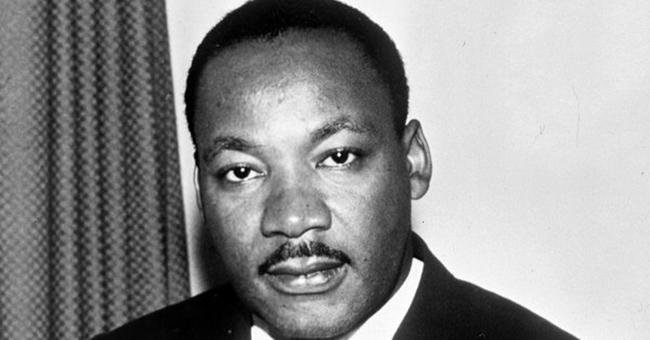
    Martin Luther King  Jr.Fifty years ago today, Dr. Martin Luther King, Jr. delivered his “Where Do We Go from Here” sermon at the annual convention of the Southern Christian Leadership Conference in Atlanta, Georgia. With the news of last weekend’s white supremacist rally in Charlottesville, Virginia fresh in mind, Dr. King’s words ring truer than ever today. For today’s occasion, we’re sharing an excerpt from his sermon. You can read it in full in The Radical King.

    ***

    This is no time for romantic illusions and empty philosophical debates about freedom. This is a time for action. What is needed is a strategy for change, a tactical program that will bring the Negro into the mainstream of American life as quickly as possible. So far, this has only been offered by the nonviolent movement. Without recognizing this we will end up with solutions that don’t solve, answers that don’t answer, and explanations that don’t explain.

    And so I say to you today that I still stand by nonviolence. And I am still convinced, and I’m still convinced that it is the most potent weapon available to the Negro in his struggle for justice in this country.

    And the other thing is, I’m concerned about a better world. I’m concerned about justice; I’m concerned about brotherhood; I’m concerned about truth. And when one is concerned about that, he can never advocate violence. For through violence you may murder a murderer, but you can’t murder murder. Through violence you may murder a liar, but you can’t establish truth. Through violence you may murder a hater, but you can’t murder hate through violence. Darkness cannot put out darkness; only light can do that.

    And I say to you, I have also decided to stick with love, for I know that love is ultimately the only answer to mankind’s problems. And I’m going to talk about it everywhere I go. I know it isn’t popular to talk about it in some circles today. And I’m not talking about emotional bosh when I talk about love; I’m talking about a strong, demanding love. For I have seen too much hate. I’ve seen too much hate on the faces of sheriffs in the South. I’ve seen hate on the faces of too many Klansmen and too many White Citizens’ Councilors in the South to want to hate, myself, because every time I see it, I know that it does something to their faces and their personalities, and I say to myself that hate is too great a burden to bear. I have decided to love. If you are seeking the highest good, I think you can find it through love. And the beautiful thing is that we aren’t moving wrong when we do it, because John was right, God is love. He who hates does not know God, but he who loves has the key that unlocks the door to the meaning of ultimate reality.

    And so I say to you today, my friends, that you may be able to speak with the tongues of men and angels, you may have the eloquence of articulate speech; but if you have not love, it means nothing. Yes, you may have the gift of prophecy, you may have the gift of scientific prediction and understand the behavior of molecules, you may break into the storehouse of nature and bring forth many new insights; yes, you may ascend to the heights of academic achievement so that you have all knowledge, and you may boast of your great institutions of learning and the boundless extent of your degrees; but if you have not love, all of these mean absolutely nothing. You may even give your goods to feed the poor, you may bestow great gifts to charity, and you may tower high in philanthropy; but if you have not love, your charity means nothing. You may even give your body to be burned and die the death of a martyr, and your spilt blood may be a symbol of honor for generations yet unborn, and thousands may praise you as one of history’s greatest heroes; but if you have not love, your blood was spilt in vain. What I’m trying to get you to see this morning is that a man may be self-centered in his self-denial and self-righteous in his self-sacrifice. His generosity may feed his ego, and his piety may feed his pride. So without love, benevolence becomes egotism, and martyrdom becomes spiritual pride.

    I want to say to you as I move to my conclusion, as we talk about “Where do we go from here?” that we must honestly face the fact that the movement must address itself to the question of restructuring the whole of American society. There are forty million poor people here, and one day we must ask the question, “Why are there forty million poor people in America?” And when you begin to ask that question, you are raising a question about the economic system, about a broader distribution of wealth. When you ask that question, you begin to question the capitalistic economy. And I’m simply saying that more and more, we’ve got to begin to ask questions about the whole society. We are called upon to help the discouraged beggars in life’s marketplace. But one day we must come to see that an edifice which produces beggars needs restructuring. It means that questions must be raised. And you see, my friends, when you deal with this you begin to ask the question, “Who owns the oil?” You begin to ask the question, “Who owns the iron ore?” You begin to ask the question, “Why is it that people have to pay water bills in a world that’s two-thirds water?” These are words that must be said.


    About the Author 

    Dr. Martin Luther King, Jr. (1929–1968), Nobel Peace Prize laureate and architect of the nonviolent civil rights movement, was among the twentieth century’s most influential figures. One of the greatest orators in US history, King also authored several books, including Stride Toward Freedom: The Montgomery Story, Where Do We Go from Here: Chaos or Community?, and Why We Can’t Wait. His speeches, sermons, and writings are inspirational and timeless. King was assassinated in Memphis, Tennessee, on April 4, 1968. 

  • A Q&A with Christopher M. Finan

    Alcohol

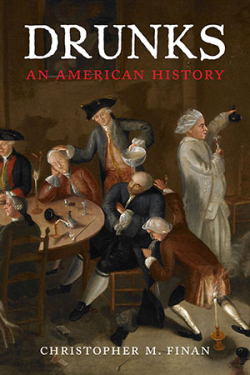
    America has been trying to get sober for over three hundred years. And it hasn’t been an easy road to sobriety. Today, recovery organizations such as Alcoholics Anonymous and others provide support for alcoholics who face the danger of relapse for the rest of their lives. But centuries ago, alcoholism wasn’t understood to be a treatable illness, because our nation condemned drunks for moral weakness.

    In his latest book, Drunks: An American History, Christopher M. Finan uncovers the social history of our struggle with alcoholism and the emergence of the quest for sobriety that began among the Native Americans in the colonial period. We caught up with Finan to ask him about the effects alcoholism has had on our country, trends of treatment in the past, and how this history can help us understand current issues around addiction.

    Caitlin Meyer: You start the book by writing about the impact of alcohol on Native American populations, and the ways that colonists used liquor gain an advantage over those communities. What surprised you when you were digging into this history? 

    Christopher M. Finan: I was deeply moved by the suffering of Native Americans who had no experience with whiskey and did not recognize its dangers until it was killing them in large numbers. But I was thrilled by the story of Handsome Lake, a Seneca who was on the point of death from alcoholism when he experienced a religious vision that inspired him to quit drinking and lead a movement in the early nineteenth century that helped many Seneca and other members of the Iroquois confederacy get sober.

    CM: What was the relationship between early Americans and alcohol, overall? How big a problem was alcoholism, and what effects was it having on the country? 

    CMF: Colonial attitudes toward liquor were overwhelmingly positive. At a time when water was often polluted, it was the safest thing they could drink. They thought it made hard physical labor easier and used it to warm themselves in freezing temperatures. They drank throughout the day. But by the end of the eighteenth century, whiskey was flooding the market, and consumption rose to as high as seven gallons per person. It was then that Dr. Benjamin Rush, a signer of the Declaration of Independence, began to warn of the dangers of alcohol, including the danger of alcohol addiction. He helped launch a temperance movement that swept the nation during the early years of the nineteenth century.

    DrunksCM: Looking at more than 300 years of history, what trends did you see emerging in terms how alcoholics have been treated in society? How was that reflected, or combated, by the recovery movement? 

    CMF: For centuries, alcoholics were blamed for their inability to control their drinking, and it was widely assumed that alcoholism was incurable. This began to change after the founding of the Washington Temperance Society in 1840. The Washingtonians were the first national group to help alcoholics get sober, and they inspired the creation of the first institutions to provide treatment for addiction. But most of those institutions closed during Prohibition, and there was a resurgence of the stigma against alcoholics. It was only after Alcoholics Anonymous was founded in 1935 that it once again became clear that alcoholism is an illness that can be treated and that alcoholics can stay sober for a lifetime. Today there are more than twenty million people who are in recovery from their problem with alcohol, and many have joined a growing movement to make treatment available to the millions more who suffer. 

    CM: There were a lot of well-known people mentioned in the book, from Abraham Lincoln to Betty Ford. Who were some of the most interesting unknown figures that you came across in your research? 

    CMF: There are so many: John H.W. Hawkins, the great Washingtonian orator who traveled over 200,000 miles on horseback, in carriages and boats to help fellow alcoholics; Leslie Keeley, the purveyor of a phony gold “cure” for alcoholism who nevertheless helped thousands of drunks at more than 100 institutes where they drew strength from the experiences of other patients; Jerry McAuley, a drunk and a thief who emerged from Sing Sing Prison, got sober, and founded the renowned Water Street Mission on the New York waterfront to help many of the city’s most degraded citizens, including many alcoholics; and Marty Mann, the hard-drinking daughter of one of Chicago’s finest families who became the first woman to stay sober in AA and then led a national campaign to eliminate the stigma against alcoholism.

    CM: How can readers use this history as a jumping off point to understand the current issues around addiction, recovery, and treatment in America? 

    CMF: The history of addiction in America teaches us not to be discouraged by our latest drug crisis, the opioid epidemic that killed more than 52,000 in 2015 and is growing worse. We have made so much progress: we know addiction is illness; that it can be treated effectively, and that society has a responsibility to help people fight their addictions. But we have to pay the cost. It is estimated that we need to spend $183 billion over the next ten years to fight the opioid epidemic. So far Congress has authorized only $1 billion.  


    About Christopher M. Finan 

    Christopher M. FinanChristopher M. Finan is the author of From the Palmer Raids to the Patriot Act: A History of the Fight for Free Speech in America and Alfred E. Smith: The Happy Warrior. He is the executive director of National Coalition Against Censorship and former director of American Booksellers for Free Expression, a program of the American Booksellers Association. He lives in Brooklyn, New York. Follow him on Twitter at @chrisfinan and visit his website.

  • By Caroline Light

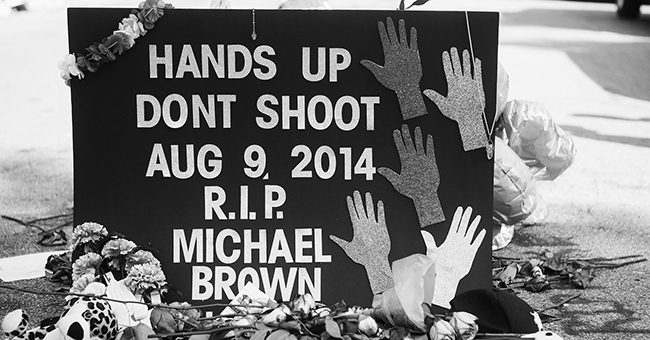
    Memorial to Michael Brown

    Photo credit: Jamelle Bouie

    Three years ago today, Michael Brown, eighteen years old and unarmed, was fatally shot in Ferguson, Missouri by officer Darren Wilson, who claimed to have fired in self-defense. Missouri is one of thirty-three states with “stand-your-ground” laws which allow the kind of lethal self-defense that took Brown’s life. As Caroline Light explains in the following excerpt from her book Stand Your Ground: A History of America’s Love Affair with Lethal Self-Defense, these gun-carry laws don’t make us safer. They criminalize communities of color while granting only white gun owners the privilege of do-it-yourself protection.

    ***

    Against the moral absolutism of police violence and DIY-security citizenship, the Black Lives Matter and #SayHerName movements have emerged to call out the deadly consequences of racist, classist, and (hetero) sexist violence. Beyond critiquing police violence, these movements challenge the larger structures that serve white supremacist, patriarchal power. Black Lives Matter, a network founded by three queer-identified women of color, “affirms the lives of Black queer and trans folks, disabled folks, Black-undocumented folks, folks with records, women and all Black lives along the gender spectrum.” This “intersectional” approach to systemic violence considers the simultaneity of identity threat for vulnerable populations, and it is profoundly threatening to the DIY-security citizenship ideal. Black Lives Matter and #SayHerName challenge the epistemic roots of inequality, as well as its maliciously antidemocratic effects.

    Today, we witness multiple instances that illuminate the collision course between the armed citizen impulse and intersectional calls for justice. In the summer of 2015, members of an armed group that calls itself Oath Keepers patrolled the Ferguson, Missouri, protests where Black Lives Matter protesters and others marked the one-year anniversary of the shooting death of eighteen-year-old Michael Brown by a white police officer, Darren Wilson. Founded in 2004 by a former US Army paratrooper, Stewart Rhodes, Oath Keepers is a group of former military and first responders claiming to “defend the Constitution against all enemies, foreign and domestic.” Most members are white males. Members of the group began appearing in Ferguson, armed with assault rifles and wearing bulletproof vests and camouflage clothing. Missouri laws allow people with concealed-weapon permits to carry their guns openly, unless they demonstrate an “angry or threatening manner.” Oath Keepers’ media director, Jason Van Tatenhove, explained the purpose of the group: “to protect not only businesses and homes, but the citizens themselves.” According to Van Tatenhove, the presence of this quasi-military organization was vital to maintaining order and safety “during the riots last November and December” that took place in the wake of Michael Brown’s death.

    Notably, the group boasted of its protection of good citizens, businesses, and homes, while characterizing the protests for racial justice as riots. This description conflates protesters demanding racial justice with riot-like assaults on public safety, order, and property. Using racially coded language associating Black protest with criminality, the Oath Keepers emphasized the need for armed white militants to defend white property. When counter-protesters at Black Lives Matter demonstrations insist that “blue lives matter,” they highlight police vulnerability while denying the susceptibility of people of color to police violence. Similar characterizations of protests against police violence as examples of reverse racism proliferate on social media. For example, some gun rights activists have circulated a cartoon, created by George Trosley, featuring a violent Black criminal—whose features are drawn to appear almost simian—protesting his rough treatment by two serene, nonviolent, white policemen trying to handcuff him in the wake of his murderous rampage through a liquor store. This image was among those posted on the Facebook page of Jamie Gilt, the white Florida gun rights activist who achieved notoriety after being shot in the back by her four-year-old.

    Urgent cries for armed self-defense in the United States seem to have peaked in the wake of the November 13, 2015, terrorist attacks in Paris. Posts to news blogs confirm the widespread support for armed citizenship. One Yahoo News blog post captures the spirit of many: “If law abiding people in this world were allowed to carry a weapon this wouldn’t happen. If one third of the people in the movie theater had a gun there would have been a lot less innocent people killed.” Campus-wide concealed carry was recently approved for eligible students at Liberty University, a Christian college in Lynchburg, Virginia. On December 2, 2015, there was a mass shooting in San Bernardino, California. After the incident, Jerry Falwell Jr., the president of Liberty University, made explicit the usually implicit biases and perceptions of “stranger danger” that fortify the DIY-security citizenship ideal when he stated: “If more good people had concealed-carry permits, then we could end those Muslims before they walked in.” The appeal to “good” and “law-abiding” people to serve as their own armed protectors against terrorism not only promises an easy, homegrown solution to our deepest insecurities; it reinforces the idea that a criminal stranger who is a religious and ideological extremist can be immediately recognized on sight.

    Fears of terrorism and rampant criminality fuel what historian Jill Lepore foretells will be “an end to civilian life,” when we are all engaged in panic-induced DIY security and “the only good citizen is an armed one.” The United States has experienced close to a thousand mass shootings since the Sandy Hook massacre of December 2012, and many believe that the solution to these acts of mass violence is to continue to build our arsenal. Although the United States accounts for just 4.4 percent of the world’s population, we possess forty to fifty percent of the world’s civilian-owned guns, and the stockpiling of weapons continues. We have indeed become a nation of selectively armed citizens.

    But as the Black Lives Matter and #SayHerName movements are teaching us now, our current insecurities will not be mitigated by endowing more citizens with the right to shoot first, and ask questions later. Indeed, eliminating gun restrictions and the duty to retreat has only intensified the violence against our nation’s most vulnerable citizens. It should not surprise us that SYG laws and more liberal gun-carry laws—in spite of their ostensibly race neutral framing—continue to place people of color outside of our nation’s protective boundaries. The deliberate misidentification of criminality and vulnerability is embedded in our very ideals of citizenship.


    About the Author

    Caroline Light is director of undergraduate studies in the Program in Women, Gender, and Sexuality Studies at Harvard University. She is the author of That Pride of Race and Character: The Roots of Jewish Benevolence in the Jim Crow South.

  • Cliff MankoYou’ve read our classics, such as Viktor Frankl’s Man’s Search for Meaning, Octavia Butler’s Kindred, the work of Martin Luther King, Jr., and James Baldwin’s Notes of a Native Son; and many of you know our current list, featuring books by Cornel West, Lani Guinier, Anita Hill, and Christopher Emdin—books that speak to the condition of the world, and add to our understanding of urgent social issues. Whether it’s the environment or race, cultural or class dynamics, we publish all our books with a purpose. Now you can meet the people who work at Beacon Press in our blog series “Beacon Behind the Books.” Each month, we’ll introduce to you a member of our staff and give you a behind-the-scenes look at what goes on at our office.

    For the month of August, we introduce you to our chief financial officer, Clifford Manko!  

    What drew you to publishing, Cliff? How did you find your way to Beacon?

    I have always had a passion for politics and social issues, so publishing was a natural segue. I was a history major in college, and considered a career in academia. The MBA came a few years after college. I was working my way up the ladder as a CPA at a large accounting firm when an opportunity arose at Houghton Mifflin, which was a client, for a position in corporate finance. I was intrigued at the prospect of working at a publisher involved in educational and trade publishing and interacting with creative people—going back to my liberal arts roots. In fact, I remember that I was asked more questions about my history major than my business background during the interview process. My instincts were right, and I spent many years at Houghton Mifflin and later Cengage Learning, both in the educational publishing space. I knew of Beacon Press and its great reputation through my years at Houghton Mifflin. It has been very exciting to work at a mission-based publisher focused on issues which I care deeply about.

    What are some of the challenges of being a CFO? What do you find most rewarding?

    As CFO, I am responsible for management reporting and financial analytics to support our operations. Good financial analysis and planning is dependent on collaborating with colleagues who have product and customer expertise. This dialogue is needed so that the right questions are raised and data organized in a way so that meaningful decisions can be made. In publishing, that means that finance spends a lot of time with sales, marketing, and editorial. I spend a lot of time with these groups reviewing trends and data needed for planning. Those interactions are the most rewarding part of my job. A constant challenge is getting needed data—sometimes the limitations are with systems, sometimes the marketplace.

    What current/upcoming projects are you excited about?

    On the operations side, I am enthusiastically involved with Beacon’s implementation of the Biblio publishing platform. Like many publishers, both large and small, Beacon currently runs on multiple home grown databases and applications. Biblio will allow Beacon to move these databases and applications under one roof, and give all departments needed transparency. On the product side, I am very supportive of our large investment in download audio. The market for download audio is a major growth opportunity for Beacon.

    What skills have you taken from previous jobs to help you do your work at Beacon?

    The need to have regular check-ins with staff and management. Even at a small firm like Beacon, it can be a challenge to keep current on status meetings—we are all always busy—but it is so important.  

    What other departments does your department interact with? And how?

    When it comes to budgets and financial reporting, I deal with all managers. When it comes to data and analytics, I work most closely with sales and editorial. I work with the sales group to identify sales trends by format/market/title to make forecasts and flag inventory issues. The editorial team needs data on title performance on both the top and bottom line, and for modeling contracts with authors.

    Favorite thing about Boston?

    My favorite is the Boston Public Library. I love the architecture and exhibits and reading rooms and its location. I used to eat my lunch in the courtyard when I worked in Back Bay. A real treat.

    What are you reading right now?

    I am reading a non-fiction thriller involving Russia, high finance, and espionage by Bill Browder, Red Notice. 

    Hobbies outside of work?

    I like to be outside as much as possible when not at work. I was a serious bicyclist for many years, including several rides from Boston to Provincetown, and still bike cross country. 

    Favorite type of music?

    I listen to classical music in the morning and classic British rock to relax. My wife surprised me for my birthday in June for tickets to hear Quadrophenia perform in NYC.

    What’s your commute like? What do you do to pass the time on your way into the office?

    I walk most days to work from North Station and then back, about 1.5 miles each way. I have different walking routes and do my best thinking during those walks. It has been fun to see how the Greenway has developed and all the activity in the Greenway in the nice weather. Walking during a snowfall is fun too.


    About Clifford Manko

    Clifford Manko joined Beacon Press in 2016 as CFO. Prior to Beacon, Cliff was SVP Finance at Houghton Mifflin Harcourt and VP Finance at Cengage Learning. He began his finance career at Ernst & Young, where he was a CPA and audit manager. Cliff is graduate of Cornell and NYU Business School. 

  • By Steve Early

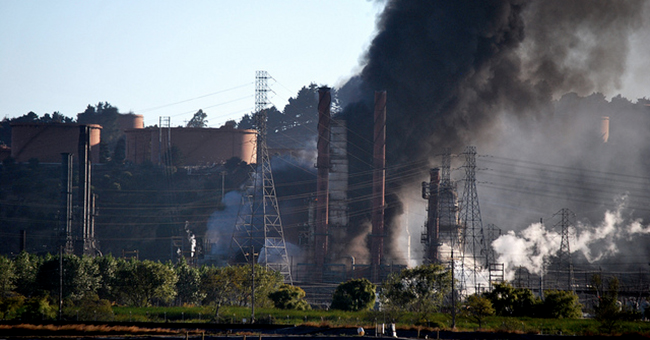
    Chevron's Richmond refinery fire, 2012

    Chevron's Richmond refinery fire. Photo credit: Nick Fullerton

    Five years ago, my wife and I moved to Richmond, CA, and soon learned about the local emergency response protocol known as “shelter in place.”

    When large fires break out in Bay Area refineries, like the century-old Chevron facility near our new home, first a siren sounds. Then public officials direct everyone nearby to take cover in their own homes. Doors must be closed, windows taped shut, if possible, and air conditioning turned off.

    August 6 is the fifth anniversary of such self-help efforts in Richmond. On that day in 2012, we looked over the hill behind our house and saw an eruption worthy of Mount Vesuvius. Due to pipe corrosion and lax maintenance practices, a Chevron processing unit sprang a leak. The escaping petroleum vapor reached an ignition source. This led to a raging fire that Contra Costa County (home to four refineries) classified as a “Level 3 incident,” posing the highest level of danger.

    Nineteen oil workers narrowly escaped death at the scene of the accident. It sent a towering plume of toxic smoke over much of the East Bay and fifteen thousand refinery neighbors in search of medical attention for respiratory complaints. While local property values took a hit, Chevron stayed on track to make $25 billion in profits that year.

    Hunkering Down or Fighting Back?

    Hunkering down at home and hoping for the best—or going to see the doctor—is no substitute for addressing a problem of this scale at its source. The Chevron fire became a wake-up call for citizen action to make California refineries safer for their own workers and less harmful to air quality, community health, and the environment in general.

    Since August 2012, labor and community organizers have used lobbying, litigation, regulatory intervention, electoral politics, and strike activity to pursue these goals. There has been some safety enforcement progress, modest financial concessions by Big Oil, and related promises to behave better in the future. Yet, thanks to Big Oil’s legal and political clout in our nation’s second largest oil refining state, the wheels of environmental justice turn much too slowly.

    On the plus side, after the 2012 fire, Chevron quickly pleaded “no contest” to six criminal charges filed by state and local prosecutors, agreeing to pay $2 million in fines and restitution. It was also placed on probation; while in that status, the company pledged to improve its pipe leak and emergency response training, inspection of pipes for corrosion, and overall safety conditions.

    After protracted negotiations with municipal leaders in Richmond, the company began a $1 billion modernization project, which management contends will make its refinery safer and cleaner. (Skeptics fear the overhaul will lead to dirtier forms of crude oil being processed in Richmond.) City officials—elected to be stronger environmental watchdogs—secured a $90 million, post-fire community benefits agreement, which includes funding for expanded solar energy use in the city. 

    Suing Chevron

    In 2013, Richmond also filed suit against Chevron seeking monetary damages for “years of neglect, lax oversight, and corporate indifference to necessary safety inspection and repairs.” Our current mayor, Tom Butt, predicts the case will be “settled on the courthouse steps,” but after four years of litigation, the parties haven’t gotten that far yet. (Litigation against the company, filed by Ecuadoran famers for damage to their country’s rain forest, is now in its fifteenth year.) Meanwhile, two other public entities in California—the counties of Marin and San Mateo—are suing Chevron, a major source of carbon emissions, over its damaging contribution to global warming.

    On July 24, Chevron did finally agree to do more Richmond refinery pipe replacement, safety training, and equipment monitoring, plus pay $1 million in fines assessed by Cal-OSHA for now five-year-old violations. In May, after persistent lobbying by labor and environmental groups in the Blue-Green Alliance, the Brown Administration issued what the Alliance calls “the nation’s strongest refinery safety regulations.” Echoing strike demands by the United Steel Workers during its national oil industry contract campaign three years ago, these new rules give refinery workers an expanded role in hazard reduction.

    Unfortunately, our Democrat-dominated legislature has just blocked the Bay Area Air Quality Management District (and others like it around the state) from adopting stronger refinery emission curbs under consideration since the Chevron fire. This “pre-emption” of Air Quality Board authority is the price Californians will pay for legislative approval of Governor Jerry Brown’s controversial “cap and trade” program (which lets Chevron and other firms pay to pollute).

    Meanwhile, in Congress, President Trump is trying to de-fund the US Chemical Safety Board. This tiny $11 million a year agency probed the Richmond fire, produced an informative report on its causes, and helped shape Cal-OSHA’s resulting rule-making process. California’s new refinery safety standards reflect Chemical Safety Board recommendations that are never mandatory because the CSB lacks such legal authority.

    Bi-partisan undermining or elimination of state and federal oversight bodies is a big step in the wrong direction. At their best, Cal-OSHA, the CSB, and California’s Air Quality Districts operate at a snail’s pace, while giving corporate law-breakers an overdose of due process. In the end, they impose weaker penalties than needed or, in the CSB’s case, can’t fine anybody for anything. (That defect notwithstanding, the Trump Administration still wants to abolish the Board as part of its de-regulation drive.)

    On the fifth anniversary of the Chevron fire in Richmond, oil industry safety investigations, limits on refinery emissions, and financial compensation for people or a planet badly scarred by Big Oil will require citizen action on a far scale larger than ever before.


    A different, shorter version of this story also appeared in the San Francisco Chronicle.


    About the Author 

    Steve EarlySteve Early is a journalist, lawyer, and Richmond-based author of Refinery Town: Big Oil, Big Money, and the Remaking of an American City (Beacon Press, 2017). He can be reached at Lsupport@aol.com. Visit his website.


  • By Andrea Ritchie

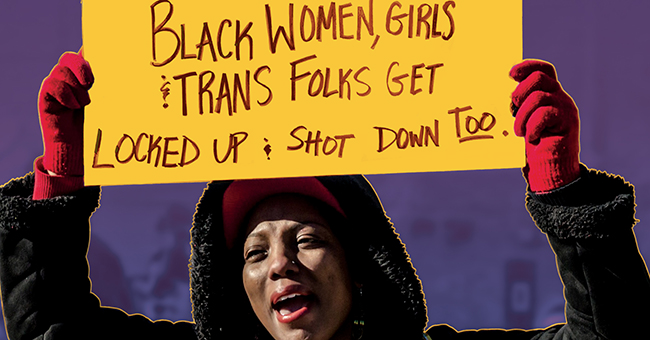
    Invisible No More

    Image credit: Louis Roe

    This post appeared originally on invisiblenomorebook.com.

    As Invisible No More: Police Violence Against Black Women and Women of Color wends its way into the world after living in my computer, countless boxes in my apartment, and in my heart and mind in various forms for the past decade, I find myself in Detroit for the annual Soros Justice Fellows conference. It feels like I am in the best possible place for this moment.

    We are here, in part, to mark the fiftieth anniversary of the Detroit Rebellion of 1967, which has me reflecting on the role police violence against Black women—often invisible in the retelling—played in sparking the uprising, and ongoing resistance to police violence in the Motor City. At the time of the rebellion, Detroit’s occupying force was known for physical and sexualized violence against Black women as well as men. In 1964, they smashed Barbara Jackson’s face into a doorframe during a prostitution-related arrest, breaking her teeth and permanently damaging her face. In 1965, they shot another Black woman sex worker to death during an arrest. The night of July 23, 1967 was no different—when officers raided the “blind pig” (after-hours club), the degradation to which they subjected Black women patrons is cited by historians as one of the sparks of the uprising. Later, when police arrested Jackie Lee Murdock, officers ripped off her top and groped her breasts as she was being booked at the police precinct. The National Guard’s killing of four-year-old Tonia Blanding as they shot blindly into a house prompted further outrage.

    Being in Detroit also has me thinking about the 1998 police killing of seventy-nine-year-old great-great-grandmother Cora Bell Jones, shot point blank in the chest by Detroit police officers responding to a drive-by shooting outside her house. Partially blind, diagnosed with Alzheimer’s, and reacting to a militarized invasion of her home, she was trying to intervene as police pepper sprayed her daughter, who uses a wheelchair, when she was killed. I wrote about Cora’s story over ten years ago in Law Enforcement Violence Against Women of Color, an essay in the recently re-released INCITE! Color of Violence Anthology, and it has haunted me ever since—as have the words of an investigating officer, who justified the shooting by simply saying “a shot was fired and it went where it was directed.”

    The same is true of the 2010 killing of Aiyana Stanley-Jones, a seven-year-old girl who would have turned fifteen just a few weeks ago if her life had not been stolen by police during a botched raid, shot as she lay sleeping on her couch. Her death, eerily reminiscent of Tonia Blanding’s, continues to prompt protests and demands for justice from her family.

    Invisible No MoreAnd it has me thinking about the raid of another after hours bar, the Power Plant, that I learned about when researching Amnesty International’s 2005 report Stonewalled. In the early morning hours of March 2, 2003, Black trans and queer folks were forced to lay face-down on the floor for hours with their hands bound behind their backs as dozens of Wayne County sheriffs’ officers who stormed the establishment, guns drawn, laser sights on, proceeded to kick, slam, and heap racist, homophobic, and transphobic verbal abuse on patrons in a variation of the policing tactics that sparked the ’67 rebellion.

    And about Shelly “Treasure” Hilliard, brutally murdered in 2011 after police who had arrested her for possession of a small amount of marijuana pressured her into serving as an informant—and then blew her cover, setting her killing in motion—and the movement to demand justice in her name documented by Detroiter dream hampton’s Treasure: From Tragedy to Transjustice.

    And about how laws and “jokes” targeting trans people continue to fuel the epidemic of deadly violence, including police violence, against Black trans women.

    And about Aura Rosser, killed by police in Ann Arbor, just forty-five minutes away, just minutes after responding to a domestic violence call, and the fierce resistance mounted by Ann Arbor activists following her death.

    Perhaps most of all, it has me thinking of everything Detroit has taught me over the past decade this book has been in the making about resistance, and about the necessity and joy of dreaming the world we want to build even as we fight the world that is. The Allied Media Conference has been a place I have returned to every year over the past decade that it has been rooted in Detroit, to replenish my hope, to have my mind blown and expanded, and to deepen my relationships with a community of dreamers, visionary organizers, and creative geniuses. It is where I met Grace Lee Boggs and learned about her visionary legacy, and was introduced to the work of the Detroit Coalition Against Police Brutality, founded by members of the Black Panther Party, which simultaneously works to fight police violence and build Peace Zones for Life. The AMC has also hosted numerous workshops and network gatherings focused on police violence against Black women and criminalization of survivors of violence. Detroit is also where Emergent Strategy and Complex Movements, two visionary strands of future creation that have expanded my imagination about what is possible, were born. And it is where I was reminded during a visit to the Boggs Center yesterday that we are simply at one moment in a long arc of history and struggle.

    Invisible No More is a book about where we are and have been. In the spirit of Detroit, I look forward to the conversations about where we are going, and how we will get to a world free of police violence—and all forms of violence—against Black women and women of color.


    About the Author 

    Andrea RitchieAndrea J. Ritchie is a Black lesbian immigrant and police-misconduct attorney, and a 2014 Senior Soros Justice Fellow, with more than two decades of experience advocating against police violence and the criminalization of women and LGBTQ people of color. She is currently Researcher-in-Residence on Race, Gender, Sexuality, and Criminalization at the Barnard Center for Research on Women and the coauthor of Say Her Name: Resisting Police Brutality Against Black Women (AAPF, 2015) and Queer (In)Justice: The Criminalization of LGBT People in the United States (Beacon, 2011). She lives in Brooklyn, New York, and Chicago. Follow her on Twitter at @dreanyc123 and visit her website. 

  • By Mary Frances Berry

    I Voted sticker

    Photo credit: Kelley Minars

    Our electoral process is broken. Polls, interviews with voters or prospective voters all confirm discontent with our system and a sense of unfairness, corruption or unresponsiveness. At the state and local levels, such issues as expanding Medicaid, insuring clean drinking water, addressing homelessness, figuring out how to “fix” education, repairing streets and other infrastructure, police community relations, all depend on an effectively functioning political system. The public routinely expresses a sense of uncertainty about when and how to vote, who can vote, and whose votes count, whether in state and local or national primaries or general elections. The uncertainty is exacerbated by increased population mobility. Some jurisdictions make changes in the law and are then challenged and endure expensive litigation costs because of provisions attacked as voter suppression. The cost to the justice system as well as the litigants is enormous. Also, the contestation further undermines confidence in the political system.

    Trying to pass a new Voting Rights Act to remedy the Supreme Court decision in Shelby v. Holder is important, but does not address these general concerns. Because the Constitution gives the states the power to directly control elections, the most Congress could do, even in a less polarized environment, is to enact a best practices law and then provide for withholding funding in the absence of compliance. We need a different non-partisan approach in which the states would mandate the rules. The optimal approach under current circumstances is a uniform elections and voting process code adopted by the states which includes best practices and reflects the goal of democracy while reducing uncertainty, avoiding abuses and litigation costs, and unnecessary tension over voting. This Code, like others initiated by the National Conference of Commissioners on Uniform State Laws and the American Law Institute, would be adopted by each legislature or by ballot referendum. Such a Code might also increase turnout of citizens who respect the system and believe the process makes accountability possible.

    At a minimum, such a Code should provide for better monitoring of campaign’s using contributions for vote-buying and misuse of absentee ballots. This includes collecting signatures from vulnerable elderly or the poor for a few dollars or snow or trash removal only in certain pliant neighborhoods, or allocating public housing based on how a family voted—practices which still exist in almost every jurisdictions. Because local prosecutors and judges are elected by the same campaigns, action would require independent prosecutors and judges in state and local elections in voter manipulation cases.

    The Code could also ease obtaining voter ID cards by providing for secure transmission online of a photo to the voter registration office along with the application and payment. It might also provide for voter registration offices distributed fairly based on population in geographic areas of the state to avoid deliberate efforts to make qualifying difficult.

    In order to increase turnout, the Code could require mandatory voting, but only with “none of the above” as a possibility. This is to avoid making people vote for someone they don’t want. It might also consider incentives or rewards such as a lottery ticket along with the “I Voted” sticker, as the voter leaves the polling place.

    Once the Code is adopted, any state legislative action that changes a provision in a way that violates the state or federal Constitution would invite litigation to prevent its implementation.

    Grassroots activists will need to organize to gain approval either by the legislature or ballot referendum. Some legislators and voters will be interested in litigation costs; others in rights, fairness and morality, still others, in accuracy and inclusiveness in the name of democracy and citizen action. States that do not act could be penalized by the economic pressure of boycotts and business location decisions.

    Actual as opposed to pretend democracies are based on citizen participation and the delivery of promised government benefits to constituents by elected officials. Voters may invest their hopes in a candidate who promises to change their situation, believing that this time around, elections actually do matter. But when promises are blatantly ignored with no demonstration of even intent to deliver, pessimism and anger among the population is a result. Adopting a best practices approach to the electoral process will alleviate unfairness and help to restore faith in our democracy.


    About the Author 

    Mary Frances BerryMary Frances Berry is the Geraldine R. Segal Professor of American Social Thought and professor of history at the University of Pennsylvania, and the author of nine books. The recipient of thirty-three honorary degrees, she has been chair of the US Commission on Civil Rights, is a regular contributor to Politico, and has appeared on Real Time with Bill Maher, Anderson Cooper 360, The Daily Show, Tavis Smiley, and PBS’s NewsHour. She is the author of Five Dollars and a Pork Chop Sandwich: Vote Buying and the Corruption of Democracy. Follow her on Twitter at @DrMFBerry.

  • By Michael Bérubé

    Special Olympics at Penn State

    Special Olympics swimming. Photo credit: Penn State

    Forty-nine years ago, about one thousand athletes with intellectual disabilities from the US and Canada competed in the first Special Olympics International Summer Games in Chicago. Today marks the anniversary of the games, founded by Eunice Kennedy Shriver.

    The Special Olympics hold an important and cherished place in the hearts of disabilities studies scholar Michael Bérubé and his son Jamie, who took part as an athlete in the swimming races. In the following passage from his memoir Life as Jamie Knows It: An Exceptional Child Grows Up, written with Jamie’s participation, Bérubé recalls how competing in the games deepened his son’s sense of self-understanding during his adolescence. As a father, he, too, learned a new aspect of his son’s personality.

    ***

    In 2009, Jamie entered serious solo competition for the first time: Special Olympics swimming meets at nearby universities. Now, when I say “serious competition” and “Special Olympics” in the same sentence, I am aware that there are people who might snicker or guffaw. Anyone inclined to snicker or guffaw should read Timothy Shriver’s account of the first Special Olympics, held in Chicago in 1968. Chicago in 1968 is usually remembered for something else, but this seems important too.

    All over Soldier Field, children of scorn and lonely teenagers tried their best and won. People who had so little to give gave the one thing they had: their hearts. And those around them were given a chance to unleash their spirits, too, by cheering them on, by watching their bravery come to life, by meeting their smiles with eyes opened to loveliness. On that day, winning had nothing to do with beating anyone and everything to do with playing like no one is judging even though everyone is watching. Sports had never seen anything like it. No one had.

    . . . On July 20, 1968, for the first time in history, people with intellectual disabilities were celebrated as great individuals by others who discovered their gifts in the joy of sports. Gifts! The idea of Olympic triumph, of winning, of bravery, of being gifted—none of these qualities had ever been conferred on these human beings. But on the first day, there was something in their persistence, something in their emotional tenderness, in the uninhibited openness to others that burst to life and awakened those who could see to a different way of defining what it means to win.

    In disability studies, we tend to be skeptical of the so-called “supercrip” and allergic to any suggestion that people with disabilities can be inspiring. But it really is quite difficult to go to a Special Olympics meet, of whatever size, and not be inspired by the passion of the athletes and the dedication of the legions of volunteers. When you realize that only fifty years ago, almost no one believed that “the retarded” could participate in athletic events, you realize just how extraordinary Eunice Shriver’s vision was. And if you’re me, you thank her family—and all those volunteers.

    So when I say that Jamie took part in serious competition, I am not saying that Jamie’s Special Olympics swimming career can stack up against the times posted by nondisabled swimmers his age, any more than I would claim that 14.82 seconds is an impressive time for a fifty-meter dash. Here’s what I’m saying.

    In his first meet, in April 2009, at St. Francis University in central Pennsylvania, Jamie opened by winning gold medals in the 25m and 50m freestyle. Heats included only three or four swimmers, segregated by qualifying times; there were dozens of heats. This practice is called “divisioning,” and it is at the heart of Special Olympics, allowing athletes to compete at whatever level is appropriate to them. Then for his third event, the 25m backstroke, the meet officials combined his heat—consisting of three teenagers who had posted qualifying times of about forty or forty-five seconds—with that of two adult swimmers whose times were thirty-two or thirty-three seconds. Jamie’s best time in practice runs had been something like forty-three seconds.

    I filmed the race like a dutiful dad; in fact, I bought a digital videocam expressly for that purpose. But I noted with alarm that at the halfway mark, Jamie trailed the field. I did manage to capture the beginning of his surge, but as he got closer to my end of the pool, my camera angle focused more exclusively on him, so I didn’t immediately realize that when he touched up, he did so in first place—for the third time that morning. He had overtaken the other four swimmers in only twelve or thirteen meters.

    Not until later that night, after I had replayed the race a few times on my laptop, did I discover that Jamie had briefly looked around in the middle of the pool and found that he was trailing—whereupon he had reached down and found another gear, churning his arms and legs frantically to beat his fellow swimmers. He also beat his personal best time by just over ten seconds, which suggested to me that his “personal best” was a function of his relations to other swimmers—or, in more colloquial sports talk, he rose to the level of the competition. And it wasn’t simply a question of winning: in the statewide games two months later, the best he managed was a silver in the 50m freestyle—but that was all right with him, because he shaved another couple of seconds off his personal best in the event. Citius, altius, fortius. That’s what it’s all about. Well, that and living apart from his parents for two nights in a Penn State dormitory. Jamie thought that was pretty great, too. And he bonded with his roommate, a talented young man on the autism spectrum.

    So by 2009, I learned that I had an eighteen-year-old with Down syndrome with a fierce competitive streak. At one point he even asked me how to spell “competitive.” Who knew this personality trait was in the cards? Even Jamie himself was unaware of it until he entered adolescence. It feeds his sense of self-esteem, it helps to keep him in shape, and it affords him some pride in his accomplishments. What’s not to like?


    About the Author

    Michael Bérubé is the Edwin Erle Sparks Professor of Literature at Penn State University. The author of ten books, including The Secret Life of Stories: From Don Quixote to Harry Potter, How Understanding Intellectual Disability Transforms the Way We Read, he lives with his family in State College, Pennsylvania. Follow him on Twitter at @MichaelBerube1 and visit his website.

  • A Q&A with Marcus Eriksen

    Junk Raft

    Photo credit: Morgan Kavanaugh

    Scientist, activist, and inveterate adventurer Marcus Eriksen had a plan to draw public attention to the scale and impact of plastic pollution in the ocean. In 2008, along with his friend and co-navigator Joel Paschal, he set off on a two-month voyage from California to Hawaii, crossing the ocean on a homemade raft made from plastic soda bottles and old airplane parts. He recounts his harrowing trip and his struggles to keep afloat in Junk Raft: An Ocean Voyage and a Rising Tide of Activism to Fight Plastic Pollution. Released this month, Junk Raft also immerses us deep in the history of the plastic pollution crisis and the movement to combat it. Eriksen provides concrete, actionable solutions and an empowering message: it’s within in our power to change the throw-away culture for the sake of our planet. He chatted with our blog editor Christian Coleman about his journey, the dangers plastic pollution poses to our health, and what we can do about it. 

    Christian Coleman: You set off on a boat made from garbage and airplane parts to help raise awareness about ocean pollution. Did you have any hesitation about taking to the ocean on a raft made of plastic trash for two months, knowing the dangers that might lie ahead?

    Marcus Eriksen: I had some hesitation for sure, since the voyage had an element of no turning back, and little chance for rescue. This was unlike my earlier trip on the Mississippi river, where I could climb on land at any time. But when we rafted the ocean, I had crossed the ocean with Captain Charles Moore a few months earlier. It was my first ocean crossing, and I felt confident that the currents would take us to Hawaii. To be honest, I think our trip also had some degree of intentional ignorance. If I had known what I know now, I might not have done it. Sometimes it’s important not to know everything, and just dive in.

    CC: What was a favorite part of the adventure for you?

    ME: The solitude was quite amazing, as well as the wildlife interactions. I watched predator chasing prey underwater, seabirds diving in, flying fish traveling great distances, even squid launching out of the waves and hitting my co-navigator Joel in the chest.

    The solitude slowed my mind down. Staring at the sea endlessly for the entire day is quite calming. I had a motto: “Nothing to do, nowhere to be.”

    CC: You write that word choice is important when talking about plastic pollution. Tell us what the distinctions are between “litter,” “debris,” and “pollution.”

    ME: What word you choose betrays your politics. Industry chooses the word “litter,” because it implies a behavior, and that puts the blame on the consumer.

    Scientists choose the word “debris,” because they think it is benign, but in reality it advocates the industry position.

    Plastic in the ocean is “pollution,” because it is petroleum based, like an oil spill. No one calls an oil spill “oil debris” or “oil litter.” Those sound ridiculous, so call it what it is and get beyond the political use of words. It’s pollution, and that’s that.

    CC: The media coverage of the “Texas-sized island of plastic” was hyperbole, but it brought people’s attention to recover plastics from the ocean. Do you think media hype can help or hinder ocean cleanup?

    ME: What the media hype has done is distract the public from the real solutions, which are difficult changes to make upstream to stop the source. What the garbage patch myth has given the public is a belief that cleanup of the ocean will solve the problem. This has resulted in much time wasted and millions of dollars directed at crazy schemes. But the real work is being done now by hundreds of organizations working toward zero waste. While the garbage patch myth made headlines, it’s now the work on land that is truly solving the problem.

    CC: Four to twelve million tons of plastics are polluting the seas annually even though corporations and advertisers say they support recycling. Why is this? How come dropping off plastic bags at the supermarkets to be recycled isn’t doing the job?

    ME: Recycling is a convenient myth that has been promoted by the plastics industry for decades, primarily through organizations they fund, like Keep America Beautiful and The Ocean Conservancy. Recycling rates in the United States are reported by the EPA, and in 2013, they were at 9.2%. That’s it. In the US, 9.2% of the plastic we make gets recycled. It’s a failure.

    This is because the design of products and the systems to recover plastics have not been set up for recycling. It would require regulations for how products get made, and it costs cities millions of dollars to improve recycling infrastructure. The plastics industry refuses to accept these kinds of regulations and refuses to pay for upgrading recycling systems. So the result is abysmal recycling rates.

    CC: In what ways is plastic pollution as much a danger for us as it is for marine life?

    ME: Plastic can entangle wildlife, but much of the harm comes from ingesting microplastics. Single-use products that leave our land are shredding in the oceans to form microplastics the size of grains of rice or smaller. These absorb other pollutants, like pesticides and industrial chemicals, in high concentrations. The literature is showing that these chemicals then migrate into the bodies of marine life when ingested. Plastic is proving to be a vector for pollutants to get into the food chain, which much of humanity harvests to feed itself.

    CC: How can producers of this plastic be held accountable for their actions?

    ME: Extended producer responsibility is the key. We need standards for product and packaging design so that recovery and recycling can be more efficient. But there are some products that can never be reinvented in a way that recovery can improve. Things like plastic bags, straws, cup lids, and hundreds of other single use disposable plastics, simply need to be made out of something else. They are the “escape artists” that even the best recovery systems can’t capture.

    In a nutshell, it’s about the industry owning up to making smarter products, and agreeing to illuminate the throw-away culture of plastic.

    CC: What are some measures we can take to better deal with “junk” and keep it out of our oceans?

    ME: There are three things: improve waste management, better public education, but mostly it’s about extended producer responsibility to make smarter products and their throw-away culture of plastic.

    But what I tell people they should do today is to zero waste your shopping list. When you buy any product, you are also buying the packaging. Think of where your stuff goes when you're done with it. If it’s destined for a landfill, or if your city is going to ship bulk plastic to Asia or India, then don’t buy it. Don’t contribute to the environmental and social justice harm that happens from our culture of consumption.

    We can do a whole lot better by setting the example of a zero waste life and living more simply with people and the planet in mind.


    About Marcus Eriksen 

    Marcus Eriksen is the cofounder and director of research for the 5 Gyres Institute, with firsthand experience from more than twenty ocean-crossing expeditions, and he has written and published research on the impact of plastic pollution in the world’s oceans. He is the author of My River Home: A Journey from the Gulf War to the Gulf of Mexico. Visit his website.