• image from c1.staticflickr.com


    by Kay Whitlock


    The education crises plaguing most of our public school districts are the result of corporate-controlled, state-sanctioned and federally-funded attacks to reverse Brown v. Board of Education, and create a desuetude discrimination and educational apartheid that must be challenged and overthrown.

    —Excerpt from Movement for Black Lives Platform


    In January 2017, the bipartisan Coalition for Public Safety inaugurated a new “Champions of Justice Reform” series by recognizing Governor Nathan Deal of Georgia, a Republican, as an exceptional leader.

    This was a fascinating and, if you knew where to look, revelatory choice.

    In the run-up to the November 2016 election, Deal relied, in part, on the rhetoric of public safety to make the case for passage of a proposed constitutional amendment. Amendment 1 authorized the state to take over “chronically failing” (read: underfunded) schools which are usually located in poor, predominantly Black and Latinx communities. Within a new “Opportunity School District,” a superintendent answerable only to the governor, would have the option to run the schools, close them down, or convert them to charter schools. The schools that emerged victorious within this district, Deal and other supporters argued, would interrupt the heavily racialized school-to-prison pipeline.

    In a rare bit of good election night news, Georgia voters defeated Amendment 1.

    Much earlier, its passage had seemed all but assured. The state had already passed implementing legislation, and, years before (also by constitutional amendment) created a State Charter Schools Commission. But some who had previously supported the commission’s establishment weren’t as enthused this time around. Opponents argued this was a scheme to replace public schools with problem-plagued charters that would not serve students well – and, in the process, would further decimate the ranks of unionized teachers. Atlanta Mayor Kasim Reed said the amendment’s passage would “inevitably result in the diversion of public funds for public schools to private entities, with inadequate oversight, and without accountability to parents.” The NAACP in Georgia opposed it, and just a month earlier, delegates to the national NAACP convention had called for a moratorium on charter schools. A host of municipal leaders and school boards decried the proposed loss of local control.

    Recognizing he was in trouble, Governor Deal doubled down on his public safety message. But he came at it from a different angle, emphasizing to particular audiences what they could expect when students from “failing schools” branched out into white neighborhoods.

    “They’re going to go to those school systems where people are more affluent. Where they have cars that they can hijack. Where they have houses they can burglarize. Where they can find victims for whatever criminal activity they are pursuing. So it does impact us all from a criminal standpoint.”

    There it was, in Governor Deal’s desperate plea for votes: the not-so-stealth connection between the libertarian-Right’s strategic embrace of criminal justice reform and its determination to dismantle the public education system. While school privatization is not an openly-declared part of bipartisan criminal justice reform agendas, it is a constant, often unacknowledged, shadow presence. Its existence and racist origins are masked by deceptive bipartisan rhetoric emphasizing “reinvestment” of millions, even billions, of tax dollars saved and expenditures averted over time through reforms.

     Education, Not Incarceration!

    The familiar mantra “Education, Not Incarceration” is a progressive demand. It conveys the hope that money saved by reducing public spending on imprisonment will be shifted away from the criminal justice system toward public education and other human needs, including health care, food, and housing.

    And sometimes we project that hope – heartfelt longings for a more just and compassionate society that prefers educating and caring for its children to exiling and punishing them – into comforting campaign rhetoric about savings and reinvestment. Sometimes the projection is so strong that it becomes an implied promise that we are reluctant to question. Many of us assume that substantive shifts in civic budget priorities will – or at least should – follow. But no promise of new budget priorities has actually been made; no bipartisan consensus on this point exists.

    None of this is new. In 2011, as I have written elsewhere, the national NAACP issued a report, Misplaced Priorities, that advocated specific sentencing reforms to reduce incarceration costs  and called upon on all states to begin to prioritize education spending over that for imprisonment. In what was arguably the first major national press conference featuring liberal luminaries alongside notables associated with Right on Crime, the nonprofit behemoth of libertarian–Right views on criminal justice, participants jointly called for sentencing reforms affecting those convicted of low-level offenses.

    Yet amid this display of “strange bedfellows” bonhomie, none of the Right on Crime emissaries, including Rod Paige, the designated conservative educational administrator, actually supported increased spending for public education. Paige, an early advocate of “No Child Left Behind,” was Secretary of Education during President George W. Bush’s first term and is a former superintendent of Houston public schools. Under his Houston watch, school dropout data was falsified to produce a glowing, but bogus Texas narrative about how to achieve accountability through a turnaround of  “failing schools.”

    It was left to Grover Norquist, founder and president of the anti-tax Americans for Tax Reform, to clarity the Right’s position in an interview with Judy Woodruff on PBS’ Newshour, aired after the press conference. When she asked him if he agreed with the NAACP that at least some of the money currently spend on incarceration should go to public education, Norquist indicated his personal disagreement but said that was “a separate discussion” that could be had at “another time.”

     What Discussion?

    The libertarian-Right doesn’t need or intend to discuss increased spending for public education at all, except to oppose it. Within its ranks of criminal justice reformers, virtually all major corporate and organizational players – ranging from the Cato Institute and the Heritage Foundation to the Texas Public Policy Foundation (which birthed Right on Crime) to Charles and David Koch interests – work tirelessly for market-based forms of school privatization that transform education into a commodity and teaching into a non-unionized service job. Betsy DeVos, Secretary of Education in the Trump administration, has long pursued a relentlessly aggressive school privatization agenda framed as “educational choice.”

    I have written here, here, and here about the sleight of hand that produces illusory beliefs about various aspects and impacts of bipartisan reform. Most notably, this includes the deceptive idea that reform produces a contraction rather than expansion of formal and informal systems of policing, surveillance, and control. And the erroneous assumption that the resulting “averted costs” or “saved monies” can and will be redistributed for social and human needs outside of the criminal justice (or more accurately, criminal punishment) system.

    My argument is that the Right has a coherent, strategic endgame for “reforms” in almost every arena of civic life – criminal justice, K-12 and higher education, health care, housing, environmental regulation, corporate regulation, food safety, family law, and more. In the current neoliberal phase of racial capitalism, policy advocates and corporate interests work to replace public systems, spaces, services, and shared resources with privatized, deregulated substitutes that undermine and eviscerate, rather than strengthen, baseline national frameworks for civil and human rights.

    Crafted over decades, this coherence has consistently and increasingly shifted the center of political and economic debate rightward. “Bipartisan criminal justice reform” is just one of those arenas in which this struggle goes forward. Lacking any endgame of its own, the liberal–progressive–Left sector typically responds in defensive, crisis-oriented mode to the dominance of the Right’s analyses, framing, and initiatives. Single issue by single issue, disconnected tangles of messaging and tepid policy proposals serve to shred the possibility of greater and more unified progressive strategic coherence.

    Even worse: centrist-liberal leadership often fails to challenge and sometimes actively supports that market-oriented, privatized, commodified, and deregulated neoliberal endgame.

    Let’s return briefly to that societal discussion we’ve never really had about Education, Not Incarceration. Let’s talk about making a stronger, re-energized civic commitment to fund and otherwise support under-resourced public schools and educators. While it’s tempting to dump all the blame for school privatization on the Right, this has long been a bipartisan effort, with various kinds of federal support provided by Clinton, Bush, and Obama administrations. Widely considered a Democratic leader in bipartisan criminal justice reform, Cory Booker, formerly mayor of Newark and currently a US senator from New Jersey, has actively supported K-12 school privatization since the early 2000s. More recently, he sought to disassociate himself from the Trump administration’s unpopular-in-Democratic–circles commitment to it by voting against  DeVos’ confirmation. Then there are Chicago Democratic leaders, including Rahm Emanuel, current mayor and former White House chief of staff in President Obama’s first administration. Their neoliberal “restructuring” of education – draconian budget cuts, mass school closures in predominantly low-income Black neighborhoods, and enthusiastic embrace of corporate education reform, including expansion of charter schools – has intensified  segregation and inequality in Chicago public schools.

     Structural White Supremacy and School Privatization

    That’s one hell of a reform outcome. It yanks the US back to the racist origins of the “massive resistance” to Brown v. Board of Education. Rather than desegregate school systems, white public officials in Prince Edward County, Virginia, shut down all public education from 1959 to 1964. A private academy immediately opened for white students; ardent segregationists were willing to help Black people open their own schools, but the offers were refused. Some Black students enrolled in other schools outside Prince Edward County, some of those schools hundreds of miles from home, but according to sociologist Christopher Bonastia, more than three quarters of the county’s Black students went without education for at least four years.

    And in 1964, white segregationists, unsuccessful in their efforts to continue blocking school integration, moved to a strategy of creating all-white private school systems, legally and illegally utilizing public funds. In Mississippi, argues Michael W. Furquay, the ‘private’ nature of segregated academies “was largely a semantic subterfuge, designed to evade the requirements of federal law without sacrificing the benefits of public support.” In an examination of that state’s private school movement from 1964–1971, he concludes that “private schools played an important role in the shaping of modern conservatism.”

    What does any of this have to do with bipartisan criminal justice reform and the criminalization and policing of Black and other marginalized communities, including LGBTQ people and people with disabilities? Governor Nathan Deal aside, many of the reformers would argue that school privatization is, at best, a tangential issue; that, as Norquist asserts,  it should be addressed separately, and “at another time.” We can get where we need to go without addressing divisive issues. We must not allow the perfect be the enemy of the good. A few sentencing reforms and other tweaks will set things right.

    Don’t believe it.

    The legacy of the private school movement born of mass resistance to desegregation and the structural violence and inequality that animate it remain with us today. It is not possible to make the shift from Incarceration to Education without openly unmasking, naming, and uprooting them.


    About the Author


    image from www.beaconbroadside.comKay Whitlock is a writer and activist who has been involved with racial, gender, queer, and economic justice movements since 1968. She is coauthor of Considering Hate: Violence, Goodness, and Justice in American Culture and Politics with Michael Bronski, the award-winning Queer (In)Justice: The Criminalization of LGBT People in the United States with Joey L. Mogul and Andrea J. Ritchie, and cofounder and contributing editor for the weekly Criminal Injustice series at CriticalMassProgress.com. She lives in Missoula, Montana. Follow her on Twitter at @KayJWhitlock.


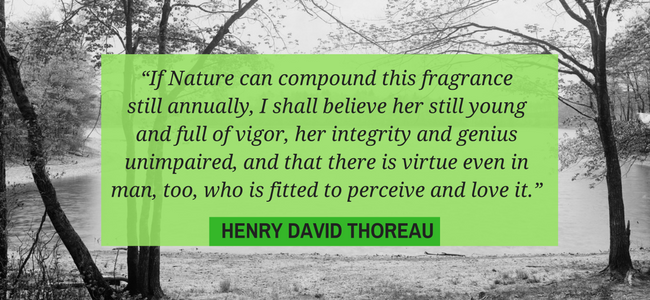
  • If Nature can compound this fragrance still annually  I shall believe her still young and full of vigor  her integrity and genius unimpaired  and that there is virtue even in man  too  who is fitted to perceive an (4)

    By Wen Stephenson

    Adapted from Wen Stephenson’s opening address at the Thoreau Bicentennial  gathering in Concord, MA, on July 12, 2017—Thoreau’s 200th birthday—and from his Beacon Press book, What We’re Fighting for Now Is Each Other: Dispatches From the Front Lines of Climate Justice.

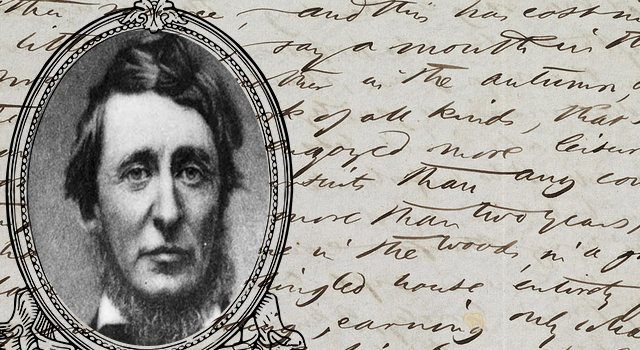
    There’s a popular image of Henry David Thoreau as an apolitical hermit, a recluse, aloof and detached, even misanthropic, a crank indulging his private fantasy in his cabin in the woods. This has always been a caricature; his active involvement in the Underground Railroad and resistance to the Fugitive Slave Act put the lie to it. We know that he helped multiple fugitives on their way to Canada, guarding over them in his family’s house—the Thoreau family were committed abolitionists, especially his mother and sisters—even escorting them onto the trains, which entailed no small personal risk. And of course, we know that he wrote and spoke forcefully and without compromise against slavery and for human freedom.

    But in the fall of 1859, Thoreau’s principles would be put even further to the test. When the news arrived in Concord, in October 1859, of John Brown’s deadly raid on Harpers Ferry, Virginia, reactions were sharply divided. The whole country was in an uproar. Even Brown’s erstwhile supporters quickly distanced themselves. Most of his co-conspirators—many with close ties to Concord—went into hiding, several fleeing to Canada. The atmosphere was not just tense but dangerous for anyone voicing solidarity with Brown.

    Into this picture steps forty-two-year-old Henry Thoreau. He was incensed by what he saw as the timid and hypocritical reactions of his neighbors, and of the press, and let it be known that he would speak in support of Brown at Concord’s First Church on October 30. Thoreau rang the town bell himself to announce the speech because Concord’s selectmen had refused. The address he gave was “A Plea for Captain John Brown.”

    It was Thoreau’s most radical moment. He was the first in Concord, and among the first and most prominent in the country, to come to Brown’s defense. Within days he would repeat the speech to large audiences in Worcester and Boston—where he stood in at the last moment for Frederick Douglass, who had been chased into Canada by federal marshals despite having played no part in the Harpers Ferry raid.

    The speech itself is stunning. What Thoreau was saying in his “Plea” for Brown was the same thing he’d said a decade earlier in “Civil Disobedience”—“action from principle…is essentially revolutionary”—only now in far stronger terms, and this time with real skin in the game. What was once a kind of philosophical exercise was now in deadly earnest: Brown’s raid and certain execution—and the risk of publicly aligning oneself with him—made Thoreau’s night in jail look like child’s play.

    On December 2, Brown was hanged in Virginia. The next day, Thoreau himself would become an accomplice to the escape of a desperate Harpers Ferry conspirator, Francis Jackson Merriam, personally taking him out of Concord by wagon to the train in Acton. Thoreau didn’t know Merriam’s identity (he was told only to call him “Lockwood”), but he surely knew what he was doing and the risk he was taking—that this was a wanted man, with a price on his head.

    .   .   .

    On July 4, 1854, with Walden in final page proofs, Thoreau mounted a platform at Harmony Grove in Framingham—alongside William Lloyd Garrison, Sojourner Truth, and other prominent abolitionists—and addressed a fiery antislavery rally (literally fiery: Garrison lit copies of the Fugitive Slave Act and US Constitution on fire). His speech, called “Slavery in Massachusetts,” is merciless, indicting the commonwealth for the moral complacency and hypocrisy of its participation in human bondage, sending escaped slaves, free human beings, back into slavery. It was enough to shake even Thoreau’s sense of nature’s harmony:

    I walk toward one of our ponds, but what signifies the beauty of nature when men are base?…Who can be serene in a country where both the rulers and the ruled are without principle? The remembrance of my country spoils my walk.

    And yet, there in the final moments of the speech, he finds some reassurance:

    But it chanced the other day that I scented a white water-lily, and a season I had waited for had arrived.…What confirmation of our hopes is in the fragrance of this flower! I shall not so soon despair of the world for it, notwithstanding slavery, and the cowardice and want of principle of Northern men. It suggests what kind of laws have prevailed the longest and widest, and still prevail, and that the time may come when man’s deeds will smell as sweet. Such is the odor which the plant emits. If Nature can compound this fragrance still annually, I shall believe her still young and full of vigor, her integrity and genius unimpaired, and that there is virtue even in man, too, who is fitted to perceive and love it. It reminds me that Nature has been partner to no Missouri Compromise. I scent no compromise in the fragrance of the water-lily.

    Sorry, but the person who wrote and spoke those words was not “pond scum,” he was not a misanthrope, regardless of what anyone at The New Yorker  magazine may say. Like all of us, he had his flaws—and yes, he could be annoying as hell. But no misanthrope speaks and acts—indeed, risks his own neck—on behalf of his fellow human beings in the way Henry Thoreau did.

    “The remembrance of my country spoils my walk.”

    You see, I don’t believe that. I don’t believe that the remembrance of his country merely spoiled Thoreau’s walk. I think the remembrance of his country revealed the walk’s true purpose. I believe his solitary and profoundly moral, even spiritual awakening in nature led him back to society and to a radical political engagement on behalf of other people—his neighbors, whether follow citizens of Concord or the fugitives who took refuge in Walden’s woods. Because for Henry Thoreau, to live in harmony with nature is to act in solidarity with our fellow human beings.

    ==================

    Buy Walden: Beacon Press | Indie Bookstore | Amazon | Barnes & Noble

    ==================

    About the author 

    Wen Stephenson, an independent journalist and activist, writes for The Nation and is the author of What We’re Fighting for Now Is Each Other: Dispatches From the Front Lines of Climate Justice. Follow him on Twitter at @wenstephenson.

  • By Bob Kosturko

    Just the house

    “Our life is frittered away by detail. An honest man has hardly need to count more than his ten fingers, or in extreme cases he may add his ten toes, and lump the rest. Simplicity, simplicity, simplicity!”—Henry David Thoreau from Walden

    There are dozens (perhaps hundreds?) of editions of Walden currently in print—and eBook and audio. How then to design a fresh new cover for Beacon Press’s evergreen backlist title? The answer lay in Thoreau’s mantra, Simplify!

    Editor Will Myers and I decided to deliberately avoid the bucolic nature photography that graces the covers of countless editions of Walden. A decision was made early on in the design process to embrace a stripped-down design atheistic. Two early efforts are shown below.   

    First two images

     These flat, poster-like like designs weren’t entirely successful, but we felt we were headed in the right direction. (The little red house icon in the second design was too reminiscent of a piece from the popular board game Monopoly, so that had to go). 

    Since we’re living in an age of decluttering and tiny houses, I felt that a Walden for 2017 should be even simpler. Walden as a state of mind, not a cabin in the woods. What if Thoreau’s cabin was rendered in a flat style and the nature aspect was discarded altogether? 

    Second two images

    To further simplify the design we dropped “Henry David” and opted to use only “Thoreau.” The final cover is shown below. I’d like to think Thoreau would have approved of our efforts to embrace his philosophy in visual form.

    Final cover

     Buy Walden: Beacon Press | Indie Bookstore | Amazon | Barnes & Noble

    ==================


    About the Author 

    Bob Kosturko is the Creative Director at Beacon Press. He’s loves classic typography and Swiss and Japanese design. He is currently working on a decluttering project of his own; organizing and downsizing his sizable collection of compact discs. Bob also shares a birthday with Henry David Thoreau.   

  • By Tom Montgomery Fate

    Henry David ThoreauTime is money, and a prison and a thief. Time is running out. We make time and spend it, we waste it and lose it and buy it and kill it. We are never on time, seldom in time, and always of time.

    How we perceive time determines how we live. In Walden, Henry David Thoreau writes “Time is but the stream I go a-fishing in. I drink at it; but while I drink I see the sandy bottom and detect how shallow it is. Its thin current slides away, but eternity remains. I would drink deeper; fish in the sky, whose bottom is pebbly with stars.”

    The endless flow of the “river of time” is not a new metaphor, but fishing in it is. Because the heart of fishing is not catching. We don’t go trout catching. The heart of fishing is waiting, and watching—for a bite or nibble from whatever comes along—be it a pickerel or a pout, or, perhaps, an act of love, or forgiveness. Thoreau waits and watches amid the quiet stream of time––of consciousness, of patience, of attentiveness.

    Perhaps one clear night Thoreau saw the stars reflected on the surface of the Concord River or against the pebbly bottom of Walden Pond—the convergence of sky and earth in the water. Maybe he was trying to dream of the world beyond the moving water, to drink deeper, to believe in the unseen, and the kind of time that cannot be measured. Not numeric time—what the Greeks call chronos—not those four 60-second increments between 9:11 and 9:15 a.m. But kairos time, an immeasurable unending moment, like the moment where that same river enters the ocean, and suddenly, yet completely, becomes a part of the whole.

    Thoreau’s river of time is defined not by numbers but by relationships, by belonging to the river, to the stars, the sand and fish. It connects the human animal to the whole of Creation. I call this natural time.

    In A Week on the Concord and Merrimack Rivers, Thoreau writes “All questions rely on the present for their solution. Time measures nothing but itself.” When Thoreau wrote about time, he often wrote of “the present,” the eternal river of now, or what he calls “the gospel according to this moment.” And this present often seems to point to a greater Presence. In Walden he writes, “God himself culminates in the present moment, and will never be more divine in the lapse of all the ages.” In Walking he writes “Above all, we cannot afford not to live in the present.” In his Journal he writes. “Both for bodily and mental health court the present.”

    But how is that possible in the modern world? We now live in a timeless multi-presence, a world of infinite choice that is marketed as freedom but often experienced as tyranny. As you read this, billions of inboxes are loading, Twitter feeds are rolling, Facebook updates are changing, and calendars are filling, as we tweet and snapchat and swipe ourselves into digiphrenia. And maybe we are also FaceTiming or in a Google hangout. The point is we needn’t be only one place at a time. We can multi-be.

    Unlike Thoreau and the generations before him, few of us now mark our days by the slow wheel of the sun, by light and shadow, or the heat and cold, or the natural growth and decay of our bodies. Time is increasingly less relational, less a part of the natural world, and more apart from it. Time is digital, precisely measured and driven by a frenetic appetite for convenience, entertainment, and productivity, for measurable outcomes.

    But what we still cannot measure is what “enough” is, enough of anything—love, sex, money, or cat videos. And there is never enough memory capacity or processing speed on our phones or laptops to satisfy our insatiable desire for deeper cyber space exploration—for more access to a trillion different kinds of digital debris floating out there in the abyss, in what James T. Kirk might call “the final frontier.” “We have boldly gone where no man has gone before,” but no one has any idea where that is.

    Sadly, it is this never-enough culture of accumulation that has enabled the human animal to change the biological clock of the global ecosystem. We have altered the earth’s climate and thus the natural timing of growing cycles and mating patterns and bird migration and much more. The stakes are high and the clock is ticking. The question is how/if we can still recognize and restore natural time.

    A few weeks ago I stumbled on a display of pricey cast-iron sundials in a garden store. These used to be reliable clocks. But the fifty-pound, $200 pre-rusted yard ornaments no longer mark time; they cast shadows no one knows how to read. Now, when men lose their hair, or their erections, they take drugs to bring them back––to reverse time. Plastic surgeons remodel lined faces and sagging bodies as if rehabbing a bathroom. We can now project ourselves in image and voice in real time all over the world. We are ageless, timeless 24/7 multi-present multitaskers. In this world of multi-presence what does it mean to be present?

    In the “Sounds” section of Walden Thoreau suggests that the gospel of this moment is manifest in an ongoing prayer of attention:

    “There were times when I could not afford to sacrifice the bloom of the present moment to any work, whether of the head or hands…Sometimes, in a summer morning, having taken my accustomed bath, I sat in my sunny doorway from sunrise till noon…amidst the pines and hickories and sumachs, in undisturbed solitude and stillness, while the birds sing around or flitted noiseless through the house, until by the sun falling in at my west window…I was reminded of the lapse of time…My days were not days of the week, bearing the stamp of any heathen deity, nor were they minced into hours and fretted by the ticking of a clock.”

    I’m not sure if Thoreau knew that the first mechanical clock was invented in the twelfth century by an order of Benedictine monks to reliably mark their seven daily prayer sessions. By the middle of the fourteenth century the lure of such a clock, of measured time, spread outside the monastery walls to the world of commerce introducing the idea of regular production, and regular working hours. As Neal Postman writes in his book Technopoly, “the clock was invented by men who wanted to devote themselves more rigorously to God; it ended as the technology of greatest use to men devoted to the accumulation of money.”

    Our relationship to time is defined by the technologies we use to measure it. “Keep the time,” Thoreau wrote in his Journal. “Observe the hours of the universe—not of the cars.” Again Henry advocates the clock of sun and moon and gravity. But he wasn’t, as some believe, anti-technology. He was a skilled surveyor and pencil maker who designed a new way to compress and mold graphite. It seems he was opposed to technology that had no clear purpose, or that didn’t benefit the common person, or simply made us less human.

    “We are in great haste to construct a magnetic telegraph from Maine to Texas; but Maine and Texas, it may be, have nothing important to communicate,” he writes in Walden. “As if the main object were to talk fast and not to talk sensibly.”

    The technological innovation that most affected Henry at Walden was the arrival of the railroad. By the time he left, in 1847, there were twenty trains roaring by his cabin daily, which he seemed to both accept and question. “I watch the passage of the morning cars,” he writes “with the same feeling that I do the rising of the sun, which is hardly more regular.” He knows that both the sun and the train mark time. And he sees the old form of transportation, the horse, within the new one, the train: “The iron horse make[s] the hills echo with his snort like thunder, shaking the earth with his feet.” Yet he is leery of the unbridled engine: “We do not ride on the railroad; it rides upon us.”

    While he sometimes traveled by train and boat, it was always to get to someplace where he wanted to walk—in the wilds of Maine or Canada or along Cape Cod. When walking was an option, he took it, tramping through some pasture or thicket, lost in the green moment of oak and pine and huckleberry. More concerned with the journey than the arriving, with the present than the lure of the future, he always took his time.

    Like many, that’s what I want to learn to do. To take my time. So some days, I try to follow Thoreau’s lead. I walk––not to the drugstore or the coffee shop or the pub or the library––with a purpose but no destination. And I leave my smartphone behind, seeking a deeper stream in which to cast my thoughts. My purpose is to see: the cottonwood trees blowing in the wind at dusk, and the grackle snatching a night crawler from a neighbor’s flowerbed, and the soft light dying on the little playground down the block, where two little girls are swinging to and fro––rising and falling over the earth as they laugh in delight at the miracle of gravity.

    ==================

    Buy Walden: Beacon Press | Indie Bookstore | Amazon | Barnes & Noble

    ==================

    Note from the author

    This video essay, “Lake Glass,” is an excerpt from my book, Cabin Fever, and an example of what I call “Natural Time.”


    About the Author

    Tom Montgomery Fate is the author of five books, including Cabin Fever, Beyond the White Noise, and Steady and Trembling. His essays have appeared in the Chicago Tribune, Boston Globe, Orion, and many other publications. He teaches creative writing at the College of DuPage in Illinois, where he lives with his family. Find him online at www.tommontgomeryfate.com.

    *July 12, 2017 is the Bicentennial of Henry David Thoreau’s birth.

  • By Howard Axelrod

    Henry David Thoreau 

    On the occasion of the bicentennial of his birth, Henry David Thoreau writes a letter to Apple suggesting ideas for new apps.


    Apple Sirs,

    I thank you for your appreciation of my lecture at the recent TED Dead conference: “Thinkers of Yesterday, Challenges of Today.” (Your company, as Mr. Jobs declared in his own lecture, truly has eyes and ears everywhere.) I must confess some of your letter eluded my understanding—for instance, the polite imperative: “Please drill down to deliverables.” Am I to understand that you view my ideas as buried underground, like a vein of gold or a healing spring?

    Nevertheless, I understood the thrust of your letter, and I must agree: the truest critics are not critics but innovators. In this spirit, I shall gladly propose some “apps.” But first allow me to explain the root of my criticism. 

    From the advent of your “think different” advertisements, with their grand photographs of iconoclastic geniuses, I’ve followed the progress of Apple as a solitary farmer follows the progress of the sun. My hope, as your promise to citizens seemed aligned with my own, was that your product might help the best and most neglected fruits of our humanity—humility, attention, and wonder—to ripen. I trusted you would make good on that promise: to enhance consciousness, to elevate man’s life not by improving how others look at him but by improving how he sees. 

    But it appears that overuse of your devices often impedes attention, creativity, and the very communion your advertisements promote. Rather than see more richly, modern man—let us call him Johnny Appleseed—traverses the city more blindly: verily in a cloud, in a web.   

    Yet I rejoiced to receive your letter. You asked for my ideas; you will endeavor to bring them into life. (My readers have rarely risked such exertion.) Therefore, I am determined to fulfill your request, and I will answer my TED Dead lecture’s rhetorical question: “Can Apple not furnish applications that make use of their products more in keeping with their stated mission?”  

    Using your App Store as my weathercock, I have perceived that Johnny Appleseed seeks nothing so much as recommendations and convenience, as though by alchemy the two might transmute into holy waters. Therefore for nutriment, if Johnny must seek counsel beyond his own gut, let him rely on Yawp!—my homage to Mr. Whitman, of New Jersey—which rates restaurants on how well they feed your spirit, and awards up to five bones according to how much marrow you’re able to suck out of life, with particular attention to economical buffets.

    My second proposal is LifeSuck, a daily planner designed according to the premise, “I do not so much wish to know how to economize time as how to spend it…How to live.  How to get the most life.” Constantly updated by an algorithm that calculates “the cost of a thing” as “the amount of what I will call life which is required to be exchanged for it, immediately or in the long run,” LifeSuck will estimate how much life an activity will suck out of Johnny, versus how much life will it allow him to suck.  Accordingly, it will suggest which vacations to scuttle, which animal videos to avoid, and which dating apps, as an act of civil disobedience, to boycott.

    If Johnny heeds the advice of LifeSuck, he will require an improved GPS application, particularly for his solitary rambles.  Designed according to my postulate, “No man ever followed his genius till it misled him,” Thoreau Maps will ask Johnny a series of questions to determine if he, indeed, is following his genius.  The app will then recalculate Johnny’s physical route to aid him—through potential for daydreaming, stimulating vistas, and useful encounters—in his current projects. (Caveat emptor: Thoreau Maps is likely to misdirect citizens in milieus where the word genius roughly means “likely to be profitable,” as it appears to among your technology kin.) 

    To assist Johnny with his non-physical orientation, he may employ my update to Shazam, which will identify not the music playing around him but the music playing inside of him. “If a man does not keep pace with his companions, perhaps it’s because he hears a different drummer.  Let him step to the music he hears, however measured or far away.” With Drummerzam, Johnny will hear his different drummer on his own earbuds, as you call them.  Perhaps his brain will blossom!    

    My final proposal concerns daily travel, which ought to be—as my rambles always were—daily communion with the world. Therefore, my update to Uber will be Ubermensch. As Mr. R.W. Emerson has explained to me, Mr. Nietzsche’s “ubermensch” is a reworking of Mr. Emerson’s own “Over-soul,” a conception of the deep spiritual connectedness of all things. Accordingly, Ubermensch will take into account Johnny’s physical and spiritual destination, his internal and external weathers, and predict whether he’s more likely to find communion walking a few extra streets with his friends, or riding the public bus, or simply ordering an Uber. (Mr. Emerson has implored me to implore you to call this application Over-soul Train, but pay no heed.)

    Use of these applications, day after day, year after year, will undoubtedly change the very medium through which Johnny looks, thereby improving the quality of what he sees, hears, and thinks. And, likely, his life will come to look more like an Apple advertisement. 

    For my own part, I shall return to my most esteemed technology: the quill in my hand. It has allowed my inmost meditations to reach the inmost chambers of the minds of many, no matter that we are separated by centuries, as though it had transmuted my thoughts into a distant star, the light still arriving after those thoughts have ceased to be. Indeed, it may have allowed me to reach you. 

    Yours,

    Henry David Thoreau

    ==================

    Buy Walden: Beacon Press | Indie Bookstore | Amazon | Barnes & Noble

    ==================

    About the Author

    Howard Axelrod’s essays have appeared in the New York Times Magazine, Salon, Virginia Quarterly Review, and the Boston Globe. He has taught at Harvard, the University of Arizona, and currently teaches writing at Loyola University in Chicago. His debut book, The Point of Vanishing: A Memoir of Two Years in Solitude, was named one of the best books of 2015 by Slate, the Chicago Tribune, and Entropy Magazine, and one of the best memoirs of 2015 by Library Journal. 

  • Melissa NassonYou’ve read our classics, such as Viktor Frankl’s Man’s Search for Meaning, Octavia Butler’s Kindred, the work of Martin Luther King, Jr., and James Baldwin’s Notes of a Native Son; and many of you know our current list, featuring books by Cornel West, Lani Guinier, Anita Hill, and Christopher Emdin—books that speak to the condition of the world, and add to our understanding of urgent social issues. Whether it’s the environment or race, cultural or class dynamics, we publish all our books with a purpose. Now you can meet the people who work at Beacon Press in our blog series “Beacon Behind the Books.” Each month, we’ll introduce to you a member of our staff and give you a behind-the-scenes look at what goes on at our office.

    For the month of July, we introduce you to our contracts director and director of Beacon Press Audio, Melissa Nasson! 

    What drew you to publishing, Melissa? How did you find your way to Beacon?

    Like everyone else who works in publishing, I grew up as a bookworm. My grandfather and my parents used to take me to the children’s section at the Needham Public Library, and we’d leave with more books than I could carry.

    Melissa readingIn high school, my friend Alex and I were total Harry Potter diehards. We used to make trivia quizzes to determine which of our classmates was worthy of attending the movie premieres with us. So books were always a huge part of my life, but it never occurred to me to make books into a career until I had finished my second year of law school. Luckily, there are plenty of ways in which law and publishing intersect—contracts, licensing, permissions, and more—so I started networking and scouring the Boston area for jobs that combined my interests. When I saw my job posted at Beacon in December 2012, it sounded perfect for me. And it was!

    What is one book on our list that has influenced your thinking on a particular issue?

    Caged EyesCaged Eyes by Lynn Hall really influenced my thinking on sexual assault on women in the military. I did a legal read of the manuscript, and I was both appalled at the terrible experiences the author endured and struck by her bravery in sharing them so candidly with the reader. At the end of the book, I felt outraged at the way Lynn was treated by her abusers and by the Air Force Academy, and so sad that her dreams were taken away from her. But I also felt a renewed purpose to spread the word about the book and about the mistreatment of women who are trying to serve our country. And despite the horrific things in the book and the anger I felt on Lynn’s behalf, I was so inspired by her resilience. Though she still endures constant pain, she’s an ultra-marathoner who literally runs up mountains!

    On Being RapedAlso, though the question says choose one book, I also have to mention On Being Raped by Raymond M. Douglas. It seems so obvious, but the book has a simple yet rarely-heard message: men are also victims of rape. It has always disturbed and perplexed me that male rape is mainly treated as a joke in American pop culture, or it goes unacknowledged altogether. As a society, we need to accept that anyone can be a victim of rape so that all victims can get the help and services they need. I’m proud that we published this book at Beacon and that we’re doing our part to shine a light on this topic and normalize its discussion. It’s also a beautifully written and powerful book.

    What helps you focus when you’re at work?

    If I really need to focus—if I’m working on a negotiation, or just reviewing a very old Beacon contract with antiquated language—I listen to Forest and Nature Sounds on YouTube. If I’m focusing but not laser-focused—like when I’m preparing a boilerplate contract to send out, or sending takedown notices to websites hosting pirated Beacon e-books, or mailing contracts or checks or amendments—I listen to the 90s Alternative station on Pandora.

    Melissa Nasson_bitmoji 2As a longtime member of the Beacon publishing team, what has changed and what has stayed the same?

    The most obvious change is the building! It’s hard to believe we moved from Beacon Hill to Fort Point over three years ago. I miss my old office at the Mount Vernon Street location. It had more space for my many spider plants and their ever-growing offspring. But the Fort Point office has so many more opportunities to socialize with other staff members. We’re also publishing more books than we did back then, and we’ve become more selective with what we publish. But Beacon’s commitment to social justice has not changed, and that’s why I’m still so glad to be working here on behalf of the mission.

    What other departments does your department interact/collaborate with? And how?

    My job gives me the opportunity to interact with every department at Beacon, which is part of what keeps things exciting. I’m lucky enough to attend the weekly editorial meetings and biannual editorial retreats, so I can hear about the latest projects and topics the editors are pursuing. I often interact with the production department in my capacity as Director of Beacon Press Audio—whether I’m checking in with Marcy Barnes and Beth Collins to see when final proofs will be ready to use for the audiobook script, or giving Daniel Barks a heads up that audio files are being delivered so he can transfer them to Penguin Random House, or participating in reprint meetings when we decide whether to pursue electronic or other rights for backlist titles. I have the opportunity to work with the design department on determining the rights status of potential cover and interior photos, and sometimes I pitch in on negotiating agreements with photographers. Occasionally I’ll review a first or second serial agreement for the publicity department, and sometimes I weigh in on whether the marketing department can use certain photos on social media. I could go on, but I’m very fortunate to be able to collaborate with so many of my colleagues on a daily basis.

    What are you reading right now?

    I have three books in progress: The Story of a New Name by Elena Ferrante, The Fact of a Body by Alexandria Marzano-Lesnevich, and Like a River Glorious by Rae Carson. I mostly read young adult fiction—mainly fantasy and sci-fi—in my spare time.

    In an alternate universe, what career would you have?

    A marine biologist, or maybe I would run an animal sanctuary. I would definitely be working with animals in some capacity.

    Hobbies outside of work?

    I love craft beer, so going to breweries and tasting new beers is a favorite hobby. Also following Boston sports teams, knitting, making pickles, gardening, and playing with other peoples’ dogs!

    Name three non-office items on your desk and their significance to you.

    I have a dog-a-day calendar that I enjoy flipping each day, because who doesn’t like a new cute dog every day? I have a photo of me and my fiancé Amory, which is significant for obvious reasons. And I have a Gryffindor quill and inkwell, which is significant because of my abovementioned Harry Potter fandom. (Though I’m really more of a Ravenclaw, truth be told.)

    What’s your commute like? What do you do to pass the time on your way into the office?

    I take the B train on the green line from Brighton, which is always an adventure. I always read on my commute. If I can’t get a seat and can’t read comfortably, I’m not a happy camper!


    About Melissa Nasson 

    Melissa Nasson joined Beacon Press after finishing her law degree and interning at the Zachary Shuster Harmsworth literary agency and The Perseus Books Group.

  • By Lennard Davis

    WheelchairTwenty-seven years ago, disability activists threw away their canes, crutches, and wheelchairs. They proceeded to slowly and painfully crawl up the steps to the Capitol to protest those who would block the Americans with Disabilities Act. The “Capitol Crawl,” as the event was called, has become in retrospect a powerful visual symbol of the difficulties faced by people with disabilities when confronted with barriers and obstacles created by politicians and others.

    Now, faced with massive cuts in disability medical care and services under the proposed Republican dismantling of Obamacare and Medicaid, disability activists are staging protests around the country. The Better Care Reconciliation Act would drastically cut Medicaid monies that pay for transportation, personal assistants, and medical interventions. Many disabled people can live and work independently with these services but would be rendered powerless and incapable without them.

    The Capitol Crawl might be superseded by these current protests. On June 22, sixty members of the disability action group ADAPT occupied the hallway and office of Sen. Mitch McConnell. They staged a “die-in” to illustrate how many lives would be lost under this draconian legislation. The police were called, as they were twenty-seven years ago when wheelchair users and others chained themselves together under the dome of the Capitol; this time the police were much more violent, lifting and dropping protestors, so that there was blood on the floor of McConnell’s office.

    It is ironic that after the ADA was passed with much pageantry and signed into law by President George H. W. Bush in the largest signing ceremony in the history of White House the benefits of the law should now be curtailed by President Trump and the Republican leadership. At the ceremony President Bush proclaimed, “Let the shameful wall of exclusion finally come tumbling down.” That revolution was a bloodless event, but the rebuilding of the wall was not. As small a symbol as blood on the floor might be, it dramatizes the blood that will be shed.

    And it is important to note that bleeding dry the cornerstone of disability reform—the idea of independent living, rather than forcing disabled people into institutions, allows dignity and independence for all. The disabled aren’t just people in wheelchairs, who actually make up tiny portion of all the people with impairments. In fact, almost twenty per cent of the population has disabilities. Half of the people over sixty-five do. Those affected by the proposed changes would be your grandparents, parents, or even yourself who might be in a nursing home. It would affect people with chronic illnesses, psychological problems, learning disabilities, expensive medications, and the like.

    The blood on the floor, in other words, is not “their” blood. It is our blood. If the Republicans have their way, twenty-two million people will lose healthcare, and many more will lose the quality of good healthcare. Disabled people who are contributing to society by working and being active, will be forced back into the dark ages before the passage of the ADA. They will become dependent and more likely to need healthcare. They will have to move backwards toward institutional care, which in turn, will raise the cost of supporting them. 

    If McConnell, Trump, and the Republicans act unwisely, the blood won’t just be on the floor. It will be on their hands.


    About the Author 

    Lennard DavisAn award-winning author of eleven books, including My Sense of Silence and Enabling Acts, Lennard J. Davis is Distinguished Professor of Liberal Arts in the departments of Disability Studies and English at the University of Illinois at Chicago. He has written for the New York Times, Chicago Tribune, Nation, and Chronicle of Higher Education, among other publications. He lives in New York City. Follow him on Twitter at @lendavis.

  • By Carole Joffe

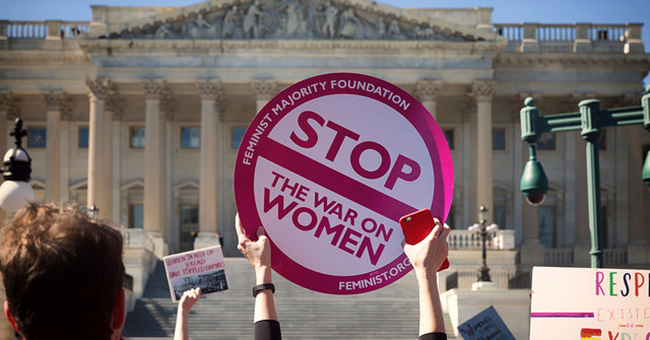
    Stop the War on Women

    Photo credit: Lorie Shaull

    This article appeared originally on The Huffington Post.

    Many Americans are puzzled by the all-out attacks by the Trump administration on contraceptive services: the administration has signaled its intention to take contraception out of the list of no co-pay preventive services authorized by Obamacare; it has made clear its eagerness to defund Planned Parenthood; and it has appointed longtime ideological opponents of contraception to positions of power in the federal bureaucracy, including direct oversight of family planning programs. The question becomes, why is an administration firmly opposed to abortion taking steps that will only assure more unintended pregnancies, some of which in turn will lead to an increased demand for abortions? What became of that short-lived moment in American politics when contraception was viewed as the main point of “common ground” between supporters and opponents of abortion? The answer, simply put, lies in the ascendancy of the religious right as a dominant force in the Republican party.

    A look at three generations of the Bush political dynasty is telling about the fate of support for contraception among Republican politicians, and the end of such common ground. In the 1940s, Prescott Bush, a senator from Connecticut, served as national treasurer of the recently founded Planned Parenthood Federation of America. In 1970, his son, George H. W. Bush, then a Congressman from Texas, was the Republican sponsor of a bipartisan bill, Title X of the Public Health Act, the first legislation that authorized federal spending to make family planning services available to low income women (and later, to teenagers as well). Title X, it bears mentioning, was signed by a Republican president, Richard Nixon. As for Congressman Bush, he was such an avid promoter of contraception that his nickname in the House was “Rubbers.” Neither Bush nor some others who voted for Title X supported the legalization of abortion that would occur shortly, but they all agreed on the desirability of preventing unwanted pregnancy.

    But when George W. Bush, grandson of Prescott and son of the first President Bush, was president from 2000-2008, his administration was marked by a deep hostility to contraception and a willingness to rely on “junk science” to discredit it: for example, domestically his administration funneled millions of dollars to “abstinence only” programs that promoted false information about the effectiveness of condoms, both with respect to pregnancy prevention and HIV prevention. And in the 2016 election cycle, his brother Jeb, a presidential candidate, scornfully told a conservative group, “I’m not sure we need half a billion dollars for women’s health issues,” and made clear his determination to defund Planned Parenthood.

    What happened in the period between the senior Bush’s promotion of contraception and the third generation’s repudiation of it? This dramatic shift cannot be understood apart from the rise, starting in the 1970s, of the religious right as a powerful force that Republican politicians ignored at their peril. Beginning with the Reagan presidential campaign in 1980, this movement has acted as a disciplined voting bloc. And while opposition to abortion was the key defining issue for this ascendant movement, contraception, from the beginning, was a target as well.

    Not surprisingly, Planned Parenthood, as a major provider of contraceptive services, quickly became demonized. Even before most Planned Parenthood affiliates began to offer abortion, the religious right opposed the organization because of the confidential services that were provided to teens, the nonjudgmental information about sexuality offered to its patients, and—particularly enraging—the fact that Planned Parenthood received public funding as a Title X provider. This statement, from a fundraising appeal of an anti-abortion group in 1980, is illustrative of the range of accusations which some religious conservatives leveled against the organization: “Planned Parenthood promotes sexual perversion, homosexuality, pornography, abortion, family destruction, population control.”

    In the years since the emergence of the religious right in the 1970s, some within the movement have escalated their critique of contraception. From initially opposing contraception because it facilitated out-of-wedlock sex, to later also claiming that use of contraception supports an “abortion mentality,” more recently an additional argument against contraceptive methods is that they themselves should be understood as “abortifacients.” This argument, typically applied to emergency contraception, intrauterine devices (“IUDs”) and other hormonal methods (including, by some opponents, “regular” birth control pills), rests on the view that pregnancy occurs at the moment sperm and egg meet. This view is at odds with the long established medical principle that pregnancy begins with the implantation of a fertilized egg.

    While abortion remains a divisive issue in American society, the desirability of contraceptive use is a nearly universally held value. As a Center for Disease Control report states, “Virtually all women of reproductive age in 2006-2010 who had ever had sexual intercourse used at least one contraceptive method at some point in their lifetime.” But given that forty-five percent of all pregnancies in the United States are unintended, clearly many women need help in obtaining the most effective (and expensive) methods. Should their reproductive health needs be held hostage to a movement that has a non-scientific understanding of contraception but an outsize influence on Republican electoral politics?


    About the Author 

    Carole JoffeCarole Joffe is a professor in the Advancing New Standards in Reproductive Health (ANSIRH) Department of Obstetrics, Gynecology & Reproductive Sciences at the University of California-San Francisco and a professor emerita of sociology at the University of California-Davis. She is the author of several other books, including Doctors of Conscience and Dispatches from the Abortion Wars. Follow her on Twitter at @carolejoffe.

  • By Lynn K. Hall

    Bill Cosby

    Photo credit: The World Affairs Council of Philadelphia

    When you Google the name of the man who raped me when I was eighteen, the top hit says, “There are bad men. And then there are bad man. *** is one of the very worst men.”

    When I publicly accused this man of rape, I stood in a sizeable line of survivors. That there were five of us and the details of one of the cases—the girl was young, and disabled, and badly injured by the assault—left no doubt about the credibility of our stories. Our rapist was convicted, incarcerated, and served fourteen months. That may seem like a paltry sentence, and it is, but the point is that he saw the inside of a prison. He is now a registered sex offender with a past which follows him forevermore.

    The bigger point: I am believed.

    This particular rapist was not the first to sexually assault me. When I was seventeen, I was abused repeatedly by a much older man, a father figure. This person is a respected member of the community in which we lived. He is a combat veteran, a private pilot, and an engineer. Later in life he became a flight instructor and university professor. He donates to charitable causes. He mentors lost children like I was.

    Several years later, when I realized the damage he had caused and I understood that he was still in a position of trust for other teenager girls, I reported the sexual abuse to the police. I filed reports in two of the several counties in which he raped me. When the second district decided, like the first, to not file charges, the detective on the case called me. She said in an accusatory tone, “When are you going to stop doing this?” She meant: when was I going to stop trying to ruin the life of an innocent man.

    To these detectives and to many of those who knew us at the time, I was a troubled teen who lashed out with fake allegations against a man who had once tried to help me. Some said I wanted it, others said I should have been able to stop it, and still others said it never happened.

    I know what it is to be raped and to be believed, and to be raped and to not be believed, all based on the public perception of my perpetrator. I know how the trauma of such a violation can be compounded by being further ostracized and condemned by a community which blames you, “the accuser.”

    I can imagine the devastation felt by Cosby’s victims after this month’s declaration of a mistrial. No doubt, the failure to convict him is a step backwards in the fight against sexual violence. With this verdict, we risk reinforcing the message to perpetrators that they can rape with impunity. We also risk reinforcing the message to future victims that their experiences do not count, that they are better off upholding silence than they are to fight back in the wake of their assaults.

    And yet, in the eyes of a large part of the public, Cosby’s victims are believed. There may not have been enough evidence to convict, but a majority of the public understands the legal technicalities like statute of limitations. But look at what it has taken to get to this point. Forty of Cosby’s victims have come forward. Thirty-five of the women bravely posed for the cover of New York magazine. These survivors have given countless interviews and endured endless scrutiny. For them, the price of moving Cosby’s crimes into public acknowledgement has been extreme.

    Bill Cosby is a case in point for this troublesome dynamic: we either ignore the thousands of rapes which occur on a daily basis—blaming the victims or disregarding them altogether—or we obsess over cases in which we decide to believe. We hyper focus on a particular case, say one at Penn State or one at New Hampshire’s St. Paul’s Prep School, meanwhile failing to acknowledge the epidemic rates of sexual violence. We miss the larger trends.

    When we put such attention on single cases, the entire movement to end sexual violence rests on one court decision at a time. Young people who have not yet become victims watch the media coverage already forming unconscious beliefs about what it means to be raped and report, which makes this month’s decision all the more troublesome.

    We have to do better for survivors. We must end the duality of headlines or invisibility, and we must learn to acknowledge and treat with respect survivors who tell us their stories even when the perpetrators they name have not already lost public confidence. This is different than violating “innocent until proven guilty” or convicting in the court of public opinion; the focus here is not the perpetrators but rather the survivors, taking care of them and giving them the best chance to heal.

    We must step outside our opinions and feelings centered on this single Cosby court case, and recognize that for millions of other survivors, their perpetrators will never enter a courtroom. But that doesn’t make their stories and their wounds any less valid. If anything, it makes their wounds that much more troublesome.


    About the Author 

    Lynn K. HallLynn Hall is a memoirist, essayist, and activist in the movement to end sexual violence. She is also a mountaineer who has summited each of Colorado’s 14,000-foot-tall peaks and a runner who has completed a 100-mile ultramarathon. She lives in Boulder. Follow her on Twitter at @LynnKHall and visit her website.


  • By Angela Saini

    Angela Saini

    Photo credit: Rainer Niermann

    This essay appeared originally on Powells.com.

    As a lifetime geek (you’re welcome to inspect my membership card—it comes in the shape of an engineering degree), I’ve long been a devoted worshipper at the altar of science. I’ve attended nerd nights on two continents. I’ve spoken at Google. I even wrote a book about geek culture in India. For me, as for millions of others, there’s no better way of understanding the world than the scientific method. 

    So imagine my horror when I finally learned that science wasn’t the perfect world of lab-coated, bespectacled good folk that I had always imagined it to be. Underneath the whiz-bang discoveries that populate the science pages, there are deep, dark problems that threaten to undermine public confidence in research—and that show it’s possible for bad, biased research to survive and thrive. 

    The process of my disillusion began when I was asked by a British national newspaper to write a feature on the evolution of female menopause. This is something of a hot topic in some corners of the scientific community. Becoming infertile in old age is common in the animal kingdom. What’s highly unusual is living beyond infertility. Indeed, this is so rare that we share it with only a handful of other distant species (none of them primates), including killer whales. The leading hypothesis for the evolution of menopause in humans is that the help and wisdom of grandmothers is so crucial to the survival of families that their very existence is living proof. This ‘grandmother hypothesis,’ however, has been challenged over the last couple of decades by a small but vocal number of male scientists who believe that the reason women become infertile as they enter older age is that too few men of any age find them attractive. Older men prefer younger women, they say.

    The controversy created by these two competing explanations for menopause triggered a fascination in me about what else there might be in research on women that causes disagreement. As I soon found, there’s plenty. From whether or not our female ancestors hunted and/or stayed at home, to whether women are less promiscuous than men, there are huge bodies of research that are full of competing ideas and feverish squabbles. Women’s bodies and minds are a bitter scientific battleground.

    In some ways, we should expect nothing less. Society itself, in its powerful fights over abortion and equal pay, reflects just how much women’s bodies are a political minefield. Social scientists have long insisted that science reflects the cultures to which it belongs, which means that consequently it can never be truly objective. We can’t help but see the world through our own lens, as much as we try not to. Humans are too imperfect to conduct the scientific method perfectly. 

    A perfect example is the father of evolutionary biology, Charles Darwin. An intellectual giant, he was nevertheless entirely Victorian in his views on women—views which too easily spilled over into his science. He claimed that the female of our species was the intellectual inferior of the male, because women were not quite as evolved. Of course, this sounds nonsensical to modern ears. But at the time, it was quite widely accepted and repeated by his male biologist colleagues. Looking at some published research today, it’s difficult not to spot the same vein of sexist thinking running through theories on sex difference and female biology. If society isn’t yet equal or fair, then can we expect scientific research to be? The answer, clearly, is no.

    It is an issue that ignited recently in the run-up to the March for Science, which took place in Washington, DC, and other locations around the world on Earth Day, April 22. Months before the big march took place in the capital, a few of the organizers began to complain that diversity issues should be incorporated into the ethos of the event, especially since the Trump administration has been seen not only as anti-science but anti-women and anti-minorities. This issue has become particularly high-profile recently following claims of sexual harassment by a number of prominent scientists across the country. A small number of scientists, however, expressed their view that promoting a diversity agenda would only muddy the waters. According to them, science is rational and objective, which puts it above the murky level of petty identity politics.

    There is a hubris in science that comes from the widespread assumption that scientists are somehow free of prejudice. An experiment is an experiment, whether you are male, female, black, white, or blue, they say. But this attitude ignores the reality of how science is conducted, especially when it comes to human biology and behavior. There are countless points at which bias can creep into the process: study design, for instance, may focus on a particular group that happens to show the characteristics the researcher may want to see; hypotheses that simply can’t be tested may rest on dodgy assumptions and sexual stereotypes; and when scientists speculate about what the evidence before them might mean, in some disciplines, such as evolutionary psychology, this can occasionally be only slightly more scientific than gazing into a crystal ball. 

    What we took to be scientific truth a hundred years ago is often revised and qualified. Science isn’t a continual string of new facts—it’s a journey towards a better understanding of ourselves and the universe. And mistakes are made along the way—they must be, because making mistakes is the way we imperfect humans learn.

    Indeed, one of science’s bigger problems is the general failure to understand this. Scientists live under the halo of being society’s ultimate “experts.” The refrain we often hear from the ivory towers of science is that its bad eggs are not indicative of science as a whole, that research itself—however deplorable the sexist words or behavior of a few people—is immune to sexism. That may well be true of certain disciplines, such as theoretical physics or astronomy (although the argument can certainly be made that having fewer women does damage to good research by not exploiting the full talents of a population), when studying human biology and behavior, we can’t always be so certain. 

    My own research for my new book, Inferior, has certainly been a wake-up call. I have looked into specific high-profile scientific studies to see just how far bias and prejudice can creep into published work. What I found is that research on women has not just been tainted by the Victorian sexism of the past. We live with it to this day. There are scientists who continue to claim that women’s brains being on average a little smaller than men’s brains doesn’t just reveal something about relative body size, but also about sex differences in intelligence. Others state that the ‘male brain’ is better suited to mathematics, while the ‘female brain’ is predisposed to enjoying coffee mornings with friends. There are those who say that we are not only very different, but that we have evolved to be different because men are naturally promiscuous hunters while women are born to be chaste, modest caregivers. All of this has been powerfully challenged in recent years by other scientists—many of them women—who have painstakingly gathered evidence that reveals that women and men are actually as strong, strategic, and intelligent as each other.

    It’s a fevered battleground, which mirrors the gender battles we see in wider society today. For me, these scientific debates are deeply important because they inform how we see ourselves. We consider science to be objective; we give it priority over the facts. But what we need to better understand is that while science does have the power to provide us with reliable facts, these facts are sometimes still a matter of scientific debate. The old ideas we’ve been clinging to for decades may yet be swept away by new ones.

    I’m not an apostate. I still love science, and I particularly admire the researchers who have devoted their careers to correcting mistakes within their fields. I have been honored to interview some of those attempting to rewrite the narrative to make it more accurate. They include such hardworking, brave thinkers as anthropologists Sarah Blaffer Hrdy—herself the author of many brilliant books, including Mothers and Others—and Kristen Hawkes; animal biologists Patricia Gowaty and Amy Parish, and neuroscientist Daphna Joel—all pioneering women who are painting a new portrait of women that looks wildly different from the one that Charles Darwin had hanging on his wall. 

    For me, researchers such as these epitomize what is great about science. When we challenge our assumptions and question the stereotypes we live with, when we see science not just as a method but as a body of knowledge that sits in a historical and cultural context, that is what makes for the best, most reliable research.


    About the Author 

    Angela Saini is an award-winning science journalist whose print and broadcast work has appeared on the BBC and in the Guardian, New Scientist, Wired, the Economist, and Science. A former Knight Science Journalism Fellow at MIT, she won the American Association for the Advancement of Science’s Kavli Science Journalism gold award in 2015. Saini has a master’s in engineering from Oxford University, and she is the author of Geek Nation: How Indian Science Is Taking Over the World. Follow her on Twitter at @AngelaDSaini and visit her website.