• By Kay Whitlock

    MoonlightHere’s a thought I keep coming back to during this tradition month of Pride celebrations (and protests by some LGBTQ folks against the growing corporate influence and welcoming of strong police presence in  Pride celebrations.)

    It’s not my thought alone. Any number of people—activists, organizers, scholars—have, over many years, voiced something similar.

    Let’s center criminalized transgender, gender nonconforming, and queer folks in the moral, cultural, and political imaginations and agendas of movements for LGBTQ liberation. Especially criminalized queer communities of color.

    Not just as a diversity “add-on.” Not just as an “issue” (i.e., “Stop police and prison brutality against queers”), although the reality of state-sanctioned violence and the raced-, gendered-, classed-, and disability-based nature of policing profoundly affects queer communities. And not just in heroic but often distanced symbolic terms, retrieved briefly from storage in mothballs (i.e., “Remember Stonewall!”). And not just as momentary tragic, camp, or salacious cultural catharsis on film, stage, and television (i.e., Caged, Bent, Women in Cages, Orange is the New Black, Swoon, Kiss of the Spider Woman).

    I’m serious. And I’m talking about seriously criminalized LGBTQ peoples and communities: Black, Latinx, Indigenous peoples. Women of color.  Transgender and gender nonconforming people. Muslims. Immigrants of color. People with HIV and AIDS (even those who are not gay are often framed and treated as gay). Poor and homeless queers. People with disabilities. Communities who live at the dynamic crossroads of multiple forms of white supremacy and economic violence. These include vigilante violence, the violence of policing and prisons, the violent enforcement of national borders and the boundaries of citizenship; intrusive surveillance and aggression directed against anyone deemed a threat to national security; and the formal and informal policing and enforcement of the abusive, patriarchal boundaries of gender, sexuality, parenting, and reproduction (often under the guise of religious liberty).

    Let’s do it, because if we don’t, liberation is impossible.

    In 1997, in an essay entitled “Convictions: Theorizing Lesbians and Criminal Justice,” legal scholar Ruthann Robson pointed out that as LGBT organizing became more institutionalized and mainstream, its justice vision embraced the tacit understanding that “distance from criminality is a necessary condition of equality.” For the most part, that remains true, but the ground has been shifting.

    In 2011, in Queer (In)Justice: The Criminalization of LGBT People in the United States, Joey L. Mogul, Andrea J. Ritchie, and I wrote:

    The choice to pursue strategies that rely on increased policing and punishment to produce safety for queers requires a leap of faith that the system can and will be able to distinguish between the “good” or reputable gay, lesbian, or transgender victim and the “bad,” presumptively criminalized queers. Such faith is deeply misplaced…Fortunately, that is far from the only choice. Over the past decade, there has been a groundswell of local grassroots organizing efforts centering the experiences of queer people of color, transgender people, queer  youth, LGBT immigrants, and other members of our communities who continue to be criminalized…Recognizing the ongoing role of the state as a primary perpetrator of violence in the lives of many LGBT people, they prioritize both individual and systemic challenges to the criminal legal system, as well as the development of alternative, community-based responses to violence.

    In the Trump era, with its increasing law enforcement repression, enthusiasm for military adventures, evisceration of basic social supports, and endorsement of corporate looting of public coffers, the stakes couldn’t be higher. What we fail to place at the heart of our justice imaginations will forever be absent from analyses, strategic and tactical choices, and organizing approaches. Agendas for action will go forward predicated upon a stunted and restrictive vision of humanity and human worthiness. None of this is unique to the Trump era, but repression, already severe, is intensifying. And some sectors of the alt-right have, as the Southern Poverty Law Center notes, been courting members of LGBT communities. Mainstream LGBT organizations are not going to be swayed by this. But to the extent they, and all of us, fail to stand with the most criminalized members of our communities—and to challenge all political and cultural processes of criminalization—no liberation is possible. It certainly won’t be delivered by corporations—huge banks, liquor companies, and arms manufacturers—or police cars bedecked with rainbow imagery.

    Cramped imaginations, disguised as “universal,” (read generic and white) cannot carry us into a more just future. An authentic politics of liberation can neither be partitioned nor universalized in ways that ignore specific forms of structural violence, including white supremacy and the incessant upward redistribution of wealth and resources.

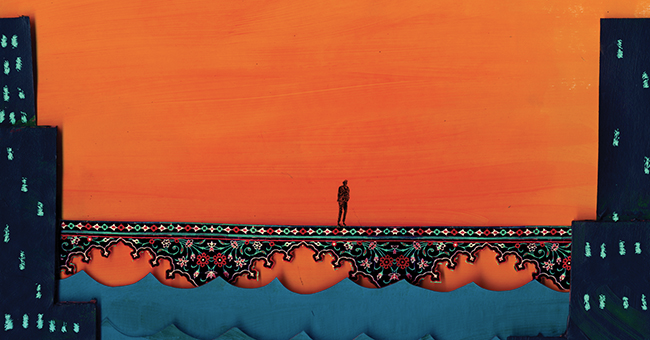
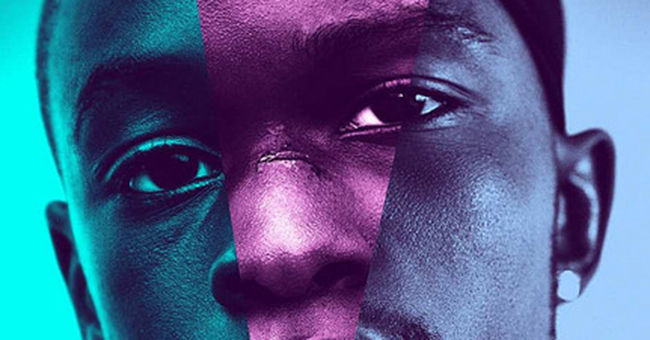
    How, for example, could we possibly partition the life of Chiron in the 2016 feature film Moonlight, or the lives of Juan, Teresa, Kevin, and Chiron’s mother along the lines of race, class, gender, sexuality? There is no single element here that tells us all we need to know about the complexity of Chiron’s life, and the world in which he struggles for survival, meaning, and love. All of this matters. To comprehend that struggle, we have to pay close attention to the specific structural factors, including the routine criminalization of Black communities, that help shape it. The film, which won the Academy Award for best picture, written and directed by Barry Jenkins, is based on Tarell Alvin McCraney’s play In the Moonlight, Black Boys Look Blue. “We could have easily shot this film almost like a documentary,” McCraney says. “‘Oh, look at these poor, black, queer-identifying, not-identifying, we-don’t-really-know people from this removed place.’ Even in the camerawork he [director Barry Jenkins] could have just sat back and done wide shots and been like, ‘Look at their lives.’ Instead, he put that camera right in their face. He put the camera right in their eyes. He put the camera right in their point of view. He shows you the world as they’re looking at it, as they’re spinning, as they’re trying to hold on to things.”

    Imagine bringing such a sensibility and boldness of vision to movements for LGBTQ justice. To do so, we must openly embrace criminalized queer communities without trying to sort people into “innocent” and “guilty.” We must craft analyses and agendas that communicate in clear, tangible ways that no one is disposable.

    And that requires centering the experiences and leadership of these communities. It requires a vision of justice not rooted in systems of policing, prosecution, and punishment. That would be different. And it is long overdue.

    If we move in this direction, with heart and determination—and I suggest that we must—I promise you that the ensuing Pride celebrations will be ones for the ages.


    About the Author 

    Kay Whitlock is a writer and activist who has been involved with racial, gender, queer, and economic justice movements since 1968. She is coauthor of Considering Hate: Violence, Goodness, and Justice in American Culture and Politics with Michael Bronski, the award-winning Queer (In)Justice: The Criminalization of LGBT People in the United States with Joey L. Mogul and Andrea J. Ritchie, and cofounder and contributing editor for the weekly Criminal Injustice series at CriticalMassProgress.com. She lives in Missoula, Montana. Follow her on Twitter at @KayJWhitlock.

  • By Christian Coleman

    Space travel

    Image credit: Comfreak

    There was one story Octavia E. Butler wouldn’t write. Reveling in science fiction/fantasy for an openness she saw lacking in other genres, Butler gave us gene-trading extraterrestrials, psionically powered mutants, a genetically engineered vampire, a reluctant time traveler forced to visit the brutal past of American slavery. Yet during her three-decades-long career as a novelist and short story writer, she never gave us a ghost story. She didn’t believe in ghosts. Raised as a born-again Baptist, Butler stopped believing in the afterlife and a celestial caretaker by age twelve. “Somehow you’re supposed to believe and have faith but not worry about having any evidence to support that belief and faith,” she said in a 1988 interview. “That just doesn’t work for me, and I never went back.”1 Coincidentally, at age twelve she began trying her hand at science fiction.

    Many critical studies praise Butler’s novels and short stories for her innovative Black feminist perspective, beforehand unseen and unprecedented in science fiction. Few, if any, recognize the sophistication her atheist outlook brings to her storytelling. It was just as crucial as her Black feminist perspective in developing the social justice consciousness that won her work such high acclaim.

    A popular—and admittedly secular—line of thinking in science fiction is that humanity will slough and discard its need for religion and faith, as logic, reasoning, and the empirical method will suffice as the enlightenment we need for our techno-bound future. The truth is that we’ve never had to worry about the speed and fury of our technological advancements; where we stand as far as social progress is concerned has always, regrettably, remained countless paces behind. How, then, do you guide human behavior to put the tools science offers us to good use? This is where Butler’s secular insight comes in.

    As she graciously explained to a bumbling Charlie Rose in a 2000 interview, all societies have religions. Throughout history, civilizations have accomplished difficult, long-term, intensive projects, such as building cathedrals and holding countries together, with religion. It can be used as a tool, Butler said. In that sense, as she pointed out in a Locus Magazine interview, we could do with a little more religion.

    More religion? Initially, I balked at this idea. An atheist since my late teens, I didn’t understand how Butler, who’d gone on record saying she used to despise religion, would come to its defense. As a stalwart fan of hers, I wondered if she was contradicting herself. But as I reread her entire oeuvre later as a god-free adult, I realized as she had that to dismiss religion altogether would be arrogant and foolhardy. So much of Western cultural patrimony derives from our faith traditions. Case in point: the Black church has been the backbone and haven of the Black community in the face of discriminatory legislation. Butler mentioned that religion kept her relatives alive, sustaining them through hardship when suicide seemed the best route out of suffering, because it offers the comfort and foundation of community.

    Throughout her fiction you can trace how Butler explored the importance of community in all its complicated incarnations. In her Patternist series, her telepaths, fractious and hellbent on one-upping each other in dominance, are psionically linked to take full command of the planet and their indentured mutes (non-telepaths). The space-faring, tentacled Oankali of her Xenogenesis trilogy are compelled and united by their biological determination to crossbreed with whatever species they encounter with the aim of avoiding evolutionary dead-ends. For human protagonist Lilith Iyapo and the others rescued by and conscripted in the Oankali’s genetic engineering, this comes at the expense of forfeiting their humanity in their offspring. In Kindred, Butler’s protagonist, Dana, finds community in the antebellum-era enslaved Blacks of the Weylin plantation. In each visit to the past, Dana learns from them what Butler dubs the period-appropriate “rules of submission” to ensure her existence in 1976.

    What’s the common cause shared by these communities? Survival—or, as Butler later called it, species insurance.

    Butler’s concept of species insurance and community truly comes into focus through her secular lens in her Parables series. Earthseed, the godless religion created by protagonist Lauren Olamina, gathers believers and disciples across the racial spectrum. Its central tenet states that change is constant; to survive the post-apocalyptic setting of the novels, it’s imperative for Earthseed followers to always adapt to change. Lauren, like Butler, does not believe in life after death. She does, however, believe in her mission to direct humankind’s attention away from self-destruction in the midst of rampant drought caused by climate change, socioeconomic disparity, and high crime. What better way to accomplish that than with a new religion (a tool!) that supports interstellar travel? By the end of the first book, Parable of the Sower, Lauren forms her first Earthseed community. By the end of the sequel, Parable of the Talents, the first Earthseed expedition takes off to the stars to establish an extrasolar colony.

    With its underlying message of community building and grassroots organizing through god-free faith, it’s no wonder the Parable books—notably Parable of the Sower—caught the attention of the MacArthur Foundation. They awarded her with the “genius” grant in 1995. In an example of life imitating art, Earthseed inspired the foundation of real-life social movement SolSeed. Folk-blues musician and composer Toshi Reagon collaborated with her mother, Bernice Johnson Reagon, to adapt Parable of the Sower as a folk opera in 2015. The message of Butler’s social consciousness continues to resonate.

    In her work, you won’t find the militant brand of atheism endorsed by the likes of Richard Dawkins, the late Christopher Hitchens, or Sam Harris. Their flagrant hostility toward religion, in particular Dawkins’s against Islam, only pigeonholes them into a fundamentalist ghetto that marks them as intolerant as the fundamentalist believers they rail at. Butler’s atheism was never a rabid middle finger flipped at organized religion. She critiqued fundamentalism in Parable of the Talents by dramatizing the rise of a neo-fascist Christian movement that attacks Lauren’s community. But she never demonized faith. Instead, her empathetic brand of secularism calls for tolerance, long-term collaboration, and the embrace of multiculturalism.

    In a 1977 New York Times interview, Toni Morrison said, “Black people believe in magic . . . . It’s part of our heritage.” Not all of us do, least of all Octavia Butler. That doesn’t exclude her from our heritage. I would be remiss for not pointing out that Butler’s unbelief and literary accolades place her in the legacy of atheist and agnostic Black intellectuals and artists whose output has made singular contributions to Black and American culture: W. E. B. Du Bois, James Baldwin, Lorraine Hansberry, Zora Neale Hurston, Langston Hughes, Richard Wright2. Today’s contemporaries include science fiction grandmaster Samuel R. Delany (Butler’s instructor at the Clarion workshop and close friend), Neil deGrasse Tyson, and Ta-Nehisi Coates.

    Her eyes may not have been watching God, but they were watching the stars, envisioning the closest extrasolar worlds where humankind could take root, the future of a more compassionate and inclusive society. Not much fanfare, to my estimation, has celebrated this fact, which is why today, on the day that would have been her seventieth birthday, I’m tooting the party horn.


    Notes

    1. McCaffery, Larry and Jim McMenamin. “An Interview with Octavia E. Butler.” Conversations with Octavia Butler. University Press of Mississippi. 2010. Ed. Consuela Francis. 17.
    2. Zuckerman, Phil. Living the Secular Life. Penguin Press, New York. 2014. 119.


    About the Author 

    Christian Coleman is the digital marketing associate at Beacon Press and editor of Beacon Broadside. Before joining Beacon, he worked in writing, copy editing, and marketing positions at Sustainable Silicon Valley and Trikone. He graduated from Boston College and the Clarion Science Fiction & Fantasy Writers’ Workshop. Follow him on Twitter at @coleman_II.

  • By Haroon Moghul

    How to Be a Muslim

    Art credit: Louis Roe

    This essay appeared originally on Powells.com.

    When I was twenty-three years old, I dropped out of law school. With no sense of what to do and nowhere else to go, I returned home. Like many suburban South Asians, my professional imagination was not particularly vast; I knew I didn’t want to do medicine or engineering, but the only other career that seemed possible, acceptable, and sufficiently lucrative had been law. 

    I began to feel the walls of the world close in around me. I became convinced that I would die jobless, unloved, and unaccomplished. I began to grow ever more listless, frustrated, and anxious, but I had no language through which to understand what was happening to me. One day, driving back from a weekend I spent visiting friends in New York City, I spied a series of concrete pillars holding up a highway overpass. 

    I envisaged weaponizing my parents’ BMW X5 and killing myself. Worse, the thought of so doing filled me with a perverse relief. Even me, emotionally stunted as I was, knew that this was not normal. I went to visit a family friend, a psychologist-psychiatrist, who told me, after only two hours of conversation, that I was “bipolar II,” with signs of major depression. 

    I practically refused to believe it. It took me years to believe that there is such a thing as mental illness, that it should be taken seriously, and, worst of all, that it would circumscribe and define the rest of my life.

    In that, I don’t think I’m all that unusual. Many Muslims I know are hesitant to talk about mental illness; many Muslim communities generally lack resources to talk intelligently, compassionately, and creatively about mental illness. The stigma can be so severe that people would rather ruin their lives than risk being outed. I know, because I was one such person. 

    I am so overwhelmed by how much of my life was wasted running away from a diagnosis, rather than getting the help I needed, that I made a decision to write about my journey. That’s my memoir, How to Be a Muslim: An American Story. I wish I could tell you it’s an easy read, with a cathartic conclusion; having realized the problem, the hero does what is necessary, vanquishes the beast, and saves the universe. If only. 

    But the whole point of writing my book was to reduce the stigma surrounding mental illness, and debunk some of the most common myths and misperceptions concerning Muslims and mental illness. Such as, for example, the pernicious belief that Muslims are immune to mental illness.

    Myth #1: Mental Illness Is for Other People 

    Ever notice how, when a disturbed young Muslim commits an act of violence, it’s immediately blamed on his religion—but when a disturbed white and non-Muslim man commits an act of violence, it’s because he’s a “loner,” “disturbed,” or “troubled”—even when there are clear indications he is motivated by and sees himself as part of a transnational network of extremists? The way the media portrays Muslims, you’d think we are immune to any kind of mental trauma, or that our actions can only ever be motivated by religion. But Muslims are human beings (surprise!). Our minds work like everybody else’s. We are susceptible to the same weaknesses, and liable to go through the same pains and traumas. 

    Myth #2: Mental Illness Is for Other People

    Many Muslims won’t talk about mental illness, either. Not once. Not ever. It’s a matter of shame, embarrassment, or simply evidence of weak or incomplete faith. I’m not saying this is true across the board, but it is true in too many places and too many religious spaces. Worse, those who are in a position to help, such as community leaders, imams, or other religious leaders, aren’t trained in what it takes to identify mental illness, or to productively and proactively address it. 

    Omer Bajwa, Director of Muslim Life at Yale University, agrees. “I don’t believe our Muslim communities have the resources available to handle mental illness in our congregations.” Given the dearth of qualified experts, there are a few tips one might consider. Be kind and compassionate. Resist the urge to moralize. Many Muslims think an appropriately heartfelt and sincere response to, “I’m really depressed,” or, worse, “I’m thinking of killing myself,” is “Maybe you need to pray more.” 

    Which just sounds like you’re saying: “Guess what, you’re a bad Muslim, and that’s why all this is happening.” Except, there’s plenty of people who are bad Muslims, and yet they don’t appear to be depressed, or suicidal, and there are plenty of people who are good Muslims, and yet they struggle with deep feelings of depression, the tumult of bipolarity, or with other psychological and psychiatric ailments. 

    Bajwa would like to see “mosques and community centers” with the “literature and resources available for people” to better understand mental illness, so that they can “create non-judgmental and non-stigmatizing spaces for people.” But Omar Tawil, Associate Chaplain at Trinity College, is more sanguine. “Although it's quite evident that most Muslim communities do not have available resources for mental illnesses,” Tawil says, “there is a shift beginning to take place where communities are bringing in mental health professionals and even requiring their imams, youth directors and even board members to have mental health sensitivity training.”

    Myth #3: It's Not Your Problem

    Now, don’t get me wrong.

    Whether you’re prone to mental illness is a matter of family history, circumstances, genetics, maybe even diet and context. But how you deal with it is entirely up to you. Whether you choose to seek treatment, maintain treatment, and fight back—well, that’s up to you. It could be your jihad, your spiritual, existential struggle for good to come out on top, and over evil. 

    And listen. 

    I know it isn’t easy.

    There are times when you just want to off yourself and, worse yet, this seems like a good thing to do. This is where it’s important to have relationships beyond yourself, close friends, family—and especially a spiritual connection. We may not see it right now. We may go through days, weeks, months, even years of hardship and pain, but those have an ultimate purpose and value we can’t always see. It’s easy to believe that where we are now is where we’ll always be; worse, it’s easy to believe that there’s no point to seeking help, because what help can there possibly be? It’s easy to believe there’s no value in how we see the world, but I have come to believe that mental illness, while dangerous and harmful, also enables a kind of compassion and empathy that might otherwise go missing from the world. 

    Myth #4: You’re Unloved

    Sometimes that isn’t the Muslim community, sadly. Bajwa describes how, while congregations “rally around” people “diagnosed with a serious illness” like cancer, patients “suffering with mental illness [are] often sadly neglected.”

    Worse still, your own mind might encourage you to think poorly of yourself. When you’re in the middle of it, it may not seem much consolation to tell you this. But there is not a single thing in our unimaginably vast universe that was not intentional, you included. You matter, on a world-historical scale. So turn to friends and family. Turn to licensed professionals. Turn to prayer, meditation, medication—just make sure you’re doing something. Not because you’re a bad person. 

    But because you’re a good person, and good people deserve the help that’s out there. When you’re at your most vulnerable, you may not believe you deserve help, but that’s a lie. You wer
    e meant to be here, and stay here, and live here. In the world. 

    Make sure you find someone to help you who can also help you see that. 

    Myth #5: There’s No One Who Can Help You

    It’s often hard to communicate the particular stigma and sensitivities around mental illness to professionals who don’t have your background, culture, religion, or context in mind; fortunately, that trend is changing. I’ve often found it of benefit to speak with Muslim psychiatrists and psychologists because they get where I’m coming from, and we spend more time working on me, the patient, than we do on discussing and debating cultural norms. Even if we don’t like those norms, they exist, and have to be acknowledged. 

    Fortunately, too, many universities have Muslim chaplains, specially trained women and men who know how to handle depression, anxiety, loneliness—even despair and suicidal ideation. (That’s one of the functions the religious leaders interviewed for this article perform.) Even if the available chaplains are not Muslim, they’re still trained to help—and want to help. There are support groups, suicide hotlines, even text message services you can rely on that can help you when things seem particularly bleak. There is absolutely no shame in seeking these out; one of the reasons I wrote my memoir, and spoke so candidly, is because I believed a Muslim such as myself, with a public profile, would do well to be honest about his struggles.

    In the hope that it would make it easier for others to get help.


    About the Author 
     
    Haroon Moghul builds Muslim-Jewish engagement at the Shalom Hartman Institute. He’s written for the Washington Post, the Guardian, Time, Foreign Policy, Haaretz, and CNN. He and his wife want to move back to New York. Follow him on Twitter at @hsmoghul.
  • Mlkblogimage
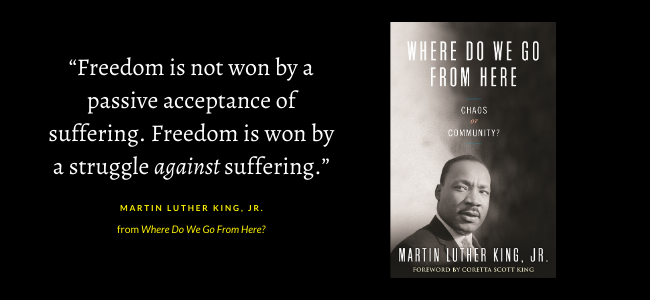
    This month, Dr. Martin Luther King, Jr.’s Where Do We Go from Here: Chaos or Community? turns fifty. King’s acute analysis of American race relations couldn’t be more prophetic. Written in 1967, in isolation in a rented house in Jamaica, King’s final book lays out his plans and dreams for America’s future: the need for better jobs; higher wages; decent housing; quality education; and above all, the end to global suffering. King’s dreams are very much our own today.

    In 2017, we’ve seen a rise in sales of the book since President Trump took office. During his visit to Pope Francis in May, President Trump presented the pontiff with a boxed collection of first edition prints of five King titles as a gift: Stride Toward Freedom, The Measure of a Man, The Strength to Love, Why We Can’t Wait, and Where Do We Go from Here. Trump’s policies, however, contradict everything King stood for. His administration threatens to dismantle the civil rights and progress we’ve fought hard for. Thankfully, we have modern-day civil rights champion Reverend Dr. William J. Barber, II carrying the torch of King’s legacy. Rev. Barber announced last month that he’s joining activists and faith leaders across the nation to lead them in a new Poor People’s Campaign.

    All this shows why King’s work is still so relevant. And we need his wisdom and his hopeful vision. In honor of the fiftieth anniversary of Where Do We Go from Here, we put together a collection quotes from the book that emphasize ‘the fierce urgency of now’ for change and social justice.

    ***

    “Overwhelmingly America is still struggling with irresolution and contradictions. It has been sincere and even ardent in welcoming some change. But too quickly apathy and disinterest rise to the surface when the next logical steps are to be taken.” 

    “Whites, it must frankly be said, are not putting in a similar mass effort to reeducate themselves out of their racial ignorance. It is an aspect of their sense of superiority that the white people of America believe they have so little to learn.” 

    “Freedom is not won by a passive acceptance of suffering. Freedom is won by a struggle against suffering.” 

    “Racial understanding is not something that we find but something that we must create.”

    “What is needed is a realization that power without love is reckless and abusive and that love without power is sentimental and anemic. Power at its best is love implementing the demands of justice. Justice at its best is love correcting everything that stands against love.” 

    “The deep rumbling of discontent that we hear today is the thunder of disinherited masses, rising from dungeons of oppression to the bright hills of freedom.”

    “As long as the mind is enslaved the body can never be free. Psychological freedom, a firm sense of self-esteem, is the most powerful weapon against the long night of physical slavery.” 

    “Who are we? We are the descendants of slaves. We are the offspring of noble men and women who were kidnaped from their native land and chained in ships like beasts. We are the heirs of a great and exploited continent known as Africa. We are the heirs of a past of rope, fire and murder. I for one am not ashamed of this past. My shame is for those who became so inhuman that they could inflict this torture upon us.” 

    “Returning violence for violence multiplies violence, adding deeper darkness to a night already devoid of stars. Darkness cannot drive out darkness: only light can do that. Hate cannot drive out hate: only love can do that.” 

    “Are we more concerned with the size, power and wealth of our society or with creating a more just society? The failure to pursue justice is not only a moral default. Without it social tensions will grow and the turbulence in the streets will persist despite disapproval or repressive action.” 

    “For its very survival’s sake, America must re-examine old presuppositions and release itself from many things that for centuries have been held sacred. For the evils of racism, poverty and militarism to die, a new set of values must be born. Our economy must become more person-centered than property- and profit-centered. Our government must depend more on its moral power than on its military power.” 

    “One of the great liabilities of history is that all too many people fail to remain awake through great periods of social change. Every society has its protectors of the status quo and its fraternities of the indifferent who are notorious for sleeping through revolutions. But today our very survival depends on our ability to stay awake, to adjust to new ideas, to remain vigilant and to face the challenge of change.” 

    “A nation that continues year after year to spend more money on military defense than on programs of social uplift is approaching spiritual death. . . . There is nothing to prevent us from paying adequate wages to schoolteachers, social workers and other servants of the public to insure that we have the best available personnel in these positions which are charged with the responsibility of guiding our future generations. There is nothing but a lack of social vision to prevent us from paying an adequate wage to every American citizen whether he be a hospital worker, laundry worker, maid or day laborer. There is nothing except shortsightedness to prevent us from guaranteeing an annual minimum—and livable—income for every American family. There is nothing, except a tragic death wish, to prevent us from reordering our priorities, so that the pursuit of peace will take precedence over the pursuit of war. There is nothing to keep us from remolding a recalcitrant status quo with bruised hands until we have fashioned it into a brotherhood.” 

    “We are now faced with the fact that tomorrow is today. We are confronted with the fierce urgency of now. In this unfolding conundrum of life and history there is such a thing as being too late. . . .We still have a choice today: nonviolent coexistence or violent coannihilation. This may well be mankind’s last chance to choose between chaos and community.”

  • By Rev. Elizabeth M. Edman

    Ash Wednesday triptych

    Photo credit: Chase Hall

    Ash Wednesday, 2016

    People are going about their business with big, black smudges on their foreheads. 

    My queer lens kicks in: “They’ve come out of the closet—as Christian.” Then the lightbulb moment: “What if progressive Christians could make ourselves visible on Ash Wednesday as both Christian AND queer-positive?” I make a note on my phone and set an alarm to go off in January.

    January, 2017

    I am still nauseous with shame at America’s election folly. We are about to inaugurate a man who has openly disparaged women, Muslims, people of color, immigrants, and refugees. The Christian Right has crawled into bed with him. Prospects for LGBTQ justice are bleak.

    My phone chirps at me. “Ash Wednesday: Visibly Queer, Visibly Christian.” Oh yeah. That idea. But how to signify our queerness? I ask my girlfriend, who is packing for the Women’s March on Washington. She doesn’t miss a beat. 

    “Glitter. Put glitter in the ashes.” 

    I confess even this theatre-geek super-gay priest balks at the idea. Ash Wednesday is about repentance. Ash Wednesday demands that people confront our fear of death as we approach the violence of Holy Week. Doesn’t glitter seem, you know, the opposite of that? 

    We hit the books and quickly come up with a line from St. Augustine. When you repent, Augustine wrote, beware of despair. Despair paralyzes, thwarting our ability to make the changes we need to make. 

    Bingo. 

    Glitter as the antidote to despair. Glitter as a symbol of queer empowerment. Glitter that makes our queer selves fabulously conspicuous, even as we stare our mortality right in the eye. In today’s world, the stakes are perilously high for those of us who dare to tell the truth about our lives. What could be truer to this moment than the dissonance of ashes mixed with glitter?

    And so “Glitter+Ash Wednesday” is born. Parity comes on board immediately as a co-sponsor, and we are off. 

    Glitter Ash logo

    Logo design by Alicia Fowler for Queer Virtue

    February/March 2017

    A piece in Religion News Service goes national, and within three weeks we have 150 congregations in three countries signed up to distribute ashes mixed with purple glitter. We work hard to communicate that our intent is not to trivialize Ash Wednesday. 

    Even so, we receive pushback immediately. Some of it is loud, from predictable right wing voices. Some of it is quiet, from clergy in mainline denominations who, despite considering themselves “progressive,” are deeply uncomfortable with this kind of innovation. Some of it comes from people who work overtime to insist that they support queer people but feel that this action is somehow blasphemous. Some suggest with rather circuitous logic that the project is dismissive of queer people. Right or left, the chorus chants a fairly unified message: “You fundamentally misunderstand what Ash Wednesday is about.” 

    The unpleasantness of these attacks notwithstanding, we do not receive death threats. I breathe a sigh of relief when we get through Ash Wednesday with no reports of violence. 

    June 2017

    An email comes in from one of the pastors who participated in Glitter+Ash Wednesday, the Rev. Grace Murray from Fargo, North Dakota. She wants to stay on our list but asks that we replace her church email with her personal address, because she has just been fired. Offering Glitter+Ash was not the only factor—she had also rented out worship space to a church of Liberian immigrants—but it was one brick in a wall of anger over her embrace of LGBTQ people and people of color. Her local paper covered her dismissal.

    I want to call Grace right away, but I also take a minute to think about what I will say. It is terrible what has happened to her. Do I regret launching this project, knowing that it cost someone a job? No, I don’t. Preaching a message that unsettles people is risky business. Grace knew that, and I wasn’t going to disrespect the courage she had shown by mumbling a cheap apology. 

    When I get her on the phone, I tell her how sorry I am that she has lost her job. She doesn’t miss a beat. “That’s the price we pay. I can’t preach a fake gospel.” There is nothing glib in her response. She doesn’t know what is coming next for her, how she and her husband will survive financially. Some of the church members who stood with her are pressing to form a new community, a hopeful but daunting venture. 

    Grace is a white, straight, cisgender woman who sees her faith through what I would call a queer lens. Her story now is a queer mix of success and failure, strength and weakness, power and vulnerability—the same potent combination that set Jesus’s followers on fire 2,000 years ago. The same potent combination that propels many queer people out into the streets year after year to march for Pride. 

    Tomorrow, and the day after that, and the day after that

    Queer Pride involves celebration in the midst of struggle, life in the face of death. This is a paradox that exists not just in the heart of queer experience, but also in the heart of any authentic iteration of the Christian faith. Grace Murray is one of millions of people across the globe who understand this paradox and who make daily decisions to rise to the challenge and risk for the sake of love, for the sake of Pride. 

    We will keep using glitter to explore the Queer/Christian paradox. We will keep working to make faith like Grace’s visible in the world.  We will keep working to help Christians see what many queer people know in our bones:

    Glitter shimmers with gritty life. 

    Glitter exacts a price. 

    The price is worth it.


    About the Author 

    The Reverend Elizabeth M. EdmanThe Reverend Elizabeth M. Edman is an Episcopal priest and a political strategist who has been expanding people’s understanding of faith and sexuality for over twenty-five years. She has worked on the most pressing contemporary issues in the intersection of religion and sexuality, serving as an inner-city hospital chaplain to people with HIV/AIDS from 1989 to 1995 and helping to craft political and communications strategies for marriage-equality efforts. She lives in New York City. Follow her on Twitter at @liz_edman and visit her website.

  • By Adam Eichen

    Adam Eichen and Frances Moore Lappé testify in front of the Massachusetts Joint Committee on Election Laws  June 8  2017.

    Adam Eichen and Frances Moore Lappé testify in front of the Massachusetts Joint Committee on Election Laws June 8 2017. Photo credit: Elizabeth Depentu.

    This article appeared originally on The Huffington Post.

    Author’s Note: On June 8, 2017, I offered the following testimony to the Joint Committee on Election Laws at the Massachusetts statehouse in support of automatic voter registration (S. 373 and H. 2091). If passed, Massachusetts would become the ninth state (not including Washington, DC) to adopt automatic voter registration. 

    ***

    Thank you to the chairs of this committee and its members.

    I sit here today honored and humbled to share my views on automatic voter registration with the Joint Committee on Election Laws. I am also thrilled to testify on behalf of the two organizations with which I work: Small Planet Institute, a Cambridge-based, pro-democracy think tank, and Democracy Matters, a student-powered national organization with chapters across the country working to restore our democracy.

    Many experts have already testified about why automatic voter registration is good policy. And many more will do so after I finish talking with you today.

    They have and will explain how automatic voter registration would register many of the almost seven hundred thousand eligible Massachusetts residents not already registered. They have and will detail how automatic registration would reduce human error by using digital registration forms, by more frequently updating records when people move, and by eliminating duplicate records. And, they have and will recount how automatic voter registration would save Massachusetts millions of dollars. That automatic voter registration costs only 3 cents per registrant compared to $3.54 for each paper registration is sure to be a common theme throughout today. And such positive benefits are only the beginning.

    But I was not compelled to testify today to recount facts about this innovative reform.

    Daring DemocracyRather it was to share what I discovered in my research for my book Daring Democracy, coauthored with the founder of Small Planet Institute, Frances Moore Lappé.

    For the last nine months, we have assessed the state of our democracy. In our search, we confirmed the now seemingly intuitive notion that Americans across the country are upset, for they feel increasingly powerless, that their voice does not matter, and that the political system does not represent them.

    But we also found something underreported—that people are eagerly yearning and demonstrating for solutions to make our democracy better represent all voices and work more efficiently. In fact, there is nothing less than a Democracy Movement emerging in our country.

    Across the US, citizen groups spanning partisan affiliation are working together to push the boundaries of democracy. From public financing of elections to gerrymandering reform, people are mobilizing and reengaging in politics. For someone who cares deeply about this country, this is nothing less than enthralling.

    But what surprised us more than anything is the enthusiasm across the country for automatic voter registration. Just since 2015, eight states and Washington, DC, have enacted this common sense reform. And the results speak for themselves: more registered voters, higher turnout on Election Day, and more faith in our electoral system. And when we’ve gone on the radio or talked with citizen groups, describing automatic voter registration provokes a groan of “Of course, that makes so much sense.” We’ve seen it on their faces and in their voices: How is this not a thing already?

    The people of Massachusetts, much like those in the forty-nine other states, are ready for automatic voter registration.

    To close, I want to turn back the clock to 1801 when Massachusetts became the first state to mandate voter registration. For political stakeholders of the day, much like for those today, voter verification was a necessity. Voter registration made sense. But in the two centuries following this decision, voter registration unnecessarily became a means of disenfranchising Americans that influential politicians did not want to vote. In the post-Reconstruction South this meant African American citizens, and in the North, it was immigrants and citizens of lower socioeconomic levels. Because of these laws, countless eligible voters were denied the franchise.

    And still today, minority groups and lower income populations across the country and in Massachusetts are registered at significantly lower rates than the rest of the population.

    Massachusetts has the chance today to lead the nation on an effort to rectify the wrongs committed in the past. If and when Massachusetts decides to lead, history will look back at the Bay State and remember it as one of the forbearers of the movement to bring our democracy into the twenty-first century, creating a system of government that includes and empowers all residents of the state, regardless of race, gender, or socioeconomic status.

    If there is one thing I’ve learned in my survey of America’s democracy, it is that when bold state leaders are willing to take chances, politicians in other states not only take notice, but more often than not, they also follow suit.


    About the Author 

    Adam EichenAdam Eichen is a writer, researcher, and political organizer working to build a democracy that represents and empowers all voices in society. He serves as a Democracy Fellow at Small Planet Institute and as a member of the Democracy Matters board of directors. In 2016, he was appointed deputy communications director for Democracy Spring, a historic national mobilization comprising more than a hundred organizations working for campaign-finance and voting rights reform. Follow him on Twitter at @AdamEichen.

  • By Perpetua Charles

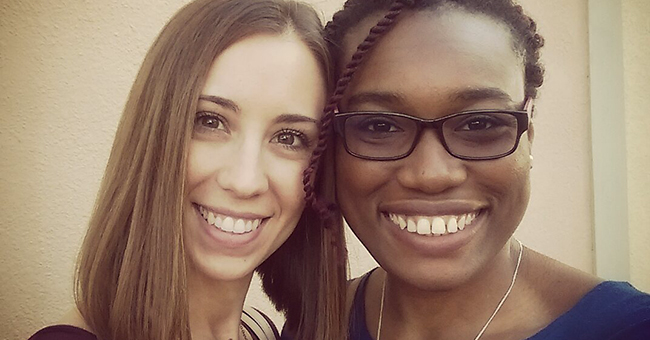
    Perpetua Charles and her friend Clara

    Perpetua Charles and her friend Clara. Photo credit: Perpetua Charles

    This year marks the fiftieth anniversary of the Loving v. Virginia court decision that struck down anti-miscegenation laws across the United States. Thanks to this ruling, people across races could legally declare their love for each other through marriage. Sheryll Cashin’s new book, Loving: Interracial Intimacy in America and the Threat to White Supremacy, offers a history of interracial relationships in the United States and looks at how present interracial relationships will shape the future of the country. As I read Loving, I was struck by a short section near the end of the book. Cashin writes that one doesn’t have to marry, date, or adopt a person of another race to experience transformational love or to acquire what she calls cultural dexterity—an enhanced capacity for intimate connections with people outside one’s own tribe. An intimate friendship works just as well.

    Cashin doesn’t use the word friend lightly, and neither do I.

    My best friend Clara and I met at the start of our freshman year at Florida Southern College. We shared two classes together, and it was through the forced interaction that comes with being assigned to semester-long group projects that we became inseparable friends. Our interests were unendingly similar. We shared the same faith, had the same tastes in fashion, and crushed on the many of the same celebrities. It wasn’t long into that first year that we knew we wanted to be roommates for the next three years of college. Throughout those years, Clara, who hails from a small county in southern Florida, encountered a new culture, that of a black, Haitian-American woman. She developed a taste for my mom’s home cooking and an appreciation for the experiences of my immigrant family living in a country still divided by race.

    Like the eighty percent of college freshmen Cashin said learn to see the perspective from of someone outside their race after socializing with them frequently, Clara also began to develop a unique perspective by spending time with me and my family. “I have her perspective now as well as mine,” she says. “I can’t truly empathize with how the black community feels or is treated, because I’ve never experienced it. But Perpetua has brought things to light for me that I wouldn’t normally have thought of, and that’s so important.”

    Clara and I had shared many conversations about race over the years, about the conservative county where she grew up, about the stereotypes I was trying to break from even though I didn’t know how, and about how those experiences shaped the way we interacted with each other. One of the most important conversations about race we had occurred in the fall of 2014, just a couple of days before Thanksgiving, when the news that Darren Wilson had not been indicted for the killing of Michael Brown had broken. At the time, I was just beginning to uncover and understand for myself the extant power structures in the nation that allow things like this to occur and that had, and continue, to shape my life. Despite the discussions we’d had, they were nothing like this one, where we were forced to examine our place and our roles in a society more racist than we’d realized.

    Hurt, confused, and lacking the full vocabulary required to discuss the nuances of the issue, we felt distant from each other. For the first time, we weren’t able to see life from the other’s perspective. In the early years of our friendship, even I had considered us to be a colorblind duo. Race and its many concerns didn’t seem apply to us. But when I allowed myself to open up to the truth of racial tensions in America and found that Clara for a time could not and would not follow, I was faced with the reality that her privilege as a white woman was what allowed her the power to refuse. Like the first time I recognized race as a preschooler holding hands with a white classmate, I was once again starkly reminded that I was black and Clara was white. What did that mean for us? I wasn’t sure how our friendship could continue if Clara didn’t have a willingness to listen and learn alongside me.

    After a couple of days of separation and reflection, we talked through our hurt and committed firmly to taking the time to listen to each other’s feelings and concerns surrounding race and race relations. We knew the foundation of our friendship was solid and that none of the culture-swapping we’d done in years previous had been a front. What we didn’t know, and perhaps hadn’t been willing to accept before, was that our friendship couldn’t simply be about all the ways that we were similar. However unimportant it had once seemed that she was white and I was black, we couldn’t deny the significance of our dynamic in the context of our country’s history and of our current society. Our racial differences, our conversations about them, and our determinedness to make that an asset to our relationship rather than a drawback, are what makes our friendship so rich.

    In the years since that tough discussion, Clara’s cultural dexterity and her ability and willingness to engage with race has increased. There is an honesty to our discussions now that’s allowed us to “transcend ancient color lines” as Cashin calls them, and become truly intimate in our interracial friendship. Clara says that our friendship and the current race relations in the country have opened her eyes a great deal. “They opened my eyes to what she sees and feels. I am a white woman, so I’ve never felt or been subjected to her experiences and fears…and it makes me sad. I want her to feel secure.” Clara may not be able to empathize with the fear I’ve felt being pulled over by the police, or known the sting that comes with being followed closely in a department store, but she listens and acknowledges my feelings. “I don’t want to be unapproachable when she needs to talk about race with me and I try to be sensitive to that. This friendship has been so wonderful to me, and there are special moments we’ve shared that I wouldn’t have been able to share with my white friends.”

    I’ve always considered my friendship with Clara to be extraordinary. She is my sister and my confidante. She has supported me in ways few others could, and though the color line has tried to separate us, we celebrate our closeness today in the spirit of Mildred and Richard Loving—boldly and openly.


    About the Author 

    Perpetua Charles joined Beacon Press in June 2015. She is a graduate of Florida Southern College and earned her MA in Publishing and Writing from Emerson College 2015.

  • Beacon Pride Banner

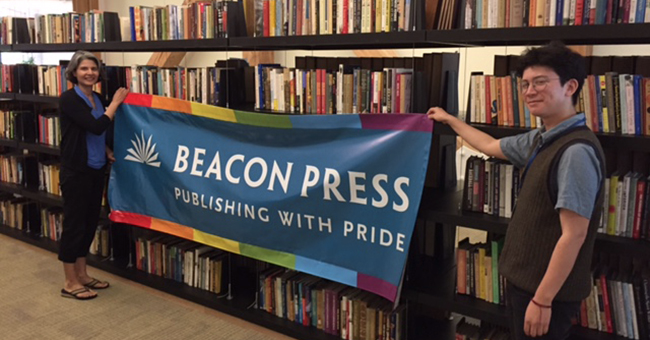
    Editorial director Gayatri Patnaik displays our Pride banner with assistant designer Louis Roe

    We’re excited to be marching in Boston Pride this year! Will we see you there tomorrow? You’ll see us in bright blue shirts emblazoned with “Publishing with Pride,” handing out buttons and postcards with links to PDF samples of select LGBT titles from our catalog. And it looks like the weather will be cooperative this year, too. A sunny Pride is the best Pride. Those of us you will see in the parade, staff members and authors, would like to share with you the reasons why we’re marching. Happy Pride! 

    ***

    “I’m marching with my colleagues and friends at a time when the hard won rights of the LGBT community are being challenged; when we’re in danger of stepping backwards in this crucial civil rights battle rather than taking the leaps forward we need. So, now more than ever, we need to publish books and broadcast our commitment to the rights of the Queer community, and walk with pride.”
    —Helene Atwan, Director 

    “I’m marching in Pride this year to lift up our LGBTQIA authors and their messages of commiseration, education, and celebration. Their books have been a resource for me before and during my time at Beacon, and I’m looking forward to the opportunity to share their work with our community.”
    —Daniel Barks, Reprint and Digital Production Manager

    “I’m marching as an ally. In years past, I’ve felt it wasn’t really my place to march in the Pride Parade. But as we all know, we’re living in a precarious political environment, and this year, I felt strongly that if my LGBT colleagues wanted allies to march with them, I wanted to show my support—for their rights, for their safety, for their visible presence. And more generally speaking, for a society that embraces diversity and justice.”
    —Amy Caldwell, Executive Editor

    “Visibility and affirmation for LGBTQ people of color could not be more important. That’s why I started marching in Pride parades three years ago. It’s especially important now during our current administration. There is no one way to be queer or experience queerness; there is no central, canonical narrative. All are valid. Beacon Press has published some incredible and moving work by LGBTQ writers of color. I’m honored to march with a publishing house that recognizes and affirms the broad gamut of the queer experience by making the words of these authors available to the public. Please read them! And cheer like mad for us when you see us in the parade!”
    —Christian Coleman, Digital Marketing Associate

    “I’m so happy and proud to march with Beacon Press at Pride. Beacon books kept me sane and hopeful through college, inspired me to join the movement for marriage equality, and continue to bring out the best for our progressive movement.”
    —Hillary Goodridge, contributor to Confessions of the Other Mother: Nonbiological Lesbian Moms Tell All! 

    “I’ve been attending Pride for just about as long as I’ve lived here, almost twenty years, in support of LGBTQ friends, family, and colleagues and their rights in this country. I’m marching with Beacon Press this year because the work of our authors helps lift up the issues and voices in the community and I’m proud to be a representative for them in Boston!”
    —Alyssa Hassan, Senior Marketing Manager

    “I’m marching to raise awareness of Beacon’s commitment to publishing LGBTQ titles and authors. I’m also marching so that my five-year-old son, Matthew, will experience firsthand how fabulous and fun it is to be part of the queer community.”
    —Gayatri Patnaik, Editorial Director

    “For all the criticism marches like Boston Pride have taken for their corporate sponsorships, I think it’s all the more important that small, queer-fronted organizations represent themselves at queer events to remind everyone who those events and spaces really belong to. I also recall the last time I attended Boston Pride, I was a high school student with limited exposure to queer resources and community—I certainly had no idea there was a publishing house that specialized in the kind of work we do. I’m marching with the hope we can reach a few people like that, folks who are excited about exploring their identities but might not know where to look until it marches up to them (with a big blue banner!).”
    —Louis Roe, Assistant Designer

    “My favorite part of Pride is seeing young people who are beginning to explore their sexual identity realize they are in a space where their existence is being celebrated. That kind of positive, accessible representation of joy in LGBTQ communities and visible support from allies is crucial in times like this, especially for children who are receiving mixed messages about their value and worth from people in power.”
    —Ayla Zuraw-Friedland, Editorial Assistant 

  • By Nicholas DiSabatino

    Gwendolyn Brooks

    Photo credit: Nora Brooks Blakely

    Today marks the hundredth anniversary of legendary literary icon Gwendolyn Brooks. I’m so proud to be working on the new biography of her from award-winning poet, playwright, and novelist, Angela Jackson, who intimately knew Brooks and her family and had unprecedented access to her papers. A Surprised Queenhood in the New Black Sun: The Life & Legacy of Gwendolyn Brooks is a welcome introduction to Brooks for both longtime fans and newbies like myself.  

    As Donna Seaman of Booklist writes in her review, “Jackson’s sensitive portrait of this ‘quiet genius’ and her finely calibrated insights into her writing celebrate Brooks’s warmth, her ‘bitter bite, her slicing sarcasm,’ and the revolutionary provocation and power of her courageous, caring, intricately faceted poems, poems to read and reread for their emotional, social, and moral repercussions—and for their expounding beauty.”

    After reading A Surprised Queenhood in the New Black Sun, I wanted to create a reading guide for those who are new to Gwendolyn Brooks. Here are some essential works to continue on your journey of discovering this amazing poet who became the first African American to win a Pulitzer Prize.

    Brooks’s first book celebrates the characters and landmarks of the African American community of Chicago, and was “life affirming” for them, writes Jackson. Such poems as “Ballad of Pearl May Lee,” “The Mother,” and “Kitchenette Building” appear in this volume.

    • Annie Allen (1950) (No longer in print unfortunately, but available through select sellers online.)

    “Annie Allen is very much a geography of the mind and heart,” writes Jackson. Brooks’s second volume of poetry, and the one for which she would win the Pulitzer Prize, opens with eleven loosely connected poems about the character of Annie Allen.

    Brooks’s only novel, Maud Martha, is devoted to the girlhood, family, courtship, marriage, and motherhood of the title character. “I wanted to give a picture of a girl growing up—a black girl growing up in Chicago,” Brooks wrote of the book.

    One of Ms. Brooks’s children’s books, Bronzeville Girls and Boys has an interesting publishing history. Originally released in 1956, the book contained illustrations by Robert Solbert of solely white children, despite being about the black neighborhood of Chicago. Brooks was not pleased, as Jackson cites, “These joyous salutes to the happiness of so much of her childhood were given over to the realm of white children, while her own blackness was neglected and found unworthy to portray in illustrations.” In 2006, HarperCollins released a new version featuring beautiful illustrations by Caldecott-winning illustrator Faith Ringgold celebrating the black children of Chicago. I think Ms. Brooks would be pleased with this new edition.

    This volume contains Brooks’s most famous poem, “We Real Cool,” as well as these classics: “The Last Quatrain of the Ballad of Emmett Till,” “Old Mary,” “The Bean Eaters,” “Strong Men Riding Horses,” and “The Explorer.”

    As my favorite poet Sonia Sanchez writes of Brooks, “And how Miss Brooks did this thing called language. How she made us all look down the corridors of our birth. How she wore the rhythm of her name wide on green rivers of change. How she fashioned poems for us all from this bamboo wilderness called America. How she moved from city to city, restringing her words so we could live and breathe and smile and breathe and love and breathe her. This Gwensister called life.”

    Brooks cake

    Photo credit: Alyssa Hassan


    About the Author 

    Nicholas DiSabatino graduated from Kent State University and has an MA in Publishing and Writing from Emerson College. He joined Beacon in 2012.

  • By Rashod Ollison

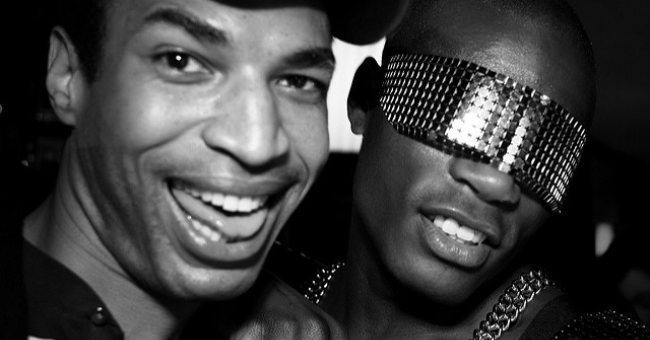
    Fierce duo

    Photo credit: See-ming Lee

    When I realized I’d never jump in the sky and fly away like the mythical African slaves in that old folktale, which was also around the time I figured Michael Jackson would never come to the projects and take me away in a rocket limo, I begrudgingly accepted my sexuality.

    I was still a child, a precocious one, about eight or nine years old who lived inside his overactive and always vivid imagination. I didn’t know what “gay” really meant, but I gathered from the casual and mean-spirited homophobia at home and in the working-class neighborhoods we shuffled in and out of that being “that way” or a “faggot” was a sin and shame. Still, I didn’t see myself as “that way” or a “faggot,” which brought to mind the flamboyant queens who sashayed around the park nearby, men who dressed in women’s jeans and wore long Jheri curls. But folks shot those same slurs at me like bullets, and I spent most my childhood and adolescence dodging those whose finger was on that figurative trigger.

    Hey, faggot!

    I thought my crushes on boys were natural, innocuous, and sensual, all captured in crayon-colored daydreams. All I wanted to do was kiss them, feel their skin, get close enough to smell their sweat, maybe taste it. But I was no fool: Outward displays of affection toward any other boy would have gotten my ass dusted. It was enough that my sisters and other boys around the way teased me for being so insular, artsy, for having “too much sugar in my tank.” Even still, I knew there was no sense in praying the gay away. That made about as much sense as wishing for and fully expecting my eyes to magically change from brown to blue, which drove Pecola Breedlove crazy in Toni Morrison’s The Bluest Eye, which I read in the eighth grade. Her blues was not like mine, but I could relate to wanting to be something else, anything that would garner the affirmation and affection I sought from those who looked like me. But that affection and affirmation never came from my family. So my journey to embracing my sexuality was a lonely one. There was never an official exit from the proverbial closet. What the hell did it matter? Everyone knew anyway. And besides, my relatives were too deep in their own dysfunction and misery to notice my internal struggle, which really wasn’t a “struggle” now that I think of it. It was more of a reckoning.

    I courageously befriended one crush in junior high, a boy named Andre with a Colgate smile. I detail the very brief but sweet infatuation in my book, Soul Serenade: Rhythm, Blues & Coming of Age Through Vinyl. But my high school and college years were mostly spent with laser-like focus on a path out of Arkansas, far away from the indifference of relatives and the supreme boredom of a sleepy Southern city. My scholastic gifts earned me a full academic scholarship to college, which meant an exit from the oppressive life at home and after that, a stimulating life in a real metropolis where I could be anonymous, and like the “children of the night” the Stylistics sang about, I could find someone “who is just like me, looking for some company.”

    I’d never had any gay friends and had one gay sexual experience during my senior year of college, with a cousin of a friend whose eyes were the color of sand and whose hot mouth left deep purple marks on the sides of my neck. But nothing came of it. He blamed his actions on the alcohol. Infuriated and embarrassed, I wanted to vanish.   

    So there I was in Philadelphia just a month after I’d earned my degree, working as a staff critic intern at the Philadelphia Inquirer. My lovely apartment—bay windows and hardwood floors—was in the heart of Center City, the “gayborhood,” with several gay bars and clubs just two streets over. I soon befriended Curtis, an impish guy with artsy ways who worked at the post office by day and lived in the clubs at night. Although I thought Curtis was adorable, it was a completely platonic relationship. With him as a guide, I met other guys our age. Most had been abused; several had been thrown out the house while still teenagers. Others had been raped, contracting HIV in the process. But in the clubs with house beats ricocheting in the dark, they thrived—shirtless black and brown bodies gleaming under twirling red and blue lights. They were free. But I was a wallflower observing a scene that felt sad and beautiful all at once. Never a club queen, it just wasn’t my scene, but I still felt privileged to be there, even if I didn’t really belong. At that time I needed to see young black gay men and women busting loose, embodying outrageous personas in a safe place.

    That was twenty years ago, and much has changed in the way of gay liberation, as it were. It’s more mainstreamed now. A friend jokes that “being gay is the new black.” Teenagers take their same-gender dates to prom these days and no one even blinks. “Faggot” is so politically incorrect that the utterance of the word may get one’s ass dusted. That’s a good thing. However, far too many still struggle and fear for their lives. There’s always work to do.

    As I move into middle-age, I don’t bother with labels or defining myself for others. My openness about my sexuality may be seen as a political act, but I’ve never seen it that way. It’s simply part of who I am, like my fingers and toes. Even as I live in perpetual singlehood these days, dealing with changes and loneliness that aging brings, which often leaves me anxious and breathless, I know I’d take nothing for my journey now. Hell, I’m still on it, surrendering to the air, flying anyway.


    About the Author 

    Rashod Ollison was an award-winning pop music critic and culture journalist. He was a staff critic and feature writer for the Dallas Morning News,Philadelphia Inquirer, Journal News (Westchester, New York), Baltimore Sun, and Virginian-Pilot. He also wrote a music column for Jet magazine. A native of Little Rock, Arkansas, Ollison lived in Virginia Beach.