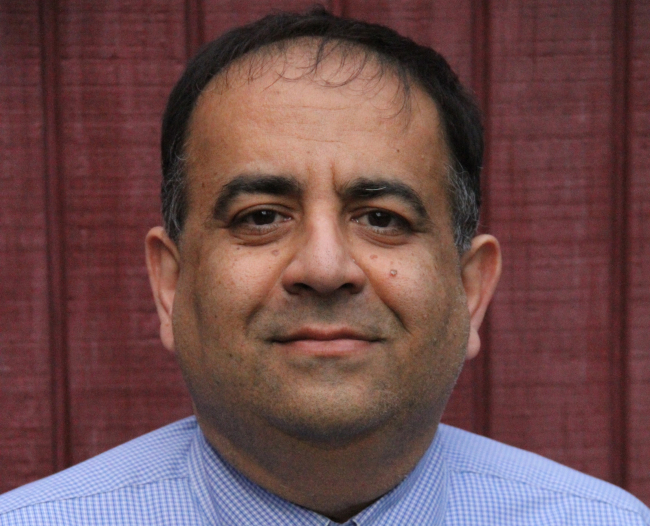
• Sanj KharbandaSanj Kharbanda has been named director of sales and marketing at Beacon Press, the 163-year-old independent publisher based in Boston. Kharbanda’s appointment, which is effective June 5, was announced on May 31 by Beacon’s longtime director, Helene Atwan. 

    Kharbanda, a member of Beacon’s Board of Advisors since 2014, has thrived at the intersection of books, marketing, and transformative technology for over twenty years. He was most recently Senior Vice President, Digital Markets at Houghton Mifflin Harcourt, where he worked for eleven years.  Kharbanda also has experience at the store level, beginning in publishing as a bookseller and store manager at WordsWorth Books in Cambridge, MA. An innovative marketer, Kharbanda has worked on a wide range of books, including New York Times bestsellers Fun Home and The God Delusion. “As a member of the Board of Advisors, I have had the opportunity to work with Helene, Tom, and others at Beacon Press for quite a few years,” he commented. “I have long been impressed with their passion for book publishing and with the remarkable titles they acquire, edit, and market. I am thrilled to be part of the team and contribute to the success of Beacon and its mission.” 

    This additional hire was made possible by several successful years of record-setting sales, combined with a move by associate publisher Tom Hallock, who has been with the press for two decades, to part-time status. “I am excited Sanj is joining us at a time of increasing interest in the important stories that Beacon authors have to tell. At the same time, this transition provides me with added time to pursue my interests in political and electoral organizing.” 

    “We are delighted to have Sanj joining our staff, particularly as he brings us both a rich range of experience and such a sharp focus on the tech-filled future,” Atwan said in making the announcement. “He has been an invaluable advisor to us for several years and now he will become a key part of our staff.” 

    Hallock will continue as associate publisher while handing over many of his sales and marketing responsibilities to Kharbanda. He will increasingly turn towards special projects, including the migration of the press to a new title management system, enhancing the backlist and audio lines, and developing new business opportunities for the press.

  • Will MyersYou’ve read our classics, such as Viktor Frankl’s Man’s Search for Meaning, Octavia Butler’s Kindred, the work of Martin Luther King, Jr., and James Baldwin’s Notes of a Native Son; and many of you know our current list, featuring books by Cornel West, Lani Guinier, Anita Hill, and Christopher Emdin—books that speak to the condition of the world, and add to our understanding of urgent social issues. Whether it’s the environment or race, cultural or class dynamics, we publish all our books with a purpose. Now you can meet the people who work at Beacon Press in our blog series “Beacon Behind the Books.” Each month, we’ll introduce to you a member of our staff and give you a behind-the-scenes look at what goes on at our office.

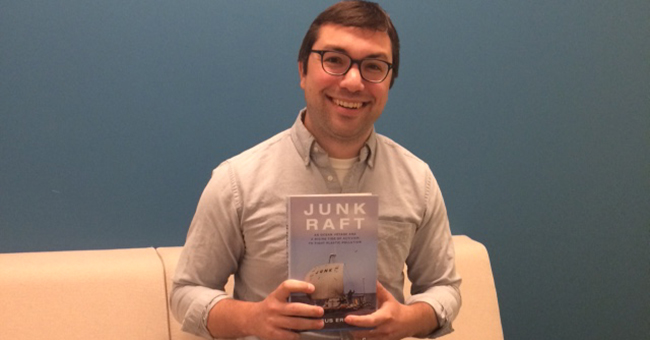
    For the month of June, we introduce you to our editor Will Myers!

    What’s a typical day in the life of an editor, Will?

    I tend to read email on the train ride to the office, so that when I arrive at my desk I’m ready to respond to my colleagues and the authors I’m working with. Sometimes I spend the first hours of the morning drafting a response to a problem an author is dealing with. Or I could be writing to ask someone if they would be interested in writing a blurb for a book. Or maybe I’m sharing title or cover ideas with my colleagues. Most mornings tend to revolve around these kinds of discussions, and then in the afternoons I try to make time to read proposals, get up to speed on environmental news, and edit the manuscripts I’m working on. It varies from day to day, which is one of the aspects of the job that I enjoy.

    What are some of the challenges of being an editor? What do you find most rewarding?

    The most rewarding part of my work is that I’m constantly learning and being inspired by the dedication of the authors I work with. I think the biggest difficulty of being an editor is something that most of us probably struggle with at work and in our personal lives: making time to break away from the demands on our concentration. Some aspects of being an editor are best served by an open mind and a receptivity to new ideas, but at other times it’s important to clear your head and focus on one particular issue. Toggling between these two ways of thinking can be challenging.

    What is one book on our list that you would recommend?

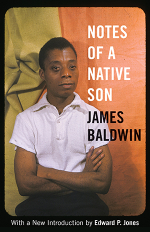
    It’s hard to pick one, but I’ll say James Baldwin’s Notes of a Native Son. The way Baldwin balances fury and restraint is so impressive.

    Notes of a Native Son

    What current/upcoming projects are you excited about?

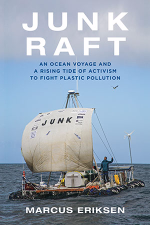
    Junk RaftGreat question! There are so many books that I’m excited about right now. This July, we’ll be publishing Marcus Eriksen’s Junk Raft: An Ocean Voyage and a Rising Tide of Activism to Fight Plastic Pollution. Eriksens tells the story of how he became galvanized and devoted his life to fighting the epidemic of plastic pollution in the world’s oceans, and the lengths he’s willing to go to draw attention to the issue. He built a raft out of plastic debris and sailed from California to Hawaii, which he recounts in the book, along with his many fights with the polluting industries that are fighting back against efforts to solve the plastic pollution crisis. It’s fun and eye-opening.

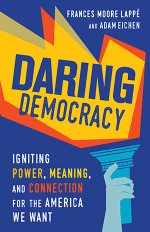
    Daring DemocracyIn September, we’re publishing Daring Democracy: Igniting Power, Meaning, and Connection for the America We Want by Frances Moore Lappé and Adam Eichen, two inspiring activists working to push the boundaries of American democracy. It’s a courageously hopeful book that argues that we need to fight for a democracy that is radically inclusive and personally meaningful—and, as they demonstrate, this movement is already blossoming around the country.

    One more: the Rev. Dr. William J. Barber’s Revive Us Again: Vision and Action in Moral Organizing will be published next spring. It’s a collection of some of Rev. Barber’s incredible speeches, paired with responses from leading activists discussing how they’re putting his organizing vision into action in work as diverse as union organizing and the fight for environmental justice.

    What helps you focus when you’re at work?

    Lots of tea throughout the day, and periodic screen-free time.

    What are you reading right now?

    China Miéville’s October: The Story of the Russian Revolution. I love Soviet history and Miéville’s novels, and I was excited to see how he would approach such a complicated historical moment. I’m about a quarter of the way through, and I’m really enjoying it.

    What are you listening to right now?

    At work I tend to listen to a lot of ambient and electronic music—really anything without lyrics. Recently, I’ve been listening to Jlin’s Black Origami, GAS’s Narkopop, and a couple of my work go-to’s, Tim Hecker’s Dropped Pianos and Cocteau Twins’ Victorialand. When I’m not at work, Guided By Voices’ newest album, August By Cake, has been on repeat.

    Favorite podcasts?

    Intercepted with Jeremy Scahill has become one of my favorites for politics and current events. Comedy Bang Bang is always hilarious. I also listen to a lot of podcasts about baseball and basketball—Zach Lowe’s The Lowe Post is the best podcast on the NBA. I also listen to this podcast that helps me fall asleep called Sleep With Me, in which this guy tells incredibly boring but oddly endearing stories—TV recaps, readings of Trader Joe’s catalogs, attempts to remember the plot of The Goonies, that sort of thing…it’s weird, but it works. Nine times out of ten I end up falling asleep within the first half hour.

    Name three non-office items on your desk and their significance to you.

    In an office full of sports agnostics and Boston diehards, I’m the oddball who follows my hometown Cleveland teams. I have a Sports Illustrated cover with LeBron James (the G.O.A.T.) hanging on my wall that I only half-jokingly say is for inspiration. I keep a pretty clutter-free desk, so aside from manuscripts and books I’ve got some eye drops and a bag of pistachios.

    image from media0.giphy.com


    About Will Myers

    Will Myers is an Editor at Beacon Press. He acquires for the nature and environment list, with a particular interest in books on environmental justice and activism, climate change, and the intersection of race, class, and the environment.

  • By Laura Erickson-Schroth, MD and Laura A. Jacobs, LCSW-R

    Bathroom

    Photo credit: Ted Eytan

    For now transgender Texans can breathe easy, but there’s no knowing how long yet. The recent Texas anti-trans “bathroom bill,” very similar to North Carolina’s, did not make it through the legislative session that ended on May 29. Several business CEOs, including Facebook’s Mark Zuckerberg and Apple’s Tim Cook, contacted Texas Lt. Gov. Dan Patrick to call him out on the discriminatory bill. Although the bill is dead, supporters of the measure are waiting for a special session to breathe new life into it.

    These bathroom bills, of course, are not about bathrooms. Based on unfounded fears and bigoted misconceptions, they are attempts to strip a targeted section of the population of its civil liberties. So where does this specific misconception around transgender people and bathrooms come from? Psychiatrist Laura Erickson-Schroth and psychotherapist Laura A. Jacobs unpack this myth in “You’re in the Wrong Bathroom!” And 20 Other Myths and Misconceptions about Transgender and Gender-Nonconforming People. The following excerpt reveals the roots of this transphobic legislation and the harm it does to the trans community.

    ***

    Transgender people have faced scrutiny and harassment in bathrooms for decades, but only recently has this discrimination become law. In 2013, Arizona was the first state to sponsor a “bathroom bill,” which made it a crime to use a bathroom that did not correspond with your birth certificate. Fortunately, as the Transgender Law Center pointed out, that piece of legislation was “flushed away” later that year. But other states followed suit, including Texas, Nevada, Wisconsin, South Dakota, Tennessee, and, most prominently, North Carolina.

    Arguments against transgender people’s access to bathrooms that match their gender identity almost always center on issues of safety. The claim is that transgender women, or those not genuinely trans but pretending to be so for malicious purposes, could sexually or otherwise physically assault cisgender women. Not only is this highly unlikely, but transgender women face enormous risks of violence and assault. The Office for Victims of Crime reports that half of transgender people are sexually assaulted or sexually abused during their lives. This number is even higher for trans youth, trans people of color, and trans people who are homeless. The Williams Institute reports that 70 percent of transgender people surveyed have been denied access, verbally harassed, or physically assaulted in public restrooms. For some trans people, every time they walk into a restroom they are putting themselves at risk.

    One commonly held misconception is that without anti-trans “bathroom bills,” they are “free-for-alls” in which anyone can claim a trans identity and have access to spaces where people are vulnerable so as to perpetrate sexual assault. But restrooms are among the most highly scrutinized places in our communities. Gender-nonconforming people, whether trans or not, are routinely stared at, verbally harassed, and even physically removed from bathrooms. In New York City, during the 2007 Pride parade, a cisgender woman named Kadijah Farmer used the restroom in a West Village restaurant. A security guard entered the bathroom and began pounding on the stall door, insisting that Farmer leave and refusing her offers to show ID. In Detroit in 2015, a cisgender woman named Cortney Bogorad was pushed out of a restaurant bathroom by a security guard who insisted she was a man and then was forcibly removed from the restaurant. Both Farmer and Bogorad filed lawsuits. Most people targeted by gendered bathroom policing do not.

    The focus in bathroom debates has primarily been on transgender women and not transgender men. Bathroom cultures differ by gender, and women’s bathrooms tend to be places of more scrutiny than men’s bathrooms. However, trans men in men’s bathrooms often worry that if they are discovered, they could be physically or sexually assaulted. Many trans men experience anxiety using urinals or while waiting for a stall.

    Proponents of bathroom bills often do not consider that forcing transgender people to use the bathroom matching their birth certificate can also cause many awkward moments. Michael Hughes, a muscled, bearded trans man from Minnesota, started a campaign taking selfies in women’s bathrooms and posting them on social media with messages like “Do I look like I belong in a women’s bathroom?” Similarly, Kelly Lauren, a prominent, very feminine transgender woman and performer, posted pictures surrounded by men using urinals with the caption “Houston, do you REALLY want me in the same restroom as your husband or boyfriend?” While both these people were using dramatic images as forms of activism, such uncomfortable, potentially dangerous situations for transgender people would occur countless times daily should such legislation pass.

    You're In the Wrong BathroomThe bulk of criticism about trans people using bathrooms is directed at trans women. It often focuses on their potentially being sexual predators who would target cisgender women and children. Fears of trans women as sexual predators stem from myths about trans women transitioning for sexual gratification. Trans men, on the other hand, are often assumed to transition in order to obtain the privileges of male status in a patriarchal society. These assumptions about trans women’s and men’s respective reasons for transition are a reflection of how we as a society value masculinity and devalue femininity.

    Many contend that the debates about bathroom bills are not about trans people at all but, in fact, mostly about cisgender men. Proponents of bathroom bills frequently discuss the danger of “men” using women’s bathrooms to lure and attack women. They argue that allowing trans people to use the restroom matching their gender identity will lead to men dressing up as women in order to prey on them. In September 2016, the American Family Association, which organized the Target boycott, published a blog post titled “10 Examples of Men Abusing Target’s Dangerous Policy.” At least nine of the ten examples listed are clearly cisgender men, most accused of taking photos or videos from under or over a stall door in a women’s bathroom. Legislation criminalizing sexual assault already exists.

    A December 2016 study published in the journal Gender Issues confirmed that cisgender men were the ones expressing this concern, finding that cisgender women were approximately four times more likely to state that “transgender women do not directly cause their safety and privacy concerns.”

    According to the Sexual Assault Awareness and Prevention Center at the University of Michigan, 99 percent of sex offenders in single-victim incidents are men. Women spend much of their mental energy on a daily basis thinking about ways to keep themselves safe. Given the intense social policing of bathrooms, dressing up as a woman to stealthily enter a women’s bathroom is one of the most difficult ways to find victims. Reducing sexual violence, regardless of the identity of the perpetrator, is a goal of society as a whole. Further discriminating against transgender women, already some of the most vulnerable, is a misdirection of effort.

    For transgender people, just going to a public bathroom—something all of us may need to do multiple times a day—can be extremely frightening. In the wake of numerous state bathroom bills, many transgender people have contributed to the hashtag #WeJustNeedToPee. A Human Rights Watch (HRW) report focusing on trans youth and sex-segregated school facilities reveals that preventing youth from using bathrooms and locker rooms consistent with their gender identity leads to numerous health and safety issues. A fourteen-year-old transgender girl in Texas who was forced to use the boys’ locker room was assaulted by a group of football players. A fifteen-year-old trans boy in Utah told HRW, “I just don’t go to the bathroom at school,” and another said, “I go home for lunch and use the bathroom there. And I don’t go for the rest of the day.”

    Avoiding fluid intake or holding your bladder can lead to dehydration, urinary-tract infections, and kidney problems. In the HRW report, the mother of another transgender boy in Utah stated: “He told us about junior high and not going to the bathroom all day. He was getting bladder infections and we didn’t know why.” While the Department of Justice and the Department of Education have announced that Title IX of the Educational Amendments of 1972 protects transgender students’ rights to use the facilities corresponding with their gender identity, a number of states have sued to challenge the federal government’s interpretation.

    Fighting anti-trans legislation in schools and other public spaces is important. But there are a number of smaller changes we can make as individuals or as members of organizations or companies to improve bathroom access for transgender people. Single-stall, gender-neutral restrooms can be beneficial not only for trans and gender-nonconforming people but also for families and people with disabilities. In larger, multi-stall restrooms that cannot currently be converted to single bathrooms, urinals can be removed and stalls upgraded for complete door and side coverage, so that people of all genders can be invited in. Work can also be done to change the language of bathroom access, acknowledging that many people, including trans people, require more access rather than less.


    About the Authors 


    Laura Erickson-SchrothLaura Erickson-Schroth
    , MD, MA (New York, NY), is a psychiatrist working with LGBTQ people in New York City. She is the editor of Trans Bodies, Trans Selves, a resource guide written by and for transgender people.


    Laura A. JacobsLaura A. Jacobs, LCSW-R (New York, NY) is a trans and genderqueer-identified psychotherapist, writer, activist, and public speaker working with transgender and gender-nonconforming, LGBTQ+, and sexual/gender diversity issues. Follow her on Twitter at @LauraAJacobsNYC and visit her website.

  • A Q&A with Angela Saini

    Male and female anatomyFor hundreds of years, science has failed to understand women. Whether looking at intelligence or emotion, cognition or behavior, science has continued to tell us that men and women are fundamentally different. Biologists claim that women are better suited to raising families or are uniquely empathetic. Men, conversely, are described as excelling at tasks that require logic, spatial reasoning, and motor skills. This gender bias has persisted in the cultural understanding of our evolutionary history since the Enlightenment to the twentieth century, portraying women as the inferior sex.

    In Inferior: How Science Got Women Wrong—and the New Research That’s Rewriting the Story, acclaimed science writer Angela Saini unpacks the studies that have shaped these ideas and looks at current work that is challenging those assumptions. A huge wave of research is now revealing that women are as strong, strategic, and smart as anyone else. In this Q&A, she tells our blog editor Christian Coleman about what inspired her to write the book, the women who’ve stood up against sexism in science, and how important good science is to defeat ignorance.

    InferiorChristian Coleman: Tell us about the inspiration behind writing this book.

    Angela Saini: I was asked to write a piece about the menopause for a newspaper a few years ago, and I decided to look into the controversy around the evolutionary explanations for why women experience it when it is so rare among other species. It turned out to be an enormous scientific and gender battleground, and that prompted me to explore other controversial areas of science around women. Once I got started, the topic became an obsession. Writing this book has utterly changed the way I think about myself, the place of women in the world, and science.

    CC: Who are some pioneering women (past and present) who’ve stood up against sexism in science?

    AS: Women have always stood up to sexist science. They just haven’t always been heard or taken seriously. Eliza Burt Gamble was an inspirational and brave writer and activist in the nineteenth century in the US, who challenged Darwin’s belief that women are intellectually inferior to men. She was popular amongst her supporters but for some reason largely ignored by the scientific establishment. Today, women have the freedom to study and enter the sciences on an equal footing with men, and this has utterly changed the research landscape. I am a particular admirer of Sarah Blaffer Hrdy, the eminent anthropologist and primatologist, who gave me an enormous amount of her time to interview her. Her books Mothers and Others and The Woman That Never Evolved should be read by everyone.

    CC: What findings in your research for the book took you by surprise?

    AS: What surprised me most was to learn that there are in fact fewer psychological sex differences than I assumed there were. Gender stereotypes are so ingrained in my life as they are in most other people’s that even I found it hard to accept. Another revelation for me was to learn that so many anthropologists now agree that early human history, before agriculture, was largely egalitarian. Every interview and every bit of research was in some small way enlightening for me, and I hope it proves the same for my readers.

    CC: What would you like readers to come away with after reading Inferior?

    AS: I would like the research I wrote about in Inferior to become part of mainstream thinking in feminism. Until we fully understand the biological facts about our minds and bodies, and until science can move forward in a more equal and fair way, I believe the cause of sexual equality will always be hampered. There will always be some misogynist who will claim that biology makes women inferior. Armed with good science, we can conquer this kind of ignorance, bias and sexism.


    About Angela Saini

    Angela Saini is an award-winning science journalist whose print and broadcast work has appeared on the BBC and in the Guardian, New Scientist, Wired, the Economist, and Science. A former Knight Science Journalism Fellow at MIT, she won the American Association for the Advancement of Science’s Kavli Science Journalism gold award in 2015. Saini has a master’s in engineering from Oxford University, and she is the author of Geek Nation: How Indian Science Is Taking Over the World. Follow her on Twitter at @AngelaDSaini and visit her website.

  • GraduationGraduation is a rite of passage that takes us either to the next step in education or our first step in a career. As a stage of new beginnings, it can be a time of uncertainty, but it’s also full of potential for growth. Graduation this season, though, seems particularly marked by uncertainty because of our charged political climate. And graduates are pondering what their own future holds in store for them. That got us thinking about what guidance our authors can give for those moving on to the next chapter of their lives.

    We put together a list of books from our catalog featuring titles for the graduate you know who wants to become a teacher or a physician. The budding activist eager to get involved with community organizing. The graduate you know in need of sage advice to reflect on the change taking place in his or her life. And more! Consider this list a taste of what we have to offer. You will find additional inspiring titles on our website.


    For White Folks Who Teach in the Hood…and the Rest of Y’all Too: Reality Pedagogy and Urban Education 
    Christopher Emdin

    Merging real stories with theory, research, and practice, prominent scholar Christopher Emdin offers a new approach to teaching and learning for every stakeholder in urban education. 

    Inferior: How Science Got Women Wrong—and the New Research That’s Rewriting the Story
    Angela Saini

    Acclaimed science writer Angela Saini investigates the gender wars in biology, psychology, and anthropology, and delves into cutting-edge scientific studies to uncover the fascinating new portrait of women’s brains, bodies, and role in human evolution.

    Man’s Search for Meaning: Young Adult Edition
    Viktor E. Frankl, with a foreword by John Boyne

    Viktor E. Frankl’s best-selling classic about the Holocaust and finding meaning in suffering has been adapted for younger readers in this new edition that includes a photo insert, a glossary of terms, and supplementary letters and speeches.

    The Miracle of Mindfulness: An Introduction to the Practice of Meditation
    Thich Nhat Hanh

    Zen master Thich Nhat Hanh offers gentle anecdotes and practical exercise as a means of working toward greater self-understanding and peacefulness.

    Notes of a Native Son
    James Baldwin

    James Baldwin’s collection of critical essays creates a cohesive sketch of Black America and attests to his prophetic observations of dramatic social changes at the dawn of the civil rights movement.

    The Only Woman in the Room: Why Science Is Still a Boys’ Club
    Eileen Pollack

    Writer Eileen Pollack takes us on a bracingly honest exploration of why there are still so few women in the hard sciences, mathematics, engineering, and computer science.

    The Radical King
    Martin Luther King, Jr., edited and introduced by Cornel West

    This revealing collection of twenty-three selections restores Dr. King as being every bit as radical as Malcolm X.

    The Third Reconstruction: How a Moral Movement Is Overcoming the Politics of Division and Fear
    The Rev. Dr. William J. Barber II with Jonathan Wilson-Hartgrove

    Modern-day civil rights champion Rev. Dr. William J. Barber II tells the stirring story of how he helped start a movement to bridge America’s racial divide.

    A Time to Break Silence: The Essential Works of Martin Luther King, Jr., for Students
    Martin Luther King, Jr., with an introduction by Walter Dean Myers

    Selected by teachers for high school students, this collected of eighteen writings and speeches by Reverend Dr. Martin Luther King, Jr. speaks to the important issues young people face today.

    What Patients Say, What Doctors Hear
    Danielle Ofri

    Through powerfully resonant stories, physician Danielle Ofri reveals how better communication between patients and their doctors can lead to better health for all of us.

    “You’re in the Wrong Bathroom!” And 20 Other Myths and Misconceptions About Transgender and Gender-Nonconforming People
    Laura Erickson-Schroth, MD and Laura A. Jacobs, LCSW-R

    Psychiatrist Laura Erickson-Schroth, MD and psychotherapist Laura A. Jacobs, LCSW-R debunk twenty-one of the most common myths and misperceptions about transgender issues. A resource for transgender and gender-nonconforming young adults and their families.

  • By Claire Hope Cummings

    Svalbald Global Seed Vault

    Svalbard Global Seed Vault. Photo credit: Mari Tefre/Svalbard Globale frøhvelv

    The flooding of the Svalbard Global Seed Vault comes as a warning. Although the seeds are safe for now, this close call should caution us not to assume we can control and predict the natural world.

    Climate change, natural disasters, and social unrest are ever-present threats to seeds. The best response is to take action on two fronts: globally, as the Svalbard Seed Vault is doing; and regionally, by supporting traditional plant breeding on farms and by local seed banks, as well as conserving natural areas that protect plants. These places are where seeded plants thrive and adapt while seed collections can only save a small fraction of the plant world’s genetic material. I’m concerned that an over-reliance on modern technology, coupled with a fear-based “doomsday” mentality, distracts us from the more essential and everyday work of protecting genetic diversity as part of a living system. Technology and innovation have a role. But we don’t have to choose one over the other.

    Saving seeds, and our larger responsibility to protecting biological diversity, depends on maintaining the age-old relationship between people, plants, and place. The key is seeing seeds as an essential part of our shared ecological reality and not just as an economic commodity. Seeds are the common heritage of all humanity. They can provide us with common cause with each other and the natural world because their plight is intimately tied into our own.

    ***

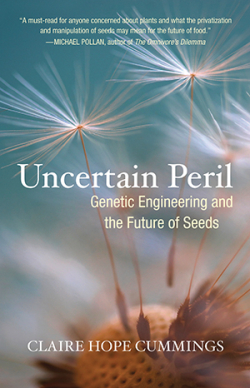
    Uncertain PerilEditor’s note: The following excerpt comes from Claire Hope Cummings’s Uncertain Peril: Genetic Engineering and the Future of Seeds. Cummings argues for striking a balance between storing seeds in vaults and allowing farmers to take an active role in seed-saving strategies. Since this passage was written, the trend toward seeing seeds as an economic, rather than an ecological, value is going in the wrong direction. Consolidation of ownership by corporations has tightened. Now, according to the ETC Group, just six agrochemical corporations control the globe market for industrial seeds.

    All the material needed to propagate the world’s most important agricultural plants has already been collected and is being stored in large and small seed banks scattered all over the world. Some of these seeds are poorly stored in paper bags and jars put on dusty shelves, and some of them are vacuum-packed in foil bags and carefully arranged in state-of-the-art freezers. There are small, local, independent seed collections that serve farmers and traditional breeders, but in general the seeds that are stored in the big seed banks are not local seeds. Most seed banks store material that came from elsewhere, particularly the third world. The traditional farmers who developed our main agricultural crop plants have been engaged in what sociologist Jack Kloppenburg calls “a massive program of foreign aid.” They have donated their seeds, by choice or by expropriation, to governments, quasi-public seed banks, and corporations, which then transform them into their own highly valued property but do not share the benefits gained from these seeds with the people whose skill and knowledge originally developed them.

    There are about 1,400 seed banks in the world. And although there has been an explosion in the number of seed banks, they aren’t necessarily saving any more kinds of seeds. What they’re saving is mostly duplicates of each other’s seeds. In the 1970s there was only a handful of long-term seed-saving facilities in the world. Then collectors went on a worldwide binge, and by 1985 gene banks in 72 countries were holding 2.5 million accessions, or separate samples. By 1996, collections in 137 countries were holding 6.2 million accessions. Fowler calls this “gene inflation,” and he says it’s a real headache, because seed banks are just “trading samples back and forth with each other in a totally uncoordinated and basically unknown way” and creating a lot of “unintended duplication.” There are actually only about 2 million unique seed samples in seed banks, but the rest are millions and millions of accessions.

    Each collection is like a snapshot of the plants collected at any one time. It cannot possibly represent all possible variations of a plant variety, so what is selected immediately narrows the amount of germplasm that gets saved. Many collections store only what was gathered in the last forty or fifty years and thus are limited to what was collectible during that time. That’s how the collections are formed. The other half of the story is what happens to a seed once it is deposited in a seed bank. Each sample—a seed, a leaf, or a stem—also has to survive the process of collection, repeated handling, transporting, and storage. These are all living things, so they are easily damaged and they age and die. All material kept in seed banks has to be constantly regrown, its life renewed. All collections regenerate their germplasm according to their own standards.

    Serious problems can arise when a bank’s samples are regenerated, which is usually done in the open air. At that time the plants are vulnerable to contamination, from any pathogens in the area, from cross-pollination, and from exposure to GMOs. Available growing areas are extremely limited, as are budgets. Sometimes even the most obvious precautions are ignored. In the case of the world’s largest collection of peas, which is housed in a gene bank in Germany, the Munich Environmental Institute reported in 2007 that several hundred samples were being grown out in an open field, only 500 meters from a field that was being used to test transgenic potatoes containing a cholera bacterium and a rabbit virus. These crops ordinarily would not mix, but why take chances, given how little we really know about gene flow?

    There have been unconfirmed reports that some CGIAR collections are contaminated with GMOs. The curators deny it, but it may be only a matter of time. The ETC Group watches CGIAR carefully and reports that it has been “huddling with the biotech industry” to craft a policy response to GMO contamination, which the industry refers to as “adventitious presence,” as if it were unavoidable.

    Inside, seed banks aren’t very complicated. They all basically use cold storage in one form or another. The Doomsday Vault is just one very big freezer. The complexity enters in when it comes to cataloging the collection and devising information systems that provide access and research data. Two of the most important functions of a seed bank are to describe what’s in the collection and to figure out how to retrieve that material and make it useful. The human element comes in when managers and plant experts make decisions about what gets preserved and why. This is where ex-situ seed banks (“ex situ” is the term used for seed banks and collections where reproductive plant material is kept in storage, out of its natural context) cross the line from being conservation-oriented to becoming economic institutions. They are called banks, after all.

    Not everyone thinks that ex-situ collections are the best way to save plant germplasm. Many botanists, farmers, and environmentalists want to see plants preserved where they grow, and they want more attention and support for in-situ seed saving, where plants are preserved in their natural habitat or on farms and in gardens. Some nongovernmental organizations, particularly those that are working to protect the rights of small farmers and that want to keep plant breeding public, are critical of ex-situ seed banks. They’re concerned about the impact that international trade, intellectual property rights, and international aid strategies are having on local seed saving.

    In-situ strategies save plants in the places where they grow best. These efforts can conserve more diversity than gene banks for several reasons. Gene banks tend to focus only on what can be stored. Living collections can grow more kinds of plants as well as their wild and weedy relatives. Local seed saving can tap into local knowledge of little-known and rare varieties. These place-based collections are better tuned into the needs of traditional farmers and tend to specialize in culturally significant plants. Some plant breeders have suggested that in-situ collections do not make their germplasm available to breeders and it’s difficult to find out what they have in their collections. Others point out that these collections are more vulnerable to environmental and political changes than seed banks and that just because they are in situ does not mean they’re free of government or corporate predation.

    The difference is that for in-situ collections, the seeds themselves are the primary value. In seed banks, more value is placed on the usefulness and retrievability of what is in the collection. Seed banking is expensive and not necessarily reliable, so very few seed banks can afford to concentrate on saving what exists for its own sake. Saving something that needs to be saved, or just because it is threatened, is rare. Few major seed banks still take in much wild seed. The one world-class seed bank that saves wild seed is the UK’s Millennium Seed Bank, which just added its billionth seed, an African bamboo from Mali.

    Critics of the Doomsday Vault say that all the millions being spent on it and all the money directed at ex-situ seed banking should be directed toward preserving in-situ collections and that more funding should go toward protecting seed saving by traditional farmers. In the long run, in-situ strategies are the most cost-effective way to save diversity. For thousands of years—in fact, right up to the mid-twentieth century—seeds didn’t need to be “saved” by institutions. The rise of seed banks has occurred at the same time that the role of the farmer has been compromised and corporations have taken over plant breeding. The concentration of ownership of seeds in private hands is part of the reason in-situ seed saving is in trouble.

    The choice of which strategy to support, in situ or ex situ, turns on whether you want to support the economic or the ecological values of seeds. Deciding between the two often depends on whether you see the world as a marketplace or as a community. Fortunately, we really don’t have to choose. The world can afford to do both, at least in theory. The problem arises in the choosing. In practice, big seed banks siphon funding, expertise, and public attention away from other, equally important seed conservation strategies. They often claim the moral high ground and operate in ways that discourage farm seed saving. When they position themselves in such a way as to say that they, and not farmers, are the “best” seed savers, then they are forcing funders to choose them over the farmers. This is the mentality of scarcity, and it is a false choice, as all scarcity strategies are. Both methods of preservation can be useful. However, both need to reemphasize the public interest. The rise of seed banking and the demise of the small farmer have turned agricultural seed saving on its head. The solution lies in putting the farmer, instead of agribusiness, back on top as the primary actor and beneficiary of all seed-saving strategies.


    About the Author 

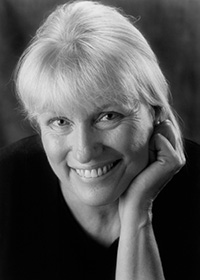
    Claire Hope CummingsClaire Hope Cummings is an environmental journalist specializing in stories about the environmental, health, and political implications of how we eat. For six years she produced and hosted a popular weekly public radio show on food and farming in Northern California, including a news segment called “Eater’s Digest.” She regularly reports on agriculture and the environment for public television in San Francisco. Cummings also writes for periodicals, webzines, and news services. She was an environmental lawyer for twenty years, including four years with the United States Department of Agriculture, then practiced environmental and cultural preservation public interest law. She has farmed in California and in Vietnam. She was a 2001 Food and Society Policy Fellow. Cummings lives in a rural area of Marin County, California. Visit Claire Hope Cummings’s website at www.clairehopecummings.com.

  • Rev Dr William J Barber II

    Photo credit: Pilar Rose Timpane

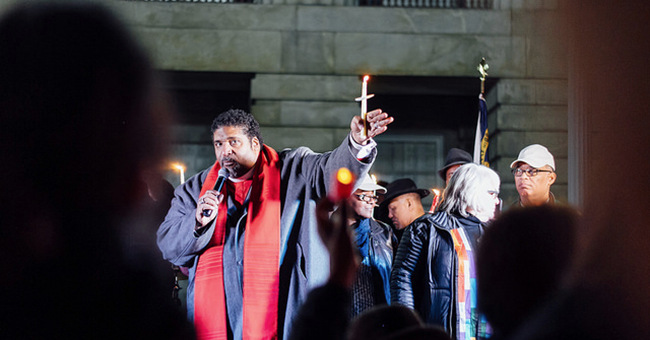
    After twelve years of leading the North Carolina chapter of the NAACP, the Rev. Dr. William J. Barber, II has announced that he is stepping down as state chapter president. He’ll be joining activists and faith leaders across the nation to lead them in a new Poor People’s Campaign, envisioned to advocate economic justice for all across the racial spectrum.

    “The fights for racial and economic equality are as inseparable today as they were half a century ago. Make no mistake about it: We face a crisis in America. The twin forces of white supremacy and unchecked corporate greed have gained newfound power and influence, both in statehouses across this nation and at the highest levels of our federal government…At such a time as this, we need a new Poor People’s Campaign for Moral Revival to help us become the nation we’ve not yet been.”

    They held a press conference on May 15 to discuss plans for the campaign in 2017 and 2018.

    Fifty years ago, Dr. Martin Luther King, Jr. and the SCLC organized the first Poor People’s Campaign with the same goal. Work that Dr. King put into building the multiracial movement came to an end with his assassination. Now Rev. Barber is picking up the campaign where Dr. King left off, which will also continue Rev. Barber’s mission of moral revival to overcome the politics of division and fear.

    “Though Trump’s presidency is the culmination of a violent backlash against the Second Reconstruction that Dr. King and many others led, the future of our democracy depends on us completing the work of a Third Reconstruction today. This is why I hear the Spirit calling us to build a new Poor People’s Campaign.”

    In 2013, Rev. Barber helped launch the Moral Mondays protests, the largest state government-focused civil disobedience campaign in American history. He wrote about this movement and his work on bridging our country’s racial divide in The Third Reconstruction. Additionally, he makes a historically grounded argument that Moral Mondays are evidence of a burgeoning Third Reconstruction. As he made known on Twitter, the Poor People’s Campaign is part of the long-term goal of reviving the heart of democracy.

    Rev Barber TweetRev. Barber’s new ventures in community action and activism prove that he is very much a part of the revolutionary tradition, as Cornel West would put it, of Black prophetic fire.

  • By Roxanne Dunbar-Ortiz and Dina Gilio-Whitaker

    Bears Ears National Monument

    Bears Ears National Monument. Photo credit: US Bureau of Land Management

    Earlier this month, the Bears Ears Inter-Tribal Coalition made a request on behalf of five tribes to preserve Utah’s Bear Ears National Monument for traditional and spiritual purposes. They met with Interior Secretary Ryan Zinke, who understood their request to safeguard the land as a monument. Utah state leaders, however, contended that the coalition was being exploited by special interest groups. Senator Orrin Hatch agreed and went on to say the following: “The Indians, they don’t fully understand that a lot of the things they take for granted on those lands, they won’t be able to do if it’s made clearly into a monument or wilderness.” First Nation leaders have demanded an apology from Hatch.

    Journalist and researcher Dina Gilio-Whitaker, who co-wrote “All the Real Indians Died Off”: And 20 Other Myths about Native Americans with historian Roxanne Dunbar-Ortiz, had this to say about his remark:

    “Orrin Hatch’s comment, while absurd, is unfortunately a perfect example of the dynamic that often plays out in Congress relative to Native American issues. It demonstrates the kind of paternalism that initially formed and continues in Congress’s relationship with Native nations, especially anti-Indian Members of Congress (usually Republican) like Hatch. Lip service is paid to self-determination and sovereignty, but really what guides them is their adherence to the plenary power doctrine, in which they presume the ultimate power over Native lands and lives. And because Native people don’t know what’s best for them, Congress is empowered to make decisions for them—decisions which of course inevitably benefit settler society more than they do Native communities.” 

    Hatch’s statement also feeds into the myth that most Native Americans enjoy free benefits just for being Indigenous. Contrary to this assumption, Native Americans have had to fight for land and rights the US government has taken away from them. The battle goes on today. The following excerpt from “All the Real Indians Died Off” illustrates the little return First Nations receive after settlements over colonial land grabs.

    ***

    All the Real Indians Died OffIndigenous nations have for many decades negotiated with and litigated against the United States for its unfair and many times illegal dealings with them, dealings that have resulted in the massive loss of land and resources. Beginning with the Indian Claims Commission in the 1940s, the United States has paid out billions of dollars in settlements in acknowledgment of its depredations, with Native nations sometimes extinguishing their right to aboriginal title or status as federally recognized tribes in exchange.

    The largest settlements have occurred in recent years, the most significant of them being the Claims Resolution Act of 2010, signed into law by President Obama after more than fifteen years of litigation in the Cobell case. The Cobell lawsuit contended that the federal government as the trustee over Indian lands had for over a century mismanaged the accounts of individual Indians (called IIM accounts) for lands that were leased out for various income-producing activities like timber harvesting, cattle grazing, or mining. The court acknowledged that the accounting was so bad (practically nonexistent) that it would never be possible to accurately account for how much money had not been paid to individual Indians under those leases. After years of negotiations, a $3.4 billion settlement amount was reached, nearly arbitrarily. The settlement was divided into three segments that allocated money to tribal governments to consolidate fractionated interests on reservation lands, payments to individual Indians, and to fund higher education scholarships.

    In a separate but related lawsuit referred to as the “Settlement Proposal to the Obama Administration” (SPOA) in 2012, forty-one tribal governments settled with the federal government after twenty-two months of negotiations for alleged mismanagement of trust assets. The $1 billion settlement was said to “fairly and honorably resolve historical grievances over the accounting and management of tribal trust funds, trust lands and other non-monetary trust resources that, for far too long, have been a source of conflict between Indian tribes and the United States,” according to Attorney General Eric Holder.

    Another large settlement—$940 million—was reached in 2015 after Supreme Court justices ruled in favor of hundreds of Native nation governments. The court affirmed that the Interior Department had failed to cover contract costs for services it was obligated to provide under federal law, such as health care and housing. Under the settlement some tribes would receive as little as eight thousand dollars while others would be entitled to much larger amounts, as is the case with the Navajo Nation, which could receive as much as $58 million.

    The legal settlements are the result of centuries of US dishonor and misdeeds and Native nations pursuing justice in courts of law, not because of a sense of benevolence originating from the federal government. Despite the settlements and other services provided under the federal government’s trust responsibility, Indigenous people as a group consistently top the lists of socioeconomic indicators for poverty, ahead of other non-Native ethnic groups and whites. In 2014 the Pew Research Organization published an article claiming that one in four Native Americans still lives in poverty and that Native Americans are plagued by extremely high levels of unemployment and lower levels of educational attainment than non-Natives.


    About the Authors

    image from www.beaconbroadside.comRoxanne Dunbar-Ortiz grew up in rural Oklahoma, the daughter of a tenant farmer and part-Indian mother. She has been active in the international Indigenous movement for more than four decades and is known for her lifelong commitment to national and international social justice issues. After receiving her PhD in history at the University of California at Los Angeles, she taught in the newly established Native American Studies Program at California State University, Hayward, and helped found the Departments of Ethnic Studies and Women’s Studies. Her 1977 book The Great Sioux Nation was the fundamental document at the first international conference on Indigenous peoples of the Americas, held at the United Nations’ headquarters in Geneva. Dunbar-Ortiz is the author or editor of seven other books, including Roots of Resistance: A History of Land Tenure in New Mexico. She lives in San Francisco. Follow her on Twitter at @rdunbaro.

    image from www.beaconbroadside.comDina Gilio-Whitaker (Colville Confederated Tribes) is an award-winning journalist and columnist at Indian Country Today Media Network. A writer and researcher in Indigenous studies, she is currently a research associate and associate scholar at the Center for World Indigenous Studies. She lives in San Clemente, CA. She is the co-author (with Roxanne Dunbar-Ortiz) of “All the Real Indians Died Off” And 20 Other Myths About Native Americans. Follow her on Twitter at @DinaGWhit and visit her website.

  • By Nicholas DiSabatino


    Wedding of Nicholas DiSabatino and his husband Josh

    Wedding of Nicholas DiSabatino (right) and his husband Josh (left).

    In 2004, I was recently out at my private Catholic high school in Canton, Ohio. Bush would soon be re-elected, and my crush on one Steven Michael Buffington, a gorgeous basketball player with an unfortunate fondness for Ann Coulter’s books, had been publicly revealed to my entire class. I was in hell.

    But on May 17, Massachusetts became the first state to legalize same sex marriage, and for one brief moment, I felt hopeful. Evan Wolfson’s Why Marriage Matters: America, Equality, and Gay People’s Right to Marry had become my Bible, and I refused to shut up about it or the prospect of one day living in a country where every LGBTQ person could love freely and honestly with legal rights and protections.

    I became fixated on Massachusetts. I collected every news clipping I could find about Goodridge v. Department of Public Health and placed them in my scrapbook along with photos of Buffy the Vampire Slayer, the X-Men, and the man I assumed would be my future husband, Clive Owen. Here was a place I could feel welcome. Here was a place I could call home.

    But thirteen years ago, the idea of same-sex marriage was still so alien to people. Even then Democratic presidential nominee John Kerry wouldn’t respond to questions about it in public for fear of upsetting potential voters. Other states would follow eventually, but for me, it felt like forever.

    In 2008, when I was applying for graduate schools, I kept coming back to Emerson College because of their program in Publishing & Writing. But one other reason was simple: marriage. I knew Massachusetts would welcome me as I was and that I could find someone there with whom I could build a life.

    In 2010, I met that man, and on May 29, 2015, about a month before the Supreme Court declared marriage equality the law of the land, I found myself legally married after years of fearing that day would never come.

    I’m so proud to consider myself now a lifelong resident of Massachusetts, a state that has always been a leader for progressive change on various issues for our country, and continues to be so today.


    About the Author 

    Nicholas DiSabatino graduated from Kent State University and has an MA in Publishing and Writing from Emerson College. He joined Beacon in 2012.

  • By Marc Bekoff and Jessica Pierce

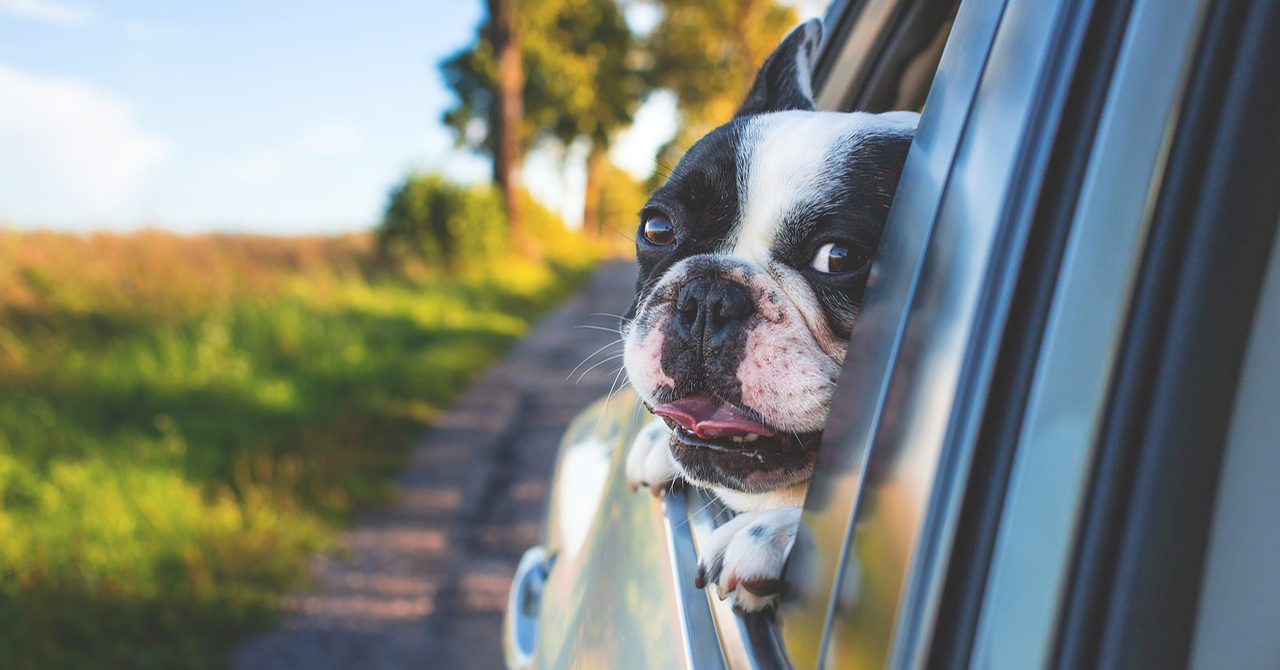
    Dog in the carIf you own a pet, you can’t imagine your life without your beloved dog, cat, fish, or hamster. These companion animals are as much a part of our human families, providing us with comfort, playtime, and a unique emotional bond that transcends words. And while we care for our pets and give them a warm home to live safely, we don’t tend to think of our homes as a constraint on their well-being and freedom. Is it ethical to keep pets at all?

    Renowned animal-behavior expert Marc Bekoff and leading bioethicist Jessica Pierce explore this question, as well as the real-world experiences of these animals and others, in The Animals’ Agenda: Freedom, Compassion, and Coexistence in the Human Age. As we continue learn new and surprising facts about just how intelligent and emotional animals are, Bekoff and Pierce bring to our attention that our growing understanding hasn’t yet resulted in more respectful treatment of them. In the following excerpt from their book, they invite us to reconsider our relationship with our furry friends as they explain what it’s like for animals to go through the pet industry.

    ***

    The number of animals kept captive as pets is mind-boggling. In US households alone, there are an estimated seventy-eight million dogs, eighty-six million cats, ninety-six million freshwater fishes, nine million reptiles, and twelve million small animals. These numbers have been steadily growing for the past four decades. Even in the economic downturn, the pet industry was one of the few that showed continued growth.

    Unlike farming and laboratory research and especially zoos, where good welfare for animals lines up with productivity and quality, the same is not true within the pet industry. Profit is decoupled from welfare, which means that those in the business of selling animals have little economic motivation to care about what animals need. Animals are often sold cheaply, so it isn’t worth the extra cost for a supplier or seller to improve conditions and reduce suffering and death, nor do people have to think carefully about purchasing an animal.

    USDA oversight of animal wholesalers is spotty at best, and rules regulating the care of animals at these facilities are like the rules for agricultural animals: they aim to prevent the most egregious welfare violations, but give little to no attention to positive well-being. Ironically, the class of animals that should, intuitively, be given the greatest protections based on our level of empathy and interest, are actually given relatively little.

    And unlike the other venues we’ve discussed so far, where those handling the animals are generally quite knowledgeable about the species under their care, adoptive pet owners often are total beginners and know next to nothing about the natural history or about the environmental or behavioral needs of a given animal. This is perhaps why the majority of fishes, amphibians, reptiles, and small mammals who are brought into the home live for only a year or two, if they are lucky.

    Because pet owners don’t always know a lot about what a prospective pet may need, they may rely on the pet store for advice, and may assume that what the pet store sells will provide an acceptable habitat for an animal. But pet stores often provide little guidance about how to care for a particular kind of animal and sell products that are inappropriate or inadequate for the animal’s needs. For example, there are no standards for what size cage a given pet requires and some of the cages sold in stores are far too small. A hamster in a US biomedical research laboratory must be allocated a certain amount of space; at your local pet store, you can likely find several cages advertised for hamsters that would fail to meet these standards. To give another example, a recent trend in the pet industry is the nano-tank for pet fishes. These miniature tanks are meant to be so small and unobtrusive that you can put one on your desk (and some even come with a USB port so you can plug in your phone). You can purchase a tank that will provide a pet fish exactly four cups of water in which to live out his or her entire (short) life. This should be illegal.

    ~~~

    All of our companion animals are captive, even those who are our closest companions. But some pets are more captive than others, and some are more companion than others. In rough terms, the more fully able and willing an animal (a species or an individual) is to engage in a companionable relationship with humans, the more freedom, and thus happiness, the animal can potentially experience as a pet. Or, to phrase this another way, if we have to keep animals locked in cages because they would run away or cause harm to themselves or others if we didn’t, they are more captive and will more likely experience the negative effects of confinement.

    The Animals' AgendaIt is useful to distinguish between true companion species (for example, dogs and cats) and those animals (exotics, wild animals, reptiles) who are kept as pets but can’t or don’t often form companionable bonds with human species. We share with a number of other social mammals what is sometimes called the brain’s “social network,” the neurological, physiological, and behavioral systems that facilitate social bonding. This network includes hormones like oxytocin, which “reward” the brain for social bonding. Because these biological and behavioral systems are flexible, they can give rise to social bonding between species. Thus, a human interacting with her dog, and touching her dog’s fur, will show physiological changes such as the release of oxytocin. Likewise, a dog being gently stroked by her owner also has increased levels of oxytocin. We experience pleasure from each other’s company. Animals who can form a bond with humans likely make better companion animals and have greater potential for a good life in human company.

    Might there be some species of animal whom we should not keep as pets if we care about providing them with a “good life”? Or to phrase this another way, if we ask which animals can live in companionable relationships with humans and have a life with optimal welfare and a high degree of freedom, the answer, in our view, is going to be pretty narrow. Jessica takes this up in detail in her book Run, Spot, Run, but we would suggest that exotics and wild animals should simply not be kept as pets; reptiles and amphibians and birds likely cannot be provided with what they need by most pet owners; and fishes have more complex needs than most people realize—even the common goldfish. (As an interesting aside, the high court of India is discussing whether birds have a fundamental right to fly. “It is the fundamental right of the bird,” wrote Justice M. R. Shah in a verdict on the caging of five hundred birds in a Gujarat market, “to live freely in the open sky.”)

    Let’s focus on reptiles for a moment. The University of Tennessee’s Gordon Burghardt, ethologist and world-renowned student of reptile behavior, argues that the best we can do for captive reptiles and amphibians is “controlled deprivation.” In other words, these animals cannot be kept in captivity and still have a good quality of life. Biologist and medical scientist Clifford Warwick, who has written about the morality of keeping reptiles as pets, describes “at least 30 captivity stress-related behaviors . . . regularly observable in most kept reptiles . . . such as hyperactivity and interaction with transparent boundaries, both of which involve persistent attempts to escape, and hypoactivity, which involves efforts to biologically ‘shut down’ from a poor environment.” Reading this reminded Jessica of Lizzy, her daughter’s pet gecko, and Lizzy’s constant clawing at the side of her glass tank, and made Jessica wonder whether she was wrong to subject Lizzy to such a sad existence.

    Clifford Warwick, writing about exotic pets, suggests that biologists and species experts develop and make available to the public a list system for pets. This list would rank various species that one might consider acquiring as easy to extreme, in terms of being able to provide what the animal needs. The list would show which species of animal, “shown through clear and evidence-based assessment,” might be suitable as a pet. Health and welfare needs of the animal, says Warwick, would be defined by the Five Freedoms principles, but would also include public health considerations such as likelihood of transmitting a zoonotic disease.

    This list should not be limited to exotic pets, because even some very common pets like goldfish and hermit crabs are difficult to care for properly and suffer to some degree in any captive setting. We need to look at each species and each individual and ask whether captivity imposes undue burdens. It is likely that the only animals who can live companionably with humans, and have a meaningful life, are those who can live “free,” without the confines of a cage.


    About the Authors 
    image from www.beaconbroadside.comMarc Bekoff has published thirty books, including The Emotional Lives of Animals. He is professor emeritus of ecology and evolutionary biology at the University of Colorado, Boulder, and a former Guggenheim fellow. He lives in Boulder, Colorado. Follow him on Twitter at @MarcBekoff and visit his website. 


    Jessica PierceJessica Pierce, author of Run, Spot, Run: The Ethics of Keeping Pets, is faculty affiliate at the University of Colorado Center for Bioethics and Humanities. She lives in Lyons, Colorado, with her husband, daughter, two dogs, and a cat. Follow her on Twitter at @JessicaPierce7 and visit her website.