• Teacher and student

    Photo credit: Washington State House Republicans

    Writers often show appreciation for their teachers in eclectic ways. For Teacher Appreciation Week (May 8-12), we have two short encomia from master teacher Bill Ayers for his favorite teachers, and one very short one from the ever outspoken Marianne Leone about her teachers.

    If you can do a one line appreciation for a teacher who’s meant a lot to you, (positive or not so much) we invite you to add it in the comments section.

    ***

    From Bill Ayers

    William John Thomas Mitchell—a.k.a. W.J.T. Mitchell—is the Gaylord Donnelley Distinguished Service Professor of English and Art History at the University of Chicago, renowned editor of Critical Inquiry, and widely recognized as a leading force in visual theory. Tom is an intrepid risk-taker. He brings fresh enthusiasms and an active curiosity to every class and to each encounter. Never routine, never on auto-pilot—each experience becomes in his gaze a happening all its own. His classes are unpredictable, often wild, because his rules for teaching include taking nothing for granted, and refusing to answer any question or problem on its own terms. His students come to him as question marks and exclamation points, but he refuses, steadfastly, to hammer them into dull and boring periods by the end of the term. Instead, each one emerges from Tom’s classes somehow transformed—now a neon question mark, or as an exploding exclamation point.

    Hal Adams was a quiet, modest man who taught literacy—mostly to adults—in the unruly cracks of our fractured and far-flung society. His relentless pursuit of an effective teaching practice that would allow his students to become more purposeful and more powerful in their projects and pursuits has had an impact on generations of teachers, from the elementary grades through graduate school, and from kindergarten to adult education. Hal was a staunch supporter of complication, a strong enemy of the simple fix or the idea that what brings forth positive action in one setting will do the same in others. He believed in perpetual uncertainty and constant learning, tolerance for confusion, improvisation and experimentation, spontaneity, particularity and the inevitable flux that accompanies social learning. Hal Adams was a consistent moral guide to his students and a mentor to many of his colleagues, including me. 

    From Marianne Leone

    Sister Andre’s front-teeth had a space between them that was mesmerizing. Her stare could melt steel and she suffered from a Captain Queeg-like dissatisfaction with disorder. At least three times a day her face would freeze into a rictus of pained disbelief and she would shout, “The desks are out of alignment!” That was our cue to leap up and make sure our desks formed a straight line that she could check with a ruler. Sister Andre’s demented beaver face would then finally relax into her normal mask of rage.

  • By Rashod Ollison

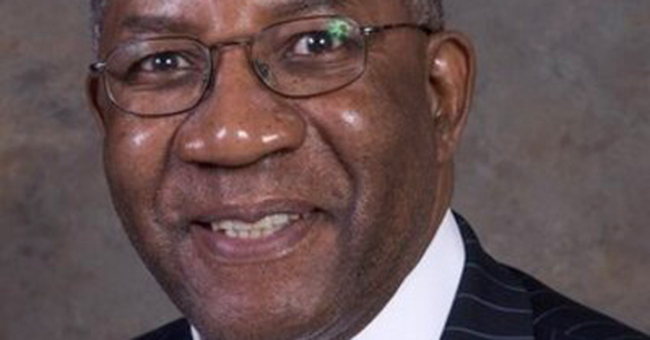
    Judge Wendell Griffen

    Photo credit: Judge Wendell Griffen/Twitter

    It didn’t surprise me to see him in the news.

    Back home in central Arkansas where I grew up in the 1980s and ’90s, Judge Wendell Griffen has long been a respected presence in the local press. But this week as he faces impeachment for a Good Friday protest against the death penalty, in which he lay strapped to a gurney in front of the Governor’s mansion, Griffen’s story has made national headlines. He was featured in a segment on Democracy Now! that aired on Monday, May 8.

    A regular follower of the program, I was shocked to see the still shot of Griffen’s face in my Facebook newsfeed, the Democracy Now! link shared by my sister Reagan. He’s clean-shaven these days, his face fuller, hair silver. It jars me to see an aged but still-robust Griffen, because in my mind I clearly see the man he was a quarter century ago whose presence is pivotal in Soul Serenade: Rhythm, Blues & Coming of Age Through Vinyl, my memoir Beacon published last year.

    Back then, Griffen was bearded with hardly any gray, slim, and in his thirties, but seemed older with his dignified ways. Griffen was one of the city’s most successful and visible black attorneys at the time, and he also was the pastor of my church, Emmanuel Baptist over on 12th Street, the spiritual home for Mama, Reagan, and me shortly after we moved from Hot Springs to Little Rock at the dawn of the ’90s. I had just entered my teens. Bloody bullet-ridden bodies of boys my age and a few years older appeared often on the local nightly news, victims of gang wars that plagued the city.

    I don’t remember back then Griffen using the pulpit as a platform for political activism. There seemed to be a distinct separation of church and state, so to speak. He and his wife Patricia, a well-known black clinical psychologist in Little Rock, and their sons Martyn and Elliott, lived on the moneyed west side. But Griffen wasn’t out of touch with the devastation on the gritty East End or in the neighborhoods that ringed Emmanuel, streets that had gone from safe to seedy in a generation. Instead of appropriating hip-hop lingo and affectations to appeal to us young folks, a condescending method used by flashier preachers back then and today, Griffen was something of a throwback even in the 1990s.

    He had been raised among sharecropping elders, folks who trusted the Earth and whose relationship with God was intimate and unassailable. Old folk ways and biblical mythology informed almost every aspect of their lives, and Griffen never forgot those rustic beginnings. But he is also a sophisticate and an astute intellectual whose preaching style, deliberate and methodical, made his sermons feel as though he were teaching a class on the Constitution. That full-bodied Southern breeze sweeping through his burnished baritone, Griffen always engaged the congregation, a mix of haughty professionals and down-to-earth working-class folks that packed Emmanuel every Sunday.

    Soul Serenade pbWhat some may see as a reflection of “respectability politics”—how Griffen constantly and firmly corrected the boys’ posture, admonishing us to pull our pants up, to enunciate our words and project our voices—was really an act of love. Correcting speech and posture wasn’t to privilege the white gaze or make “them” see us as any less “inferior,” which was a lie anyway. And their lie never had anything to do with us, he said. You announce your self-worth to anyone as you enter a room. You come from strong people who died so that you could live. So walk like you’re somebody; that’s a way of loving and respecting yourself. Shoulders back, gaze direct. Look a man in the eye when you shake his hand. Grip it tightly. “Let them know who you are,” he’d say.

    That’s one of the most memorable lessons I took from Griffen. Several other impressionable boys at Emmanuel had no fathers at home. Every Sunday, Griffen exemplified hard-earned “success”: looming over the Bible in the pulpit, dressed in a tailored suit, speaking expertly, confidently with one hand in his pocket, a dignified sophisticate who never forgot his country roots. At that point in my life, with my own father strung out on drugs and missing in action, I needed to see a black man “be somebody.”   

    Away at a creative and performing arts camp in the summer of ’92, I was isolated and lonely. Griffen was busy at a meeting for federal judges in Minneapolis. Still, he mailed me a four-page letter, written on both sides of the stationery from Hyatt Hotels & Resorts. It was the most affirming letter I’ve ever received: “I am convinced that your writing ability and spiritual insight are God-given gifts,” he wrote. I was fourteen, insecure and depressed. Nobody had ever written such beautiful words to me. I copied the entire letter in Soul Serenade. While on tour with the book (Griffen attended two of my appearances in Arkansas) I couldn’t bring myself to read that portion aloud. It still makes me cry.

    July 23, 1992

    Hello Rashod,

    I hope that you receive this letter in good health and spirit as you continue the wonderful adventure afforded you to participate in the creative writing program. I’m writing from Minneapolis, where I am attending a meeting of federal judges, so I know how being away from home and familiar sights and sounds can tear at the heart. In fact, I have known that experience for quite a while now having experienced my first such trip when I was 8 years old. I still get homesick, believe it or not. And of the several hundred people here I am one of less than 5 Black lawyers. Yes, I know very well how tough it is to be away from home in your situation.

    Please let me share some Bible truths that sustain and strengthen me in any way of faith. I do so hoping that you will be strengthened and comforted.

    1. God knows how you feel! Your anxieties, fears, and homesickness are well-known to Him. Since Adam and Eve had to face the alien world outside the Garden of Eden, God has sustained and guided humanity.
    2. Your experience is part of God’s mission for your life. God’s plan for your life includes granting you the insight to write as well as giving you opportunities to grow as a writer and person. As painful as this may seem now, God intends for you to grow as a person and writer in many ways that cannot happen if you never leave home and family. You must accept the challenge of confronting homesickness and its load of anxieties as part of the pilgrimage you take with God in faith.
    3. You can trust God’s presence and power in every setting—even in Mena! After Moses died, God called Joshua to lead Israel. God’s words to Joshua at Joshua 1:1–9 have comforted me many times. At Joshua 1:5–6 God is quoted: “Just as I have been with Moses, I will be with you; I will not fail you or forsake you. Be strong and courageous . . .” And at Joshua 1:9, God said to Joshua: “Have I not commanded you? Be strong and courageous! Do not tremble or be dismayed, for the Lord your God is with you wherever you go.” Rashod, you are not alone. You are not abandoned. Trust God’s presence and power for strength to grow in this adventure of faith.

    I am convinced that your writing ability and spiritual insight are God-given gifts. I believe that God is using you and those gifts to bless people. I believe that you can not only grow as a person and writer through attending this writer’s retreat, but that God will also use you to bless others in the process. Will you trust God to empower you to receive that growth and to be that blessing?

    I will close this letter now before I bore you too much. Before I do, let me thank you for sharing your anxiety and homesickness with me and with your family at Emmanuel. Let me encourage you to follow Jesus’ example at Gethsemane when he prayed and was strengthened. Trust God’s mission. Trust His promise to be present and powerful with you. And expect His loving strength as you continue this adventure in your pilgrimage. My prayer for you is that God will give you His peace and the assurance of His presence in this experience, and always, and that you will someday recall this experience with great joy! May God strengthen you!

    Your pastor and friend,
    Wendell L. Griffen
    Ephesians 3:20–21

    Seeing Griffen on Democracy Now! and the protest pictures of him strapped to a gurney in front of the Governor’s mansion, I can’t imagine the man I knew thirty years ago doing such a thing. He was much younger then, accomplished but still climbing in his career and had two young sons, now well-adjusted young men. But that “prophetic fire” still burns in him, crackling even more with age. He still stands firmly in what’s morally sound, giving voice to the voiceless in Arkansas, including openly embracing the LGBTQ community, a bold stance for such a high profile black man in the conservative religious and legal circles of Arkansas. On the gurney several feet away from the governor’s front door, Griffen lay to stand in his truth, dignified in his defiance, motivated by love. That’s the man I always knew.


    About the Author 

    image from www.beaconbroadside.comRashod Ollison is an award-winning pop music critic and culture journalist. He has been a staff critic and feature writer for the Dallas Morning News,Philadelphia Inquirer, Journal News (Westchester, New York), Baltimore Sun, and Virginian-Pilot. He also wrote a music column for Jet magazine. A native of Little Rock, Arkansas, Ollison lives in Virginia Beach. Follow him on Twitter at @rashodollison and visit his website.

  • Pointillist BobYou’ve read our classics, such as Viktor Frankl’s Man’s Search for Meaning, Octavia Butler’s Kindred, the work of Martin Luther King, Jr., and James Baldwin’s Notes of a Native Son; and many of you know our current list, featuring books by Cornel West, Lani Guinier, Anita Hill, and Christopher Emdin—books that speak to the condition of the world, and add to our understanding of urgent social issues. Whether it’s the environment or race, cultural or class dynamics, we publish all our books with a purpose. Now you can meet the people who work at Beacon Press in our blog series “Beacon Behind the Books.” Each month, we’ll introduce to you a member of our staff and give you a behind-the-scenes look at what goes on at our office.

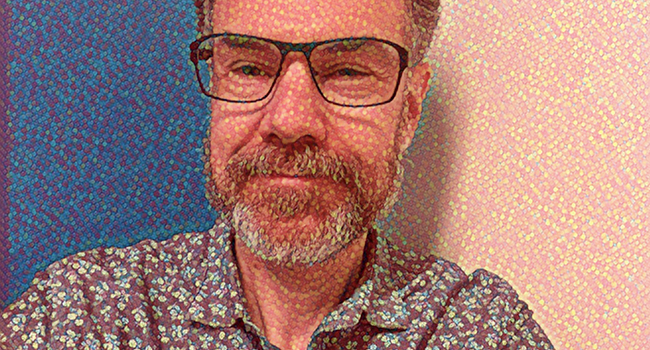
    For the month of May, we introduce you to Bob Kosturko, our creative director! 

    What drew you to publishing, Bob? How did you find your way to Beacon?

    I came to Publishing via a rather circuitous route. It began at Rutgers College of Pharmacy where I was accepted with a full scholarship. After two and a half years in the program, I had one of those “what am I doing here?” moments. After some serious deliberation, I decided to follow my true passion: Art. Three years later, I finally graduated from Rutgers University with a BFA in Studio Art and Art History. I did a brief stint with an advertising studio in NYC, which led to a position designing coffee table books for a book packager. From there I went on to work for Random House, Little, Brown and Co. and Houghton Mifflin. In 2004, I was hired by Helene Atwan as the Creative Director at Beacon Press.  

    How much of what you learned in college and/or graduate school have you found vital to your work?

    Quite a lot, actually. While studying at Rutgers University, I took as many fine arts classes as I could: painting, drawing, printmaking, photography, even some very basic computer animation. Although Rutgers didn’t have a Design program per se, I did take classes in typography, and visual problem solving.

    What current/upcoming projects are you excited about?

    Redemption: The Last Journey of Martin Luther King Jr. by Joseph Rosenbloom. Also The Fearless Benjamin Lay: The Quaker Dwarf Who Became the First Revolutionary Abolitionist by Marcus Rediker

    What’s your advice to someone interested in entering the publishing field as a designer?

    Don’t start in Pharmacy School! But seriously, take as many visual art courses as you can. Even if you don’t intend to become a painter or a sculptor or a filmmaker, all of these disciplines provide you with unique ways of looking at the world. Round out your coursework with classes in typography, art history, creative writing. Then get an internship anywhere you can. So many publishing skills are learned on the job and aren’t taught in the classroom.

    What helps you focus when you’re at work?

    Listening to music has always helped me concentrate. It has to be instrumental music, though, because vocals are distracting, especially when I’m reading. Jazz, classical, ambient, film scores, post-rock. Anything sans vocals. 

    Favorite thing about Boston?

    The abundance of culture and history. Boston has so many world-class concert halls, museums, sports venues, and historic buildings. If I had the time and money I’d be out every night of the week.

    Best vacation destination?

    Paris, without a doubt.

    What are you reading right now?

    I just finished Margaret Atwood’s The Handmaid’s Tale for the first time. There’s been a lot of buzz about the Hulu miniseries, and even though I’ll probably watch it at some point I always like to read the book first.

    In an alternate universe, what career would you have?

    Musician. I read music, sing in my church choir, and play a bit of guitar and keyboards.

    Favorite book ever?

    Hard to say, but if pressed I’d have to go with J.R.R. Tolkien’s The Lord of the Rings trilogy. I’ve read it three or four times. 

    Name three non-office items on your desk and their significance to you.

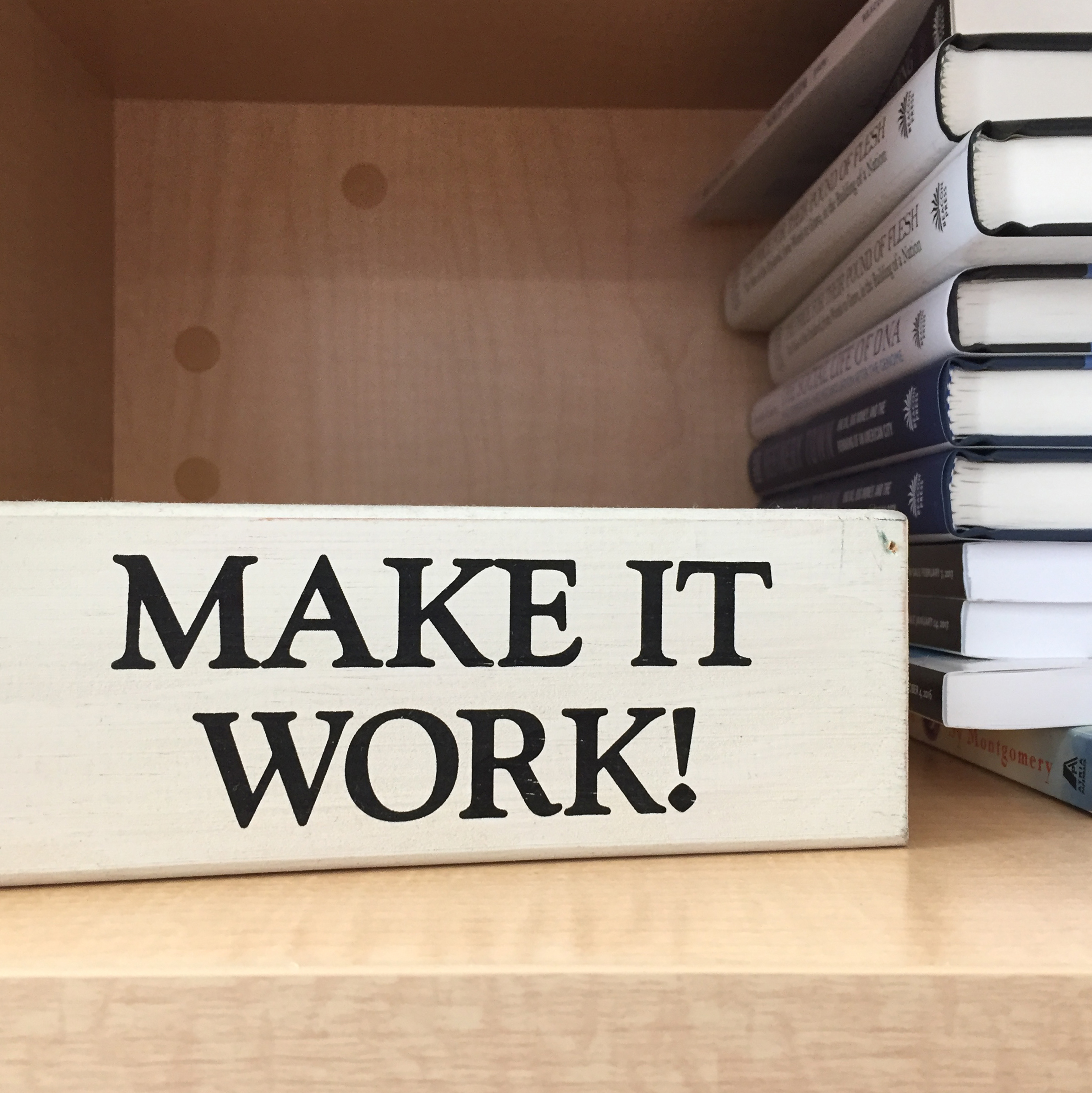
    A little wooden sign that reads “Make it Work!”, Tim Gunn’s infamous catchphrase from Project Runway. I was a big fan of the early seasons of the show. Watching the designers/contestants run around a hardware store or a candy shop in search of something, anything that could be turned into an article of clothing was quite inspiring. I admired their resourcefulness.

    MAKE_IT_WORK

    A homely piece of pottery affectionately known as “The Honey Pot.” (It was passed down to me by Beacon’s previous Production Director.) I try to keep it well stocked with treats for the staff. Beacon runs on sugar and chocolate!

    HONEY_POT

    A wrought iron letter opener with a handle in the shape of a fiddlehead. It was forged by a blacksmith on Cape Cod. It’s a nice reminder of a simpler time when most things were made by hand, not in factories.

    FIDDLEHEAD_BK


    About Bob Kosturko 

    Bob Kosturko joined Beacon Press in 2004. He especially appreciates the mission-driven aspect of the press’ publishing program. Bob and his wife Candace moved to Boston from Belleville, New Jersey twenty years ago. They live in a very small Beacon Hill condo with their quirky cat Chester. 

  • By Bill Ayers

    Tucker Carlson

    Tucker Carlson. Photo credit: Gage Skidmore

    Fox News made the headlines last week when eleven current and former employees filed a class-action lawsuit against the network for racial discrimination. This was less than a week after the network ousted political commentator Bill O’Reilly for accusations of sexual harassment. Fellow commentator Tucker Carlson has since replaced him. In a time when Fox News is under scrutiny for its regressive and discriminatory conduct, it’s amazing to recall that some of the network’s stars once rubbed elbows years ago with Bill Ayers and Bernardine Dohrn.

    None other than Tucker Carlson entered an online fundraising auction for two items Ayers and Dohrn were donating: choice seats at a Cubs game and dinner for six cooked and hosted by Ayers and Dohrn. When Carlson won the dinner, outrage poured out on the blogosphere. Ayers was excited and saw it as an opportunity to open a dialog. Some friends of Ayers and Dohrn clamored to have a front-row seat to ‘dinner theater.’ Other friends and colleagues, however, argued that they should never comingle with the likes of Fox News commentators. Or they accused Ayers of being provocative and stupid, and faded into the background. But Ayers and Dohrn still made the preparations and welcomed their guests. Carlson brought along Jamie Weinstein, Andrew Breitbart, Matt Labash, Audrey Lowe, and Buckley Carlson. As the following passage from Public Enemy: Confessions of an American Dissident shows, no one could have predicted how the soirée would turn out.

    ***

    And then they arrived. Let the rumpus begin!

    Spirited greetings and introductions all around, laughter at the improbability of the whole thing, a flurry of separate conversations as wine was poured and glasses lifted. I proposed a toast to Tucker, thanking him for his generous gift to the Public Square and reminding everyone that this was a dinner party, not an interview or a performance (of course, dinner is always a performance, and this one more than most). Then they were seated at the table, first course served.

    Friends had warned us that they would try to create a gotcha moment, but not much happened. Tucker and Bernardine gazed out the windows for a time at the Chicago skyline and discovered a shared Swedish background (Christmas cookies!). Jamie Weinstein acted the intrepid cub reporter, notebook in hand, copying the titles of books from the vast bookshelves (Look, Solzhenitsyn! And Vargas Llosa!), questions flying from him in a steady stream, but perhaps his manic, in-your-face manner was the result of jet lag (“I’m just off the plane from Israel,” he said half a dozen times. “My third trip!”). Carlson and Breitbart had been on the primary campaign trail, and each expressed deep disdain for the Republican candidates seeking the presidency. When Jamie complained that none was a bona fide conservative, I asked him to define “conservative” for me.

    “Small government,” he said.

    “That’s it?” I asked.

    “Yes.”

    It certainly makes thinking easier, if not completely beside the point. I pointed out that Somalia, to take an obvious example, was a small-government paradise.

    Tucker told me at one point that his kids went to the same boarding school he’d attended, and asserted that the only difference between his kids’ school and a failing Chicago public school was that at the prep school they could fire the bad teachers. I laughed out loud, and he smiled weakly.

    Meanwhile, at the other end of the table, Bernardine was saying that the United States should close all its foreign military bases immediately, begin to dismantle the Pentagon, the CIA, and NATO, and save a trillion dollars a year at least—a small-government proposal if ever there was one. The boys weren’t buying it at all, clamoring for invasions here, aggression there, violence (normalized, routine, and taken for granted) practically everywhere. Andrew Breitbart, humid and heating up, argued noisily for US military interventions in Iran and Syria and, then, egging himself on, in North Korea and China(!)—on humanitarian grounds, of course—while Bernardine, that notorious poster child for violence, steadfastly urged nuclear disarmament, withdrawal from occupations, peace on earth, goodwill toward all. It was utterly surreal.

    I gave each guest a swag bag with candy kisses and one of my books, autographed. Tucker took my comic book about teaching, and I signed it “To my new best friend!” I had bought his book Politicians, Partisans, and Parasites, with an epigraph (returned to again and again in the text) from Larry King: “The trick is to care, but not too much. Give a shit—but not really.” I asked him to please autograph it for me. He wrote: “Thanks for the fantastic ribs! Please read every word of this— the truth lies herein.” Perhaps he was being ironic as well.

    As they were leaving, Breitbart told Bernardine that he was thrilled to know her, and he noted that we had at least one thing in common: we were all convenient caricatures in the “lamestream” media.

    It was all over in an hour and a half. Andrew Breitbart tweeted from the taxi ferrying them back to their hotel: Shorthand: Ayers, a gourmand charmer. Dohrn, hot at 70, best behavior. Potemkin dinner. Pampered by their coterie.

    https://platform.twitter.com/widgets.js

    He elaborated in a long radio interview later that night from his hotel bar: “We were exposed to the two most sophisticated dinner party-throwers in the world. . . . This was their battlefield and they couldn’t have been more charming. . . . I think I’m going to try and reach out to Bill Ayers and try and figure out if I can maybe do a road trip across the country with him—him and me—and he can show me his America, and I can show him my America, and maybe we can film it and let people decide. Because I’ve got to be honest with you, I liked being in the room with him, talking with him.”

    That road trip was a fun if unlikely prospect, but a few days after our dinner it became impossible—Andrew Breitbart collapsed and died outside his home at the age of forty-three, too young.

    Life—short or long—always ends in the middle of things.


    About the Author 

    William Ayers was Distinguished Professor of Education and Senior University Scholar at the University of Illinois at Chicago. He is the founder of the Small Schools Workshop and the Center for Youth and Society, and the author of many books including Teaching Toward Freedom, A Kind and Just Parent, Fugitive Days, and Public Enemy. Follow him on Twitter at @WilliamAyers.

  • By Eileen Truax

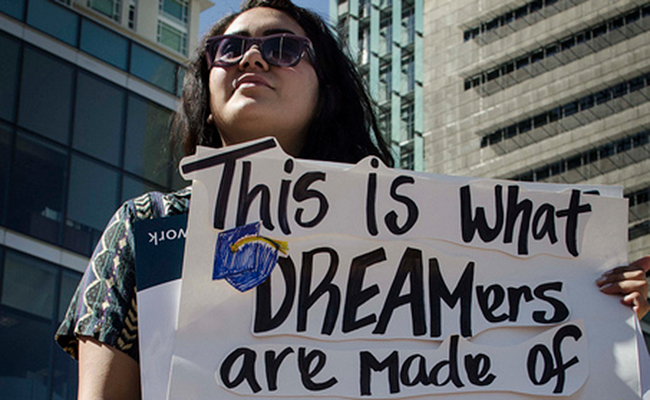
    Immigration March, San Francisco, October 5, 2013.

    Immigration March, San Francisco, October 5, 2013. Photo credit: Annette Bernhardt

    The protests of this year’s May Day, International Workers’ Day, are promoting more causes in addition to labor justice. Activists of all stripes are also marching for environmental justice, indigenous sovereignty, and LGBTQ issues—just to name a few. In particular, crowds are expected to attract many protesters who oppose the Trump administration’s crackdown on immigration. But organizers are saying that some would-be marchers are afraid to join the rallies because of their undocumented status. DREAMers, the undocumented immigrants who came to the US as children and grew up here, have learned recently that DACA, the Deferred Action for Childhood Arrivals, is not a guarantee against deportation.

    In Dreamers: An Immigration Generation’s Fight for the American Dream, journalist Eileen Truax illuminates the stories of the men and women fighting for their right to live here legally. They are living proof of a complex and sometimes hidden political reality that calls into question what it truly means to be American. The following excerpt gives us a glimpse of the persistent struggles DREAMers face with the story of Elioenai Santos, a journalism student whose family migrated from Veracruz, Mexico to California in the early 1990s.

    ***

    Elioenai Santos’s first memory is of himself as a little boy, crying, as an adult tries to give him a stuffed animal to soothe him. Elioenai associates this memory with coming to the United States at two years of age. Originally from Orizaba, in the eastern state of Veracruz, Mexico, his parents decided to migrate, as almost all migrants do, in search of a better future for their children. The first to make the journey was his father. Although he had wanted to be an engineer, he could not afford to go to school, and once he became a father he decided to try his luck in the United States. He arrived in California in the early 1990s and got a job working in a bodega. A few months later his wife joined him with Elioenai. Two years after they arrived, his parents gave Elioenai a little brother, a US citizen, and his mother worked taking care of other people’s children as her own grew up.

    Tall and slim, with fair skin, black hair, and delicate features, Elioenai has a nostalgic air about him. Without sadness or bitterness, he tells me of his early childhood, when the culture shock upon arriving in the United States gradually gave way to a dawning realization of his undocumented status and what that meant. “My parents talked about Veracruz,” he says, “but I never felt like that was my place.”

    At home the family spoke only Spanish, so when he went to school he had to take English as a Second Language (ESL) classes. Other parents of undocumented children tried to shield them from the harsh reality of their legal status in an attempt to protect them, but when Elioenai was ten and asked his mother if he could fill out an application that required documentation he did not have, his family told him plainly of the risks he faced and what his options were. “Every undocumented person has to be prepared for the worst,” his uncle told him. And “the worst” always meant being deported.

    The approximately eleven million undocumented people living in the United States come from Mexico and other Latin American countries, as well as from Asia, Africa, and Europe. Undocumented people work without contracts and without worker protections, for salaries that are not always fair, at a distinct disadvantage compared with other workers, which makes them vulnerable to exploitation by their employers.

    But the lack of legal residence has repercussions beyond the workplace. The life of an undocumented immigrant is affected in every facet because it must be lived in the shadows. Undocumented people cannot drive legally because they are not eligible to get a driver’s license. They cannot travel freely within the country because sooner or later, they will be asked for identification that they do not have. They cannot receive most social services, because as far as the public sector in the United States is concerned, they do not exist, with one notable exception: undocumented immigrants can apply for and receive a taxpayer identification number (TIN), which allows them to submit tax returns and tax payments to the government. The Internal Revenue Service is the one federal agency that welcomes the contributions of undocumented immigrants with open arms.

    In spite of these legal limitations, we know that some undocumented immigrants do drive, traveling across the country in search of work, and they do find a way to somehow receive the most basic services necessary to go about their daily lives and provide for their families as best they can. At issue is when they are identified as undocumented by the authorities and are subject to deportation. Then the life they have built over the course of one, five, ten, or twenty years goes up in smoke, becoming a dream out of reach, viewed from the other side of the border fence or from a city they had last seen years ago disappearing from view from an airplane window.

    DreamersAlthough during his 2008 presidential campaign Barack Obama clearly stated his intention to pass comprehensive immigration reform once elected and resolve the untenable situation of millions of undocumented immigrants—including, of course, the children of those families, the Dreamers—in practice, the Obama administration has been the most brutal in recent history. Since he arrived in the White House in January 2009, on average 400,000 undocumented immigrants have been deported each year, separating families and creating a climate of deep uncertainty in immigrant communities. Although the administration maintains that most of the people who have been deported had criminal records, and that those cases are given priority in deportation proceedings, Transactional Records Access Clearinghouse (TRAC), a data-research organization at Syracuse University, found that as of 2013 less than 12 percent of those deported had any kind of criminal record.

    If life is hard for undocumented families, it is even more challenging for young undocumented people who live in mixed-status homes and see how other members of their family enjoy privileges that they do not have. For example, Elioenai cannot get a driver’s license, so while his friends from school or work can hop in their cars and take off on the freeways of Los Angeles, he depends on his younger brother to drive him around. Or, more often than not, he drives himself, knowing that if he gets pulled over, he runs the risk of being deported.

    “The first time I got pulled over, I felt like my heart stopped,” he tells me, remembering his terror. It was a sunny morning, and we had arranged to meet on one of the lawns of California State University, Northridge, where Elioenai studied journalism. The university was on break then, so the campus was practically deserted. Elioenai took me to the building that housed the offices of El Nuevo Sol, the Spanish-language newspaper put out by the university’s journalism school and for which he served as the editor. We couldn’t go into the office because the paper was closed during the break, so we went back outside and walked through the campus as he looked for a good place for us to sit down and talk. Among the many patios, outdoor tables, and benches along walkways that he could have chosen, Elioenai settled on a cement esplanade bordered by slender trees in front of Recital Hall, an imposing glass building that is home to the Valley Performing Arts Center. With our backs to the impressive theater, he told me what it’s like to be undocumented, pulled over for a traffic stop, and found to be driving without a license.

    “I felt like I was in a fog,” he says. “I was confused, scared. The police officer asked to see my license. I said I didn’t have one. He asked to see some other identification, and all I had was the matriculate [the form of identification the Mexican government administers through its consulates and embassies to Mexicans living abroad, which is accepted by US banks and agencies] from the Mexican consulate. Then he knew what was going on, and after making me sit there for a while, he asked me to call somebody who could drive the car for me.

    “I was lucky that time,” he goes on. “But living like that is a problem. It’s a real blow to your self-esteem, because you always feel like you are somehow less. It’s awful to always feel like you’re inferior. You see your friends driving around, traveling to other countries, while I don’t have money to go to school; I can’t get any financial aid from the government. My parents support me, my friends support me, and I work, but every day is a financial struggle just to go to school.

    “Sometimes people don’t understand what being undocumented means,” he says. “People don’t know who we are, and they think of us as criminals. We are more than that. I have friends who call me ‘wetback’ just as a joke and say, ‘Go back to your country.’ But I’m twenty-two years old, and I have been here for twenty. This is my country. If I could talk to the politicians, I would say, ‘Look us in the eye. We are not faceless people. We love this country.’”

    Elioenai still had a year to go until graduation. I asked him what would happen after he graduated.

    “I see two options,” he says. “If the DREAM Act passes in the next few months, then I have a future. It’s a ray of hope, and I believe in it. If it doesn’t pass, then I’ll have to fight for my future. It’s going to take more work and it will take longer, but I’m going to do it. It’s not a question of if, but when.”


    About the Author 

    Eileen TruaxOriginally from Mexico, Eileen Truax is a journalist and immigrant currently living in Los Angeles. She contributes regularly to Hoy Los Angeles and Unidos and writes for Latin American publications including Proceso, El Universal, and Gatopardo. Truax often speaks at colleges and universities about the Dreamer movement and immigration. Follow her on Twitter at @EileenTruax.

  • By Angela Maria Spring

    Duende District Bookstore. Angela Maria Spring (right) with Daisy Hernández (left)

    Duende District Bookstore. Angela Maria Spring (right) with Daisy Hernández (left). Photo credit: Angela Maria Spring

    Sometimes it takes a cataclysmic event to unearth who we are. Even though I’ve been a bookseller of color for sixteen years, I didn’t fully realize until last year how great the need was for an inclusive bookstore curated and shaped by a majority of people of color. I started Duende District Bookstore this past January to celebrate the power of a diverse community expressed through the bookstore’s space for books, learning, and discussion for all voices. 

    But even this began somewhere. So I want to share how the cracks in my foundation formed nearly years prior, when I read a book by Daisy Hernández.

    I can’t talk about building Duende District Bookstore without talking about Daisy’s memoir, A Cup of Water Under My Bed. Her book is the compass that led me to this road.

    Working at Politics and Prose, one of the highlights is being able to host authors who you admire. As both a veteran host and often the only Latino on staff, I tried to claim as many of the few Latino-centric author events we had each year. It was important for me to welcome them into the bookstore because the space, like so many others around the country, was very white.

    One of those events was for Daisy, so I took A Cup of Water home with me, intending to read just a few chapters the day before her event. I opened her book that Saturday afternoon and couldn’t stop reading until I reached the last page while crying.

    I promptly called my mother to tell her I finally read a book by someone close to my age who shared my experience growing up trying to embrace two worlds—one white and the other Latinx—and how it shaped us as fragmented Americans.

    Daisy’s book had dug up so many experiences and memories I hadn’t examined in years, memories that had continued to pile upon me. When I said, “I finally understand where I come from,” I could almost feel my mother’s smile on the end of the line, so far away from Washington, DC.

    “That’s how I felt when I read When I Was Puerto Rican [by Esmeralda Santiago],” she said.

    Daisy’s story has parallels with mine: The relationship of author and bookseller, the duality of our family’s origin countries, the in-between identities (hers from being queer, mine from being half white).

    Daisy’s mother is from Colombia. My mother is from Panama. Daisy’s father is from Cuba. My grandfather is from Puerto Rico, so we hold island in us, too.

    But sometimes our experiences are so divergent, it’s startling. My Panamanian family comes from an upper-middle class background in Central America. My great-grandfather was one of the Panama Canal engineers and much of the country’s original infrastructure had his hand in it. Education for his children was provided and paid for.

    Such privilege led his children to make rash decisions and protected them too much from the world. When he was gone, my grandmother didn’t have a husband, but she had a child and couldn’t make enough money to support them both working for the canal. My grandmother, whose mental illness became apparent to us much later, felt so paranoid and alone without him that she took my mother to New York City without a word to anyone.

    The shock for the nine-year-old girl my mother was must have been profound. She spoke no English, had her access to nearly her entire family cut off overnight, and then my grandmother promptly send her to a Catholic boarding school.

    A Cup of Water Under My Bed“If white people do not get rid of you, it is because they intend to get all of you,” Daisy writes early in her book.

    My mother was not allowed to speak Spanish or the nuns would strike her with a metal ruler. She learned from books. This story is an essential thread holding together my own origin story.

    I can see so clearly how when my white father disapproved of my family speaking Spanish to me and my brothers, my mother still had that little girl inside of her that was forced to excise her language and culture takeover. We must exist in the white American space exactly as instructed—or else.

    This is the fear that many of we people of color hold deep in our bones. My mother and I were separated from our family’s language, because that is the first step to being allowed to be “American.”

    “White women dream for you,” Daisy writes. She mentions a teacher who tells her to visit Scotland if she goes to Europe. Most of our mothers have never been to Europe.

    Latinos travel south, to visit family, take with them suitcases full of clothes and trinkets, then come back to the States with bottles of rum, packages of tamarindo or galletas. Mama once came back from Panama with iguana eggs, which horrified me and my brother and we demanded to know how she could ever eat such a thing.

    My mother’s own children showing her how other she is! But mama could hit back, too. Sometimes I would say something to her in mangled Spanish and she would laugh. Then correct me. It’s too easy to shame the people you love most.

    Like Daisy, I did have some white teachers through school who helped shape my dreams of being a writer, to reach for something very unpractical and more. But more importantly, so did my mother, who has her doctorate and walls of bookshelves. She may not have been to France yet, but those books took me everywhere I needed to go.

    Mama always read my poems and took me to the bookstores each week. She also taught me how to live in the spaces that are not meant for us because I could slip into them more easily with my pale skin. It was her way of protecting me, of making sure I succeeded. And it’s not her fault that I bear the scars of living between two cultures and languages.

    It is only recently that we’ve started hearing, “Decolonize your mind.”

    But it’s time. It’s time to unlearn everything we people of color were taught. It’s time to make our own spaces like Duende District, a bookstore built by people of color with an open invitation for everyone to enter. Because I am the architect of that space and I finally found myself.

    As Daisy puts it: “And in the end, you realize that it was you who had to wait. It was your own heart you couldn’t barge into.”


    Angela Maria Light is running a Kickstarter campaign for Duende District Bookstore. Watch the video to learn more and make a pledge.


    About the Author 

    Angela Maria Spring is originally from Albuquerque, NM and holds an M.F.A. from Sarah Lawrence. She has been a buyer and manager in indie bookstores in New Mexico, New York City, and Washington, DC. Her poetry has appeared in numerous publications, including District Lines, Tar River Poetry, and Revolution House.

  • By Patricia Hill Collins

    Classroom

    Patricia Hill Collins, one of our nation’s leading sociologists and experts on race, has championed “another kind of public education,” one that opens up more possibilities for democracy, and more empowering modes of participating for young people of color. In her intellectually rigorous yet accessible book, she examines the landscape of young people’s lives, and how schools, race, and the media intertwine in the twenty-first century.

    This weekend, as an invited speaker at the American Educational Research Association convention in Washington, DC, she will revisit key points from her book. Her discussion will address students’ experiences within the larger context of feminist ideologies, racial theories, and practical realities of schooling. The following excerpt from Another Kind of Public Education acknowledges the challenges that twenty-first century young adults face and how a new education will equip them to meet them head on. This will give context for those attending her talk.

    ***

    On August 28, 1963, Martin Luther King Jr. stood on the steps of the Lincoln Memorial in Washington, D.C., and delivered his famous “I Have a Dream” speech to an estimated 200,000 to 300,000 people gathered at the March on Washington for Jobs and Freedom. One line stands out: “I have a dream that my four little children will one day live in a nation where they will not be judged by the color of their skin but by the content of their character.” Some would say that the outcome of the 2008 presidential election has been either the realization of King’s dream or evidence of its failure. We can speculate endlessly about how and why Barack Obama won and John McCain lost, but this may not be the best use of our time. For the United States and the globe, too much is at stake to concentrate too closely on winners and losers.

    Quite frankly, no one wins and everyone loses if the social issues that face growing numbers of the world’s population are not given serious thought. We know the list—environmental degradation, illiteracy, poverty, HIV/AIDS, a global fiscal crisis, hopelessness, and violence in all its forms—these issues all require critical analysis coupled with new action strategies. No one wins and everyone loses if we continue to think of the world’s population itself as divided into winners and loses. Who wins, for example, if the children and youth of the world lose?

    This framework of winners and losers is unlikely to shed light on the complex issues of our times. In this context, political parties or any other group that claims to have quick and easy solutions may itself be part of the problem. When times are tough, people look to leaders to give them hope and tell them what to do. It is seductive to see our most cherished leaders as responsible for solving problems—vesting them with authority enables us to praise or blame them for the answers they propose and the results they do or do not produce. Yet the more sobering realization is that they can only lead us where we are willing to go. We each must learn to think for ourselves as individuals, but we also must learn to act collectively. We are each unique, yet we are also part of something bigger than each of us.

    Another Kind of Public EducationI think that the United States is at a turning point in its history, and it should look to the lessons of world history for guidance. Blind faith in strong leaders has gotten many groups of people into trouble. In countries where a small group seizes power and imposes its will on an unwilling populace, we recognize that shift of power as an illegitimate coup. But we are less skilled at seeing how individuals and groups manipulate structures of power for their own ends, often within legitimate structures of government. For example, the National Socialist German Worker’s Party (better known as the Nazi Party) was elected to office in Germany in 1933. There was no palace coup—the Nazis did not seize power by force. Instead, a legitimate democratic election brought them to power and, once in office, they so quickly changed the rules of the game that they eviscerated the meaning of democracy. There are numerous cautionary tales like this about democratic power being wrested from an unwilling public, or worse yet, willingly relinquished by a public that confused its own interests with those of its elected officials. In democratic societies, people who passively follow the rules and uncritically obey their leaders open up their countries to undemocratic outcomes. Unquestioned obedience may be the best way to run an army, but it can be the death knell for democracy if a citizenry chooses this path.

    The United States prides itself on being one of the greatest democracies of all time and calls upon each individual citizen to defend democracy from its enemies. These enemies, however, do not include the historically imagined enemy of brown or black youth, more often depicted as America’s problem than its promise. These enemies do not include the nameless, faceless, yet ethnically imagined terrorists that we have been encouraged to fear in the post-9/11 environment. Rather, the greatest internal enemy of American democracy is more likely to be an uninformed and uncritical American public that can be manipulated by soothing political slogans, feel-good photo ops, and endless rounds of shopping.

    What the United States needs is another kind of public education—one that encourages us to become an involved, informed public. What this country needs is a recommitment to schools and other social institutions whose mandate lies in delivering the kind of public education that will equip us for this task. We miseducate the public and students when we dumb down big ideas and shy away from politics. We do not need a public that stands on the sidelines, cheering political candidates like they were heavyweight contestants in boxing matches; or a public that passively listens to political commentary with an ear attuned for the latest putdown. Voting, for example, is more serious than calling in one’s opinion to American Idol, or text-messaging one’s fan favorite to America’s Next Top Model.

    As young adults in early-twenty-first-century America, youth see the challenges that face them—a deep-seated worry about the uncertain future that awaits them in such volatile times; a growing disenchantment with the seeming inability of the United States to provide equal opportunities to a sizable proportion of its youth of color; their impatience with parents, teachers, clergy, and others who struggle with the rapid technological shifts that brought the wonders of the Internet and cell phones. But mostly, the politically savvy among them see the significance of themselves as the next generation of leaders.

    Youth will not be following us. Rather, we will be following them. I want them to be prepared to lead me in directions that eschew complacency and put some genuinely new ideas on the table. I do not want to follow them down a path of hopelessness; rather, I want to look to them to envision and take action for new possibilities that I could not consider in my life. Therein lies the critical significance of delivering another kind of public education to youth. They will inherit not only social issues, but also the responsibility for addressing them. To meet these challenges, youth will need another kind of public education that equips them with tools to take informed action.


    About the Author 

    Patricia Hill CollinsPatricia Hill Collins is Distinguished Professor of Sociology, University of Maryland, College Park, and the author of several books, including Black Feminist Thought and Black Sexual Politics. She lives with her husband in Wheaton, Maryland.

  • A Q&A with Marianne Leone

    Marianne Leone and her mother Linda

    Marianne Leone and her mother Linda. Photo credit: Marianne Leone

    Marianne Leone is an acclaimed actor, best known for her recurring role on HBO’s hit show The Sopranos. She’s also an essayist, screenwriter, and author of her much-heralded memoir Jesse: A Mother’s Story. She’s written a new book, Ma Speaks Up: And a First-Generation Daughter Talks Back, which we just published this week.

    In Ma Speaks Up, Leone tells the story of her larger-than-life Italian immigrant mother. Her mother grew up on a farm and then found her way to the United States under dark circumstances, having escaped a forced marriage to a much older man, and marries a good Italian boy. In her often hilarious and at times sobering portrait of her outspoken Ma, Leone also gives us an intimate account of growing up in an immigrant enclave outside of Boston. Life with Ma is equally packed with adventure, love, great cooking, mother-daughter tension, and above all, humor. Leone sat with Beacon Broadside editor Christian Coleman to talk about the inspiration behind writing the memoir, recording the audiobook version of it, and what we can learn from Ma during a time of overt hostility toward immigrants.

    Christian Coleman: Tell us about what inspired you to write a book about your mother.

    Marianne Leone: My mother was a singular, irrepressible individual. Her wake, held in the working class area of Newton where I grew up called “The Lake,” was like a celebrity’s, with people from all walks of life telling stories about her. I wanted to tell her story, too, and the idea for this memoir, like my first book, grew out of an essay I had written called “The Official Story.” My mother was an immigrant who had come to the States to escape fascism under Mussolini and an arranged marriage. With my mother, there was the “official story” of her emigration, and the real story that I didn’t learn until years later, which I told in the book. When you leave the country of your birth and settle an entire continent away, there is the heartbreak of loss, the excitement of new adventures, and the chance to become someone else, because no one knows the you that was a child from a village at the foot of the Appenines. And, as a more mundane answer, I just wanted to spend time with her, because I missed her.

    CC: In the acknowledgments of Ma Speaks Up, you thank those who helped you decrypt your mother’s “sibylline messages” to shape them into a book that “both decodes and celebrates her.” What work went into putting her life story together in a narrative format?

    ML: I have to thank Helene Atwan, my brilliant editor for that. I had originally written a lot of these chapters as a series of disparate essays. Helene, and my agent, Colleen Mohyde, had suggestions for creating a narrative that would flow more easily and with more of a narrative arc.

    CC: Having written about your own motherhood in your first book Jesse, what was it like approaching the topic of your mother’s experiences raising a family?

    ML: I think in reading my own manuscript over that I return again and again to the theme of empathy, and that my experience as a mother gave me insight into my own mother’s difficulties in raising me. The old cliché holds true, I guess. What fascinated me the most about mothering was the scientific truth of microchimerism, which I address in the chapter titled “Mother, Mother, Mother.” Microchimerism is the presence of your mother’s cells that remain with you in your body, along with the cells of your children that also remain. That link seems like science reflecting a philosophical and deeply emotional truth.

    CC: Ma Speaks Up covers the years your mother raised you in the “Lake” neighborhood just outside Boston. How do you see your book contributing to or dialoguing with New England literature?

    ML: Almost to a person, the Italian-Americans in the “Lake” came from the same little mountain town in Italy, San Donato Val di Comino. I think the immigrant story is the essential story of America, and the laborers and artisans that came from Italy made their contributions along with the others who came here from all over the globe. Specifically in our part of town, the other major immigrant group was the Irish, and they had the double advantage of coming before the Italians and coming with English as their first language. There was hostility between the two groups, to be sure, but there were a lot of intermarriages, too! When I think of Italian immigrants in New England, I think of Sacco and Vanzetti, of course, and of the Bread and Roses strike in the Lawrence mills, led by immigrants from many countries, including Italy. My great-aunt, who sponsored my mother when she came here, was an imaginative businesswoman who drove a bus with dresses for sale to the workers in those same mills! Lastly, I think the flintiness of the Yankee personality resonated, strangely enough, with the mountain folk of San Donato!

    CC: There are many scenes of your mother’s outspoken personality in full dramatic display. Do you have any favorites, or are there any that stand out most to you now?

    ML: I have to admit, I love the scene where my husband’s parents meet my mother for the first time and, after me begging her to contain herself, she ends up in an argument with Chris’ doctor father about euthanasia. The scene of my seven year old self begging her to go to church makes me laugh today though it was dire at the time, as I feared for her immortal soul since she chose to make pasta rather than go to church on Sundays. I like the moral dilemma it raised, since I wanted the pasta more than I really wanted her to go to church!

    CC: You also recorded Ma Speaks Up as an audiobook, released at the same time. Were there always plans at the beginning for an audiobook?

    ML: I think I remember Helene Atwan saying there would be an audiobook and suggesting that I record it, and my relief that I would, because my mother’s combined Italian/Boston accent would be tricky to achieve for someone who hadn’t heard her speak.

    CC: Tell us what it was like working in the recording studio. Reading your text as an actor must require an altogether different frame of mind from telling Ma’s story as a writer.

    ML: First of all, working with Anna Drummond, the sound engineer, was a complete delight. She was spectacularly competent with all those millions of sound waves, and she was a supportive audience. Yes, I’m an actor, but like everyone else on the planet, I hate the sound of my own voice. And yes, beyond the frame of mind, what exasperated me was the length of my sentences and learning where to pause and take a breath. When it’s in your head, it’s fine to ramble on and on, but after speaking some of those marathon phrases, I practically required an oxygen mask. I have a high metabolism and tend to rush things, and that applies to speech, also, so it took a while to find the right rhythm. And it meant a lot to me that my book resonated with someone as young as Anna, from a completely different background. 

    CC: As you mentioned earlier, your mother came to America to escape the rise of Mussolini and fascism in Italy. Ma Speaks Up came out in time for an administration with a hostile attitude toward immigrants. How do you see your mother’s experiences resonating with what’s happening in our country now?

    ML: I just finished an essay for Cognoscenti, the WBUR blog, about bullying, which was heralded as a good thing in a young man under fascism. It infuriates me to read about racists like Carl Paladino and Rudy Giuliani, who forget what it was like when Italian immigrants were the “other.” In 1891, eleven Sicilian immigrants were lynched by a mob in New Orleans. Southern Italians were not considered “white” during the mass emigrations at the turn of the last century. In my essay, I tell about my mother’s reaction when the Italian lady who had lived next door to us for over forty years sold her house and three generations of a Pakistani Muslim family moved in. My mother was delighted that there was a little girl the same age as her granddaughter and that they could be playmates, and she loved little girl’s older brother, who was the same age as my mother when she came here. She plied them with food and listened to his troubles and said, “I know what it’s like to feel strange and not know nobody.” The only thing she couldn’t understand was why they wouldn’t eat her meatballs and pork sausages! 


    About Marianne Leone 

    Marianne Leone is an actress, screenwriter and essayist. Her essays have appeared in the Boston Globe, Post Road, Bark Magazine, Coastal Living and WBUR’s Cognoscenti blog. Her memoir, Jesse: A Mother’s Story, was published by Simon & Schuster in 2010. Leone had a recurring role on HBO’s hit show, The Sopranos as Joanne Moltisanti, Christopher’s mother. She has also appeared in films by David O. Russell, Larry David, John Sayles, and Martin Scorsese. She is married to the award-winning actor Chris Cooper. Follow her on Twitter at @LeoneMarianne and visit her website.

  • A Q&A with Will Myers

    Viktor Frankl

    Photo credit: Prof. Dr. Franz Vesely

    First published in 1959, Man’s Search for Meaning, Viktor Frankl’s memoir about surviving the Holocaust, has become an enduring tribute to hope in the face of unimaginable loss and suffering. Frankl’s struggle for survival during his three years in Auschwitz and other Nazi concentration camps has helped generations of readers, including such celebrities as Jimmy Fallon, Michael Phelps, and Chris Martin, find a path to greater meaning and purpose in their own lives. His inspiring message is one for all ages, which is why we embarked on a project to adapt his classic for a younger audience.

    Man’s Search for Meaning: Young Readers Edition will be released tomorrow, April 25, available for young readers who are finding their place in the world. Today, on Holocaust Remembrance Day, editor Will Myers spoke with our blog editor, Christian Coleman, about the idea behind the young adult adaptation of the text, how it differs from the original publication, and what new supplementary materials are in store for the book.

    Christian Coleman: Tell us about where the idea of publishing a YA edition of Frankl’s memoir came from. 

    Will Myers: The idea originated with our director, Helene Atwan. I had worked on our gift edition of Man’s Search for Meaning, and she had the idea of doing a YA edition. She and I discussed what a young readers edition of the book would contain. Beacon had adapted a YA version of one of our Martin Luther King books, A Time to Break Silence, and the idea was: which other Beacon books would lend themselves well to a YA treatment?

    Then we discussed the idea with Franz Vesely, who is our contact with the Frankl Estate, and whom we consult on all matters pertaining to our editions of Man’s Search. Franz was immediately excited and supportive of the idea.

    CC: What about the project excited you? 

    WM: I had read Elie Wiesel’s Night and The Diary of Anne Frank as a young reader, but unfortunately it wasn’t until I was an adult that I read Man’s Search for Meaning. So when I began thinking about a young readers edition of the book, I was really excited to imagine what it would be like to encounter the book as a young reader. I was interested in the possibilities of approaching the book with a young reader’s eyes and seeing the book from a different perspective.

    CC: Were there any new materials you had to work with, any new materials that you found for this edition? 

    WM: I went back to the archives that were available to us. Franz Vesely previously introduced me to a trove of letters and speeches that Frankl wrote right after he was freed from the camps; I looked for those that would illuminate some of the themes of the memoir. I also did a lot of photo research for the photo insert. I wanted to include photos that showed the life Frankl lived outside the memoir: his mountain climbing hobby, and the dignitaries that he met, such as the Pope. I also wanted to include historical photos to illustrate the conditions Frankl faced in the camps, and for that I turned to photos from the United States Holocaust Memorial Museum’s archives. I also included a glossary of terms and a timeline of the Holocaust, which I think makes this edition a valuable teaching tool.

    CC: What changes did you have to make from the original publication? 

    WM: From the perspective of a young reader, Frankl’s personal story is the central and most important part of the book. The second part, in which Frankl expounds on his very important and influential theory of logotherapy, was a bit above the heads of young readers. In that section, I thought it was important to trim that down as well as the passages that were of professional interest for psychologists. What I wanted to keep in that section were passages exploring the universal themes that highlight in greater detail what he talks about in the memoir.

    CC: Were there any particular challenges that came with adapting the text for a younger readership? 

    WM: It’s difficult to know with certainty how much knowledge young readers have coming into this, how much they know about the Holocaust. Some of the questions I had while considering this were: Do we need to footnote this? If there’s a philosopher’s name, do we need note who the person is and what he’s known for?

    The other issue was how to make this the most valuable teaching tool we could, and thinking about how we could make it as accessible as it could be to young readers while minimally interfering with a masterpiece. I was very aware that this is a classic work of literature, so I approached it with a good dose of humility. I didn’t want any editorial intrusion unless I felt it was absolutely necessary to help a young reader understand it. Thankfully, Franz Vesely was available as a resource and was supportive of the minor changes I did make.

    CC: What goals did you set out to accomplish with this new edition? 

    WM: To introduce this book to a new generation of readers. As I said, I didn’t encounter Man’s Search for Meaning until I was an adult, and it’s something that I would’ve found valuable as a young reader. I was really excited for the opportunity to get this in the hands of young readers. I feel strongly that Frankl’s universal message of coping with suffering can help young readers going through a variety of difficult issues they may be facing.


    About Will Myers 

    Will Myers is an Editor at Beacon Press. He acquires for the nature and environment list, with a particular interest in books on environmental justice and activism, climate change, and the intersection of race, class, and the environment.

  • Stop Denying the Earth is Dying

    Photo credit: Overpass Light Brigade

    The critical role that scientific research plays in our health, safety, understanding of the natural world, and future as a species is under threat. With an administration that is pushing to suppress scientific evidence and keep scientists from communicating their findings, our need for empirical inquiry into how to protect our home and sustain our resources is more important than ever. That’s why the March for Science, an emerging and growing grassroots movement, is launching nationwide tomorrow, April 22. Scientists and science supporters, teachers and parents, global citizens and policymakers will take to the streets, united, to defend and advocate for science as a pillar of human freedom and prosperity.

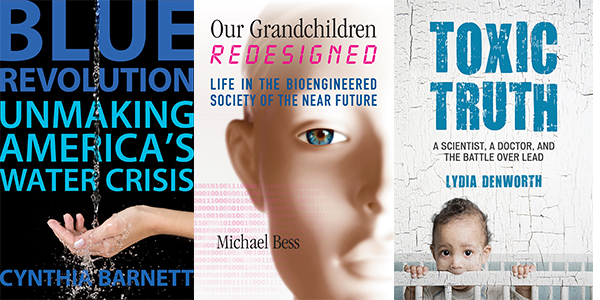
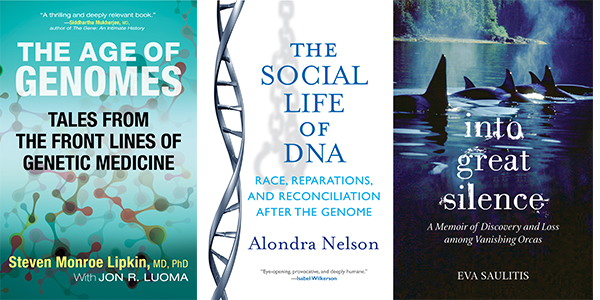
    Defending science, though, doesn’t end with the march. The best way to make sure science will influence policy is to encourage people to value and engage with it. As always, education is where the power for change lies. To that end, we reached out to some of our authors who write on a variety of science topics to ask for recommendations of books they’ve read. Further down, you will find a few recommended selections from our catalog, too. You can find more of our science titles from our Science and Medicine list.

    Let’s march and enrich our education! And as Neil deGrasse Tyson said on The Late Show with Stephen Colbert, we’re on a four-year mission to make America smart again.

    EriksenMarcus Eriksen, author of the forthcoming Junk Raft: An Ocean Voyage and a Rising Tide of Activism to Fight Plastic Pollution

    Edward O. Wilson: Half-Earth: Our Planet’s Fight for Life


    Danielle OfriDanielle Ofri, author of What Patients Say, What Doctors Hear 

    Carol Ann Rinzler: Leonardo’s Foot: How 10 Toes, 52 Bones, and 66 Muscles Shaped the Human World 


    Fred PearceFred Pearce, author of The New Wild: Why Invasive Species Will Be Nature’s Salvation 

    Alex Evans: The Myth Gap: What Happens When Evidence and Arguments Aren’t Enough? 


    Eileen PollackEileen Pollack, author of The Only Woman in the Room: Why Science is Still a Boys’ Club 

    John Donvan and Caren Zucker: In a Different Key: The Story of Autism 


    Angela SainiAngela Saini, author of the forthcoming Inferior: How Science Got Women Wrong—and the New Research That’s Rewriting the Story 

    Adam Rutherford: A Brief History of Everyone Who Ever Lived: The Stories in Our Genes 


    John ShivikJohn Shivik, author of the forthcoming Mousy Cats and Sheepish Coyotes: The Science of Animal Personalities 

    Laurel Braitman: Animal Madness: How Anxious Dogs, Compulsive Parrots, and Elephants in Recovery Help Us Understand Ourselves 

    Frans de Waal: The Bonobo and the Atheist: In Search of Humanism among the Primates 


    StephensonWen Stephenson, author of What We’re Fighting For Now Is Each Other: Dispatches from the Front Lines of Climate Justice 

    Michael E. Mann: The Hockey Stick and the Climate Wars: Dispatches from the Front Lines 

    Naomi Oreskes and Erik Conway: Merchants of Doubt: How a Handful of Scientists Obscured the Truth on Issues from Tobacco Smoke to Global Warming 

    Shawn Otto: The War on Science: Who’s Waging It, Why It Matters, What We Can Do About It 


    Recommended Reading from Our Catalog. For more titles, browse our Science and Medicine list.

    Barnett_Bess_Denworth

    Lipkin_Nelson_Saulitis