• By Helen Benedict and Lynn K. Hall

    Academy basic field training at Jacks Valley

    Academy basic field training at Jacks Valley. Photo credit: US Air Force photo/Dennis Rogers

    When it was reported in March that a Facebook group of some 30,000 members of the Marine Corps have been sharing nonconsensual nude photographs of female marines, it echoed all the other sexual abuse scandals in the military, stretching way back to Vietnam. The difference was that the perpetrators in this case used social media to spread the abuse beyond individual platoons to an audience of thousands.

    The Lonely SoldierIn 2009, I wrote The Lonely Soldier: The Private War of Women Serving in Iraq based on several years of interviews with female war veterans. In it, I exposed that, along with combat trauma and the expected horrors of war, military women were also being sexually assaulted by their so-called comrades at a rate of nearly thirty percent, while ninety percent were being harassed.

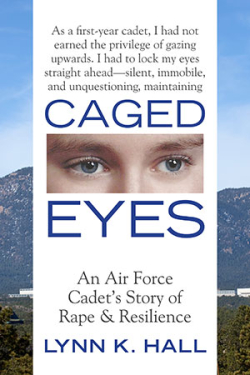
    Lynn Hall has recently written a memoir about her time the Air Force, Caged Eyes, which shows the same culture of brutal misogyny among officer cadets at the Air Force Academy. Indeed, surveys have long shown that no branch of the military is free of the rape culture revealed in this latest scandal.

    The main reason men harass and assault women like this is to make women feel unwelcome and to make themselves feel more important. The message of all harassment, whether online or not, is to say, “We don’t want you here.”

    Thus, what needs to change is not only the rules, the education and the punishments, as most leaders and politicians insist. What needs to change is the fundamental attitude toward women in the military from the top down. Every military leader, from general to sergeant, has to understand that the military can no longer be a culture which values the male more than the female. Anyone who doesn’t accept this no longer belongs in the military.

    ***

    What follows is an excerpt from Lynn K. Hall’s Caged Eyes. In this passage, Hall gives us a picture of the persistent misogyny she and her other women classmates faced in the classroom at the Air Force Academy. During a military history lecture, male cadets get away with insulting the women with sexist name-calling and prejudiced claims that women aren’t fit to be in the military. This is a blatant example of the attitude toward women in the military that Benedict says needs to change.

    ***

    One morning a few weeks into the academic year, I sat in the back of my military history classroom opening my notebook in preparation for the day’s lecture. My professor, a blond, gangly pilot who had graduated from a civilian college’s Reserve Officers’ Training Corps, turned on a projector from the center of the darkened classroom. At a table one row ahead of me, two sophomores discussed the four degree women in their squadron. “They’re so fucking weak,” the bigger, taller one complained.

    “I’m sick of them breaking every five minutes,” the other one agreed. By “breaking” he meant failing to do exercises like push-ups without looking pathetic.

    “Fucking dogs,” the bigger guy said. All fifteen students, including the only other woman, stopped talking to listen to the loud conversation. I had never heard upperclassmen disparage women so blatantly.

    There were other things said about us women, we noticed. A few of my classmates overheard a conversation during which the senior cadets divided four degree women into two categories: dykes or sluts. I was a dyke, they said. Jo was a slut. It seemed they made the distinction based on how girly we acted, whether we wore makeup or not. One of the women shrugged off the comments by saying the same labels were given to women in other parts of the military, too. “You can’t win,” she had concluded.
    Caged EyesCalling us dykes or sluts didn’t seem as bad as calling women dogs. Our professor interrupted the men. “Perhaps we shouldn’t use that language toward other cadets,” he said.

    “Perhaps we shouldn’t let females become cadets,” the bigger cadet said. I twisted my head back to our professor, but he didn’t respond. I had become acquainted with him from visiting his office for extra help with assignments. He took interest in my professional well-being, and I sensed he engaged similarly with many students.

    “I’m serious,” the bigger cadet argued. “They don’t deserve to be here. We’re supposed to be the best of the best and all that crap.”

    “And having women here makes that less so?” the professor asked.

    “If you dealt with the shit from them that we do on a daily basis, you’d understand.”

    “Some of my most competent fellow pilots have been women.”

    “I doubt that. There are so many reasons why that’s a load of shit.”

    “Really? Enlighten me.”

    The cadet stood and strode to a section of the freshly cleaned white board that wrapped around the darkened room. Picking up a black marker, he began writing a numbered list—as though he was reciting memorized knowledge. As he wrote, he read out loud:

    1. They’re less intelligent.

    Less intelligent? I balked. That was bullshit. But no one said anything. I dropped my head and started drawing blue pyramids along the border of my notebook. The cadet continued his sloppy writing:

    1. They’re physically weak and lack upper-body strength.
    2. Their emotion overrides all logic.
    3. They can’t keep their legs shut.
    4. They serve no purpose in the military if they can’t go into direct combat.

    The cadet popped the cap back on the marker and tossed it in the tray. When I looked up from my blue boxes, my professor glanced toward me and then to the other woman with surprised, apologetic eyes. Would he say something? Anything? After several long seconds, he turned toward the projector. “Let’s start class,” he said. He clicked open the PowerPoint presentation and began.

    The list was crap. While I didn’t think that many of the class’s other men agreed with the assessment that we were unintelligent, weak, emotional sluts, their silence, and that no one bothered to erase the board, spoke louder than the list itself.


    About the Authors 

    Helen BenedictHelen Benedict, a professor of journalism at Columbia University, has written frequently on women, race, and justice. Her books include Virgin or Vamp: How the Press Covers Sex Crimes and the novels The Opposite of Love, The Sailor's Wife, Bad Angel, A World Like This, Sand Queen and the forthcoming Wolf Season. Her work on soldiers won the James Aronson Award for Social Justice Journalism. Follow her on Twitter at @helenbenedict and visit her website.


    image from www.beaconbroadside.comLynn Hall is a memoirist, essayist, and activist in the movement to end sexual violence. She is also a mountaineer who has summited each of Colorado’s 14,000-foot-tall peaks and a runner who has completed a 100-mile ultramarathon. She lives in Boulder. Follow her on Twitter at @LynnKHall and visit her website.

  • By Louis Roe

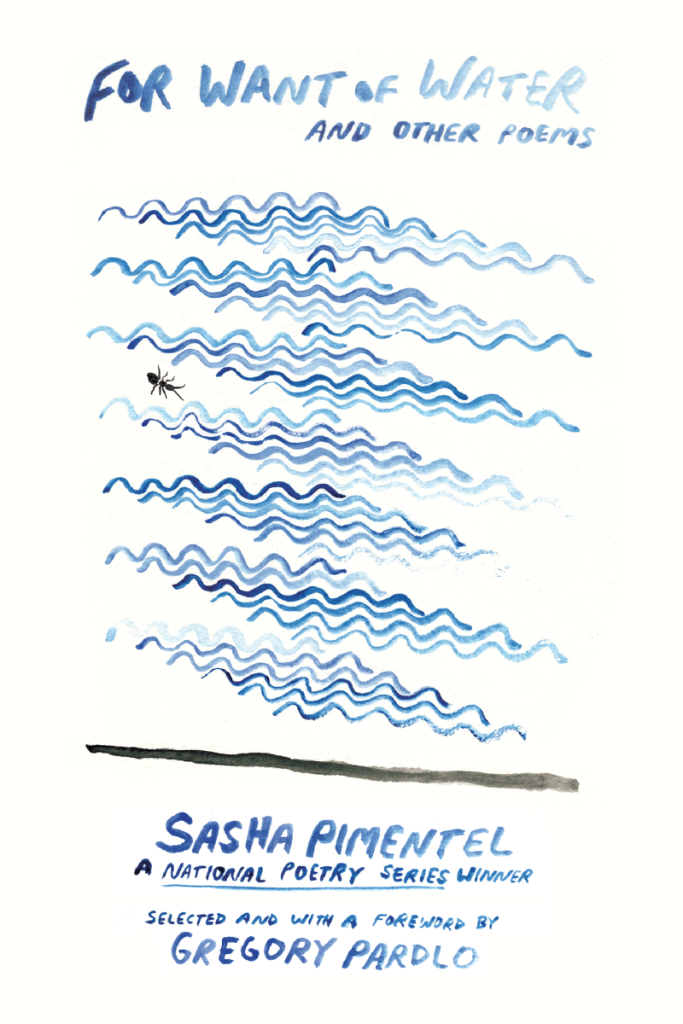
    For Want of Water

    All image credits: Louis Roe

    Poetry collections are a bit of a fantasy cover project for me. They’re an opportunity to think in a different visual language from Beacon’s usual nonfiction catalogue, inviting a relationship between image and text built on reflection and, hopefully, subtlety. Sasha Pimentel’s poems in her forthcoming collection For Want of Water carry this poise on their own particularly well: they reveal only as much as you’re ready to see, but they also ignite a desire to pursue and peel.

    Covers for For Want of Water_1So how do you translate this into a cover? Safe to say, my earlier attempts totally missed the mark. I got really hung up on the bird imagery that populates the first several poems in the collection. Putting an image from the book on the front cover won’t necessarily draw a reader’s attention, though, and these got scrapped early on. Back to the drawing board!

    Bird imagery for For Want of Water
    Hand imagery for For Want of Water
    Lettering for For Want of Water

    This was one of the first covers I started working on from our Fall 2017 list, so I had a lot of time to mull on it. In this case, mulling meant rereading the manuscript, seeking out images that resonated with me in a personal way. I was particularly drawn to the reoccurrence of dripping—of paint, days, and eyelids, but also as a characteristic of the author’s writing style.

    Cover for For Want of Water

    However, I found myself returning to the title poem again and again. There’s so much to it; surely it held some secret that should be explored on the cover? It opens with the line “an ant will drown himself, his body submerging,” and in my efforts to submerge myself further in the poem, I ended up spending a whole lunch break watching videos of ants drowning. (Did you know that groups of fire ants actually can’t be drowned? They form a living raft with their bodies—an adaptation for surviving floods.) One way or another, this inspired the final cover design, along with the rather brilliant shape of the verses in title poem. By the end, the cover and the poem seemed to be speaking in the same language—one of pursuit and peeling, which starts with looking beneath the cover.


    About the Author 

    Louis Roe has been an assistant designer at Beacon Press since 2015, after graduating from Emerson College’s Writing, Literature, and Publishing program and a brief stint in content marketing. Though he has momentarily been permitted to infiltrate this blog, he typically prefers to communicate in the medium of post-it note doodles.

  • By Carole Joffe

    Whole Woman's Health v. Hellerstedt Pro-choice demonstration in front of SCOTUS

    Whole Woman's Health v. Hellerstedt Pro-choice demonstration in front of SCOTUS. Photo credit: Jordan Uhl.

    This article appeared originally in Rewire.

    The prospect of the overturn of Roe v. Wade—which the U.S. Supreme Court confirmation struggle over Judge Neil Gorsuch is highlighting—is terrifying to many, especially to those who remember the notorious pre-Roe days. It is also a real possibility, should President Donald Trump have the opportunity for another nomination, one that would replace a liberal judge with a “pro-life” one, as he pledged to do during the campaign. But if Roe falls, women may not face the same kinds of physical dangers from seeking abortion as in previous decades. Instead, however, I predict there will be far more criminal prosecutions of those involved in illegal abortion.

    If Roe is overturned, the most likely immediate consequence would be that individual state legislatures would decide whether or not to allow abortions. According to legal analysts at the Center for Reproductive Rights, some thirty-four states are at risk of banning abortions, largely in the Midwest and South. About forty million women live in those states. Predictably, many women seeking abortions will have to travel, paying not only for the procedure, but for transportation, lodging, and babysitters (nearly sixty percent of abortion patients already have children). These travelers, of course, may also lose wages for the time spent away from their jobs. One can safely assume that many won’t be able to afford an out-of-state option, as abortion patients are disproportionately among the poorest women in society.

    Therefore, there will likely be a considerable increase in self-induced abortion. (In fact, such an increase is already occurring in the United States, as access to abortion is so difficult in many areas due to restrictive legislation and clinics being closed.)

    What might we expect then? Will the abortion landscape resemble the pre-Roe days, when some scholars estimate that approximately 5,000 women per year died from illegal abortion in the 1960s, and tens of thousands more were injured?

    If there is a second large wave of illegal abortion, a similar kind of danger is questionable. This is because of changes in abortion technology that have occurred since legalization. Pre-Roe, many women attempted to self-induce abortion by drinking dangerous substances such as turpentine and lye, and inserting various objects into their cervixes, including the infamous coat hangers. When they went to others—whether a medical provider or layperson—one of the main methods used was dilation and curettage, or the scraping of the uterus. In untrained hands, this was very risky.

    Today, however, there is another method of pregnancy termination: “medication abortion,” which is in wide use in the United States and elsewhere. This method actually involves two drugs: mifepristone, formerly known as “RU-486,” which causes a fetus to stop growing, and misoprostol, a drug with several medical uses, which causes the cervix to open and the uterus to contract. Medication abortion is used both legally and extra-legally: Both mifepristone and misoprostol can be obtained over the internet, and misoprostol is available over the counter in many pharmacies in Latin America (and in flea markets in the United States).

    To be sure, these drugs are not always 100 percent effective in ending a pregnancy. When they are ordered over the internet, the products are not always authentic or reliable, and misoprostol, often used alone because it is easier to get, is not quite as effective as the two-drug regimen. But even when ineffective, they are not usually dangerous. Some tragedies will inevitably happen with a large-scale return of illegal abortion, particularly among the young and most desperate, and among those who discover their pregnancies too late to use the medication abortion regime, which is largely recommended for use only through ten weeks of pregnancy. Overall, though, women will not face the same kinds of death and injury as occurred before the Roe decision.

    What will likely be different, however, is the degree of criminalization facing both women who attempt illegal abortions, and any providers or advocates who try to help them. Given the number of illegal abortions that took place before Roe (slightly more than one million per year in some estimates), it is striking in retrospect how relatively few prosecutions and jail sentences there were. This is not to suggest, however, that women who sought abortions and doctors and others who provided them were not terrified of being caught, as there was always the possibility of jail time, the loss of medical licenses for doctors, and public shame for both.

    Today, though, anyone involved in illegal abortion would face a very different legal and political environment. In fact, even as Roe remains the law of the land, women have recently been jailed for attempting self-induced abortions. The Self-induced Abortion Legal Team has identified seventeen known arrests or convictions in connection with alleged self-induced abortion since 2005.

    There is already intense scrutiny and sometimes criminalization of pregnant women in the United States—and not only of those seeking abortions. This surveillance is made shockingly evident in a 2013 report by researchers from the National Advocates for Pregnant Women and Fordham University, which tabulated hundreds of cases of pregnant women arrested since Roe for various reasons. In a particularly bizarre 2010 case, an Iowa woman who accidentally fell down a flight of stairs and sought help at a hospital was reported to police and arrested for “attempted fetal homicide.”

    The main reason for this predicted difference in punishment before and after Roe is that in the earlier era, there was not in place anything resembling the national anti-choice movement of today. Prosecution before Roe was very idiosyncratic, dependent on local factors. But if Roe falls, criminal justice officials, from the virulently anti-choice Attorney General Jeff Sessions on down to local police and district attorneys in many jurisdictions, can be expected to avidly pursue those who break the law.

    When Donald Trump, shortly after his election, was asked by a journalist about what the possible overturning of Roe would mean for American women who sought abortions, he casually answered, “Well…they’ll have to go to another state.” Yes, Mr. President, some will go to other states, but many others might go to jail.


    About the Author 

    Carole Joffe is a professor in the Advancing New Standards in Reproductive Health (ANSIRH) Department of Obstetrics, Gynecology & Reproductive Sciences at the University of California-San Francisco and a professor emerita of sociology at the University of California-Davis. She is the author of several other books, including Doctors of Conscience and Dispatches from the Abortion Wars. Follow her on Twitter at @carolejoffe.

  • By Helene Atwan

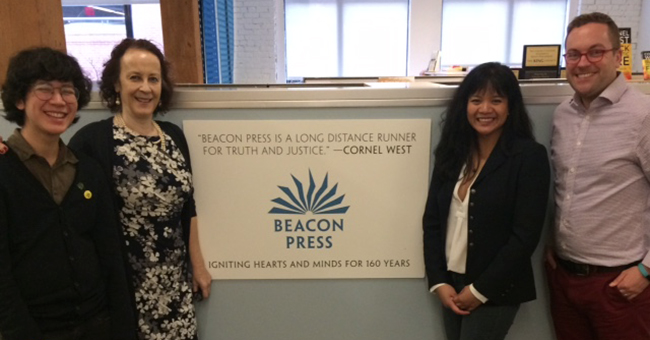
    Sasha Pimentel and Beacon Press Staff

    Poet Sasha Pimentel comes to visit us at Beacon Press. Left to right: Louis Roe, Helene Atwan, Sasha Pimentel, Nicholas DiSabatino

    Ah, April.

    No, it’s not the cruelest month at all; in fact, it’s the month when we celebrate poetry, and given all the other things that are going on in our country at the moment, it’s a gift to be able to turn to the comforts and joys that poetry offers.

    For Beacon, though, poetry isn’t just about offering those gifts. We view poetry as an important and effective voice for addressing issues of social justice, for underlining the importance of a community devoted to equity and building a just society. Another way, a very compelling way, of speaking truth to power.

    To that end, we have been proud to publish poets like Sonia Sanchez, who bears witness to the importance of racial justice as well as embracing Queer communities and standing against any form bias, and Mary Oliver, who has written so brilliantly about the preeminence of the natural world and the urgent need to protect our environment. We were thrilled to have the chance to publish all of the poetry of James Baldwin a few years ago.

    For Want of WaterAnd 2017 brings two new volumes to our poetry list which I am delighted to announce here. Our National Poetry Series winner this year is a remarkable writer, Sasha Pimentel, whose work was selected by Pulitzer Prize winner Gregory Pardlo. For Want of Water explores urgent issues from the perspective of a Filipina living in El Paso. Her searing verses, set on the Mexican border, explore war and addiction, love and sexual violence, grief and loss. We will be publishing Sasha’s book in October.

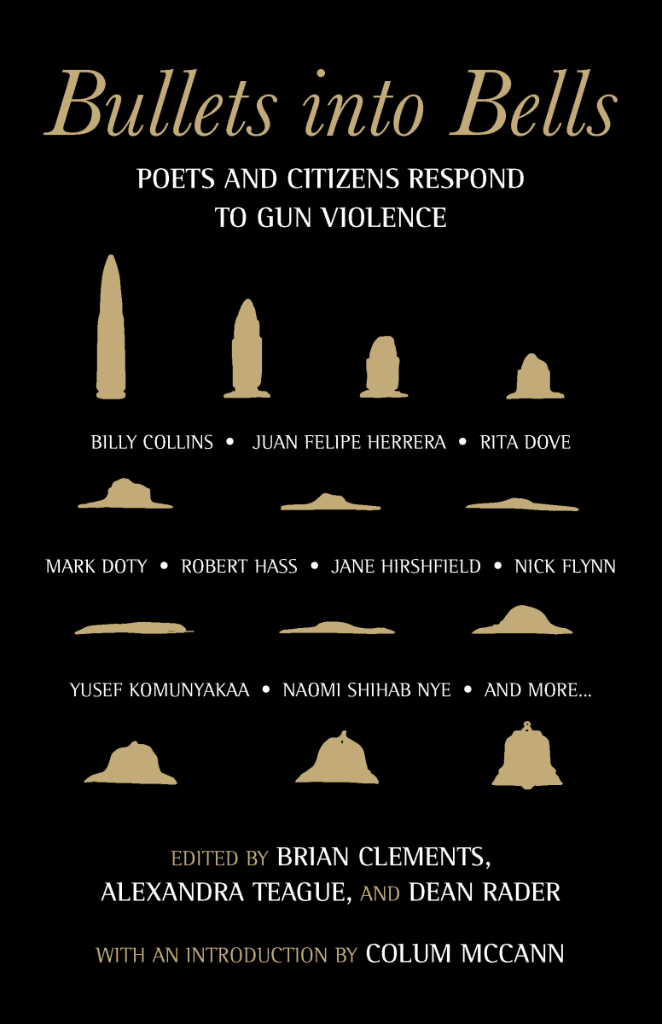
    Bullets into BellsOn December 14, 2017, in observance of the fifth anniversary of the tragedy at Sandy Hook Elementary School, we will publish an anthology, Bullets into Bells. I first heard about this book from Colum McCann, who has been active in the fight against gun violence through his nonprofit organization Narrative4, and who has written a thoughtful introduction. The editors of this volume, Brian Clements, Alexandra Teague, and Dean Rader, have brought together fifty-four poems by such acclaimed poets as Billy Collins, Mark Doty, Rita Dove, Martin Espada, Naomi Shihab Nye, Ocean Vuong, and Juan Felipe Herrera, and paired them with responses by Americans who have been touched by gun violence, including Nobel Laureate Jody Williams, Senator Chris Murphy, and Moms Demand Action founder Shannon Watts, or from gun violence survivors of the Columbine, Sandy Hook, Charleston Emmanuel AME, and Virginia Tech shootings.

    We like to think of ourselves here at Beacon as publishing with a purpose, now more than ever. This April, we’re finalizing plans to publish more Poetry with a Purpose. I hope you will join me in my admiration for these very special volumes.


    About the Author 

    Helene Atwan has been director of Beacon Press since 1995. She has been reading poetry all her life. Follow her on Twitter at @hatwan.

  • By Stacey Patton

    Belt

    Since 1983, National Child Abuse Prevention Month, observed in April, has been dedicated to raising awareness and preventing child abuse. Recently, we published journalist and child-advocate Dr. Stacey Patton’s Spare the Kids: Why Whupping Children Won’t Save Black America. In Spare the Kids, Dr. Patton weaves together race, religion, history, popular culture, science, policing, psychology, and personal testimonies to challenge the cultural tradition of corporal punishment in Black homes. The rate at which black children lose their lives as a result of physical abuse is consistently three times higher than the rate of child abuse-related fatalities in other races. She urges parents to consider how beating their kids reflects and reinforces racist ideologies in which black children are seen as inherently inferior and less civilized—and in need of punitive forms of control.

    While eighty percent of Black parents see spanking as reasonable and effective ways to teach respect and protect their children from the streets, incarceration, and encounters with racism, some are actually setting aside the belt to search for healthier, nonviolent alternatives. In the following passage, you’ll read testimonies of parents who used to hit their kids and then stopped and those who never considered it in the first place.

    Many other parents are taking the pledge to spare the rod by participating in Dr. Patton’s #NoHittingChallenge. Watch their videos and join the pledge on Dr. Patton’s website, sparethekids.com.

    ***

    Whupping children is so deeply entrenched into black culture that folks often won’t have a rational conversation or be receptive to new information about the potential physical and psychological harms of hitting children. That’s because when we were children, being whupped was presented to us in the context of “love” and “protection.” As such, many folks’ opinions and feelings about whuppings are based on their repression or forgetting what it was like to be a child. They’ve either repressed or forgotten the betrayal, pain, bewilderment, fear, resentment, sadness, and anger they felt while being on the receiving end of an adult hitting their body. They’ve turned pain into a positive. So when they talk about whuppings, there appears to be a sharp disconnect between what they likely experienced as a child and their staunch adult defense of the harmful practice.

    The popular belief within black communities is that parents must whup their kids because there is no other model for disciplining and protecting them as they grow. The prevailing cultural view is that whupping is essential to keep our children safe, out of jail, or from falling prey to the dangers of the streets. Then there’s the fact that a parent’s self-image, ego, loyalty to his or her own parents, and allegiance to their culture and religion are tied to the core belief that black children require whuppings to grow up responsibly. Most black adults endorse hitting kids, believing that the violence helped them survive the racist perils facing black communities. These beliefs and the scars from their own experiences often keep black parents from objectively evaluating their parenting practices or even recognizing that there are nonviolent alternatives.

    All the data tell us that the majority of black people endorse hitting kids. That ubiquitous message to whup is reinforced over and over again by celebrities, athletes, ministers, political figures, educators, radio hosts, and comedians. Sadly, far too many of our children have come to expect the whuppings, to normalize the pain, and to believe that they deserve to be hit at home and at school. What has been missing from the national and community conversations are black parents who used to hit their children but have stopped, and those who have successfully raised children without ever whupping them. When this group is mentioned, many folks are quick to emphasize that not spanking doesn’t work for all kids. “Some kids need a good whupping, and some don’t,” retorts that parent who dismisses all the data. But that implies that some children are so inherently “bad” and their behavior is so uncontrollable that physical violence is the only solution.

    But what about the parents who don’t or never hit their kids? If the popular logic holds true, then most or all of their children who haven’t been beaten should be victims of police violence, locked up for criminal offenses, and have no hope of being healthy, happy, contributing members of society.

    I’m not a parent. But even if I were, I would have only my own individual and very subjective experience to rely upon. So I conducted a survey of black parents from different backgrounds in two categories: those who used to spank their children but, for various reasons, have chosen to stop and utilize other forms of discipline and punishment; and those who have never hit their children.

    What do these parents, whose voices are often bullied into silence and completely missing from the national and community conversation, have to say about whupping children? How do they respond to the accusations that they are irresponsible, negligent, and/or parenting like white people? How do they respond to peer pressure from family and friends who try to convince them that physical punishment is the only way?

    In my survey, I asked whether these parents were hit and if so, by whom, how often, for what kinds of infractions, and whether objects were used. I asked how they felt about being physically punished, and whether being hit changed their behavior for the better, for the worse, or not at all. And then I asked about their experiences as parents. For the group who used to hit their kids but stopped, I asked what changed their minds, and how that impacted their relationships with their children. I also asked about the nonhitting methods of discipline and punishment that they use instead, and how effective those are proving to be. For parents who have never whupped, I asked what went into making that decision, and how they discipline and punish their children without hitting.

    ~~~

    Alicia Chymel Reid
    Age forty-two
    Dublin, Georgia

    “I VOWED THAT DAY TO FIND ANOTHER WAY”

    Alicia Chymel Reid is the single parent of a twenty-year-old daughter and a thirteen-year-old son. When her daughter slammed her bedroom door in Reid’s face while she was still talking to her, she spanked her daughter with her hand.

    “In my mind, I saw her cowering in the corner when I raised my hand to her—the very same hand I had used to wipe her tears after a scraped knee. That broke me. The look of betrayal I saw on my daughter’s face made me stop, midstrike, and leave the room. I felt ashamed and petty. I was angry at myself for not being the adult in the situation. I was sad because I hurt my daughter, the very person I had sworn to lay down my life for, and that led to confusion and frustration. I vowed that day to find another way.”

    The hardest part about not hitting her daughter anymore was grappling with her own emotional response. “I had to face my own childhood and the demons that still lingered in that closet. My mother refused and still refuses to acknowledge the pain and won’t answer the ‘whys.’ So it was a journey I traveled alone. I read books and research studies. And once I let go of the pain from my past, it was easier to focus on raising my daughter my way and not the way others thought I should.”

    When loved ones and others criticized her choice to stop spanking, Reid said she “tried to explain at first. But as my confidence grew, I chose to stay away from them.” Since she stopped spanking, Reid and her daughter have become closer. She replaced spanking with taking things away and denying special privileges. Most importantly, “We always talked about the consequences of the choices we were making.” As a result, Reid says that her son and daughter are both “happy, healthy, and thriving. They both talk to me about any- and everything.”

    When talking with parents who insist upon spanking their children, Reid says she “tries to explain the damage they are inflicting upon their children for generations to come, but to no avail.” Her takeaway is that she has learned “more about relationships and how—good or bad—they form us into the adults we become.”

    ~~~

    Sean Hines Sr.
    Age forty-three
    Slidell, Louisiana

    “TAKING AWAY THEIR GAMING DEVICES AND TV TIME SEEMS TO BE MORE PAINFUL THAN A BELT.”

    Sean Hines Sr. is a divorced single father of a thirteen-year-old son and a ten-year-old daughter. He used to spank them but stopped because he felt he could get the same or better results with a nonviolent approach. Giving up spanking “wasn’t as difficult as I thought it would be,” he says. “It was just a matter of breaking that reflex response, taking time to view the entire situation and decide on a suitable course of action.”

    Once Hines stopped spanking, he found that his children were “easier to talk to, less afraid. That made it easier for me to educate them. They became more forthcoming with the truth.” Instead of hitting, he administers discipline according to the violation. “Taking away their gaming devices and TV time seems to be more painful for them than a belt.”

    He says he “makes sure to talk to them afterwards, to make sure they understand why they were being punished, and how to avoid making the same mistakes over and over,” and says that this approach is very effective.

    ~~~

    Abby Fernanda Dottin
    Age forty-eight
    Hollis, Queens, New York

    “IT DOESN’T MAKE SENSE TO ME THAT HITTING TEACHES LESSONS.”

    Abby Dottin has never felt the need to spank her fourteen-year-old daughter. “Beating a child sends a message that it’s okay to hit and to be hit. Unfortunately, I’ve seen too many instances where black folks settled problems with their hands instead of using their brains to problem solve. I want my daughter to know and understand when to physically defend herself but also know that she has to be smart and intelligent to defend herself with ‘snark,’ at times.”

    Dottin was not spanked as a child. “When I would see a friend or family member spank, I would step in and stop them, and then pull the child aside for comfort and then speak to the adult. Sometimes I was met with a ‘Mind yo business’ response. Other times, they would calm down and ‘seem’ to understand my point of view.”

    Dottin says she tells pro-spanking parents “that you cannot expect a child to learn without talking to them and appealing to their need to understand why what they did was ‘wrong.’ Beating the child only makes them fear the parent and maybe teaches them not to do something as instructed, but only because they are in fear of the pain they will receive.”

    She is passionate about how she disciplines her daughter. “It is way more important for me to allow my child to articulate when she’s feeling wronged or upset, and for me to explain why she isn’t allowed to do something so that she understands. I am not trying to inflict bodily harm to my child, who is the most precious thing to me. I won’t stand by and allow anyone else to, either. I can’t wrap my head around, listening to my daughter maybe say a curse word and me swelling up her lip with a backhand. It doesn’t make sense to me that hitting teaches lessons.”


    About the Author 

    Dr. Stacey Patton is an award-winning journalist, author, and child advocate. Her writing on issues surrounding higher education, child welfare, and race has appeared in the Washington Post, Al Jazeera, the BBC News, and the Root. She is also the author of That Mean Old Yesterday and the creator of the anti-corporal punishment organization Spare the Kids. Follow her on Twitter at @DrStaceyPatton.

  • Amy CaldwellYou’ve read our classics, such as Viktor Frankl’s Man’s Search for Meaning, Octavia Butler’s Kindred, the work of Martin Luther King, Jr., and James Baldwin’s Notes of a Native Son; and many of you know our current list, featuring books by Cornel West, Lani Guinier, Anita Hill, and Christopher Emdin—books that speak to the condition of the world, and add to our understanding of urgent social issues. Whether it’s the environment or race, cultural or class dynamics, we publish all our books with a purpose. Now you can meet the people who work at Beacon Press in our blog series “Beacon Behind the Books.” Each month, we’ll introduce to you a member of our staff and give you a behind-the-scenes look at what goes on at our office.

    For the month of April, we introduce you to Amy Caldwell, our executive editor! 

    What drew you to publishing, Amy? How did you find your way to Beacon?

    I was drawn to Beacon because I was a reader, and because I was interested in the intellectually and politically engaged books that Beacon published. 

    What’s a typical day in the life of an editor?

    The first thing I used to tell people interested in editorial work—interns, or people applying for the job—is that it’s not what you think it’s like. While we do read and edit, there are a multitude of other tasks that constantly require one’s time and attention. These days, the first thing on everyone’s list is responding to email, of course. And then there might be working on titles, or copy, or helping the design department think about the right direction for a cover, or reading and responding to many submissions that come in from agents and contacts, or keeping up on reading that pertains to the fields I acquire in, or about a dozen other things. And then we search for time to edit, which is slow and painstaking, but also deeply rewarding.

    What are some of the challenges of being an editor? What do you find most rewarding?

    Time management is absolutely one of the most difficult aspects of being an editor. That and the fact that almost everything you do can relate to your job. I think the most rewarding aspect of the job is the privilege of working closely on someone’s manuscript—something that you know represents a tremendous amount of his or her time and energy and attention and soul. It can be difficult and sometimes frustrating work, but it’s always meaningful, and it requires a kind of focus that’s very different from our contemporary culture of distraction. The other aspect of the job that I find tremendously rewarding is the relationships you build with authors and colleagues.

    What is one book on our list that has influenced your thinking on a particular issue?

    I am always learning from the books we publish! It’s impossible to pick just one. And I find good books influence your thinking for years. I’ll mention a book that we just published this spring, Tanya Erzen’s God in Captivity: The Rise of Faith Based Prison Ministries in the Age of Mass Incarceration. While the problem of mass incarceration, particularly of Black men, has been much discussed, people are less aware that the costs of mass incarceration and punitive social ideas have led to the gutting of prison education programs in many areas of the country. The solution to this warehousing of people has been to bring in religious volunteers, the vast majority of whom are conservative Christians. Many of these volunteers have good intentions, but the arrangement is terribly problematic. It essentially means that in order to get any education in prisons in broad swaths of the country—including states with some of our highest incarceration rates—you have to subscribe not only to Christian theology, but a very particular and conservative version of Christian theology. So there are constitutional issues here. And to take another clear problem with this arrangement: these Evangelical ministries are almost always homophobic. 

    See how excited we get about our books here? I could go on. But won’t.

    What current/upcoming projects are you excited about? 

    This is another question that’s difficult to answer. I just finished editing a book that will be coming out next winter, Enrico Gnaulati’s Saving Talk Therapy: How Health Insurers, Big Pharma, and Slanted Science are Ruining Good Mental Health Care. I think it addresses a problem that most people don’t know about, and that is terribly important. Many, many people find good talk therapy crucial to their functioning at one point or another in their lives, and yet its very existence is being undercut by a complex array of cultural and economic issues—none of which are serving the interests of patients. Instead, they’re enriching health insurance bureaucracies and pharmaceutical companies. There’s also a cultural problem here, and one of academic expediency: in our current love affair with science and technology, treatments that aren’t easily measurable and replicable, that are based on relationship and trust and that take longer than a few weeks, are less likely to be the subject of studies and thus to be considered evidence-based.

    Amy Caldwell-dancingIn an alternate universe, what career would you have?

    In an alternate universe, I would be a tap dancer. Which is to say, a much better one than I am now. As a dancer, I listen to lots of different kinds of music, from jazz to hip-hop to pop. I really like a good groove; I still remembering hearing Parliament’s “Flash Light” for the first time at the age of thirteen. When it had just come out. 

    Favorite food?

    I love fish tacos. And really hot foods: I used to live in the Southwest, where eating really hot peppers is a point of pride.  

    Favorite podcast?

    As for my favorite podcast: well, right now, it’s got to be S Town. Still waiting for more friends to finish it so we can hash it out thoroughly!


    About the Author 

    Amy Caldwell has been at Beacon Press since 1995. She acquires in religion, with a special emphasis on interfaith issues; the relation between politics, culture, and religion; and how Americans live out their religious beliefs. She also acquires in science and society, as well as narrative nonfiction/memoir.

  • By Laura Winnick

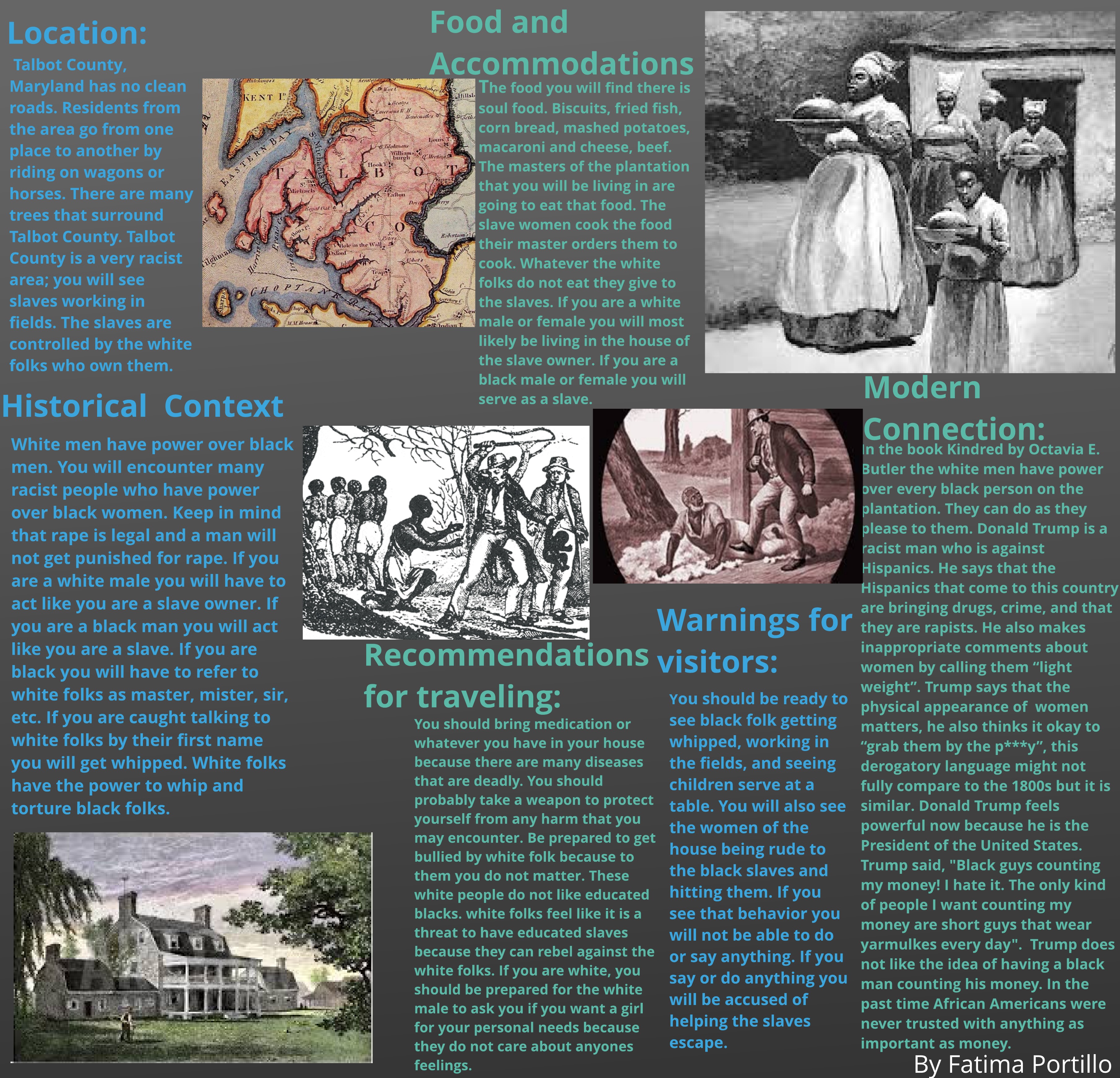
    Kindred Travel Guide ProjectsI’ve been a high school teacher for the past two years at REALM, a project-based learning school in Berekely, CA. My teaching philosophy is rooted in critical pedagogy and my curriculum is dedicated to liberation and social change; I bring in marginalized voices to introduce my students to diversified texts and experiences. Looking to Freire, I offer my students opportunities to “read the world and read the word.” To accomplish this, I combine California Common Core standards of writing, reading, speaking and listening with critical media literacy. I take after Jeffrey Duncan Andrade in supporting students to be critical consumers of all information they encounter in their daily lives. I teach skills so they can become more capable producers of counter-information based on their own truths. 

    Teaching Octavia Butler’s Kindred is one of the most important projects I embark on with my students. I’ve taught it for the past two years, and have seen my students, previously bored by texts, evolve into voracious readers, horrified by the grim depictions of slavery and transfixed by the possibility of time travel. This year, we paired John Jennings and Damian Duffy’s recently published graphic novel with the dense fictional text, and students arrived every day begging to read the graphic novel, utterly obsessed with the artistic rendering. In this unit, our essential questions are extremely difficult. We examine: How do race and gender affect our identities? What are the lingering effects of slavery? How are people impacted by their ancestral histories?

    KindredTo this end, we discuss child trafficking, the prison industrial complex, post-traumatic slave syndrome, and examine other overt and covert forms of white supremacy that exist to this day. My students are students of color, and they don’t necessarily need a chart to tell them that racism still exists. However, I believe that is important for me to provide the language for my students to make connections between America’s past and their lived reality. I hope that my classroom is as much a space in which students learn to name and confront their own oppression as it is a space where young people joyfully engage with empowering projects that ask them to step up as leaders and citizens.

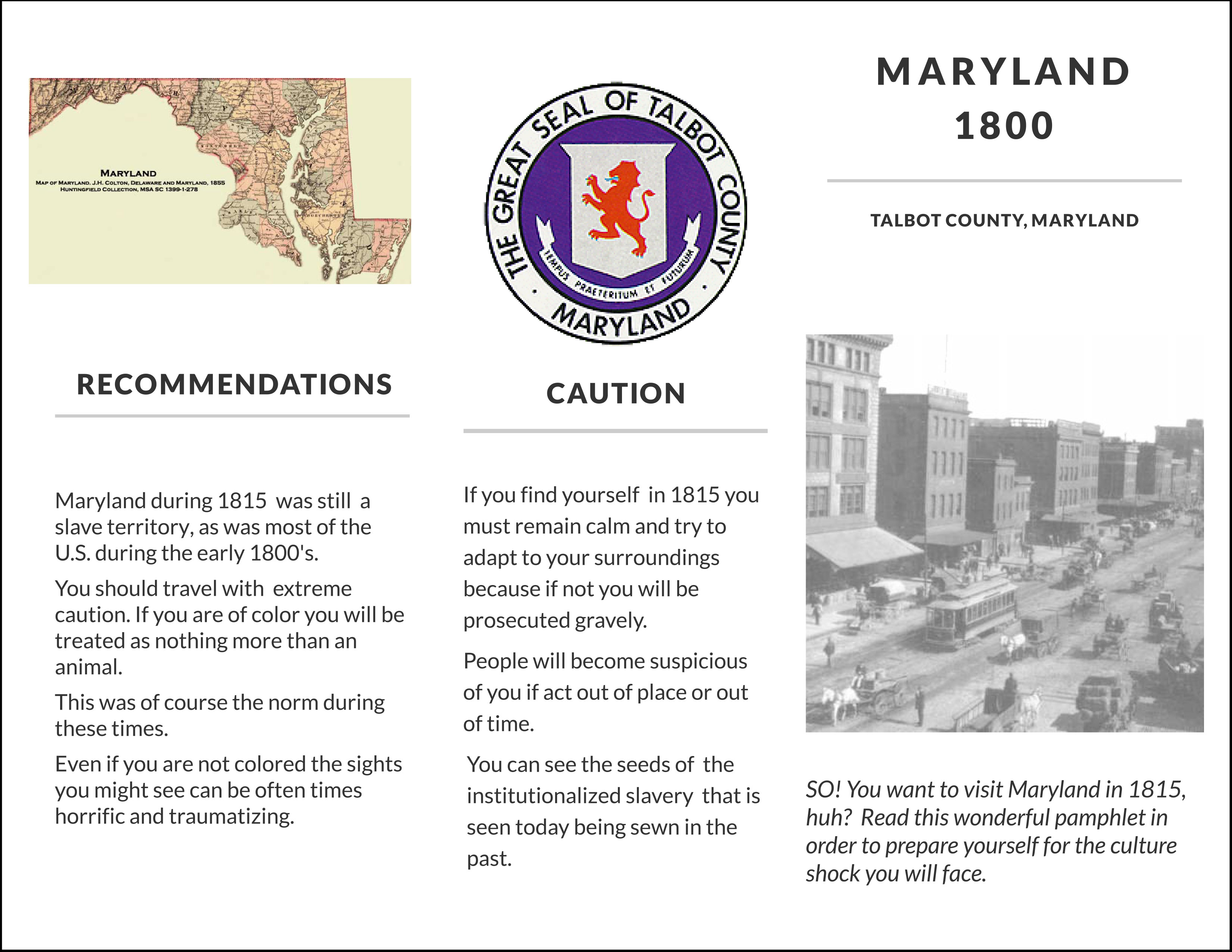
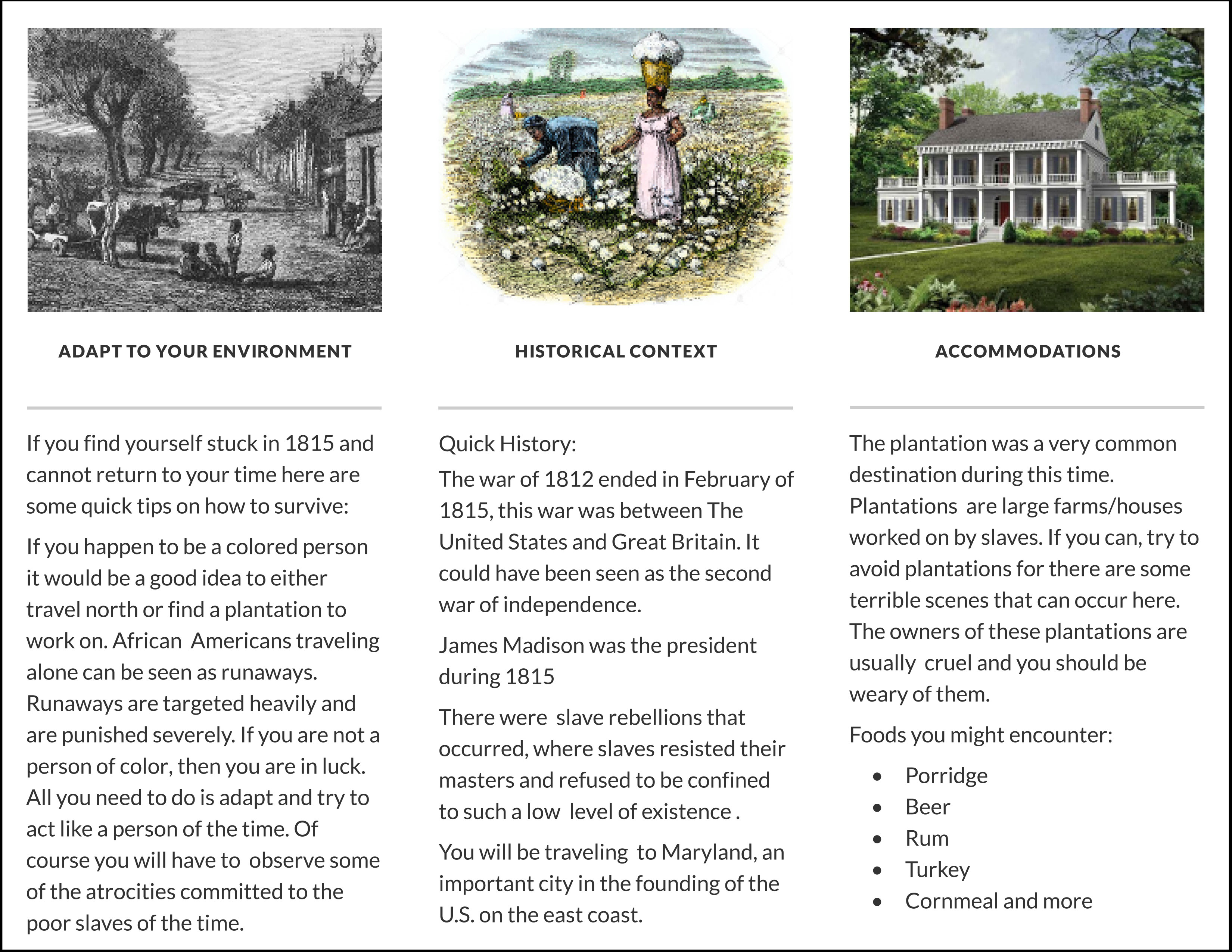
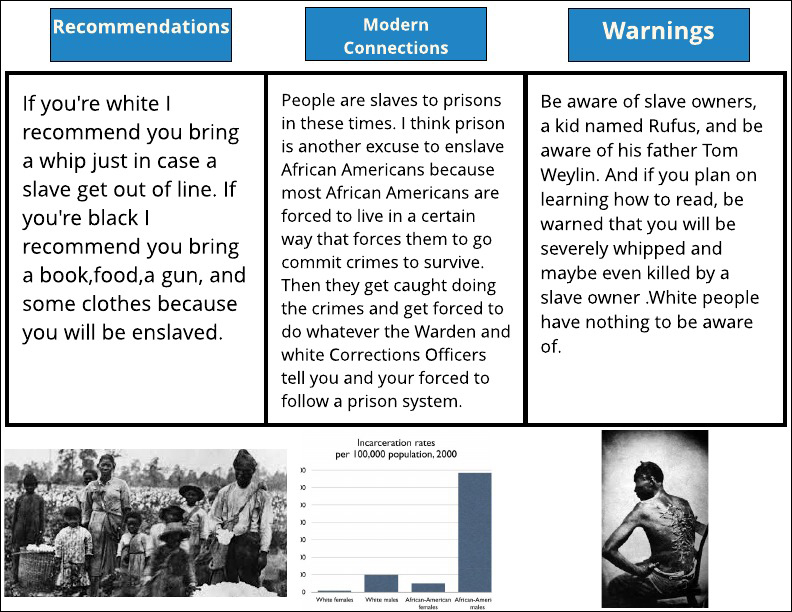
    This secondary component of my classroom prompted me to reexamine the Kindred final project. This year, I asked students to create “Travel Guides to the Past.” I came to this project after examining and increasing my capacity for project-based learning in my classroom. I wanted students to become authors of potential time travel; therefore, they took on the voice of travel guide writers, and “advertised” nineteenth-century Maryland in order to turn advertisement into warning. The goal of the project is for students to distill the details of nineteenth-century Maryland as described by Octavia Butler and make connections between the contemporary moment and slavery’s legacy. This project requires them to practice literary analysis through close reading and synthesis. As authors of warnings of America’s white supremacist past, students became more able to identify and reflect on its lingering existence.

    “Kindred” Travel Guide Projects

    Diana Amaya & Maravilla Hernandez

    Amaya_Hernandez_TravelGuideProject_back Amaya_Hernandez_TravelGuideProject_interior
    Bryan Espinoza & German Ines

    Bryan-Espinoza-German-Ines-Travel-Guide-Project-1 Bryan-Espinoza-German-Ines-Travel-Guide-Project-2
    DeJon Hodges

    DeJon-Hodges-Travel-Guide-Project-1 DeJon-Hodges-Travel-Guide-Project-2
    Fatima Portillo

    Travel guide By Fatima Portillo


    About the Author 

    Laura Winnick received her Master’s in Arts in Education from the University of California-Berkeley as a member of the Multicultural Urban Secondary English program. She has taught eleventh- and twelfth-grade English for the past two years at a small, independent charter school in Berkeley. A social justice educator, she cares deeply about bringing culturally relevant curriculum, restorative discipline practices, project-based learning, and technology into her classroom.

  • By Linda K. Wertheimer

    Two members of the Islamic Society of Boston, Wayland mosque greet buses of Wellesley Middle School students arriving there for a tour.

    Two members of the Islamic Society of Boston, Wayland mosque greet buses of Wellesley Middle School students arriving there for a tour. Photo credits: Linda K. Wertheimer

    The fifteen-year-old girl told me she was open to learning about different religions and cultures, so I could not resist asking: “Would you ever want to see the inside of a mosque?”

    The girl shook her head as she chatted with me and her mother in a donut shop in their southeast Texas town. She had just quit her high school in favor of homeschooling because she and her parents objected to the geography teacher’s instruction about Islam as part of a broader lesson on world religions.

    “I don’t care to. I don’t believe even remotely in what they believe,” the girl said of Muslims. Islam, she added, is just too different. Her mother also balked at the idea of seeing a mosque. “That’s their thing,” she said.

    But why enclose yourself in your religious or non-religious bubble? The mother and daughter identified themselves as conservative Christians, but I’ve heard similar comments from people of various faiths. Acquaintances of mine in suburban Boston told me they had never met a Muslim, let alone seen a mosque. Now, they have an open invitation to visit.

    The afternoon of Sunday, April 2, mosques around Massachusetts will hold their first joint open mosque day. Fliers for the event encourage people to come to meet a Muslim, learn about Islam, and enjoy cultural food. Other mosques around the country, including in Texas, and the world have been holding similar events or plan to in upcoming months. Many mosques also post information about scheduling visits on their websites.

    Faith EdI love the idea and applaud Muslim communities for creating these open houses. It’s a great concept, not just for Muslims, but for Jews, Sikhs and Hindus, all looked upon as the ‘other’ in majority Christian America. By inviting others to our temples, mosques, synagogues and shuls, we can demystify our beliefs and practices. Jews, as my family will this year, often invite non-Jews to join them at Passover. It’s a religious tradition of welcoming the stranger.  

    Open Mosque Day will largely attract visitors already predisposed to learning about different religions and cultures. It’s unlikely people with strong negative stereotypes of Muslims will venture over a mosque’s threshold. But non-Muslims who visit a mosque can then become an ambassador and educate their friends and acquaintances.  

    Just going to an Open Mosque Day event sends an important message. It shows support for Muslim Americans at an incredibly upsetting and fearful time. During the 2016 presidential campaign, it wasn’t just then candidate Donald Trump who was promoting fear-mongering with anti-Muslim ideas like a ban to prevent foreign Muslims from entering the United States. Republican Ted Cruz suggested patrolling Muslim neighborhoods to keep an eye out for terrorists.

    As president, Trump has signed two executive orders trying to prevent residents of several Muslim-majority countries from entering our country. Attorneys are fighting the orders, but the damage has been done. Many Muslims feel demoralized and scared, scared enough in some cases to flee from America to Canada in freezing temperatures.

    What would that teen-aged girl and her mother find at a mosque? They might find more familiarity than foreignness. Yes, Muslims chant their prayers in Arabic, but the words of the prayers, when translated into English, would have similar meanings to prayers for peace and wellbeing in any religion. Muslims also see Abraham as a key figure in their faith and know the stories not just of the Old Testament but of the New Testament. Jesus is no stranger.

    Muslims in prayer at Modesto mosque

    Muslims in prayer at Modesto mosque

    As a Jew, I saw parallels and differences when I visited mosques in the Boston area and around the country while reporting for Faith Ed, my book on teaching about religion in public schools. Worship begins with a call to prayer. Judaism has its own call to prayer. Chanting in a lyrical way in Arabic is integral to Muslim prayer. Chanting the Torah in Hebrew is also significant in Judaism. In mosques, men and women pray in separate spaces. In Orthodox Jewish shuls, men and women pray separately from each other, too. No mosque is identical, and the same is true for Jewish houses of worship. All religions have diversity within them. Still, if you visit several mosques, you will see commonalities, including a prayer clock showing times for each of the five daily prayers. Any Jewish temple would have an ark, a cabinet or curtained area to hold the Torah.

    In my numerous visits to houses of worship, whether they belong to Jews, Christians, Sikhs, Hindus or Muslims, I have always witnessed a sense of community among worshippers. We don’t become experts in others’ faiths by touring houses of worship. But it’s a start toward better understanding and respect of each other.


    About the Author 

    Linda K. Wertheimer

    Linda K. Wertheimer, a former Boston Globe education editor, is the award-winning author of Faith Ed: Teaching About Religion In An Age of Intolerance. During her nearly thirty-year journalism career, she was a reporter at The Dallas Morning News and The Orlando Sentinel as well as for other publications. Her work has appeared in the Washington Post, the New York Times, the Boston Globe Magazine, USA Today, Time, and many other publications. Faith Ed in 2016 won a national book award—second place in the Religion News Association nonfiction religion book contest. She has also won awards for her writing from the Education Writers Association and other organizations. She was a 2014 finalist in the Massachusetts Cultural Council artist fellowship awards. A graduate of Northwestern University’s Medill School of Journalism, she lives in the Boston area with her husband and son. Follow her on Twitter at @Lindakwert and visit her website.

  • By Ryan Lugalia-Hollon

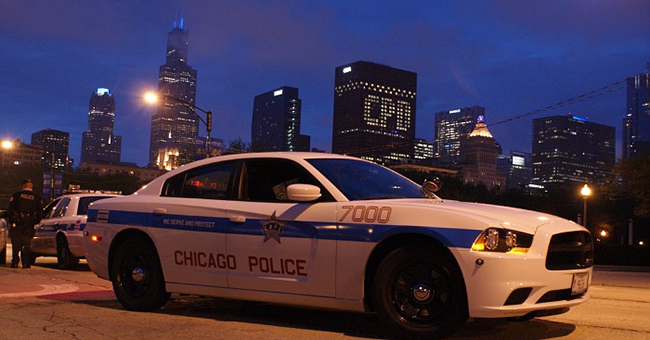
    Chicago police carWielding only hammers, law enforcement executives often treat the world as if it were made of nails. Within the Chicago Police Department, this limited worldview has led to fatal flaws in departmental strategy and culture.

    Some of these flaws were documented in a 164-page report by the United States Department of Justice, which drew on meetings with “over 340 Chicago Police Department members and 23 members of the Independent Police Review Authority.” The report covers a litany of civil rights violations by the Chicago Police Department, with a primary focus on its “pattern or practice of unconstitutional use of force.” It calls for deep reforms to support everything from officer wellness to community-focused policing which, not incidentally, are deeply linked. The report also calls on those who govern the department to “[e]nsure that officers police fairly and compassionately in all neighborhoods, including in those with high rates of violent crime and in minority communities."

    Not everyone involved in the report stood by the full extent of this conclusion. In his outgoing letter as the United States Attorney for the Northern District of Illinois, Zach Fardon demonstrated a unique version of a hammer chasing nails.

    His letter called for five basic policy changes. First, he called for a consent decree to ensure that an independent federal monitor oversees reforms at the Chicago Police Department, a move that very much reinforces the DOJ report. Accompanying this call, Fardon also argued for substantial increases in the policing budget. Next, Fardon called for expanded federal law enforcement, with a special consolidated taskforce focused on violence through traditional aggressive strategies. Then Fardon went on to argue that the disease of violence is now spread through social media. Shortly after his appeal for more federal officers, he wrote, “Don’t send in the National Guard, send in the tech geeks. If a gang member makes CPD’s Strategic Subject List, find a way to curb or realtime monitor that gang member’s social media accounts.” Fardon recognizes that his proposal would worry some defenders of the first amendment, but wrote “let's test those limits. Lives are at stake." His final two appeals were to create a permanent funding stream for youth centers in neighborhoods with high levels of violence, and to end a bail bond system that allows accused gang members and repeat gun offenders to leave confinement before their trails.

    Fardon’s policy vision covers a lot of ground in a short amount of time, but is primarily based upon the idea that more resources towards a punishment agenda will create peace and, somehow, help to restore the law’s legitimacy in South and West Side areas like Austin. For example, he writes, “you can’t have a top-flight police department on the cheap. For decades, CPD has been run on the cheap. Officers don’t have the training, the supervision, the equipment, or culture they need and deserve.” He leaves this point especially open-ended, so that some readers can see at is a call for officers to have access to higher grade assault weapons, while others can see it as a plea for officers to have better counseling and wellness resources to process the intensity of their jobs.

    Throughout the letter, Fardon references the Laquan McDonald case multiple times. It is a rare through-line for his arguments. Although Fardon himself was an instrumental part in the DOJ study of abuses of power within the Chicago Police Department, he blames the non-governmental police accountability efforts that followed Laquan’s murder for many of the ills Chicago faces. Spikes in street violence, distrust in law enforcement, and cultural changes in gang’s online behavior are all traced back to coverage and consequences that followed the cover-up of the murder.

    Fardon’s is an unorthodox argument. It is also a very dangerous one. It reads like a twisted version of the self-protective instinct, where accountability for harm, rather than the harm itself, is blamed for the fallout. On their own, many of Fardon’s basic observations are insightful. Street violence has been on the rise. Trust in the rule of law has continued to plummet. Social media does perpetuate cycles of violence in ways that are historically unprecedented. But all of these trends were unfolding well before Chicago police officers agreed to maintain the constitution through an agreement with the American Civil Liberties Union (ACLU). The conclusions that Fardon draws from these observations miss the mark, revealing a mix of limited logic and historical amnesia.

    In particular, his claim that police accountability is responsible for increases in violence must be unpacked. By his reasoning, the video of Jason Van Dyke killing Laquan forced a contract between the Chicago Police Department and the ACLU, which had previously sued the department over stop-and-frisk practices. He views that contract as the precipitating force for declines in police officer performance, under the assumption that it tells officers that before talking with “kids on the corner” they must now “take 40 minutes to fill out a form” and then give them a receipt with their badge number on it.

    Fardon writes, “[B]y January 2016, the city was on fire. We had no police superintendent. Cops were under scrutiny. Cops had to worry about the ACLU deal. And many of them just no longer wanted to wear the risk of stopping suspects…So cops stopped making stops. And kids started shooting more—because they could, and because the rule of law, law enforcement, had been delegitimized. And that created an atmosphere of chaos.” There are several deep flaws with this argument. First, the paperwork he describes actually doesn’t take that long and doesn’t prevent officers from searching anyone; it is just meant to ensure that their searches are based on probable cause. Second, street violence was already on the rise in Chicago in 2015, well before the ACLU agreement. Third, Chicago’s spikes in violence are part of a broader national trend, impacting cities from Dallas to Louisville.

    But even if Fardon was right, even if declines in police morale led to declines in suppression and, in turn, less aggressive policing allowed for more violence, then another problem would have to be addressed. Why is Chicago still so dependent on strategies that threaten first amendment rights and lead to massive spending on punishment? More than thirty years into the city, county, and state’s broad investments in mass incarceration, why has there not been a turn to a much wider peacemaking portfolio? If peace and justice are really the objective, those are questions that must be answered.


    About the Author 

    Ryan Lugalia-Hollon is co-author, with Dan Cooper, of a forthcoming book from Beacon Press on policing and punishment in Chicago neighborhoods. 

  • By Tony Bartelme

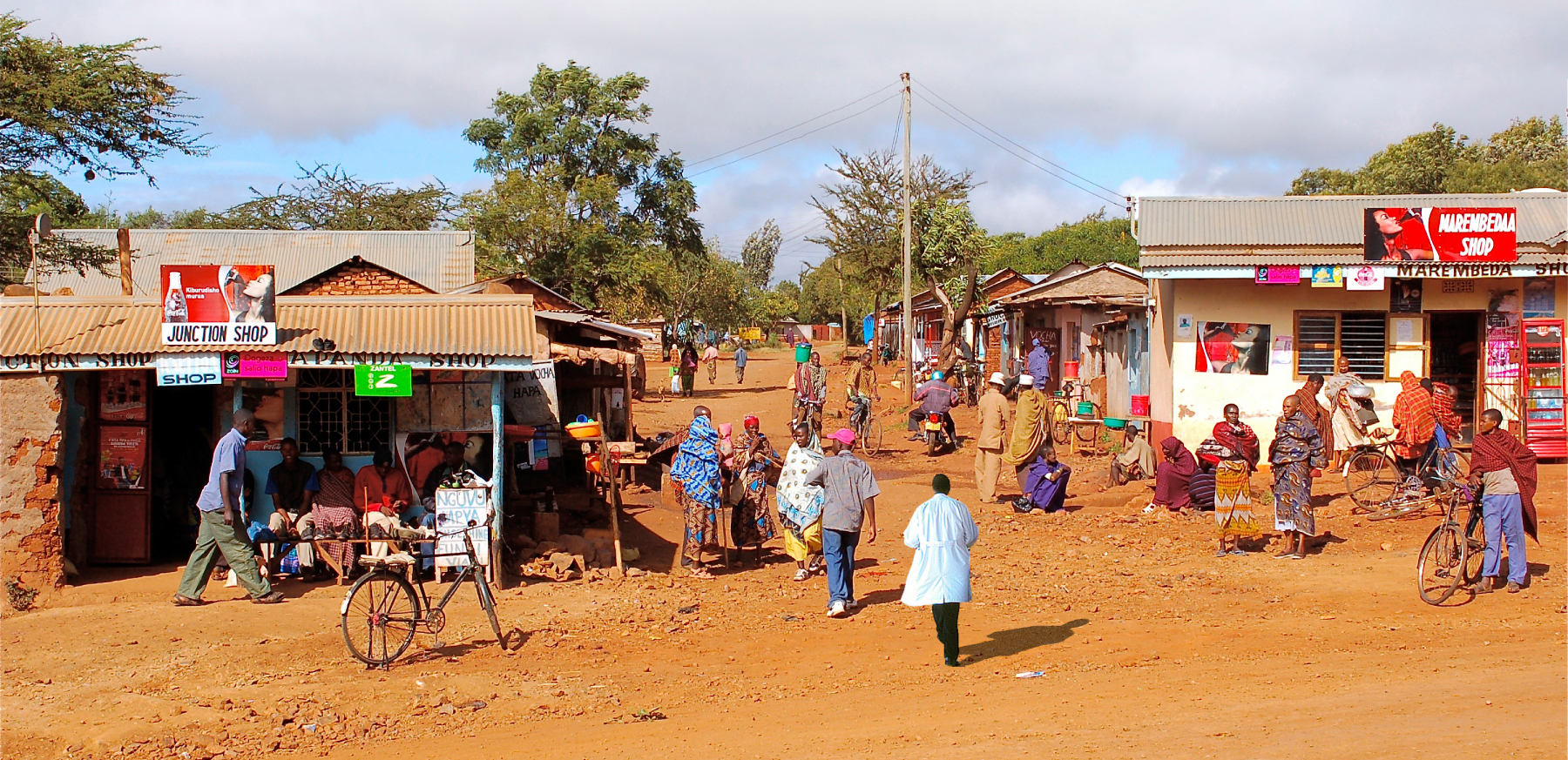
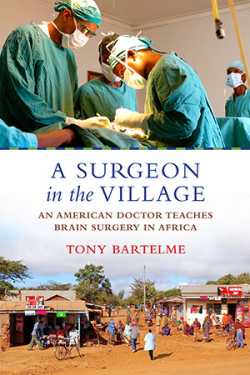
    TanzaniaHappy Publication Day to Tony Bartelme and his book A Surgeon in the Village: An American Doctor Teaches Brain Surgery in Africa! In A Surgeon in the Village, Bartelme chronicles the inspiring story of the doctors who helped cultivate medical sustainability in Tanzania, a country with just three practicing neurosurgeons for a population of forty million people. He follows the journeys of accomplished neurosurgeon Dr. Dilan Ellegala, born in Sri Lanka and raised in South Dakota, who took it upon himself to establish a “train-forward” method of teaching surgery that transformed the country’s healthcare system. Tanzanian farmer Emmanuel Mayegga became Dr. Ellegala’s first student, who then taught another Tanzanian how to perform the surgery.

    Bartelme also chronicles the budding relationship and eventual marriage of Ellegala and Carin Hoek, a pediatrician from the Netherlands with whom Ellegala founds Madaktari (‘doctors’ in Swahili) Africa, a nonprofit organization that incorporates his train-forward method for other Tanzanians. The following passage describes Hoek’s first day of rounds as a pediatrician at Haydom Lutheran Hospital in the Lena children’s ward. While watching children receive treatment for severe burns, she comes to terms with her expectations from being trained and educated in the Netherlands and how she would need to adjust them in her new post.

    ***

    To Carin’s eyes, some of the children looked as if they wouldn’t last the night; rail thin, they had the faraway gazes of prison inmates. A few children did indeed look well, but Sakweli made no move to discharge them. Odd. The ward was full; shouldn’t they discharge these healthy children to make more room?

    A voice in her mind said, “Wait, Ca. Just wait.”

    OK, I’ll wait. She would keep her hands behind her back, ask [her mentor] Sakweli basic questions: What steps do you take to diagnose a patient with malaria? How do you decide whether a patient has TB? Happy questions, ones that told Sakweli “I’m here to learn, not lecture you about how I did things in the Netherlands.”

    In the next room the children had bloated bellies and terrible edemas. “If you are wondering whether this is a kidney edema or malnutrition, look at their expressions,” Sakweli said. “If their eyes show despair, it is malnutrition, kwashiorkor.”

    Carin stared at a baby girl with big brown eyes, a swollen belly, and patches of hair; her brows were shaped in two pleading squiggles. Sakweli moved to another room with more starving children. Sometimes Sakweli spoke so softly that she could barely hear him. Her legs began to ache; her muscles grew stiff when she observed others; and her mind mimicked her hair in the wind, scattering even as she tried to move it back in place. Yes, the cottage needs work; I need to mend the holes in the mosquito net. What about Emma? She’s leaving soon. What do you give someone who leaves Haydom? When the tasks grew too numerous to remember, she took out a pen and scribbled notes on her arm. Soon her arm was full of temporary tattoos.

    “Aaaieeee!” A child’s scream brought her back. They rushed to an open door. Carin smelled decay and soap. Two nurses were next to a galvanized tub that contained a girl who looked to be about eight years old. She had the same swooping eyebrows as Angela’s. The girl’s eyes were full of tears. She had bandages around her torso, shoulder, and left arm. Her legs were missing from her knees down; the stumps were wrapped in gauze.

    “Pole sana, basi, pole sana (sorry, all right then, sorry),” the nurses said as they unwrapped another bandage. The girl’s scream rose like a wave, then broke into a foam of sobs and shallow breaths. Her exposed flesh was black and pink. A few feet away, her brother watched with wide eyes. His back was charred from his buttocks to his neck. He was next.

    “Oh, what happened?” Carin asked.

    “Burns,” Nurse Angela said. A pot of boiling oil fell on them. The girl lost her legs, but they were both on a list to get skin grafts. A plastic surgeon from California sometimes visited and did grafts. And the AMO named Mayegga also knew how to do them.

    “Angela, this suffering breaks my heart. Do these children get any pain medication?”

    “Oh, yes, we give them acetaminophen.”

    A Surgeon in the VillageCarin smiled back, but this one was forced. Acetaminophen? Tylenol? That’s for fevers and headaches. In the Netherlands, they put patients under when dressing severe burns. She moved her hands from behind her back to the front. Painkillers, where are the painkillers?

    Wait, Ca, wait. Put it on the list.

    Still shaken, Carin followed Sakweli and Angela to neonatology, which doubled as the orphanage. By the wall, a high table contained a row of babies. A few of their faces had bluish-gray tints. They’re hypoxic!

    Another table of babies was across the room, the orphans. Some had rolled onto each other’s blankets. They looked healthy. Trying to be positive, Carin said to an older nurse named Mama Kidogo, “The orphans look very happy.”

    “Their tears run inside,” Mama Kidogo replied.

    Carin looked at the premature babies struggling for oxygen, and then back at the orphans who had equally uncertain futures. Like divorcing parents, the arguments in her mind grew louder. Make changes, she thought. Immediately. Then the voice again, that damn voice. “Wait, Ca, wait. For at least six months.” But how could she wait? Even for a minute? Don’t these children deserve the best care possible? Now?   

    “Please excuse me,” she said. When her mind overflowed like this in the Netherlands, she fled to the beach, especially if the weather was gray and windy. Then the beach would be empty and she could face the wind and sing and scream into it, and because the ripping wind drowned everything but her own voice, it was just her and her thoughts. She could sort through the ones that mattered. Was there a place like this in Haydom?

    She left through the double doors, passing Lena’s photograph. She marched back to her cottage, thinking about the children and then the Flying Medical Service plane she’d arrived in the day before. Yes, the airstrip.

    She exchanged her clogs for running shoes and followed the dirt driveway to the hospital gates. Was it right to stand by and let a child suffer? I could have done something. Her mentor’s voice again: “No, dear, they managed for decades without you. Aren’t you really trying to comfort yourself?”

    When she reached the airstrip, she pulled out a pink moleskin notebook and crouched on one knee. She used her knee as a desk and jotted notes about procedures and protocols she wanted to change. In a few moments, she filled several pages with scribbles and arrows and underlined words. Then she walked briskly back to her cottage, tore the pages from the notebook, and stuffed them in a wooden nightstand. She sealed the drawer with duct tape, then stood straight, took a deep breath, and burst into laughter.

    Her mentor had been right all along.


    About the Author 

    Tony BartelmeTony Bartelme has received numerous national awards for his investigative reports, including honors by the Scripps Foundation, Sigma Delta Chi, and Gerald Loeb Foundation. He has been a finalist for the Pulitzer Prize three times, including the series that is the basis for A Surgeon in the Village, which he spent four years researching and writing. He was the recipient of a 2011 Harvard University Nieman Fellowship and is a graduate of Northwestern University’s Medill School of Journalism. He is senior projects reporter for the Post and Courier, in Charleston, South Carolina, where he lives. Follow him on Twitter at @tbartelme and visit his website.