• By Martin Moran

    Statue of LibertyA few years ago I had the privilege of serving as a French-speaking interpreter for a group of refugees, many of them survivors of torture, who were seeking asylum in the United States. Most of the immigrants I worked with were from war-torn regions of Africa. They all happened to be Muslim. In recent weeks, with the issuing of a travel ban against seven predominately Muslim countries and news of many immigrants being deported, I have been thinking constantly about the men and women I worked with, especially one young man whom I’ve called Siba in my recent book, All the Rage: A Quest.

    I first met him at New York’s Saint Luke’s Roosevelt Hospital on a frigid February day. We were there for his first required medical interview. We shook hands, and I was startled by his bright smile. I realized I was expecting someone broken.

    The doctor asked Siba questions about his time as a political prisoner, details of his arrest and harrowing escape. Then, I watched as the doctor held a yellow measuring tape between Siba’s shoulder blades, documenting the length and breadth of each scar carved across his back. This was evidence the judge would need, proof of cruelty written across the body. These notes would be attached to an I-589, a Department of Homeland Security Application for Asylum. At times, the doctor touched a particular scar and asked: “Now, is this from the wooden club, or was this from the broken glass?” I translated all this, glancing now and again out the window toward the Metropolitan Opera House, shaken and amazed at Siba’s calm as he described how the soldiers bent and bound his limbs around the glass, how they tightened the ropes and yelled questions, beating him about the head and back until he passed out.

    “This happened how many times?” the doctor asked.

    “Four.”

    “Did you always lose consciousness?”

    “Yes. Each time, I woke up back in my cell.”

    When we finished that initial interview the doctor had said, “I will write the best report I can for you. The United Sates would be lucky to have you.” Siba burst into sobs.

    Sometimes I would take the PATH train out to Jersey City to the International Institute, an organization founded in 1917 by a group of civic-minded New Jersey Moms who wanted to help immigrants adjust to life in America. (It’s doors closed recently due to lack of funding.) It was always a bustling place—filled with people in turbans and saris and the smell of all kinds of foods. English classes and counseling and game nights. There, I played Scrabble, shared soda, and even went bowling with groups of men and women from across the globe. And none, in my experience, were more polite and studious, abstemious and respectful, than Siba and his fellow Muslims.

    On one of my visits with him, on a day I was no doubt struggling with my own problems, I remember bursting out, asking him, “Aren’t you angry? I mean, don’t you hate them for what they did to you?” He proceeded to explain to me that the men who took him prisoner had never had a chance to go to school like he had. That most of them had nothing.

    “They are analphabet,” he said. “They don't know what they are doing.” 

    I stood amazed at his capacity for compassion.

    All the RageA few years after our very first meeting, he called. His voice was seven pitches higher: “Monsieur Martin!” He told me how he cried like a kid, that his lawyer did too, when the judge pronounced the words: Asylum Granted. I suggested that we organize a celebratory dinner but he told me there was only one thing that he wanted to do.

    “Martin, I want to go to the Statue of Liberty and take a picture there.”

    I’ve lived in New York for over thirty years. I’m ashamed to say I had never visited the statue. I met him on a sunny Saturday downtown near the sandwich shop where he worked washing dishes. We hiked south to Battery Park to board the boat. There, among the huddled masses yearning to get through security, the engines fired up and you might have thought we were taking a trip to Tahiti or Thailand on that ten-minute ride across New York Harbor to Liberty Island. Siba dashed from railing to railing pointing at the shifting skyline. “Look, Martin, New Jersey!” he cried. And then, over the sound of the churning wake, he sang out to me: “You are lucky to be born here, Martin. Here you have justice!”

    I believe I heard the word, the depth and truth of it, for the first time in my life.

    Siba, who’d borrowed a camera for the day, rushed off the boat taking photos from every possible angle. Welcome to “Liberty Enlightening The World,” one brochure proclaimed. That’s her official title, the name bestowed by the French Government when they offered her as a gift. We turned to a friendly ranger, a dark-haired fire-plug of a guy. His nametag said Brad.

    “Why are there seven spikes on her head?” Siba asked.

    “They represent the seven continents,” Brad replied. 

    At one point, Siba noticed something I had never known or heard of. A broken chain and shackle carved beneath Lady Liberty’s feet. “Sir, what does that stand for?”  

    Ranger Brad pointed and said, “That represents the smashing of tyranny.”

    I last spoke with Siba a few years ago. He was living in Houston driving a delivery truck, saving like mad to bring his wife and child to America.

    I happen to live on a street named for Saint Frances Xavier Cabrini. She is the patron saint of immigrants. She came from Italy. She was the first American citizen to be canonized. In her years here, she managed to found sixty-seven schools, hospitals, and orphanages. I pass a bronze bust of her every day on my way to the subway. Her body is actually encased in glass beneath the altar of the church right across the street from where you catch the A train. These past days, it has been particularly painful and poignant to glance up at her bright face. I realize I have been looking for her reaction to this sudden and unwarranted slamming of our doors to so many immigrants. Most of whom have been thoroughly vetted and waiting for a long time for the sanctuary they desperately need. I hear Mother Cabrini’s voice, along with so many of my fellow countrymen reminding us that, though it is not easy, we are called to compassion. Not fear. That we are, as Siba so often and so vividly reminded me, a beacon for the world. It’s not a tight fist that is raised over our harbor, but a bright torch.


    About the Author 

    image from www.beaconbroadside.comMartin Moran’s previous memoir, The Tricky Part, received the 2005 Lambda Belles Lettres Award, and his one-man lay of the same name was honored with a 2004 Obie. His recent play, All the Rage, won the 2013 Lucille Lortel Award for Outstanding Off-Broadway Solo Show. Moran’s writing has appeared in Ploughshares, the Pushcart Prize anthology, and the New York Times. As an actor he has appeared on television and on and off Broadway in many shows, including Spamalot, Titanic, Cabaret, Bells Are Ringing, Floyd Collins, 3 Kinds of Exile, and A Man of No Importance. Moran lives in New York City with his husband, Henry Stram. Follow him on Twitter at @MartinMoranJr.

  • A Q&A with Stacey Patton by Sylvia Snowden

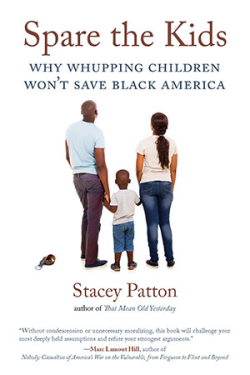
    Passing Down Historial Trauma Through Whupping Black ChildrenThis interview appeared originally in Ebony.

    We’ve all seen it. The two-year old who has fallen out, kicking and screaming in the middle of a store, or the mouthy, defiant teenager who’s rolling her eyes and her neck at everything. It’s easy to look at kids like that and think, “That kid needs is a good, butt whupping!”

    According to a 2015 Pew Research survey, Black parents are more than twice as likely as White parents and nearly twice as likely as Hispanic parents to use corporal punishment to discipline their children on a regular basis.  Black parents are also far less likely than White or Hispanic parents to never spank their children. And that’s the sort of parenting pathology that Dr. Stacey Patton hopes to combat.

    Patton, who holds a Ph.D. in African-American History, and is the author of a new book, Spare the Kids: Why Whupping Children Won’t Save Black America, urges Black parents to look at the history and the impact of the practice and reconsider. EBONY.com sat down with Dr. Patton for an in-depth look at her findings.

    EBONY: Why do you think we hit our children?

    Dr. Stacey Patton: People think that hitting a child is a form of teaching. We think it will protect them. And people grow up to invert the violence they experience as children as something that was good, particularly in African-American culture. As a people, we attribute our success to having had our bodies processed through violence and quite frankly what it does is confirm a long-standing racist narrative about Black bodies. The only way to control us, the only way to make us “good,” law-abiding, moral people is with a good whupping. It seems that we unconsciously agree with that narrative.

    Spare the KidsEBONY: You said in your book that Black people are “the most locked up, unhealthy, stressed out, demonized group of people in America. Whupping children hasn’t saved us from any of this!” So why do you think we believe it has?

    Dr. Stacey Patton: We don’t make the connection between the historical traumas, the science that talks about the psychological damage that hitting children has, the chronic illnesses that get produced by hitting children, the domestic violence between Black men and women or the shootings in the streets. We don’t take a moment to stop and look and say, “How much of that is attributed to what’s happened to us in the foundational moment of our lives (which is childhood)?” We don’t make those connections.

    EBONY: You also explore the Black church in your book. You say the church has always urged parents to use “the rod of correction,” but then you point out that the phrase, “Spare the rod, spoil the child” isn’t actually in the Bible, and Jesus was a gentle person who liked children. Would Jesus spank? Where did we get that from?

    Dr. Stacey Patton: Firstly, I should say that I’m not a Christian, though I was raised in the Black church. In the New Testament there’s no evidence whatsoever, that Jesus hit children. Based on Jesus’ principals of empathy, love, and his directives to adults on how to treat children, I don’t think he would have whupped a child. The whole, “Spare the rod, spoil the child” misinterpretation is Old Testament. I pushed this conversation a little further to say, “Listen, first of all, African-Americans have only been Christians for about 200 years.” And we came to Christianity through our brutal, horrible and dark mistreatment during slavery. There’s absolutely no evidence that Black people in West Africa treated their children with this kind of ritualistic violence prior to contact with European missionaries. We need to interrogate this theology.

    EBONY: Talk about the specific damage we do to our male and female children when we hit them.

    Dr. Stacey Patton: I interviewed Black men to learn if there was any connection between mothers beating their sons as boys and how they grew up to treat women later in life. I found that many of their stories confirmed what the psychological literature had been saying for decades. These men grow up to have some really ugly attitudes towards women.


    Read more at Ebony.


    About the Author 

    Stacey PattonDr. Stacey Patton is an award-winning journalist, author, and child advocate. Her writing on issues surrounding higher education, child welfare, and race has appeared in the Washington Post, Al Jazeera, the BBC News, and the Root. She is also the author of That Mean Old Yesterday and the creator of the anti-corporal punishment organization Spare the Kids.

  • By Gayatri Patnaik

    Beacon's Immigration TitlesOne of my sharpest memories as a girl was when an immigration officer came to our house in rural Finzel, Maryland when I was about nine years old. He showed up at our house unannounced, and I still remember the stunned look on my mother’s face when she answered the door. I didn’t realize until much later how high the stakes were or how very close we had come to being deported. While I can’t share specifics, I can say that one of the things the officer asked for was the phone number of people my mother knew who could attest to her character. And I remember sitting there in our kitchen hearing the one-sided conversation as he called friends or acquaintances or colleagues of my mother’s, one after another. When he left, I walked with him to the door and he shook my mother’s hand and told her she was a remarkable woman and that if she didn’t hear from him in the next six months, she wouldn’t have to worry about her citizenship status further.

    We never heard from the man again, but, not surprisingly, and as with other friends who are immigrants, this experience altered and shaped our experience in the United States.

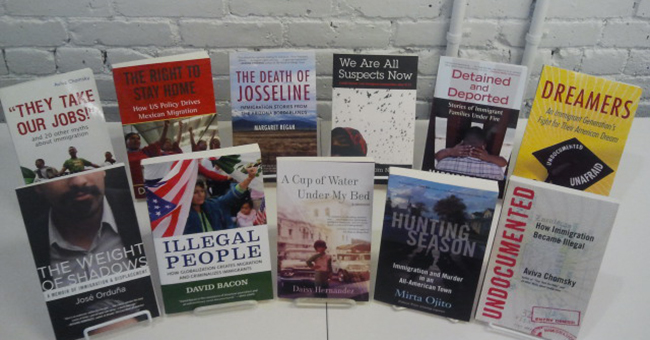
    One of my great joys at Beacon Press is being able to sign progressive books on the issue of immigration and I want to bring eleven of those titles to your attention. They deserve to be read and debated, now more than ever:

    We Are All Suspects Now: Untold Stories from Immigrant Communities After 9/11 by Tram Nguyen is about the human cost of the domestic ‘war on terror’ which eerily echoes our times.

    David Bacon’s two books—Illegal People: How Globalization Creates Migration and Criminalizes Immigrants and The Right to Stay Home: How US Policy Drives Mexican Migration—are about how the decision to migrate is rarely voluntary.

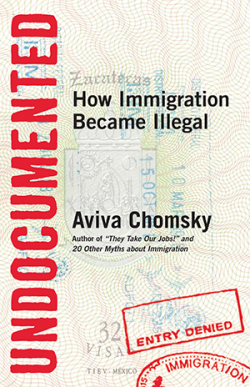
    Aviva Chomsky two books—“They Take Our Jobs!”: And 20 Other Myths about Immigration and Undocumented: How Immigration Became Illegal—debunks myths about immigration and also shows how ‘illegality’ is a concept that was created to exclude and exploit.

    Margaret Regan’s The Death of Josseline: Immigration Stories from the Arizona Borderlands and her most recent book Detained and Deported: Stories of Immigrant Stories Under Fire humanize the issue in unforgettable ways. In Detained and Deported, you meet immigrants who, after living in the US for years, now languish in detention centers—often torn from their families—for months or years. Regan demonstrates how increasingly draconian detention and deportation policies have broadened police powers, while enriching a private prison industry whose profits are derived from human suffering.  

    Journalist Mirta Ojito’s Hunting Season: Immigration and Murder in an All-American Town is the compelling story of the murder of Marcelo Lucero, an undocumented Ecuadorean immigrant, in November 2008 in Patchogue, New York. Drawing on first-hand interviews, it’s an unflinching portrait of one community’s struggle to reconcile the hate and fear underlying the idyllic veneer of the all-American town.

    Journalist Eileen Truax’s Dreamers: An Immigrant Generation’s Fight for Their American Dream is a recent and urgent book focusing on the undocumented immigrants who came to the US as children. They are, as President Obama reflected, American “in every single way but one: on paper.”

    I conclude with two stunningly written memoirs—Daisy Hernandez’s A Cup of Water Under My Bed and José Orduña’s The Weight of Shadows: A Memoir of Immigration & Displacement. Sandra Cisneros calls Daisy’s book, “A wonderful, heartbreaking, necessary story…” Richard Rodriguez reflected on José’s “exuberant, outlaw literary style…that exactly matches the many ironies of being—and not quite ever being—a North American.”


    About the Author 

    Gayatri PatnaikPreviously an editor at both Palgrave Macmillan and Routledge, editorial director Gayatri Patnaik has been at Beacon Press nearly fifteen years and has published authors including Cornel West, Kate Bornstein, Marcus Rediker and Mary Frances Berry. She acquires in US History, with a focus on African American History and race/ethnicity/immigration, and began Beacon’s “ReVisioning American History” series. Gayatri occasionally signs memoir, began Beacon’s LGBTQ series, “Queer Action/Queer Ideas,” (edited with Michael Bronski) and developed books in “The King Legacy,” with Joanna Green, in a series about Dr. Martin Luther King, Jr. Follow her on Twitter at @gpatnaik1.

  • By Margaret Regan

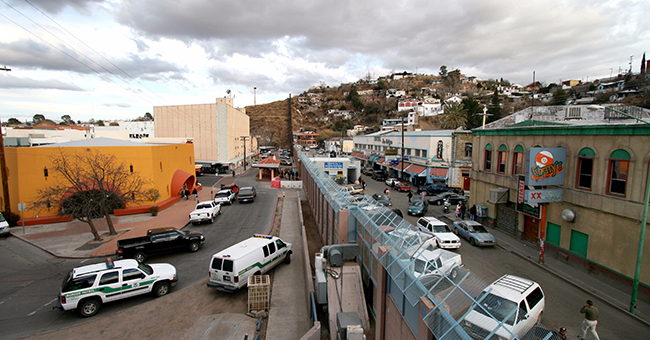
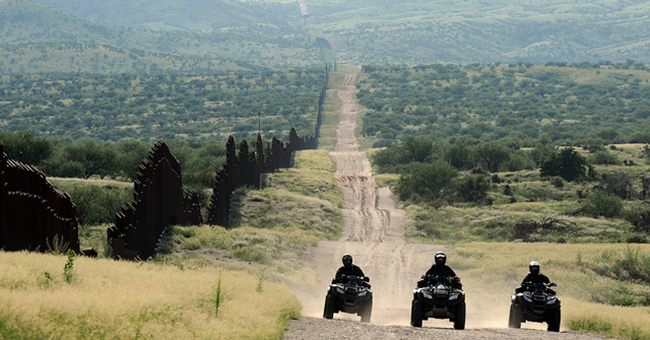
    Mexican-American border at Nogales

    Mexican-American border at Nogales. Photo credit: Sgt. 1st Class Gordon Hyde

    On February 9, Guadalupe García de Rayos was deported to Nogales, Sonora, Mexico, a border town more than three hours from her home in Phoenix. Now thirty-six, she had lived in the US for twenty-two years since the age of fourteen. The mother of two teenagers, both US citizens, García de Rayos was first arrested eight years ago after she used a fake Social Security number to get a cleaning job in an amusement park. She was convicted of identity theft, a crime categorized as a felony under an Arizona law openly designed to criminalize immigrants.

    She served six months in jail. In the years since, García de Reyos lived peacefully with her family and regularly reported to Immigration Customs Enforcement (ICE), as instructed. But this time, when she turned up for her regular check-in, ICE detained her. She was held all night and then deported to Nogales the next day. ICE denies that the action was triggered by President Trump’s harsh new policies, but García de Rayos was expelled just two weeks after he issued an executive order calling for the deportation of any immigrant charged or convicted of a crime, no matter how minor. It was a measure he took, he said, “to ensure the safety of the American people.”  

    In my book Detained and Deported: Stories of Immigrant Families Under Fire, I wrote a chapter about the difficulties faced by deportees like García de Rayos when they are suddenly dumped across the border into Nogales.

    ***

    On a beastly hot June day, Jesús Arturo Madrid Rosas stood near the DeConcini Port of Entry, keeping a close eye on the street that transformed itself from Grand Avenue, Nogales, Arizona, into Avenida Adolfo López Mateos, Nogales, Sonora. The United States and Mexico jostled up against each other at the crowded crossing, and armed guards from the two nations—prowled just steps away from each other. Jesús was on the lookout for deportados. He was an officer for Mexico’s federal Repatriación Humana agency, and it was his job to welcome his deported compatriots back to their native land.

    He never knew quite when the exiles would be arriving. They turned up at all times of day and night, whether they were first-time border crossers freshly plucked from the desert or Mexicans who’d lived so long in the United States they could barely remember the land of their birth. On this day, a large group of deportees had arrived by the dawn’s earliest light, and now, at midmorning, he figured the Border Patrol would soon deliver more. But he’d been on the job long enough to know that the agents didn’t always stick to their own rules.

    “They’re supposed to send children, women and the sick before six p.m.,” he said. “But they arrive at all hours. Maybe five times a month these groups arrive in the middle of the night.”

    The wee-hour drop-offs were particularly problematic for the women. Nogales’ red-light district was just a block to the east, and hustlers, pimps, extortionists and drug dealers lurked in the streets. Even by day, the deportees were easily preyed upon.

    “There are coyotes,” Jesús said, “those trying to trick them with phone calls. It’s dangerous.” The scammers routinely tried to get the phone numbers of the deportees’ families to extort money out of them. And narcotraficantes were always looking to turn would-be migrants into “mules” who would haul marijuana through Arizona’s treacherous back canyons. The deportees used to be shuffled through the safer Mariposa Port of Entry on the quiet west side of town, but the Americans had been rebuilding it for some years. For now, it was Jesús’ job to spot the newcomers at the chaotic downtown crossing and guide them to safety.

    An unmarked white U.S. van soon pulled to a halt in the no-man’s-land between the two nations. Two women and two men climbed out, still dusty from the desert, their backpacks in their arms. They trudged wearily down a fenced metal walkway back to Mexico and stepped across the line.

    “Bienvenidos,” Jesús greeted them. Welcome.

    Since the turn of the century, after the United States sealed off safer urban crossings in El Paso, Texas, and San Diego, would-be migrants have opted to cross through the deadly Arizona desert. And given the dramatic uptick in immigration and border enforcement, that meant that every year, Nogales got thousands of destitute returnees who were caught by Border Patrol or Immigration and Customs Enforcement and sent back. The flood of strangers became a permanent feature of life in Nogales, and the Mexican government was forced to act.

    “We provide a lot of support to the deportees,” Jesús said in Spanish. “We’ve been doing this since 2008.”

    Before then, deportees mostly had to find their own way through a maze of programs run by charitable groups and the local government. When the Mexican feds got involved, the Repatriación Humana agency not only partnered with the local groups, it set up a formal receiving center right on the border and offered services of its own. The agency had a nurse on the premises; in May 2013, the clinic treated no fewer than 584 returnees. Most had suffered from dehydration or blisters inflicted by the Arizona desert; one patient, in serious condition, had been taken by ambulance to the hospital.

    Repatriación offered the displaced half-price tickets home and issued deportee IDs that entitled the newcomers to services. For eight days, they could eat hot meals at the comedor, an eatery run by the Catholic Kino Border Initiative, and for three nights, they could bunk down in Albergue San Juan Bosco, a private shelter up in the hills. Grupos Beta, the federal agency charged with helping migrants, would drive them where they needed to go and provide a place to hang out during the day. Beta had a migrant aid office not far from the comedor and had invited Kino to operate a medical clinic there to care for ill and injured travelers. The humanitarian group No More Deaths ran a telephone ministry in the office’s front yard, where deportees could phone home.

    The needs were great, Jesús said somberly, and the plight of the repatriated was under worldwide scrutiny. Criticism had flared over violations of migrant human rights on both sides of the border. “The eyes of the world are upon us.”

    Gatekeeping was one of Jesús’ most important jobs. He had to make sure none of the newly returned were minors traveling alone—if they were, they’d go straight to DIF, the Mexican social services agency. If he suspected they were Central Americans masquerading as Mexicans, then back to Arizona they’d go. It would be up to Uncle Sam to deal with them. Jesús was satisfied with the answers of the four who had just arrived. Three were from Mexico’s poverty-stricken south; two, a married couple, were from Oaxaca; and the other woman was from Guerrero. All three had the dark skin and small stature of the nation’s indígenas. The other man had just been returned home: Nogales, Sonora, was his birthplace.

    They were all young. Both women were just eighteen, the husband was twenty-three, and the oldest, the Nogalense, was a venerable twenty-nine. None of them had made it far into the Promised Land. They’d been captured by the Border Patrol after a short desert trek, funneled through the agency’s jail and dropped back over the border.

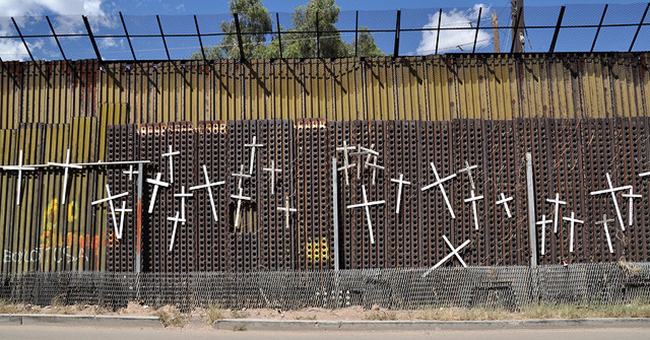
    White crosses with the names of those who have died crossing the US border adorn the Mexican side of the wall in Heroica Nogales, Mexico.

    White crosses with the names of those who have died crossing the US border adorn the Mexican side of the wall in Heroica Nogales, Mexico. Photo credit: Jonathan McIntosh.

    Arizona was in the grip of a deadly heat wave that would keep the temperatures simmering at 100 degrees or more for an unprecedented thirty-nine days straight and claim the lives of thirty-five migrants. No one in the office knew it yet, but the skeletons of two border crossers had been pulled out of the dirt that very day, one just seven miles away. Those bones had been found northeast of Nogales, Arizona, a stone’s throw from the Kino Springs Country Club, where an irrigated golf course glittered emerald green, like an Irish mirage in the desiccated landscape.

    No More Deaths volunteers had been patrolling Arizona’s dry desert since 2004, trying to save migrants from dying. And for years they’d run an aid station for deportees in Nogales, Sonora. But in 2010 the volunteers had switched from dispensing burritos to offering phones. They’d discovered that a growing number of deportees had lived in America for many years. Their most pressing need was to call their families, in Mexico, but also in cities all over the United States. 

    Over at the phone ministry, volunteer Dorothy Chao was patiently helping travelers. “I’ve seen people cry,” she said. “It’s their first contact with their family.” Fernanda, a thrity-seven-year-old fruit picker who’d grown up in the Pacific Northwest, was standing patiently in line after eating a hearty breakfast at the comedor. She had to telephone two countries to reach her divided family: her mom and kids were in Washington state and her husband was back in the Mexican city of Morelia. Fernanda’s childhood in the United States had been more Third World than modern American; instead of going to school, she had picked apples and peaches for American tables. She had three US-citizen children; she’d gone back to Mexico only after her husband was picked up in a traffic stop and deported. Now she regretted leaving. She was trying to get back to her kids, but so far she’d been caught twice in the Arizona desert. Like so many other long-term undocumented residents in the United States, she was learning that the crossing was far more difficult than it had been when she was a child. Now she was in a near-panic, terrified that she wouldn’t see her children again. It helped to talk to them by phone.

    Gregorio Rivera Sanchez, a forty-seven-year-old who worked construction in Chicago, was limping around on crutches, awaiting his turn at the phones. He had a menstrual pad stuck inside the plastic Crocs he was wearing, to cushion the monster blister on the bottom of his foot. Worse, his knee was banged up from a fall in the hills west of Green Valley, thirty miles south of Tucson. And there were angry bruises all over his back.

    Gregorio had first come to the United States from Mexico twenty-five years earlier. And until now he’d always been able to get back easily for visits. This last time, he’d gone back to Acapulco for a year to live with his wife and be a father to their two kids. When the money ran out, he’d gone north again, bound for Chi-Town. This time the crossing was harrowing. He saw a human skull in the Arizona desert, and by the fourth night, he’d developed a debilitating blister. On the fifth, he fell in the darkness and tumbled down a slope. His leg was too badly banged up for him to continue the hike—he learned later he’d torn tendons in his knee—and his group left him behind.

    Border Patrol agents patrol the U.S. border with Mexico seen near Nogales, Arizona.

    Border Patrol agents patrol the U.S. border with Mexico seen near Nogales, Arizona. Photo credit: Jim Greenhill.

    The Border Patrol found him two days later. One agent ordered him to get up, he said, and when Gregorio couldn’t, the agent angrily kicked the injured knee. Then other “migra” handcuffed him and threw him into their truck, hurting his back. The Border Patrol held him for three days, and the only real medical care agents dispensed was a pair of crutches, he said. Gregorio used them to walk back over the line when he was deported.

    “I’m coming home,” he told his wife when he finally got the phone. He didn’t tell her about the injuries, not yet. He didn’t want her to know that he wouldn’t be able to work for a long time. Not that it mattered. There was no work in Guerrero anyway.

    The comedor was located in a tumbledown stucco building on a deserted street not far from the Grupos Beta aid center. The steep stairs leading up to the doorway were so uneven that even the nimblest of migrants had to grip the railing. Workers had tried to brighten the place up, covering its peeling walls with Rivera–style murals of campesinos laboring in the fields or crossing the desert. A migrant version of “The Last Supper” presided over the dining room.

    The comedor had been started by a local Catholic parish, Cristo Rey, years before, when migrants first began surging into Nogales. In 2009, the dining hall was folded into the Kino Border Initiative, a cross-border partnership named for a padre who roamed this land before there even was a border. The consortium included the Jesuits and the dioceses of Tucson and Hermosillo, but it was the Missionary Sisters of the Eucharist who commanded the comedor.

    With the help of a changing flotilla of volunteers, the nuns cooked up vast quantities of food in a tiny kitchen. They fed border crossers and deportees hot meals twice a day, seven days a week, 365 days a year. In 2012 the comedor counted some 58,000 meals served. The Kino group also paid a social worker to help diners with special needs, and volunteers dispensed donated clothing after the meals.

    On a blistering June day, two men limped into the nearly empty dining room. They were tardy for the 4 p.m. meal, and no wonder. Daniel Toral Moreno had lost most of his left leg; he was staggering along on his one good leg with the help of a pair of crutches. His buddy, Orbelín Salazar Valencia, still had both his legs, but one was encased in a cast from knee to foot. Orbelín was on crutches too, but as the more able-bodied of the pair, he shouldered two backpacks, Daniel’s and his own.

    Mexican music blared on a loudspeaker, a tenor singing happily in Spanish to a chorus of horns and violins. Maybe it was the effect of the beach music, but Daniel was remarkably calm for a fisherman who’d just lost a limb. Now thirty-two years old, he had grown up by the sea in lush Veracruz, a moist and mountainous state that cascades down to the Gulf of Mexico. In between stints on the water, he’d return to Veracruz, but the murderous drug wars had changed the beautiful old colonial town, and not for the better. Criminal cartels had taken root. “Los Zetas are in Veracruz now,” he said. “People are hanging from telephone poles.” In the fall of 2011, thirty-five people were tortured and slaughtered, their nude bodies dumped in a public roadway. Authorities blamed the murders on a turf war between the Zetas and an upstart cartel, New Generation. 

    The following year, Daniel fled the violence, with plans to follow a Veracruzano neighbor who had gone to Tucson. Landlocked Tucson was no place for a fisherman, but it had the advantage of being just seventy miles from the border. He had to make the trip on the cheap, and he would walk the desert without a coyote. 

    “I had 500 pesos altogether,” he said, the equivalent of $38. He paid for a bus to Mexico City, then he climbed atop a cargo train—the dreaded La Bestia—with the idea of riding it straight through to Nogales. Dangerous as that rooftop was, it was free. Daniel was one of many migrants on board, bracing themselves against the wind and the weather, clinging to whatever they could to keep from falling off.

    He managed to hang on for more than 1,000 miles, all the way to Benjamín Hill, a sleepy ranching and railroad town shy of Nogales by 100 miles. Then he was attacked. “Criminals were chasing me and assaulted me,” he said. “They took fifty pesos and my clothes.” Worse, much worse, he lost his balance in the scuffle and tumbled down from the boxcar roof to the tracks below. The train’s wheels sliced his leg off in an instant, and La Bestia just kept rolling along.

    Alone in the dark, Daniel dragged himself to a road. A passerby called the cops, and they sped him to the big-city hospital in Hermosillo, the capital of Sonora. He underwent emergency surgery, and after twenty days recuperating he caught a bus to Nogales. He’d learned that a charity there provided free prostheses. Now he was biding his time awaiting his new leg and pondering his future. It didn’t look likely that he’d ever get to America, and only time would tell whether he could ever return to the sea.

    The travelers couldn’t use any of the migrant services for long; even the phones were supposed to be reserved for the new arrivals. If deportees were still in Nogales after their three allotted days at the albergue, they could seek refuge in a series of shelters that spiraled down in quality. There was the Transportes Fronterizos bus station and its crumbling dorm. Then there was La Roca (The Rock), a cinder-block hilltop aerie right by the border wall. That one was run by an evangelical couple who were generous but penniless, and the deportees they welcomed slept on floors and used buckets of water to bathe.

    Deported men who had run out of options sometimes slept in the graveyard; an even lower circle of Nogales’ deportee hell was Tirabichi, the foul-smelling town dump. Male exiles occasionally joined the poorest of the town’s poor there, squatting in shacks slapped together from trash. For women, rock-bottom was prostitution. One young woman deported from Tucson was so terrified of the pimps trying to reel her in that she ran north through the port of entry. She was charged with felony re-entry. 

    Women did have one shelter option that was closed to men. The Kino Border Initiative ran Casa Nazaret, exclusively for women—and their children—who had been badly traumatized. It was housed in a couple of walk-up apartments on the fourth floor of a shabby mini high-rise on the west side of town. The Missionary Sisters of the Eucharist who ran the place had made it homey; flower-decorated posters celebrating women’s strength hung on the walls, and gauzy peach curtains drifted across the open windows, blocking the worst of the sun.
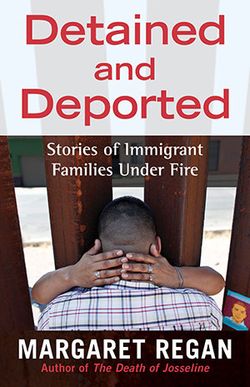
    Detained and Deported“We try to make this a family space,” said Sister María Engracia Robles, the Mexican nun who presided over the casa. “The women usually stay about eight days,” she continued, speaking in Spanish. The house had been named for the biblical childhood home of Jesus, Nazareth, where the Holy Family had lived together in peace and harmony. The residents were encouraged to cook and eat together to re-establish a feeling of normalcy, and they could call their families on the house phone. They could also get legal help. And if the deported women had children in the United States, the nuns could help them write letters assigning guardianship to a family member or friend.

    In 2012, 302 women had found refuge at Casa Nazaret. “The danger of violence is higher these days,” Robles said. “On this side the cartels are exploitive. On the other side, the migra. The walls are higher. We’re seeing many more broken bones.”

    The shelter’s youngest resident one day in June 2013 was Adira, a twenty-one-year-old rape victim from Oaxaca who had arrived two days before “in great crisis,” Robles said. Adira looked very young, with freckles sprinkled across her broad face. Her eyes were wide with terror. She wept without ceasing as she spoke, but her story poured out of her. At home, she’d been raped repeatedly. “It was horrible,” she said. “I wanted to leave all that and be as far away from Oaxaca as possible.” She signed on with a coyote in Sonora and crossed north into the Tohono O’odham reservation. Stretching seventy-five miles along the line between Arizona and Sonora, the rez was remote, hot and little populated. For years it had been the deadliest of migrant corridors in the Southwest. Adira had the bad luck to hike it during the record-breaking heat wave.

    “During the day the heat was horrible,” she said. The migrants soon ran out of water; some started bleeding from the nose, and Adira believed one of them died. She herself began to convulse. She lost track of time and started hallucinating. “In the desert the hills talked to me,” she said. “I was delirious.” 

    Someone set a fire to attract the Border Patrol, and at last “a helicopter came for us. I lost consciousness and I woke up in a hospital.” She was hooked up to an IV, and she found red marks on her chest, where an emergency medical technician had used a defibrillator to restart her heart. She had been very close to death.

    Two other women staying with the nuns had also been hauled out of the burning desert, but their stories were different. María Dolmos and Norma were mothers, older than Adira, and both were reeling from the separation from their children. “The biggest change is we see many women who have already lived in the United States,” Robles pointed out. “They don’t want to stay in Mexico, leaving their children in the United States.” Despite the dangers, “they are absolutely, positively going to cross back into the US.”


    About the Author 

    Margaret ReganMargaret Regan is the author of two award-winning books: Detained and Deported: Stories of Immigrant Families Under Fire, a 2015 Southwest Book of the Year; and  The Death of Josseline: Immigration Stories from the Arizona Borderlands, a 2010 Southwest Book of the Year and a Common Read for the Unitarian Universalist Association of Congregations. A longtime writer for the Tucson Weekly, Regan has won many regional and national awards for her immigration reporting, including the 2016 Matthew Freeman Social Justice Lectureship at Roosevelt University, Chicago. She lives in Tucson, Arizona.

  • By Kay Whitlock

    Home Front

    Photo credit: Phoebe Hunter

    After being sworn in, [Jeff] Sessions… said: “There are a lot of things that we need to do. We have a crime problem. I wish the rise that we’re seeing in crime in America today was some sort of aberration or blip,” but he said he judged it as a “dangerous permanent trend”.

    —from “Trump Vows Law and Order Crackdown to Combat ‘Menace’ of Crime,” The Guardian

    The forty-fifth President of the United States and his administration require danger and enemies to exist. They could not have come to power and cannot remain in power without continuing to mobilize against them.

    Especially racialized enemies: Muslims here and abroad, immigrants and refugees, “hardened criminals,” impoverished residents and gang members in “crime-infested” cities, cop-killers, fraudulent voters, Black Lives Matter, “failing public schools,” terrorist demonstrators and protestors, and cherry-picked “other countries” said to foster terrorism, breach national security, or steal American jobs and prosperity. All made to bear the weight of some illusory white nationalist “greatness,” tragically crumbling under the lethal onslaught of an increasingly multiracial, multicultural society.

    The heartfelt rallying cry “Stop the Hate!” conveys, at least in part, the pain and fury so many feel in the face of a political moment in which casual, racialized cruelty is openly embraced and elevated to the status of a civic virtue. But “hate” isn’t an accurate diagnosis of what’s tearing the country apart.

    Fortunately, a growing spirit of resistance to that culture also infuses the moment. In a chilling time, where many of us struggle with alternating and tangled currents of anxiety, fear, and rage, that spirit creates possible new openings for bold steps forward. Not only through our immediate dilemma, which often seems overwhelming, but through old, longstanding impasses at the intersection of multiple forms of violence. A new justice imagination is possible.

    It is, in fact, essential. Without it, we cannot sustain resistance and will remain trapped in Fortress America: white supremacist, hetero-patriarchal, crisis-ridden, unstable, and violently destructive.

    Enemies, Enemies, Everywhere

    We’re in a daunting and tricky moment—in many respects, a state of siege. Through Republican and Democratic administrations, the US government has often profited politically and economically from the rhetorical, entrepreneurial, and violent purveyance of fear, danger, peril. Indigenous menace! Slave rebellions! Eugenics and racial purity! Sedition trials! Japanese American internment! The Red Scare and McCarthyism! Sex panics! Terrorism! “Welfare Queens” and Juvenile Super-predators! Budget Crisis!

    The promotion of siege mentality/state of emergency is not unique to Trump’s crew, although the speed, chaos, and wrecking crew zealotry that accompany the enactment of its multiple agendas—right-wing, corporatist, warring, white nationalist—are shocking and disorienting. (Most of us are more accustomed to better-managed injustice and repression crafted with a veneer of decorum.)

    In whatever guise it appears, siege mentality distorts and amplifies fears and anxieties that have at least a grain of truth for many people across the political spectrum—especially the belief shared by many people across political divides that they being fleeced, lied to, manipulated, made vulnerable to further threat, and abandoned by wealthier people. But it safely displaces that resentment, dread, and anger onto the (usually racialized) “enemies” the government deems most useful to the enactment of its own agenda.

    “Defending our Nation against its enemies is the first and fundamental commitment of the Federal Government,” George W. Bush declared in his post-9/11 national security statement. What followed included a never-ending war, contracts for torture consultants, an explosion of Islamophobia, a Muslim registry, and a Department of Homeland Security with vast new surveillance powers. Oh—and large tax cuts for the already-affluent. Democrats went along. The bipartisan, neoliberal political consensus permits, without serious debate, the almost limitless expansion of “security forces,” within and without the country, at the expense of social safety nets, services, and programs that contribute to public, not only individual, well-being.

    In the run-up to the 2016 presidential election, Donald J. Trump and his mainstream Republican surrogates relied heavily on demonizing rhetoric to energize and mobilize white voters. It’s called “scripted violence,” the intentional use of inflammatory rhetoric to enrage audiences without directly exhorting them to threaten or harm mutual “enemies.” Trump left no doubt as to who those enemies are and what we should do to further criminalize, control, exclude, and eliminate them. Surrogate Newt Gingrich, in recent years repurposed from an incendiary right-wing racist into a champion of “bipartisan criminal justice reform,” chose Islamophobia as his focus.

    What happened is what always happens when influential leaders and political campaigns organize on the basis of demagogic and demonizing themes. Various groups documented and charted incidents of harassment and violence against vulnerable groups, especially Black people, Muslims, Mexican immigrants, refugees of color, Jews, and more.

    While many organized to defend, and provide sanctuary and assistance to those who come under attack, many responses also centered hate crimes. New efforts are underway to “document hate” and fund projects to combat hate caused by incendiary rhetoric. But even when obvious surges of vigilante threat abate, the violence persists. In 2015, the National Coalition of Anti-Violence Projects (NCAVP), which tracks harassment and violence against LGBTQ and HIV-affected communities, noted “a significant decrease in the percentage of…survivors reporting their experience of hate violence to police…Of those who did report violence to police, 80% of survivors said that the police were indifferent or hostile.”

    The Nexus of Vigilante and Structural/State Violence

    More vividly than any other administration in recent history, the Trump presidency brings into sharp focus the ongoing, intimate, mutually reinforcing relationship between what most people characterize as hate violence and structural/state violence.

    I have started using the imperfect term “vigilante” rather than “hate” to describe threats and attacks against Black people, Latinx, Indigenous peoples, Muslims, Jews, LGBT and gender non-conforming people, and people with disabilities. This violence doesn’t arise merely from psychological prejudice, aberrant “bad attitudes,” and ignorance. This is the violence of supremacy and erasure in service to the dominant white supremacist, hetero-patriarchal, plutocratic order—in short, racial capitalism.

    Individuals and small groups may act alone, but they do so within a larger societal context, serving (consciously or not) as extralegal enforcers of that order.

    The relationship of vigilante action to structural and state violence—demonstrable, recurring, harms done to marginalized and vulnerable communities through the routine operation of mainstream public and private institutions—takes many forms. Four of them are:

    1. criminalizing and harshly policing and punishing entire segments of the population at the complex and varied intersections of race, poverty, gender and gender nonconformity, disability status, and citizenship status 
    2. preventing tens of millions of people from having ready, affordable access to resources necessary for meeting basic needs (health care, clean water, healthy and plentiful food, housing, public education, and the like)
    3. disproportionately inflicting environmental harm on already-vulnerable communities and destroying ecologies essential to their general well-being
    4. producing widening income inequality and racialized wealth gaps while largely refusing the downward distribution of social and economic rights and resources, including the ability to exercise civil rights freely and without obstruction.

    Yet the predominant center-liberal-left policy response foregrounds vigilante violence and centers largely on intensified policing and punishment. Whatever the justice-serving intentions of their supporters, hate crime laws inevitably begin to work against vulnerable communities, including against poor, working class, immigrant, LGBTQ  and gender non-conforming people of color. That is because the structural violence of the criminal legal system remains intact.

    Ironically, this approach affirms the primacy of intensified policing and punishment over creation of more just (and radically transformed) social and economic relationships. It’s an unacknowledged way of offloading management of violence and responsibility for the absence of just community relationships onto the criminal legal system and police departments, themselves major perpetrators of violence. Moreover, nothing prevents the neutral, ahistorical language of hate crime laws from being used against communities protesting structural/state violence.

    This is wearyingly predictable. Faced with growing challenges and resistance to various deployments of oppressive power, dominant political, religious, and law enforcement institutions fashion themselves as victims of the very communities they oppress. And they invoke the popular rubrics of danger, safety, and “law and order” to defend, consolidate, and expand their power.

    Black and Blue in a White Supremacist Society

    In 2012, Black Lives Matter (BLM) emerged in response to the anti-Black racism that permeated the criminal legal system’s response to the murder of seventeen-year-old Trayvon Martin. Moving from social media into direct action, BLM helped to galvanize growing national resistance to police violence against people of color and systemic anti-Black racism – in Ferguson, Baltimore, and elsewhere. In 2015, the #SayHerName campaign was created to foreground the experiences of Black cis- and transgender women in discussions of police violence.

    Seeking to blunt the groundswell of activism and discredit and criminalize Black Lives Matter, Blue Lives Matter was created as a pro-police slogan and media/web presence.  In 2015, the Fraternal Order of Police (FOP) called for inclusion of law enforcement officers as a protected status category in federal hate crime laws. In 2016, although state laws already treat violence against law enforcement officials more seriously than violence against civilians, Louisiana became the first state to add police to its hate crime law.

    Danger, Public Safety, and “National Security”

    Weeks before the 2016 presidential election, the Fraternal Order of Police endorsed Trump, as did the National Immigration and Customs Enforcement (ICE) Council, the union representing ICE agents, and the National Border Patrol Council. Some of their members and affiliates were opposed to the endorsement, but the power brokers prevailed.

    Before Trump’s inauguration, FOP released (PDF download)  a remarkably prescient wish list of possible actions that might be taken in the first 100 days of Trump’s administration.

    The list envisions more seamless integration of federal and local law enforcement authorities into One Big National Security State, with new mandatory minimums for various offenses and more expansive anti-immigrant initiatives. It looks forward to reversal or amendment of the federal Bush-era ban on racial profiling.” It envisions new material and criminal legal support for police as agents of social control and the presumptive guarantors of public safety.

    It envisions exactly what’s happening now. The Muslim travel ban, now in the process of being redrafted after the first one met resistance from protestors and the federal courts. Aggressive immigrant raids and deportations, some in sanctuary areas.

    Three new crime-and-policing executive orders that will be implemented to expand law enforcement powers at the expense of civil rights and liberties. Intensified and racialized federal and state laws framing peaceful dissent, protest, and resistance, including the nonviolent Standing Rock water protectors as “terrorist” and “criminal,” with explicit authority for civilians and authorities to respond with violence.

    Go to the Taproot of Harm

    It is not possible to uproot vigilante violence until we also organize to confront and transform the systemic models—including the foundational violence and racism of the criminal legal system, immigration and border policing, and the national security apparatus—that begat it. Understanding this strengthens our ability to amount effective resistance, defend vulnerable communities and people, develop and sustain powerful solidarity relationships, provide mutual aid, and begin the work of organizing for a different, better future.

    Defeating Trump, however essential, won’t produce justice. In the process, we must also be creating the just racial, gender, economic, and environmental relationships we need. Nobody else will do it for us.


    About the Author 

    Kay Whitlock is a writer and activist who has been involved with racial, gender, queer, and economic justice movements since 1968. She is coauthor of Considering Hate: Violence, Goodness, and Justice in American Culture and Politics with Michael Bronski, the award-winning Queer (In)Justice: The Criminalization of LGBT People in the United States with Joey L. Mogul and Andrea J. Ritchie, and cofounder and contributing editor for the weekly Criminal Injustice series at CriticalMassProgress.com. She lives in Missoula, Montana. Follow her on Twitter at @KayJWhitlock.

  • By Lori L. Tharps

    Black History Month 2017

    Photo credit: City of Sarasota/Vimeo

    February is Black History Month. Personally, I’ve always felt conflicted about a month being set aside to celebrate the achievements of African Americans in the United States, because it seems to suggest that once February is over, we can fall back into ignoring Black people’s contributions to American history.

    In some ways, Black History Month feels like Affirmative Action, but for all of the wrong reasons. It’s like somebody decided we needed to highlight the accomplishments of Black Americans since otherwise they’re not really all that noteworthy. Of course I know the origin story of Black History Month begins with Carter G. Woodson and his National Negro History Week, and I know his intentions were noble, but still, today’s Black History Month “celebrations” feel like a parade of familiar figures—Harriet Tubman, Rosa Parks, Martin Luther King, Jr.—trotted out in February and then shoved back in to the dusty Black closest until the following year. In addition to being both annoying and insulting to Black people everywhere, the consequences of today’s version of Black History Month are far more insidious.

    In my opinion, Black History Month gives everybody a free pass to believe that they have “acknowledged” Black America, and at the same time it perpetuates the myth that Black people are somehow different than the rest of America. And that difference is not a positive one. And that difference does not imply equal status. For many people, Black History Month is proof positive that the contributions Black people made to American history can be covered in a single month. And it’s the shortest month at that.

    Recently, a young Black teenager told me that he wished he weren’t Black because Black people have nothing to be proud of in America. He said when people hear about Black people, they only think about crime and poverty. That broke my heart. How does a child who has lived half of his life under an Obama presidency believe that the only things people associate Black people with are crime and poverty? After all, this is a country that’s been celebrating Black History Month since 1976.

    Clearly, I can’t place this young teen’s entire racial identity crisis squarely on the shoulders of Black History Month, but Black History Month is indicative of the problem. And the problem is that “American history” has been so whitewashed, so distorted, and so thoroughly divorced from its true multicultural roots, that even people of color are ignorant of their ancestors’ true place in our nation’s creation.

    The recent success of the book and movie Hidden Figures illustrates my point. Most people, myself included, never heard of the Black women who worked for NASA in the 1950s and 1960s. In fact, if you asked me if Black women were involved in our nation’s space program before the Civil Rights Movement, I probably would have said no, because like the vast majority of Americans, I never heard their story. What’s more, because of the common, one-dimensional, false narrative of the Black experience in America, a person can barely imagine that Black people were more than slaves and civil rights activists before Barack Obama took office. Where and when would we learn about the engineers and doctors and airline pilots and inventors and bankers and entrepreneurs? Obviously not during Black History Month. And obviously not in most school classrooms. (Clearly some schools were doing better than others.) The truth of the matter is that Black people and their collective contributions have been systematically erased from American history, and celebrating Black History Month is not going to fix that.

    Black history is American history. It’s not separate. It’s not different. We were there for all of the good, bad, and ugly that made this country what it is today. From the Revolutionary War, to the Civil War, to putting a man on the moon, we were always there, and often in the front row for all of the action. We physically built this country, but we were also actively engaged in the planning, implementing, and designing of the structures that created the foundations of our society. We made art and music, designed clothing and cars that today are considered 100 percent American. But still in 2017 we have to fight to prove to our fellow citizens that not only have we contributed greatly, but that we simply matter.

    In a perfect world, we wouldn’t need Black History Month, because all of our textbooks would seamlessly include the contributions of Black people in the telling of our nation’s history. In a perfect world, when people spoke in awe about the courageous life of Amelia Earhart, they would mention Bessie Coleman in the same breath. In a perfect world, we would not need a Black History Month, but we could definitely have a national holiday honoring the beauty, strength and resilience of Black people. Until that perfect day comes, I will continue to write stories and articles that broaden the narrative of the Black experience in America. And I will support other writers and storytellers who do the same. 


    About the Author 

    Lori L. Tharps is an associate professor of journalism at Temple University and the coauthor of Hair Story: Untangling the Roots of Black Hair in America and Kinky Gazpacho: Life, Love & Spain. Her writing has also appeared in the New York Times, Washington Post, and Glamour and Essence magazines. She lives in Philadelphia with her family. Follow her on Twitter at @LoriTharps and visit her website.

  • A Q&A with Caroline Light

    Gun in hands

    After the fatal shootings at Sandy Hook Elementary School in Newtown, Connecticut, the Emanuel African Methodist Episcopal Church in Charlestown, South Carolina, and the Pulse nightclub in Orlando, Florida, conservative legislators and gun lobbyists claimed the tragedies could have been avoided if the victims had been armed. Despite inevitable questions about gun control, there is a sharp increase in firearm sales in the wake of every mass shooting.

    America’s attachment to violent self-defense predates the contemporary gun rights movement. It is based on the notion that it takes certain “good guys with guns” to protect us all from the “bad guys with guns.” Scholar Caroline Light explores the development of our country’s ascension as the world’s foremost nation of armed citizenship in Stand Your Ground: A History of America’s Love Affair with Lethal Self-Defense. Her book was released on February 14 this year. In this Q&A, Light tells us what Stand Your Ground laws are, whom the laws actually protect, and how they reflect our country’s fraught history of race relations.

    Christian Coleman: To start off, could you explain to us what Stand Your Ground laws are?

    Caroline Light: These are laws that exist in some form in thirty-three states that exempt people from the duty to retreat, even when they are outside of their homes, if they “reasonably” suspect someone is threatening them with death or serious bodily harm. Ordinarily, the duty to retreat obligated you to first try to avoid a violent confrontation before meeting force with force, unless you were threatened in your home. Starting in Florida in 2005, Stand Your Ground laws have granted some people an exemption from criminal prosecution when they claim to have killed another person in self-defense, as long as their fear of the deceased can be seen as “reasonable” in court. In some jurisdictions, SYG laws make it very difficult for police to arrest someone in the wake of a deadly encounter, because they must first establish evidence that the killing was not in reasonable self-defense.

    CC: You trace the origin of modern-day SYG laws to the “Castle Doctrine” of the 1600s. What did this doctrine entail? 

    CL: Starting in early 1600s in England, the Castle Doctrine exempted people from the duty to retreat when they were in their home or “Castle.” The logic of “a man’s home is his castle” was that a man should be able to protect himself and his family if attacked in his own home, but beyond the boundaries of his home, he needed to retreat before fighting back. What we often lose sight of in contemporary discussions of the castle doctrine is that it was a product of a particular time in which women of all races and non-white men were excluded from the ability to defend themselves or their “castles.” In the early Republic US, the castle doctrine was limited to property-owning white men who were authorized to defend their homes and families with lethal violence. Native people, enslaved people, and most women could not invoke the castle doctrine’s protective logic, and traces of these racial and gendered exclusions haunt our prevailing notions of what counts as “reasonable fear” today.

    CC: What are some examples of how we see the “Castle Doctrine” enacted and reinforced today?

    Stand Your GroundCL: For example, women who “stand their ground” against abusive husbands or boyfriends often find themselves criminalized because judges and juries have difficulty perceiving their fears as reasonable. Similarly, SYG laws have been found to exacerbate racial iniquities in criminal justice because law enforcement, judges, juries, and prosecutors are subject to widespread implicit biases that position black men as “reasonable” threats to white safety and property. In a nation that continues to criminalize blackness, many people are more willing to believe a white person who claims to have killed a black person in self-defense, even if the deceased was unarmed.

    CC: How has our country’s history of
    selectively legalized self-defense been hidden in plain sight?

    CL: Our nation has a long history of excluding certain populations—particularly people of color and women of all races and ethnicities—from the right to protect themselves from systemic violence. Even as the duty to retreat eroded in the wake of the Civil War, allowing property-owning white men to “meet force with force” when they felt threatened, African Americans who fought back against white supremacist violence and women of all races who resisted intimate partner violence were criminalized. The law did not recognize their right to fight back when they were threatened by socially dominant actors. When the Black Panther Party for Self-Defense took up arms to resist white supremacist violence from civilians and law enforcement, the government retaliated by passing state laws restricting the open carry of firearms and by launching an all-out assault on the organization, including COINTELPRO’s covert assassinations of the group’s leadership. Today we can see this history in the statistics showing that black men, women, and children are more likely to be subject to police violence, even when they are unarmed. They are also likely to be criminalized when they attempt to engage in the practices of “armed citizenship” that gun rights activists celebrate as a universal right.

    CC: What role does the NRA play in perpetuating the white supremacist vigilante violence that’s become naturalized—or ‘normalized’—in the public eye as a legitimate mode of protection?

    CL: Since the 1970s, the NRA has embraced an ideology of “armed citizenship” based on unfettered gun rights and robust legal immunities for those who claim to have used their firearms in self-defense. However, this ideology is based in a logic of fear that positions certain kinds of people as “bad guys,” dangerous and threatening strangers against whom all “law-abiding citizens” (aka “good guys”) must be armed. Some examples of these threatening strangers include “thugs” or “gang-bangers,” “illegal” immigrants, and “terrorists,” and each figure of stranger-danger is racially coded as non-white. Gun rights activists invoke these figures of threat to justify the expansion of Stand Your Ground laws and unfettered gun-carry while distracting us from the real sources of systemic violence.

    CC: A 2016 study by JAMA Internal Medicine found that gun-related homicides increased by 31.6 percent since Florida became the first state to pass a stand-your-ground law in 2005. And since 2005, thirty-three states have adopted similar laws. Why are these laws adopted if homicide rates are going up?

    CL: This is the million dollar question. For many supporters of unrestrained gun rights, the increase in homicides might be explained away by the so-called increase in crime that conservative law-makers and our president have referenced as justification for enhanced militarization of civilians and police alike. Perhaps in their minds, more homicides mean that more armed citizens are needed to “Stand their Ground” against the “bad guys” who threaten our security. So we end up with a circular logic that stubbornly poses more guns as the solution to more gun deaths. What I try to show in my book is that our self-defensive mindset, the naturalization of a “kill or be killed” mentality, blinds us to the way in which armed citizenship has always been a right for the few at the expense of safety for the many.

    CC: In your author’s note, you wrote, “This book represents one white Southerner’s effort to excavate an uncomfortable past in the name of justice for our future.” Tell us about the personal significance this topic has for you.

    CL: I grew up in Virginia, with parents who used guns for hunting and recreation, but in the past few decades I’ve witnessed a shift in which firearms are perceived not as sporting equipment, but as vital implements for individual security. This shift to what I call “Do-it-yourself(DIY)-security citizenship” is characterized by the belief that a good citizen is an armed citizen and a growing sense of anxiety-motivated gun-carry. It’s also invested in a deep-seated historical amnesia that frames racism as a remnant of the past, and armed citizenship as a universal, colorblind, and gender-equalizing solution to widespread insecurity.


    About Caroline Light

    Caroline LightCaroline Light is director of undergraduate studies in the Program in Women, Gender, and Sexuality Studies at Harvard University. She is the author of That Pride of Race and Character: The Roots of Jewish Benevolence in the Jim Crow South.

  • By Aviva Chomsky

    A Day Without Immigrants March, Washington, D.C., May 2006

    A Day Without Immigrants March, Washington, D.C., May 2006. Photo credit: Elvert Barnes

    In response to President Trump’s immigration agenda, which pledges to seal the US/Mexico border, “A Day Without Immigrants” boycott/strikes have been organized across the country today. The protests call attention to the contributions immigrant communities make to US business and culture. Some businesses are closing for the day while others are staying open and giving a portion of the day’s proceeds to nonprofits that aid Latino communities.

    As history professor Aviva Chomsky highlights in Undocumented: How Immigration Became Illegal, the US economic system profits from the work that undocumented immigrants do. But the system exploits this much neglected working class, marginalizing the workers for their ‘undocumentedness’ even though they actually help sustain the job market. 

    ***

    The rise in undocumented workers over the past several decades has gone along with a rise in the invisible, exploited labor that they perform. The generally unacknowledged work that they do is a crucial underpinning to the standard of living and consumption enjoyed by virtually everyone in the United States. But, clearly, an economic system that keeps a lot of people unemployed and another group trapped in a legal status that restricts them to the worst kinds of jobs does not really benefit everyone.

    Some have argued that the influx of undocumented workers depresses the labor market, lowers wages for less educated workers, and creates more competition for jobs at the lower end of the pay scale. Labor economist George Borjas has made this argument most persuasively, and many commentators who argue that we should restrict immigration base their arguments on his work.

    Other economists, however, have found that the low-wage labor of undocumented immigrants actually increases the wages and employment of even low-paid citizen workers. By increasing productivity, low-paid undocumented workers can increase capital available for investment, hiring, and wages. Because undocumented workers add to the population, their consumption stimulates the economy. One recent study tried to document the expected economic impact of deportation versus legalization of the undocumented population of Arizona. The study found that legalization would be far more beneficial and deportation for more costly for American citizens.

    UndocumentedUndocumented immigrants don’t simply “fill” jobs; they create jobs. Through the work they perform, the money they spend, and the taxes they pay, undocumented immigrants sustain the jobs of many other workers in the US economy, immigrants and native-born alike. Were undocumented immigrants to suddenly vanish, the jobs of many Americans would vanish as well. In contrast, were undocumented immigrants to acquire legal status, their wages and productivity would increase, they would spend more in our economy and pay more taxes, and new jobs would be created.

    Two recent films, one a feature film and one a documentary, demonstrate this effect. A Day without a Mexican imagines that California awakens one morning to a strange fog, which has caused everyone of Mexican origin to vanish. Non-Mexicans stumble through their lives trying to fill in the gaps and realizing along the way how utterly dependent their economy and daily lives are on Mexican immigrants. In a moving scene at the end, after the fog lifts and the Mexicans reappear, the Border Patrol comes across a group in the wilderness at night. Flashing their lights, a patrolman asks, “Are you guys Mexican?” When the migrants confirm, the patrollers break into welcoming applause.

    The film 9500 Liberty looks at a case in which the fantasy of A Day without a Mexican became a reality. In Prince William County, Virginia, a local ordinance in 2007 required police to stop and question anyone they suspected of being undocumented. Although the ordinance was eventually repealed, the acrimonious anti-immigrant mobilization surrounding it as well as fear of its implementation caused many immigrants to leave. As businesses closed, schools and neighborhoods emptied, and the housing market collapsed, the white citizen majority in the county became more dubious about the supposed benefits of expelling the undocumented.

    Although the current system benefits many people in the United States, we must also recognize its fundamental injustice and think seriously about how it works and what steps could make it more just. If immigrants are being exploited by the current system, and if undocumentedness is one of the concepts that sustains inequality and unjust treatment, then we need to question undocumentedness itself.

    The system benefits most Americans materially, given that Americans—even poor Americans—consume an extraordinary proportion of the planet’s resources. Only four percent of the world’s children are American, but they consume forty percent of the world’s toys. Despite the fact that many Americans are unemployed, in debt, and struggle to pay for health care and put food on their plates, they still consume more than their share. They do so because of the economic chain that links them to workers who are legally marginalized, either because they work in other countries or because they work illegally inside the United States.

    Undocumentedness has everything to do with work and the economy. It is a key component of the late-twentieth-century global system. Every so-called industrialized country—or more accurately, deindustrializing country—relies on the labor of workers who are legally excluded to maintain its high levels of consumption. Like the United States, these countries rely on the legal conveniences of borders, countries, and citizenship to impose different rules for different people and maintain a legally excluded working class.


    About the Author 

    Aviva ChomskyAviva Chomsky is professor of history and coordinator of Latin American Studies at Salem State College. The author of several books, Chomsky has been active in Latin American solidarity and immigrants’ rights issues for over twenty-five years. She lives in Salem, Massachusetts.

  • By Lisa Kotin

    Lisa Kotin

    Photo credit: Lisa Kotin

    I will never understand how lovers can buy one another chocolate for Valentine’s Day. If I eat chocolate, the last thing I want to do is to get romantic. I just want to hole up in the bathroom with my box of sea salt caramels and my nuts and chews. Door locked. Lights off. So not even I can see myself going down on the goods.

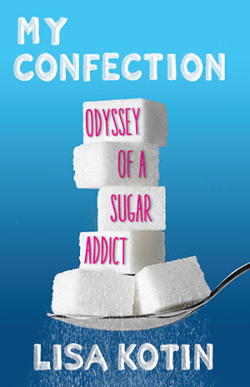
    One year ago, my memoir My Confection: Odyssey of a Sugar Addict was published. It’s a darkly funny and somewhat gnarly trip into the head of a sugar addict. Having my book published was one of the greatest honors of my life. Except that the day my book was published, all I wanted was sugar.

    How could I fall off the wagon now? People were depending on me. I could not let my publisher down. I should be able to maintain perfect abstinence. I should be a pillar of self-discipline, a guiding light for women and men, young and old, who suffer from the same addiction. I should never want sugar again, giving other addicts the hope that they, too, can quit the sweet stuff and be free.

    I was in a bookstore café that day, doing some work while excitedly waiting and watching to see if anyone might pick up a copy of my book. The little bags of dark chocolate-covered almonds lined up by the café register called to me. I felt mad at those little bags. Why did they have to sell sugar in a bookstore? Shouldn’t the books be enough?

    I wish I could tell you I have maintained perfect abstinence from sugar since that day. But I have had my ups and downs. Holidays are always a special challenge. Last Halloween, just before taking my daughter trick-or-treating, I plied myself with so much Maltitol-sweetened chocolate I could have gone as the Hunchback of Notre Dame, as I was literally doubled over from gas. I held out sugar-free through Thanksgiving, Christmas, Hanukkah, and New Years, only to break my abstinence on New Year’s Day, when all the company was gone—because the day after New Year’s would be the perfect date to start over. Right?

    My ConfectionAnd now, here comes the biggest chocolate holiday of the year. Valentine’s Day. Years before we had our daughter, I bought a tube of chocolate lube. I thought if the lube was good and I could enjoy it while being intimate with my husband, maybe I wouldn’t have to hide my sugar obsession any more. I could combine my truest loves and all would be happy. Except I took one lick, nearly puked, and that was the end of that.

    Two Valentine’s Days ago, I drove to my daughter’s favorite chocolate shop to buy her two dark truffles. Just two. This was rich stuff for an eight year old. The clerk seemed annoyed when I requested the signature gold box, ribbon and bag for such a small purchase. “Thank you so much!” I oozed gratitude as he rang me up. “These are for my daughter. It’s her favorite chocolate.” He didn’t smile. There were three people behind me, no doubt waiting to spend quite a bit more.

    By the time I reached the car, one of the truffles was already gone. I turned around and strode back to the shop, demolishing the second truffle en route. “Hey, so, I forgot, I need to buy two more—for a friend,” I told the same clerk. He looked at me like, Yeah, right. “Oh, and, I don’t need a box this time!” I thought he would thank me for that. He didn’t. I placed the plain little bag with the truffles in the back seat out of reach—not that that’s ever stopped me before. Once home, I replaced the truffles in the little gold box and tucked them away in my lingerie drawer, just like my mother used to do with her sweets.

    Until that night when I couldn’t take it anymore and I demolished those truffles as well.

    “I totally forgot to get some for my husband!” I told the same clerk the next day, Valentine’s Day. “Can I please get another little box? With a seal?” This was it. This time I was not going to succumb. And I did not. I did, however, get to relish in my daughter’s delight at receiving her favorite annual treat.

    I recently posted a photo on Facebook of my daughter beholding an (organic, non-GMO, no artificial ingredients whatsoever) ice-cream sandwich. I got liked. I also got shamed by a health writer who had endorsed my memoir. She said my post “made her stomach churn.” I had to ask myself, Why did I post this? Was I trying to provoke a response? Was I looking to be punished? Was I asking for permission?

    Shame is intricately tied in with my sugar addiction. Sugar makes me bad. And unlovable. I have deep shame about wanting sugar, especially after having the privilege of having my memoir published. Especially when I now know so much about the damage sugar causes. It makes me unfocused. It makes me not want to be in my body. It makes me not want to eat real food. Eventually, it makes me sick. But you know what? It isn’t just the sugar that makes me sick. It’s also what I do to myself once I have the sugar. The judgment. The self-loathing. The drive to obliterate myself with more, more, more.

    Of course, my worst fear is that someone who read my book might see me furtively popping a Hershey’s Kiss in my mouth while I roam the Target aisles. And they will know. Know what? What exactly will they know? That I still want sugar. That I am a fraud. Or maybe that I am human.


    About the Author 

    Lisa KotinLisa Kotin is a writer, director, actor, and performance artist based in Los Angeles. She graduated from New York University’s Tisch School of the Arts and went on to perform original shows combining physical comedy, monologues, and short films in the United States and United Kingdom. Kotin’s show Temporary Girl, which drew upon her experiences at 100+ temp jobs, is about a dysfunctional family as seen through the eyes of an office temp, and was adapted into a movie that Leonard Maltin praised as “bright and original, with the definite ring of truth.” Follow her on Twitter at @LisaKotin and visit her website.

  • By Rashod Ollison

    First Lady Michelle Obama greets third graders at the Ferebee Hope Elementary School in Washington DC

    First Lady Michelle Obama greets third graders at the Ferebee Hope Elementary School in Washington, DC. Photo credit: The White House

    Beyond the cyclone in my belly and my knees turning to jelly, the new classroom didn’t seem so bad. By the time my family and I had moved to the “big city” of Little Rock, AR, from the neighboring sleepy city of Hot Springs, I’d lost count of how many eviction notices we’d narrowly escaped and how many classrooms my younger sister Reagan and I had left behind.

    It was February 1988, and I was in the fourth grade, the new kid at Fair Park Elementary in central Little Rock. I was nervous, of course, because I was the new kid. And nobody wants to be the new kid. But unlike previous classroom situations, I wasn’t the only black face in the place. There, in Mrs. Charlotte James’ orderly room, I was surrounded by kids who looked as though they could have been my cousins—black and brown faces staring back at me sans the entitled icy glares I usually got from white kids in Hot Springs. Also, Mrs. James was black, as stately and no-nonsense with her pearls and round glasses as the Baptist church mothers who silenced me with a stern look whenever I was disruptive in the Lord’s house. She was my first black teacher, and I was “so excited” like the Pointer Sisters.

    After taking my seat, Mrs. James passed out stapled Xerox’d packets of bios on black exemplars of history. She said to me as she handed me a packet that it was Black History Month. I had no idea what that was. None of the schools I had shuffled in and out of recognized Black History Month. On the walls in her class, next to crude art projects on the bulletin boards, were slick posters of African kings and queens. A large somber photo of Martin Luther King, Jr., whose face I recognized from a commemorative plate at my Aunt Geneva’s, hung high on the wall next to the large round clock.

    Mrs. James then launched into a lecture about Harriet Tubman, the woman called “Moses” who led numerous slaves to freedom. My only recollection of slaves at that time was a conversation with my drunk father—well, it was more of an admonishment than an actual conversation. Slurring his words, his eyes ablaze, Daddy told me to “never be no slave,” to not let any white man “turn me into a slave.” I was six years old. What the hell was he talking about?

    But as Mrs. James went on about slaves and freedom, I was able to connect something in what Daddy said to what Mrs. James taught—that I was a descendant of people who had survived more than 200 years of bondage and injustices I’d never know; that because they were, I am. I felt a sense of pride in that hard plastic seat that day unlike anything I’d felt before. I’d always had a natural curiosity about history, going back to my grandmother Big Mama’s house as I pelted her with questions about the “old days” and all the unsmiling faces long dead and gone in the sepia photos atop her console TV.

    An isolated and lonely child, I found refuge in music and stories about another time and place. I soon spent weekends in the public library, reading all I could find about figures like James Weldon Johnson, Langston Hughes, James Baldwin, and many others whose significance registered more profoundly as I got older. In college, I minored in African American studies. My double major was journalism and creative writing. My directive was clear early on: To make a career contextualizing the lives of black folks, mostly in the arts.

    My introduction to Black History Month on that overcast day in Mrs. James’ class sparked a lifelong interest in stories about blacks in America and beyond—not just retaining facts and dates about great people and events, but connecting the dots about how one thing segued into another. About how sociopolitical gains in one place often meant deep losses in another, usually for everyday working-class black folks like the ones I knew who drank too much and died too soon. History provides a road map for the present, leading us to enlightenment or on a direct path to a fresher hell. For me in the fourth grade, those streamlined bios of towering black exemplars validated my presence. I was no longer invisible.

    But teachers like Mrs. James who took it upon herself to recognize Black History Month in her classroom are largely absent in public schools these days. Initiatives like No Child Left Behind are ironic in that many are, in fact, left behind in a sense—taught to regurgitate information for standardized tests with little to no engagement that nurtures critical thinking skills. Back when I was at Fair Park, which wasn’t that long ago, black parents who barely finished school instilled a deep respect in their children for the necessity of education. Teachers commanded and received respect. My educator friends in classrooms today tell me stories of blatant disrespect—students who cuss them out and threaten them with violence. It’s all routine.

    The privitization of public education also means that kids who are black and poor like I was will more than likely get lost in the fray or ride the direct pipeline into the prison industrial complex. And with the recent confirmation of Betsy DeVos as secretary of education, a woman as qualified for the position as a three-legged dog, well, prospects for the American public education system don’t look so great.

    I’m fortunate and so glad to have been a beneficiary of maverick teachers, a stern-faced black woman who knew the importance of affirming the self-worth of a roomful of black kids with lessons from Black History Month.


    About the Author

    Rashod Ollison (1977-2018) was an award-winning pop music critic and culture journalist. He was a staff critic and feature writer for the Dallas Morning News,Philadelphia Inquirer, Journal News (Westchester, New York), Baltimore Sun, and Virginian-Pilot. He also wrote a music column for Jet magazine. A native of Little Rock, Arkansas, Ollison lived in Virginia Beach.