• A Q&A with Daina Ramey Berry

    The Price for Their Pound of FleshThe first book of its kind, historian Daina Ramey Berry’s The Price for Their Pound of Flesh: The Value of the Enslaved, from Womb to Grave, in the Building of a Nation takes a profoundly humane look at one of America’s most inhumane institutions. Berry explores the economic value of enslaved people through every phase of their lives in the American domestic slave trade. At the same time, she provides a rare window into the enslaved peoples’ experiences and thoughts, giving them a voice so the reader can bear witness to their stories. In this Q&A, Berry tells our blog editor Christian Coleman about the book’s inception, the ten years she spent doing research for it, and the lessons we can learn from it in age of #BlackLivesMatter. 

    Christian Coleman: Where does your interest in the concept of value come from? What inspired you to investigate the ways Black life has been valued and devalued in the founding of our nation? 

    Daina Ramey Berry: Since the early twentieth century, when trained historians and economists wrote about the institution of slavery, many included the monetary values of “prime male field hands” in their work. They argued that these individuals were the most valued and quantifiable members of the plantation community, and that by tracking their prices one could analyze the profitability of the institution. I was always struck that few scholars provided historical context for these prices and that women, children, and the elderly were rarely included. I also knew that enslaved people had very different conceptions of their value. Even though they understood the monetary value placed on their bodies, they had a set of strongly held internal values that helped them survive the harsh realities of enslavement. I wrote this book to tease out the ways enslaved people were commodified and how they responded to it.

    CC: You spent a decade doing research for this book. What was it like for you to spend that much time concentrated on this chapter of our history? When Octavia Butler was interviewed about her novel Kindred, she often spoke about how intense and depressing the research material of American slavery was. 

    DRB: Researching and writing about slavery is extremely difficult. For the last two years of the writing process, I put myself in modified isolation (“a writing cave” as my family and friends referred to it). I did this in part because I was trying to stay in a position of authenticity with respect to the subject, but also because frankly, there were many days where I did not feel like interacting with anyone. Contemporary conversation seemed trivial compared to the deep emotional experiences the enslaved faced. Some days, I felt depressed and suffered insomnia, but now that the book is released, I feel a sense of relief. Even though I am sad for many of the people in the book, I am equally encouraged by them and their resilient spirits.  

    CC: Did you come across any information or findings in your research that took you by surprise?

    DRB: Yes, two findings in particular caught me by surprise. First, that even during childbearing years, women’s average values were lower than men’s. Early in my research process, I had records from about eight plantations in Georgia where women of childbearing age had values that rose above their male counterparts; I wanted to know if this was a local, regional, state or national pattern. Quickly I discovered that these plantations were outliers. With the exception of multi-racial enslaved women referred to as “fancy girls,” women as a whole had lower values than men. I am still surprised by this, because the institution of slavery thrived after the closing of the transatlantic slave trade only because of women’s capacity to bear children and populate the plantation workforce.

    The second finding that nearly floored me was when I realized that the dead were commodified. At death, some enslaved people were appraised—particularly those executed for crimes by state governments—and their enslavers received compensation. However, I had not considered that a highly organized, fully functioning clandestine trade in human remains occurred in tandem to the development of anatomical education. And I was shocked to learn that some formerly enslaved people were victims of this trade. I knew from my previous scholarship on gender that women’s unborn children were appraised and that potential mothers were evaluated based on their capacity to bear healthy young children, but I had not considered the value of enslaved people after death until now.

    CC: The text includes photographs, newspaper clippings, engravings, and slave price listings. How do these supplementary materials enhance our understanding of the time period? 

    DRB: Ephemera such as images and other primary documents provide additional evidence of the historic moment under consideration. Such records offer concrete material highlighting patterns discussed in the book. For example, it is one thing for me to say that private aspects of women’s health were a part of everyday conversation at slave markets; it’s another to see an advertisement or broadside that discussed the irregularity of a woman’s menstrual cycle. Likewise, seeing an obituary where one of the “accomplishments” included the skinning of an enslaved man speaks volumes about the social climate of nineteenth-century America. Images allow us to bear witness to this history and they are often more telling than words.

    CC: In the introduction, you call The Price for Their Pound of Flesh a “coming-of-age story, a narrative of the valuation of black bodies.” Tell us a little about what you mean by this. Coming-of-age implies psychological development and reaching a stage of maturity. It seems as though the subject that’s coming of age is not only the slavery industry’s regard of Black bodies as a commodity, but also the sense of self-worth of enslaved Africans and their ancestors. 

    DRB: I saw this as a story of evolving conceptions of one’s self as they matured. My goal was to show how enslaved people developed an understanding of themselves as tradable goods alongside a sense of their personhood. I wanted to walk the reader through this process using enslaved people’s voices to tell their side of the story. My goal was not to write about them but with them in mind through their testimonies. Enslaved people were not props on a stage; for me they were the lead actors and actresses of this drama.

    To me, one cannot look at the slave industry’s regard of Black bodies without also looking at the ways in which enslaved people developed their own sense of themselves. Not all enslaved people valued themselves. Some maintained a sense of melancholy and were depressed. But what about those who rejected their degradation and loved their souls, fought hard for freedom, and lived to tell it? My goal was to offer an interpretation that included soul-loving enslaved people. They need a more prominent place in history books so that we can look beyond victimization at the dynamic nature of the institution.

    CC: Speaking of the narrative of the valuation of Black bodies, your book brings to mind other contemporary works on the topic: Ta-Nehisi Coates’s Between the World and Me; Colson Whitehead’s The Underground Railroad; Nate Parker’s film The Birth of a Nation; and the rebooted “Roots” miniseries. How do you see these works contributing to the coming-of-age narrative? How do you see them dialoguing with your book. 

    DRB: I believe we are in the midst of a cultural movement much like the Harlem Renaissance where Black thought found in theater, film, plays, music, poetry, novels, and other forms of written expression is burgeoning. One can enter African American history and culture through fiction, a set of letters to their son, a Hollywood film, or a television docudrama. These works and many others such as Ava DuVernay’s Thirteenth and “Queen Sugar” are offering different American stories highlighting the complexities of our nation and the diversity of the African American experience.

    I hope my book provides some context for understanding the history of African Americans during one of the most difficult and horrific episodes of the past. Here, readers will also see that the foundations of economic disparity in this country began with enslavement.

    CC: The Price for Their Pound of Flesh’s release coincides with the dawn of a new civil rights movement and the 140th anniversary of the end of Reconstruction. What lessons can we learn from this historiography in the context of seeing Black persons being disproportionately killed and their deaths recorded? 

    DRB: The first lesson is that there is an historical antecedent for what is happening now. As we see Black people being killed on the news and we are forced to watch this looped footage, one only has to look in nineteenth-century plantation journals, court testimony, newspapers, and slave narratives to understand that this type of violence occurred daily. Similar to the outcomes of these cases today, acts of violence against African American slaves were hardly punishable by law. Of course, there were exceptions and cases when members of slaveholding society were held responsible for acts of cruelty, but in many cases enslavers could do whatever they wanted with their human property.

    Once we understand that the hangings during slavery became lynchings after freedom, and are homicide or ‘suicide’ today, then and only then will we recognize the unfortunate truth that this is not a new phenomenon. I believe the disproportionate killings of African Americans stem from the devaluation of their lives. A former enslaved man said it best: they were worth more when they were enslaved. When slavery ended, their lives were no longer valued. After 244 years of degradation, more years than African Americans have currently experienced freedom in this country, it makes sense that we are still working through righting past wrongs. Respect and decent treatment does not come overnight. Every decade past emancipation, Blacks struggled for justice and equal rights. We are still living in the aftermath of slavery. It’s the stain on our flag and the sin of our country. Once we recognize this, face it, study it, and acknowledge the impact it has on all Americans, then we will be in a position to determine how we can move forward.


    About Daina Ramey Berry 

    Daina Ramey Berry is an associate professor of history and African and African diaspora studies, and the Oliver H. Radkey Regents Fellow in History, at the University of Texas at Austin. An award-winning historian, she is also a Distinguished Lecturer for the Organization of American Historians. She lives in Austin, Texas. Follow her on Twitter at @DainaRameyBerry and visit her website. 

  • Inauguration

    Donald Trump gets sworn in today as commander in chief. His approval rating speaks to the myriad doubts, concerns, and fears many have about what he and his administration will do during his term in the White House. We reached out to a few of our authors to ask if they wanted to share what they want Trump to know, understand or beware of. On Inauguration Day, we share their responses with you. 

    ***

    Rev. Dr. William J Barber II“Mr. Trump, pushing an agenda to repeal health care, build walls, and stoke racism and xenophobia is not only illegitimate; it’s also a violation of our deepest moral and constitutional principles. I would urge you to repent and choose a legitimate path of love, justice, and equal protection for all.”
    —Rev. Dr. William J. Barber II, The Third Reconstruction: How a Moral Movement Is Overcoming the Politics of Division and Fear 


    “Dear President Trump:

    In the breakneck, tweet-by-tweet pace of the presidential campaign, one of your comments did not get the coverage it deserved: that it was ‘outrageous’ for New York City to have reached a $41 million settlement with the five African American teenagers who were wrongfully convicted of rape in the infamous Central Park Jogger case. You continue to insist, against all evidence—including DNA found inside the victim and the confession of the actual rapist—that they are guilty. This dogged stance alarms those of us who care deeply about justice—for the accused and for the victims alike. Those young men were all innocent. So, too, are tens of thousands of other men and women currently languishing in prison, with no one to help them. It is my fervent hope that you have the ability to reexamine your beliefs. We have a crime problem in this country: we lock up the wrong people.”
    —Lara Bazelon, The Last Shackle: Harm, Healing and Redemption in Wrongful Conviction Cases (forthcoming)  


    Mary Frances Berry“Since you can’t count on the decreased turnout in a few blue states that gave you the presidency to insure your reelection, perhaps you should think ahead and embrace some progressive policies on health care, immigration, and other hot-button issues.”
    —Mary Frances Berry, Five Dollars and a Pork Chop Sandwich: Vote Buying and the Corruption of Democracy 


    Aviva Chomsky“The most urgent problem facing our country and our planet is climate change, because any other decision, policy, or action could be changed by future presidents or generations, but climate change, if not slowed, halted, or reversed now, will be the end of all of us.”
    —Aviva Chomsky, Undocumented: How Immigration Became Illegal 


    Thomas Norman DeWolf“I have no particular advice for the incoming president, only reminders for myself that others may find useful—including the incoming president, were he to choose to listen: 1) remain committed to what lifts us all up; 2) support people who are particularly at risk in a world currently managed by those who live in, and spread, fear; 3) stick with the peacebuilders; 4) listen; 5) trust your heart; 6) know that we will make it through challenging times and will be stronger for the experience; and 7) most important: live in love—always.”
    —Thomas Norman DeWolf, Gather at the Table: The Healing Journey of a Daughter of Slavery and a Son of the Slave Trade 


    Roxanne Dunbar-Ortiz“Be aware: there are a lot of us nasty women out here ready to take your misogynist ass down.”
    —Roxanne Dunbar-Ortiz, An Indigenous Peoples’ History of the United States 


    Steve Early“Dear Mr.  Trump:

    You’ve said the US invasion of Iraq was a mistake. Please spare the Middle East and the rest of the world any similar or worse ‘mistakes’ during your hopefully brief tour of duty as ‘commander in chief.’”
    —Steve Early, Refinery Town: Big Oil, Big Money, and the Remaking of an American City 


    Rev. Elizabeth M. Edman“America relentlessly yearns to be ‘great,’ and our success or failure tends to hinge on one factor: when we pit ourselves against each other, demonizing and dehumanizing entire categories of Americans, we fail, but when we recognize that Americans of every color, creed, and culture possess strengths, and when we draw upon those virtues in common purpose, our greatness as a nation shines through.”
    —Rev. Elizabeth M. Edman, Queer Virtue: What LGBTQ People Know About Life and Love and How It Can Revitalize Christianity 


    Christopher Emdin“I have written about undiagnosed and very real traumas that folks of color experience in this country. I’ve highlighted undiagnosed forms of Post Traumatic Stress Disorder (PTSD) in the forms of a Poor Teaching in Schools’ Disorder and a Post Trayvon (Martin) Stress Disorder. Presently, there is a President Trump Stress Disorder. A large segment of our country feels traumatized. Our Muslim brothers and sisters feel attacked. Our immigrant colleagues are fearful. Our young people are disillusioned. This is a real and ongoing trauma, and we must treat it as such by working together on it over time. The first step in this process is recognizing that what people are feeling is real. We cannot move forward with a new presidency or a new secretary of education without understanding that things have been said and done that have hurt people. Painting all Muslims as criminals or all public schools as ineffective is painful to those who fight hard to be more than a flawed and often grossly inaccurate stereotype. This pain becomes trauma when it isn’t acknowledged and people are fixed into categories they are unable to escape from because those who hold power would rather see a caricature than a real person. When Betsy DeVos talks about urban public schools without seeing any value in the institutions or the youth that attend them, she sends a message that turns youth into commodities that only have value when they leave their neighborhoods. We cannot talk about moving forward as a nation without acknowledging our past mistakes. We cannot lead schools if we view young people as inherently flawed and in need of saving. We cannot heal as a nation without acknowledging the ways that we impose trauma on the most vulnerable among us.”
    —Christopher Emdin, For White Folks Who Teach in the Hood…and the Rest of Y’all Too


    Bill Fletcher, Jr.“I want our incoming president to appreciate that words have consequences. Speaking offhand, giving vent to prejudices and biases, rhetorically dancing around irrational propositions are all the equivalent of juggling a motorized saw.”
    —Bill Fletcher Jr., “They’re Bankrupting Us!” And 20 Other Myths About Unions 


    Dina Gilio-Whitaker“About the idea to ‘privatize’ Indian lands: it’s one of the oldest tricks in the book to force Native American assimilation; it didn't work before, and it won't work now.”
    —Dina Gilio-Whitaker, “All the Real Indians Died Off”: And 20 Other Myths About Native Americans 


    Anita Hill“America deserves a commander in chief who is committed to protecting our women and men in the armed forces from sexual assault and all crimes. Renounce statements you’ve made excusing your own sexually predatory words and behavior, and pledge to charge and prosecute all cases of rape, sexual assault, and sexual harassment in the military.”
    —Anita Hill, Reimagining Equality: Stories of Gender, Race, and Finding Home 


    Steven Hill“Dear President Trump:

    Don’t cut even one hair on the head of Social Security! You said you would not cut it during your campaign, and tens of millions of Americans expect you to keep your promise. In fact, you should expand the Social Security monthly benefit. Retired Americans deserve no less.”
    —Steven Hill, Expand Social Security Now! How to Ensure Americans Get the Retirement They Deserve 


    Michael K. Honey“Since we know you are very aware of the need to protect and defend ‘my African American,’ please take time in your inaugural to explain how you will work to fulfill Dr. King’s vision for achieving peace, justice, and racial equality through love, forgiveness, and nonviolence.”
    —Michael Honey, editor of Martin Luther King Jr.’s “All Work Has Dignity” 


    Sharon Leslie Morgan“As I recoil against your ascension to power as president of the United States—the beacon of democratic principles in the Free World—I want you to know that right-thinking Americans will never succumb and say ‘Heil’ to a deplorably ignorant, hypocritical, immoral, xenophobic, Twitter-obsessed, megalomaniacal kleptocrat who astounds us with egregious promotion of intolerance, divisiveness, disrespect, and prevarication, because ‘We the People’ are better than that!”
    —Sharon Leslie Morgan, Gather at the Table: The Healing Journey of a Daughter of Slavery and a Son of the Slave Trade


    Danielle Ofri“As a primary-care physician, I worry about the immediate health-care crisis that will occur when twenty million people lose their insurance and, thus, access to medical care. The ramifications will be vast and deadly. I’m struggling to recall when a president of the United States ever deliberately put so many Americans in harm’s way. This is more than the number of Americans who were sent to Vietnam or even to World War II. Take a moment, Mr. Trump, to imagine how you would feel if your family suddenly lost access to medical care. And now think about your fellow citizens. Is this really making America great again?”
    —Danielle Ofri, What Patients Say, What Doctors Hear 


    Rashod Ollison“Trump, you’re in way over your comb-over with this position, but I hope some glimmer of your humanity shines through anyway and does not implode what’s left of American democracy.”
    —Rashod Ollison, Soul Serenade: Rhythm, Blues & Coming of Age Through Vinyl 


    Annelise Orleck“Though you campaigned as the candidate of working Americans, you have nominated a Labor secretary who is anti-union, anti-minimum wage, believes workers don’t deserve breaks, and has sworn to replace workers with robots if he can—and you are working with Republicans in Congress who have vowed to cut Medicare and Medicaid. So you need to show us exactly how you plan to make life better for the American worker.”
    —Annelise Orleck, Storming Caesar’s Palace: How Black Mothers Fought Their Own War on Poverty 


    Eboo Patel“Dear Mr. Trump:

    American Pluralism—respect for diverse identities, relationships between different communities, and collective commitment to the common good—is one of the jewels of our civilization. Will you cherish it in your rhetoric and protect it with your policies?”
    —Eboo Patel, Interfaith Leadership: A Primer 


    Stacey Patton“Dear Donald Trump: 

    Unlike past presidents who cared about the legacy of the office and tried to maintain the dignity of the role, it is clear that you only care about your power and exercising it no matter the consequences, and so there isn’t much to say to you. Instead, I wish to ask this nation, especially those in power and with privilege, to stand up, be courageous, and reject Trump and all the evil he stands for!”
    —Dr. Stacey Patton, Spare the Kids: Why Whupping Children Won’t Save Black America 


    “Donald Trump is the most ableist presidential candidate in modern US history. He routinely insults people by mocking real or perceived differences in bodies and mind (the Serge Kovaleski incident, fat shaming, calling Marlee Matlin the r-word, and countless other examples), but the real problem is that he’s likely to sign off on policies that will make America demonstrably worse for millions of disabled individuals. The potential repeal of the ACA threatens so many lives, including people who are merely not disabled yet, but his appointees are also likely to undermine attempts to better integrate communities, work, and school. But now he’s president, so I’d just tell him this: His supporters are as likely to become disabled as anyone else. They will need the help of a strong federal government eager to defend their rights. Time to get to work.”
    —David Perry, author of a forthcoming book on the criminalization of people with disabilities 


    Marcus Rediker“Benjamin Lay, the radical abolitionist dwarf, spoke truth to power in 1738: beware rich men who ‘poison the World for Gain.’ The roots of resistance are old and deep.”
    —Marcus Rediker, The Fearless Benjamin Lay 


    Jonathan Rosenblum“You can’t fix the economy if you don’t expand the legal rights and benefits of all workers, including those doing independent contracting, gig work, part-time and temporary jobs, outsourcing, domestic and farm work, and day labor.”
    —Jonathan Rosenblum, Beyond $15: Immigrant Workers, Faith Activists, and the Revival of the Labor Movement


    Jeanne Theoharis“Fourteen states had new voter restrictions on the books for 2016. The Electoral College, created to protect the slave states, gives disproportionate weight to smaller, whiter states. 6.1 million Americans were disfranchised due to felon disfranchisement laws on the books in many states. John Lewis questioned the legitimacy of Trump’s election given the influence of Russia—but much closer to home, our democracy was hacked by these new laws and old practices.”
    —Jeanne Theoharis, The Rebellious Life of Mrs. Rosa Parks


    Eileen Truax“In immigration, as in many other areas, America deserves a president with the ability to solve issues from a human rights perspective, beyond politics or partisanship. That’s the kind of leader we need, because that’s the kind of country we are meant to be. This is your moment, Mr. Trump: be that leader. We can still be that country.”
    —Eileen Truax, Dreamers: An Immigrant Generation’s Fight for Their American Dream 


    Rafia Zakaria“Muslim Americans are as true and proud as any other Americans, and the affiliation of an entire faith with the evil of terrorism is one of the cruelest injustices of our age.”
    —Rafia Zakaria, The Upstairs Wife: An Intimate History of Pakistan

  • By Tom Hallock

    Illuminated book

    Photo credit: Merra Marie

    We, as publishers, have important work to do in protecting an open, democratic society that is now under increasing threat. The threat has been growing after decades of disturbing illiberal trends: the growth of corporate power, a widespread anti-intellectualism, the rise of social media echo chambers, pervasive racism, and partisan attacks on the nature and purpose of government. Now we are about to inaugurate a president whose election is a product of these trends, a man whose public statements have been true only fifteen percent of the time according to Politifacts and who regularly disparages science, expert advice, the media, and his critics. As Robert Reich points out, these are the tactics of demagogues.

    In the face of these threats, publishers have urgent work to do.

    1.     Counter falsehoods and outright propaganda by publishing books from writers who use the tools of science, research, and journalism to illuminate the issues of our day.
    1.     Defend Freedom of Expression. Writers, publishers, booksellers, librarians, and educators who write, publish, sell, shelve or teach ideas that challenge the new orthodoxy will need support. It’s an important time to stand together as an industry with organizations such as ABFFE, PEN, AAP, ALA, NCTE, and others in The Free Expression Network of the National Coalition Against Censorship.
    1.     Publish voices from communities that are under attack or marginalized. We will need the fiction, literature, memoir, and calls to action that break down walls, create compassion, and lead to just social policies.
    1.     Publish prophetic voices and books that provide the blueprints for a more just world, and promote them vigorously.
    1.     Practice the values that we want to see in the nation. In particular, we need to open the doors of publishing to those who have been excluded, whether by race, class or other means.

    After 9/11, while some advocated for war and were willing to relinquish civil liberties, others sought to understand the forces that had just changed our lives. Their search was reflected in the high sales of books like Karen Armstrong’s The Battle for God from Knopf and Ahmed Rashid’s Taliban from Yale University Press. In the aftermath of the elections this year, book sales again reflected people’s attempts to make sense of current events by reading books like Hillbilly Elegy (Harper) and Strangers in Their Own Land (New Press). On Beacon’s list, sales for MLK’s Where Do We Go from Here: Chaos or Community? and Rev. Dr. William Barber’s The Third Reconstruction increased dramatically as people searched for models of resistance to injustice.

    To meet the needs of our times, we don’t have to publish bestsellers. On the day that SCOTUS handed down their decision on marriage equality, Hillary Goodridge (a lead plaintiff in the Massachusetts case that rocked the nation) publicly thanked Beacon Press for publishing What is Marriage For? by E. J. Graff. She said that it had provided her with the intellectual framework to take a stand. The book sold modestly, but has so far helped make it possible for almost a million gay and lesbian people in the US to marry. And that’s just so far.

    Books make a difference. They always have, but our work matters now more than ever. Even a 6,000 copy book can change the course of history.


    About the Author 

    Tom Hallock is Associate Publisher and Director of Sales & Marketing at Beacon Press. Tom joined Beacon in 1996 after holding executive positions in sales and marketing at Farrar Straus and Giroux, Simon and Schuster and Aperture. He is a former bookseller and was the manager and buyer for the Brookline Booksmith in Brookline, MA. Follow him on Twitter at @TomHallock.

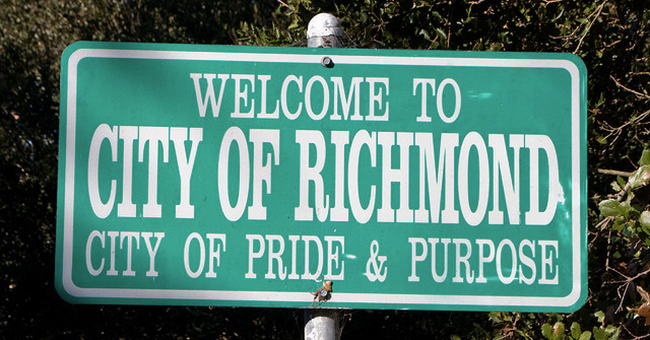
  • Welcome to the City of Richmond

    Photo credit: Flickr user ~dgies

    Yesterday, we released labor activist Steve Early’s Refinery Town: Big Oil, Big Money, and the Remaking of an American City. Refinery Town tells the story of Richmond, California, once a prototypical company town, dominated by the Chevron Corporation, with one of the highest homicide rates per capita in the country. Its jobless rate was twice the national average. Beset by deindustrialization, poverty, pollution, poorly funded public services, drug trafficking, corruption in City Hall and more, Richmond’s largely nonwhite, working-class citizens came together to rise against the status quo and corporate power.

    Over the course of fifteen years, a diverse group of labor and community activists, environmental justice campaigners, police reformers, and gay rights advocates took back their city and remade it. The intimate stories of Refinery Town are a great reference point and resource for community activists who are looking for inspiration in our current time of political uncertainty and seeking out examples of successful grassroots organizing. Below you’ll meet some of Richmond’s citizens who raised the local minimum wage, defeated a casino development project, challenged home foreclosures and evictions, created a municipal ID card to aid undocumented residents, and sought fair taxation of Big Oil.


    Chris Magnus

    Photo credit: Mindy Pines

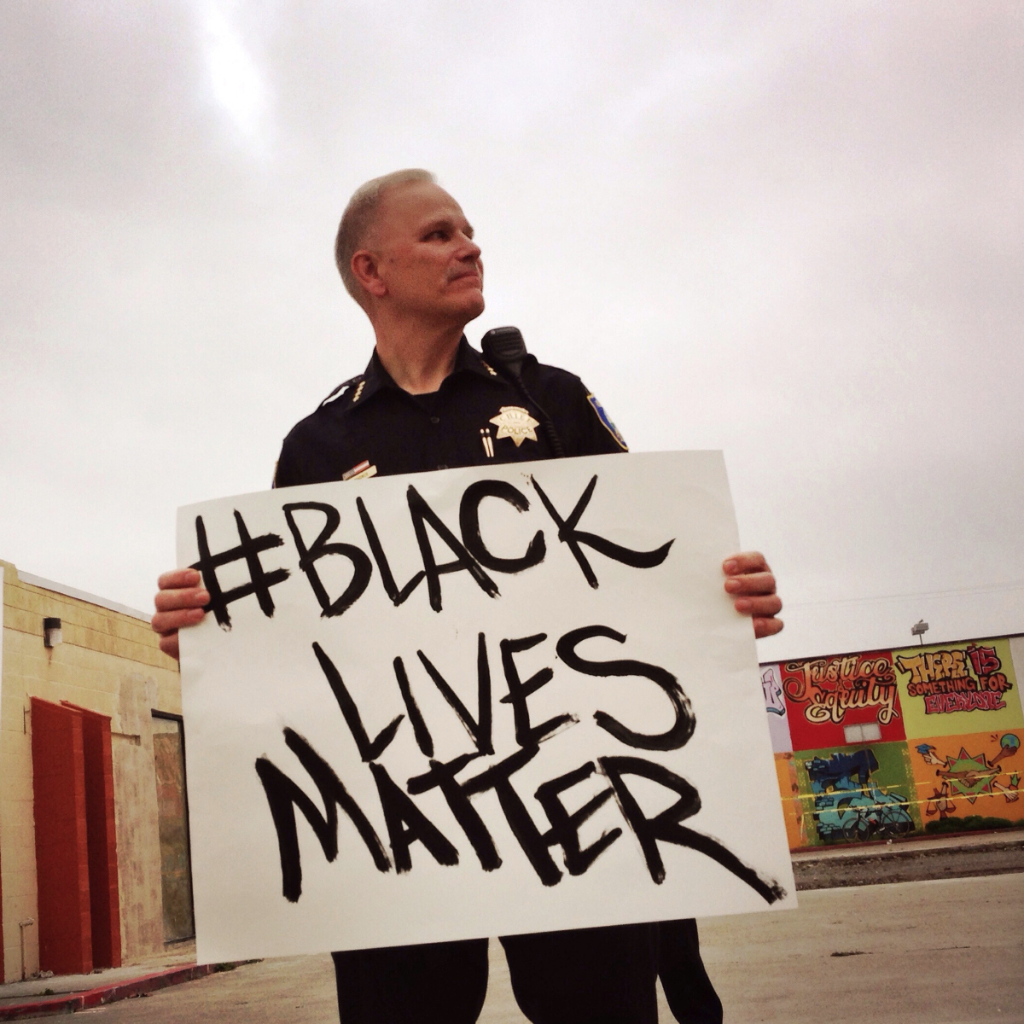
    Chris Magnus: Hired away from Fargo, North Dakota, Magnus spent a decade transforming the Richmond Police Department by reconnecting officers to the community they serve. One of the few gay police chiefs in America and the only one to ever participate in a Black Lives Matter protest, Magnus helped reduce officer-involved shootings and Richmond’s horrendous civilian homicide rate. Under Magnus, the RPD worked with churches, youth groups, neighborhood councils, and activist organizations to woo gang members away from street violence and crime. On his watch, civilian oversight of the police was strengthened.


    Gayle McLaughlin

    Photo Credit: Ramin Rahimian

    Gayle McLaughlin: Richmond Progressive Alliance (RPA) leader, former two-term mayor, and current city councilmember. Under her leadership, Richmond became the largest city in the country with a Green mayor—and the scene of major skirmishing with Big Oil, Big Banks, and Big Soda. When McLaughlin took over, Richmond was best known for its gangs, gun violence, drug dealing, and city hall corruption. By the time she left office, her century old company town was widely hailed for being a “progressive city” and pioneer in “community policing.”


    Betty Reid Soskin

    Photo Credit: David Meza

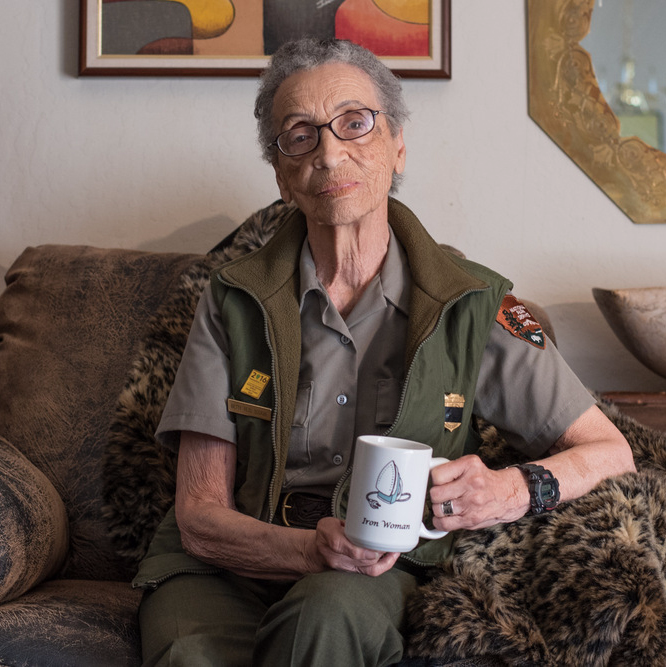
    Betty Reid Soskin: At ninety-five, she’s America’s oldest active duty national park ranger and the star attraction at Richmond’s Rosie The Riveter/Homefront History Museum. There, Soskin tells a very personal story of black worker migration from the Jim Crow south to Richmond, for jobs in its Kaiser shipyard and other war-time industries. A lifelong foe of discrimination in all forms, Soskin condemned the attacks on city council member Jovanka Beckles and aided her re-election campaign.


    Jovanka Beckles: A black Latina lesbian, Beckles is an outspoken RPA-backed member of the city council. There she had to overcome a campaign of personal harassment and intimidation organized by homophobic forces in Richmond, seeking to discredit her and the RPA. In 2014, Chevron spent hundreds of thousands of dollars on negative advertising against her, but failed to defeat the leading African-American community voice for refinery safety and reduced air pollution.


    Melvin Willis

    Photo Credit: Erica Milsom

    Melvin Willis: Twenty-six-year old African-American organizer for the Alliance of Californians for Community Empowerment (ACCE) and leader of the fight for rent regulation to keep housing affordable for low-income tenants in gentrifying neighborhoods. In November, 2016, Richmond voters favored rent control and elected Willis to the council, along with RPA member Ben Choi.


    Senator Bernie Sanders: Democratic socialist from Vermont invited to Richmond to help McLaughlin, Beckles, and their allies beat Chevron’s 2014 “air war” against them. At a rally of 500 residents, Sanders declared their city to be ground zero in the post-Citizens United fight against unrestricted political spending by Big Business. “Run, Bernie, Run!” his Richmond crowd responded—and, six months later, he did, attracting 13 million Democratic primary voters in his race against Hillary Clinton. In 2016, Sanders’ post-campaign organization, Our Revolution, backed RPA city council candidates again, helping two more get elected.


    Andres Soto: Richmond-born co-founder of Richmond Progressive Alliance (RPA) and now an organizer with Communities for a Better Environment. As an activist in Richmond’s fast growing Latino neighborhoods, Soto challenged police brutality and mistreatment of immigrants. When Soto ran for city council, police and fire-fighter unions, along with Chevron, successfully smeared him as a “dangerous radical.”


    Mike Smith: A Richmond oil worker and United Steel Workers (USW) member who incurred the wrath of Chevron because he joined “blue-green” alliances demanding cleaner air and stronger refinery safety rules. In 2015, Smith’s national union struck Big Oil over the shoddy maintenance practices that led to a huge fire at Chevron’s Richmond refinery, sending 15,000 area residents in search of medical care.


    About Steve Early 

    Steve EarlySteve Early has been an organizer, lawyer, union representative, and labor activist for the past forty-five years. He is the author of three other books, including Save Our Unions: Dispatches from a Movement in Distress. He lives in Richmond, California, with his wife. Visit his website.
  • By Jeanne Theoharis

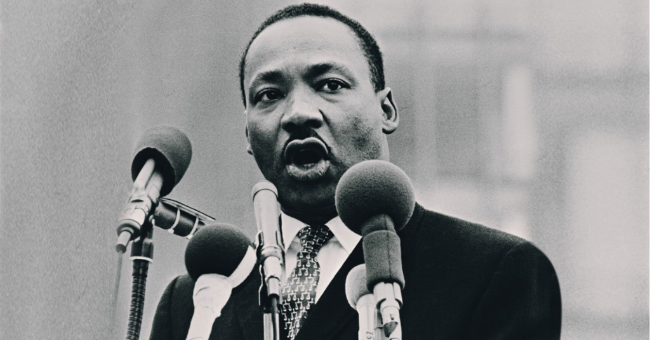
    Martin Luther King Jr.While Martin Luther King and Rosa Parks are typically associated with the South, both spent a great deal of their lives challenging the racism of the Jim Crow North. Yet this part of their history is repeatedly ignored. Parks described the Detroit she moved to in 1957 as the “Northern promised land that wasn’t” and spent the next four decades challenging the segregation and inequality endemic to the city. 

    Like Parks, King had been speaking out for years on the limits of Northern liberalism. In 1960, in a speech to the Urban League in New York, King identified “a pressing need for a liberalism in the North that is truly liberal, that firmly believes in integration in its own community as well as in the deep South.” 

    In 1965, following the Watts uprising, King took to the pages of the Saturday Review to criticize the surprise of public officials as dishonest. “In my travels in the North,” King had become “disillusioned with the power structures there,” whose representatives “showered praise on the heroism of Southern Negroes. Yet when the issues were joined concerning local conditions, only the language was polite; the rejection was firm and unequivocal.”

    The last time Rosa Parks saw Martin Luther King was in a place where most whites continued to fight to maintain their racial privilege—the elite Grosse Pointe suburb of Detroit. On March 14, three weeks before his assassination, King came to speak at Grosse Pointe South High School, and Parks and a friend went out to hear him. 

    It was a “horrible mess” according to Parks; King described it as the most disruption he ever faced in an indoor setting. In his speech “The Other America” (where he was interrupted over and over by hecklers calling him a traitor), King focused on the economic inequalities corroding American society and put Detroit’s recent uprising in the broader context of racial inequality in the city through the nation. Like Parks, King saw the roots of the riots lying in white indifference and intransigence to black demands for justice, equality, and real economic opportunity, and challenged the blinders of Northern liberalism. 

    “It is not enough for me to stand before you tonight and condemn riots. It would be morally irresponsible for me to do that without, at the same time, condemning the contingent, intolerable conditions that exist in our society…A riot is the language of the unheard. And what is it America has failed to hear? It has failed to hear that the plight of the Negro poor has worsened over the last twelve or fifteen years. It has failed to hear that the promises of freedom and justice have not been met. And it has failed to hear that large segments of white society are more concerned about tranquility and the status quo than about justice and humanity.”


    About the Author

    Jeanne Theoharis is Distinguished Professor of Political Science at Brooklyn College of CUNY and the author of The Rebellious Life of Mrs. Rosa Parks. She and Melissa Harris-Perry are co-editors of a new series at Beacon Press, “Stride Toward Justice: Confronting Race, Gender & Class in the United States.” Follow her on Twitter and visit the Rosa Parks biography website.

  • By Wen Stephenson

    350 MASS BOSTON EVENT 01-09-17

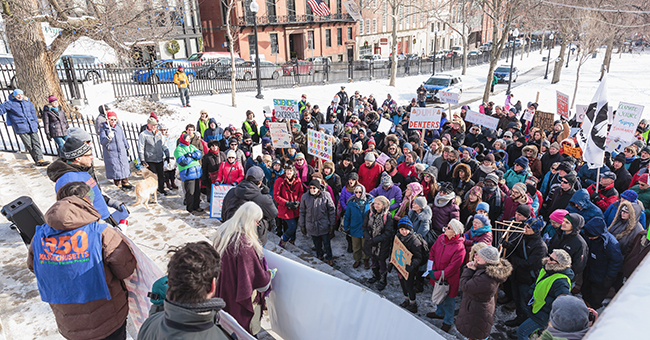
    Wen Stephenson speaking at the 350 Mass #DayAgainstDenial Rally, Boston Common. Photo credit: Roberto Farren Photography

    On Monday, January 9, activists around the country rallied as part of 350.org’s national #DayAgainstDenial, calling on their US Senators to oppose President-elect Donald Trump’s climate science-denying Cabinet nominees, including former Exxon CEO Rex Tillerson as Secretary of State. In Massachusetts, with Democratic Senators Edward Markey and Elizabeth Warren opposed to Trump’s nominees, 350 Massachusetts called on Republican Governor Charlie Baker, whose administration is responsible for enforcing the state’s Global Warming Solutions Act, to take a firm stand against climate denial and obstruction. Beacon author Wen Stephenson delivered the following speech to a spirited crowd of more than 200 gathered on Boston Common at the foot of the steps leading to the State House. 

    ***

    It feels good out here! I like it when New England winter feels like New England winter should. Move in close! Warm each other up. Stomp your feet. OK, now repeat after me:

    “Hey, Charlie Baker! Which side are you on?!”

    “Hey, Charlie Baker! Which side are you on?!”

    That’s good! We’re gonna come back to that in a minute.

    So, it’s hard to believe, but Donald Trump’s lies, his outrageous relationship to facts, has only been a dominant feature of American politics for a little more than a year now. Seriously. It’s only been a year. Our long national nightmare is far from over.

    But as unprecedented and unrelenting as Trump’s lies are, Exxon’s lies—that’s right, the same Exxon where Trump’s nominee for secretary of state, Rex Tillerson, has spent his entire career, and has led as CEO for the past decade—Exxon’s lies are more insidious, and every bit as dangerous, maybe even more dangerous. Because Exxon has been lying about climate science for decades, with impunity, “normalizing” the most cynical distortion of scientific fact.

    I know Trump likes to be number one in everything, but sorry, Donald. Exxon was way ahead of you in the post-truth department. Exxon led the way.

    And as I argued in a recent piece for The Nation, a political and media and educational culture that can accommodate climate denial and obstruction, in the face of ever more urgent warnings from scientists of an accelerating catastrophe, is a culture that is ripe for Donald Trump; it’s a culture that can accommodate Trump and his lies. Because it’s a culture that has already detached itself from science and physical reality, as well as from humanity. Because it’s willing to treat the majority of the human population as expendable and superfluous. 

    I mean, let’s be clear. Some of you have heard me say this before. I’ve said it many times, and I’m going to keep on saying it, because it’s true: Given what scientists know, and have known for decades, about climate change—indeed, given what Exxon Mobil has known for decades about climate change—to deny the science, deceive the public, and obstruct any serious response to the climate catastrophe, is to ensure the destruction, the eradication, of entire countries and cultures; and the suffering and death of untold millions of human beings. There’s a word for this. These are crimes. And they’re not just financial crimes. They’re not just crimes against shareholders. They’re crimes against humanity.

    So, Governor Baker, if you’re listening, if you ever hear these words, all I want to know is: Which side are you on? Which side are you on?

    What we’re fighting for here today is even bigger than science. It’s about more than carbon, more than climate change. It’s about basic human rights. It’s about democracy. It’s about who we are as Americans, who we are as people.

    Because the normalization of deceit and denial is a threat not just to science, but to the fundamental values on which our constitutional democracy is founded. Because in a world where facts have been abolished, an Orwellian world where 2+2=5, where the official version of reality changes day to day—where one day climate change is a hoax invented by China, and the next day you’ve got a nominee for secretary of state who says with a straight face that he accepts climate science and the Paris Agreement—in that world, there can be no basis for the kind of reasoned deliberation and rational debate on which democracy itself depends, or for the rule of law on which our basic rights, our human rights, depend.

    So, Charlie Baker, which side are you on?

    That’s our message for Baker. But I have another message for all of you, as people, as individuals.

    This is really happening. Donald Trump is days away from becoming the forty-fifth President of the United States. And I don’t know about you, but I find that fact a little hard to accept. It can be hard to get out of bed in the morning and face this reality. I know how tempting it is to take refuge in cynicism and fatalism, to feel like nothing I do can make any difference. That’s why I have to remind myself, every morning, that cynicism and fatalism in the face of these realities are nothing less than a form of moral and intellectual cowardice. That’s right. Cowardice.

    And so I just have one more thing to say to each of you right now, or rather, to ask of you. Of course, who am I to ask anything of you? I’m just one middle-aged white guy. One person, one father, one son, one brother, one friend. One fellow citizen. One fellow human being.

    And what I’m asking of you is this: I’m asking you to be brave. I’m asking you to have courage.

    Now, courage is going to mean something different for each one of us, depending on our situation. But make no mistake: what this moment in history requires of each of us is courage. Intellectual courage. Political courage. Moral courage. And yes, maybe even physical courage. I’m pretty sure there are going to be times when it will require physical courage.

    So I’m asking of you precisely what I’m asking of myself. To be brave. We need to be able to look our neighbors in the eyes, whoever they may be—whoever they may be—and say to them: I promise to be brave. For you. And that’s what I’m promising all of you right now, right here: I promise to be brave for you.

    That’s what we’re asking of Charlie Baker. To show some courage. Some political courage, some moral courage. For this Commonwealth, for this country, for humanity, for all of us.

    But we can’t ask it of Charlie Baker if we’re not asking it of ourselves. So that’s why I’m asking you: Can you, will you, be brave? Will you stand and fight for the person next to you? Will you? I know that you, that we, can. And I believe—I believe—that we will. And that we will win.

    God bless you.


    About the Author 

    Wen StephensonWen Stephenson, an independent journalist and activist, writes for The Nation and is the author of What We’re Fighting for Now Is Each Other: Dispatches From the Front Lines of Climate Justice. Follow him on Twitter at @wenstephenson.

  • A Q&A with Damian Duffy

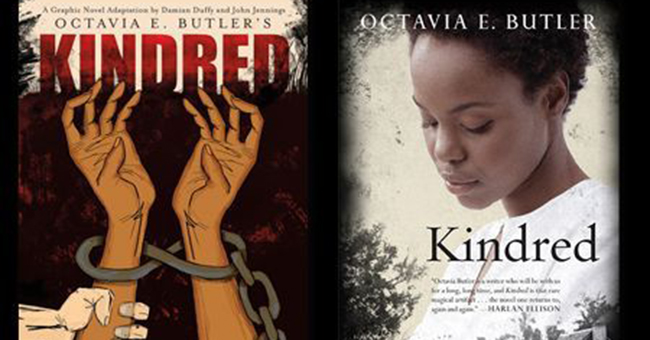
    KindredIn the twenty-first century, Octavia E. Butler’s Kindred continues to stand the test of time. Her story of Dana, a modern black woman summoned repeatedly from 1976 California to antebellum Maryland to save Rufus, the white son of a plantation owner, makes the reality of our country’s history of slavery raw and palpable. Having sealed Butler’s legacy as the first well-known African-American woman in the field of science fiction, Kindred is the ideal work of hers to be turned into a film. But decades passed without the power of its message ever reaching the big screen or any other visual medium. Until now.

    Illustrator and graphic novelist John Jennings joined forces with cartoonist and writer Damian Duffy to adapt Kindred as a graphic novel, released this month by Abrams Books. Butler fans and new audiences alike will be delighted to experience her classic novel and her bold vision rendered in this equally striking visual presentation. In this Q&A, Duffy tells our blog editor Christian Coleman how he and Jennings got involved with the project, what the adaptation process was like, and the significance Butler’s novel will have in our upcoming political climate.

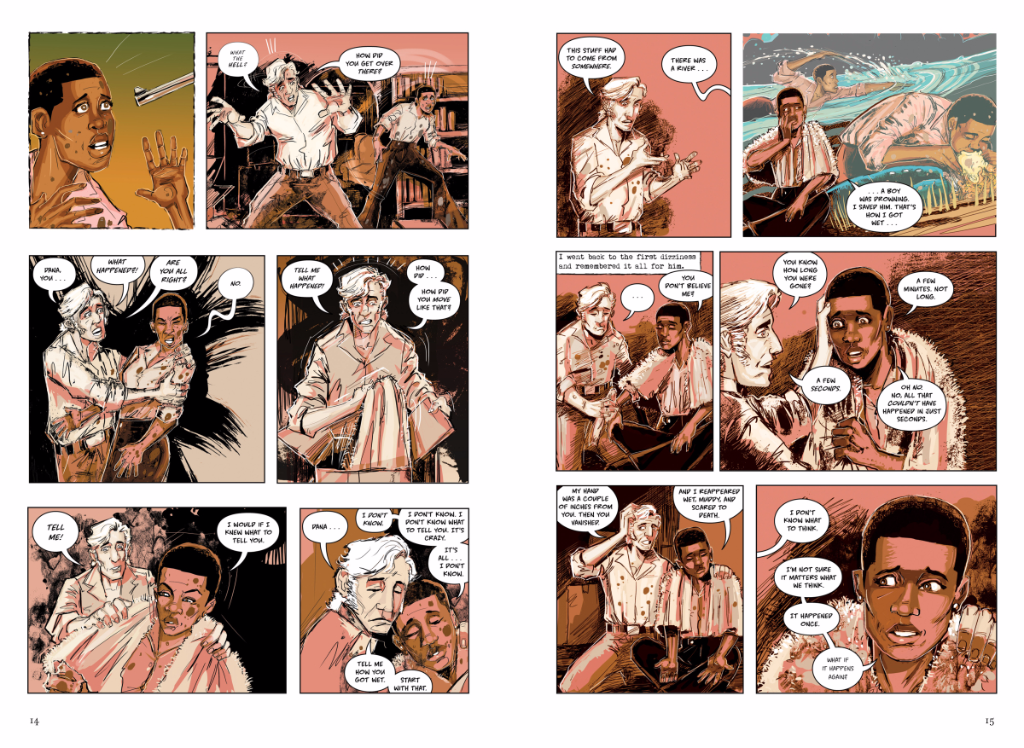
    Kindred, pp. 26-27

    Image credits: Kindred: A Graphic Novel Adaptation © Abrams ComicArts, 2017. By Octavia E. Butler, adapted by Damian Duffy, illustrated by John Jennings

    Christian Coleman: How does it feel to be the first to adapt a work of Octavia Butler to a visual medium? This was quite the undertaking!

    Damian Duffy: It was an honor and a privilege for John and me to be the first to adapt Octavia Butler’s work to a visual medium. It was also, in equal measure, nerve wracking, exhausting, terrifying, and humbling. It was easily the most difficult comics work either of us have done up to this point, in no small part because we felt the need to do justice to the story, honor Butler’s legacy, and produce a work that would be enjoyable to both fans of the novel and new readers.

    CC: How did you get involved with the project of adapting her most famous novel?

    DD: We’ve actually been chasing this project since 2009, when Beacon Press had their original call for proposals for a graphic adaptation. I came across that information as a line item in the weekly comics e-mail digest Publishers Weekly used to do, and gave the editor a call. It turned out we had about a week to put together a proposal and get it in. This presented a problem since John was travelling to a few different speaking engagements across the country. So I wrote a script for the first couple scenes while he was on a plane, and then John would overnight Fed-Ex me bits and pieces of art for those scenes from his various stops along the way. I scanned in the art and composited pages, lettered the art and wrote the proposal, and got the whole thing in just under the wire.

    In retrospect, given the circumstances, it probably shouldn’t have been a huge surprise we didn’t get the gig. It was disappointing, but nonetheless, as huge fans of the novel, we were looking forward to seeing the finished book. (Incidentally, our original 2009 pitch is online here.)

    Flash forward to the 2012 San Diego Comic-Con International. I wasn’t there for the actual event (John got there a day before I did), but John was walking the convention floor, showing art from a couple other projects we’d been working on to editors, which happened to catch the eye of Abrams ComicArts editor Sheila Keenan. Sheila asked John if he’d ever heard of this novel Kindred. John says he almost passed out. When he told me about it the next day, I really had no response beyond, “Whaaaa???”

    But we sent the folks at Abrams samples of our work, the publisher and the Butler estate liked what they saw, and lo and behold a few months later, we were the team adapting Kindred.

    CC: Tell us a little about your backgrounds and how you got interested in producing graphic novels.

    DD: John and I met in 2005 at the University of Illinois, where John was a Graphic Design professor, and where I’m currently a lecturer in Information Science. John brought comics theorist Scott McCloud to campus to talk. I attended the talk with my friend Daniel Yezbick, the first person to teach a graphic novel class at the university. Dan was friends with comics historian R.C. Harvey, who also lived in town. R.C. Harvey is friends with McCloud; they like to argue about the definition of comics.

    Anyway, it ended up that R.C. Harvey crashed the dinner after McCloud’s talk because he was friends with McCloud, Yezbick crashed because he was friends with Harvey, and I crashed because I was friends with Yezbick. The four of us (me, John, Harvey, and Yezbick) started having semi-weekly lunches to talk comics. Both John and I had been really interested in becoming comics creators in our younger days, then kind of got out of it (I had recently graduated with my Bachelor’s in creative writing) and then got back into it (I’d been self-publishing a comic book series called Whisp with the artist Dann Tincher; John had spent a summer creating his graphic novel The Hole: Parts of a Hole). Anyway, based on our conversations, our shared interests in comics art, identity politics, and hip-hop, we started collaborating, eventually creating a graphic novel and curating a few comics art shows.

    And now, twelve years later, here we are.

    Kindred, pp. 10-11CC: There was a previous adaptation of Kindred in 2001, an online dramatic presentation that relocated the 1976 scenes to 2001, making Dana a casualty of the dot-com bubble and Kevin an English teacher instead of writers. You preserved the original 1976 scenes. (By our standards, the novel is a double period piece now.) Did you ever feel obligated to modernize the story for graphic novel audiences?

    DD: We went back and forth about it, but to be honest, the audio drama was what convinced me not to modernize it. For one thing, the 2001 audio drama’s use of the dot-com bubble makes it as much a double period piece as the 1976 setting. And there’s something to having it set at the Bicentennial—an implicit indictment of a lack of progress as opposed to the explicit depiction of institutionalized racism brought on by 2001 economics—that just resonates in a more poetic way, at least for me.

    I mean, I like the audio drama quite a lot—the juxtaposition they did with performances of real life slave narratives was brilliant—but that particular change was kind of jarring for me as a listener who had read the novel. It was especially jarring as a writer who read the novel and really identified closely with the autobiographical bits about working day jobs but only really feeling alive when writing. Also, in the novel Dana and Kevin connect over their shared vocation. It’s the only instance in the novel where the word “kindred” is actually used.

    But the thing that finally pushed me over to “keep it in 1976” was actually an interview I read with Butler, where someone asked her in the 90s if anything had changed since she’d written Kindred. Butler said everything was pretty much the same, with the exception of there being a generally more progressive view of interracial couples. So, since Dana and Kevin’s relationship meant something a little different in ’76 than it would today, that seemed like a change too far.

    CC: As with any visual adaptation, it’s impossible to translate an entire text to pictures. How did you decide which scenes to keep and which scenes to edit or leave out?

    DD: It was hard, especially because Butler writes in ways that are not entirely linear. A paragraph can cover events that happen over the course of several weeks, but that pacing doesn’t exactly work the same way in a comic. I removed and/or combined some secondary characters, and we tried to keep scenes that seemed integral to the main characters’ development. “We” in this case meaning myself and our awesome editor Sheila Keenan, who was hugely helpful in editing the novel down to fit in the space we had for the graphic novel.

    Kindred, pp. 12-13CC: Butler spoke in interviews about the extensive research she did to bring antebellum Maryland to life in her prose. Apart from working from her text, what kind of additional research did you have to do to bring the past to life in visual form?

    DD: I didn’t really get the opportunity to do as much research into the nineteenth century as I would normally do if I was writing an original work. I did a bit of research on Butler and what she’d said about the novel. I did some research into 1976, which lead to including a couple 70s-specific background details, which were eventually cut for space.

    John, on the other hand, had to do some hardcore research into the visuals, set design, dress, and lighting of the nineteenth century. In the early to mid-1800s people dressed in the fashion of the Regency era, as opposed to Antebellum. So, John did a lot of research on Regency era clothing, including watching period appropriate Jane Austen film adaptations. For lighting design I got to help a little by suggesting John check out the lighting in the movie Barry Lyndon, because I remembered the movie took place around the same time, and Stanley Kubrick insisted on using only light sources that would’ve existed in that period, like candles and oil lamps.

    But mostly it was John doing that research, including visiting the Whitney Plantation museum in Louisiana to get photo reference.

    CC: The drawings have a lively, frenetic feel to them. And I like how, similar to the Wizard of Oz film, you contrast the sepia tone of 1976 with the vivid color palette of the 1800s to distinguish the two time periods. (The Weylin plantation is a far cry from Oz, but you know what I mean.) How did you decide on this visual style?

    DD: I hadn’t really thought about Wizard of Oz, but that’s a really apt comparison. The reason we chose to have the past be more colorful is that in the novel both Dana and Kevin note that things in the 1800s seem more real, more visceral; they feel more alive since injury, violence, and death are more imminent. Similarly, there are scenes where the characters note that they feel more at home in the past than their own time. The muted colors of the 1970s in the graphic novel were also meant to communicate Dana and Kevin’s sense of disconnection from their own time.

    Kindred, pp. 14-15CC: Butler pulls no punches in depicting human cruelty and brutality. Were there any passages in the novel, graphically and/or emotionally, that were difficult or challenging to render in the script and images?

    DD: The first time Dana sees a whipping, in the second chapter, was one that was difficult, both in its violence, and in its importance to the story. Butler’s stated goal with Kindred was to make the reader feel history, and that scene is where it first happens. That scene is sort of the thesis statement of Kindred, so we couldn’t shy away from it, but at the same time we didn’t want it to be gratuitous. John actually put off drawing the scene for a long time, and has said there are literal tears on the original art.

    CC: What does Kindred mean to you personally?

    DD: I first read Kindred as a sophomore. It was recommended to me by a creative writing professor, and I got an older copy, whose cover design didn’t give away anything about the story. I had no idea what the book was about before reading it, which is actually a different experience since you don’t know that Dana’s black until like thirty pages in, around the same time both you as the reader and she as the protagonist figure out just where and when she’s been teleporting to. So, it had a huge impact.

    It also deals with a lot of the race and gender identity issues that I’ve been interested in my whole life as an artist, and touches on the power of a nuanced historical understanding of the world around you, which contextualizes my work as a scholar.

    And that’s just what it meant to me before the whole adaptation thing happened. At this point, I don’t know…it’s a dream come true to be able to do this work of, not just adapting Butler’s stories, but also introducing her work to new readers.

    CC: How do you see its message resonating in our current times?

    DD: Kindred is about not just knowing historical fact, but feeling it, empathizing with the people who lived America’s ugly ancestry, and learning from that painful empathy. And that feels important right now, as we appear to be entering an era challenged by the ugliness and hatred that were standard practice in times past. Dana and Kevin go through some terrible experiences with the past, and they don’t come out of the other side unscathed, but they do come out of the other side with at least their souls intact. They stand up for fellow humans, being treated like they’re not human at all. It’s an example worth following.


    About Damian Duffy

    Damian Duffy, cartoonist, writer, and comics letterer, is a PhD student at the University of Illinois at Urbana-Champaign Graduate School of Library and Information Science, and a founder of Eye Trauma Studios. His first published graphic novel, The Hole: Consumer Culture, created with artist John Jennings, was released by Front 40 Press in 2008. Along with Jennings, Duffy has curated several comics art shows, including Other Heroes: African American Comic Book Creators, Characters and Archetypes and Out of Sequence: Underrepresented Voices in American Comics, and published the art book Black Comix: African American Independent Comics Art and Culture. He has also published scholarly essays in comics form on curation, new media, diversity, and critical pedagogy. Follow him on Twitter at @DamianD2Duffy.

  • By Jonathan Rosenblum

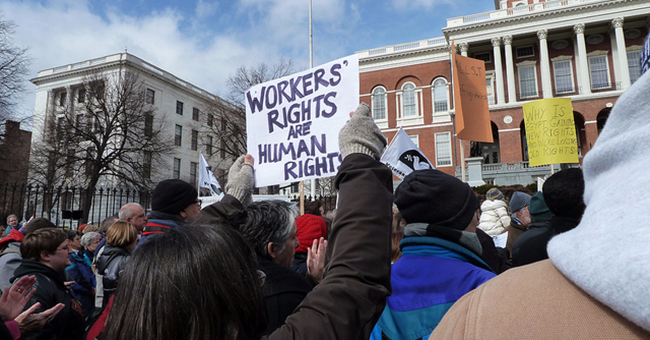
    Labor protest on Beacon Hill, Boston, Massachusetts

    Labor protest on Beacon Hill, Boston, Massachusetts. Photo credit: Flickr user sushiesque

    Originally published by Tikkun Magazine www.tikkun.org.

    Beginning in 1979 in Seattle, WA, Jim Levitt expertly fabricated custom aircraft parts and tools, helping make the Boeing Company one of the most successful businesses in the world. But in 2013, corporate executives issued a threat: They demanded that Levitt and his fellow machinists surrender their pensions, and that Washington State political leaders hand over a record $8.7 billion in tax benefits. In exchange the company promised to keep production jobs in-state. The Democratic governor of Washington, along with virtually the entire political establishment, caved in to the blackmail. So did Levitt’s international union leadership—they had bargained the deal secretly with the company. The capitulation cost 32,000 Boeing workers their pensions.

    “We’ve lost collective bargaining, for all intents and purposes,” Levitt observed in the wake of the corporate blackmail.

    In recent weeks we’ve seen no shortage of reasons—and excuses—for why Hillary Clinton blew the election and Donald Trump will be our next president: the Russians, an unfair Electoral College system, FBI Director James Comey, xenophobia/racism/sexism, a weak Democratic candidate, Wikileaks, and faked news. Some Clinton backers even blame the “tough” primary run that Bernie Sanders gave their candidate.

    What’s barely given any attention in the mainstream media is the role that decades of destruction of union power played in the 2016 election debacle. But it’s no mystery to Levitt, his fellow Boeing workers, and millions of other workers from all walks of life who’ve justifiably grown cynical about a political establishment that repeatedly has failed them over the years.

    Today, overall union membership is at its lowest point in more than 70 years. In the private sector, a paltry 1 in 15 workers holds a union card.

    Now it will get worse: Public sector unions are bracing for the inevitable Supreme Court decision allowing “freeloading”—requiring unions to let workers avoid paying any dues while still receiving full union representation and protection. The incoming Congress promises to be hostile to worker organizations, eager to do on a national scale what Gov. Scott Walker has done to Wisconsin unions.

    Underscoring labor’s weakness, the election results produced the most anemic union turnout for the Democratic presidential candidate in more than 30 years: Clinton won union households by only 51 to 43 percent, an 8 percent margin. In the previous 7 presidential elections, in contrast, the Democrat won union households by an average margin of 22 percent.

    But it would be facile simply to blame Hillary Clinton for failing to inspire confidence and for running a bad campaign, or to credit Donald Trump for successfully tapping into the anger and frustration of working-class white voters and manipulating racism, sexism, and xenophobia to his benefit. That would tell only half of the story.

    The other half of the story is that past and present union leaders—like the top Machinist union leadership in 2013—contributed to our current circumstances. The unraveling didn’t just happen suddenly. Over the last several decades, most leaders failed to lead in a bold, visionary direction to inspire millions to build power through collective organizing and action. Instead they clung to outdated assumptions about labor-management relations and remained stubbornly tethered to a political duopoly that has bestowed on us outsourced and exported jobs, stagnant wages, precarious employment schemes, terminated pension plans, rising health care costs, and an eviscerated social safety net. Most unions focused inward, instead of reaching out. Leaders thought their compromises were protecting good jobs, when in fact they were emboldening hostile corporate adversaries.

    Today, as union members and leaders, we find ourselves in a dead-end alley, surrounded by thugs brandishing crowbars and long knives. But we didn’t just get chased into the corner; too many unions went here willingly.

    To the extent that we recognize how we got here, we can begin to fight our way out of this corner. But it will be a tough fight. It will require us to reimagine the nature and role of unions, to discard failed strategies and assumptions, and to embrace new, deep labor-community-faith alliances.

    ~~~

    Go back to the end of World War II: Union membership soared during the war, reaching a third of all workers. In the core of the nation’s economy, the manufacturing sector, fully 69 percent of production workers were covered by union agreements. Militant strikes during and right after the war pushed demands for a greater share of the economic pie along with social demands. In 1946 alone, 4.6 million workers went on strike—about 1 in every 20 in the paid US workforce.

    But rather than build on that nascent power, most union leaders determined to make peace with political and business elites, believing—incorrectly—that the tripartite domestic détente of World War II was still alive. Even before Senator Joe McCarthy’s witch hunts, unions started purging communists and other suspected radicals from their ranks, seeking to demonstrate their loyalty to government and business.

    The leadership of the labor federation that emerged in the 1950s, the AFL-CIO, steered away from organizing more workers. Federation president George Meany famously declared, “I used to worry about the size of the membership. I stopped worrying because to me it doesn’t make any difference. The organized fellow is the only fellow that counts.” Most union leaders focused on securing economic gains for their members, tamping down militant insurgency in the ranks and pledging allegiance to the capitalist economic system in exchange for collective bargaining agreements.

    The bargaining system has worked splendidly—at least for those fortunate to be covered by a union contract. By the new millennium, the average union member could expect to make 25 percent more than a worker not covered by a union contract.

    But flip side of the “union difference” touted proudly by so many was that it presented a huge incentive for corporate and political elites to attack union power, motivating them to accelerate union-busting, outsourcing, contracting out, and passing laws to hamstring unions.

    Most unions, in turn, focused defensively on protecting what they had, failing to appreciate that the antidote to the business offensive required organizing more workers into union ranks and fighting to raise benefits for all, not just some. Despite organizing initiatives by a few unions in recent years, the overall percentage of union members in the workforce has plunged from a post WWII high of 33 percent to barely 11 percent today.

    Worse, as union power ebbed and the American Dream of upward mobility slipped away, most union leaders clung reflexively to the Democratic Party for salvation. In 1976 they backed Jimmy Carter for president, expecting to win labor laws that would make organizing easier. Instead, Carter and an overwhelmingly Democratic Congress handed corporate America the tools to dismantle worker power: Trucking, railroad, and airline deregulation, along with new bankruptcy laws that authorized businesses to break union contracts and eliminate pensions. In 1992 unions counted on Bill Clinton to deliver jobs, but instead he pushed the job-killing North American Free Trade Agreement and eviscerated the nation’s welfare system. Even as workers became more productive, real wages stagnated. In 2008 labor had high hopes that Barack Obama would save workers but instead Wall Street got bailed out while nearly 9 million workers were fired, 14 million families lost their homes, and the president invested more political capital in promoting another horrible trade agreement—the Trans Pacific Partnership—than in backing modest labor law reform or a raise in the national minimum wage.

    Under Obama, union ranks have declined by another half a million workers, and US inequality has reached epic levels. In just the 24 months following the official end of the Great Recession in 2009, the gap in wealth between the richest 7 percent of households and the rest of us grew by $6.6 trillion. Even an immediate national minimum wage hike to $15—obviously fantastical in today’s political reality—would offset just a tiny fraction of that recent growth in wealth disparity.

    Given all of that, the 2016 surprise isn’t that workers abandoned Democrats at the ballot box. Rather, the shocker is this: Why the heck didn’t they ditch them a lot sooner?

    For the last several decades we’ve had labor leaders who counseled union members to make pragmatic political choices, warning that the alternative to mediocre candidates was a lot worse. That was certainly true this past fall. But if there’s any single takeaway about working class voters in the 2016 campaign—from Bernie Sanders’s remarkable insurgency to Donald Trump’s brutal and ugly win—it’s a rejection of the establishment of both major political parties and the narrow mindset of lesser-evilism.

    Workers deserve better.

    The salvation of unions, and more generally, of the US working class, resides not in struggling to fix a broken national Democratic Party that repeatedly has betrayed workers, but in joining with allies to fight the coming Trump onslaught—and then to go beyond that to define a bold, unapologetic vision of society and economy, one that inspires millions of workers to engage and take action. This fight isn’t about blue states vs. red states, urban vs. rural, immigrant vs. native-born—all false frames that are intentionally deployed to divide and weaken working people—but about the 99 percent against the billionaire class and their political allies. It’s a fight about power and our societal values.

    For those of us in unions, it means we have to use all of the tools at our disposal to defend what we still have—at the bargaining table, on the shop floor, and in legislative halls—but then go beyond to forge new powerful community alliances to demand health care, quality education, civil rights, food and shelter, and fair wages for all. Indeed, the pinnacle achievements of US unions—think social security, minimum wages, safety laws—took place when labor acted not out of narrow self-interest, but as part of a broad social movement; not as a co-dependent of a political party, but as an independent force in politics.

    In other parts of the world, particularly among societies in the global south, such formations are called social movement unions: Bold movements that recognize the singular nature of a justice fight spanning workplace and community, and the inseparability of the fights for economic, racial, and social justice.

    Here’s some good news: The elements of social movement unionism already are among us, embedded in the leading justice struggles today. Chicago teachers have struck to defend the bedrock principle of quality public education for all, and in doing so have united with parents to push back against the corporatization of our schools. Uber and other rideshare drivers have organized strikes to demand new laws protecting their right to organize. Several unions, including the Service Employees International Union, the Communications Workers of America, and National Nurses United, built important new alliances when they stood with the Standing Rock Sioux’s efforts to stop the Dakota Access Pipeline. In the city of SeaTac, just south of Seattle, low-wage immigrant airport workers, Muslim and Christian faith activists, and community members took on an improbable battle against corporate and political giants to organize a breakthrough $15 ballot initiative, helping to spark a national movement. (I was privileged to have been the campaign director.) In North Carolina and beyond, the Rev. William J. Barber II has united faith leaders, union members, and immigration-rights activists in a powerful Moral Mondays movement to reclaim democracy and raise the call for a moral economy.

    What connects these varied efforts is the common awareness that the fight is not just about workplace issues, but is about societal values, and that through unity and struggle a better world is possible. Also common to these fights is the recognition that a potent, sustained movement must rest on more than economic and political principles. It also must draw upon the values that emanate from our deepest human emotions and desires for justice and community. The call for spiritual morality, whether advanced by organized religion or secular humanist yearnings, has played a decisive role in leading struggles throughout history. The civil rights movement of the 1950s and ’60s and the abolitionist movement of a century earlier are but two examples of struggles that were propelled forward by powerful calls for spiritual morality. Today, the embryonic movements that fuse direct action with a spiritually based call for justice offer similar promise.

    None of these examples, of course, represents a full-fledged social movement union. But each contains at least a rudimentary recognition that the fight is about power, each recognizes the need to build broad alliances of the 99 percent, to disrupt convention and circumvent broken law, and each contains bold strategies that we can employ in building a formidable new labor movement. And, importantly, each of these campaigns challenges unions to think differently about their role in the world—to act expansively, to link arms with new friends, and to articulate a bold vision of justice.

    Back at Boeing, Levitt retired right after the 2013 pension debacle but his union colleagues went on to take steps to reclaim power and voice: They forced the retirement of their international union president, who had promoted the pension giveaway; secured a new membership bill of rights within their union; and stepped up organizing at Boeing contractors.

    Our job in 2017 and beyond is to nurture and build on these promising movements, challenging ourselves and others to think bigger and bolder, to focus not just on winning discrete campaigns, but on building a movement that has a moral foundation and vision.

    Indeed, the gift that Trump’s ascension gives us—perverse as that may sound—is that his victory strips away any illusions about the depth of organized labor’s existential crisis. Now there is no question that our collective backs are against the wall, and the only way forward is to fight back by uniting broadly and reclaiming the movement’s larger social purpose to lift up the dignity and value of all working people.


    About the Author 

    Jonathan RosenblumJonathan Rosenblum has been a labor organizer for more than thirty years, playing key roles including SeaTac Airport campaign director. His writing has been featured in Tikkun, In These Times, and Yes! Magazine. His upcoming book, Beyond $15: Immigrant Workers, Faith Activists, and the Revival of the Labor Movement, will be released in March 2017. He lives in Seattle, WA. Follow him on Twitter at @jonathan4212. 

  • By Isaac Newton Farris, Jr.

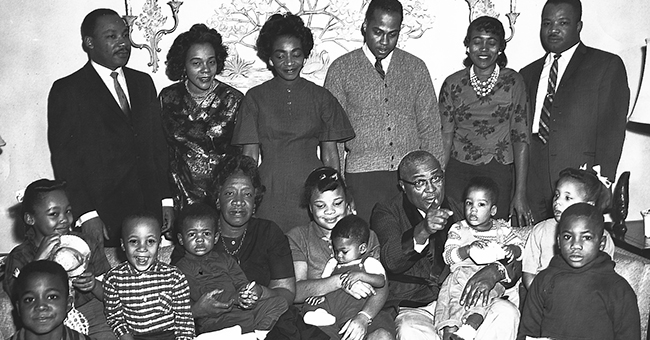
    Photo of the extended King-Williams family. King, Sr., is seated among his many grandchildren, pointing at the camera.

    Photo of the extended King-Williams family. King, Sr., is seated among his many grandchildren, pointing at the camera. Courtesy of the King/Farris Family

    Released originally in 1980, the Reverend Martin Luther King, Sr.’s autobiography Daddy King is the poignant first-person account that chronicles the rarely heard life story of Martin Luther King, Jr.’s father. Born in 1899 to a family of sharecroppers in Stockbridge, Georgia, King, Sr. escaped poverty and the looming threat of violence from white landowners to answer the calling to become a preacher. He would preach at Ebenezer Baptist Church for more than four decades while engaging in acts of political dissent, seeing the triumph of winning voting rights for blacks in Atlanta, and experiencing the feelings of fatherly pride and anxiety as he watched his son put his life in danger at the forefront of the civil rights movement.

    In this new foreword to the book, King, Sr.’s grandson Isaac Newton Farris, Jr. shares what Daddy King meant to him as a family member, and discusses the far-reaching legacy of King, Sr.’s activism for civil rights and racial justice. 

    ***

    The world knew him formally as the Reverend Dr. Martin Luther King, Sr. Many knew him affectionately as “Daddy King.” I knew him simply as “granddaddy,” but all who were acquainted with his presence respected this influential man of God. As new generations of Americans become familiar with the life of my grandfather, they will better appreciate how my uncle, his son, Martin Luther King, Jr., evolved into one of the most influential leaders of the twentieth century. In fact throughout my uncle’s life, my grandfather played a key role in allowing my uncle to retain the financial and political independence necessary for him to be at all times an uncompromised public servant.

    His life story is the traditional American narrative—starting with nothing but through hard work achieving something—but his story is made extraordinary when one factors in that my grandfather was the traditional second-generation descendent of American slaves, born to parents who were sharecroppers in the race-discriminating rural Southern town of Stockbridge, Georgia. In the midst of this hopelessness, his will to succeed and the call he felt to the ministry caused him to rise above his circumstances and not only achieve a successful life but give the world one of its greatest leaders. In his case, the saying of “hands that picked cotton now pick presidents” rings particularly true, as former president Jimmy Carter would attest to, because of the game-changing intervention my grandfather made in his 1976 presidential campaign.

    It is no coincidence that the greatest theologian of the twentieth century shares the name of the greatest theologian of the sixteenth century. Michael King was my grandfather’s original name, and Michael King, Jr., was the birth name of my uncle, but after traveling to Europe as a young Christian minister and learning of the philosophy and the protest reformation of the Christian church by Martin Luther, my grandfather returned to America and changed his name to Martin Luther King, Sr., and changed my uncle’s name to Martin Luther King, Jr., proof positive of the vision he held of himself and the vision he would plant inside his namesake son.

    Long before the historic 1963 March on Washington, Martin King, Jr., saw his father lead a march on Atlanta City Hall to protest separate water fountains for black and white citizens. This bold act in the late 1930s was as provocative and a million times more life threatening than any march in the nation’s capital would ever be. King, Sr., led the successful protest and legal fight to equalize the pay of black and white teachers of the Atlanta public schools. This would cause the Atlanta Board of Education to deny his daughter, Dr. Christine King Farris, a Spelman graduate and a holder of two master degrees from Columbia University, employment as a teacher until the intervention of then mayor William B. Hartsfield.

    But, like my uncle, first and foremost my grandfather was not a social activist but a man of God who provided forty-four years of devoted pastoral leadership to the parishioners of the Ebenezer Baptist Church, and, last but not least, he was granddaddy, a man who would deny his grandchildren nothing and moved heaven and earth to help us achieve our goals. He was the paradigm of our family’s morals and beliefs—faith in God, strength, courage, charity, sacrifice, and determination. He was the solid-rock foundation we all stood on, the one who provided the ultimate sense of security for us all. His life story is truly one for the ages and an example of how America at the low point of mistreatment of its darker-hued citizens still produced a remarkable American original such as MARTIN LUTHER KING, SR.

  • Nicholas DiSabatinoYou’ve read our classics, such as Viktor Frankl’s Man’s Search for Meaning, Octavia Butler’s Kindred, the work of Martin Luther King, Jr., and James Baldwin’s Notes of a Native Son; and many of you know our current list, featuring books by Cornel West, Lani Guinier, Anita Hill, and Christopher Emdin—books that speak to the condition of the world, and add to our understanding of urgent social issues. Whether it’s the environment or race, cultural or class dynamics, we publish all our books with a purpose. Now you can meet the people who work at Beacon Press in our blog series “Beacon Behind the Books.” Each month, we’ll introduce to you a member of our staff and give you a behind-the-scenes look at what goes on at our office.

    To kick off the new year, we introduce you to Nicholas DiSabatino, our publicist!

    What drew you to publishing, Nicholas? How did you find your way to Beacon?

    I had a BA in English from Kent State University, and I didn’t want to teach. I also knew I needed to get out of Ohio as quickly as possible.

    I moved to Boston in the fall of 2009 and attended Emerson College’s MA program in Publishing and Writing. I graduated in 2011. After a series of various internships (Nicholas Brealey, Shambhala, Charlesbridge), I started in the marketing department at Beacon Press in August of 2012. I moved to the publicity department in January 2013 and I’ve been here ever since.

    What’s a typical day in the life of a publicist?

    The life of a publicist is varied. Most of my days are spent pitching media, writing press releases/press materials, answering phone calls, coordinating interviews, scheduling author events, and more. In addition to answering emails, I generally try to start each morning reading and skimming around ten to twelve different news sources (my favorites right now are the Washington Post, the Nation, and the Atlantic) to see what’s going on in the world and if there are any writers talking about specific issues pertinent to my books.

    What is one book on our list that has influenced your thinking on a particular issue?

    I felt so privileged to work on journalist Ann Neumann’s The Good Death: An Exploration of Dying in America. It’s a beautiful, personal look at how we die in America from a variety of perspectives, including Neumann’s story of her father’s death, and what it’s like to work as a hospice volunteer. She also looks at the prolife movement, states with right-to-die laws, a prisoner who wanted to die and was force-fed after refusing to eat, and the contradictions and complexities within the disability community and right-to-die supporters. Neumann’s book made me really think hard about the concept of death and how it can be messy yet routine, unsentimental but moving, and all of the above.

    What current/upcoming projects are you excited about?

    I’m really excited about Caroline Light’s Stand Your Ground: A History of America’s Love Affair with Lethal Self-Defense. It’s a fascinating history of stand-your-ground gun culture and how it evolved from colonial days until now. Last year, I worked on Dennis A. Henigan’s important book, “Guns Don’t Kill People, People Kill People” And Other Myths about Guns and Gun Control, and it opened my eyes to the absurd rhetoric and bumper sticker logic of the NRA. Light’s book, for me, feels like a continuation of my education on gun issues and gun culture in America (something I knew little of, but am fascinated by now). I know that Beacon will continue to publish timely and pertinent books on this subject.

    Nicholas's desk space

    Nicholas's desk space

    What’s your advice to someone interested in entering the publishing field?

    Do some research and find out what you’re passionate about. Also, there are other fields besides editorial (no offense, ed team!). If you have an outgoing personality and can work well under pressure, consider a career in book publicity. Working at Beacon Press has been a second education for me on so many issues (climate change, the dangers of fracking, intergenerational activism, urban education, Native American culture, the inner workings of progressive politics, and more).

    One of my favorite projects:

    I have a special place in my heart for James Baldwin’s Jimmy’s Blues & Other Poems. It was my first solo project at Beacon Press. When the galleys of the book came in, I remember running into my boss’s office bursting with excitement exclaiming, “My name’s on it!” as silly as that sounds. Baldwin’s poetry is rich, powerful, and playful. It was a special first-time project for a young publicist. I’m so glad Beacon publishes this and Notes of a Native Son. 

    Favorite thing about Boston?

    No one thing in particular. It’s home. I met my husband here and all my friends. The city is an inclusive, historical, vibrant place to be.

    Favorite food?

    Do vanilla milkshakes count?

    Best vacation destination?

    Rome, Italy.

    What are you reading right now?

    Rebecca Traister’s All the Single Ladies, Wesley Lowery’s “They Can’t Kill Us All,” Abigail Tucker’s The Lion in the Living Room: How House Cats Tamed Us and Took Over the World, Ari Berman’s Give Us the Vote, Elena Ferrante’s Frantumaglia, and Uncanny X-Men Omnibus Volume 2 (I’m talking Chris Claremont Dark Phoenix/Days of Future Past gold here).  

    In an alternate universe, what career would you have?

    Voice actor. I think I’d make a good cartoon panda or squirrel.

    Favorite book ever?

    The Age of Innocence by Edith Wharton.

    Hobbies outside of work?

    I’m in the process of looking into volunteer work for Fenway Health’s LGBT Suicide hotline for at risk youth.

    Favorite movie(s)?

    Bringing Up Baby, The Philadelphia Story, Hud, The Heiress, A Streetcar Named Desire, Who’s Afraid of Virginia Woolf, and Death Becomes Her

    Name three non-office items on your desk and their significance to you.

    Photos of my husband, Josh.

    I have a lot of black and white photos pinned to my cork board of some of my favorite old Hollywood actors and actresses (Paul Newman, Katharine Hepburn, Bette Davis, Lauren Bacall, Ingrid Bergman, and Cary Grant). My desk is essentially a promotional tool for Turner Classic Movies.

    I have a small golden cat figurine that I call my “Cat Oscar” because it feels like an award in your hands.


    About the Author 

    Nicholas DiSabatino graduated from Kent State University and has an MA in Publishing and Writing from Emerson College. He joined Beacon in 2012.