• By Eric Mann

    Protest

    I begin with my punchline—the road to defeating Donald Trump is to confront the treachery of the Democratic Party, including that of President Obama and Hillary Clinton—that created the conditions for his election. It is the Democrats who will try to coopt any protest movements into a cynical plan for their hoped-for election in 2020. The road to Trump will be paved with good intentions unless we confront the Democrats on their racism, xenophobia, militarism, climate catastrophe, and their corporate control of every major city in the US. It is the Democrats who are leading the charge against Black people in New York, Philadelphia, Chicago, Los Angeles, and every urban center, as Black folks are being driven from their communities into a dispersed, occupied, and subjugated people in direct violation of UN statutes on genocide. As many pro-Democratic “public intellectuals” coopt and trivialize the great International Workers of the World revolutionary Joe Hill—“Don’t Mourn, Organize”—I have to ask the question, “Organize for what? What is your strategy and what are you fighting for?” I think the answer to any social justice, let alone social revolutionary strategy, will involve a two-pronged battle against the Democrats and the Republicans, the Clintons and the Obamas, the Trumps and the Bushes, if we have any chance at sanity, integrity, and victory.

    In 2011, several years after the first election of Barack Obama, I was so grateful that Beacon Press published my book, Playbook for Progressives: 16 Qualities of the Successful Organizer. I had actively worked for the election of Barack Hussein Obama and was thrilled that he was elected. I would do it again. (And, I did it again in 2012 with by then a fuller understanding of what in fact his politics and strategy and turned out to be.)

    I had hoped that the Obama administration would support a broad anti-racist, anti-war, and environmental justice movement built from the bottom up. I understood he was commander in chief of US imperialism, and only a powerful movement rooted in Black and Latino communities with a transformative political program could transform our society as part of an international, anti-imperialist movement. As such I also wrote The Seven Components of Transformative Organizing Theory as a companion to Playbook. Both books have sold more than 7,000 copies and have been used by key activists and organizers all over the US and internationally.

    But the transformative movement I envisioned has not happened. It is not President Obama’s fault that our Movement does not exist, but our challenge is to figure out why and from there try to rebuild one.

    My own organization, the Labor/Community Strategy Center, has built the Bus Riders Union, the largest mass membership organization of transit riders in the US, and won $2.7 billion in brand new compressed natural gas buses in the auto capital of the world. We have organized a movement that convinced the Los Angeles City Council to end its “daytime curfew” and prevented the Los Angeles School Police from continuing to issue “truancy” tickets to 50,000 Black and Latino students on their way to school. The Strategy Center has convinced the Los Angeles Unified School District to end its participation in the deadly Department of Defense 1033 Program that gives military grade weapons to city and state police departments. The Strategy Center also got them to return one mine-resistant ambush protected tank, three grenade launchers, and sixty-one M-16 assault rifles to the Pentagon and to issue an apology to my organization. But those tactical victories without a broader movement cannot stop the rightward march of history. Where is the unified movement with a comprehensive vision?

    I am encouraged by the insurgency of the Sanders Campaign, but also appalled by its white chauvinism and failure to challenge the Obama administration directly. I am encouraged by the bravery and vision of our allies in the Black Lives Matter Movement and fear for them, as the forces of white supremacy are on the rise in both parties. I am hearted by the Dreamers who pushed the Obama administration to implement DACA, Deferred Action for Childhood Arrivals.  I take heart through the wonderful, creative work of the Lakota and Dakota Sioux and the Indigenous Environmental Network in beating back the Dakota Access Pipeline—and yes, hearted by President Obama’s decision to support their demands.

    But where is the independent political movement of Blacks, Latinos, Indigenous, Asian/Pacific Islander and anti-racist whites demanding to free the US 2.5 million prisoners, bring back 100,000 Black people to New Orleans ten years after Katrina, cut US police and defense budget by fifty percent, support open borders and amnesty for prisoners, stop state violence against women in the community the workplace, the prisons, in the army and by the US Army in the Third World? Where is the movement to demand that the US cut its greenhouse gas emission by fifty percent of 1990 levels by 2025 starting now and to contribute $10 billion a year to the United Nations Green Climate Fund to support sustainable development in the Third World and to stop the US police and surveillance state against social movements? I have gone into these demands in my latest book, Katrina’s Legacy: The Black Nation and the People of the World Confront U.S. Genocidal Climate Crimes, also at http://www.frontlinespress.com. We have to bring these demands to President Trump. But we also have to bring them to every Democratic and Republican Governor, Senator, and Mayor, and figure out if we can build a movement independent of both capitalist/imperialist parties.

    As I write, my own organization has opened up Strategy and Soul, a new center for “civil rights, revolutionary books, peoples art, community health, climate justice, and transformative organizing” in the center of Black South Los Angeles.  We are using Playbook for Progressives to transform activists into organizers—the smallest single unit around whom you can build a task, a project, an organization, and a revolutionary movement.


    About the Author 

    Eric MannEric Mann is the director of the Labor/Community Strategy Center in Los Angeles. He is a veteran of the Congress of Racial Equality, Students for a Democratic Society and the United Auto Workers. He is the host of Pacifica’s Voices from the Frontlines on KPFK.  His Wikipedia link is https://en.wikipedia.org/wiki/Eric_Mann. He can be reached at eric@voicesfromthefrontlines.com. He wants to thank Joanna Green and Gayatri Patnaik at Beacon Press for their support of Playbook for Progressives. Follow him on Twitter at @EricMannSpeaks.                                                                              

  • 2016 Holiday SaleIt’s December, which means it’s time for our holiday sale! All this month, get 30% off every purchase on our website using code HOLIDAY30. This year, we’re donating 20% of all sales in December to the Water Protector Legal Collective, which provides legal support for water protection activities in resistance to the Dakota Access Pipeline. Now, more than ever, these titles will be timely and necessary as we transition to the new administration.

    Looking for a title, but don’t know where to begin? Get started with this list we put together of our bestsellers and highlights of 2016. Happy book hunting and Happy New Year!

    Bestsellers

    For White Folks Who Teach in the Hood…and the Rest of Y’all Too: Reality Pedagogy and Urban Education
    Christopher Emdin

    Merging real stories with theory, research, and practice, prominent scholar Christopher Emdin offers a new approach to teaching and learning for every stakeholder in urban education. Emdin’s book made it on the New York Times’ bestseller lists of Race & Civil Rights and Education.

    Defying the Nazis: The Sharps’ War
    Artemis Joukowsky, with a foreword by Ken Burns

    This official companion to the Ken Burns PBS film tells the little-known story of the Sharps, an otherwise ordinary couple whose faith and commitment to social justice inspired them to undertake dangerous rescue and relief missions across war-torn Europe, saving the lives of countless refugees, political dissidents, and Jews on the eve of World War II. Our director Helene Atwan attended a special screening of the documentary at the White House with Joukowsky.

    “All the Real Indians Died Off” And 20 Other Myths About Native Americans
    Roxanne Dunbar-Ortiz and Dina Gilio-Whitaker

    In this enlightening book, scholars and activists Roxanne Dunbar-Ortiz and Dina Gilio-Whitaker unpack the twenty-one most common myths and misconceptions about Native American culture and history that have misinformed generations.

    The Miracle of Mindfulness: An Introduction to the Practice of Meditation
    Thich Nhat Hanh

    This new gift edition of Thich Nhat Hanh’s classic guide to meditation and mindfulness features archival photography and beautiful calligraphy by the zen master.

    The Good Death: An Exploration of Dying in America 
    Ann Neumann

    Following the death of her father, journalist and hospice volunteer Ann Neumann set out to examine what it means to die well in the United States. She brings us intimate portraits of the nurses, patients, bishops, bioethicists, and activists who are shaping the way we die.

    The Third Reconstruction: How a Moral Movement Is Overcoming the Politics of Division and Fear
    The Rev. Dr. William J. Barber II with Jonathan Wilson-Hartgrove

    Modern-day civil rights champion Rev. Dr. William J. Barber II tells the stirring story of how he helped start a movement to bridge America’s racial divide. He gave a rousing speech at this year’s Democratic National Convention.

    Putting God Second: How to Save Religion from Itself
    Rabbi Dr. Donniel Hartman

    Why have the monotheistic religions failed to produce societies that live up to their ethical ideals? Prominent rabbi Dr. Donniel Hartman answers this question by looking at his own faith and offering a way for religion to heal itself.

    The Radical King
    Martin Luther King, Jr., edited and introduced by Cornel West

    This revealing collection of twenty-three selections restores Dr. King as being every bit as radical as Malcolm X.

    Five Dollars and a Pork Chop Sandwich: Vote Buying and the Corruption of Democracy
    Mary Frances Berry

    In this timely and nonpartisan book, Dr. Berry focuses on voter manipulation and electoral corruption—and the importance of stimulating voter turnout and participation.

    Interfaith Leadership: A Primer
    Eboo Patel

    In this book, renowned interfaith leader Eboo Patel offers a guide for students, groups, and organizations seeking to foster interfaith dialogue and promote understanding across religious lines.


    Highlights

    The Drone Eats with Me: A Gaza Diary
    Atef Abu Saif

    In this unforgettable memoir, young father and novelist Atef Abu Saif renders everyday civilian life shattered by Israel’s 2014 invasion of Gaza. The Drone Eats with Me was selected as an Indies Introduce Debut Authors Pick for Fall/Winter 2016!

    One Righteous Man: Samuel Battle and the Shattering of the Color Line in New York
    Arthur Browne

    In this biography, Pulitzer Prize-winning journalist Arthur Browne reveals an important and compelling social history of African Americans in New York City from the 1910s to 1960 through the life of Samuel Battle, the New York Police Department’s first black officer. One Righteous Man is the winner of the 2016 Phillis Wheatley Book Award in Nonfiction.

    Soul Serenade: Rhythm, Blues & Coming of Age Through Vinyl
    Rashod Ollison

    In his coming-of-age memoir, pop-music critic and culture journalist Rashod Ollison recounts growing up in central Arkansas as he searched for himself and his distant father through soul music. Soul Serenade was selected as an Indies Introduce Debut Authors Pick for Winter/Spring 2016!

    Same Family, Different Colors: Confronting Colorism in America’s Diverse Families
    Lori L. Tharps

    Weaving together personal stories, history, and analysis, journalist Lori L. Tharps explores the myriad ways skin-color politics affect family dynamics in the United States. The New York Times Book Review says “[t]his thoughtful, honest, historically textured and valuable book offers a detailed and current syllabus of work on the social and cultural meanings of colorism around the world and brings colorism ‘out of the closet.’”

    The Upstairs Wife: An Intimate History of Pakistan
    Rafia Zakaria

    In this memoir of Karachi seen through the eyes of its women, author, attorney and civil rights activist Rafia Zakaria tells the parallel stories of her aunt Amina’s polygamous marriage and Pakistan’s hopes and betrayals. The Upstairs Wife is listed on Indiebound’s Inspired Recommendations from Indie Booksellers for Reading Groups Winter 2016-2017.

  • 2016

    Photo credit: Flickr user iluvgadgets

    2016 is a year that speaks for itself. It’s been a rough and tumultuous one, culminating in a divisive presidential election that has many people afraid of what’s in store for the country once the new administration takes office on January 20. When we’re in need of wisdom and guidance during troubling and unpredictable times ahead, we turn to our authors, who continue to offer their time and insights to give us perspective and commentary on the condition of our world. Our blog, the Broadside, wouldn’t be what it is without them. As always, we’re so grateful to them. We’ll need their thought-provoking essays as we head into 2017. Before the year comes to a close, we would like to share a collection of some of the Broadside’s most-read posts. Happy New Year!


    Roxanne Dunbar-Ortiz: “A Skirmish Between Colonizers”

    A Skirmish Between ColonizersIn January, a group of armed militiamen, including Ryan and Ammon Bundy, broke into and took over the headquarters and visitors’ center of the Malheur National Wildlife Refuge in Harney County, Oregon. The reason for the take-over was to protest the imprisonment of two local rangers for committing arson on public lands in 2001 and 2006. The take-over, though, has more to do with the ongoing US system of colonialism and the illegal seizing land from Native communities. Providing some historical threads to understand the present, An Indigenous Peoples’ History of the United States author Roxanne Dunbar-Ortiz calls for all the sacred sites and “public” lands to be returned to the stewardship of Native peoples.


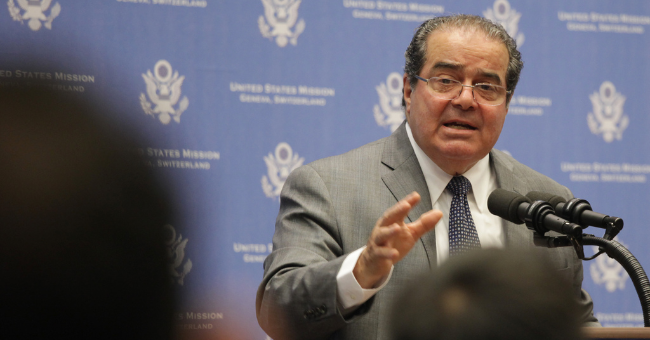
    David R. Dow: “The Myth That Scalia Matters”

    The Myth That Scalia MattersBefore the rumors of Justice Antonin Scalia’s death were confirmed, he was already being lauded as a transformational figure, eulogized as a jurist who made originalism a respectable mode of constitutional interpretation. His views were regressive, but he expressed them in memorable prose. During oral argument, he made people laugh. Law professor David R. Dow argues, however, that Scalia’s interpretive philosophy is the equivalent of climate change denial. It will be forgotten in a generation and laughed at in two.


    Christopher Emdin: “For the Folks Who Killed Black History Month…and the Rest of Y’all Too”

    For the Folks Who Killed Black History MonthTen years ago, rapper and producer Kanye West said “…I make Black History everyday, I don’t need a month.” It’s a declaration, says For White Folks Who Teach in the Hood author Christopher Emdin, that signals the tensions between Black History Month and the youth to whom it should mean most. In his visits to classrooms, Emdin discovered that black students were disengaged from Black History Month celebrations because they didn’t feel connected to it. For them, it was a relic whose historical significance they recognized, but had no personal import. Emdin proposes a radical approach to making Black History Month relevant for the new generations.


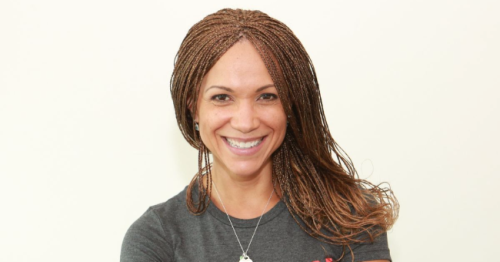
    Jeanne Theoharis: “What MSNBC—and the Country—Loses by Silencing MHP and Her Inclusive Forum”

    Melissa Harris-PerrySocial media filled with outrage as well as tributes for Melissa Harris-Perry when MSNBC silenced her show and dismantled her editorial control. Her show was important, and for many viewers Harris-Perry was their first and often only national exposure to a broad range of issues. It raised uncomfortable, needed questions about American politics and enduring sites of injustice; it hosted a diverse array of experts for an informed national conversation. Jeanne Theoharis, who discussed her book The Rebellious Life of Mrs. Rosa Parks on the show, celebrates Harris-Perry and the inclusive forum an entire nation lost.


    Suzanne Kamata: “The Boy Abandoned in the Woods of Hokkaido”

    The Boy Abandoned in the Woods of HokkaidoJapan and the United States have differing cultural standards when it comes to parenting. That became apparent when seven-year-old Tanooka Yamato made international news as the boy whose parents abandoned him in the bear-infested forest of Hokkaido. Many Americans were incensed, fearing the worst that could have happened to the child and blaming his parents for negligence. But are we missing something as far as cultural differences are concerned? Suzanne Kamata, editor of Love You to Pieces and American expat who lives in Japan, addresses the other side of the story from the Japanese perspective.


    Karl Giberson: “Noah’s Ark Park Keeping Christians in the Eighteenth Century”

    Ark EncounterIn July, biblical literalist Ken Ham opened his controversial “Ark Encounter” theme park in Williamstown, Kentucky. Here, visitors come in contact with a full-sized wood ark, built according to the dimensions provided by the Bible, and the events of the myth of Noah and the flood. Scientists have expressed concern about the project promoting pseudoscience. Biblical scholars have objected to the park’s treating the myth as a historical event. Karl Giberson, author of Saving the Original Sinner, argues that with the park, Ham has done a great disservice to Christianity and thinking people in general.


    Suzanne Kamata: “Say Their Names”

    Say Their NamesIn Japan, there is still stigma attached to people with disabilities and they continue to be marginalized. This July, disabled residents died or sustained injuries by knife attack in a care facility, but their names were never made public. Police didn’t disclose their names on the grounds that their relatives did not want to have them identified due to their disabilities. In her second post about Japan, Suzanne Kamata points out that this is the opposite of what happened when a driver of a rampaging truck killed eighty-four people in Nice, France on Bastille Day. Names and photos of the truck victims were publicized. Kamata asks: How can we mourn those who are denied their humanity?


    Richard Hoffman: “Do Bullies Have Mommies?”

    Do Bullies Have MommiesWe’ve heard plenty about President-elect Donald Trump’s father during the course of his campaign, but not a word about his mother. That’s because, as Love & Fury author Richard Hoffman writes, women in Trump’s macho bully’s world are worth their fetishized bodies and nothing else. In fact, Trump’s inherited and antiquated brand of masculinity is designed to shame boys into rigid gender compliance and into identifying with a tangle of anxieties that can only be assuaged with violent behavior. But this ideology is on its way out. You can tell by the ferocious backlash of its death throes.


    “Why We Need the Secular Gospel of James Baldwin in Our Times”: A Q&A with Rich Blint

    James BaldwinIn response to the persistent racial injustice and the renewed spirit of activism represented by the Black Lives Matter movement, we released the eBook Baldwin for Our Times to help us understand and confront the inequalities in our times. This collection features specific selections from James Baldwin’s Notes of a Native Son and his poetry collection Jimmy’s Blues. We reached out to prominent Baldwin scholar Rich Blint to provide notes and an introduction for the publication. In this Q&A, Blint chats with us about the project and why Baldwin’s sharp and lucid social criticism will be imperative during the upcoming administration.

  • By Linda K. Wertheimer

    Dreidels

    Photo credit: Adiel Io

    This essay originally appeared on Cognoscenti, the ideas and opinion page for Boston public radio station WBUR.

    They carry tinfoil pans filled with steaming latkes and bags of wooden dreidels into elementary schools, as their own children squeal with delight. These Jewish parents tell the ancient story of how a tiny band of Jewish soldiers called the Maccabees defeated Syrian Greeks and stumbled upon a miracle when they found a tiny bit of oil that lasted eight days instead of just one.

    It’s a time-honored tradition to be a “Hanukkah parent.” How could it be wrong? Moms and dads can build children’s pride in their Jewish identity by showing them it’s okay to talk about their faith in a Christian-majority school. They can help if the teacher knows nothing about Hanukkah, which starts December 24 this year. They can counter the anti-diversity message President-elect Donald Trump recently sent when he announced “we are going to say Merry Christmas again” at a rally in Wisconsin. Not all of us do celebrate Christmas, though we still get plenty of Christmas greetings.

    But Jewish parents should think twice about bringing Hanukkah to their child’s classroom. I confess, a few years ago, I was a “Hanukkah parent” in my son’s kindergarten room. Another Jewish parent and I told the Hanukkah story and helped students decorate wooden dreidels. As soon as he saw me, my son jumped up and down and rushed over to hug me. He later blurted out things he knew about Hanukkah to his peers, like the names of the Hebrew letters on the dreidel, actually a top. At the same class gathering, a Hindu parent ran an activity on Diwali because both holidays fell around the same time that year.

    I loved seeing my son’s enthusiasm about my presence and his Judaism. I don’t regret volunteering. But I wouldn’t do it again given what I know now after years researching how schools can—and should—teach about religions.

    When parents offer themselves as instructors of our faith, we let schools off the hook and leave education about religion up to chance. Learning about religion is an integral part of social studies and geography even in elementary schools, and it’s especially critical now with increasing reports of hate crimes based on religion and race.

    Putting the burden on parents of religious minorities, whether they are Jews, Muslims, Hindus, or Sikhs, to teach about their religious holidays is a haphazard approach. Some classrooms may have only Christians. Not every parent may be willing or able to give such a lesson.

    While some parents see themselves as boosting their children’s Jewish identity with such visits, others shy away. They do not want to further shine the spotlight on their child. My mother never offered nor was she asked to teach about Hanukkah in my elementary school, and I’m forever grateful. I was already singled out for being the only Jew and frequently told I was going to hell because I didn’t believe in Jesus.

    Hanukkah has food and games, but it is not a secular celebration. Hanukkah, known as a festival of lights like Diwali and Christmas, is about more than spinning dreidels. The Maccabees were fighting for Jews’ right to worship the way they wanted. When parents share Hanukkah, Diwali or Ramadan, they are giving a lesson on a religion, and these sharing experiences often happen in isolation. It’s rare to see a Christian parent come in to tell the Christmas story and demonstrate how the family decorates the tree. Teachers welcome religious minority parents in to share their traditions, labeling them cultural activities. Sometimes, teachers offer these visits after complaints about a singular emphasis on Christmas. That’s missing the point.

    We need to educate about holidays rather than celebrate them in school. Elementary schools should teach about religion, and teachers can find non-preachy resources to help. I’ve seen instruction on religion as early as first-grade, using the Core Knowledge curriculum, created by famed education researcher E.D. Hirsch. The curriculum, which is used in more than 1,200 private and public schools nationally, incorporates teaching about Judaism, Christianity and Islam as part of social studies in the first grade. Second-graders learn about Hinduism, and other religions are taught in upper grades.

    But when I observed a lesson on Hanukkah in a first-grade class, it was the Christian teacher, not a Jewish parent, who brought in a menorah and dreidel as props for a lesson Hanukkah. She also taught the children about the holiest Jewish holidays, Yom Kippur and Rosh Hashanah. In lessons on Christianity, Easter and Christmas were on the menu. Ramadan and Eid were part of instruction on Islam.

    Let teachers do the teaching about religion in public schools. As parents, we should keep the latkes, dreidels and menorahs at home.


    About the Author

    Award-winning education writer Linda K. Wertheimer is the author of Faith Ed. She was previously the education editor of the Boston Globe and a reporter at the Dallas Morning News and Orlando Sentinel. Her work has appeared in numerous publications, including Writer, Atlantic online, Tiferet, Moment, and the Boston Globe Magazine. A graduate of Northwestern’s Medill School of Journalism, she lives in Lexington, Massachusetts. Follow her on Twitter at @Lindakwert and visit her website.

  • By Margaret Regan

    ICE arrest

    Photo credit: U.S. Immigration and Customs Enforcement (Department of Homeland Security)

    What if Donald Trump follows through on his vow to deport millions of undocumented immigrants as soon as he becomes president?

    Due process for the immigrants may slow him down, but he says he’s determined to get started right away with deportations of immigrants convicted of crimes. (He says the number is two to three million but others dispute that, citing a lower figure of 1.9 million.) In August 2016, in a blistering campaign speech in Phoenix, he vowed to create a “new special Deportation Task Force” to root out “criminal illegal immigrants,” but he didn’t spare immigrants not convicted of crimes.

    “Anyone who has entered the United States illegally is subject to deportation,” he said. More recently, after the election, he said he would look at the cases of “terrific” immigrants once the border is secured.

    But his plans and statements shift rapidly, and his actual practices after January 20 are unknowable. In November, after the election, he said he would move ahead first with the rapid deportation (or incarceration) of criminals. He showed a possible softening, though, when he said that after he’s secured the border, he would look at the cases of immigrants who are “terrific people.”

    If he proceeds with the expensive wholesale deportations, the eleven million undocumented immigrants estimated to be living in the United States now would not be the only people affected. The round-ups would have a devastating impact on mixed-status families, on the US citizen children who would lose a mother or father, and on the legal permanent residents who would lose a partner, or a child. The 700,000 DACA recipients—the young people who came here as children and got temporary waivers allowing them to stay, work and go to school—could easily be rooted out. The federal government already has detailed data on their whereabouts.

    What would mass deportations look like? Trump could revert to the giant raids of the George W. Bush administration: the armed invasions of factories that took 361 seamstresses in a textile mill in New Bedford, Massachusetts, in 2007; and nearly 400 meat workers in a slaughterhouse in Postville, Iowa, in 2008.

    Or he could follow the pattern of President Obama. Obama mostly avoided major workplace raids; in his administration, ICE officers more often knocked on doors and hauled families out of their homes. But the sheer numbers in Trump’s plan might require more drastic measures. Obama has deported a record 2.5 million immigrants, but it’s taken him eight years. By contrast Trump promises to deport that many or more in a very short period at the beginning of his term.

    Ironically, Trump’s plan to start with convicts mirrors Obama’s stated intent to go after only those with criminal convictions. In real life, of course, deportations haven’t always worked out that way. Sometimes the person nabbed by ICE is not a hardened criminal. Sometimes it’s a peaceful, hard-working single mom with kids dependent on her. Sometimes it’s an immigrant like Elena Santiago.

    The first time I met Elena, she was standing in Mexico, on the south side of the massive metal post wall that divides the border town of Nogales, Arizona, from its sister city of Nogales, Sonora. She liked to stay near the border wall—it was as close as she could get to her two kids up in Phoenix.

    Elena (not her real name) was a native of Mexico City who’d been brought to the United States by her mother at age thirteen. She spent her teen years picking onions and carrots in the agricultural fields west of Phoenix, sacrificing her education to put food on America’s tables. As an adult, she moved onto restaurant and retail work, a work history that had been interrupted the year before by a knock on the door. At age thirty-nine, she’d been wrenched from her home by ICE. When I met her, she was just turning forty. And she hadn’t seen either of her children in almost a year since the day she was deported from the United States and dumped down here over the border in Mexico.

    Elena did eventually get her daughter back, but not without a court fight. And when the little girl returned after fourteen months of separation, she and her mother no longer spoke the same language. The son was a different story. Elena never got him back.

    Below is a piece of Elena’s complicated story, as she told it to me. In my book Detained and Deported: Stories of Immigrant Families Under Fire, she has her own chapter: it’s called “Woman Without a Country.” She begins with the account of the raid on her house.

    ***

    Detained and Deported“It was on the third of November 2011,” Elena said in Spanish, slumping a little at the table at Leo’s restaurant in Nogales, Sonora. “ICE came to my house. They didn’t come inside.”

    It was a school day and Elena was up early, as usual, in her rental house in Glendale, a suburb of Phoenix, getting her family ready for the day. She had her job at a store to get to, fifteen-year-old Luis would be going off to high school, and little Camila, just two, would tag along with her mom to work. Among the million morning tasks she faced as a single working mom, she had to feed the pets. The family had a whole menagerie of animals, “two dogs, two cats, two turtles,” she said proudly. “I bought them for my kids. I had a big yard.”

    When she went out back to tend to them, she heard odd noises coming from out in front of the house. She came back in, and when Luis had his backpack on and Camila was zipped into her jacket, Elena opened the front door and saw what she most feared. A platoon of Immigration and Customs Enforcement agents, armed and ominous, were gathered outside. A fleet of law enforcement vehicles idled in the road.

    “They closed the street, like I was a criminal,” she said, trembling at the memory. “There were a lot of cars, a lot of agents.

    Elena was terrified but she buckled her toddler into her car seat and shooed her son into the car. At the moment she started to get behind the wheel, an agent called out her name on a megaphone, broadcasting it full blast for all the neighbors to hear.

    “Elena Santiago,” he bellowed. “Elena Santiago.”

    The officers came over and handcuffed her in full sight of the kids, marched her over to one of their SUVs, and locked her into the back. Seeing their mother in the hands of the police, both kids started wailing.

    “The police turned on their car radio so I couldn’t hear the children,” Elena said.

    Inside the ICE SUV, over the din of the radio blaring and the kids screaming, the officers started asking questions. “Are you pregnant? Sick? Taking medicine?” Then they came to the most fateful: “Who are you going to leave the kids with?”

    Elena had no one who could help her. Her mother was dead. The kids’ fathers were out of the picture. She had only one real friend, a woman who was in no position to take in Luis and Camila. So the agents called Arizona’s Child Protective Services, the agency that takes abused, neglected, and abandoned children and puts them into foster care.

    In short order, a CPS woman arrived and leaned into the window. “Do you want to sign the children over to us?” she asked.

    “I said, ‘Yes. Temporarily,’ ” Elena recounted.

    Armed with the document that Elena signed, the CPS worker turned to the kids. Luis always an attentive big brother, cradled the screaming Camila in his arms and climbed into the CPS van. In that anguished moment of seeing her kids taken from her, Elena suddenly remembered the family pets.

    “I said to one of the agents, ‘What about my dogs? My dogs are going to die.’”

    The agent, she said, turned to her and sneered, “Who cares about the dogs?”

    Elena trembled as she remembered his casual cruelty. “It was all for my kids,” she said of the animals. Ten months later, she had no idea what had become of the dogs and cats and turtles, not to mention the family’s furniture and electronics and clothes and car.

    The family, divided into two vehicles, went their separate ways, the children to CPS, their mother to ICE. Elena watched out the window of the ICE SUV as the kids’ van disappeared into the distance. She hadn’t even been allowed to say good-bye.

    The agents, and the US government, had everything they needed to deport Elena from the country where she’d lived since she was a young teen, and away from the country where she’d given birth to her two children, both of them US citizens.

    “En horas,” Elena said—within hours—ICE put her on a bus headed for the Mexican border. Three hours and 180 miles later, she walked south over the line with other deportees, past the dusty canyons separating Nogales, Arizona, from Nogales, Sonora, past the border wall, into Mexico, a country where she had not set foot in twenty-seven years.

    She would get no news of her children for a month.

    ———

    In Nogales, Elena found herself in a shifting community of deportees, all of them suddenly stranded in a confusing town that few of them knew. Elena was used to Phoenix, a wide-open city sprawling out over the flat desert between the mountains, its millions of residents, Elena included, routinely negotiating its boulevards by car. Nogales was completely different. A teeming hill town of about 212,000, Nogales was jammed with pedestrians, street vendors, and cars jockeying for position on narrow, bumpy streets. Taxis honked and music spilled out of the stores. Hemmed in on the north by the border wall, the town climbed up and down crazily steep hills.

    In 2011, the year that Elena was deported, 54,977 deportados flooded the town, the equivalent of a quarter of the city’s population.

    They had become a familiar sight in town. The border crossers who’d been caught in Arizona by the Border Patrol and quickly returned were still dusty from the desert, their mochilas—backpacks—strapped to their backs. The detainees who’d been in Eloy or Florence lugged all their worldly goods in the clear plastic bags issued by ICE. Elena didn’t even have that much. She had only the clothes on her back, no ID, no money, no nothing.

    Like many of her fellow deportees she had lived in the United States for years and was traumatized by the abrupt separation from her family. She was desperate to return North.

    Elena stuck close to the border, near a soup kitchen and the migrant shelters. Typically the guests had to leave these refuges at first light. Winter and summer, the displaced men and women spent dreary days in the elements, idling outside offices, roaming the streets. They sat on benches outside the office of Grupos Beta, the Mexican border force whose mission is to help migrants. Or they took naps in the cemetery, sleeping behind gravestones to escape the scrutiny of the local police.

    Elena found her way to the shelter at the bus station Transportes Fronterizos, right by the border wall, and stayed for a month and a half. It was a rough, bare-bones affair in a shabby set of buildings, but it provided the wayfarers with a bed or maybe a mattress on the floor. The men slept in a crumbling trailer outfitted with bunk beds and the women on double beds and floor mats in an upstairs room reached by a set of rickety stairs. Temperatures in Nogales drop down to the twenties at night in winter, when Elena was there, and the shelter’s showers were outdoors, open to the sky.

    Elena was afraid in the crowded city. Twice, she told me later, men had tried to drag her into their cars. The Sinaloa drug cartel controlled the region; known by migrants as la mafia, the narcotraficantes had expanded into the lucrative human smuggling trade. The federales—armed Mexican soldiers—were in town too. As we talked at Leo’s, we saw a truckload of helmeted soldiers bouncing down the rough street, their rifles propped up, aimed at the sky.

    It’s hard to know what might have happened to Elena if she hadn’t encountered some journalists from Los Angeles. They were in town interviewing deportees, and told her about No More Deaths, a human rights group out of Tucson that helps deportees in Nogales and migrants in the desert. The volunteers ran a telephone ministry, proffering cell phones to deportees to phone home. A month into her time in Nogales, Elena went to them for help.

    Elena told the workers that she hadn’t talked to her kids in a month and didn’t even know where they were. The only number she had was for CPS, and she hadn’t been able to connect to a live person when she called on a borrowed phone.

    Volunteer Hannah Hafter got in touch with social worker in Tucson, who quickly worked her contacts at CPS. Within days, she found out the whereabouts—and phone numbers—of Luis and Camila. Luis was in a group home in Glendale, and Camila was living with English-speaking foster parents in a suburban town way east of Phoenix. When Hannah got the numbers, she handed Elena a phone, and for the first time in a long and painful month, Elena was able to speak with her children.

    When Elena heard Camila’s high-pitched voice say “Mamá?” she “just cried and cried and cried,” Hannah said later. “It was like you could see this darkness lift off of her.”


    About the Author

    image from www.beaconbroadside.comMargaret Regan is the author of two award-winning books: Detained and Deported: Stories of Immigrant Families Under Fire, a 2015 Southwest Book of the Year; and  The Death of Josseline: Immigration Stories from the Arizona Borderlands, a 2010 Southwest Book of the Year and a Common Read for the Unitarian Universalist Association of Congregations. A longtime writer for the Tucson Weekly, Regan has won many regional and national awards for her immigration reporting, including the 2016 Matthew Freeman Social Justice Lectureship at Roosevelt University, Chicago. She lives in Tucson, Arizona.

  • By Arlene Stein

    LumberjackThis article appeared originally in The Conversation.

    The white working class surprised many pundits and social scientists by supporting Donald Trump, leading some to describe the election results as a “whitelash.”

    The fact that the president-elect successfully mobilized this population was far from inevitable. After all, a fair number of Trump supporters once voted for Obama. A good many of them, when questioned, explained that they “didn’t really like either candidate,” or that they “wanted a change.” History certainly shows us that populist fervor can shift left and right.

    Consider Oregon. That Portlandia-style bastion of crunchy granola togetherness also has a long history of racism, such as early 20th-century laws which permitted blacks to pass through towns but required them to leave by sundown. More recently, anti-government militia groups have consolidated their influence there. Many of its residents share a great deal in common with other Americans who live outside of cities: Their lives are more precarious today than they were even a few decades ago.

    Twenty years ago, I interviewed dozens of residents of a small town that had been swept up in a local populist rebellion, part of a statewide campaign against gay rights that predicted Trump’s politics of division. Timber communities like Cottage Grove, in the middle of the state, became laboratories for a right-wing populism that appealed to nostalgia, exploited people’s fears and distrust of elites, and turned neighbors against one another. But it also gave rise to a progressive populism, at least for a while.

    Economic anxieties make people more susceptible to political messaging that exploits social divisions, promising simple solutions to complex problems. But the experience of Oregon shows that the appeal of reactionary populism ebbs and flows, and can be mitigated by grassroots political organizing.

    A Populist Campaign 

    The Stranger Next DoorAs I describe in my book, the lumber industry in the Pacific Northwest once created jobs that were secure, unionized and paid enough to support a family. A sense of economic security made rural Oregon a pretty live-and-let-live sort of place.

    But in the 1980s, automation, tougher environmental regulations and a sluggish national housing market, coupled with globalization, led to the collapse of the timber industry. While the city of Portland enjoyed a high-tech fueled upswing, middle-aged men and women in rural Oregon were forced to settle for low-paying service sector jobs, or leave their hometowns in search of work. People started camping in vans, thrift stores cropped up everywhere and evangelical Protestantism became a refuge.

    The following decade, an organization called the Oregon Citizens Alliance sponsored a series of ballot measures that promised to turn back the clock. It managed to convince many Oregonians that by fighting gay rights they could take a stand against the “elites” who were eroding their small-town values, and restore the “natural” dichotomy of the sexes.

    Though few area residents had ever met an openly gay person, this issue had surprising resonance. Families stopped their kids from playing with those whose parents were on the opposite side of the issue. Fistfights broke out at the high school. Practically overnight, the question of whether gays and lesbians should be recognized in the law, and given legal protections, became a central way small communities defined themselves.

    The campaign offered a space where people could openly voice prejudices against sexual minorities, people of color and elites. By asserting their superiority over these groups, they could feel powerful, at least for a moment.

    The campaigns did little to address the material insecurities they faced, however. When I questioned them, supporters of the anti-gay measures admitted as much. They weren’t certain that outlawing gay rights would address their problems, but they were willing to see whether it could. Though the ballot measures passed in rural Oregon, they failed statewide, and were ultimately declared unconstitutional.

    Organizing for Human Dignity 

    Meanwhile, an organization called the Rural Organizing Project appeared on the scene.

    The Rural Organizing Project reached back into the tradition of progressive populism, which had been a formidable influence in late 19th-century America. It brought together conservative Christians, loggers, people of color, laborers, office workers and farm workers, fostering relationships among people who hardly knew one another, though they often lived in the same small communities. And it challenged the belief that “white working-class” people march in lockstep.

    “Human dignity” groups cropped up throughout the state, dedicated to the principle that targeting the “other” would not alleviate their problems. They trained people in the techniques of democratic process and small-group consensus, and changed the public conversation – at least for a while.

    Twenty-odd years on, the majority of Oregonians may have voted for Clinton but most of the state’s rural citizens chose Trump in November.

    Decades of neoliberal policies have eroded the economic power of vast numbers of Americans and failed to protect them from insecurity. Calls to deport illegal immigrants and build a wall around Mexico appeal to those who feel excluded by the current economic order, and who wish to address the corrosive affects of globalization.

    “We’ve lost ground during the past 20 years, but without dialogue and a place for people to confront extremism, we’d be a lot worse off,” Kelley Weigel, executive director of the Western States Center, a Portland-based organization dedicated to progressive community organizing, told me recently. “The Rural Organizing Project and groups like it are critical to our collective future.”

    Resisting the Politics of Division 

    While racism and sexism have deep roots in this country, labor unions, grassroots progressive organizations and the Democratic Party have, at times, enabled people to better understand the structural sources of their insecurity.

    A recent study of sixteen European nations found that a college education and union membership help inoculate workers against the far right’s message that immigrants, or racial and sexual minorities, are stealing our jobs.

    “We’ve had a number of wins, which have resulted in cities and states passing policies that increased the minimum wage, offered paid sick leave, expanded public education, and protections for same-sex marriage,” says Weigel. But many of the organizations that could counter the appeal of right-wing populism are today struggling.

    In the post-World War II era, one in three American workers belonged to a union. In today’s “gig economy,” only one in ten does. During the past three decades, as the share of the work force in a union fell sharply, inequality in hourly wages increased by over forty percent. If his nominees for secretary of education and transportation are any indication, Trump’s administration will be staunchly anti-union. And the Democratic Party, a potential bulwark against reactionary populism, has yet to put forth a viable national plan to alleviate economic inequality.

    In this climate, the politics of division will continue to be an ever-present threat. Positioning the white working class as inevitably racist and sexist, however, may play into the very divisions that Trump’s campaign so effectively exploited. As Oregon’s story shows, organizations can help people understand the real sources of their insecurity, and challenge them to acknowledge their own racial privilege.


    About the Author 

    Arlene Stein is professor of sociology at Rutgers University. She has written for The Nation, The Oregonian, and Newsday, among other publications, and is the author of The Stranger Next Door: The Story of a Small Community’s Battle over Sex, Faith, and Civil Rights, Sex and Sensibility: Stories of a Lesbian Generation and editor of Sisters, Sexperts, Queers. Follow her on Twitter at @SteinArlene and visit her website.

  • By Marilyn Sewell

    Hand

    Photo credit: Jlhopgood

    This essay appeared originally on The Huffington Post.

    Nobody I know, not a single one of my friends, voted for Trump. No one of us could imagine that he would become the next president. We are staggered, shaken, as we watch his Cabinet fill with those who would dismantle programs that serve our most disadvantaged, in favor of the wealthy. Surrealistic, we say. How did this happen?

    The answer is multifaceted, of course, but the overriding reason is that we liberals (and Clinton and the Democratic party) were caught unaware of the pain and frustration of the forty-seven percent of the voters who chose Trump, voters who overwhelmingly reside in the middle of our country. They are the white working class, the ones who don’t go to college, the ones who still believe in God, the ones who send their sons and daughters to fight our wars in Iraq and Afghanistan. They are not poor, but middle-class. They struggle to find meaningful work in an economy that has shifted from domestic to global, that has displaced workers with robots, that has favored finance and communication over production. The mill is shutting down? Well, get a job in retail.

    We liberals passionately address the suffering of those on the margins—undocumented immigrants, LGBT folks, people of color. The watchwords of the left are diversity and equity, and no one can deny the gravity of these goals. But at the same time we have disregarded the pain that has driven many working class white men to opioid addiction and increasingly, to suicide. They turned to Trump, not because he is an honorable man and a capable leader, but because he is a symbol of hope. Their women, unsurprisingly, mostly voted with them—sixty-two percent, to be exact.

    So I don’t know anyone who voted for Trump? I should know better. My father, who dropped out of high school after his junior year, was an oil field worker in N. Louisiana. It was dangerous work, but paid well. He sent three of us children to college by squirreling money away in a deer skin bag in the bottom of his chest of drawers. Now I’m out there on the barricades, chanting “Keep it in the ground.” And yes, we must. But what is happening to men like my father?

    Nobody paid attention, nobody noticed, so these voters were ready to “throw the rascals (of both parties) out.” They became easy prey for the demagogue they elected, a deeply flawed and dangerous man. Now progressives have to address that reality. A crisis is upon us, as we see our vaunted democracy—the envy of aspiring people around the world—being ripped to shreds.

    The day after the election, sixty-five spiritual leaders, all progressives from various faith traditions, met in a circle in the basement of a local church in Portland, Oregon. Some were weeping, some were angry, all incredulous. A microphone was passed around the circle. During two hours of shared heartbreak, two clear questions emerged: What can we do? Participants were particularly concerned about those on the margins—undocumented immigrants, LGBT folks, people of color, disabled individuals. They are the most vulnerable people we serve. In the best of times, they are fearful, wary. Now many of them are terrified. Then the second question began to surface: How did it happen? We faith leaders had to acknowledge our ignorance about the lives of millions of people in the white working class. We had to confront our self-righteousness, our arrogance. It appears that our compassion needs a bigger umbrella.

    Like many of us just now, I need to broaden my understanding of the people I’ve forgotten. They live in rural areas, towns where unemployment runs high and young people go off to the city. The women take a casserole to a family who has lost a loved one. They carefully clip coupons, lest their food budget suffer. Their men see no future for themselves. We have blamed them for their failure instead of seeing them as casualties of a changing culture.

    I write about climate. I march. I testify against Big Oil. I’ll continue to do so. At the same time I need to remember the father who “stabbed pipe” in the oil fields of Louisiana, who came home bone-tired and black with oil, but who was proud of his work, and proud that he could send his three children to college.

    So go ahead and cry, grieve, sigh, and wonder. But then get up from your couch and move. Participate. The fabric of society has been rent, and it’s going to take all of us to do the reweaving.

    We have to tell a new tale, write a different story with an expanded cast of characters. Together.


    About the Author

    Marilyn SewellMarilyn Sewell is the editor of Claiming the Spirit Within, Cries of the Spirit, Resurrecting Grace and Breaking Free. She is minister emerita at the First Unitarian Church in Portland, Oregon. Follow her on Twitter at @marilynsewell.

  • By Ayla Zuraw-Friedland

    Loving

    When publicity assistant Perpetua Charles and senior editor Joanna Green first began planning a staff trip to see the film Loving in celebration of Beacon’s forthcoming book on the same topic five months ago, they couldn’t have known for sure what our political environment would be as they and fellow members of the Beacon Press staff walked through a rainy November night to the theater. Exactly a week after the country watched the electoral votes tally in favor of a divisive Republican presidential candidate, we came together to view a retelling of how Mildred and Richard Loving, a young interracial couple from Virginia, helped end the ban on interracial marriage in the United States.

    “Biopics like this leave you with an overwhelming sense of hope, right? Making you think that as soon as the anti-miscegenation laws were overturned, every interracial couple was getting married left and right and naysayers kept their mouths shut. But that’s surely not what happened,” Perpetua said, going into the film.

    From reading an early copy of Sheryll Cashin’s upcoming book, Loving: Interracial Intimacy in America and the Threat to White Supremacy, I gradually came to the understanding that the story this film set out to tell feels big because it is big. Not only is it the story of Richard and Mildred Loving—their love, their decision to formally wed, their beloved hometown of Central Point, Virginia turning against them, their exile to Washington D.C., and the ten years they spent mired in the legal battle that would culminate in the seminal Loving v. Virginia Supreme Court decision. It is also a four hundred-year-old story of people defying a deeply entrenched and fiercely protected color line to love or marry in America. It is a story that has gone on for as long as this country has existed, and as this election has confirmed, is nowhere near over.

    “On one level, it seems a simple story, one told at an unusually deliberate pace. But talking about it, peeling back layers in the performances, especially in company with an editor—Joanna Green—who is so well versed on the details of the case, really allowed the nuances to reveal themselves,” said director of Beacon Press, Helene Atwan on viewing the film.

    But if you didn’t know any of this coming into the film, you probably wouldn’t know it leaving either. As big and as broad as the story of interracial love is in America, Loving maintained a precise and intentional closeness to the Loving family—Mildred, Richard, their three children, and a periphery cast of mixed-race friends and family who characterized the population of Central Point.

    “I was astounded by how much the actors resembled the real-life people. I very much felt like a fly on the wall in the family’s everyday life,” said senior editor, Rakia Clark.

    Between shots of domestic life infused with warm, southern light and subtle, often wordless exchanges between characters—tilts of the head, Richard’s hand cradling Mildred’s pregnant belly, Mildred’s parents saying quiet goodbyes to the daughter they never thought they’d see again after her and Richard’s exile from Virginia—it became clear that despite the magnitude of what the Loving’s marriage meant to the country and to their community, these were simple, non-confrontational people. Not simple as in simple-minded, but in terms of their barest desire to live and let live—to be able to focus on normal family things like broken cars, the electric bill, building a home and a family and a life.

    “What struck me most about Loving,” commented assistant to the director, Maya Fernandez, “was the sincere simplicity of their story. There was no malice or aim to spark controversy in their rural community. Richard and Mildred just wanted the right to live together in peace.” 

    And this is the aspect of the Loving v. Virginia case the film captured most successfully. The focus on the concrete realities of how this particular family encountered the most engrained, most insidious manifestations of racism revealed an issue even grander and more universal than the fight against anti-miscegenation laws.

    “I’ve been describing Sheryll Cashin’s next book partly as a history of white supremacy in America,” says Cashin’s editor, Joanna Green. “Cashin powerfully illustrates how white supremacy was and is foundational to US capitalism and expansion; thus, segregation proves to be an essential tactic. The Lovings dared to cross the color line, and their story reveals why that color line was constructed. In fact, the Loving decision was the first and only time the Court ever used the potent words ‘White Supremacy’ (in caps) to name such ideology. It’s surprising that so few people are aware of this case.”

    Though the actual Lovings were somewhat more outspoken and involved in their case, it is true that Richard and Mildred were not at the front lines of the Civil Rights movement; they watched the protests in Birmingham on TV. “A world away,” Mildred commented in the film. They were imprisoned (several more times than the film suggests), but not in the name of an ideology of civil disobedience or organized resistance. They were not overtly “political,” and in the film, until the young lawyer, Bernard Cohen, picked up their case, they had never heard of the ACLU. During the course of the film, the couple began to understand the larger implications of their case, and truly hoped their example would help other interracial couples like them. But they are by no means the cinematic, Atticus-Finch-or-Rosa-Parks figures that have become synonymous with Civil Rights.

    “Too often in biopics, figures are stripped down to one-dimensional beings—loud equals strong and quiet equals cowardly. But [the Lovings’] strength resided in their determination; they did not need to be bombastic or over-the-top in order to achieve their goal,” Perpetua said.

    I admit, in this moment of political uncertainty, a movie celebrating America’s progress in race relations was difficult to watch. At moments, I was occupied with the useless project of imagining the hows and whys of our Republican government trifecta could reverse the Loving v. Virginia decision—and more generally, whatever other progress there is to be lost.

    More importantly, it was yet another reminder that no matter how much time one commits to learning about the theoretical structures and histories of systemic racism and white supremacy, if you are white, college educated, and living in a liberal coastal city, you are relatively isolated from the brutal reality of both those things. Simply understanding them on an intellectual level is obviously not enough.

    It is a bitter pill a lot of well-meaning, well-intentioned people must swallow, especially as the character of the new administrative cabinet takes on a more sinister shape. Despite calls for concrete action on behalf of our most vulnerable communities, there seems to be a pervasive paralysis preventing widespread and unified dissent. It is an issue that stems from the idea that big change can only be made by big people—those ten-foot-tall blockbuster figures who perpetuate an American mythology of individual might in the face of enormous odds.

    And this is where we must remember the lessons the Loving family made clear. This is not a case to be made for passivity or resignation, but a vote of confidence for the power of the average citizen who can exercise their rights to vote, to hold their government representatives accountable, to run for local office themselves, to protest, to write op-eds, to donate to causes important to them, and to make themselves as civically un-ignorable as possible. Each individual form of resistance or community engagement may not be the knock-out blow against the fear and hate that got us here, or as glorious as testifying in front of the Supreme Court, but their collective strength is the most underestimated power available to us.


    About the Author 

    Ayla Zuraw-Friedland joined Beacon Press in 2015 as editorial assistant to senior editors Joanna Green, Rakia Clark, and Jill Petty. She is a graduate of the Literatures in English program at Connecticut College, and spends the better part of her time haunting the indie coffee shops and bookstores along the Orange Line.  

  • By Dina Gilio-Whitaker

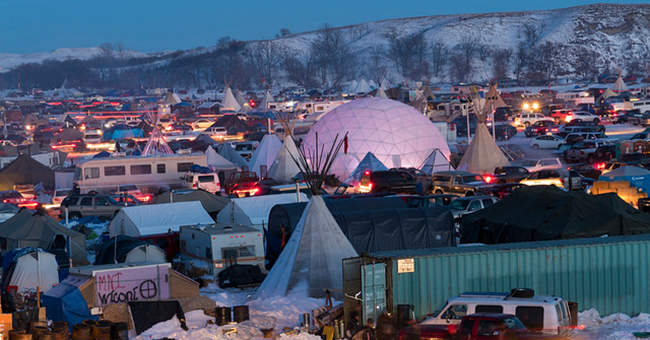
    Oceti Sakowin Resistance Camp

    Oceti Sakowin Resistance Camp. Photo credit: Joe Brusky, Overpass Light Bridage.

    In 1970 my family took a car trip to the Colville Indian reservation in Washington State, driving over 1,000 miles from our home in Los Angeles to visit our Indian family. We passed through San Francisco, which at the time was the site of one of the earliest American Indian activist struggles, the Alcatraz Island occupation. Although I was only twelve and didn’t fully understand the relevance of the times I was living in, television images of young militant Native activists at Alcatraz, the Trail of Broken Treaties in 1972, and Wounded Knee in 1973 were permanently etched into my teenage brain. An impressionable youth, my identity as a mixed-blood urban Indian was shaped by those times and events, laying the foundation for my life as a Native artist, scholar, and writer.

    The resistance to the Dakota Access Pipeline taking place at Standing Rock right now is the most significant political event in Indian country since those struggles of the early 1970s, and there was no way I was going to miss it. I managed to carve out a few days and take a side trip to Standing Rock during Thanksgiving weekend, with a story assignment in my role as a journalist at Indian Country Today Media Network.

    In the short time I was there I had numerous epic experiences. I interacted with legendary people from the American Indian Movement who had been key players in the historic 1970s actions. As part of my media assignment, I crossed paths with Jackson Browne and Bonnie Raitt who were there to play a benefit concert. I took part in non-violent direct action training in case I found myself on the front lines.

    But ultimately I wasn’t there to have a personally enriching cultural experience; I was there to bear witness to what is an unprecedented historical moment. My goal was (and is) to document what I saw and contribute to the literature that will emerge, helping to contextualize the Standing Rock struggle in larger historical and sociopolitical processes.

    Most of my time there was spent in the Oceti Sakowin main camp. While there are so many aspects of the Standing Rock encampments that are deserving of analysis, what I was most intrigued by was that despite the fact that there were more non-Native than Native people in the camp, it was nonetheless a space dominated by Native people. The rules for engagement are based on Lakota protocol, and the atmosphere of the camp is infused with ceremony. As a Native journalist I was given priority for a press pass. Oceti Sakowin is, in other words, Indigenous sovereign space.

    This is an unusual experience for Native people, especially those of us who live in cities (which is most of us anymore). To be surrounded by non-Native people and have OUR world views centered, OUR people deferred to—however imperfectly—felt nothing short of revolutionary.

    In the big picture, the ongoing demonstration at Standing Rock is about Indigenous sovereignty. Yes, the message “mni wiconi” (water is life) drives home the importance of protecting water for all the people who depend on it. It is a friendly, non-confrontational message that draws everyone in, because after all, who doesn’t agree that water is life, and that it should be protected? The commitment to prayerful non-violent direct action invokes the righteousness of the civil rights struggles of Martin Luther King, Jr. and Gandhi who have come to embody the concept of peaceful resistance, despite the violence that surrounded the struggles of those times.    

    Underneath the calm waters of the message Mni Wiconi, however, is a deep undercurrent of Native outrage for centuries of genocide and injustice, and of being marginalized in their own homelands. At its core the outrage has always been about broken treaties. But treaty abrogation has become so normalized in the American imaginary that it is taken for granted as just the way things are—despite the Constitutional mandate that treaties are the supreme law of the land.

    The 1851 Treaty Camp, as it was named by water protectors, was the overt expression of the Lakota people’s never-ending demands for the US to uphold its treaties. It is no small irony that this would become the site of militarized police violence against the water protectors.

    The Standing Rock conflict, combined with the election of Donald Trump, is the uncovering of a major social rupture in the US. In one historical moment we see exposed to the naked light of truth, on one hand, an American empire morphing into fascism, driven by entrenched corporatized, fossil fuel-based state power. On the other is an exploding resistance to this evolving corporatized state fascism, led by the unlikely convergence of Indigenous peoples with environmentalists, who have more often than not been adversaries.

    In the big picture, Standing Rock represents the unprecedented coming together of divergent interests. It’s too soon to tell if this is just an historical event, a full blown social movement, or a revolution. Either way, the underlying message is that the protection of Indigenous treaties means the protection of precious natural resources. 

    Indigenous sovereignty, in other words, is good for the environment. And that makes it good for everyone.

    With the announcement by the Army Corps of Engineers that the DAPL easement will not be granted for the Lake Oahe crossing, hope arises for a new respect for the sovereignty of tribal nation lands and treaties. But with the incoming Trump administration comes the very real possibility of new attacks to what protections are inherent in the federal system, with rumblings of their desire to privatize Indian trust lands. This constitutes the exhumation of the 1950’s policy of termination, where the US sought to end treaty and other legal obligations to Indians.

    While the easement denial is a battle victory, we know that the war is far from over.


    About the Author 

    Dina Gilio-WhitakerDina Gilio-Whitaker (Colville Confederated Tribes) is an award-winning journalist and columnist at Indian Country Today Media Network. A writer and researcher in Indigenous studies, she is currently a research associate and associate scholar at the Center for World Indigenous Studies. She lives in San Clemente, CA. She is the co-author (with Roxanne Dunbar-Ortiz) of “All the Real Indians Died Off” And 20 Other Myths About Native Americans. Follow her on Twitter at @DinaGWhit and visit her website.

  • By Andrew Hrycyna 

    Nancy Mairs

    Photo credit: Jeff Smith

    I was an editorial assistant in 1989. My boss was leaving the company soon. Glumly reading unsolicited manuscripts one evening, I opened a proposal from an unfamiliar agent, addressed just to Beacon Press, for a book of personal essays. 

    I still remember the excitement of reading those pages, alone in the building, after so many slush pile manuscripts. Almost any paragraph of Nancy Mairs’s prose puts you in the presence of a remarkable voice. This proposal promised an exploration of spirituality from a convert to Catholicism in the Arizona desert who happened to be living with multiple sclerosis.

    I had found something remarkable. I biked that night to New Words Bookstore in Cambridge, bought Nancy’s previous books, started reading. It turns out I should have known her name before. But I thrilled at getting introduced.

    The next day I reported to my director, Wendy Strothman. Instead of assigning this book to another editor, which would have been easy to do, she generously let me take it on. Stars aligned: Nancy’s commercial publisher hadn’t been interested in this brilliant, if quieter book. Nancy wanted a smaller press.

    Ultimately the book, which became Ordinary Time, got an ecstatic review in the New York Times Book Review by Kathleen Norris. Wendy said, “Some editors wait their whole careers for a review like that.” I was humbly elated. I was—almost by accident—the editor of a brilliant writer.

    But this story of discovery and publication is mainly shoptalk. It doesn’t get to the heart of how Nancy changed my life.

    She became my inspiring friend. She made the ordinary seem utterly important and articulated its meaning, even in casual conversation. Our relationship—I was twenty years younger—was warm and intellectual and filled with letters and phone calls, about books, about illness, about births. The culture of Beacon Press gave space for Nancy to develop the kind of close relationship with a publisher, across several books, that she said she’d always wanted, even needed.

    I was a former philosophy student, not a natural literary editor. Nancy wrote about ideas in ways no philosophers do, entwined with story, the particulars of one woman’s life. But she made me feel I could be helpful to her as an editor. I would say, “Something’s missing here, a step in the argument: here, let me write it out.” What invariably came back were not my words, but an unbelievably elegant solution, completely in her voice, to the problem my square prose identified. This happened so often. I still tell people about it. She was an editor’s dream. 

    Nancy was born Congregationalist and embraced Catholicism, albeit a radical form, rooted in community, opposed to hierarchies, with her dear husband George and their friends, living a life of service and sharing and commitment to others.  When she and George visited Beacon Press and Unitarian Universalist Association offices one year, she said, “I could have been a UU! But I chose a parallel path.” 

    I was born Catholic and fell away. I almost feel I could have been a Nancy Mairs-style Catholic. I chose a different path. But to this day I feel inspired by her grace and humility and bravery and fierce intellectual passion and humor and love of life and others. 

    ***

    Editor’s note: The following passage in which Nancy Mairs is speaking with her daughter, Anne, comes from her autobiography Ordinary Time.

    Ordinary Time“I’m not sure”—I’ve been thinking out loud about suicide to Anne, who was present for my neurologist’s life sentence—“but I think maybe I’m supposed to see this through to the end.”

    “Are you saying,” she asks with the little grimace, part perplexity, part disapproval, with which she greets my more metaphysical maunderings, “that you’re supposed to suffer?” The body on the cross in most Catholic churches is the crucified rather than the risen Christ, and Catholic iconography throughout history has displayed a morbid relish for lacerated brows, bloody hearts, flayed skins, and weeping mothers with dead bodies draped across their laps. An outsider could easily conclude that suffering is a desirable and meritorious state, especially since plenty of insiders make the same mistake.

    “No, I don’t. I may suffer, probably I will, but I don’t think I’m supposed to. I’m just saying maybe I need to have the whole experience, not cut it off. Of course, if I did cut it off, then that would become the whole experience. But I’m not sure it would mean the same.”

    I very nearly did cut it off, as Anne painfully knows, and if I had, I’d have missed many of the most satisfying bits. I would never have seen her graduate from high school and then from Smith, watched her bound down a forest path to keep up with the group of Zairian fish farmers whose pond she had come to inspect, gazed enraptured as she marched herself down the brick walk of the Tucson Botanical Gardens, pausing to kiss her father and me, straight into marriage with Eric. I also wouldn’t have won the Western States Book Award and published In All the Rooms of the Yellow House, gotten my doctorate, taught at UCLA, written Plaintext and Remembering the Bone House and Carnal Acts and (yes, it’s almost done) Ordinary Time, turned into a shameless Anglophile the instant the British Airways DC-10 dropped out of the clouds directly above an estate that could have been Brideshead. I would never have tasted scones with clotted cream. I would never have tasted bat.

    Although the world would hardly be a poorer place without these ordinary events, I feed on their memory gratefully now that my revels are, if not quite ended, at least winding down. Realistically speaking, the future promises more afflictions than delights, less clotted cream than bat, you might say, though actually bat wasn’t so bad. I am as afraid as ever of loss and pain. Still, something tells me—I don’t know what, I can’t explain what, it’s just a feeling I have in my bones—that I’m supposed to stay for it all.


    About the Author 

    Andrew Hrycyna worked as an editor at Beacon Press for many years. He now works in environmental science and advocacy in the Boston area.