• By Dennis A. Henigan

    Open Carry

    Photo credit: Lucio Eastman

    This essay appeared originally on The Huffington Post.

    The National Rifle Association spent more than $30 million to elect Donald Trump President. Particularly with Republicans in control of both the Senate and the House, and a vacancy on the Supreme Court, the gun lobby will expect an impressive return on its investment. What will it want?

    Following the massacre of first graders at the Sandy Hook Elementary School, NRA Executive Vice President Wayne LaPierre infamously said that the lesson to be learned was: “The only thing that stops a bad guy with a gun is a good guy with a gun.” That phrase perfectly captures a core premise of Trumpism: that the nation is neatly divided into “good guys” (who have been forgotten by the elites controlling our government) and “bad guys” (Muslims, undocumented immigrants and “the others” who have been allowed to threaten the safety and well-being of the “good guys”). LaPierre’s slogan likely will animate the entirety of the NRA’s Trump Administration agenda.

    Executive Actions

    Following the Sandy Hook shooting, President Obama issued a flurry of executive orders to strengthen federal efforts against gun violence; he issued additional orders in January of this year. We can expect President Trump to rescind many of these orders, particularly those designed to spur federal research on gun violence and to provide incentives for the development of safer gun technology.

    Another possible NRA target is the database of crime gun traces maintained by the Bureau of Alcohol, Tobacco, Firearms and Explosives (ATF), which provides invaluable information about how guns are diverted from the legal to the illegal market. The crime gun trace database has long been a threat to the NRA and the gun industry, in part because it can be used to identify gun dealers who supply a disproportionate number of guns to the illegal market. In 2003, Congress, following intensive lobbying by the NRA and the gun industry, enacted the Tiahrt Amendments (named after then-Congressman Todd Tiahrt of Kansas) restricting the use of federal money to give the public, including gun violence researchers, access to the database. Those restrictions have been in every ATF appropriations bill since that time.

    But the Tiahrt Amendments still allow law enforcement access to the trace database. The database recently was used in a report issued by New York Attorney General Eric Schneiderman showing that three out of every four guns traced to crime in New York State, during the period 2005-2010, originated with gun dealers in other states, primarily from states with weak gun laws, like Virginia, the Carolinas, Florida and Georgia. This pattern suggests that strong state gun laws, as in New York, make it harder for criminals to get guns, making it necessary for the illegal market in those states to be supplied by dealers in states with weak gun laws. This interstate movement of guns into crime also argues for stronger federal gun laws to prevent the states with weak gun laws from undercutting the strong laws of other states. Thus, the gun lobby has more than enough reason to suppress the ATF data by even further limiting its use by law enforcement authorities.

    The NRA may push the Trump Administration to further restrict use of the crime gun trace data by simply changing ATF policy; or it may seek to expand the scope of the Tiahrt Amendments through an amended appropriations rider or other legislation. Just as it has sought to suppress all CDC-funded research into gun violence, the gun lobby may seek to close all avenues to the use of ATF crime gun trace data to inform gun policy.

    Congressional Action

    In Congress, it is likely that the first item on the NRA’s wish list will be national “concealed carry reciprocity” legislation, which would force states to recognize the concealed-carry permits of visitors from other states. Under this legislation, states could enforce their concealed-carry restrictions on their own residents, but not against visitors from other states with less restrictive laws. This would allow persons with concealed carry licenses from other states to carry concealed in Times Square, even if New York would never have allowed the same person to possess a gun, much less carry it concealed. In effect, states would be deprived of the authority to determine who the “good guys” are that should be allowed to carry concealed weapons, an extraordinary invasion of state prerogatives. Yet some of the strongest supporters of this idea in Congress are vociferous advocates of states’ rights in countless other contexts. For these fair-weather federalists, state autonomy must give way to the overarching goal of more guns carried in more public places. Gun control forces have been able to block this legislation in past years. The gun lobby is likely to redouble its efforts to pass it now.

    Success in mandating concealed carry reciprocity may whet the NRA’s appetite for even greater federal interference with state gun laws. The gun lobby has reason to be dismayed at the success of gun control forces at the state level. In the wake of the Sandy Hook shooting, multiple states expanded their background checks to cover more transactions, or strengthened their licensing laws. In the 2016 elections, Nevada, California and Washington State all passed referenda strengthening gun laws (although a universal background check proposal was narrowly defeated in Maine). Whereas the federal background check system established by the Brady Law only applies to sales by licensed dealers, now nearly half of all Americans are covered by expanded background check laws at the state level, requiring checks for all gun sales. California is a recurring nightmare for the gun lobby; this year’s referendum requiring background checks for ammunition sales, among other restrictions, is just the latest in a long series of California gun control laws passed in the last twenty years.

    This state activity occurs because federal law does not preempt state gun law; indeed, there is an express anti-preemption provision in the Gun Control Act of 1968. It is possible the NRA will seek to establish a beachhead of federal preemption, particularly as it affects state restrictions on concealed carry, thus preventing states from restricting concealed carry by their own residents.

    The Supreme Court

    The NRA knows that President Trump can do the most lasting damage to the nation’s gun laws through his appointments to the United States Supreme Court. Federal and state gun laws were essentially immune from successful Second Amendment attacks until the Supreme Court’s 5-4 ruling in District of Columbia v. Heller in 2008 casting aside established precedent and, for the first time in our history, recognizing an individual right to possess guns in the home for self-defense. That right was extended to protect against infringement by the states in the subsequent decision of McDonald v. City of Chicago. The Heller and McDonald decisions struck down handgun bans in the District of Columbia and Chicago but, to this point, the rulings have not proven to be lethal weapons against other gun laws. This is true for two reasons.

    First, in striking down DC’s far-reaching ban on operable handguns in the home, the Heller Court had no occasion to address whether the right extends to carrying guns in public places. Although one federal appeals court has struck down a state law banning all public carrying of guns by extending the Heller right beyond the home, other courts have upheld restrictions on carrying concealed weapons since Heller.

    Second, the Heller majority opinion, written by the late Justice Antonin Scalia, substantially qualifies and limits the right to handguns in the home by recognizing that the right is “not a right to keep and carry any weapon whatsoever in any manner whatsoever and for whatever purpose” and even listing broad categories of gun laws which the Court said remain “presumptively lawful” under the Court’s ruling. By and large, the lower courts have applied Heller in ways that have preserved existing gun laws against legal attack. The Supreme Court thus far has declined to review those decisions upholding gun laws, leading Justice Thomas, joined by Justice Scalia a few months before his death, to dissent from the Court’s denial of certiorari in a case challenging a state assault weapons ban. Justice Thomas accused the lower courts of “relegating the Second Amendment to a second-class right.”

    All that could change with President Trump’s first two appointees to the Supreme Court. In his first post-election interview, President-elect Trump emphasized to Leslie Stahl of 60 Minutes that he would nominate justices who are “very pro-Second Amendment.” Although it is difficult to imagine that Trump’s first appointment could be more pro-gun than Justice Scalia, a second Trump appointment could lead to a series of precedents that would erect a barrier to strong gun laws for a generation. It likely would lead to extension of the Heller right outside the home, thus threatening existing state restrictions on carrying concealed weapons. A new pro-gun majority could also render of marginal importance the qualifications and limitations on the right articulated in the Heller opinion itself, which were transparently included to attract a fifth vote (likely Justice Kennedy’s) for striking down DC’s handgun ban, but may be utterly disregarded by a more radical pro-gun majority. Even if modest measures like the Brady Law and state background check laws survive, a new 6-3 pro-gun majority could wipe away stronger state laws, particularly licensing laws that give the authorities a measure of discretion over who is allowed to possess guns, instead of just allowing them to deny guns to individuals who fall into narrow categories of prohibited purchasers. In short, if President Trump is allowed to remake the Supreme Court, it could threaten the gun laws we have, as well as precluding the stronger gun laws we need.

    What Can Be Done?

    Beginning in 2000, when gun control was inaccurately targeted as a key to Al Gore’s defeat by George W. Bush, until the Sandy Hook shooting in 2012, proponents of stronger gun control laws wandered in the political wilderness. Since the Sandy Hook shooting, the gun control movement has grown more influential by any measure: more activism, more resources and more success. The question now is whether this newly resurgent movement will prove to be an effective bulwark against the NRA onslaught. That will depend on several factors.

    First, gun control activists must not surrender to despair and leave the playing field to the NRA. Given the extremism of the NRA’s “guns everywhere” vision of American society, the Trump gun agenda can be an effective vehicle to build on the organizing that has occurred since Sandy Hook. It is clearly possible that much of the pro-gun agenda can be stopped in the Senate, but it will require constant constituent pressure.

    Second, it must be made clear to both political parties that the gun control movement is now a potent political force and will remain so. The 2016 election cycle brought a historic infusion of resources from gun control groups into the political process, with Michael Bloomberg’s Everytown for Gun Safety and his Independence USA Super PAC, along with Gabby Giffords’ Americans for Responsible Solutions PAC, leading the way. Their spending contributed to some impressive victories, particularly the successful Nevada referendum to extend background checks to all gun sales, in a state with a record of hostility to gun control, aided by $16 million in spending by gun control forces, as well as the defeat of Republican incumbent Senator Kelly Ayotte in New Hampshire, with the help of $8.8 million in ads hammering her pro-gun votes in the Senate. Significantly, Republican incumbent Senator Pat Toomey of Pennsylvania was reelected, even though he sacrificed NRA support by co-sponsoring a universal background check bill after Sandy Hook. Toomey received the support of Everytown and ARS, which sent a message that gun control forces will exercise their political muscle to support Republicans willing to buck the gun lobby. Going forward, this kind of well-financed, hard-nosed election activity by the gun control movement must become a permanent feature of the political landscape in a way that it has not been in the past.

    Third, there will be a formidable progressive coalition opposing President Trump’s Supreme Court nominees and the gun control movement must be an active and influential part of that coalition. On the gun issue, nothing is more important, in the long run, than the composition of the Supreme Court. There must be a powerful mobilization against any nominee who would extend the right to be armed to public places, or who would make that right into an inviolable barrier to sane gun laws.

    Leon Wieseltier recently called for “a fierce spirit of opposition” to the Trump Presidency. For all who cannot tolerate the scores of innocent American lives lost every day to gunfire, nothing less will do.


    About the Author 

    Dennis A. Henigan is director of legal and policy analysis at the Campaign for Tobacco-Free Kids and formerly vice president of the Brady Center to Prevent Gun Violence. Follow him on Twitter at @DennisHenigan and visit his website.
  • By Helene Atwan

    Nancy MairsWe received news of the death of Nancy Mairs just yesterday. All of us at Beacon, including her first editor, Andy Hrycyna, so valued Nancy’s voice, as an accomplished essayist, as a pioneer in writing about women, about faith, about social justice, and about disability: always fearlessly, always with crystal clarity. She was also a tireless activist, attending demonstrations even when she had lost significant mobility. Everyone who knew her was surprised by her frank, unsentimental assessment of life from “waist-high,” by her generosity and humor, by her insightful and unabashed ability to speak the truth in essays of brilliance. All of us lucky enough to have spent time in her company will always treasure those times.

    For all of our friends in the writing, feminist, disability, and social justice communities, take a few minutes to read this superb obituary by William Grimes. And join us in celebrating the life and work of Nancy Mairs.

    Nancy Mairs titles


    About the Author 

    Helene Atwan has been director of Beacon Press since 1995.

  • By María de los Angeles Torres

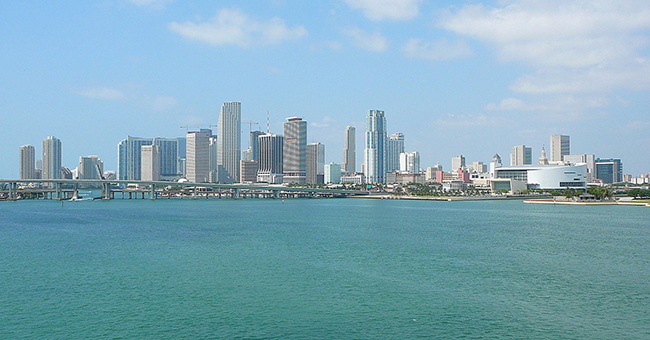
    Miami skyline

    Miami skyline. Photo credit: Marc Averette.

    I remember the day Fidel rode into Havana. I was four years old. My father rushed home to take me to the celebrations. My parents, like most Cubans, had supported the revolution. Batista had dashed all hopes of a democratic republic, as he staged a military coup once it became clear he would lose the election for presidency. His reliance on violence fueled a national rebellion. Fidel Castro, leader of one of the revolutionary movements, became its titular head, as he promised to complete the historical mandate of José Martí’s dream for an independent and democratic island.

    But instead of elections, Fidel ruled by decrees presented at mass rallies. Former supporters of the revolution now rebelled against him. Opponents were rounded up, summary trials held, and executions carried out. But what may have been a national divide was played out in the world stage of the Cold War, and Eisenhower ordered the CIA to overthrow the Castro government. A military invasion was planned with Cubans who had supported the revolution but were now opposed to the turn towards authoritarianism. The Castro government found an ally in the Soviet Union that welcomed the opportunity to have a beachhead in the Western hemisphere.

    As the revolution radicalized, the past gave way to a project lodged in the future that promised a socialist society and the creation of the “New Man.” Children were the keys to this ambitious social reengineering experiment. The rush to save children from this fueled an unprecedented exodus of unaccompanied minors to the United States, including me, through a program dubbed Operation Pedro Pan. Minors were provided visa waivers, mimeographed sheets with letterhead of Catholic Welfare Bureau signed by Father Bryan Walsh, a priest who was working with the US government. More than 14,000 Cuban minors arrived to the United States between 1960-1962. Once in the United States, we would claim our parents. However, at the heels of the October Missile Crisis, both governments shut their doors. At the time, more than 8,000 children had not been reunited with their parents. With rare moments of détente, policies on both sides of the Florida Straits have continued to result in family separations.

    Today, Cubans are in a very precarious situation, as the economy continues to deteriorate and repression is at an all-time high. What Fidel’s death will mean remains to be seen as factions within the elite square off to grab the reins of power. But for now, animosities among those who have stayed and those who left have lessened giving way to a less contentious relationship for most Cubans.

    In 2013, my father died in Miami without ever returning home. He said he would only go after Fidel had died. The pain of losing his homeland and the future he had dreamed for his family was too great for him. Initially he opposed my returns, but on one of my trips he gave me an old Esso map of Matanzas, his hometown. He had carefully marked the house where he had lived, his school, where his mother worked, his favorite park and el Teatro Sauto, in which he had had his first public singing debut. Fidel had not succeeded in destroying his childhood memories.

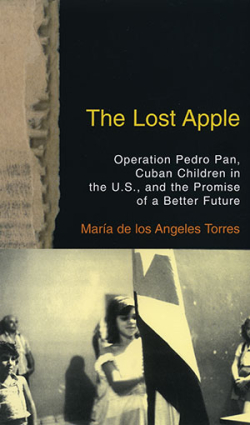
    What follows is an excerpt from my book The Lost Apple: Operation Pedro Pan, Cuban Children in the United States and the Promise of a Better Future.

    ***

    My mother’s relatives lived in Yaguajay, a little town nestled between the sea and the foot of the Escambray Mountains in the Las Villas province of Cuba. Two or three times a year, my family took the five-hour drive from our home in Havana to visit them. In the summer of 1961, our trip had a secret purpose. We were coming to say good-bye. We were delivering some of our possessions: a fan, jewelry, photographs. We also brought out longhaired cat, Johnny, for safekeeping until our return. I sat next to Johnny’s cage in the backseat; I can still recall the smell of his sweaty coat.

    My parents, like thousands of Cubans, had supported the revolution at first; they hid rebels in our home, a risk that could have cost them their lives. In January 1959, the day the rebeldes marched into Havana, my father rushed home to pick me up so that we could greet them. When we reached the Avenida de los Presidentes, a wide avenue dotted with statues of Cuba’s past presidents, he hoisted me onto his shoulders so that I could see over the crowd. People were jubilant—dancing, chanting, and reaching out to touch the bearded rebels in their olive green uniforms. One stopped in front of us and reached up to hug me; I was mesmerized by the red glass beads of the rosary that hung from his neck and the silver cross almost buried in his hairy chest. We honked our car horn all the way home. My father told me it was a day I must never forget.

    But during the next two years, everything changed. Fidel Castro, once a popular hero in our family, became a ruler we feared. We stopped collecting trading cards featuring heroes of the revolution. I no longer rode my toy military jeep on the back patio, waving the red and black flag of the 26 of July Movement. I had just turned six. Time was moving fast. Turmoil was increasingly becoming a part of our daily lives. Sires were heard at all hours. Our familiar routines of playing in the park and going to the beach on Sundays were constantly disrupted by threats of bomb raids. Just months earlier, the government had shut down schools, including mine, Nuestra Señora de Lourdes. There was constant confusion in the air. For reasons I only understood later, my parents decided to go into exile.

    The Lost AppleThe quickest way for the family to depart was to send me to the United States with a visa waiver; I would then claim my parents and sister, who would join me in a few months. I was to travel with my best friend, Xavier Arruza, also six years old. His older brothers were already in Miami. It was Xavier’s father who had obtained the visa waiver for me. I was going to Miami, I was told, to stay with Nenita and Pucho Greer, my parents’ friends. We started to pack my things. I felt a strange surge of excitement (I had never been on an airplane before) mixed with apprehension (I had never been separated from my parents). Secrecy shrouded my trip: no one was to know that I was leaving the country. My parents had not even told my younger sister, Alicia.

    On July 30, just before dawn, my parents woke me and dressed me in the aqua blue and white checkered dress my grandmother had made for me, on which they pinned a piece of paper bearing my name and the name and phone number of our friends in Miami. They quietly loaded the car: a suitcase, a gray and red vinyl handbag, and my favorite doll. The sky was turning a pale orange pink as we drove to the airport.

    Years would pass before I learned how many other children had left the island in the same fashion, to be reunited with their parents at the uncertain date. Some, in fact, never saw their parents again; others experienced long separations. Still others faced terrible hardship in foster homes or institutions. At the time, though, I knew only about my cousins, who arrived in the United States shortly after I did. On Sundays, we visited two of my cousins at a makeshift camp in south Dade County. Church officials in Havana had told their parents that their daughters would receive a beca (scholarship) to go to a god school in the United States. Instead they were sleeping in a large room filled with small cots squeezed so tightly together that they had to slide onto them from the pillow end. Later two cousins were shipped to a foster home in Albuquerque, New Mexico, and others to an orphanage in St. Louis, Missouri.

    By mid-1961, most middle-class Cuban families knew of the semi-clandestine visa waiver program that had spurred this child migration. But no one spoke about it openly; everyone was sworn to secrecy, both on the island and in the United States. It wasn’t until March 8, 1962, that the Miami Herald wrote about a secret effort called Operation Exodus that was bringing Cuban youth to the United States to save them from Fidel Castro’s brainwashing. The Herald reported 8,000 had already arrived in South Florida. In the next seven months, another 6,000 unaccompanied children would enter the United States. In total, between the years 1960 and 1962, more than 14,000 children entered the United States through the program that came to be known as Operation Pedro Pan or, in its Spanish translation, Operación Pedro Pan.

    There are many debates about the origin of the name. In Cuba it is referred to by its English name. A few years ago, I visited Noemi Booth, an English teacher who had worked at Ruston Academy in Havana and was still living in Cuba. When I told her that I was conducting research on Operation Pedro Pan, she quickly corrected me and said, “Here we refer to it as Operation Peter Pan.” In a book published in 1962, Ruby Hart Phillips, New York Times correspondent in Havana throughout the fifties, wrote about an American she knew who had helped hundreds of children leave Cuba, and someone had called is work Operation Peter Pan. But Monsignor Walsh, one of the pivotal figures in the exodus, always called it Pedro Pan and told us that a local reporter had dubbed it as such. An article that appeared in the Miami Herald on March 9, 1962, states, “This is the underground railway in the sky—Operation Peter Pan. Maybe it should be Operation Pedro Pan.” A New York Times article May 27, 1962, would use the name again when it reported that 10,000 children were already in the United States and called it “the largest peacetime program for homeless refugee children in this country.” Nowhere did I find in government documents reference to Operation Peter Pan or Pedro Pan. The closest we have to an official name was the Miami Herald’s article dubbing it Operation Exodus and El Rescate de la Niñez, listed in a CIA directory entitled Counterrevolutionary Organizations.

    But the name caught on anyway. Walt Disney’s version of Peter Pan had been released in the mid-fifties, and the idea of children in flight found a familiar popular imagery. Surely unbeknownst to those who helped popularize the name was the more ambivalent and complicated literary figure created by J. M. Barrie, the author of Peter Pan. In the original story, when Wendy first meets Peter Pan and he tells her he has no mother, she feels “that she was in the presence of a tragedy.” Peter, who has innumerable adventures, can never have a family—it is “the one joy from which he must be forever barred.” Peter Pan, a boy who refused to grow up, spent his time luring children away from their parents to a frequently dangerous place called Neverland. There, Peter is the leader of the “lost boys,” babies who fell from their cradles when their nurses neglected them. It is a place where children long for their mothers but slowly begin to forget their past. The tragic side of Peter Pan was a strange foreshadowing of what many children of Operation Pedro Pan would come to experience.

    Despite the headlines about the unprecedented exodus of Cuban children, larger events overshadowed it, and Operation Pedro Pan soon faded from public attention. By October 1962, the world would be at the brink of nuclear war. The United States detected the Soviet Union’s nuclear missiles on the island and demanded that they be removed. In turn, the Soviet Union demanded that the United States make a pledge of nonintervention in Cuba. As a result of the standoff, both Cuba and the United States banned travel to and from the island. The plight of these children—many whose parents had not been able to come to the United States—would be forgotten in the unfolding world drama.


    About the Author 

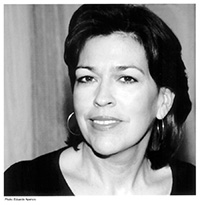
    María de los Angeles TorresA frequent media commentator on Cuba-U.S. relations, María de los Angeles Torres is professor of Latin American and Latino Studies at University of Chicago Illinois and author of several books, including In the Land of Mirrors: Cuban Exile Politics in the United States and The Lost Apple: Operation Pedro Pan, Cuban Children in the U.S., and the Promise of a Better Future. She lives in Chicago, Illinois.

  • By Karl Giberson

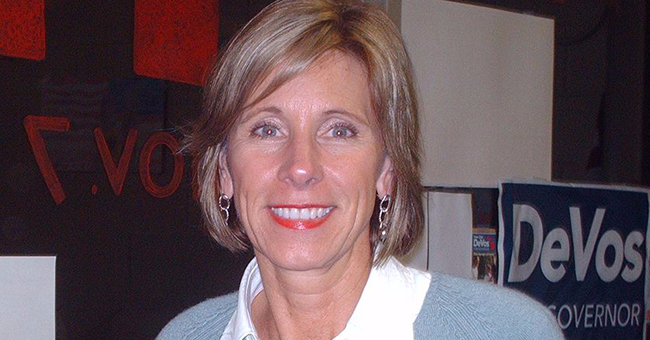
    Betsy DeVos at the Houghton County Republican Victory Center

    Betsy DeVos at the Houghton County Republican Victory Center. Photo credit: Keith A. Almli.

    President-elect Trump’s appointment of Betsy DeVos as education secretary has liberal pundits proclaiming that America’s educational sky is falling. DeVos is a prominent Michigan evangelical Christian, with ties to the Christian Reformed Church—the denomination that sponsors Calvin College in Grand Rapids which recently fired a professor for suggesting that Adam and Eve were not real people. DeVos is an advocate of school choice and has supported a voucher movement that now provides tax dollars for families in many states to send their children to private—and religious—schools. Is this not a dangerous person to preside over America’s public schools?

    Directing public funds to private schools, of course, is controversial. One critic calls it “raiding the public treasury to subsidize private businesses and religious organizations.” President-elect Trump, says this critic, “has little regard for our nation’s public schools or the constitutional separation of church and state.” Another critic, the president of the American Federation of Teachers, says that De Vos and Trump have a policy that will focus on “defunding and destroying public education in America.”

    I don’t have much to say about the funding question, other than to note that we have years of experience with voucher programs now, and it is far from clear that they drain money from the public schools. In principle, a program that provided $7,500 vouchers for children in a school district that was spending $10,000 per pupil would save the public schools a lot of money. A Wisconsin study showed that this was exactly what happened in that state when the voucher program began.

    I do want to say something about the church-state issue, however, especially the real and legitimate concern that the voucher program will divert taxpayer funds to schools that teach that the “Earth is less than 10,000 years old, Adam and Eve strolled the garden with dinosaurs, and much of modern biology, geology, and cosmology is a web of lies.”

    My perspective comes from teaching science in religious colleges in the Boston area for over three decades. Two of them—Eastern Nazarene and Gordon—were moderate evangelical schools that taught evolution, but enrolled many students who came to college rejecting it. The third—where I was recently appointed the college’s first Professor of Science & Religion—is Stonehill, a liberal Catholic college, where anti-evolution is almost non-existent in the student body. All three institutions have significant constituencies of students educated in private religious secondary schools.

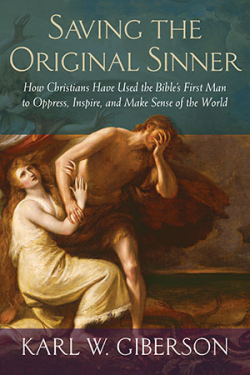
    Saving the Original SinnerI have also been involved in the evolution controversy for much of my career, publishing hundreds of articles and several books on the topic, and speaking at colleges and universities around the country. My most recent book, with Beacon Press, was Saving the Original Sinner, on the controversy over Adam and Eve. The creationist website, Ken Ham’s Answers in Genesis, concluded their review of the book with “Shame on Karl Giberson.” I am no stranger to America’s troubled conversation about origins and I know first hand how it divides people.

    So let me explain why I don’t think America’s educational sky will fall if Trump and DeVos divert taxpayer money to private schools—even religious ones that teach nonsense about origins.

    In the first place, lots of religious schools don’t teach Ken Ham’s nonsense about origins (Ham is the brains behind the Creation Museum in Kentucky, and the recently opened Noah’s Ark park). Many schools, especially Catholic ones but even some evangelical schools, teach evolution as they do in public schools. Many such schools use the same textbooks and cover the topics in the same way. On the flip side, studies have shown that many public school teachers in conservative parts of the country simply ignore the topic of evolution to avoid controversy; some even teach creationism in violation of legal guidelines. They teach what they and their students already believe to be true and it all flies under the radar because nobody objects.

    A few years ago, I spoke at a secular university in Texas, located not far from Louis Gohmert’s campaign headquarters. My host held a special dinner with students while I was there. She cautioned me before the event: “Don’t think, just because you are at a secular school, that the students accept evolution.” And she was right: Every one of the students was a young earth creationist. A secular education does not inoculate students against creationism.

    Secondly, whatever is taught about origins in America’s schools is far less important than what is learned—and that is often remarkably little. Every year I poll my students on their experiences learning evolution. And every year I am amazed at how little they can recall about what they learned—and these are students from exceptionally strong schools in Massachusetts. Virtually none of them can place what they learned in a religious context and many simply did not even think about how the biology they were learning intersected with their religious beliefs. It is simply not the case that our nation’s high school graduates emerge with any sort of “indoctrination” on origins, one way or the other.

    Even students that spend K-12 in strictly fundamentalist Christian schools that “protect” them from subversive ideas like evolution and gay marriage often migrate away from their parochial worldviews in college. In The Anointed, I tell the story of one of my students at Gordon College who was raised in a rigorously circumscribed southern Baptist environment that he was only too happy to abandon as a young adult. One of my present students at Stonehill College went to a fundamentalist high school in Massachusetts where the curriculum was essentially the young earth creationism promoted by Ken Ham and Answers in Genesis. When I asked her why she would come to a liberal Catholic school like Stonehill, she said, “I learned creationism in high school and wanted to learn the other side so I can make up my own mind.” And, after a semester in my class, she has said goodbye to Ken Ham and his nonsensical ideas about origins.

    It seems to me that the concerns about what Trump and DeVos might do to America’s schools are overblown. The worried pundits take an overly patronizing approach to our high school students in assuming they will uncritically embrace whatever they are taught; paradoxically, they also assume they will learn what they are taught. They ignore the myriad alternate sources of information and the influence of social media.

    DeVos is certainly far less troubling than Jerry Falwell Jr., whose Liberty University rejects broad swaths of contemporary science. DeVos graduated from Calvin College, which has long been a leader in promoting evolution to conservative evangelicals (as long as it leaves room for Adam and Eve.) In fact, Calvin faculty have written some of the most aggressive criticisms of the anti-science of organizations like Liberty University and Answers in Genesis.

    When all is said and done, DeVos is probably a reasonable match for the country as it stands today. We could do worse. And, if Falwell really was offered the job and turned it down as he says, we almost did.


    About the Author 

    Karl GibersonKarl Giberson teaches science and religion at Stonehill College and is a leading voice in America’s creation/evolution controversy. He is the author of ten books, including Saving Darwin, a Washington Post “Best Book of 2008,”Saving the Original Sinner: How Christians Have Used the Bible's First Man to Oppress, Inspire, and Make Sense of the World, and The Anointed: Evangelical Truth in a Secular Age, with Randall Stephens. He lives in Hingham, Massachusetts. He lives on the web at www.karlgiberson.com. Follow him on Twitter at @gibersok.

  • By Ruth Behar

    Fidel Castro, at the Monument to José Martí, Havana, Cuba.

    Fidel Castro, at the Monument to José Martí, Havana, Cuba. Photo credit: Ricardo Stuckert/ABr.

    This essay appeared originally on The Huffington Post.

    I got the news of Fidel Castro’s death before the story broke in the United States. I heard it from my friend, the writer Sandra Cisneros, who texted me from Mexico.

    “Will your parents visit Cuba now?” she asked.

    She knows they are staunchly anti-Castro and anti-communist.

    “Maybe,” I said.

    That night I uttered a prayer: May my parents, who are in their early eighties, live long enough to go back and see the island they haven’t stopped dreaming about since we left fifty-five years ago.

    Like all children of Cuban exiles who came to the United States in the early 1960s, I heard the name “Fidel Castro” constantly. He was the sole person responsible for the sorrow of my parents and grandparents, aunts, uncles, and cousins who lost their beloved home in Cuba. As Cuban Jews, the wound came atop another wound. My grandparents, Jews from Poland and Turkey, were double refugees—they fled Europe on the eve of the Holocaust, finding refuge in a tropical island of rumba and sugarcane where everyone called each other “mi corazón” and anti-Semitism didn’t exist.

    The family expected to stay in Cuba forever. They shared the patriotic fervor that led to the Cuban Revolution. But when Fidel Castro took away their livelihoods, they fled with other Jews in a mass exodus. Forced to confront the impermanence of life, they exclaimed, “Nada es para siempre” (nothing is forever), and choking back tears, they asked, “Who knows if we won’t have to pack a suitcase and leave again?” I’ll never forget how vehemently I was told, “No, you cannot take piano lessons! Learn to play something portable, like the violin.”

    I was five and a half when we moved into a one-bedroom rental in Queens, New York. My father worked three jobs to save up to buy a Castro convertible sofabed, a modern contraption that the whole family thought was extremely sophisticated. My parents slept in the Castro in the living room so that my younger brother and I could have the bedroom. But as a little girl, I was not only worried but very confused. How could Mami and Papi sleep on a sofabed called Castro? Wasn’t that the name of the man who took our country from us?

    Going on shopping trips with my mother to Alexander’s, a bargain basement store on Queens Boulevard, we spent hours hunting for the prettiest clothes on the sales rack. But the next day Mami would be wracked with guilt. Fidel Castro had called those of us who left Cuba the “worms” of the revolution, but Mami in her own way believed in the egalitarian ideals he had espoused. “We don’t need so many clothes,” she’d say. “Let’s not be greedy.” Since I spoke better English, I had to help her return everything to the store, hanging my head in shame as the saleswoman sniffed the clothes to be sure they hadn’t been worn.

    When I began returning to Cuba in the early 1990s, I was eager to see with my own eyes the place my family yearned for so desperately and that I left too young to remember. As an anthropologist, I travelled there to do research on the tiny Jewish community that remains, a mix of communists and converts who miraculously keep alive the Jewish heritage without a rabbi. But it wasn’t just the research that made me keep wanting to return to Cuba over and over. I felt a longing to reclaim every memory ever stolen from me, to find the little girl who had once played under the banyan trees and ran unafraid on the high ledge of the Malecón feeling the sea mist. I wanted my childhood back.

    And in a way I got it. People on the island would correct me when I told them I had left Cuba. “No, you didn’t leave Cuba, you were taken out of Cuba,” they said. I realized I’d always be a little girl in Cuba. Never grow up. But now I’m an old little girl, “una niña vieja.”

    I don’t know how I managed to go to Cuba as often as I did, terrified as I always was of being in Cuba on the day Fidel Castro died. He was such a frightening figure from my childhood I was certain a cataclysmic rupture would happen on the day he ceased to exist. In my fantasies, I saw the earth breaking open and swallowing me whole and taking me with Him. As fate would have it, I wasn’t in Cuba when he died. I have witnessed from afar the clanging of pots in Miami, the tears shed in Cuba.

    One of my wishes throughout the years, never spoken aloud for fear of jinxing it, was that Caridad, the beautiful Black woman who was my childhood nanny, would outlive Fidel Castro. When I first returned to Cuba, I was prepared for her to turn her back on me in a gesture of defiant revolutionary pride. Why would she care about a white, middle-class girl she once babysat for? Instead, Caridad took me in like an orphan. She had hoped to be a schoolteacher and didn’t fulfill her dream under Batista or Castro, but she read voraciously. She remembered my mother fondly and one day gave me a gift to take back to her. They were my mother’s honeymoon nightgowns, made from the lace my grandparents sold in their store on Calle Aguacate, left behind because they didn’t fit in her suitcase. Somehow Caridad had the presence of mind to save the nightgowns for my mother in the turbulence of the revolution, an act of kindness that brought tears to my mother’s eyes. At the age of ninety-one, Caridad is now very frail, but she has outlived Fidel Castro. I take that as a sign that it is her spirit of kindness that will prevail in Cuba.

    We had come to think Fidel Castro was eternal. He was so omnipresent he found his way into the psyche of all Cubans, including children like me for whom he was a bogeyman. On the island, many believed he secretly practiced Santería, the religion of Yoruba origin brought to Cuba by the African slaves. On one of his trips to Africa, people said, he received the sacred stones, the fundamentos. This African mojo protected him. “No puedan con él,” people told me. No one could do battle with him. He was invincible.

    But in the end he wasn’t invincible. Time caught up with him. As his ashes are ceremoniously wheeled across the island, it is the shock of his mortality that is on view.

    Fidel Castro will return to the earth on December 4th, the day Changó, a warrior deity who rules with lightning and thunder, is venerated in the Santería religion. It is a fitting end. Fidel Castro tore a nation asunder. Even now, as Cubans mark his passing, we can’t agree whether to weep for a revolutionary hero or cheer for the demise of a tyrant.

    But maybe we can declare a truce and try to see things from each other’s side, so that we can all heal. I felt that note of hope in a text message my mother sent me, where she surprisingly expressed sympathy for the mourners in Cuba she had watched on television: “Hi Ruti, it was unbelievable to see the lines of people waiting for hours and hours in that infernal heat, and some who couldn’t bear it even fainted, all just to offer their last goodbye.”

    As an old little girl who has just turned sixty, I dream of the day when my parents will go with me to Cuba. In my Cuban dream, I am taking my parents by the hand and leading them through the broken streets of Havana that I have come to know so well. The streets are flooded, as they often are, by ocean waters that turn to rivers, cleansing away the years of sorrow, longing, and grief, giving us hope for the return of the home in the heart that never went away.


    About the Author

    image from www.beaconbroadside.comRuth Behar, ethnographer, essayist, poet, and filmmaker, is professor of anthropology at the University of Michigan. The recipient of a MacArthur Fellows Award and a John Simon Guggenheim Fellowship, Behar is the author of several books, including The Vulnerable Observer. She lives in Ann Arbor, Michigan. Follow her on Twitter at @ruthbehar and visit her website.

  • Wesley Updike

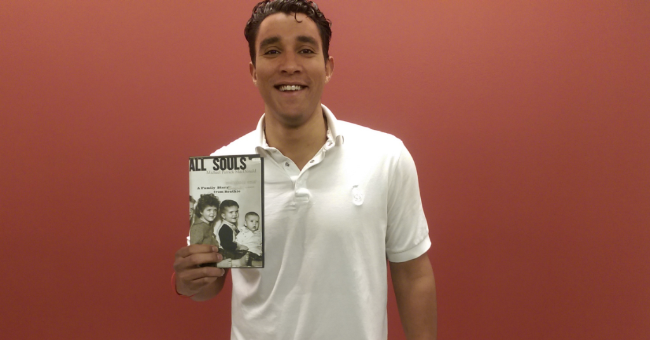
    Wesley Updike posing with his favorite Beacon book "All Souls"

    You’ve read our classics, such as Viktor Frankl’s Man’s Search for Meaning, Octavia Butler’s Kindred, the work of Martin Luther King, Jr., and James Baldwin’s Notes of a Native Son; and many of you know our current list, featuring books by Cornel West, Lani Guinier, Anita Hill, and Christopher Emdin—books that speak to the condition of the world, and add to our understanding of urgent social issues. Whether it’s the environment or race, cultural or class dynamics, we publish all our books with a purpose. Now you can meet the people who work at Beacon Press in our blog series “Beacon Behind the Books.” Each month, we’ll introduce to you a member of our staff and give you a behind-the-scenes look at what goes on at our office.

    For December, we introduce you to Wesley Updike, our business operations assistant. 

    What drew you to publishing, Wesley? How did you find your way to Beacon? 

    I’ve always loved books and viewed them as important tools, so by extension, I’ve probably always had an interest in the publishing business. A love of reading and writing led me to the realm of English and humanities in high school, and ultimately guided me through a degree in English literature as an undergraduate. I’ve been incredibly fortunate to read so many outstanding books throughout my life; it feels fitting that I’m now a part of their production. Several of Beacon’s titles, such as Dr. Cornel West’s books, were featured in my college English courses, and having grown up in Cambridge, MA, Beacon was always a familiar name.

    What helps you focus when you’re at work? 

    Caffeine is usually a good start. If that fails, podcasts and music do the trick.

    In your time at Beacon, what has changed and what has stayed the same? 

    In my time here I’ve seen colleagues come and go, and while our personnel changes periodically, it’s remarkable to see the staff’s devotion to Beacon’s mission. No matter how long our employees have been with us, everyone is committed to producing works of enduring value.

    Hobbies outside of work? 

    I have an obsession, bordering on pathology, with playing/watching/writing/reading about Soccer. Outside of work, I can generally be found doing one of those things.

    Favorite/recommended podcast? 

    Radiolab.

    Favorite book ever? 

    It’s a tie! Cormac McCarthy’s Blood Meridian and Maurice Sendak’s In the Night Kitchen. 


    About Wesley Updike 

    Wesley Updike joined Beacon Press in July 2015. He is a graduate of Trinity College and earned his BA in English Literature.

  • A Q&A with Rich Blint

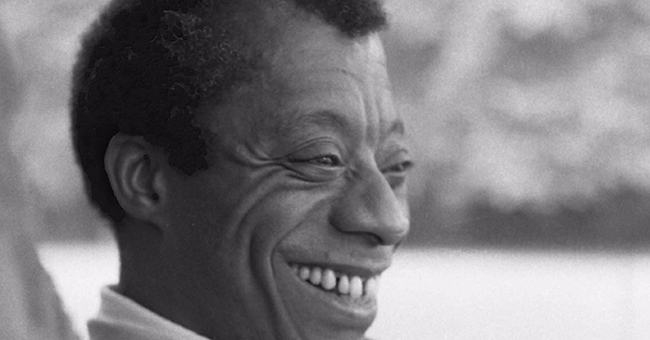
    James Baldwin in Hyde Park, London

    James Baldwin in Hyde Park, London. Photo credit: Allan Warren

    “I love America more than any other country in the world, and, exactly for this reason, I insist on the right to criticize her perpetually.” So wrote James Baldwin in his introductory essay “Autobiographical Notes” from Notes of a Native Son. Today, on the twenty-ninth anniversary of his death, these words are especially poignant. The criticism in his incandescent essays and poetry is just the insight we need in our current age of persistent racial injustice and the renewed spirit of activism represented by the Black Lives Matter movement.

    Our recently published eBook, Baldwin for Our Times: Writings from James Baldwin for an Age of Sorrow and Struggle, features specific works from Notes of a Native Son and his poetry collection Jimmy’s Blues to help us understand and confront the injustices in our times. We enlisted the talents of prominent Baldwin scholar Rich Blint, who wrote the notes and introduction for this collection. He spoke with Beacon Broadside editor Christian Coleman in this Q&A about the project as well as the importance and resonance Baldwin’s legacy will have during the upcoming administration. 

    Christian Coleman: For our readers who aren’t familiar with your work, tell us a little about how you became a James Baldwin scholar.

    Rich Blint: I discovered Baldwin in high school as I sought out writers to add variety to the narrowly conceived Anglo-American curriculum of canonical texts with which I was being presented. The example of his life and work was always a non-academic endeavor, however, which sustained me as a young person attempting to make moral and critical sense of an actively hostile world. Years later, as a graduate student, I participated in a conference at The University of London, Queen Mary, organized to mark the twentieth anniversary of his death. There, I discovered a cohort of scholars deeply interested in investigating his work and rejuvenating his legacy. In 2011, I organized one of what had by then become a series of international conferences in New York, and later co-edited a special number of the first issue of an academic journal devoted to Baldwin. By strongly suggesting that I very purposefully center his work in my dissertation, and embrace my potential to contribute in significant ways to the emerging field of Baldwin studies, my doctoral advisors at NYU were also very impactful. Claiming Baldwin was a crucial turning point for me as someone committed to a career as a teacher and a scholar in this particular period of our nation’s long-troubled history.

    CC: How did you get involved in writing the introduction and notes for this eBook collection?

    RB: I met the director of Beacon, Helene Atwan, while working on The Year of James Baldwin, a fifteen-month slate of city-wide programs, theatrical performances, exhibitions, and other events staged in 2014 in celebration of Baldwin’s ninetieth birthday. That series coincided with the re-publication of Jimmy’s Blues, and Helene and I worked with the Poetry Society of America on a program called “Jimmy at High Noon” at New York Live Arts where poets read from the collection. When she reached out to me to contribute the introduction and notes to this eBook collection designed to consider Baldwin’s relevance to the present crisis in the nation, and to introduce him to a younger generation of activists and readers, I immediately accepted.

    CC: You write in the introduction that “Baldwin’s words emerge less as prophecy…and more like a secular gospel.” What does that mean with regard to our upcoming administration? 

    RB: Baldwin’s consistent and insistent interrogation of how the mythology of race, class, and power operates in America to blind and divide us is singular in its analytical depth, sweep, and emotional power. His work reads as a kind of prophecy simply because he was clear about how profoundly dangerous it has always been for Americans not to confront the truth about the violent racial history of the country. His work must be read as testimony, as, yes, a secular witnessing to the serious perils of indulging in the American fiction of “whiteness” and its purported superiority. The nation’s ongoing refusal to take up this crucial labor and our deep interior and cognitive illiteracy about these complex matters is what has enabled the impoverished, cowardly, and dishonest rhetoric of the incoming administration to take hold. One can hope that the results of this election will finally disturb the American slumber sufficiently to enable us to confront the now exposed historical fault lines that have been so studiously avoided.  

    CC: The hate crimes and blatant intolerance on display throughout and after the election cycle stand out as an example of what Baldwin writes in his essay “Stranger in the Village”: “Joyce is right about history being a nightmare—but it may be a nightmare from which no one can awaken. People are trapped in history and history is trapped in them.” With current labels such as ‘Alt-Right’ being normalized in the media, do you think Baldwin would see this as something new—and shocking—or as an extension of what’s already come before in our social history? 

    RB: The barely suppressed racial and xenophobic animus that has been unleashed since the peculiar ascendancy of the president-elect would not have surprised Baldwin. The movement being normalized as the “Alt-Right” is most usefully apprehended as the descendants of an American confederacy—north and south. It would not have shocked him that Americans would elect an inept businessman with no political experience who riled up supporters at rallies hardly distinguishable from the chaos, desperation, and charged, juvenile eroticism of a racial mob. Baldwin would have recognized our very recent history for what it is: the failure of white Americans and others to come to terms with the fact that their history (themselves) has been, as he notes in No Name in the Street, “nothing but an intolerable yoke, a stinking prison, a shrieking grave,” and that for “millions of people, life itself depends on the speediest possible demolition of this history.” If we are able to confront this sober and deadly fact, we might have an opportunity to remake this country and free ourselves enough to finally fulfill the egalitarian ideals that are at the core of this young experiment called America. If we cling to our categories and dawdle in the confused and sickly air of the history in which we have so long been trapped, we are courting disaster.

    CC: In your recent Yale University lecture “The Devil Finds Work: James Baldwin on American Cinema,” you note that for Baldwin, the most important is the human being, and respect for the human. Is there a particular poem or essay in this collection where you see this message most prevalent? 

    RB: “Many Thousands Gone,” Baldwin’s second major essay, is searing and pointed in elaborating the near pathological folly revealed in the invention of the “Negro” in American life and how that fabrication, “which we know endlessly battle,” diminishes all of us.

    CC: What kind of effect do you expect to see Baldwin’s poems and essays having on twenty-first-century audiences? 

    RB: I can only hope that the clarity, courage, love, and beauty that characterize Baldwin’s decades-long engagement with matters crucial to the viability of our republic will enable a new generation to finally rend the veil and pay the “price of the ticket” for our collective liberation. Then, as now, this is work that truly matters. All of our lives depend on it.


    About Rich Blint 

    Rich Blint is the 2016-2017 Scholar-in-Residence in the MFA Program in Performance + Performance Studies in the Department of Humanities and Media Studies at Pratt Institute. He is co-editor of a special issue of African American Review on James Baldwin; contributing editor of The James Baldwin Review; and provided the introduction and notes for the eBook, Baldwin for Our Times: Writings from James Baldwin for an Age of Sorrow and Struggle. He is presently at work on his monograph, A Radical Interiority: James Baldwin and the Personified Self in Modern American Culture. He earned his Ph.D. in American Studies at New York University, and has held faculty, research, and administrative appointments at Columbia University, Barnard College, Hunter College, and the Murphy Institute at the Graduate and University Center, CUNY. He has received fellowships from the Andrew W. Mellon and Woodrow Wilson National Fellowship Foundations, among others.


  • By Donald Collins

    Tdor

    Image credit: Donald Collins

    Transgender Day of Remembrance (TDOR), observed on November 20th, was started by writer and LGBTQ pioneer Gwendolyn Ann Smith in 1998, after the death of Rita Hester. Hester was a black trans woman, living and working in the Allston neighborhood of Boston. She was found brutally stabbed in her apartment two days before her thirty-fifth birthday, and died on the way to the hospital. Her killer(s) were never caught.

    Trans Remembrance Day serves as an international vigil, where organizations, communities, and individuals gather together, and memorialize the lives of trans folks lost over the past year. Prior to TDOR is Trans Awareness Week, which emphasizes visibility and outreach, and highlights the particular survival-based challenges facing trans people.

    According to GLAAD, 2016 is “the most deadly year on record” for trans murders, with at least 26 confirmed deaths. The most at-risk are trans women of color, and those who don’t visually ‘fit’ into our rigid conceptions of male/female stereotypes.

    ***

    For families struggling to extend support and recognition to the trans people in their lives, coming across these staggering murder statistics is a lot to handle. The very real danger of living as a visible trans person can lead parents and guardians to push children back towards the safety of the closet. 

    In the days after I came out to my mom my senior year of high school, she begged me to consider the implications it would have on my safety. She lamented that my life would be “that much harder,” and I was frustrated she kept reminding me of something I already knew. We struggled to make space for our fears in a way that didn’t drive us further apart. It is precisely because of the threat against LGBTQ safety that we most need our families and communities on our side of the court (the rad side).

    ***

    The first “famous” trans story I consumed was not that of Laverne Cox, but of Brandon Teena, a twenty-one-year old white trans guy from Nebraska who was raped and murdered in 1993.

    At the time I learned about Brandon’s story on Wikipedia, I had just started digging around the internet for a language or model to fit what I intuited about myself: that I didn’t identify as a girl, and was deeply unhappy living as one. I was enamored with Brandon. I thought he was gorgeous and cool. He left a home that didn’t understand him and had adventures, got in trouble, got depressed, and tried to place himself in his own skin and the world. But my sense of resonance with Brandon’s gender expression was as life-affirming for me as it was death-causing for him.

    Brandon was murdered by two male friends of his girlfriend. Days earlier, they had discovered he was trans, and sexually assaulted and kidnapped him. He escaped, even went to the police and the hospital. The two men then hunted him down, killing him and the two people he was staying with. It was methodical. It was a hunt. It took place over days. People knew he was in trouble. The police were rude and negligent. The hospital lost his rape kit.

    Trans Day of Remembrance urges us to confront that by not fully valuing and respecting LGBTQ lives, we maintain systems that facilitate, even encourage, their deaths.

    ***

    A fellow writer and Emerson grad, Willie Burnley Jr., recently sent me a letter about Transformation. He began by evoking the recent presidential election turmoil, writing, “If I were to be an optimist, which I generally am not, I would say that what is knocking on our door now is not necessarily Death, but change. The two are known to associate, however.”

    His words were not directly about Trans Day of Remembrance (or this blog post, or my family life) but I found that they resonated with me for days. Indeed, the taut relationship between Death and change is constant theme of the upcoming joint memoir my mom and I wrote together about wrestling with each other’s differences as I transitioned from female to male. The moments when our relationship was closest to being destroyed, we underwent our most startling transformations.

    Death and change are also the patron saints of the LGBTQ community. The threat of hate and struggle for recognition are nearly universal for otherwise unique individuals. And it’s no secret that our allies-at-large (and us) pay more attention when horrible things happen. Young Matthew Shepard died at the hands of homophobes, and the love unicorn of the world reared its rainbow head. This is the reality of human experience. We progress in fits and starts but we do progress.

    It terrifies me to think of Death as a part-time operator for the switchboard of change. Brandon’s murder and the cry for justice made my life as a trans man that much more possible. Will we ever be free of that price?

    ***

    Recognition of trans lives gets stronger when we communicate. Strengthening familial bonds, having friends we trust. Making workplaces, schools, doctor’s office and places of worship safe through education and funding. Talking about where gender meets race, sexual orientation, class, and ability. All this starts with conversations, showing up and being present. There are so many people out there that haven’t reached out yet, or been reached. And this process of “reaching” is exhausting, so we have to take care of ourselves and each other.

    Trans Day of Remembrance is our collective reminder to answer the door for change before that second, dire knock. It’s our collective reminder to answer the door for change whether we’re tired, angry, afraid, skeptical, or just sat down for dinner.

    Because if we can do that, maybe one day we’ll be the one knocking.


    About the Author 

    Donald Collins is a trans advocate, writer, and recent cum laude graduate of Emerson College. His culture and commentary writing has appeared in PopMatters, Salon, and Next Magazine, among others.

  • By Eileen Truax

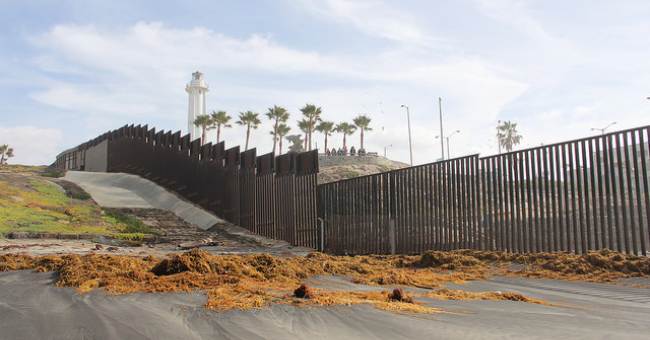
    Border fence that separates San Diego, CA from Tijuana, Mexico

    Border fence that separates San Diego, CA from Tijuana, Mexico. Photo credit: V. T. Polywoda

    “Numbers are not looking well.” This was the welcome phrase that I got just a minute after I arrived to the Election Night Watch Party organized by a group of academics in Downtown Los Angeles. Electoral results were falling state by state, and the evidence started appearing before our eyes: Donald Trump, a man who verbally attacked Mexicans, immigrants, Muslims, journalists, women; the one who promised to build a wall in the border and to deport eleven million undocumented immigrants, was about to become President Elect.

    My first instinct was to look around. An event that has become a tradition during election nights in this city, the place was full of politicians and their young aides, journalists, activists, and as part of the latter, the leadership of undocumented youth groups, those known as Dreamers.

    As many now know, the Dreamers are those young undocumented men and women who were brought by their parents to the United States when they were minors—some of them just two or three years old. They have spent virtually all their lives here, studying, speaking the language, sharing the culture, planning their future and how to thrive, just as any other American kid; but due to their lack of proper immigration documents, once they become adults, they can’t do much: they don’t have a work permit, or a driver’s license, or access to scholarships to attend college. Although a legislation piece aiming to fix this situation, the DREAM Act, was presented in Congress in 2001, it has languished there for fifteen years without being approved.

    In 2012, President Barack Obama ordered an Executive Action known as DACA (Deferred Action for Childhood Arrivals), which gave undocumented youth a temporary work permit and an exemption from deportation. This measure was renewed in 2014 and 2016, but during his campaign, Donald Trump repeatedly stressed that he would revoke the program and deport their beneficiaries, as well as the rest of the undocumented population.

    Like many other people in this country, after the election results were confirmed, I couldn’t sleep. I was checking my Facebook page and clearly many of my contacts were not sleeping either. Some of them were Dreamers, and after the initial shock, their messages started to look very similar to each other: invitations to keep fighting, to not feel defeated, to stay strong.

    “I’ve lived my whole life undocumented and fearing the worst,” shared one girl from Arizona. “My parents have been fighting for more than twenty years to give us a better life. I will not do anything that we have not done before. I’m ready to stand up and fight back.”

    Next Sunday, on his first TV interview as President-elect, Donald Trump changed the numbers: he said that he would deport two or three million undocumented immigrants, giving priority to those who have criminal charges or represent a threat for the United States.

    Although three million is still a large number, if Donald Trump keeps that criteria to be applied to deportations, he would be walking in the footsteps of the Obama administration. What that young woman stated on her Facebook page on Election night is true: although DACA provided some relief to about one million young people, the threat for our communities is not new. Barack Obama has deported the highest number of undocumented immigrants in the country’s history, an average of 400,000 a year: more than three million during his administration.

    Not only have the numbers have been high, but the criteria to make those deportations has not being applied as Obama stated. Until 2014, less than half of the people deported by the US government had some kind of criminal charge on their record.

    If this is the policy that Mr. Trump will apply during his administration, we can expect that many hard working families will keep being separated, just as they have in recent years. And just like then, their only alternative will be: stand up and keep fighting back.

    ***

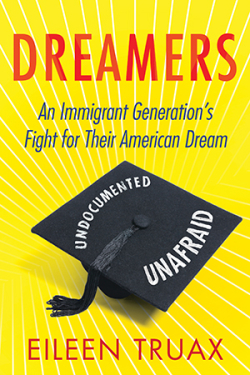
    DreamersEditor’s Note: The following excerpt is from Eileen Truax’s Dreamers: An Immigrant Generation’s Fight for the American Dream. One of the Dreamers Truax interviewed was Nancy Landa, whose family came to the United States from Naucalpan in the state of Mexico when she was nine. One morning in 2009, immigration agents detained her while she was driving to her government office job in California. She was twenty-nine at the time. With only the clothes on her back and her handbag, she was put on the immigration bus from a Los Angeles detention center to Tijuana, Mexico, where she had to build a new life for herself.

    On June 15, 2012, she found out through her friends that President Obama had announced the Deferred Action program, which unfortunately came three years too late for her and her family. She decided to fight back the way she could, by writing a letter to President Obama, telling him about her circumstances. His response was not what she expected.


    June 17, 2012

    The Honorable Barack Obama, President of the United States

    The White House

    1600 Pennsylvania Avenue NW

    Washington, DC 20500

    RE: Order to End Deportation of Young Undocumented Immigrants

    Dear Mr. President:

    I was moved to know that after 26 years of inertia, there is now in place a policy that will allow young undocumented immigrants to integrate themselves into the fabric of American society. At the same time, it was hard for me to accept that this reform came almost three years too late for my brother and I, whom would have otherwise qualified. Instead, we were deported at age 27 and 29, respectively.

    Starting at the age of nine, I was part of a class of people that lived in the shadows afraid to be exposed due to our legal status. Despite these challenges, I excelled academically and graduated in the top three percent of my high school class. I went on to earn my B.S. degree. I was an active participant in my community offering countless volunteer hours to further social causes.

    Four years ago I thought your candidacy offered the hope we needed to change the direction of the country including its current immigration laws. Although I could not vote for you, I volunteered on your campaign believing that reform could be possible. The reality is that under your administration, deportation of non-criminal undocumented immigrants has increased and has contributed to more family separations than during the eight years of the George W. Bush presidency. The failure to take action earlier has irreversibly impacted the lives of hundreds of immigrants that are thrown out of the United States on a daily basis. I and my family are among that number.

    I was forced out of a country I called home without the opportunity to collect my financial documents or a change of clothes that would have allowed me to sustain myself that first week in Tijuana. Yet I continue to live with limited professional prospects in my native country due to current US policies.

    I write to you now, to request three changes that would make a difference for people like me:

    1. Increasing accountability of the Customs Enforcement Agency and their deportation procedures
    2. Removing the 10-year ban for deportees so they can successfully appeal their cases
    3. Reforming the visa process so deportees who are working in their country of origin and are required to travel to the US for business purposes are not ineligible for a visitor’s visa

    What I really hope for is true immigration reform that provides the 12 million undocumented immigrants a pathway to citizenship. In the meantime, implementing the above changes will make the current legal process more humane.

    Most respectfully,

    Nancy Landa

    Tijuana, Baja California, Mexico

    In response, she received this letter from the president.

    Dear Nancy:

    Thank you for writing. I have heard from many Americans concerned about immigration and I appreciate your perspective.

    Americans are rightly frustrated with our Nation’s broken immigration system, and I share that frustration. We need an immigration system that meets America’s 21st-century economic and security needs. We can achieve such a system only by putting aside politics and coming together to develop a comprehensive solution that continues to secure our borders, holds businesses responsible for who they hire, strengthens our economic competitiveness, and requires undocumented immigrants to get right with the law. That is how we can reaffirm our heritage as a Nation of immigrants and a Nation of laws.

    My Administration has invested an unprecedented amount of resources, technology, and manpower to secure our borders, and our efforts are producing real results. Today, our Southern border is more secure than ever, with more law enforcement personnel than at any time in American history—and there are fewer illegal crossings now than at any time in the past 40 years. Crime rates along the border are down, and we have seized more illegal guns, cash, and drugs than in years past. In addition to doing what is necessary to secure our borders, my Administration is implementing a smart, effective immigration enforcement policy which includes taking action against employers who knowingly exploit people and break the law, as well as against criminal immigrants who pose a threat to safety of American communities.

    Stopping illegal immigration also depends upon reforming our outdated system of legal immigration. My Administration is working to strengthen and streamline the legal immigration system through administrative reforms, making it easier for employers, immigrants, and families to navigate the system. For example, we have reduced barriers to citizenship by keeping application fees constant and providing and creating tools to help applicants through the naturalization process. Through the innovative “Entrepreneurs in Residence” initiative, we are streamlining existing pathways for foreign-born entrepreneurs to come and create businesses and jobs in our country. Finally, we are working to support families by addressing a serious barrier in the law which requires Americans to risk years of separation from their loved ones, particularly spouses and children, in order to process a family visa petition. By proposing a waiver before these families separate, we are advancing legal immigration and the reunification of families—both fundamental principles under the law.

    I remain deeply committed to working in a bipartisan way to enact immigration reform that restores accountability and responsibility to our broken immigration system. The Federal Government has the responsibility to continue to secure our borders. Those immigrants who are here illegally have a responsibility to pay taxes, pay a fi ne, learn English, and undergo background checks before they can get on a path to earn legal status. At the same time, we need to provide businesses a legal way to hire the workers they rely on, and a path for those workers to earn legal status.

    The law should also stop punishing young people who were brought to this country as children by giving them a chance to stay and earn a legal status if they pursue higher education or serve in our military. In the absence of any action on immigration from Congress, my Administration will continue to focus our enforcement resources on high-priority individuals, including those who present national security or public safety concerns and those who have recently entered our country. As another step in this process, on June 15, 2012, the Department of Homeland Security announced it will allow eligible young people who do not present a risk to our national security or public safety to request temporary relief from deportation proceedings and apply for work authorization. This is not a path to citizenship, and it is not a permanent fix—only Congress can provide that. This is only a temporary measure to allow us to focus our resources wisely while giving a degree of relief and hope to talented, driven, and patriotic young people.

    By creating a 21st-century immigration system that is true to our principles, our Nation will remain a land of opportunity, prosperity, and freedom for all. To learn more about my Administration’s efforts regarding immigration, or to read our Blueprint for Immigration Reform, please visit http://www.WhiteHouse.gov/Issues/Immigration. For additional information and resources on current immigration and enforcement efforts, I encourage you to visit http://www.DHS.gov or call 1–800–375–5283.

    Thank you, again, for writing.

    Sincerely,

    Barack Obama

    “There was a Vietnamese restaurant in Silver Lake, that was my favorite,” Nancy tells me, nostalgic, when I ask her what she misses about the United States. “I miss that food; you can’t find it here. There is Chinese food all over the place, but if I’m in the mood for Greek, Cuban, or Korean food, that’s not easy to find in Tijuana. But I have had the best Mexican food of my whole life here.”

    The wave of nostalgia disappears when we start talking about the letter she sent to President Obama and his response. Her expression hardens, portraying a mix of disbelief and controlled rage.

    “I’m still really angry,” she says. “It’s my country, but they threw me out; that still hurts a lot. It hurts knowing that the Deferred Action program came too late for me and knowing that, even after announcing it, they keep on deporting young people that do meet the program’s requirements. That’s why I decided to write to him, to tell him about my experience. I didn’t do it for myself; I did it for the people around me, for all the stories I hear every day. I’m happy for everybody that will benefit from the program, but what about the ex-Dreamers? How are we doing outside of the country? Does anybody remember us, or think about the obstacles we have to overcome just to survive, or how we’re going to manage?

    “So I sent off that letter, and two months later I got that reply. A typical politician’s response: a form letter. In one part at the end he says they are focusing on high-priority cases that pose a threat to national security, and deportations are based on that. So I’m a high-priority criminal and that’s why I got deported?! He sends that to me as a response? He sends a form letter? They didn’t even read my letter. They just sent me this reply they had all prepared. The really ironic thing is they send it to me, somebody who has actually been deported. That says a lot about his administration.”

    The time comes to say good-bye, and Nancy stands up. She seems taller, confident, in control. She has a charisma about her. As we walk out, she seems to radiate a special strength, reflecting her ability to get the most out of even the smallest resources she has to draw from. But she also looks tired. Once more, our conversation turns to Tijuana.

    “I have come to love this city, because it’s not what I thought it would be,” she says. “I think my life is less stressful now. It has to do with the different pace things move at here compared with the United States, and my priorities have changed. Before, my career was what mattered most to me, to keep on moving up. Then you get to this point where you lose everything, you have to start over from the very beginning, and you decide you just want to enjoy life and not necessarily land some super amazing job. I know I have to keep fighting, especially since I see there is potential here in Mexico, so I don’t see why we shouldn’t have the quality of life that we deserve.”


    About the Author

    Eileen TruaxOriginally from Mexico, Eileen Truax is a journalist and immigrant currently living in Los Angeles. She contributes regularly to Hoy Los Angeles and Unidos and writes for Latin American publications including Proceso, El Universal, and Gatopardo. Truax often speaks at colleges and universities about the Dreamer movement and immigration. Follow her on Twitter at @EileenTruax.

  • By Gail Forsyth-Vail

    No DAPLOn November 3, 2016, more than 500 clergy from many faith traditions gathered at Standing Rock in support of the Sioux Nation’s protest of the Dakota Access Pipeline. As part of the day of witness, Unitarian Universalist Association (UUA) President Rev. Peter Morales was one of seven denominational leaders who read statements repudiating the 1493 Doctrine of Discovery, a papal bull which offered the rationale for the colonization of the Americas and other countries by European Christian powers. By virtue of the Doctrine, Christians were given the legal right to take, colonize, settle, and extract resources from land belonging to those who were not Christian. The statement Morales read, adopted by the UUA General Assembly, called for Unitarian Universalists to learn about the doctrine and its ongoing impacts, not only on indigenous peoples, but on the political, legal, economic, and cultural systems in the United States, in local communities, and in our congregations.

    In 2011, I was tasked with curating and creating study materials for congregations so that delegates might better understand why they were being asked to repudiate a 500-year-old document. Delegates were asking, “What possible relevance could the Doctrine of Discovery have to justice work today?” As I prepared materials, I read the work of a number of indigenous legal scholars, historians, and theologians. The more I learned, the more I discovered just how much the Doctrine—and the assumptions that flowed from it—have shaped the dominant story we tell about our nation. Its impacts are far-reaching and ongoing. I looked for resources to help explain this to a general audience, rather than a scholarly one.

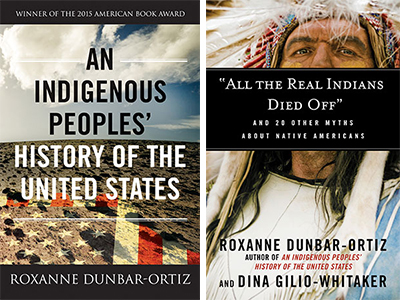
    In 2015, Beacon Press published An Indigenous Peoples’ History of the United States by historian Roxanne Dunbar-Ortiz. Here it was: a unified telling of the story of indigenous peoples in the United States that drew a straight line from the first US Congress’ eager claim to the Discovery rights of European monarchs to the struggles for indigenous sovereignty and rights and environmental justice today.  I eagerly devoured the entire book on a long train ride. By centering the experiences of indigenous peoples in the US, it offers exactly the kind of resource that helps Unitarian Universalists and others understand what’s at stake in our nation, and how the witness and struggle of the water protectors at Standing Rock fits into a larger picture. The UUA offers an on-line discussion guide for the book.

    Dunbar-Ortiz_Gilio-WhitakerRecently, Dunbar-Ortiz teamed with journalist and researcher Dina Gilio-Whitaker to write another book, “All the Real Indians Died Off” and 20 Other Myths about Native Americans. This book is about indigenous nations and peoples in the United States today, and is useful for teachers, teens, parents, religious professionals, and justice activists. In short, pithy chapters, it takes on one by one the myths that are part of the current mainstream discourse about Native Americans. It begins with an affirmation of the strength and resiliency of indigenous people. It explains basic questions, such as sovereignty and treaty rights, using just enough history to provide context. It addresses current questions: sports mascots, casinos, and cultural appropriation. It addresses the historical and cultural problem with the common narratives about Columbus and Thanksgiving. Most of all, it challenges readers to examine destructive stereotypes, to rethink what they’ve been taught about Native Americans and history, and to engage more fully in local and national support of the work of naming, addressing, and undoing the ongoing effects of the Doctrine of Discovery. It is critical work that Unitarian Universalists and other people of conscience, secular and religious, are called to do now.


    About the Author

    image from www.beaconbroadside.comGail Forsyth-Vail is Adult Programs Director in the Faith Development Office at the Unitarian Universalist Association.