• By Daisy Hernández

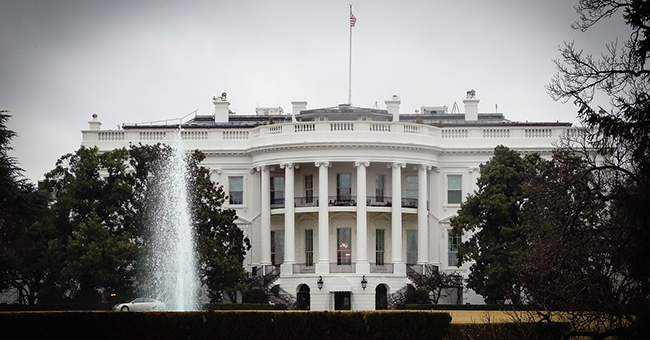
    White HouseI don’t know how to talk to my parents these days. Mami didn’t vote for Trump, but when I told her my outrage the day after the election, she said, “The man hasn’t even taken office yet. Let him take office.” I initially took her defense to mean that like my father, she had voted for Cheetoh, since she usually follows Papi’s lead.

    The most recent phone conversation with my father went like this:

    Papi: How are you?

    Me: I’m in the struggle against the racist you elected for president.

    Papi [now screaming]: Don’t get involved in that.

    Me: I’m completely involved.

    Papi [still screaming]: Don’t get involved in that.

    Me: I’m completely involved.

    And so it went until he huffed and handed the phone to my mother.

    Like many people in the United States, I accepted long ago that my parents and I would vote differently in every presidential election. I thought of it as a sad situation, but not a devastating one. After all, my side had won the moral argument. The country had agreed, even if only in polite words, that racism was a sin and sexism evil. We had that much. That much turned out to be a lie.

    Many Latinx families have a younger generation that is progressive and a generation of viejos that leans conservative. I have theories about that, but in the face of our country having elected a president who plans to deport three million immigrants and who brags about sexually assaulting women, all theories today are bullshit. Mine included.

    Instead, I turn to memory.

    I am remembering that once upon a time my mother spent mornings in Jersey pushing fabric under the rapid-fire needle of a sewing machine all the while in fear that la migra would show up at her factory. I am remembering that my father lost his job when NAFTA took the factories out of the country. I am remembering that it took me years to piece together their stories, our stories, because my parents both tend toward silence, toward playing it safe, toward staying afloat at any cost. 

    I am remembering that I am not my parents. And neither are you. 

    Last week, dozens, maybe already a hundred faculty and students signed a petition calling for administrators to make the college where I teach a sanctuary school for undocumented and DACA students and their families.  

    Last week, my colleagues and I also screened on our campus the documentary No Más Bebes, introducing more than fifty students to the story of a group of immigrant moms, along with a Chicana lawyer and a whistle blower doctor, who used the court system to sue the Los Angeles county doctors that sterilized them in the 1960s and 70s.

    Last week, another thousand people and I will show up in my new home city of Cincinnati for a second weekend in a row of protesting a president-elect who advocates white supremacy. 

    I don’t write any of this with a sense of hope. Esperanza is irrelevant now. These are the facts: Millions of us are standing up for what is morally right—for the most vulnerable among us and for each other.

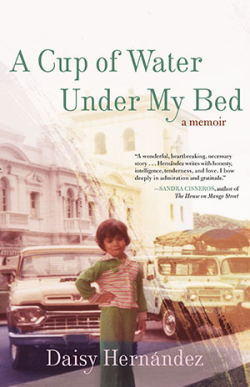
    That does not include my mother or my father. It does, however, include my sister and my sweetheart and dozens upon dozens of friends and new friends, all of which reminds me of why I wrote my memoir A Cup of Water Under My Bed, in the first place: because stories don’t always turn out the way we want but new ones are always waiting to be written.

    On that note, below is a short excerpt about my mother and me from my memoir.

    ***

    A Cup of Water Under My BedMy mother tells the same stories every night.

    In her queen-size bed, I am lying on one side of her and my younger sister on the other. I am about six at the time. It’s evening. My father is at the factory and the bedroom is silent. The windows are shut, the curtains drawn, and the edge of the tall dresser has vanished in the dark. I feel the weight of my mother’s body next to mine. She’s a muñeca de trapo, my mother, a large rag doll, a careful gathering of cotton fabric and thread and something unnamed but substantial. She sighs now in bed and begins telling the story she told the night before.      

    In her stories, my mother is the heroine, the inocente who scares easily and whom everyone knows to be gentle and kind. She is not ambitious. In fact, she wants nothing more than to grow up and marry a good man with blond hair and blue eyes and have children who look like him. This is what she tells my sister and me when the lights are turned off. She rubs our backs and whispers stories into our dark hair. 

    Always, she begins the stories at the beginning, which is to say the first time she left her mother.            

    ———

    It is the sixties; the violence is in the jungles of Colombia and Mami is in the capital. She is sixteen. She has left school. She wears clean, sturdy shoes and a knee-length skirt. Her black hair is curled, her face plump. She has never been beyond the border of school or home, but now here she is. In a fábrica. She spends days marking the fronts of men’s blazers with tiza, so the women on the sewing machines will know exactly where to stitch the pockets. 

    The only women she has known are like her mother, women who don’t wear lipstick, who marry young, who birth a dozen children, and bow their heads at church on weekday mornings. But this factory in Bogotá teems with a different sort of woman, the kind who sneers about men, brags about her nights, flaunts her intimacies. Their voices puncture the air like threaded needles. The women even curse.

    “I’d never heard anything like it before,” my mother whispers to us in the dark. 

    The bedroom around us tilts, becomes an unlit stage. At the age of six, I stare at this stage and try to imagine a woman who knows bad words in Spanish.


    About the Author 

    image from www.beaconbroadside.comDaisy Hernández is the author of A Cup of Water Under My Bed: A Memoir and coeditor of Colonize This! Young Women of Color on Today’s Feminism. She teaches creative writing at Miami University in Ohio, and you can read more about her work at www.daisyhernandez.com. Follow her on Twitter at @daisyhernandez.

  • Post-Electio 2016 readig

    The results of the 2016 presidential election have left many people in shock and disappointment. In a time where people are fearing that a new administration will work to reverse much of the progress made in the last eight years, we are left wondering what the future holds. How do we continue to fight against climate change, fight for reproductive rights, LGBTQ protections, and racial and economic justice?

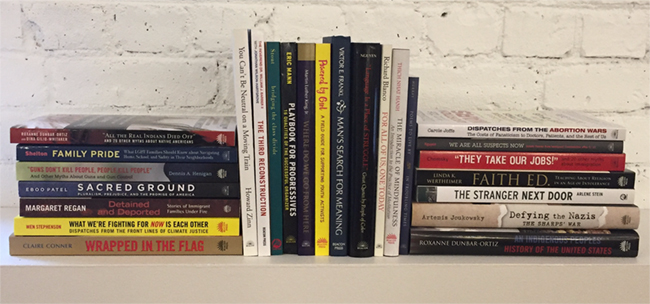
    Some people are turning to different voices to learn how to step up to the task of movement-building. Some are looking for advice to help them process their post-electoral grief. Others are looking for expert analysis and critique on the current issues affecting our society. At Beacon, publishing books on these issues is our mission. Now, more than ever, these books are relevant and timely, and we need our authors’ wisdom and expertise. Below we offer a non-exhaustive list of post-election reading recommendations from our catalog.

    Books to Inspire Action

    The Third Reconstruction: How a Moral Movement Is Overcoming the Politics of Division and Fear
    The Rev. Dr. William J. Barber II with Jonathan Wilson-Hartgrove

    Modern-day civil rights champion Rev. Dr. William J. Barber II tells the stirring story of how he helped start a movement to bridge America’s racial divide.

    You Can’t Be Neutral on a Moving Train: A Personal History of Our Times
    Howard Zinn

    In his classic memoir, influential teacher and activist Howard Zinn gives us reason to hope that by learning from history and engaging politically, we can make a difference in the world.

    Where Do We Go from Here: Chaos or Community?
    Martin Luther King, Jr.

    In his final book, Dr. King lays out his reflections after a decade of civil rights struggles. With a universal message of hope, he demands an end to global suffering.

    Playbook for Progressives: 16 Qualities of the Successful Organizer
    Eric Mann

    In this comprehensive guide for the twenty-first century, Eric Mann articulates pragmatically what’s required in the often mystifying and rarely explained on-the-ground practice of organizing.

    Powered By Girl: A Field Guide for Supporting Youth Activists
    Lyn Mikel Brown

    Drawing from a diverse collection of interviews with women and girl activists, Lyn Mikel Brown’s playbook shows how to work with and train girls to be activists of their own social movements.

    Bridging the Class Divide and Other Lessons for Grassroots Organizing
    Linda Stout

    Linda Stout tells the inspiring story of how she founded one of this country’s most successful and innovative grassroots organizations, the Piedmont Peace Project.


    Books to Find Meaning

    Man’s Search for Meaning
    Viktor Frankl

    Based on his experiences of surviving Nazi death camps and his patients’ experiences, psychiatrist Viktor Frankl’s timeless memoir continues to help us find meaning in the midst of suffering.

    Poems to Live By in Troubling Times
    Joan Murray, editor

    In the wake of September 11, editor and poet Joan Murray brought together sixty poems by an international group of distinguished writers to address our need for wisdom in dark times.

    The Miracle of Mindfulness: An Introduction to the Practice of Meditation
    Thich Nhat Hanh

    Zen master Thich Nhat Hanh’s classic book on meditation offers gentle anecdotes and practical exercises to guide us in working toward greater self-understanding and peacefulness.

    For All of Us, One Today: An Inaugural Poet’s Journey
    Richard Blanco

    2013 inaugural poet Richard Blanco shares his journey as a Latino immigrant and openly gay man discovering a new understanding of what it means to be an American in his memoir.

    Baldwin for Our Times: Writings from James Baldwin for an Age of Sorrow and Struggle
    James Baldwin with an introduction by Rich Blint

    This e-book collection of James Baldwin’s writings speaks urgently to our current era of racial injustice and the renewed spirit of activism represented by the Black Lives Matter movement.

    MLK on “The Other America” and “Black Power”
    Martin Luther King, Jr.

    In this e-book collection, two of Martin Luther King, Jr.’s most radical works examine inequality, police brutality, and black power, and speak to our most pressing social issues of today.


    Books on American Society

    Wrapped in the Flag: What I Learned Growing Up in America’s Radical Right, How I Escaped, and Why My Story Matters Today
    Claire Conner

    Clair Conner, the daughter of one of the John Birch Society’s founding fathers, offers an intimate history of the infamous ultraconservative organization.

    Family Pride: What LGBT Families Should Know About Navigating Home, School, and Safety in Their Neighborhoods
    Michael Shelton

    Community activist Michael Shelton lays out concrete strategies LGBT families can use to intervene in and resolve difficult community issues, teach their children resiliency skills, and find safe and respectful programs for them.

    Faith Ed: Teaching About Religion in an Age of Intolerance
    Linda K. Wertheimer

    Education journalist Linda K. Wertheimer reveals a public education system struggling with the debate over religion in the classroom and offers a roadmap for raising a new generation of religiously literate Americans.

    “Guns Don’t Kill People, People Kill People” And Other Myths About Guns and Gun Control
    Dennis A. Henigan

    Gun law advocate Dennis Henigan debunks the lethal logic and behind the persuasive myths and pro-gun slogans that continue to frame the gun control debate.

    Sacred Ground: Pluralism, Prejudice, and the Promise of America
    Eboo Patel

    Interfaith leader Eboo Patel offers a primer for Americans to defend the values of inclusiveness and pluralism to rise up and confront the prejudices of our era.

    What We’re Fighting For Now Is Each Other: Dispatches from the Front Lines of Climate Justice
    Wen Stephenson

    Journalist Wen Stephenson gives us an urgent, on-the-ground look at some of the “new American radicals” who have laid everything on the line to build a stronger climate justice movement.

    “They Take Our Jobs!” And 20 Other Myths About Immigration
    Aviva Chomsky

    History professor Aviva Chomsky illustrates how the parameters and presumptions of the immigration debate distort how we think and have been thinking about immigration.

    Detained and Deported: Stories of Immigrant Families Under Fire
    Margaret Regan

    Journalist Margaret Regan shares a rare and intimate look at the people ensnared by the US detention and deportation system, the largest in the world.

    An Indigenous Peoples’ History of the United States
    Roxanne Dunbar-Ortiz

    Historian Roxanne Dunbar-Ortiz radically reframes more than four hundred years US history and reveals how Native Americans have actively resisted expansion of the US empire.

    Dispatches from the Abortion Wars: The Costs of Fanaticism to Doctors, Patients, and the Rest of Us
    Carole Joffe

    Sociologist Carole Joffe brings together surprising firsthand accounts from the front lines of abortion provision to uncover the persistent cultural, political, and economic hurdles to access.

    The Stranger Next Door: The Story of a Small Community’s Battle over Sex, Faith, and Civil Rights
    Arlene Stein

    Arlene Stein sets out to discover why a small town with no apparent queer population became the site of a bitter battle over gay rights.

    We Are All Suspects Now: Untold Stories from Immigrant Communities after 9/11
    Tram Nguyen

    Tram Nguyen reveals the human cost of the domestic war on terror and examines the impact of post-9/11 policies on people targeted because of immigration status, nationality, and religion.

    Defying the Nazis: The Sharps’ War
    Artemis Joukowsky

    This official companion to the Ken Burns PBS documentary tells the little-known story of the Sharps, an ordinary couple that undertook the dangerous rescue and relief missions across war-torn Europe, saving the lives of refugees, political dissidents, and Jews on the eve of World War II.

  • By Kay Whitlock

    The Haunting (1963)

    The Haunting (1963)

    Editor’s Note: Fear—one of humankind’s primal emotions. Nothing rouses fear like perceived darkness and the unknown. From the shadowy recesses of the imagination to the deep of the woods, fear can distort our thinking and our reality, beguiling us to see phantasms and monsters that aren’t there. It can send us running in the direction of safety or entice us with the call to danger and adventure. But once you engage your fears head-on, without aggression or arrogance, you learn more about yourself than you could ever expect and begin to experience perceived darkness on new terms. 

    Writer and activist Kay Whitlock has spent much of her life inquiring into and writing about the roots of fear and the systems/structures of oppression, violence, and injustice that stem from it. In the final installment in her four-part series, Kay explores what’s really there inside that haunted house. 

    Part 1 is here. Part 2 is here. Part 3 is here. Download the PDF of the full series.

    ***

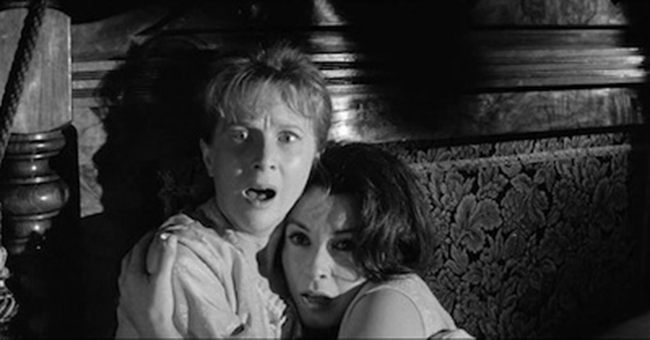
    In 1963, Robert Aldrich’s now-classic horror film, The Haunting (1963), with Julie Harris and Claire Bloom, based on Shirley Jackson’s acclaimed novel, played to rapt audiences. The story concerns four people who convene at Hill House, a foreboding, isolated, and possibly haunted mansion. Their purpose is to invite the appearance, document, and perhaps discern the origins of purportedly malevolent psychic phenomena within it. Eleanor Lance, the central character, is a colorless and timid middle-aged woman, a self-denying and resentful Good Girl who has spent a dutiful lifetime caring for her invalid (now deceased) mother. The story’s focus is the influence of the mansion’s derangement upon Eleanor’s already vulnerable psyche.

    Hill House is not deranged because it harbors darkness. It’s tempting to think so because, as novelist Toni Morrison says in Playing in the Dark: Whiteness in the Literary Imagination, darkness is “terror’s most significant, overweening ingredient.” It is commonly conflated with the unknown, evil, danger, and death; with peoples who are not White, “black magic,” female power, and more fluid expressions of gender and sexuality said to be “primitive” or “uncivilized.” While ancient mythologies and creation stories in many cultures are varied and nuanced in their treatment of darkness and the underworld, the dominant American imagination relies on a popular white supremacist vision that typically places “blackness” and the dark in hostile and inferior opposition to “whiteness” and light.

    Yet darkness, like illumination, is an inherent aspect of everyone and everything. There is nothing intrinsically disordered, dangerous, or evil about it; its existence is central to individual and societal health and wholeness. But our society doesn’t believe that, and so, for better or worse, currents of imagination—yours, mine, and ours—construct the darkness. There are many ways, Morrison reminds us, in which internal conflicts, alarms, and collective needs to allay internal fears are transferred to that “blank darkness.”

    Hill House is deranged because it holds its own conceptualization of darkness—centered in fear, death, and destruction—too close. Decade after decade, it nurses and consolidates fearful, isolating darkness to the exclusion of everything else. Hill House refuses self-examination; it recoils from the possibility of connection with a larger world. There is nothing to discover within its walls beyond an ever-increasing distillation of terror and, ultimately, psychic, spiritual, and physical death. The edifice produces its own dangers; it haunts itself.

    This in turn permits the darkness only disorienting expression in the imaginations of others who, crossing the threshold into Hill House, encounter the structure’s insatiable desire for control. What happens to the four people is predicated upon individual and collective abilities to meet the structure on its own terms, refuse to project their desires and needs into the frightening energies amassed within, and remain centered in a more complex and irreducible reality.

    Danger does not come at Eleanor Lance from the outside. She is finally destroyed by her own response to the house’s distortions and manipulations. Like Hill House, this woman has always held her own fear tightly confined. Unexamined, it will consume her and place others in danger. The palpable darkness provides her with purpose, significance, and the only real stirrings of physical and emotional desire that she permits herself: an erotica of fear. However funereal such attraction may be, it is fleshy and sensate. By surrendering to this repressive atmosphere, Eleanor Lance hopes for a different future in which she matters. She finally feels something. She possesses agency and power. At last she is wanted; she belongs. She doesn’t want to leave. And Hill House doesn’t want her to go.

    This is only one of many possible readings of The Haunting. But I have come to think of Hill House as a skillful representation of a psyche dominated by fear and obsessed by strategies of manipulation, containment, and control that are said to be necessary for securing safety and realizing freedom. Its urgent and overriding need is to suffuse the darkness with dread and make others who come within its influence experience the world in the same way. Though its effects are isolating, it taps into legitimate hopes and longings for “the good life” and a sense of community, familiarity, and belonging as well as confirmation of one’s own virtue.

    But if clinging only to the distorting thought of a brutal darkness for self-definition is problematic—so, too, is an obsessive and unquestioning embrace of “the light” to vanquish the demon darkness. However attractively packaged, conquest is always the wrong paradigm, with its simplistic, self-serving storyline of inevitable victory of “the light”—goodness and enlightenment—over barbaric, savage, evil, and death-dealing darkness.

    ***

    Over many years, I have learned how easy it is to imagine that any problems with darkness and all of its connotative, fearful associations belong to someone else. For a long time, I pushed aside concerns that some of those problems might also be mine by romanticizing the issue and focusing on the splendor in the darkness that revives an ancient sense of reverence and in some way reflects and amplifies one’s deepest hopes and dreams. While opening the self to such beauty and wonder is essential, it is also the simpler task. It’s much harder to admit to playing in one’s own dark gardens of fear.

    It has taken me most of a lifetime to realize that, all along, the mysterious and elusive source of unease, that unnerving sense of something else wandering about in the darkness was me.

    It was never Bad Guys, thugs, psychopaths, morally vacant people with even less money than my family, child molesters, ghosts, monsters, or sharks. The unlit terror I experienced in childhood and carried with me since was never just at the bottom of the stairs, located in some terrifying and inherently menacing, oppressive Other.

    All along, it was just me creeping around in the vast stuff of my own fears with which I often populated the darkness and that shaped so much of my life. This is not to say that there are not real things to fear. Violence, abuse, and exploitation are real; they are not phantasms of overwrought minds. But they also have nothing to do with darkness. To manage our fear—in the worst ways possible—many of us simply refuse to see that the most massive forms of these ills are routine occurrences in respectable, daylight society. They are found in families, corporations and businesses, politics, religious and spiritual communities, schools, and institutions charged with the creation of public and national safety. Together, we bear responsibility for them.

    How is it possible to take responsibility for something whose existence we don’t want to even acknowledge? That requires rounding the corner, looking into the shadows, and coming face to face with ourselves. During those trickster hours, I did more than learn to love the night. I also unwittingly transformed into something of a mirror image reflection of my personal terrors. I became the unseen person creeping through the night, hiding among shadows, and crouching beneath open windows. The person capable of deceiving someone else, and even myself. It was my footstep that now creaked surreptitiously on the stair while someone else slept, unaware of the presence and movement of other people.

    I didn’t actually become a Peeping Tom, but close enough. My intentions were never malicious. I did nothing to harm or knowingly frighten anyone else. Yet it turns out that what I fear in others in some way turns out to be a part of me—or at least a nascent ability I possess, a dormant capacity that I may or may not act on over time, as conditions change. This is one step toward coming to terms with the aspect of self that amasses my own psychic stores of avoidance, denial, and dread; that seeks to find only righteousness in myself and fault in others; that seeks to displace all of the world’s indifference, injustice, violence, and cruelty onto that all-purpose, elastic, demonic Them. 

    It’s important not to overstate the case. I did not bring the abuse I once experienced upon myself. I’m not an ax murderer, state-sanctioned torturer, corporate destroyer of ecologies and the environment, or fascist dictator in the making. But even when I was young, I couldn’t help feeling the thrill of breaking the rules and being one up on unsuspecting others. I loved the heady sense of power—or at least the potential for it—that emerged as I charted my course through the ambiguous darkness. Imagine what politicians and religious leaders can do by fueling the fears of their followers while simultaneously appealing to their desires to feel more powerful than and superior to those who are feared. Imagine the blurring of fear and power for those already inclined to be bullyboys. Imagine what this might mean for fearful people who have always been conditioned to be meek and subservient. Imagine how susceptible many of us are to the confidence men who bang violently on public doors at midnight, demanding that we buy their dread-and-rage-soaked wares.

    ***

    Now in the seventh decade of my life, I have never outgrown the siren call of nighttime rambles. The world has changed in some respects, and I have changed as well, though not, I hope, in cramped and sour ways. My fears have not dissolved, but we are cranky old friends now, no longer enemies—in some ways, each other’s teacher. This new relationship becomes possible when fear is, at last, experienced as a transformative pathway into psyche and soul—individually, societally, spiritually—and no longer a prison.

    I still love to go out and about in the indigo hours, although I now travel less by shanks’ mare and more by way of contemplation and meditation. Sometimes I awaken from a vivid, often mythic, dream around 3:00 a.m. and feel the same shiver of excitement and apprehension that I first felt so long ago. I raise the window blind just enough to see the moonlight spilling over trees. Sometimes there is slight movement in the interplay of light and darkness among the shadows. I settle into the comfortable reading chair by my bedside, look out into the night, and set my imagination free.

    And oh, we roam.


    Download the full PDF of “The Haunting: On Fear and Seeing Differently in the Dark,” as the four-part series is presented in its original narrative form.

    Catch up with Part 1, Part 2, and Part 3.



    Kay WhitlockKay Whitlock is a writer and activist who has been involved with racial, gender, queer, and economic justice movements since 1968. She is coauthor of Considering Hate: Violence, Goodness, and Justice in American Culture and Politics with Michael Bronski, the award-winning Queer (In)Justice: The Criminalization of LGBT People in the United States with Joey L. Mogul and Andrea J. Ritchie, and cofounder and contributing editor for the weekly Criminal Injustice series at CriticalMassProgress.com. She lives in Missoula, Montana. Follow her on Twitter at @KayJWhitlock.
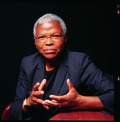
  • By Rev. Dr. William J. Barber II

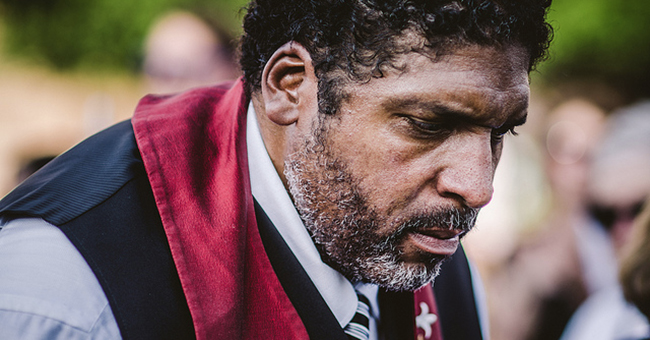
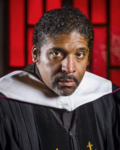
    Rev. Dr. William J. Barber II

    Photo credit: Ethan M. Sigmon

    This article appeared originally in Red Letter Christians.

    Early Wednesday morning, after running a controversial campaign that was even endorsed by the KKK, Donald J. Trump thanked his supporters for victory and promised to be a president for all Americans. A shock to almost every pollster and political pundit, his victory has been heralded as an unprecedented political upheaval. But the reactionary wave that swept across America this past Tuesday is not an anomaly in our history. It is, instead, an all too familiar pattern in the long struggle for American reconstruction.

    Anyone who watched the election returns come in on television Tuesday night will remember the red band that stretched from my home state of North Carolina south and west across the nation. The former Confederate states, this solid South proved to be a reliable base for Trump. But he joins a long line of white men who have leveraged this base to get to the White House.

    Like so many things in America’s racial history, the solid South was born of compromise. Confederate states were readmitted to the Union based on their affirmation of the Reconstruction amendments, which abolished slavery, gave voting rights to African-Americans and guaranteed equal protection under the law. But federal troops were required to guarantee these rights for African-American citizens. Appealing to both racial fear and resentment against occupation, Southern politicians developed the “Mississippi Plan” to take back their country by any means necessary. Through voter suppression, intimidation and violence, they swept the South in 1876.

    But they didn’t quite win the White House. Hence the compromise of 1877. Republican Rutherford B. Hayes could be president if his government would promise to remove federal troops from the South. It did not take long for a solid South to pass state laws abridging African-American’s rights to full citizenship.

    Yes, the Union won the Civil War. But the compromise of 1877 taught African-Americans that the fight for reconstruction was not done. In the long story of our struggle for freedom, every advance toward a more perfect union has been met with a backlash of resistance.

    The same kind of backlash followed the legislative victories of the civil rights movement—what many historians call a “Second Reconstruction.” The Civil Rights Act, Voting Rights Act and Fair Housing Act were the fruit of decades of struggle, waged by people who knew they might never see victory in their own lifetimes. But the backlash against them wasn’t limited to Southern segregationists. Richard Nixon’s “law and order” campaign of 1968 was an intentional effort to win the solid South by appealing to racial hate and fear without using racist language. His advisor, Kevin Phillips, called it the “Southern Strategy.”

    Donald Trump’s unanticipated victory could not have been possible without the election of Barack Obama as America’s first African-American president. Of course, Trump entered national politics by waging a crusade against the possibility of Obama’s citizenship. It proved to be the perfect way to touch the psychic wound of so many Americans who have not faced our legacy of racism. Anyone familiar with the Mississippi Plan of 1876 or the Southern Strategy of 1968 can only be surprised by the ease with which Trump adapted them for the twenty-first century.

    Trump’s attacks on immigrants, Muslims, and the LGBTQ community were political ploys based on the fundamental racial fear at the heart of the American experience. When he told white Americans that he was their last chance to make America great again, he was touching a wound passed down since the lost cause religion of the nineteenth century.

    America must not waste time asking ourselves how this could have happened. It happened because it is a habit written deep in our public memory. If we are willing to see ourselves as we are and have been, we will also see our potential for prophetic resistance, even in times like these.

    When the prophet Samuel cries out to God in the Old Testament, asking why the people have elected to follow a strong man rather than the Lord of justice, God replies: “It is not you they have rejected; they are rejecting me.” Those who have struggled against injustice in this country must not take the results of this election personally. We cannot afford to blame our neighbors or demonize Mr. Trump. We are together inheritors of a legacy that has rejected justice.

    But that is not all we are. We are also the heirs of great dissenters who’ve stood for right even when they were a minority of one. When the Jim Crow law of the solid South were upheld by the US Supreme Court in the case of Plessy v. Ferguson, only one justice—John Harlan of Kentucky—dissented. But his dissenting opinion laid the legal groundwork upon which Thurgood Marshall built his case over half a century later in Brown v. Board of Education.

    When Woodrow Wilson showed Birth of a Nation at the White House a century ago, W.E.B. DuBois, Ida B. Wells and the inter-racial NAACP challenged the most powerful man in America to face his racism. When three civil rights workers were brutally murdered in the first days of Freedom Summer, black and white students chose to press on together, challenging Mississippi’s brutal racism. Their mentor, Fannie Lou Hamer taught them by example that we who struggle for freedom do not turn back. When she was nearly beaten to death in a Winona County jail, she came back singing louder and fighting harder than she had before.

    After Tuesday’s rejection of justice, which is as American as apple pie, we must apply a moral defibrillator to our own hearts and be even more determined to stand for love, just, and mercy. Less than a majority of Americans elected a mortal, not a god, to be our next President. They did not un-elect the foundational principles of our Constitution, not have they overwhelmed the moral convictions of our faith.

    Across lines of division, we can continue to build the moral coalition that is already a majority in this country. Yes, we have some difficult days ahead. But our foreparents were up against more with less. And they taught us that a dying mule always kicks the hardest. Our work continues: we must work together for a Third Reconstruction in America.


    About the Author 

    Rev. Dr. William J. Barber IIThe Reverend Dr. William J. Barber II is president of the North Carolina chapter of the NAACP, pastor at Greenleaf Christian Church in Goldsboro, North Carolina, and founder of Repairers of the Breach. He is the author of Forward Together: A Moral Message for the Nation and The Third Reconstruction: How a Moral Movement Is Overcoming the Politics of Division and Fear. Follow him on Twitter at @RevDrBarber.

  • By Sharon Leslie Morgan and Thomas Norman DeWolf

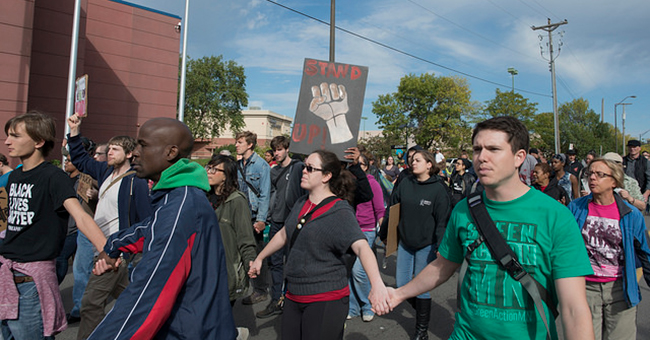
    Black Lives Matter protest against St. Paul police brutality

    Black Lives Matter protest against St. Paul police brutality. Photo credit: Fibonacci Blue

    Whitelash: from Thomas Norman DeWolf

    A week has passed since a man who repeatedly espoused intolerance, racism, sexism, and white/male supremacy, and incited violence against those who opposed him, was elected President of the United States. I still can’t wrap my head around it.

    The president-elect has now appointed the former head of Breitbart News as his chief strategist and senior counselor; a man and an organization seen as the flagship of the so-called alt-right; people who espouse extreme anti-Semitic and white supremacist beliefs. This appointment is consistent with his entire campaign: a confirmation that intolerance, bigotry, and misogyny will be key policy components of the new administration. I’ve felt for several years that we have been making progress in the United States regarding issues of race, gender and religious tolerance and acceptance; equality, justice, respect and peace for all people. I want to believe we still are.

    But…the election….

    When I woke up Wednesday morning, my first thoughts were of our two granddaughters who would soon wake up and prepare to go to school. How do I explain to them that the man who incessantly spouts vulgar words they aren’t allowed to use, who is a horrible role model for children and adults, will now become President of the United States and leader of the free world? I shared on my blog what we talked about: intolerance and kindness; fear and love; as well as the responsibilities we have to support our values, our nation, and each other.

    As a white man, I believe it is critically important that I, and all white people, listen to those who have been marginalized, people the president-elect and many of his supporters have targeted. Listen to what Van Jones said about Surviving the Whitelash. Watch Dave Chappelle’s monologue on Saturday Night Live. Listen to teachers who have students from other countries who are terrified they will be deported. Read about horrible, abusive acts committed since the election—perpetrated by people emboldened by the president-elect. The level of fear about what may happen soon, and for many years after, is understandably quite high.

    Speaking specifically to white people, it is important for us first to listen to those who feel most vulnerable now. Then ask what we can do to support them. How can I be an effective ally? What can I do to help prevent the implementation of policies and actions that create more harm; that not only don’t “make America great again,” but, in fact, are contrary to the ideals upon which this nation was founded and has never truly lived up to. Based on what we’ve witnessed over the past year, and in the past week, we must remain vigilant and committed to truth, justice, equality, and peace.

    Blacklash: from Sharon Leslie Morgan 

    I could not believe my eyes as I watched the election returns on television. I stayed awake until the sun came up trying process the realization that the unthinkable happened; that the forward strides generations of people struggled and died for went swirling down a drain of ignorance and bigotry. I spent the day in a stupor, barely able to get out of bed. A week later, the media and sycophants that helped propel Trump to victory are mobilizing to normalize his image. I am in shock as the travesty continues to unfold with the selection of a rogue’s cabinet of morally reprehensible hypocrites and race-baiters.

    Like Tom, I was with my grandchildren during the days after the election. We had a similar conversation about human values, but mine was more focused on safety. The wave of terror that has been legitimized by Trump and is being exploited by his followers is a clear and present danger to the ones I love. My heart is heavy. I am sad, angry and afraid.

    I get it that people are mad…mad at the system. I agree that the ENTIRE system is flawed and dysfunctional. But, Trump is NOT the solution. Rather, he is the embodiment of everything that is wrong. Anyone who thinks otherwise is guilty of cognitive dissonance that is apocalyptic. It is devastating to witness the fall of America into the hands of a megalomaniac on a mission to “make America great again” by undermining absolutely every principle of decency and fairness. Under Trump, things will get worse…much worse. The one-tenth of one percent will keep getting richer…phenomenally so. The rest of us will become even more impoverished through the loss of our social safety nets. The people who voted for him will be dismayed as he reveals his true nature as a man who cares nothing for anyone but himself.

    I hope all right-thinking people will unite to resist and protest in every possible way. I am glad protesters are marching in the streets in cities across the land. I long to see a million women turn up in D.C. on inauguration day. I implore people to close their wallets and refuse to patronize Trump-owned businesses. I applaud sanctuary cities and pray they stand firm in their resolve to give refuge to undocumented immigrants. I need the ACLU and the SPLC to remain vigilant. I caution the Democratic Party to do some deep soul searching and find a strong voice of resistance in Congress. I pray Republicans will disavow the hateful rhetoric that put them in control. I beg that world leaders not give in to threats and intimidation. I urge EVERYONE to speak up and speak out.

    Donald Trump is NOT my president. I cringe at the thought of the Trump family defiling the White House with their presence. I cannot imagine Melania Trump as the first lady of the United States. I feel as though we have experienced a coup d’état, and the only thing that will reverse it is a revolution.

    NOW WHAT?

    Deep, authentic relationships with people we’ve been raised to see as “other” are key to understanding and reversing the impacts of racism and other forms of intolerance and inequity, and the misuse of power and privilege. For the two of us, there is solace in knowing that someone shares our beliefs and commitment to social justice. We have built a friendship over the years that helps sustain us. We can talk with and lean on each other in times of madness and sadness, as we did on election night and surely in days to come.

    It is crucial that we take whatever action we can to support Black Lives Matter, Showing Up for Racial Justice (SURJ), and the many other organizations that champion the rights of women, members of the LGBTQ community, Muslims, disabled people, and immigrants. The time is right for initiatives such as the Truth, Racial Healing, and Transformation effort that the W.K. Kellogg Foundation will launch in 2017 in partnership with more than one hundred public, private, and non-profit organizations throughout the United States. We also urge you to get involved with organizations like Coming to the Table that “provides leadership, resources and a supportive environment for all who wish to acknowledge and heal wounds from racism that is rooted in the United States’ history of slavery.” CTTT’s focus on establishing affiliate groups that create safe spaces for people to gather together to hear each other’s stories, to learn about each other, and to build relationships and understanding, is a critically important resource in the days and years ahead.

    Our training in Strategies for Trauma Awareness and Resilience (STAR) teaches that humans, when confronted with danger, have an immediate impulse to either flee or fight. We can’t flee because this is our country. We live here. We have no choice but to endure whatever comes. But that does not mean we should go silently. Use your voice. Do what you can. We must not abrogate our responsibility to our children, grandchildren, and future generations. Through it all, we must realize how much we need each other. Now, more than ever, we must stand strong TOGETHER and not let the powers of darkness obliterate the light.


    About the Authors 

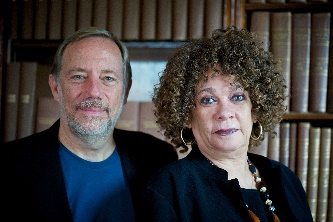
    Sharon Leslie Morgan and Thomas Norman DeWolfSharon Leslie Morgan and Thomas Norman DeWolf are co-authors of Gather at the Table: The Healing Journey of a Daughter of Slavery and a Son of the Slave Trade. Both are deeply involved in the work of Coming to the Table.

  • By Mary Collins

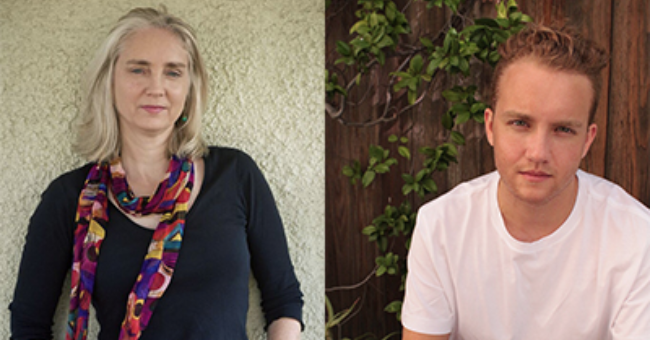
    Mary Collins and her son Donald

    Mary Collins and her son Donald. Photo credits: Shana Sureck (Mary) and Darian Carpenter (Donald)

    Avoid self-absorption, I tell my college students trying their hand at the personal essay in my nonfiction classes.

    Strive to see yourself and your beliefs in the context of the larger culture.

    Don’t assume what you have to say is all that interesting or important; back it up with research, insight and intellect.

    If you’re doing a good job, you will discover something new about yourself as you write the essay.

    I say these things about their writing, and they nod, but they never quite understand why I say them with such vigor.

    This course is not about writing, I practically shout. It’s about using writing to develop a deeper understanding of yourself, others, and your society. If you cannot think with any clarity, you cannot write with any clarity. If you cannot ask the right questions, you cannot arrive at refreshing content.

    I know, I tell them. I used the personal essay form to save my relationship with my only child, who was born biologically female but transitioned to male during high school and college.

    I had never heard of the term transgender.

    I took things personally, watched all that he did as a form of judgment on me as a parent, resented those that helped him complete his transition (because they did not include me in any part of it), and, I admit, almost walked away from the entire process because of the irradiating pain and grief I felt as I watched my daughter evaporate before my eyes.

    I started to process all of it by writing notes in a journal to myself.

    But I just confirmed my own opinions and my limited understanding of the situation.

    I shifted to writing a sketch of a personal essay about my sense of grief, which felt muddled, but at least it included research, reflection, and some effort at seeing my experience within the context of the larger world.

    I kept at the personal essay and tried to follow my own rules: avoid self-absorption; educate yourself; try to see yourself as your trans son might see you.

    Then I asked my trans son to write essays of his own and, to his credit, he agreed. While his transition triggered grief for me, it gave him a sense of euphoria. While I resented the erosion of my rights as a parent once he reached sixteen, he saw them as a way to assert himself in new ways.

    We did not write opinion pieces to each other about these things, but rather essays—a vital distinction, because we never tried to “convince” each other of anything or to designate one of us as “right” or “wrong.” Instead we strove to round out our understanding of what his transition meant to each of us.

    As a parent I resented being told by educators and professionals that I’d eventually “get it,” with “it” some vague thing hanging in the air and smacking of blistering judgment.

    As a teen in transition, Donald stood aghast that I’d battle with him over something as fundamental as his right to use a name and pronoun of his choice.

    We wrote about these exchanges, and, more importantly, we processed them, because writing an essay forces you to do that.

    In honor of the word “Awareness” in Transgender Awareness Week, I urge parents in conflict with their trans teen or college student to try their hand at penning an authentic personal essay about how you feel about what’s going on. Pick a specific topic—such as “name change”—and then ask your child to pen his/her/it/they own essay as well. If you feel anxious about writing, try speaking what you think into the recorder on your cellphone and save and then exchange the recording with your child.

    See it as an audio diary or letter exchange, and I emphasize the word exchange, because it’s a type of sharing rather than a persuasive argument.

    You’ll be surprised by how much you have to give to each other.


    About the Author 

    Mary CollinsMary Collins is a professor of creative writing at Central CT State University. At the Broken Places: A Mother and Trans Son Pick Up the Pieces, forthcoming from Beacon Press in Spring 2017, is her fourth adult nonfiction book.

  • By Kay Whitlock

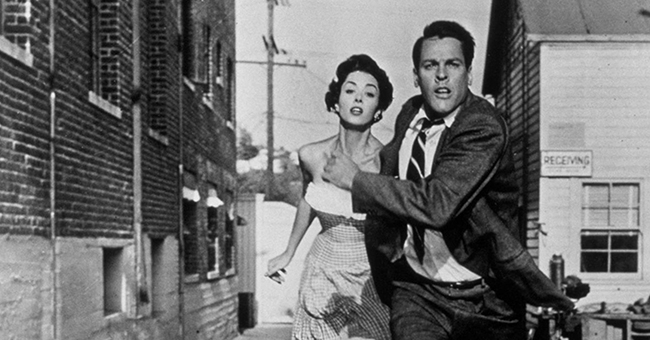
    Invasion of the Body Snatchers

    Invasion of the Body Snatchers (1956)

    Editor’s Note: Fear—one of humankind’s primal emotions. Nothing rouses fear like perceived darkness and the unknown. From the shadowy recesses of the imagination to the deep of the woods, fear can distort our thinking and our reality, beguiling us to see phantasms and monsters that aren’t there. It can send us running in the direction of safety or entice us with the call to danger and adventure. But once you engage your fears head-on, without aggression or arrogance, you learn more about yourself than you could ever expect and begin to experience perceived darkness on new terms. 

    Writer and activist Kay Whitlock has spent much of her life inquiring into and writing about the roots of fear and the systems/structures of oppression, violence, and injustice that stem from it. In the third part of her four-part series, Kay’s fears usher her into the realm of the horror story. 

    Part 1 is here. Part 2 is here.

    ***

    This is a mother’s worst nightmare: that without her knowledge, her child, willful and self-propelled or dragged by malevolent others, will somehow vanish into the great Out There, Into the Dark, where Unspeakable Things Lie in Wait. But just before dawn, we always returned home, squeezing noiselessly through the gate and coming in the back door, carefully tiptoeing up four creaking stairs and into my bedroom. There we listened anxiously into the silence for sounds of my mother’s wakefulness that never came.

    Mom arrived home from work dog-tired on Friday nights and always seemed to be sleeping deeply on our return, perhaps lost in her own seldom-realized dreams of adventure. Affable Trixie barked only and briefly at strangers or menacing dogs while the cats remained focused on their own comfort. My older sister undoubtedly would have snitched; she and I ratted each other out given the slightest opportunity. But she was always away, spending those nights at somebody else’s house. And my father was never home. He worked the graveyard shift, 11 p.m. to 7 a.m., monitoring gauges and machinery at a pump station for the local water works.

    It’s tempting to offer up my dead-of-night traipsing about as a modestly triumphalist tale about “facing and thereby conquering my fears.” But that’s not true. And anyway, however attractively packaged, conquest is always the wrong paradigm, with its simplistic, self-serving storyline of inevitable victory of “the light”—goodness and enlightenment—over barbaric, savage, evil, and death-dealing darkness. Or I could simply say that my experience reveals the wonder and beauty of darkness, disproving the nightmare with which it is so often associated.

    But the truth is much messier and far more interesting.

    The darkness remains, for me, a carnival-like repository of dread and a shapeshifting source of wonder, knowledge, and beauty that cannot be glimpsed in daylight. In some inchoate way, I have always known this; it’s probably what led me outside. Yet even this explanation feels a bit twee, a perky both/and insight standing in smug opposition to the stern rigidity of either/or. As if the whole supply of possibilities could be contained in that mangy space between such reductionist bookends. Committing to the borderlands that constitute The Dark is a tangled undertaking. The journey does not lend itself to the kind of self-congratulation and pithy sloganeering so beloved by New Agers, self-help gurus, and workshop facilitators; so endemic to organizational fundraising and commodified spirituality; so intrinsic to the crusades and campaigns of demagogues and politicians.

    For one thing, that something else wandering about in the darkness is real, unsettling, and it refuses to slink away. When we don’t consciously engage it, someone always bears the terrible brunt of its consequences.

    ***

    In order to go adventuring in the dark when I was young, it was necessary to leave the house in which I lived.

    So long as I stayed within the cocoon of purported “safety”—which is to say, within the familiar, well-defined parameters of home, family, church, and school—my fear was lumpy, undifferentiated, and usually displaced. I could not permit my apprehension to be lodged in what was familiar and commonplace, even though that is where much of it belonged. Symbolized by The Dark, which held Evil and all of the dreadful, unspoken things that could happen to me, fear was comprised of artful, indistinct, and unforeseen sound and movement. The things that suddenly thump against the doorframe, creak unexpectedly on the staircase, scrape and scratch at the edges of closed windows, and exhale softly as they lie in shadowed wait just around the corner.

    I employed various stratagems to keep this sense of impending doom at bay. Hid my most cherished thoughts and dreams. Tried to appease angry people whether or not I had anything to do with their rage. Ceaselessly apologized for shortcomings (real and imagined) and, indeed, for my entire existence. Made myself useful to people more popular than I. Sharpened my mind like a knife and conjured great fogs of words to disorient my enemies. Tried, impossibly, to become so good that I could exist beyond reproach. On rare occasion, my pent-up imagination, always theatrical, demanded release and unexpectedly popped like a cork, but everybody explained those moments away as aberrant: “That’s so unlike her.” Any relief these methods provided was temporary; none of them freed me. And so, with no conscious awareness of what I was doing, I began to move toward whatever it was that promised to annihilate me.

    Already an avid reader, TV watcher, and moviegoer, I fell easily into the gravitational pull of the Fearful Darkness through story. Sure, it was scary—but also a huge relief. Tales from the astonishing imaginations of Shelley, Wells, Stoker, Poe, Conrad, Conan Doyle, Bradbury, and Jackson, and movies like The Bad Seed and Invasion of the Body Snatchers provided emotional recompense for my fears without actually exposing me to danger. But more than that, hinting at intricate, multilayered understandings of reality, these stories produced fantastical images and symbols that struck a nerve, even if I didn’t fully understand them. I know now that it was never terror I yearned for so much as truth, no matter how slant it was served up.

    Dr. Jekyll and Mr. Hyde (1941 version) told me that goodness and the capacity for violence co-exist in the same person. Other stories revealed that the outward appearance of morality and happy conformity could easily mask lies and the ability to inflict great harm. The menacing aliens in The Martian Chronicles turned out to be us, not them. The monster might be a product of someone’s well-intended but misbegotten machinations, or a symptomatic eruption of society’s folly—Frankenstein, Godzilla, and Them! come immediately to mind. They wreak havoc not because of some intrinsic devotion to depravity but as a result of human hubris; they are Good Intentions gone monstrously wrong. King Kong and The Creature from the Black Lagoon are able to love, but persecuted and abused, they lash out at their tormentors in pain, fear, and rage. In these narratives, traditional storylines of innocence and guilt, good and evil, who is harmed and who harms become hopelessly ensnarled. They can’t be separated out into eternally distinct categories of Good Guys and Bad Guys; it can all turn on a dime.

    This discomfiting truth is embedded in many of these classic tales. And every shred of truth turns out to be as disposable as whatever it is that we fear. The monsters of our own creation—and our complicity in their emergence—are almost inevitably disavowed by means of cruel treatment and violently destroyed. No evidence remains that they existed; no set of tracks will be traced back to their creators. We don’t want to remember. The impulse to safety only for self always permits the administration of incalculable pain to others in order to underscore its own vulnerability. But none of the violence deployed to kill the monster produces the absolute security so desperately sought; that is impossible. Many tales of terror end with a somber (and prescient) suggestion that even victory over what scares us is only temporary. Who know what bides its time, still lying in wait, in the shadows, Out There?

    Telegraphing the message that the world is far more mysterious and unpredictable than I’d been taught and that safety was never assured, even in the most ordinary and customary places, unnerving stories opened doorways into larger theatres of imagination and exploration.


    Stay tuned for the final installment in Part 4, in which Kay comes face to face with…

    Catch up with Part 1 and Part 2.

    To be sure you don’t miss an installment of ‘The Haunting: On Fear and Seeing Differently in the Dark’ series, you can follow Kay (@KayJWhitlock) or Beacon Press (@BeaconPressBks) on Twitter or follow/like Beacon Press on Facebook. You can also subscribe to the Beacon Broadside blog email. 


    image from www.beaconbroadside.comKay Whitlock is a writer and activist who has been involved with racial, gender, queer, and economic justice movements since 1968. She is coauthor of Considering Hate: Violence, Goodness, and Justice in American Culture and Politics with Michael Bronski, the award-winning Queer (In)Justice: The Criminalization of LGBT People in the United States with Joey L. Mogul and Andrea J. Ritchie, and cofounder and contributing editor for the weekly Criminal Injustice series at CriticalMassProgress.com. She lives in Missoula, Montana. Follow her on Twitter at @KayJWhitlock.

  • By Rev. Elizabeth M. Edman

    Colombian President Juan Manuel Santos signing the peace agreement with FARC leader Timochenko

    Colombian President Juan Manuel Santos signing the peace agreement with FARC leader Timochenko. Photo credit: Chilean Government

    Author’s Note: I wrote this piece before the American presidential election on November 8. Interestingly, Donald Trump parts ways with those in his party who relentlessly demonize LGBTQ people. But queerbaiting has long been a staple tactic in the overall Republican political strategy to mobilize disaffected voters; and this year bashing queer people—trans people especially—played a role in races across the US and was written into the Republican Party platform. This piece reflects on the Colombian vote on the peace agreement. Though the American election involved a more complex array of concerns, there is no overlooking the centrality of numerous issues at the forefront of this campaign, including treatment of immigrants and foreigners, on which the teachings of Christianity are quite clear.    

    On October 8, The New York Times reported that conservatives who opposed the peace agreement in Colombia used gay-baiting tactics to rally evangelical Christian and Catholic voters to their side. Given how close the election was, it is entirely possible that such tactics played a role in the outcome of the vote.

    The campaign took place amidst protests against the legalization of marriage equality and efforts by President Juan Manuel Santos’ openly-gay education minister, Gina Parody, to adopt practices like mixed-gender bathrooms. The Times article notes that opponents of the peace deal successfully linked these issues to the peace deal in some voters’ minds, harnessing homophobic sentiment to draw conservative religious voters to the polls. Pastor Marco Field Ramirez, for instance, expressed concern that those promoting the peace deal were trying to advance same-sex marriage. “This was a fundamental objection and a danger to the natural family in Colombia [which] consists of a man and a woman,” he was quoted as saying. 

    This report demonstrates just how severe the consequences of religious gay bashing can be, and not just for people who identify as LGBTQ. For those of us who are Christian, it should also be a clarion call to recognize the damage that Christian homophobia inflicts on our ability to do the most basic work that our faith tradition demands: honoring God by working to bring justice and peace to the world that God created. 

    As an Episcopal priest who is also a lesbian, I have long noticed the resonance that exists between queer and Christian ethics. Queer people are called to discern an identity, tell people about it even in the face of material risk, find others who share a comparable identity marker, build community, and look to the margins to lift up those who are still struggling. This is an ethical path is nearly identical to the path that Christians are called to walk. 

    This resonance is no accident. Queer theory is all about rupturing false binaries. LGBTQ people constantly rupture—or queer—the idea that male and female are wholly distinct categories. Queer people may be androgynous in our dress; our marriages often do not include “one man and one woman;” and growing numbers of transgender people reject any neat conception of themselves as male or female at all. 

    This queer approach to binaries has helped me think in a new way about Christian faith. As a priest, I have long noticed that Jesus challenged false binaries all the time: human/divine, life/death, sacred/profane—Jesus queered all of that. He especially did this in his parables, stories designed to crack open our hearts and minds, getting us to think in new ways about how God’s realm works. The more I peer into our tradition, the more I understand that Christianity is outright queer, constantly challenging us to disrupt conventional thinking and rupture overly rigid categories of self and other that pit us against one another. 

    The vote in Colombia reveals the insidious and corrosive impact that queerphobia has on the Christian tradition as a whole. As I listened to the voices of people who had suffered hideous loss at the hand of FARC rebels, my heart ached with sympathy. I understood why some people could not bring themselves to accept the terms of the peace deal, even as many communities most impacted by the war voted overwhelmingly for peace. My heart swelled with respect and admiration for the people who, despite their pain, swallowed hard and voted to end the half-century conflict. Though many of these people may not themselves be Christian, they demonstrated precisely the gritty resolve to put down enmity that Christians are supposed to model to the world. 

    It should be a shock that those who enthusiastically claim the mantle of Christianity would reject peace as part of a knee-jerk hatred of LGBTQ people. The degree to which this is an affront to Christian mission cannot be overstated. Yet this is fully and completely the “fruit of the spirit” of queerphobic proclamation. It gestures powerfully toward the theological and ethical vacuousness of such teachings and goes a long way toward explaining the crisis in credibility that plagues the contemporary church.

    There is a crying need in today’s world for people who can summon the intestinal fortitude demonstrated by the Colombians who voted for this peace deal. Global Christianity should play a robust role in preaching this vision and helping people walk this challenging path, the coordinates of which exist in the very marrow of our tradition. This is queerness at work, and until Christian leaders recognize this, people the world over will continue to pay a very steep price. 


    About the Author 

    Rev. Elizabeth M. EdmanThe Reverend Elizabeth M. Edman is an Episcopal priest and a political strategist who has been expanding people’s understanding of faith and sexuality for over twenty-five years. She has worked on the most pressing contemporary issues in the intersection of religion and sexuality, serving as an inner-city hospital chaplain to people with HIV/AIDS from 1989 to 1995 and helping to craft political and communications strategies for marriage-equality efforts. She lives in New York City. Follow her on Twitter at @liz_edman and visit her website.


  • A Q&A with Mary Frances Berry

    Donald Trump

    Photo credit: Gage Skidmore

    “November 8, we’d better be careful, because that election is going to be rigged.” That’s what presidential candidate Donald Trump said August 1 at a rally in Columbus, Ohio. During this campaign, Trump has alleged that the electoral system is rigged against him, that he will lose because of voter fraud. Additionally, he has claimed that undocumented immigrants will cast their votes, as well as people who died ten years ago. To prevent this act of voter fraud, Trump has encouraged his supporters to act as poll watchers. But is this kind of voter fraud really playing out at the polls as he claims? Beacon Broadside editor Christian Coleman caught up with Dr. Mary Frances Berry, historian and author of Five Dollars and a Pork Chop Sandwich: Vote Buying and the Corruption of Democracy, to ask her about Trump’s notion of a rigged election and what’s currently at stake for voters.

    Why do you think Donald Trump is putting so much emphasis on losing to voter fraud?

    Donald Trump is emphasizing the possibility of voter fraud because if he loses he may want to challenge the election. The most obvious way to do that is to charge fraud. The conventional wisdom that there is little or no voter fraud is not quite accurate. While there is little in-person fraud that can be prevented with ID laws, the more pervasive fraud involves misuse of ballots and other kinds of vote-buying. This is what I call suppression of voter choice on the cheap. Studies and news accounts usually examine only the lack of a large number of prosecutions. The problem is that in most cases of vote buying, local prosecutors refuse to prosecute mainly, I believe, because buying votes is common, and indeed, they themselves—as well as local judges—may have bought votes to get elected. In a close count of electoral votes, this type of fraud in one state could make a difference.

    Cheap suppression of voter choice is done most often by campaign ground game operatives who use “street money” or “walk-around-money.” They say they want to increase turnout from the poor, the elderly, nursing home residents and other vulnerable populations, but the operators are in collusion with corrupt voting officials. They use absentee ballots and then pay them a small amount or hand-out fried chicken boxes and beverages for voting the right way. In Louisiana, such voters may get a pork chop sandwich and $5.00 and a cold drink. Before you believe that can’t happen, think about the clerk in Broward County just recently who was opening ballots and counting them in her office, or the Jefferson Parish official in Louisiana who had a private machine in his office for particular people to vote which he personally kept track of without observation.

    Are Trump’s claims of a rigged election unique to this season? Have there been other presidential candidates before him who have made the same claim?

    There are nineteenth-century examples of corruption claims. However, the charges that John F. Kennedy stole the election from Richard Nixon in 1960 stand out as a twentieth-century example. The most recent case is the Bush vs. Gore 2000 election and the controversy over votes in Florida that led to a Supreme Court decision electing George W. Bush president. Broward County was, during that cycle, one of the places where vote-counting problems occurred.

    Early voting is underway and a Black voter like Grace Bell Hardison was nearly denied her right to vote at the polls in North Carolina. Why is voter intimidation and voter suppression still rampant? 

    Voter intimidation and suppression still occur because campaigns want to keep anyone who they think might vote against them from voting, while increasing turnout of their own voters. Candidates know turnout is a problem because many people don’t believe voting improves their lives or don’t care for either candidate. Since Grace Bell Hardison apparently was already on the rolls, there was no reason except how she might vote to prevent her from voting since North Carolina’s photo voter ID law had been struck down by the courts.

    Ms. Hardison’s situation recalls that of a clergyman in Tallahassee during the 2000 presidential election  who had voted repeatedly but was denied the right to vote at the polls because he had been purged from the registration list as a convicted felon when the only time he had ever been in a courthouse was to testify in a case. He said he was embarrassed by the experience and felt he had been “sling-shotted back to slavery.”

    Trump has encouraged his supporters to act as unofficial poll watchers. What can voters do to make sure their voting experience is safe?

    The Lawyers’ Committee for Civil Rights Under Law is leading civil rights groups in organizing lawyers and other volunteers to monitor the polls on Election Day for evidence of voter intimidation. They advise voters that if there are no monitors outside their polling place, and they are stopped and questioned by someone before they enter, they should not answer but call the Election Protection hotline: 866-OUR-VOTE (866-687-8683). They should go inside, vote, and notify poll workers of the intimidation.


    About the Author 

    Mary Frances BerryMary Frances Berry is the Geraldine R. Segal Professor of American Social Thought and professor of history at the University of Pennsylvania, and the author of nine books. The recipient of thirty-three honorary degrees, she has been chair of the U.S. Commission on Civil Rights, is a regular contributor to Politico, and has appeared onReal Time with Bill Maher, Anderson Cooper 360, The Daily Show, Tavis Smiley, and PBS's NewsHour. Follow her on Twitter at @DrMFBerry.

  • Perpetua Charles

    Perpetua Charles posing with her favorite Beacon book The Drone Eats With Me

    You’ve read our classics, such as Viktor Frankl’s Man’s Search for Meaning, Octavia Butler’s Kindred, the work of Martin Luther King, Jr., and James Baldwin’s Notes of a Native Son; and many of you know our current list, featuring books by Cornel West, Lani Guinier, Anita Hill, and Christopher Emdin—books that speak to the condition of the world, and add to our understanding of urgent social issues. Whether it’s the environment or race, cultural or class dynamics, we publish all our books with a purpose. Now you can meet the people who work at Beacon Press in our blog series “Beacon Behind the Books.” Each month, we’ll introduce to you a member of our staff and give you a behind-the-scenes look at what goes on at our office.

    Kicking off our series is Perpetua Charles, our publicity assistant.

    What drew you to publishing, Perpetua? How did you find your way to Beacon?

    I was on the staff of the arts journal in undergrad. I attended Florida Southern College and the arts journal was called Cantilevers. After my first year as managing editor of the journal I realized how much I’d really enjoyed the process of making the print magazine come to life, from collecting submissions to talking with the printer to overseeing designs. Getting to hold the final product in my hand was a really gratifying experience and I wanted to try to explore that newfound passion in a graduate program.

    I’ve had a connection to Beacon since college—one of my professors assigned Kindred for class! One of my final courses at Emerson College was a publicity class and I had to interview someone for a paper. I interviewed Beacon author Linda K. Wertheimer, author of Faith Ed and an instructor at GrubStreet, where I was working at the time. Soon after, a position opened up in the publicity department and I quickly applied. Getting to meet one of our authors and to speak with her directly was a really great way for me to learn more about Beacon before interviewing for a position I was really interested in.

    What’s a typical day in the life of a publicist?

    On Perpetua's Desk

    Non-office items on Perpetua's desk.

    I’m the assistant to the director of communications and the publicity manager. I support them with their title loads each season and handle some front list titles of my own as assigned. Each day, I juggle the work involved with at least three or four books in a season. That work includes arranging author events for touring authors, writing press materials and email pitches to media, pulling together a media report that goes out to our staff, sales representatives, and distributor, and  maintaining marketing files for our authors.

    Some days I’m able to just put my head down and work, but other days are busy with various team meetings, calls with authors, and the occasional publicity trip to an author’s local event or broadcast interview. Working in the wharf/seaport district of Boston has its perks for places to eat and taking a break during the day too. I’ve found that walking along the harbor or eating lunch on the Rose Kennedy Greenway is a great way to recharge and get back to the day’s activities.

    How much of what you learned in college and/or graduate school have you found vital to your work?

    Something many of my professors in my undergraduate and graduate programs emphasized was learning to think creatively and outside the box. This guidance helped me be unique and authentic in my written work and my presentations. In publicity, we recognize that the media landscape is always changing. As such, what worked for a book yesterday might not work today. Being innovative about how I pitch our books to media we work with frequently allows for me to have a good and continuous relationship with contacts and for the job to stay fresh!

    What helps you focus when you’re at work?

    If for any reason I don’t have my earbuds, I will collapse! Some of the ambient noise that comes with working in an open office can be distracting, so plugging in my buds and listening to my favorite jams helps me zero in on my work.

    Favorite food?

    Three words: PIZZA PIZZA PIZZA

    Best vacation destination?

    If I could vacation in Paris every year, I absolutely would. I’m a total Francophile.

    Hobbies outside of work?

    I love to sing. I sing soprano in my church choir—as well as in the shower, when I’m walking down the street, buying groceries…

    Favorite band/performer?

    My favorite band in the whole wide world is Coldplay. I realized my dream of seeing them perform live this past July and it was the most incredible concert/lightshow I’ve ever seen.

    Name three non-office items on your desk and their significance to you.

    1. I have two little plushies of Rey and Kylo Ren from Star Wars: The Force Awakens that sit comfortably on my desk. Star Wars wasn’t a big deal in my house growing up, so I got into it pretty late—sometime in college. When The Force Awakens released, I’d been more excited about it than I thought I would be. I definitely feel one with the Star Wars fandom now! (I’m also convinced that Rey and Kylo Ren are siblings.)

    2. Pics of me and my family are all over my desk space. They are such an important part of my life, and even though we live all across the country, we talk to each other often and love each other dearly. Having their pictures on my desk is my way of keeping them close.

    3. Various snack foods crowd the crannies of my desk. This is because I get very hangry very quickly, and you do not want to see me when I’m hangry.


    About Perpetua Charles 

    Perpetua Charles joined Beacon Press in June 2015. She is a graduate of Florida Southern College and earned her MA in Publishing and Writing from Emerson College 2015.