• By Stephen Kendrick

    Autumn leaves

    When autumn comes around, New England’s trees never fail to put on a spectacular display as they shed their leaves. This is especially true of the trees in one of the Boston area’s most famous attractions, Mount Auburn Cemetery. Mount Auburn Cemetery is also the subject of author and Unitarian minister Stephen Kendrick’s The Lively Place: Mount Auburn, America’s First Garden Cemetery, and Its Revolutionary and Literary Residents. In the following passage from his book, Kendrick asks the president of Mount Auburn about the science behind the array of intense reds, oranges, yellows, and ochers of the leaves that draw so many visitors. The science is just as splendorous as the colors it produces.

    ***

    Autumn: New England’s residing glory, what people from all over the world come to see. Maybe we are used to it, or sim­ply through familiarity do not realize our trees produce the greatest profusion of fall color in the world—but there it is.

    Nowhere else in the world are concentrated such orange-tinged russets, golds, and vivid reds. Our trees do us proud. There is only a short time to see all this; “leaf-peepers” are simply seekers of something rare and ephemeral. Mount Auburn, although a small player within these thousands of miles of burning fall tints, asserts itself every year as one of the special sites in the midst of nature’s color show.

    Knowing the science behind it all does not steal away the intensity. Why do New England trees shine so brightly now? Dr. David Barnett, president of Mount Auburn and a horti­culture specialist, may have many responsibilities as he runs the cemetery, but he remains an inveterate lover of all things botanical. He does not seem to mind my ignorance, since it allows him to reflect upon what he enjoys.

    “The reason the colors are so intense here in New Eng­land? It’s all a natural process. The shorter day triggers the reduction of chlorophyll, which produces the green, and when this happens, the yellow pigments that have been there all along are revealed. The reds are a different matter, they are called”—and he patiently spells it out for me, aware by now that he is not dealing with a nature man—“anthocyanin pigments, which are produced by a variety of environmental conditions and are at their best in the years when there are bright sunny days and cold nights in the fall. We also have to be fortunate in terms of moisture (something New Eng­land usually gets in abundance). If it is a time of drought, the colors dim; frankly, the leaves fall before they have a chance to turn. We just happen to be in the right temperate zone, the right elevation, the right palette of the right kind of trees, particularly our maples.”

    But with the end of fall comes the fall of all this splen­dor. While everyone else is gobsmacked by the blinding beauty of autumn, Dennis Collins, horticultural curator, and Paul Walker, superintendent of grounds, are seeing something else; they are scrambling against the reality of winter to finish every project that they have started. Walker supervises an augmented grounds crew to deal with the coming deluge of leaves from over five thousand trees.

    In the old days, they would vacuum leaves, three thou­sand yards full, but all this has changed in the new Mount Auburn. It is still a lot of work, but the whole process is now shrewdly ecological. By late October they stop mowing the lawns and begin mulching the leaves as they start to fall. Having learned over the years the sound ecological reasons for leaving behind grass cuttings, they have concluded it makes more sense to mulch the leaves in place. The mow­ers are outfitted with mulching blades to pulverize leaves, again and again. The grounds are then ready for winter, and mulched for spring.

    The grounds crew uses these cooling months to find the plants they will soon need, and then gets ready to do a great deal of planting in the spring. It is a time to think through good designs for gardens and flowerbeds, and every aspect of a spring half a year away. And they are on the lookout for the first snow that will stick, generally in late December, with the long freezing spells that signal winter is upon them.

    Like the flitting monarch butterflies around Willow Pond and the Washington Tower wildflower meadow, now at its peak, birds are migrating south. The fall pilgrimage is not like the intense colorful splendor of spring’s journey, but slower, stretched out, the colorful mating plumage now molted and muted. Though more birds, accompanied by their young, are making the trip, the effect is now calmer, and birders flock to the grounds in a relaxed, almost reflec­tive way. They search the skies for sparrows, chickadees, juncos, and even rare finches, and as the last of the migrating birds depart, some fifty species remain, readying themselves for the cold to come.

    Chrysanthemums bloom late, offering a last burst of color to the chilling landscape. The first sign of spring at Mount Auburn is generally the yellow bud of the witch hazel. Showing the steady, sturdy dutifulness of nature, the last blooming shrub of autumn is the witch hazel again, its last effusion a fragile yellow bloom, a farewell after the limbs of the sugar maples and their kin are shorn.


    About the Author 

    Stephen Kendrick is senior minister at the First Church in Boston, Unitarian Universalist. He is the author or coauthor of Holy Clues: The Gospel According to Sherlock Holmes, Sarah’s Long Walk: The Free Blacks of Boston and How Their Struggle for Equality Changed America, Douglass and Lincoln, and the novel Night Watch. Follow him Twitter at @RevSKendrick.

  • By Lyn Mikel Brown

    Malala Yousafzai at Women of the World Festival, 2014

    Malala Yousafzai at Women of the World Festival, 2014. Photo credit: Southbank Centre

     In 2011, the United Nations declared October 11 as International Day of the Girl, a youth-led movement for gender justice and youth activism. Activist groups come together today to highlight, discuss, and take action to advocate for rights and opportunities for girls around the globe. To celebrate the occasion, we’re sharing an excerpt from Lyn Mikel Brown’s Powered By Girl: A Field Guide for Supporting Youth Activists. In Powered By Girl, education professor and activist Brown explores how girls have embraced activism and provides a guide for adults who want to support their organizing. The following excerpt argues how important it is for youth activists to get in touch with the history of feminist activism. While feminist activist history isn’t widely covered in the classroom, the young girls Brown profiles are finding ways to make up for this oversight in their education.

    ***

    “The quickest way to silence a mouth is to treat it as if none have come before,” say Dominique Christina and Denice Frohman, the spoken word duo known as Sister Outsider Poetry, in their powerful piece “No Child Left Behind.” This is because history, what comes before, connects us to ourselves, positions us in time and place, broadens and deepens and contextualizes the issues we share and struggle with in this present moment. Girls with a history of activism to draw from have a clarity, an understanding, a more intricate language to explain what they experience. The issues in their lives become part of a larger whole and they are not left floating about, unmoored, wondering if what matters to them has ever mattered to anyone else. Wondering if any girl like them has ever made a difference.

    Learning about activists who came before, especially girl activists, is an energizing and motivating force. Girls in the civil rights movement, the women’s movement, the labor movement, offer connections and a sense of responsibility and urgency to continue the work. “I know that is why we are here, based on what happened before,” says fifteen-year-old Julia, thinking back to the women’s movement she’s learning about as part of SPARK. “I don’t want it to stop. There’s still so much that needs to happen.”

    I wish I had learned about it a little more, because in school you talk about, like, women’s suffrage, but you don’t really talk about anything in between. I heard about famous feminists who came before me and I know, you know, that was really important and we are continuing that in different ways through the Internet and taking different approaches to it. But I wish there could be more, like, history lessons I guess, about feminists who came before us and what they did. I definitely think knowing what they did continues their goals and their dreams into the future and onto the next generation and through different mediums like social media and stuff like that. So we are bringing it to a different level I guess, and that definitely inspires me to keep doing all the activism that we do with SPARK and Hardy Girls. I want to continue that movement.

    Girls are more likely to learn these history lessons from episodes of Comedy Central’s Drunk History than they are in school. On that silly “liquored-up narration of our nation’s history” they’ll learn more about Mary Dyer, Mary Ellen Pleasant, Sybil Ludington, Edith Wilson, and Claudette Colvin than they ever will in their sober classrooms. Neither will they learn about the history of issues that affect their daily lives, from racial profiling to sexual harassment to reproductive rights to pay inequities. It’s a rare teacher who connects #BlackLivesMatter to the Student Nonviolent Coordinating Committee’s role in the civil rights movement, and rarer still for a teacher to connect #SayHerName to the experiences of young women in the SNCC. The girls say they feel disenfranchised because they have so little history and so few models to learn from, so few opportunities to contextualize and connect with what’s right in front of them.

    As philosopher Peggy McIntosh, historian Howard Zinn, and others remind us, the history taught in school is told from the perspective of those in power, and for the most part this version has “left out the female half of humankind, and excluded the knowledge of most people of color worldwide about their own cultures and their versions of history.” It also deemphasizes how women, working people, and people of color have worked together within organized social movements to shape history. If social change “is made not by a few heroic individuals, but instead by people’s choices and actions,” as the Zinn Education Project website proclaims, then our “own choices and actions matter.”

    In the absence of full public stories about what girls and young women have accomplished in the face of violence, oppression, and discrimination, the activism they engage in—pushing back on school dress codes, culture-jamming sexist and racist media, advocating for gender-neutral bathrooms—is misunderstood, maligned, and joked about, even by their friends. In school they experience others’ disdain for the feminist lens that has been so eye-opening and important to them. As a result, Julia says, she and the other SPARKteam girls spend a lot of time “dispelling myths of feminism.” “They don’t understand it,” agrees Samantha, an eighteen-year-old Latina known to her friends as Sam. “‘Are you a lesbian?’ ‘Do you wear bras?’ It’s something they don’t want to be labeled as.” It’s so important, says Yas Necati, sixteen years old and white, to “provide opportunities for girls to go out and learn about feminism. Because right now we are on our own.”

    A large part of the problem is the absence of any but the most superficial education about feminism in history books. Yas, who edits the feminist online magazine Powered by Girl, and who advocates for comprehensive sexuality education in the UK, is frustrated with the little she’s been taught about feminism in school.

    As a result, many of the girls do their own research, connect with others online, seek out the histories that provide significance to their experiences and concerns so they can, as sociologist Jessica Taft says, “feel connected to larger social struggles, giving them a sense of the importance of their contemporary work.” Such awareness emboldens them to speak their truths with full knowledge of who they stand with, where they fit in, and what they contribute, so they know whether they are adding a pebble to a growing pile or beginning a landslide of new ideas. “Knowing that others have come before them, and when others haven’t come before,” is important to Ileana Jiménez, a high school English teacher who has developed a well-respected course on feminism and activism at her progressive independent high school, because “they don’t always necessarily see that they are the pioneers.” Jiménez’s passion is in helping her students know their power as social-change agents by creating a wide range of opportunities for them to learn from experienced activists and to make connections between theory and practice.

    In the absence of lessons learned in school, Joanne Smith, a Haitian American social worker who founded and directs the intergenerational grassroots organization Girls for Gender Equity (GGE), a New York City–based nonprofit, takes her responsibility to educate the girls of color she works with about feminism, antiracist advocacy, and youth activism very seriously.

    Our role in the work, Smith says, is to “lend our history . . . and help [girls] get a sense of what they are becoming a part of,” both in the widest sense and also within the local GGE programs she directs. “It’s important to have that understanding that there’s a legacy of young people who have done really great work here, and you’re a part of that legacy by being in Sisters in Strength,” she maintains. “These young people have done the work with integrity, and we know that they will carry it on.” Amber, sixteen and a member of Sisters in Strength, GGE’s two-year program for youth organizers, appreciates what it means to be part of this history, to engage with work that’s “based on what was happening before we came, and something that will go on throughout the years.”

    Feminist organizer Shelby Knox, known for her work advocating for comprehensive sex education in her Lubbock, Texas, high school, conducted one of the first feminist-history workshops SPARK offered the team of girls. Knox, passionate about girls’ and women’s history, had just developed the Radical Women’s History Project, because, she says,

    I’ve always loved history and as I got older and more feminist, I found myself asking more and more often, “Where are the women?” I felt like I was missing a part of myself by not knowing how the women before me lived and worked and fought for social change. As I started to do more research to fill this hole, I realized that the women’s history we do honor is often that of white, Western, straight, cisgender, able-bodied women, which is the same story of privileging only privileged experiences that has propped up patriarchy for centuries. The goal [of the Radical Women’s History Project] is simple: rewrite ALL women back into history so we can collectively and individually know what is possible for ourselves. 

    Knox’s workshop widened the girls’ field of vision, opening them up to all the ways their histories are missing, inviting richer conversations about difference and deeper conversations about the importance and power of visibility and resistance.

    Not surprisingly, the girls came out of the workshop enlightened and energized. Building on Women’s History Month, they developed an action they called Women’s History Year. Melissa Campbell, programming coordinator for SPARK and a former member of the SPARKteam herself, explains: “We asked girls to ask people in their lives—to interview their friends and family, or if they’re feeling particularly bold, interview a stranger—about the women who really inspire them, both historical women and women who they know personally. And the results have been really amazing. I read about a lot of women I had no idea about. That is super cool.”

    From that point on, feminist activist history became a part of the SPARKteam’s training, inspiring a range of actions designed to uncover the powerful work of women too often overlooked. Led by one of the SPARKteam members, eighteen-year-old Joneka, the girls developed Black Women Create, highlighting women in the film and television industries “who are telling their own stories and who are creating complex and diverse Black female characters that are relatable and accurate.”

    When the girls heard about Field Trip, Google’s location-based app designed to alert travelers when they are near historical landmarks, they created Women on the Map, which points out the often-forgotten sites of women’s contributions to history. Together the girls and adult staff mapped and wrote profiles of over a hundred women, connecting their stories to locations in dozens of cities and twenty-eight countries around the world.

    The SPARK training and the ensuing actions were personally transformative for the girls. Seeing the connections between her experiences of activism and a rich feminist past “was just such an awakening,” team member Izzy says, and offered “a huge education network” she had no idea existed. Izzy, who is Jewish, was just fourteen and in eighth grade when she joined SPARK and “didn’t know much about women’s issues at all.”

    I remember going to my first SPARK retreat and just sitting down in the workshops and hearing all the speakers talking about, you know, women’s issues and history and stuff and being like “Oh my God!” It was such an awakening because, like, I didn’t know. I mean, I knew who Gloria Steinem was, and I knew who some of the people that they were talking about were and some of the issues but I wasn’t even seeing it in that kind of light.

    After years of formal schooling, years of worksheets, lectures, and standardized tests, learning relationally and interactively with other girls and women about something so real and personal was enlightening. When Edell organized a feminist workshop styled after the TV quiz show Jeopardy, Izzy was all in.

    Her initial ignorance of women’s history felt like an invitation to Izzy, not a judgment. Izzy talks about being “inspired” by and connected to feminists and girl activists who came before, like Samantha Smith, whose 1982 letter to Soviet premier Yuri Andropov had such a profound impact on the Cold War.

    She was, I think, eleven when she wrote the letter. It was almost like we were kind of following in her footsteps with girl-led activism in Maine. And Malala Yousafzai, I just look at her and think, “Wow. You are an inspiration.” I think about Shelby Knox and how when she got involved she was fifteen and that’s how old I am. And she got so much more hate then I did. She was trying to promote, you know, sex education in the most conservative town in Texas. She was publicly ridiculed by national talk show hosts and stuff. And when I think about that and that she’s still doing activism work and she’s still so young and she hasn’t been brought down. Just like all of these feminists in history who have had so much backlash and they’re still going. I think that is so inspirational.

    As Izzy learns about girl activists, both past and present, as she identifies with some and is inspired by others, she begins to put in perspective the consequences of speaking up and making waves. In the end, Izzy says, “I think one of the most important lessons these women have taught me is just like it’s more important to do this work than it is to feel bad.”

    Teaching history is important, but so is providing the collective support and training for girls to research and examine together the evolution of the issues they care about. On the SPARKteam’s blog there is information about the Black Women Create series, movies and books about brave girls and women, many of whose stories are little-known, profiles of grandmothers who marched with Betty Friedan, and inspiring histories of movements like the Guerrilla Girls and Riot Grrrls, which continue to influence girlled feminism.  These materials immerse girls in the complexity of the issues in front of them as they have developed over time.

    Girls who bring all their power and integrity to this moment, shored up by others who once shared their passion to make the world a more just place, find great pleasure in bringing along the next generation.


    About the Author 

    Lyn Mikel Brown has been studying and working with girls for more than twenty-five years. A professor of education and human development at Colby College, she is the author of five previous books about gender and girlhood, and is the cofounder of three grassroots organizations. Follow her on Twitter at @LynMikel and visit her website.

  • A Q&A with Michael Bérubé

    Michael Bérubé with his son Jamie

    Michael Bérubé with his son Jamie

    The world first met Jamie Bérubé as the sweet boy in Life as We Know It: A Father, A Family, and an Exceptional Child, written by his father, disability studies scholar Michael Bérubé. Published in 1996, the book covers Jamie’s early years as a child with Down syndrome. Twenty years later, Michael Bérubé has followed up on his son’s progression through childhood, adolescence, and adulthood in Life as Jamie Knows It: An Exceptional Child Grows Up, as always, written with Jamie’s participation. No longer little, Jamie still loves the Beatles, pizza, creating art, and filling legal pads with lists as he did as a child. Now he’s navigating his academic experiences in school, his Special Olympics competitions, his evolving relationships with his family members, his encounters with illness, and the complexities of entering the workforce with a disability.

    As the production manager for Life as Jamie Knows It, I was thrilled to have the opportunity to work with a writer whose experiences in parenting and in disability advocacy resonated so deeply. As the parent of a sweet, funny, music-loving, list-making (!) autistic son, Jamie and Michael’s stories touched, delighted, and inspired me. Given the opportunity to have a Q&A with Michael, parent to parent, I jumped at the chance to hear his take on some of the most pressing issues. 

    —Marcy Barnes

    Marcy Barnes: It would surprise some readers to describe your model of consulting with Jamie on everything you’ve included in the book as “radical.” But I think it is! How do we, as parents, not get in the way of our children’s right to “nothing about us without us”? Especially those of us with children who don’t use typical methods of communication. 

    Michael Bérubé: I don’t think it’s radical; I think it’s democratic with a small d! I think it has everything to do with the conclusion of the final chapter, in which I suggest (or, perhaps, argue emphatically) that “a capacious and supple sense of what it is to be human is better than a narrow and partial sense of what it is to be human, and the more participants we as a species can incorporate into the determination of what it means to be human, the greater the chances that we will enhance our collective capacities to recognize each other as humans entitled to human dignity.” I think of it this way: as Jamie has grown and matured, as he has expanded his sense of the world, he has come to his own understanding of the way the world should be. And he has come to understand that he is the subject of these stories, and that with his increasing capacity to understand these stories he has gained the ability to comment on them—to ask that certain stories be told, to insist that other stories not be told, and to quibble with my choice of words in the story of how he decided to jump off a diving board. Granted, there are some aspects of the book that are almost wholly mine: Jamie knows about, but doesn’t participate in, my various quarrels with journalists and politicians and bioethicists. But he knows what it means to have someone (me, his mother, his brother, himself) tell his stories, and because these are stories about him, he should contribute—to the greatest extent possible—to how those stories are told.

    As for how to represent children who don’t use typical methods of communication: after she read Life as We Know It, Clara Claiborne Park—author of two amazing books about her autistic daughter Jessy (The Siege and Exiting Nirvana)—wrote to me to say that she admired the book except for the part where I seemed to stumble into the trap of providing performance criteria for being human. In the final paragraphs of chapter five, I had written that “the ability to communicate lies in our software somewhere” and that “among our deepest, strongest impulses is the impulse to mutual cueing.” At the time, I imagined that I was being radically egalitarian, ending the chapter with what I thought was a rallying cry for everyone who loves or knows or works with a person with intellectual disabilities: “Communication is itself self-replicating. Sign unto others as you'd have them sign unto you. Pass it on.” Yes, well. I had not meant to establish any performance criteria for being human. On the one hand, Park convinced me that this could be an insidious argument for ranking our fellow humans by their capacity to communicate, or by the quality of their mutual-cueing software; on the other hand, Park reminded me—by sending me one of Jessy’s amazing works of art, a postcard version of her rendering of the Flatiron Building with two suns in the sky—that there is no reason to think of communication in terms of language. This is not a typical method of communication, I thought to myself. It is way more awesome.

    Ralph Savarese’s work with his nonvocal but mind-expandingly imaginative son DJ works the same way. In his book, Reasonable People, the passages written by DJ will blow you away—as they were surely meant to do!

    MB: Perhaps to parents of neurotypical children the many moments of tether-stretching you do with Jamie is unremarkable, but I am wholly impressed! How do you balance the fence between protection and over-protection? 

    Bérubé: We do no such thing! We boing back and forth on that fence almost on a daily basis, allowing Jamie to build confidence in his burgeoning independence one day, then fussing and fretting and keeping him well within our sights the next day. But the question reminds me of something I should have included in the chapter on Jamie’s relation to Nick. Nick has always pushed Jamie to do things on his own, sometimes when I have been reluctant or skeptical. Sometimes that involved little things, as when Nick went golfing with us and insisted that Jamie take care of his own clubs (I was perfectly willing to hand Jamie a club while I selected one of my own), and sometimes it involves quite daunting things, as when Nick suggested that Jamie fly solo to St. Louis (from Pittsburgh, on a direct flight) to visit him in college for a weekend. That was a lovely idea, but [my wife] Janet and I thought it was a bit too ambitious. But I can say in general that some of Jamie’s tether-stretching has been Nick’s doing, and I need to thank Nick for that.

    Life as Jamie Knows ItMB: Can you discuss the term “functioning”—as in “high” or “low”? There are the obvious ways in which we limit our children with such loaded adjectives, but it still seems difficult to escape them when trying to get people outside of the family to understand our children’s needs. Is describing “functioning” merely a tool for parents and teachers to describe what they are experiencing in caretaking, rather than what the child is or will be capable of? 

    Bérubé: You are, I take it, referring to the passage in which I say I can’t abide the term “high-functioning” because of the way it evokes an intellectual-disability hierarchy. And certainly, “high-functioning” and “low-functioning” are improvements on “idiot,” “moron,” and “imbecile,” the classification system of a century ago. Here’s the long version of an answer.

    Some years ago, I was playing hockey in the men’s league in State College. I scored a goal, and the goalie extended his right leg even though I was shooting over his left shoulder. In other words, he deliberately tripped me, and I went crashing into the boards. I injured my left shoulder as a result, and could not extend it behind my head or the plane of my torso for about six months. So I lost some significant range of motion, and I found to my dismay in the summer that I could not play softball; indeed, I could not even play catch. A deep-tissue massage gave me back about ninety-five percent of my…functioning.

    So for a while, I fell below normal functioning (for me). Notice that I’m fine, in this context, with saying “normal” as well as “functional.” Now let’s remember that when Alfred Binet first devised the IQ test, he did so in order to find areas in which people with intellectual disabilities were having trouble, and he did this in order to help them. Here, too, there is a non-coercive idea of the “normal,” and of “functioning,” that is tailored to each individual. But then let’s remember how quickly this benevolent device was turned into an apparatus for ranking humans on a single scale of “intelligence” and reading some of them out of the human family altogether.

    Autism presents an especially difficult challenge in this respect, because so-called “high-functioning” people on the Asperger’s end of the spectrum are actually capable of intellectual feats we putatively neurotypical people are not. So I try to use the terms “high-functioning” and “low-functioning,” just as I use the term “intelligence” itself, with great care—with tongs, protective Mylar suits, and an array of footnotes and caveats. Otherwise we’re right back to a disability hierarchy in which the “high” is more valuable than the “low.” I would rather describe people as specifically and as individually as possible: makes awesomely detailed lists and has great spatial memory but has trouble with the abstract concept of money. Writes fluidly and quickly, attends to fine details, but has limited range of motion in his left arm. Stuff like that.

    MB: The concept of “inclusion” for persons with disabilities often seems to end when they age out of the system at twenty-two. What are your thoughts, in terms of both policy and social-supports, on extending inclusion into the post-school years?

    Bérubé: I only gesture at this toward the end of chapter six, when I talk about inclusive employment for people with intellectual disabilities, but I would love to see a dramatic expansion in the social welfare state that would not only provide people with the job training and job coaches they need but would also provide employers with financial incentives to hire people with disabilities. I know that’s a tall order, but it’s what I would be talking about if I were running for President. Or running for anything.

    And once more with feeling, my hearty thanks to Tony Sanfilippo and to everyone at Penn State Press for their faith in Jamie’s cataloguing and list-making and copy-and-pasting skills.

    MB: How can the disability community and its allies harness the energy of other activists’ rights movements and vice versa? 

    Bérubé: If I knew the answer to that I would be an activist and organizer! Part of the problem, of course, is that “disability” names about eighty thousand conditions of body and mind (give or take a few thousand), so that you have organizations devoted to autism, or to deafness, or to Down syndrome, or to mental health, etc., but no organization or lobbying interest devoted to disability as such. Janet once suggested that people with disabilities and their parents, siblings, guardians, and allies wear a lapel button reading “DC.” Member of the Disability Community. And you know what? If everybody who is actually in the disability community did that, the world would know that we are legion.

    In the meantime, I do what I can for my son in the public sphere, given my abilities. Emily Kingsley decided that the best thing she could do for her son Jason (and everyone in the DC), as someone who worked on Sesame Street, was to incorporate disability into Sesame Street’s representations of human diversity. I take my inspiration—and I use the word advisedly—partly from her. I don’t have that kind of access to media, but I have access to the worlds of academe and publishing, so I do what I can when I can.

    MB: My favorite parts of the book are SO funny (I still chuckle about the official pudding!) and I loved reading about Jamie’s adventures. What new adventures does Jamie have coming up? 

    Bérubé: Right now, we are embarking on a very adventurous new adventure. Along with three other families in State College, we are buying a house in which our adult children can live with supervision—some permanently, some for a month at a time. We have to form a limited liability corporation. We have to hunt around for a bank that will give us a mortgage we can afford. We have to find out if our kids-who-are-no-longer-kids can live together amicably. It is kind of terrifying—and kind of thrilling.

    As for the funny parts of the book: thank you! I think it is important that some of the silliest episodes and observations are all Jamie’s doing. He has such a keen eye for the absurd: official stuff like official pudding, funny name in every state. All I have to do, when he notices that Casillero del Diablo is the official wine of the New Jersey Devils and invites me to marvel at this aspect of the world we live in, is to serve as his scribe.


    About the Author 

    Michael BérubéMichael Bérubé is the Edwin Erle Sparks Professor of Literature at Penn State University. The author of ten books, including The Secret Life of Stories: From Don Quixote to Harry Potter, How Understanding Intellectual Disability Transforms the Way We Read, he lives with his family in State College, Pennsylvania. Follow him on Twitter at @MichaelBerube1.

  • A Q&A with Lori L. Tharps

    Same Family Different Colors
    Colorism is the preference for and presumed superiority of people based on the color of their skin. While the phenomenon is pervasive, rarely is it openly discussed. In fact, the word ‘colorism’ doesn’t even exist in the dictionary. How do we begin to talk about how this prejudicial and preferential treatment affects our families? Journalist and author Lori L. Tharps has written a groundbreaking book on the subject to start the conversation.

    Released on October 4, Same Family, Different Colors: Confronting Colorism in America’s Diverse Families weaves together personal stories from African American, Latino, Asian American, and mixed-race families with historical overview and analysis to explore our country’s legacy of skin-color politics. Tharps also includes her own story of raising three biracial children whose skin tones differ from hers. We caught up with her to ask how colorism manifests itself in different ethnic communities and what we can do to dismantle it.

    Beacon Press: How do we begin to tear down colorism without erasing the rich heritage and history of an individual?

    Lori L. Tharps: The answer to eradicating colorism is not colorblindness. What we need to do as a society is learn to appreciate the great diversity of human skin colors. It’s that easy and that hard. We love different colored flowers and different colored candies—why can’t we love different colored skin in the same way? Different just means different, not better or worse.

    BP: How does the Asian-American community’s response to discussing colorism or “skin-color politics” differ from other communities?

    LLT: From my research, Asian Americans don’t have a lot of experience or comfort discussing “race.” Race talk is an American habit. Because colorism sounds a lot like racism, many Asian Americans I spoke with bristled at the notion that they were implicated in this particular conversation. That being said, when the conversation was focused on beauty and beauty rituals, then a conversation could be had about the desirability of pale skin.

    BP: How do you see the concept of mejoranado la raza (improving the race) manifesting in Latin American culture today? 

    LLT: From my personal and admittedly limited research experience, this concept of improving the race by marrying or procreating with someone who has a lighter skin tone is still very much a part of Latino culture today. There is still very strong anti-Black sentiment in many Latino communities. That being said, there is also a growing activist push-back to that age-old belief that light skin and “pelo bueno” are the ultimate prize. So while mejorando la raza is still firmly entrenched in the community there are lights of resistance shining through.

    Same Family Different ColorsBP: Why do you think that some Black people born into interracial families feel that being very light-skinned is like getting “the losing end of the stick?”

    LLT: If a person is raised in a Black community or Black family but they don’t present as Black because of their skin tone, it can feel extremely isolating. To feel one way on the inside but to be perceived as the opposite by society, is very damaging to one’s identity formation. Most people just want to belong to a tribe, without questions or explanations.

    BP: From your research, which comments did you find to be more damaging to individuals, the colorist comments expressed by society or the ones that come from the home? Why?

    LLT: I think the comments from the family do the most damage, even if they aren’t meant to hurt, because the home is supposed to be the safe space and the home is where most people receive their first identity cues. If parents and family elders do a good job building up a child’s identity, whether that’s racial, gender, or sexual identity, then they will be well equipped to deflect any negative jabs society throws their way.

    BP: In the book, one of your interviewees, Susie, remarks that there are a great many companies making money on “creating a hierarchy of skin color.” Do you think that colorism will ever go away as long as companies and other institutions have something to gain from it?

    LLT: I think so. Look at the natural hair movement. When Black women started wearing their hair naturally, they stopped using chemical relaxers. The relaxer industry didn’t have to go away first. But that industry is now rapidly shrinking. We have the power to shut that industry down if we can get the message out that dark is lovely.  

    BP: How does colorism differently affect the genders?

    LLT: For many women colorism is a beauty issue, whereas for men colorism is way more nuanced. Still, for both men and women it is absolutely an identity issue. But it’s so much more than that. Statistics show that light skin individuals from every ethnic group make more money, have better mental health, access to better resources and live in better neighborhoods than darker hued individuals. We have to be clear that defeating colorism is a civil rights issue not a beauty issue, for anybody.


    About the Author 

    Lori TharpsLori L. Tharps is an associate professor of journalism at Temple University and the coauthor of Hair Story: Untangling the Roots of Black Hair in America and Kinky Gazpacho: Life, Love & Spain. Her writing has also appeared in the New York Times, Washington Post, and Glamour and Essence magazines. She lives in Philadelphia with her family. Follow her on Twitter at @LoriTharps and visit her website.

  • By Dina Gilio-Whitaker

    Native Like Water's Marc Chavez teaches Native youth how to surf at Scripps Beach in San Diego.

    Native Like Water's Marc Chavez teaches Native youth how to surf at Scripps Beach in San Diego.

    I am a person of Native American heritage, and I also happen to love surfing. I began board surfing as a young adult thirty-six years ago, but in reality I grew up riding waves as a kid born and raised in coastal Southern California. I spent lots of time on the beach, bodysurfing and riding various types of bodyboards. At twenty-two I moved to Oahu’s North Shore in Hawaii, which unbeknownst to me at the time was—and still is—the epicenter of global surf culture, and it was there I learned to surf. Being Native American and a surfer sometimes seems like a contradiction in terms, and there is virtually no literature on how surf culture intersects with Indigenous peoples in the continental United States. But I have made it my personal mission as a scholar to begin this conversation, and here I share with you some of my ever-evolving thoughts on it. 

    Human cultures the world over have always depended upon the ocean for life. They utilized craft of all kinds to fish and to travel, and undoubtedly there was an element of enjoyment associated with those activities. But only one culture in the world developed a type of ocean craft whose sole purpose was the riding of waves: the ancient Hawaiians. They called their unique sport he’e nalu, or wave sliding.

    Not that they were the only peoples to ride waves for fun, or even the first. Ancient Peruvians have a tradition of wave riding at least 3,500 years old, on reed boats the Spanish called “caballitos de totora” (literally, little reed ponies). But historians think that the reed boats—which are single-person vessels ridden standing up and with a paddle, similar to today’s stand-up paddle boards—were developed primarily for fishing. Those paddlers, however, would had to have learned how to negotiate breaking waves, literally surfing them in to the shore, and once that skill was mastered, it’s easy to imagine that they could’ve ridden their little reed ponies purely for fun.

    Gilio-Whitaker at home surf break at San Onofre State Beach.

    Gilio-Whitaker at home surf break at San Onofre State Beach. Photo credit: Pauly Chambers.

    Nonetheless, Hawaiian surfboards are likely the only watercraft in the world that evolved strictly for sport. 

    Surfing was imported to Southern California in 1907 by an adventurous Hawaiian named George Freeth, in service to a new wave of beachfront development, after a couple of early Southern California developers recruited him to give surfing demonstrations to attract property buyers. Freeth also pioneered the modern art of lifeguarding, making the ocean safer for the hoards of newly transplanted people and the burgeoning sport.       

    The modern sport of surfing is widely recognized as the product of indigenous Hawaiian culture, even though an entire genre of films launched it into mainstream popularity in the late 1950s and 60s, permanently cementing an image of surfing as a hallmark of (non-indigenous) California lifestyle. If it sounds like a form of cultural appropriation, that's because it was. At least I think so, as I wrote about in a chapter of this forthcoming book.

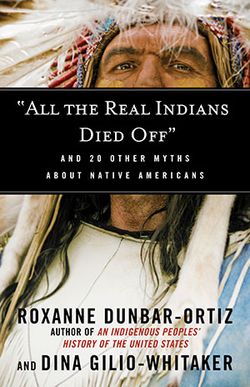
    All the Real Indians Died OffI also think it’s fair to say that surfing is not a sport that is commonly associated with non-white people, at least not in the US. That’s why it might seem incongruous to think about American Indians as surfers. But you’d probably be surprised to find out that there is a hidden demographic of American Indian surfers among the surfing population in California, and other places.

    It might be tempting to ask how American Indian people come to be surfers. A more relevant question, however, would be why the prospect of Native American people who surf seems so surprising? This gets to the heart of an issue Roxanne Dunbar-Ortiz and I write about in our new book that looks at the common misconceptions and stereotypes about American Indian people, “All the Real Indians Died Off” and 20 Other Myths About Native Americans.

    In the book we discuss the idea that most of the misnomers we can identify stem from the entrenched American narrative of the “vanishing Indian.” A key element of that myth is that Indians exist as relics of an extinct past, which forecloses on their ability to be both modern and authentically Native. That is to say, that if surfing is a sport claimed by modern dominant society (however fraudulently), then surf culture is another arena of modern life that obscures (and arguably erases) the identity of Native people who surf because of its predominantly white orientation.

    Indians who surf, in other words, are a classic case of Indians in unexpected places—that which directly challenges the stubborn stereotypes that keep them locked into an unchanging past.


    Johnny Rice

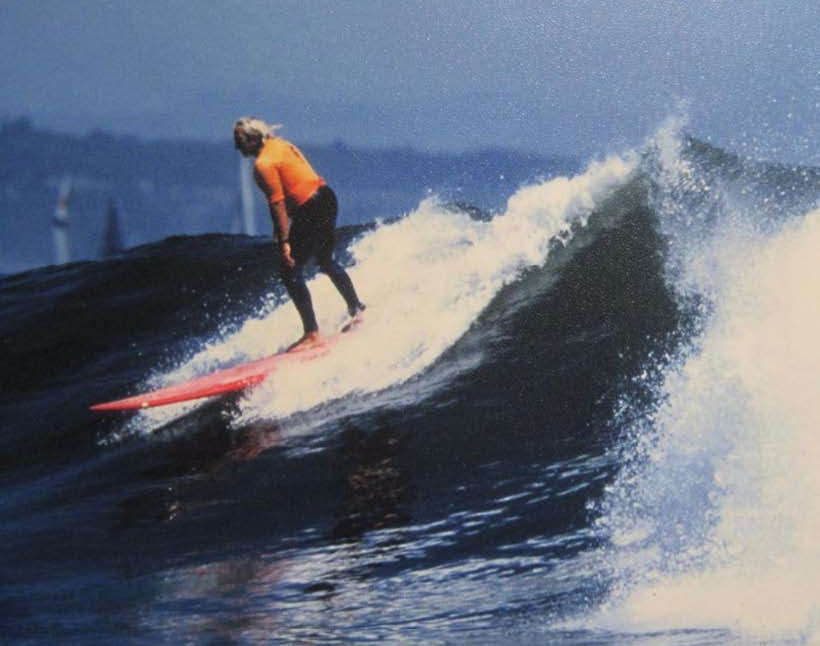
    Native surfing legend Johnny Rice, from exhibit at Santa Cruz Surf Museum. Photo credit: Boots McGhee

    Those of us who are American Indian and surf are hyper-aware of surfing not just as a modern cultural phenomenon, but of its indigenous roots, giving us a different lens through which we view the sport. For example, the renowned late Potawatomi surf legend from Santa Cruz Johnny Rice brought a distinctly indigenous perspective to his view of the sport when he compared it with the concept of the four sacred directions of Plains Indian culture.

    In another example, Purepecha Indian Marc Chavez created an entire organization called Native Like Water that connects Native American youth with the ocean through surfing (among other things). The organization’s objective is to perpetuate indigenous world views about the human links with the natural world while reinforcing the importance of indigenous and science-based education.

    I have worked with Mark’s program, and I work in other ways with Native youth to teach them about how we as Native peoples do not have to give up our Nativeness in order to experience the joy of surfing. I do this by reminding them that we are cousins to the Native Hawaiians, and by emphasizing that we can interact with surf culture on our own indigenous terms. Inevitably, that involves the knowledge that the spaces where surfing takes place have always been indigenous places. Surfing is a way to metaphorically reclaim and re-indigenize those spaces.


    About the Author 

    image from www.beaconbroadside.comDina Gilio-Whitaker (Colville Confederated Tribes) is an award-winning journalist and columnist at Indian Country Today Media Network. A writer and researcher in Indigenous studies, she is currently a research associate and associate scholar at the Center for World Indigenous Studies. She lives in San Clemente, CA. Follow her on Twitter at @DinaGWhit and visit her website.

  • By Marc Bekoff

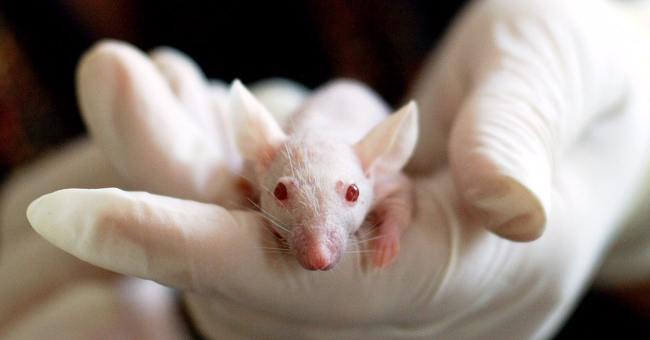
    Laboratory mouseThis essay appeared originally in Psychology Today and the Huffington Post.

    Where have all the scientists gone? Bad welfare is bad for animals and bad for science because of abnormal and non-repeatable results 

    While talking with a colleague about the use and abuse of individuals called “laboratory animals,” I was reminded that the federal Animal Welfare Act (AWA) is celebrating its 50th anniversary (for more about the AWA please see). I was stunned, because while some people are celebrating this event and joyfully claiming nonhuman animals (animals) are much better off than they were in the past, an incredible amount of invasive research that causes deep pain, suffering, and death still is business as usual in the United States and abroad (please also see). In earlier essays, I called into question just how good the AWA is for research animals (please see, for example, “Animal welfare and the federal Animal Welfare Act: Are animals really better off?”, “Rats Like Tickling: Why Is the Animal Welfare Act So Lame?”, and “Invasive ‘Rat Research’ Should Be Abolished Once and For All”), and a recent research paper motivated me revisit this question.

    The research paper that got me thinking once again about the AWA, by Joanna Makowska and Daniel Weary, is called “The importance of burrowing, climbing and standing upright for laboratory rats,” and is available online. The abstract for their paper reads as follows:

    Standard laboratory cages prevent rats (Rattus norvegicus) from performing many behaviours that they perform in the wild, but little is known about how this may affect their welfare. The aims of this study were (i) to record the propensity to burrow, climb and stand upright in 3-, 8- and 13-month old laboratory rats housed in semi-naturalistic environments and (ii) to compare the frequency of lateral stretching in semi-naturalistic versus standard-housed rats; we predicted standard-housed rats would perform more lateral stretches to compensate for the inability to stretch upright. Rats’ propensity to burrow remained constant as they aged (approx. 30 bouts per day totalling 20–30 min), suggesting burrowing is important to rats. Climbing decreased from 76 to 7 bouts per day at 3 versus 13 months, probably because of declining physical ability. Upright standing decreased from 178 to 73 bouts per day, but continued to be frequently expressed even in older rats. Standard-housed rats stretched much more frequently than semi-naturalistic-housed rats (53 versus 6 bouts per day at 13 months), perhaps in compensation for inability to stretch upright and to relieve stiffness caused by low mobility associated with standard housing. These findings suggest that standard laboratory cages interfere with important natural behaviours, which is likely to compromise rat welfare.

    In essence, and not surprisingly, performing natural behaviors is important for rats. This is hardly surprising. However, not only do the rats want to perform burrowing, climbing, and standing upright, but the inability to perform these behaviors not only comprises their welfare, but also can compromise science. In an interview in an essay by David Freeman called “Lab Rats’ Cramped Cages Called Bad For Animals And Science Too,” lead researcher Joanna Makowska notes, “These animals are not ‘normal,’ and therefore may yield ‘abnormal’ results’…This leads to lack of reproducibility between studies, as well as lack of validity of the results because these results may be idiosyncratic to the specific animals who were used in a particular study, rather than to ‘rats’ in general.”

    Along these lines, Dr. Larry Carbone, a laboratory animal veterinarian at the University of California at San Francisco, notes, “Scientists have to make sure that their use of animals really does lead to quality, useful data…and they have to do their best to meet current standards of animal welfare.” (For more on the lack of reliability in studies using nonhuman animals please see some essays here.) 

    The money-driven animal-industrial breeding industry does well to have rats and mice removed from the animal kingdom: It’s a shameful self-serving sham

    I am always incredulous that the AWA does not consider rats of the genus Rattus and mice of the genus Mus to be animals. Other animals also are conveniently tossed out of the animal kingdom. When I tell people this they are shocked. We know from detailed scientific research that they have highly evolved cognitive and emotional capacities, they experience empathy, and rats laugh and like to be tickled. And, we know that tickling laboratory rats is good for science. What more do we need to show that these are sentient beings with rich and deep emotional lives?

    The science that clearly shows these rodents are sentient beings continues to be totally ignored. Thus, in the 2002 iteration of the AWA, we read,

    “Enacted January 23, 2002, Title X, Subtitle D of the Farm Security and Rural Investment Act, changed the definition of ‘animal’ in the Animal Welfare Act, specifically excluding birds, rats of the genus Rattus, and mice of the genus Mus, bred for use in research.”

    The first time I saw this I had to read it a few times to be sure my eyes were still working. They were and still are.

    Birds and fishes also get incorrectly and misleadingly dissed (for more on the cognitive and emotional lives of birds, please see Bird Brain: An Exploration of Avian Intelligence, and for more on fishes, please see What a Fish Knows: The Inner Lives of Our Underwater Cousins). 

    Yes, these rodents and some other animals are not considered to be animals. And numerous scientists sign on to this ludicrous claim. I’ve pondered the question, “How do you explain to a youngster that rats aren’t really animals?” It beats me, but it’s clear they’re written off because of their widespread use and because they make a lot of money for those who wantonly breed and use them in all sorts of research. 

    Of course, they are animals. They surely aren’t plants. And, they surely aren’t inanimate objects. But the money-driven animal-industrial breeding industry and the careers of many scientists do well to have them removed from the animal kingdom, and allow them to be horrifically abused as if they were non-feeling objects. This is a classic—some might say iconic—example of how animal welfare patronizes other animals. 

    It all comes down to the fact that science surely is voracious, as Dr. John Gluck aptly notes (please see his essay called “Second Thoughts of an Animal Researcher” and his forthcoming book Voracious Science and Vulnerable Animals: A Primate Scientist’s Ethical Journey), in this case devouring millions upon millions of animal lives and lots of money for a wide variety of research projects. As one of my non-scientists friends said when he learned about the exclusion of rats, mice, and other animals from the animal kingdom, “This is a shameful self-serving sham. How do they get away with this nonsense? Why aren’t the researchers protesting this?” It’s difficult to disagree with him and difficult to explain how highly educated biologists continue to benefit under this idiocy. 

    We must close the knowledge gap and use what we know from detailed comparative research to protect other animals

    Focusing on rodents for now, it’s high time to “reclassify” rats of the genus Rattus and mice of the genus Mus as animals, for they surely are, and for demanding the termination of invasive and abusive research on these sentient beings. Laws and regulations for protecting other animals from harm, suffering, and death must keep up with the latest science, and we’ve known for years that those rodents, and many other animals who are routinely used and abused in research, suffer not only their pains but also those of others. So too do “food animals” and “fashion animals,” and those sentient beings who are used for entertainment and who suffer immensely to make us laugh. We must close the knowledge gap and use what we know from detailed comparative research to protect other animals. Science could save animals, but it’s not doing a very good job at doing so. 

    Where are all the scientists who know that rats and mice are sentient animal beings?

    A much-needed call to action. Before people pat themselves on the back and claim that things are just fine, and better than they were years ago for the billions of research animals who suffer and die at our hands, I hope people far and wide will call for an immediate and thorough revision of the Animal Welfare Act and other legislation that takes into account the results of detailed research, and that researchers themselves will actively partake in the process of restoring rats, mice, and other animals to the animal kingdom, the place where they clearly belong. Indeed, researchers should mandate an immediate, biologically-based corrective to the AWA and openly lead the way.

    When I’ve talked with some researchers, they openly express their incredulity for removing these animals from the animal kingdom, but they don’t do anything about it. It’s about time they did. Surely, it would make them seem more credible in the eyes of non-researchers, many of whom are themselves incredulous that they allow animals to be classified as non-animals.

    A better life is not necessarily a good life. “But, we’re giving animals a better life,” some researchers claim. While many researchers say they’re working hard to give animals a better life, a better life is not necessarily a good life. I often wonder why so many researchers balk when I ask them if they would treat their companion dog in the ways they treat laboratory rats and mice. And, while researchers are busy pondering how to give other animals “a good death”—“humane killing” some call it—they also should be pondering how to end the lethal research once and for all. What’s taken to be a good death for researchers likely isn’t a good death that was preceded by a good life for the animals who they used. 

    Some people also claim that science is supposed to be objective and scientists shouldn’t be activists. Well, clearly science is not objective because we know rats, mice, many other non-animals, and individuals of species who are still considered to be animals experience rich emotional lives (please also see), and by not coming out against this misclassification and the reprehensible abuse that follows, they are indeed activists for the animal-industrial complex. Not to do something is to do something, and this silence amounts to activism against the animals. 

    There shall be no more excuses for those who ignore the latest and greatest science about the fascinating, rich, and deep emotional lives of other animals. And where are all of the scientists who know that rats and mice are sentient animal beings? If they don’t know these facts they shouldn’t be doing the research they’re doing. How do they and the USDA get away with this sham? Why aren’t they demanding a revision that correctly classifies rats, mice, and other so-called “non-animals” as the animals they truly are? After all, they brag and exaggerate the utility of “animal models” of human disease, for example, but they don’t consider the millions upon millions of rats and mice who are used annually in often horrific research to be animals.

    Simply put, they want it both ways. But, it’s about time that people question this incredibly fallacious stance. Try explaining to a youngster, a student studying biology, or to people who look to science for guidance that rats, mice, and some other animals are not animals. 

    Let’s celebrate the 50th anniversary of the Animal Welfare Act by immediately placing rats and mice back into the animal kingdom

    Let’s celebrate the 50th anniversary of the Animal Welfare Act by immediately placing rats and mice back into the animal kingdom. And let’s tighten up all legislation so that the lives of all individual animals are well protected from abuse. It’s high time to replace the science of animal welfare with the science of animal well-being in which the life of each and every individual matters so that they can live free of pain, suffering, and death. It seems laughable that rats, mice, and other animals aren’t considered to be animals in the latest iteration of the Animal Welfare Act, but it is not! It’s a tragic sham that results in horrific pain, suffering, and death “in the name of science” and, some rightly say, “in the name of money.”

    It’s bad self-serving science that makes numerous researchers look ridiculous and unprofessional because they know—yes, they know—that these animals are not only animals, but also sentient beings who care about what happens to themselves, their families, and friends. By speaking out they are supporting good science and the animals need all the friends they can get. If those who draft the revisions of the AWA don’t listen to the very researchers who have done the research on the cognitive and emotional lives of these sentient beings, they surely won’t listen to non-researchers. And, right now, they don’t listen to anyone, perhaps because enough researchers simply have not said “enough is enough,” rats, mice, and other non-animals are animals. 

    Let’s also not forget that World Animal Day is rapidly approaching on October 4, and we can begin to celebrate this very special day as well by putting rats, mice, and other animals back where they belong and calling for rigorous revisions and enforcement of legislation that supposedly protects the dignity and lives of billions of nonhuman animals who are used and abused each and every year in a wide variety of venues.


    About the Author

    Marc BekoffMarc Bekoff, author of The Emotional Lives of Animals, is professor emeritus of ecology and evolutionary biology at the University of Colorado, Boulder, and a former Guggenheim fellow. He has published more than a thousand scientific and popular essays and thirty books. His forthcoming book co-authored with Jessica Pierce, The Animals’ Agenda: Freedom, Compassion, and Coexistence in the Human Age, will be released in April 2017. He lives in Boulder. Follow him on Twitter at @MarcBekoff and visit his website.

  • By Dennis A. Henigan

    March on Washington for Gun Control in January 2013

    March on Washington for Gun Control in January 2013. Photo credit: Slowking4.

    This essay appeared originally on the Huffington Post Blog.

    For the first time since 2000, the Presidential election promises to be pivotal for the politics of gun control. Both for supporters of stronger gun laws, and for “gun rights” partisans, the stakes could not be higher.

    It was not long ago that the political death of gun control was accepted as an incontestible truth by pundits of every ideological stripe. For the Democratic Party, although much was made of the alleged impact of the gun issue on the Gingrich takeover of the House of Representatives in 1994, the real turning point was the 2000 Presidential election. Despite the highly material fact that Al Gore actually won more popular votes than the National Rifle Association-endorsed George W. Bush, the Republican’s ascent to the Presidency gave rise to a consensus among Democratic leaders and analysts that the policy benefits of gun control were simply not worth the political risk. When in 2005 the party chose Howard Dean, recipient of the NRA’s support in Vermont, as chair of the Democratic National Committee, an insider Capitol Hill publication called it “the last nail in gun control” and “a crippling blow to the gun-control movement.” In a 2006 book, Democratic advisors Paul Begala and James Carville argued that the Party should “defuse” the gun issue by agreeing with the NRA that we should simply enforce existing laws instead of passing new ones.

    The conventional wisdom was so strong that, after 2000, gun control was not viewed as a winning issue regardless of which party won the Presidential sweepstakes. President Bush’s reelection in 2004 was viewed, of course, as an NRA victory, but even President Obama’s wins in 2008 and 2012 were not seen as victories for gun control because Obama was viewed as largely avoiding the issue, particularly in 2012. Obama’s first term was singularly dispiriting for gun control forces, as a Democratic Congress passed legislation, signed by Obama, that included amendments to permit loaded guns in national parks (reversing a no-guns policy imposed by President Ronald Reagan, of all people) and unloaded guns in baggage areas on Amtrak trains. Time and again, mass shootings would prompt eloquent, consoling remarks from the President, but no statements supporting stronger gun laws.

    For President Obama and the Democratic Party, it all changed with the massacre of first graders at Sandy Hook Elementary School in December, 2012. The president later said it was the saddest day of his presidency. For the first time, he offered more than just healing words: “We’re going to have to come together and take meaningful action to prevent more tragedies like this, regardless of the politics.” His new, ambitious gun control agenda—which included extending Brady Bill background checks to all gun sales and banning assault weapons—died in Congress, as Congressional Republicans continued to march in lockstep with the NRA. But, since Sandy Hook, the transformation of the Democratic Party on the gun issue has become complete. The recent historic sit-in on the floor of the House of Representatives, led by civil right icon Rep. John Lewis (D-Ga.), symbolically established gun control as a matter of principle, not politics, for Democrats, much like the civil rights struggle itself.

    The gun violence issue was center stage at the Democratic National Convention, which featured the stories of multiple families victimized by gunfire, with a heart-rending and utterly inspiring, appearance by wounded former Congresswoman Gabby Giffords. After pummeling Sen. Bernie Sanders during the primaries for his Congressional votes against the Brady Bill and in favor of special legal protection for the gun industry, Hillary Clinton, in her convention acceptance speech, recognized that “for decades, people have said this issue was too hard to solve and the politics too hot to touch.” She responded: “But I ask you, how can we just stand by and do nothing?” Hillary Clinton’s commitment to stronger gun laws appears deep and genuine. Throughout the primary campaign, she pledged to keep “taking on the NRA.”

    In contrast, the NRA has endorsed Donald Trump, who roused the NRA Convention with his statement that “We’re getting rid of gun-free zones,” reflecting his conviction that we need to ensure that teachers are armed to shoot back when a school shooting begins. For the first time, a top NRA official was given podium time at the Republican Convention. Of course, the gun lobby can hardly be sure of what Trump will say next about the gun issue (or any other issue); indeed, he has suggested that maybe persons on the terrorist “no fly” list should be denied guns, in opposition to the NRA’s position. Nevertheless, the NRA’s vehement opposition to Clinton could not be more clear. According to Wayne LaPierre, the organization’s longtime Executive Vice President, with Clinton as President, “you can kiss your guns goodbye.” Trump has learned well how to feed the paranoia of hardcore gun activists, with his warning that Hillary Clinton’s judicial nominees will “abolish the Second Amendment” and his comment that only “Second Amendment people” can do anything about it, a chilling invitation to take action against government officials, including President Clinton herself, by force of arms.

    The political lines are drawn on the gun control issue more clearly and unmistakably than at any point since 2000. A Trump victory will no doubt be seen as the political resurgence of disaffected white Americans, mostly men, who see themselves as left behind and ignored by the elites. The triumph of previously disrespected “Second Amendment rights,” as the Trump supporters interpret them, will be part of that Trump victory narrative. In contrast, given the political transformation of the Democratic Party on the gun issue since Sandy Hook, and Hillary Clinton’s likely continued aggressive advocacy of gun control throughout the general election campaign, a Clinton victory will likely be interpreted by the political punditry as a resounding victory for the gun control forces. Unlike Obama in 2008 and 2012, a Clinton victory in 2016 could never be attributed to her avoidance of the gun issue.

    A Trump victory will end any hope of progress toward sanity in our gun policies (and no doubt other policies) for the foreseeable future. A Clinton victory will reinforce the political wisdom of the Democrats’ recent embrace of the gun issue and strengthen the Party’s commitment to gun law reform for years to come. It may even cause some Republicans who abandon Trump to reevaluate the issue themselves.

    More than any Presidential election in recent history, the outcome in 2016 will determine whether our nation will ever awake from the uniquely American nightmare of gun violence.


    About the Author 

    Dennis A. Henigan is director of legal and policy analysis at the Campaign for Tobacco-Free Kids and formerly vice president of the Brady Center to Prevent Gun Violence. Follow him on Twitter at @DennisHenigan and visit his website.

  • By Kay Whitock

    Mass Incarceration 2016

    Source: Prison Policy Initiative, http://www.prisonpolicy.org/reports/pie2016.html.

    The August 2016 announcement by the Obama administration that it will phase out or “substantially reduce” contracts with private prisons to house federal prisoners provides a master lesson in the political benefit of the magician’s art of misdirection.

    Hailed by many as a definitive step forward in criminal justice reform and a severe blow to the continuation of mass incarceration, the focus on private prisons hides more than it reveals. It raises false hopes, offers false promises, and points many who want transformative change in the wrong direction.

    It’s not that President Obama is insincere or that it’s wrong to curse the existence of and work to end private prisons. I’m thrilled when one of those greedy little profit mills, whose accountability is only to shareholders, closes; it’s possible that every time one does, an angel gets its wings.

    But for years I’ve been writing (often in collaboration with sociologist Nancy A. Heitzeg) about the deployment of the magicians’ and carnival barkers’ arts in framing discussion about “reform.”

    “Misdirection” is the practice of controlling attention so people don’t see what you don’t want them to see, but see only the things that promote your particular storyline. A storyline that, while reductive, simplistic, and way too easy, is nonetheless, for those very reasons, attractive, reassuring, and popular.

    Here’s how misdirection functions now:

    1. Private prisons don’t drive mass incarceration.

    There is, however, is a persistent, popular, and misguided belief that they do; that they are a major drivers of mass incarceration.

    Peter Wagner of Prison Policy Initiative (PPI) makes it clear that private prisons are a late feature of the US carceral complex and do not drive mass incarceration; rather, as scholar and prison abolitionist Ruth Wilson Gilmore says, they feed parasitically on the public prison system. The foundation for the U.S. incarceration nightmare is that public system, not private prisons. The growth of private prison companies has always, PPI says, trailed the growth of publicly owned prisons.

    Look at the chart from Prison Policy Initiative that accompanies this discussion to get a better sense of the scope of incarceration in the US.  In 2016, more than 2.3 million people reside in what PPI calls “disparate systems of confinement.”

    Only a very small number of people confined in this carceral archipelago will be affected by the Obama administration’s announcement because it affects only privately-run federal “contract” prisons under the aegis of the Department of Justice/Federal Bureau of Prisons. Remember: this is a phase-out, over time. Out of about 195,000 prisoners in facilities overseen by the Department of Justice, that translates into 22,00 prisoners in thirteen locations who will be relocated to facilities run by the Federal Bureau of Prisons. But that’s not the whole federal picture. The DOJ announcement does not include federal detention under the aegis of the Department of Homeland Security or the US Marshals Service.

    In the wake of the DOJ announcement, the Department of Homeland Security announced a forthcoming review of its contracts with private facilities that house the majority of people detained by Immigration and Custom Enforcement (ICE). About 400,000 people move through the system annually, though they aren’t all detained at the same time. Currently, a Congressional “detention bed quota” mandates the incarceration of 34,000 immigrants at any given time. More than half of these detainees are in private contract facilities. Many more are detained in local public jails that contract with the federal government to provide beds.

    And most private prisons operate under state, not federal, contracts.

    The focus on private detention facilities does not help the public better understand the complexity, magnitude, and severity of community/societal impacts of this nation’s carceral catastrophe—or the prison industrial complex that facilitates it. It does not undo the Congressional detention quota. It fails to address how federal contracting with local authorities buttresses county correctional budgets. The 2016 DOJ decision may not produce all that it seems to promise: there’s lots of wiggle room for reconsideration or reductions rather than contract termination.

    Finally, the DOJ decision, and any possible similar announcements by other federal agencies, can be undone in an instant by a new decision—from the sitting or a successor president.

    2. Carceral profiteering isn’t just about private prisons.

    In the wake of the DOJ announcement, a frenzy of social media posts gleefully noted an immediate and substantial drop in the stock value of the two major private prison companies, Corrections Corporation of America (CCA) and The Geo Group, Inc. 

    The same social media networks were largely silent as stocks quickly began to rebound amid a flurry of corporate reassurances to investors  (also here and here). In fact, the same day that DOJ was making its announcement, The GEO Group announced a contract renewal/extension for a private correctional facility with the Federal Bureau of Prisons.

    And there’s more. Always seeking new markets in which to expand and anticipating the dubious fruit of much “bipartisan criminal justice reform,” these and other carceral profiteers have already been moving into the lucrative world of  “community corrections” and “re-entry services.” An entire “treatment industrial complex” has come into being and is expanding as more people are swept into the system without actually being imprisoned.

    It’s a sweet sleight-of-hand: under the rubric of decarceration, many people are channeled into profit-producing “alternatives.” Who wouldn’t rather be outside rather than inside prison walls? Reformers say this saves taxpayer dollars. But in fact, many of those taxpayer dollars are simply going directly into corporate hands. Reformers promise “justice reinvestment” in communities, but nowhere do we see saved incarceration dollars substantially supporting public education, health care, food and nutrition programs, essential civic infrastructure, and other essential human needs. To the contrary: such public expenditures are being slashed.

    And in many cases, the costs of so-called “community alternatives” are being shifted directly onto the same people who otherwise would be incarcerated. A Virginia-based bail bond company, for example, helps immigrants get out of ICE detention by making those same people pay exorbitant monthly fees for electronic monitoring ankle bracelets as a condition for bond.

    Whether looking at the role of cheap (coerced) prison labor, contracts for health care and food services, the provision of correctional and surveillance technologies, or profit-oriented “alternatives to incarceration,” we must understand that the problem is first and foremost with the public system. Rather than investing in human needs, good jobs, infrastructure, and services, the US has chosen carceral control as its approach to structural inequalities and social problems. And this mindset has entered virtually every aspect of our fear-driven society. Scholars Rose M. Brewer and Nancy A. Heitzeg put it plainly: “[T]he prison industrial complex is a self-perpetuating machine” where the vast profits and political benefits lead to policies that “are additionally designed to ensure an endless supply of ‘clients’ for the criminal justice system…”

    3. Safety and security in the prison system are just as horrific in public as in private prisons.

    The DOJ announcement drew on a report by the federal Inspector General asserting that private prison facilities were less safe and effective than those run by the Federal Bureau of Prisons.

    Less safe and effective for whom?

    The DOJ announcement gives the impression that both prisoners and the the public at large will be safer with more prisoners in publicly-owned and operated facilities. But the prison system is inherently violent, no matter who runs individual facilities. The systemic violence, degradation, and inhumanity of America’s constitute a historically resonant and ongoing American horror story.  

    Within both public and private prisons, sexual violence  is commonplace, more often committed by guards and other staff than inmates, and laws have done little to eliminate it. Substandard and negligent health care is common in immigrant detention. The widespread use of long-term solitary confinement in state and federal prisons, both public and private is, in effect as well as international law, torture.

    The design and regimen of the nation’s maximum security prisons and units, both federal and state, rely on lockdown in tiny, blank spaces in which, prisoners feel they have been  buried alive.

    Prisoners have always resisted this systemic violence. In Captive Nation, historian Dan Berger documents ways that, in the mid-to-late twentieth century, the prison stood at the center of black radical imagination, helping to shape and spread black civil rights and black power activism. Blood in the Water, Heather Ann Thompson’s extraordinary account of the 1971 Attica Correctional Facility uprising in upstate New York, documents prisoner action to protest long-term mistreatment by authorities. Its story—and cautionary warning signs—remain timely.

    And this month—September 2016—at the 75th anniversary of the Attica uprising, we are witness to an unprecedented, prisoner-coordinated strike/work stoppage in forty (or more) sites across twenty-four states. It is centered around forced and exploitative prison labor—slave labor by prisoners is permitted by the Thirteenth Amendment to the U.S. Constitution—and protest against inhumane conditions. Thousands of prisoners are involved. But prison authorities don’t want the news—or the scope—of the strike made public; it is largely being ignored.

    4. The “Private Prisons” focus promises to help end mass incarceration without having to structurally change the system.

    It’s characteristic of the current wave of criminal justice reforms to suggest that we can eliminate mass incarceration and its many impacts without actually addressing structural racism, poverty, and gender and disability-based violence. Reform talking points often evoke incarceration’s profound racial bias, and sometimes that of class, vaguely assuring us that these things will eventually vanish in the light of reform. But nobody is clear about how, exactly, that will happen.

    Dan Berger says that prisons “index inequality.” True. It doesn’t matter whether they’re public or private. In a society where the norms are white supremacist, class-bound, and heteropatriarchal, it’s no surprise that people of color, particularly Black, Latino, and Indigenous people, are wildly overrepresented in prison systems. Or that prisons serve as institutional collectors for so many poor people; for people with mental illness and cognitive disabilities; for transgender and gender nonconforming people. Or that with just five percent of the world’s female population, the United States accounts for nearly thirty percent of the world’s incarcerated women.

    We should be addressing that, but…

    5. A focus on private prisons draws us away from structural questions.

    And in doing so, it diverts attention away from the need for a more strategic—in Ruth Wilson Gilmore’s words—“structural analysis for action.”

    A “bipartisan criminal justice reform” industry has arisen, operating within the existing logic and structures of the prison industrial complex. Many of the same political and economic players who helped accelerate mass incarceration want us to trust them to take care of the problems, which are usually cast as “saving money by reducing the incarceration budget” and tackling the problem of “over-criminalization.” Mainstream political discussion of criminal justice reform today—a discourse fueled and dominated by the Right—erases the possibility for that necessary structural analysis for action.

    The misdirection inherent in much reform discourse is amplified within both major political parties, large foundations, policy think tanks, lobbying organizations, and mass media.

    Says Gilmore: “Opportunists beguile audiences and divert attention and resources from people and organizations that have been fighting for decades to change the foundations on which mass incarceration has been built: structural racism, structural poverty, and capitalism devouring the planet. And they succeed in part because it has become unhip to subject the decisions, rhetoric, and goals of reform campaigns to any kind of thoughtful scrutiny.”

    Is there a better direction in which to move?

    Yes.

    What if our understanding of justice weren’t so circumscribed by the image and reality of the prison? What if new justice goals rendered prisons obsolete? What if we moved carefully, strategically, step by step in that direction?

    For now, I will simply leave you with this:

    Whitlock & Bronski #ConsideringHate


    About the Author 

    Kay Whitlock is a writer and activist who has been involved with racial, gender, queer, and economic justice movements since 1968. She is coauthor of Considering Hate: Violence, Goodness, and Justice in American Culture and Politics with Michael Bronski, the award-winning Queer (In)Justice: The Criminalization of LGBT People in the United States with Joey L. Mogul and Andrea J. Ritchie, and cofounder and contributing editor for the weekly Criminal Injustice series at CriticalMassProgress.com. She lives in Missoula, Montana. Follow her on Twitter at @KayJWhitlock.

  • A Q&A with Eileen Pollack

    Science Careers in Search of Women

    Photo credit: George Joch/courtesy Argonne National Laboratory

    Most every woman has probably dealt with a snide comment from a man about her inability to do math, or experienced being overlooked by a teacher who assumed she wouldn’t be interested in a scientific topic solely on the grounds that she was a girl. When Eileen Pollack was studying to become one of the first two women to earn a Bachelor of Science in physics from Yale in 1978, these constant microaggressions became the fabric of her daily life. In her memoir, The Only Woman in the Room: Why Science is Still a Boys’ Club, she looks back at how this sexism pushed her to abandon her dream of becoming a physicist, and then examines how the environment in STEM (science, technology, engineering, and mathematics) has and has not changed for women in the thirty years since she left the field.

    Pollack is now a celebrated author and a professor on the faculty of the Helen Zell MFA Program in Creative Writing at the University of Michigan. For this month’s paperback release of The Only Woman in the Room—and in time for back-to-school season—Pollack talked to us about the extent of bias against women in STEM, and offers advice on how to make the sciences more hospitable to women in the classroom and beyond. 

    Beacon Press: The challenges you faced in pursuit of a career in the sciences started in elementary school. You write that by the time you entered Yale as an undergrad you were already far behind your male classmates. What unique obstacles might women face during their middle and high school years that negatively impact their futures in the sciences?

    Eileen Pollack: Girls still sign up for advanced science, math, and computer classes in lower numbers than boys. Guidance counselors and parents tend to allow them to drop those classes more readily than is true for boys, or not take the AP exams. But an even bigger problem is the way girls are led to think that if they do well in science and math, they will be perceived as nerdy and undatable. The decisions that girls make in their early and mid-teens can affect the rest of their lives; if they don't take advanced science and math classes then, it might be too late for them to catch up later. 

    BP: If you could give advice to your high school self, would you encourage her to give up studying physics in favor of creative writing, or would you give her advice that might inspire her to stick with physics? To that end, what advice do you have for young women who are talented in both sciences and the humanities, and who feel caught choosing between the two?

    EP: I would definitely advise my younger self to stick with physics! That's the subject I loved. That's where my real talents lay. I only gave up for lack of encouragement. For girls talented in both science and the humanities (which girls tend to be, as opposed to boys, who tend to be talented in one or the other), I would say: Give both disciplines a fair shot before you make a real decision. Don't go by which one you think is easier or more suitable for a woman. Go with the subject you really love. Don't expect other people to tell you what you're good at, what you should do with your life. Decide for yourself! Know that scientists have this crazy idea that if a person needs to ask for encouragement, she doesn't deserve it. Many science professors think that they treat their male and female students equally. But studies have shown that they actually encourage white male students in subtle (and not so subtle) ways, while subtly discouraging women. And society itself discourages women and minorities through the images and signals that our culture constantly is sending out. 

    BP: Do you have any advice for male science students on how to be better allies to their female peers?

    EP: Be aware that female science students might feel isolated, out of place, or insecure. Not all women will need extra encouragement, but some might. Be aware of the possible effects of “jokes” and “teasing.” Be careful not to assign the one woman on the team to take notes or bring refreshments rather than designing and wiring the robot. Obviously, do not sexually harass anyone! Be aware that a female science student might feel caught in a dilemma: if she dresses in a traditionally feminine way, she might be hit on, she might not be taken seriously as a scientist. But if she feels pressure to dress like a guy, she might feel out of place. (Imagine if you had to wear lipstick and a dress and heels to be taken seriously as a scientist!) Yes, a woman might feel flattered if you flirt with her or ask her out. She might even want to ask you out. But she also might get the idea that scientists are interested in her only for her body and not because she's a good scientist.

    BP: Because the sciences rely so heavily on hard data, scientists can be prone to seeing their subjective experiences as empirical fact. Did you have trouble convincing people in the sciences to see the sexism in their field if they hadn’t experienced it first hand? 

    EP: Yes! You would be amazed at the illogical arguments I get from scientists who are trying to deny that sexism exists in their labs, in their professions.  

    BP: How does the environment in STEM classes and workplaces alienate women and what changes need to be made in order for women to feel more welcome in the sciences?

    EP: That’s way too big a question to be answered here, but I do try to answer it in my book. Studies have shown that even small changes—being aware of what posters are on the walls, the decor in a computer science classroom or IT company—can have a huge effect on whether women feel as if they belong in computer science. But there are larger changes that need to be made as well. 

    BP: How can educators and professionals in the STEM fields support and encourage women and minorities to help them succeed?

    EP: By supporting and encouraging them! 


    About the Author 

    Eileen Pollack is the author of the novels Breaking and Entering (a New York Times Editor’s Choice selection) and Paradise, New York, as well as two collections of short fiction, an award-winning book of nonfiction, and two creative-nonfiction textbooks. Her work has appeared in Best American Essays and Best American Short Stories. She is a professor on the faculty of the Helen Zell MFA Program in Creative Writing at the University of Michigan. She divides her time between Manhattan and Ann Arbor, Michigan. Follow her on Twitter at @EileenPollack and visit her website.

  • By Ashlyn Edwards

    Ashlyn Edwards and Powered By Girl

    Ashlyn Edwards posing with a copy of Powered By Girl at Beacon Press offices. Photo credit: Alyssa Hassan

    Growing up, I was very awkward, very smart, and very un-feminist. If you had asked me at thirteen what I thought of feminism, I would have recited some hackneyed cultural stereotype about bra-burners and told you that gender equality was achieved when women won the right to vote—mostly because I had hardly learned anything about feminism in school. It wasn’t until I was seventeen and started following feminist bloggers that I began to understand that many of my deepest insecurities and feelings of inferiority were actually the byproducts of structural inequality and internalized sexism.

    For me and many other girls who grew up in the early- to mid-2000s, there were no major feminist role models. We experienced our adolescence nestled between the Third and Fourth Waves. We were too young to be impacted by the Girl Power movement of the 90s, and the recent rise of feminism to a culturally explosive status was a little too late to save us from our teenage insecurities. Instead, we were taught to measure our humor, cool-ness, or successes against those of men, and we believed we were somehow lacking because no one told us the very constructs of humor, cool-ness, and success were biased against us.

    Education professor and activist Lyn Mikel Brown’s Powered by Girl: A Field Guide for Supporting Youth Activists is essential reading for this lost generation of feminists. She explores what it means to dig deep into intergenerational activist work between women and girls. We are at the perfect age, just at the cusp of fully-fledged adulthood, to take in Brown’s message about the importance of activism through mentoring. We are young enough that we can still remember the indignation of being a teenage girl, but old enough that the younger girls in our lives could see us as role models. If we as a generation are going to continue our passion for activist causes, we should learn how to constructively work with youth when we take on a mentor role.

    Powered by GirlThis is especially true for those of us who were not privileged to work with activist organizations as children. When I read about the young activists in Powered by Girl, I was envious of the changes they affected, the community they found, and the awareness they gained through activist work. Whether it was Julia Bluhm working to ask Seventeen magazine to agree to one non-photoshopped spread per month; Andrea Gonzales and Sophie House, who invented Tampon Run, a videogame designed to break taboos around menstruation; or Maya Penn, who helped launched an eco-fashion line, I couldn’t help but wonder what I might have achieved had I been motivated to do activist work. But, as Brown explains, the myth of the “exceptional girl” who achieves amazing goals by herself is perpetuated by the media, and the most successful activist work is almost never done by one “exceptional” girl, but by an “ordinary” girl backed by a team of adult activists who help her understand her sense of injustice and supply her with the means to take action, and no girl without this structural support should be held to creating meaningful activist work.

    Powered by Girl does more than just teach women the best strategies for supporting youth activists; it also challenges us to look back at how adults both failed and empowered us throughout our girlhoods. When I think about adults who let me down, I remember middle school teachers who exalted me for being a “good” and “smart” girl without acknowledging how structural disadvantages might keep some of my peers from ever being seen as “good” or “smart,” and Brown’s arguments about how activism can help disadvantaged girls achieve are like a breath of fresh air. When I think about adult mentors who helped me grow, I remember the teachers I worked with in my school’s drama program who treated each show as a collaborative effort and valued their students’ ideas and leadership skills, and I understand how Brown’s examples of how to best be an advisor for youth activists must apply in real life.

    Our generation is at a unique position where we are able to look back on our lived experiences as teenagers, remember them vividly, and use those memories to inform the choices we will make in the future. We have the responsibility to recognize that girls are the ultimate authority on their own experiences, and to resist undermining their voices simply because we are no longer in their place. We should remember to acknowledge that we are not always right, that we might not have the freshest ideas any more, and that our tendency to perpetuate adultism is growing. These skills will enable us to engage fully and cultivate meaningful relationships with youth who are, and will continue to be, the next generation of activists.


    About the Author 

    Ashlyn Edwards was the publicity intern during summer 2016. She will graduate from Boston University’s College of Communication in January 2017.