• By Ginny Gilder

    Michael Phelps carries American flag during 2016 Olympic Games

    Michael Phelps carries American flag during the 2016 Olympic Games. Photo credit: U.S. Army

    During the Opening Ceremonies of the XXXI Olympiad, NBC’s announcers exclaimed over the event’s centerpiece: “the country-by-country procession of over eleven thousand athletes, including, for the first time, a team of unaffiliated athletes, refugees of countries divided and devastated by civil conflict.” All the athletes, attired in their variously designed and colored national uniforms, proceeded and pranced into Rio’s Maracana stadium, absorbing and appreciating the meaning of their arrival at this long-dreamed-of pinnacle moment.

    As I watched, the announcers provided myriad details about the backgrounds of various individual athletes and the roads they traveled to arrive here as actual participants, not mere observers. They mentioned Yusra Mardini, a member of the Refugee team, who fled Syria in a dingy with nineteen others. When its motor died, she and her sister, the only ones who could swim, jumped in the water and pushed the boat and its inhabitants for three hours until they reached shore.

    Marching into Opening Ceremonies is a big moment for athletes all over the world, a public, and oh-so-welcome acknowledgement of the extraordinary effort and amazing accomplishment required to land in the middle of this global phenomenon. Unquestionably, it’s the right time to extol the assembly of top athletes, to marvel over their histories and imagine what lies directly ahead in the next sixteen days of Olympic competition. But it’s absolutely the wrong time to characterize the efforts these elites have made to reach the top echelons of their various sports as some kind of sacrifice.

    In fact, there’s never a right time to characterize training for the Olympics in such a way. “Olympics” and “sacrifice” simply don’t belong in the same sentence. I don’t understand why anyone would interpret the choices athletes make to train for the Olympics as sacrifice, in any way, shape or form.

    Yes, undoubtedly, athletes make trade-offs, and many of them. They arrange their lives to devote their time and energy to training, spend hours at practice, put off other career opportunities and life choices, and in many cases forego financial stability to pursue their chosen sport. They endure punishing training routines and follow strict eating regimens. They schedule early bedtimes and pre-dawn wake-up calls. They move away from home to relocate near top coaches and travel worldwide to compete against the best. They spend years dreaming of strutting their stuff at the Olympics, both participating in Opening Ceremonies and gunning for the top of the podium.

    All that is true. But where is the sacrifice? How many of us would embrace a life structured around full-on dedication to one’s passion? How many would relish competing at the Olympics?

    Having been there myself, I can attest to the fact that all my training and trade-offs were worth the experience. Back in 1984, walking into the L.A. Coliseum as a member of the U.S. athlete delegation to the cheers and applause of tens of thousands of spectators was unforgettable, a unique mix of awe, joy, and excitement. Finally, after all the ups and downs, bumps and bruises, after the boycott of the 1980 Olympics, I’d finally made it to the land of my dreams. Indescribable.

    Athletes train for the Olympics, dedicate years and years, in some cases decades, of their lives to training, because they love it. I sure loved rowing. Of course I loved winning, but I loved training too. I loved how I felt every day when I got to watch sunrise from the water, or pushed myself through a challenging workout that set my lungs on fire and turned my muscles into jelly. I loved the life I got to live as an athlete, dedicated to pursuit of the impossible.

    Where is the sacrifice in doing what you love? To me, the luxury of choosing to pursue what you love is many things: a gift, a privilege, an opportunity of a lifetime. But no, it is simply not a sacrifice. Maybe athletes’ parents made sacrifices to help their children pursue their athletic passions, but athletes? No, athletes make trade-offs and choices, always with a clear-eyed assessment of the pay-off for the investment they are making. Yes, they gave things up, but always to their benefit, not to their detriment. That’s an investment, not a sacrifice.

    You’d think that the week after the Khan family painted a portrait of the meaning of sacrifice on national television and then schooled the nation on what does and does not qualify as such, we would be more thoughtful in throwing that word around. Sacrifice simply does not belong at the Olympic Games, at least not as a characterization of any athlete’s dreams. We who have been lucky enough for the chips to fall in a way that rewarded our training and our natural athletic gifts with a trip to the Olympics know that we chose the paths we have traveled. Give us half a second to choose, and we would choose this path over and over. Not because we arrived at the Olympics, although that’s incredible compensation for our investment of blood, sweat, and countless tears in many cases, but because we have loved the journey, all the little moments that have comprised our lives as athletes, the everyday of doing what we love, of getting to do what we love, in a world where so few either have that opportunity or grab that chance.

    Ask Yusra Mardini about the sacrifices she and her family made when they fled Syria, all they had to leave behind, the pain involved in doing so. But if you asked her what she’s sacrificed to train for the Olympics, I bet she’d laugh. For her, as for the rest of world’s athletes now competing on the Olympic stage, she’s thinking she’s damn lucky.

    So don’t talk to me about sacrifice. That’s the Khan family’s story. It’s not an Olympian’s.


    About the Author 

    image from www.beaconbroadside.comGinny Gilder is an Olympic silver medalist in rowing, founder and CEO of an investment business, and co-owner of the Seattle Storm, and author of Course Correction: A Story of Rowing and Resilience in the Wake of Title IX. The mother of three children and stepmother of two, Gilder lives with her wife, Lynn, and their two poodles in Seattle, Washington. Follow her on Twitter at @ginnygilder and visit her website.

  • By Melinda Chateauvert

    Rocinha favela, Rio de Janeiro

    Rocinha favela, Rio de Janeiro. Photo credit: Flickr user seier+seier

    Hysteria Alert! We’re heading into another international sporting event, so the predictable, hysterical, and utterly fantastical stories about international sex trafficking are on the rise. We heard this claptrap about “sex tourism” two years ago when Brazil hosted the World Cup, when some NGOs claimed “40,000” women and girls would be involved. Time Magazine’s numbers were moderate compared to the exaggerations made by others. They claimed 250,000 children would be working the streets during the tournament—or one in every sixty-eight adolescent girls in the country.

    Sex work is not illegal in Brazil, but citing the possibility of “child sex trafficking” before the Cup, police raided legal brothels, shutting them down and putting hundreds of adult women out of safe places to work while also undermining their own children’s economic well-being. Yet by the time Germany won in July 2014, there had been “no reports of sexual exploitation during World Cup that had to do with World Cup” according to the Conselho Titutlar for the city’s South Zone, “the organization that basically deals with all the accusations of sexual abuse and sexual exploitation of children.” Nor did the state Prosecutors Office pursue any cases of child sexual exploitation.

    Brazil’s current economic and political crises have severely disrupted the lives of millions of workers, and brief weeks of the Olympics will not provide respite. Last week, I spoke with Thaddeus Blanchette, an anthropologist at the Universidade Federal do Rio de Janeiro/Macaé whose team has spent thousands of hours interviewing people in Rio’s sex trades since 2004. This year, there’s been “a perfect storm in sex work.” During the boom in Rio, women left the brothels to work in other industries, but since the 2008 crisis, they have returned to sex work. Everyone is complaining about the money. Blanchette interviewed a “high school teacher who just got laid off because of the economic crisis and another white secretary with half her university degree completed.” Both women were making three to four times as much as they had in previous their straight jobs, but that’s only “half of what they made before.” There are twice as many sex workers, and perhaps half as many clients. “Profitability is the lowest I’ve ever seen,” said Blanchette.

    Rio’s downtown development in preparation for the Olympics has greatly shifted the population, so that the businessmen who used to patronize the upper-end clubs don’t stay after work. Instead, the “fast fadas”—a Brazilian word play on “fast food”—are doing better, largely because of the construction crews that have been working almost all day and all night. It’s also led to the displacement of sex workers—the real source of sex worker migration and those “roving” bands—who have moved into the Copacabana beach area, the heart of the tourist district. That’s where Centaurus (of Justin Bieber fame) is located. Yet since 2009, the city has tried to shut down the sex clubs and brothels with little success.

    Still, the myths about roving bands of gypsy whores and trafficked girls during sporting events continue making the rounds, despite the best efforts of Brazilian activists and journalists elsewhere to challenge these fallacies. Catholic charities are telling tourists to report incidents of child sexual exploitation. (But please, folks, report only what you see in Rio, not in your own parish.) A sensationalist story in Rio de Janeiro’s O Globo newspaper about the police rescue/arrest of “child” prostitutes from a beach area in July was rewritten by Fox News and other rags to warn U.S. tourists. But the real story, as Dr. Blanchette explained, was more about impressing the media than child prostitution. Police arrested eight people, all of them black. Five were adult women and three were teenagers between the ages of fifteen and sixteen. No pimps or clients were arrested; in fact, there was no evidence that any of the minors was doing anything more than hanging out on a street corner in the evening with women a few years older than them in a faraway working class neighborhood where “gringo” tourists are highly unlikely. It’s also worth noting that the police official who spoke about the arrests, Cristiana Bento, is Rio’s own “S.U.V.” sex crimes investigator. Notably, Bento was already under fire after taking over a poorly handled police investigation of the brutal gang rape of a sixteen-year-old girl in May that roiled Brazil’s social media networks.

    The Time Magazine and O Globo reports were cover-ups that distracted the public from the arrests in June this year of elite businessmen, politicians, and police officials who knowingly recruited and sexually exploited girls as young as twelve and thirteen years old for a high class “gentleman’s club” operated by the military police. The convictions of politically-connected men were extraordinary, but the media didn’t report it. Tracking both of these stories globally, Dr. Blanchette said, “The one bona fide case of child sex trafficking no one is talking about, but this case of young black women in a far, far suburb, becomes the story.”

    In fact, as scholar Sonja Dolinsek writes, children in Rio faced greater risk of exploitation from the overlooked side effects of this hysteria. An “essential aspect…is the forced displacement of people and families from their homes in the context of the so-called ‘pacification’ of the favelas or slums. ‘Pacification’ is a police strategy carried out by military-style…to reduce crime, improve the public image of Rio de Janeiro and to secure the areas close to event sites.”

    In sum, during the Cup as well as the Olympics, hysteria about sex trafficking was used to support aggressive, paramilitary policing of poor people of color, facilitating land grabs by developers who profited from forcing families out of their homes and sex workers out of their legal places of work. Where’s the outrage?


    About the Author 

    Melinda ChateauvertActivist Melinda Chateauvert has been involved in many grassroots campaigns to change policies and attitudes about sex and sexuality, gender and antiviolence, and race and rights. As a university professor she has taught courses on social justice organizing, the civil rights movement, and gender and sexuality. She is a fellow at the Center for Africana Studies at the University of Pennsylvania and author of Sex Workers Unite: A History of the Movement from Stonewall to SlutWalk. Follow her on Twitter at @whorestorian and visit her website.

  • By Michael Bronski

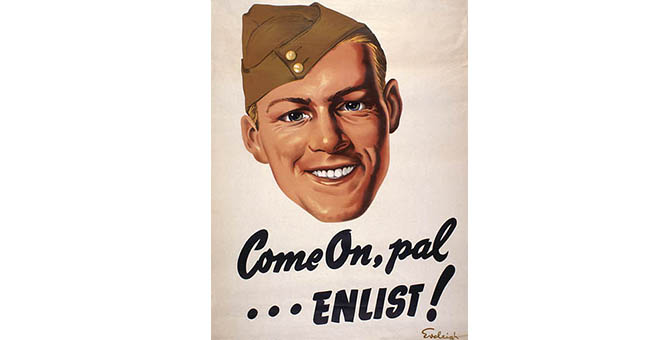
    WWII Recruitment Poster

    The announcement that the U.S. Navy was going to name a ship after LGBT activist Harvey Milk, a Navy veteran, has drawn applause and boos from the usual quarters. LGBT activists and allies have praised the idea while the American Family Association has condemned it in no uncertain terms. The Village People have yet to make a comment. They are probably still annoyed that their 1978 sailor hook-up hit “In the Navy”, optioned by the Navy as a recruitment ad, was ultimately discarded, even though the Navy allowed the music video to be filmed on the USS Reasoner.

    The naming process began in 2012 with the San Francisco Broad of Supervisors passing a resolution calling for the Navy to honor the openly gay former Board of Selectman member who was assassinated in 1977. Milk is already one of the most publically acknowledged LGBT activists with his image on a 2014 U.S. Postage Stamp, an Oscar winning documentary The Times of Harvey Milk, and a critically well received 2008 film biography Milk starring Sean Penn.  

    The USS Harvey Milk is a Fleet Oiler, a ship that carries fuel and dry cargo and can replenish ships at sea. (Battleships are always named after states, and Air Craft Carriers are named after geographic places with a few token insects—Hornet and Wasp—tossed in.) Historically, Fleet Oilers have been named after towns, cities, geographic regions, and rivers. More recently, they have been named after individuals: the USNS Henry J. Kaiser was named after industrialist Henry J. Keiser in 1984, and a year later, Benjamin Isherwood, a navel engineer and rear admiral had fleet oiler named after him. In 2016, Congressman and civil rights leader John Lewis’s name was bestowed on a ship.

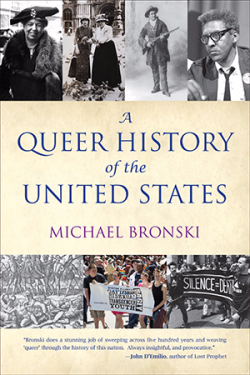
    Despite what the American Family Association thinks—or would like us to think—the connection between LGBT lives and the military is a long one, going back to the American Revolution. In my book A Queer History of the United States, I discuss how the U.S. military in World War II completely altered gender roles and sexual expectations for millions of American women and men, and as Allen Berube argues in Coming Out Under Fire: The History of Gay Men and Women in World War Two, set the stages for the birth of the Gay Rights Movement. 

    ***

    It is impossible to overestimate the effect of World War II on American culture, and in particular on lesbians and gay men. The United States entered World War II, which had been ongoing since September 1939, after the Japanese attacked Pearl Harbor in December 1941. This decisive turning point in U.S. history reordered American social life and mores, public and private space, and virtually all social interactions having to do with gender and sexual behavior.

    The country’s entrance into the war radically transformed the domestic economy into a booming war economy, ending the Depression. The war economy not only provided much-needed jobs for Americans—the unemployment rate dropped from 17.2 percent in 1939 to 4.7 percent in 1942 and 1.2 percent in 1944—but also stimulated production of manufactured goods and increased farm production. As military-related industries such as shipyards, munitions plants, and aircraft manufacturing factories thrived, they provided employment for millions of women and men and drew workers to move from their towns and cities of birth. Between 1941 and the late 1960s, more than five million African Americans moved to urban areas, a shift that greatly helped facilitate the work of the civil rights movement of the 1960s.

    These changes posed fundamental questions of citizenship. Throughout American history, full citizenship—the ability to fully partake in the obligations of governance, including voting and defending the nation, as well as to receive entitlements, such as equal protection under the law and access to state-sponsored programs—was influenced by a variety of factors. These included race, ethnicity, and religious affiliation as well as gender, gender expression, and sexual behavior. The enormous challenges that the United States had faced since the turn of the century, including waves of immigration, the rise of cities, the Great Depression, and World War I, had redefined citizenship. It was now a society more tolerant of racial, ethnic, and religious differences and one that was striving, however imperfectly, to embrace social and personal freedoms.

    War, Gender, Sex

    Although new freedoms in the early twentieth century centered increasingly on gender and sexual behavior, social anxiety about homosexuality remained. In some cases, it became more prevalent. Margot Canaday documents how a fear of the single man, the nonfamily man, was conflated with male homosexual behavior by the Federal Transient Program (FTP) and the Civilian Conservation Corps (CCC). Both of these single-gender New Deal programs gave work to displaced adult men. Men living together generated anxiety, as did the imagined possibility of younger men being sexually exploited. This anxiety eventually caused the federal government to focus less on programs aimed at unattached people, and ultimately to avoid implementing policies that might be seen as enabling “sexual perversion.”

    Ironically, the first major change that occurred after Pearl Harbor was the massive relocation of men into the armed forces, where they would be living together. After the war began and conscription started, most Americans supported the war effort. By the end of the war in 1945, more than sixteen million United States citizens and residents had joined the armed forces. Ten million of those had been drafted. Although the armed forces accepted men up to the age of thirty-eight, the majority in all branches were in their twenties; 35 percent of navy personnel during the war years were teenagers.

    The majority of men in the armed forces were white, but other racial groups were also represented. Seven hundred thousand, or 4 percent of the military, were African Americans; they were joined by 350,000 Mexican Americans, Chinese Americans, Native Americans, and Puerto Ricans. Throughout the war—until President Truman issued Executive Order 9981 in 1948—the American armed forces were segregated. This meant that, with rare exceptions, only white men could become officers or fight in combat. African Americans and other racial groups worked as cooks, truck drivers, stevedores, or warehouse workers. (There were some attempts at integration, and at the instigation of Eleanor Roosevelt, the USS Mason was manned with an African American crew trained to fill all of the ship’s positions, not just cooks and mess hall workers. The Mason was nicknamed “Eleanor’s Folly.”)

    A Queer History of the United StatesAs men entered the armed forces, a major shift in gender roles occurred. With men at war, women were hired in occupations and positions that traditionally had been held by men, including office work and factory jobs. Previously, women’s employment was often predicated on class and race. Many working-class women, including minority women, already worked because they had families to support. Now middle-class women were expected to work. When the war began, married women and mothers of young children were urged to stay at home. As the war continued, they too began entering the workforce. Before 1941, women made up less than 25 percent of the U.S. workforce—about twelve million workers. By 1945, that number had reached over eighteen million, a full third of the workforce. (Simultaneously, the number of women employed as domestic workers fell from 17.7 to 9.5 percent.) Over a million women—“government girls”—worked clerical jobs in Washington, D.C.; three million worked nationally in war plants. There was a 462 percent increase of women in defense industry jobs. After initial industry skepticism, women ultimately performed as well as men, and in jobs that demanded manual dexterity, even better. These women were seen as vital to the war effort as the fighting man.

    These workplace shifts substantially altered gender roles. Home-front women workers were regarded as independent and strong. Ubiquitous government propaganda posters featured Rosie the Riveter in bright colors, with her masculine factory uniform and a kitchen head scarf, flexing her biceps, with the slogan “We Can Do It!” Images of women working heavy machinery and driving trucks routinely appeared in Life magazine and other publications.

    In a decisive break from the past, large numbers of women experienced independence, economic security, and psychological satisfaction. Women were paid less than men for the same jobs, but they were paid better than before and for jobs not previously open to them. In 1940 Los Angeles, 55 percent of nonwhite women worked as help in white homes. By 1950 this number had dropped to less than 40 percent. Fanny Christina Hill, an African American who went to work at a munitions factory, claimed, “The war made me live better, it really did. My sister always said that Hitler was the one who got us out of the white folks’ kitchen.”

    Once they entered the workforce, most women liked being able to support themselves or their families, find new communities, and acquire useful skills. Most gained a stronger sense of self. Many lived on their own or with roommates, away from their families, and conducted their social and romantic lives as they pleased. For single women who did not rely on a man to support them, and for lesbians who had never expected a man to support them, this was a major step in economic and social independence.

    Conscription into the armed forces was limited to male citizens, but many women enlisted. This was a major change in United States culture since, aside from nurses, women had never before been admitted into the military. Military women were granted a social status and respect not offered them in civilian life. Over 250,000 women served in the war: 140,000 in the Women’s Army Corps (WAC) and over 100,000 in the U.S. Navy as WAVES (Women Accepted for Volunteer Emergency Service). By 1945, 43,000 women had joined the Marine Corps Women’s Reserve and 10,000 had enlisted in the Coast Guard Women’s Reserve, known as SPARs. Women in the military performed numerous jobs, including nursing, clerical duties, weather forecasting, photography, and air traffic control; most vital was the work of radio and telephone operators and communication directors. Now able to work in jobs from which they were excluded before, women could be viewed as strong, competent, and skilled professionals.

    Widespread public support of the war was indicative of a cohesive mid-century American identity. The growing threat of Germany, Japan, and Italy was great enough that Americans, including members of traditionally disenfranchised groups, felt obligated to defend their country. That is not to say the patriotism of minority groups was without critique. Large numbers of African Americans who had moved north for war-related work faced discrimination there, just as they did in the South. In 1942 the Pittsburgh Courier, the oldest African American newspaper in the country, started the Double V campaign, arguing that victory over fascism overseas must be accompanied by victory over racism at home.

    The war drastically accelerated the massive movement of people that had begun with the rise of cities. Men moved from their hometowns to join the armed forces. With fathers, sons, and brothers overseas, and mothers, daughters, and sisters often working in distant defense plants, members of the extended biological family did not necessarily live close to one another. Increased contact with new people and ideas often challenged the religious and moral upbringing of these women and men.

    In response to all of this, many aspects of marriage changed. During the war, “the proportion of persons never married and the median age at first marriage declined by as much as they had during the preceding half century”; one commentator called the skyrocketing rate of marriage “the war disease.” Between 1940 and 1943, over a million more couples than expected got married. Many of these marriages occurred hurriedly, as couples publicly declared their love for one another before the men left for war.

    World War II changed ideas about private and public, broadening the parameters of social permissibility. It was now permissible to show deeply felt personal emotions in public. Crying as a loved one shipped out, weeping over a death, and other displays of emotional pain and distress were acceptable public behaviors. This was also true of sexual passion and desire, as illustrated by Alfred Eisenstaedt’s famous photograph V-J Day in Times Square, in which a sailor is passionately kissing a nurse in broad daylight. Such behavior, unthinkable before the war, was now acceptable. Servicemen on leave, even if intoxicated, were respected by civilians. The emotional urgency of the war changed social and sexual expectations. Women could now socialize, even flirt, with servicemen in public venues.

    The female body, once seen as in need of protection, was now a fortified body that built ships and defended democracy. This was happening as sons, fathers, brothers, uncles, and friends were killed, wounded, paralyzed, and shell-shocked during the ferocious battles in Europe and the Pacific. The destruction of the male body was evident, even as government censorship shielded civilian from the worst images. In the national imagination, the nobility of the cause made these bodies heroic, highlighting the tragedy of their destruction. Images of fighting men in the popular press were a jarring paradox—extraordinarily valiant and extraordinarily fragile. Documentary combat photographs were often juxtaposed with pictures of shirtless men on battleships or in trenches—dirty, sweaty, and vulnerable. Images of patriotic men, many of them teenagers, dying for their country highlighted their fragility and nobility. This new standard of national masculinity, and its counterpoint image of strong women, radically altered how America viewed men and women.

    An Army of Lovers 

    The physically and emotionally vulnerable “new American man” was a reality for men living under the stress of battle and threat of death. For the first time in American history, large-scale, highly organized single-sex social arrangements were considered vital to national security. Men on battleships and battlefields lived together in close quarters with little privacy. The physical intimacy and stressful conditions often led to emotional and sexual intimacy. Servicemen in these all-male groups turned to their fellow troops for emotional and psychological support. The stress of leaving home, shipping out, active battle, and years of war allowed men to be vulnerable with one another in ways impossible outside of this environment.

    Servicewomen were undergoing similar experiences. Without men in their everyday lives, WACs and WAVES formed emotional friendships that were, perhaps, similar to the female romantic friendships of the nineteenth century. But now a more open culture encouraged awareness of sexual possibilities. Certainly women’s new social freedoms, such as access to higher education, reproductive control (albeit limited), and the vote, made these relationships markedly different than in the past.

    Wartime conditions produced social systems appealing to homosexuals. Single-sex environments encouraged homosocial relationships. Lesbians who were economically and socially independent of men found the military a haven. Homosexual men could now avoid their family’s heterosexual expectations.

    Many men, including homosexuals, found outlets for their abilities and talents in the military. The United Service Organization (USO), a private organization founded in 1941 to boost morale by providing recreation and other services for the military, brought entertainment to the troops and offered a place for men with theatrical interests. Director and actor Tyler Carpenter writes about how he was recruited to put together a series of USO shows using professional entertainers and enlisted men. When his heterosexual commanding officer discovered the projected cost, he suggested using recruits in drag to play the female parts.


    About the Author 

    Michael BronskiMichael Bronski has been involved in gay liberation as a political organizer, writer, and editor for more than four decades. The author of several award-winning books, including A Queer History of the United States, he also coauthored “You Can Tell Just by Looking”: And 20 Other Myths about LGBT Life and People. Bronski is Professor of the Practice in Activism and Media in the Studies of Women, Gender, and Sexuality at Harvard University and lives in Cambridge, Massachusetts.

  • By Ginny Gilder

    Olympic Rings

    The Rio Games mark the end of the twelfth decade of the modern Olympics, an impressive track record, yet far outstripped by the tenure of the original Games, which started in 776 B.C. and lasted nearly twelve centuries. Given the most recent news that the International Olympic Committee (IOC) may now consider banning an entire country from participation for cheating, I’m not optimistic they will survive to the end of this century.

    The heart of the Games lies with the athletes. I’d bet the initial impetus inspiring today’s hopefuls to dedicate themselves to their chosen sport remains remarkably similar to that of most past Olympians, modern and original, including my own. In 1976, I was a budding athlete. I didn’t know the future, but as I watched two of my college teammates from the Yale Women’s Crew prepare for Montreal’s Olympic Games, I had already started dreaming the dream of athletic greatness and plotting my path to the peak of rowing’s competitive pyramid.

    I ended up a two-time summer Olympian. My life changed as a result of my foray into sports and the decade I dedicated to becoming a world-class athlete. No surprise that I am a fervent champion of the Games’ importance to the world. The Olympics offer a rare opportunity for people and nations to witness and cheer a spectacle that showcases humanity at its athletic best.

    As big a proponent as I am of the Olympic movement, I harbor doubts about its future in a world increasingly preoccupied with power and prestige. An intense focus on results now dwarfs the Olympics’ founding dream of bringing global citizens together in a shared experience that promotes understanding, harmony, and peace. It seems as though the Olympic motto has changed, from the pursuit of Citius – Altius – Fortius (faster, higher, stronger) to a slavish dedication to Citissimum – Altissimum – Fortissimum (fastest, highest, strongest). If these forces continue to dominate the Olympics, I fear the Games will not last into 2100.

    Several nations have come to view the two-week celebration of athletic might as a mechanism to express their disapproval of world events. The first Olympic boycott in 1956, triggered by the Soviet Union’s invasion of Hungary, and the most damaging, in 1980, led by the U.S. to protest the Soviets’ invasion of Afghanistan, offer two salient examples. In addition, to many, the venue offers an opportunity to demonstrate their superiority in the world order. Finally, the culture of celebrity and the abandonment of the Games’ ethos as a celebration of amateurism have helped refocus the competition more squarely on results, threatening the essential balance between victory and participation, the pure spirit of the Games.

    The Olympics have traditionally championed, as said by Pierre de Coubertin, considered the Father of the modern Olympics, “not winning but taking part; the essential thing in life is not conquering but fighting well.” Winning comes with an expensive, rarely acknowledged price: someone loses. The experience of losing tends to separate and pit us against each other. Bringing the world together with the sole focus on winning is a set up for failure.

    Course CorrectionThe Olympics are nothing if not a global exhibition of humanity’s increasing fascination with winning and the influence of our tragic flaws over our rational selves. One need only to consider the escalating use of performance enhancing drugs (PEDs) to see how completely both nations and athletes have forsaken the purity of the pursuit of excellence for both its own sake and the honor of representing their country.

    The first PEDs of the modern Olympics included strychnine, cocaine, heroin, wine, and caffeine. In 1928, the International Federation for Athletics, the IAAF, introduced the first anti-doping rule. Matters progressed from there: the first Olympic death attributed to PEDs use came in 1960; in 1967 the IOC established the anti-doping Medical Commission; 1968 brought the first drug test and the first athlete disqualification (a Swede for too much alcohol, two beers, to calm his nerves); 1972 saw the first full-scale athlete testing for narcotics and stimulants, with the first test for anabolic steroids four years later.

    The growing sophistication of illegal PED users and the parallel march to increased testing have sped up to the point that the IOC has confiscated over fifty medals from summer Olympics competitors over the last dozen Olympiads. In addition, the body has summarily and prophylactically disqualified an entire country’s team (Russia) from competing at all in a particular sport (athletics, aka track & field), and now stands at the brink of banning its entire athlete delegation. Clearly, the increased emphasis on medals, from image-conscious nations to potential corporate sponsors of athletes, to the media—social and traditional—seeking the next celebrity, has raised the stakes far above well-prepared and avid participation to win-at-all-costs, only-gold-matters success.

    The death of the amateur athlete has also contributed to the increased focus on results at the Olympics. Back in 1976, amateurism still determined Olympic eligibility. That meant, quite simply, that any athlete who earned money as a function of his/her athleticism was prohibited from competing at the Olympics. Without going into the complexity of the why’s and the how’s this changed, let’s just say that the combination of the IOC’s interest in monetizing the Games, and the then-Eastern Bloc countries’ state funding of their athletes helped shift the conversation. In paying their athletes to train and win, the Iron Curtain countries saw the Olympics as a way to prove the superiority of their communist political system, and their athletes saw medals as a way to escape pulverizing poverty.

    By the 1980s, amateurism was under siege. I won a bronze medal in the women’s single event at the 1983 World Championships, losing only to the East German and Soviet scullers, both of whom were fully subsidized by their governments to train and compete while I worked full time, in addition to training. I could see how deeply flawed the system of amateurism was, although I remained loyal to the American way, a minority view. By the late 1980s, amateurism as a precondition for participation in the Olympics was dying. Today, there’s no upside in maintaining amateur status, and it’s a meaningless distinction. In fact, not earning money from competition is viewed as a detriment, as a paucity of funds will limit access to top training tools.

    If countries cannot renounce the podium as an expression of their superiority and the rest of us can’t rein in our over-glorification of athletes and recast success to jive with the Games’ original creed, I doubt the Olympic movement will survive as a paragon of athletic excellence, anticipated and glorified around the globe. Athletes need a return to the joy of participation, of course caring about winning and going for the gold, but without a monomaniacal focus that promotes their playing fast and loose with the concept of fair play and convinces them to mythologize medals and awards at the expense of their personal integrity and the possibly outdated, old-fashioned internal experience of doing their best despite the outcome.

    Winning at all costs, when all is said and done, is a loser’s game. Ask the Eastern Bloc athletes who took PEDs, often without their knowledge, if their medals have tarnished in the face of their subsequent fertility problems and health challenges; or Marion Jones, Lance Armstrong, Ben Johnson if PEDs improved their life experience, their sense of connection to their families, friends, and fans. Their illegal and unethical approach to competition impoverished the fan experience, exposed supporters as suckers, shifted them into cynics, who now naturally resist the idea that athletes can be clean and inspiring.

    Thirty years ago, I won my silver at the Los Angeles Games. It’s stuffed in a plastic bag in my office drawer, its faded ribbon safety-pinned to the medal, an emblem of past success. I carry so much more with me every day: all the lessons about dreaming big and persisting through crushing loss, belief in myself no matter what the odds, and the importance of doing what I love regardless of the payoff.


    About the Author 

    Ginny GilderGinny Gilder is an Olympic silver medalist in rowing, founder and CEO of an investment business, and co-owner of the Seattle Storm, and author of Course Correction: A Story of Rowing and Resilience in the Wake of Title IX. The mother of three children and stepmother of two, Gilder lives with her wife, Lynn, and their two poodles in Seattle, Washington. Follow her on Twitter at @ginnygilder and visit her website.

  • By Laura Erickson-Schroth, MD, MA

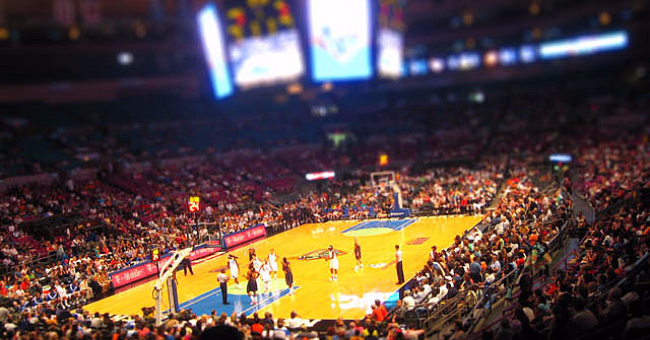
    Madison Square Garden during a Liberty game

    Madison Square Garden during a Liberty game. Photo credit: Jason Lam

    I’ve been to at least five New York Liberty WNBA Games. I’ve even done something most New Yorkers rarely do: I took New Jersey Transit to Newark a couple years ago to catch the Liberty there while their home court, Madison Square Garden, was being renovated.

    One thing I love about Liberty games (and I’m assuming is true of WNBA games in other cities) is the unabashed support of queer players and fans. Muscular, sweaty women race across the court to cheering crowds of female partners and their children. (The little boys are impossible not to watch, jumping around with expressions of glee as their favorite women score). There’s nothing like the boost that comes from seeing strong women doing what they love while expressing their signature styles. And the lesbian energy is palpable.

    It’s no secret that many WNBA players date women. The list of “out” players gets longer and longer each year, and includes stars like Sheryl Swoops, Seimone Augustus, Cappie Pondexter, and ex-partners Brittney Griner and Glory Johnson. Many of the players are straight, of course, but they openly embrace their queer sisters.

    Things haven’t always been so hunky-dory, as evidenced by the 2009 documentary Training Rules, which exposed the culture of homophobia in women’s college sports. The film centered around basketball coach Rene Portland of Penn State, who was said to have had three rules for her players: No drinking, no drugs, and no lesbians. 

    A Slate article pointed out that 2014 was the first year a pro sports league (the WNBA) openly recruited LGBTQ fans. These days, there’s a WNBA Pride logo, giveaways, rainbow t-shirts, and, of course, a float in the Pride Parade.

    The most recent show of support for LGBTQ causes in professional sports was the July 21 announcement by the NBA that the men’s All-Star Game would be moved out of North Carolina because of the state’s new anti-LGBTQ law, which includes a section barring transgender people from using bathrooms that correspond to their gender identity.

    I was surprised by the move, especially since the NBA has been slower to warm up to LGBTQ causes than the WNBA (despite being subsidiaries of the same parent organization). The NBA did participate in the Pride March, but, while Sheryl Swoopes, the first out lesbian in the WNBA, made her announcement in 2005, the first openly gay male player, Jason Collins, didn’t come out until 2013. Homophobia remains rampant in men’s sports. Boys suffer endless bullying for anything perceived as feminine, and being attracted to other men falls in that category.

    While the NBA’s latest move demonstrates significant progress, what I find most interesting about the league’s action on the North Carolina bathroom bill is that it comes at a time when the NBA is fighting internal battles with its players on another civil rights issue—the deaths of so many black men at the hands of police officers.

    In 2014, Brooklyn Nets and Cleveland Cavaliers players, including LeBron James, donned “I Can’t Breathe” t-shirts prior to a game, representing the last words of Eric Garner, a black man killed by a New York City police officer earlier in the year. While the NBA did not fine the players, the league suggested that it was inappropriate to use pregame uniforms to express opinions.

    More recently, WNBA players have made their mark with pregame Black Lives Matter shirts, and spoken out against police violence in postgame interviews. However, the league has taken a harsher stance this time. Ironically, within a day of announcing a change of venue for the All-Star Game because of anti-LGBTQ laws, the league fined three WNBA teams and their players for their pregame Black Lives Matter shirts. Almost immediately, the league realized its PR mistake, and reversed the fines, but sent a reminder to players that their method of protest was not supported. In contrast, after the mass shooting at a gay club in Orlando, the league handed out t-shirts to players, and encouraged them to wear them.

    What is clear is that, while the NBA has decided to take a stand for LGBTQ rights, it has not taken a similar stand for black rights, despite seventy percent of both the NBA and WNBA’s players being black. The politics behind this are complicated. For one, the fight for LGBTQ rights has been corporatized and is now a moneymaking venture. Criticizing a group for being anti-LGBTQ has become a shaming tactic used by companies and countries to make others seem less tolerant, and to cover up attacks by those same companies and countries on workers’ rights and human rights (i.e. “pinkwashing”). In just one of many examples, proponents of the Keystone XL pipeline have launched a campaign called OPEC Hates Gays to paint Canada’s tar sands as producing “ethical oil” because Canada is more accepting of LGBTQ people than OPEC countries.

    There is real importance in taking a stand like the NBA’s against anti-LGBTQ discrimination. But it’s not enough. It’s become relatively easy for corporations to be LGBTQ-supportive, at least on paper. But we can’t just do what is easy. We have to do what is hard—what is uncomfortable. As LGBTQ advocates, this means staying aware of the ways in which our identities are used as corporate or political tools. It means never sacrificing one marginalized group for another. It means standing together.


    About the Author

    Laura Erickson-Schroth, MD, MA (New York, NY), is a psychiatrist working with LGBT people in New York City. She is the editor of Trans Bodies, Trans Selves, a resource guide written by and for transgender people. Her forthcoming book is “You’re in the Wrong Bathroom!” And 20 Other Myths and Misconceptions About Transgender and Gender Nonconforming People written with Laura A. Jacobs, LCSW-R.

  • By Alex Dixon

    Police car

    Where do our prejudices come from? Why are some people more biased than others? Is it possible for individuals, and society as a whole, to truly defeat prejudice? Taking into account this year’s ongoing shootings of unarmed African Americans by police officers (i.e. Alton Sterling, Philando Castile, Charles Kinsey), these questions come immediately to mind. In their book Are We Born Racist?: New Insights from Neuroscience and Positive Psychology, editors Jason Marsh, Rodolfo Mendoza-Denton, and Jeremy Adam Smith culled essays by leading scientists, psychologists, educators, activists, and many others to offer answers. The following essay by contributor Alex Dixon examines the psychology of unconscious racial bias in law enforcement. He also looks at two research-based strategies that can mitigate prejudiced instincts in police training.

    ***

    In 1988 Sgt. Vernon Gudger was a rookie in Washington, D.C.’s Metropolitan Police Department. He was off duty one night at his mother’s house when he noticed two black men about his own age attempting to steal the 1964 Chevrolet Corvair parked in his mom’s backyard.

    Gun in hand, Gudger ventured outside dressed in a baseball cap and a puffy red coat. He ordered the two men to the ground. Holding them at gunpoint, he told his mother to call the police to say he’d apprehended two suspects. But Gudger would soon learn that a neighbor had already called the police—reporting Gudger as the threat.

    Three officers pulled up in a squad car behind Gudger and the men. Out came two black officers—Washington and Truesdale—and one white officer.

    The officers drew their pistols, placing Sgt. Gudger—who himself is black—in a pickle.

    “It was Washington and Truesdale who shouted ‘Don’t shoot, don’t shoot! That’s Gudge, that’s Gudge! He’s police!’” Gudger recalls. Gudger shouted back, “I’m police!” then followed his colleagues’ directions, putting his gun down on the ground without turning toward the officers, despite his close proximity to the criminals.

    After the suspects were cuffed, the white officer approached Gudger. “You’re lucky they were there,” he said, referring to the black officers, “or you’d be pushing up daisies.”

    Gudger was shocked—and he couldn’t help but think that the incident would have played out differently had he been white. To many white officers, he contends, “every black person holding a gun is a suspect.”

    Indeed, incidents like this have elicited accusations of racism against police departments across the country. Over the last two decades, similar confrontations have ended in the deaths of innocents, like Omar Edwards, the African American New York City police officer shot and killed in May 2009 by a white colleague, and Amadou Diallo, the West African immigrant fired upon forty-one times by NYPD officers in 1999 after they mistook his wallet for a gun. As the furor over the arrest of Henry Louis Gates Jr. in July 2009 reminded us (Gates was arrested at his own home by police investigating a possible break-in) the role of racial bias in policing is still a highly contentious subject.

    In response, cognitive scientists have set their sights on the psychology of police work, looking at how unconscious racial bias may inform the snap judgments officers have to make. Their results shed light on the deep cognitive roots of racial bias—and how these biases can complicate officers’ decisions about when to pull the trigger. They’re also informing a new wave of police trainings, attempts to reduce the odds that we see more cases like the Edwards or Diallo shootings.

    Three blinks of an eye 

    Joshua Correll has been a leader in the psychological study of racial bias and policing. Correll, an assistant professor of psychology at the University of Chicago, first got interested in the subject after the Diallo shooting. Correll was a graduate student at the time; the incident inspired him to see whether the emerging science of racial bias might help explain the officers’ reaction.

    Correll conducted a study using a relatively simple computer simulation. In the simulation, a series of photographs flash on the screen. Some just depict different settings—the countryside, a city park, the facade of an apartment building. In other photos, black or white men are shown holding something in their hands—either harmless items, such as cell phones or wallets, or a gun. The participant is supposed to shoot the men with the guns and avoid shooting men without guns. Participants have 850 milliseconds—about three blinks of an eye—to press a button labeled “shoot” or one labeled “don’t shoot.”

    When Correll ran this study with white college students, he found that participants were more likely to shoot unarmed black men than unarmed white men and were less likely to shoot armed white men than armed black men. Their reaction times differed as well: they were quicker to shoot black men with guns than white men with guns, and they were slower to press the “don’t shoot” button when an unarmed man was black than when he was white. These findings were even stronger for those participants who reported having more contact with blacks. When Correll ran this study with white and African American community members in Denver, he found that the two groups showed the same racial bias.

    Tracie Keesee, the Denver Police Department’s chief of research, was intrigued by Correll’s study. The DPD had recently been at the center of controversy over the shooting of Paul Childs, a black, mentally disabled fifteen-year-old killed by Denver police officers.

    “One of the questions that kept coming up in a lot of the community meetings was whether or not the Denver Police Department somehow trained their officers to focus on killing young African American males,” says Keesee. “Of course our initial response was, ‘No, of course not.’ But we never really knew if our training may have been having some adverse or inverse impact on what we were trying to do.”

    Keesee contacted Correll, and the DPD became the first police department willing and able to work with him on his research.

    For a 2007 study, Correll and his colleagues recruited roughly one hundred officers from the DPD, one hundred other residents of Denver, and one hundred or so additional police officers from across the country who had attended a Denver police conference. The participants were predominantly white, though they also included some black and Latino participants. All of the participants went through a simulation like the one in Correll’s earlier study, where they had a split second to decide whether to shoot or not shoot white or black characters in a computer simulation, some armed with guns, some unarmed.

    Similar to Correll’s earlier study, the researchers found both police and community members were quicker to shoot blacks with guns than they were whites with guns, regardless of the participant’s own race. And it took all participants more time to decide against shooting the nonthreatening photographs of blacks, the ones who were holding wallets or cell phones.

    Are We Born Racist“What that suggests is that when they see a black target on the screen, the idea of injury or threat may pop into their minds,” says Correll.

    Research by many other psychologists and neuroscientists supports Correll’s interpretation. New York University neuroscientist Elizabeth Phelps and colleagues found that participants exhibited more activity in a brain region known as the amygdala when they saw black faces than when they saw white faces. Amygdala activity spikes when we feel threatened or afraid, suggesting that participants might have been experiencing fear or even aggression when they saw black faces.

    And in a study lead by psychologist Keith Payne, a professor at the University of North Carolina at Chapel Hill, participants looking at a computer screen were asked to press one button when they saw a picture of a gun and another button when they saw a picture of a tool. But before they saw either kind of object, a photo of a black male or a white male flashed on the screen. The participants were faster at identifying the gun after first catching a fleeting glimpse of a black man’s face—and they were more likely to mistake a tool for a gun after seeing a black face than a white one.

    Findings like these suggest to researchers that the brain is wired to respond quickly to possible threats, and in American culture at least, people may have been socially conditioned to see black male faces as one of these threats. This process can even affect people who consciously shun racial bias in any form, police officers who swear to uphold the law without prejudice, and people of color themselves. “Unless one is socially isolated, it is not possible to avoid acquiring evaluations of social groups,” Phelps has written. “Yet such evaluations can affect behavior in subtle and often unintentional ways.”

    For police, researchers fear, this phenomenon might have fatal consequences, perhaps making them more likely to pull the trigger when they see a black suspect, especially when they think their own life could be on the line. This may help to explain why in the NYPD’s 165-year history, there have been four incidents, including the Edwards case, where a white officer shot a black officer, but never has a black cop shot a white cop. During Sgt. Gudger’s twenty-two years as a D.C. police officer, three black cops have been shot by white officers. Two were killed, and one is paralyzed.

    Training the trigger finger 

    But it might not be so simple. In Correll’s 2007 study, the time it took community members and police officers to shoot or not shoot seems to have been motivated by some unconscious bias. But when it came to their final decisions—that is, whether or not they actually pulled the trigger—police officers didn’t appear to be influenced by race: they did not shoot unarmed blacks by mistake as often as ordinary people did, nor did they shoot them any more than they shot unarmed whites.

    “That suggests that police are doing something,” says Correll. “They demonstrate a pattern that we really don’t fully see with any other group we’ve tested.”

    One reason police may have been more accurate, says Correll, could lie in the extensive firearm training programs police must undergo before they become officers. As they endure these trainings—from 360-degree computer simulations to trainings with paint guns—officers improve the way that their brains talk to their trigger fingers, learning when to show restraint.

    “We’re doing so much better at training police,” says Lorie Fridell, a criminology professor at the University of South Florida. “So it could be that because use-of-force training has become as strong as it has, it’s countered or offset the implicit racial biases of police.”

    Does this contradict the prevailing assumptions about cases like the Edwards and Diallo shootings, that they were the products of racial bias?

    Not necessarily. Fridell maintains that though police firearm trainings may be effective in countering some racial bias, research shows that unconscious biases run deep in most people, and these trainings don’t really get to the root of the problem.

    “Even the best officers, because they’re human, might practice biased policing,” she says. National statistics seem to support Fridell’s claim: according to an analysis by the Justice Policy Institute, for instance, white young people are significantly more likely to use or deal drugs than African American youth, yet black youth are arrested for drug offenses roughly twice as often.

    Correll adds that though some of his research suggests police officers can keep unconscious racial biases in check, their ability to do so may be compromised when they’re under stress, or at the end of a long workday. His current research is exploring how stress and fatigue may affect officers’ decisions about whether to pull the trigger.

    Fridell is now developing a training program with funding from the U.S. Department of Justice that is specifically tailored to combating unconscious racial bias. The program relies on two key strategies.

    Fridell calls her first strategy “consciousness raising.” The idea is to teach police officers that racial biases lurk beneath everyone’s conscious minds, as the psychological research suggests. That way, police in the field will be more likely to catch themselves when their behavior may be unwittingly influenced by subtle biases. For instance, officers will engage in simulations in which they must make snap judgments about suspects, then step back and review how those judgments may have been swayed by the suspects’ race.

    Her second strategy relies on what’s known in psychology as the contact hypothesis, and it’s a phenomenon that goes far beyond policing. This idea holds that if someone has positive experiences with members of another racial or ethnic group, that person is less apt to be prejudiced. It may seem like common sense with respect to overt racism, but it also may affect unconscious bias. “The contact hypothesis has great implications,” Fridell says. “Police have many factors to consider when hiring, and I certainly wouldn’t want them to focus in on just one, but all things being equal, you might want the person who has had the diverse, positive experiences versus the one who has not.” (The NYPD officer who shot and killed Omar Edwards grew up in a section of Long Island that is 85 percent white.)

    A 2006 study by Florida State University psychologists Michelle Peruche and Ashby Plant supports this idea. Using a computer simulation very similar to Correll’s, Peruche and Plant found that officers who reported having positive contact with black people were less likely to shoot unarmed black suspects than were officers who had negative attitudes toward black people.

    Fridell’s program is part of a broader movement to build on research like Correll’s and bridge the gap between law enforcement and scientific research. The Policing Racial Bias Project, a program led by Jennifer Eberhardt, a psychology professor at Stanford University, has developed partnerships between police agencies and social psychologists, allowing agencies to participate in cutting-edge research into some of the unanswered questions about racial bias and its role in policing. In 2004 Eberhardt organized an unprecedented conference that brought together researchers and law enforcement officials from thirty-four agencies, spanning thirteen states. The conference was designed not only to help research inform policing, but to have policing inform social science, making its studies more relevant to real-world predicaments.

    The Consortium for Police Leadership in Equity at the University of California, Los Angeles, is another such “matchmaker,” helping police departments team up with world-class researchers. Already, nine police departments across North America have dedicated themselves to working with researchers—Correll, Keesee, and Eberhardt among them—as part of this consortium.

    There are other signs that law enforcement is taking this research seriously. Following Edwards’ death, the NYPD hired Correll to investigate the role that race may have played in the shooting. In 2007, after the San Francisco Chronicle reported that San Francisco arrested African Americans at a rate higher than any other California city, Fridell made twenty-eight recommendations to the San Francisco Police Department about how to guard against racially biased policing. She was encouraged to find that the department was willing to follow many of these recommendations, such as allowing her to conduct bias training with department leaders. She now hopes that the SFPD will adopt the program she is developing for the Justice Department—and will be the first among many police departments to do so.

    “The reality is that any department who hires human beings needs to be proactive in promoting fair and impartial policing,” says Fridell. “That gets us away from pointing fingers at who is bad and who is good.”


    About the Author 

    Alex Dixon is an editorial assistant at Greater Good, the magazine of the Greater Good Science Center at the University of California, Berkeley.


    About the Editors

    Jason Marsh is the editor-in-chief of Greater Good magazine and co-editor of Are We Born Racist? and The Compassionate Instinct. Previously the managing editor of The Responsive Community, the quarterly journal published at the Institute for Communitarian Policy Studies in Washington, DC, he has also worked as a documentary producer, kindergarten teacher, and public radio reporter and producer. Marsh is a graduate of Brown University and the UC Berkeley Graduate School of Journalism, and lives in the San Francisco area.
     
    Rodolfo Mendoza-Denton holds a PhD in social psychology from Columbia University and is currently an assistant professor at the University of California, Berkeley. He was born in Mexico and raised in the Ivory Coast, Thailand, and the United States, travels which cemented an early interest in culture and intergroup relations. His professional interests include stereotyping and prejudice from the perspective of both target and perceiver, intergroup relations, and cultural psychology. He is the co-editor of Are We Born Racist? and lives in the San Francisco area.
     
    Jeremy Adam Smith is contributing editor to Greater Good magazine. His essays on parenting, urban life, race, politics, and technology have appeared in the Nation, San Francisco Chronicle, San Francisco Bay Guardian, Utne Reader, Wired, Mothering, and numerous other periodicals and anthologies. He is the author of The Daddy Shift and coeditor of Are We Born Racist? and The Compassionate Instinct. He has been interviewed by the New York Times, "Nightline," San Francisco Chronicle, "Forum with Michael Krasny," "The Agenda," Newhouse News Service, Toronto Star, KPFA, and numerous other media outlets, and is founder of Daddy Dialectic, a group blog by and about dads who embrace caregiving and egalitarian relationships. He lives in San Francisco with his wife and son.
  • By Suzanne Kamata

    WheelchairI keep waiting for someone to say their names.

    After a man drove a truck into tourists on the Promenade des Anglais in Nice, France, last month, killing eighty-four and injuring at least 300 others, photos of victims appeared on websites and in print publications—a healthy-looking blonde-haired family in white shirts and sunglasses, photographed against the sea; a little boy playing at the edge of the water; two young women, embracing on a bench. Their names were published. Their jobs. Reading through the list of the dead, I discovered that one woman, Rachel Erbs, was involved in her town’s basketball club.

    “Look what that terrible man did!” the list seems to say. “These people were vibrantly alive, they were beautiful and active and their deaths are a tragedy! They should be remembered by all, and mourned!”

    On July 27, twenty-six-year-old Satoshi Uematsu, a former employee of Tsukui Yamayuri En, a care facility for the disabled in Sagamihara, Kanagawa Prefecture, Japan, broke into the residential area in the early hours of the morning. After restraining staff members with zip ties, he proceeded to slash the throats of disabled residents, killing nineteen and injuring twenty-six. His motive, according to a letter that he wrote and sent to House of Representatives Speaker Tadamori Oshima, was to relieve exhausted parents and unenthusiastic caregivers of the burden of looking after the disabled.

    Who were the victims? What were their names? What did they look like? What kinds of activities did they enjoy?

    According to a report in The Japan Times, “The nine men and 10 women killed ranged in age from 19 to 70. Police have not disclosed their names on the grounds that their relatives do not wish to have them identified due to their disabilities.”

    Perhaps this shouldn’t surprise me. After living in Japan for over twenty-eight years, over seventeen of them as the mother of a daughter with multiple disabilities, I know that there is still stigma attached to people with disabilities, and that they continue to be marginalized. As my own daughter nears high school graduation, she has been visiting various welfare-supported work centers to see where she might fit in. I couldn’t help noticing that many of these centers are in remote locations—i.e. outside the metropolis, in the middle of a stretch of rice paddies—and I have been told that people in one neighborhood were opposed to the establishment of a group home for disabled adults in their midst. I couldn’t help thinking that while my very social daughter may not be capable of passing the difficult exams that lead to employment required by many companies, her abilities far exceeded what these work centers would require of her. I can’t help thinking that there are many others who are, yes, looked after, but who fail to reach their potential, who could contribute more greatly to society with the proper support. I believe that if individuals with disabilities are not hidden away but better integrated into mainstream society, attitudes toward them will change.

    The first step toward normalization is visibility.

    How can we mourn those who are denied their humanity? Show us their faces. Tell us their names.


    About the Author 

    Suzanne Kamata is the author and/or editor of seven books including the anthologies Love You to Pieces: Creative Writers on Raising a Child with Special Needs and Call Me Okaasan: Adventures in Multicultural Mothering, and the award-winning novel Gadget Girl: The Art of Being Invisible. She is the Fiction Editor of Kyoto Journal, and Fiction Co-editor of literarymama.com. She earned an MFA from the University of British Columbia, and currently teaches at Tokushima University in Japan. Follow her on Twitter at at @shikokusue.

  • The Reverend Dr. William J. Barber II
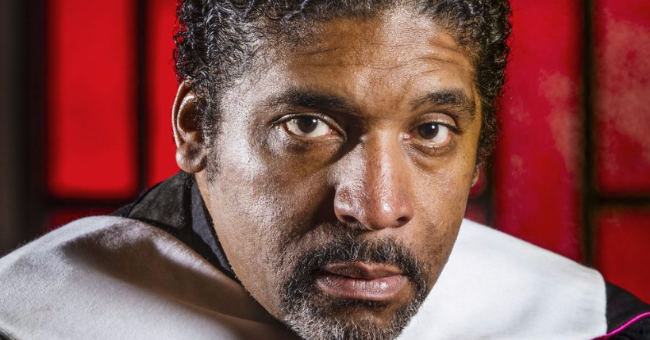
    The Reverend William J. Barber II brought the crowd to its feet with his rousing speech last night at the Democratic National Convention in Philadelphia. His impassioned call for a moral awakening to combat divide-and-conquer politics with justice illustrates the foundation of Moral Mondays, the fusion movement he helped start to bridge America’s racial and economic divide. He writes movingly about how he laid the groundwork for this diverse movement in his book The Third Reconstruction: Moral Mondays, Fusion Politics, and the Rise of a New Justice Movement. This appearance is part of Rev. Barber’s fifteen-state Revival Tour, launched in April to imbue love, mercy, and morality into politics.

    Here are some of last night’s highlights: 

    “When religion is used to camouflage meanness, we know that we have a heart problem in America.”

    “Some issues are not left vs. right or liberal vs. conservative, they are right vs. wrong.”

    “When we fight for 15 and a union, and universal healthcare, and public education, and immigrant rights, and LGBTQ rights, we are reviving the heart of our democracy.”

    “When we love the Jewish child and the Palestinian child, the Muslim and the Christian and the Hindu and the Buddhist and those that have no faith, but they love this nation. We are reviving the heart of our democracy.”

    “When we stand against the anti-democratic stronghold of the NRA, we are reviving the heart of our democracy.”

    “In this season, when some want to harden and stop the heart of our democracy, we are being called like our foremothers and fathers to be the moral defibrillators of our time.”

    “We must shock this nation with the power of love. We must shock this nation with the power of mercy. We must shock this nation and fight for justice for all. We can’t give up on the heart of our democracy. Not now, not ever!”


    Read what other sources are saying about Rev. Barber’s incredible speech: The Washington Post, Salon.com, The News & Observer, Esquire, NBC News.


    About The Reverend Dr. William J. Barber II 

    The Reverend Dr. William J. Barber IIThe Reverend Dr. William J. Barber II is president of the North Carolina chapter of the NAACP, pastor at Greenleaf Christian Church in Goldsboro, North Carolina, and founder of Repairers of the Breach. He is the author ofForward Together: A Moral Message for the Nation. Follow him on Twitter at @RevDrBarber.

  • By S. Craig Watkins

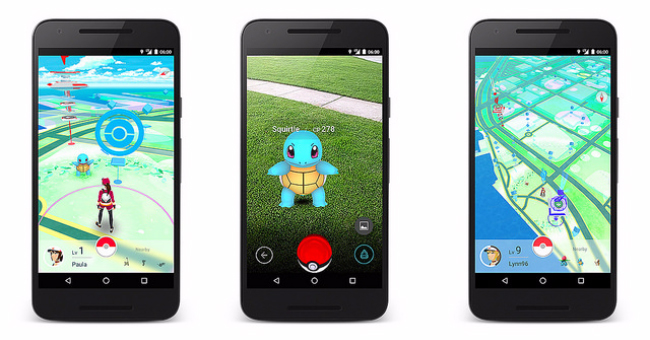
    Pokemon Go

    In just a few days Pokémon Go has become the talk of the technology and gaming industry. The number of user downloads has been so high that Nintendo, the company who created the original Pokémon, saw its market capitalization rise $9 billion, according to the New York Times. Pokémon Go was created by a relatively new company, Niantic Inc., that was created inside of Google before spinning out to become its own entity.

    Over the last few days, several people have asked me about the Pokémon Go phenomenon, especially friends who are not likely to play the game but are curious about why so many others have joined the crowd. In my own research, I’m constantly exploring how our engagement with digital media transforms our world. It is important to realize that technology, by itself, is not that significant. It is only when humans, for example, begin to adopt and use technology that the social implications and consequences truly take shape. This is equally true with Pokémon Go. As the game has become a cultural sensation, a number of issues have emerged. Let me briefly address three of them—data and privacy, the social aspects of social media, and the massification of augmented reality—and what they likely suggest about the immediate future.

    Data and Privacy

    If there is one element of the digital world that continues to grow in importance it is the matter of data and privacy. We live in the era of big data. This is a reference to the fact that the applications and technologies that millions of people around the world use—Google, smartphones, mobile apps—are huge data generators. Virtually everything that we do on our smartphones—what we search for, who we call, the pictures that we take, the places that we visit—are being collected to build a data-rich profile of us. This is problematic for several reasons. It is why tech companies like Google, Facebook, and Apple have become so massive. While the general public sees these companies as tech, media, and entertainment entities, a strong case could be made that they are first and foremost big data gatherers. Google makes most of its money—and they make a lot—and derives most of its value from the insights they are able to generate from the data profiles they build based on the use of its many applications. Facebook’s maturation into a profitable company also hinges on its ability to “monetize” the massive amounts of data that it routinely collects.

    The popular surge of Pokémon Go downloads has provoked some observers to dissect the agreement that people sign on to when they download the app. More specifically, concerns have been raised about how much of users’ personal data Niantic is collecting and what they will do with that data. For example, some reports claim that in addition to collecting information from smartphone cameras and location data, Niantic has been able to gain access to users’ full Google account which implies access to emails, calendars, photos, and shared documents. That is, the billions of pieces of content that user passwords are supposedly designed to protect.

    One of the unintended consequences of the popular rise of a game like Pokémon Go is that it creates yet another opportunity to initiate a public dialogue about data and privacy issues. Understanding the privacy implications of our digital media behaviors is just as important as other digital literacy issues, such as learning to code or communicate effectively with smart technologies. It’s possible that the popularity of Pokémon Go will compel the public to think more carefully about the privacy implications of their technology adoption and also demand greater security protections from the tech companies and the data gathering business.

    Games are Social and Physical

    The Young and the DigitalOne of the longstanding critiques of social media and games is that they make us insular and less social. That is, that they make us more intimate with our screens and less intimate with the humans and the world around us. While there are certainly instances of people developing strong and even unhealthy attachments to their screens, this is largely the exception and not the rule. I write about this in my book, The Young and the Digital.  Simply put, social media makes us social creatures insofar as we are constantly interacting with those in our social network via Facebook, Twitter, Instagram, Snapchat, and texting, just to name a few platforms. There have been numerous reports that Pokémon Go has encouraged people to move around their cityscape in ways that are extraordinarily social. Users of the app have converged in parks, museums, and city blocks to play the game and connect to acquaintances and people they do not know. Users have organized very public meet-ups that gather people together in an explicitly social context. In moments like these, people strike up conversations and make connections that potentially expand their real world social capital.

    Equally important is the ability of Pokémon Go to get people up and about. Sure, they are engaged with their smartphone, but the mobile app has turned people into adventurers, sightseers, and walkers. One of the more enduring critiques of social media and games is that they tend to make us insular and sedentary. We spend a lot of time sitting in front of a screen alone and that is not healthy. In the case of Pokémon Go, users are required to get up and get out. One of the more common stories about the app is how it encourages people to explore their local surroundings on foot. It is not uncommon to hear people say, “I’ve walked more than I ever have before using this app.” One can only imagine that the popularity of Pokémon Go will encourage the developers of this app and others that are sure to come to design experiences and tech features that highlight the physical exercise that people achieve as a result of using the app. In addition to tracking the number of steps, users might also track the number of calories burned, blood pressure, and other health-based metrics.

    Augmented Reality Comes to the Masses

    For several years, futurists and gaming advocates have been hailing the virtues of Augmented Reality, or A.R. What is A.R.? This is a reference to the merger of the physical world that we inhabit with the world that we interact with via our screens. Imagine that you are walking through a historical district and you are able to pull out your smartphone point it toward a building or a sign and that physical site comes alive. You may have access to a video about the site or data and information to enrich your knowledge and connection to the sight. In short, that physical space awakens via your smartphone. This is the kind of experience that Pokémon Go is providing for its surging number of users—turning local destinations into interactive experiences. A.R. has been around for several years but it has mainly been the province of early adopters and tech geeks. Pokémon Go is bringing A.R. technology to everybody else. 

    This is significant as several media and tech companies—Google, Facebook, Disney/ESPN, New York Times—are exploring new social experiences and economic opportunities via virtual reality or V.R. technologies. The latest buzz in the tech and media industries is V.R. More specifically, the goal is to figure out ways to turn our experiences with screens into a richer and more sensory-oriented experience. Pokémon Go is barely the tip of the iceberg as the opportunities for A.R. and V.R. are just beginning to emerge. 

    Our future relationship to media will continue to take shape, in part, via our smartphones and applications that connect us to our physical world. Pokémon Go brings the possibilities of A.R. to the masses in a way that no other tech has to date. For years, futurists, novelists, and filmmakers have imagined a world in which our physical world and the world we interact with via the screens in our hands would seamlessly merge to spark whole new social experiences. In Pokémon Go, we are beginning to see that world come closer and closer to reality. 


    About the Author 

    S. Craig WatkinsS. Craig Watkins writes about youth, media, technology, and society. He is Professor of Radio-TV-Film at the University of Texas at Austin and is the author of Hip Hop Matters: Politics, Pop Culture, and the Struggle for the Soul of a Movement and The Young and the Digital: What the Migration to Social Media Sites, Games, and Anytime, Anywhere Media Means for Our Future. Follow him on Twitter at @scraigwatkins and visit his website.

  • By Mary Frances Berry and Josh Gottheimer

    President Barack Obama

    President Barack Obama takes the stage tonight to speak at the Democratic National Convention in Philadelphia. Twelve years ago, he made his famous keynote address at the 2004 DNC that catapulted him into the national spotlight. We look back on this speech with a passage from Power in Words: The Stories Behind Barack Obama’s Speeches, from the State House to the White House in which authors Mary Frances Berry and Josh Gottheimer give us a behind-the-scenes look at the craft and preparation that went into it.

    ***

    It’s fair to say that no one could have expected what resulted from Barack Obama’s prime-time speech at the July 2004 Democratic National Convention. Not the Senate candidate himself nor his two key aides and traveling companions, David Axelrod and Robert Gibbs, nor Mary Beth Cahill, the campaign manager for John Kerry, the Democratic nominee for president.

    No one could have imagined how that seventeen-minute speech would catapult Obama into stardom and onto the national political stage and eventually into the White House itself. After all, no one had even heard of Barack Obama before he took the podium. On the morning of the speech, the Philadelphia Inquirer headlined, “Who the Heck Is This Guy?”

    True, Obama had captured the attention of people in his home state and had become the leading candidate for the Illinois seat in the U.S. Senate vacated by Peter Fitzgerald, a Republican. But he had grabbed the lead only after his well-funded Republican opponent Jack Ryan dropped out of the race in the wake of a sex scandal. Having served only in the Illinois State Senate for eight years, Obama was not a national figure by any stretch. In fact, he has since reminded people that in 2000, after his failed bid for Congress, he had trouble even getting a pass onto the floor of the Democratic National Convention in Los Angeles and ended up watching the proceedings on a TV screen near the convention hall. He was so broke that the rental car facility rejected his American Express card.

    Obama wrote in his 2006 book, The Audacity of Hope, “The process by which I was selected as keynote speaker remains something of a mystery to me.” In truth, there wasn’t much mystery about it. The Kerry campaign had thought long and hard about whom to pick for the slot. A team of about a dozen convention organizers, including Cahill, the Massachusetts politico Jack Corrigan, and the campaign strategist Robert Shrum, considered their options. The group narrowed their list of appealing Democratic Party politicos to Governors Jennifer Granholm of Michigan, Janet Napolitano of Arizona, Tom Vilsack of Iowa, and Obama.

    In the end, the campaign concluded that Obama was the politically wise choice; he would help them attract African American voters, a demographic that had been lagging in the polls. He was eloquent and youthful and delivered the right optimistic message (his campaign speeches for the U.S. Senate included the now familiar “Yes, we can”). Illinois was also a critical Senate seat. It was true that the campaign was concerned about Obama’s position on the war in Iraq—Kerry had initially voted to authorize military action. But ultimately, as Cahill put it, “I was convinced he was going to be the best.”

    Plus, on a personal level, Kerry and Obama had hit it off during a joint campaign swing in spring 2004, first at a vocational center on Chicago’s West Side and then at a downtown fund-raiser at the Hyatt Regency Hotel. According to David Mendell, there was a clear rapport between the two: “It’s Kerry kind of looking at him and picking up tricks from the rookie.”

    Obama and his aides had pursued the speaking slot with intensity and purpose. The team composed an eight-minute video that included excerpts from Obama’s Illinois Senate primary victory speech and campaign photos set to music from the documentary movie When We Were Kings, featuring Muhammad Ali. And Gibbs, a former Kerry campaign staffer, worked the phones to his former colleagues. They knew the promising history of past keynote speakers, including Franklin D. Roosevelt, who delivered rousing nomination speeches for Alfred E. Smith in 1924 and 1928, and Bill Clinton, who introduced Governor Michael Dukakis in 1988. Even though Hubert Humphrey, Barbara Jordan, and Mario Cuomo didn’t ascend to the presidency, their convention speeches have become important historical footnotes: Humphrey delivered a fiery defense of civil rights in 1948; Barbara Jordan was the first black woman to deliver a keynote speech in 1976; Cuomo’s 1984 “Tale of Two Cities” speech, about rich and poor in America, received critical acclaim.

    Barack Obama began working on his speech in early July, as soon as Cahill delivered the good news that he had been chosen. Without missing a beat, Obama turned to his aides and delivered a clear message: he would write this speech. According to Gibbs, “He wanted to write this speech…in a way that was personal.” Axelrod later commented, “Almost immediately he said to me, ‘I know what I want to do. I want to talk about my story as part of the American story.’”

    Obama toiled away on the draft assiduously, at all hours of the day and night, up until a week before the convention, when the convention speechwriting team demanded to see a copy. He wrote one version after another, scribbling lines on scraps of paper, on the corners of envelopes, on yellow legal pads, and on the top of memos from his aides. Obama tested lines from the speech on everyone, from crowds at his campaign events to his state senate colleagues. At one point, after coming up with a new idea, he went and sat on a stool in the bathroom off the Illinois General Assembly floor to write it down. According to one former campaign aide, David Katz, “We’d finish [the senate day] at nine or ten p.m. and he’d write till one or two in the morning.”

    The Kerry staff gave Obama eight minutes of speaking time. Obama’s first draft was twenty-five minutes, so he sent drafts back and forth to his aides; they’d cut out lines and he’d invariably add them back into the text.

    The Kerry campaign was a little anxious about what Obama’s speech would say; he was still an unknown quantity. Vicky Rideout, the convention’s chief speechwriter, had been expecting a draft in mid-July and it was getting late.

    But the moment Rideout received and read the draft, she knew they had a hit. At seventeen minutes the speech was longer than they had asked for, but it didn’t matter. Rideout asked to take out one line, but otherwise accepted the speech as it was submitted.

    Obama arrived in Boston the evening before his first rehearsal at the FleetCenter. Gibbs had scheduled a flurry of interviews, including a one-on-one with Tim Russert for Meet the Press—so many, in fact, that Obama started to lose his voice.

    Obama had never used a TelePrompter when he went to his first rehearsal. According to Mendell, “Obama was kind of winging it—that is how he was doing things back then.” But this was different. Michael Sheehan, a veteran speech coach, offered Obama his standard tips, including how to handle the three competing audiences the night of the speech—the screaming party delegates in the hall, the giant JumboTron screen that would beam his image and words out to the far reaches of the hall, and the millions sitting in front of their television sets.

    Obama had three hour-long rehearsals at the practice podium in front of blue velvet curtains in what was normally the Celtics locker room. His initial run-throughs weren’t particularly strong; he seemed to be adjusting to his new setting. But he soon found his groove. Jon Favreau, then working as Kerry’s speechwriter, who later became Obama’s chief speechwriter, remembered watching his future boss and being awestruck by his passion and charisma. He knew immediately that Obama was different from everyone else he had watched rehearse that week.

    Unfortunately, Favreau also had to deliver some tough news to the future senator. One of the lines from Obama’s text was virtually identical to one in Kerry’s acceptance speech. Obama’s draft read: “We’re not red states and blue states; we’re all Americans, standing up together for the red, white, and blue.” Kerry’s speech included the line, “Maybe some just see us divided into those red states and blue states, but I see us as one America: red, white, and blue.”

    After Favreau told Obama that he would have to drop the line, Obama replied peevishly, “Are you telling me I have to take this line out?” Favreau remembered stuttering, unsure how to respond. Axelrod could see that Obama was frustrated, so he grabbed Favreau, quickly introduced himself, and asked him to step out into the hallway where they could discuss the line.

    The two spent the next few minutes rewriting the sentence, changing it to: “We are one people, all of us pledging allegiance to the stars and stripes, all of us defending the United States of America.” Axelrod and Favreau had nipped the problem in the bud before it erupted into a larger issue. At the time, neither knew that it would be the first of many such collaborations between them.

    Obama awoke at 6:00 a.m. the day of the speech. After a big breakfast, a rally sponsored by the League of Conservation Voters, and a quick lunch gobbled down between interviews, Obama retired to his room for a breather. The break didn’t last long. There was a last-minute crisis. His wife, Michelle, didn’t like his tie, so Axelrod grabbed Gibbs’s tie literally off his neck.

    When Obama finally made it into the car that would ferry him to the FleetCenter, he relaxed the way he knew best. He called his grandmother, Madelyn, in Hawaii, and his two daughters, Sasha and Malia.

    With a sea of Democrats cheering him on, and millions more watching on television, Barack Obama walked onto the national stage—literally and figuratively—beaming from ear to ear. From his vantage point in front of the crowd, all he could see was a sea of placards with “Obama” painted on them. For seventeen minutes Obama mesmerized his audience, first with his biography and then with a ringing endorsement of John Kerry—2,297 words in all. He told America the meaning of his African name, Barack: “blessed”; he spoke about the importance of bipartisanship and the need to provide opportunity to all Americans.

    His delivery started slowly and was a little stiff. His long-time Chicago friend Valerie Jarrett was so nervous that she “was digging [her] nails into [her] hands.” But then, Rideout recalls, a metaphorical light bulb went on. “His shoulders settled down and this wave of support from the crowd looked like it literally washed over him…Something happened to him physically.” His polish, poise, and preacher-like cadences drew in the crowd. It was clear that he was comfortable in his own skin, unlike so many other politicians. One of his Harvard Law professors, Christopher Edley, later said, “He was almost freakishly self-possessed and centered…He doesn’t strive for an Everyman quality: he is relaxed but never chummy, gracious rather than familiar. His surface is so smooth, his movements so easy and fluid, his voice so consistent and well pitched that he can seem like an actor playing a politician, too implausibly effortless to be doing it for real.” Democratic strategist Stephanie Cutter recalled the evening and his energy, saying, “I remember standing behind him and watching his feet move. It was like he was dancing at the podium. His feet were moving to the rhythm of the speech.”

    Obama was interrupted with applause thirty-three times. The reviews were unanimous: it was a barnburner. People immediately compared his oratorical skills to those of John Kennedy, Ronald Reagan, and Martin Luther King Jr. He was mobbed by crowds, not just that evening, but also every day thereafter. The throngs at his senate campaign events regularly shot up from hundreds to thousands. His political future would be forever changed. As Senator Dick Durbin of Illinois put it, “Without that Boston speech, there is a question whether Barack would be…[president] today. His public image changed because of that speech.”


    About the Authors 

    Mary Frances Berry is the Geraldine R. Segal Professor of American Social Thought and professor of history at the University of Pennsylvania, and the author of nine books. The recipient of thirty-three honorary degrees, she has been chair of the U.S. Commission on Civil Rights, is a regular contributor toPolitico, and has appeared onReal Time with Bill Maher, Anderson Cooper 360, The Daily Show, Tavis Smiley, and PBS's NewsHour. Follow her on Twitter at @DrMFBerry.

    Josh Gottheimer was presidential speechwriter and special assistant to President Bill Clinton; appears on MSNBC, Fox News, and CNN as a political analyst; edited Ripples of Hope: Great American Civil Rights Speeches; and is executive president of the global PR firm Burson-Marsteller. Follow him on Twitter at @JoshGottheimer and visit his website.