• A Q&A with Dennis A. Henigan
    Gun in hands“When guns are outlawed, only outlaws will have guns.” “An armed society is a polite society.” “Gun control is a slippery slope to confiscation.” These are some of the slogans the gun lobby has used successfully to frame the gun control debate and block lifesaving gun legislation for decades. Dennis A. Henigan debunks the mythology of these pro-gun catchphrases in his latest book, “Guns Don’t Kill People, People Kill People”: And Other Myths about Guns and Gun Control, which went on sale today. Our blog editor Christian Coleman caught up with Henigan to ask him why these slogans continue to influence public attitudes toward guns and gun control and how we can put an end to our recurring nightmare of gun violence.

    Christian Coleman: Your book was originally published as Lethal Logic: Exploding the Myths that Paralyze American Gun Policy in 2009. What revisions and updates have you included in this new version?

    Dennis A. Henigan: Much has happened on the gun violence issue since 2009, and I am grateful to Beacon Press for understanding the need for a fresh examination of the mythology that has proven to be such a substantial barrier to progress toward sensible gun laws and policies.

    Certainly the horror of the December 2012 Sandy Hook Elementary School shooting, in which twenty first graders and six adults were struck down, has been a key turning point in the national gun debate. The loss of those innocent young children shocked the conscience of the nation. In my new book, I discuss the profound impact of the Sandy Hook shooting on the politics of the gun issue, as it roused the Democratic Party from its torpor on the issue, which had lasted during the entire first Obama Administration. Prior to Sandy Hook, the conventional wisdom in the Democratic Party was that advocacy of gun control was simply not worth the political risk, although this thinking was based on an exaggeration of the NRA’s actual influence over election results. Now the Democratic Party appears fully committed to working for stronger gun laws, as evidenced by the dramatic recent House of Representatives sit-in led by civil right icon, Rep. John Lewis (D-Ga.). Unfortunately, however, the Republican Party continues in its unequivocal allegiance to the NRA’s mythology; thus, the national stalemate on guns continues.

    I hope it is clear from my new book that the case against the NRA’s bumper sticker logic is even stronger than it was in 2009. This is demonstrated by the important new research discussed in the book, as well as the stark reality of the mass shootings, and the daily lethal violence in our communities, that continue to be the uniquely American nightmare of gun violence.

    CC: After the Sandy Hook Elementary School shootings, the NRA’s Wayne LaPierre declared, “The only thing that stops a bad guy with a gun is a good guy with a gun.” Has this become the newest element of the NRA’s mythology?

    DAH: Yes, it is the latest example of the NRA’s bumper-sticker logic and I devote an entire chapter of my book to addressing it.

    It is a clever new way of expressing the idea that since it is futile to stop “bad guys” from getting guns, the only recourse is to arm the “good guys” to shoot back once an attack occurs. Note the premise that the world can be neatly divided into readily identifiable groups of “good guys” (who should be able to carry their guns everywhere) and “bad guys” (who will always be armed). The world, however, is not that simple, as we see from the experience in states that have made it easy for the “good guys” to carry concealed weapons. We know that many killers were legal carriers of concealed weapons right up to moment they pulled the trigger and shot an innocent person.

    It is, of course, folly to base our gun policy on the idea that the only effective way to prevent gun deaths and injuries is to be prepared to respond with gunfire once the shooting starts. Indeed, in the worst mass shooting in U.S. history—the Orlando nightclub shooting—there actually was an off-duty police officer on site who did, in fact, return fire. Additional armed police, including a SWAT team, converged on the scene and a firefight ensued. The “good guys” shot back, and the toll was forty-nine dead and fifty-three wounded.

    We must consider the unacceptable social cost of ensuring that our public places—from elementary schools, to churches, to restaurants, to college campuses, to sports stadiums—are populated with “good guys” with guns, all to create the remote possibility that one of those good guys will be at the right place at the right time with the right aim when the “bad guys” start shooting. The greater the concentration of guns in public places, the greater the risk of accidental shootings, arguments escalating to gunfire, and other lethal violence from an infinite variety of human interactions where the presence of a gun makes a deadly outcome far more likely. It is not surprising that the best available research shows that making it easier to carry concealed weapons is associated with increases in crime, particularly aggravated assault.

    Note also that under the NRA’s formulation, the “bad guys” already have guns. The gun lobby simply dismisses the possibility that strong gun laws can prevent many dangerous individuals from getting access to guns in the first place. My book presents overwhelming evidence that strong gun laws can be effective, including the experience of other high-income nations who are not devoid of dangerous people, but have strong gun laws and homicide rates a fraction of the U.S. rate. The book also discusses the little-known American experience with regulation of machine guns, an eighty-year-old system of gun licensing and registration that has resulted in the miniscule use of machine guns in crime.

    CC: Public opinion surveys show that 78% of Americans supported reinstating the ten-year ban on military-style assault weapons like the ones Omar Mateen used in the Orlando Pulse shooting. Why is there still resistance against implementing better gun policy on assault weapons?

    DAH: The assault weapon issue is one of many gun control policy issues where the views of a clear majority of Americans are being ignored by our elected representatives. On this issue in particular, the NRA has been successful using the “slippery slope” argument to convince gun owners that an assault weapon ban would likely lead to broader gun bans. I devote a chapter of the book to the slippery slope argument because it is a key tactic used by the gun lobby to convince gun owners that the gun control debate is not really about modest proposals like universal background checks and restrictions on military-style assault weapons, because these are but steps down a “slippery slope” to the ultimate goal of gun control advocates: confiscation of all guns.

    The fact is that assault weapons are semi-automatic versions of fully-automatic weapons designed for military use and are therefore equipped with military features—including accepting large-capacity ammunition magazines—intended to facilitate the firing of large numbers of rounds very quickly. The NRA insists that there are only “cosmetic” differences between assault weapons and other guns, but every national police organization favors reenactment of an assault weapon ban and, I assure you, it is not because of “cosmetics”. It is no coincidence that, time after time, mass shooters have used high-capacity assault weapons in their attacks.

    Apart from the assault weapon issue, there is a price to be paid, in lost lives and grievous injuries, from allowing slippery slope arguments to carry the day. For example, the NRA used the same slippery slope arguments to oppose the Brady Bill which, since its enactment, has stopped over two million felons and other prohibited persons from buying guns from gun dealers and obtaining gun permits. If Congress had listened to the NRA, we would have sacrificed the demonstrable benefits of the Brady Bill because the imagination of some hypothetical gun-banning scenario was allowed to prevail.

    CC: Why does the NRA characterize the Second Amendment as our country’s “first freedom”? And why does its interpretation of the Second Amendment vary so widely from the public’s?

    DAH: The NRA touts the Second Amendment as America’s “first freedom” because its leadership believes “the right of the people to keep and bear arms” is the foundation of our other freedoms. The NRA has long advocated the view that, ultimately, the only guarantee we have against a tyrannical government is an armed citizenry ready to resist government authority by force. As an NRA field representative once told the New York Times, “The Second Amendment…is literally a loaded gun in the hands of the people held to the heads of government.” This view is chilling in its implications. It sanctions deadly violence as a tool of political dissent. We know that Timothy McVeigh invoked this principle to justify the Oklahoma City bombing. We must also wonder whether a similar idea motivated the deadly attacks on police officers in Dallas and Baton Rouge.  

    The American people do not believe there is a constitutional right to engage in armed insurrection against the government. Nor do they believe the Second Amendment is a barrier to stronger gun laws. When the Supreme Court, in 2008, first recognized a constitutional right to have a gun in the home for self-defense, Justice Scalia’s majority opinion conceded that the right “is not unlimited” and should cast no doubt on the constitutionality of long-standing gun restrictions. Since that decision, the vast majority of gun laws have been upheld against court challenges, a record that must be deeply disappointing to the NRA.

    CC: How do you envision our country’s solution to ending the recurring nightmare of mass shootings?

    DAH: It does seem like we are living a national nightmare from which we cannot wake up. I constantly hear the question, “How many more mass shootings will it take before action is taken?” I wish I had an answer. On the gun issue, like no other, our democratic system has broken down. A well-financed and sophisticated lobbying and political operation, representing a loud and intensely active minority of gun owners, has been permitted to deny the majority the gun policies we need and deserve.

    Over the long run, the answer is that we must build an army of committed gun control activists who are willing to take action, over the course of years, to influence legislators and policy-makers. Surveys show that those who favor weakening gun laws are far more likely to communicate their views to legislators, and take other actions to influence policy, than those who favor strengthening those laws. We must begin to close this “intensity gap” on the gun issue.

    Even more importantly, gun control supporters must be prepared to make this an issue that affects their decision to vote for or against particular candidates for office and they must communicate their intention to candidates. Our current stalemate on the gun issue is due, in part, to the perception that there is a political cost to defying the NRA, but little political cost to voting against stronger gun laws. I argue in the book that increasing the intensity of public support for gun control, and overcoming the well-entrenched opposition, will require demolition of the NRA’s mythology. My sincere hope is that my book will be an important step toward that lifesaving goal.


    About the Author

    Dennis A. Henigan is director of legal and policy analysis at the Campaign for Tobacco-Free Kids and formerly vice president of the Brady Center to Prevent Gun Violence. Follow him on Twitter at @DennisHenigan and visit his website.
  • A Q&A with Atef Abu Saif

    Atef Abu Saif

    Photo credit: Mohammad Daraghma

    2016 marks the second anniversary the Israeli invasion of Gaza that began on July 8 and ended with a cease-fire on August 26. Novelist Atef Abu Saif kept a diary during the conflict, detailing his daily life and his family’s survival. His entries were published later as his memoir The Drone Eats with Me: A Gaza Diary. Readers now have an unforgettable first-hand account of a father raising his family in the midst of war. We caught up with Abu Saif to ask him what inspired him to set down his experiences to paper and what has changed in Gaza since the cease-fire. 

    ***

    Why did you decide to keep a diary of this war? What process did you use to write this diary to give it such a feel of immediacy? 

    I have to say that I did not write a diary to publish. I had a habit of writing sort of personal narratives now and then, to use in writing my fiction and to keep for future memoirs. I was shocked with the dialogue that took place between me and my friends (day one) at the time that the strikes started. What shocked me is our search for a meaning of what happens. All our life is a search for meaning. This search is much harder in a very uncertain context like the one in Gaza. I wrote down this dialogue while the sounds of explosions and attacks negated my wish that this was just another escalation. As I did not want to write something to be published, I continued writing down what happened with me and my family. I felt that we all might die in a minute, we might be another victim of the war. So I wrote not about the war, but about us. In case I or one of my kids died—or all of us—I wanted people to read that amid all this destruction, we were trying to live. It is a celebration of life at the time of death.

    What is it like for a horrific event like war to become “positively ordinary” as you describe it in the book?

    It was not an ordinary event. I was trying to live normally. Amid all of that, when people are killed without having a say in this, and when the exception is to live, the only way to overcome the obsession that you are the next victim is to live your life normally. Searching for normality is proof, though, that everything is not normal. It is not about what you intend but rather about how you are playing with this mentally. In this sense, war and your survival technique become part of your imaginary game.

    How difficult was it to maintain your kids’ childhood and also answer their very real questions about mortality and life after death?

    It was extremely difficult. Sometimes I felt the questions were more mature than their age. Of course, at times when you are not sure if you are alive or dead or that what you are experiencing is a dream or real, things change. Even your role changes. As a father, you are not a father in a full sense; you are a father and something else. Besides being their father, you are their fellow in danger. You do not have the answers yourself, and even if you have them you are not sure of them or they do not ease your worries. This hardens your mission. At the same time, you do not want your answers to make it difficult for them, as you want them to keep their childhood. Now, looking back at all of that, I am not sure if this was a dream or real. I know it happened, but without reading those diaries, I do not know how I made it and lived the experience. Ironically, the thing I wrote so that people know, in case of being killed that once lived there, became my only proof that I lived that.

    With the knowledge that drones are always hovering over your home, how much does peacetime really feel like “peace?”

    Never. Without being sure that it will come again, you keep expecting it. So that when there are no drones in the sky, you think that they are somewhere else terminating the life of somebody else, or that they are hiding well so that they surprise you. It is like my kid in the diaries asking me about the next war. His question is normal and expected. Life is just a break between two deaths. It is a break you have between two wars. So that when the war ends you start to think how long this break will last.

    Has life in Gaza changed in any way since the invasion? Is the second anniversary marked in Gaza in any way?

    Nothing changed. The destroyed houses are not rebuilt yet. Cement and construction materials are not allowed frequently, and if your house is destroyed you need to go through a very complicated process to get the material. Fishermen are not allowed to sail farther than three kilometers. Gaza is still besieged as before the war. When I read the diaries two days ago, I thought that I was reading about the problems that people are living nowadays, as if the past is the dictionary of our present. Politicians and political parties, of course, mark the anniversary. But the real people who mark it are those who lost their beloved or who still live in a caravan made of metal burned by the heat of the summer.


    About the Author

    Atef Abu Saif was born in Jabalia Refugee Camp in the Gaza Strip in 1973. He is the author of five novels, including A Suspended Life, which was shortlisted for the 2015 International Prize for Arab Fiction. He lives with his family in Gaza. Follow him on Twitter at @atefabusaif.

  • By Martin Moran

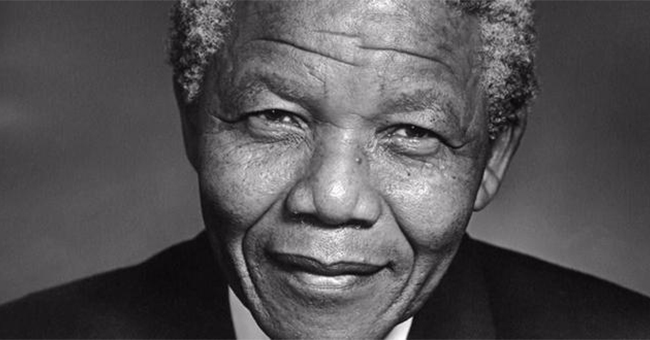
    Mandela

    Photo credit: lasanta.com.ec

    “Why aren’t you angry?” Actor and playwright Martin Moran heard this question often after he told his story of how he forgave the man who sexually abused him as a boy. Haunted by the question, Moran went on a quest to examine rage and its relation to compassion. He put together his journeys and experiences in his one-man play All the Rage, and then into his memoir of the same name. One of the places his adventures took him was Johannesburg. In this passage, his Johannesburg tour guide, Tommy, gets them lost on the way to a cheetah preserve. The time Moran spends with him, listening to his life story and visiting his home, turns out to be a richer experience. At the end, Tommy shows him the shack nearby where Nelson Mandela lived as a young law student.

    ***

    Tommy and I were on the outskirts of Johannesburg, zooming past vacant lots and former gold mines on our way to a large cheetah preserve. It was our third day together and I was especially excited. This being Africa, I had to squeeze in a safari! I’d found out about a large animal preserve not far from the city that offered excursions promising large cats and wild dogs, zebras and ostriches and all manner of wildlife. Since I’d made my reservation for the tour, a vision kept washing over me—a perfect moment tripping upon primordial Africa, a glimpse of a nature-filled Eden.

    I’d had good, full days with Tommy. We talked a lot. When I had called ahead from the States to line up a driver (which a friend strongly urged me to do), I’d said to the cheery South African lady from the tourist company, “I was hoping my driver might be someone who grew up in Johannesburg? I mean, who knows personally of the history. I want to have, I guess, a real sense of the . . .”

    I fumbled, I recall, because what I was saying, or wanted to say, was that I’d like to be with a black guide. But to come right out with that felt somehow awkward.

    “I understand,” she’d said. “You don’t want to just head off to a safari park. Right? Maybe a township or two, along with your shopping? I know just the guide, someone who will help you have an authentic experience.”

    I liked Tommy from the moment I met him at baggage claim. He was there holding a sign with my name; it was such a comfort after twenty-two hours of flying. He was low-key and, though we were both timid at first, soon we were talking about his town, his family, his two kids. I loved watching him greet others as we moved through the city, his “Hey, Sister” or “Hey, Bah,” his kindly wave, his missing front tooth lending his grin a particular charm.

    In our days together I had observed how Tommy’s sense of time seemed . . . well, elastic. One morning, when he was taking me around Soweto, he suddenly stopped the van, pulled over to the side of the road, and, without a word, jumped out. I watched as he dashed across the street to a vacant field between two relatively large houses (newer and fancier than the many shacks we had passed). A large pile of apparently unwanted items had been dumped there. Something had caught his eye. He started riffling through stuff as I worked at remaining patient. “When in Rome,” I heard myself say. After five or ten minutes he walked back to the van carrying two bound texts the size of Manhattan telephone books. He set them on the dashboard and we took off again. I picked one up. Basic Computer Languages. I glanced at the other. Programming Your Home Computer.

    “You studying computers?” I asked.

    “Could be,” was all he said. “Could be good.”

    But on this day, thrilled to be on the way to my mini safari, his mellow sense of time was driving me crazy. We had been nearly two hours on the road and I suspected that we might be lost. When I asked about our direction (which seemed at odds with the one described to me on the phone when I booked the safari) Tommy was tranquility itself. I kept pointing at road signs saying, “Tommy, are you sure this is right?” He nodded and said,

    “No worries man. That place is by a bridge over a river where my father used to take me.”

    Go easy, Marty; go with the flow, I told myself. Be the mellow explorer, not the nervous New Yorker. I tried not to look at my watch.

    After another quarter of an hour I pointed to another road sign.

    “Tommy, I thought maybe . . . um, don’t we want to be on the highway much further to the south?” He shrugged.

    Fine. What do I know? It’s Africa! But sweat was trickling down Tommy’s graying sideburns and I couldn’t contain my anxiety.

    “Look, Tommy, it’s way late! Let me call the safari place.”

    “Don’t worry, man.” Then he opened his phone, “Oh, sorry. Out of minutes.”

    “What! No phone? Where are we?”

    My stomach flipped. I am going to miss the animals! And I thought exactly what I’d say to the lady at the tour agency:

    “I paid for this driver, this service, so that my trip would be efficient! Smooth. This is just crazy, unacceptable.”

    Finally I spotted a sign indicating our route number, and looking at the map I blurted,

    “OK, Tommy. Jesus! This is wrong. Totally wrong. Pull over!”

    We stopped on the shoulder of the road. It was desolate but for weeds, hills beyond with wildflowers. A Calvin Klein billboard. Tommy turned off the engine and I said,

    “Please, look at this. OK?”

    I scooted toward him and laid the map in his lap. I put my finger where I thought we were and then where we should be.

    “See? See Tommy? Look at this!” I heard my voice, pinched and piercing. “You’re the driver, for God’s sake! We’re so off path. It says right here. Look.”

    He was nodding at the map, his nose moving closer but his eyes were sort of darting and . . . it hit me. And I saw him see that it hit me. He didn’t know how to read it. I leaned back, folded the map, my chest burning. Monster.

    There was the wind, the clackety rasp of insects unknown to me.

    He stared straight ahead and said,

    “You, you people . . . your minds are organized. You see these things. I never got my mind . . . organized.”

    Just be here, I kept thinking. Oh God, all this busyness, this hunt for sites to be devoured. Just here on the side of a road with Tommy, this gentleman who’s told me about his family and shared about his struggles with women, about his father, an important Zulu preacher whom he says he’s failed to live up to. This is it. Don’t need to be anywhere else, really. Just here, breathe.

    “Tommy, I’m sorry I . . .”

    He stopped me and said,

    “You know in school they taught . . .” He grinned for a second. “They taught us to sweep. To mop. To clean shoes properly. Other peoples’ shoes.”

    Open-bed trucks packed with peaches and people rushed by.

    “I speak a good English. I used to stay up late listening to a British man on the radio. He had a good voice. I repeated whatever he said, over and over. But I never learned. . . .”

    He looked out the window toward the hills. After a long while he said,

    “You know, if you listen carefully, the spirits will tell you which plants and flowers will heal you.”

    Then he said, “Hey. You want us to see my house?”

    “Yeah. Sure.”

    We turned and drove back to town past Soweto, past the church still pocked with bullet holes from the ’76 uprising and on toward the township of Alexandra. An explosion of color, a dense collection of houses/shacks, spigots for water at the end of narrow roads. Brightly dressed women sat on crates and on curbs watching as small children scurried in and out from between houses.

    We turned and drove down what turned out to be Tommy’s street. He told me to roll up my window and lock the door. “And put your camera away. People can be crazy.” We stopped at an intersection where a group of young men were standing outside a small corner store. There was a counter with a few fruits and vegetables. They stared at me. I felt every bit the intruding gawker, the tourist who would be off to the airport soon with a computer full of photos and a bag full of souvenirs: carved wood from Soweto, a program from the Market Theater, a book about young Gandhi. We moved past a tight group of shacks. Tommy pointed to one. “It may be an ugly house, but someone beautiful lives inside.”

    He parked the car behind a cement wall and locked the gate. His neighbor had a sparkling BMW there, next to an outhouse. “That’s my privy,” Tommy told me. “With running water. I’m lucky to have that.”

    We sat in Tommy’s one room divided into two by a hanging blanket, drank a pungent tea. “It is hard to get sleep in the township,” he said. “Someone’s music, someone’s business. You hear it all.”

    He explained that being a tour guide was a new job for him, part of a government program to get people to work, into new and better kinds of jobs. The tour van was on loan from the program. He was fortunate to have this house, he said, as it was sturdier than most. His father had built it. “He was a minister here. People liked him. He had many children. I don’t know what happened to me. I have only two.” He laughed and shook his head. “I didn’t get what he got, I guess.”

    We sipped our tea.

    “Can I show you something?” he asked.

    We stepped outside past his outhouse onto a side road where a woman was selling a red-colored fruit. Tommy gestured over weeds to a shack set back from the road. A broom, half of its bristles torn away, leaned against the door.

    “Look,” he said. “When he first came to the city, this is where he lived. He was a law student then.”

    I knew instantly who. No matter race, age, or gender, everyone, it seemed, spoke with this tender awe of Mandela. We stood and stared at the door and Tommy said,

    “He came out, after twenty-seven years in prison, and forgave. It’s enough to make you believe.”

    “In what,” I asked. “God?”

    Tommy laughed a little and said,

    “In something. In whatever it is that allowed him to do that. A man,” he said. “A man did that.”


    About the Author 

    Martin Moran makes his living as an actor and writer in New York City. He has appeared in many Broadway and Off-Broadway plays, including Titanic, Cabaret, Bells Are Ringing, and Floyd Collins. He won a 2004 Obie Award for his one-man play, The Tricky Part, which New York Times theater critic Ben Brantley praised for the quiet victory of "rendering chaos with this kind of clarity." Moran continues to perform The Tricky Part all over the country.

  • By Melinda Chateauvert AIDS-ribbon

    Three decades before “Nothing about us, without us” became the axiom for policymaking by the sex workers’ rights movement, the national prostitutes’ rights organization COYOTE conducted a “Prostitute Study” which demonstrated that community-based participatory research had the power to revolutionize scientific paradigms. At the start of the AIDS epidemic, almost no one used community-based research to study critical health issues. But San Francisco sex workers, working as peer researchers interviewing and testing marginalized women like themselves, mapped the epidemiology of HIV in 1985. This forgotten study by sex workers on HIV/AIDS was an essential element of their political activism, using evidence-based research for making public policy, designing future medical research and changing public attitudes about the sex industry. Sex workers’ contributions to medical research, to pioneering harm reduction education, and efforts to challenge laws criminalizing the lives of HIV-positive citizens disrupted the dominant narrative of AIDS and AIDS activism. The activism of sex workers reminds us that science, like history, is best when done democratically.

    Recent histories of the AIDS epidemic and the widespread deaths of so many gay men, famous and not, have occluded the historical record of sex worker activism. Though we now understand that homophobia led to the construction of HIV/AIDS as a “homosexual disease,” in the early and mid-1980s, the “gay plague” was juxtaposed against “heterosexual AIDS.” The definition of “heterosexual” was diffuse, serving as a catch-all label for soldiers, white suburban housewives, drug injectors, and “crack ’hos” who might contract the virus.

    At the beginning of the AIDS crisis there were no “crack ’hos” because women didn’t get AIDS. Then in 1983, Elizabeth Prophet, an African American mother of two, was profiled by journalist Randy Shilts in the San Francisco Chronicle. In Shilts’ narrative, Prophet became the stereotype of a black female welfare recipient, drug user and sometime prostitute. She had been arrested for a minor offense, but sick and unable to make bail, police moved her from county lock-up to the AIDS ward at San Francisco General Hospital. Doctors saw a “freak,” a statistical outlier, whose multiple infections they dismissed as the consequences of “natural” black female promiscuousness. Much later, researchers would realize that the earlier deaths of her two children from “pneumonia” were likely the result of their HIV-weakened systems. Prophet was first of many African American women demonized as threats to President Ronald Reagan’s promotion of family values, dismantling welfare, and his administration’s war on drugs.

    Two years earlier, women prisoners held in New York City’s Riker’s Island, many of them charged with prostitution and related offenses, were dying of pneumonia and respiratory infections that their immune systems couldn’t fight. The New York Public Health department reported an unusual outbreak of candida among African American women and Latinas to the CDC. But then, as now, few outsiders cared about the health of prisoners. Prison medical staff routinely failed to document “jailhouse diseases” and once the women were released, emergency room workers presumed the former inmates were medically non-compliant, uninsured, or simply “hysterical” women. If the U.S. Centers for Disease Control and Prevention (CDC) had paid attention to unusual clusters of candida (“thrush”), cervical cancer, pelvic inflammatory disease, yeast infections, and bacterial pneumonia among women of color at the start of the 1980s, the myth of “heterosexual AIDS” may never have been created.

    Sex workers paid close attention to the ways women were being blamed as the AIDS crisis grew, while ignoring the sexist diagnoses placed on them by Freudian psychiatrists. Members of COYOTE (Call Off Your Old Tired Ethics), a national prostitutes’ rights organization, were worried that they would be blamed for “heterosexual AIDS.” They realized that long-standing ideas about sex work and disease would shape the response to AIDS. The ancient image of prostitutes as reservoirs of infection had already been resurrected by Shilts and by medical researchers. COYOTE co-director Priscilla Alexander had read Judith Walkowitz’s history of the Contagious Diseases Acts in Victorian England, published in 1980, which provided a chilling example of what could happen during a sex panic: forced medical examinations of all suspect women and the imprisonment of any infected woman until she was “cured.” Activists were determined that history would not be repeated.

    These threats spurred COYOTE members to organize against the “virus of repression.” They protested against discriminatory laws that made HIV positive status a criminal offense, and adopted the term “sex worker” to replace “prostitute”, which had so many negative connotations. They became “sexperts”, teaching each other, their clients, and anyone who would listen that condoms were essential for preventing infections. But at the base of their activism was their own scientific research, a public health study they designed and conducted, in conjunction with Dr. Constance Wofsy and Judith Cohen of the San Francisco Medical Center.

    “The Prostitute Study,” as it came to be known, surveyed 180 women in San Francisco thought vulnerable to AIDS. Their research concluded that HIV could be transmitted through a single body fluid exchange, suggesting that a virus, not a promiscuous “lifestyle,” was the cause. Indeed, for women in the survey, shared needles were the primary source for seroconversions—for human immunodeficiency virus infections of the blood. Their discovery so contradicted the thinking of established medical authorities that it would be ignored for at least another decade. Yet the work was there. For scientists, the research was presented at the global AIDS conference in Paris in 1986, published in the Lancet that same year, and as a CDC report in 1987. Sex workers’ research launched an interagency longitudinal cohort study, although funding required sex workers to be the subjects rather than collaborators. The California Prostitutes’ Education Project, founded by COYOTE, published a manual outlining sex workers’ role in HIV/AIDS prevention. Public health officials began to recognize sex workers as potential allies, not disease vectors.

    CDC researchers relied on socially-constructed classifications such as risk groups, lifestyle, sexual promiscuousness, and racial, gender or sexual “identity” to determine who might contract HIV. Consequently, as establishment scientists mapped AIDS, they overlooked women and excluded gynecological conditions that women suffered. Similarly, they ignored other marginalized people whose bodies were already compromised by drugs, poverty and environmental racism. “Homosexual” was a trope for frequent, loveless, and unnatural sexual practices; promiscuous gay men, claimed Dr. Joyce Wallace of St. Vincent’s Hospital in Greenwich Village, had “more than 50 partners a year.” When clusters of men who identified as gay began to fall ill from once rare diseases, epidemiologists applied existing theories of disease transmission, deliberately contorting definitions and reconstructing afflicted groups to exclude those who didn’t fit.

    In the midst of ACT-UP in New York City and San Francisco, sex workers in those cities and elsewhere were carrying out their own political agendas, operating on shoe-string and no-string services for their sisters and brothers working on the streets. For all the “gentrification” of HIV advocacy, three decades later sex worker-founded and run groups must still fight for the right to speak without risking arrest. They can be arbitrarily denied government funds to distribute clean needles, crack kits and condoms. For black women between 25 and 44, HIV is a leading cause of death. Yet, the President’s Office on National AIDS Policy prioritizes men who have sex with men, and shuts out marginalized women, including sex workers and poor black women, from the work of preventing new HIV infections. Elizabeth Prophet’s ghost will not go down.


    NotchesThis post originally appeared on Notches: (re)marks on the history of sexuality, a blog devoted to promoting critical conversations about the history of sex and sexuality across theme, period and region. Learn more about the history of sexuality at Notchesblog.com. 


    About the Author 

    Melinda ChateauvertActivist Melinda Chateauvert has been involved in many grassroots campaigns to change policies and attitudes about sex and sexuality, gender and antiviolence, and race and rights. As a university professor she has taught courses on social justice organizing, the civil rights movement, and gender and sexuality. She is a fellow at the Center for Africana Studies at the University of Pennsylvania and author of Sex Workers Unite: A History of the Movement from Stonewall to SlutWalk. Follow her on Twitter at @whorestorian and visit her website.

  • By Michael Bronski 

    AIDS-bronski

    Photo credit: Quinn Dombrowski

    This post originally appeared on Notches: (re)marks on the history of sexuality, a blog devoted to promoting critical conversations about the history of sex and sexuality across theme, period and region. Learn more about the history of sexuality at Notchesblog.com. 


    The HIV/AIDS epidemic and the success of the battle for marriage equality have been, over the past thirty-five years, the two events that have most affected LGBT lives.

    These two phenomena—first the spread of a deadly virus that has killed thirty-four million people worldwide and close to 660,000 in the United States, and second a prolonged, well-funded, culturally bitter fight to grant a basic right of legal contact to same-sex couples—are rarely  linked in the political or public imagination. Yet, numerous cultural and social interconnections, resonances, and ramifications link these events.

    HIV/AIDS was medically recognized in 1981, and its effect on gay men was noted in the now-famous July 3, 1981 New York Times article, “Rare Cancer Seen in 41 Homosexuals.” By 1987 there were close to 17,000 deaths, and many more sick, with no cure in sight. Although IV drug users, hemophiliacs, and heterosexual partners of infected men were also dying, the gay male community was publically identified—and blamed—as the cause of the epidemic. Meanwhile, after decades in which same-sex marriage was regarded as either a homophile pipe dream or a heterosexist capitulation, attitudes began to shift. By the late 1980s there were early strategies to legalize same-sex unions and in 1993, just a decade after the start of the epidemic, Hawaii’s Supreme Court ruled, in Baehr v. Lewin, that state law limiting marriage to opposite-sex couples was unconstitutional. In 2004, Massachusetts allowed same-sex marriage. On June 26, 2015, with the Supreme Court’s Obergefell v. Hodges decision, same-sex marriage was declared a fundamental right under the U.S. Constitution.

    It is impossible to look at the twenty-two year long fight for marriage equality outside of the framework of the HIV/AIDS epidemic, and equally impossible to look at today’s attitudes toward HIV/AIDS as unconnected to the cultural impact of the fight for marriage equality.

    From the start of the AIDS epidemic, strong connections were made between “promiscuous” men with multiple sexual partners and the transmission of what would later be identified as HIV. This frequently translated into the overt homophobia of the newly rising religious and cultural right. Conservative political commentator and would-be presidential candidate Pat Buchanan infamously wrote in the February 4, 1983, issue of the New York Post that, “The poor homosexuals—they have declared war on nature, and now nature is exacting an awful retribution.”

    The 1980s was a culture caught between embracing and condemning the enormous social changes of the 1960s and 1970s. Second-wave feminism, Gay Liberation, the sexual revolution, the hippie movement, and drugs-sex-and-rock-and-roll, all promoted personal freedom and pleasure. For people with traditional social and religious views, who viewed homosexuality as a sin, the advent of AIDS was the direct result of excesses in social and sexual freedom.

    Many Americans understood AIDS as a judgment on not only gay male sexual activity, but on a gay culture largely structured around this freedom. (These judgements ignored the medical fact that documented lesbian sexual transmission of HIV was extremely rare.) Gay men, already thought to be promiscuous and unable, according to neo-Freudian theory, to maintain relationships, were, literally, fucking themselves to death. The reality that many gay men—like many heterosexuals—maintained long-term open or monogamous relationships, engaged in serial monogamy, dated, slept around, and engaged in both traditionally sanctioned and (in many states) illegal sexual acts, did not impede the idea that gay male culture was a danger to the men involved and to society at large.

    These prejudicial ideas were so entrenched that even many gay men voiced them. In 1998, a few years after antiretroviral therapy (HAART) drugs essentially made HIV a manageable condition, conservative gay journalist Andrew Sullivan linked sexual liberation with HIV in Love Undetectable: Notes on Friendship, Sex and Survival: “The gay liberationists have plenty to answer for. For far too long they promoted the tragic lie that no avenue of sexuality was better or nobler than any other; that all demands for responsibility or fidelity or commitment or even healthier psychological integration were mere covers for ‘neoconservatism’ or worse ‘self-hatred’.” Sullivan’s sentiments echoed the ideas of Yale Law School gay legal scholar William Eskridge, who wrote two years earlier, in The Case for Same-Sex Marriage: From Sexual Liberty to Civilized Commitment, that, “It should not have required the AIDS epidemic to alert us to the problem of sexual promiscuity.” Later, he argues that, “sexual variety has not been liberating for gay men” and “[a] self-reflective gay community ought to embrace marriage for its potentially civilizing effect on young and old alike.”

    For Sullivan and Eskridge, HIV/AIDS was not simply a virus but a social disease emanating directly from gay men’s refusal to embrace commitment, monogamy, fidelity, responsibility, and—ultimately—civilization. Eskridge was stating a commonly held, if less articulated, idea that same-sex marriage would “civilize” gay men. This was the shadow argument behind much of the legal rhetoric for marriage equality—a deeply conservative argument that preyed on fear and loathing both within and outside of the LGBT community. While many lesbian same-sex marriage activists, particularly those with children, saw marriage equality as a way to ensure the financial and social stability of their families, this valid argument also inadvertently bolstered the conservative “civilizing” argument.

    During the height of the AIDS epidemic it was routine for gay men, lacking legal access to marriage, to be denied the ability to make medical decisions for their sick partners, to be denied hospital visitation rights if the biological family insisted, and to be denied inheritance rights—sometimes even with an existing will that was contested by the biological family. Many of the couples named in 2003’s Goodrich v. Department of Public Health that secured same-sex marriage rights in Massachusetts, and 2008’s Kerrigan v. Commissioner of Public Health in Connecticut, were in long term relationships and raising children. The 2013 Supreme Court lawsuit United States v. Windsor that invalidated the federal government’s Defense of Marriage Act focused on Edith Windsor’s forty-four year long relationship with Thea Spyer.

    It was no accident that the LGBT relationships that were held up as worthy of a wealth of legal protections were not the ones that were tainted with the stigma of HIV/AIDS and its implications of promiscuity, recklessness, and endangerment. In this framework AIDS is connected to sex and danger, marriage to domesticity and purity. While the LGBT legal establishment clearly argued for civil—not religious—marriage, the underlying psychic arguments here were essentially religious in their implications, particularly so, when contrasted to the implicitly religious condemnations of gay male sexuality.

    All of these decisions make strategic legal sense. An eighty-four-year-old, white, wealthy, lesbian is likely to garner better, more sympathetic press than the partner of a man who died of AIDS. But the pattern of respectability politics obscures the deeper connections that marriage equality and HIV/AIDS have today.

    Over the last seven years or so I have spoken to numerous gay male undergraduates who were in the process of coming out to their parents. The conversations were often the same—parents were often surprised or worried, but mothers especially were more accepting when sons introduced the idea that they would eventually meet the “right man,” get married, and adopt or father children. Many mothers were eager to hear whom their sons were dating and if they thought it would “work out.” One student told me that to please his mother he told her he had met and was dating—by which he meant “met on Grindr and hooked up with”—a fellow student, and she asked about the “relationship” over the next three phone calls. From then on he said he was “concentrating on his school work.”

    Of course, I hear from heterosexual students, particularly women, that they feel parental pressure to get married. But it became clear to me that for the gay men this was different. For many of their parents, who came of age in the 1980s at the height of the epidemic, the main fear was not that a beloved son might wind up single, but that he might wind up dead from AIDS. Many parents implicitly seemed to equate the idea of their son being sexually active with his being at high risk for HIV/AIDS. The simple solution, for them, was that their son should avoid the risk by selectively dating, being monogamous, and then marrying.

    How reasonable are these fears? According to the CDC, “In 2010, young gay and bisexual men (aged 13-24 years) accounted for 72% of new HIV infections among all persons aged 13 to 24, and 30% of new infections among all gay and bisexual men. At the end of 2011, an estimated 500,022 (57%) persons living with an HIV diagnosis in the United States were gay and bisexual men.” Between 2005 to 2014, HIV diagnoses for black and Hispanic/Latino gay and bisexual men aged 13 to 24 increased about 87%.  The diagnosis rate for white gay and bisexual men the same ages increased 56%. These transmission rates have stabilized over the past five years, but remain alarmingly high.

    Of course, the most sensible response to fear of HIV/AIDS is to make sure your child knows about safe sex, uses condoms, and feels great enough about his sexuality to be open and honest with partners and to value his health and theirs. Obviously, “I’m so glad you met someone you like, do you think it will work out and you’ll get married?” is an emotionally easier and reassuring response than encouraging them to explore their sexual desires—which they are doing anyway—and to be as healthy as possible.

    Some of my male students voice a desire to marry, usually in the future, and some have no interest at all. I suspect that, like many heterosexuals, those who do marry will marry more than once and, like many heterosexuals, have complicated emotional and sexual lives before, during, and after their marriages. None of this, however, has anything to do with HIV/AIDS.

    As far as I can tell none of my students, individually, view marriage through the shadow argument of HIV/AIDS prevention. But they have grown up in a world in which this argument has, in many ways, propelled the marriage debate. The Obergefell decision has secured marriage equality for lesbians and gay men, but the cultural connections to AIDS are still with us. To disentangle them at this point in time, feels difficult if not impossible.


    About the Author 

    Michael Bronski has been involved in gay liberation as a political organizer, writer, and editor for more than four decades. The author of several award-winning books, including A Queer History of the United States, he also coauthored “You Can Tell Just by Looking”: And 20 Other Myths about LGBT Life and People. Bronski is Professor of the Practice in Activism and Media in the Studies of Women, Gender, and Sexuality at Harvard University and lives in Cambridge, Massachusetts.

  • By Frederick S. Lane

      Blog-pokemon
    Having spent a fair amount of time reading the writings of America's founding statesmen, I feel qualified to ask the following question: Is there anything that Franklin, Madison, Jefferson, or Washington would have found more ludicrous than the sight of thousands of Americans wandering around colonial Philadelphia trying to capture imaginary Japanese monsters known as Pokémon? The only thing that would have approached that for sheer risibility is the idea that a largely failed developer with no discernible executive experience and little intellectual curiosity would be the nominee of a major American political party—but then, the two might be related.

    Unless you've been hiding under (or have been hit with) a large rock recently, you no doubt are aware that the latest digital fad has descended upon us: Pokémon Go, a mobile version of the Game Boy videogame released twenty years ago by Nintendo. My kids were just 3 and 1 at the time, and I am happy to say that we managed to get them through childhood without having to watch them get sucked into the gravity well of portable game devices or the seemingly endless card game versions. (I'll table for the moment their adult obsession with Xbox.)

    Every once in a while, there is a social phenomenon that shines a klieg light on issues like personal privacy. Pokémon Go is such a moment. For the better part of twenty years, Pokémon gamers could enjoy their monster training (modeled, interestingly, on the popular Japanese hobby of bug-catching) with relatively few privacy concerns. When kids (and their parents) laid out some cash for a gaming cartridge or a deck of Pokémon cards, that was the sum total of the exchange: money for a product that could be used for entertainment.

    We don't live in that world anymore, and here's why: money has finite value, and information does not. If you hand Nintendo $20 for a deck of Pokémon cards, Nintendo's bottom line increases by $20. But if you grant Pokémon Go’s developer Niantic—whose investors include Nintento, Alphabet (Google), and Pokemon Co.—permission to harvest various types of information about your gameplay (as you must), you are providing an ongoing stream of incredibly valuable data that can be sliced and diced in myriad ways. Let's do some math: as of July 13, 2016, an estimated 15 million people had downloaded the game. Some reports suggested that Pokémon Go had added as much as $11 billion to Nintendo's value. That's a minimum value of over $700 per user.

    None of these values are static, of course. One of the compelling dynamics of data collection is that the more you collect, the more valuable any particular datum becomes (which again, is not true of a $20 bill). Not surprisingly, reports are emerging that businesses are very interested in paying advertising fees to become destinations within the game. Some innovative businesses, like the Strand Book Store in New York, have already seeded their establishments with Pokémon lures to entice besotted gamers.

    The real buzz associated with Pokémon Go is that it is helping to make augmented reality sexy. (Virtual porn is trying to do the same thing, but that's a different book.) The catch, of course, is that in order to "augment" reality (by using a gameplayer's camera to show his or her surroundings and nearby virtual Pokémon avatars), the game needs to know where you are. The Pokémon Go privacy policy has numerous provisions, but the key language is as follows:

    The App is a location based game. We collect and store information about your (or your authorized child’s) location when you (or your authorized child) use our App and take game actions that use the location services made available through your (or your authorized child’s) device’s mobile operating system, which makes use of cell/mobile tower triangulation, wifi triangulation, and/or GPS. You understand and agree that by using our App you (or your authorized child) will be transmitting your (or your authorized child’s) device location to us and some of that location information, along with your (or your authorized child’s) user name, may be shared through the App. For example, when you take certain actions during gameplay, your (or your authorized child’s) user name and location may be shared through the App with other users who are playing the game. We may also use location information to improve and personalize our Services for you (or your authorized child).

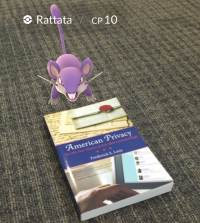
    Rattata and American Privacy

    Rattata in the Beacon Press offices are caught flipping through a copy of my book, American Privacy

    Before you decide to become a Pokémoniac, you should think carefully about whether you want Niantic or others to have even more data about where you go in the world and how many steps you take to get there (and yes, Fitbit should be nervous). The primary use of the collected location information will be commercial, since the software developers are chiefly interested in figuring out how to better market directly to you or offer you up as an advertising target to businesses near you. But the Pokémon Go company makes it clear that if law enforcement is interested in where you've been chasing Pokémon characters lately, they will provide the collected data.

    And then there's the risk of relationship failure. The New York Post ran a story on July 12th about a man whose girlfriend left when she saw that he was capturing Pokémon in the same neighborhood as his ex (and yes, they apparently had hooked up). You can be sure that savvy divorce lawyers read that story with interest. Maybe some folks should think about going back to the card version.

    For what it's worth, Congress is on the case. Senator Al Franken has sent a letter asking for more detailed information about the privacy policies associated with the game. But the fundamental question is whether the bulk of the players—overwhelmingly millennials and Gen Z'ers—give a flying Pikachu about personal privacy. It's doubtful. The tradeoff of distraction and entertainment is too compelling and given the state of world, it's hard to blame them.

    But a day of reckoning looms: The real power of the 1% lies not so much in the control of money but in the control of information. As I said in American Privacy, that's the real definition of privacy—the ability to control the use and spread of one's personal information. If we lose that, Franklin, Jefferson, and Washington might fairly ask what exactly it was for which they risked their lives and their sacred honor.

    About the Author

    Frederick Lane is an author, attorney, educational consultant, and lecturer based in Brooklyn, NY. He is a nationally-recognized expert in the areas of cybersafety, digital misconduct, personal privacy, and other topics at the intersection of law, technology, and society. Lane has appeared on The Daily Show with Jon Stewart, CNN, NBC, ABC, CBS, the BBC, and MSNBC. He has written eight books, including most recently Cybertraps for Educators. Find him online at FrederickLane.com and on Twitter (@fsl3).

    Save

    Save

    Save

  • By Karl Giberson

    Ark-rendering

    The flamboyant creationist and enthusiastic biblical literalist Ken Ham has just opened his controversial and long-awaited “Ark Encounter” theme park in Williamstown, Kentucky. At a cost of almost 100 million dollars, the park promises visitors—who pay $60 for admission—an encounter with “one of the greatest reminders we have of salvation.” In Ham’s view, Christians must accept all the stories in the Bible, no matter how fanciful, as literal history. Compromising on one Bible story compromises everything else.

    Ham describes the Ark Encounter as a “one-of-a-kind historically themed attraction,” presenting “a number of historical events centered on a full-size, all-wood Ark.” The new project is an eighty-acre elaboration of the section of Ham’s equally ambitious Creation Museum—about forty miles away—dealing with the story of Noah’s Flood as described in Genesis.

    A companion booklet details how the project faithfully reproduced the ark to match the descriptions the Bible says were provided to Noah by God. The resulting structure is 300 cubits long, 50 cubits wide, and 30 cubits high. (A cubit is an ancient measure based on the distance from an adult’s elbow to their fingertips, roughly 20 inches.) The Ark is thus more than one and a half football fields in length, making it, at least according to Ham, the “largest timber-frame structure in the world.”

    Dogged by controversy since its conception, the project overcame many challenges. Tax incentives were controversial, given the organization’s view on LGBT hiring. Raising funds was a problem, solved partially by Ham’s high-profile debate with Bill Nye, who was an early visitor to the Ark Encounter. Scientists expressed concern about the promotion of pseudoscience. Biblical scholars objected to treating the myth of Noah’s flood as a historical event. Having overcome so many problems—which he views as the work of Satan—Ham now confidently states, “The Lord has worked mightily over the years to make this project a reality.”

    The Ark Encounter is based on one of the grandest tales in Western Culture, although the 2014 Russell Crowe version was a bit flat. (Ham described it as “unbiblical, pagan” and “the worst film I’ve ever seen.”)

    In the biblical account, God contacts a six-hundred-year-old man and warns him that an intolerably wicked human race will shortly be drowned in a great flood. Noah, being the only righteous man on the planet, is instructed by God to build a giant boat to save himself, his family, and two of every species. After the flood recedes, Noah’s righteous offspring and the animals he rescued will repopulate the earth with righteous humans.

    The story of Noah’s Flood, more so than any other major story in the Bible, has been known for centuries to be impossible. Many lines of evidence make this clear. As far back as the seventeenth century’s great age of exploration, questions arose about how all the newly discovered animals could possibly have gotten to their existing locations if they were once on a boat that that docked in the Middle East. In Ham’s retelling, four thousand years ago there were just two kangaroos and both were located in Turkey, on Mt. Ararat where the ark came to rest. How did they hop across the ocean to Australia?  And as explorers expanded the catalog of animals, it became clear they could not have fit in the ark, even if they could have gotten there.

    Explorers soon discovered that the north and south poles could not have been under water just four thousand years ago. Once the height of the Earth’s great mountains was determined, calculations showed that there wasn’t enough water to cover them. Plants were discovered that could not have survived being submerged in salt water. The list goes on. The story of Noah’s Flood is simply not possible, and educated thinkers in the West began abandoning it more than three centuries ago.

    Almost every new science that emerged in the wake of the Scientific Revolution created additional problems for the story. Evolution ruled out the possibility that all the races could have evolved from Noah’s family in just a few thousand years. Geneticists determined that the human race could never have consisted of just eight people. The discovery of continental drift showed that, by the time of Noah’s flood, the continents were in their present locations, making it impossible for the animals to have accomplished the necessary migration both onto the ark, and then back to their present locations.

    These challenges to a literal reading of the story of Noah were the collateral damage of scientific progress, so much so that to insist today on the historicity of Noah’s flood requires the rejection of many mainstream scientific ideas. And yet Ham has spent $100 million dollars in a quixotic attempt to convince people that the story of Noah’s Flood is the central event in the history of our planet—the event that explains the origins of the mountains and the continents, the great canyons carved by rivers, the distribution of animals and human tribes.

    Adding literary insult to scientific injury, nineteenth-century biblical scholars discovered ancient stories of other “Noahs” who were saved with the animals in a great boat. These stories predated the biblical version by centuries and were clearly its inspiration.

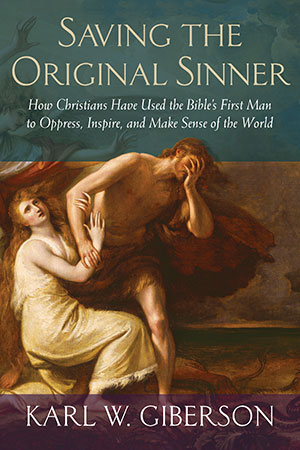
    Saving the Original SinnerBy the end of the nineteenth century, educated Christians were actively reexamining their tradition and seeking ways to free it from its pre-scientific worldview. This project took place on multiple fronts, but the most important involved the foundational stories in the early chapters of Genesis. In my book Saving the Original Sinner: How Christians Have Used the Bible’s First Man to Oppress, Inspire, and Make Sense of the World, I show how this played out in the story of Adam and Eve. The Noah story, interestingly, is a “reset” on Adam and Eve. Adam and Eve, created righteous, fell into sin that became so bad that, within a few generations, God wanted to start over. The righteous Noah was that attempt and, like the first effort, failed miserably.

    Ken Ham’s ambitious projects are sponsored by his organization, Answers in Genesis, with an annual budget of twenty million dollars. He believes that rejection of the historicity of the first chapters of the Bible undermines the social order that God set up in Eden—an order built explicitly on traditional male and female roles. In his view, the growing acceptance of gay marriage, gender complexity, and even women having careers of their own, is all based on the collapse of the authority of Genesis—an authority he wants to restore by convincing people that the story of Noah is real history at the Ark Encounter.

    It’s a daunting task from a practical point of view, even setting aside the scientific challenges.

    Ham seeks to convince his audience that Noah, with a crew consisting entirely of seven family members, cared for two of every species—he uses the uncertain biblical term “kind” in place of species—for over a year. Noah’s tiny crew fed the animals, watered them, cleaned up their waste, healed their illnesses. This strains credulity. Just the two elephants alone would have needed at least 15,000 gallons of fresh water—water that would have to be stored, since the water outside the ark would have been salty. And, not being refrigerated, the water would have to be prevented somehow from becoming contaminated.

    Noah’s story, as a tale for children, has a certain adventurous charm, and I was fascinated by it as a kid in Sunday School. Much of that adventure came back to me when I visited Ham’s other project, the Creation Museum, a story I recount in Saving the Original Sinner. But I have to confess that I am horrified by the story as an adult and wonder why it took me so long to see just how horrifying the story is. Taken literally—the entire point of Ham’s new park—the story suggests that God drowned all the children on the planet for their parents’ sins. Even if we assume that all adults outside of Noah’s family were terrible sinners deserving to be drowned, the collateral damage in the deaths of innocent children and animals dwarfs every major genocide in history combined. If Noah’s story is literally true, God is a monster.

    In convincing people that Noah’s Flood was a historical event, Ham has done a great disservice to Christianity and thinking people in general. To preserve the historicity of Noah’s story, almost all of contemporary science, biblical scholarship, and ancient history must be wrong. If there ever was a tail wagging a dog, this has to be it.

    Perhaps, as Ham believes God once did, an offended deity will send another flood, this time to carry away Ham’s Ark, which I suspect will not float.


    About the Author 

    Karl GibersonKarl Giberson teaches science and religion at Stonehill College and is a leading voice in America’s creation/evolution controversy. He is the author of ten books, including Saving Darwin, a Washington Post “Best Book of 2008,”Saving the Original Sinner: How Christians Have Used the Bible's First Man to Oppress, Inspire, and Make Sense of the World, and The Anointed: Evangelical Truth in a Secular Age, with Randall Stephens. He lives in Hingham, Massachusetts. He lives on the web at www.karlgiberson.com. Follow him on Twitter at @gibersok.


  • By Mark Trecka

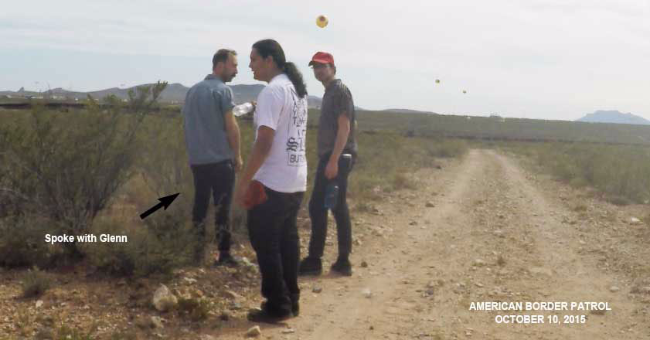
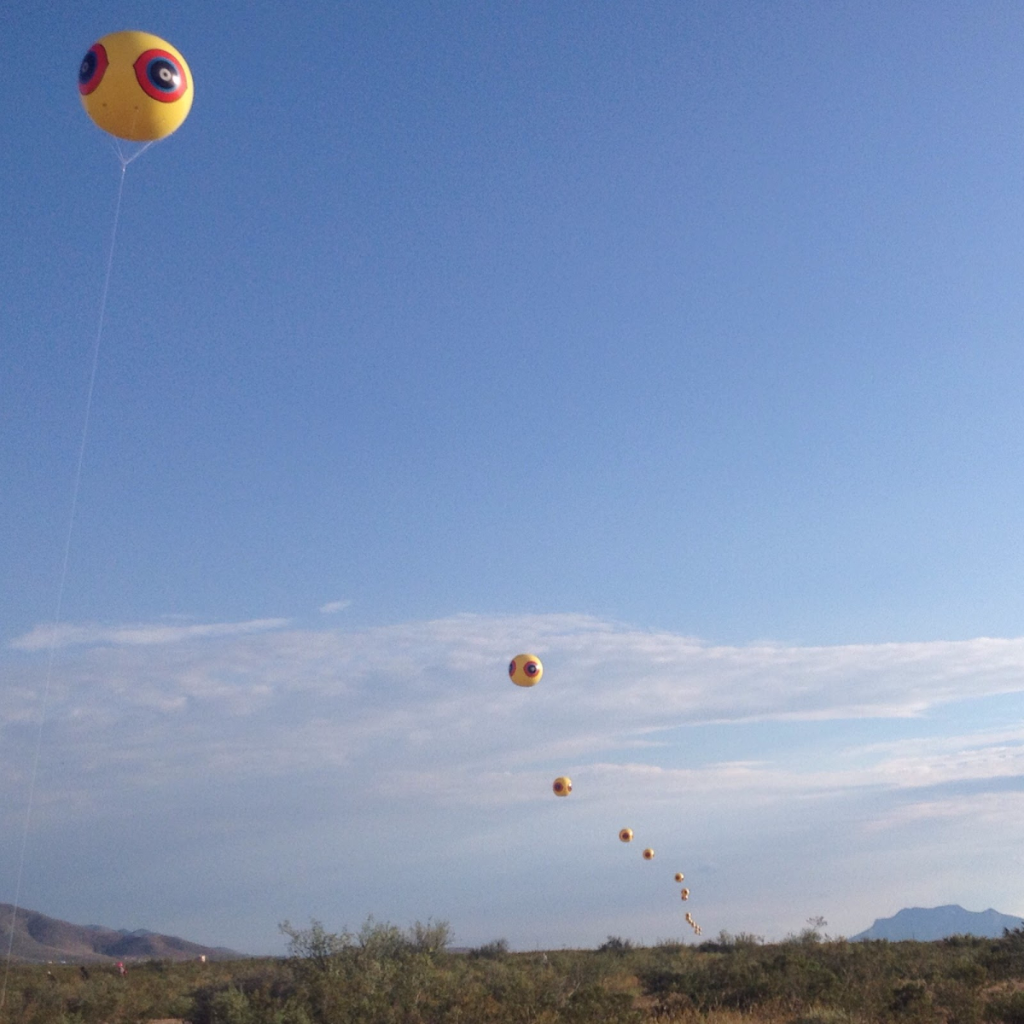
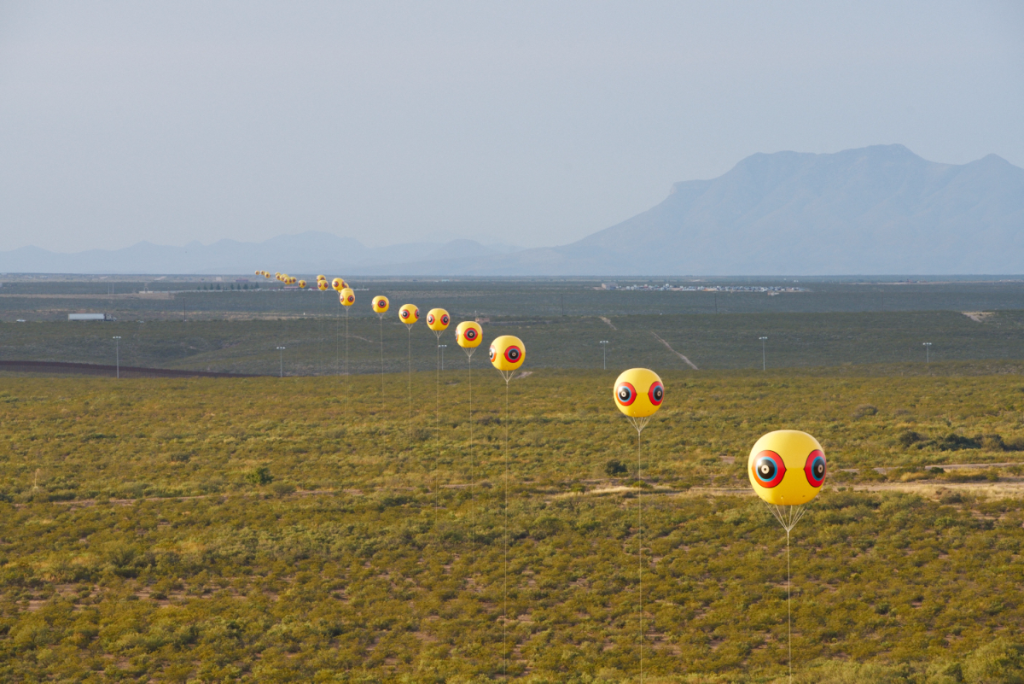
    We Just Don't Live in That WorldIn October 2015, New Mexico-based interdisciplinary arts collective, Postcommodity, executed the largest binational land art installation in history. The two-mile long installation, titled Repellent Fence, was comprised of twenty-six large scare-eye balloons, flown between sixty and one hundred feet in the air, tethered to the ground at intervals of four hundred feet, crossing the U.S.-Mexico border between Douglas, AZ and Agua Prieta, Sonora. The installation lasted for three days and was, in the group’s own words, “a social collaborative project among individuals, communities, institutional organizations, publics, and sovereigns.” The members of Postcommodity are: Raven Chacon, Cristóbal Martínez, and Kade Twist. Artist Scott Williams served as the project’s site manager. In the conclusion of this four-part series, writer and artist Mark Trecka, with the support of The GroundTruth Project, reports on the drama and ideas surrounding the installation. 

    ***

    Sunday, October 11th 

    When Postcommodity documents the installation, the materials list will read: the Earth, cinderblock, parachute cord, PVC spheres, helium. But that list will be incomplete.

    The Mexican Consulate was a material. The local cafe owners in Douglas who spearheaded a corresponding art walk, the teenagers of Agua Prieta who danced in celebration of the launch, they were materials.

    The hands that held the hoses that filled the balloons with helium—the hands of the Executive Director of the Pima Arts Council of Tucson, the hands of recovering drug addicts sponsored by the Centro de Rehabilitación y Recuperación para Enfermos de Drogadicción y Alcoholismo in Agua Prieta, the artists’ parents’ hands, the hands of this article’s author—those hands were materials.

    The diplomacy between the artists and various governmental agencies and stakeholders were all materials.  

    “The keyword is exchange. There’s this one-sidedness to the border discourse that ignores the ability of culture to cross,” Kade Twist told me a few weeks ahead of the launch date. “Political chauvinism creates cultural chauvinism.”

    The execution of the largest binational land art installation in history required the breakdown of such chauvinism. Binational collaboration and exchange were materials used in the construction of the Repellent Fence.

    During pre-installation preparations, Chacon stumbled upon a man crouching in the scrub, clutching a flip phone. Chacon was startled and greeted him, “Hola.” The man averted his eyes and said nothing, continuing to crouch. This man and his story, whatever it is, are also among the materials out of which the Repellent Fence is constructed.

    Repellent Fence

    On Sunday morning, the wind is as still as it has been yet, and the scare eyes form an almost perfect line. The area surrounding the installation is much quieter than on the previous two days. A few adventurous tourists, lovers of contemporary art driving Subarus and Jeeps, make their way along dirt paths, necks craned, looking up, mostly. Out there, they meet the border fence, perhaps some Border Patrol officers, perhaps a jackrabbit.

    From a higher elevation, just east of Douglas proper, the line of orbs is stunning. They appear almost as holograms, something profoundly alien to the landscape.

    The Repellent Fence poses challenges and questions before there is any knowledge of the work itself: What is it? Why is it there? But it also communicates directly.

    The line of balloons clearly crosses distance, marks distance, crosses the border and marks the border. From up on “D Hill,” past the city limits of Douglas, one can enjoy a beautiful Sonoran vista, miles of terrain clearly visible, miles of terrain stretching into Mexico. Although the scale of the Repellent Fence is striking from here, it is also dwarfed by the immensity of its context.

    ***

    After 

    “To experience the piece,” Raven Chacon says, “you have to walk through the desert, in the heat, with a limited amount of water. And walk through thorns and get poked. You are experiencing what people have to experience after they jump over the wall. You start to realize what people go through to come into this country.”

    Chacon is back home in Albuquerque. The installation has been down for three days and he is still speaking of it in the present tense. He speaks as though he is observing the installation at the moment, rather than sitting at his dining room table.

    “And you know, you might be at one end and walk to the other end, at least on one side of the border, and experience that mile and realize you’re not the first person counting mile one of this journey. We’ve marked out a mile. Think of how many countless people have walked that far and said, you know, ‘I’ve walked a mile. I’ve got a hundred more to go to get to Tucson.’”

    Coming into Albuquerque a few days after the events in Douglas, I received a text message from Scott Williams saying he had arrived home, about an hour outside of town, and realized that he did not have any groceries, and so he had driven to Albuquerque. We met for a beer and alerted Chacon to this extempore gathering. He arrived twenty minutes later. One had the sense that no one involved in the Repellent Fence was quite ready to be alone. That it was hard to leave the place that was made, or kept, by the weekend, let alone the months and years of work that led to it.

    “Surely we were unprepared for how it would affect us. We conceptualized the piece,” Chacon says, “but not until we were participants so much in our own piece did we realize how much of an effect it would have, how emotional it would be.”

    “We were living a fantasy,” Cristóbal Martínez says, weeks later. “We were experiencing an alternative reality. For four days we had opened up a new portal and crossed into a new dimension.”

    Martínez is back home in Phoenix, has gotten “down to business” with the mundane realities of the post-doctoral job market. “We existed in a new dimensionality of possibility that has not been seen there in its current, contemporary context at all. And we were just euphoric, experiencing a sense of euphoria, totally aware of the fact that that portal would close up and everything would pop back to where it was.”

    Martínez sounds haunted by that popping back. He recalls the deinstallation as a reflective moment and a startling return to the reality of the border. “You could see it closing up.” A group of teenage boys wearing backpacks and baseball caps standing on the Mexican side called out to Martinez and Twist as they drove along the U.S. side of the fence, deinstalled balloons in tow, Border Patrol spotlights following them in the deepening dusk and dust kicked up by “Border Patrol trucks hauling ass in every direction.” Martínez sighs. He says he has been having dreams about the Repellent Fence and about this final evening, almost nightly since the deinstallation. There is a lot to work through, he says, within the experience of “seeing the paramilitary action that ensued as those balloons were coming down.”

    Haunted as he is by these images and as much as he understands that the directness of Postcommodity’s work on the border is temporary, Martínez’s belief in the work’s lasting effects is evident. “We didn’t crack the tough nut,” he says, “but we opened a little fissure in its shell and we got to see it a little differently. That right there is a really big deal, and something that Glenn Spencer didn’t understand. When those fissures happen, they become opportunities for us to humanize each other and when we humanize each other, we bring dignity back, we re-dignify each other. And that’s where a lot of the tears were coming from. People were feeling a sense of dignity again.”

    Postcommodity's Repellent Fence

    Photo courtesy of Postcommodity

    The Repellent Fence was only the implication of a fence and it only implicated the opening of a portal in the U.S.-Mexico border fence. But discussions surrounding the piece seem to indicate that the U.S.-Mexico border fence itself might only be the implication of a fence, for those most invested in it, on either side.

    When border surveillance activist Glenn Spencer visited the site of the Repellent Fence, he scoffed at the project. But he also passionately expressed a belief that the border fence itself was little more than a bit of theater, an orchestrated element of a larger conspiracy to create the illusion of security. The real goals of all government actors, Spencer asserts, is the breakdown of the sovereignty of the United States and the rise of globalism.

    Considering this, Martínez pauses. There is a pregnant silence as he chooses his words. “Ok, that’s a powerful statement and … I think that’s an arguable point that he makes.”

    Martínez goes on to talk about his academic work on technology and sovereignty and his own deeply held beliefs that global communications and market systems are eroding imperial sovereignty. “Nations themselves,” he says, “exist in a more weakened state because of the way in which the world has changed.”

    He pauses again, considering the implications of Spencer’s view. “In those ways, he’s not altogether sounding like a person who is—what do you call it—paranoid. But putting walls on land is not going to mitigate those communication systems, because those communication systems don’t know any borders. We just don’t live in that world. So what it seems is that the world that a lot of these folks want to preserve is one that’s already gone by. They haven’t come to terms with it.”

    Martínez’s tone seems compassionate, almost aching. He goes on, considering the viewpoint of those like Spencer, personally patrolling the border and calling for more surveillance. “People feel desperate. Maybe they don’t realize it’s too late. But it’s a world that’s already gone by, it’s an era that’s already behind us. And so maybe it isn’t about—you know, there’s issues of racism and that gets played out a lot in the media, but one of the other things that doesn’t get played out is the obsession with nationalism. But it’s like, you know what? It’s probably already too late.”


    Read part one, part two, and part three.


    About the Author 

    Mark TreckaMark Trecka is a Chicago-born writer, artist, and performer. His work has appeared in the Huffington Post, Impose Magazine, The End of Being, and elsewhere. He blogs and Instagrams for @featherproof and has recorded and performed with Pillars and Tongues, Dark Dark Dark, and others. He lives in New York’s Hudson Valley. Follow him on Twitter at @MTrecka and visit his website.

  • By Bill McKibben

    Replica of Thoreau's cabin near Walden Pond

    Replica of Thoreau's cabin near Walden Pond. Photo credit: RhythmicQuietude

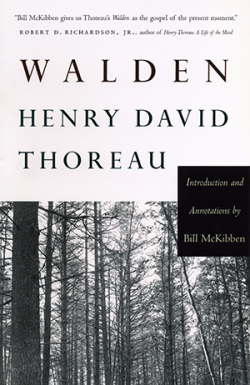
    Happy birthday to Henry David Thoreau! His groundbreaking book Walden, first published in 1854, continues to influence generations of readers and inspire anyone with an open mind and a love of nature. His writings about a simpler life attuned with the natural world are more relevant than ever for the new millennium. As environmentalist Bill McKibben points out here in his introduction to Walden, our propensity for rampant consumerism has a direct impact on our environment. Now, more than ever, Thoreau’s philosophy can serve as a guide not only for climate justice, but also for a more balanced lifestyle. 

    ***

    The hawk sat on a limb three feet above my head and did not stir as I walked under—that was the first sign.

    I’d been off hiking for about a week, a long solo backpack through my home mountains, the Adirondacks of upstate New York. The first few days out I might as well have been back in my room—I strode purposefully along the trail, eyes fixed on focusless middle-distance that you stare at when you drive. My mind chattered happily away—my own little CNN delivering an around-the-clock broadcast of ideas, plans, opinions: What was I going to work on next? Who would win the presidential election? What were some neat things I could buy? My mind was buzzing, following all its usual tracks though I was deep in the woods.

    The days wore on. The imposed input lessened—no radio, no paper, no conversation. I could feel the chatter in my head begin to subside. Either the peace of the forest was beginning to penetrate, or the stocks of mental junk food were starting to dwindle; whatever the cause, the buzz turned to hum, and once in a while to quiet.

    And so I was not completely surprised when the hawk kept his perch, or a few minutes later when I passed a pair of grazing deer and they merely looked up a moment, didn’t spook. I was still wearing the rustling fluorescent uniform of the modern hiker, but I’d begun, perhaps, to give off fewer, calmer vibrations.

    I’d been walking through rain for days; it had long since penetrated my Gore-Tex hide, and so that afternoon when the sun finally came out I made an early camp by the lake. I hung out my clothes in the branches to warm; held my white and wrinkled feet up to the sky to toast; unfolded in the lovely heat like a snake on a stone. Soon a band of merganser chicks, trailing their mother, circled the small cove by which I lay, paying no attention to me. My aura of invisibility lasted all day, soothing one creature after another, until I was feeling part creature myself. Naked, hidden by the fringe of birch leaves, I watched canoeists paddle chattily by, and they seemed nearly to belong to another race. That night I was aware of every second of the endless sunset: the first long rays of the sun as the afternoon turned late, the long twilight, the turn of the sky from blue to blue to blue to—just as it turned black, a heron came stalking through my cove, standing silently and then spearing with a sudden spasm; I couldn’t see her, not really, but I knew where she was. The sky darkened, the stars in this dark place spread across the sky bright and insistent. We were unimaginably small, this heron and I, and extremely right.

    I tell this memory—one of my happiest—as a way of plunging into that great sea called Walden. Understanding the whole of this book is a hopeless task. Its writing resembles nothing so much as Scripture; ideas are condensed to epigrams, four or five to a paragraph. Its magic density yields dozens of different readings—psychological, spiritual, literary, political, cultural. To my mind, though, at the beginning of the twenty-first century, it is most crucial to read Walden as a practical environmentalist’s volume, and to search for Thoreau’s heirs among those trying to change our relation to the planet. We need to understand that when Thoreau sat in the dooryard of his cabin “from sunrise till noon, rapt in a revery, amidst the pines and hickories and sumachs, in undisturbed solitude and stillness, while the birds sang around or flitted noiseless through the house,” he was offering counsel and example exactly suited for our perilous moment in time.

    He had, of course, no idea that he was doing so. Although he wrote often about the natural world, Thoreau lived at the very onset of the industrial age, and so knew nothing about parts-per-million, or carcinogenesis, or chlorofluorocarbons. One reads him in vain for descriptions of smog. Mass extinction seems unthinkable—instead, he is gratified and reassured by the profligacy of the living world: “I love to see that Nature is so rife with life that myriads can afford to be sacrificed and suffered to prey on one another, that tender organizations can be so serenely squashed out of existence like pulp—tadpoles which herons gobble up, and tortoises and toads run over in the road.” His world was not used up, suffering—he was in the sixth party of white people to climb Maine’s Mt. Katahdin, on an expedition that took him through the heart of that then-mighty wilderness. And though he could perhaps foresee the ruination that greed might cause (the East would soon be logged so bare that “every man would have to grow whiskers to hide its nakedness”), he had no inkling that we could damage the ozone or change the very climate with our great consumer flatulence. “Thank God the sky is safe,” he wrote.

    WaldenFurthermore, even if Thoreau had realized the challenges facing the modern environment, there’s no good reason to think he would have pitched in to help. Reformers, he writes, “are the greatest bores of all,” and I doubt a few hundred fundraising appeals from the Audubon Society would have changed his estimation that he’d received but one or two letters “that were worth the postage.” More crucially, he was aggressively uninterested in the prospect of community that sage environmentalists now hold out as our great chance for salvation. The prospect of, say, abiding more closely with his fellows so that they could pool resources, live more efficiently, take pleasure in rubbing shoulders would not have appealed to a man who thought “the old have no very important advice to give to the young,” who considered that two people ought not to travel together, who found it “wholesome to be alone the greater part of the time.” Were Thoreau a modern third-grader, his report card would doubtless note his lack of social skills; it is no accident that he never married, and to imagine him with a child is a joke. There is a great deal he can’t teach us.

    You could even lay at his door, I think, some particular environmental problems. In his day, much to his disgust, people clustered together in Concord town and ventured out to Walden to cut ice; partly under his intoxicating influence, many many more of us have come to make our homes on the lake and ocean shores, in the scenic spots, far from places where we work. There’s hardly an unprotected shoreline in the lower forty-eight not lined with cottages and cabins; wilderness is now a selling point for the enterprising realtor. Even the suburb owes something to him; though clearly a corruption of his vision, in its splendid isolation the subdivision colonial retains a bit of his rude cabin.

    So to call him an environmental prophet—in many ways the environmental prophet, a writer of the highest value to the twenty-first century—requires that we think more deeply about what it might mean to live an environmentally sane life. It means recognized the precise nature of the problems that we face. If those questions are technical, then he is of no help. If our largest environmental problems are the result of something going wrong, some pollutant spewing unchecked from smokestack or exhaust pipe, then he’s simply an interesting historical curiosity. Confronted with a smoggy city, I’d choose a catalytic converter over a pocket copy of Walden. And indeed we’ve nearly solved smog no thanks to Henry David. New equipment scrubs carbon monoxide from the exhaust stream of your car, which is why Los Angeles is cleaner now than a generation ago. New filters on factory pipes clean up rivers and lakes—that’s why fish again swim in Lake Erie.

    But what if those are not the largest environmental problems we face? What if we’re really in trouble because things are going right, just at much too high a level? Consider the tailpipe of the car once more. It’s not just carbon monoxide that comes spewing out, it’s also carbon dioxide, carbon with two oxygen atoms. And this time there’s no filter you can stick on the car to cut the CO2; it’s the inevitable byproduct any time you burn fossil fuels. It also turns out that carbon dioxide represents an even greater threat than smog: its molecular structure traps heat near the planet, triggering climate change. The sky’s not safe after all; the sky is heating up. And the answer has defied the technologists. They’ve managed to double the fuel efficiency of our cars in the last thirty-five years, but we’ve doubled the number of cars, and the miles they drive, spewing out ever larger clouds of CO2. Scientists tell us they can see the extra heat, watch it melt glaciers and raise sea levels. To prevent it getting worse won’t require some technical change; it will require doing with less, living more lightly. Our other biggest problems—overpopulation, habitat destruction, and so on—present the same challenge: they’re inevitable if we keep living the way we do, thinking our same thoughts.

    And it is here that Thoreau comes to the rescue. He posed the two practical questions that must come dominate this age if we’re to make those changes: How much is enough? and How do I know what I want? For him, I repeat, those were not environmental questions; they were not even practical questions, exactly. If you could answer them you might improve your own life, but that was the extent of his concern. He could not guess about the greenhouse gas effect. Instead, he was the American avatar in a long line that stretches back at least to Buddha, the line that runs straight through Jesus and St. Francis and a hundred other cranks and gurus. Simplicity, calmness, quiet—these were the preconditions for a moral life, a true life, a philosophical life. “In proportion as he simplifies his life…he will live with the license of a higher order of beings.” Thoreau believed in the same intense self-examination as any cross-legged wispy-bearded Nepalese ascetic.

    Happily, though, he went about it in very American ways—he was Buddha with a receipt from the warehouse store. And it is that prosaic streak that makes him indispensable now.


    About the Author 

    Bill McKibben is the author of Enough: Staying Human in an Engineered Age as well as The End of Nature andThe Age of Missing Information. He lives with his family in the Adirondack Mountains. Follow him on Twitter at @billmckibben and visit his website.

  • By Steven Lipkin, MD, PhD with Jon L. Luoma

    DNA

    Welcome to the Age of Genomes, where just around the corner is the ability to cure genetic diseases using the powerful gene-editing tool called CRISPR. Described as a microscopic pair of scissors, CRISPR has been gaining traction in the news thanks to recent successful studies. Just as recently as last month, the first proposed testing of CRISPR on humans passed initial safety review. Cancers, neurological disorders, and other hereditary maladies could become a thing of the past sooner than we think. But how exactly does CRISPR work? In this passage from their book The Age of Genomes: Tales from the Front Lines of Genetic Medicine, geneticist Steven Lipkin, MD, PhD and science journalist Jon Luoma explain the ins and outs of what promises to be one of the most transformative advances in health and medicine in history. 

    ***

    In the next decade, we are likely to see a new generation of pre-­implantation genetic diagnosis, which could lead to the possibility of actually repairing genes in ART [advanced reproductive technologies] embryos affected by genetic disor­ders. Recent powerful basic science advances using a technique called CRISPR (pronounced “crisper,” and the acronym for the tongue twister “clustered regularly interspaced short palindromic repeats”) have of­fered robust evidence that it’s possible to repair gene defects in embryos of several mammalian model organisms, including nonhuman primates. This is an inexpensive, remarkably effective gene-editing technique easy enough to be performed in literally thousands of laboratories around the world. The technique enables editing of DNA sequence changes that can be curative for both recessive and dominant genetic diseases. It can also be used in patient-derived embryonic stem cells, which can then be expanded in the lab to help ameliorate genetic diseases for such hard-to-treat areas as brain and heart tissue in patients living now, as well as to alter an individual patient’s sperm and egg to reduce the bur­den of genetic disease in future generations.

    The Age of GenomesCRISPR is a bacterial immune system gene that protects a bacte­rium against invading viruses. Also called Cas9, it was originally dis­covered in 1987. Because its purpose was not well understood, Cas9 was initially thought to be unimportant bacterial DNA without any function. Now we know that these genes can be deployed in a way that makes it possible to actually “edit” genes in humans and other species. CRISPR can cut both strands of DNA and can be co-injected into fer­tilized embryos with a guide RNA that can be modified to alter most of the changes possible in the genome. It has been used to cure mice with genetic diseases involving the liver. Chinese scientists have created monkeys with artificial mutations by using CRISPR to modify other­wise normal embryos, including mutations in three different genes in­volving the immune system and diabetes. Once the monkeys were born, the CRISPR-introduced changes were present in most, although usu­ally not all of the monkeys’ cells, because the CRISPR protein typically doesn’t actually perform its surgery until after the one-cell embryo has divided more than once. Genome sequencing of the monkeys after their birth did not yet reveal any “off-target” unintended mutations.

    Subsequently, Chinese geneticists in Guangzhou published the first study of CRISPR gene editing on human embryos to correct beta-globin mutations that cause the disease beta-thalassemia. In this case, however, they worked only with embryos that would never have been able to be brought to term and born after pregnancy in a sur­rogate mother and would otherwise have been destroyed. Regardless, their work showed that the present CRISPR technology did not work as well in human embryos as expected. For many embryos, CRISPR did not correct the beta-globin mutation. More concerning, by using whole-genome sequencing, they discovered “off-target” new mutations introduced at other sites, including the delta-hemoglobin gene, which has DNA sequences similar to those of beta-hemoglobin. All in all, the effects of these off-target mutations if the embryos had been brought to term are difficult to predict.

    Because of the technique’s potential for powerful gene editing, many scientists, including its inventors, have pleaded for a global moratorium on its use until physicians, scientists, governments, and the public un­derstand more fully any accompanying risks.

    While clearly a great deal more work needs to be done, this technol­ogy is quite well developed already. I anticipate that (likely initially from outside the United States) in the next decade we will hear about gene-edited children born with mutations successfully corrected by CRISPR. As discussed above, as with ART and PGD, longer-term safety issues and effects of the CRISPR gene-editing process will hang over us, likely for decades.


    About the Authors 

    Steven Monroe Lipkin, MD, PhD, FACMGSteven Monroe Lipkin, MD, PhD, FACMG, has been a practicing clinical geneticist for almost twenty years. He directs the Adult and Cancer Genetics Clinic and is the vice chair for Translational Research at the Sanford I. and Joan Weill Department of Medicine at Weill Cornell in New York City.


    Jon R. Luoma’s writing about science and the environment has appeared in National Geographic, GQ, the New York Times Sunday Magazine, and Audubon, where he was a longtime contributing editor. He is the author of three previous nonfiction books: The Hidden Forest, A Crowded Ark, and Troubled Skies, Troubled Waters.